
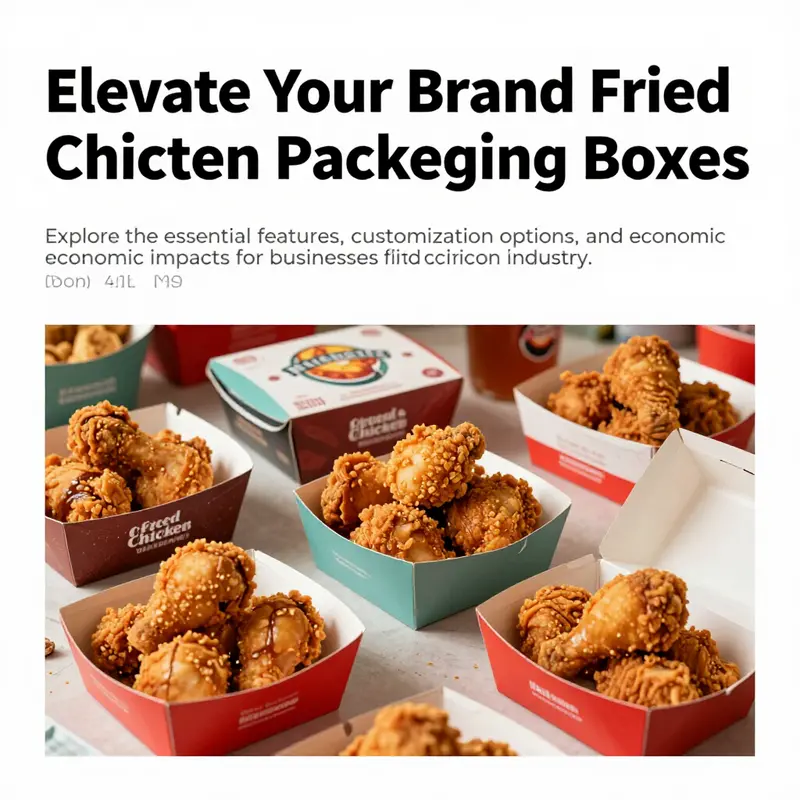
Fried chicken is a beloved global dish, and the demand for effective and attractive packaging has surged as a result. For restaurants, fast food chains, and food vendors, selecting the right packaging boxes is crucial not only for maintaining food quality but also for amplifying brand visibility. This article delves into the key features of wholesale fried chicken packaging boxes, customization opportunities that allow businesses to create a distinct brand identity, and the broader economic implications of this market segment. By understanding these areas, business owners can make informed choices that enhance their operational efficiency and appeal to their customers.
Crisp, Constructed, and Cost-Effective: Unpacking the Wholesale World of Fried Chicken Packaging Boxes
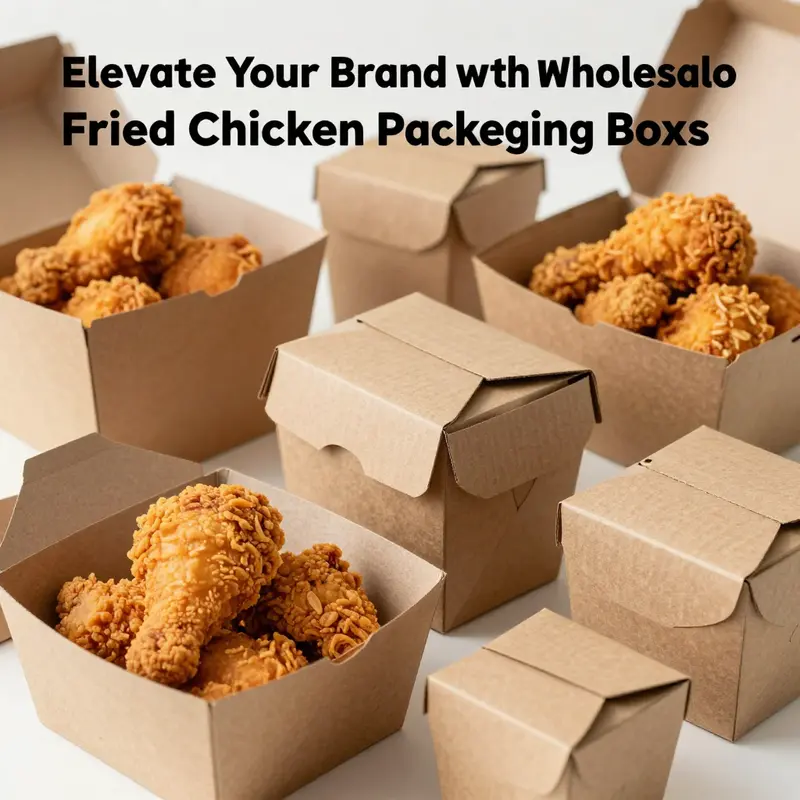
The journey from fryer to table hinges as much on what happens after frying as on the act of frying itself. Fried chicken packaging boxes wholesale form a critical, often underappreciated link in a chain that moves steam and scent from a hot kitchen to a hungry customer with minimal loss of texture, temperature, and brand personality. In markets that prioritize speed and scale, these boxes do more than hold food; they signal care for the product, the planet, and the consumer’s experience. The best wholesale offerings recognize that packaging is a multifunctional tool. It must protect while it informs, it must travel well through a distribution network, and it must present a brand story that feels coherent with the cooking technique that produced the dish in the first place. In other words, a great fried chicken box is part packaging, part marketing, and entirely logistical engineering rolled into a cost-effective package that can travel from a bustling kitchen to a street-side takeout window without leaking, tearing, or sacrificing the crispness that defines the item in the first place.
Material choice sits at the heart of this trifecta. Kraft paper remains a mainstay in many wholesale offerings because it balances natural aesthetics with tangible strength. Its neutral, earthy tone aligns with brands that want to convey simplicity, sustainability, and a no-nonsense approach to takeaway. Yet, for brands that need insulation and sturdier protection during longer journeys or colder climates, corrugated cartons offer a sturdier shell without sacrificing recyclability. And in segments where the chain includes frozen or cold-chain elements, sugarcane fiber composites and other biodegradable substrates are becoming more common. The market’s push toward sustainability is not superficial. Certifications such as the Forest Stewardship Council (FSC) for responsible wood fiber sourcing, or third-party benchmarks that attest to compostability and biodegradability, are becoming expectations rather than add-ons. For brands, this translates into a packaging psychology: customers feel a sense of shared responsibility when their takeout packaging echoes the same values they claim in marketing campaigns. In practice, this means suppliers who can prove chain-of-custody and traceability, alongside robust end-of-life guidance for consumers, can differentiate themselves even before a single logo appears on a lid.
Durability and protection follow closely behind material choice. A fried chicken box must resist grease while keeping oil from seeping through and staining the outer surface. It must also resist moisture and maintain structural integrity during transport, so a one-handed pickup at a curbside window doesn’t yield a soggy surprise. The inner layer often features a food-grade barrier—waxed coatings, treated films, or laminated liners—that keeps oil contained and the exterior clean. This is especially important when carrying sides or sauces, where the risk of leaks multiplies. The design challenge here is subtle but critical: the packaging should feel sturdy enough to convey value, yet economical enough to justify wholesale procurement at scale. The option to add a protective inner lining does not just improve performance; it supports compliance with safety standards and reduces the likelihood of customer complaints or product loss in transit. The most effective boxes are designed with this layer of protection in mind from the outset, not added as an afterthought during late production runs.
Customization is the bridge between generic functionality and brand expression. Wholesale pathways recognize that a single rectangle with a logo can still feel anonymous in a crowded marketplace. As a result, manufacturers offer a spectrum of customization possibilities—from subtle logo placements and color choices to multi-color printing, brand typography, and even decorative finishes like gold foil accents that catch the light in a restaurant’s display case or a delivery rider’s bag. This is where the economics of scale intersects with the arts of design: large orders can absorb complex printing processes, while smaller orders can still achieve a degree of personalization through tailored sleeves, inserts, or lid prints. It is not unusual for suppliers to provide OEM and ODM options, allowing a business to define specifications for size, shape, color, and branding while receiving technical input on feasibility. In a market where a consumer’s first impression is formed at the moment the box is seen, the ability to align packaging visuals with the brand identity amplifies perceived quality and creates a more cohesive customer journey.
The practical design of these boxes is equally important as their decorative potential. The most common forms are open-top dump-style boxes that facilitate easy one-handed access and quick consumption, a feature that is especially valued in takeout scenarios where time is of the essence. For premium presentations, there are multi-compartment meal boxes that can separate chicken from dipping sauces or sides while ensuring the food remains intact and visually appealing. Secure lids are another design feature that helps maintain heat during transit and prevents spills when a rider navigates traffic or a bag is jostled on a doorstep. The range of sizes is deliberately varied to accommodate different appetites and formats, from compact 800ml portions suitable for individuals to 2000ml family-size configurations that can feed a small group. The broad array of shapes and closures supports a diverse ecosystem of operators—fast-food chains that emphasize speed, casual dining venues that value presentation, and street vendors who prioritize portability.
From a financial perspective, wholesale packaging is a study in cost-effectiveness and scalability. The appeal lies in the volume-driven economics that make even premium features viable for large buyers. In wholesale terms, unit costs can drop dramatically as order volumes rise, with tiered pricing that rewards scale. There are credible accounts of large-volume suppliers offering per-unit prices well below a few cents, reflecting the efficiency gains that come with mass production, standardized materials, and stabilized logistics. Importantly, these price points are not merely a function of raw material choice; they also reflect the comprehensive nature of the packaging solution—where design, printing, and logistics are bundled into a single procurement. For smaller operators, low minimum order quantities (MOQs) can make wholesale pricing accessible, enabling a migration from ad hoc purchases to consistent supply contracts. The economics of scale thus reinforce a virtuous cycle: higher volumes reduce unit costs, investments in more robust materials and printing options yield higher perceived value, and a reliable supply chain supports sustained growth.
Logistics and compliance underpin the reliability that wholesale channels promise. Reputable manufacturers prepare export-ready cartons and damp-proof packaging to withstand the rigors of international shipping. The quality narrative is reinforced by adherence to safety and quality standards, often evidenced by certifications that attest to material safety, handling practices, and environmental considerations. DIN, MSDS, and BSCI-style benchmarks serve as reference points for buyers who must demonstrate due diligence to regulators or corporate customers. The end-to-end logistics picture includes not only the boxes themselves but also the ancillary packaging ecosystem—liner bags, sleeves, and inserts that align with brand requirements. For brands eyeing a global footprint, the ability to align packaging with regional regulatory expectations becomes as important as the visual design or the inner barrier properties.
Market dynamics for fried chicken packaging boxes wholesale reflect a global supply chain that is both diverse and highly specialized. Platforms that connect buyers with manufacturers in regions known for disposable paper products—often with Guangdong as a hub—facilitate access to a wide spectrum of options, from standard stock boxes to fully customized solutions. The marketplace model accelerates discovery of compatible suppliers, with product specifications, MOQs, and pricing tiers clearly displayed. Buyers can evaluate options by weighing material choice, printing capabilities, and delivered lead times against strategic priorities for their brand. In this environment, the ability to negotiate terms and leverage bulk pricing can be a decisive factor in a project’s viability, particularly for operators expanding into new markets or seeking to refresh their packaging to meet sustainability or branding goals. For buyers, the key is to balance the allure of customization with the pragmatics of supply reliability, cost predictability, and ethical sourcing.
In practice, one can observe a spectrum of supplier capabilities that makes this wholesale landscape appealing to a broad array of customers. A typical supplier profile might describe recyclable, custom-designed boxes with quick-turn production, a willingness to accommodate orders ranging from a few thousand to several hundred thousand units, and a pricing structure that becomes more favorable as orders scale. This combination of capabilities—customization, sustainability, scalability, and logistics readiness—helps explain why fried chicken packaging boxes have evolved from simple containment into strategic business assets. The wholesale market has matured to support brands that want to project a consistent identity at every touchpoint, from the moment a customer places an order to the moment they finish their meal and dispose of the packaging in an environmentally responsible way.
To readers curious about sourcing channels, it is important to recognize that the wholesale market operates through a mix of direct manufacturer relationships and centralized marketplaces. Direct engagement with manufacturers offers the advantage of deeper customization, stronger communication, and potentially tighter control over lead times. Marketplaces, on the other hand, simplify discovery, deliver comparative pricing, and provide standardized terms that can reduce procurement frictions. Either path can be legitimate so long as it aligns with a buyer’s strategic goals, regulatory obligations, and sustainability standards. In this context, the opportunity arises to harmonize packaging choices with the broader corporate agenda—whether that means pursuing certified sustainable materials, enabling a robust takeout experience that preserves product quality, or delivering on a visual identity that reinforces brand loyalty.
The conversation around wholesale fried chicken packaging boxes also invites reflection on consumer expectations and environmental responsibility. While convenience remains paramount, today’s consumers increasingly expect packaging to be recyclable, compostable, or reusable where feasible. This shift has accelerated the adoption of kraft-based solutions and sugarcane fiber alternatives, which offer credible end-of-life pathways compared with traditional waxed or laminated plastics. Brands that can clearly communicate how their packaging fits into a circular economy will likely resonate more deeply with customers who view food as part of a larger lifestyle choice. This is not a niche concern but a mainstream factor that informs every design decision from material selection to decorative accents. The industry thus finds itself balancing three essential objectives: keep the fried chicken at the expected temperature and texture, project a brand story through the packaging, and ensure that disposal aligns with evolving environmental norms. Achieving this balance requires a careful blend of material science, design thinking, and supply chain discipline, all of which wholesale packaging ecosystems are uniquely positioned to combine.
For practitioners evaluating options, it helps to approach packaging as a composite asset rather than a single component. The material informs the environmental and tactile aspects, the inner barrier governs grease management, the printing and finishes shape perception, and the structural design determines durability in transit and ease of use for the customer. Each choice has ripple effects: choosing a higher-quality liner may increase upfront costs but reduce customer complaints; selecting a more complex lid mechanism could slow production but improve spill resistance; experimenting with foil accents might enhance brand recall but limit compatibility with certain printers or sleeves. The wholesale channel makes such trade-offs a regular part of procurement strategy, enabling buyers to experiment within reason and scale successful configurations quickly. In that sense, packaging becomes a vehicle for innovation within a framework of operational efficiency, rather than a barrier to growth.
As businesses contemplate their next packaging upgrade, attention to the internal linkages between design, material, and logistics can yield meaningful improvements in both experience and outcomes. If a company wants to pivot toward a more premium presentation, it can lean into multi-color printing, refined finishes, and branded inserts while still leveraging the cost advantages of wholesale procurement. If a brand prioritizes sustainability or regulatory compliance, it can select materials with recognized certifications and insist on transparent supply chain documentation. If the emphasis is on speed and reliability, it can synchronize MOQs, lead times, and minimum production runs with its distribution calendar to ensure seamless replenishment. Regardless of the path chosen, the core message remains constant: wholesale packaging for fried chicken is a strategic lever, not a mere afterthought. It embodies the intersection of craft, commerce, and care, translating culinary technique into a durable, deliverable experience that customers carry with them, literally and figuratively, in every bite.
For readers exploring specific material and design options, a gateway to the broader world of packaging categories is available through resources that catalog paper packaging and related products. This can help teams compare choices side by side, evaluate suppliers’ capabilities, and understand how packaging trends align with evolving consumer expectations. One practical path is to examine the range of paper-based packaging that aligns with disposable takeout needs, considering how each option balances cost, recyclability, print quality, and barrier performance. This exploration should also consider the downstream effects on waste management programs, customer education around disposal, and the potential to partner with organizations that support responsible packaging end-to-end. Where possible, teams should pursue packaging ecosystems that offer clear documentation on material sourcing, production traces, and end-of-life guidance, enabling them to communicate responsibly with customers and regulators alike. And while design and material choices are central, never forget the operational discipline required to deliver on promises: consistent lead times, reliable production capacity, and a supply chain capable of absorbing spikes in demand during promotions, holidays, or sudden shifts in consumer behavior. In short, the wholesale world of fried chicken packaging boxes is a finely tuned orchestra, where material science, branding, and logistics must play in harmony to deliver a seamless, satisfying experience to diners around the world.
To learn more about the spectrum of paper packaging options that can accompany wholesale fried chicken boxes, consider exploring the broader landscape of paper packaging categories and their applications. This can provide a practical context for evaluating how different substrates interact with branding, print capabilities, and consumer disposal habits. Within this landscape, the specific needs of fried chicken takeout—grease resistance, heat retention, and meal presentation—are addressed not only by choosing the right material but by pairing it with thoughtful design and reliable supply relationships. As brands plan next steps, the decision to prioritize sustainability, customization, or speed should be anchored in a holistic assessment that weighs life-cycle considerations, customer expectations, and market dynamics. This approach ensures that wholesale packaging becomes a strategic, rather than incidental, element of the business strategy, reinforcing both operational resilience and the consumer’s positive perception of the brand.
Internal resource: paper packaging options offers a concise gateway to related packaging formats and printing capabilities that can inform how fried chicken packaging boxes are specified and procured. External reference: https://www.alibaba.com/product-detail/Wholesale-Fried-Chicken-Boxes-Chicken-Wings1600793215504.html?source=productdetail&spm=a2700.12805560.0.0.7a8f3b8dDgjOJq
The Custom Carton: Turning Wholesale Fried-Chicken Packaging Boxes into Brand Identity
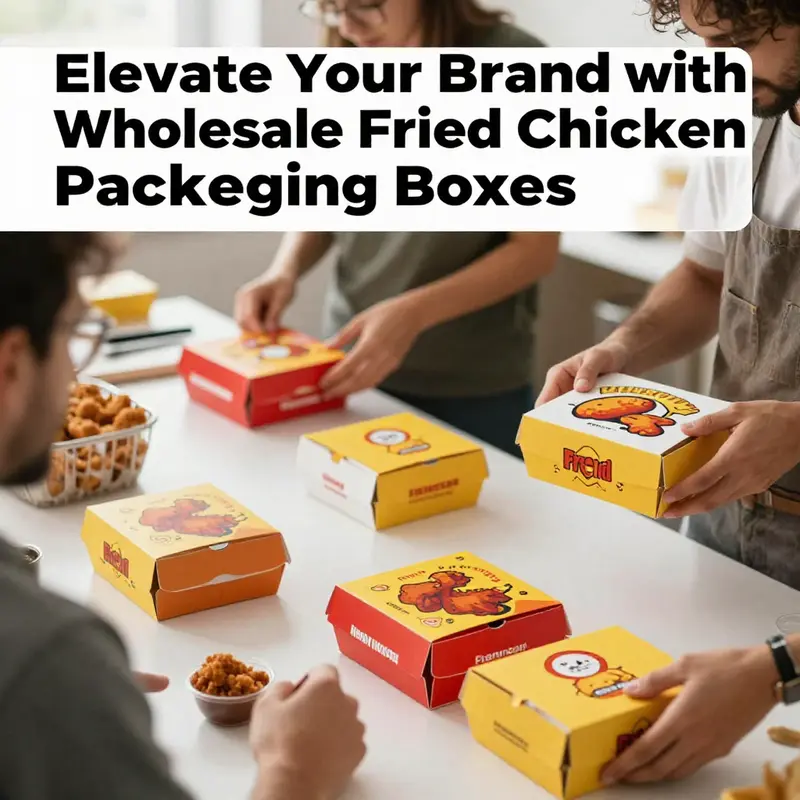
Customization is not merely an add-on in the wholesale market for fried chicken packaging boxes; it is a strategic engine that shapes perception, efficiency, and value across the entire supply chain. In markets where speed, consistency, and presentation collide, the carton becomes more than a container—it becomes a portable ambassador that carries a brand’s voice from kitchen to doorstep. When a restaurant, fast-casual chain, or catering operator places an order for boxes, they are not just buying material; they are procuring a system that supports operational flow, safeguards product integrity, and reinforces consumer trust. The most successful players in this space treat customization as a holistic design discipline. Size, form, surface, and fiber all converge to create packaging that performs as reliably on a courier’s back as it does on a customer’s table. This approach begins with capacity and size and extends through printing, material choice, structural engineering, and even the way the box interacts with other elements of the meal—sides, sauces, sleeves, and inserts—so the packaging tells a cohesive story at every touchpoint.
Size and capacity define the practical backbone of customization. The choice of box dimensions must reflect the archetypes of the menu: a single portion that preserves crispness, a family bundle that invites sharing, or a multi-item meal that bundles fried chicken with sides and beverages. In practice, brands often negotiate flexible tolerances in centimeters to accommodate varying portion counts while maintaining efficient nesting for storage and transport. Common reference points in wholesale catalogs show small, single-serve formats around compact dimensions such as 9.00 cm × 8.00 cm × 7.00 cm, ideal for one piece and a dipping sauce, and larger configurations like 20.00 cm × 16.00 cm × 12.00 cm that accommodate multiple pieces plus sides without crowding. The design challenge lies in balancing volume with weight, ensuring that the box can bear the cumulative load of a full order while staying economical to produce in bulk. The result is a family of sizes that can be mixed and matched to form standardized bundles for drivers and storefronts, reducing confusion for kitchen staff and enhancing order accuracy in the delivery workflow.
From the kitchen to the customer’s doorstep, branding is carried not only by the label on the box but by the box itself. Printing options have advanced far beyond a single-color logo on a surface. In many wholesale channels, the design language now includes multi-color, high-resolution imaging that reproduces brand colors with fidelity, as well as patterns that evoke the brand’s identity—whether that is bold geometric lines, retro chicken-themed illustrations, or a minimalist aesthetic that signals premium positioning. The packaging surface becomes a canvas for storytelling, turning the act of opening a meal into a short, memorable brand moment. For decision-makers, the opportunity lies in integrating brand identity into the box through color palettes, typography, and even small, brand-consistent graphic devices such as a signature pattern or mascot motif. The result is not merely a box but a consistent extension of the brand’s visual language that customers recognize in transit, at pickup, and during unboxing. Customization in printing also enables color management that ensures the brand’s appearance remains stable across different production runs, substrates, and lighting conditions, a practical certainty in a world where many orders are fulfilled through courier networks and handoffs.
Material choice sits at the intersection of performance and sustainability. Kraft paper remains a popular baseline due to its natural appearance, strength, and relative ease of recycling. Many operators favor kraft for its practical balance of machinability, heat tolerance, and environmental footprint. Kraft can be treated or blended to enhance barrier properties and oil resistance, ensuring the box does not compromise the product’s safety or the consumer’s experience. For cold-chain or frozen offerings, corrugated cartons provide superior insulation and rigidity, protecting fragile meals from crushing and maintaining temperature integrity during transit. The materials chosen also reflect a growing consumer expectation for responsible packaging. Food-grade certification, recyclability, and compostability are not optional add-ons but core criteria embedded in the procurement criteria. International certifications such as FSC or equivalent microbial safety assurances give buyers confidence that their suppliers adhere to recognized standards. In practice, this means a packaging program that can be audited, traced, and communicated to customers as part of a broader sustainability narrative. The material conversation sometimes extends to interior elements, like sleeves or inserts that keep items separated, reduce grease migration, or guide customers’ use of the packaging after opening. All these choices converge to produce a container that supports the product while reinforcing the brand’s values.
Structural design and functional innovation are where customization can most directly impact operational performance. Box designers have embraced foldable lids, vented panels, and heat-retardant layers that help preserve the meal’s crispness for longer during delivery. A well-engineered closure system minimizes the risk of leaks and spills, which is critical in maintaining a positive consumer impression and reducing post-delivery cleanliness concerns for drivers and customers alike. For some brands, multi-compartment configurations are not mere novelty but a logistical solution. They allow fried chicken, fries, and sauces to be packaged separately yet carried within a single outer carton, simplifying order assembly and reducing the number of items a customer must manage. This kind of segmentation can also drive better thermal management, as different components can benefit from tailored insulation or airflow characteristics. Designers may incorporate heat-sealing features or easy-open tabs that preserve the seal during transit but enable straightforward access at the point of consumption. In premium or high-volume settings, the packaging may furnish branded inserts or sleeves that slide over the box, providing an additional surface for marketing statements or nutritional information, without compromising the primary container’s integrity.
The customization conversation also extends to the box’s role in the broader packaging ecosystem. Brands increasingly view their cartons as part of a cohesive system that includes lids, liners, sleeves, and even branded napkins or bags that reinforce the same color story and messaging. This approach is particularly valuable in multi-item orders where consistency across items matters for brand recall. Consumers who repeatedly encounter the same visual cues across different meal components are more likely to form a mental association with the brand, which can influence future purchasing decisions. For operators, a unified packaging system translates into streamlined procurement, easier inventory management, and predictable manufacturing timelines. A well-planned OEM or ODM engagement allows the buyer to specify exact tolerances for dimensions, color palettes, and die-cut patterns, ensuring that standard products align with store layouts, delivery routes, and kitchen workflows. The design process can also accommodate seasonal campaigns and limited-edition graphics that keep the brand’s packaging fresh without requiring bespoke tooling for every campaign, a practical balance between novelty and cost control.
A reliable customization program for fried chicken packaging boxes also depends on a disciplined approach to quality, logistics, and supplier collaboration. Minimum order quantities (MOQs) and lead times must be aligned with demand forecasts and marketing calendars. The best suppliers respond with a tiered pricing model that rewards scale while providing flexible options for mid-size brands or regional operators. The wholesale landscape rewards long-term partnerships, where joint development of packaging solutions can yield cost savings, improved performance, and more predictable supply. In such arrangements, suppliers may offer Original Equipment Manufacturer (OEM) services that replicate exact box specifications, while Original Design Manufacturer (ODM) capabilities enable the supplier to propose optimized forms that preserve function while reducing material usage or improving print quality. The result is a mutually beneficial relationship in which packaging becomes a living asset rather than a one-off commodity. As orders scale, the supplier’s capacity to maintain consistency across large runs becomes a differentiator, with rigorous quality control processes, standardized testing, and traceability providing reassurance to buyers who must meet stringent food-safety and branding commitments.
The practical implications of customization extend into the day-to-day operations of restaurants, fast-food networks, and mobile vendors. For a chain that relies on high-volume takeout, a standardized yet flexible packaging system can shorten assembly time in the kitchen and reduce the likelihood of order errors at the pickup window. A well-chosen multi-pack box can support bundling strategies that optimize space in delivery bags and influence customer perceptions of value. An efficient design can improve packing speed when meal components are assembled rapidly under pressure, while a robust seal and grease resistance minimize customer complaints about leaks or soggy crusts. Moreover, when the packaging carries a clear and consistent brand narrative, it fosters a sense of reliability and trust, which can translate into repeat orders and higher basket sizes. The consumer’s tactile experience—the feel of the box, the ease of opening, the neatness of the design—becomes part of the overall impression a brand leaves in the moment of truth: the first bite and the immediate post-consumption memory. The marketing impact is not incidental; it is a function of how the packaging looks, feels, and performs, resonating with customers long after the meal is finished.
In the wholesale context, customization is also a negotiation around cost, scale, and speed. Pricing models reflect the scale of orders, with bulk purchases offering the most favorable unit costs. Examples from the market illustrate how price tiers function: very large orders can push unit costs into fractions of a dollar, while smaller but still substantial runs remain economically viable for growing brands. For instance, orders in the tens of thousands may see significant price reductions relative to smaller batches, with larger volumes offering the strongest leverage for brand differentiation through custom design. These dynamics encourage early planning and ongoing collaboration between brands and packaging suppliers. When a buyer has a clear forecast of seasonal demand and menu evolution, they can lock in favorable terms and ensure that the packaging evolves in step with the product lineup while maintaining compatibility with existing equipment and processes. The payoff is a stable supply chain in which packaging quality matches the expectations set by the food and service experience, reinforcing brand confidence with every delivery.
To move from concept to procurement, many buyers in this space begin with a practical browsing of the packaging landscape, focusing on the paper boxes category as a baseline for options that can accommodate a wide range of formats. Within that category, designers and procurement managers can identify the most suitable substrates, thicknesses, and finishing techniques for their particular needs, from grease-proof coatings to premium printed finishes. The real value lies not merely in the ability to print a logo but in aligning the box’s physical properties with the meal’s journey—from kitchen to car to doorstep. A well-chosen box minimizes risk in transit, protects the product’s crispness, and serves as a dependable canvas for brand storytelling. For organizations that prioritize visual identity, the choice of color, typography, and graphic treatment is as important as the box’s mechanical performance. In many cases, a carefully designed box will reduce reliance on additional marketing collateral, because the packaging itself carries enough branding to support a cohesive consumer experience. The integration of design and function is where customization becomes strategic, not merely aesthetic.
The upshot of this customization-centric approach is a packaging program that supports growth and differentiation without sacrificing efficiency. Brands that adopt a thoughtful, scalable customization strategy can respond to evolving consumer tastes, seasonal promotions, and menu innovations while keeping costs under control through bulk economies. They can also communicate a commitment to quality and sustainability, two factors increasingly important to contemporary diners. The packaging thus becomes a channel for value creation: it reduces operational friction for the restaurant, strengthens brand equity in the market, and enhances the consumer’s perception of freshness and care. In this sense, the wholesale market for fried chicken packaging boxes is not a supply of containers but a collaborative ecosystem where materials science, design discipline, and commercial strategy converge to produce packaging that performs reliably, looks compelling, and reinforces a brand’s promise at every step of the customer journey. And as markets evolve, the ability to customize quickly and consistently will remain a pivotal differentiator for operators seeking to maintain relevance in a crowded, price-competitive space.
For those exploring this space, a practical entry point is to examine the catalog of possible configurations, surface designs, and material options. The paper-boxes category provides a practical starting point for understanding the breadth of customizable options, including dimensions, finishes, and branding capabilities. This pathway helps buyers translate strategic goals into tangible packaging specifications that can be produced at scale. It also helps in communicating with suppliers about the precise needs of a given market or outlet, ensuring that the final product aligns with both operational realities and consumer expectations. By focusing on the intersection of form and function, buyers can craft a packaging program that supports speed, reliability, and brand coherence across a network of storefronts, delivery hubs, and mobile operations. In this way, customization becomes a discipline that sustains growth rather than a one-off indulgence, and the wholesale market for fried chicken packaging boxes becomes a strategic partner in delivering consistent hospitality for customers who value tasty meals and dependable service.
As the industry continues to mature, additional considerations increasingly influence customization strategies. Environmental impact, for example, is no longer a peripheral concern but a central criterion for many buyers. Packaging programs that demonstrate lifecycle thinking—reducing material use, increasing recyclability, and selecting renewable or compostable inputs—tend to be favored in procurement processes, especially when they can be clearly communicated to customers through product labeling and marketing materials. Similarly, supply chain resilience has gained prominence. The ability to maintain consistent quality and timely delivery in the face of demand spikes, transportation disruptions, or raw material fluctuations is critical for brands that rely on precise packaging specifications to maintain the integrity of their offerings. In practice, this translates to diversified supplier networks, robust quality assurance, and proactive contingency planning that keeps the packaging program aligned with business objectives even during periods of volatility.
Ultimately, customization in fried chicken packaging boxes wholesale is about translating brand strategy into a physical form that travelers carry with them, that staff can handle efficiently, and that customers can trust. It is a process that requires collaboration between design teams, procurement professionals, and production partners, with a shared understanding of the constraints and possibilities that come with mass production. The most successful programs treat the box as a living element of the brand—capable of adapting to new formats, promotions, and service models while preserving the core expectations of quality, safety, and convenience. By embracing this mindset, operators can build packaging that not only protects and transports food but also communicates care, consistency, and character to every consumer who engages with the meal. In doing so, they harness the power of customization to transform a simple container into a strategic asset, a quiet ambassador that elevates the dining experience and strengthens brand loyalty in a competitive market.
For readers seeking a tangible starting point within the wholesale landscape, the paper-boxes category offers a concrete, flexible entry into customization options. It provides a framework to compare sizes, finishes, and branding capabilities while remaining adaptable to future changes in menu and service models. The emphasis on material choice, print quality, and structural design ensures that the packaging can evolve without sacrificing performance. As brands move toward more integrated packaging systems, this category becomes a focal point for aligning design intent with manufacturing realities, ensuring that every batch of boxes supports the business’s goals and delivers a consistent customer experience. In short, customization is not a cosmetic concern but a structural advantage—one that can drive efficiency, reinforce identity, and help fried chicken offerings stand out in a crowded market.
An external reference that offers a broader, well-documented view of customization standards and practice can be found here: https://www.alibaba.com/product-detail/Custom-Fried-Chicken-Packaging-Carton-Food_1601005393384.html. This resource provides detailed specifications, material options, printing capabilities, and certification information that buyers frequently rely on when negotiating with manufacturers and ensuring alignment with international standards.
Boxed Growth: The Economic Reach and Ripple Effects of Wholesale Fried-Chicken Packaging Boxes
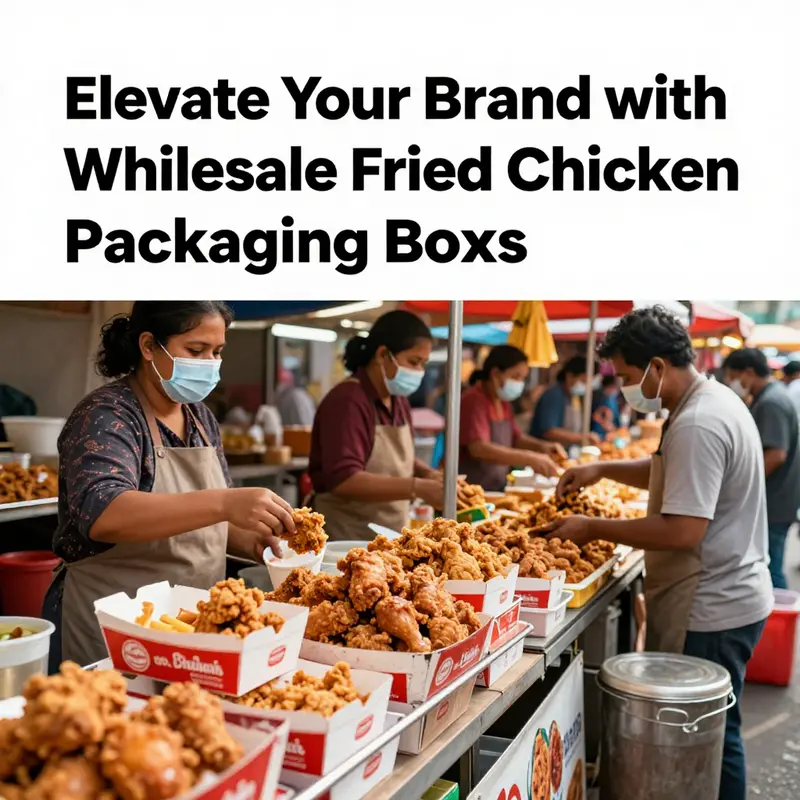
The wholesale market for fried chicken packaging boxes is more than a supply chain footnote; it is a central lever in a dynamic ecosystem that spans manufacturing floors, restaurant menus, consumer behavior, and environmental policy. From the first order of bulk boxes to the last mile of distribution, the way these cartons are designed, produced, and branded dictates not only the operational efficiency of food-service businesses but also the tempo of regional economic activity and the evolution of sustainability norms in packaging. In plain terms, the economics of fried chicken packaging boxes reverberate through several layers of the economy, shaping choices that ripple outward to influence pricing, branding, employment, and even the way cities think about waste, recycling, and consumer perception of corporate responsibility.
At the core of this market is a surprisingly simple equation: bulk orders, shared costs, and standardized performance. The boxes themselves are durable vessels that preserve warmth, maintain crispness, and protect delicate contents as they travel from kitchen to customer. Kraft paper and corrugated cardboard—preferably sourced with attention to recyclability and compostability—are the foundational materials. Kraft boxes offer a rustic, natural aesthetic that aligns well with perceived sustainability while delivering reliable strength for regular takeout volumes. Corrugated cartons provide insulation and impact resistance crucial to cold-chain logistics when needed, such as in cases where fried chicken is part of a larger meal that travels through varied temperatures. Both material families are increasingly selected not merely for function but also for the message they convey: a product that respects the environment while supporting a fast-paced service model.
The economic logic of bulk procurement is built on scale. When a restaurant chain, a food-truck network, or a regional distributor places orders in multiples of tens of thousands, the unit cost falls sharply. The market data reflected in supplier catalogs and wholesale platforms shows a striking progression: prices can dip to as low as a few cents per unit at high volumes, with even lower averages achievable at larger lots and longer-term contracts. This scaling effect is not simply a matter of generosity on the supplier side; it reflects efficiencies gained in material utilization, set-up times, and logistics planning. For businesses operating on thin margins, such as quick-service restaurants with high turnover, even a few tenths of a cent per unit can accumulate into meaningful annual savings that support marketing initiatives, menu development, or investments in more sustainable packaging technologies.
The production side of this market runs on the tension between capacity and reliability. In major manufacturing hubs across East and South China, Guangdong and Zhejiang provinces in particular, large-volume facilities are designed to churn out tens of millions of units per month. This scale matters not only for price but for resilience. A robust supplier base with high-capacity producers reduces the risk of stockouts during peak sales periods and enables customers to maintain consistent branding across campaigns and locations. The capacity levels mentioned in industry reporting reflect a mature supply landscape capable of supporting both everyday operations and seasonal spikes in demand. When a restaurant chain launches a new promotion or a regional festival increases fried chicken demand, the supply chain is prepared to respond because the production engines are built to absorb variability and keep the product flowing.
Customization—often labeled OEM (Original Equipment Manufacturer) and ODM (Original Design Manufacturer) services—adds a strategic dimension to this wholesale market. Boxes become canvases for brand storytelling, not just carriers of food. A brand’s logo, color palette, and even sleeve or insert graphics can transform a standard container into a mobile marketing platform. The economic impact of this shift is twofold. First, it creates incremental demand for specialized printing, finishing, and assembly steps, extending the value chain beyond raw materials into design and production services. Second, it strengthens brand equity for the customer. A well-branded box can foster repeat purchases, improve customer recall, and convey a sense of consistency that reassures consumers about quality and service standards. This branding is not mere vanity; it translates into measurable revenue growth when customers recognize a trusted visual identity amid a crowded marketplace.
To illustrate, many wholesale suppliers advertise flexible MOQs and scalable customization options, including logo insertion, color matching, and even branded inserts that offer product information or promotional messages. The interplay between customization and cost is central to the business model. While basic boxes provide functional reliability at low unit costs, customized solutions enable a company to charge a premium for perceived value and consistency. The balance between price and branding becomes a strategic decision for buyers who want to protect margins while maintaining a coherent brand experience across multiple touchpoints—from storefront to drive-thru, delivery, and social media engagement. In practice, this means that the economics of packaging are not isolated; they influence pricing strategies, customer segmentation, and the design of menu engineering as much as they shape logistics and distribution.
The broader economic implications extend beyond the margins of individual buyers. Bulk ordering and mass production support significant employment in manufacturing, packaging, logistics, and related services. In large factories that operate at scale, tens of thousands of workers contribute to a workflow that includes raw-material handling, die-cutting, printing, boxing, and quality assurance. The creation and maintenance of these jobs depend on stable demand patterns, which bulk orders and long-term contracts help foster. The geographic concentration of manufacturing capacity in provinces with developed industrial ecosystems tends to catalyze regional economic activity, generating ancillary opportunities in supplier services, maintenance, and transportation infrastructure. The result is a multiplier effect: wholesale packaging production sustains wages, which in turn circulate through local economies, reinforcing demand for goods and services, and contributing to broader regional development.
Sustainability has become a central axis around which the economic narrative of fried-chicken packaging boxes turns. Consumers, regulators, and corporate social responsibility initiatives increasingly reward packaging solutions that reduce environmental costs. Recyclable and compostable materials, FSC-certified paper, and optimized box designs that minimize material usage without sacrificing performance are no longer niche considerations; they are indicators of strategic alignment with long-term cost management and brand ethics. The transition toward sustainable packaging is not without its costs or trade-offs. Eco-friendly materials can carry higher unit prices, and the process of obtaining certifications or integrating recyclable supply chains requires investment in technology, training, and process redesign. Yet the payoffs are tangible: lower waste disposal costs, improved corporate reputation, and stronger alignment with consumer expectations for responsible business practices. The economic argument for sustainable packaging, therefore, extends beyond the environmental ledger to become a core driver of risk management and value creation for companies relying on bulk procurement.
Certifications and compliance play a critical role in shaping competitive dynamics within this sector. The presence of internationally recognized standards—such as quality-management, food-safety, and social-responsibility certifications—provides a framework within which buyers can assess supplier reliability and product integrity. When a supplier demonstrates compliance with recognized schemes, it signals to buyers that the producer can maintain consistent performance in diverse markets and under varying regulatory regimes. This credibility translates into smoother cross-border transactions, better payment terms, and easier access to multi-market contracts, all of which contribute to the scalability of the business and the stability of employment across the supply chain. In a market where margins are sensitive and brand risk is amplified by the rapid pace of food-service operations, such certifications become valuable assets that unlock opportunities for broader distribution and export.
Material choice remains at the heart of the price-quality-performance triad. Kraft paper’s natural look and compostability align with consumer preferences for earth-friendly products, while its strength under normal handling conditions makes it a pragmatic option for many fried-chicken boxes. Corrugated cardboard, with its superior insulation and structural resilience, becomes the material of choice for cold-chain or high-volume packaging requiring enhanced durability. The ongoing push toward more sustainable fibers and recycled content further reshapes the cost structure, as suppliers optimize their supply chains to source fiber more efficiently and to implement processes that minimize waste in production. In response, buyers adapt by seeking boxes that deliver not just function but also predictable performance across a wide range of temperatures, transit times, and handling scenarios. This adaptability is essential to maintaining consistent product quality and customer satisfaction, which in turn underpins repeat business and brand loyalty—two elements that directly affect revenue growth and profitability across the sector.
A crucial dimension of the economic impact centers on the speed and efficiency of distribution. Boxes designed for streamlined pickup and delivery flows reduce the time staff spend bagging, labeling, and segregating orders. Well-calibrated box sizes—such as commonly used 800ml, 1000ml, 1300ml, 1500ml, and 2000ml configurations—enable operators to optimize space in storage, on shelves, and in delivery totes. This optimization reduces idle time and accelerates service, boosting the throughput of busy kitchens and drive-thru lanes. When combined with multi-compartment meal boxes and smart packaging features like branded sleeves or inserts, these designs reinforce a store’s operational discipline and marketing reach. The result is a cycle in which better packaging alleviates bottlenecks, lowers labor costs, and frees resources for menu development and customer engagement—an integrated payoff that enhances competitiveness in a crowded market.
The global nature of the fried-chicken packaging-box trade adds another layer of economic significance. While most of the capacity is concentrated in regional manufacturing hubs, the supply chains are increasingly connected to global export markets. The Asian manufacturing backbone supplies a diverse clientele—fast-food brands, independent restaurants, and logistics providers—through a spectrum of distribution arrangements that range from direct factory-to-buyer shipments to participation in online wholesale marketplaces. This connectivity fosters price discipline, encourages innovation, and supports the diversification of both customer bases and revenue streams. It also creates exposure to currency fluctuations, trade policies, and logistical disruptions, factors that buyers and suppliers must manage through hedging strategies, long-term agreements, and diversified sourcing. In such an environment, the capacity to adapt quickly—by switching suppliers, altering packaging specifications, or adjusting branding assets—becomes a valuable asset and a determinant of resilience.
The story of this market cannot ignore the branding dynamic that is shaping consumer perception of fried chicken as a category. If the packaging is a blank canvas, customization turns it into a storefront extension. Logos, color schemes, and even texture choices become visible cues that influence consumer decisions at the moment of purchase and in social-media sharing later. This is where marketing and packaging converge. A well-branded box functions as a moving billboard, circulating as customers carry meals through streets, buses, and office corridors. The long-run economic implication is clear: packaging becomes a leverage point for revenue growth, enabling a single design to travel across many locations while preserving brand semantics and enabling scalable, consistent customer experiences. In markets where competition is intense, such branding-enhanced packaging can be a differentiator that prompts customers to choose one brand over another, thereby driving incremental sales and contributing to franchise stability and expansion opportunities.
In parallel with these commercial dynamics, the sustainability narrative continues to drive investment and innovation. Companies are increasingly pursuing standardized, scalable solutions that minimize environmental impact without compromising performance. The materials science underlying box construction is advancing—new coatings, adhesives, and barrier layers that prolong product freshness and reduce moisture migration can improve shelf life and reduce waste. Certifications and audits are extended to manufacturing processes as well, encouraging continuous improvement and accountability across the supply chain. The economic consequence is not merely lower disposal costs; it is a more resilient packaging system that aligns with consumer expectations for responsible business practice and with regulatory trends toward circular economies. As retailers and food-service operators seek to demonstrate their commitment to CSR, packaging decisions increasingly reflect a holistic strategy that links material choice, production standards, and community impact. Such alignment helps retailers attract customers who prioritize sustainability, thereby stabilizing demand for bulk packaging and sustaining employment and investment in packaging ecosystems.
Ultimately, the economic impact of wholesale fried-chicken packaging boxes is best understood as a composite of several interlocking engines: scale benefits that reduce unit costs; customization capabilities that convert packaging into branding and marketing assets; capacity and reliability that support consistent supply; sustainability initiatives that lower life-cycle costs and meet consumer expectations; and the geographic and regulatory contexts that shape market access and risk management. This convergence creates a resilient, adaptable market that can attract investment, sustain jobs, and support growth across both manufacturing and service sectors. The consumer-side payoff—consistent quality, reliable service, and clear brand signals—complements this industrial narrative by reinforcing demand for fried-chicken offerings and the stores that serve them. In turn, the wholesale packaging segment becomes a trusted facilitator of food-service growth rather than a mere logistical necessity. Its health, therefore, is closely tied to the vitality of the broader food economy and to the frequently overlooked yet essential infrastructure that turns a simple meal into a repeatable, scalable experience.
For readers looking to explore this landscape further, the packaging-printing dimension offers a window into how design, customization, and production efficiencies co-create value. See the Packaging Printing category for a deeper look at how brands translate a box into a marketing asset, ensuring that every layer of the packaging experience reinforces the consumer journey. Packaging Printing. As the market evolves, buyers and suppliers alike will continue to balance cost, performance, and purpose to forge a future where packaging is not just a protective shell but a strategic driver of growth and sustainability. External references provide additional context on global wholesale patterns and platform-driven pricing, including industry listings that illustrate the scale and pricing dynamics discussed here: https://www.alibaba.com/product-detail/Hot-Sale-Take-out-Fried-Chicken-Packaging-Box_1600735478977.html
Final thoughts
The wholesale market for fried chicken packaging boxes offers substantial opportunities for restaurants and food vendors looking to enhance their product presentation and brand presence. By understanding the key features of packaging, exploring customization options, and recognizing the economic significance of packaging choices in food service, business owners can better equip themselves for success in a competitive landscape. Quality packaging is not merely a functional requirement; it can serve as a powerful marketing tool that drives customer loyalty and sales.