
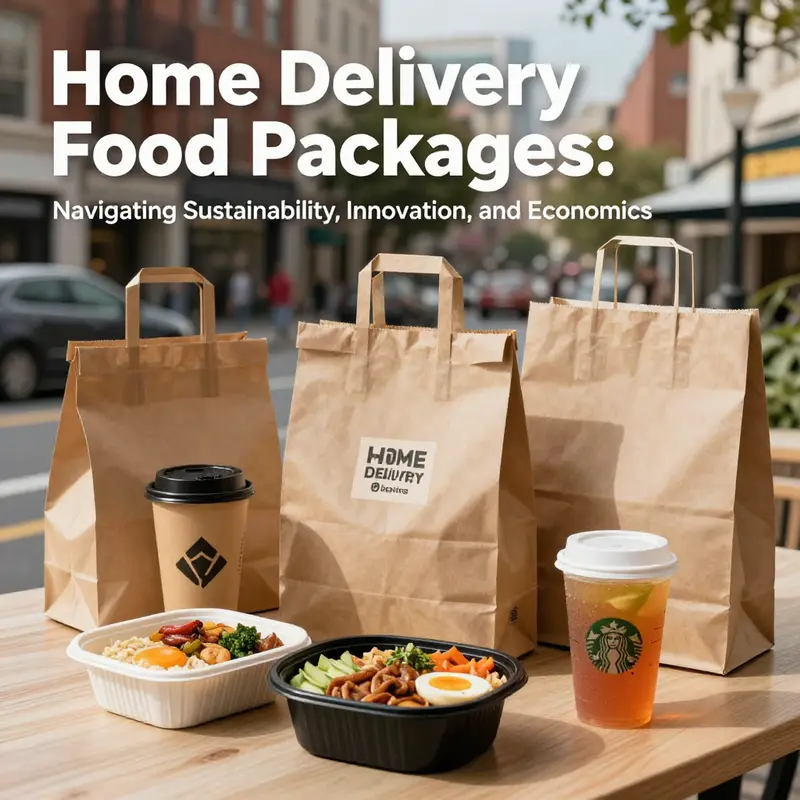
The rise of home delivery food packages has revolutionized the way consumers experience meals and groceries. As more customers turn to local eateries, beverage chains, and catering services for their culinary needs, the demand for effective and sustainable packaging solutions has never been more significant. This article delves into the pressing challenges of sustainability, the advancements in technology that enhance the delivery experience, and the broader economic impacts of home delivery food packages. Each chapter brings a unique perspective on how industry players can adapt and thrive in this rapidly changing landscape of home food delivery.
From Barrier to Balance: Navigating Sustainability in Home Delivery Food Packaging
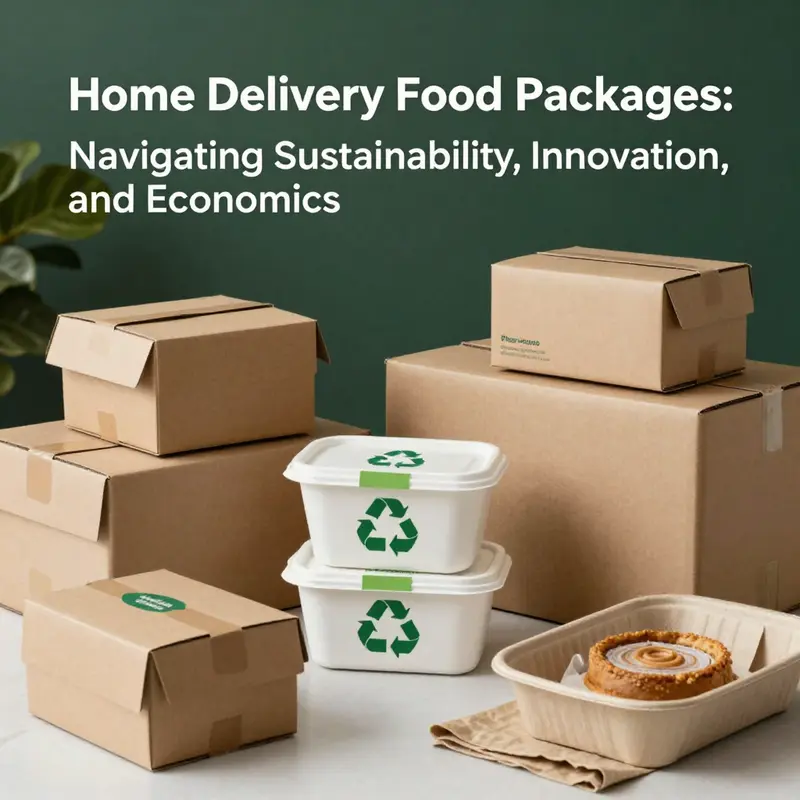
The rise of home delivery has reshaped not only how we eat, but how we think about packaging itself. Meals and groceries arrive at our doorsteps in carefully engineered wrappers, boxes, and vessels that protect flavor, safety, and convenience from the moment they leave a kitchen or a warehouse until they reach the consumer’s hands. Yet as demand for speed and reliability grows, so too does the responsibility to minimize the environmental footprint of the packaging that makes this service possible. The sustainability challenges in home delivery food packages are not only about choosing greener materials; they span the entire lifecycle—from the raw materials and production processes to how these packages perform during transit and how they are finally disposed of. It is a complex system, and progress depends on aligning performance, safety, and environmental stewardship in a way that can scale with demand without slowing the efficiency that customers expect. To understand this, it helps to look at three intertwined layers: material performance, end-of-life management, and the broader framework that makes responsible innovation possible: green chemistry, coordinated research, and effective regulation. Each layer reveals both constraints and opportunities that can guide better decisions for producers, retailers, regulators, and even the households receiving deliveries.
Material performance sits at the heart of any packaging choice. When a consumer opens a delivery box, the packaging has already stood up to a journey that may include shifting temperatures, jostling, and long storage times in a delivery vehicle. The barriers that keep moisture and oxygen at bay are essential to maintaining freshness and preventing spoilage. Traditional petroleum-based plastics have long delivered reliable barrier properties, enabling long shelf lives and robust transfer performance. This is not a minor detail; it is a core requirement for preventing food degradation and ensuring food safety. However, the drive to reduce plastic waste is pushing developers toward biodegradable and compostable alternatives. Here the performance gap becomes immediately visible. While certain bio-based polymers show promise in terms of renewability and end-of-life benefits, many struggle to match the barrier properties of conventional plastics, especially in high-moisture or high-fat contexts. Water vapor transmission rate and oxygen permeability—critical measures of a packaging film’s effectiveness—often increase when materials are replaced with biodegradable options. The consequence can be practical: foods may dry out more quickly, or oils and aromas may migrate, diminishing sensory quality and perceived freshness. This is not merely a technical hurdle; it has real implications for consumer trust and brand reputation. The challenge, then, is not simply to substitute one material for another, but to engineer a performance profile that preserves safety and quality while advancing sustainability goals.
Biodegradable coatings offer one of the most active frontiers in closing that gap. Coatings can be applied to existing materials to improve sealability, adhesion, and sometimes even provide antimicrobial benefits. They hold the potential to enhance barrier performance without requiring a complete replacement of the base polymer. Yet adoption faces interconnected hurdles. First, maintaining biodegradability after coating is critical. A coating that degrades too slowly or leaves behind residues can undermine the entire environmental advantage. Second, durability during the service life of the product matters. If a coating delaminates under transit or heat-seals fail during processing, the integrity of the package can be compromised, potentially leading to leaks, contamination, or compromised barrier protection. Third, food safety concerns loom large. Migration of additives or coating components into food must stay well within regulatory limits, and the science must be clear about any potential risks. Fourth, scaling production from laboratory or pilot lines to full manufacturing introduces a suite of practical constraints. Coatings must be compatible with existing manufacturing lines, cost-competitive, and able to sustain consistent performance across millions of units. These are not small barriers; solving them requires integrated development across materials science, processing engineering, and quality assurance. The promise of coatings that deliver better barrier properties while preserving end-of-life benefits remains strong, but it is a prompt for sustained investment and cross-disciplinary collaboration rather than a quick fix.
A broader thread in the sustainability fabric is the discipline of green chemistry. This approach insists that the entire lifecycle be considered—how materials are sourced, how they are made, how they perform, and how they are disposed of. Green chemistry invites us to ask: Are feedstocks renewable? Are solvents and energy used efficiently? Can the production processes be designed to minimize waste and emissions? In the context of home delivery packaging, green chemistry encourages designs that reduce the toxicity of components, avoid persistently problematic substances, and favor recyclability or compostability without compromising safety. It also emphasizes the need to evaluate the hidden costs embedded in a packaging system—the energy used in manufacturing, the emissions from transportation, and the feasibility of recovering materials at the end of life. This life-cycle thinking moves the conversation beyond single-material wins to a more holistic assessment of environmental impact, which is essential given the scale of home delivery and the diversity of packaging formats across meals, groceries, and beverages.
If green chemistry provides the compass, coordinated innovation provides the route. The breadth of home delivery packaging challenges means no single discipline can solve them alone. Material science researchers are tasked with discovering and validating new bio-based polymers, coatings, and multi-layer structures that can deliver the needed barrier performance while remaining compatible with sustainable end-of-life handling. Manufacturing experts must develop processes that can reliably produce these advanced materials at scale, with energy efficiency and minimal waste, and with equipment that can be retrofitted to current lines where possible. Regulators and standard bodies must craft guidelines that safeguard food safety and ensure that sustainability claims stand up to scrutiny across different markets. The regulatory framework must be robust enough to promote the use of sustainable materials while preventing greenwashing and ensuring that the chain from producer to consumer remains transparent. In practice, this means building and harmonizing standards for compostability, recyclability, and material migration, and enabling performance testing that reflects real-world conditions rather than laboratory idealizations.
All of this points back to a core truth: sustainable packaging for home delivery is not a unilateral substitution of one material for another. It is a systems problem that demands a balance between performance, safety, and environmental objectives. The balance is delicate because the needs of a perishable product and the expectations of a busy household are exacting. A delivery system must keep foods at safe temperatures, protect against moisture and oxygen ingress, preserve aroma and texture, and resist the rigors of everyday handling during delivery. At the same time, it must be lightweight to reduce transport emissions, compatible with widely used waste streams, and acceptable to consumers who increasingly ask for proof of environmental responsibility. To navigate these competing demands, stakeholders rely on an evolving ecosystem of innovations, metrics, and partnerships. The cited review on sustainable biodegradable coatings for food packaging, for instance, outlines the challenges and opportunities that arise when attempting to reconcile biodegradability with barrier performance and safety. It serves as a useful beacon for researchers and practitioners seeking to design packaging that does not force a trade-off between function and sustainability. While the review itself dives into technical detail, its overarching message aligns with the broader narrative of this chapter: meaningful progress requires not only new materials, but also new processes, new incentives, and new ways to measure value across the lifecycle.
From the perspective of the consumer and the business alike, the practical path forward will hinge on several converging strategies. First, advances in multi-layer packaging that combine bio-based or recycled layers with high-performance barrier films could offer a solution that captures the strengths of each component. The idea is to assemble a stack that maintains temperature and moisture control while enabling end-of-life separation or composting that fits into existing waste streams. This approach, however, demands careful attention to interfacial compatibility, long-term stability, and the possibility of migration across layers. It also requires practical tests that mimic real-world handling, including stacked shipments, pile-ups in delivery hubs, and exposure to varying ambient conditions. Second, the integration of smart packaging features—such as temperature indicators or tamper-evident seals—holds promise for improving traceability and safety in a way that can reassure consumers while supporting quality control in the supply chain. Yet every added feature adds cost and potential waste, so their deployment must be targeted and scalable, with a clear net environmental benefit. Third, investment in infrastructure for end-of-life processing is essential. A biodegradable or compostable package can only deliver its environmental advantage if the waste streams exist to process it. This often means expanding access to industrial composting or improving recycling streams to prevent contamination. Without appropriate infrastructure, the most sustainable formulation may be stymied by improper disposal or low recovery rates. The net effect is a reminder that packaging choices and waste management capabilities are tightly coupled; progress in one realm will depend on parallel advances in the other.
The internal landscape of available materials and technologies adds another layer of complexity. The packaging and printing ecosystem, for instance, continuously evolves as new substrates, coatings, inks, and adhesives enter the market. For readers who want to explore the current landscape of packaging and printing options and how they relate to sustainability, a useful reference point is the Packaging & Printing category on a prominent packaging site. It provides a snapshot of how industry players balance function, aesthetics, and environmental considerations across different product classes. See Packaging & Printing for a sense of how diverse packaging components—films, labels, coatings, and protective layers—are positioned within a broader sustainability strategy. This link is not a prescription but an invitation to appreciate the breadth of choices and the trade-offs that come with each one.
The original research landscape surrounding biodegradable coatings highlights the core tension between material performance and environmental aims. It is tempting to imagine a perfect one-to-one replacement of conventional plastics with a fully biodegradable alternative. Yet in practice, the performance gap persists under many real-world conditions, particularly when moisture and heat introduce fast degradation mechanisms that can undermine barrier properties. Moreover, the process of applying coatings itself must not undermine biodegradability or introduce new safety concerns. The challenge of scaling up from laboratory demonstrations to industrial production is another reality check: what works in a lab may require significant adaptation for high-volume manufacturing, with implications for cost, yield, and energy use. All of these factors create a dynamic research agenda that cannot be condensed into a single solution. Rather, it calls for sustained, cross-disciplinary collaboration and pragmatic milestones that demonstrate measurable environmental benefits without compromising the quality and safety of delivered foods.
In parallel, consumer expectations are becoming more nuanced. Many households want packaging that is easy to recycle or compost, but they also expect packaging that travels well, protects contents during unpredictable transit, and remains affordable. These expectations are not static; they shift with the broader environmental narrative and with changes in municipal waste management infrastructure. To reconcile these shifting expectations with practical delivery needs, businesses must communicate clearly about what their packaging can and cannot do in terms of end-of-life options. Transparent labeling, third-party certifications, and consistent performance claims help build trust and enable informed consumer choices. They also create feedback loops that can guide ongoing material development, ensuring that new packaging designs address real user experiences and waste-management realities rather than hypothetical idealizations.
This integrated approach—balancing barrier performance, biodegradability, food safety, manufacturing practicality, and end-of-life management—requires not only innovation, but also strategic alignment among actors along the value chain. Governments shape the playing field through standards and incentives; industry groups facilitate knowledge sharing and harmonization of test methods; and researchers push forward with new materials, coatings, and processing technologies. All of this must be anchored in a robust framework for green chemistry that evaluates the full lifecycle impact and seeks to minimize environmental harm at every stage. When these pieces come together, the result is a packaging ecosystem that supports the growth of home delivery while reducing its ecological footprint. It is a tall order, but one that is increasingly recognized as essential given the scale of the service and the urgency of environmental challenges. The comprehensive review on sustainable biodegradable coatings for food packaging—presented in 2025—offers a rigorous map of the terrain, outlining both the obstacles and the opportunities that lie ahead. It is a resource that complements the field’s broader trend toward systems thinking and lifecycle accountability, encouraging researchers and practitioners to pursue innovations that deliver real value across the entire value chain while maintaining stringent safety and regulatory standards.
As the industry navigates these complexities, the path forward will be defined by practical, incremental advances rather than single, sweeping breakthroughs. The goal is to reduce the environmental impact of home delivery without compromising the quality, safety, and convenience that customers expect. That means designing materials and processes that harmonize with existing waste systems where possible, while also advocating for improvements in waste-management infrastructure to handle new, more sustainable packaging configurations. It means adopting coatings and composites only when they demonstrate a clear lifecycle advantage and can be produced at scale with minimal environmental trade-offs. And it means engaging with regulators, consumers, and waste-management stakeholders to build a common understanding of what constitutes true sustainability in the packaging used for home delivery.
In sum, sustainability in home delivery packaging is best advanced through a delicate balance of performance, safety, and environmental responsibility. It is not a matter of choosing the greenest option at any price, but of selecting solutions that perform reliably in transit, protect food safety, and align with end-of-life options that minimize waste and emissions. The challenges are real, but so are the opportunities for innovation, collaboration, and smarter design. By grounding choices in lifecycle thinking, leveraging advances in biodegradable coatings where appropriate, and ensuring that green chemistry principles guide material selection and manufacturing, the industry can move toward packaging solutions that support the growth of home delivery services while stewarding the planet for future generations. The ongoing dialogue among researchers, manufacturers, regulators, and consumers is essential to this journey, and recent literature continues to illuminate practical pathways forward. For readers hungry for deeper technical insight, the MDPI review on sustainable biodegradable coatings provides a detailed map of where research stands and where it needs to go next. It serves as a catalyst for conversations about how to close the gap between aspiration and real-world impact, a conversation that is increasingly urgent as home delivery becomes a defining feature of modern life.
Smart, Safe, and Sustainable: How Innovations in Home Delivery Packaging Are Redefining Convenience
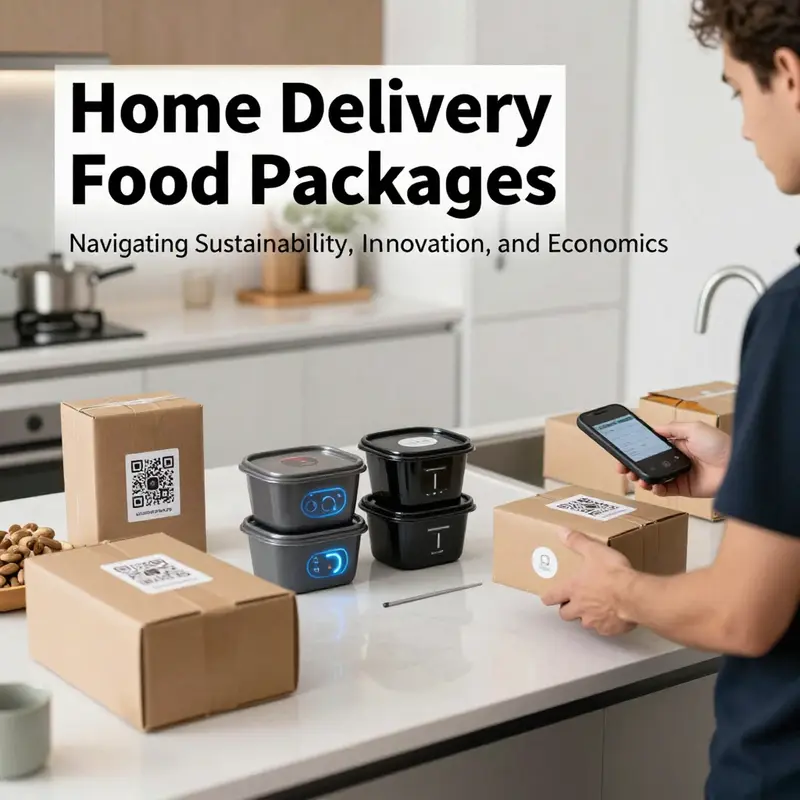
The rise of home delivery for meals and groceries has moved packaging from a simple protective shell into an essential element of the service itself. What arrives at the doorstep is not just a box of food but a carefully engineered interface between a consumer’s kitchen and a vast supply network. In this landscape, packaging technology does more than keep things fresh; it tracks, protects, communicates, and even learns. It turns the distance between a warehouse and a family table into a seamless, dependable experience. The most transformative shifts blend practicality with intelligence, turning every package into a small node of information and control within a system that prioritizes safety, efficiency, and sustainability.
Central to this transformation are smart packaging solutions that embed temperature sensors and real time monitoring into the packaging itself. For perishable foods and ready to eat meals, small disposable sensors indicate whether a product has stayed within safe temperature ranges from the moment it leaves the kitchen until it reaches the consumer’s refrigerator. The data streams from these sensors create a heat map of the delivery journey, allowing operators to identify weak links in the cold chain, anticipate spoilage risks, and intervene before quality is compromised. For households, these innovations translate into more reliable delivery windows and greater confidence that what is on the doorstep is both safe and delicious. When a label on the package shows a green indicator for safe temperature, shoppers gain a tangible sign of quality that can be trusted without opening every container to check the contents. The practical impact is straightforward: fewer returns, less food waste, and a more predictable experience for busy families juggling work, kids, and meals.
The design side of packaging innovation has kept pace with sensor enabled stability. Sterile and highly engineered packaging concepts developed by a leading packaging innovator are reshaping how long food can remain in transit without compromising freshness. In traditional models, cold storage is a constant hurdle; in newer designs, long shelf life can be achieved through careful material selection and controlled environments that minimize contamination and oxidation. The essence of this approach is not to replace refrigeration but to reduce dependence on it, enabling safer, fresher delivery even when refrigeration is imperfect or intermittent. This does not mean food can be stored indefinitely; rather, it expands the window within which food remains safe and appealing, providing a cooler, more forgiving supply chain for home delivery services that span urban cores and distant residential neighborhoods alike.
Behind these advances lies a robust integration of artificial intelligence and cloud based platforms that optimize every link in the chain. AI algorithms digest countless data points—from historical demand patterns and weather forecasts to individual household preferences and traffic conditions. This intelligence supports smarter forecasting, which in turn informs production scheduling, inventory placement, and the timing of deliveries. Cloud computing makes these insights instantly shareable across producers, distributors, and courier partners, enabling a synchronized orchestration of activities that once required manual coordination. The result is not merely faster deliveries; it is a more accurate matching of supply with demand, reduced stockouts, and a smoother handoff between kitchen and courier. For the consumer, this translates into precise, predictable delivery times and clearer, more transparent tracking of when a meal was prepared, when it left the kitchen, and when it should arrive.
This digital transformation also connects tightly with broader trends in waste reduction and environmental stewardship. Modern home delivery packaging emphasizes sustainability through lightweight, recyclable, and compostable materials that lower the environmental footprint of each delivery. At the same time, innovative packaging designs leverage stackability and modularity to maximize space in transit, improving transportation efficiency and reducing fuel use per delivered meal. The lifecycle of packaging materials is increasingly considered: what can be recycled, what can be composted, and how the packaging itself can be designed to support reuse without compromising safety or convenience. In practice, this means families benefit from packaging that is easy to recycle and that breaks down cleanly in composting streams, while logistics operators benefit from materials that occupy less space and weigh less, cutting energy consumption in warehouses and delivery fleets.
From the consumer perspective, this shift translates into an enhanced sense of control and trust. People want to know that the food they receive is not only fresh but also handled correctly at every step. Clear, machine readable handling instructions printed on packaging such as keep refrigerated, do not microwave, or validate temperature history provide actionable guidance. Yet the insights go beyond simple labels. Temperature indicators and data histories empower consumers to decide how long to retain a delivery before consumption, whether to reheat or prioritize certain items, and how to store leftovers efficiently. The intent is to embed safety into everyday choices, making food safety an expected, user friendly feature rather than a separate, cumbersome process.
The case for AI driven supply chains and smart packaging is not only about performance but also about resilience. In fast changing markets, customer expectations shift quickly: meals must arrive hot and fresh; groceries must arrive in good condition; and the entire process must feel seamless. The technologies described here enable a level of adaptability that is difficult to achieve with traditional packaging alone. When demand spikes during a storm or a holiday, predictive analytics help ensure stock availability and timely fulfillment. If an unexpected delay occurs, intelligent routing can mitigate risk by allocating resources to where they are most needed, preserving the quality of highly perishable items and maintaining service levels for customers who rely on dependable delivery windows.
All these improvements rely on a broader ecosystem of packaging suppliers, logistics partners, and digital platforms collaborating across organizational boundaries. The latest machinery, materials, and software must be designed to work together, with standardized data formats and interoperable interfaces. This collaboration is not a one off upgrade but an ongoing evolution that keeps pace with consumer expectations, regulatory requirements, and environmental imperatives. The aim is a holistic system where packaging design, sensors, and data analytics inform each other in a continuous feedback loop. In such a system, a single package is no longer a passive container; it becomes a data rich, safety assured unit that contributes to the efficiency and reliability of the entire home delivery operation.
As this chapter shows, the innovations shaping home delivery packaging are not isolated gimmicks but integrated responses to real world needs. They address safety, convenience, and responsibility in a single, scalable architecture. The emphasis on smart packaging, sterile materials, AI driven logistics, and sustainable design reflects a mature understanding that packaging is both a physical protective layer and a strategic asset. When executed thoughtfully, it reduces waste, improves trust, and delivers a more satisfying consumer experience without sacrificing speed or affordability. In the end, the best packaging solutions are those that empower households to make effortless, informed choices about what they eat and how it travels from the kitchen to the table.
For readers who want to explore the practical options embedded in this shift, a closer look at the broader catalog of packaging materials can offer useful inspiration and a sense of what is technically feasible today. An example of this is the expanding range of plastic packaging materials, which continue to evolve toward lighter weight, higher performance, and greater recyclability. As more companies invest in such materials, the balance between performance and sustainability becomes increasingly achievable. This convergence of capability and responsibility is redefining what customers expect from home delivery, and it is guiding the industry toward a future in which smart, safe, and sustainable packaging is the standard rather than the exception. In this context, the next steps involve deeper integration of sensing technologies with packaging design, more sophisticated data analytics, and ongoing innovations that advance both safety and environmental stewardship.
External resource for further reading on innovations in packaging: https://www.tetrapak.com.tw/zh-hant/food-innovation
Internal resource for related materials: plastic packaging materials
null
null
Final thoughts
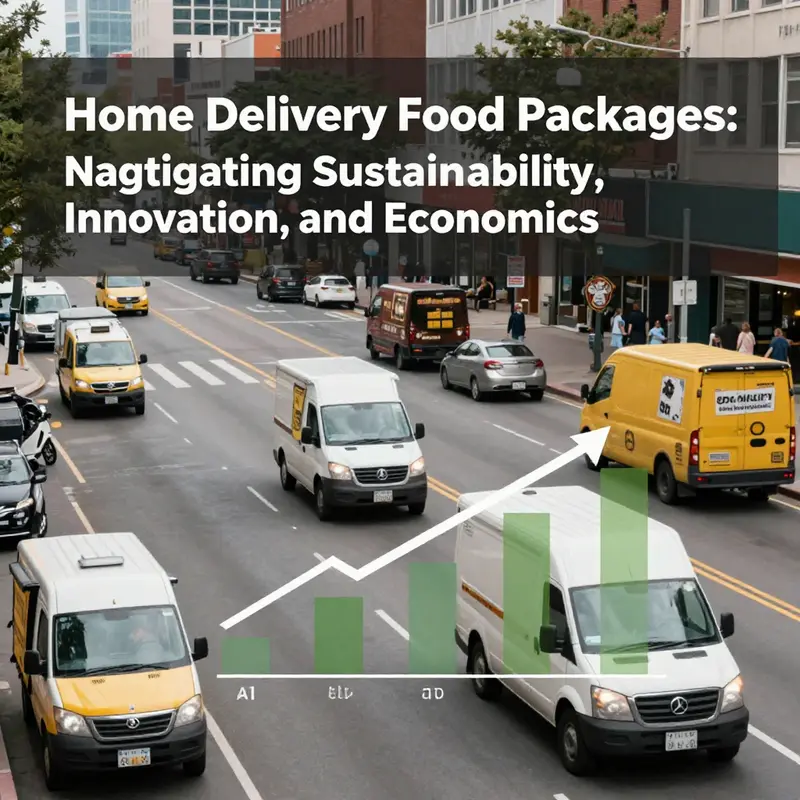
The landscape of home delivery food packages continues to evolve, driven by both consumer demand and the necessity for eco-friendly practices. As sustainability challenges prompt industry-wide shifts toward greener solutions, technological innovations make deliveries safer and more efficient. On the economic front, the home delivery market proves to be a vital component of growth for local businesses, ranging from bubble tea shops to catering services. To succeed in this competitive arena, embracing sustainability, leveraging technology, and understanding the economic dynamics are essential steps for all stakeholders in the food delivery industry.