
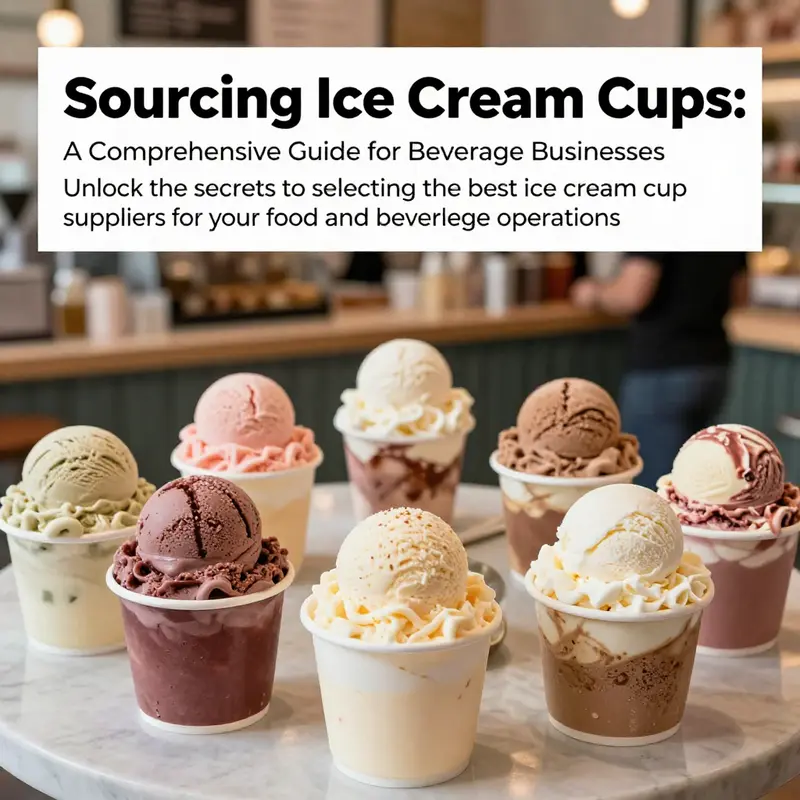
In the ever-evolving landscape of the food and beverage industry, ice cream cups serve as vital components for establishments like bubble tea shops, restaurants, and food trucks. Understanding the nuances of sourcing ice cream cups is key to operational success. From identifying leading manufacturing hubs in China to evaluating potential suppliers, this guide empowers beverage chains, catering services, and event planners with the insights they need for optimal procurement. Each chapter will delve deeper into essential aspects, including the global significance of China as a manufacturing powerhouse, criteria for supplier selection, current product trends, and strategic purchasing advice that aligns with environmental goals.
Chapter 1: 中国作为全球冰激凌杯制造的核心枢纽——规模、速度与创新驱动全球供应链

参考链接与进一步阅读:外部资源提供与市场趋势解读有助于深入理解全球供应链格局及环保法规对包装行业的影响。更多信息可参阅与国际贸易互动相关的权威分析与市场报告。外部资料来源链接示例: https://www.china-investment.com.cn/news/2025/0926/12345.html
Chapter 2 — Mapping Trust: How to Evaluate and Choose a Reliable Ice Cream Cup Supplier in a Changing Market

Selecting a reliable ice cream cup supplier is not a mere procurement step; it is a strategic foundation for product quality, brand integrity, and customer experience. In a market where margins tighten and consumer expectations rise, the right supplier acts as an operating partner, not just a factory. The decision ripples through every scoop sold, every promotional campaign launched, and every moment a consumer chooses a brand over another. As such, the evaluation process must be deliberate, data-informed, and grounded in a deep understanding of both capability and risk. A robust supplier relationship begins with a clear picture of what you require—certified safety, scalable production, predictable delivery, and a sustainability story that aligns with your own brand values. Only then can sourcing shift from chasing the lowest price to cultivating a stable, high-quality supply chain that supports growth and resilience across channels.
Quality certifications form the first line of defense. Mandatory qualifications like a valid Food Production License (SC) are the baseline for any company that handles edible packaging. Beyond that, international standards signal a mature, risk-aware operation. ISO 22000 and HACCP demonstrate that the supplier manages food safety across the entire production chain, from incoming materials to finished cups. When evaluating, ask for the scope and depth of certification audits, the issuing bodies, and the dates of the last recertification. A credible supplier should also provide traceability documentation that can trace raw materials through processing steps to the finished cup. This capability matters not only for compliance with recalls but also for ongoing quality improvement. Water quality matters too; many buyers insist on food-grade water and filtration systems such as reverse osmosis to ensure impurities do not influence taste or safety. An index like conductivity can serve as a practical proxy for water purity, offering a tangible metric to compare suppliers in the same category and adaptable testing routines for ongoing verification. In some industry references, the emphasis on standards is reinforced by cautionary notes about deviations in water quality that have directly impacted beverage taste and consumer confidence, underscoring why rigorous supplier audits cannot be skipped.
Production capacity connects directly to reliability. A supplier’s ability to scale without compromising quality determines whether you can meet peak demand during promotions or seasonal spikes. Look for a plan that reveals throughput, line utilization, and a transparent bill of materials. Equally important is the ability to respond to demand volatility without sacrificing performance. Many buyers favor a center warehouse plus satellite warehouses model, which shortens lead times, reduces transport loss, and improves local responsiveness. In regions with port congestion or seasonal weather disruptions, a clearly defined contingency plan matters: backup production capacity, alternate shipping lanes, and explicit service-level agreements with compensation for late delivery. Real-world experience demonstrates that even modest redundancy can prevent revenue losses during demand surges and preserve brand trust, especially for brands relying on time-sensitive launches or limited-edition flavors. In practice, you should probe for evidence of redundancy—whether a supplier can maintain throughput during a partial plant outage, how quickly they can reroute orders, and what the expected impact on pricing might be under stress conditions.
Supply chain management extends beyond production floor efficiency. A reliable supplier should demonstrate end-to-end visibility, from material sourcing to finished goods delivery. Procurement teams commonly request transparent procurement planning, clear supplier capacity curves, and access to real-time status updates. This transparency not only reduces the risk of stockouts but also enables you to forecast needs more accurately and coordinate with your own distributors or retail partners. The best operators in this space maintain a robust logistics network with well-documented freight terms, packaging integrity controls, and standardized returns processes. In addition to capacity and visibility, the ability to work with multiple transport modalities—sea, air, and courier—offers flexibility when schedules tighten and space becomes scarce. Beyond logistics, a mature supplier should have a formalized risk-management approach: documented escalation paths, supplier diversification strategies, and clear performance metrics that keep both sides aligned as market conditions shift.
Costs deserve careful scrutiny but should be considered through the lens of total cost of ownership. The lowest unit price rarely delivers the best value when it ignores shipping, storage, and waste. A structured approach compares procurement price, freight terms, warehousing, breakage rates, and shelf-life loss. Some buyers negotiate tiered pricing for large volumes, while others experiment with dynamic pricing models to hedge against volatility in resin costs or transport fuel. The packaging design of the cup itself can yield surprising savings. If a supplier can optimize cup height, wall thickness, or nestability without compromising performance, transport costs drop, handling becomes more efficient, and your overall cost footprint shrinks. There are practical examples of how design optimization translates into measurable savings: reducing the height and reconfiguring handles or rims to improve stacking can notably reduce freight costs and warehouse space requirements. The core principle remains: price should be viewed as a component of a broader cost picture, where delivery reliability and material performance often deliver more value than a small per-unit discount.
On the topic of customization and technology, the best suppliers bring more than a standard product to the table. A genuine differentiated capability comes from in-house R&D teams that can tailor shapes, finishes, or branding features. Product matrices with multiple sizes and weights enable clients to optimize for different service channels, from quick-service restaurants to premium brand boutiques. The latest trend in materials includes plant-based and biodegradable options; wafer-based cups and sustainable blends have gained momentum for brands seeking to reduce plastic footprints. A supplier should offer a roadmap for material innovation and a portfolio of compliant customization options like silk-screen or flexographic printing aligned with international safety standards. Consumers increasingly associate environmental stewardship with brand value, so a supplier’s active development of new materials and circular-design concepts can become a competitive differentiator rather than a cost center. In practice, it is essential to verify that any advanced material claim is supported by third-party testing data and clear statements about compliance with relevant safety standards across export markets.
Service quality and post-sale support often separate good suppliers from great ones. A strong service package covers installation and commissioning of any machines used in production lines, routine maintenance, and rapid fault resolution. Response times matter; a partner who can acknowledge inquiries promptly and mobilize technicians quickly minimizes downtime. Knowledgeable technical support should translate into practical advice, such as how to adjust laminate layers in sealing films or modify barrier coatings to accommodate different beverages without leakage or taste transfer. The most resilient relationships are built on proactive checks, spare-parts availability, and a culture of continuous improvement, where issues prompt process tweaks rather than simple fixes. It is not unusual to see suppliers offer digital dashboards showing real-time machine performance, batch traceability, and corrective-action workflows, all of which reduce the burden on the buyer’s quality teams and help sustain a consistent consumer experience.
Beyond the factory floor, sustainable practice and risk governance form the long-term lens through which suppliers are judged. Environmental management certifications like ISO 14001 signal a disciplined approach to energy use, emissions, waste, and water stewardship. Financial health matters too; a supplier with opaque cash flow or high leverage presents a hidden risk to long-term contracts. A rigorous framework should include a defined risk-management program with contingency plans, dual sourcing options, and clear escalation paths for supply disruptions. The objective is not to eliminate risk but to embed resilience into the procurement model. In practice, this means selecting a primary supplier and at least one fallback option, with contracts that lay out service levels, penalties for non-performance, and mechanisms to reallocate orders with minimal disruption. The evolving regulatory environment across major markets further underscores the need to confirm that the supplier remains compliant with evolving packaging regulations, labeling requirements, and any restrictions related to materials, additives, or printing inks.
To turn these criteria into actionable practice, many procurement teams build a structured evaluation framework. The framework translates broad expectations into a measurable scorecard that reflects quality, capability, cost, innovation, service, and sustainability. Although eighteen measurable indicators may seem exacting, they translate into a practical assessment when supported by on-site audits, blind sample testing, and pilot orders. Modern procurement also leans on digital comparison tools, supplier verification services, and certification databases to validate capacity claims and test results. In parallel, brands leverage supplier-facing resources that streamline the sourcing journey, from directories that list verified manufacturers to platforms that enable you to verify certifications and batch records before committing resources. For teams exploring the broader ecosystem, it can be valuable to examine related packaging and labeling capabilities that complement the cup’s design and branding. Within this broader landscape, the Packaging Printing category serves as a useful reference point for evaluating how a cup’s surface treatment and branding elements translate into retail impact, making the link between container and consumer experience clearer. See the Packaging Printing category for example capabilities and supplier options that align with your branding goals.
As you operationalize this framework, consider a phased approach that keeps risk controllable while yielding fast wins. Begin by translating your broad requirements into precise specifications: cup material family, barrier properties, heat resistance, and compatibility with your beverage portfolio; printing area and colorfastness for logos and slogans; and environmental options such as recyclable or compostable materials. Convene a joint supplier workshop to align expectations on sustainability commitments and production lead times, then issue a targeted RFI to gauge capabilities and capacity under realistic demand scenarios. Follow with an RFQ for pricing, but complement price comparisons with pilot samples that undergo lab tests for mechanical and chemical stability, leakage tests, and sensory impact to ensure there is no taste transfer from packaging materials. A short pilot order can validate scale, logistics, and supplier responsiveness under real conditions. Throughout pilots, monitor on-time delivery, batch-to-batch consistency, and the supplier’s willingness to share performance data. Build a scorecard with weights that reflect your priorities—cost certainty, quality stability, and environmental performance. After awarding, establish transparent dashboards and quarterly performance reviews. If a supplier consistently surpasses targets, consider expanding the scope; if not, keep your backup options ready and maintain a dialogue about improvement plans. The process should be rigorous yet flexible enough to adapt to market shifts, with contract language that rewards reliability and continuous improvement rather than a single compliance check.
For buyers seeking a practical point of reference, industry directories and trade platforms can offer vetted supplier lists and cross-border trade facilitation that reduce the time spent filtering candidates. A credible external reference that aligns with these goals is the Hong Kong Trade Development Council’s sourcing platform, which aggregates qualified ice cream cup suppliers and provides insights into certifications, export readiness, and sample processes. This resource can complement your internal framework by offering a benchmark set of capabilities across a broad supplier base. External resource: https://www.hktdc.com/sourcing/ice-cream-cup-suppliers
In sum, choosing a reliable ice cream cup supplier is a deliberate, multi-dimensional exercise. It requires combining formal certifications with real-world performance signals, validating production capacity and logistics resilience, and integrating sustainability and risk management into your long-term strategy. A well-constructed evaluation framework translates this complexity into a practical, repeatable process that can guide both initial selections and ongoing supplier development. When you combine rigorous standards with thoughtful collaboration, the chosen partner becomes part of your brand’s value proposition, helping you deliver consistent quality, compelling packaging, and a trusted customer experience with every cup.
External resource: HKTDC Sourcing: Ice Cream Cup Suppliers
Chapter 3 — Navigating the Mainstream Ice Cream Cup Landscape: Types and Price Dynamics at the Start of 2026

As the calendar flips to 2026, the ice cream cup market reveals a landscape that is at once familiar in its basic needs and inventive in its responses to sustainability, aesthetics, and delivery demands. For buyers in the B2B space, understanding the mainstream formats—from everyday plastic cups to premium glassware and eco-friendly paper solutions—provides a practical map for balancing cost, performance, and brand storytelling. The core dynamic is simple enough to track: materials that meet the basics of temperature tolerance and stackability coexist with options that elevate the consumer experience, while buyers weigh the immediate economics of large-volume orders against the longer-term value of packaging that signals environmental responsibility and premium positioning. The best procurement choices arise when supply choices align with the brand’s promise and the logistical realities of a multi-channel sales model.
First, consider the most widely used category: basic plastic cups. In many settings—fast-casual shops, takeout services, and micro-delivery operations—the lightweight, cost-efficient plastic cup remains the default. These cups, typically made from a polyolefin blend and designed to withstand cold to mildly warm desserts, excel in high-volume environments where every cent of unit cost matters. Their appeal is straightforward: predictable performance, simple stacking, and compatibility with a broad family of lids and accessories. As volume grows, the economics of this category favor deeper discounts, shorter lead times, and a supply chain that can flex with demand surges caused by seasonal spikes or promotional campaigns. Yet, even within this mature segment, there are nuances that buyers should monitor. Material formulations vary to meet regulatory requirements and consumer expectations for safety and safety messaging. While the basic cup delivers reliability, the market is gradually shifting toward variants that can meet stricter sustainability standards without sacrificing the efficiency that large operators rely on. The price signals for these basic cups are influenced by resin prices, energy costs in production, and downstream packaging regulations, all of which tended to contract or expand with the global commodity cycles seen in the previous years.
A second mainstream option is high-borosilicate glass cups. This category occupies a different niche—one rooted in ambience, durability, and the potential for reuse or long-term display. Glass cups are not a quotidian solution for every operator; instead, they target brands or venues that want to communicate a premium experience, whether in boutique dessert shops, event-driven sell-through, or home-use kits that double as gifts. The advantages here are not only aesthetic. Glass offers excellent chemical stability, clear visibility of product, and a tactile experience that many consumers associate with quality. Under strong design guidance, glass cups can feature embossed or relief patterns, curved silhouettes, and ergonomic handles that differentiate a brand in a crowded field. The trade-off is clear: higher unit costs, more careful handling in logistics, and potentially higher breakage risk, especially in delivery-heavy or high-turnover contexts. For procurement teams, this means mapping the glass option to specific use cases, ensuring the supplier can provide reliable packaging protection during transit, and confirming the availability of compatible lids and seals to maintain product integrity.
The third mainstream category—eco-friendly paper cups—reflects a broader industry shift toward sustainable packaging. Here, the material choice matters as much as the manufacturing process. Paper cups derived from renewable fiber sources, sometimes incorporating bamboo, sugarcane bagasse, or recycled content, align with brand narratives around environmental stewardship. These cups can be engineered for improved rigidity, heat resistance, and even compostability under appropriate conditions. The consumer’s willingness to pay a premium for a sustainably packaged product has become more pronounced, a trend reinforced by regulators and retailers who favor green packaging as part of corporate social responsibility goals. However, the eco-friendly option often entails higher material costs and more complex supply chains. Certification, traceability, and supplier transparency rise in importance, because buyers must demonstrate the environmental claims to customers, auditors, and regulators. The price trajectory for paper cups reflects these realities: while basic variants remain cost-competitive at scale, premium paper formulations with enhanced barrier properties and compostability features tend to occupy higher price bands. For buyers, the key is not merely selecting a material in isolation but integrating it into a packaging system that supports shelf life, brand narrative, and end-of-life outcomes.
Across these three mainstream formats, price dynamics at the start of 2026 show a market moving toward a two-track reality. On one track, the traditional plastic cup maintains its role as the backbone of mass distribution. Its price is driven by resin costs, manufacturing efficiency, and demand from the global foodservice network. In USD terms, the basic plastic cup generally sits within a predictable range—one that allows operators to forecast annual packaging spend with confidence when combined with volume-based discounts and a stable lead time from suppliers. On the other track, the eco-friendly and premium segments—the paper and glass lines—are priced with an eye toward added value. Biobased or post-consumer recycled content can elevate cost, but these materials also enable brands to tell a story that resonates deeper with contemporary consumers who value sustainability, aesthetics, and a sense of responsibility. The paper-based cups, in particular, have benefited from improvements in barrier coatings and compostability certifications that expand their appeal across a variety of culinary applications, from premium ice creams to experiential desserts designed for social-sharing moments.
To understand the price implications more concretely, it helps to consider the operational realities behind the numbers. When buyers place orders in the tens of thousands to hundreds of thousands of units, suppliers can leverage scale to offer favorable unit costs. The lead times move in tandem with production capacity, logistics networks, and port activity, which in turn respond to global demand cycles and regional workforce considerations. For basic plastic cups, the emphasis is on steady, long-term contracts that stabilize price and ensure supply during peak seasons. For glass and premium paper variants, manufacturers often couple price with customization—special shapes, embossed patterns, or tailored prints that reinforce brand identity. In all cases, a robust supplier relationship becomes as important as the quoted price. A supplier who can guarantee on-time delivery, consistent quality checks, and rapid issue resolution can save a buyer significant cost downstream by reducing waste, returns, and negative customer experiences.
From a product-development perspective, buyers are increasingly seeking packaging ecosystems rather than isolated components. The same supplier that offers a basic cup might also provide compatible lids, seals, sleeves, and even labeling services. This capability supports a cohesive brand presentation and minimizes compatibility risk across packaging lines. It also enables more efficient procurement cycles, with one point of contact handling qualifications, certifications, and testing protocols. In practice, this means exploring options for integrated packaging solutions that can deliver a uniform aesthetic, reliable performance in cold-chain conditions, and simplified regulatory compliance across multiple markets. When brands pursue such ecosystems, they often require suppliers to demonstrate full lifecycle compliance—ranging from food contact material certifications and traceability records to end-of-life declarations. The conversation with potential suppliers should thus extend beyond initial price quotes to include the quality management framework, audit readiness, and the ability to support ongoing innovation in materials and processes.
The evaluation of supplier capabilities remains a cornerstone of successful procurement. As laid out in established supplier review frameworks, five dimensions matter most: quality and safety, customization capability, sustainability, delivery and logistics, and customer service responsiveness. In the plastic cup segment, quality assurances frequently hinge on compliance with food-contact standards and third-party testing. For glass and paper alternatives, certifications and life-cycle data become more prominent, given the environmental narratives that accompany these formats. The design and customization dimension is not merely about appearance. It encompasses the printability of logos, the feasibility of unusual shapes, and the ability to offer a range of sizes that align with different dessert formats and portion controls. The sustainability dimension is increasingly a buyer-facing criterion, with suppliers expected to present credible materials data, provenance, and, where applicable, end-of-life scenarios. Delivery and logistics performance—delivery accuracy, inventory availability, and the ability to fulfill multi-location requirements—often determines the practicality of a packaging strategy in a franchised or distributed network. And, finally, the responsiveness of customer service translates into faster issue resolution and smoother project management when new packaging concepts roll out.
For teams building a procurement playbook in 2026, there is value in a disciplined yet flexible approach. Start with a baseline assessment of demand by product family, then map the switch points where a brand might benefit from more sustainable or premium packaging. Consider the interplay of packaging with the product itself—how the cup communicates the dessert’s story in a photo-driven social landscape, how the lid design supports spill prevention in delivery, and how the overall package aligns with the brand’s sustainability commitments. It is also prudent to test multiple formats in a controlled pilot, tracking not just unit cost but impact on waste, customer satisfaction, and repeat purchase intent. In this regard, the role of digital sourcing platforms and third-party verification becomes salient. As a practical reference, buyers increasingly rely on vetted supplier directories and verification services to confirm production capacity and quality systems. The aim is to establish a foundation for long-term partnerships that can adapt to market shifts—whether those shifts arise from regulatory changes, evolving consumer preferences, or innovations in material science.
Within this broader framework, it is useful to anchor discussions with two concrete considerations. First, durability and compatibility: how well does a given cup format integrate with existing lids, sleeves, and dispensing mechanisms? A mismatch here creates waste and operational friction, especially in high-volume settings. Second, brand differentiation: does the chosen format support the brand’s storytelling—whether through visual impact, tactile experience, or an indication of environmental stewardship? The inclusion of sustainable or premium materials can support positioning in a competitive landscape where consumers increasingly associate packaging with values. The pricing cadence for 2026 is unlikely to be flat; instead, it reflects a balancing act between value creation and cost containment. Suppliers who can demonstrate transparent material data, credible certifications, and reliable supply chain performance will stand out as partners capable of delivering not only cups but also meaningful business outcomes.
To connect these macro considerations with practical action, one can look at the broader catalog of disposable drinkware as a guiding resource. For a broader catalog of disposable cups and drinkware, explore the disposable drinkware category. This internal reference supports teams in aligning packaging choices with design specs, sustainability goals, and supplier capability assessments. Within a single supplier ecosystem, brands can experiment with different formats across menus and promotions, while maintaining a coherent look and feel that resonates with customers across channels. Keeping a pulse on price trends, as well as material innovations and regulatory developments, will help procurement professionals calibrate orders to market realities without sacrificing brand ambition.
For readers seeking external data to supplement internal sourcing discussions, market price dynamics remain an important anchor. External market data and pricing signals are widely reported in global e-commerce and packaging marketplaces, where transactions reveal how resin costs, processing efficiencies, and demand pressures translate into unit costs over time. An accessible reference point for such data is a major online marketplace that aggregates supplier quotes and factory price trends. This external resource can provide context for year-over-year comparisons and quarterly shifts in plastic, paper, and glass cup segments. External reference: https://www.alibaba.com. While price alone should not drive supplier selection, it offers a quantifiable lens on the cost environment that underpins the strategic decisions described above. Integrating these insights with a robust supplier evaluation framework strengthens the ability to negotiate favorable terms, secure reliable supply, and pursue packaging options that support both operational excellence and brand storytelling as 2026 unfolds.
Chapter 4: Strategic Ice Cream Cup Sourcing — Balancing Cost, Sustainability, and Supply Confidence
Chapter 4 presents a practical framework for strategic ice cream cup sourcing. The packaging ecosystem for single-use cups is not a simple commodity market but a multi-layered supply chain. In the current landscape, production clusters in China remain central, supported by mature ecosystems that enable scale, speed, and innovation. For B2B buyers, decisions cannot rely on price alone. The most successful strategies harmonize cost efficiency with sustainability, supplier reliability, and the ability to meet evolving consumer expectations and regulatory requirements. The location of production clusters matters, but so does the ability to translate technical feasibility into brand value.
Guangdong, Zhejiang, and Shanghai offer distinct advantages in throughput, customization, and compliance readiness, while inland provinces are increasingly attractive for cost optimization and green material innovations. In practice, procurement should look beyond unit price and toward a total value picture that aligns with brand positioning, store formats, and consumer engagement goals. The market context reflects a broader shift toward responsible materials, traceability, and design flexibility. With production concentrated in major hubs, buyers gain benefits in delivery speed, consistency, and scale, but the same concentration raises risk if the supplier base is too narrow. A balanced strategy blends a robust supplier network with disciplined risk management and a clear view of how packaging choices communicate the brand story.
Core procurement principles form the backbone of this framework: cost is important but not the sole driver; sustainability is a long-term business imperative; and supply confidence is a prerequisite for a consistent customer experience. The lifecycle cost of a cup includes material cost, energy to manufacture, waste handling, and potential returns or leakage. A useful way to think about value is to compare total cost of ownership across material and design options over the expected shelf life and usage scenario. A standard disposable cup with a lid can span a wide price range, reflecting variations in raw material, thickness, surface treatment, and printing. When assessing these choices, buyers should note not only price but also repeat purchase rates, performance under peak service stress, and how each option supports branding and perception.
Sustainability emerges as a decisive factor in long-term strategy. The industry is moving toward materials with lower environmental footprints, including plant-based polymers and compostable or partially compostable options. A pragmatic approach balances performance with environmental impact. It is common to encounter a spectrum of options—from conventional plastics to bio-based or recycled-content cups. In practice, the choice depends on the end-use scenario, waste management infrastructure, and target markets. For brands with green messaging, suppliers can offer compostable cups with verified sustainability data and lifecycle information. Environmental stewardship may also be demonstrated through supplier programs that address producer responsibility and packaging optimization. Every decision should align with brand positioning, regional regulations, and local waste streams.
To translate these principles into a structured selection process, buyers should evaluate suppliers along five core dimensions. First, quality and safety: the material and manufacturing process must meet food contact standards, and the supplier should provide traceable test results and QC documentation. Second, customization capability: the ability to tailor printing, cup shape and dimensions, and packaging configurations matters for differentiation. Third, sustainability: options should include degradable or recycled materials with transparent carbon footprints and participation in responsible packaging programs. Fourth, delivery and logistics: the supplier must demonstrate stable lead times, multi-mode shipping readiness, and local warehousing or cross-dock options where feasible. Fifth, customer service: quick, technically informed communication and efficient problem resolution translate into fewer disruptions and smoother momentum.
Real-world indicators reinforce these dimensions. Data from major sourcing platforms show that top performers provide rapid responses and high order fulfillment reliability. Fast inquiry responses and strong order execution translate into predictability for store operations, especially during launches, promotions, or seasonal spikes. Buyers should track prequalification scores, response times, and on-time delivery as part of supplier reviews. A disciplined approach to governance reduces misalignment between design intent and final products and lays a foundation for long-term collaboration.
In practice, regional manufacturing realities matter. Leading production clusters bring unique strengths: one region may excel in mass production and speed, another in sustainable materials and eco-friendly design, and another in advanced customization. Brands aiming to scale quickly while preserving image and compliance should build a network that leverages these regional advantages. This means balancing capacity, responsiveness, and differentiated value propositions across suppliers, while acknowledging market dynamics that influence price quotations and availability, including seasonality, currency movements, and raw material volatility. A robust sourcing framework integrates market intelligence with supplier performance data to anticipate pressure points and adapt procurement strategies.
When turning this framework into action, treat packaging choices as a strategic branding lever. Cup material, lid design, and printing capabilities offer an opportunity to tell the brand story at the moment of consumption. The design dialogue with suppliers should be anchored by clear specifications, prototypes, and a process for rapid iteration. Small, controlled tests can uncover issues with leakage, fit, or visual impact before full deployment. Sustainability should inform material choices, weights, and end-of-life options, ensuring packaging protects the ice cream and aligns with environmental commitments.
From an operations standpoint, digital platforms and supplier qualification processes play a critical role. Use these tools to screen capability and capacity, confirm safety compliance, assess financial stability, and review continuity plans. The goal is to reduce risk through due diligence and ongoing performance monitoring. The strongest supplier relationships are built on transparency, collaborative problem solving, and a shared commitment to meeting customer expectations under pressure. Regular audits, clear escalation paths, and forward-looking capacity plans help ensure the supply chain remains responsive to product innovations, seasonal demand, and regulatory changes.
To put these ideas into practice, start by cataloging capabilities that map to brand needs: can the supplier meet required certifications and provide traceability? Are flexible printing and customization options available? What sustainability assurances exist, including material options and disposal pathways? How reliable is the delivery schedule, and can the supplier support local warehousing or cross-dock facilities? Finally, how solid is the support infrastructure—technical consultation, rapid prototyping, and after-sales follow-through? With these questions answered, procurement teams can construct a balanced supplier mix that supports steady operations and strategic growth.
The ultimate aim is to move beyond one-dimensional pricing toward a holistic value proposition. In practice, prioritize suppliers with demonstrated reliability, strong packaging design capabilities, and credible sustainability claims. Consider smaller, carefully selected partners to complement larger producers, ensuring capacity, flexibility, and specialty needs are met as the business evolves. Leverage digital marketplaces and verification services to validate performance and secure the right production slots for launches and promotions. As the market shifts toward environmental stewardship and consumer transparency, packaging strategy becomes inseparable from the brand narrative. The chapter advocates a sourcing mindset that treats ice cream cup selection as a core business decision, tightly linked to product quality, store experience, and the long-term value of brand equity.
For practitioners seeking a concrete starting point, a simple rule emerges: prioritize high-repurchase suppliers with stable quality, packaging integrity, and clear environmental commitments. Use small, controlled test purchases to validate performance before scaling. Build relationships with partners who can offer integrated packaging systems, including lids and sleeves, to maintain consistency across channels. Do not neglect the digital layer—well-managed supplier portals, transparent lead times, and fast communications help avoid misalignment and speed up implementation. Remember that every packaging decision communicates the brand promise and shapes the consumer experience, influencing how customers perceive value at the point of purchase and how they remember the brand afterward. In this light, strategic procurement becomes a catalyst for differentiation, resilience, and sustainable growth.
To access additional supplier directories and broaden the reference base, readers may consult globally recognized industry resources. For detailed supplier listings and verification services, see the external resource below. For readers who want to explore related packaging categories, the internal link to the paper cups category can serve as a practical orienting reference as you compare material performance, sealing reliability, and branding potential: paper cups.
External reference for further reading: https://www.hktdc.com/sourcing/ice-cream-cup-suppliers
Final thoughts
Sourcing ice cream cups is more than just purchasing a product; it is about aligning with suppliers who can meet quality, sustainability, and delivery standards. By understanding the manufacturing landscape, evaluating reliable suppliers with the right capabilities, and staying abreast of product trends, businesses can ensure they are well-equipped to meet their customers’ needs while supporting their brand’s values. The journey towards successful procurement starts with informed decisions, driven by strategic partnerships that enhance operational efficiency and environmental responsibility.