
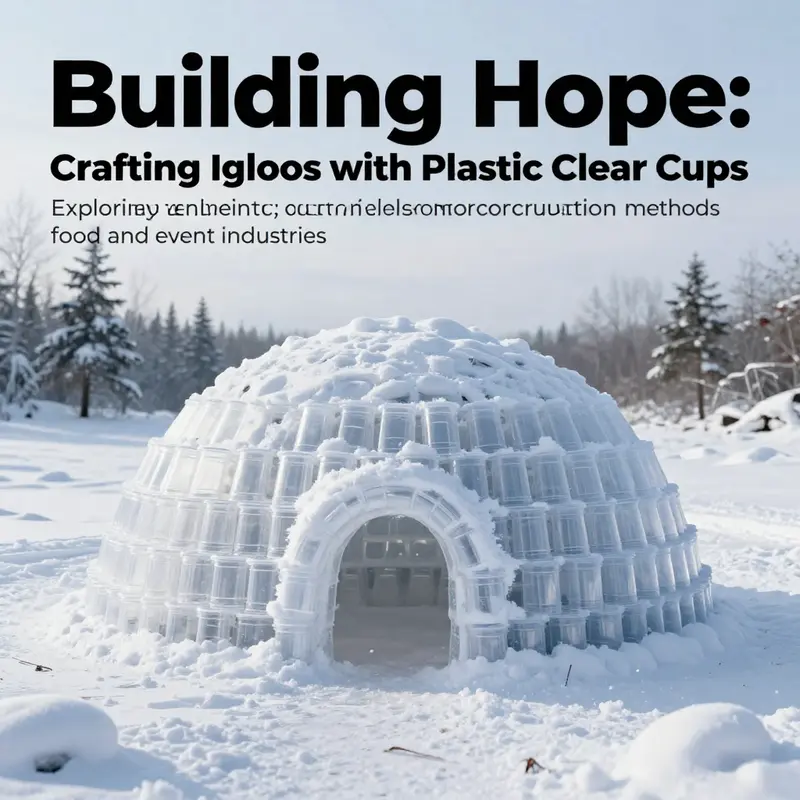
Igloos made from plastic clear cups represent a unique intersection of creativity, sustainability, and practicality. In recent years, businesses, particularly in the food and beverage industry, have sought new methods of construction that not only elevate aesthetics but also showcase responsible environmental practices. This innovative approach to building igloos using recyclable materials can offer a fresh perspective on waste reduction and engagement. Through this article, readers will journey across the innovative construction techniques, environmental impacts, educational applications, recreational uses, and cost-effectiveness associated with such projects. Each chapter will reveal how these igloos can serve various sectors, from bubble tea shops to event planners, fostering community spirit and enhanced customer experiences.
Clear-Cup Igloos: Innovation on the Surface, and the Realities Beneath
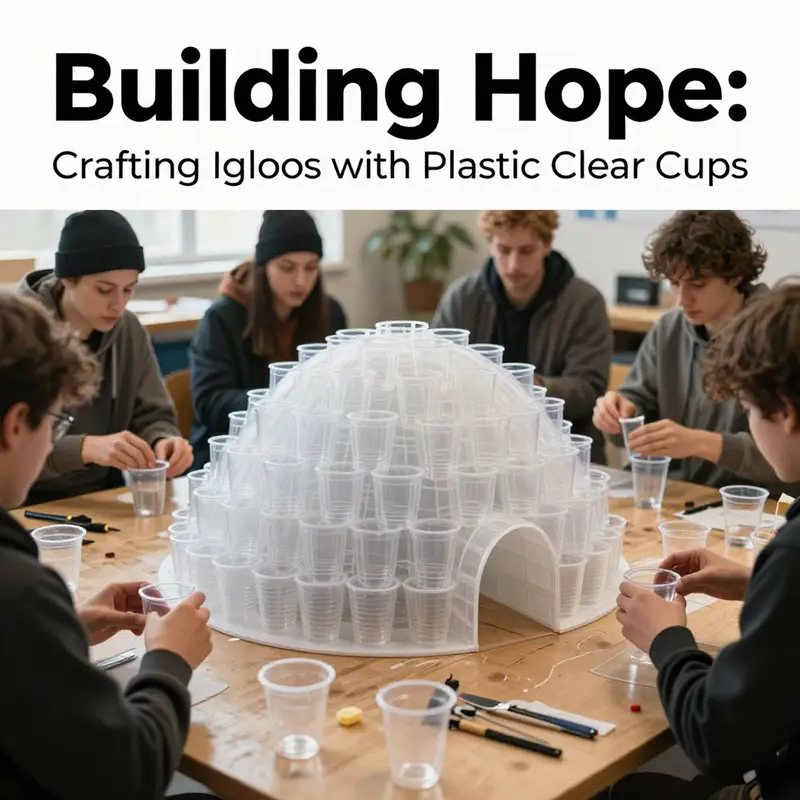
The idea of building an igloo from plastic clear cups sits at a curious crossroads between playful experimentation and serious questions about materials, insulation, and sustainability. It invites us to imagine a structure defined by transparency rather than snow, by the gleam of everyday packaging rather than the cold, wind-etched geometry of traditional ice and snow. Yet a closer look reveals why the concept remains more illustrative than practical. It serves as a compelling springboard for discussing how material choice, geometry, and environmental intent interact in the most literal sense when a shelter is the project, not merely a visual metaphor. The chapter that precedes this one traced the arc from time-honored snow blocks to modern, purpose-built insulations. Here the same arc reappears, but reframed through the lens of plastic waste, reuse potential, and the educational value of collaborative, hands-on inquiry. The result is a narrative that stays with the surface elegance of clear cups while delving into the deeper physics and ethics that govern real-world construction.
The first observation one makes when envisioning an igloo assembled from clear cups is the surface aesthetic: a sculpture that gleams with a playful, almost architectural innocence. The cups—thin-walled, uniformly circular, and stacked in repetition—offer a modularity that can be alluring in a classroom or makerspace. The idea leans into a tradition of repurposing where used containers are given new life as building blocks for design exploration. In this sense, the concept resonates with broader themes in sustainable design: how far can we push reuse, and what are the limits of recycled or repurposed materials when a project must meet practical needs? The educational potential is obvious. Students and hobbyists can experiment with scaling, load distribution, connection methods, and the geometry of stability. They can discuss the importance of interlocking systems, the role of adhesion, and how air pockets behave in a stack of discrete units. The process itself becomes a vehicle for inquiry, not merely a spectacle of construction.
Yet the same inquiry quickly compels a sober assessment of physics and safety. Traditional igloos owe their insulating prowess to a combination of compacted snow and the ingenious geometry that traps air and reduces convective heat loss. The snow blocks themselves act as both a barrier to wind and a natural insulation due to their internal air pockets and the tight seams formed by careful shaping. Plastic clear cups do not replicate this mechanism. Even when arranged with meticulous symmetry, the micro-gaps between rigid cups create pathways for heat to escape and for cold air to circulate, undermining insulation far more than the blocky, curving walls of snow would. The cups’ rigid walls, lacking the compressive compliance of snow blocks, also resist the subtle redistributions of load that snow naturally accommodates. A structure of cups tends to rely on glue, tape, or other fasteners to maintain form, and those adhesives themselves can introduce thermal bridges and long-term deterioration in cold environments. The contrast between the latticed, self-sealing snow wall and the more leaky, adhesive-dependent cup wall becomes a clear demonstration of why material choice matters so profoundly in shelter design.
In discussing the viability of clear-cup igloos, it is important to acknowledge that some observers highlight the decorative or demonstrative value rather than any expectation of performance. When evaluated as an engineering prop—an artifact that helps visualize stacking, geometry, and assembly workflows—the concept has merit. The modular nature of cups resembles tessellated units that invite hands-on exploration of surface tension, load transfer, and the importance of uniformity in a collective structure. The exercise parallels other educational activities that teach students to test hypotheses about material limits, giving them tangible data on where a design begins to fail and how small modifications might extend a structure’s life. For instance, one could experiment with varying cup sizes, experimenting with different curvatures of the outer wall, or testing multiple adhesive strategies to improve stability. Such experiments cultivate critical thinking about tradeoffs: the aesthetic payoff of a transparent, gleaming exterior versus the practical realities of thermal performance, moisture management, and material durability in cold weather.
The environmental dimension cannot be abstracted away from this discussion. Plastic cups, by their nature, are a symbol of disposable consumer culture. Reimagining them as a shelter vehicle flips the narrative: packaging becomes architecture, and waste becomes an object of study rather than a problem in the abstract. If the cups are sourced from recycled streams and the project emphasizes reuse, there is a potential to spark conversations about circular economies and life-cycle thinking. The practice also raises important questions about the lifecycle of materials in shelter contexts. Would a cup-based igloo, if built at any scale, be a one-off art piece or a reusable prototype? And if reusable, how could the structure be designed for rapid disassembly and material recovery, minimizing waste at every stage of its life? These questions underscore a broader theme of the chapter: innovation in construction cannot be decoupled from responsibility for the materials we deploy and abandon.
To explore these tensions more concretely, consider the geometry of the cups as a teaching tool. The igloo, by its own cultural logics, relies on a dome-like curvature that resists external pressure and reduces surface area exposed to the wind when properly formed. Clear cups, with their cylindrical profiles, do not naturally tessellate into a dome with the same continuity as snow, yet they can be arranged into a near-spherical approximation if one pushes the envelope of ingenuity. The learning point then becomes not the promise of a snow-like insulating performance, but the discipline of iteration: how small changes in spacing, orientation, or anchoring can alter a structure’s behavior under load. A student observing this can track how cold air migrates along joints, how gaps alter convection currents, and how the choice of connector—whether adhesive, mechanical fasteners, or even simple gravitational interlock—affects the structure’s ability to hold its form. This line of inquiry ties into a broader thread in the article series: the relationship between creative reuse and empirical evaluation in engineering pedagogy.
The research materials surrounding this topic emphasize a cautious stance. There is no recognized or innovative construction technique for building igloos from plastic clear cups. Traditional igloos remain the benchmark for insulating performance, relying on the geometry of tightly packed snow blocks and a careful, wind-aware entrance protocol. References to decorative or novelty uses of clear cups in other contexts remind us that the material itself is more suited to short-term, aesthetically oriented applications than to durable, temperature-regulating structures. The practical takeaway is clear: while the concept can illuminate lessons about geometry, material properties, and eco-conscious design, it should not be mistaken for a viable alternative to snow-based construction when insulation, safety, and long-term sustainability are primary concerns. In classrooms, this distinction is a powerful teachable moment about the difference between classroom models and real-world performance.
Within this frame, the chapter also considers the social and cultural dimensions of such experiments. Educational initiatives often use such repurposed-material activities to foster collaboration, problem-solving, and environmental awareness. A group project built around clear cups can become a microcosm for teamwork: distributing responsibilities, planning a build sequence, and documenting outcomes to inform future iterations. The process becomes a narrative about how communities negotiate the tension between curiosity and responsibility, between the allure of an eye-catching, transparent façade and the imperative to avoid creating waste that endures beyond the lesson. In this way, the concept of a cup igloo contributes to a broader conversation about how to translate inventive impulses into responsible, educational practice. It also echoes the argument that truly sustainable design often emerges not from novelty alone but from the rigorous testing of ideas, the willingness to discard ideas that fail, and the generous inclusion of feedback from varied stakeholders.
For readers seeking a concrete reference related to the broader topic of disposable materials and their use in educational or decorative contexts, a practical resource on disposable cups offers useful context. See the resource senang01-hot-sale-customized-disposable-single-wall-paper-ice-cream-cups-with-lid-eco-friendly-food-grade. While this link points to a paper cup product page, its relevance lies in illustrating how common containers are designed for specific uses and how design choices—such as material thickness, lid compatibility, and seal integrity—shape performance in real-life applications. The comparison invites readers to reflect on why snow blocks—and not cups—remain superior for temperature regulation, and it anchors the discussion in a real-world marketplace where the balance between function, form, and waste is continually negotiated.
In a broader sense, the exploration of clear-cup igloos functions as a bridge between two strands of the article: the pursuit of innovative construction techniques and a sober assessment of environmental impact. The chapter that precedes this one established that novelty must always be weighed against durability and safety. The chapters that follow will build on the insight that sustainability is not a single metric but a composite of material choice, lifecycle impact, and the educational value of the process. The cup igloo thus becomes a case study in how a concept can illuminate core principles without pretending to replace traditional methods. It invites readers to savor the aesthetic curiosity of a transparent, modular façade while grounding their imagination in the disciplined scrutiny that real-world engineering requires.
For those who want to explore Igloo construction in a more established, field-tested context, external resources provide grounded perspectives on the geometry and material choices that have proven effective in extreme environments. See National Geographic’s exploration of how to build an igloo, which emphasizes the importance of the material, geometry, and safety considerations required when sheltering in snow and ice. The contrast with the plastic cup concept reinforces the key takeaway: the environment and purpose must guide material selection, not the impulse to repurpose an iconic form for a novelty project. This difference matters when the goal is a sturdy shelter, a lasting educational demonstration, or a community-building activity with real-world implications. By recognizing the strengths and limits of each approach, designers, educators, and students can craft projects that honor both curiosity and responsibility, and that maintain a clear-eyed view of what innovation truly offers in the realm of shelter, insulation, and sustainable practice.
null
null
Clear-Cup Igloos in the Classroom: A Hands-On Journey Through STEM and Sustainability
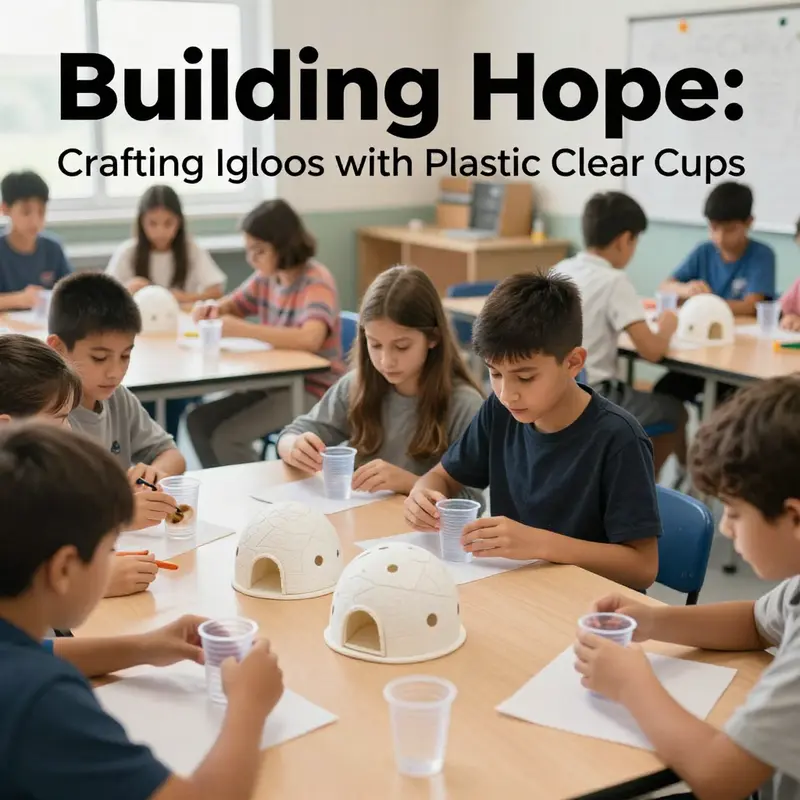
A classroom can become a field laboratory when students set out to build an igloo from clear plastic cups. The project is more than a quirky craft; it invites learners to test ideas about structure, material behavior, geometry, and design while engaging with questions about waste, reuse, and the life cycle of everyday objects. In many programs, the project uses hundreds of cups—often in the range of five hundred to a thousand—stacked into a dome that resembles the legendary Inuit shelter, yet the aim is not to imitate a tradition but to explore how lightweight units can work together to resist pressure and distribute weight. The simple act of stacking, aligning, and interlocking cups becomes a concrete demonstration of abstract principles, a way to translate textbook theory into tangible, observable outcomes. When the cups are arranged correctly, they create a self-supporting arch that channels compressive forces along curved surfaces, a reminder that some of the oldest architectural insights arise from the most accessible materials.
From the earliest attempts, learners discover that the strength of the dome lies in its geometry. Each cup acts as a curved element in a larger system, and as layers rise, the circular bases nestle against one another, forming a continuous shell that can carry weight more efficiently than a straight-walled structure. Students can experiment with variations: different sizes of cups, alternate stacking patterns, or even the introduction of a base ring to stabilize the lower layers. These variations become data points in a live, inquiry-based inquiry where hypothesis, observation, and revision flow in a natural sequence. They observe how a slight alteration in the angle of each cup affects the overall stability, and they document how the dome responds under gradually increasing loads. In this way, a seemingly playful construction becomes a practical lesson in load paths, redundancy, and safety margins.
The project also invites mathematical inquiry that extends far beyond counting cups. Geometry is not simply about shapes; it is about relationships. Students analyze symmetry, the interplay of circles, and how curvature emerges from the packing of identical units. They estimate surface area and volume, even if those estimates are only approximate. The exercise invites them to ask questions such as how many cups are needed to reach a certain height or to enclose a space of a given volume. They learn to convert between units, to translate a real-world task into a calculable problem, and then to test their estimates against actual measurements. In doing so, they practice the essential skill of measurement, not as a rote exercise but as a process of verification that strengthens critical thinking. The activity also strengthens spatial reasoning as students imagine how the dome will look from above, below, and at various vantage points, guiding their decisions about arrangement and reinforcement.
The creative—and equally important—side of the project lives in art and design. A cup igloo offers a blank canvas for exploring color, texture, and pattern. Students decorate the exterior with paint, markers, or natural materials drawn from the environment, turning a functional structure into a canvas that communicates ideas about culture, environment, and personal expression. This blending of science and aesthetics is a hallmark of STEAM education, where the arts deepen understanding by encouraging students to design with intent and to reflect on how form can convey meaning. In some classrooms, teams agree on color-coded rings that reveal layers of the dome or create visual patterns that reinforce symmetry concepts. The decorative aspect is not mere embellishment; it is part of the learning process, inviting dialogue about balance, proportion, and visual rhythm.
Beyond the hands and eyes, the igloo project cultivates fine motor skills and deliberate practice. Building the dome requires careful hand-eye coordination as students pick up, align, and position each cup with finesse. For younger learners, the activity serves as a structured opportunity to strengthen pincer grasp, measurement accuracy, and steady timing. For older students, it becomes a collaborative discipline, with roles that range from planning and measuring to assembly and quality control. The social dynamics—clear communication, shared goals, task delegation—are an integral part of the learning outcome. The project naturally supports teamwork and responsible collaboration, since the success of the dome depends on how well individuals synchronize their actions and adapt when a section proves unstable.
A thoughtful classroom totem for this exercise is cultural awareness. In discussing Arctic living, teachers can connect the geometry of the igloo to notions of insulation, thermal efficiency, and shelter design in extreme environments. The aim is not to tokenize a culture but to use a focal case to explore human ingenuity in response to climate. Students compare how traditional shelters address heat retention with how a modern, transparent cup system handles temperature and airflow in a controlled learning environment. Such conversations broaden students’ horizons, fostering respect for diverse perspectives while grounding them in scientific inquiry. The discussion can be complemented with short readings or visuals about the region, climate, and sustainable practices, encouraging students to consider how materials, design choices, and resource use intersect with daily life in different communities.
For educators seeking structure without stifling curiosity, there is a growing suite of guided resources that align with the project’s goals. The National Science Teaching Association, for instance, offers lesson plans and activity frameworks that emphasize low-cost, high-impact STEM experiences built from everyday materials. These frameworks encourage teachers to foreground inquiry, hypothesis testing, and iterative design, allowing students to learn through experimentation rather than through predefined steps. By situating the cup igloo within a formal pedagogical framework, teachers can scale the activity for various ages and learning objectives, while maintaining openness to student-led exploration. This balance between guidance and autonomy is essential for sustaining engagement and ensuring that the activity remains rigorous rather than superficial.
The environmental dimension of the project invites careful consideration. The appeal of repurposing disposable cups for construction lies in their potential to reduce waste when approached with a mindset of reuse rather than disposal. In practice, the project foregrounds lifecycle thinking: what happens to the structure after the lesson ends? Can the cups be washed, reused, or recycled without compromising safety or causing damage to the surrounding environment? Students explore these questions as part of a broader conversation about materials science and sustainability. They compare disposable versus reusable options, weigh the energy costs of production and transport, and discuss how to responsibly manage waste streams in a school setting. The discussion naturally broadens to include notions of cradle-to-cradle design, where products are conceived with end-of-life reuse in mind. Although the activity relies on plastic cups, it also becomes a gateway to broader conversations about responsible consumption, recycling infrastructure, and the role of individuals in reducing environmental footprints.
In practice, educators often pair the igloo construction with measurement and observation journals. Students record the number of cups used, the diameter of the dome, and the height achieved at each stage. They note the conditions under which the structure remains stable and when it begins to fail—perhaps due to slight misalignment, added weight, or a change in surface support. The habit of documenting outcomes fosters scientific literacy, encouraging students to articulate hypotheses, describe methods, and interpret results. Teachers can ask reflective prompts that tie the hands-on experience to core science concepts, such as how stress distributes through curved surfaces, or how symmetry contributes to stability. The journaling component is not a filler exercise; it anchors the activity in evidence and provides a record students can revisit as they refine their understanding of structural engineering.
One practical note for schools is the integration of an internal link to relevant materials that support the activity while aligning with the budget and sustainability goals of a campus. For instance, a classroom resource list might include a link to affordable, plastic-free cup options that still support safe handling and clean-up. This connection emphasizes that learning can occur with minimal environmental impact and without compromising the integrity of the hands-on experience. By presenting students with alternatives and encouraging them to think about material choices, teachers cultivate an ethos of mindful experimentation that extends beyond the igloo itself. The objective is not to promote any particular product but to model thoughtful decision-making about resources, reuse, and design constraints.
As a capstone for many sessions, the igloo activity can be linked to a broader project that compares different shelter forms or explores energy efficiency in built environments. Students could build a second model using a different material or a different stacking approach and then evaluate the differences in stability, insulation properties, and ease of construction. They could simulate real-world conditions by applying weights or wind-like forces to observe how variations in geometry influence outcomes. Such comparative work reinforces critical thinking, data collection, and collaborative problem solving, while keeping the focus on accessible, low-cost materials that teachers can reproduce in diverse settings. The result is a cohesive learning arc that begins with a playful build and matures into a rigorous inquiry into engineering, math, art, and sustainability.
To support this learning journey, educators can lean on external resources that provide research-backed strategies for inquiry-based STEM experiences with everyday materials. An influential starting point is the STEM activity database maintained by a leading science education association, which presents activities that mirror the cup igloo’s spirit: hands-on, iterative, and grounded in real-world questions. Accessing such resources helps teachers design activities with clear objectives, scalable difficulty, and robust assessment opportunities, ensuring that the experience remains both meaningful and aligned with curriculum standards. By anchoring the cup igloo in a broader pedagogical framework, teachers can maximize its impact and ensure that it resonates with students across grade levels and disciplines.
In sum, building an igloo from clear cups is more than a craft or a moment of play. It is a rich, interdisciplinary learning experience that reveals how simple units can combine to form complex systems. It invites learners to reason about forces and geometry, to express themselves through design, to refine fine motor skills, and to interrogate the environmental costs and benefits of everyday materials. When integrated thoughtfully into a unit, it becomes a powerful demonstration of how curiosity, collaboration, and creativity can illuminate science, mathematics, art, and ethics in a single, tangible project. The classroom, in this sense, becomes a microcosm of the world: a place where ideas are tested, revised, and shared, one cup at a time.
External resource: Building Structures with Everyday Materials — STEM Activity Database. https://www.nsta.org/science-education/stem-activities
Clear-Cup Igloos: Recreational Play, Education, and the Edge of Sustainable Craft
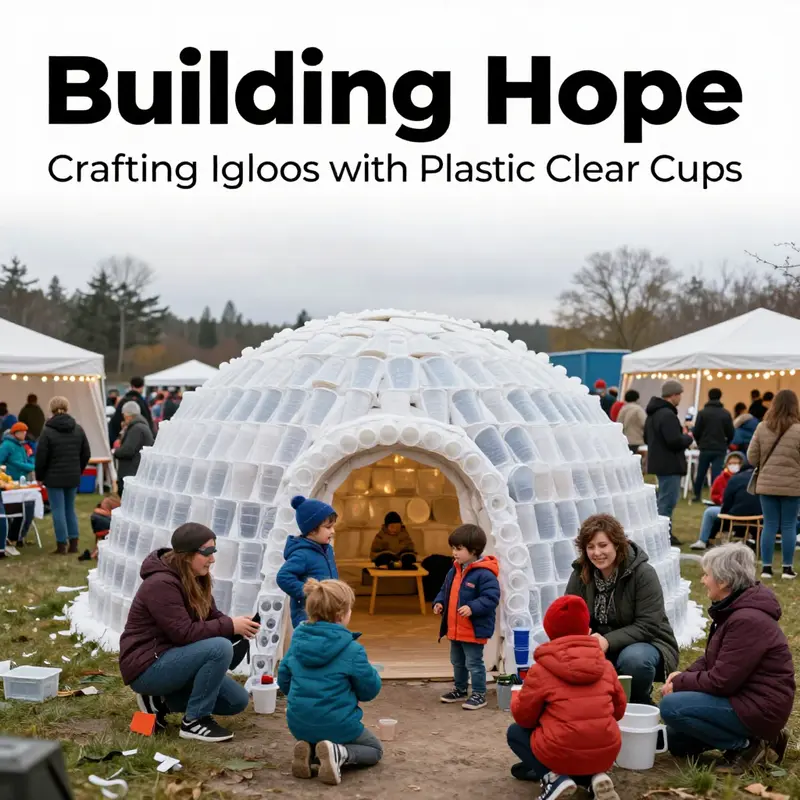
A tent made of clear plastic cups may seem whimsical, even ephemeral, yet it sits at the crossroads of play, learning, and how we reimagine everyday waste as a resource. When children and adults sculpt an igloo from transparent cups, they are not merely stacking forms; they are engaging with the fundamentals of structure, light, and perception. The igloo becomes a movable classroom, where the act of building translates into a living lesson about geometry, symmetry, and the way tiny units cooperate to resist larger forces. In spaces designed for exploration—classrooms, community centers, after-school clubs—the Cup Igloo transforms a simple craft project into a micro-workshop on resilience, cooperation, and the curious physics of conical arches. The result is both a spectacle and a pedagogy, a quiet argument for making with materials that would otherwise be treated as waste.
The visual appeal of a clear-cup igloo is, in itself, a powerful teaching tool. The transparency invites immediate observation: learners can watch layer by layer emerge from a loose plan into a recognizable dome. Light travels through the cups, and color and shadow play across the interior, turning the structure into a living demonstration of how visibility can deepen understanding. Children see the way each cup forms a small unit that holds a larger pattern together, and they realize that the whole is more than the sum of its parts when those parts interlock with precision. This isn’t just art for art’s sake; it is a platform for inquiry. How many cups does it take to reach a certain height? Why does the shape stabilize as it grows taller? What happens if a layer shifts or if a cup is pulled out of place? The questions are almost endless, and their answers emerge through trial, error, and collaboration.
From a developmental perspective, the activity nurtures motor skills and spatial reasoning in a way that is tactile, visible, and immediate. Fine motor control is exercised as fingers grip and snug cups together, while spatial reasoning grows as learners anticipate the curvature of the dome and the distribution of weight around the base. The project also naturally invites teamwork. Small groups divide tasks—from planning the layout to arranging the cups in radial patterns, to reinforcing the inner layers with a careful lattice of cups that stabilizes the structure. In this mode, the igloo becomes a mirror of social learning: communication improves as peers negotiate sequence, alignments, and responsibilities; problem-solving flourishes when a section wants to tilt or a seam seems weak. It is a microcosm of real-world collaboration, where competing ideas are resolved through shared goals and repeated, low-stakes experimentation.
The choice of clear cups—rather than opaque blocks or traditional ice- or snow-like facades—augments the pedagogical potential in several ways. The transparency reduces the barrier between creator and audience. Observers can trace how a specific cup contributes to the overall form, which strengthens the learner’s sense of causality: a single cup’s position matters, a strategic adjustment can transform stability, and a moment of misalignment can ripple through the entire dome. The effect also invites playful storytelling. A toy army might inhabit a section of the igloo, a tiny forest creature could make a winter home inside, or the structure could become a stage for a short narrative about community and cooperation. These narratives aren’t mere fluff; they reinforce language development, sequence thinking, and memory as children recount the steps they took and the ideas they tested.
What often surprises seasoned educators is how naturally this activity scales from a handful of cups to a building that feels substantial in a classroom setting. The practical realities—cost and cleanup—matter, of course, but the surface-level constraints become learning opportunities in disguise. A typical glove of planning yields a range of designs, and that range invites experimentation with symmetry and asymmetry. Some teams opt for a more spherical silhouette, others push toward a flatter, broader base to improve stability. Observers notice how the base’s circumference, the cup’s spacing, and the angle of the stacking layer influence whether the dome holds together under gentle pressure or settles with a soft sigh. This kind of tactile experimentation makes abstract ideas concrete. Children learn to hypothesize, test, observe, and revise, all within a single creative session.
Recreational use of cup igloos also finds a natural home in seasonal programming. In winter months, the project can be woven into broader themes of frost, shelter, and storytelling. A classroom might pair the igloo with a storytelling circle, inviting students to read or improvise tales about winter villages, friendly polar animals, or visitors who arrive at a toy-sized outpost made from cups. Because the structure is transparent, educators can layer interdisciplinary activities atop the construct: math notebooks where learners log the counts and angles; art projects that explore color and texture by adding ribbons or paper fans to the exterior; science inquiries about diffusion of light and heat, using a simple, safe demonstration with the igloo as a backdrop. The play element—the “fortress” or “home” imagined by children—serves as a powerful motivational scaffold for language development, collaboration, and memory retention. Social media encouragement has amplified this effect, with many classrooms and makers sharing their builds online. The visual spectacle of a gleaming, see-through dome sparks curiosity, invites questions, and invites others to join in the making.
Beyond the classroom, the educational and recreational value of clear-cup igloos extends to broader conversations about sustainability and reuse. The project makes visible a practical approach to waste reduction: by repurposing disposable cups, learners experience a tangible alternative to accumulation and discard. The cost factors are modest, especially when materials are sourced from community recycling drives or school supply collections where surplus cups wait for a second life. The environmental logic is simple and persuasive: reuse, learn, and create. When students see how a large, functional-looking structure can emerge from hundreds of humble units, their sense of possibility expands. The activity also opens a conversation about materials science—how plastic properties, thickness, and interlocking geometry influence performance. Although a cup igloo is not intended for shelter or outdoor endurance, it models a design mindset that values resourcefulness, iterative testing, and creative problem solving. This mindset crosses disciplinary lines, linking art, science, and civic engagement in a single, hands-on experience.
Seasonal themes aside, one of the most resonant aspects of this practice is its accessibility. The construction demands minimal specialized equipment—just cups, a way to join them (adhesive or simple interlocking), and a plan that children can follow or improvise. The simplicity invites a democratized form of making, where participants of varied ages and skill levels contribute meaningfully. The slow, patient nature of stacking can be a calm, cooperative activity that quiets the room and invites reflection. In a fast-paced era of digital distractions, such a hands-on project offers a counterbalance: a space where attention widens and people learn by doing, not just by watching. The igloo becomes a quiet assertion that learning thrives when curiosity is allowed to lead, and when material constraints become the raw material for possibility rather than a barrier.
As a vehicle for exploration, the cup igloo also helps learners articulate the limits of their designs. Too many cups at the top can cause bowing; misalignment can create a gap that propagates. These moments of near-failure—when a seam threatens to give way—are not setbacks but opportunities. They invite learners to adjust the base, rethink the layering sequence, and test stability again. In this way, play becomes a disciplined inquiry, and the igloo becomes a small, safe arena in which resilience and adaptability are practiced. The playful nature of the activity keeps the learning light enough to be approachable, yet the underlying questions about geometry, structure, and material behavior stay central. The result is a rich, enduring experience: a memorable bridge from simple cups to larger ideas about design, engineering, and the mindful reuse of resources.
Educators and makers often look for ways to connect such playful constructions to broader educational outcomes. The recreational igloo becomes an entry point for discussions about sustainability, community, and creativity. It demonstrates that education can be tactile and joyful, even when the subject matter is serious—like how careful planning and collaborative effort can turn minimal resources into meaningful outcomes. In this way, the igloo project aligns with a larger mission: to cultivate curiosity, to promote practical problem solving, and to encourage a culture of making that respects materials and space. For families and classrooms alike, the clear-cup igloo is more than a craft; it is a platform for curiosity, a catalyst for conversation, and a reminder that sustainable design can begin with something as simple as a stack of cups.
For readers seeking related resources and ideas on how to extend this kind of learning with similar materials, educators can explore related pages that showcase how simple cups and containers can inspire hands-on exploration. See the page customized-disposable-single-wall-paper-ice-cream-cups-with-lid for ideas that echo the same spirit of accessible, playful making, while expanding the conversation to packaging and reuse considerations. Although the materials differ, the underlying principle remains the same: learning thrives when students are invited to observe, experiment, and iterate in a shared, tangible space.
Balancing Budget and Impact: The Real Cost of Building an Igloo from Clear Plastic Cups
Constructing an igloo from clear plastic cups can feel like a low-cost triumph of creativity. The initial price of cups is low, the build is accessible, and the finished structure looks striking. Yet a clear-eyed assessment must weigh short-term savings against long-term costs. This chapter examines the economic trade-offs that shape whether a cup igloo is genuinely cost-effective for education programs, events, or community projects. It explores material expenses, labor and time, durability and maintenance, disposal and regulatory costs, and strategic considerations that influence the total price tag.
Upfront material cost is the most obvious factor. Clear plastic cups are widely available and inexpensive when purchased in bulk. A typical igloo requires roughly 500 to 1,000 cups depending on size and density, and even at modest per-cup prices the total material expense can remain within a tight budget. Adhesives, fasteners, and a simple support frame add to the bill, but these items are usually affordable. For schools, makerspaces, and event planners, the ability to acquire all necessary parts quickly makes clear cups appealing for one-off builds and demonstrations.
Labor and time are often overlooked components of cost. Although each cup is light and easy to handle, assembling hundreds or thousands of units is time-consuming. A volunteer-driven project can minimize labor expenses, but coordination, training, and supervision still require resources. For professional builds, labor becomes a significant line item. The efficiency of the assembly process directly affects cost: well-planned staging, pre-sorting cups, and using jigs or templates reduce time per unit. When assessing cost-effectiveness, calculate labor hours realistically rather than assuming a fast, uninterrupted build.
Durability and performance determine ongoing value. Clear plastic cups offer moderate structural strength when stacked and bonded correctly. For short-term installations or indoor displays, they perform acceptably. However, for repeated use, outdoor exposure, or situations requiring load-bearing integrity, cups show limitations. UV exposure, temperature swings, and wind can degrade plastic and loosen adhesives. Over several seasons, repairs and replacements increase operating costs. Conversely, more durable materials like reinforced panels or biodegradable paper alternatives with protective linings cost more up front but may reduce maintenance and replacement expenses over time.
Waste handling and environmental compliance add costs that are easy to ignore. Clear plastic cups are typically made from single-use plastics that contribute to landfill volume or require specialized recycling streams. Facilities hosting an igloo may face local disposal fees or need to arrange recycling pickups. In some jurisdictions, regulations or venue policies restrict single-use plastics, making cleanup or retrofitting expensive. These indirect costs accumulate, particularly for large-scale or recurring projects, and can negate initial savings.
There is also a reputational cost to consider. Audiences increasingly expect sustainable choices. An event organizer using visibly disposable plastics risks negative impressions among attendees and stakeholders. That reputational impact may not show on a balance sheet immediately, but it can influence sponsorships, community support, and future bookings. When cost-effectiveness is measured in broader terms, brands and organizations often prefer options that align with environmental commitments.
Comparing alternatives reveals a nuanced picture. Paper-based solutions lined with biodegradable coatings carry higher up-front prices. Yet they can simplify disposal, reduce regulatory friction, and align with sustainability messages. In settings where environmental responsibility matters, the extra expense may be justified by reduced downstream costs and improved public perception. To explore comparable eco-friendly packaging options, review examples of craft paper and biodegradable cup alternatives like these eco-friendly craft paper cups.
A lifecycle cost approach helps unify these factors. Initial procurement is only one phase. Include assembly labor, expected repairs, seasonal degradation, disposal or recycling fees, and potential fines or venue restrictions. Discount future costs to present value when comparing long-term scenarios. Under this model, the cheap per-cup price can lose its appeal if replacement and disposal costs are substantial. Conversely, a higher initial investment in durable or compostable materials may be more economical over several years.
Operational context changes the calculus. A single-day promotional activation benefits strongly from low procurement cost and fast assembly. For temporary, indoor, climate-controlled environments, clear cups are hard to beat. In contrast, installations expected to last months, endure weather, or represent a brand publicly should prioritize longevity and environmental credentials. Educational programs benefit from a hybrid view: using clear cups for hands-on lessons can be cost-effective, but pairing the activity with responsible disposal or reuse strategies maintains alignment with sustainability teachings.
Logistics and sourcing matter. Buying cups in larger quantities reduces unit cost. Local suppliers cut shipping fees and carbon emissions. Partnering with food service providers or cafeterias can secure surplus cups at low prices or even free, lowering material costs further. But ensure that sourced cups are food-grade and structurally consistent to prevent assembly failures. Volume discounts and clever procurement planning often tilt a project toward cost-effectiveness without compromising quality.
Design choices influence both cost and sustainability. Denser stacking and efficient geometric patterns reduce the number of cups needed for a given volume. Reinforcing strategic load points rather than overbuilding the entire shell saves materials. Temporary bases or frames can support an igloo with fewer cups and reduce reliance on adhesives. Investing modestly in a reusable frame or jig pays back quickly through material savings across builds.
Finally, incorporate transparent accounting and clear decision criteria. Define whether cost-effectiveness is strictly monetary, or whether environmental and reputational factors count. Track actual costs after the first build to refine estimates. When possible, document salvage and recycling outcomes. These records help justify choices to stakeholders and improve planning for subsequent projects.
Balancing budget and impact means accepting trade-offs. Clear plastic cups offer attractive short-term savings and simplicity. Their long-term cost-effectiveness depends on use case, lifespan expectations, waste management realities, and stakeholder values. Projects focused solely on minimizing upfront spending may find hidden expenses later. Conversely, prioritizing sustainability may increase initial outlay but reduce long-term liabilities and strengthen community standing. Choosing the right approach requires a lifecycle mindset, realistic labor estimates, and clear alignment between project goals and environmental commitments.
For organizations seeking deeper guidance on managing plastics over their lifecycle, the U.S. Environmental Protection Agency provides authoritative resources on sustainable plastics management at https://www.epa.gov/sustainable-management-plastics.
Final thoughts
Building igloos from plastic clear cups presents a versatile opportunity for various sectors within the food and beverage industry, not just in terms of aesthetics but also in reinforcing values surrounding sustainability and community engagement. As explored throughout this article, innovative construction techniques, environmental considerations, educational applications, and recreational benefits make this project an appealing alternative. From bubble tea shops looking to enhance their brand image to event planners in need of unique features, these igloos can significantly uplift customer experiences while promoting responsible practices. Embracing such creativity and sustainability paves the way for future initiatives, making every business aspect more environmentally friendly. Taking inspiration from the transparent simplicity of clear cups, businesses can forge a path toward a more compassionate world.