
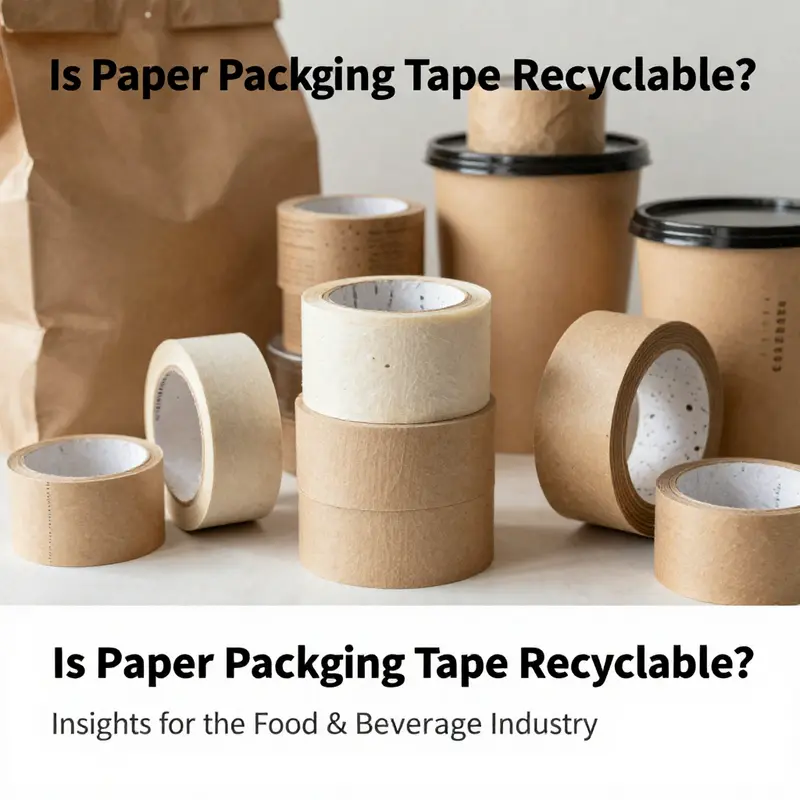
As the push for sustainability continues to gain momentum, understanding the recyclability of paper packaging tape has become essential for businesses in the food and beverage sector. From bubble tea shops to catering services, these establishments heavily rely on packaging materials to serve their customers efficiently. However, not all paper packaging tapes are created equal when it comes to recycling. This article delves into the recyclability of paper packaging tape, exploring its material composition, local recycling guidelines, and current innovations aimed at enhancing sustainability in packaging. By the end, you will have a comprehensive understanding of how to effectively manage paper packaging tape in your operations and contribute to a greener future.
Purity, Pressure, and the Paper Tape Promise: Navigating Recyclability in a Circular Packaging Age
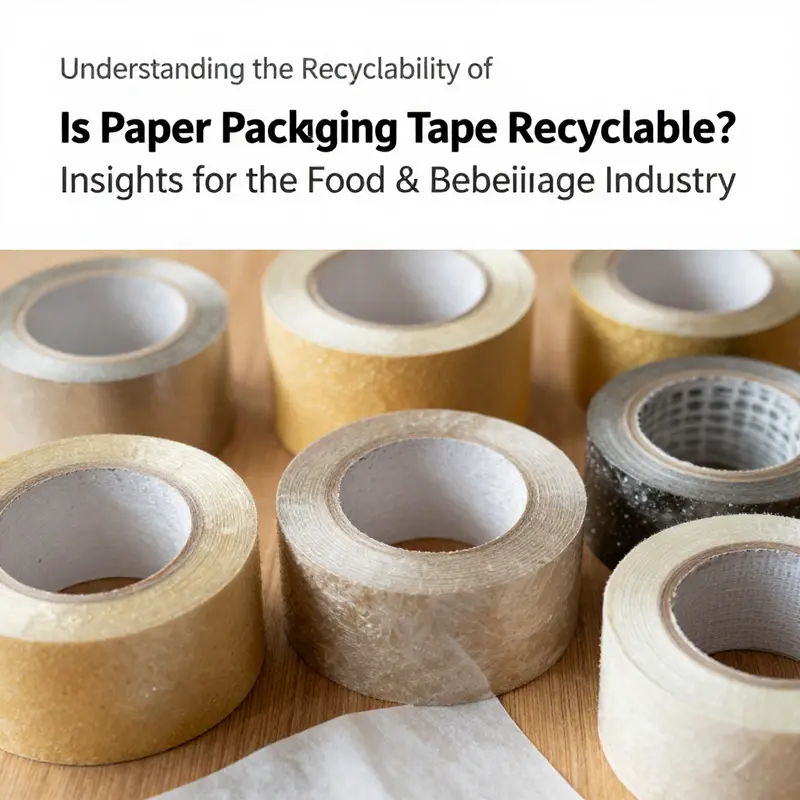
The story of paper packaging tape sits at the intersection of daily practice and planetary stewardship. It is easy to overlook the humble strip that seals a box, yet that strip determines whether a shipment of goods returns to the paper cycle or becomes an obstacle in the recycling stream. In a world increasingly oriented toward circularity, the recyclable value of paper tape depends not on novelty alone but on material purity. When a tape is truly paper—backing made from paper and adhesive based on water or starch rather than solvent-laden formulations—it can ride the same recycling wave as the cardboard it adheres to. The result is a streamlined process: the tape and the package share the same fate, and the fiber can be repurposed rather than discarded. But this ideal is not guaranteed. In many instances, the tape that arrives with a shipment carries a plastic film backing or an adhesive containing plastics. In those cases, the recycling stream is at risk of contamination, and the perceived benefit of a paper seal becomes a liability rather than a benefit to the waste-management system. The tension between purity and practicality is not merely technical; it touches the choices made by manufacturers, shippers, local facilities, and households alike. It asks a simple question with far-reaching implications: when does paper tape truly belong in a paper-recycling batch, and when does it require removal to avoid polluting the process?
From a materials perspective, the distinction is straightforward but not always easy to verify in practice. A traditional kraft tape, backed by natural paper and bonded with a water-based adhesive, is designed to decompose into the same pulped slurry that processes cardboard and paper waste. In the pulping and repulping stages, fibers are separated, cleaned, and formed into new paper products. The water-based adhesive typically breaks down under standard processing conditions, contributing little to contaminants. When such a tape is used on clean, dry packaging—cardboard boxes, paper bags, and other paper-based containers—the tape tends to stay with the paper stream rather than becoming a sticky outsider that clogs machines or lowers fiber quality. Cleanliness is crucial here: moisture, grease, or food residues on the packaging can complicate recycling regardless of tape composition, but the adhesive itself may be less of a barrier if the overall material remains predominantly paper.
However, a growing share of today’s tapes diverges from this ideal. In many cases, the tape employs a plastic film backing—often a thin layer of polypropylene or another polymer—that resists separation during standard recycling. Even if the adhesive itself is water-based, the presence of a non-paper backing means that recycling facilities may need to segregate or pre-sort the tape or, in some cases, reject the entire package as contaminated. The same complication can arise when adhesives contain plastic components or when coatings and laminations are involved. Coatings such as wax, greaseproof layers, or polymer laminations can introduce hydrophobic barriers that prevent the fibers from acting like a conventional paper stream. In practice, this means that a box sealed with such a tape could be treated differently by local recyclers, depending on the process and the purity thresholds they apply. In short, the material universe around paper tape—its backing, its adhesive, its coatings—determines its fate in the circle of recycling.
The practical upshot for households and businesses is clear: verify what sits on the roll before committing to a packaging choice. Labeling matters. If a tape is explicitly described as paper tape or biodegradable, that label becomes a signal that the product is designed for paper recycling. But labeling can be inconsistent across regions and manufacturers, which is why local guidelines matter. In some places, the standard is generous, accepting paper-backed tapes as part of the paper stream when they are clean and dry. In others, even small traces of non-paper materials trigger a need for removal or separate processing. The variability is not a flaw in the system so much as a characteristic of a diverse, decentralized recycling network that must accommodate countless material formulations, production methods, and waste-management capabilities. That is why the advice that recurs in the field—remove the tape if its composition is unclear or if there is any doubt about recyclability—remains practical and prudent.
Industrial innovation in this space does not hinge solely on identifying which tapes are “good” for recycling; it also involves reimagining packaging itself. A growing segment of the industry envisions replacing plastic shrink wrap and even plastic-backed tapes with paper-based alternatives that maintain strength during transport but leave little trace for the recycling stream to argue with. Initiatives across consumer-packaged goods and industrial packaging emphasize paper-based solutions that can be integrated into existing recycling systems, aligning with broader regulatory shifts aimed at reducing single-use plastics. These efforts reflect a broader agenda: to minimize the contamination risk at the source by selecting materials designed for the circular economy. When paper tape is part of a larger strategy to substitute plastics with renewable, recyclable, or compostable paper alternatives, it contributes to an end-to-end system in which the packaging life cycle closes more cleanly and predictably. The European regulatory landscape, for instance, signals a push toward eliminating non-paper plastics in certain packaging applications, which in turn incentivizes paper-based tapes and bands that can be recycled with the primary packaging they accompany.
The practical reality, however, is that not all paper tapes are created equal, and not all paper-contaminated packaging is handled identically. Food-grade papers, or papers used for foods and coatings that create barrier properties, may include laminations or waxes that resist or degrade recycling processes. The same goes for greaseproof papers or papers with high external coatings; while they serve essential functional roles, they often complicate recycling and may be treated as non-recyclable in certain jurisdictions. The upshot is that material purity—where the tape is purely paper and the adhesive remains free of non-paper components—remains the baseline condition for recyclable tapes. This is not merely a theoretical ideal; it guides practical choices for procurement, labeling, and disposal. In practice, organizations that seek to maximize recyclability tend to favor tapes that are explicitly designed for paper recycling, with clear declarations about their substrates and adhesives. They also communicate these expectations to suppliers, ensuring that downstream recyclers do not encounter unexpected contaminants that could degrade fiber quality or require additional processing steps.
For individuals seeking to maximize the environmental benefits of their packaging, the recommended approach blends informed selection with disciplined disposal. First, look for tapes labeled as paper tape or biodegradable. These labels are not magic; they point toward materials that have been formulated with recyclability in mind. Second, consult local guidelines. Recycling protocols vary significantly by region, municipality, and even by facility. What is accepted in one city may be diverted in another, and many facilities have specialized sorting lines for mixed paper streams that can handle simple, clean paper tapes but not films or laminates. Third, perform a quick feasibility test: if in doubt, remove the tape from the box before recycling, especially if the packaging appears to have non-paper components or coatings. While removing tape can add a small additional step to the disposal process, it reduces the risk of contaminating a fiber stream and helps ensure that the paper fibers can be repurposed into new products rather than ending up as waste.
The broader message is not simply about choosing the right tape; it is about understanding the role of your tape in the system that reshapes waste into resources. When a tape is truly paper, backed by paper, and adhered with a sustainable adhesive, it acts as a friendly participant in the recycling equation. It aligns with the fiber-recovery processes that transform used boxes into new paper products. In contrast, tapes with plastic backings or non-paper adhesives act as impediments, complicating the decontamination steps that recyclers undertake. This distinction reinforces the importance of material specification and supply-chain transparency. If manufacturers can clearly articulate the substrates and adhesives used in their tapes, recyclers can design processing lines that accommodate these materials or correctly separate them when necessary. Suppliers can play a critical role by certifying that their paper tapes meet defined recyclability standards, which in turn spurs consumer confidence and broader adoption.
In this narrative, a single roll of tape becomes more than a packaging accessory. It is a signal about a product’s end-of-life story and about the commitment of a supply chain to circularity. The shift toward paper-based solutions is not a unilateral rejection of plastics but a strategic alignment with what modern recycling systems can manage at scale. When paper tape is chosen with this perspective in mind, it supports a system in which the material loop closes more efficiently. And when it isn’t, the same tape can contribute to inefficiencies, delays, and higher processing costs. The result is a straightforward yet powerful takeaway: the recyclability of paper packaging tape rests on honesty about material composition, diligence in disposal, and a willingness to align procurement and packaging decisions with the realities of local recycling infrastructure.
To illustrate how this plays out in practice, consider the stepwise path a typical shipment might take. The box is filled and sealed with a paper-backed tape that is free of non-paper backings and observed to be clean and dry. After transit, the box arrives at a recycling facility that processes mixed paper and cardboard. The facility’s pulping stage grinds the fibers into pulp and breaks down adhesives. If the tape backing is pure paper and the adhesive is water-based, the tape tends to become part of the pulp without introducing problematic contaminants. If, however, the tape carries a plastic film, the pulping stage may fail to fully break the film away from the fibers, or it could require additional mechanical or chemical steps that slow throughput or degrade pulp quality. In extreme cases, the presence of plastics can lead a facility to withdraw the entire batch from the paper stream or to divert it into a different processing path, potentially increasing waste and cost. In other words, the difference between a seamless fiber-recovery and a compromised recycling batch can hinge on the tape’s composition.
From a strategic standpoint, organizations seeking sustainable packaging outcomes can integrate this knowledge into their supplier engagements and design choices. They can adopt procurement criteria that favor paper-backed tapes with clearly defined substrates and adhesives, and they can require certification or third-party verification of recyclability. They can also invest in internal waste audits that measure the proportion of packaging contaminants—tapes, labels, coatings—and use those metrics to drive improvements in both packaging design and recycling partnerships. While such measures may involve upfront effort and cost, they tend to yield long-term gains in fiber recovery, reduced contamination, and alignment with broader sustainability goals. The aim is not perfect purity in every instance but a consistently higher likelihood that the packaging materials, including paper tapes, return to the recycling loop rather than becoming waste.
An important nuance arises when considering coatings and laminations that might accompany paper tapes in more demanding applications. Some coatings provide heat resistance, moisture barriers, or grease resistance. While those properties can be essential for the integrity of the packaged goods, they can complicate recycling processes. The challenge is to strike a balance between performance and recyclability. This is where ongoing research and industry collaboration matter. By developing adhesives and backing materials that maintain their strength during transport yet break down cleanly in pulping processes, manufacturers can deliver packaging that meets functional requirements while preserving recyclability. Such progress, paired with clear labeling and robust recycling infrastructure, helps move toward a packaging ecosystem in which the default assumption is that paper tape belongs in the paper stream when it is truly paper.
For readers who want a concrete reference to the broader recycling landscape, consider this external resource that outlines how paper-based packaging fits into recycling systems and how these principles apply globally. It provides a principled overview of the recyclability of paper-based packaging including tape, and it explains how used paper packaging—including those with paper tape—can be collected and recycled effectively in various regions: https://www.tetrapak.com/our-solutions/recycling/paper-packaging-recycling. This resource anchors the practical guidance in an authoritative framework and highlights how circular economy goals are shaping packaging design and recycling workflows around the world.
As a final note, the balance between paper purity and real-world packaging needs will continue to evolve. The push toward eliminating single-use plastics in some packaging contexts creates a fertile ground for paper-based tapes and other fiber-rich alternatives. Yet the ultimate test remains the recyclability of the materials as they enter the waste stream. Consumers, businesses, and regulators all play a role in shaping that test. Clear labeling, conscientious disposal, and rigorous procurement standards help ensure that paper tape remains a friend to the recycling process rather than a foe. With continued innovation and thoughtful application, paper-backed tapes can reinforce a broader habit of responsible packaging—one where the smallest adhesive strip aligns with the largest goal: keeping materials in productive circulation long after a box has fulfilled its shipping mission.
Internal reference for further context: cupbowlpack.com/product/senang07-eco-friendly-printed-logo-paper-ice-cream-cups-with-lid-ice-cream-paper-bowl-paper-ice-cream-cups-with-lid/
Purity, Performance, and Recycling: How Material Choices Shape the Recyclability of Paper Packaging Tape
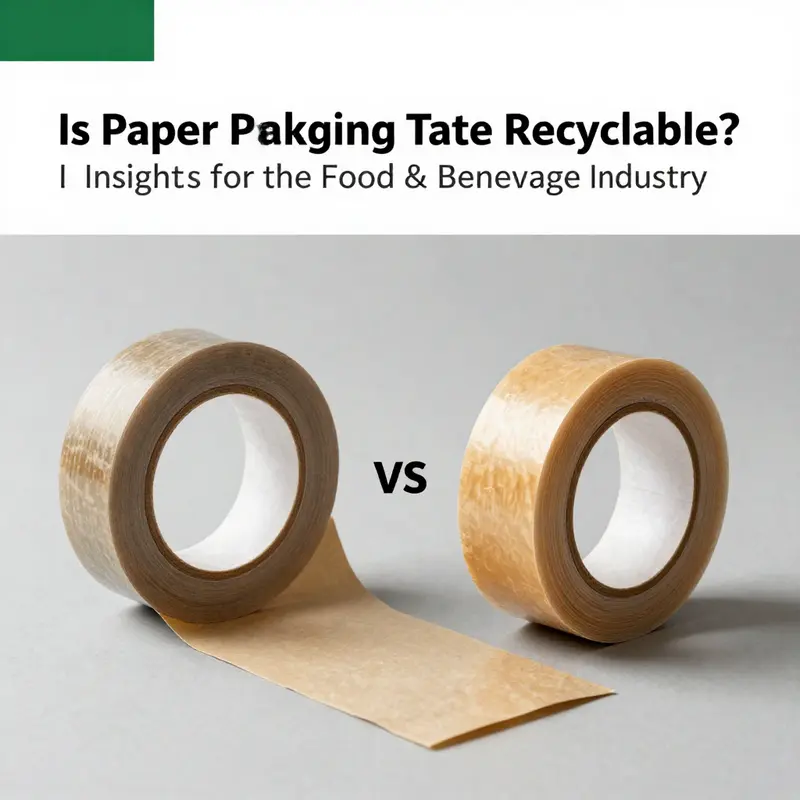
The life of a simple box hinges on a chain of decisions that begin long before the tape is applied. Paper packaging tape appears straightforward: a paper backing holding a sealant that adheres the flaps together. Yet in the complex ecosystem of waste management, the tape’s ultimate fate depends on a web of material choices, manufacturing methods, and end‑of‑life infrastructures. The key insight is not that all paper tape is equally recyclable, but that its recyclability sits on a spectrum defined by what the tape is made of, how it is made, and how it is used in real packaging practice. When the backing is truly paper and the adhesive and any coatings are compatible with standard pulping and deinking, the tape can join the paper stream with minimal disruption. When plastics, waxes, or other synthetic layers creep into any layer of the tape, they can contaminate fiber streams, complicate processing, and in some cases derail recycling efforts altogether. Understanding this spectrum requires looking at the chemistry of adhesion, the role of coatings, and the realities of regional recycling infrastructure, because the same tape can be treated as recyclable in one jurisdiction and non‑recyclable in another.
Paper, in its pure form, is designed to re-enter the cycle. It dissolves and flows with pulp, allowing recovered fibers to be repurposed into new paper products. The moment plastics appear—whether as a film backing, a laminated layer, or a bonded coating—the piercing question becomes one of process compatibility. Many facilities rely on deinking and mechanical separation to recover clean fibers, but the presence of non‑paper fractions can leave residues that degrade the quality of recycled stock. Adhesives, too, play a pivotal role. Water‑based adhesives tend to align better with standard recycling streams because they can weather the mechanical and chemical conditions of pulping and be washed away with minimal residue. However, not all water‑based systems are equal. Some formulations leave behind tacky traces or form films that resist breakdown, which can lead to fiber contamination or reduced deinking efficiency. In practice, the adhesive choice becomes a tuning problem: you want enough hold during use but minimal hindrance during recycling. The same logic applies to coatings and laminates. Plastic films, even when slim, can survive pulping and contaminate fiber, requiring additional cleaning steps or resulting in lower-grade paper. The technical challenge is to engineer a tape where the adhesive and any coatings either disappear into the recycling process without leaving problematic residues or separate cleanly from the fiber stream.
Industry momentum toward recyclable paper tape is not purely technical; it is also strategic. We see a growing emphasis on formulations that minimize synthetic content while preserving functional performance. Biodegradable or compostable alternatives receive attention for their clear end‑of‑life benefits, but compostability introduces its own complexities. In many recycling programs, compostable tapes are not accepted and are treated as separate waste streams. The practical question remains: can a truly paper‑backed tape be both durable during use and readily recoverable in a segregated paper loop? The answer depends on balancing several factors—adhesive chemistry, backing integrity, and how the product is integrated into the packaging system. The most promising directions involve adhesives that break down or detach more readily under typical recycling conditions, or coatings and laminates that can be peeled away or dissolved during processing. These advances do not emerge in isolation; they arise from collaboration among material scientists, packaging engineers, and waste‑management operators who translate laboratory findings into plant‑level operations that actually improve throughput and fiber purity. The goal is not to replace one set of plastics with another but to design a family of tapes that function reliably in use while preserving the integrity of the paper recycling stream.
For practitioners and consumers, translating this knowledge into practical action requires clear signals and consistent guidance. The first signal is material identity. A tape that is genuinely paper‑based, with no hidden plastic layers, is a far more confident candidate for recycling in standard paper streams. Labels such as “paper tape” or “biodegradable” can help, but local rules vary widely. The second signal is zoning and infrastructure. Recycling guidelines differ by region, and what is permissible in one system may trigger contamination alarms in another. This is why removing tape before putting a box into the recycling stream remains the simplest, most robust step when the tape’s recyclability is uncertain. It is easy to overlook in routine sorting, but even small amounts of non‑paper content can accumulate into a major impact on fiber quality. The interplay between local policy and household behavior means, practically, that conscientious disposal is often a more reliable predictor of recycling outcomes than the tape’s outward appearance.
As researchers push the boundaries of material science, the practical implications for waste streams become clearer. A central research thrust is developing adhesives that degrade or detach under fiber processing conditions, thereby reducing contamination risk. Another focal area is the design of less intrusive coatings or laminates that do not hinder deinking and fiber separation. Collectively, these efforts aim to expand the set of tapes that can ride the paper stream from application to end of life. The broader objective is to align material choices with the circular economy—keeping value in use, limiting resource extraction, and reducing environmental impact. In parallel, there is a growing push to document material content more transparently, enabling recyclers to make informed decisions about processing lines and reprocessing pathways. This transparency helps prevent the so‑called compatibility problem, where new materials arrive without corresponding upgrades to recycling infrastructure, creating bottlenecks rather than improvements.
Industry pilots have begun to demonstrate the potential of paper‑based approaches that avoid plastic laminates where possible. These pilots show that with careful design, a tape can deliver necessary adhesion and barrier properties while still behaving like paper in most recycling operations. They also illustrate a practical truth: the transition to recyclable paper tape is not about a single breakthrough but about assembling a portfolio of compatible solutions—adhesive chemistries, backing materials, and process adaptations—that collectively move packaging toward a cleaner fiber stream. This is especially important when packaging multi‑pack products or complex shapes, where the tape’s behavior under processing conditions becomes more consequential for fiber quality. The most resilient designs are those that deliver reliable performance in use while enabling efficient end‑of‑life processing, avoiding the risk of cross‑contamination that can ripple through an entire batch of recovered fiber.
For readers seeking a deeper technical orientation, the literature on paper‑based composites highlights how material composition governs recyclability. The core idea is simple in principle but nuanced in practice: the recyclability of a paper tape hinges on whether every constituent—adhesive, coating, backing, and any lamination—plays well with pulping and deinking. When one component resists breakdown or acts as a contaminant, the entire recyclability profile of the tape shifts. This body of work also points to broader implications for packaging design. If designers anticipate end‑of‑life processing, they can select adhesives and coatings that contribute to clean fiber recovery rather than complicate it. The implications are not merely environmental but economic as well. Cleaner fiber streams reduce processing costs and energy use and improve the yield and quality of recycled products. This nexus of performance and recyclability is where material science translates into real-world sustainability gains.
A practical takeaway flows from this synthesis. Consumers and packaging developers should start with the simplest, most reliable guideline: verify material identity and regional suitability. If the tape is evidently paper and there is regional acceptance of paper tape in the local recycling stream, it is reasonable to proceed with standard recycling practices, keeping in mind that small fractions of non‑paper components can still degrade fiber quality if not managed properly. If any doubt remains about recyclability, the prudent path is to remove the tape before recycling or consult local guidelines. The broader imperative is to design packaging with end‑of‑life in mind from the outset: choose adhesives and coatings that align with paper recycling, reduce the use of non‑paper layers, and communicate clearly to users how to dispose of taped packaging in their community. This mindset—designing for system compatibility as an integral part of product performance—emerges as the guiding principle for advancing recyclable paper tape.
The conversation around recyclable paper tape is not simply about swapping one material for another; it is about rethinking how packaging, recycling, and policy interact. It invites a shared vocabulary across designers, manufacturers, and waste managers about material content, processing capabilities, and end‑of‑life pathways. It invites transparency in labeling so households can identify tapes whose ends of life align with recycling streams. It invites investment in pilots and research that quantify how adhesive chemistry and backing design affect deinking efficiency, fiber yield, and paper quality. And it invites policymakers to harmonize guidelines where feasible, reducing the fragmentation that slows progress and increases the risk of contamination. In that sense, the recyclability of paper packaging tape is less about a fixed standard and more about an evolving ecosystem of materials and processes that can preserve performance while easing end‑of‑life processing. The narrative forward is one of informed design, collaborative implementation, and a shared commitment to keeping packaging materials in a circular loop.
To explore a concrete example of how related packaging materials are evolving toward recyclability, see the discussion linked in this chapter: senang07-eco-friendly-printed-logo-paper-ice-cream-cups-with-lid-ice-cream-paper-bowl-paper-ice-cream-cups-with-lid/.
For a deeper dive into the scientific underpinnings of recyclability in paper‑based composites, including packaging applications, refer to the comprehensive review at the following external resource: https://www.mdpi.com/2073-4360/16/9/1385.
Beyond the Surface: How Local Recycling Rules Shape the Fate of Paper Packaging Tape in a Circular Economy
Every packaging decision leaves a trace in the waste stream, and paper packaging tape is a quiet but telling indicator of how local recycling rules really function on the ground. In many households and workplaces, tape seems trivial. Yet its composition and the way it is disposed of can determine whether an entire batch of paper fibers remains recoverable or is downgraded to a lower-grade stream. The romance of a purely paper-based tape often collides with the practical realities of modern packaging, where backings, adhesives, coatings, and laminations add layers of complexity. The central question remains simple in appearance but complex in implementation: is the tape that seals the box recyclable? The honest answer hinges on both material composition and the specific rules that govern recycling in a given city or region. When you lift the lid on this question, you discover a landscape where purity matters as much as performance, and where the path to sustainability requires attention to local practice as much as product design.
From a materials science perspective, the difference between recyclable and non-recyclable packaging tape often comes down to the backing and the adhesive. Pure paper tape, which uses a paper backing paired with a water-activated adhesive typical of traditional kraft tape, can ordinarily be recycled with standard paper waste streams. The clean separation of paper from ink and adhesives during pulping is, in principle, achievable, allowing the fibers to be recovered for new paper products. But the moment the tape carries a plastic film backing—commonly polypropylene—or contains plastic components in the adhesive, the recycling process can become contaminated. The adhesive can resist embedding into the fiber slurry, and plastic fragments can complicate pulping and deinking, reducing yield and quality. These material realities help explain why some programs will reject tape even when the tape appears to be made from paper.
Local programs, however, do not always align with the idealized view of recycling. They operate within a system of logistics, processing capacity, and policy that varies widely from one municipality to another. In places with highly integrated waste management systems, guidelines may explicitly exclude all types of tape from curbside recycling, citing the risk of contaminating the pulping process. Cities known for their advanced recycling infrastructures, such as San Francisco and Seattle, frequently reflect this caution in their public guidance. They emphasize that tape, regardless of being paper-based or plastic-based, should be removed from packaging before recycling, or disposed of through alternative streams if available. The rationale is straightforward: even small amounts of adhesive residue and backing plastics can accumulate and interfere with fiber quality, potentially leading to rejected bales or increased processing costs. This is not merely a theoretical concern; it translates into concrete practices that impact households, small businesses, and large shippers alike.
The divergence in rules is not a statement about the superiority of one material over another. It is a reflection of how recycling plants manage throughput, how pulping mills handle impurities, and how municipal budgets allocate funds for sorting and processing. In cities with multiple streams or pay-as-you-throw schemes, the incentives to keep recyclables clean are strong, and tape becomes a frequent exception. In contrast, smaller communities may work with more permissive guidelines, yet they still face the fundamental issue of adhesive contamination and cross-material mixing. The bottom line for consumers is to verify local rules before disposing of tape in recycling bins. A quick check of the official waste management website or a municipal recycling lookup tool can save confusion and protect the integrity of the recycling stream. The broader takeaway is that recycling success depends on both the material property of the tape and the operational realities of the local system. When in doubt, remove the tape if the packaging is otherwise recyclable and use the appropriate disposal stream recommended by local authorities.
The local rules are only one piece of the puzzle. The adhesive that binds paper tape to a carton is rarely a simple, inert layer. Many modern adhesives are based on synthetic polymers designed for strong, durable bonds in temperate environments. These polymers do not biodegrade readily in the same way as natural fibers, and they do not separate easily from the paper during mechanical pulping. Even if a tape appears to be made entirely of paper, the adhesive can remain a stubborn contaminant that complicates chemical or mechanical recycling processes. Some regional guidelines recognize this by treating tapes as non-recyclable by default, regardless of the backing material. Others may allow the paper fiber to tolerate small quantities of adhesive, but the acceptance thresholds vary and are rarely uniform across jurisdictions. The practical implication for businesses is clear: tape is a potential point of contamination that must be managed at the source, ideally by minimizing its use and ensuring that any tape used is as compatible with local recycling streams as possible.
Coatings and laminations add another layer of complexity. Food-grade papers, greasy papers, or papers with wax coatings can present significant challenges even if the base is paper. The contamination risk in these cases is not just about the tape but about the entire sheet’s suitability for recycling. Some coatings are not easily removed during pulping, or they interfere with ink removal and fiber recovery. In many instances, such papers end up being diverted to non-recycling streams or to specialized processing that not every local facility can support. While this may sound discouraging, it highlights an important design principle for packaging and labeling: keep materials simple where possible, and align paper uses with known recycling capabilities. A shift toward purer, simpler paper substrates reduces the risk of contamination for end-of-life processing and helps maintain the integrity of the recycling supply chain.
Practical disposal guidance emerges from this intersection of material science and policy. The most reliable rule is to verify local protocols before discarding tape in a recycling bin. If the label on the packaging indicates that the tape is paper-based and biodegradable, that may still not be enough to secure acceptance in curbside programs if the adhesive or backing carries plastics or coatings. In many cases, the safest course is to remove the tape entirely from the packaging before disposal, especially if the packaging itself is being recycled through a separate, well-defined stream. For businesses that handle large volumes, implementing a policy to remove tape at source can significantly improve the quality of recycled fiber and lower contamination risks across the board. Training staff, digital signage in warehouses, and clear box-labelling can facilitate this practice as part of a broader sustainability initiative.
The industry response to these recycling hurdles is evolving. A growing segment of manufacturers is exploring fully compostable tapes and more recyclable-substrate designs. Such innovations aim to reconcile performance with end-of-life compatibility. Some approaches replace plastic backings with plant-based films or eliminate adhesives with fissile, water-activated alternatives designed to leave minimal residue. Real-world adoption, however, depends on robust supply chains, industrial composting infrastructure, and, crucially, consistent acceptance by local programs. The pace of change is uneven, and the practical reality remains that most tape in circulation today still faces non-recyclability in many communities. This reality should not discourage action; rather, it should inform a more thoughtful approach to packaging design, waste management planning, and consumer education. By prioritizing tape reduction and selecting compatible materials where possible, individuals and organizations can contribute to cleaner recycling streams and more resilient circular economies.
For readers navigating this terrain in a real-world setting, a pragmatic step is to consider alternative packaging options that inherently align with local capabilities. When evaluating options, it can be instructive to review related packaging products that embody simpler material compositions and clearer end-of-life pathways. For instance, a practical example is the kraft paper octagonal container family that has been designed with a focus on recyclability and compostability, and it illustrates how packaging design can reflect regional waste realities. You can explore a representative example page here: kraft paper octagonal bowl with lid. This kind of resource helps bridge the gap between lab-tested recyclability and on-the-ground disposal practices, reminding readers that responsible choices begin with understanding the local rule set and then selecting materials that perform well within it. The broader narrative remains clear: local guidelines shape what is recyclable, not just what the material could be in theory, and choosing packaging with that reality in mind accelerates progress toward a truly circular economy.
To round out the picture, it is useful to connect this discussion to the broader policy and public information landscape. Local rules are not static; they evolve with technology, market demand, and environmental priorities. As more jurisdictions adopt standardized recycling rules and integrate better sorting technologies, the gap between material capability and program acceptance may narrow. Yet the current moment requires diligence. Businesses should keep a close watch on municipal updates, and consumers should adopt a habit of verifying guidelines before disposal. The energy and resources invested in better disposal practices today pay dividends in fiber quality, processing efficiency, and the environmental outcomes we all seek. And where the rules are explicit about tape, following them precisely becomes a straightforward, measurable contribution to sustainability that does not demand heroic efforts beyond what households and organizations already do every day. For those seeking a wider regulatory framework, the Environmental Protection Agency’s Local Recycling Rules offer a comprehensive reference point that complements city or county guidelines and helps illuminate the trajectory of waste management policy in the years ahead. https://www.epa.gov/recycle/local-recycling-rules
Purity in Motion: Innovations That Turn Paper Packaging Tape Into a True Circular-Stream Material
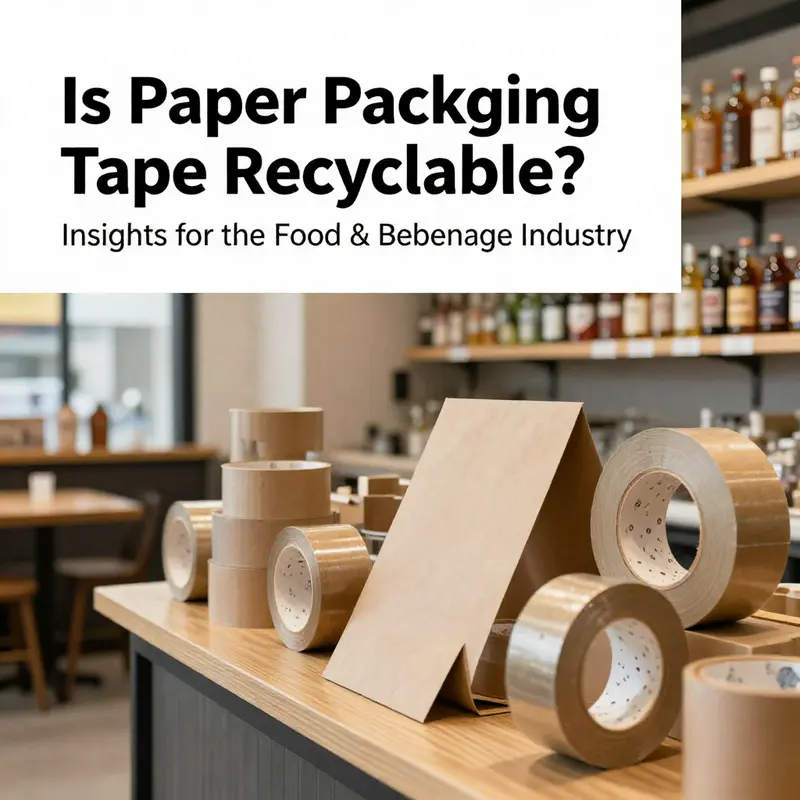
Tapes used to seal boxes are often overlooked in the conversation about recycling, yet they can become a test case for whether packaging materials truly fit a circular economy. The central question is simple but consequential: is paper packaging tape recyclable? The answer rests on what the tape is made of and how the materials interact with the recycling systems that collect, process, and transform discarded packaging. At its core, paper tape composed of a paper backing and a water-activated adhesive is conceptually aligned with standard paper waste streams. The challenge appears when the tape carries a plastic film backing or uses adhesives that leave polymer residue after pulping. In practice, the recycling mix often cannot tolerate mixed materials in the same batch without compromising fiber quality or contaminating the recovered pulp. When the tape is mostly paper with only minimal adhesive, and when that adhesive readily breaks away during pulping, the tape can become part of the paper stream rather than a contaminant. This distinction between material purity and material hybridity is not a mere technical footnote; it shapes how packaging designers, manufacturers, and municipal programs structure the end-of-life pathway for a large portion of everyday shipments.
Industry attention has intensified around the development of curbside-recyclable paper tape. In the United States, a major tape manufacturer has introduced a formulation that positions paper tape as a recyclable alternative to conventional plastic-backed tapes. The innovation hinges on a paper-based adhesive system that can be processed through standard municipal recycling streams. This approach seeks to minimize contamination risk at the point of recycling and to support closed-loop recycling cycles where the paper tape dissolves into the same fiber stream as the carton or parcel it seals. For packagers, the advantage is more than a single product upgrade; it is a systems-level shift toward reducing the burden on recycling facilities and clarifying the path from packaging to reclaimed material. The practical impact is measured not only by a tape’s performance during shipment and storage but by how confidently households and businesses can recycle boxes without worrying about the tape. In tandem with this, the broader emphasis on paper-based composites in packaging highlights a movement toward materials that can be integrated into existing waste management processes without requiring specialized streams or separate sorting.
To understand why these innovations matter, it helps to look at the material design itself. A paper-based adhesive system typically employs water-activated or starch-based formulations that soften or detach under pulping conditions. The idea is to allow the adhesive to behave like ordinary paper fibers, so it can be dispersed and reconstituted rather than remaining as a discreet polymer remnant. The paper backing then becomes the primary carrier, guiding the tape through the same mechanical and chemical processes used to separate fibers from contaminants. This design philosophy mirrors the circular logic that governs other paper products designed for recyclability. When done well, the adhesive system contributes minimal residue and does not impede the reformation of high-quality fibers. When this is not the case, however, residues can accumulate, reducing pulp strength and impairing the performance of paper products made downstream in the recycling chain. The balance is delicate, and it relies on careful formulation, rigorous testing, and honest collaboration between tape producers, paper manufacturers, and recycling facilities.
Rigorous evaluation methods play a crucial role in ensuring that paper-based tapes live up to their recyclability claims. Standardized lab protocols simulate real-world recycling conditions, offering a controlled lens on how materials break down, separate, and hold their integrity through processing. In practice, researchers measure how the tape fibers behave during pulping, dissolution, and refining, and they track whether adhesives contribute significant polymer residues that could foul the recovered fiber. These tests must account for regional variations in recycling infrastructure, because a tape deemed recyclable in one city might pose challenges in another that uses different pulping or sorting technologies. The evolving landscape of recyclability testing reflects a broader trend in packaging science: as designs become more sophisticated, the evaluation methods must become more nuanced and more closely aligned with industrial realities. A 2025 study in a leading chemical engineering journal highlights this shift, noting that methods for assessing the recyclability of paper-based composites are adapting to new packaging formats and materials science developments. This literature underlines the need for transparent, reproducible evaluation protocols that can be applied regardless of geography or facility scale.
From the perspective of a packager, the practical implications are clear. If a tape is truly paper-based, with a clean paper backing and a adhesive that tolerates the pulping environment, it becomes a candidate for inclusion in the standard paper waste stream. The removal of non-paper components before recycling remains a best practice in many regions, highlighting that consumer behavior and local guidance matter just as much as product design. Guidance to consumers often centers on three quick checks: look for labeling that identifies the tape as paper tape or biodegradable; consult local recycling guidelines for tape-specific notes; and, when in doubt, remove the tape from the box before placing it in recycling. These steps reflect a cautious but pragmatic approach to avoiding contamination, especially in areas where the municipal program has not yet adapted to new tape chemistries or where the definition of a recyclable tape remains regionally variable.
Innovations in this space also intersect with collaborative efforts to reimagine packaging workflows. One line of industry thinking proposes replacing more polymer-intensive wrappers and films with paper bands or paper-based closures that can be stripped from the carton and processed along with the primary fiber stream. Such shifts require not only the creation of compatible materials but also supply chain alignment and changes in labeling, packaging lines, and end-of-life messaging. The underlying logic is straightforward: if the packaging can be disassembled into pieces that the recycling system already processes efficiently, it reduces the risk of contamination and increases the predictability of material recovery. This logic aligns with the broader push to replace plastics with paper in certain packaging roles, a trend driven by the need to minimize plastic in municipal waste streams and to strengthen the recyclability profile of everyday packaging.
For readers exploring related packaging innovations, the broader ecosystem offers useful touchpoints. A Kraft paper octagonal bowl product page provides a concrete example of how paper packaging is evolving to balance performance with end-of-life considerations. The page demonstrates how paper-based designs can deliver durability and user-friendly features while maintaining compatibility with paper recycling streams. Kraft paper octagonal bowl product page. While this reference centers on a different packaging format, it illustrates the same design ethos: paper materials can be engineered to fit into existing recycling systems when non-paper materials are minimized and when adhesives and coatings are chosen with end-of-life processing in mind. Such cross-pollination between tape innovations and broader paper packaging designs helps the industry move toward a cohesive circular economy rather than a patchwork of incompatible materials.
The path forward, though promising, is not without its tensions. Food-grade papers, coatings, and laminations introduced to improve barrier properties or create grease resistance complicate recyclability. When coatings or laminations prevent effective pulping or cause contamination in the reclaimed pulp, those papers often fail to enter the standard paper waste stream. This nuance underscores a central truth: material purity matters as much as functional performance. In the context of paper tape, the same principle applies. If a tape uses a coating or a backing that resists separation during pulping, it becomes a barrier to recycling rather than a bridge to it. The industry response has therefore been to prioritize materials that harmonize with pulping chemistry, to minimize non-paper content, and to design adhesives that do not compromise fiber integrity.
Beyond materials design, the recycling infrastructure itself must evolve in tandem. Municipal systems vary widely in their ability to handle new paper-based composites. Some facilities are equipped to remove adhesive residues through mechanical or chemical means, while others rely on pulping and washing stages that efficiently separate fibers when adhesive residues are negligible. This divergence means that the success of recyclable paper tape depends on a three-way alignment: thoughtful product design, clear labeling for end users, and adaptable waste management processes. Advancing this alignment calls for ongoing dialogue among packaging engineers, paper manufacturers, and facility operators. When these stakeholders collaborate, they can calibrate pulping conditions, optimize adhesive formulations for separability, and standardize testing protocols so that recyclability claims hold across jurisdictions.
In practical terms, the consumer guidance remains straightforward. When a tape is clearly labeled as paper tape or biodegradable, it is reasonable to place it in the paper recycling stream in most regions. If the tape carries a plastic backing or a strong polymer adhesive, or if local guidelines indicate a non-recyclable status, it should be treated as non-paper waste for recycling purposes. In many cases, the best course is to remove the tape and dispose of it according to local rules before recycling the box itself. As the market continues to innovate, more regions will likely update their guidance to reflect the capabilities of new paper-based systems. The key is to stay informed about local rules, as these differ considerably from one city to another, and to monitor manufacturers’ disposal instructions to understand how a given tape is intended to be processed in the waste stream.
Looking ahead, the industry is moving toward a more integrated approach to recyclability. Designers are increasingly asked to consider the entire lifecycle of a packaging system, from raw material sourcing to end-of-life fate. Paper tapes that are truly recyclable offer a practical path to cleaner fibrous recapture and reduced need for post-consumer separation. This does not imply a universal solution, but it does point to a measurable trajectory: substitutions of plastic-backed tapes with paper alternatives, the adoption of adhesive chemistries that readily disperse in pulping, and the refinement of standardized recyclability testing that mirrors the conditions found in municipal facilities. With these pieces in place, the question of whether paper packaging tape is recyclable moves from a gray judgment to a repeatable assessment, enabling packaging to be part of a genuinely circular system.
External resource: Recyclability of Paper-Based Composites for Packaging Applications – The Role of Evaluation Methods. https://doi.org/10.1002/cite.202400097
Final thoughts
Understanding the recyclability of paper packaging tape is crucial for any business in the food and beverage industry aiming to enhance sustainability. As we have explored, the material composition of the tape, local recycling guidelines, and ongoing innovations all impact its recyclability. By making informed choices regarding your packaging solutions, you can reduce waste and contribute positively to the environment. Embracing sustainable practices not only enhances your brand’s image but also aligns with the rising consumer demand for eco-friendly products.