
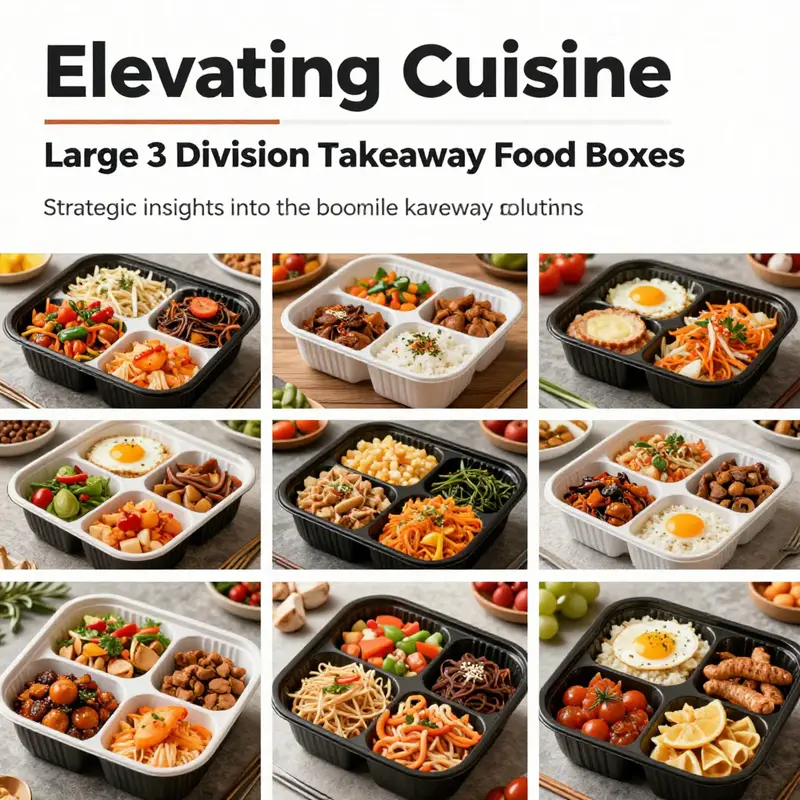
As more consumers turn to takeaway options for their dining experiences, the demand for efficient, versatile food packaging rises. Large 3 division takeaway food boxes are essential for bubble tea shops, beverage chains, restaurants, food trucks, catering services, and event planners. This article delves into the market dynamics influencing sales, the role of technological innovations in production, the economic factors affecting the industry, and the environmental considerations that shape sales strategies. Each chapter contributes to a comprehensive understanding of how businesses can capitalize on this growing trend in food packaging.
Three-Compartment Packaging at Scale: Market Dynamics Driving Large Takeaway Box Adoption
The market for large three-compartment takeaway boxes sits at the intersection of rising delivery volumes, evolving consumer expectations, and the push toward more efficient packaging systems. These boxes are not mere containers; they are strategic touchpoints that influence perceived quality, order accuracy, and repeat business. Over the past few years, the segment has shifted from a basic packaging option to a multi-functional platform designed to preserve temperature, control moisture, and maintain branding from kitchen to doorstep.
At the heart of this shift are three primary material families: kraft paper, durable plastics, and stainless steel reusable sets. Kraft paper boxes appeal to sustainability goals and offer printable surfaces for branding. Plastic options deliver barrier performance and microwave resilience at scale. Stainless steel reusables are favored by large-volume operators seeking long-term waste reduction and repeat-use workflows. Each family presents different trade-offs in cost, performance, and end-of-life outcomes, shaping procurement decisions for brands and operators.
Geography also matters. Regions with mature manufacturing ecosystems and strong logistics networks can shorten lead times, enable rapid prototyping, and support on-time delivery across multi-market programs. The Guangdong-Hong Kong-Macao region, for example, combines integrated supply chains, skilled labor, and access to port infrastructure that helps achieve scale while preserving customization, consistency, and quality.
Beyond materials, the value proposition hinges on end-to-end packaging systems: tailored sizes, integrated branding, and compatibility with kitchen workflows and delivery fleets. Suppliers that can deliver design freedom alongside predictable timing and cost tend to win multi-unit contracts. In practice, this means scalable production lines, flexible printing capabilities (including on-demand runs), and robust quality-control processes to ensure reliability across millions of units.
Finally, sustainability remains a strategic driver. Brands are weighing total cost of ownership, including end-of-life management and recyclability, when selecting packaging partners. Advances in barrier technology, ink systems, and material science continue to push three-compartment boxes toward better environmental performance without sacrificing performance.
From Factory Floors to Brand Floors: Selling Large Three-Compartment Takeaway Boxes in a Tech-Driven Packaging Era
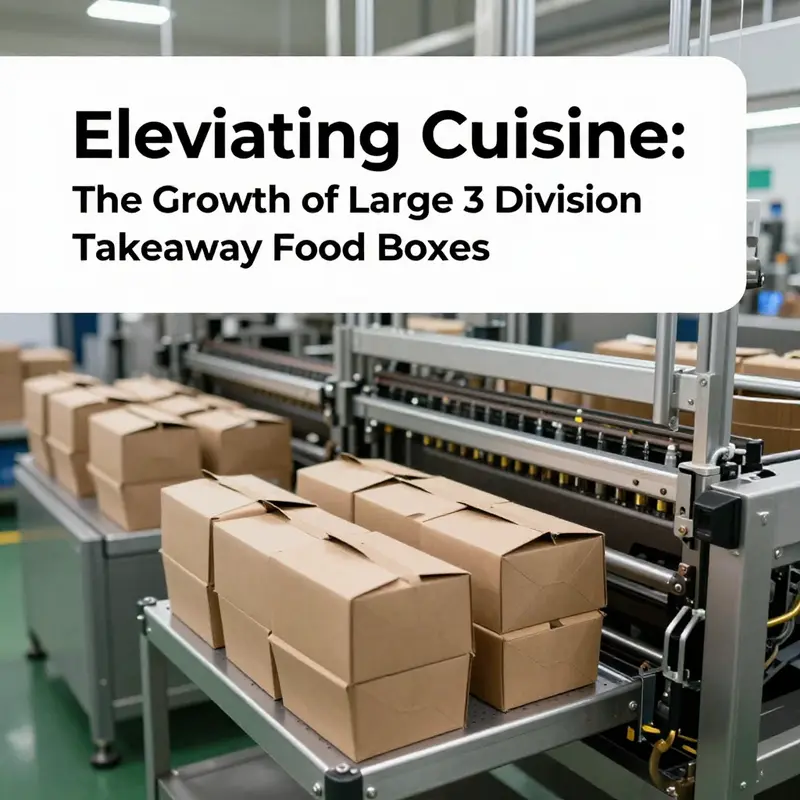
The market for large three-compartment takeaway boxes is not merely a matter of supplying a container; it is a conversation between efficiency, sustainability, and storytelling. In places where manufacturing clusters pulse with activity, a single package becomes a vantage point for trade, culture, and business strategy. In this chapter, we trace how the convergence of scale, material science, and digital intelligence has reshaped the sales narrative around these multi‑compartment vessels. We examine how a Guangdong-based manufacturing ecosystem—long celebrated for its vast output and logistical prowess—now speaks to global brands through customized configurations, smarter production, and a more resilient supply chain. The result is not just a cheaper or sturdier box; it is a packaging proposition that carries brand messages, ensures performance under microwaves and greasy environments, and aligns with growing expectations for reuse and responsible disposal. This is the story of how a seemingly simple container becomes a fulcrum for demand forecasting, client collaboration, and compelling value propositions in a market that prizes speed, reliability, and differentiation.
Technology and process modernization have redefined what buyers expect from large three-compartment boxes. Traditional assumptions—that these boxes are only about space and leak resistance—have given way to a more nuanced understanding. Modern buyers, ranging from national food-service chains to large catering operators, need packaging that can withstand high-volume throughput, survive microwaving without compromising hygiene, and support branding that travels from kitchen to consumer to social media. In response, manufacturers have invested in automation, precision molding, and material science that elevate performance while curbing environmental impact. The interplay between material durability and design flexibility matters as much as the cost per unit. The sales conversation now often centers on total cost of ownership: the product’s durability reduces waste, the ability to customize drives brand equity, and the supplier’s production capabilities translate into dependable lead times and scalable supply.
One of the most significant shifts in this space is the integration of smart thinking into the packaging itself, a trend that aligns with broader Industry 4.0 and the emergent ethos of Industry 5.0. Modern facilities leverage automation not merely to speed up assembly but to optimize every stage of the production line through real-time data. Self-learning systems monitor equipment health, predict maintenance needs, and adapt schedules to fluctuations in demand. This digital integration translates into measurable sales advantages. For buyers, it means fewer stockouts and a faster path from order to ship. For suppliers, it means more predictable capacity planning and the ability to tailor lines for high-volume repeats or seasonal surges. In the context of large three-compartment boxes, such capabilities can help ensure uniform quality across tens or hundreds of thousands of units, a quality signal that resonates in procurement conversations where risk management is paramount.
The landscape of packaging technology is also evolving through concepts like active and smart labeling, where packaging communicates with the product and the consumer. Labels that monitor temperature, freshness, or tampering are transitioning from niche research to practical features that reassure buyers and end-users alike. Reports and industry conversations from recent years suggest that these innovations are redefining consumer trust and supply-chain transparency. The implications for sales are profound: packaging that can demonstrate compliance with safety standards and provide real-time data points becomes a tangible differentiator. Clients can lean into these features in their own marketing narratives, turning a functional requirement—safety and freshness—into a storytelling asset that enhances the perceived value of their meals.
Beyond the box itself, augmented reality (AR) is entering the conversation around packaging aesthetics and consumer engagement. AR-enabled packaging has shown potential to elevate brand narratives, particularly among younger consumers who respond to interactive experiences. While AR is not yet a universal expectation, its early applications illustrate how packaging can extend brand touchpoints beyond the shelf and into smartphones and social feeds. For sales teams, this adds a new dimension to proposals: the ability to offer not just a container but a digitally enhanced packaging experience that aligns with a brand’s digital strategy. The result can be stronger client commitments, as partners seek packaging ecosystems that amplify their marketing and consumer connection while maintaining strict quality and cost controls.
In parallel with these technological strides, the production geography of large-scale packaging continues to influence sales dynamics. China’s packaging sector remains the world’s most expansive in terms of disposable container output, with Guangdong Province often cited as a global hub for large-scale manufacturing, driven by a mature supplier network, access to ports, and an embedded culture of process optimization. Guangdong’s scale enables competitive unit costs even as buyers pursue more demanding specifications, including heavier-duty materials, more sophisticated sealing systems, and tighter tolerances for leakage. Yet the broader regional landscape matters as well: Zhejiang and Shanghai are frequently highlighted for automation and innovation. For buyers, the geographical mix matters because it translates into a balance of cost efficiency, customization capability, and technological sophistication. The strategic takeaway is that sourcing decisions are rarely about a single attribute. They hinge on a supplier’s ability to align price, lead times, customization, and after-sales support with the buyer’s operational rhythm and growth trajectory.
From the sales perspective, customization emerges as one of the strongest levers for differentiation. The large three-compartment box is not a one-size-fits-all product; it is a platform for brand storytelling, operational efficiency, and post-use messaging. The ability to tailor dimensions, colors, and branding reinforces a supplier’s value proposition. Customization can range from subtle changes—such as a colorway that complements a brand palette or a logo placement that harmonizes with a restaurant’s identity—to more extensive modifications, including embossed branding, specific lid configurations, or alternate sealing mechanisms designed to handle particular menu items or service styles. In a market where price sensitivity remains a constant, the strategic advantage comes from packaging that helps a buyer stand out just enough to justify a premium or to secure a long-term contract with routine, predictable orders.
Another dimension that often shapes sales conversations is sustainability. Reusable and durable packaging solutions offer a tangible path to reducing single-use waste, a concern increasingly echoed by regulators, operators, and consumers. When a large three-compartment container is designed for durability and reuse, it can lower total waste over time and support a brand’s sustainability narrative. Buyers increasingly assess not only the upfront cost but the long-run cost curve, including the cumulative impact of waste management, return logistics (where applicable), and the lifecycle performance of the material. For sales professionals, presenting a clear lifecycle story—how the container performs in greasy, microwavable, or hot-holding environments and how its reuse or recyclability aligns with a client’s sustainability targets—can be as compelling as demonstrating the container’s leak resistance or heat tolerance.
A practical dimension of this sales narrative is the balance between volume efficiency and customization complexity. Large orders benefit from standardized configurations that exploit economies of scale, supported by manufacturing capabilities that maintain consistent quality across high unit counts. When clients require customization, suppliers need to map production capacity and lead times to the client’s rollout schedule. Digital integration plays a crucial role here: orders can be tracked in real time, allowances for color or branding changes can be integrated into the scheduling system, and production dashboards can provide clients with visibility into expected ship dates. In this sense, the packaging supplier becomes a supply-chain partner, not merely a vendor. The buyer gains assurance that schedules will align with store openings, promotional periods, or seasonal menus, while the supplier nurtures long-term relationships that extend beyond a single project.
A concrete illustration of these dynamics lies in how packaging firms approach pricing and procurement flexibility. Real-time information on warehouse inventory, raw material costs, and production capacity enables suppliers to present dynamic, market-responsive pricing models. For buyers, this means more predictable budgeting and the ability to time orders with favorable cost windows. It also means that suppliers can accommodate sudden spikes in demand with confidence, an essential capability in a market where platform-driven food delivery volumes can surge during promotions or peak hours. The result is a more resilient partnership—one that can adapt to shifting consumer tastes, regulatory changes, and logistical constraints without sacrificing quality or failing to meet delivery commitments.
An often-overlooked but critical aspect of the sales conversation is compatibility with broader brand ecosystems. Packages are frequently part of a multi-channel packaging strategy, where a company’s identity is reinforced through coordinated visuals, material choices, and messaging across packaging lines. A large three-compartment container must harmonize with other packaging assets—from cup carriers and napkin dispensers to sharing and merchandising collateral. The ability to provide cohesive branding across a suite of packaging options amplifies a buyer’s marketing impact and reduces the risk of aesthetic mismatch that could undermine customer perception. For suppliers, delivering a comprehensive, interoperable packaging family expands revenue opportunities and reduces the complexity clients face when coordinating global packaging programs. In short, packaging is a system, not a standalone component.
As buyers look ahead, they increasingly seek suppliers who can demonstrate robust traceability and compliance. Regulatory expectations around food-contact materials, labeling, and end-of-life disposal create a need for transparent supply chains. The capacity to demonstrate material safety, production history, and environmental impact can become a decisive factor in large-scale procurement. In a landscape where data literacy is increasingly valued, the ability to provide reliable documentation and to integrate packaging specifications into a client’s enterprise resource planning (ERP) and product lifecycle management (PLM) systems can distinguish a supplier in a crowded market.
To bring these threads together, consider how a buyer might approach a partnership for a large-scale rollout. The conversation begins with a clear assessment of needs: the required capacity, target menu items, and schedules for opening or relaunching venues. It then moves to a collaborative design stage where material choices, structural features, and branding elements are tuned to optimize performance and aesthetics. The supplier responds with a production plan that maps the preferred configuration to the available machinery, the expected lead times, and the cost structure. Throughout, digital tools provide real-time transparency, from order placement to shipping and post-usage feedback. The final outcome is a packaging solution that not only meets functional demands but also reinforces brand positioning and sustainability commitments, delivering measurable value across operations, marketing, and corporate responsibility.
In the spirit of practical exploration, one can observe the breadth of packaging options available to implement these strategies. A look into related packaging formats—such as kraft-paper octagonal bowls with lids, designed for versatility and a strong visual identity—highlights how even adjacent product families can inform a buyer’s packaging ecosystem. These options demonstrate how a brand might experiment with form, function, and aesthetics while staying aligned with cost and supply realities. For teams evaluating suppliers or portfolio options, recognizing the parallel trajectories of different packaging formats helps in constructing a coherent long-term supplier relationship. It also nudges teams toward thinking beyond a single box to a broader, integrated packaging strategy that supports growth, variegated menus, and evolving consumer expectations.
Internal resources can illustrate these design considerations in practical terms. For brands exploring design flexibility and packing aesthetics, the exploration of kraft-paper octagonal bowls with lids offers a glimpse into the spectrum of options available to complement larger, multi-compartment configurations. This particular packaging family demonstrates how structural integrity, leak resistance, and branding can be harmonized in formats that travel well through kitchens and couriers alike. The ability to pair such alternatives with scalable production underscores how suppliers can accommodate both experimentation and mass deployment without sacrificing reliability. By presenting these pathways in a client meeting, a salesperson can anchor conversations in tangible, visible options, bridging the gap between strategic goals and operational realities. See more details here: kraft-paper octagonal bowls with lids.
As the chapter closes, the central message is clear: the sales of large three-compartment takeaway boxes are increasingly defined by a blend of manufacturing scale, material performance, customization, and digital-enabled service. In a market where food delivery and take-away channels continue to expand across continents, the ability to deliver durable, brand-ready packaging at scale—coupled with transparent supply chains and a forward-looking approach to sustainability—constitutes a compelling value proposition. Buyers are not simply purchasing a container; they are investing in a packaging system that can adapt to evolving menus, marketing campaigns, and consumer expectations. Suppliers who recognize packaging as a strategic asset—one that integrates design, manufacturing efficiency, and data-driven collaboration—will be best positioned to capture growth in a rapidly changing global landscape. The dialogue between factory floors and brand floors is no longer a linear transaction; it is a continuous partnership, where performance, aesthetics, and responsibility converge to deliver measurable advantages for both sides and, ultimately, for the customers who choose these multi-compartment containers to carry their meals forward.
External reading for deeper context on packaging innovations in the food sector can be found here: https://www.researchgate.net/publication/398765432InnovationsinSmartPackagingConceptsfor_Food. This resource offers a broad view of how intelligent packaging concepts are reshaping safety, interactivity, and consumer confidence across food packaging.
From Clusters to Consumption: The Economic Currents Behind Sales of Large 3-Compartment Takeaway Boxes
The chapter that follows threads together the economic forces shaping the sales of large three-compartment takeaway boxes. It treats the subject as a living system, where factory floors, global trade routes, consumer habits, and regulatory pressures interact. Rather than presenting a simple cause-and-effect narrative, it shows how scale, location, and sustainability expectations combine to determine price, lead time, and the ability to differentiate in a crowded market. In this lens, the large three-compartment takeout container is not merely a disposable item; it is a logistical node that links restaurants and delivery platforms to consumer preferences, regulatory regimes, and the evolving expectations of corporate buyers who want reliability, traceability, and lower environmental footprints from their packaging suppliers. The story begins with a post-pandemic shift in demand, then moves through the advantages of manufacturing clusters, and ends with the strategic choices that push sales growth while meeting higher standards for sustainability and branding.
A central driver of current sales dynamics is the lasting shift in consumer behavior after the disruptions of the pandemic era. While the immediacy of crisis has faded, the preference for packaged and takeout meals has persisted. A substantial body of evidence points to health and safety considerations as a durable attribute of modern eating habits. Consumers, especially in urban centers and among younger demographics, increasingly rely on convenient, sealed meals that maintain quality during delivery. This behavioral inertia translates into sustained demand for sturdy containers capable of withstanding heat, grease, and frequent reheating, while also offering dependable performance across long distribution chains. In other words, the value of a three-compartment design is no longer just about portion control; it is about preserving the integrity of an entire dining experience from the moment the order is placed to the moment it is enjoyed.
The global landscape for these containers leans heavily on producer clusters that have grown up around large-scale plastics manufacturing and packaging ecosystems. In the Chinese context, the southern coastal belt—anchored by Guangdong—has emerged as a dominant production hub for food packaging. The advantage is twofold: an established, mature supply chain and a convergence of suppliers who can source resin, components, and printing capabilities in relatively short loops. Proximity to advanced logistics ports makes ocean freight and time-sensitive deliveries more predictable, reducing both risk and cost for buyers who operate restaurants, quick-service chains, and delivery platforms. Other thriving clusters in Zhejiang and Shanghai contribute complementary strengths, including automation experience, skilled labor, and proximity to export channels. The result is a triad of production power, logistics fluency, and regional specialization that supports rapid scale when demand surges, while also allowing for more sophisticated customization options that help brands stand out in crowded marketplaces.
The economics of scale play a decisive role in pricing dynamics for large three-compartment boxes. For buyers purchasing in bulk, unit costs decline as volumes rise, enabling competitive price points that can sustain margins for large operators. This is especially true for regions with mature manufacturing ecosystems where automation and standardized processes keep costs predictable. In practice, large buyers can negotiate better terms on lead times, minimum order quantities, and co-development of packaging solutions. Yet, scale alone does not guarantee market leadership. Price discipline must be balanced with quality, reliability, and the ability to meet evolving consumer expectations for sustainability. In many markets, the pressure to reduce plastic usage or to switch to greener materials is translating into higher raw material costs and more complex production processes. Suppliers who can maintain consistent performance while introducing greener options—without sacrificing the reliability that large foodservice operations require—are the ones that win in sustained revenue growth.
Against this backdrop, sustainability has moved from a niche consideration to a strategic priority. Environmental regulations around single-use plastics, coupled with rising consumer awareness about waste, have pressed manufacturers to rethink formulations, end-of-life options, and the overall lifecycle of packaging. The market witness is a gradual shift toward materials with lower environmental footprints, such as bio-based polymers and bagasse or other fiber blends, along with efforts to improve recyclability or compostability. This shift presents a classic optimization problem: lower environmental impact often comes with higher material costs or more complex processing. The successful players are those who integrate eco-design into product development, align procurement with these goals, and transparently communicate environmental attributes to buyers. In parallel, a portion of the market remains intensely price-sensitive and will seek the lowest locked-in cost through long-term supplier relationships. The challenge for these buyers is to avoid greenwashing pitfalls while still supporting suppliers who are investing in cleaner technologies. The most durable market positions result from a balanced portfolio—one that offers cost-effective, durable containers for high-volume markets, while also providing eco-friendly options for customers who require them.
Brand differentiation is increasingly a function of packaging customization. Large chains and regional operators alike want packaging that reinforces their identity, communicates safety and quality, and can even serve as a marketing channel. The ability to print logos, brand colors, and messaging directly on the container or its lid becomes a differentiator in a world where the consumer encounter often begins and ends with the packaging. For suppliers, customization implies a more complex production schedule and tighter change-management practices, but it also expands the revenue pool by allowing higher-margin, value-added offerings. Customization can range from color and branding to fit, to integrated branding across complementary packaging components, and even to the development of bespoke closures that improve heat retention or seal integrity for sensitive foods. The payoff is twofold: stronger customer loyalty and improved stickiness in multi-year contracts with major operators that prefer a single trusted supplier for both standard containers and bespoke packaging solutions.
The procurement landscape for large three-compartment boxes reflects a broader shift in the balance of power between manufacturers and buyers. Large foodservice operators and delivery platforms demand reliable supply chains with robust contingency planning. They seek predictable lead times, consistent quality, and the ability to scale with their network as markets expand or contract. The rise of multi-unit platforms and the need for standardized packaging across geographies place a premium on supply chain resilience. This resilience is built on diversified supplier bases, digital traceability, and the capacity to respond quickly to disruptions—whether from raw material price swings, port congestion, or labor shortages. For manufacturers, building this resilience means investing in flexible manufacturing lines, inventory buffers for critical resins, and enhanced coordination with logistics partners. The payoff is a more stable revenue stream, reduced risk of stockouts for buyers, and stronger competitive positioning during industry-wide price volatility.
To understand the interplay of these forces, it helps to consider the perspective of different buyer segments. Large, multinational foodservice operators typically demand high-volume packaging that can be produced with tight tolerances and consistent colorations. They value standardized packaging that can be deployed across dozens or hundreds of outlets, ensuring uniform consumer experience. Medium-sized regional chains look for a blend of cost efficiency and customization that supports their local branding while maintaining reasonable procurement cycles. Independent takeout shops, meal-prep services, and smaller delivery concerns require flexibility, shorter lead times, and the possibility to pilot new materials or designs without incurring excessive risk. Across these segments, a common thread is the need for predictable performance under real-world conditions: varied food types, different reheating methods, and the realities of daily packaging waste management. The three-compartment design, in its essence, responds to this complexity by offering organized portioning, leak resistance, and a straightforward heat tolerance that suits microwaving and safe handling of hot meals. The challenge for suppliers is to deliver such performance at scale, while also aligning with sustainability commitments and branding ambitions that are increasingly part of the purchasing criteria for large buyers.
The strategic implications for sales teams and business developers are clear. First, market positioning should emphasize not just price, but total value—durability, heat performance, leak resistance, and branding potential. In a market that increasingly evaluates packaging through a sustainability lens, buyers want a clear roadmap showing how a supplier reduces environmental impact over the product’s life cycle, from resin choice to end-of-life options. Second, supply chain transparency and reliability become differentiators. Buyers prefer suppliers who can provide real-time visibility into production status, batch traceability, and proactive communication about potential delays. Third, the portfolio approach matters. A supplier that offers both conventional, cost-competitive options and greener, higher-end solutions can serve a broader range of customers and adapt to changing regulations and consumer preferences without being forced into a single strategic direction. The result is a more resilient business model that can weather fluctuations in demand and remain attractive to large buyers who anchor a significant portion of the market’s revenue.
The interplay of these dynamics is further illuminated by the broader macroeconomic context. A recent synthesis of post-pandemic consumption patterns illustrates how health-conscious, convenience-driven choices have embedded themselves into everyday routines. The MDPI study cited in the external literature shows a lasting uptick in demand for packaged and takeout foods, driven in part by perceptions of safety and controlled portions. While this consumer shift provides a solid foundation for ongoing sales, it also intensifies the need for responsible packaging choices. Regulators and industry bodies are increasingly aligning incentives toward materials with lower environmental footprints and better end-of-life outcomes. From a sales perspective, success hinges on predicting how these policy environments will evolve and ensuring product development and procurement strategies stay a step ahead. Companies that combine scale with sustainability and branding capabilities are well-positioned to capture both volume and value across diverse customer cohorts.
In terms of practical execution for sales teams, the narrative above translates into concrete actions. Establish clear, data-driven value propositions that articulate why a given container design is superior in performance, cost, and environmental profile. Invest in scalable customization programs that can deliver brand-specific packaging without overwhelming production calendars. Build supply chain dashboards that offer real-time status updates, risk alerts, and alternative sourcing options when disruptions arise. And nurture ongoing dialogue with buyers about regulatory trajectories and consumer expectations so that packaging choices can evolve in sync with market demand. In this ecosystem, the container is more than a wrapper; it is an instrument of efficiency, a canvas for branding, and a visible manifestation of a buyer’s responsibilities to customers and the planet.
For interested readers who want to explore concrete examples of packaging options in the broader ecosystem, consider the following resource that touches on the kinds of packaging solutions frequently discussed in industry blogs and supplier catalogs. packaging solutions for takeaway foods
External resource: https://www.mdpi.com/2077-0472/14/8/256
Chapter 4: Packaging with Purpose — Embedding Sustainability in the Sales Narrative for Large 3-Compartment Takeaway Boxes
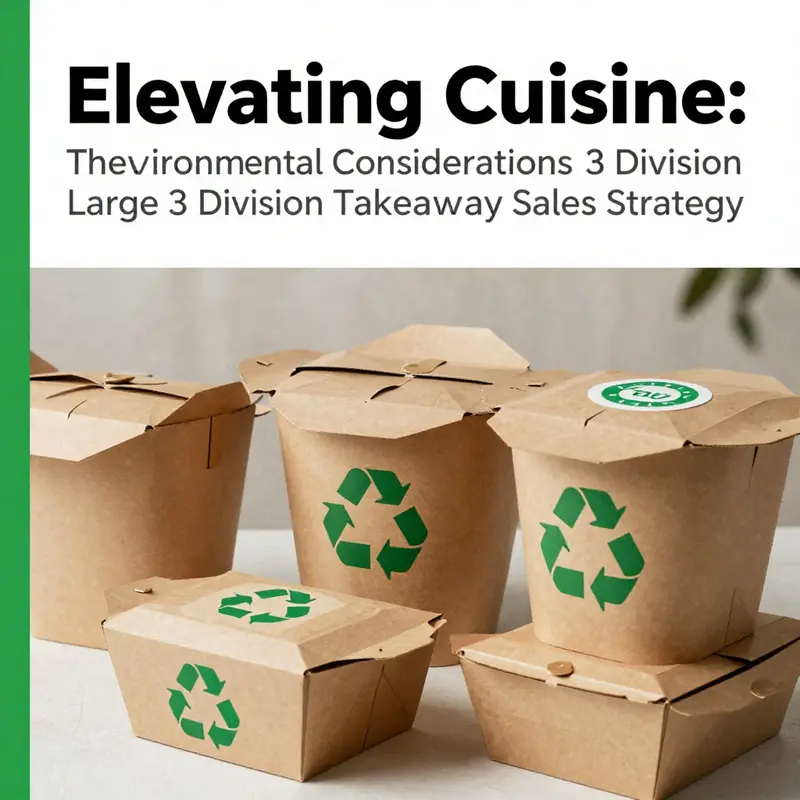
The shift toward sustainability has moved from a peripheral consideration to a central axis of value for buyers in the foodservice ecosystem. For manufacturers and suppliers of large three-compartment takeaway boxes, environmental considerations are not merely about meeting regulatory minimums or chasing a trend; they are about shaping the long-term sales narrative, differentiating offerings in a crowded market, and aligning with the evolving expectations of restaurateurs, caterers, and corporate dining programs. The chapter that follows unfolds as a seamless meditation on how environmental stewardship can be woven into a compelling sales strategy without sacrificing the core demands of performance, cost, and reliability. It is a story about credibility, resilience in the supply chain, and an approach to packaging that treats end-of-life as a shared responsibility rather than an afterthought.
In the globe-spanning arc of food packaging, the materials themselves carry a moral and commercial weight that cannot be ignored. Traditional plastic containers, particularly those built from polypropylene and related polymers, have long delivered the durability necessary for hot and oily foods, a barrier against moisture, and practical versatility for different meal formats. Yet, the environmental cost of single-use plastics has sharpened into global awareness. The industry now faces a complex interplay of consumer expectations, regulatory scrutiny, and the imperative to minimize waste. Brands that can demonstrate a thoughtful, measurable commitment to sustainability are increasingly favored by developers of procurement standards, especially those managing large-scale, ongoing supply relationships. They seek packaging solutions that do not merely perform but also contribute positively to a brand’s ESG profile.
The Guangdong manufacturing ecosystem—anchored by clusters that optimize scale, efficiency, and logistics—plays a pivotal role in this transition. The geographic concentration of food-container manufacturing in eastern and southern China supports rapid adoption of more sustainable materials, standardized testing, and streamlined certification processes. The ability to source responsibly produced paperboard or recyclable film at scale, coupled with the capacity to retool production lines to accommodate lower-carbon inputs, creates a compelling value proposition for buyers who require certainty in both quality and sustainability performance. This confluence of factors—material science, manufacturing capability, and logistics efficiency—translates into a sales proposition that is not only feasible but also compelling to shoppers of budget, quality, and corporate responsibility.
One of the critical levers in this evolution concerns material composition and the end-of-life story for large three-compartment boxes. The traditional appeal of these containers—their heat resistance, oil resistance, leak prevention, and multi-component separation—must be honored while reducing the environmental footprint. A growing segment of leading manufacturers has begun to pivot toward recyclable or compostable alternatives and toward designs that minimize or eliminate non-recyclable elements. The feasibility of such a pivot rests on several intertwined factors: the availability of certified, responsibly sourced materials; the compatibility of these materials with existing production equipment; and the reliability of post-consumer waste streams that can actually process the products at end of life. In practice, this means thoughtful choices about the primary container material, internal and external layers, adhesives, and any transparency components such as windows or films. The overarching aim is to maintain or even improve performance while ensuring that the packaging can be managed through existing recycling or composting infrastructure, or at least does not contribute to long-term pollution in uncontrolled environments.
A practical implication for sales teams is the shift from a purely cost-and-performance dialogue to a value dialogue that includes lifecycle impacts. Buyers—whether large restaurant groups, meal-delivery platforms, or corporate caterers—are increasingly asking for lifecycle assessments, third-party certifications, and transparent supply chain disclosures. They want to know how a given box contributes to or mitigates carbon footprints, what percentage of virgin plastic is used, whether recycled content is incorporated, and what measures are in place to guarantee end-of-life recyclability. This demand compels suppliers to invest in data collection, product stewardship programs, and meaningful certifications that can be communicated clearly and credibly. In turn, sales pitches must be recalibrated to feature not only the box’s functionality but also its verified environmental performance. Such transparency can become a differentiating asset in procurement processes that increasingly assign weight to ESG considerations.
A central design principle emerging from this environment is the holistic view of “packaging as product and process.” This means evaluating how every component—from the primary box to liners, films, and closures—contributes to circularity. For instance, if a transparent window is used to showcase the meal, its film should be recyclable or biodegradable, and the entire package should be compatible with common recycling streams. Where feasible, designers are turning to paperboard-based constructions or sustainably sourced boards that reduce reliance on virgin plastics, while still delivering the moisture and grease resistance essential to multi-component meals. These decisions are not merely material choices; they are statements about a company’s willingness to plan for the end of the product’s life during the design phase and to partner with waste management entities to keep packaging out of landfills.
From a sales perspective, the ability to offer clients a cohesive sustainability package becomes a competitive differentiator. Some buyers require suppliers to provide evidence of certified compostable materials, or certified content that reduces virgin plastic use, or assurances of carbon-neutral shipping options. Each of these signals a deeper engagement with the broader environmental agenda and a recognition that supply chains are resilient only when they anticipate and mitigate external risks. The capacity to guarantee consistent supply of sustainable materials, even at scale, becomes essential in long-term contracts. In a market where governance, risk, and compliance are increasingly integrated into procurement, being able to articulate a robust sustainability story—supported by data, certifications, and verified supplier practices—can tilt the balance toward a longer-term business relationship.
There is also a strategic role for collaboration with clients in this sustainability journey. Rather than presenting a one-size-fits-all solution, forward-thinking suppliers work with customers to tailor packaging choices to the client’s ESG targets and waste management capabilities. This often takes the form of co-creating packaging ecosystems that harmonize materials with the client’s recycling or composting partners. It can also involve offering take-back or recycling programs that collect used packaging for proper processing, thereby closing the loop and providing clients with measurable waste diversion results. Such collaborative approaches strengthen trust and position packaging vendors as strategic partners rather than transactional suppliers. When clients see that a supplier can help them meet specific ESG benchmarks and report progress with auditable metrics, the value proposition extends beyond immediate cost savings, becoming a lever for reputational enhancement and stakeholder engagement.
The regulatory landscape also reinforces the imperative for sustainability-focused sales strategies. Governments worldwide are rolling out measures aimed at reducing single-use plastics and encouraging alternative packaging formats. Where regulatory certainty exists, it allows buyers to plan procurement around future-proof packaging options rather than reacting to abrupt policy shifts. In regions with stringent requirements, suppliers who demonstrate proactive compliance and proactive adaptation gain early-mover advantages, securing multi-year commitments before competitors can respond. The resulting procurement landscape rewards manufacturers who can deliver packaging that aligns with evolving standards while maintaining performance and cost discipline. In this sense, sustainability becomes not only a compliance strategy but a market strategy—one that unlocks opportunities for longer contract terms and stronger client partnerships.
A practical case for sustainability in the sales pitch is the alignment with eco-conscious dining trends. Restaurants and meal programs increasingly benchmark their packaging choices against environmental performance, letting supplier audits and certifications influence their selection. Besides, for many buyers, the packaging is part of the brand promise itself. When consumers encounter a takeout experience that feels responsible from box to disposal, the impression extends from the restaurant’s menu to the overall brand narrative. This alignment—between packaging ethics and brand ethics—helps cultivate customer loyalty and can justify premium pricing for clients who view sustainability as a critical differentiator rather than a checkbox item. The result is a virtuous cycle: improved brand reputation, stronger client partnerships, more resilient demand, and a supply chain that is better prepared to navigate disruption.
An important nuance in this dialogue is the balance between cost and ecological benefit. Sustainable materials and processes sometimes involve higher upfront costs. The most effective sales strategies, however, articulate a long-run value case. This includes not only the price per unit but also the savings from reduced waste disposal, the potential for improved operational efficiency through simpler disposal for end users, and the reputational benefits that accrue to brands committed to responsible packaging. In some instances, suppliers can offer flexible pricing models aimed at large-volume buyers, combining affordable price points with the assurance that sustainability targets are being met. The broader implication is clear: sustainability can stabilize demand streams, reducing price elasticity by strengthening the client’s core confidence in the supplier’s ability to deliver consistent, compliant, and responsible packaging over time.
To support such a strategy, a simple yet powerful element is to provide clients with evidence-based materials. This might include life-cycle analyses, supplier certifications, and third-party test results that illustrate performance under real-world conditions. It also helps if packaging suppliers share clear guidance on best practices for disposal and recycling, helping clients maximize the end-of-life value of the packaging. Sharing practical information—such as how to optimize breakup and separation of components for recycling or how to prep boxes for composting where appropriate—builds trust and reduces friction in procurement. The more a supplier can show that sustainability is integrated into every stage of the packaging lifecycle, the more compelling the sales narrative becomes.
Ultimately, the environmental dimension of the sales strategy must be seen as part of a broader, value-driven proposition. It is about how well a supplier can translate environmental stewardship into measurable business benefits for clients: improved ESG scores, enhanced corporate reputation, stronger vendor risk management, and the security of long-term supply agreements. The most effective conversations occur when suppliers present a cohesive story that balances functional performance with ecological responsibility, supported by a clear plan for end-of-life management and a transparent pathway to compliance with evolving regulations. In such conversations, sustainability does not crowd out cost savings or functionality; it elevates them, providing a platform for trust-based partnerships that endure beyond a single contract cycle.
For readers seeking a concrete illustration of how these principles translate into practice, consider the growing availability of eco-friendly packaging options that appeal to large-volume buyers without compromising performance. These options, which emphasize recyclable or compostable construction, lighter environmental footprints, and modular design that supports efficient handling and storage, illustrate how the market is maturing. Suppliers can offer clients choices that align with their waste-management capabilities, allowing for smoother integration into existing operations while meeting ambitious sustainability targets. The sales narrative thus evolves from a focus on price and defect rate to a more nuanced conversation about total value, lifecycle impact, and shared responsibility for the planet.
In closing, the environmental considerations driving large three-compartment takeaway box sales strategies reflect a broader shift in the industry toward responsible design, responsible production, and responsible consumption. The path forward is not about choosing between performance and planet; it is about integrating both into a coherent business model that resonates with buyers, suppliers, and end users alike. By embedding sustainability into product design, manufacturing choices, and client partnerships, the sector can build a more resilient, transparent, and trustworthy ecosystem. The result is a stronger market position for those who lead with credible environmental stewardship, a more sustainable supply chain for the entire industry, and a future in which reliable, well-designed packaging supports a healthier environment without compromising the needs of modern foodservice operators.
External resource for further context on the environmental dimension of packaging trends and policy: https://www.theguardian.com/environment/2026/feb/12/sustainable-food-packaging-trends-environmental-impact-plastic-ban
Internal resource for relevant packaging discussions and examples: eco-friendly kraft-paper octagonal salad bowl
Final thoughts
The surge in demand for large 3 division takeaway food boxes presents significant opportunities for businesses across various sectors. By understanding market dynamics, embracing technological innovations, considering economic impacts, and prioritizing environmental sustainability, companies can not only thrive but also contribute to a more eco-conscious future. Adopting such practices will ensure businesses remain competitive while catering to the growing consumer preference for takeaway food solutions.