
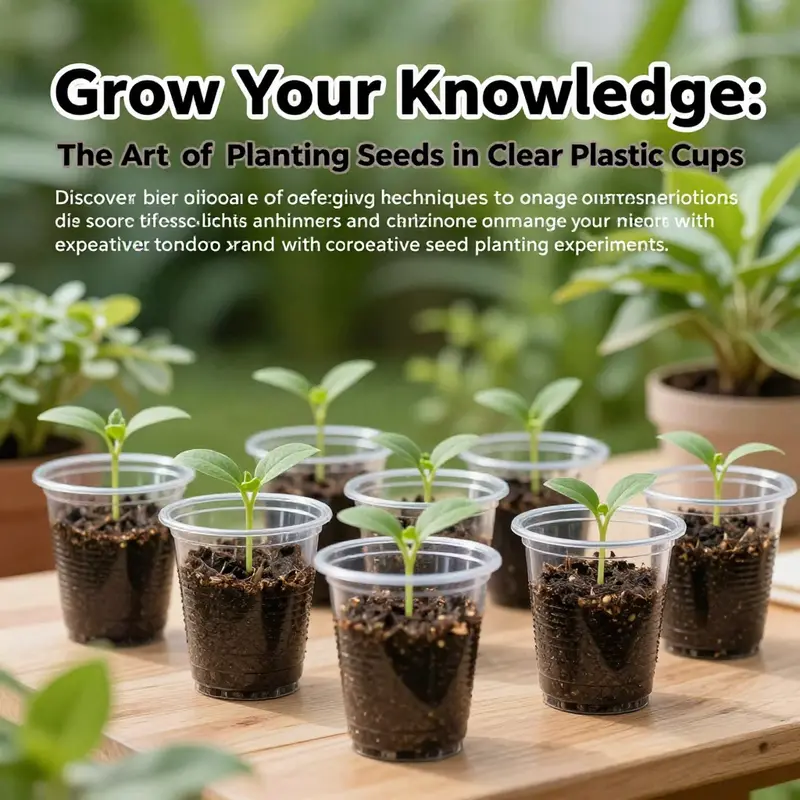
Understanding the process of germination and early plant growth can open up exciting opportunities for businesses in the food and beverage industry. Planting seeds in clear plastic cups offers a unique method that not only serves as a learning tool but also enhances customer experience. In Bubble Tea Shops, Restaurants, Food Trucks, and more, this activity can capture attention, promote sustainability, and provide educational benefits. Throughout this article, you’ll explore how to choose the right materials, set up and maintain your seedlings, observe their growth, and leverage the educational benefits of this engaging process.
Substrates as a Lens: Selecting Materials for Seed Germination in Clear Plastic Cups
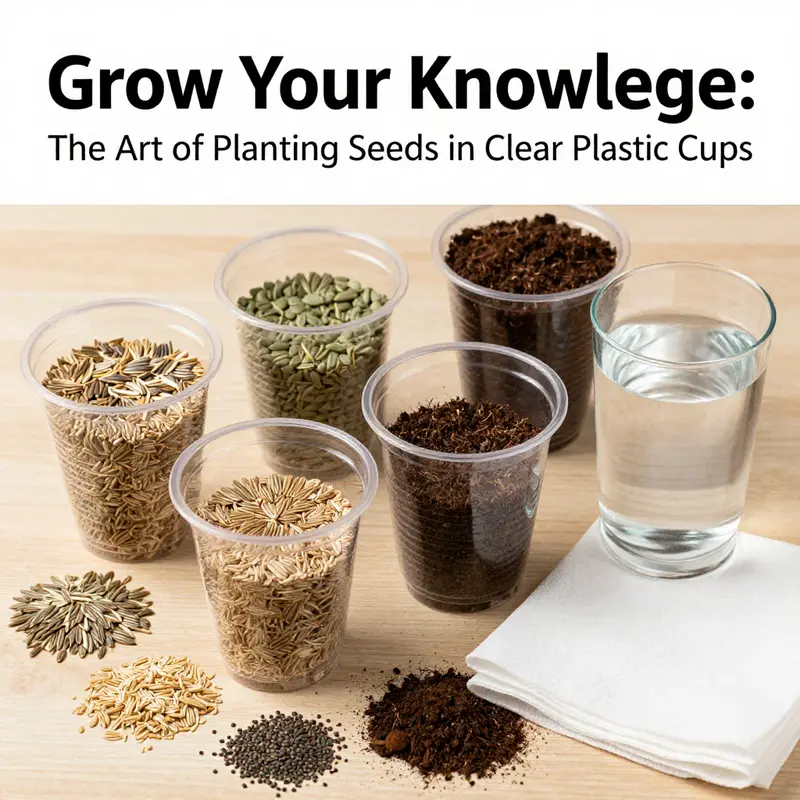
The act of planting seeds in a clear plastic cup is more than a simple gardening trick. It is a deliberate choice to illuminate the unseen. When you can watch a seed swell, break its coat, push a root into the damp air, and finally release a shoot toward light, you begin to see biology in action. The substrate, the medium that cradles that tiny embryo, acts as a lens. It sharpens the invisible processes of germination into a sequence you can observe, measure, and reflect upon. The materials you choose shape not only how quickly a seed germinates but how clearly you can witness each step of early growth. In a setting designed for observation, the substrate becomes the stage lighting that either flatters or obscures the drama of life unfolding under your fingertips. Understanding this is both practical and educational. It helps you design experiments that respect the seeds’ needs while keeping the process accessible to students, families, and curious first-time planters alike.
At the heart of any clear-cup germination setup lies a simple triad: aeration, moisture, and support. Aeration ensures roots receive oxygen as they begin to grow and explore, a critical factor since seeds and seedlings are especially vulnerable to damp conditions that can lead to rot. Adequate drainage prevents water from pooling around delicate roots, which can suffocate them just as surely as drought can starve them. Moisture retention keeps the seed hydrated without soaking, providing a stable environment as the embryo wakes up and the root threads begin their careful search for sustenance. The substrate selection that best balances these factors is the deciding factor in how smoothly germination proceeds and how clearly you observe each milestone.
The most widely recommended option for seed starting in clear cups is a purpose-made seed starting mix. These blends are engineered to be light and well-drained, yet capable of retaining enough moisture to support germination. They typically combine peat moss with vermiculite and perlite. Peat moss provides structure and moisture-holding capacity without becoming heavy or compacting too quickly. Vermiculite actively holds water, increasing the substrate’s total water availability, while perlite contributes air pockets that promote drainage and aeration. Together, they create a substrate that stays spongy yet breathable—a combination especially beneficial for seeds that germinate best when their roots have ready access to air and water alike. In a transparent cup, this balance translates into roots that locate moisture efficiently and shoots that can emerge through a stable, supportive medium.
When we push beyond the standard seed starting mix, a broader family of substrates becomes relevant. Vermiculite and perlite, for instance, can be used individually or in combination with other materials. They are light, porous, and adept at retaining water while improving aeration. For seeds that demand consistently high moisture during germination, a higher proportion of vermiculite or a increased moisture-retentive component can be advantageous. Conversely, if the cups are warm or exposed to bright light, too much moisture can invite mold growth or fungal rot. In such cases, a greater emphasis on aeration helps. This is where the simple geometry of the medium—its pore structure, particle size, and overall density—begins to guide outcomes as much as any seed choice. For seeds with modest moisture needs, a gentler mix may be enough to trigger germination while keeping conditions from tipping toward dampness that invites trouble.
An alternative that combines sustainability with effectiveness is coconut coir. Derived from coconut husks, coir is a renewable, peat-free option that retains water well and drains adequately when blended with vermiculite or perlite. Coir is typically pH-neutral or near-neutral, which helps maintain a stable environment for a wide range of seeds. When used in a clear cup, coir’s light texture supports even moisture distribution while still allowing the roots to breathe. For classrooms or homes seeking an eco-friendly route, coir offers a compelling balance of performance and responsible material choice. It is particularly helpful for seeds that tolerate or require steady moisture without sogginess, providing a reliable alternative to peat-based mixes.
In the broader discussion of substrate selection, a note on particle size matters. The knowledge base mentions relatively large materials such as 6-10 mm golden pumice or expanded clay pellets (hydroton). While these larger particles can improve drainage in traditional potting mixes, they are not ideal as a sole medium for small seeds in a germination cup. Their size can create air gaps or moisture pockets that fail to support even moisture distribution, and they may hinder uniform root contact with the moisture source. In a clear cup setup focused on observing germination, it is better to prioritize fine components that wet evenly and stay cohesive enough to keep seeds in gentle contact with the moisture source. This distinction is subtle but meaningful when the aim is consistent germination and easy observation.
For many observers, the simplest, most reliable path remains the ready-made seed starting mix. It provides a dependable baseline, especially when you are teaching concepts such as how moisture, temperature, and light influence germination. Yet there is value in blending small components carefully. A gentle blend of fine peat or coconut coir with vermiculite and perlite offers a customized substrate that can be tuned to the seeds you are watching. The aim is not to complicate the process but to tailor the medium to the seed’s needs while preserving the visibility that makes this method so powerful. The clear cup invites curiosity, and the substrate invites understanding: you begin to see why some seeds germinate in a few days, while others stagger their emergence depending on how the medium holds moisture, how well air can circulate, and how snugly the seed sits against the moisture source.
From a practical perspective, the setup follows a clear logic. Start with a transparent cup to reveal root development and the shoot’s first appearances. Line the inside with damp, but not soaking, paper towels or cotton pads. This lining provides a reliable moisture reservoir that keeps the seed hydrated as it adjusts from dormancy to metabolic activity. Place the seed between the moist lining and the cup wall so it maintains contact with moisture without being submerged. If you choose to simulate real soil conditions, add a thin top layer of potting mix on the lining before placing the seed. However, many educators and experimenters opt for the pure towel method to isolate germination cues from soil variability—an approach that helps learners focus on the colonization process of the seed coat and the initial root system without confounding factors such as soil texture or microbial activity.
Watering strategy in this arrangement requires a gentle touch. The key is to keep the lining consistently moist rather than soaked. Overwatering not only risks mold but can also suffocate delicate roots that have not yet established an extensive porous network. The goal is a stable, humid microclimate at the seed’s immediate interface, not a swamp around the base of the cup. Temperature and light play their supporting roles. A warm, well-lit spot—ideally with indirect sunlight or under grow lights—provides the energy that drives metabolism and the division of cells that produce the shoot and elongate the root. The “indirect” qualifier is essential because direct sun in a small, transparent cup can create hot spots that stress both seed and seedling. A gentle rotation of the cup allows you to monitor changes from multiple angles, ensuring you don’t miss subtle shifts in root length, color, or the timing of cotyledon emergence.
Observation, in this context, is not passive; it is an active part of learning. Each day you can note the seed’s appearance, any changes in the root’s length, and when the shoot begins to push through the moist barrier. The robe of the seed coat may crack, revealing a pale white root that tips downward as gravity asserts itself. The shoot soon follows, bright and green, testing the air just above the solar-lamp glow. The clarity of the cup makes these moments accessible without disturbing the plant. In a classroom, these observations become a scaffold for understanding plant biology: how water uptake is tied to seed metabolism, how roots seek lower moisture zones, and how light cues trigger shoot elongation and chlorophyll production. It can transform a child’s curiosity into a vocabulary of plant biology, from germination to photosynthesis. It also invites reflection on the environmental implications of the materials used. Reusing cups and choosing sustainable substrates align with broader ecological awareness that many educators strive to nurture.
To connect these ideas to concrete experimentation, the substrate you choose can become a variable, if you decide to explore how different media influence germination speed and seedling vigor. A carefully controlled comparison might place the same seed species in cups lined with seed starting mix, coconut coir, and a vermiculite-heavy blend. You would keep all other variables constant—same seed batch, similar temperature, identical lighting schedule—and observe which medium yields the fastest germination, the most robust early root growth, and the crispest shoot emergence. The aim is not to declare a universal best but to cultivate a mindset of inquiry: how do medium properties—moisture retention, aeration, density—shape early plant development? The clear cup acts as a magnifying glass, revealing how small adjustments to the medium alter the seed’s first decisions as a growing plant.
As with any educational practice, the approach to materials also invites a discussion about sustainability and resource use. The practice of reusing plastic cups, when cleaned appropriately, mirrors the environmental awareness embedded in modern science education. If the goal is a habit of mindful, sustainable experimentation, one might favor media that minimize disposal or that can be easily recycled after the observation period. Coconut coir, being peat-free, offers a more environmentally favorable profile in many contexts, while seed starting blends ensure that germination proceeds in a predictable and observable manner. The discussion of materials thus becomes a learning moment about the relationship between scientific methods and environmental stewardship, a thread that connects the biology of seeds to the ethics of resource use.
In terms of practical resources and visual aids, there are numerous guides that walk through similar germination experiments using clear containers. For learners who want to see a structured demonstration of germination alongside a quick set of steps and visuals, a concise online guide can be a valuable companion. For instance, consider a resource that explains how to conduct a seed germination experiment in a clear container with a paper towel. Such a guide aligns with the method described here and provides a helpful complement to hands-on activity. senang05-food-grade-500-750-1000ml-take-away-bowl-with-lids-packing-food-single-wall-fast-food-salad-bowls This internal reference can help readers visualize the setup in a slightly different material context while keeping the core germination principles intact. The central idea remains consistent: a transparent container, a moist, controllable environment, and careful observation that yields insight into how life begins.
For readers seeking broader, recommended reading on germination and seed biology, an established educational resource provides foundational explanations of why seeds germinate and how early growth unfolds under varying conditions. The BBC Bitesize article on seed germination offers a clear, age-appropriate overview that complements the hands-on experience described here. It situates germination within the life cycle of plants, explains the role of moisture and temperature, and provides visual cues to help learners identify the stages. This external resource can anchor the classroom discussion in widely used educational standards and help teachers connect the activity to curriculum goals while reinforcing what is observable in a simple clear-cup experiment.
From Seed to Sprout: Observing Germination and Early Growth Through Clear Plastic Cups
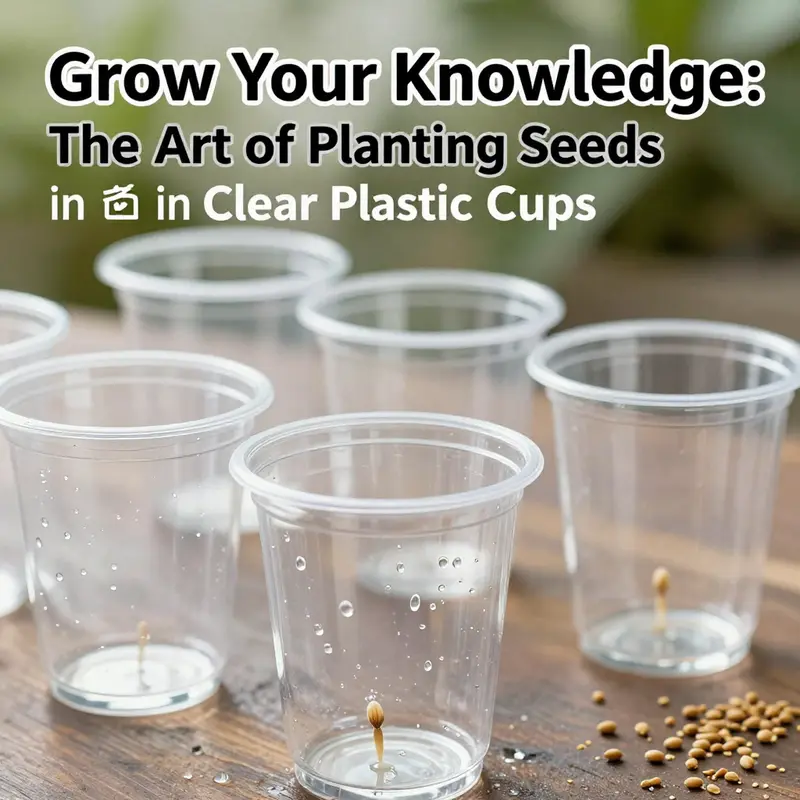
Seeing a seed awaken inside a transparent cup is more than a simple classroom trick; it is a hands-on invitation to read the language of plants. The method turns abstract biology into a visible process, letting observers trace how a tiny embryo, a seed, consumes water, breathes, and commits to growth. When the seed unfurls its first roots and then pushes a shoot toward the light, the hidden world of germination becomes a shared, observable story. The clarity of the cup—the window into the soil, moisture, and root system—transforms a modest container into a compact, living laboratory. It is also a quietly sustainable choice: a clean, reused cup serves as a low-cost observation chamber, aligning curiosity with environmental mindfulness as students and families reuse everyday materials instead of discarding them after a single use. In this chapter, the journey from setup through observation to transplanting unfolds as a single, continuous narrative, because the beauty of clear-cup germination lies in the way each step informs the next, with no abrupt breaks between discovery and understanding.
The first step in this journey is the cup itself, and the choice matters. A clean, transparent cup allows the eye to travel along the soil profile, following the radicle as it lengthens and the plumule as it rises. The emphasis on visibility is not a gimmick but a central principle: when roots are visible, measurements become meaningful and hypotheses become testable. The cup also invites a practical discussion about drainage. Small holes at the bottom prevent stagnant water from robbing the roots of air and inviting rot. The act of poking a couple of tiny holes with a heated tool becomes a micro-skill lesson in plant care and safety. It demonstrates that even simple experiments require attention to detail and care to avoid harming the plant or the setup. The idea is not to drown the seed but to maintain a steady, breathable moisture environment that supports germination without creating a swamp.
Next comes the living “window” through which growth can be observed. A layer of damp paper towel or cotton wool pressed against the inside wall of the cup provides a moist, lightweight substrate for the seed to contact. This internal moisture layer serves a dual purpose: it keeps the seed hydrated and gives the observer an instant visual cue when the seed begins to awaken. The seed is placed directly against this moist interface, ideally near the cup’s wall where changes are easiest to monitor. Some experiments opt for a thin top layer of soil over the towel, which can mimic more realistic conditions, while others rely solely on the paper-towel pathway to emphasize the germination process itself. Either approach centers germination as a process that can be watched minute by minute, hour by hour, day by day.
Watering in this setup is a choreography rather than a flood. A gentle spray from a fine mist bottle or a careful dab with a spoon helps maintain a consistently moist environment without displacing the seed or washing soil away. The goal is dampness that you can feel with your fingertip—damp, not soggy. Overwatering is a common pitfall because it suffocates roots and invites mold. A tray or saucer beneath the cup is a small but meaningful act of stewardship, catching runoff and preventing chaos on the classroom or kitchen surface. The environmental conditions matter as much as the seed choice. Indirect light is best; direct sun can heat the cup and scorch tender shoots, while warmth from a stable, room-temperature environment supports metabolic activity inside the seed. A windowsill that receives gentle light or a desk illuminated by a grow light creates a reliable microclimate that nudges the seed toward germination without overwhelming it with heat.
When the seed begins its quiet work, the story moves from dormancy to dynamism. The first visible sign is the radicle, the embryonic root that will anchor the plant and pull water from the growing medium into the seed’s tissues. As the radicle lengthens and digs downward, gravitropism guides its growth: roots find the path of least resistance by moving toward gravity, while the shoot responds by seeking light. Soon the plumule—the early shoot—emerges and bends upward, fueled by the moisture in the towel or soil and the light that will determine its direction. This is the moment when measurements turn into meaning. Observers can note the root length, the angle of root growth, the speed with which the radicle appears, and the timing of shoot emergence. Recording these details turn observation into data, inviting comparisons across seeds of the same species or under subtly different conditions.
Monitoring in this context is not about turning children into botanists overnight; it is about inviting a curious mind to notice, question, and infer. Each day becomes a page in a living journal. You might note the day the radicle first appears, the daily growth rate of the root, and the moment the plumule lifts into view. The behavior of the seed under different orientations or light exposures offers a gentle, early lesson in experimental design: slight changes in how a seed faces the light can influence the direction of growth, and altering moisture can disproportionately affect germination speed. Such observations cultivate scientific literacy—learning to describe changes carefully, to ask why they occurred, and to propose testable explanations. The clear cup makes these abstract ideas tangible; the invisible becomes visible, and that transformation is itself a form of understanding.
As growth proceeds, there comes a practical, almost managerial phase: what happens when the seedling needs more space? The take-home message is not simply to let little plants roam freely but to recognize when a plant has outgrown its cradling cup. After the first true leaves appear, the seedling has entered a new stage of life that benefits from a larger environment. Transplanting is not a punishment for the plant but a temporary relocation that reduces crowding, improves root health, and fosters a stronger, more resilient stem. Handling during transplantation is a teachable moment: the observer learns about root sensitivity, the importance of gentle handling, and the need to gradually acclimate the seedling to new conditions. A small, well-draining potting mix supports continued growth, while careful watering helps ease the plant into its new home.
The broader educational values of this method extend beyond the biology of germination. In classrooms and homes alike, the act of nurturing a seed through germination through to the emergence of true leaves teaches responsibility, patience, and the habit of daily observation. It reinforces the idea that science is a process, not a collection of facts. Students learn to compare, contrast, and hypothesize. They practice note-taking, measurement, and record-keeping. They learn about variables—how light, temperature, moisture, and seed orientation influence outcomes—and they learn to design controls, even in simple, at-home experiments. This approach aligns with the ethos of sustainable education: reusing materials, reducing waste, and highlighting the life cycle of plants in a tangible, repeatable way. The cup itself becomes a micro-lab, a compact stage on which each seed plays out a part of the plant’s life story.
Of course, the practice invites reflection on the seed’s biology as well. Seeds carry with them a remarkable readiness to respond to the right conditions. The moisture provided by the damp towel or soil awakens the seed’s internal machinery, allowing enzymes to mobilize stored resources. With warmth and light, the embryo accelerates its metabolism, breaking seed dormancy and initiating cell division that drives growth. The transparent container makes this internal process almost legible to the observer, turning a quiet miracle into something you can witness with plain sight. This not only deepens understanding of plant biology but also fosters appreciation for the intricate coordination that underpins life in the plant kingdom.
For those who want to extend the learning beyond the initial germination phase, the clear-cup method naturally leads to ongoing inquiry. Observers can compare the growth trajectories of different seeds, investigate how different moisture levels affect root development, or explore how seed placement near the cup wall changes the speed of germination. You can also test the effect of lighting by rotating the cup or moving it to different locations within the room. Each adjustment becomes a small experiment, and the outcomes feed back into a growing understanding of plant growth biology. The process becomes a springboard for broader conversations about how plants adapt to their environments, how root systems support healthy above-ground growth, and how early life stages determine later success in a plant’s life cycle.
As this method has found its way into classrooms and home learning alike, it has gained a reputation not only for its educational clarity but also for its accessibility. A single, modest cup can unlock a world of observation; minimal equipment, low cost, and straightforward steps make it a reliable introduction to plant science. The approach aligns well with science curricula that emphasize inquiry, observation, and data collection. It also invites families to participate in a shared learning journey, turning kitchen countertops or classroom desks into mini biospheres where curiosity is the primary engine driving discovery.
If readers seek a concise, beginner-friendly guide to a similar setup, a practical resource presents another pathway to the same goal: eco-friendly paper cups and related materials can support germination experiments just as effectively as clear plastic cups. For a hands-on primer, consider this reference on using a clear container and moisture-dense paper towels to observe seed germination. eco-friendly paper cups.
Ultimately, the clear plastic cup method is less about perfect horticultural technique and more about opening a window into life. It invites patience, careful observation, and a habit of questioning. It encourages a sense of stewardship—both of the plants and of the materials we reuse to study them. By watching a root seek the path of gravity, by noting how a shoot finds light, and by recording the journey from seed to seedling, learners come to understand that growth is an integrated story of biology, environment, and time. The cup is not simply a vessel; it is a mentor that somersaults the classroom into a living, evolving experiment, a small, transparent theater where the drama of life unfolds with every day’s new discovery.
For those drawn to further reading and more visual demonstrations of germination in clear containers, a well-regarded external resource offers a readable, structured overview of seed germination in transparent setups. This guide complements the hands-on practice described here and can help solidify concepts through additional diagrams and timelines. BBC Bitesize seed germination.
Through a Transparent Window: Witnessing Seed Germination in Clear Plastic Cups
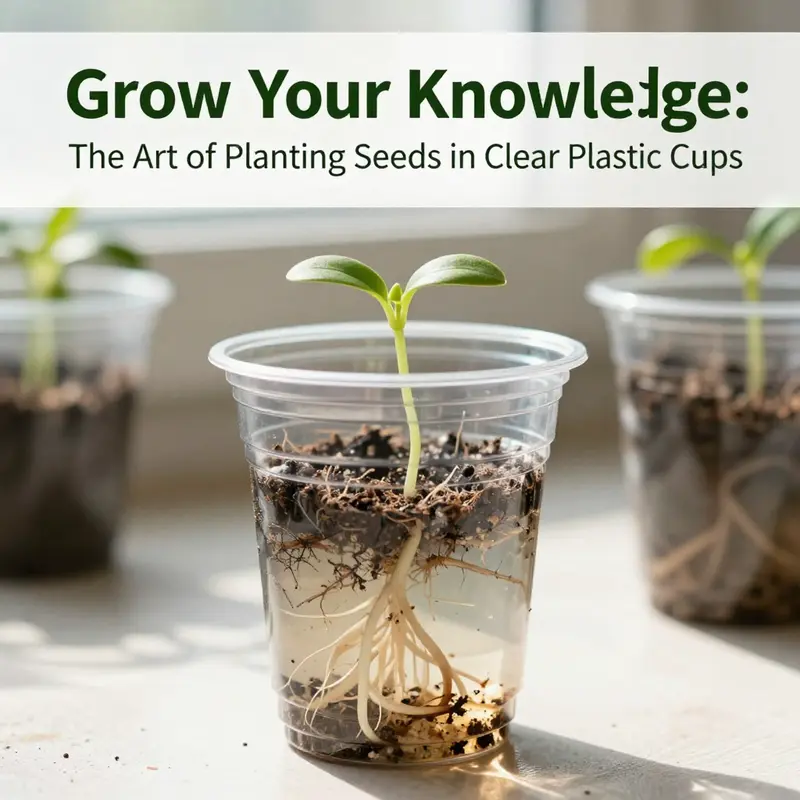
When you place a seed into a clear plastic cup and watch it wake from dormancy, you invite a quiet conversation with biology itself. The cup becomes a small theater where the invisible drama of life unfolds in slow, legible stages. There is anticipation in the tiny swelling of the seed, a sense of gravity guiding the first root downward, and the shoot pressing upward toward the tiniest glimmer of light. This is not just a child’s curiosity project, though it often starts there. It is a disciplined form of inquiry that rewards patience with a visible narrative of growth, a narrative that can be read like a micro science report if you train your eye to notice the subtle shifts, the texture of the soil, the way moisture clings to the inside of the walls, and the way the seed’s own energy becomes the engine of life.
The setup begins with the glassy clarity of a transparent cup. The wall acts like a periscope for the secrets beneath, letting you monitor moisture levels, the texture of the root matrix, and the moment the seed coat yields. The transparency matters as much as the seed itself. When you can literally see the little roots extend, you begin to appreciate the architecture of life—the way a plant explores water and nutrients with purpose, how the root system grows as an underground map of where the plant will draw sustenance as it matures, and how the shoot, once it breaks through, bends to the pull of gravity in a dramatic, almost theatrical, little ascent.
To establish a conducive environment, the inner lining of the cup is prepared with damp paper towels or cotton pads. The idea is simple: create a moist, breathable corridor that keeps the seed hydrated without submerging it in water. The humidity here is not meant to drown the seed; it is meant to invite a steady exchange of gases and the gradual uptake of water. The seed rests against this moist wall, nestled where the paper towel meets the cup wall, in contact with moisture but not bathed in stagnant liquid. Some experiments place a thin layer of soil above the damp lining to mimic real-world conditions, while others keep the focus tightly on germination by using only the paper towel technique. Both approaches have their merits. The key is to calibrate moisture with care. A too-wet environment invites rot and mold; a parched one stalls the seed’s awakening. The cup becomes a living lab, and the seed’s voyage from dormancy to activity unfolds in clear view.
From the moment the seed begins to imbibe, you witness a cascade of changes that speak to the seed’s internal chemistry. Water enters the seed through the seed coat, triggering enzymatic reactions that release stored energy. The first radical, the radicle, pushes downward, a root that will anchor the seedling and lead it toward moisture and nutrients in the substrate. A little later, the plumule—the first shoot—begins its own climb, seeking light and signaling the transition from a dormant seed to a living plant. The very order matters: roots first, then shoots. It is a practical demonstration of how life organizes its priorities, a reminder that plants metabolize and grow directionally in response to gravity, light, and available resources.
Observing this process in real time invites a broader reflection on plant biology and life cycles. When the cotyledons appear, they are not yet the plant’s true leaves; they are the seed’s initial energy stores unveiled to nourish the early seedling. The emergence of true leaves marks a shift into a more mature developmental phase, where photosynthesis becomes the primary engine of growth. Each stage is a milestone that offers a teachable moment, especially for learners who thrive on concrete evidence rather than abstract descriptions.
The rhythm of daily observation becomes a discipline in itself. On successive days, you note how the seed swells as water is absorbed, how the radicle lengthens, how the plumule may stay snug for a moment behind the seed coat, and how the stem begins its gentle ascent. You measure not with precision instruments but with careful, simple observations: the number of days to germination, the length of the root, the height of the shoot, and the appearance of the first true leaves. This is where the practice of science begins—careful note-taking, pattern recognition, and an evolving hypothesis about how variables such as warmth, light, and moisture influence the sequence and tempo of growth.
A practical, often overlooked benefit of clear cups is the way they invite scrutiny of the soil’s microclimate. The inside of the cup offers a micro-environment where capillary action, moisture retention, and surface texture become visible variables. If the paper towel dries out, the seed’s progress stalls, and you see it in the subtle slack of the plumule or the drooping of the tiny stem. If the moisture level is perfectly maintained, the plant seems almost to sip through the air as its tissues awaken. This is not merely about watching a seed sprout; it is about reading a living system in its own terms, recognizing that plants are dynamic, resource-seeking organisms whose success depends on delicate balances between water availability, oxygen exchange, temperature, and light.
In classrooms, families, or community gardens, a cup-based germination exercise carries a quiet, democratic value. It is accessible—requiring only a few inexpensive materials and a window or lamp to provide indirect light. It is repeatable, and the results are visually compelling, lending itself to personal reflection as well as small-group discussion. The practice also carries an ethical note: it encourages careful resource use and environmental awareness, pointing out that even everyday materials can be repurposed for scientific exploration. Reusing containers, for example, becomes part of the learning story, as students consider waste reduction while attending to the science of growth. The act of reusing a plastic cup for observation is a concrete reminder that curiosity and stewardship can go hand in hand.
If you are assembling the kit for the first time, consider the balance between simplicity and realism. A plain clear cup with inner lining is enough to demonstrate germination, yet some learners enjoy layering in a touch of realism by adding a thin layer of soil over the damp paper towels. This adds another dimension to the observation: the seed must push through soil, find air spaces, and adjust its growth to the different mechanical resistance of a soil medium. The trade-off is also educational. With soil, the seedling must explore a more complex environment where nutrients and moisture are unevenly distributed, inviting students to hypothesize how roots navigate toward moisture pockets, how they respond to gravity, and how the shoot tracks toward the light source. The result is a richer, more nuanced understanding of plant behavior, even though the visual spectacle might be somewhat less dramatic than the bare-paper-towel approach.
In practice, the care plan remains straightforward. Place the cup in a warm, well-lit place with indirect light, not in direct sun, to prevent overheating. Water the paper towel just enough to keep it consistently moist; avoid pooling water that invites rot. Check daily for changes in the seed’s appearance, root length, and shoot emergence, and note the date of each milestone. This frequency ensures you build a timeline that reflects the sequence of events rather than a single moment of observation. The act of recording, drawing, or photographing these changes reinforces scientific thinking and helps learners articulate what they see and why it matters. It also builds a practical sense of time and patience, virtues essential to any experimental mindset.
As the chapters of growth unfold, you begin to notice differences between species or varieties—even within the same family. Some seeds germinate quickly, sending out roots within days, while others take longer to awaken and push through the barrier of its seed coat. The pace of development can reveal a lot about a seed’s energy reserves, its adaptation strategy, and the environmental cues it requires to flourish. These observations do more than satisfy curiosity; they form the backbone of critical thinking about plant biology. When a seed lags, learners are encouraged to formulate explanations—perhaps the temperature is too cool, or the moisture level is insufficient, or perhaps the seed simply requires more time. When a plant thrives, students begin to connect seed energy reserves with the capacity for sustained growth, linking the microcosm inside the cup with larger questions about agriculture, ecology, and food security.
From a pedagogical perspective, one of the strongest features of the clear-cup method is its adaptability. It scales from early elementary curiosity to advanced experiments that compare germination rates across species or environmental conditions. A teacher can introduce a simple variable test—light exposure, moisture level, or seed type—and observe how changes influence the germination timeline. The transparency of the cup makes the experiment inherently visual, which can be especially powerful for learners who benefit from concrete evidence rather than abstract descriptions. The cup’s clear walls become a visual ledger, a room for observation that grows richer as days pass. In this way, a small, everyday object becomes a conduit for scientific literacy, helping learners articulate hypotheses, document findings, and reflect on the process of experimentation itself.
In the broader context of education and home science, tools like the clear propagation cup serve as gateways to inquiry. They invite questions about how roots search for moisture, how plants’ shoots orient toward light, and how environmental factors shape growth trajectories. The activity also touches on environmental stewardship—the idea that you can observe life closely while using materials thoughtfully and reusing supplies when possible. When a class agrees to reuse cups or to recycle the materials after the observation period, the learning extends beyond plant biology into a habit of careful consumption and responsible experimentation. The physical act of observing, recording, and reflecting thus becomes a holistic learning cycle: curiosity drives inquiry, inquiry clarifies understanding, and understanding informs action.
To support ongoing exploration beyond the initial germination window, a small, organized approach to tracking varieties and outcomes proves valuable. You can label different cups to represent different species or conditions and maintain a simple log of days to germination, root length at a given day, and the emergence of true leaves. The labels, the photos, and the notes together create a narrative thread that students can carry forward into more complex studies. If you want to widen the scope, you can introduce a comparative frame—how do fast-germinating seeds differ from slower ones in terms of root architecture? How does the presence or absence of soil influence early development? What roles do temperature and light play in shaping these processes? All these questions can emerge naturally from the simple act of placing a seed in a clear cup and letting observation unfold.
The appeal of this approach lies in its clarity and its accessibility. It makes the science of germination tangible, accessible to households, classrooms, and informal learning spaces. It invites learners to slow down and observe, to document, and to interpret. It also creates a vivid reminder that life’s most transformative moments can be observed with materials as unassuming as a transparent cup and a damp sheet of paper. In the end, the act of watching a seed wake up is not just about confirming a biological principle; it is about cultivating a mindset—one that notices, questions, tests, and revises in light of new evidence. The cup’s window becomes a classroom without walls, a place where the smallest seed can reveal the largest truths about growth, resilience, and the quiet wonder of nature.
For readers who want to explore inexpensive, accessible options to support this kind of observation, consider a budget-friendly, disposable container that keeps the focus on the plant and the science rather than on the equipment. With a simple, practical choice like a clear cup that is easy to handle and clean, you can repeat the setup with different seeds, track variability, and expand your understanding of how seemingly minor differences in seed type or treatment can lead to distinct growth patterns. The journey from seed to sprout, viewed through a transparent lens, invites curiosity into every day, turning a small experiment into a meaningful, enduring exploration of plant life.
As you consider the practicalities of expanding or sharing this project, remember that the core value is not in the spectacle alone but in the habit of looking closely, asking questions, and connecting what you see with a broader understanding of plant biology. A single seed, a simple cup, and a few days of patient observation can illuminate the fundamental truths about germination, root growth, and the way shoots negotiate light. In this light, the act of planting seeds in clear plastic cups becomes more than a method; it is a gateway to science literacy, environmental awareness, and a lifelong engagement with the living world.
Internal link reference: for a budget-friendly option to equip your setup, you can explore a practical choice at this resource: best-price-8oz disposable cup.
External resource: for a structured, classroom-friendly guide that complements this hands-on approach, see the educational material at https://www.bbc.co.uk/bitesize/topics/z89kq6f/articles/zxj2mv4. This external reference offers clear visuals and step-by-step guidance that can enhance your understanding of seed germination and the early growth stages as you observe them in your clear cups.
Seeing Growth, Knowing Science: The Educational Power of Planting Seeds in Clear Cups
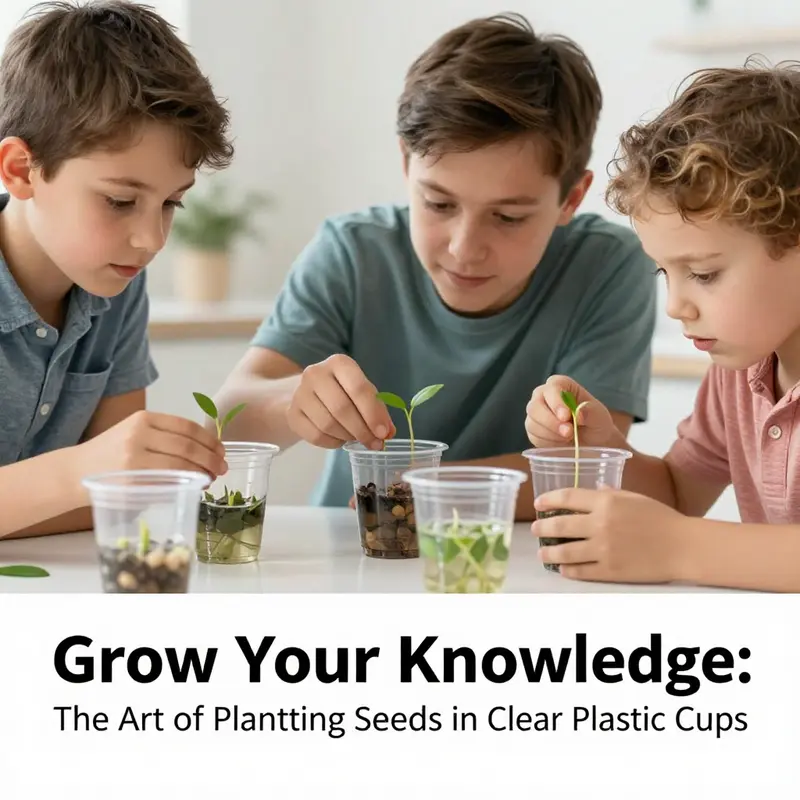
When a seed sits against a damp layer of paper towel inside a transparent cup, the classroom becomes a window into life. The moment a radicle appears, tiny roots curling into the moist fibers, the abstract idea of germination suddenly becomes visible. Students who once described plants as green things with stems now witness the unseen architecture of life: roots seeking water, shoots pushing toward light, and stems strengthening with every day that passes. The clear cup method is not merely a stunt or a demonstration. It is a structured invitation to engage with plant biology in real time, to read a living story that unfolds in minutes and hours rather than months and seasons. In this setup, curiosity is not an afterthought; it is the engine that drives inquiry, observation, and reflection, all wrapped in a simple, accessible activity that fits neatly into a classroom or a kitchen table at home.
Education thrives when learners can connect theory with tangible evidence. With the seed resting against the inner wall of a transparent cup, learners are handed a visual map of germination. They can track the lengthening of roots, the emergence of the shoot, and the way side branches begin to form as the seedling gains strength. This kind of direct observation helps demystify biology. Concepts like photosynthesis, root growth, and nutrient uptake stop existing as distant abstractions and become questions to be answered through careful watching and careful measurement. Why is the root growing downward rather than sideways? How does the shoot know when to push its first leaves above the soil? How does the moisture level in the cup influence germination rates? Each inquiry begins with a visible clue, a date circled in a notebook, and a new hypothesis formed in a student’s own words.
The act of planting in a clear cup also makes the life cycle concrete. A seed is not a single event but a sequence of stages—the awakening of a tiny embryo, the awakening of a root system, the sprouting of a shoot, and the eventual establishment of a seedling. When this sequence unfolds in a transparent vessel, learners can anchor their understanding of growth in a precise, observable timeline. They can watch the seed hydrate, notice the first tiny sprout, and observe how the plant begins to regulate moisture through the half-hidden tissues that feed its new life. Because the cup is not buried in soil, learners can sometimes see moisture levels shift during the day and compare how the plant responds to morning light versus afternoon glow. The reduction of variables—clear walls, a controlled moisture source, indirect light—creates a focused setting in which questions about causality can be explored without overwhelming complexity.
Beyond the science, the method cultivates patience, discipline, and an ethic of care. Seedlings do not rush to maturity, and success in germination rewards a steady, consistent routine. Students learn to observe daily changes, document them, and compare patterns across multiple cups or species. They quickly discover that growth is not linear; a seed may seem quiet for several days and then reveal a sudden burst of root activity or shoot development. This teaches resilience and the value of steady practice. In classrooms, the habit of daily checks becomes a kind of micro-work ethic: a small, predictable ritual that anchors responsibility and routine. The act of care—watering just enough to keep the paper towels moist, adjusting the cup’s placement for light, noting dates and measurements—translates into larger life skills. It becomes a quiet rehearsal for attention to detail, timely decision-making, and respect for living systems.
literacy and numeracy also find fertile ground in the clear-cup project. Children can keep journals with dated observations, sketching the root and shoot as it grows. They can label different parts of the seedling, write simple captions, and reuse vocabulary learned from science lessons. Counting steps in germination, measuring root length, and tracking the height of the shoot provide practical math practice that feels meaningful because it ties to a living organism. Even very young learners can participate by drawing pictures, identifying colors, or counting the number of days until the first leaf appears. As students become more confident, they can introduce graphing to summarize growth over time, converting qualitative observations into quantitative data and learning to read trends rather than isolated observations.
The social dimension of learning emerges strongly in this setup as well. Clear cups can be used for partner or small-group work, which encourages collaborative observation and discussion. Learners can compare notes, share prediction strategies, and challenge one another with questions like, “What did you notice first in your cup?” or “Does your plant respond differently when placed near a window?” The collaborative process helps students practice listening, explain their thinking clearly, and negotiate a shared path to evidence-based conclusions. In this way, the exercise becomes not just a study of plants but a microcosm of scientific practice: formulating questions, testing ideas, collecting data, and revising understandings in light of new evidence.
Aesthetics and environmental awareness can also enter naturally into the activity. The transparent walls invite students to notice the texture and color of roots, the delicate green of emerging shoots, and the subtle changes in the surface of the moisture layer. They may begin to notice mold or minor condensation and discuss how to prevent problem scenes without discouraging curiosity. These moments provide teachable opportunities about cleanliness, safety, and the importance of using materials responsibly. Reusing cups, rinsing containers, and choosing simple, recyclable components align the science with environmental ethics. The act of repurposing materials becomes part of the science narrative, linking classroom experiments to practical stewardship of the environment. In this sense, the clear-cup method does more than illuminate plant biology; it cultivates mindful habits that can extend into daily life, from how we conserve water at home to how we observe weather, seasons, and growth in the living world around us.
Of course, thoughtful planning is essential to maximize learning while maintaining safety and clarity. Choosing a clear container is not just a convenience; it is a deliberate decision that supports visibility and inquiry. The inner line of damp materials creates a stable microclimate that helps seeds hydrate and begin germination without becoming waterlogged. The instruction to place the seed against the moist barrier rather than submerging it ensures that learners appreciate the difference between germination in a moist, air-filled environment and growth in saturated soil. Some educators opt to add a small amount of soil on top of the moisture source to simulate real-world growing conditions, while others focus exclusively on germination to concentrate students’ attention on the most visible early stage. This flexibility allows teachers and families to tailor the experience to their objectives, age groups, and time constraints, while preserving the core advantage of direct observation.
The social contract around observation is also worth noting. When students engage in this activity, they learn to respect living things by approaching the cup with careful hands and patient attention. They learn to wait for signs of life, to resist the urge to pull or disturb, and to document instead of drawing conclusions too quickly. In practice, a simple protocol—write the date, jot a one-sentence observation, measure the shoot height, and compare with peers—can become a lasting habit that supports scientific thinking across subjects. As learners grow more confident, they can design small experiments: testing different light levels, varying moisture, or comparing seeds from different plant families. The clear cup becomes a flexible laboratory where curiosity leads to systematic investigation, and where the results are visible enough to discuss with confidence and humility.
Integrating this method with broader curricula strengthens its impact. Teachers can connect germination to topics in life science, math, language arts, and even art. In life science, students can explore photosynthesis in the later stages of growth and discuss how roots absorb water and nutrients. In mathematics, learners can build data sets, compute averages, and construct simple line graphs of root length over time. In language arts, students can craft short narratives about their plant’s “life story” and practice descriptive writing that captures changes in texture, color, and size. In art, the evolving seedlings can be depicted through sketches and color studies, reinforcing observation skills while fostering creativity. The chapter on the clear cup method, then, is not a standalone lesson but a bridge that links multiple modes of learning and multiple ways of thinking.
For educators looking for practical inspiration beyond the classroom, the literature offers concise guides and visual examples that show how to implement the practice with diverse age groups. A clear container, coupled with simple moisture management and consistent observation, provides a low-cost, accessible entry point into the wonder of plant life. The method scales from preschool to middle school and even into informal education settings, where families explore germination together. The beauty lies in the balance between structure and spontaneity: enough guidance to support accurate observation, and enough freedom to let learners pursue their own questions as they emerge from daily changes inside the cup. This balance is what makes the activity resilient across contexts and enduring as a cornerstone of experiential science learning.
In sum, planting seeds in clear cups is much more than a technique for growing plants. It is a carefully framed doorway into the minds of learners. The transparency of the cup, the silent testimony of moisture and roots, and the daily rhythm of observation converge to illuminate the living world in approachable, memorable ways. When students see a seed’s first root and their first shoot, they encounter a moment that echoes through every inquiry that follows: life begins with a seed, and understanding begins with looking closely. This is not merely a classroom trick; it is a pedagogy of presence—an invitation to witness growth, ask questions, and cultivate a lasting sense of curiosity about the natural world.
For readers seeking safety guidance and practical use in educational settings, especially around younger children, the American Academy of Pediatrics provides important considerations about plastics and choking hazards. External resource: https://www.aap.org/en-us/about-the-aap/aap-press-room/news-releases/Pages/Plastic-Cups-and-Choking-Hazards.aspx. In addition, you can explore related, hands-on examples and community-friendly setups that demonstrate the value of visible germination while maintaining safety and accessibility. If you are interested in a practical example that aligns with this approach, you can view a similar setup featuring clear containers and simple moisture management through this internal reference: clear-plastic combo pastry-dessert containers.
Final thoughts
By integrating the practice of planting seeds in clear plastic cups into your business, you not only contribute to a more sustainable environment but also create an opportunity for conversation and education. This practice can attract customers’ interest across diverse demographics and foster a deeper connection with your brand. Engaging experiences like these can be a powerful tool for elevating your business’s appeal. Encourage your customers to become part of the growth process, quite literally, as they witness the magic of nature unfolding in their favorite beverage shops.