
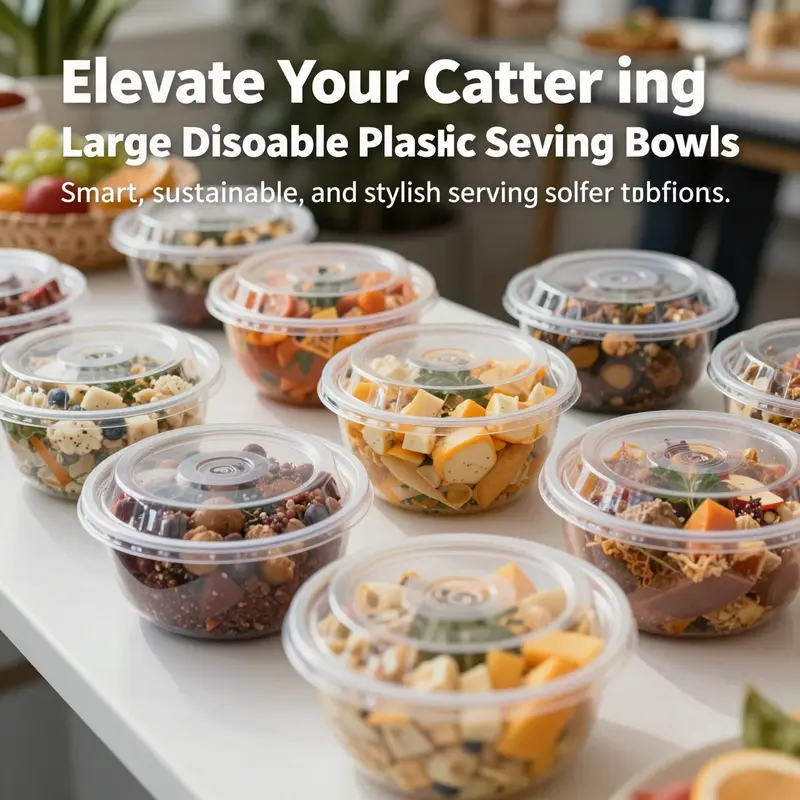
In the fast-paced world of food service, large disposable plastic serving bowls with lids are more than just convenient; they are versatile tools that enhance presentation, streamline portioning, and simplify storage. From mobile food trucks to banquet halls and restaurants, these bowls support a wide range of service styles while maintaining food safety and ease of cleanup. The chapters ahead explore innovations, market dynamics, environmental considerations, procurement strategies, and compliance for this essential catering tool, helping you choose the right bowls to elevate your offerings and operations.
Rethinking Service: The Sustainable, Safe, and Smart Evolution of Large Disposable Serving Bowls with Lids

Catering is a study in choreography. Servers, food runners, and on-site chefs must synchronize hot and cold items, fragile sauces, and visible presentation, all while preserving hygiene and reducing waste. In this environment, large disposable plastic serving bowls with lids have evolved from simple, throwaway vessels into sophisticated, integrated tools. The newest designs balance three core demands: reliability during transport, clarity of food presentation, and a smaller environmental footprint. Rather than merely containing portions, these bowls now act as stage props in a broader service narrative. They hold warmth where needed, keep contents uncontaminated on crowded carts, and present food in a way that invites guests to engage with colors, textures, and aroma. The result is a system of service that feels professional, even at scale, and that can adapt to everything from a weekday corporate lunch to a lavish wedding buffet without sacrificing flow or safety.
A central driver of this evolution is material strategy. Traditional containers relied on durable, petroleum-based plastics that offered strength and heat resistance but left a larger waste footprint. Today’s innovations increasingly embrace plant-based, biodegradable, or compostable polymers that still deliver the performance caterers require. The goal is to maintain heat tolerance for soups and stews while reducing post-use environmental impact. Operators want products that can confidently handle a hot entrée, then break down more readily after the event or can be diverted into recycling streams with confidence. The industry is moving beyond a binary choice between convenience and sustainability toward a continuum in which durability, safety, and environmental responsibility reinforce one another.
Lid engineering emerges as a focal point in this continuum. The best lids snap on with a secure, leak-proof seal, a feature essential for transporting liquids without spill risk from kitchen to venue. Modern designs also consider user experience at service points. Some lids feature venting that releases steam during brief microwaving or reheating without compromising containment. In practice, this means a server can reheat a single component in a larger dish without creating risk for the rest of the container or diners, while still preserving the integrity of the presentation. The snap-fit and push-fit mechanisms reduce the likelihood of accidental openings and leaks during transit, even when bowls are stacked or jostled during crowded events. In this sense, lid engineering becomes not just a safety feature but a reliability amplifier, supporting faster service and fewer on-site substitutions or complaints.
Beyond lids, the ergonomic design of the bowl itself matters. Non-slip bases help staff keep containers steady on wet surfaces or during brief transfers between stations. Easy-grip rims and tapered handles address common pain points for workers who handle dozens or hundreds of bowls in a day. Clear measurement markings, when incorporated, assist in portion control and in ensuring consistency across service lines. These elements may seem small, but within the high-pressure rhythm of service they translate into tangible efficiency—reducing time spent on set-up, minimizing the risk of spills, and enabling more precise inventory management. The result is a more confident service flow, where staff can focus on attention to detail in plating and garnishing rather than wrestling with the containers themselves.
Modularity and stackability further reshape the logistics of large events. A bowl system that nests empty, rather than occupying valuable warehouse space, saves square footage for staging, storage, and on-site distribution. For event planners and catering teams, this translates into lower shipping costs and simpler reconfiguration of stations as guest counts shift or menu changes are needed. When bowls are designed to nest with lids or to stack in compact configurations, trucks and crates become more efficient, and staff can rapidly assemble station setups with a predictable footprint. In practice, the modular approach also makes it easier to scale service up or down, which is increasingly important as menus evolve toward shared or interactive formats where guests contribute to assembling their plates.
Transparency in material aesthetics is another area of advancement. Brands are exploring clear or semi-clear plastics that showcase the food within. In buffet lines and salad stations, food presentation benefits when guests can immediately gauge portion size and color contrast. Clarity helps diners assess freshness and quality at a glance, enhancing trust and engagement. This visual access, however, must be balanced with safety and hygiene. Transparent designs often pair with improved sealing and ventilation features that prevent condensation buildup and reduce the risk of soggy or split textures at the point of service. The fusion of visual appeal with functional containment supports not only the guest experience but also the brand narrative of care, cleanliness, and attention to detail in large-scale catering contexts.
Sustainability considerations shape every dimension of these innovations. The shift toward biodegradable or plant-based materials responds to rising consumer expectations and stricter waste-management regulations in many regions. These materials are engineered to offer comparable strength and heat resistance to traditional polymers while introducing end-of-life options that align with circular economy principles. For caterers, this means partnering with suppliers who can provide transparent information about compostability, recyclability, and any post-consumer processing requirements. It also invites a broader conversation about waste streams at events: how bowls are collected, sorted, and diverted after service, and how the packaging ecosystem around a large gathering can be optimized to reduce landfill burden. The practical implications are substantial. If a bowl is designed for easy recycling or composting, it reduces the need for post-event sorting and can expedite cleanup, especially in venues with limited staff.
Regulatory and standards considerations reinforce the movement toward safer, more responsible designs. Food-contact materials must meet health and safety benchmarks that protect consumers during transport and consumption. In this landscape, innovations are not merely about clever features; they must withstand inspection and conform to guidelines that define acceptable materials, migration limits, and labeling expectations. Across regions, organizations promote harmonized or compatible standards to simplify sourcing for global events. This alignment helps caterers who operate in multi-site portfolios or travel between jurisdictions to maintain consistent quality. While the specifics of standards can evolve, the core objectives remain stable: safeguard food integrity, minimize contamination risks, and support responsible waste practices.
The sourcing dimension also evolves with the need for customizable, scalable solutions. Large events demand varied configurations—different capacities, branding opportunities, and packaging needs. Suppliers increasingly offer bulk options that can be tailored with logos, colors, or localized labeling while maintaining the core performance criteria. Customization supports the broader marketing and guest-experience goals of events, helping to convey a cohesive theme from invitation to farewell. Yet customization does not compromise performance. In fact, when done thoughtfully, it can enhance ergonomics, readability, and on-site efficiency by standardizing handling across multiple service points and reducing the likelihood of mismatches between lids and bowls.
In practical terms, these innovations translate into measurable improvements for caterers. Leaks and spills become rarer occurrences, even in high-volume service scenarios. Temperature retention remains reliable for hot dishes and chilled items, ensuring that textures and flavors are preserved through the service window. The visual appeal of the food is preserved as well, since clear or semi-clear materials reveal the dish’s color and shape, inviting guests to choose with confidence. The total cost of ownership shifts subtly but meaningfully. A package that performs reliably and reduces cleanup time may have a higher upfront price, but the cumulative savings in labor, waste disposal, and guest satisfaction can justify the investment. When combined with modular stacking, the system becomes easier to transport and assemble, enabling faster turnarounds between courses or shifts and allowing event teams to meet tight timelines without compromising quality.
As these trends continue, the next frontier seems to lie in deeper integration with the broader catering ecosystem. Bowls will be designed alongside servingware, utensils, and napkins to support fully synchronized station setups. Smart labeling and track-and-trace capabilities could help venues monitor inventory in real time, while standardized dimensions could facilitate seamless compatibility with chafing dishes, warmers, and transport crates. The promise is a more cohesive service environment in which each component—from lid to base to rim—works in concert with others to deliver consistent results, even under the pressure of large crowds. For practitioners, this means embracing both the science of materials and the art of service design, recognizing that the finest bowls are not merely containers but enablers of hospitality.
For readers seeking concrete examples of how these ideas play out in real-world sourcing and usage, one practical option is to explore a kraft-paper-based take-away cup system that demonstrates how design supports both presentation and sustainability. 26oz kraft paper soup cup with paper lid offers a compact illustration of how a simple design choice—the combination of a sturdy body, a secure lid, and a packaging approach rooted in recycled or rapidly renewable materials—can elevate both the guest experience and the operational flow on busy days. While this example stands apart from any single brand, it captures the essence of modern thinking: performance, presentation, and responsibility are not competing priorities but interconnected levers that, when pulled together, redefine what catering can achieve at scale.
In reflecting on the trajectory of large disposable serving bowls with lids, it becomes clear that these products are transforming from disposable tools into strategic assets. They enable better temperature management, safer transport, and clearer food presentation. They also encourage more sustainable decisions at every stage of the event—from procurement to post-event disposal. The evolution is not merely about new materials or clever lids; it is about designing for a future in which catering remains generous and memorable, even as the industry tightens its grip on waste, emissions, and resource use. The ultimate measure of success will be how well these bowls support the human aspects of hospitality—speed, reliability, and warmth—without compromising the planet we share. For practitioners who are building menus, coordinating staff, and choreographing guest experiences, the innovations described here offer a practical path forward: smarter design, safer service, and a more sustainable culture at scale.
External resource for broader standards and guidance: FDA Guidance on Food Contact Substances. https://www.fda.gov/food/food-contact-materials/fda-guidance-food-contact-substances
Shifting Tides in Catering: Market Trends Redefining Large Disposable Bowls with Lids

The market for large disposable serving bowls with lids in catering is evolving under regulatory pressure, consumer expectations, and rapid material and design innovation. These vessels are no longer merely containers for portions and platters; they are strategic tools that must preserve temperature and texture, support a brand story, and align with broader environmental goals. As event formats grow more complex, bowls and lids are expected to do more than hold food—they must enable efficient service, reduce waste, and communicate value to clients and guests.
Regulatory pressure is one of the most influential forces shaping this landscape. A broad push to curb single‑use plastics has moved from warnings to mandates in many markets. Policymakers are accelerating transitions toward recyclable, compostable, or biodegradable materials, with the European Union targeting various phase‑outs by 2030. Other regions are adopting similar measures at different speeds, prompting operators to reexamine lifecycles, supply chains, and end‑of‑life options for every vessel and lid they deploy. This regulatory cascade is helping to drive interest in bioplastics and fiber‑based solutions that can meet performance needs while reducing environmental impact.
Consumer demand for sustainability is another powerful driver. A broad segment of guests now expects packaging to reflect environmental responsibility, with younger consumers often willing to pay a premium for containers they perceive as sustainable. Transparency about materials and end‑of‑life options has become part of the value proposition, influencing brand choice and repeat business. Even in price‑sensitive markets, the premium associated with compostable or recyclable packaging is increasingly seen as a long‑term market signal rather than a temporary deviation.
Technological progress is narrowing gaps between cost, performance, and environmental impact. Bioplastics based on PLA, PBAT, and related blends are improving heat resistance and reliability for hot and cold foods, while processing improvements and economies of scale are helping bring prices down. Advances in barrier properties and clarity also enable visually appealing vessels that clearly communicate a commitment to responsible packaging without compromising durability.
Innovation in product design is expanding the functional envelope of large bowls with lids. Designs now emphasize easy opening, secure leakage prevention, and stackability for backstage efficiency. Integrated features such as portion‑control cues, temperature indicators, and leak‑resistant geometries help staff manage service more quickly and safely. The result is a family of containers that combines material science with ergonomic, data‑driven functionality.
The market trajectory points toward a long‑term decline in conventional plastics in favor of sustainable and high‑performing options. Buyers weigh total cost of ownership, including end‑of‑life options, regulatory alignment, and brand resonance, alongside unit price. Suppliers respond with portfolios that blend compostable materials with reliable performance and supply‑chain resilience to fluctuations in raw materials and demand.
For buyers and suppliers alike, the implications are pragmatic. Sourcing decisions should align menus, event formats, and service timelines with a basket of options that optimize temperature tolerance, leakage resistance, and waste management. A well‑considered procurement strategy combines heat‑tolerant biodegradable bowls with robust lids and a clear sustainability narrative that resonates with clients and guests.
In practice, alternative packaging options are gaining traction as scalable substitutes to classic plastic bowls. Fibers, paper‑based, and other plant‑derived materials offer structural integrity and moisture resistance when designed as integrated packaging ecosystems. The kraft paper octagonal bowl with lid has emerged as a compelling example in certain segments, offering compostable or recyclable pathways and a distinct aesthetic that supports an environmental narrative while maintaining performance.
The broader implication is clear: the market will continue to favor high‑performance, sustainable, and design‑savvy options. Suppliers build value around material science, design efficiency, and dependable supply chains, while buyers demand transparency about end‑of‑life outcomes and brand alignment. The most successful caterers will articulate a sustainability story that complements practical advantages like temperature control, spill resistance, and service speed. As the landscape evolves, procurement conversations will increasingly focus on trade‑offs among convenience, cost, and conscience, guiding robust decisions that support operational excellence and environmental stewardship.
From Convenience to Consequence: Navigating the Environmental Footprint of Large Disposable Plastic Serving Bowls with Lids in Catering
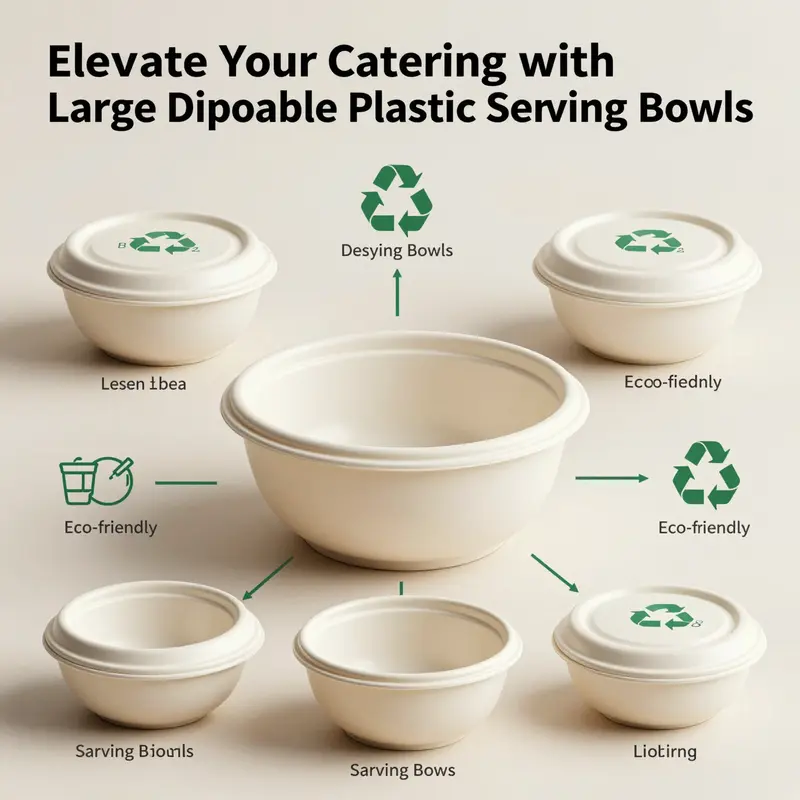
Disposable plastic serving bowls with lids have become a fixture in modern catering, prized for their light weight, straightforward handling, and the clean presentation they offer for a wide range of dishes. But in the same breath that they simplify logistics, they compel a reckoning with environmental cost. The footprint of these bowls begins long before they reach a dining table. It starts with the feedstock—the fossil fuels that power the petrochemical chain—and it continues through energy-intensive manufacturing, distribution, use, and finally disposal. The picture that emerges is not simply one of convenience versus waste; it is a systems problem that asks whether a single-use item can be reconciled with a planet that needs to reduce material throughput and pollution.
One of the most persistent concerns is non-recyclability. Many large disposable bowls, especially those made from polypropylene or polystyrene, are not accepted by standard municipal recycling streams. The result is a vast stream of material that cannot find a practical outlet after its limited use. What makes the situation more troubling is the durability that makes these bowls convenient—their ability to withstand transport, heat, and handling—paired with a design that discourages reuse and complicates recycling. They persist in landfills and the environment for hundreds of years, slowly breaking down into fragments that may travel far from their origin. The sheer volume, day after day at events and venues, magnifies the problem, turning a simple expedient into long-lived waste that competes with space, wildlife habitats, and even human health in subtle ways.
Microplastic pollution adds another layer of concern. As plastics weather, weathering, or break into smaller pieces, they form microplastics that can infiltrate soils, rivers, and oceans. Once in the environment, these tiny particles become easy to ingest by wildlife, accumulate through food webs, and eventually travel toward human consumers in some measure. The pervasiveness of microplastics means the issue is not just about what gets thrown away but about what fragments may be left behind in the ecosystems and, eventually, in the plate. This is not merely a distant risk; it is a reality in many urban and rural landscapes where litter, runoff, and waste management gaps intersect with consumer habits.
Beyond end-of-life concerns, the production of plastic bowls relies on fossil resources and energy. The energy demands and greenhouse gas emissions associated with manufacturing are nontrivial, even for items designed to be used once. The single-use model carries with it a disproportionate cost in terms of resource flows: the raw materials, the energy to transform and shape them, the fuel for transport to distribution centers and kitchens, and finally the handling required at events for loading and unloading. When viewed through a life-cycle lens, the contrast between a short-lived utility and a long-lived footprint becomes stark. The climate and resource realities embedded in this equation have grown more visible as sustainability expectations rise in hospitality and food-service spheres.
Chemical leaching is another dimension that warrants careful attention. Some foamed polystyrene products, especially when in contact with hot foods or beverages, can release chemicals such as styrene. While regulatory frameworks have tightened in many places, and many manufacturers have shifted toward safer polymers, the potential for exposure remains a concern for both workers and consumers, and it shadows the convenience narrative with questions about heat tolerance, food safety, and disposal pathways. The interplay between material choice, temperature exposure, and end-of-life fate matters because it affects confidence in the packaging system as a whole. It also underscores the importance of choosing products that align with established safety standards and labeling, and of ensuring that disposal practices reflect the material’s actual performance in real-world conditions.
In light of these concerns, a spectrum of alternatives and mitigation strategies has emerged. Biodegradable and compostable materials offer a potential path to reduce the long-term burden of single-use packaging. Materials such as plant-based polymers, including polylactic acid derivatives, promise a more hospitable end-of-life story when they can reach proper industrial composting facilities. The caveat is significant: industrial composting infrastructure is not universal, and the compostability label can be meaningful only when facilities exist to accept and process the products correctly. A bowl billed as compostable will not become compost in a home bin, nor will it degrade quickly in a landfill. The result is a dependency on local waste systems and clear disposal directions, which must be communicated to customers and staff alike. In practice, the most responsible compostable options are paired with clear signage at events and with vendors who can guide organizers to appropriate processing streams.
Another path is to introduce or expand the use of recycled-content plastics. By incorporating post-consumer recycled material, manufacturers can close some loops and reduce demand for virgin feedstock. This approach, however, does not magically eliminate disposal challenges. Recycled-content items still share the fundamental fate of plastics: they may end up in landfills if not properly collected and processed, and the energy and emissions embedded in their production remain part of the overall footprint. It is also essential to ensure that recycled-content products meet safety standards for direct contact with food and that the presence of recycled materials does not compromise performance when exposed to heat or heavy use.
For organizations with a higher appetite for sustainability, reusability offers the most significant environmental payoff. Durable containers made to withstand repeated use—whether they are metal, heavy-duty BPA-free plastics, or other robust materials—can dramatically reduce waste and resource strain. The initial investment is higher, and logistics shift, but the long-term gains in waste reduction, cleaner lifecycle outcomes, and a stable brand narrative pay dividends. In practice, this requires reliable cleaning, sanitation protocols, and maintenance to preserve performance and hygiene. If reusables are not feasible for a given event, then establishing an end-of-life plan becomes paramount: clear separation of waste streams, partnerships with processors, and staff training to ensure that disposal aligns with the material’s intended fate.
If disposables remain necessary due to scale, time, or budget, choosing products with credible certifications and clear disposal guidance becomes important. This includes seeking packaging that is certified for appropriate composting streams or that uses recycled content, along with explicit labeling about end-of-life handling. Beyond certification, it is prudent to track the supply chain—how the packaging was produced, what materials were used, and whether the manufacturer can provide data on energy use, water, and emissions. Such transparency helps caterers and organizers demonstrate accountability to clients and diners who increasingly expect responsible choices.
The ethical dimension of sourcing also matters. Sustainable packaging is most effective when it is integrated into a broader procurement framework that values resource stewardship, worker safety, and local or regional waste-management capabilities. In practice, this means collaborating with suppliers who can explain how their products are designed for circularity, how they collect and process post-consumer materials, and how packaging can be reused or properly composted. It also means aligning packaging choices with local regulations, standards, and the realities of municipal or regional waste streams. The balance is delicate: it must honor the need for reliable service at large events while recognizing the finite nature of resources and the fragility of ecosystems.
The environmental story is not isolated from the broader design of catering operations. It touches on how food is prepared, transported, plated, and kept safe. It invites a reconsideration of the default reliance on single-use plastics and encourages a shift toward packaging that is compatible with local waste systems and end-of-life infrastructure. This can involve rethinking portion sizes and serving formats to reduce total packaging per serving, adopting transparent supply chains, and investing in durable, multi-use containers where feasible. The aim is not to stigmatize convenience but to align it with ecological constraints, social responsibility, and economic rationality. When organizers educate their teams and guests about disposal expectations, they also cultivate trust. Guests appreciate clarity about what happens after a meal and a willingness to participate in sustainable practices.
To anchor these ideas in practical terms, one can consider the available options in relation to what is feasible for a given event. A shift toward compostable or recycled-content bowls may require partnerships with waste processors, clear signage for guests, and reliable vendor support to supply products that perform under heat and handling demands. It is worth noting that the environmental calculus varies by region, depending on waste-management infrastructure, composting capabilities, and regulatory frameworks. In areas with robust industrial composting networks, compostable bowls can significantly reduce the long-term burden. In places with limited facilities, emphasis on resource efficiency, reusables, and careful waste segregation becomes even more critical.
An essential step is to educate clients and staff about the realities of end-of-life outcomes. Clear communication about disposal options, labeling, and accepted streams helps prevent contamination of compost, recycling, or general waste. It also helps ensure that the benefits of any sustainable choice are not undermined by improper handling. This educational layer supports accountability, reduces confusion, and strengthens the overall sustainability narrative that accompanies a catering operation. The story becomes a collaboration among designers, chefs, event planners, waste managers, and diners, all contributing to a more responsible consumption pattern without sacrificing the reliability needed to feed large groups.
In terms of standards and guidance, readers will encounter references to international certifications and regulatory frameworks that shape product design and disposal expectations. While standards vary by jurisdiction, the trend toward reducing single-use plastics and promoting more sustainable packaging remains consistent. The European Union, for example, has moved to regulate single-use plastics and to encourage packaging innovations that fit within a circular economy. This broader regulatory landscape influences how suppliers market their products and how events plan their waste-management workflows. For caterers seeking credible choices, this context is a reminder that packaging decisions do not occur in a vacuum but within a system of rules, incentives, and infrastructure that can enable or hinder sustainable outcomes.
From a storytelling perspective, the environmental considerations of large disposable serving bowls with lids reveal a tension between immediacy and responsibility. The need to present hot dishes, sauces, or salads in an attractive, controlled manner meets the obligation to minimize waste and protect the environment. The most effective way to navigate this tension is to embrace a portfolio approach to packaging: prioritize reusables where possible, pursue certified compostable or recycled-content disposables where necessary, and ensure that every choice is paired with an actionable end-of-life plan. When the environmental story is told with transparency and backed by data, it becomes less about choosing one path over another and more about choosing the right path for each event’s context.
One practical reminder for event teams is to integrate packaging decisions early in planning. This reduces last-minute compromises and helps ensure that the chosen option aligns with both operational realities and sustainability goals. It also gives procurement and kitchen staff time to align with waste-stream realities, signage needs, and guest education. A thoughtful approach considers the full cycle—from material selection and manufacturing to transport, use, and disposal—so that environmental outcomes are meaningful and measurable. The narrative thus moves beyond a single product choice and toward a system of decisions that, taken together, can significantly alter the footprint of catering operations while preserving the efficiencies that large gatherings require.
Finally, the environmental considerations should be seen in the context of evolving consumer expectations and industry standards. As diners become more conscious of plastic waste, and as regulators encourage circular economy practices, the pressure to innovate grows. Yet innovation does not have to come at the expense of practicality. The path forward lies in designing packaging ecosystems that facilitate responsible disposal, foster reuse where feasible, and invite collaboration among suppliers, organizers, and waste processors. The ultimate objective is to maintain quality and safety for the served foods while reducing the harm that single-use packaging can cause. In that sense, the story of large disposable bowls with lids becomes a microcosm of a broader shift toward sustainable catering—one that respects both the value of efficiency and the imperative to protect people and planet.
Internal link included here to illustrate a practical pathway: eco-friendly kraft food packaging bowl options. This link points toward alternatives that align with circular economy principles and demonstrate how packaging choices can be harmonized with local waste streams and waste-management capabilities.
For readers seeking further reading on how policy and regulation influence packaging choices, an external resource provides a global perspective on how authorities are shaping single-use plastics and packaging standards: https://ec.europa.eu/environment/waste/supplies.htm.
null
null
Guardians of the Tray: Safety, Standards, and Stewardship in Large Disposable Serving Bowls with Lids for Catering
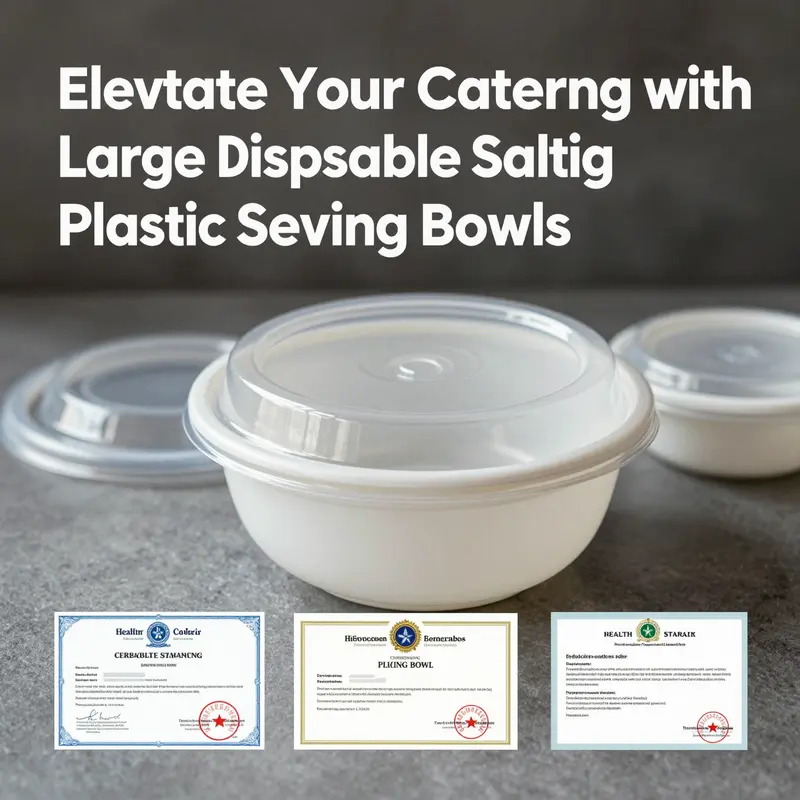
The modern catering landscape increasingly leans on large disposable plastic serving bowls with lids to deliver both volume and assurance. In the rush of service, these bowls must do more than hold food; they must protect it. They must shield it from contamination, preserve temperature and texture, and align with a network of health and safety expectations that start at the point of manufacture and extend through transport, display, and service. The chapter that follows is not a checklist, but a continuous negotiation of materials, standards, and practical trust. It asks not only what these bowls can do, but how they prove they can do it, and why that proof matters to cooks, caterers, and the guests they serve.
At the core of any responsible choice for catering ware is the material itself. Large disposable serving bowls intended for direct food contact are typically fashioned from food-grade polypropylene (PP) or, in some cases, PET. These plastics are chosen for their chemical inertness, light weight, and resistance to heat, which makes them suitable for a variety of dishes—from warm pasta salads to cool, crisp vegetables. The safety logic is straightforward: when a material is labeled food-grade, it should not leach harmful substances into foods under typical conditions of use. This is not merely a marketing claim; it rests on regulatory expectations that define what constitutes safe contact with food. In many markets, compliance with standards such as FDA regulations or EU Regulation (EC) No 1935/2004 on materials intended to come into contact with food is the benchmark for entering the supply chain. To the caterer, this translates into a reliable baseline—an assurance that the bowl’s composition has been evaluated for safety and that the product is designed with the realities of food service in mind, including potential heat exposure and the likelihood of repeated use during a service cycle, even if the items are intended for single use.
But material choice is only the starting point. The path from raw resin to the finished, service-ready bowl passes through a regulatory and validation landscape that is as critical as the plastics themselves. International and national bodies offer certifications that speak to hygiene, dependability, and suitability for food-contact applications. NSF International and Underwriters Laboratories (UL) represent two widely recognized testing and certification organizations. When a disposable serving bowl carries such certification, it signals to chefs and event planners that the product has been evaluated for critical performance criteria: resistance to leakage, stability under load, absence of migratory substances under typical temperature ranges, and overall sanitary integrity. This is especially important in catering, where catering staff may move bowls across crowded stages, frequently reposition them on banqueting tables, and stack them for space efficiency. The presence of a valid certification becomes a practical shorthand for trust, allowing organizers to focus on menu pacing, guest experience, and presentation rather than interrogating the ware’s safety credentials at every step.
A defining feature of these bowls is the lid. The lid’s role is to seal not only flavor but also safety. In the hustle of a buffet line or the logistics of a multi-stop event, lids must close securely enough to weather vibrations, brisk handoffs, and occasional bumps that occur when bowls are nested or transported in stacked configurations. A robust lid provides a barrier against airborne contaminants and dust, guarding the food against the environment from kitchen to table. It also helps maintain temperature, a critical factor for food safety and for the quality of sensory attributes guests expect—hot soups kept warmer, chilled salads staying crisp, sauces remaining cohesive without separation. The integrity of the seal extends beyond the lid itself; it hinges on how mating surfaces are engineered, the presence of tamper-evident features when needed, and the overall design that avoids mis-seating or accidental opening. In practical terms, this translates into fewer incidents of spills during loading, transit, or buffet replenishment, which is a meaningful reduction in waste and a smoother service flow.
The hygiene argument for single-use containers in high-volume settings is both pragmatic and scientifically grounded. Disposable ware minimizes cross-contamination risk by eliminating the shared ware loop that traditional reusables carry. For events with diverse menus or multiple service points, the disposable model helps ensure that each dish travels in a clean, uncontaminated vessel. The trade-off—environmental impact—remains central to modern procurement decisions, and it is a factor that informs ongoing improvements in recyclability and take-back programs. From a culinary operations perspective, the single-use model provides predictability: no washing stack, no pre-soak cycles, no kiln-like drying delays. In a setting where the schedule is tight and margins are tight, that predictability translates into on-time service, clean plate presentation, and a consistent guest experience across courses and venues.
Sourcing and supply chain reliability are inseparable from safety in practice. Caterers increasingly expect suppliers to offer not only compliance documentation but also options for customization, branding, and packaging solutions that help a service stand out while maintaining hygiene standards. For many buyers, this means engaging with reputable manufacturers and distributors that can provide a traceable supply chain, consistent product dimensions, and clear labeling that reflects food-contact compliance. A well-chosen supplier can also offer features such as transparent resealability, stacked nesting for space efficiency, and compatibility with a range of temperatures, all of which support smoother on-site operations. The ability to customize labels or logos on the packaging can support brand visibility without compromising the integrity of the food-contact surface. In this context, one might encounter options to brand the lids or bowls with logos or color-coding to indicate different menu lines, dietary accommodations, or service times. Such branding, when performed carefully, can enhance guest experience while preserving the safety and hygienic advantages of the disposables themselves.
In practice, health and safety expectations also extend to environmental considerations, because today’s catering operations are measured by more than pure compliance. Recyclability and end-of-life management are increasingly part of the safety equation, as responsible operators recognize that safe handling and proper disposal are integral to minimizing risk. This means clear guidance on whether the chosen bowls are suitable for designated PP recycling streams in given locales, along with options for compostable or biodegradable alternatives where appropriate. Even when this is not the primary health standard, it intersects with overall food safety and public health by promoting responsible waste management and reducing litter that can pose sanitary challenges in event spaces or urban environments. In many markets, the path to sustainability also intersects with regulatory expectations about labeling, compostability claims, and the transparency of material composition, all of which must be supported by independent testing and verification.
Operationally, the recurring question for caterers concerns the balance between safety, cost, and convenience. Large disposable bowls with lids must be affordable enough to fit budgeting constraints, yet they must not compromise the sanitary conditions required by food safety regulations. The answer lies in a holistic approach to procurement—a synthesis of material science, third-party validation, practical design, and supply chain reliability. The choice of PP versus PET, the thickness of the walls, and the curvature of the bowl all influence both heat resistance and ease of cleaning, even for discard-only workflows. The lid’s shape should facilitate a secure seal, but it must also be intuitive for staff to apply quickly during busy service periods. In high-volume settings, a lid that is difficult to seat or a bowl that is prone to warping under heat can undermine safety objectives and slow service, creating risks of exposure to contaminants or temperature abuse. These practical considerations reinforce the underlying principle: design for safety and serviceability in equal measure.
Beyond the immediate safety metrics, there is value in embracing a philosophy of informed choice. Caterers who understand the safety standards behind their disposables are better positioned to communicate with clients, event managers, and guests about what they are serving and why it matters. Transparent documentation—material declarations, test reports, and certifications—builds trust and reduces the need for ad hoc risk assessments during events. This is especially important in settings where guests have heightened sensitivities or where public health considerations are in play. A well-documented safety profile invites confidence and contributes to a smoother guest experience, enabling organizers to focus on the menu narrative, the pacing of courses, and the overall ambiance rather than being distracted by welfare concerns.
For readers who want a practical touchpoint on supplier information and product specifics, a representative resource accessible within the industry discusses food-grade options and the practical realities of takeaway bowls with lids. The linked page provides a concrete example of how branding, packaging design, and product features meet safety criteria while offering customization possibilities. You can explore one such internal example here: Senang05 food-grade takeaway bowls with lids. This reference illustrates how a product line can balance safety assurances with functional attributes that cater to busy events, from secure seals to reliable stacking and transport. While the specifics of each supplier may vary, the underlying principles of safety and compliance remain consistent across reputable offerings.
The conversation around health and safety standards for large disposable serving bowls with lids is not static. It is an evolving dialogue that reflects regulatory updates, advances in material science, and the growing emphasis on sustainability. Catering operators who stay current with guidelines and maintain a documentary trail—certifications, test results, and labeling—will continue to meet and exceed guest expectations. They will also be better prepared to adapt to new requirements, whether those arise from changes in regulatory frameworks or shifts in consumer priorities toward safer, more environmentally responsible packaging. This ongoing alignment between safety, practicality, and stewardship is what sustains confidence in disposables as a reliable solution for contemporary catering. For those seeking formal references, the U.S. FDA provides official guidance on materials intended to come into contact with food, which serves as a foundational resource for understanding the safety expectations that underpin everyday choices in commercial kitchens and event spaces. See the FDA guidelines for food-contact materials for more detailed, up-to-date information: https://www.fda.gov/food/food-contact-materials
Final thoughts
Large disposable plastic serving bowls with lids are more than a mere accessory; they embody essential aspects of modern catering operations. With their ability to maintain food integrity, enhance presentation, and facilitate transport, these bowls meet various demands from bubble tea shops to large corporate events. By keeping abreast of innovations, market trends, and sustainability practices, catering services can optimize their offerings and boost customer satisfaction. Understanding the sourcing and regulatory landscape completes the picture, ensuring that businesses operate within safe parameters while tapping into effective solutions for food service. Embrace these tools to refine your catering experience today.