

The Pisces takeout bag shirt may sound like an eccentric mashup of terms, but it highlights a swift evolution of fashion intersecting with food culture. Targeted at Bubble Tea shops, beverage chains, restaurants, food trucks, and event planners, this novel concept blends style with functionality and astrological flair. In this article, we’ll explore how this curious combination elevates not only personal style but also enhances the dining experience. Each chapter will dive deeper into aspects like the unique style of the Pisces takeout bag shirt, the trend dynamics that have led to its rise, and the economic implications on both the fashion and food industries. Join us as we unravel this captivating trend.
Pisces on the Go: The Takeout Bag Shirt as a Wearable Zodiac Narrative
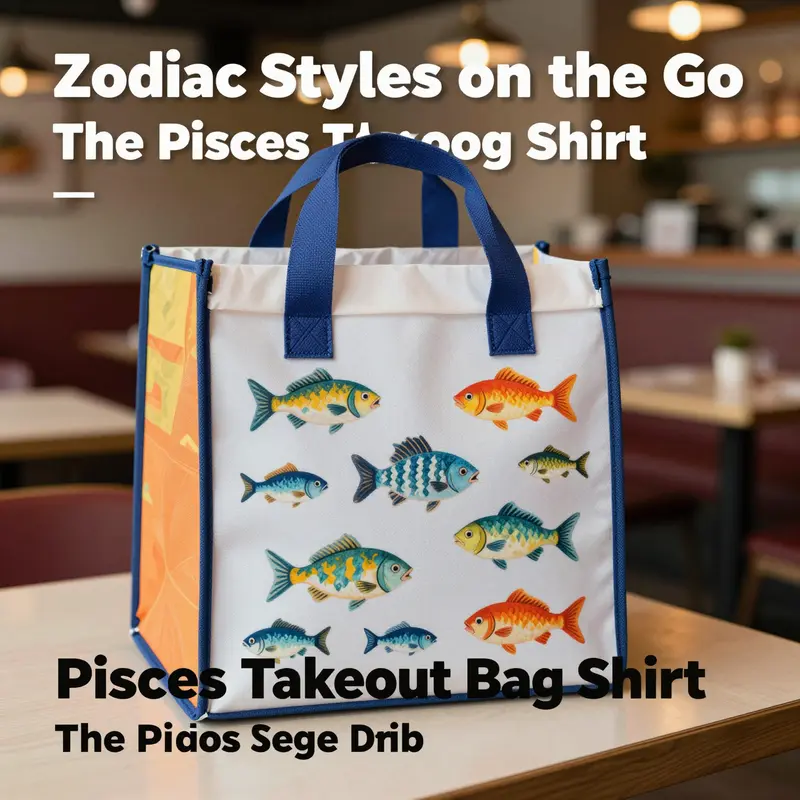
A shirt that looks like a takeout bag is more than a novelty; it is a small cultural artifact that folds two distinct routines into a single everyday act. The Pisces takeout bag shirt emerges from a contemporary impulse: to wear ideas as openly as we wear clothes, to translate a sign’s watery temperament into a visual language that travels with us through our daily errands, study sessions, and late-night urban crossings. In one breath, it nods to the zodiac, to the sea, and to the gig economy that keeps many of us moving from place to place, with meals, papers, books, and plans in constant circulation. The garment invites a reading that is at once lighthearted and serious: a playful nod to food culture while also a quiet critique of packaging waste and the rituals of consumption that accompany it. This is not merely a novelty; it is a way to rehearse a story about how we live, how we eat, and how we imagine ourselves within the larger currents of time and tide.
The Pisces temperament—known for its sensitivity, imagination, and a perpetual sense of otherworldliness—finds a ready-made wardrobe ally in the takeout bag aesthetic. Pisces, whose symbol is the pair of fish swimming in opposite directions, embodies movement and flux. A shirt that mimics a takeout bag translates that sense of motion into a tangible, wearable form. The wearer becomes a walking allegory: a person who travels between spaces, boundaries, and identities, while carrying the familiar residue of a meal and the memory of a place where it was enjoyed. The design language leans into liquidity rather than rigidity. The edges are soft, the color fields are often pale, watery blues and milky whites, and the silhouette borrows from the familiar geometry of a grocery bag or a delivery sleeve without becoming a literal copy. This is fashion as translation: a symbolic shorthand that speaks across contexts—on campus, in the office, on the bus—without requiring heavy explanation.
Within this translated vocabulary, the bag-like shirt becomes a canvas for myth and humor. Slogans such as ‘Born Under the Fish’ or ‘Mood: Deep Sea’ surface in a way that feels both intimate and universal. The phrases acknowledge Pisces’ inward draw—the tendency to dream, to drift, to imagine alternative futures—while grounding that mood in a shared, almost universal daily ritual: eating something prepared outside the home. The humor is gentle, designed to elicit a knowing smile rather than a loud laugh. And yet the humor is storied: it says that even a simple meal can be infused with meaning when wrapped in a symbolic garment. The shirt thus performs a quiet imaginative function, inviting others to join in a moment of recognition without requiring a costly or elaborate backstory.
The aesthetic of the takeout bag shirt leans into the tactile realities of modern consumption. Fabrics that press into the metaphor—organic cottons with a soft hand, or recycled blends that feel almost as light as a paper bag—accentuate the sense of something that is both disposable and cherished. In practice, many iterations emphasize eco-conscious materials, signaling a broader cultural shift toward sustainability that has become a defining epic in fashion discourse. The garment speaks a practical language too: it nods to a lifestyle in which packaging is an everyday part of life, and in which the wearer seeks stylish ways to live with that fact. By echoing the takeout codex, the shirt turns a mundane object into a meaningful one, a fashion object that is both a symbol and a reminder of responsibility. The image of a bag, with its handles and square bottom, translates into garment construction through clever seam lines, a playful pocket mimicry, and a shoulder or chest panel that visually echoes the bag’s three-dimensional form. The result is a garment that carries a story in its folds as much as in its print.
The Pisces takeout bag shirt also participates in a broader cultural dialogue about how fashion intersects with foodways. Food is not merely sustenance; it is a ritual, a memory, a signifier of place and time. To dress in a piece that visually references takeout is to acknowledge that food culture is a moving target—dynamic, portable, and often transient. In urban life, meals are encountered on foot, in transit, and within micro-communities that form around shared routines. The shirt captures that energy—the quick decision, the grab-and-go moment, the whispered joke about leftovers—while transmuting it into a visual code. The Pisces sensibility helps keep this code elastic. It accepts ambiguity, invites others to fill in the blanks, and remains comfortable in the margins between everyday practicality and dreamlike aspiration. The garment becomes a bridge between the ambivalence of modern life—between abundance and waste, between belonging and wandering—and a self-authored statement about how to navigate that ambivalence with style.
Designers working within this niche often emphasize detail work that hints at the bag’s structure without replicating it exactly. A wide, flat panel across the chest can evoke the bag’s front face; stitched lines can imitate the outline of handles; color blocking can suggest the interior and exterior of the container. The print language favors soft gradients that mimic water and fog, tiny fish motifs tucked into the hem, and abstract squiggles that whisper currents and tides. Together, these elements create a garment that feels coherent and complete even when viewed in isolation, yet becomes legible as part of a wider wardrobe when worn alongside neutral basics or ocean-hued layers. The practical aspect of this garment should not be overlooked. The takeout-bag form invites questions about drape, fit, and ease of wear. A slightly boxy silhouette, generous necklines, and a forgiving fabric yield a piece that can be layered or worn solo. It is a canvas that respects function as well as fantasy, recognizing that a Pisces wearer may want both comfort and character in a single garment.
From a cultural studies perspective, the takeout bag shirt can be read as a commentary on speed and memory in contemporary life. In cities where every minute counts, meals are often consumed in motion, wrapped in packaging that is there and then gone. A garment that absorbs this moment—literally and figuratively—becomes a portable memory. It invites the wearer to recall the person who handed over a steaming container, the café that smells of roasted beans, the street corner where a friend waited with a bag in hand. Yet the shirt also critiques the fast-food ecology by openly embracing the emblematic logistics of takeout—polystyrene or paper, wrap and bag, sleeve and lid—while pointing toward more sustainable trajectories. The Pisces wearer can be imagined as a rebel in a gentle sense: someone who refuses to surrender poetry to practicality, who refuses to erase the romance of a meal while still seeking to reduce waste. In this sense, the shirt aligns with a broader ethical storytelling tradition in fashion: clothing as a medium for conversations about responsibility, memory, and identity, rather than merely a vehicle for signals and status.
The social life of this garment is inseparable from its digital ecosystems. Online communities share memes, sketches, and mini lookbooks that remix the takeout-bag motif with other astrological tropes. The Pisces sign’s dream logic translates into curated feeds where images drift between literal bag silhouettes and abstract watery patterns, creating a visual dialect that readers instantly recognize. This is where the garment becomes a social instrument: it triggers conversations about how we interpret signs, how we assign meaning to everyday objects, and how we negotiate our own roles as both consumers and creators. In turn, wearers become ambassadors of a playful seriousness: they demonstrate that fashion can be a lighthearted space for critical reflection, a place where style and sustainability can live together without apology. This is the quiet revolution of the takeout bag shirt—an accessory that asks us to notice what we take with us, what we leave behind, and what we choose to carry forward in our clothes as in our lives.
Aesthetics aside, the Pisces takeout bag shirt serves as a curated invitation to reimagine our daily ritual around food as something more than nourishment. It is a prompt to consider the life cycle of a meal—from packaging to plate, from purchase to reuse—and to align personal style with that lifecycle. This alignment is most evident when the shirt is paired with other sustainable wardrobe staples, such as responsibly produced basics and reusable accessories. It invites thoughtful combinations, like layering over a soft cardigan on cool mornings, or pairing with muted tones that echo sea-salt blues and dune grays. The wearer’s mood shifts with the light: crisp morning sun against the fabric, evening reflections turning the garment into a softer, more introspective silhouette. Because Pisces is a water sign, this garment often feels at home near windows, near the shoreline, or on transit routes where the air carries a hint of brine or rain. It becomes a companion for quiet, after-hours reflection as much as for errands and conversations.
Into this narrative enters a practical thread that grounds the discussion in everyday use. The takeout bag shirt has to be wearable within the rhythms of modern life: it must wash well, resist wrinkles, and hold up to repeated wears. The best iterations are constructed with lines and seams that respect the body’s natural movement. They balance the crisp geometry of a bag with the softness of a garment designed to traverse a day’s many micro-events. In this sense, the shirt does not pretend to replace the bag; it folds into the bag’s cultural grammar while expanding it, offering a lighter, more narrative approach to fashion that aligns with how many people think about meals, errands, and the spaces between them. It is this balance—the fusion of symbol and practicality—that gives the garment its staying power. And it is the Pisces sensibility that makes that balance feel neither didactic nor performative, but inevitable, as if the clothes themselves have learned to ride the currents of contemporary life rather than fight against them.
For designers and wearers alike, the takeout bag shirt is less a trend and more a language. It speaks in the dialect of the present moment: a climate where fashion seeks meaning beyond exclusive drops and seasonal pledges. It interpolates a cultural affection for humor, for the tactile joys of textiles, and for the shared memory of meals had on the run. It is not essentialist costume; it is a flexible, expressive piece that accommodates different versions of Pisces. Some wearers might choose a version with bolder color blocks and sharper edges, a look that reads more graphic and suit-like in its precision. Others might gravitate toward a softer, more fluid interpretation, with watercolor-like washes and irregular outlines that feel like mislaid sea-glass. Each choice tells a personal story about how the Pisces identity meets a world of quick bites and longer nights, of bags that carry not only food but also ideas, moods, and the possibility of a more mindful moment in the middle of a crowded day. As fashion moves toward storytelling, the takeout bag shirt stands at a curious crossroads where symbolism, materiality, and daily life converge in a single, wearable statement.
The cultural relevance of this garment is not incidental. It speaks to a broader shift toward accessibility and play in fashion—a shift that makes astrology, sustainability, and everyday utility cohabitants rather than rivals. In this light, the shirt becomes a micro-gesture of self-expression that can travel across social spaces with ease. It travels from street corners to classrooms to coworking spaces, gathering attention not with loud branding but with its quiet narrative. It offers a way to declare one’s alignment—Pisces, water sign, dreamer, pragmatist—while remaining unassuming enough to blend with other pieces in a balanced wardrobe. This is where the garment achieves its social function: it acts as a conversational starting point, a wearable storyboard that prompts questions, stories, and perhaps a smile from a stranger who recognizes a shared impulse toward poetry in the everyday.
In closing, the Pisces takeout bag shirt embodies a paradox that modern fashion often seeks to embody: it is both ephemeral and enduring. It is ephemeral in its reference to a moment of daily life—the takeout girl, the coffee cup, the quick chat on the sidewalk—yet enduring in its ability to crystallize a mood, a sign, and a set of values into a garment that can be worn, cared for, and curated over time. It invites us to rethink how we dress not just to impress but to reflect, to remember, and to reimagine ourselves in the current of our own lives. And as the Pisces figure glides through the environment—between the turbulence of traffic, the hush of morning light, the glow of a late-night screen—the takeout bag shirt becomes a small, durable talisman. It is a reminder that fashion can be a companion to the ordinary, a way to carry both nourishment and meaning with the same hands.
For designers exploring sustainable bag packaging as inspiration, a practical entry point can be found in wholesale brown kraft paper bags for take-away shopping, which offer a tangible link between the aesthetics of packaging and the language of wearables. This accessible touchstone can anchor explorations in texture, form, and storytelling while anchoring them in environmental consciousness. See more about options that align with the bag-and-badge vocabulary here: brown kraft paper bag for take-away shopping.
External resource: https://www.amazon.com/s?k=Pisces+Zodiac+Tote+Bag+Shirt
Pisces on Fabric: The Takeout Bag Shirt as a Wearable Narrative of Sign, Style, and Everyday Packaging

A shirt is rarely only fabric. It is a statement, a diary, a portable room for the self. When you connect the zodiac sign Pisces with the everyday ritual of takeout, you map a life that moves between quiet interiors and crowded streets. The idea of a Pisces takeout bag shirt crystallizes this bridge between inner weather and outer wear: a garment that carries both a symbol and, perhaps, a little physical space for the leftovers of a busy life. It is not just a piece of clothing; it is a narrative stitched into fiber, a small theater where personality, practicality, and culture perform together. In exploring this garment, we navigate how fashion routinely turns the intangible—identity, mood, belief—into something one can see, touch, and share, often through a playful hinge between symbolism and daily ritual.
To begin with, Pisces itself offers a fertile ground for design imagination. The sign is long associated with water, tides, and a liminal sense of direction—two fish moving in tandem, one always gliding toward the unseen. Pisces is not a single, fixed trait but a constellation of tendencies: sensitivity, imagination, resilience in the face of ambiguity, and a propensity to ferry meaning across thresholds. Those traits migrate naturally into clothing as well. A Pisces-inspired garment often favors fluid lines, reflective surfaces, and colors drawn from the sea—deep blues, muted teals, iridescent washes that feel like light skimming over water. The shirt that bears the Pisces emblem or motif commonly embraces a sense of motion: a fish that seems to swim across the chest, a wave that curls along the shoulder, or a subtle shimmer that catches the light with every gesture. It does not insist on being loud; it invites a quiet, shared recognition between wearer and observer, a small wink that says, I know who I am and I am choosing to tell you through fabric.
The phrase Pisces takeout bag shirt adds another layer to this tactile conversation: the pairing of a symbolic sign with the everyday act of carrying food. It is a mashup that might at first glance seem whimsical, even gimmicky, yet it reveals something essential about contemporary dress: the capacity of a garment to perform more than one function, to speak as both emblem and utility. The “takeout bag” element—a graphic cue or a practical feature—ties the garment to a lived tempo. It nods to the rhythm of modern life, where lunches and late suppers travel through city streets, where convenience is part of the aesthetic, and where we valorize items that remind us we are equipped to respond quickly to whatever the day hands us. If the Pisces symbol offers a map of interior weather, the takeout motif offers a map of exterior logistics. Put together, they propose a shirt that is not only worn but used; not only seen but engaged with, in moments that demand both expression and function.
Designers who experiment with this fusion often lean into a language of duality. The Pisces identity itself is a study in halves: the visible, outward sign and the private, inner current. A shirt that nods to takeout culture can heighten that tension in a playful yet thoughtful way. The main canvas—soft jersey or a luminous knit—provides a surface for the Pisces glyph, perhaps rendered as a stylized fish or a pair of mirrored silhouettes that suggest motion through water. The palette tends toward aquatic, with gradients that recall the pale morning mist over a harbor and the deeper, gravity-bound blues of a moonlit tide. Textural contrast is frequently employed to evoke the balance Pisces embodies: a matte base with a subtle sheen along the edges, or a tactile applique that catches light as the wearer moves. The visual language here is not merely decorative; it is a narrative device, inviting observers to read the garment as a short, shareable moment about identity, whimsy, and daily life.
A functional design thread runs alongside the symbolic. The concept of a takeout-inspired feature might manifest as a discreet, integrated pocket or a pocket-like panel that evokes the look of a small bag attached to the shirt. The idea is not to overwhelm with novelty but to layer utility into form, so that the garment remains comfortable, easy to wear, and appropriate for a range of settings—from a casual lunch with friends to a late-shift run for groceries. In some imagined iterations, the pocket or panel could be stitched and reinforced to hold small items, like a phone, cards, or a key, while the outer silhouette maintains its clean, Pisces-tinged precision. The goal is a garment that feels calm and inviting, yet offers a practical courtesy to the wearer in a world that never quite stops moving. It is a fashion item that recognizes the fluid reality of modern routines, where dressing is not a ceremony of separation from daily life but an invitation to bring that life with you, in a subtle, stylish way.
Culturally, this kind of item sits at the intersection of astrology-driven fashion and the broader appetite for personal storytelling through clothing. Astrology has long offered a language for describing tendencies and moods; style has always served as a language for presenting those tendencies to the world. The Pisces takeout bag shirt becomes a twofold instrument: it speaks the wearer’s self-understanding outwardly, and it narrates a shared culture of everyday mobility inwardly. The result is inherently social. When someone posts a photo of such a shirt on a feed, the image functions as a mini-memo about belonging. It says: I am part of a community that cares about signs, about being seen in a way that is both playful and considered, and about clothing that respects the ordinary rhythms of life—leaving a little room for a snack, a note, a moment of whimsy, all carried with grace and humor.
At the same time, there is a deliberate conversation about sustainability and materials that often accompanies niche fashion. The takeout reference quietly foregrounds packaging as a design antecedent. In real-world practice, the fashion industry has grown increasingly attentive to how packaging ideas can inform garment construction and how clothing can reflect a culture of reuse and thoughtful consumption. The Pisces takeout bag shirt, in its most refined articulations, suggests not wastefulness but a mindful blend of aesthetics and practicality. The “takeout” cue can be reframed as an ethos of compact, efficient design—every seam, every panel, every shade of color chosen to minimize excess yet maximize resonance. The wearer is invited to consider how fabric selection, stitching, and finishing contribute to a garment that endures in both form and function, much like a well-designed everyday object that travels from kitchen to street to social space without friction.
To extend this line of thought into the material world of design practice, we can imagine how such a concept could translate into tangible craft without naming specific commercial products. The color story would favor layered blues and greens, sometimes drifting into pearlescent whites that mimic light on water. The silhouette would favor fluidity—slightly relaxed shoulders, a draped front, perhaps an asymmetric hem that echoes the unpredictability of a tide. The “takeout bag” detail would be integrated rather than tacked on: a pocket panel stitched into the side seam, or a small, lightweight pouch sewn beneath the hem that can be tucked away when not in use. The idea would be to preserve the shirt’s wearability in everyday contexts while preserving the playful wink that makes the design memorable. In essence, the garment becomes a portable story of self, a wearable microcosm where the wearer’s sign, daily rituals, and aesthetic preferences converge.
In addressing the practicalities of bringing such a concept to life, designers often confront questions of construction, comfort, and ethics. The fabric choice matters as much as the emblem. A cloth with a soft hand and a good drape supports the fluid, water-bound mood of Pisces, while a modest stretch ensures ease of movement. Finishing touches—subtle iridescence, matte pigments, or gentle gloss—can evoke the gleam of a moonlit surface. Details matter, but they must not overwhelm the garment’s calm center. The balance between the sign’s mystique and the ordinary act of taking food home after a day’s work is delicate. Yet it is precisely this balance that lends the takeout bag shirt its potential to become a contemporary icon: a quiet emblem of self-expression that remains useful, approachable, and resonant across different ages and communities.
The narrative around this garment naturally leans into the storytelling power of fashion. People are increasingly drawn to pieces that carry a story beyond aesthetics. A Pisces shirt that whispers about tides, dreams, and the simple ritual of wrapping leftovers speaks to a desire to narrate one’s life through what one wears. The social life of such clothing—photos, captions, and comments—transforms the garment into a shared artifact, a small cultural artifact that can inspire conversations about taste, identity, and the everyday economies of modern life. The shirt thus becomes more than an item of dress; it becomes a vehicle for connection, a point of reference that invites others to reflect on their own signs, routines, and the ways they translate inner worlds into outward form.
If one reads the phenomenon through the lens of material culture, the blend of astrological symbolism with a practical takeout motif can be seen as a response to a world that prizes speed and expression in equal measure. People want to carry meaning as they move through cities, and garments are among the most intimate carriers of that meaning. A Pisces takeout bag shirt answers this desire with a tactile, visual language that is both soothing and slightly mischievous. The shirt acknowledges the everyday act of grabbing a meal on the go and reframes it as a shared ritual, something to be celebrated rather than hurried past. It also recognizes the power of signs as a shorthand for community. Wearing Pisces becomes a way to signal belonging to a broader audience that understands the sign as more than a decorative mark—it is a way to express values, moods, and a certain temperament toward life.
As this fashion imagination travels from sketch to wearability, it inevitably brushes up against the realities of production and consumption. The idea of a built-in or graphic takeout reference prompts designers to consider how far the concept should go. Should the garment be overtly literal about takeout culture, or should it lean into metaphor, returning to the more traditional iconography of Pisces and water? There is value in both directions. A literal take—such as a clearly visible pocket or patch designed to resemble a takeout bag—satisfies viewers who crave immediacy and humor. A more abstract approach, by contrast, invites longer readings and richer personal associations. Either path can honor the sign’s symbolic core while remaining sensitive to concerns about waste, branding saturation, and the need for durability in everyday wear.
In connecting these threads—symbol, function, culture, and sustainability—the Pisces takeout bag shirt becomes a case study in how contemporary apparel negotiates meaning across multiple registers. It demonstrates that fashion can be a space where astrology, pragmatism, and everyday life converge in a single, coherent gesture. The wearer does not have to abandon practicality to enjoy self-expression; rather, practical elements can amplify symbolic resonance, turning a simple tee into a conversation piece that travels through time and space with its owner. The result is a garment that feels like a small, portable diary: the Pisces story told in soft fibers, carried on the body as one walks from a coffee shop to a conference room, from a park bench to a corner store, from a quiet morning to an evening with friends. It is in this mobility that the shirt finds its strongest voice—a voice that invites others to ask questions, to share their own stories, and to consider how clothing can honor both who we are inside and where we live outside.
For readers curious about how packaging design sometimes bleeds into wearable art, a practical example from the packaging world offers a resonant parallel. The idea of a sustainable, sugarcane-based, self-erecting lunch-box system, designed for takeout contexts, speaks to a similar impulse: to conceive products that are both useful and meaningful, crafted with materials that respect the planet while telling a story about care and consideration. This cross-pollination—between the pragmatics of packaging and the expressive potential of clothing—helps illuminate why the Pisces takeout bag shirt feels plausible as a design direction, even if fiction at this stage. It is not simply about novelty; it is about imagining how small, well-considered details can carry larger cultural values across the fabric of daily life.
The broader takeaway is that fashion thrives when it can reflect the rhythms of modern life without surrendering artistry. The Pisces takeout bag shirt, at its best, embodies a balance between the serene, watery symbolism of Pisces and the brisk tempo of contemporary routines. It accepts the fact that people eat on the move, and it invites that reality into the wardrobe with a sense of ease rather than irony. In doing so, it affirms fashion’s enduring capacity to be more than adornment: a partner in daily rituals, a canvas for personal myth-making, and a compact, portable story of who we are and how we move through the world. The garment becomes not just a piece of attire, but a tactile narrative you wear—that is, a way to carry a little universe with you wherever you go.
External resource: https://www.amazon.com/dp/B0C5XQ2KZJ
Pisces on the Run: The Quiet Convergence of Zodiac Style, To-Go Culture, and Craft in Modern Fashion
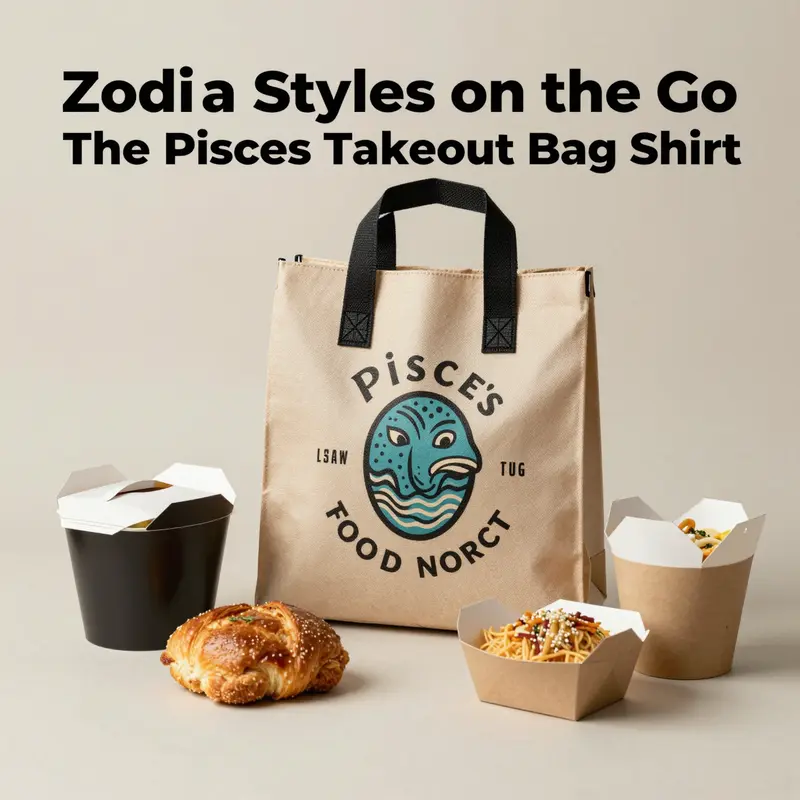
The phrase “Pisces takeout bag shirt” begins as a curiosity and ends as a mirror. It invites us to look at how disparate observations—an astrological sign, a common food-packaging artifact, and a piece of clothing—can converge into a larger conversation about culture, design, and economy. In a world where the lines between industries blur, a shirt inspired by a sign that represents fluidity and empathy might seem whimsical. Yet it quietly maps a trajectory of contemporary consumerism, where communities remix symbols to signal identity, values, and belonging. The Pisces impulse—tenderness, dreaminess, adaptability—becomes a metaphor for how fashion negotiates the everyday. A takeout bag, stripped of its utilitarian context, becomes an accessory when paired with textiles that speak of craft and heirloom technique. The result is not merely a novelty item but a case study in how meaning travels across domains, how scarcity and novelty drive attention, and how sustainability and luxury contend within the same frame. The chapter you are reading now follows that arc, tracing how a single, oddly configured phrase can illuminate the economics and aesthetics that inform both the clothes we wear and the meals we carry home in a single evening.
The Pisces symbol—two fish swimming in opposite directions—captures a paradox that designers routinely chase. Fashion loves paradoxes: elegance and rebellion, minimalism and ornament, tradition and disruption. A shirt that nods to Pisces has to negotiate those tensions without becoming a caricature. It seeks balance between fluid form and fixed function, between the sea’s uncatchable shimmer and the practical need for everyday wear. Designers think in layers, not just of fabric but of meaning. The Pisces reference offers a soft mythology that can be woven into cut, color, and texture. A shirt could echo water’s mood through a silken drape that moves like current, or through a color palette drawn from a twilight sea, where blues deepen into charcoal and hints of pearl or glass-like shine mimic moonlight on waves. The challenge is to avoid cliché while allowing the symbol to inform the garment’s tactile language. In this sense, the shirt becomes a portable emblem that travels from street to table, from casual dining to curated experiences, much as a takeout bag accompanies a meal across urban landscapes.
To appreciate the potential cross-pollination, we must consider the takeout bag as an object of modern daily life, not merely packaging. In dense urban economies, to-go rituals persist as a core habit. The bag is a carrier of convenience but also a canvas on which a city paints its own aesthetic. A well-designed bag can elevate the mundane act of carrying leftovers into a small moment of style. The fashion industry has long understood that use-value and display-value can co-exist. A tote, a pouch, or a sleeve might bear a logo or a motif that communicates taste, ethics, or mood. The Pisces shirt can borrow this logic: not a loud statement piece, but a reference woven into the fabric’s fall, a motif discreetly embroidered, perhaps a motif that suggests scales in a tactile embroidery that catches light as the wearer moves. The interplay between the bag and the shirt becomes a conversation, a micro-narrative about how consumers curate and present themselves in spaces where dining, fashion, and daily life intersect.
The research landscape for 2026 points toward a renewed emphasis on experience, craftsmanship, and sustainability. In culinary circles, the MICHELIN Guide signals a revival of tableside service, preservation through fermentation and fire, and a preference for immersive, story-rich meals. These culinary signs bleed into fashion’s concerns about texture, scent, ceremony, and tactility. Craftsmanship remains a central thesis; luxury fashion houses continue to highlight premium materials, artisanal techniques, and long hours of handwork. The sea of ideas that connects fine dining and luxury apparel is not accidental. It reflects a consumer base increasingly receptive to products that reveal time, skill, and a narrative beyond mere function. The Pisces shirt, in this context, becomes a bridge: a garment that embodies an appetite for craft while acknowledging the practical rhythms of everyday life, including the to-go moment when food is carried from restaurant to home.
If we translate these currents into design intuition, the Pisces shirt would foreground materiality and silhouette with restraint. The crystals or crystal-like accents that shimmer at certain angles can recall droplets on a fish’s flank or the liquid sparkle of a night sea. The fabric choice matters as well. A weight that drapes like water, a weave that catches light in a subtle way, and a finish that feels lasting, not fleeting. The shirt should invite touch and movement; it should feel as if it grew from a single sheet of liquid fabric rather than a rigid, pre-cut rectangle. This tactile emphasis aligns with the broader fashion ecosystem’s pivot toward materials that convey luxury through a sense of time and skill, rather than through branding alone. Margin and markup in such garments hinge not just on the embroidery or crystals but on the narrative value—the sense that the piece is a small artifact from a cultural moment rather than a plain commodity.
Economists often frame fashion through the lens of scarcity and desirability. A Pisces takeout bag shirt sits at a curious intersection: the lure of limited editions, the appeal of experiential marketing, and the friction of cost, fabrication, and ethics. A limited run can generate urgency, but it must be justified in a way that resonates with buyers who care about more than status signals. Here, the Pisces theme supplies a ready-made mood board: fluid identities, adaptability, empathy, and a subtle invitation to dream. If the shirt is pitched as part of a broader life-world—where one wears it at a casual dinner that transitions into an after-hours gallery event, or where it nods to a sensory dining experience that emphasizes fermentation and fire—the garment gains a raison d’être beyond the novelty of its name. The economics then align with the creation of a story, a ritual, and a moment, not merely a price tag.
The interplay between aesthetics and economics follows another layer: the production network that makes such a garment possible. Luxury fashion has not abandoned the virtue of craft; instead, it has recalibrated it for modern constraints. Small runs, artisanal details, and sustainable practices are valued higher when they are transparent about the labor and materials involved. The Pisces shirt could leverage this transparency as a selling point, offering a narrative about the sourcing of textiles, the method of embroidery, and the care given to finishing. In this frame, the shirt embodies pluralities: an object of beauty, a signifier of a lifestyle that valorizes thoughtful consumption, and a participant in a broader conversation about waste, wastefulness, and renewal. The to-go world supplies context for this conversation. When a meal is carried home in a plastic or paper bag, the bag itself is a marker of convenience, but it can also be redesigned or repurposed as a fashion statement. A shopper who carries a Pisces-inspired bag along with the shirt could create a small, portable tableau: the sea’s color, the sign, and the everyday ritual of dining all braided into a single moment in public space.
The practical economics of such cross-pollination require attention to the cost of premium details. Crystals or crystals-like elements add a premium, and they demand careful application to avoid fragility. The supply chain must accommodate delicate embellishments, with robust packaging and reliable aftercare. In addition, the garment’s lifecycle must consider end-of-use scenario—whether the shirt is designed for repair, recycling, or resale. In today’s market, sustainability is no longer a niche concern but a baseline expectation for many consumers. They want clothing that can endure, be repaired, and travel through several seasons without becoming quickly outmoded. The Pisces shirt, if designed with timeless lines and an adaptable motif, can meet this expectation while still offering the charm of a sign and a narrative that layers meaning into wear.
As the dish of everyday life becomes more performative—diners sharing experiences on social media, fashion enthusiasts curating content about their outfits—the Pisces shirt can function as a medium of expression. It is not just a garment but a living artifact within a broader social script. The to-go bag becomes a prop or a frame within this script. The bag’s color, texture, and construction can echo the shirt’s mood, creating a coordinated or complementary effect when a wearer steps onto a street or into a cafe. The pairing is not purely aesthetic; it is strategic. A well-considered pairing can amplify the perceived value of both items and create a small ecosystem of consumption in which food packaging, streetwear, and symbolic signifiers reinforce one another.
In shaping such a garment, designers often turn to collaboration with studios that specialize in fine detailing and sustainable practices. The idea is to marry the tactile luxury of hand-finished pieces with the pragmatic realities of mass market wear. A Pisces-inspired shirt may be produced in a limited run that emphasizes artisanal integrity and a sustainable material portfolio. The emphasis remains on craft and longevity rather than on quick turnover. Price positioning would reflect this: a higher tier that justifies the work invested in the piece while appealing to buyers who value the ethics of production as well as the aesthetics of the design. This approach matters in the broader market because it demonstrates that luxury can align with responsible consumption, even in an era of rapid trend cycles. The shirt thus becomes a tangible example of how a fashion system can honor both beauty and accountability.
The to-go dimension recurs in a quiet way when one steps back to observe how the bag’s presence alters behavior. People who move with bags know the small choreography of grabbing, tucking, and carrying. If the Pisces shirt is designed with a practical sensibility, it might include features that translate to daily life. A discreet pocket, a fabric that resists creasing in transit, or micro-embellishments that catch light without snagging on seat cushions or door handles. The shirt becomes a companion to the to-go ritual rather than a separate object squeezed into a closet. Thematically, this aligns with a broader cultural trend toward functional luxury: items that feel special yet adapt to the speed of modern routines. The Pisces motif lends itself to this synergy; it invites a sense of wonder while respecting the cadence of everyday movement.
One important thread in this tapestry is the role of internal and external storytelling. An internal narrative can explain why a Pisces shirt exists and why it speaks to the to-go moment in contemporary life. It can describe the craftsmanship, the ethical sourcing, and the envisioned wearer’s world. An external narrative, anchored by culinary and design press, can connect the garment to current dining and fashion conversations. The 2026 trends point toward experiences—culinary theater, fermentation, outdoor dining, and tableside rituals—that make the act of eating an occasion. Clothing that resonates with these moments gains salience. A shirt that carries the Pisces emblem might be presented as part of a larger story about water, resilience, and adaptability in a changing world. In this light, the shirt’s price is not merely a measure of material cost or labor; it is a ticket to participate in a cultural moment that values craft, narrative, and ethical considerations as part of everyday life.
The economic calculus of such a product would consider consumer segmentation seriously. A Pisces-inspired shirt likely appeals to individuals who seek meaning through subtle symbolism, who track fashion as a narrative rather than a series of transient looks. They might prefer limited runs, careful tailoring, and details that reward close inspection. They might also be drawn to packaging and presentation that echoes the shirt’s ethos—a takeout bag repurposed as a packaging relic in a photo shoot, or a simple, elegant box that protects the garment while signaling respect for the customer. The packaging itself could become an extension of the garment’s story: a note on sustainable materials, a thread count of the fabric, or a small insert about the sign’s symbolic language. In this sense, the shirt becomes a multi-dimensional artifact, valued for how it communicates across touchpoints—from factory floor to storefront, from personal wardrobe to social feed.
To ground this discussion in concrete industry dynamics, consider how contemporary fashion increasingly borrows from culinary culture and vice versa. A shirt may draw inspiration from the sensory richness of a dining experience—colors that mimic spice, textures that evoke smoke, or hues drawn from ocean blues. Meanwhile, packaging advances in the food world push designers to think about how to protect, present, and reuse. A reusable container or a recyclable bag shifts the conversation from waste to resource, aligning with a broader ethics of care. The result is a cycle in which design decisions ripple outward: a garment’s silhouette suggestions inform packaging shapes; packaging innovations inspire garment details; and both draw from a shared vocabulary of movement, light, and memory. In such a cycle, a Pisces shirt and a takeout bag are not isolated curiosities but nodes in a larger network that shapes how people experience value in daily life.
The practicalities of bringing a Pisces takeout bag shirt to the market cannot be ignored. Production requires careful sourcing, transparent labor practices, and responsible waste management. The embellishments must be applied with precision to ensure durability in everyday use. The design must tolerate the realities of wash cycles and travel without losing its essential character. The market must receive the piece not as a flashy one-season wonder but as a thoughtfully crafted item with a story that can endure. At a macro level, this aligns with an industry-wide shift toward mindful consumption, where premium pricing is justified by quality, ethics, and the capacity to endure. The Pisces shirt embodies this through its deliberate design language, its commitment to craft, and its readiness to participate in a culture where clothing and dining experiences intersect, where a to-go moment becomes not just a chore but a small, shared ritual.
In a practical sense, designers and brands may choose to integrate experiences that echo the to-go ecosystem inside showroom spaces as well. A gallery-like presentation of the Pisces shirt alongside elements inspired by the takeout cycle could invite visitors to consider how items travel across contexts—from restaurant, to home, to social setting. A single garment can therefore partner with a small set of objects that illustrate this journey: an elegant, durable bag, a recyclable tissue wrap, a care card printed on sustainable stock, and perhaps a stylized photograph that captures light on water. The end goal is not to overwhelm with complexity but to create a cohesive ambiance where the garment and its associated objects speak to the same values. In this setup, the shirt invites a shopper to imagine their own routine as a narrative, to see themselves as part of a broader ecosystem where fashion and food packaging share a common thread of care, craft, and continuity.
For readers curious about how such crossovers are discussed within industry circles, a closer look at packaging innovations can be illuminating. A practical entry point is to consider how disposable containers and takeout packaging have become subjects of design debate. The shift toward eco-friendly materials, the use of kraft paper, and the push for compostable or recyclable solutions are not mere logistics; they are expressions of cultural values embedded in everyday routines. The Pisces shirt, with its emphasis on fluidity and balance, mirrors this sense of responsibility. It is a garment that asks for thoughtful handling, not just in its production but in how it is worn, cared for, and even disposed of. If consumers begin to treat their clothing as part of a cycle that includes packaging and waste, the potential for meaningful, lasting fashion grows. The Pisces shirt becomes a case where aesthetics and ethics meet, where the beauty of the garment is inseparable from the life cycle it embodies.
The broader takeaway from this exploration is that a seemingly odd combination can reveal a sophisticated logic about contemporary culture. It demonstrates how fashion, dining, and sustainability are not discrete silos but interconnected domains. The Pisces takeout bag shirt, in its design, production, and imagined use, embodies a moment when style and daily life are braided together. It invites us to see clothing as a participant in everyday rituals and to understand packaging not only as a logistical necessity but as a material with character and cultural weight. As designers continue to experiment with symbolism, texture, and meaning, such garments will become more common precisely because they resonate with a public that looks for stories as much as silhouettes, ethics as well as elegance. They remind us that style is not a momentary spark but an ongoing conversation about how we live, eat, move, and express who we are in a crowded, dynamic cityscape.
The next phase of this conversation will inevitably look at how rapid shifts in consumer expectations shape both the fashion calendar and the food-service calendar. It will ask how designers can maintain integrity while releasing pieces that capture a moment without collapsing under its pressure. It will examine how packaging can be reimagined as part of the wardrobe’s backstage life, not just its front-facing display. And it will consider what the Pisces symbol, with its connotations of duality and empathy, might teach designers about balancing public display with private, personal wearability. In this sense, the Pisces takeout bag shirt serves as more than a novelty. It becomes a thoughtful prompt: what does it mean to wear a symbol that speaks of fluidity in a world that constantly asserts boundaries? How can a to-go culture teach fashion to value process as much as product? And how can designers ensure that the stories they tell through fabrics, embellishments, and silhouettes endure, even as trends shift and dining rituals transform? The answer lies in craft, care, and the willingness to let symbols travel across contexts, evolving with the wearer’s life rather than being stuck in a single, fixed narrative.
For readers who want a concrete example of the packaging narratives that intersect with wearables, consider the broader ecosystem that supports takeout culture. Packaging innovations in the food-service sector are increasingly shaped by sustainability goals, but they also reveal a design language that resonates with fashion. A durable, recyclable kraft-paper bag can be designed with a refined silhouette and tactile textures that hint at the garment’s own aesthetic. Such synergy creates a subtle brand ecosystem, where the consumer’s perception of quality is reinforced by consistent attention to materiality across products. The internal link below points to a real-world example of how packaging and presentation can be harmonized in a consumer journey, illustrating how to-go contexts become part of a fashion narrative rather than mere background events. eco-friendly kraft packaging takeout options. This link, while specialized, clarifies how material choices—like kraft paper or coated finishes—can elevate everyday items into something that feels considered and durable. The larger point, however, remains the same: cross-industry dialogue enriches both fashion and food, producing products that carry meaning in both usage and wear.
External resource: for a broader perspective on how dining experiences are shaping luxury and craft in design, see the Michelin Guide and related culinary trend analyses at https://guide.michelin.com/.
Final thoughts
The convergence of Pisces-themed fashion and takeout bag aesthetics symbolizes more than just style; it reflects cultural shifts and consumer demands in today’s world. Embracing such innovative trends allows businesses in the food and fashion sectors to connect with their audience on deeper levels. As the Pisces takeout bag shirt continues to resonate with millennial and Gen Z consumers, it reveals how astrological themes can be seamlessly intertwined with dining experiences, fortifying brand identity, and enticing customer engagement. Adapting to these evolving trends will not only enhance visual presentation but also drive sales for businesses looking to stay ahead in a competitive market.