
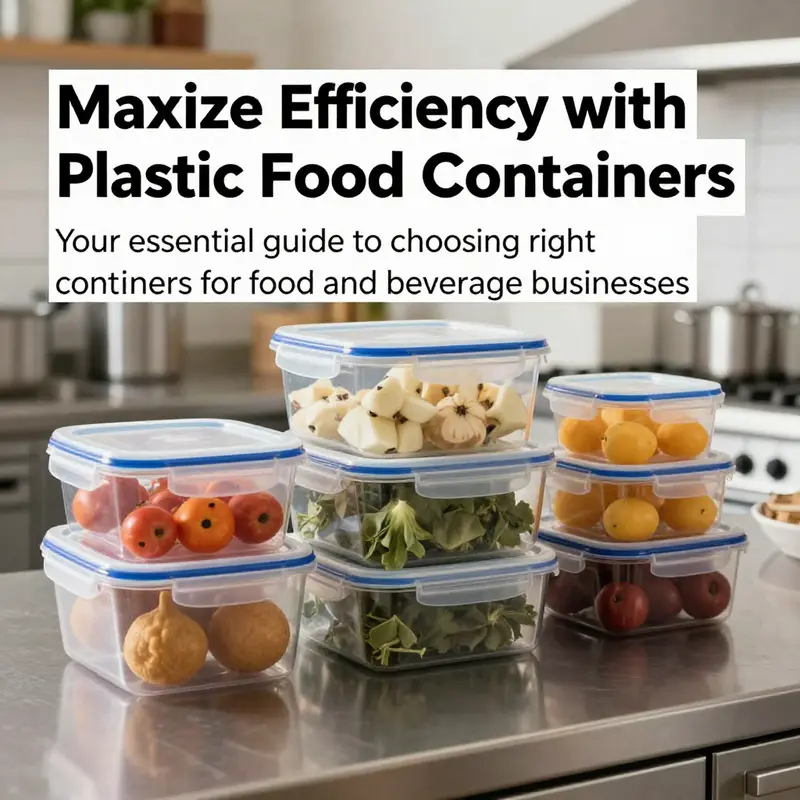
Choosing the right storage solutions is vital for food and beverage establishments looking to maintain quality and efficiency. Large plastic food storage containers offer a practical approach for businesses like bubble tea shops, restaurants, food trucks, catering services, event planning, and corporate procurement teams. These containers not only keep ingredients fresh but also help in organizing the kitchen space effectively. This article will explore the design and functionality of these containers, examine material safety and environmental considerations, and delve into market trends and sourcing strategies to empower your business decisions.
Smart Shapes and Sturdy Plastics: How Design Drives the Functionality of Large Food Storage Containers
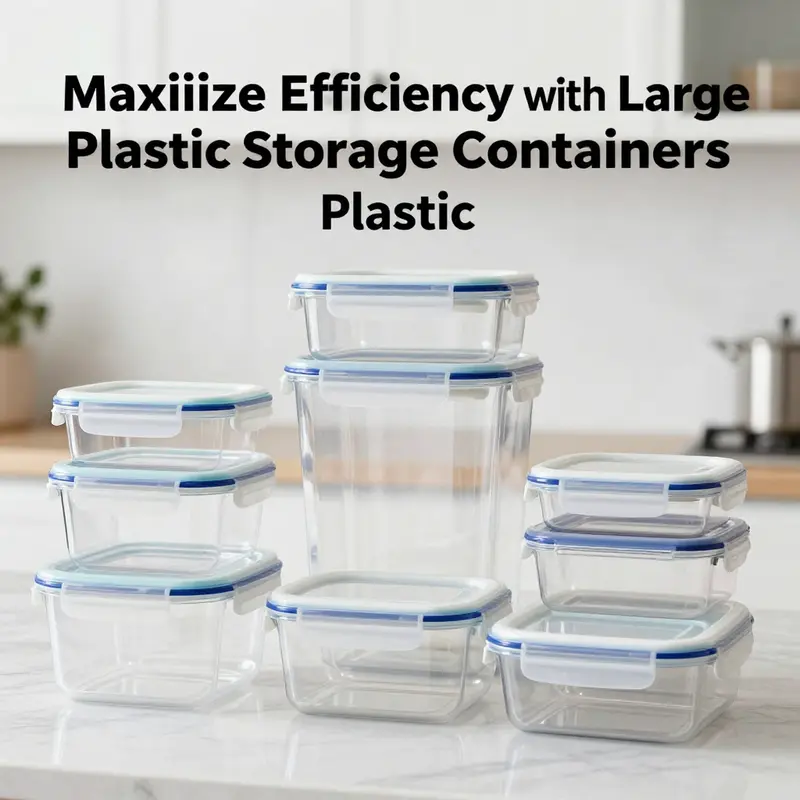
Smart Shapes and Sturdy Plastics: How Design Drives the Functionality of Large Food Storage Containers
Large food storage containers made from plastic balance competing demands: capacity, durability, usability, and safety. Design choices — from overall shape to lid geometry, wall thickness to material blend — determine how a container performs in daily kitchens and industrial environments. Understanding these design decisions helps you choose containers that fit your workflow, preserve food quality, and last through heavy use.
Rectangular and square formats are a defining feature for many large containers. Their flat sides and right angles let units align tightly on shelves and in freezers. This alignment reduces wasted space and simplifies stacking. When multiple rectangular containers are nested or stacked, they create predictable footprints that suit standardized shelving and storage racks. This practical geometry makes such containers especially helpful in meal-prep routines, commercial kitchens, and warehouses where every inch counts.
Round and cylindrical shapes serve a different set of priorities. A smooth interior minimizes crevices where food can lodge. This makes cylindrical containers superior for soups, sauces, and any viscous foods that must be stirred or poured. Heat transfers more evenly in round vessels, reducing the risk of thermal stress in reheating. Yet circular units leave gaps when placed side-by-side, so they trade spatial efficiency for ease of cleaning and better fluid handling. The design choice between rectangular and round is therefore not aesthetic. It is a functional trade-off between space utilization and hygienic handling.
Material selection is central to both safety and performance. Food-grade plastics such as polypropylene (PP) and high-density polyethylene (HDPE) are common because they combine chemical stability with impact resistance. PP has a higher melting point and good fatigue resistance, making it a frequent choice for containers intended to handle warm foods and repeated microwave cycles. HDPE is prized for toughness and resistance to environmental stress cracking, which matters in heavy-load industrial applications. Blends of PP and PE often aim to capture benefits of each: the heat tolerance of PP with the flexibility of PE. Many manufacturers offer BPA-free variants, and that label has become a standard expectation for consumer-facing food containers.
Wall thickness and ribbing patterns influence durability. Thicker walls increase impact resistance and reduce flex that can stress seals. Strategic ribbing reinforces panels without adding excessive weight. In large-capacity containers, ribs control deformation under load and during stacking. For industrial drums and bins, walls are often engineered to sustain vertical stacking loads safely. Designers must also consider thermal expansion. Plastics expand and contract with temperature swings; tolerances in lid fit and body dimensions account for this to preserve a reliable seal across freezer-to-microwave transitions.
Lids are more than covers. They define how airtight and leakproof a container will be. Snap-on, locking, and threaded lids all have roles. Simple snap lids provide quick closure but may not be fully vapor- or liquid-tight. Locking lids with multiple clamps distribute sealing pressure and are common in containers intended for transport. Gasketed lids add a silicone or elastomer seal that compresses to block liquids and odors. Threaded lids deliver excellent containment for viscous materials and liquids, especially in taller cylindrical jars. For very large drums, tamper-evident and locking lid systems prevent spills and unauthorized access.
Ease of use drives many lid choices. Flexible tabs, wide grips, and integrated pour spouts reduce spills during transfer. Lids that are microwave-safe provide venting features — such as removable inner flaps or small vents — to allow steam to escape safely. Designers balance venting against the need to maintain moisture levels; some foodstuffs require vapor control to avoid drying out or becoming soggy. Thus, lid engineering often includes features that can be toggled depending on intended use.
Stackability is an often-overlooked design aspect with outsized impact. Well-designed stackable containers feature interlocking lids or recessed bases that prevent lateral slipping when stacked. This is critical for safe vertical storage, both in commercial kitchens and retail environments. Modular systems go a step further by sizing containers to the same footprint and allowing different heights to stack interchangeably. Built-in dividers and modular inserts support portion control and allow a single outer container to serve multiple meal components without mixing flavors.
Transparency and labeling play practical roles. Clear or semi-transparent walls let users identify contents at a glance, speeding inventory checks and reducing unnecessary opening. Freeze-proof labeling areas, or integrated write-on panels, enable date and content tracking. In busy settings, a simple silicone or marker-friendly panel reduces food waste by clarifying what is inside. Some designs include sightlines molded into the walls, which act as visual portion indicators for bulk ingredients.
Cleaning access shapes interior geometry. Avoiding sharp internal corners in rectangular units makes cleaning faster and more effective. Gentle fillets between base and walls reduce trapped residue. For very large containers or closed-head barrels, access becomes a challenge. Manufacturers address this with removable liners, wide-mouth openings, or compatibility with pumps and funnels suited for safe filling and emptying. When closed-head drums limit hand access, designers may add inspection ports to sample contents without full opening.
Temperature tolerance influences material choice and design. PP can typically withstand temperatures up to about 95°C (203°F), making it suitable for hot-fill applications and repeated microwave reheating. Continuous freezer use pushes materials to resist embrittlement; some plastics become brittle at very low temperatures and can fracture under stress. Container design accounts for this by specifying operating temperature ranges and by using material blends formulated for low-temperature resilience. For industrial outdoor storage, UV-stabilized HDPE helps prevent degradation from sunlight exposure.
Functional features for commercial use include secure stacking skid designs, fork-liftable bases, and reinforced rims for hoisting and handling. Bulk containers intended for dry goods often include features for dust control and pest resistance, such as smooth exterior finishes, tight seams, and lockable lids. In contrast, foodservice-oriented containers emphasize quick access, clear labeling, and compatibility with dishwashing systems.
Dishwasher compatibility is a convenience many users expect. Repeated cycles expose containers to high heat, detergents, and mechanical agitation. Lids are often the first to show wear: repeated dishwasher exposure can warp thin lids or degrade seals. Manufacturers may recommend top-rack washing for lids and full dishwasher cycles for bases. Rigid designs with heat-stable materials and reinforced rims fare best over time. Users mindful of longevity will select containers with replacement lids available, extending the usable life of the container set.
Scent and stain resistance matter for practical longevity. Certain foods can stain translucent plastics or leave lingering odors. Additives that resist staining and inert surfaces that do not absorb oils help maintain both appearance and food safety. Silicone gaskets can trap odors, so removable and washable gaskets are preferable. For containers used with tomato-based or turmeric-heavy foods, selecting materials and surface finishes that are stain-resistant reduces permanent discoloration.
Hygiene and safety features often integrate with design. Rounded corners, smooth interiors, and easily removable seals reduce microbial harborage points. Tamper-evident closures help maintain chain-of-custody in commercial distribution. For allergen control, dedicated colored lids or base colors permit clear segregation of different food types. Surface treatments that facilitate sanitizing, and compliance with relevant food-contact regulations, are central to design acceptance in professional kitchens.
Environmental considerations are increasingly shaping design decisions. While reusable plastic containers are cost-effective, concerns about single-use plastics and end-of-life disposal prompt manufacturers to consider recyclability and material sourcing. HDPE and PP are both widely recyclable where facilities exist. Some designers simplify material mixes to improve recyclability, avoiding layered structures that block recycling streams. Others introduce repairable components, such as replaceable lids and gaskets, to extend product life. The industry also sees hybrid approaches, where plastic bodies are paired with biodegradable liners for single-use convenience with reduced environmental impact.
Customization and modularity are valuable for business buyers. Manufacturers can adapt container footprints, colors, and branding. Custom inserts, dividers, and compartmentalized lids allow single containers to serve multiple roles. Vendors often offer minimum order quantities for custom runs, enabling businesses to align packaging with branding and operational needs. For small operations, standardized modular systems that fit widely used shelving and refrigeration units offer scalability without heavy upfront costs.
Practical limitations must be acknowledged. Not all airtight lids are fully leak-proof. Some snap-fit designs prevent odors and light moisture loss but cannot withstand being laid on their side or jostled in transit. Very large rigid containers can be heavy when full, so ergonomic handles and reinforced rims are important to reduce strain and avoid accidents. Additionally, some plastics become brittle after prolonged exposure to extremely cold environments, and lids may need replacement after repeated thermal cycling.
Choosing the right container starts with matching its design features to intended use. Prioritize geometry for spatial needs. Favor materials with the right temperature and impact resistance. Evaluate lid systems based on whether you need simple closure, leak-proof carriage, or tamper evidence. Look for cleaning-friendly interiors and available replacement parts. For bulk or industrial uses, inspect specifications for stacking load ratings, UV stability, and compatibility with handling equipment.
For those interested in reusable, square formats with secure lids, consider products that combine food-grade plastic bodies and PP lids. If a modular rectangular system is desirable, options built around square salad bowls with PP lids demonstrate how a uniform footprint supports stacking and portion control while offering compatibility with lid-based seals. See an example of reusable square salad bowls with PP lids for inspiration on how these design principles look in practice: https://cupbowlpack.com/product/senang-130-disposable-eco-friendly-food-grade-reusable-square-salad-bowls-with-pp-lids-for-pet-food/.
In commercial procurement, comparing containment performance, material certifications, and service life will reveal value beyond initial cost. Containers with accessible replacement parts, clear temperature ratings, and documented food-contact compliance reduce long-term expenses and operational headaches. For consumers, a modest investment in higher-quality lids and a modular set of rectangular containers can transform fridge organization, reduce spoilage, and simplify meal prep.
Design details — from the curve radius inside a corner to the thickness of a lid flange — influence how well a container performs. Those details translate into daily benefits: faster cleaning, safer stacking, more secure transport, and longer product life. When capacity, convenience, and safety are aligned through intentional design, large plastic food storage containers become both practical tools and reliable infrastructure for kitchens of every scale.
For a practical reference on consumer-grade offerings, product pages that list material composition, temperature limits, and lid-type descriptions can be helpful when comparing options and warranties: https://www.walmart.com/ip/Large-Capacity-Plastic-Food-Storage-Containers-with-Lids-Refrigerator-Freezer-Safe-Microwaveable-BPA-Free-PP-PE-Material-Leakproof-Airtight-Design/1347892165
Between Safety and Sustainability: Material Realities of Large Plastic Food Storage Containers
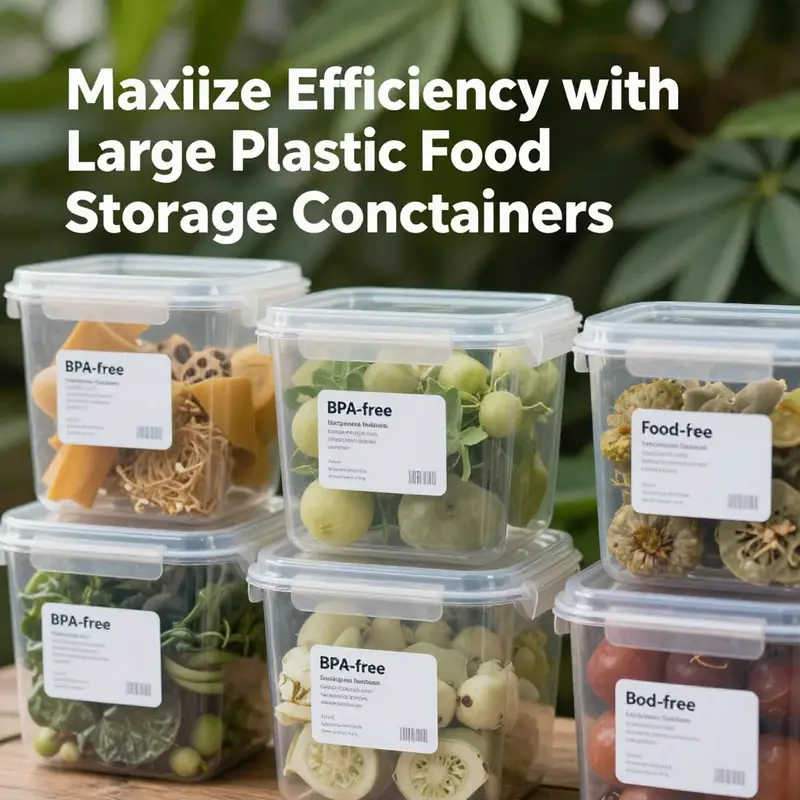
Large plastic food storage containers occupy a practical niche in kitchens and warehouses, enabling bulk prep, organized refrigeration, and efficient logistics. This chapter examines how material safety and environmental considerations intersect in the everyday use of these containers. It discusses how food-contact polymers are evaluated for safety, the role of additives in performance, and how end-of-life choices influence design and consumer use. The central message is that safe use goes beyond label claims and hinges on understanding heat exposure, storage conditions, and cleaning practices, while sustainability requires attention to recyclability, take-back programs, and durable design. A practical focus is provided on selecting BPA-free, food-contact approved options, avoiding heating in non-microwave-safe containers, and ensuring proper recycling or reuse at the end of life. By balancing safety with environmental responsibility, manufacturers and users can extend container lifespans and minimize health risks and waste, supporting a more resilient food storage ecosystem.
From Pantry to Production: Market Currents and Sourcing of Large Plastic Food Storage Containers
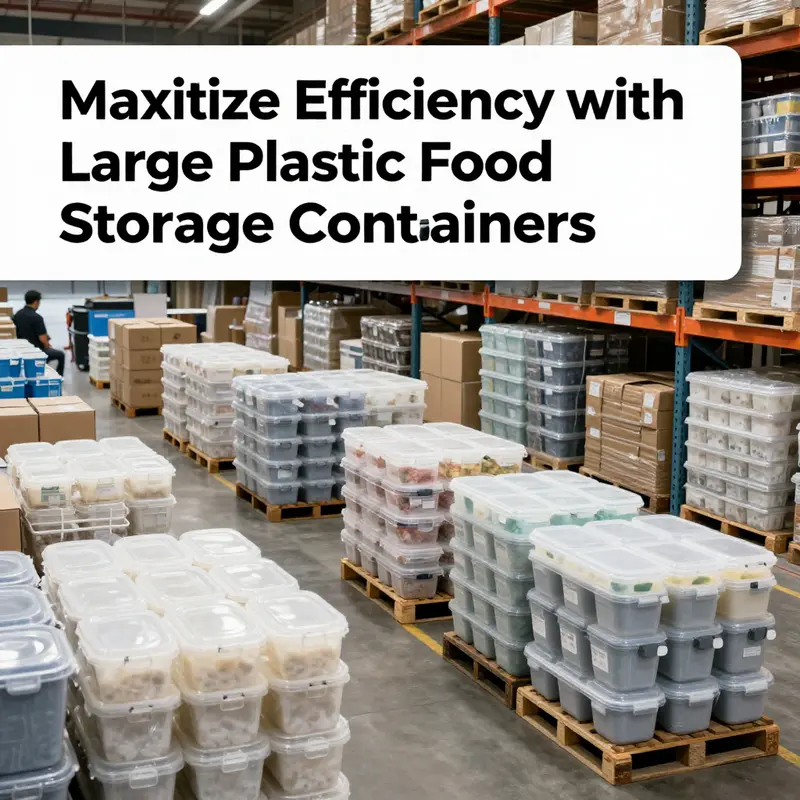
Large plastic food storage containers have evolved from simple kitchen aids into critical components of both consumer kitchens and industrial food operations. Made primarily from food-grade polypropylene (PP) or high-density polyethylene (HDPE), they are designed for handling, temperature variation, and bulk storage. Design options include rectangular shapes for space efficiency and easy stacking, and circular shapes for liquids and viscosity where smooth interiors simplify cleaning. The market for plastic storage containers spans consumer and institutional channels and is driven by convenience, hygiene, cold-chain reliability, and sustainability goals. Global demand is supported by major manufacturing regions, with China as a key hub, and the market is gradually incorporating recycled content, BPA-free formulations, and designs optimized for recyclability at end of life. Customization and GMP/HACCP considerations are increasingly important for food processors, pharmaceuticals, and aquaculture, as buyers seek containers with conical bottoms, integrated mixing capabilities, secure lids, and compatibility with inventory systems. Sourcing dynamics favor suppliers with robust quality management, traceability, and certification programs that meet international standards, while the broader push toward circular economy concepts shapes end-of-life expectations and take-back options. Looking ahead, digital traceability, smart features such as fill level and temperature sensing, and material innovations that expand PCR content or bio-based variants are likely to become differentiators. The result is a resilient ecosystem where material choice, design, processing discipline, and supplier capability converge to deliver safe, durable, and recyclable storage solutions at scale.
Final thoughts
In a landscape where efficiency and food safety are paramount, large plastic food storage containers stand out as essential tools for the food and beverage industry. By understanding their design, safety considerations, and market availability, you can make informed decisions that enhance your service quality and operational efficiency. Optimize your ingredient storage solutions and stay ahead of the competition with the right containers tailored for your needs.