
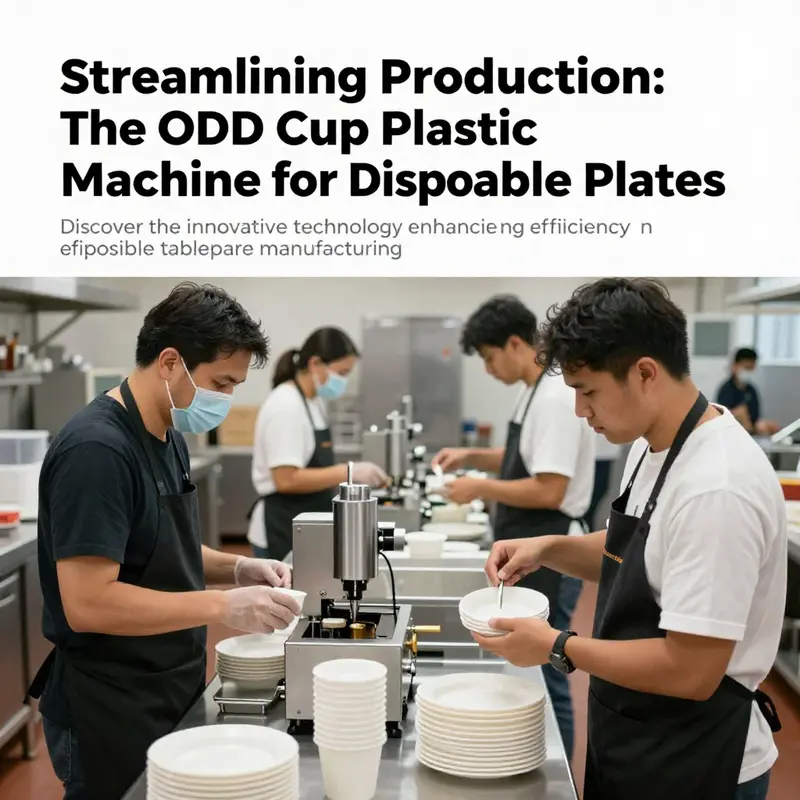
In an era where convenience meets demand, the ODM cup plastic machine is revolutionizing the production of disposable plates and cups tailored for Bubble Tea shops, restaurants, food trucks, catering services, event planners, and corporate procurement teams. This article explores the significant technical innovations embedded in the machinery, the economic implications of efficient production, and the groundbreaking customization capabilities that streamline operations. Together, these facets illuminate how this technology does more than just manufacture—it transforms the landscape of disposable tableware.
From Sheet to Shelf: Innovations in ODM Cup Plastic Machines for Disposable Plates
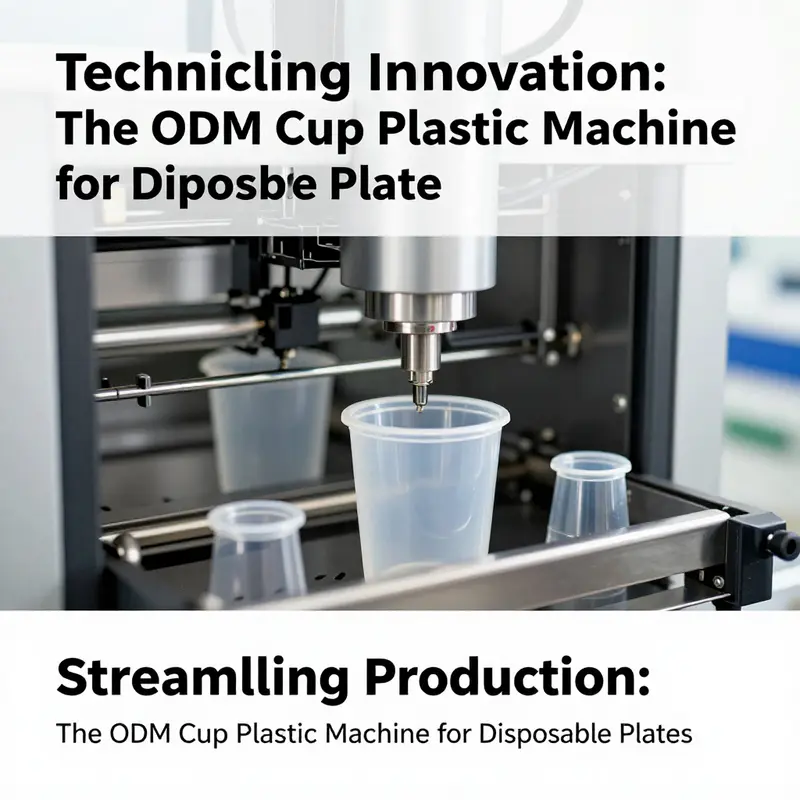
In the realm where design intent meets factory floor reality, ODM cup plastic machines for disposable plates stand as the quiet engine of modern serveware. They are not merely molding devices; they are the orchestras that translate a specification into a steady stream of consistent, safe, and market-ready products. The most compelling advances in this space arise when the machine’s capability to shape, seal, trim, stack, and brand converges with intelligent control and sustainable material handling. The result is a manufacturing line that moves with minimal human intervention, yet remains deeply adaptable to shifting demand, evolving regulatory standards, and the growing pressure to use recycled materials without compromising performance. This is the essence of contemporary ODM-driven production: a seamless integration of thermoforming, automation, material science, and branding into a single, verifiable process that can be customized to meet specific customer needs without sacrificing efficiency.
At the heart of these machines lies automated thermoforming, a technology that has matured well beyond a simple heating and pressing cycle. Modern systems are designed to heat a sheet of plastic—typically a film or sheet made from polypropylene or polystyrene—until it becomes pliable enough to be shaped under vacuum and pressure. The control of heat is more precise than ever; temperature zones are staggered to reduce sag and ensure uniform thickness across the panel. Pressure is carefully regulated to avoid thinning at corners or thickening in the middle, which in turn preserves stacking stability and integrity during downstream handling. This accuracy matters because a single product misshape can cascade into failed packaging lines, yield loss, or customer dissatisfaction. The forms produced by these systems are often achieved using a double-die arrangement, a configuration that allows two different sizes or shapes to be produced within the same cycle. Such versatility dramatically increases throughput and reduces the downtime required for tool changes, a critical factor when a supplier serves diverse markets with varying plate and cup dimensions.
The automated thermoforming process is only the beginning. A fully ODM-capable machine integrates a suite of mechanisms that automate downstream steps with the same precision that governs forming. After the plates or cups emerge from the forming cavity, trimming stations cut the products to final dimensions with high repeatability. The trimming is synchronized with the forming cycle so that scrap is minimized and cycle times stay tight. A stacking and counting system then accumulates finished pieces, maintaining consistent gap spacing and predictable pile height. This automatic handling eliminates manual touchpoints that can introduce contamination or inconsistency, and it supports continuous operation with minimal supervision. The objective is not merely to produce a run of identical items; it is to create a closed-loop workflow where every unit, from raw sheet to finished plate, is accounted for, traceable, and ready for packaging or further customization.
Smart automation and control systems elevate this flow from mechanical reliability to operational intelligence. Machines in this class are equipped with programmable logic controllers (PLCs) and human-machine interfaces (HMIs) that operators can use to monitor real-time parameters, adjust cycles, or initiate changeovers with the press of a few buttons. The数据显示 on HMIs translates complex process data into actionable insights: melt temperature trends, vacuum stability, air pressure, trimming tolerances, and stack height. With such visibility, manufacturers can tune the line to minimize waste and maximize consistency, even as raw materials vary in viscosity or crystallinity. Predictive maintenance tools, embedded in some control architectures, analyze vibration, motor currents, and cycle histories to forecast component wear and schedule interventions before a fault becomes costly downtime. The effect is a dramatic reduction in unplanned stoppages and a smoother production rhythm that keeps delivery schedules intact.
Sustainability has become a non-negotiable core of ODM line design, and the new generation of machines builds this into the process from first melt to final packaging. A growing proportion of feedstock comes from post-consumer recycled (PCR) plastics, which introduces variability that must be managed without sacrificing product quality. Modern feed systems and melting controls are engineered to accommodate this variability, delivering stable melt flow and consistent thickness even when the input material is recycled and fed at scale. This capability is not just an environmental benefit; it is a business imperative as customers seek packaging that aligns with circular economy goals. The ability to process PCR plastics safely and consistently broadens the supplier’s material palette and reduces reliance on virgin resin, while maintaining the strength, heat resistance, and rigidity needed for disposable plates and cups that must withstand normal use, stacking pressure, and transport torques.
Branding and customization also advance within ODM lines through precision pad printing integrated into the downstream path. As brands seek to differentiate their disposable tableware in a crowded market, on-product logos, certifications, and decorative motifs become increasingly important. Precision pad printing technology enables durable markings with high fidelity, even on curved or slightly irregular surfaces. In practice, this means a semi-automatic, then increasingly automated, pad printing stage can be added to the line with modest incremental capital. The result is branding that endures through typical handling and distribution while maintaining the line’s high throughput. Importantly, this integration remains cost-conscious; it serves economies of scale for larger runs and provides a viable path for smaller brands to access customization without bearing the full burden of a bespoke line.
The ODM model emphasizes configurability without the penalties of bespoke equipment entirely. Instead of a single fixed configuration, the platform can be adapted around a core forming, trimming, and stacking technology with modular add-ons. A new set of feeding or stacking accessories, a different die set, or an alternative branding module can be slotted into the same base architecture. This flexibility matters because the market for disposable tableware is not monolithic; it spans different sizes, thicknesses, and performance requirements across regions. In this context, the ODM process becomes a collaborative design effort: the customer supplies the product specifications, functional constraints, and quality targets, and the supplier translates those into a line layout, a sequence of process parameters, and a maintenance plan. The outcome is a complete turnkey solution that minimizes the time from concept to production, while preserving the ability to iterate with the changing demands of retailers and end users.
From a pure manufacturing economics perspective, the advantages of these integrated ODM lines become evident when considered from batch-to-batch variability to lifetime operating costs. High-throughput thermoforming reduces per-unit costs by spreading fixed overhead across more units and by shrinking cycle times. The double-die capability adds flexibility without sacrificing efficiency, enabling a single press to accommodate multiple SKUs and orders that would previously require tool changes and line stoppages. The automation stack—PLCs, HMIs, sensors, and predictive maintenance—translates to better process stability, lower scrap rates, and predictable line performance. The energy profile of the system also improves through smarter heating control and better insulation, which matter when factories run 24/7 to meet demand surges during holidays or promotional events.
In practice, operators who adopt ODM cup plastic machines for disposable plates report a cascade of operational benefits. First, there is a simplification of the manufacturing choreography. When the machine handles heating, forming, trimming, stacking, counting, and branding in a synchronized loop, there are fewer opportunities for human error. Second, the changeover times between plate sizes and cup diameters shrink substantially because the same mechanical core accepts different dies and subsets of tooling with automated pushes of basic parameters rather than manual reassembly. Third, waste is minimized through real-time measurement of thickness and weight, reducing deviations that could lead to rejected lots. These advantages have a compounding effect on yield and throughput, and they correlate with shorter lead times for customer orders that demand rapid prototyping or seasonal products.
The broader industry context also reflects a shift toward responsible packaging while maintaining performance standards. Regulatory environments increasingly favor packaging that can be recycled or reused with minimal leakage of additives. The ODM approach supports this shift by enabling designers to select materials and process paths that align with recycling practices, while still delivering food-contact safety and mechanical rigidity. The ability to demonstrate process control, traceability, and repeatable results—through the automation backbone and data collection—becomes a differentiator for manufacturers seeking long-term partnerships with brand teams, retailers, or food-service providers. In this way, the ODM cup plastic machine becomes not just a device for creating plates and cups, but a platform for sustaining a broader manufacturing strategy that embraces efficiency, customization, and environmental responsibility.
The pathway from concept to factory floor is facilitated by practical interoperability. The machine best practices include designing with a modular mindset so that downstream lines—such as packaging, labeling, and palletizing—can be integrated without forcing a new plant layout. Operators benefit from consistent ergonomics and predictable maintenance routines, which translate into reduced fatigue and safer work environments. Even the acoustic footprint matters: quieter equipment minimizes the need for expensive isolation and supports a healthier plant atmosphere for workers who spend entire shifts on the line. In sum, this class of ODM equipment embodies a holistic approach to manufacturing where the form, function, materials, and business metrics converge in a single, coherent system.
For readers exploring how these lines fit into broader packaging ecosystems, the disposable-plates category offers a window into related products, sizes, and configurations that are commonly produced alongside cups and trays. This interconnectedness helps manufacturers think not only about a single SKU but about a cohesive family of products that can share tooling and automation logic. By learning how to optimize one family member, they can often port that knowledge to other items with similar shaping and handling requirements, thus accelerating the path to full line optimization. See the disposable-plates category for context on the variety of shapes, thicknesses, and compatibility considerations that influence line design and material selection.
From a storytelling perspective, the innovations across thermoforming, control systems, sustainability, and branding reveal a common thread: the ODM machine is evolving into a collaborative design partner. It is no longer a passive tool but an active contributor to product strategy. The line’s performance informs material choices, which influence the downstream packaging and logistics plan. In turn, the brand’s identity is embedded into the product through printing or labeling, closing the loop between manufacturing and consumer perception. The result is a more resilient supply chain capable of quick pivots, compliant with evolving sustainability expectations while delivering consistent quality and competitive cost per unit. The practical upshot for manufacturers is tangible: shorter lead times, higher yield, and a platform for scalable customization that can flex in response to market signals without requiring a total equipment rebuild.
As the sector continues to professionalize around data-driven operations, the ODM approach will likely expand its influence beyond the classic forming and trimming steps. Sensors embedded in the tooling can monitor sheet composition, temperature gradients, and even the friction between the sheet and the die. These insights can feed into optimization algorithms that suggest preemptive maintenance or alternative process settings to compensate for seasonal material variations. The growing convergence of materials science, control theory, and design for manufacturability is turning the ODM cup plastic machine into a multi-disciplinary engine. It is capable of delivering not just a physical product but a documented, auditable performance profile that manufacturers can trust when negotiating with customers and regulating bodies alike. In this sense, the machine becomes both instrument and record, a tangible embodiment of quality, efficiency, and responsibility in one integrated system.
For those who want to glimpse the broader landscape of reference models, a well-documented thermoforming solution demonstrates most of these capabilities in practice. The documented approach highlights automated heating and vacuum forming, precise thickness control, and a two-die configuration that makes production versatile without sacrificing reliability. These features address the core challenge of disposable tableware production: how to deliver a high-volume, consistent, and branded product while also supporting sustainable materials and economical operation. The synergy between the core forming technology and the advanced control layer is what ultimately distinguishes modern ODM lines from older, more manual lines. It is this synergy that enables manufacturers to approach every shift with the confidence that the process will reproduce the intended results, even when variables shift from batch to batch.
In closing, the trajectory of ODM cup plastic machines for disposable plates points toward increasingly intelligent, modular, and sustainable production ecosystems. The future belongs to lines that can absorb a spectrum of materials and adapt to a wide range of specifications without requiring bespoke, capital-intensive redesigns. They will be defined by how effectively they integrate thermoforming precision, automated handling, material versatility, and branding into a single continuous process. This is not merely about making plates and cups; it is about delivering a reliable capacity to respond to the evolving needs of the food-service world with speed, consistency, and responsibility. For stakeholders and readers tracing the path from raw sheet to shelf, these innovations illuminate a practical, actionable blueprint for turning ODM concepts into measurable competitive advantage on the production floor.
External reference for further technical context: https://www.alibaba.com/product-detail/Automatic-Plastic-Cup-Thermoforming-Machine-Disposable_1600384792556.html
Chapter 2: The Economic Edge of ODM Thermoforming for Disposable Plate Production
The decision to adopt an ODM cup plastic machine for disposable plates sits at the intersection of automation, flexibility, and market demand. In regions where packaging is increasingly scrutinized for sustainability and efficiency, small and medium-sized manufacturers seek equipment that can scale with growth without breaking cash flow. The ODM approach—designing and manufacturing products for others under a customer’s brand or specifications—offers a pathway to reduce risk while expanding product reach. The economic story of these thermoforming systems is not about a single capability; it is about a coherent, end-to-end value proposition. When a plant switches from a labor-intensive, semi-automatic workflow to a fully automated line, the gains accumulate in multiple directions: throughput, consistency, material adaptability, and the ability to respond quickly to shifting customer preferences. The core appeal lies in the integration of heating, forming, punching, and stacking into a single, continuous process that translates raw resin into finished items with minimal manual intervention. This is the essence of what makes ODM thermoforming a strategic asset for disposable tableware manufacturing today.
To understand the economics, it is essential to start with the machine’s fundamental capability: high-speed forming and automated handling. A modern ODM thermoforming machine can operate at a rate of roughly 25 to 45 cycles per minute, depending on product geometry and material. In practical terms, that means a significant uplift in daily output without proportionally increasing labor costs. The machine’s control architecture—typically a PLC with a touchscreen interface—reduces the likelihood of human error and enables operators to adjust geometry, thickness, and stacking patterns on the fly. Fewer manual operations translate into lower labor costs per unit and tighter process control, which in turn lowers scrap and rework. The cumulative impact is a stronger bottom line that scales with demand rather than being tethered to the pace of a labor pool.
The economic picture grows more favorable when we consider the automation of auxiliary tasks that often accompany plastic cup and plate production. In a traditional setup, operators must cut, count, package, and sometimes re-stack products, often with limited precision. A fully automated line eliminates or minimizes these steps. Robotic grasping and stack-and-count mechanisms interlock with the forming station to deliver a continuous stream of finished pieces. This seamless flow reduces downtime and accelerates changeovers between product sizes or designs, which is critical when a producer aims to diversify its catalog without amplifying capital expenditure. The ability to reuse the same platform for cups, plates, bowls, and trays is a hallmark of ODM capability. This multi-functionality means manufacturers can pivot toward new markets or respond to seasonal demand without purchasing additional specialized lines. The broader implication is that fixed investment per product unit declines as the production mix becomes more elastic.
Material flexibility compounds the financial benefits. Thermoforming machines can process a variety of plastics, including PET, PS, PP, and HIPS. This versatility allows producers to hedge against price volatility in any single resin and to align material choices with performance requirements—such as heat resistance for hot food applications or clarity for premium presentation. When raw material costs swing, the ability to switch resins with minimal tooling changes can preserve margins. And because many ODM thermoforming lines are designed with standardized tooling and quickly changeable dies, the transition between product formats incurs only modest downtime. In this sense, the machine acts as a price-risk management tool as well as a production asset. The economic advantage is not only in unit cost reduction but also in the agility to adapt to customer specifications without costly retooling projects.
Customization lies at the heart of ODM value. The ODM model explicitly accommodates a customer’s unique design language, branding requirements, and functional specifications. This extends beyond simple size changes to include embossing, film coatings, or insert features that improve stacking stability or temperature performance. In practice, the ability to tailor a line to deliver precisely the customer’s brand story while maintaining cost discipline is what makes ODM partnerships durable. It also reduces the time-to-market for new product introductions, a factor that has direct commercial impact. When a manufacturer can present a platform that can be tuned to each client’s needs without repeated capital outlays, partnerships deepen and recurring revenue becomes more feasible. The result is a more predictable revenue cycle and stronger supplier-customer loyalty, both of which contribute to a more robust economic outlook for SMEs pursuing disposable tableware markets.
From a market perspective, the demand for eco-friendly packaging is a powerful driver of investment. ODM lines that can process recyclable polymers or bio-based alternatives position manufacturers to meet evolving regulatory expectations and consumer preferences. In many regions, authorities are moving toward stricter packaging standards and extended producer responsibility schemes. Companies that align their output with CE or equivalent certifications can unlock access to export markets and premium pricing opportunities. The cost of compliance, once a barrier, becomes a strategic differentiator when paired with reliable production capabilities. As consumers push for sustainability, the value proposition shifts: it becomes practical to invest in machines that can gracefully switch to greener resins, reducing the risk of stranded capital should material pricing or policy favor a more sustainable mix. The economic narrative thus expands beyond unit cost and throughput to include regulatory readiness and access to higher-margin markets.
Another dimension of economic impact comes from the capital efficiency of ODM lines. The initial investment for a complete thermoforming package is often in the vicinity of tens of thousands of dollars per set, depending on options and capacity. When spread over several product families and years of operation, the capital expenditure per SKU becomes modest. The trade-off, of course, is the need for skilled operation, preventive maintenance, and a reliable supply chain for tooling and spare parts. However, the return on investment can be compelling, especially for SMEs that previously operated with manual or semi-automatic lines. The combination of higher throughput, better material utilization, and lower labor intensity compresses the payback period. In practice, a plant can begin to realize payback within a few quarters if demand holds and the production line remains stable. This is precisely why many small manufacturers look to ODM machines not as a single-purpose purchase but as a platform for scalable growth.
The geography of opportunity matters as well. In regions experiencing rapid urbanization and rising consumer demand for convenient packaging, ODM lines become catalysts for local production capabilities. By enabling plants to produce a broad range of disposable tableware without spinning up multiple specialized lines, these machines support regional manufacturing ecosystems. Local production reduces transportation costs, shortens supply chains, and creates jobs. It also enhances resilience by lowering dependence on distant suppliers for both finished goods and critical components. When a regional cluster adopts automation at this level, suppliers, service providers, and technical talent are drawn into a virtuous circle of knowledge transfer and continuous improvement. The economic ripple effects extend beyond the factory floor, seeding broader industrial development and contributing to GDP growth in a tangible, measurable way.
The financing landscape for ODM thermoforming equipment is not static. Banks and leasing companies increasingly recognize the strategic value of automation in the packaging sector. Structured financing, including staged investments or equipment-as-a-service (EaaS) models, can lower upfront costs and align cash flow with production reality. For startups and SMEs with limited balance sheets, these options make access to modern, automated lines feasible without crippling capital risk. The availability of used machinery at competitive prices adds another layer of accessibility. Reputable marketplaces can supply verified, reconditioned equipment that meets performance standards at a fraction of the cost of new lines. While older machinery may require more maintenance planning, the total cost of ownership can still be favorable when combined with lower depreciation rates in certain accounting environments and the ability to secure favorable financing terms.
Operational performance and reliability are critical economic levers as well. A high-quality ODM line emphasizes robust hydraulic systems, precise die-cutting, and stable forming cycles. These elements reduce downtime and scrap, two direct drains on profitability. A stable line also supports longer operator shifts, fewer changeovers, and better scheduling across multiple product runs. In other words, the machine is not just a capital asset; it is a driver of operational discipline. The ripple effects include improved on-time delivery to customers, lower warranty claims, and greater confidence in capacity planning. For a manufacturer seeking to build a credible export strategy, reliability translates into consistent quality that meets international expectations and reduces the friction of cross-border trade. All of this blends into a coherent economic case for ODM thermoforming as a strategic investment rather than a tactical purchase.
The story of the ODM cup plastic machine for disposable plate production, then, is better understood as a narrative of incremental value rather than a single breakthrough. The platform delivers speed, precision, and material flexibility; it supports customization without prohibitive tooling; it aligns with sustainability goals and regulatory expectations; it offers financing flexibility; and it strengthens regional manufacturing ecosystems. Each of these strands reinforces the others, creating a cumulative effect on profitability and competitiveness that is particularly meaningful for SMEs navigating tight margins and volatile demand. The result is not only lower unit costs or faster cycles; it is a sustainable pathway to growth that leverages automation to unlock new product opportunities, open new markets, and elevate brand reliability across a broader customer base. In this sense, the economic impact of ODM thermoforming for disposable plate production extends beyond the machine itself. It reshapes business models, supply relationships, and strategic planning for a generation of packaging manufacturers.
Within this broader context, the capability to produce a spectrum of disposable tableware—from cups to plates to trays—on a single automated line becomes a strategic advantage. The capacity to customize quickly, reduce labor intensity, and switch materials in response to price shifts or demand signals translates into real operating leverage. A plant can respond to a spike in take-away dining trends by increasing output of plates and trays while maintaining the same line, rather than investing in a parallel, purpose-built operation. This kind of operational agility is hard to replicate with multi-line strategies. And because ODM providers often offer end-to-end support—from tooling optimization to process validation and after-sales service—manufacturers gain a trusted partner who can guide continuous improvement rather than merely deliver a machine. The economic benefits thus crystallize as a combination of lower total cost of ownership, better asset utilization, and greater strategic flexibility.
For readers planning next steps, a careful assessment of capacity, product mix, and supplier capabilities is essential. The decision should consider not only initial price and cycle time but also the total cost of ownership, including maintenance, spare parts, consumables, and downtime penalties. A well-structured evaluation will include a scenario analysis that models different demand curves, resin prices, and regulatory requirements. It should also account for the potential to work with local suppliers and service partners who understand regional packaging standards and market needs. In that light, turning to a platform that can deliver both the technical flexibility and the business model alignment you require is not merely a procurement choice; it is a strategic move toward resilient, scalable manufacturing in a rapidly evolving packaging landscape. The opportunity lies not just in producing disposable plates, but in building a flexible, future-ready operation that can adapt as markets, materials, and regulations shift.
To connect these ideas to practical steps, consider the pathway from evaluation to implementation. Start with a clear definition of target product families and expected volumes. Next, map the life cycle of the most stable resin options and the potential for greener alternatives. Plan for a pilot run to verify cycle times, waste, and stacking efficiency. Develop a changeover strategy that minimizes downtime during transitions between sizes or formats. Finally, establish a supplier relationship that encompasses equipment maintenance, spare parts access, and training for operators. By threading these elements together, an SME can realize the economic promise of ODM thermoforming without sacrificing reliability or product quality. The end result is a more robust, adaptable, and competitive manufacturing operation that can meet today’s demand for convenience packaging while positioning itself for tomorrow’s sustainability and regulatory expectations. For readers interested in exploring related product categories as part of broader diversification, see the disposable plates section for practical context and design considerations: disposable plates.
External reference for further technical and market context: https://www.alibaba.com/product-detail/Small-Plastic-Cup-Thermoforming-Machine-with_1600798123574.html
Designing Flexibility into Form: How ODM Cup Plastic Machines Elevate Customization and Throughput in Disposable Tableware
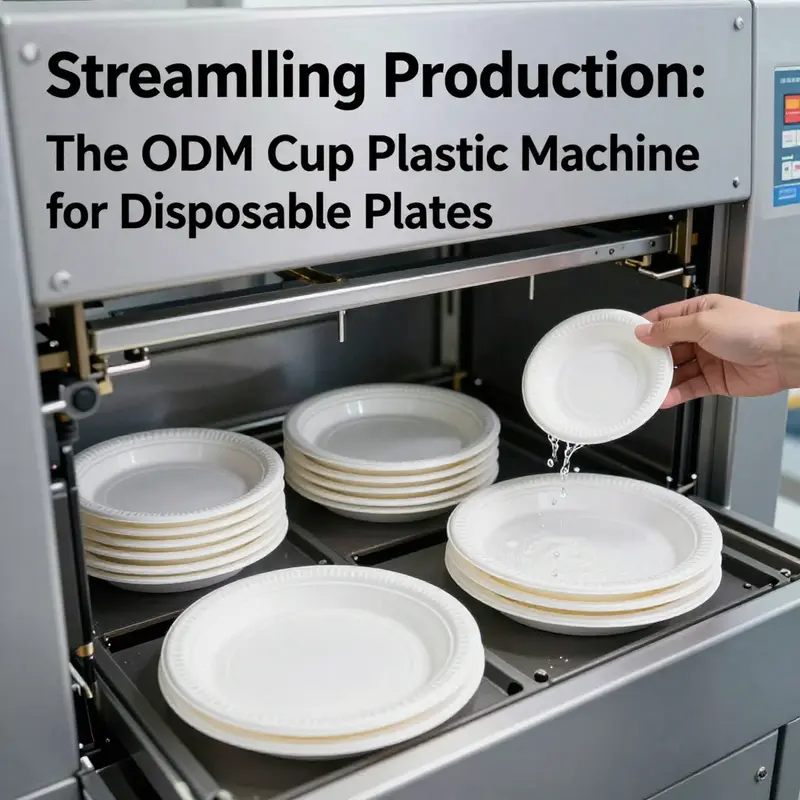
The evolution of tooling for disposable cups and plates has moved beyond simply turning a reel of resin into a finished product. For manufacturers, the real game now is how quickly a line can pivot from one product family to another without sacrificing quality, yield, or cost. In this landscape, ODM, or original design manufacturing, is not merely a sourcing choice; it is a strategic shift that reframes equipment as an integrated partner in production. An ODM approach to thermoforming and cutting does not present a fixed, one-size-fits-all machine. It presents a platform engineered for customization, where the machine’s architecture—its tooling, control logic, and automation sequence—can be tailored to a brand’s exact specifications and market demands. The result is equipment that doesn’t force producers to contort their processes to fit a machine’s rhythms but instead bends with the product’s rhythms. This capacity for customization sits at the heart of how modern disposable tableware manufacturers pursue efficiency and resilience in a market that prizes versatility as much as volume.
To understand the new normal, consider the obstacles that traditional, non-customized machinery created. A line that is set for a single cup size or a single plate geometry can trap production in a narrow corridor of output. Altering even a minor dimension—such as wall thickness, cup diameter, or plate curvature—often requires a lengthy retooling phase. That phase includes mold changes, die alterations, and re-sequencing of heating, forming, trimming, and stacking operations. Each step introduces downtime, increases waste, and inflates the cost per unit. In a climate where consumer preferences swing with fast fashion and seasonal promotions, the risk of missed opportunities is high. A facility must either stock multiple dedicated lines or endure frequent and costly changeovers. The ODM paradigm flips that dynamic. It treats the machine as a modular ecosystem, where rapid reconfiguration is built into the design, not appended as a bolt-on capability.
A central driver of this shift is a move toward fully automated, end-to-end production that begins with material handling and ends with validated, stacked product output. The core technology stack—automatic thermoforming, trimming, and stacking—has matured to support complex product geometries with tight tolerances, yet it is the orchestration layer that unlocks true customization. A skilled engineering team will work with a client to map the entire production workflow, identify bottlenecks, and design a bespoke sequence of operations that minimizes idle time and harmonizes downstream equipment with upstream material feeds. This is not cosmetic optimization; it is a fundamental rethinking of how form, trim, and post-form handling relate to one another in real time.
At the center of many ODM configurations is an automatic thermoforming system equipped with a rapid mold-change capability. The ability to swap molds quickly is not merely about saving time on a line. It enables small-batch, high-mix production that would be impractical with older, slower setups. Imagine a facility that can switch from producing standard 6-ounce cups to 12-ounce cups, then to 8-inch plates, and back to compact sauce cups within a business day, while maintaining consistent cycle times and product quality. A modular mold system, paired with precise mechanical alignment and intelligent position sensing, makes this feasible. Operators do not need specialized tooling to execute mold changes; they rely on guided, automated sequences that bring a new mold into position, lock it, and verify seating. The overall changeover time can shrink from hours to minutes, dramatically reducing plan-for-capacity risk when a customer request arrives on short notice.
The impact of such agility extends beyond the changeover bench. It touches the entire value chain—from procurement to packaging. When a line can accommodate a broader set of SKUs without bankrupting the economics of changeovers, distributors and brand owners gain more viable options for promotions, seasonal packaging, and regional variants. A facility can tailor plate geometries for specific customers in a way that minimizes material waste and reduces the need for post-consumer processing while preserving the integrity of the user experience. The result is a more responsive supply chain that aligns with shifting consumer expectations for convenience and customization. This is especially important in markets where premium or niche formats—such as expedited single-serve cups or uniquely shaped disposable plates—find demand in small, frequent runs rather than mass quantities.
The architectural keystone of a modern ODM thermoforming line is the intelligent control system. A programmable logic controller (PLC) backbone, reinforced by high-precision servo drives and robust automation software, coordinates heating, forming, trimming, and stacking with a level of fidelity that minimizes variation across tens of thousands of units. In a conventional line, wear and tear on hydraulic components, misalignment, and creeping drift in process parameters can lead to inconsistent wall thickness, edge roughness, or dimensional deviation. In an ODM-enabled platform, these risks are mitigated by closed-loop feedback and real-time diagnostics. Servo-driven axes maintain precise positioning with repeatable accuracy, while sensors monitor temperature profiles, pressure histories, and frosted preforms as they move through each stage. When a parameter diverges, the system can adjust on the fly or flag a fault condition for immediate remediation. This kind of resilience is essential when a line must adapt quickly to new product configurations without compromising quality.
Another dimension of customization lies in the collaboration model itself. ODM providers position themselves as strategic partners rather than simply as machinery suppliers. This shifts the project dynamic from a transactional procurement to a cooperative engineering engagement. The design phase incorporates on-site assessments of the client’s existing line, the available space and utilities, and the constraints of downstream packaging and warehousing. Engineers then propose a bespoke configuration that integrates with the client’s workflow, including compatibility with upstream resin feeders, downstream stackers, and automatic case-packing systems. The end result is a turnkey solution in which the machine, the tooling, and even the software interfaces are co-designed with the client’s production environment in mind. In practice, this means the operator’s daily routines—tool changes, minor calibrations, routine quality checks—become standardized within the software and hardware ecosystem. The once daunting task of line integration becomes a predictable sequence of actions that can be executed with minimal disruption to ongoing operations.
This integration is not limited to equipment alone. It encompasses data visibility and remote service capabilities that guard uptime and optimize performance over the life of the line. An ODM platform often includes PLC-based dashboards, cloud-connected diagnostics, and remote access for service engineers. Operators can monitor cycle times, energy usage, and throughput, while engineers can push software updates, adjust recipes, or perform predictive maintenance without intrusive on-site visits. The benefits are twofold. First, maintenance windows shrink because issues are anticipated and addressed before they escalate. Second, the line’s availability improves due to faster diagnostics and more precise corrective actions. When a plant faces demand surges or product line extensions, these capabilities convert potential downtime into predictable, manageable variability.
The practical value of customization extends into waste management and sustainability. Disposability in tableware is often tied to material efficiency as much as to product design. ODM platforms emphasize optimizing feed rates, forming temperatures, and trimming patterns to reduce scrap. As molding and trimming parameters become more closely aligned with each other, the amount of material wasted at the cutting edge declines. In many cases, the resulting process achieves lower core shrinkage, reduces flash, and yields components that require less follow-up finishing. For manufacturers who must balance cost pressures with environmental commitments, the ability to deliver the same functional performance with less material is a meaningful competitive advantage. In practice, this means a line can deliver high-clarity or high-barrier materials with improved reliability, enabling plates and cups that are not only form-stable but also efficient in packaging and transport. The upshot is a system that delivers less waste per unit and a cleaner end-to-end footprint for the entire production line.
The human dimension in ODM-driven lines deserves attention as well. A well-designed customization program respects the expertise of operators, maintenance personnel, and line supervisors. Even as automation handles routine tasks, the operator remains essential for monitoring, diagnosing, and adjusting in real time. Training is oriented toward understanding the logic of mold changes, the sensory cues of material behavior, and the signals generated by the control system. The most effective ODM configurations empower operators to participate in continuous improvement. In this sense, customization is not a one-off design project but a living collaboration that evolves with the product range and marketplace dynamics. Over time, a line’s performance curves flatten as the team gains experience, and the initial burden of complexity yields to a more predictable, repeatable, and scalable operation.
The case for small-batch, high-mix production becomes particularly persuasive when viewed through the lens of niche markets. Imagine regional brands seeking uniquely shaped lids, lids with integrated vents, or plates tailored for specific dining contexts, such as airport lounges or fast-casual setups. These products require flexibility that a conventional line cannot economically support, especially when MOQs—the minimum order quantities—become a constraint. An ODM-equipped line can accommodate lower MOQs while preserving cost-per-unit targets, thanks to reduced changeover times and modular tooling. In practice, this means a producer can accept custom orders with shorter lead times and still sustain efficient throughput. European and Asian manufacturers alike have observed that the ability to adapt quickly to specialty orders transforms what used to be a cautious expansion into a strong, ongoing revenue stream. The plant’s cadence shifts from a rigid, volume-driven engine to an agile ecosystem capable of delivering both standard workhorse products and high-margin, low-volume variants without sacrificing efficiency.
To realize this potential, the equipment must be designed as an intelligent platform rather than as a fixed machine. The value proposition for ODM in cup and plate production rests on four pillars: adaptability, speed, coherence, and insight. Adaptability ensures the machine can accommodate a spectrum of product geometries and material specs. Speed embodies the rapid mold-change capability and streamlined changeover workflows that minimize downtime. Coherence refers to the tight integration across the entire production line and the seamless handoffs to downstream processes, so that a change in product does not create chaotic rebalancing elsewhere. Insight denotes the data-driven visibility that informs decisions, from process parameters to maintenance planning. When these pillars align, the result is not merely a more versatile machine but a more resilient manufacturing system that can weather volatility and seize opportunities with equal vigor.
The broader industry implications are significant. ODM’s emphasis on customization and efficient changeovers reshapes how suppliers define value, how plants arrange their floor space, and how brands coordinate with their manufacturing partners. Instead of negotiating for a single optimal machine that serves a fixed market, buyers engage in a collaborative design process that yields a tailored platform aligned with business goals, product roadmaps, and sustainability targets. For suppliers, the ODM model cultivates deeper relationships with customers, enabling continuous improvement cycles, more predictable demand, and a greater capacity to deliver end-to-end solutions. It also encourages a culture of interoperability, where the machine’s software and hardware are designed to anticipate future extensions—new geometries, different materials, or alternate downstream packaging configurations—without requiring a wholesale replacement of the core platform.
From a practical standpoint, the decision to pursue ODM customization should consider not only the initial capital outlay but the total cost of ownership and the value of uptime. While a bespoke platform may demand more upfront engineering work and a longer onboarding period, the long horizon often reveals a favorable differential. Higher uptime, lower scrap, reduced changeover times, and the ability to lock in favorable supplier terms through a long-term partnership can translate into lower per-unit costs and improved cash flow. Companies that adopt ODM-driven lines frequently report more predictable production schedules, heightened customer responsiveness, and a stronger ability to align manufacturing outputs with market demand without carrying the overhead penalties of unused capacity.
In this way, ODM customization for disposable cup and plate production is less about a single machine specification and more about building a production system that can grow with a company’s strategy. It is about transforming the idea of automation from a rigid tool into a pliant, intelligent partner. The seamless integration of modular molds, rapid-change tooling, servo-controlled motion, and smart diagnostics makes it possible to realize high-match fidelity across a diverse product portfolio while maintaining robust efficiency. The end effect is a line that can deliver a broader mix of products, with shorter lead times and lower operational risk, without sacrificing the quality and standardization that customers expect from disposable tableware.
For readers who seek a concrete illustration, think of a fully customized, automatic thermoforming system as a carefully choreographed production ballet. Each wand of material, each pivot of the mold, each rotation of the trimming knife follows a precise script written by engineers who understand both the physics of plastic form and the business needs of the client. The result is a performance that looks effortless on the surface but rests on a foundation of precise tolerances, repeatable cycles, and a culture of continuous improvement. In this light, customization is not a burden but a strategic capability—one that allows a company to capture wider market opportunities, optimize its material footprint, and sustain competitive advantage in an industry where change is the only constant.
To return to the central question of how ODM cup plastic machines elevate customization and efficiency in disposable plate manufacturing, the answer lies in the integration of design philosophy with manufacturing practice. It is the combination of modular, rapid-change tooling, precise servo-controlled forming, and a holistic approach to line integration that makes true flexibility feasible at scale. The best ODM platforms do not merely accommodate change; they anticipate it, laying down a design language in which future product variants can be introduced without upheaval. They create a continuity of process that protects quality, speeds up delivery, and reduces waste. They empower teams to pursue niche opportunities with confidence, knowing that the underlying system can absorb the additional complexity without grinding to a halt. In short, ODM customization redefines what is possible on the production floor by turning adaptability from a risk into a core competitive asset.
As the disposable tableware market continues to evolve, the lines between machine and process blur. A modern ODM platform is as much about the software that runs the line as the hardware that forms the product. It is about a shared language between the customer and the supplier, a language that translates product ambitions into precise, repeatable manufacturing actions. It is also about trust—the trust that the partner will deliver a line that respects the brand’s standards, meets regulatory expectations, and can be updated ethically and efficiently as new materials and designs emerge. In this sense, customization becomes a continuous pursuit rather than a one-off project. The machine is built to be upgraded, the workflow designed to accommodate new SKUs, and the relationship designed to endure. That is the essence of ODM-driven innovation in disposable cup and plate production: a capable machine that evolves into a resilient platform, delivering both the micro-level precision of individual parts and the macro-level flexibility that keeps a business moving forward in a world where consumer tastes and packaging requirements shift with remarkable speed.
For practitioners seeking to explore this in practical terms, the path starts with a candid assessment of current constraints and future ambitions. Map the product family you intend to serve over the next few years, identify the bottlenecks that limit changeovers, and quantify the value of reducing downtime. Then imagine a platform that can accommodate a spectrum of geometries, materials, and packaging configurations without forcing a line-wide redesign each time. Engage with an ODM partner who can translate those goals into a phased implementation plan, beginning with a modular mold system and a feeder-to-stack workflow that can be scaled. The resulting system should offer a clear ROI trajectory, with demonstrable improvements in uptime, waste reduction, throughput, and the speed at which you can respond to market opportunities.
Ultimately, customization and efficiency in ODM cup plastic machines for disposable plate manufacturing are not about chasing novelty for its own sake. They are about delivering reliable, scalable performance in a field where margins tighten and customer expectations escalate. They are about keeping pace with innovators in packaging design while preserving the fundamental attributes that define quality—rigid dimensional accuracy, clean edge finishes, reliable stacking, and secure containment during transport. They are about building a production ecology that treats change as a constant and transformation as a capability, enabling manufacturers to turn complex, mixed-product demand into a steady, profitable rhythm. In that sense, the ODM model is less a labeling of the source of manufacture and more a forward-looking blueprint for how to think about equipment—an arrangement of tools, technologies, and partnerships designed to harness adaptability as a strategic advantage. It is this philosophy—integration of design intent with daily operation—that will shape the next era of disposable tableware production, where every cup and plate can be produced with the exacting customization and efficiency that modern brands demand, without compromising the speed, quality, or sustainability that the market expects.
External reference: https://www.zhongnengmachinery.com/automatic-thermoforming-machine
Internal link example: For producers exploring niche formats and how to align their lines with specialized market segments, see the section on disposable plates and related tableware categories here: disposable plates.
Final thoughts
The ODM cup plastic machine for disposable plates is not just a tool; it’s a significant component in the evolving food service industry. By embracing its technical innovations, economic advantages, and customization capabilities, businesses can enhance their production processes and cater to an ever-growing market. This advanced technology ensures that operations remain efficient and products meet consumer demands for quality and sustainability.