
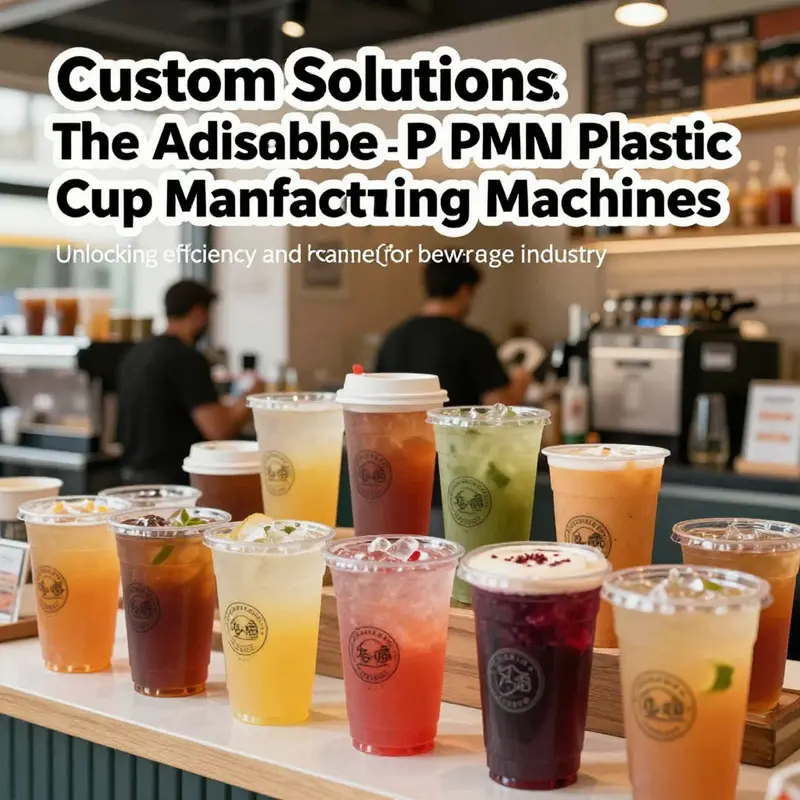
In a world increasingly focused on sustainability and unique branding, OEM disposable plastic cup manufacturing machines offer beverage businesses a competitive edge. From bubble tea shops and restaurants to event planners, these machines enable the customization of cup sizes, shapes, and branding while ensuring high-quality production. In the following chapters, we will explore the key features that enhance efficiency, the economic advantages that align with modern business models, the technological innovations reshaping manufacturing processes, and the market trends guiding the future landscape of disposable plastic cup production.
OEM-Ready Thermoforming for Branded Cups: Harnessing Fully Automatic Machines for Scale, Speed, and Customization
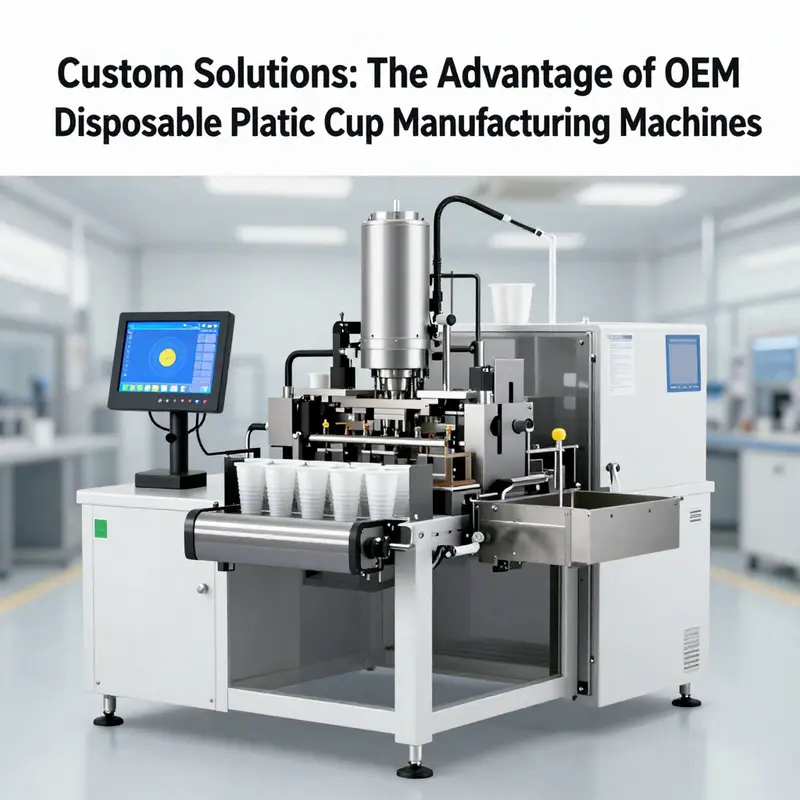
The journey from concept to a branded disposable cup begins where materials meet mechanics and data meets demand. For brands that want to imprint their identity on every cup while maintaining a tight grip on cost, quality, and timing, the OEM-focused, fully automatic thermoforming line stands as the central engine. These machines are designed to transform a roll or sheet of thermoplastic into a finished cup, using vacuum or pressure forming to shape, trim, and ready the cup for the next steps in packaging and distribution. In practice, this means a production line capable of turning diverse raw materials—PP, PET, PS, and even biobased options like PLA in some configurations—into consistent, brand-ready cups at industrial scale. The value lies not only in speed and volume but in the ability to tailor every facet of the cup—from diameter and depth to the wall thickness and even the internal finish that affects stiffness and feel. For an OEM supplier, that level of control is the difference between a generic container and a market-ready packaging experience that reinforces a brand’s value proposition with every sip.
A foundational aspect of these machines is their fully automatic nature. When a line is configured for OEM production, it must deliver uniform output with a minimum of manual intervention. A representative fully automatic disposable cup making machine operates with a forming area around 530 by 300 millimeters, a forming depth that typically ranges from 150 to 180 millimeters, and a maximum sheet width near 580 millimeters. These dimensional constraints are not arbitrary; they reflect a balance between material utilization, cycle reliability, and the practical limits of forming tools, trimming stations, and stackers. The sheet thickness is often configurable across a spectrum from 0.3 to 2.0 millimeters, enabling producers to optimize for rigidity in hot-fill or cold-dispense contexts and for the chosen material system. A poignant detail for OEMs is the machine’s throughput: up to about 35 forming cycles per minute, a rate that aligns with mid-to-high-volume demand without sacrificing precision. In practice, this means a brand’s flavor lineup—say a family of sizes and shapes intended to serve coffee, soft drinks, and snack cups—can be produced in a single line with dependable changeovers and tight tolerances.
Subtler but no less important are the machine’s material handling capabilities. The same equipment that can work with polypropylene and polyethylene terephthalate can often accommodate a broader set of materials, including polystyrene and high-impact polystyrene, and in some configurations even PVC. The result is a toolkit that can adapt to regulatory environments and market needs: a brand can decide to pursue a lighter weight cup for a cost-sensitive market, or opt for a more rigid, heat-stable structure for hot beverages. The ability to switch materials without a wholesale line redesign is a crucial feature for OEMs, especially in a market where regulatory expectations and consumer preferences shift with speed. In addition, the growing interest in sustainable packaging has pushed some lines toward PLA and other bio-based options, where feasible, to reduce the environmental footprint while preserving the mechanical performance required for reliable dispensing and stacking.
Automation deepens as the line integrates multi-station processing. These systems are designed to minimize operator intervention while maximizing repeatability. Pre-set configurations enable rapid changeovers, reducing the hands-on time required to switch from one cup size or shape to another by a substantial margin—industry estimates often cite a reduction of up to forty percent in manual setup. For an OEM, such efficiency is not merely a matter of convenience; it is a strategic lever. Shorter changeovers translate into more flexible production scheduling, enabling a single line to satisfy multiple SKUs with minimal downtime. In an environment where customer demand can surge or shift overnight, the ability to reconfigure a line quickly without costly retooling or specialized labor becomes a competitive edge. The automated stacker, a common feature in these units, also minimizes handling variance and protects the integrity of the cups as they move from forming to counting and packaging. The result is a more predictable yield and a consistent downstream process, which is especially valuable for brands that insist on uniform branding across millions of cups.
For large-scale brands, the output profile of an OEM-ready thermoforming line is compelling: continuous production can reach around 500 cups per hour, with cycle times that are up to thirty percent faster than traditional thermoforming approaches. This combination of high throughput and shorter cycle times is not simply a matter of fast machines; it reflects a carefully engineered workflow where every station—forming, trimming, stacking, and stacking alignment—speaks a common language of consistency. The implication for OEMs is that a single line can be tuned to maintain a reliable cadence, supporting predictable production planning and on-time deliveries to retailers and foodservice partners. The speed also accommodates demand variability, allowing brands to prepare for seasonal spikes, promotional campaigns, or co-branding efforts without sacrificing quality or increasing risk of bottlenecks.
Adaptive production settings form another pillar of OEM capability. Modern thermoforming lines are built around intuitive touchscreen interfaces that host programmable presets for different product families. A brand can toggle from a high-speed run for standard big-volume cups to a more precise, small-batch setup for limited-edition designs or region-specific SKUs. The override is not merely a manual adjustment; it is a data-driven shift in the machine’s operating envelope. The programmable presets help ensure repeatability, so a cup that leaves the line is consistent with the original design in wall thickness, diameter, and bottom geometry. This is particularly critical for branding, where a uniform appearance across every factor—color, gloss, texture—supports perceived quality and consumer trust.
Safety and quality occupy equal footing with throughput in OEM deployments. These machines are CE certified, a mark that signals compliance with European safety, health, and environmental standards. In practice, CE certification helps ensure operators are protected by design, that electrical and mechanical systems are properly safeguarded, and that the line adheres to hygiene guidelines essential in food packaging contexts. The construction itself leans toward corrosion-resistant materials, with food-grade stainless steel structures and components that withstand continuous operation in busy factories. Cleanability is a given, with surfaces designed to minimize contamination risk and to simplify sanitation routines without slowing production. For brands, this translates into a lower total cost of ownership over the equipment’s life. Fewer downtime events, easier maintenance, and longer intervals between major overhauls all contribute to stable output that can be backed by service agreements and remote diagnostics—features that many suppliers now offer to reduce on-site visits and shrink maintenance windows.
The intelligent control layer, often facilitated through smart touchscreens, ties the physical robustness of the line to real-time insight. Operators monitor forming temperatures, cycle counts, stack heights, and scrap rates from a single interface, while remote support teams can log in to diagnose issues or apply software updates without travel. This capability is particularly valuable for OEMs building a brand’s regional footprint because it supports faster ramp-ups in new markets and more consistent performance across multiple sites. Remote diagnostics can foresee a fault before it interrupts production, enabling planned maintenance during off-peak hours and minimizing the risk of unscheduled shutdowns. In an environment where every minute of downtime translates into lost revenue and delayed product launches, that proactive service model is part of the core value proposition of OEM lines.
The practical implications of all these capabilities extend beyond the factory floor. An OEM project is, at its heart, a request for customization that preserves standardization. The machine must deliver uniform cups that meet brand-specific measurements, wall thickness tolerances, and surface finish requirements, all while accommodating a family of cup styles and sizes. This is achieved through the machine’s ability to adapt to different configurations of forming tools, trimming blades, and stacking modules, often with design-for-manufacturing considerations that reduce waste and improve yield. Suppliers frequently offer adaptions to the machine’s design and its integration into existing lines, which means an OEM can scale a facility or replicate an efficient model across several plants without reinventing the wheel each time. In markets where food safety and consumer protection are paramount, the partnership between equipment, process control, and regulatory compliance becomes a critical battleground for reliability and confidence in the final product.
For brands selecting an OEM-capable thermoforming solution, cost remains a tangible factor, even as the functional benefits accumulate. A high-quality unit can begin in the mid-teen thousands of US dollars, with more advanced configurations climbing toward the thirty-thousand-dollar range. While this price band may seem steep, it reflects the level of engineering, automation, and service that makes the line viable for sustained, high-volume works. It is not just the machine, but the ecosystem around it: spare parts availability, on-site or remote technical support, and the ability to tailor the line for specific materials and regulatory regimes. When a brand’s go-to-market plan depends on speed to scale and the assurance of consistent quality across millions of cups, those costs are justified by the reduction in downtime, the increase in throughput, and the enhanced flexibility of a single line to support multiple SKUs.
The OEM perspective is also shaped by the broader global supply chain and manufacturing ecosystems. A dominant global hub for this kind of machinery is located in Asia, particularly China, where producers blend high-volume capacity with a broad network of component suppliers and service partners. This geographic distribution often translates into shorter lead times for machinery delivery and easier access to customization options, from choice of materials to the fine-tuning of control software. Yet the decision to partner with a particular supplier must be tempered by considerations of post-sale support, availability of spare parts, and the vendor’s track record with CE certification, food-safety compliance, and remote diagnostic capabilities. The right partner will provide not just the machine, but a collaboration framework that supports brand owners through the lifecycle of the line—from initial installation to ongoing optimization as new cup designs and market requirements emerge.
From a strategic standpoint, the OEM machine is more than a piece of equipment. It is a platform for brand-building at scale. When a brand can offer customized cup sizes and shapes while guaranteeing consistent weight, thickness, and cosmetic quality, packaging becomes a silent ambassador for the product inside. The ability to print branding or logos through subsequent finishing processes and to align the cup’s geometry with container lids, sleeves, and insert packaging creates a cohesive consumer experience. In this sense, the machine’s role extends beyond forming to shaping the consumer perception of the brand. The end-to-end alignment—from raw sheet or roll to final cup ready for distribution—requires careful orchestration of material choice, process parameters, and post-process finishing steps, all of which the OEM workflow is designed to optimize.
To illustrate how these principles come together in practice, consider the supplier ecosystem that underpins an OEM project. Manufacturers begin with a fully automatic thermoforming line that supports diverse materials and is optimized for consistent, high-volume output. They invest in programmable presets and intuitive controls to maintain branding uniformity across SKUs, while the machine’s support services and remote diagnostics reduce the risk of costly downtime. The result is a turnkey capability that enables brands to bring branded cups to market quickly, at scale, and with a level of customization that can be maintained over time as product lines evolve. It is a synthesis of engineering discipline, process control, and market insight that transforms raw materials into a reliable packaging element that amplifies a product’s appeal and performance.
For readers seeking concrete specifications and supplier options, the industry literature and verified supplier listings offer a detailed view of capabilities and configurations. While each OEM line is customized to fit a brand’s unique requirements, the core features—versatile material compatibility, automated multi-station processing, high-capacity output, adaptable production settings, CE safety, corrosion-resistant construction, and smart control with remote support—remain the defining characteristics that distinguish OEM-grade thermoforming from lower-volume, manual approaches. These elements collectively empower brands to maintain consistency, scale operations, and respond to market shifts with agility. As the packaging landscape continues to evolve, the OEM-enabled thermoforming line stands as a pivotal engine for driving brand differentiation in a crowded, fast-moving market.
Internal link for further context on consumer cup applications and branding considerations can be found here: senang01-hot-sale-customized-disposable-single-wall-paper-ice-cream-cups-with-lid-eco-friendly-food-grade.
External resource: for an in-depth look at technical specifications and supplier options, see the industry listing at https://www.alibaba.com/product-detail/High-Quality-Fully-Automatic-Disposable-Plastic-Cup-Making-Machine_1600493221815.html
Economic Considerations in OEM Disposable Plastic Cup Manufacturing Machinery
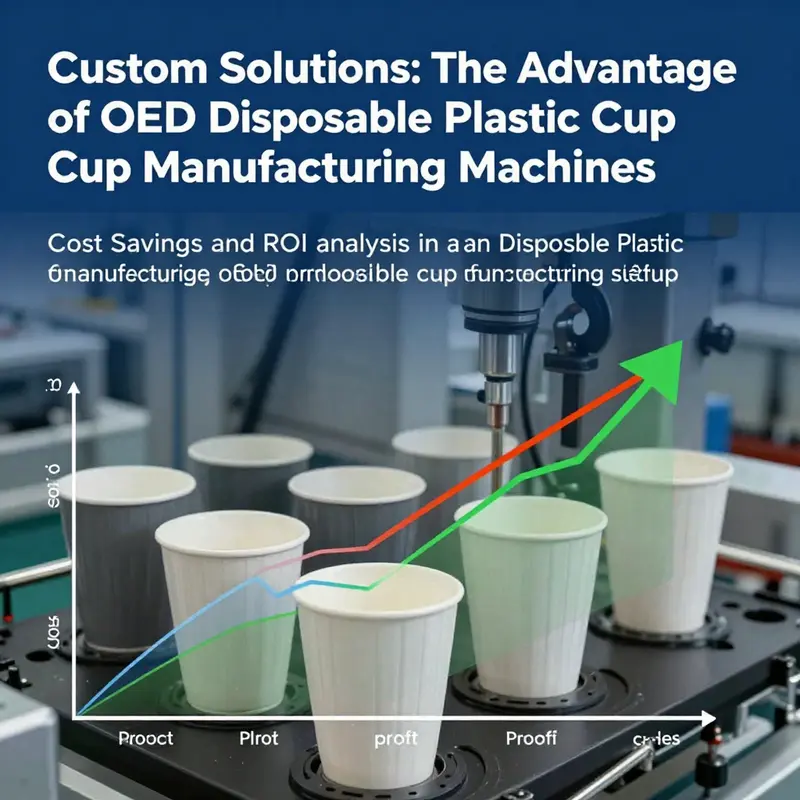
The economic calculus behind OEM disposable plastic cup manufacturing machines blends capital expenditure, operating costs, scalability, and market positioning. It is about choosing a production partner who can translate design flexibility into consistent, low-cost output at the scale required by brand owners who want quality, cost, and timing controlled from source to shelf. The core choice is between fully automatic thermoforming lines and semi-automatic setups, driven by volume, complexity, and long-term business ambitions.
Fully automatic machines require a higher initial outlay, but unlock economic advantages essential for sustained profitability. These lines deliver high-speed cycles, thousands of cups per hour with tight tolerances. In practice, a modern fully automatic system can reach tens of thousands of cups per day, when run around the clock. The automation integrates sheet loading, forming, trimming, ejection, and often stacking and palletizing, reducing labor footprint and per-unit labor costs. Over time, savings on wages, downtime, and human error can offset much of the upfront investment. In high-volume environments, automation also stabilizes material usage and scrap, while energy-efficient controls reduce electricity per cup and compound with higher volumes to yield meaningful savings.
Semi-automatic machines offer a different economics, appealing to smaller brands or startups testing a new design or serving niche markets. Upfront costs are typically lower and investment risk reduced because equipment can be deployed incrementally. Semi-automatic lines provide flexibility: operators can switch between cup sizes or shapes with less capital reconfiguration, enabling design changes. The trade-off is greater reliance on manual labor, slower production, and higher per-unit costs at scale. For rapid market entry or frequent customization, this flexibility can be strategic. Long-run cost efficiency depends on expected production volume and demand stability; for steady, high-volume output, a fully automatic setup often offers a greater long-term advantage, while uncertain demand favors a modular semi-automatic approach.
Material choices also shape economics. Cups made from PP, PET, or PLA each bring different costs and processing considerations. PP offers heat resistance and recyclability, aligning with sustainable packaging trends. PET provides clarity and stiffness, while PLA supports compostable narratives. A line that can handle a range of sheet thicknesses, say from 0.3 to 2.0 mm, and adapt sheet widths up to roughly 580 mm, provides the flexibility to respond to input cost shifts and evolving packaging standards. Being able to switch among PP, PET, and PLA without a complete line replacement helps preserve ROI by extending useful life across product families.
Cost benchmarking often centers on price and long-term value. High-quality fully automatic units can start around 17,500 dollars, with more advanced models closer to 30,000 or more. While these figures may seem steep for a single machine, lifecycle economics matter: automation can unlock volumes and consistency that dramatically reduce downstream rejects and rework. In markets where brand consistency and speed-to-market are critical, the premium for automation can be justified by reduced downtime and predictable throughput. Smart controls and IoT monitoring enable remote fault diagnosis and proactive maintenance, minimizing unplanned downtime. At near-peak capacity, small reductions in downtime or scrap translate into meaningful annual savings.
Regional manufacturing ecosystems influence total cost of ownership. In manufacturing-forward regions with dense supply chains, skilled technicians, and strong after-sales support, buyers benefit from shorter lead times, easier component sourcing, and faster maintenance. Proximity of suppliers and service networks reduces downtime, speeds spares replenishment, and supports reliable production planning. The result is a lower risk profile for capital-intensive automation investments. Firms that leverage regional ecosystems can time capital expenditure with demand surges and export opportunities, optimizing cash flow and deployment.
Warranties and after-sales support are critical. Many suppliers offer long warranties covering mechanical and control systems, reducing maintenance risk and stabilizing operating costs. A robust after-sales program can include remote diagnostics, scheduled maintenance, and ready spare parts. In a market where downtime means missed orders, reliable support becomes evident early in the operation and in subsequent years.
Sustainability is a growing driver of price-to-value calculations. Being able to produce PP cups that are heat resistant and recyclable aligns with consumer demand for responsible packaging. Some customers seek PLA for compostable options, even if these require processing parameter adjustments. The ability to accommodate sustainable materials without sacrificing cycle time or consistency can open new market segments and justify premium pricing for brands that emphasize environmental responsibility. The machine must be compatible with a range of sheet thicknesses and materials, supported by precise heat and pressure control. When material strategy aligns with branding promises, the packaging can command a higher unit price, strengthening the business case for a higher-capital, automation-forward approach.
The appeal of OEM capabilities—custom cup size, shape, and branding—cannot be overstated. For brands seeking to protect identity with branded packaging, a fully automatic line can deliver tight tolerances across sizes and curves, ensuring cups meet identical specs for fast-casual chains, events, or international distribution. Integration with upstream and downstream processes matters too; if the machine can be integrated with forming, trimming, stacking, and automated packaging or palletizing, total throughput increases while labor costs drop. On-brand customization, including branding-enabled finishes, can differentiate and command loyalty, reducing price pressure from commodity cups.
Price and performance must be weighed against design complexity. More intricate geometry or a wider material range can extend cycle times and raise the risk of rejects. In a fully automatic line, controls and tooling must handle variations in sheet thickness and material properties; reliability depends on engineering and the supplier’s willingness to tailor the system. Conversely, semi-automatic lines may accommodate rapid design changes with lower capital risk, but at cost of throughput and labor. The decision hinges on forecasted design churn and the evolution of cup formats over the product life cycle. The price tag is part of a broader equation including throughput, scrap, maintenance costs, and capitalization speed.
For brands with a long horizon, map the cost of ownership across production volume, design complexity, and sustainability commitments. Volume anchors scale, design complexity justifies tooling, and sustainability influences materials and market premium. A solid business case also accounts for labor risk reduction, supply-chain stability, and potential export growth. A strategic supplier relationship can turn the machine into a growth engine rather than a fixed cost, aligning automation with the brand’s forecasted demand and ensuring durable supply chains and service networks.
Integrated thinking, not isolated features, defines the economics of OEM cup manufacturing. Delivering consistent quality at scale, adapting quickly to branding changes, and managing costs across materials and labor shape profitability as much as any single spec. For brands pursuing OEM programs, the takeaway is to maximize return by matching automation level to demand, preserve flexibility for evolving designs, and protect margins with reliable after-sales support and regional supply ecosystems. To ground this in real-world context, consider current product offerings and a catalog of eco-friendly cup solutions that illustrate how branding, materials, and packaging formats converge in a marketplace, highlighting customization possibilities for OEM lines.
For readers benchmarking the market, a practical external resource can provide context and comparative benchmarks: https://www.alibaba.com/product-detail/High-Quality-Fully-Automatic-Disposable-Plastic-Cup-Making-Machine_1600493221815.html.
Engineered Forming: Next-Gen OEM Cup Machinery for Private-Label Volume, Precision, and Branding
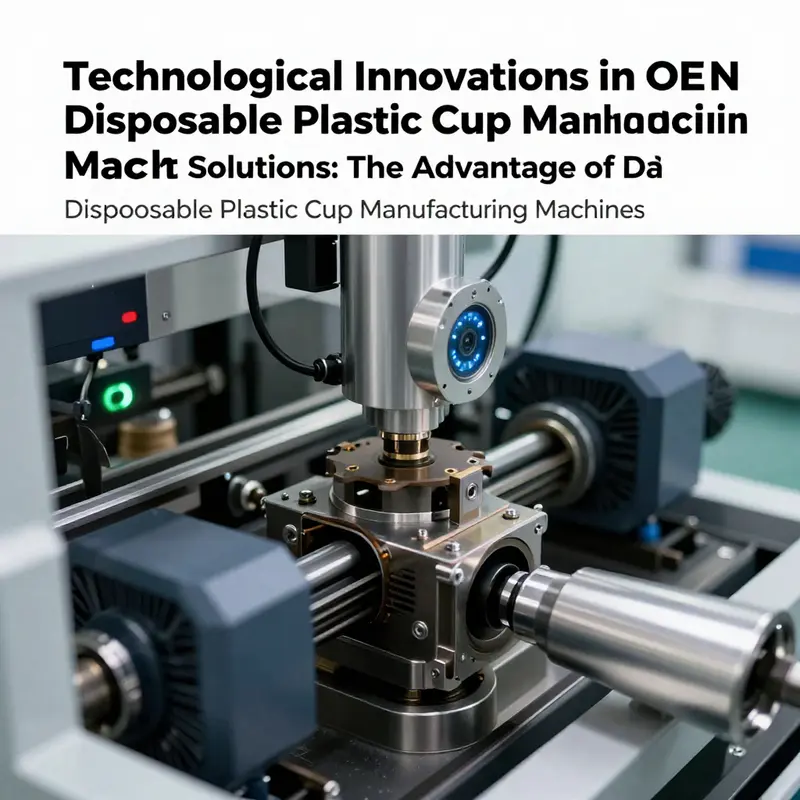
When a business chooses to launch or grow a private-label beverage line, the bottleneck often isn’t marketing or distribution but the step where ideas become consistent, scalable cups. The evolution of OEM disposable plastic cup manufacturing machines has been driven by a simple mandate: deliver high-volume output without sacrificing precision, hygiene, or the flexibility to switch between large runs and bespoke, small-batch orders. The result is a class of fully automatic thermoforming systems that can transform raw sheet stock into a continuous stream of cups in PP, PET, or PLA, using vacuum or pressure forming. These machines, typically sourced from suppliers in major manufacturing hubs, are designed to integrate with branding, downstream packaging, and quality control, turning private-label dreams into repeatable, certifiable products.
At the core of this capability is a machine family defined by a few defining specifications. A representative fully automatic disposable cup forming system may offer a maximum forming area of roughly 530 by 300 millimeters, with forming depths that span 150 to 180 millimeters. The ability to work with sheet widths up to 580 millimeters and sheet thicknesses in the 0.3 to 2.0-millimeter range accommodates a broad spectrum of cup sizes and wall thicknesses, from single-wall cups for cold drinks to more robust alternatives intended for hot beverages or heavy syrups. A practical throughput rests around 35 cycles per minute under typical industrial operating conditions, a rate that harmonizes with high-volume beverage bottling and foodservice supply needs while still enabling precise tuning for design-sensitive runs.
These specifications aren’t mere numbers; they frame a production philosophy. The fully automatic operation, often accompanied by an auto stacker, reduces manual intervention and the potential for human error. Smart touch screen control brings a modern human-machine interface to the line, enabling quick setup changes and rapid reconfiguration. In a market where a cup design can be as much a branding element as a functional component, the capacity to switch shapes, sizes, and even internal features—without a lengthy downtime—becomes a strategic advantage. The machines are CE certified and built for industrial environments, signaling adherence to recognized safety and quality standards that matter when the goal is to export or enter regulated markets.
The economic logic behind these machines centers on total cost of ownership, not just the sticker price. Basic, reliable units can begin in the mid five-figure range, with more capable configurations reaching into the mid high five figures or beyond. The price scale reflects more than build quality; it includes automation sophistication, precision forming components, control software, integration options, and post-processing capabilities such as auto stacking, trimming, and even in-line branding or printing modules. In practical terms, a plant evaluating OEM capability weighs the upfront investment against the potential gains from consistent cup quality, reduced labor, faster changeovers, and the ability to offer customized sizes and branding as a core selling point.
From a materials perspective, the machines are designed to handle a variety of plastics that dominate the disposable cup space. PP and PET are common due to their balanced properties of rigidity, clarity (in the case of PET), and heat resistance. PLA adds a sustainability angle, appealing to private-label programs that emphasize compostable or biodegradable options. The designers of these thermoforming lines have broadened material compatibility to include PS, HIPS, and, where regulatory and performance specs permit, PVC. That material versatility matters because it empowers OEMs to tailor cups to application-specific standards—ranging from cold beverages to hot soups, or from standard take-away service to premium, brand-forward packaging.
A crucial thread running through modern OEM equipment is not just versatility, but adaptability. The most effective systems can operate at high speed for large-scale outlets yet scale down to precise, small-batch runs. This duality is achieved through multi-station processing, refined forming tools, and sophisticated control software. The smart interfaces carry pre-set programs that streamline setup, enabling operators to switch from one cup family to another with a few keystrokes. The pragmatic payoff is substantial: setup time reductions of as much as forty percent are not unusual when a team leverages these pre-configured workflows. The implication for a private-label program is profound. Brands can test new shapes, experiment with lid fits, or alter wall thickness for cost optimization without grinding the line to a halt, a capability that translates into faster market tests and more responsive product development cycles.
In practice, the production line also emphasizes hygienic construction. Modern OEM machines are built around corrosion-resistant stainless steel components, a choice that extends machine life and creates a more hygienic processing environment. Food-safe materials and coatings throughout the machine’s surface architecture reduce contamination risk and simplify cleaning routines between runs. This is not cosmetic: in food-contact manufacturing, the ability to maintain a clean, compliant line is as critical as the ability to form a perfect cup. The combination of hygiene and robust design supports regulatory compliance across markets where safety standards are non-negotiable. The result is a system that not only makes cups but also preserves the integrity of the brand’s safety claims.
Certification is another strategic asset. A machine designed with integrated safety and quality certifications—such as CE marking for European markets—signals a readiness to export and a commitment to meeting stringent safety and performance requirements. For a company pursuing OEM capabilities, this reduces friction in supplier qualification, accelerates market entry, and helps ensure that the private-label program can scale across geographic boundaries without re-certification delays.
The practical implications of these innovations extend beyond the machine itself and into the broader manufacturing ecosystem. A privately labeled cup is not a standalone item; it is part of a chain that includes extrusion, printing, and downstream packaging. Some OEM lines offer seamless integration with downstream print-and-apply branding modules or in-line labeling systems, enabling brands to maintain consistency from cup to carton to consumer. In this sense, the machine becomes a hub of manufacturing intelligence, where data from forming cycles, material consumption, and maintenance schedules can feed into a broader monitoring system. Predictive maintenance, digital twins, and real-time yield tracking are increasingly common features tucked into the same control architecture that governs forming, trimming, and stacking. Such capabilities align with a growing consumer expectation: that a private-label program can demonstrate traceability, consistency, and sustainability across every unit that leaves the line.
The private-label story also hinges on speed and reliability. A key performance advantage of modern OEM cup machines is their ability to sustain continuous production at substantial throughput levels. While older equipment might have stressed throughput when switching between cup styles, contemporary thermoformers manage to maintain steady cycles with minimal downtime thanks to optimized tooling, servo-driven movement, and precise vacuum or pressure forming control. In terms of productivity, this translates into an output scale that can approach hundreds of cups per hour in a well-tuned line, depending on cup geometry, wall thickness, and downstream handling. The incremental gains—all the way from a 30 percent improvement in cycle time to a more consistent wall thickness—are meaningful when margins are tight and private-label timelines are constrained by seasonal demand.
From a market perspective, OEM capabilities empower brand owners to differentiate through three levers: volume, customization, and branding. Volume comes from scaling up production without sacrificing quality, which is essential when a beverage concept expands from pilot to national rollout. Customization covers the spectrum of cup forms—diameters, capacities, wall shapes, and features such as embossed textures or integrated venting for hot beverages. Branding, perhaps the most valuable lever, leverages printing or labeling options to align the cup with a brand identity that customers recognize at a distance. The integration of smart control with branding capabilities allows for rapid iteration without the cost and delay of retooling a factory floor. When a manufacturer can test a series of cup designs under real production conditions, the speed to market of a new concept becomes a key competitive advantage. In this context, the private-label model isn’t simply about copying a template; it’s about delivering a flexible manufacturing system that can support a portfolio of cup families across multiple product lines.
To illustrate the breadth of capability without naming specific vendors, consider how suppliers present their offerings. A typical entry points with robust feature sets—automatic operation, built-in safety certifications, and a flexible forming window—can be compiled into a package that includes an auto stacker, smart control, and integration-ready interfaces. The result is a turnkey solution that can be dropped into existing packaging lines, with the option to tailor downstream handling to suit a brand’s packaging strategy. The customization may extend to the machine’s external design or to the drive system that coordinates the motion between forming, trimming, and stacking. In practice, this level of customization translates into a system that behaves like a tailored tool for a brand’s private-label ambitions, rather than a generic production device.
For manufacturers who are calculating the economics of such a system, a crucial consideration is the total value proposition. The ability to switch quickly between high-speed, high-volume runs and precise, small-batch projects reduces the risk associated with market volatility. When consumer demand shifts, a line that once produced a single cup geometry can, with minimal downtime, begin producing a new geometry with the same core equipment, keeping yield high and scrap low. In addition, the hygienic, stainless-steel construction and the pursuit of CE certification lower regulatory risk, a factor that matters more as private-label brands eye international markets. The net effect is a manufacturing asset that delivers not only a product but a platform: a scalable core around which a brand can grow its private-label program without repeatedly investing in new equipment for every new cup family.
As this technology matures, the conversation around sustainability also intensifies. Manufacturers are exploring ways to optimize material use, reduce scrap, and incorporate more sustainable resins such as biodegradable or compostable plastics where regulatory and performance criteria allow. The forming process itself is often the lever of efficiency here. By refining forming depth, temperature profiles, and sheet dwell times, the line can minimize waste and improve material yield. This is especially important for programs that aim to balance cost with environmental commitments. In short, the modern OEM cup machine is not just a meat-and-potatoes capital asset; it is a strategic instrument in a brand’s sustainability and supply chain discourse.
The decision to adopt such equipment, while substantial, is rarely a one-off. It is more accurately a pivot toward a more agile production model—an operating paradigm where the machine’s multi-station processing, smart control, and modularity enable a brand to pursue a portfolio of cup products with a single, well-integrated line. This cohesion matters when a private-label program seeks to maintain consistency across a catalog of beverages, or when a retailer requires a private-label line that can respond rapidly to seasonal demand with minimal lead time. The capability to program and reprogram with ease, to switch between materials and sizes, and to align with packaging and branding systems is what transforms a thermoforming line into a private-label engine rather than a one-off manufacturing tool.
For those seeking a broader view of equipment capabilities, industry observers often reference verified supplier resources that emphasize safety, standards, and global reach. An external resource provides a snapshot of the kinds of fully automatic disposable plastic cup machines that families of OEM lines resemble, including documentation on performance, material compatibility, and certification expectations. External references of this nature help buyers benchmark capabilities and assess how a given machine might align with their private-label goals. See an external reference here: https://www.alibaba.com/product-detail/High-Quality-Fully-Automatic-Disposable-Plastic-Cup-Making-Machine_1600493221815.html
Within the day-to-day decision-making process, manufacturers also look for credible, up-to-date guidance on bridging the gap between machine capability and market needs. In many cases, this means drawing on a mix of technical specifications, case studies, and procurement advice to map the path from a single thermoforming line to a diversified private-label program that can span categories and regions. The journey from design to drink involves a sequence of thoughtful choices—materials, forming strategy, automation levels, sanitation, and packaging integration—that come together to produce an outcome that is reliable, repeatable, and brand-true. The modern OEM cup machine makes that outcome feasible, with the flexibility required to support a rapidly changing consumer landscape while keeping a private-label brand economically viable and scalable.
As manufacturers navigate this landscape, they increasingly rely on cross-functional collaboration. Engineering teams work with operations managers, quality assurance, and packaging designers to ensure that every cup geometry aligns with dispensing systems, lid fits, and branding requirements. Operators benefit from intuitive interfaces that reduce setup time and minimize errors during changeovers. Maintenance teams, meanwhile, rely on robust, corrosion-resistant construction and clear maintenance schedules to minimize downtime. In this integrated ecosystem, the machine is not merely a piece of equipment but a central node around which a private-label program can organize its entire beverage packaging strategy.
One practical takeaway for firms considering an OEM line is the balance of capability and cost. A well-chosen machine can deliver years of service, with incremental upgrades through software and modular add-ons that extend its usefulness. The investment is not only in cups but in the ability to offer a flexible, brand-forward program that can respond to evolving consumer preferences and regulatory environments. In that sense, the thermoforming line becomes a strategic asset—part factory, part product development platform, and a foundation for sustainable private-label growth.
Internal link reference: For brands exploring packaging that complements their cup designs with eco-friendly branding options, see this example page on eco-friendly, printed-logo paper cups with lids. eco-friendly-printed-logo-paper-ice-cream-cups-with-lid
External reference: https://www.alibaba.com/product-detail/High-Quality-Fully-Automatic-Disposable-Plastic-Cup-Making-Machine_1600493221815.html
null
null
Final thoughts
The evolution of OEM disposable plastic cup manufacturing machines marks a pivotal moment in the beverage industry, enabling businesses to blend efficiency with branding potential. With advancements in technology, coupled with a focus on customization and sustainability, these machines empower beverage vendors to meet growing consumer demands while managing costs effectively. Embracing these innovations will not only streamline production but also enhance customer experience across various service environments.