
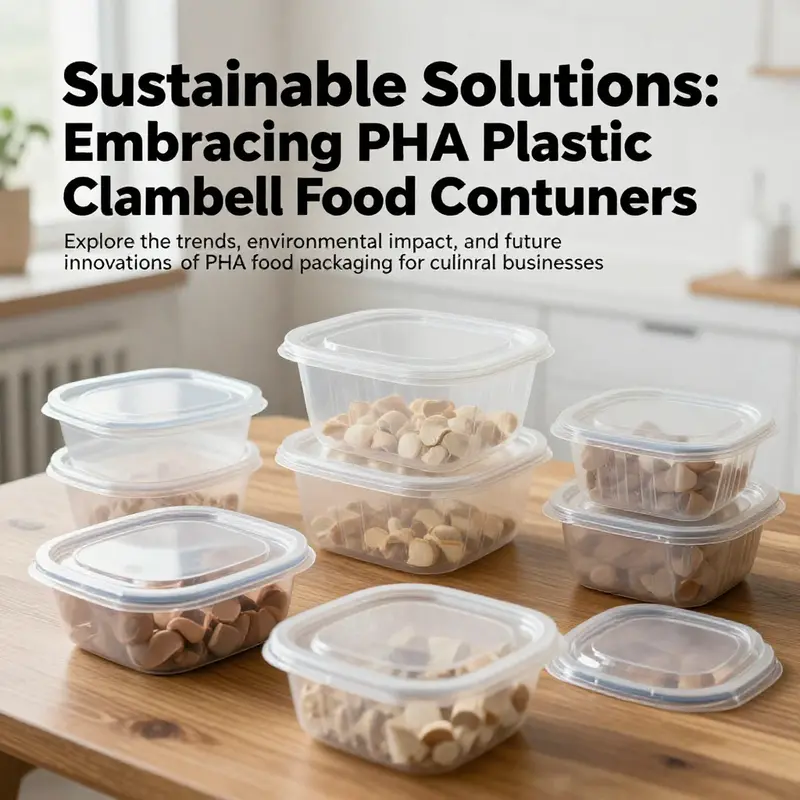
With increasing demand for eco-friendly solutions in the food service industry, the introduction of PHA (polyhydroxyalkanoates) plastic clamshell food containers presents a significant opportunity. These innovative containers not only address the pressing need for sustainable packaging but also align with evolving consumer preferences towards environmental responsibility. The following chapters will explore current trends shaping the adoption of PHA plastic containers, their environmental impacts on our planet, and the future innovations that could further enhance their role in the food service ecosystem.
Rising Tide of PHA Takeout Clamshells: Compostable Promise and Practical Realities in Modern To-Go Packaging
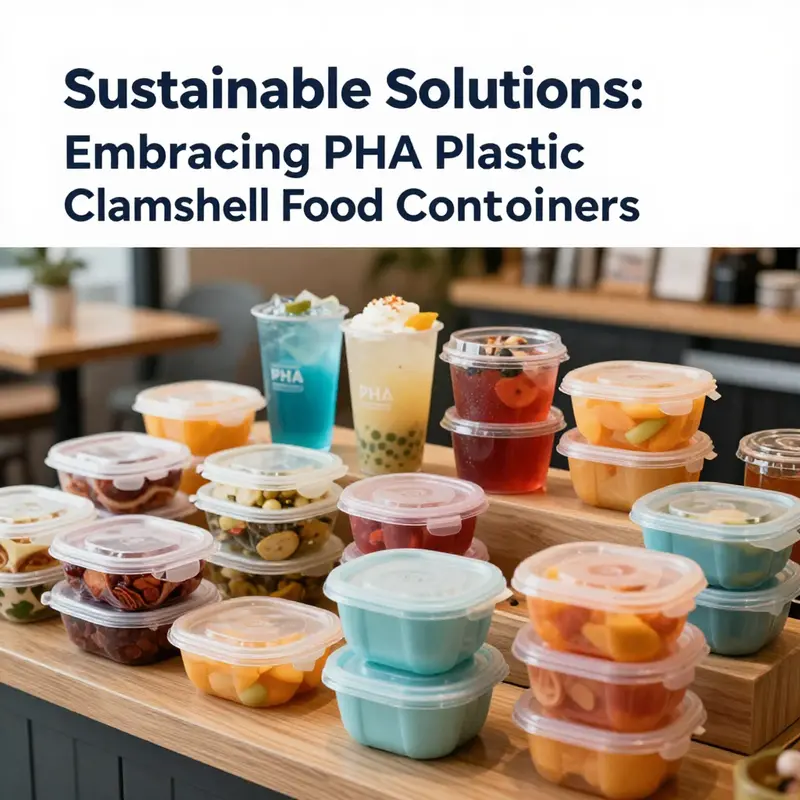
A new chapter is unfolding in the story of to-go packaging, one where a family of bioplastics sourced from renewable feedstocks promises to reconcile convenience with responsibility. In the current landscape, PHA—polyhydroxyalkanoates—emerges not merely as another option among compostable plastics, but as a signal of how the industry aspires to align performance with end-of-life ethics. The trajectory of PHA clamshells—rigid containers that can cradle hot meals, withstand grease challenges, and eventually return to the composting stream—positions them at the intersection of consumer demand, regulatory evolution, and the evolving infrastructure of waste management. What we observe is a careful maturation rather than a sudden revolution: incremental improvements in material science, a narrowing of cost gaps through better production economics, and a growing willingness among large-scale food-service operators to pilot, test, and gradually adopt packaging that honors both utility and the planet.
To appreciate the potential of PHA clamshells, it helps to ground the discussion in the broader shift toward truly compostable packaging. The market has long been drawn to bioplastics as a kinder alternative to petroleum-based plastics, yet not all “bioplastics” perform the same in real-world disposal environments. PHA stands out for its promise of true industrial compostability, a characteristic rooted in the material’s microbial origins. Unlike some conventional plastics that leave microplastics behind or merely fragment into smaller particles, PHA can break down into water, carbon dioxide, and biomass under appropriate composting conditions. This distinction—complete mineralization rather than mere disintegration—addresses a core consumer and regulator concern: products that genuinely contribute to a circular economy by aligning with end-of-life facilities rather than complicating recycling streams. It is this alignment that makes PHA clamshells a particularly compelling candidate for hot takeout and other demanding food-service uses.
The environmental sustainability narrative around PHA is anchored not only in what happens after disposal but in what happens along the supply chain. PHA is typically produced from renewable resources, including sugarcane residues or waste oils, and increasingly from feedstocks that do not compete with food crops. This sourcing strategy helps depoliticize packaging choices and reduces the environmental footprint associated with land-use change and food crops. When manufacturers and brand owners discuss a “true compostable” profile, they emphasize that the end-of-life impact should minimize residual waste and avoid toxic residues. In practice, this means that the most credible PHA clamshells are certified to respected compostability standards. Certifications such as industrial compostability marks provide a transparent signal to waste-management facilities and consumers that the product will behave as intended in the appropriate environment. The emphasis on certification is not a trivial afterthought; it is a necessary safeguard to prevent contamination of compost streams and to safeguard the environmental benefits that PHA promises at the outset.
Yet certification is only part of the equation. The material science underpinning modern PHA formulations is evolving to deliver performance that meets the day-to-day realities of takeout dining. Modern PHA variants are being engineered to offer a robust grease barrier and heat resistance that can handle hot foods without deforming or leaking. This addresses a frequent critique of early bioplastics, which tended to perform best under cold or mildly warm conditions. The capability to withstand the thermal demands of hot meals expands the practical repertoire of PHA clamshells beyond cold salads and snacks into robust, multi-use hot-dish packaging. The consumer experience—how well a clamshell preserves temperature, reduces sogginess, and maintains structural integrity during transit—becomes a decisive factor in whether PHA can displace traditional options in a crowded shelf of to-go solutions.
In parallel with material improvements, market dynamics are shaping how quickly PHA clamshells move from pilot tests to broader deployment. The packaging ecosystem is increasingly receptive to试验 and scaled adoption as part of a broader sustainability agenda. For many operators, the decision to test PHA clamshells hinges on a constellation of factors: the cost differential relative to conventional plastics and other bioplastics, the reliability of supply, the availability of verified composting infrastructure, and the ease with which current packing and logistics workflows can accommodate a new material. While the price gap between PHA and traditional plastics remains a consideration, the equation is shifting. As producers optimize feedstock choices, fermentation processes, and downstream extrusion or molding, the per-unit cost of PHA can become competitive, especially when waste-management savings—driven by true end-of-life solutions—are accounted for in total-life-cycle considerations. In this calculus, the strategic value of PHA lies not in price alone but in the broader narrative of corporate resilience, brand differentiation, and regulatory readiness.
Adoption trends reveal a cautious but purposeful momentum. Several leading food-service organizations and retailers are actively testing PHA-based packaging in controlled markets. The signals are consistent: pilots focus on reliability, consumer acceptance, and logistical compatibility rather than mere novelty. Where PHA proves capable in real-world conditions, it tends to move from pilots to broader trials, a step that brings with it increased demand for supply-chain transparency and standardized labeling. This staking of a middle ground—between early-stage experimentation and broad-scale deployment—reflects a maturing market in which stakeholders recognize the value of compostable packaging while remaining vigilant about practical constraints. The result is a gradual, steady shift in the packaging mix that points toward a future where PHA clamshells could be a standard option for a wide range of takeout occasions, not just the most eco-conscious or premium segments.
One of the most critical pieces of this puzzle is the end-of-life framework. True compostability hinges on the existence of compatible industrial composting facilities. In regions where such infrastructure is underdeveloped or unevenly distributed, the practical benefits of PHA can feel compromised. This reality has spurred a coordinated focus on education, labeling, and consumer guidance. If a PHA clamshell is labeled as compostable only under industrial conditions, it becomes essential to complement that message with clear disposal pathways and accessible information on local facilities. Without this alignment, even the most well-intentioned packaging can fall short of its environmental promise. Consequently, manufacturers and brand partners are prioritizing robust verification and clear consumer communication, ensuring that true compostability is not merely a theoretical attribute but an operational outcome.
From a production perspective, the supply chain considerations for PHA are as consequential as the material properties themselves. Production processes are being refined to reduce costs and improve scalability, often by exploring alternative feedstocks that are abundant and underutilized. Waste streams from agricultural and food-processing industries, as well as non-edible biomass, are increasingly considered as potential inputs. The promise here is twofold: it lowers the environmental footprint of PHA by choosing non-competitive feedstocks, and it strengthens supply resilience by diversifying sources. Additionally, innovations in downstream processing enable better control over crystallinity, barrier properties, and melt behavior, which translates into more reliable molding or extrusion into clamshell geometries. These technical advances matter because the geometry of a clamshell—its hinge design, lid fit, and edge sealing—has a direct impact on performance during transport and the consumer experience at the moment of opening.
The broader implications for the packaging discourse are notable. The rise of PHA clamshells underscores a shift from a narrow focus on “bioplastic” labels toward a more holistic approach that weighs material origin, end-of-life, performance, and system-level logistics. In effect, PHA is being evaluated not only for its own merits but for how well it can integrate with recycling and composting infrastructures that are already stretched thin by the volume of to-go packaging. This integration is essential to prevent scenarios where a well-intentioned material creates friction in waste streams or contributes to confusion among consumers. Therefore, the credibility and utility of PHA clamshells lie in the ecosystem around them—the clarity of disposal instructions, the availability of certified compost facilities, and the willingness of waste-collection networks to treat PHA waste as a feedstock for biological processing rather than as contaminated throwaway.
In practice, the value proposition of PHA clamshells becomes most compelling when it is woven into a broader packaging strategy that considers multiple materials and end-of-life options. A thoughtful approach may leverage PHA for applications with higher heat and grease exposure while using other compostable materials for cold or low-risk portions. The objective is not to force a single material into every role but to calibrate choices to deliver the strongest environmental benefit across the product’s life cycle. When manufacturers and packaging designers take this systems view, they can exploit the strengths of PHA—thermal resilience, reliable barrier properties, and robust end-of-life performance—without compromising the efficiency and cost-effectiveness demanded by high-volume takeout operations.
The social and ethical dimensions of this technological shift should also be acknowledged. Consumer demand for sustainable packaging grows from a recognition that plastic waste is a collective problem, not just an isolated consumer choice. Retailers and food-service providers are increasingly aware that packaging decisions convey messages about responsibility and stewardship. PHA clamshells, when properly executed with verified certifications and transparent disposal guidance, offer a tangible way to translate that awareness into action. Yet social acceptance hinges on accessibility: users must know how to dispose of the product, what facilities exist locally, and how to participate in composting programs. In this sense, PHA is not only a material innovation but a catalyst for expanding the social contract around takeout dining. It nudges businesses to invest in waste infrastructure, educate customers, and design packaging that behaves as envisioned in both lab conditions and crowded street corners.
The practical realities of transitioning to PHA clamshells also include considerations about aesthetics, branding, and user experience. Packaging design remains a key differentiator in a crowded market where many takeout options rely on convenience and price. PHA’s opportunity lies in offering a combination of strength, reliable barrier performance, and a clean disposal story that aligns with customers’ values. The design challenge is nuanced: produce a clamshell that is visually appealing, easy to stack and transport, and capable of holding meals without compromising the user’s experience when opened. When designers strike this balance, PHA can become more than a neutral vehicle for food; it can become a conduit for communicating a commitment to sustainable practice without imposing additional friction on the ordering or dining experience.
Finally, it is essential to view PHA clamshells within the continuum of packaging innovation that includes other bio-based and compostable options like PLA, bagasse, and bamboo fibers. Each material has its own set of advantages, limitations, and end-of-life pathways. PHA’s distinctive edge—its potential for true industrial compostability and its evolving performance profile—does not render other materials obsolete. Instead, it invites a more nuanced material ecosystem in which the best-suited option is selected for a given context, guided by life-cycle thinking, regulatory expectations, and the practical realities of waste-management infrastructure. In this sense, PHA clamshells are not a solitary solution but a pivotal piece of a broader transition toward packaging that respects both the appetite for convenience and the finite resources of the planet.
Beyond the technical and logistical considerations, the narrative around PHA clamshells invites a broader reflection on how societies choose to consume and discard in an era of heightened environmental scrutiny. It invites questions about what kind of plastic economy we want to enable: one that leans on renewables, reduces chemical load, and closes the loop through compostable disposal. It invites designers, operators, policymakers, and consumers to collaborate in shaping a to-go culture that treats packaging not as disposable waste but as a resource that can re-enter a biological cycle. The rising tide of PHA clamshells, then, is best understood not as a solitary wave but as part of a larger shoreline of sustainable ambition. If the industry can sustain investment in credible certification, scalable production, and clear consumer guidance, PHA could emerge as a reliable, mainstream option for hot takeout—one that honors both the momentary needs of a busy meal and the longer arc of environmental stewardship.
Internal link reference: As you consider the practicalities of adopting compostable packaging in a busy dining operation, exploring real-world examples of disposable kraft paper take-away boxes with clear lids can illuminate how design, functionality, and disposal messaging intersect in everyday use. See a representative example here: disposable kraft paper take-away box with clear lid.
External resource: For a comprehensive market perspective on the growth and dynamics of bioplastics like PHA, see the PHA Bioplastics Market analysis from Grand View Research, which discusses technological advancements, production challenges, and policy drivers shaping adoption in food packaging: https://www.grandviewresearch.com/industry-analysis/pha-bioplastics-market
Redefining Takeout Waste: The Environmental Footprint and Potential of PHA Clamshells
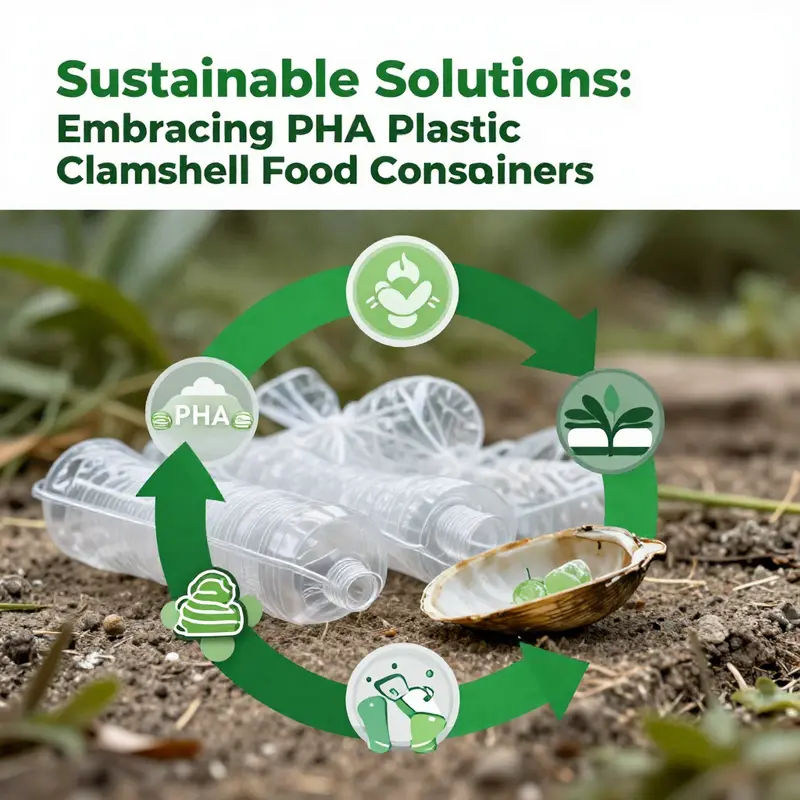
PHA clamshells mark a turning point in how the takeout ecosystem might balance convenience with responsibility. They emerge from a biology-driven supply chain, where microorganisms convert renewable feedstocks into a polymer that can be shaped and molded into familiar container forms. The core appeal rests on a combination of performance and end-of-life options that diverge from traditional plastics. Compared with conventional petroleum-based materials, PHA offers a different lifecycle profile. It is produced from renewable sources, and its degradation pathways are, by design, more compatible with natural environments. This combination lowers the carbon footprint of production and increases the likelihood that packaging can re-enter natural cycles rather than persist as litter. The promise is not just theoretical. Real-world degradation under soil, freshwater, and marine conditions has been documented, which stands in contrast to many so-called compostable plastics that require specific industrial infrastructure to break down. In practice, this means less risk of long-term persistence in oceans and landfills and a closer alignment with circular economy goals for foodservice packaging.
The environmental narrative around PHA is not simply about end-of-life. It begins with feedstock choices and the broader context of sustainable manufacturing. PHA is produced via fermentation using renewable feedstocks such as sugarcane or other waste biomass. That origin matters because it shifts the focus from fossil-based inputs to regenerative resources. When scaled, the environmental advantage depends on maintaining access to non-food or waste-derived feedstocks, and on optimizing production to avoid competition with food resources or excessive land and water use. As with any emerging material, there are trade-offs. The energy balance and water use during production, the efficiency of the fermentation process, and the downstream logistics all influence the overall impact. These factors are actively studied and refined as capacities grow and as markets push for higher performance at lower cost.
A defining feature of PHA that underpins its environmental argument is its degradability across a broad spectrum of environments. Unlike several other “biodegradable” plastics, PHA does not hinge on a narrow set of conditions for disintegration. In soil, in freshwater, and even in marine settings, PHA can break down into basic constituents—water, carbon dioxide, and biomass—without requiring the extreme temperatures or specialized composting facilities that some alternatives demand. This broad environmental compatibility helps mitigate the risk of microplastic emergence from abandoned packaging and reduces the environmental persistence that has become a hallmark of conventional plastics. In other words, PHA clamshells are designed to be compatible with the realities of litter and mismanaged waste, rather than dependent on perfect waste collection systems to realize their value.
The practical implication for foodservice is substantial. A to-go container must withstand moisture, grease, and the rigors of transport while maintaining integrity. PHA clamshells have demonstrated performance on par with many widely used plastics in terms of barrier properties and mechanical strength. They resist grease and moisture effectively, which is critical for hot soups, sauces, and fatty dishes. Importantly, this reliability supports consumer confidence; a container that leaks or fails adds to waste and undermines the environmental case for switching away from petroleum-based options. In parallel, the material’s compatibility with coatings and, increasingly, paper-based packaging, widens its application. A notable development in this area is the demonstration of PHA water-based coatings on paper packaging at an industrial scale in 2025. This breakthrough expands the toolkit available to designers who seek hybrid solutions that combine the aesthetics and barrier properties of paper with the protective performance of PHA, enabling more sustainable formats without sacrificing user experience.
End-of-life considerations are the heart of the PHA story. The literature consistently emphasizes that biodegradability does not occur in a vacuum; it is a system property that depends on the surrounding waste management context. When industrial composting facilities are available, PHA can degrade rapidly and safely. Yet the broader advantage—particularly for takeout packaging in dense urban environments—stems from its ability to degrade in a wider range of natural contexts if littering occurs or if waste streams are imperfectly managed. In marine environments, PHA’s degradation reduces the risk of persistent fragments that can harm wildlife. In soil and freshwater systems, the material contributes to nutrient cycles rather than accumulating as long-term debris. This facet matters for branding as well. Consumers increasingly recognize the difference between true end-of-life options and inert substitutes that merely appear eco-friendly. PHA’s demonstrated performance across environments helps align marketing claims with ecological reality, a critical distinction in an era of heightened environmental scrutiny.
From a lifecycle perspective, PHA clamshells also invite discussion about circularity. If producers and municipalities coordinate around end-of-life pathways, PHA packaging can return to biomass and basic minerals, closing the loop with less energy-intensive processing than some alternatives. Yet achieving that circularity requires careful attention to feedstock sustainability, process efficiencies, and waste infrastructure. Non-food feedstocks and waste-derived materials are essential to avoiding the land-use pressures that accompany certain bio-based polymers. In practice, this means that the environmental advantage of PHA is amplified when production scales up using waste streams rather than agricultural crops, a trajectory that aligns with broader sustainability goals and regulatory directions that prize resource efficiency and waste reduction.
It is also essential to situate PHA within the broader ecosystem of alternative packaging. While PLA and bagasse or bamboo options each offer their own environmental benefits, PHA’s broad degradability and compatibility with real-world waste streams give it a distinctive niche for takeout containers. The industry is watching how PHA competes on cost alongside these materials, but the environmental case remains compelling precisely because it does not confine itself to a single waste pathway. A comparative reading of life-cycle analyses suggests that, under conditions where recovery and end-of-life processing are imperfect, PHA’s environmental performance can be superior to conventional plastics and, in some cases, to other biobased options. This is not a universal claim; rather, it reflects the material’s robustness under a variety of practical conditions and a growing recognition of the importance of true degradability in diverse environments.
The regulatory landscape adds another layer of complexity and opportunity. In jurisdictions that are aggressively phasing out conventional plastics, PHA can be an attractive alternative because its end-of-life behavior aligns with policy goals that favor compostability, biodegradability, and resource circularity. For policymakers and industry stakeholders, PHA offers a pathway to meet ambitious environmental targets without sacrificing the performance needed for everyday foodservice use. Ongoing dialogue among regulators, researchers, and manufacturers is essential to define realistic standards for degradability, to ensure that claims reflect actual outcomes, and to avoid unintended consequences such as mislabeling or inadequate waste streams. In places where plastic bans or restrictions are being implemented, PHA’s potential to fit into existing waste streams, including composting or high-quality recycling where feasible, enhances its relevance as a practical option rather than a theoretical ideal.
The broader social dimension cannot be ignored. Consumer expectations are evolving toward packaging that not only protects food but also respects ecosystems. Restaurants, campuses, and event organizers are increasingly attentive to the lifecycle stories behind the containers they use. PHA clamshells offer a narrative and a product that can be explained in terms of renewable feedstocks, true end-of-life degradability, and reduced ocean and land pollution. This alignment matters for brand trust and long-term adoption. Yet adoption hinges on affordability, supply stability, and the ability to integrate PHA into existing packaging systems. The journey from pilot programs to widespread use requires careful alignment of incentives across supply chains, including feedstock producers, polymer converters, converters of clamshell shapes, and end-of-life service providers. In other words, the environmental benefits of PHA are most compelling when they translate into tangible, reliable packaging for consumers who need to take food on the go.
Among the most promising signals is the trend toward hybrids that combine PHA with paper-based substrates. The oil and plastics industries have long understood the value of coatings to improve barrier properties and mechanical resilience. The emergence of water-based PHA coatings on paper packaging marks a practical milestone that could unlock new formats without compromising biodegradability. Such hybrids could offer the crisp look and sturdy feel of traditional paper containers, paired with the moisture resistance and structural integrity demanded by hot, oily foods. The evolution of these materials points to a future where the environmental advantages of biodegradability do not require concessions on user experience. Instead, design choices can be guided by a lifecycle lens, balancing performance, end-of-life options, and the realities of waste management infrastructure.
Despite the optimistic trajectory, challenges remain. Large-scale production must be managed to avoid competition for feedstocks with edible crops or other essential uses. The energy and water demands of fermentation processes, the efficiency of purification steps, and the economics of scaling up must be optimized to ensure competitive pricing. Regulatory clarity is needed to define labeling and end-of-life expectations so consumers and businesses have confidence in what happens after disposal. Logistics also matter. If takeout packaging is distributed globally, differences in waste management capabilities between regions can influence the realized environmental benefits. In some markets, an ambitious rollout of composting facilities and consumer education will be as important as material science breakthroughs. These interdependencies remind us that material innovation alone cannot solve environmental challenges. A systems perspective—encompassing production, distribution, waste collection, and consumer behavior—is essential to harness PHA’s full potential.
The research landscape continues to refine our understanding of real-world performance. While laboratory tests offer important insights into mechanical strength and barrier properties, field studies provide the critical bridge to practice. The evidence base shows that PHA clamshells hold up well in food-contact roles while delivering degradability benefits that persist under typical use conditions. This combination differentiates PHA from some alternatives that perform well in sterile or ideal settings but falter under the stressors of daily takeout use. As the science matures, stakeholders can expect improvements in production efficiency, materials formulation, and end-of-life infrastructure—each contributing to a more sustainable and resilient to-go packaging system.
In closing, PHA plastic clamshells present a compelling option for a sector that is both high-volume and hungry for environmental progress. They offer a credible path to lower life-cycle impacts without sacrificing the convenience and reliability that customers expect. The broad degradability across environments mitigates the risk of lingering waste, while advances in coating technology and hybrid formats expand the possible designs for containers. This combination—true end-of-life flexibility, robust performance, and compatibility with evolving waste management systems—positions PHA clamshells as a meaningful component of a more circular takeout packaging landscape. The pace of change will depend on continued investment in feedstock strategy, scalable production, and the alignment of policies with the realities of waste streams. When these elements converge, PHA clamshells can become a practical, widely adopted solution that reduces environmental footprints at the scale required by modern foodservice. For readers seeking a deeper scientific foundation on real-world biodegradation behavior, the following external resource offers a rigorous synthesis of how biodegradable packaging performs outside controlled laboratory conditions: https://www.ncbi.nlm.nih.gov/pmc/articles/PMC8319475/ .
Internal link example: one pathway that resembles this shift toward truly compostable packaging is the bagasse sugarcane option, which illustrates how bio-based materials can enter the market as credible environmental alternatives. See the product page for bagasse sugarcane biodegradable self-erecting lunch boxes in sushi and takeaway formats to understand how different substrates are being engineered for end-of-life compatibility. bagasse-sugarcane-biodegradable-self-erecting-lunch-box-for-sushi-snacks-3-4-5-compartment-takeaway-food-tray-15g-30g-50g.
Biopolymers in Motion: The Promise and Practicalities of PHA Clamshells in Sustainable To-Go Packaging
PHA, or polyhydroxyalkanoates, sits at a provocative intersection of biology, materials science, and food service logistics. It is not merely another plastic marketed as eco-friendly; it is a family of biopolymers produced by microbes that can be engineered, fed with renewable feedstocks, and designed to disappear under the right end-of-life conditions. In the context of to-go containers, particularly the clamshell style that dominates many takeaway experiences, PHA represents a potential pivot point. It promises a packaging narrative that aligns with consumer calls for less persistent waste, with municipal and industrial composting infrastructures, and with the broader push toward a circular economy in food service. Yet the path from promising science to practical, scalable clamshells is neither straightforward nor linear. It requires an integrated view of material performance, production economics, process innovations, and the evolving contours of waste management and consumer behavior. The story of PHA in clamshell form is thus a story about constraints and opportunities, about how scientific insight translates into packaging that can protect hot soups and crisp salads alike while still surrendering itself gracefully to the waste stream after use.
A first truth anchors the conversation: PHA is a biodegradable and compostable polymer derived from renewable resources. Unlike many conventional plastics that persist for centuries, PHA’s defining appeal lies in its potential to return to the biogenic cycle. This attribute is not a panacea, but it reframes what constitutes responsible packaging. For food service operators and regulators, the appeal is not only the end-of-life behavior but the alignment with renewable feedstocks, potential reductions in reliance on fossil fuels, and the prospect of a lower environmental footprint across a product’s life cycle. However, to translate that promise into a clamshell that can withstand the rigors of to-go service—jolts from delivery, varied temperatures, hot beverages, and the mechanical stresses of stacking and transport—requires advances on several fronts that are interdependent rather than isolated.
On the material side, the mechanical and thermal demands of clamshell packaging set a high bar. A typical clamshell must resist deformation from hot contents, maintain a secure seal against leaks, and preserve its shape through handling from kitchen to curb. For PHA, engineers are actively exploring how to tailor the polymer’s properties through monomer composition and blending with other materials. Adjustments in the balance of short- and medium-chain monomers can influence stiffness, toughness, and heat resistance. Researchers are also examining how nanofillers, plasticizers, or co-polymers can reinforce PHA without compromising biodegradability. The objective is a material that has enough strength to resist puncture and enough heat deflection to tolerate elevated temperatures during delivery, all while remaining compatible with existing molding and forming equipment used in food-packaging operations. This is not merely about making a tougher plastic; it is about orchestrating a performance envelope that sits between the familiar reliability of fossil-based polymers and the environmental commitments that many brands seek to communicate to their customers.
Concurrently, the cost equation remains a central constraint. PHA production currently sits at a higher cost per kilogram than conventional plastics. The reasons span feedstock variability, fermentation times, downstream processing, and the capital intensity of bioprocess facilities. Cost reduction strategies are multi-vector in nature. They include improving microbial strains to yield higher PHA content per fermentation cycle, optimizing fermentation conditions to shorten production time, and developing more efficient downstream recovery and purification processes. In parallel, researchers are pursuing economies of scale through modular, scalable bioreactors and continuous production platforms that could lower unit costs. There is also interest in integrating PHA production with existing biorefinery or biochemical conversion facilities to amortize shared infrastructure. The practical implication for clamshell packaging is that any material breakthroughs must translate into savings strong enough to justify the switch from established plastics, especially when supply chains are complex and margin pressures are high in the food-service sector.
Fermentation processes and microbial engineering stand at the heart of the production story. The core idea is elegant: micro-organisms can be steered to synthesize PHA as intracellular granules, which can then be harvested and processed into a polymer suitable for extrusion, molding, or thermoforming. Innovations in metabolic engineering aim to maximize yield, reduce feedstock consumption, and enable the use of diverse and sustainable raw materials, from plant oils to sugar syrups. The challenge is not simply increasing output but ensuring that the feedstock-to-PHA conversion is robust across scales and resilient to fluctuations in supply and price. In practice, this means developing fermentation strains that tolerate process conditions, combat contamination, and produce PHA with consistent molecular weights and properties, which in turn affect the material’s processability and end-use performance. When these microbial systems reach reliability at scale, the entire chain—from feedstock procurement to polymer extrusion—gains predictability and cost competitiveness. The potential is not just a more sustainable plastic; it is a more controllable bioplastic that can be tuned to the specific demands of clamshell geometry, wall thickness, and lid-fit tolerances.
The environmental end-of-life story for PHA is what often distinguishes it from other bioplastics. PHA’s biodegradability and compostability can be designed to function under industrial composting; some formulations also show degradation in home composting and even marine environments, subject to the polymer’s composition and the surrounding conditions. This end-of-life versatility is a major reason PHA has garnered attention in sustainability discourse. Yet it also raises practical questions about labeling, certification, and real-world waste management. Consumers want to know that a clamshell labeled as compostable will actually break down in the waste stream they use. Regulators and standards bodies are increasingly scrutinizing claims around compostability, requiring evidence that disintegration and mineralization occur within defined time frames and environmental conditions. For PHA, achieving and communicating credible end-of-life behavior means rigorous testing and clear collaboration with waste management infrastructures. This is where the alignment between material science and municipal systems becomes critical. If a city only has industrial composting facilities but no home-compost option, the packaging must be designed to participate in that system and still achieve meaningful breakdown within the permitted time window.
One practical consequence of this end-of-life focus is the need for materials that degrade in a way that does not leave behind problematic residues. The ideal PHA clamshell would maintain integrity during transport and then contribute to nutrient cycles as it breaks down, ideally returning to the soil or compost without toxic byproducts. Real-world performance, however, depends on a complex interplay of the polymer’s molecular structure, the presence of additives, the design of the clamshell, and the environmental context of disposal. For global adoption, this translates into harmonized performance targets and transparent labeling that educates foodservice operators and consumers about proper disposal pathways. The narrative around PHA therefore becomes a story not only of material engineering but of systems thinking—how each packaging choice connects to the capabilities and constraints of the waste landscape in which it is released.
Cost, performance, and end-of-life considerations feed into the broader question of market readiness. Even if a PHA clamshell can meet mechanical requirements and degrade appropriately, it must be physically compatible with existing processing lines in many kitchens and packaging facilities. Thermoforming and sealing equipment, lid-mating tolerances, and the ability to withstand mechanical abuse during transit are practical realities. The beauty of PHA is that it can be engineered into a family of polymers with a spectrum of properties, enabling a tailored approach to clamshell design. It is conceivable that a high-heat, rigid PHA variant could be used for hot dishes, while a more flexible formulation might suit cold or room-temperature products. Achieving this spectrum without complicating supply chains or driving up inventory costs will demand close collaboration among polymer scientists, packaging designers, and manufacturers. In turn, packaging providers will need to work with restaurateurs and distributors to align product specifications with actual use cases, from single-portion meals to family-sized orders, in ways that reduce waste and improve overall product stewardship.
Amid these technical and economic considerations, the consumer experience remains central. The to-go encounter with a clamshell begins with perception and ends with a sense of responsibility. If PHA-based packaging can deliver on reliability, safety, and intuitive disposal, it can reinforce a brand’s sustainability narrative without sacrificing convenience. To achieve broad consumer acceptance, labeling must be clear, and the packaging must feel familiar in its performance. Education around disposal pathways can empower consumers to participate in circular systems rather than opting out due to confusion or inconvenience. A PHA clamshell that ships as compostable but ends up in a landfill will neither perform as intended nor fulfill the environmental promise that stakeholders expect. Therefore, success rests on designing packaging that is not only technically feasible but also behaviorally compatible with typical consumer routines.
In this light, existing reference points in the packaging landscape provide useful context. Today’s compostable and biodegradable options span a range from plant-based hydrophilic films to bagasse and bamboo fiber clamshells, each with its own advantages and limitations. Some materials are described as 100% compostable, while others claim industrial compostability or marine biodegradability under certain conditions. These variations illuminate the trade-offs that come with any shift away from conventional plastics. For instance, plant-based compositions can offer excellent compostability but may require precise processing controls and specific composting conditions. Bagasse and bamboo-based solutions often emphasize strong environmental credentials, with advantages in rigidity and heat resistance, though their own end-of-life pathways depend on local waste-management capabilities. The PHA category sits at a vantage point to address several of these trade-offs if the production and supply chain can be scaled and harmonized with waste infrastructure. A PHA clamshell could, in principle, deliver comparable mechanical performance to traditional plastics while offering a clearer, more reliable end-of-life option for many municipalities and consumer segments.
To illustrate how the conversation moves from science to practice, consider the ongoing importance of a robust, end-to-end narrative. The production story—microbes, fermentation, purification, and compounding—must connect to the processing story—molding, form-filling, sealing, and quality control. It must also connect to the waste story—standardized compostability testing, certification, labeling, and collection systems. These connections are not abstract; they determine whether a PHA clamshell actually reduces environmental impact in the real world. The future of PHA in clamshell form thus hinges on systemic integration: better strains and processes that reduce cost, materials tailored to the packaging geometry and consumer needs, and a waste landscape that can recognize and recover the resource value embedded in the packaging after a meal is enjoyed.
An emerging theme in this context is the potential for hybrid approaches. Rather than a single, monolithic material, multi-layer or blend formulations may offer the best route to performance and adoption. For example, a PHA-based inner layer with a compatible external shell could optimize heat resistance and mechanical strength, while still enabling fragmentation and compostability. Such strategies raise new questions about recyclability and the interaction of different materials in compost streams. They also invite a more nuanced conversation about certification, as composite solutions may require more complex testing to demonstrate end-of-life behavior across varied environments. Yet if these hybrid approaches can deliver reliable performance for hot foods, prevent leaks, and degrade in a responsible manner, they could unlock new opportunities in the fast-paced, high-demand world of to-go dining.
The chapter could be read as a snapshot of a field that is still in motion, where incremental innovations accumulate into a transformative shift. The science is advancing, the business case is maturing, and the policy and consumer landscapes are evolving in ways that increasingly reward materials and packaging strategies designed with recovery and renewal in mind. This is not a speculative fantasy; it is a trajectory shaped by concrete research efforts, pilot programs, and the growing expectations of a society that wants to reframe consumption as a contributor to, rather than a burden on, ecological and social systems. The practical question remains: can PHA-based clamshells deliver a reliable, scalable, and affordable alternative that satisfies hot- and cold-food needs while keeping waste streams clean and recoverable? The evidence to date suggests potential, contingent on continued innovation and systemic collaboration across the value chain. In the long arc of foodservice packaging, PHA clamshells might become a meaningful chapter in a broader story about materials that are not merely used and discarded but reintegrated into the biological cycle.
To connect this vision with current pragmatic concerns, it helps to acknowledge the ecosystem of materials already in play. The packaging landscape today features a spectrum from conventional plastics to plant-based biodegradables and compostables, each with its own set of trade-offs. The sustainability narrative often hinges on the end-of-life story and whether the waste system can accommodate the packaging in a way that minimizes environmental impact. The PHA pathway adds a new dimension to this equation by offering a potentially versatile set of processing routes and disposal outcomes. If, and when, the economics align with the realities of high-volume foodservice demand, PHA could become a credible, scalable option for clamshell packaging that aligns with both corporate sustainability commitments and consumer expectations for responsible disposal. The journey toward that outcome will likely feature continued material optimization, process intensification in production, and a closer integration with waste-management ecosystems that are themselves evolving in response to climate and resource pressures.
As this narrative unfolds, it is worth noting that the broader literature and industry discourse increasingly emphasize the idea of catering to sustainable futures not by a single material solution but by a portfolio approach. In a portfolio mindset, PHA complements other sustainable packaging options, each chosen according to the specific product, channel, and end-of-life infrastructure. For hot dishes, a PHA-based solution might offer advantages in maintainability and compostability; for cold or ready-to-eat meals, blended or layered structures could optimize mechanical performance while still aligning with recovery pathways. The design challenge, therefore, centers on achieving the right balance of properties, processing feasibility, cost viability, and end-of-life clarity. The ultimate achievement would be a clamshell that performs as reliably as conventional plastics during service and leaves behind a lighter environmental footprint when disposed of. In this sense, PHA represents not a replacement for all plastics, but a strategic instrument in a broader toolkit of sustainable packaging designed to decouple growth from waste and to reestablish a circular flow for materials in the food service sector.
For readers who want a practical glimpse into related packaging innovations, one avenue lies in the broader ecosystem of renewable, compostable materials that are already making their way into take-away formats. While every material has its own life-cycle story, the shared thread is a move toward designs that prioritize end-of-life compatibility and resource efficiency. The field is increasingly embracing rigorous standards for compostability and cradle-to-grave accountability, which helps to align expectations across producers, retailers, and waste-management systems. This alignment is essential for PHA to realize its potential, because it reduces the risk of “greenwashing” narratives that claim environmental benefits without a commensurate commitment to proper disposal and recovery. In other words, the credibility of PHA as a packaging solution depends as much on governance and verification as on polymer chemistry and manufacturing prowess. The conversation thus broadens from a focus on material properties alone to a holistic view of how packaging choices shape, and are shaped by, social and systemic incentives for sustainable behavior.
In the end, the future of PHA plastic clamshells in to-go packaging will hinge on three intertwined developments: material excellence, production economics, and end-of-life integration. Material excellence means achieving a robust set of properties that meet intrinsic packaging requirements while preserving biodegradability and compostability. Production economics means driving down costs through improved strains, more efficient bioprocessing, and scalable manufacturing workflows that can support mass production without sacrificing quality. End-of-life integration means ensuring that disposal pathways are accessible, reliable, and well understood by consumers and waste collectors alike. If these threads are pulled together effectively, PHA clamshells could become a tangible component of a circular approach to food packaging. The runner-up chapters in this article will explore complementary materials and systems, but the core logic remains: when a biopolymer can be produced sustainably, processed reliably, and discharged responsibly, it alters the calculus of packaging decisions for hot and cold foods alike.
To ground this discussion in a concrete reference that captures the spirit of ongoing innovations, readers can explore related discussions and empirical approaches in the broader literature. For a deeper dive into the state of PHA innovations and the contexts in which they are being advanced, see the authoritative source linked at the end of this chapter. Additionally, a related example from the sustainability packaging landscape demonstrates how alternative materials leverage compostability and renewable feedstocks to reduce environmental impact in real-world settings. For further reading on related packaging ecosystems and practical considerations, you may wish to review a comparative look at contemporary sustainable packaging options and their end-of-life pathways across diverse environments. External resource: https://www.sciencedirect.com/science/article/pii/S0144861725009875
Final thoughts
PHA plastic clamshell food containers represent a powerful movement towards sustainable packaging solutions. By adopting these innovative containers, businesses not only enhance their brand image but also contribute positively to environmental sustainability. Understanding current trends, assessing the environmental impact, and embracing future innovations can empower food service providers to make informed decisions that align with consumer expectations and regulatory standards. Ultimately, the shift towards PHA containers can be a pivotal step in building a more sustainable future for the food industry.