

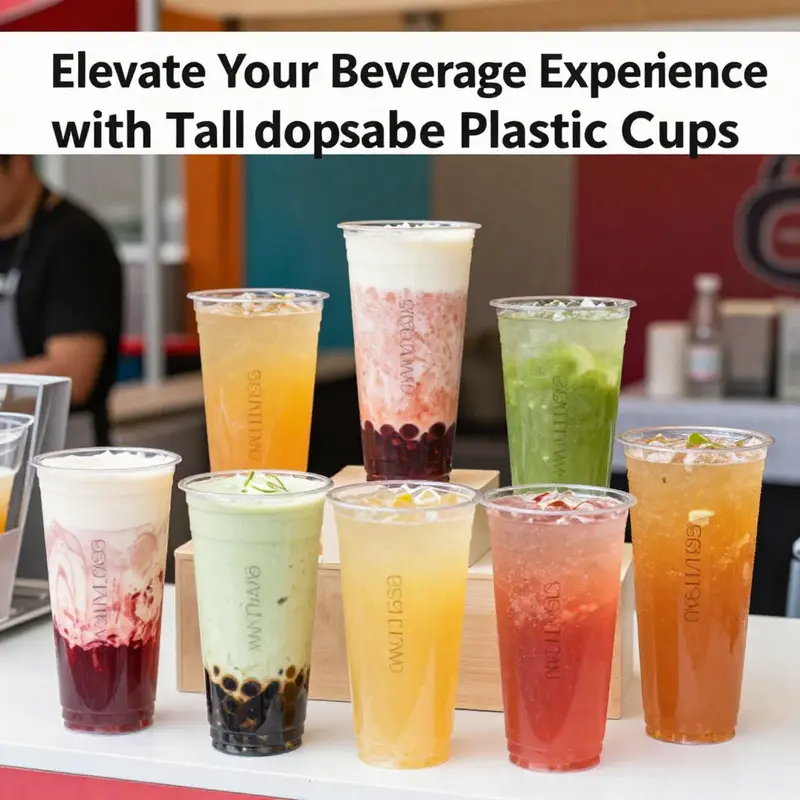
In the bustling world of beverage services, presentation, durability, and practicality are key. Tall disposable plastic cups have emerged as an ideal option for bubble tea shops, restaurants, and catering services, providing a chic and functional vessel for thick drinks like smoothies and slushies. This comprehensive guide will delve into the design specifications, materials used in manufacturing, and the current market trends of these cups, revealing how they can enhance the way drinks are served while appealing to the vibrant tastes of modern consumers.
null
null
Between Form and Function: The Materials and Manufacturing of Tall Disposable Plastic Cups
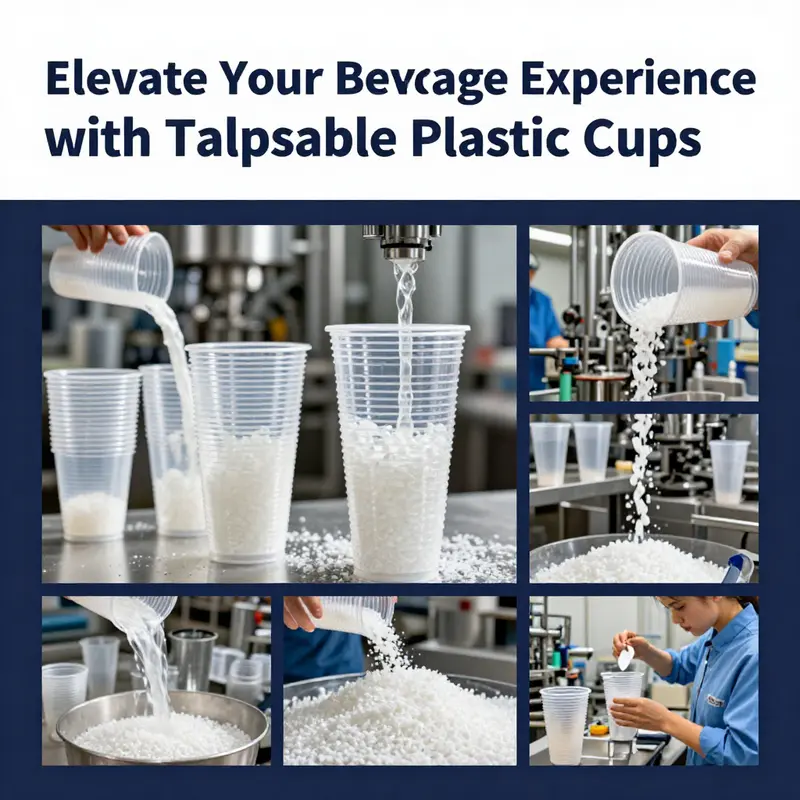
Tall disposable plastic cups sit at an intersection of engineering, design, and everyday practicality. They are not just vessels for beverages; they are carefully tuned tools that balance stiffness, heat tolerance, clarity, and cost within a slender, tall form that stretches from the tabletop to the straw. The story of these cups begins with the choice of material and continues through the precision of manufacturing processes, the demands of branding and usability, and the evolving pressures of sustainability and regulatory compliance. Across markets that prize efficiency and consistency, from bustling street stalls to polished banquet halls, the tall cup has become a standard bearer for how a simple single-use item can harmonize performance with mass production. To understand why these cups are shaped, colored, and printed the way they are, one must trace the logic from polymer properties to the nuanced steps of forming a tall cup wall, and then to the tiny choices that influence safety, recyclability, and the consumer experience at the point of sale.
The primary materials that define tall disposable cups are polypropylene (PP), polystyrene (PS), and polyethylene terephthalate (PET). Each material brings a different set of strengths and trade-offs, and the selection often hinges on the intended use of the cup, the expected beverage temperature range, and how much the manufacturer must balance performance with cost. PP stands out as the most versatile and widely used option for tall cups because of its heat resistance and durability. It can withstand temperatures up to about 130°C (266°F), which makes it a reliable choice for both hot and cold beverages. In practical terms, this means a PP tall cup can hold hot coffee, hot chocolate, or tea without softening or warping, while still remaining clear enough for branding and product visibility. The safety profile of PP further reinforces its suitability for direct contact with consumables: it is BPA-free and widely certified as food-grade. In short, PP is chosen when manufacturers need a robust, clear, recyclable path that can handle the heat of hot beverages without compromising the drink’s visual appeal through clouding or warping.
The manufacturing reality behind PP tall cups is anchored in two core processing methods: injection molding and thermoforming. Injection molding is excellent for producing complex shapes with precise wall thickness and robust bases. It enables tight tolerances and the consistent formation of rims, mouth edges, and bottle-like bases that can resist the vertical load of a full cup. Thermoforming, often the more economical route for tall, slender cups, uses pre-formed plastic sheets that are heated to pliable temperatures and then formed into the desired profile using female molds. Thermoforming is especially suited to thin-walled tall cups because it allows for rapid cycle times and uniform wall thickness, a critical factor when a cup must retain its shape as liquid weight increases toward the rim. Whatever the method, achieving a uniform wall thickness is essential; excess wall thickness in one zone coupled with a thinner wall elsewhere can create uneven flexing, leading to wobble, possible leakage, or deformation under the liquid’s weight.
Clarity and printability are not merely aesthetic concerns. In a market where branding and color cues drive consumer choice, a clear PP cup offers a clean stage for logos, color gradients, and beverage visuals. High-quality printing on PP relies on surface adhesion and stability; the polymer’s rigidity helps preserve printed patterns even as fingers grip the cup and as a straw is inserted. This is especially important for events and vendors who rely on colorful, eye-catching branding to stand out in crowded settings. The same PP used for tall cups often features barrier properties that resist moisture and oil penetration, helping to preserve the beverage’s appearance and reduce condensation that could blur printed artwork. In this sense, the manufacturing dance is not just about making a hollow cylinder, but about creating a reliable canvas for the beverage experience itself.
While PP is the workhorse for many tall cups, polystyrene (PS)—particularly high-impact PS (HIPS)—enters the conversation when cost and opacity are prioritized over heat resistance. PS cups are lighter and typically less expensive to produce at massive scales, which is attractive for cold beverages and applications where high heat is not expected. The trade-off, however, is clear: PS has limited heat resistance and can warp or soften at temperatures not far above room temperature. This constraint makes PS suitable for cold drinks like smoothies or iced beverages, where the cup’s surface integrity and opacity can help showcase vibrant drink colors. Yet the environmental and recyclability considerations surrounding PS complicate its appeal. In many markets, PS is scrutinized for its environmental footprint, particularly in terms of recyclability and the broader narrative around microplastics. The upshot is that PS remains a cost-conscious option for cold-only applications while PP remains the default for hot drinks and mixed-use scenarios.
PET presents a different proposition altogether. Known primarily for its exceptional clarity, PET can deliver crystal-clear visibility that enhances the drink’s color and appeal. PET is widely associated with rigid, cold drink cups and offers strong moisture resistance, which is advantageous for beverages that are icy or slushy. However, PET’s thermal stability does not rival PP; hot liquids are not a suitable match for PET cups. This limitation makes PET the choice when terminal use is consistent with cold or chilled beverages and when recyclability is a central branding goal, given PET’s established recycling streams in many regions. For tall cups designed to be stacked and reused in takeaway contexts, the decision to lean toward PET often centers on consumer expectations for transparency and the ability to recycle after disposal, balanced against the pale blue sheen many plastics develop when exposed to certain environmental conditions.
Design implications emerge from those material properties as much as from the processing machines that shape the cups. The slender, tall profile requires not just a visually pleasing silhouette but a structural strategy that prevents deformation under liquid load. Wall thickness becomes a critical parameter: if the wall is too thin, the cup may flex and risk leakage when carried. If too thick, it can drive up material costs and affect stacking efficiency in busy service environments. Form designers must also consider the rim geometry, lip comfort, and the cup’s grip surface. Even the base—typically reinforced to provide stand stability and resist tipping when set on a table—plays a crucial role in user experience. Some manufacturers incorporate subtle ribbing or structural webs at the base to enhance rigidity without noticeably increasing the wall’s thickness. Lids, often dome-shaped to accommodate toppings or foams, rely on compatible neck finishes and sealing properties to prevent leaks. The interplay of base reinforcement, rim design, lid compatibility, and wall thickness creates a holistic system where each dimension supports the others in pursuit of a reliable, spill-resistant drinking experience.
Beyond raw materials and forming processes, the supply chain and production economics shape which materials and configurations reach the market. Tall cups sold in large volumes—common in street food stalls, casual eateries, and festival venues—must balance manufacturing speed with quality control. Thermoforming lines may produce hundreds or thousands of cups per hour, with automation handling sheet feeding, heating, forming, trimming, and stacking. Injection-molded lines, while offering precision, often command higher per-unit costs but excel in intricate features or thicker bases that contribute to stability. In all cases, producers must ensure that the polymer’s viscosity, cooling rate, and mold geometry align to yield a durable, transparent, and consistent product. The precision leverage here is not merely about aesthetics; it reduces waste, reduces rework, and improves reliability on the service line, where a slight misalignment can cause a cascade of customer delays.
Manufacturers also pay attention to safety certifications and regulatory expectations. The modern consumer landscape prizes products that are clearly labeled as food-grade and BPA-free, with traceable compliance to recognized standards. The choice of PP, PS, or PET is often guided by testing for chemical leachability, crystal clarity over the product’s lifetime, and resistance to temperature cycles. In many markets, regulatory authorities and industry associations publish guidelines that help define acceptable materials, testing methods for heat exposure, and storage considerations. While the specifics vary by jurisdiction, the general thrust is consistent: cups intended for hot beverages must maintain structural integrity at elevated temperatures, and those used for cold drinks should resist cracking or hazing under freezing conditions. This regulatory scaffold provides the backbone that keeps manufacturing quality aligned with consumer safety and brand trust.
The sustainability question hovers over every material decision. Recycled content, recyclability, and the potential for compostable alternatives weigh heavily on manufacturers’ minds as policymakers and consumers push for lower environmental footprints. Recycled PET (rPET) is beginning to appear in some tall cup applications, but it remains less common than hoped due to cost and performance considerations. The inherent challenges include maintaining clarity and maintaining barrier properties with recycled content, which can influence the drink’s appearance and shelf life. Biodegradable or compostable alternatives are the subject of ongoing research, yet they confront hurdles in performance, heat tolerance, and cost. Tall cups must survive a span of temperatures from kitchen ovens to freezer compartments, and any alternative material must prove capable of meeting the practical realities of high-volume service with predictable outcomes. PP’s balance of heat resistance, clarity with the right additives, and established recyclability makes it a default that many manufacturers are reluctant to replace without compelling performance or sustainability benefits. In regions where consumer demand for environmentally friendlier options is rising, manufacturers experiment with post-consumer recycled content and alternative processing routes, but the path remains longer and more costly than mainstream PP plastics. In this sense, the tall cup embodies the broader tension between immediate performance needs and the longer-term push toward sustainability across single-use packaging.
From a market perspective, tall disposable cups occupy a space that favors standardization and branding opportunities as much as any technical constraint. The slender, tall shape is visually distinct, allowing beverage sellers to project a modern, premium image while preserving the functional advantages of a straw-friendly profile. The clarity of PP or PET cups enables vendors to showcase drink layering, color gradients, and toppings through the cup walls, an effect that can boost consumer interest and perceived value. This visual dimension is not incidental; it feeds back into the production equation by motivating high-quality surface finishes, consistent wall thickness, and reliable lid-seal performance, all of which contribute to a cohesive customer experience. In places where traditions of hospitality blend with rapid service, vendors value cups that can be branded with logos or patterns without incurring prohibitive additional costs. Custom printing or color-matched rims can become a signature of a stall or brand, leveraging the material’s printable surface and the forming process’s ability to preserve printed details through handling and transport.
The conversation around tall cups is incomplete without noting the ongoing diversification of finishes and finishing techniques. While plain, transparent cups remain common, manufacturers increasingly offer translucent or lightly tinted variants to enhance branding while still allowing beverage visibility. The selection of finishes—whether glossy, matte, or UV-coated—affects both aesthetic appeal and practical performance such as print adhesion, surface resistance to oil and condensation, and ease of recycling. Even the choice of a dome lid—designed to accommodate whipped toppings or thick smoothies—requires alignment with the cup’s neck finish, cap design, and the supplier’s standard packaging for quick service. Every detail, from the way the cup is formed to the moment a hand grasps the rim, contributes to a predictable user experience, reinforcing reliability across millions of servings.
In considering the global context, it is useful to acknowledge how this ecosystem translates into tangible opportunities for suppliers and buyers. Markets that emphasize speed, scale, and branding look for materials and processes that keep costs predictable while delivering performance in diverse settings. The supply chain must accommodate flexible production—capable of large orders, but also adaptable to variations in cup size, lid compatibility, and surface decoration. In regions where sustainability narratives carry significant weight, suppliers that can demonstrate credible recycling pathways or higher recycled content can differentiate themselves without sacrificing the essential properties of tall cups. The result is a dynamic landscape in which a seemingly simple item becomes a focal point for material science, manufacturing excellence, and design-driven branding.
To illustrate how these ideas translate into real-world options, consider the spectrum of customization available to buyers who require bulk orders. A common scenario involves large-scale take-away operations that need reliable performance across thousands of cups daily. In such cases, a supplier catalog might highlight tall PP cups that tolerate both hot and cold beverages, with options for printed logos and patterns. A typical order might start at tens of thousands of pieces, emphasizing the importance of consistent wall thickness, dependable lid compatibility, and near-zero defect rates on high-speed lines. When buyers look for ways to align cost with impact, they often weigh the advantages of using PP for its heat resistance against the allure of PET for its clarity and recyclability, while PS is weighed for cold applications where budget constraints are the primary driver. These are not isolated choices; they are part of an integrated decision-making process that balances performance, aesthetics, and environmental responsibility across the lifecycle of the cup.
For readers who want a broader sense of supplier dynamics and catalog options, a representative example of how markets approach these questions can be glimpsed in online catalogs that feature customizable, disposable single-wall cups with lids and clear branding opportunities. Such catalogs illustrate the scale at which these decisions are made, and they underscore the practical reality that tall cups are part of a larger system of warehousing, packaging, and service throughput. When teams plan new lines or retool existing lines, they examine a matrix of material properties, molding or forming capabilities, printability, and end-of-life considerations. The tall disposable cup thus becomes a case study in how material science and manufacturing engineering converge to deliver a reliable, cost-conscious, and visually compelling product that can perform across multiple beverage categories and service contexts.
In sum, the material choices—PP for hot and cold resilience with clear printability, PS for low-cost cold beverages with a caveat on heat tolerance, and PET for optical clarity in cold drinks—define a spectrum of possibilities for tall cups. The manufacturing methods, injection molding and thermoforming, translate those material properties into tangible products with consistent wall thickness, robust bases, and compatible lids. The broader narrative—one of safety, sustainability, and branding—remains central as the industry navigates evolving regulatory expectations and consumer preferences. With this foundation, buyers and producers can continue to innovate, offering tall cups that satisfy the demands of speed, safety, and style in an increasingly dynamic food and beverage landscape. For a concise look at how suppliers convey product capabilities in a highly visual, transactional context, one might explore formats such as hot-sale customized disposable single-wall paper ice-cream cups with lid, which exemplify how vendors communicate compatibility, ease of use, and branding options in a single navigable listing. hot-sale-customized-disposable-single-wall-paper-ice-cream-cups-with-lid.
For further technical standards and guidance on materials selection and manufacturing practices, researchers and practitioners can consult established trade associations and standardization bodies. These resources provide rigorous testing methodologies for heat resistance, chemical safety, and recyclability, helping ensure that tall cups perform reliably in diverse service environments. An essential external reference is the Plastics Industry Association, which maintains guidelines and certifications that inform many manufacturers about best practices in material selection, process controls, and safety compliance. Their standards help harmonize expectations across suppliers, customers, and regulatory bodies, supporting a more transparent and consistent market for tall disposable cups. External resource: Plastics Industry Association standards.
Elongated Vessels, Global Palettes: The Rise and Reach of Tall Disposable Plastic Cups

Tall disposable plastic cups have quietly reshaped how beverages are served, shared, and pictured. They are more than vessels; they are tools that guide the drink experience from the moment the order is placed to the moment a straw threads through a thick, layered drink. The basic silhouette—the narrow, tall form that rises 15 to 20 centimeters high with a diameter of roughly 6 to 8 centimeters—has proven well suited to beverages that demand structure and gravity holds the layers in place. With capacities typically in the 400 to 700 milliliter range, these cups balance generous portion sizes with practical handling, ensuring customers can lift, sip, and enjoy without constant refills during the trek from counter to table, or from street stall to event lawn. The design rationale is simple yet powerful: a tall profile creates a visual cue of abundance, while a slim footprint minimizes space in both carrying trays and vending carts. The result is a serving option that travels well in busy environments, from bustling fast-food outlets to boutique beverage shops, where speed and presentation often go hand in hand.
In the modern beverage economy, convenience is king. Across continents and cultures, consumers crave ready-to-consume drinks that travel well, stay visually appealing, and require minimal fuss. The tall cup, with its clear walls and defined edges, functions as a stage for color, texture, and layering. When a visually striking smoothie reveals its gradient of fruit and cream, or a bubble tea showcases pearls suspended in a glossy veil, the package itself contributes to the perceived quality of the beverage. This alignment of packaging with product storytelling helps explain why tall cups have gained traction beyond traditional coffee and soda applications. They appear in health-forward smoothie shops, in slushie stands near beaches, and in specialized tea shops where bubble tea is a signature. The tall silhouette also accommodates thicker drinks that rely on a strong straw for sipping, a practical feature that answers the needs of customers who want quick, mess-free enjoyment on the move.
Material choices further reinforce the appeal of tall disposable cups. The dominant thermoplastics used in these forms are polypropylene (PP) and polystyrene (PS). Each material brings a distinct set of attributes that buyers weigh when selecting a cup for a given setting. PP offers impressive heat resistance, enabling hot beverages and scalding ingredients to be served safely. It maintains clarity in many variants, yet provides a more robust structure for high-volume takeout. PS, with its excellent rigidity and translucence, highlights the drink’s appearance, a feature often prized in visually driven beverage categories like bubble tea and color-rich smoothies. The engineering of wall thickness, rim integrity, and edge finishing is crucial here; a cup must resist pinching, leaking, and warping during transport, while preserving the drink’s temperature, texture, and mouthfeel.
Beyond raw material performance, the tall cup’s design is often coupled with specialized rim geometries and wall configurations to optimize usability. In some markets, producers experiment with upward-tilted rims, a feature that can improve branding opportunities or ease of sipping for thick beverages. Wall thickness is carefully specified to support insulation, reducing heat transfer for hot drinks and minimizing condensation for cold ones. The result is a package that not only contains the drink but also helps preserve its sensory profile as it travels from the point of sale to the consumer’s hand. In Asia and the Middle East, where fast-service formats and street-food culture intersect with modern beverage trends, these design refinements translate into tangible differences in customer satisfaction and repeat purchase rates.
Aesthetics and branding are inseparable from the functional aspects of tall cups. Many cups are transparent, a deliberate choice that showcases the beverage’s color and the visible layering that differentiates one drink from another. Transparency invites curiosity and social media sharing, turning the cup into a miniature billboard for the drink inside. In the era of selfies and Instagram stories, the visual appeal of the beverage often determines whether a customer posts about the experience, thereby extending a brand’s reach beyond the physical location. This dynamic underlines the importance of clear, bright liquid colors and well-defined layers. For operators, the interplay between drink visuals and cup clarity becomes a calibration task, balancing opacity from ingredients like blended fruit purées, syrups, or pearls with the need for visibility.
From a market development perspective, tall disposable cups are well positioned to capture growth in ready-to-drink and on-the-go beverage consumption. Industry analyses place the global disposable cups market in the vicinity of US$17.41 billion in 2024, with projected compound annual growth of about 3.7 percent through 2030. The trajectory reflects urban living patterns, an ongoing preference for quick meals and beverages, and a rising culture of sharing moments online. The tall cup’s design aligns with these macro trends: it is efficient for high-volume service, adaptable to a range of beverages, and visually compelling enough to become part of a brand’s identity. Moreover, the capacity options—from 400 to 700 milliliters—provide a flexible spectrum for impulse purchases and full-sized beverages alike, enabling operators to upsell or tailor portion sizes without requiring a second container.
Within this broader market, regional nuances shape both demand and innovation. In markets like Vietnam and Kuwait, for example, there are specialized variants that blend functionality with marketing opportunities. The so-called “skinny” cups emphasize the elongated profile as a signature look, while “stamp cups” incorporate upward-tilted rims or printed surfaces that act as mobile canvases for brands at events, weddings, or promotional gatherings. These variants are more than novelty; they are strategic tools that help vendors distinguish their offerings in crowded marketplaces. When a consumer attends a festival or a wedding, a customized tall cup—brightly colored, with an event-appropriate pattern—becomes part of the experience, a memory marker as the drink is consumed and photographed.
Yet the convenience of tall cups does not occur in a vacuum. The environmental footprint of single-use plastics remains a central concern for both policy makers and consumers. The industry reaction is complex. On one hand, the quick burn of a beverage on a bustling street corner demands fast, hygienic, and inexpensive packaging. On the other hand, a growing segment of customers and regulators question the long-term sustainability of disposables. This tension nudges manufacturers toward innovations that balance performance with responsibility. For many operators, the practical reality is that tall cups will remain a staple for high-volume, time-sensitive contexts—at least in the near term—while experimentation with recyclable, compostable, or paper-based alternatives accelerates in parallel.
In this transitional space, packaging suppliers are expanding their portfolios to cover a spectrum of options. For beverage sellers who want to maintain the tall aesthetic but reduce plastics, double-wall craft paper cups have gained attention as a potential alternative for certain applications. The idea is to preserve the structural integrity, insulating properties, and perceived quality that customers expect, while offering a more sustainable profile. The trend is less about replacing plastic outright and more about providing a menu of packaging choices that align with different events, price points, and brand narratives. The conversation around materials is not a call to abandon one form for another; it is a discussion about choosing the right tool for the job, and about balancing cost, performance, and sustainability at scale.
In practical terms, the decision matrix for tall cups often centers on three axes: performance, cost, and sustainability. Performance includes thermal resistance, mechanical strength, leak prevention, and compatibility with various beverage components like fruit chunks or pearls. Cost encompasses the per-unit price, minimum order quantities, logistics, and wastage from breakage or incorrect orders. Sustainability looks at recyclability, compostability, and the implications for end-of-life waste streams, alongside consumer perceptions of a brand’s environmental stance. Operators who aim for a balance across these axes frequently adopt a diversified approach. They may deploy tall PP cups for hot or heat-retaining drinks, tall PS or clear variants for cold beverages where the presentation matters, and alternative materials where events or promotions call for a stronger sustainability signal.
This nuanced approach is also influenced by the economics of customization. The ability to print or embellish cups with logos, patterns, or color schemes is a powerful marketing lever. Large-scale promotional runs, with minimums often starting in the tens of thousands, enable brands to plant visual cues that reinforce recall across multiple touchpoints—posters, screens, and, crucially, social media. The tall cup becomes not only a vessel but a portable ad unit that travels with the consumer. In settings where the drink is consumed on the go, the packaging carries the brand into photos and stories, amplifying reach with every shared image. It is this synergy between cup design and consumer behavior that helps explain why tall disposable cups have evolved from a utilitarian staple to a strategic asset in beverage commerce.
The narrative around tall cups would be incomplete without acknowledging how they fit into the broader ecosystem of foodservice packaging. In many regions, the flow of goods includes a mix of plastic and paper-based solutions, with suppliers offering an array of capacities, wall thicknesses, and branding capabilities. The consumer’s daily life—commuting to work, attending events, grabbing a smoothie before a workout—becomes entangled with packaging choices that can either simplify or complicate sustainability goals. Operators thus face practical questions: Which cup type yields the best balance of handling comfort and presentation for a given beverage? How does the cup’s material interact with heat, cold, or condensation during transit? What branding opportunities exist on the cup’s surface, and how do these choices affect yield in a busy kitchen or stall? The answers are rarely universal; they vary by market, by drink category, and by the operational realities of a given venue.
Industrially, the production of tall cups hinges on robust manufacturing techniques that translate resin chemistry into precise, consistent shapes. In general, PP cups can endure higher temperatures and are favored for hot beverages, while PS cups deliver crisp clarity and rigidity for cold drinks and display-focused beverages. The process control in injection molding and extrusion-stretch blowing contributes to the uniformity of the slender profile, ensuring a clean rim with minimal burrs and a wall thickness that preserves insulation without becoming bulky. The result is a cup that can be stacked efficiently, handled with standard dispensing and sealing equipment, and shipped in bulk with limited risk of damage. For operators, this reliability translates into predictable inventory and fewer service interruptions during peak hours.
In the global North American and European markets, tall cups are often deployed in ready-to-drink and specialty beverage concepts. In many fast-casual settings, the tall format pairs with self-service beverage stations, where customers select a drink, add toppings or mix-ins, and take the cup to a dedicated pickup area. In other regions, the same form supports street vending and pop-up kiosks, where compact, lightweight packaging helps vendors reach customers without heavy logistics overhead. Across these contexts, the cup’s height gives a visible cue of generosity and value, inviting customers to savor rather than rush. The capacity range accommodates both smaller, daily indulgences and larger, shareable portions, facilitating a flexible menu that can adapt to seasonal offerings or promotional events.
It is also important to acknowledge the experiential aspect of packaging. Tall cups create a distinctive, almost ceremonial, act of drinking. The vertical space above the beverage draws attention to the cup’s content and encourages customers to observe the drink’s progression as they sip. This live visual feedback enhances the perception of value, particularly for layered beverages where the liquid’s color, density, and texture are part of the overall enjoyment. In social spaces, this translates into more compelling photos and conversations around the drink, contributing to brand affinity and repeat visits. In this sense, tall disposable cups are as much about storytelling as they are about containment, transport, and consumption.
From a supply-chain perspective, the market for tall cups is characterized by high turnover and procedural efficiency. Large buyers, including multi-unit operators and event organizers, look for scalable options: standardized sizes, predictable lead times, and reliable quality across batches. The economics of bulk orders are favorable when there is a steady demand, and the ability to customize prints at scale can unlock incremental value. As a result, many manufacturers offer tiered pricing, with bulk discounts shaping procurement strategies for festivals, weddings, or corporate conferences where the beverage program is part of a broader experience package. The willingness to invest in customized branding often aligns with a larger investment in on-site aesthetics, from signage to tableware and staff uniforms, forging a cohesive brand environment that resonates with attendees and guests.
Environmental considerations, while challenging, have spurred a wave of innovation in the tall-cup segment. The pressing question around disposables is not whether they exist, but what form they take and how end-of-life processing is handled. In some markets, recycling infrastructure supports post-consumer plastics with clear recycling streams, making PP and PS cups viable in a circular economy framework. In others, compostable or bagasse-based alternatives are promoted for events and festivals where waste segregation is straightforward. The trade-offs are real: paper- or plant-based options may reduce long-term waste impact but can incur higher costs, potential sogginess with certain beverages, or lower insulation performance. Operators often approach this as a portfolio decision, pairing a base level of traditional tall cups with limited-scope, sustainability-forward variants for specific campaigns or locations. The strategic goal is to meet consumer expectations for responsible packaging while maintaining the convenience edge that makes tall cups so attractive to busy service models.
Looking ahead, the tall cup category stands at an inflection point. The ongoing evolution of beverage formats—frozen blends, dense smoothies, pearl-based teas, and multi-layered coffees—will continue to shape what customers expect from their cups. Market dynamics will increasingly reward packaging that can be quickly produced, personalized at scale, and responsibly disposed of after a few minutes of use. In practice, this means a more deliberate blending of materials science, branding, logistics, and consumer psychology. Operators with a keen eye for these interdependencies will select tall cups not merely as containers but as strategic partners in delivering a compelling beverage journey. The cup’s height, its wall thickness, its rim geometry, and its transparency all work in concert to elevate the drink and the brand alike. In a world where social allure and functional performance co-exist, tall disposable cups are proving to be a robust vehicle for both practical needs and aspirational experiences.
The conversation around packaging choices remains nuanced. While plastic tall cups deliver clear advantages in durability, temperature resistance, and cost per unit in high-volume contexts, the industry’s long-term health depends on a thoughtful, incremental shift toward more sustainable options. Operators are increasingly prepared to adopt a mixed strategy: maintain tall PP or PS cups for high-demand, time-sensitive outlets, while exploring paper-based or compostable alternatives for events, premium experiences, or markets with strong environmental expectations. Such a strategy requires careful supplier collaboration, investments in logistics and waste management, and a clear narrative for customers about why certain choices are made for specific occasions. In this sense, tall cups are not a static product category; they are a dynamic component of a broader packaging ecosystem that continues to adapt to changing consumer values, regulatory landscapes, and technological breakthroughs.
For readers seeking deeper context on material performance and application-specific considerations, a detailed technical guide offers insights into performance metrics and practical uses. This external resource provides nuanced explanations of how wall thickness, insulation properties, and heat resistance interact with beverage formats and serving temperatures. It also discusses how different materials behave under rapid temperature changes and how that behavior influences customer satisfaction and health and safety compliance. External reference: https://www.disposableplasticcupspakistan.com/technical-guide/
As the market evolves, the tall disposable cup will likely remain a core fixture in fast-service beverage programs, while becoming part of a broader, more diversified packaging mix. The tension between convenience and sustainability will continue to push manufacturers and operators toward clever hybrids and smarter lifecycle thinking. The future may bring further refinements in materials, printing capabilities, and design features that preserve the tall cup’s visual appeal and functional advantages while reducing environmental impact. In that sense, tall cups embody a pragmatic optimism: a practical tool that meets today’s needs for speed, clarity, and cost, while enabling tomorrow’s commitments to responsible stewardship of resources. The story of tall disposable cups is thus not just about a product, but about how a single design choice can ripple across production, procurement, brand storytelling, and consumer experience, shaping how a culture drinks together in a world that increasingly values both efficiency and expression.
Internal resource note: For readers interested in seeing how packaging offerings across the flexible material spectrum align with beverage service trends, explore a related packaging option here: senang-disposable-double-wall-craft-paper-cups-multi-size-6-24-oz-custom-logo-for-coffee-tequila. This example illustrates how paper-based variants are positioned to complement traditional tall cups in events or limited-time promotions, showcasing the broader ecosystem of on-the-go drink packaging.
External resource: https://www.disposableplasticcupspakistan.com/technical-guide/
Final thoughts
Tall disposable plastic cups stand out as a valuable asset in the beverage industry. Their design and robust materials not only ensure durability but also enhance the visual appeal of the drinks served. As market trends continue to evolve, these cups hold a significant place in various settings—from bubble tea shops to large-scale events—ensuring that beverages are not just consumed but celebrated. Selecting the right cup can elevate your services, making every sip a delightful experience.