
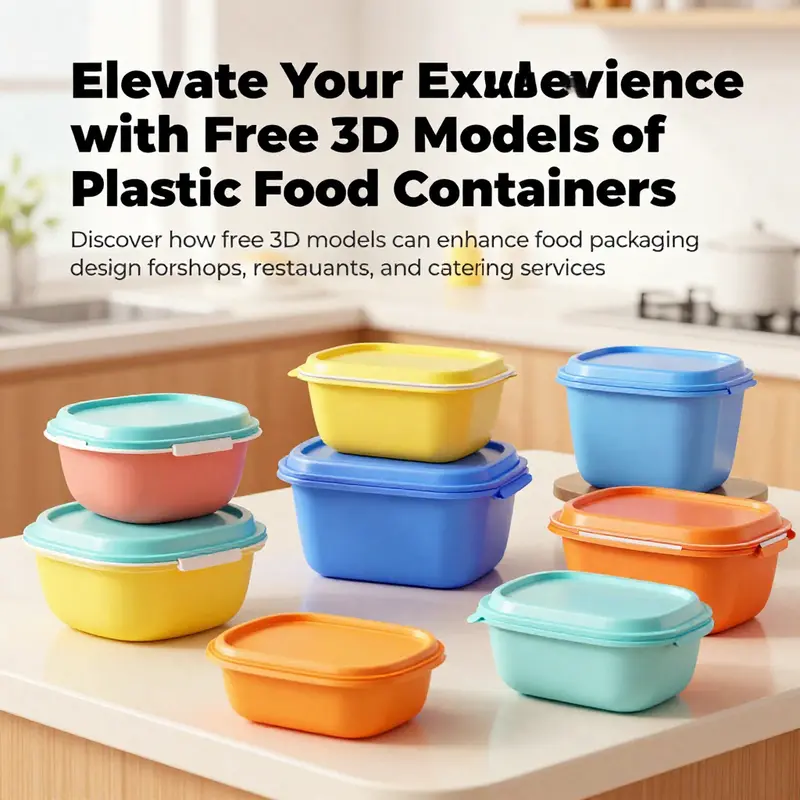
In today’s visually driven market, packaging plays a crucial role in attracting customers, especially in the food and beverage industry. Bubble tea shops, restaurants, food trucks, and catering services must ensure that their food packaging complements the quality of their offerings. Free 3D models of plastic food containers provide an innovative solution for creating visually appealing and functional packaging designs. This exploration will delve into the availability of these models, their applications in food packaging design, licensing considerations, and the evolving trends in 3D modeling that are shaping the future of container design, helping businesses make informed choices that resonate with their branding and customer experience.
null
null
Free 3D Models as Catalysts for Plastic Food Container Design
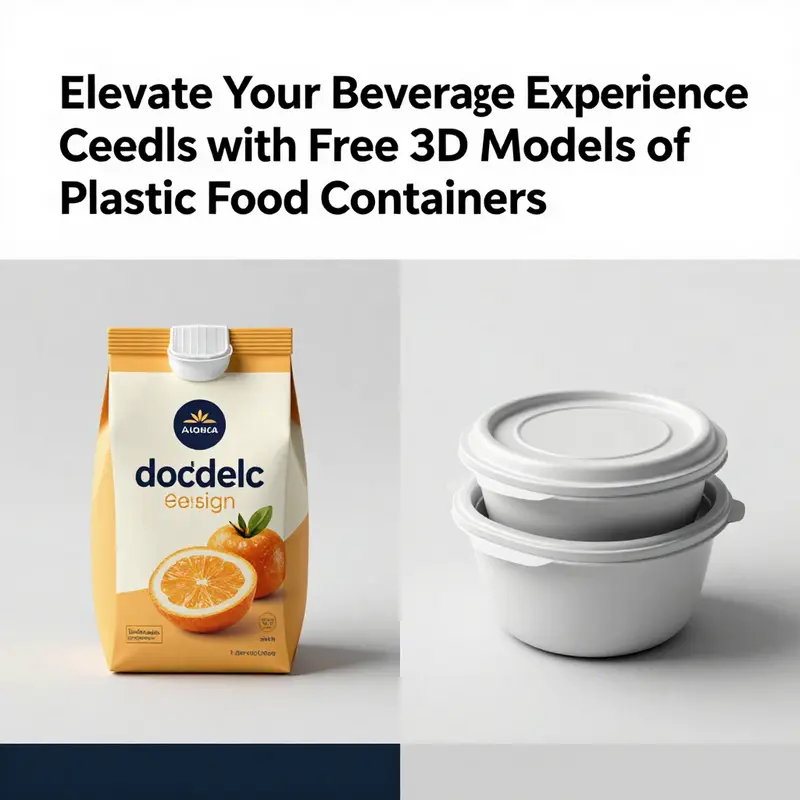
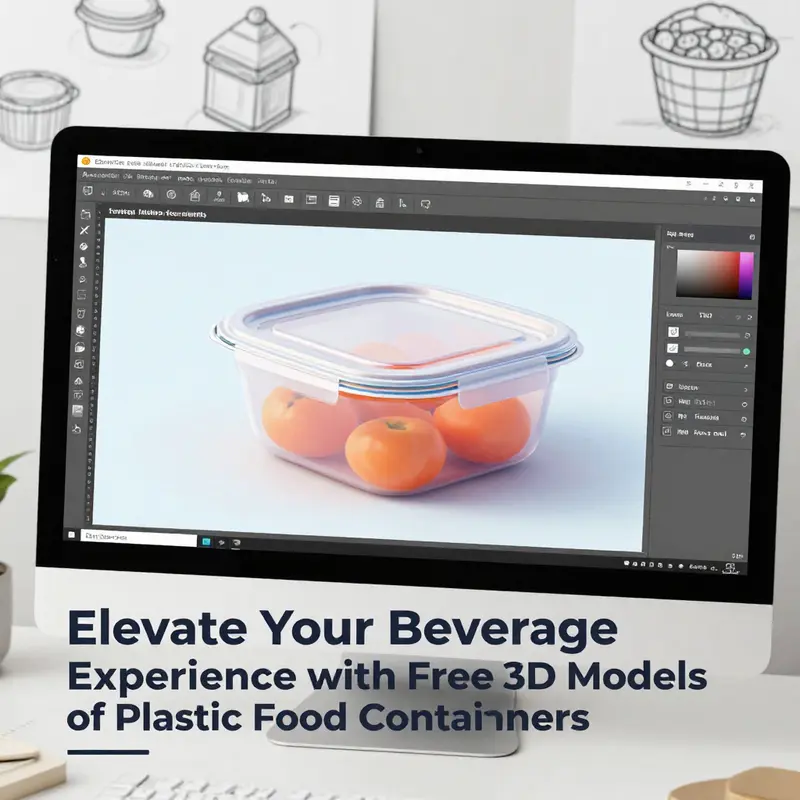
The design of plastic food containers sits at the intersection of function, sustainability, and consumer experience. In an industry where packaging must protect, inform, and entice within tight timelines, free 3D models have risen from niche tools to essential assets. They offer designers a bridge between concept and presentation, allowing ideas to be held, rotated, and tested in a virtual space before a single sheet of material is cut or a prototype is milled. The point is not merely to save time, though time savings matter. Free 3D models provide a shared, manipulable reference that can unify teams across disciplines—from industrial design to marketing and supply chain logistics. When a container is envisioned with real geometry in a digital scene, the team can anticipate fit with lid systems, interlocking trays, or multi-compartment arrangements that might otherwise require days of manual modeling. In a field where even small changes can ripple through cost and sustainability calculations, the ability to swap in different shapes and sizes quickly becomes a quiet, dependable advantage.
What makes these resources so compelling is their versatility. The category of free 3D assets encompasses a range of container forms—from simple, single-compartment tubs to more complex geometries with three or more compartments. A three-compartment design, for example, mirrors the needs of products that must stay separated—sauces, dips, and solids—without cross-contamination or leakage. Designers can study the way walls are thickened along the base, how rims are reinforced for stacking, and how the geometry influences heat transfer and shelf stability. Importantly, these models are not “finished products.” They are starting points, clean canvases that invite tailoring to brand identity, regulatory requirements, and manufacturing realities. The ability to adapt a ready-made geometry helps preserve the core concept while testing variations in wall curvature, locking mechanisms, and recesses for labeling or branding heat transfer. The result is not a cookie-cutter outcome but a robust platform for iterative exploration.
In practice, the workflow benefits extend beyond the screen. Before any mold is created or any tool path is written, a designer can stage different materials and surface finishes in a photoreal rendering, exposing texture, translucency, and gloss that influence consumer perception. A clear, glossy surface suggests a premium, high-clarity polymer, while a matte finish might imply a more utilitarian, cost-conscious approach. In these early stages, the freedom to juggle lighting, environment, and camera angles is transformative. It shifts the conversation from “what could be” to “what should be,” allowing stakeholders to weigh decisions about branding, consumer experience, and logistics with a shared visual language. Free models also support cross-functional critique sessions that otherwise rely on sketches or rough CAD; a marketing lead can point to a specific seam line or lip geometry and ask whether it communicates the intended brand story with the same fidelity as a finished product shot. The net effect is a more coherent, persuasive narrative for packaging concepts that must persuade retailers and end users alike.
From a practical standpoint, the existence of freely available assets accelerates prototyping in tangible ways. Designers can place a container within a digital mockup of a kitchen bench or a supermarket shelf, measuring clearance with adjacent products, display cards, or stacking configurations. They can quickly test how the container interacts with lids, inserts, and secondary packaging elements. This capability is not merely cosmetic. It informs structural decisions and manufacturing feasibility. When a model is used to simulate stacking stability or pour spout orientation, teams can identify potential issues early, reducing costly late-stage changes. The emphasis shifts from “let’s guess” to “let’s verify,” and the confidence gained from verification translates into fewer revisions and smoother handoffs to production teams.
The formats of these models matter as well. Common file types such as .obj and .fbx facilitate broad compatibility with current design and visualization pipelines. They can be imported into CAD environments for further refinement, exported into game engines for real-time inspection, or embedded into marketing renderings. This interoperability means a single digital asset can traverse multiple departments without a copious amount of rework, preserving the integrity of the original concept. In contemporary pipelines, engines like Unity and their modern rendering paths, including the Universal Render Pipeline (URP), enable high-fidelity visuals without sacrificing performance on a range of devices. When a packaging concept is destined for digital catalogs, AR experiences, or factory floor simulations, the ability to maintain consistent geometry and material properties across platforms is a decisive advantage. The practical upside extends beyond aesthetics; it translates into more accurate cost estimates, more reliable material specifications, and clearer procurement criteria.
The strategic value of free 3D models also rests in their role as a democratizing tool. Small studios, startups, or in-house design teams with limited resources can access a baseline of credible, credible-looking assets to communicate ideas with clients and stakeholders. The risk typically involves licensing and permissions. Designers must verify that the use case aligns with the model’s license and any restrictions on commercial deployment or modification. Free assets may come with stipulations about attribution or non-commercial use, or they may permit broad usage with some caveats. In practice, the most prudent approach is to treat each asset as a component in a broader design system: check licensing early, log any constraints, and use the asset as a flexible framework rather than a final authority. When licensing is acknowledged and managed, free models empower teams to explore a wider range of shapes, volumes, and branding cues than would be feasible with a custom-built library of parts during the same project window.
This is where the concept of design language—a consistent set of shapes, proportions, and tactile cues—begins to take shape around free assets. A designer can anchor a brand’s sensory vocabulary by adjusting model geometry to reflect a signature curvature, a distinctive corner radius, or a characteristic lip profile. The process remains anchored in pragmatic constraints: lid compatibility, stackability on retail displays, and the ability to conform to standardized packaging dimensions. As models are adapted, designers can run quick analyses for material thickness and seal integrity, checking whether a chosen geometry allows for adequate gasket compression or if the wall is thick enough to resist deformation under pressure. The result is a more resilient early-stage concept that is immediately testable in downstream workflows. In turn, marketing teams gain superior previews that can drive early feedback from retailers or customers, reducing the friction that often accompanies design sign-offs.
An important ethical and practical dimension accompanies the use of free 3D models. Even when assets are freely available, teams should treat them as living components within a larger design ecosystem. They should document changes made to the original asset, track licensing updates, and maintain a clear record of version history. Where brands require specific certifications or environmental disclosures, those requirements should be mapped to the digital asset’s properties early in the process. In discussions that drive the trajectory from concept to market, the model becomes more than a visual aid; it becomes a traceable artifact that aligns with compliance and sustainability goals. The simplest way to ensure responsible use is to pair every model with a concise note about licensing, a checklist of material assumptions, and a summary of any alterations made to the geometry. This discipline preserves the integrity of the project while enabling teams to benefit from the flexibility of freely available assets without overstepping legal or ethical boundaries.
Within this broader frame, it is useful to recognize how a catalog of free containers can influence a product’s lifecycle from ideation to shelf. A three-compartment variant, for instance, invites conversations about portion control, user convenience, and branding opportunities across a family of products. Designers can experiment with lid styles—snap-fit versus gasket-sealed—and evaluate how different compartment partitions impact stackability and shipping efficiency. The model can be integrated into a packaging line study that considers fill weight, brimming with examples of how shape interacts with pouring dynamics or sauce containment. When these explorations are anchored in a shared digital asset set, cross-functional teams can converge around a common vocabulary, reducing miscommunication and accelerating decision-making. The resulting designs are not only visually compelling; they are robust from a manufacturing and consumer-use perspective, with clearer pathways for testing, approval, and mass production.
For teams looking to deepen their practical knowledge, the real value lies in how freely accessible assets connect to their broader design system. A well-curated set of container models becomes a reference library that informs decisions about surface finishes, label placement, and branding surfaces. Designers can simulate how a logo would best wrap around a curved wall or where an embossed standard marking should live for legibility on a moving display. By seeing these cues on a realistic form, stakeholders can anticipate how aesthetics align with function, whether the container will perform well under stacking pressure on a shelf or remain legible when viewed from a shopper’s eye level. The translation from digital to physical, though not instantaneous, becomes smoother when the starting point is a credible digital asset that can be tuned and reinterpreted with minimal friction. In short, free models are not a substitute for expert design; they are accelerants that amplify the capability of a design team to iterate responsibly and communicate more effectively.
To connect the discussion with practical navigation, consider how teams may surface these assets within a broader packaging and printing workflow. A central project hub can house the original model, its variants, and the corresponding render presets used for client reviews. When a client requests a closer look at a nutrition panel or a regulatory symbol, the same model can be adjusted in situ, preserving alignment between the visual language and the compliance information. The idea is to reduce the cognitive load on designers so they can focus on the core questions: Does the container meet the brand’s personality? Is it user-friendly enough to support the intended consumer task? Will it ship efficiently and minimize waste? These are not abstract concerns; they are the practical metrics that shape the success of a packaging concept in a crowded marketplace. The availability of free models does not erase the need for professional judgment. Yet it does sanitize the early risk, allowing more ideas to be tested, more scenarios to be visualized, and more conversations to happen around a shared, tangible reference.
For readers who want to explore a concrete starting point within a packaging-focused ecosystem, a practical path is to examine the Packaging Printing category. It is a relevant hub for materials, forms, and branding assets that often intersect with 3D model libraries in the early phases of design. By exploring such a resource, teams can locate container geometries that align with their project’s printing and labeling requirements, further accelerating the journey from concept to market. This approach helps ensure that the creative impulse remains tethered to the realities of production and brand identity, while still taking advantage of the rapid iteration enabled by freely available models. The balance between exploration and discipline is where the true value of these assets emerges, turning digital experimentation into tangible, well-considered packaging outcomes.
Ultimately, the story of free 3D models in plastic food container design is about agency. Designers gain a practical, scalable means to explore form, test fit, and communicate vision without being constrained by the time and cost of starting from scratch. They gain a shared language across disciplines, a faster route to client buy-in, and a clearer path to production-ready concepts. They also shoulder a responsibility to respect licensing and to integrate these assets thoughtfully within a design system that values sustainability, user experience, and manufacturability. When these conditions are met, free models do more than fill a template; they catalyze a design culture that treats digital assets as strategic inputs with real, measurable impact on a product’s journey from idea to aisle.
External resource: https://www.freepik.com/3d-models/food-packaging_17528443
Free 3D Models for Plastic Food Containers: Licensing, Legal Boundaries, and Responsible Design
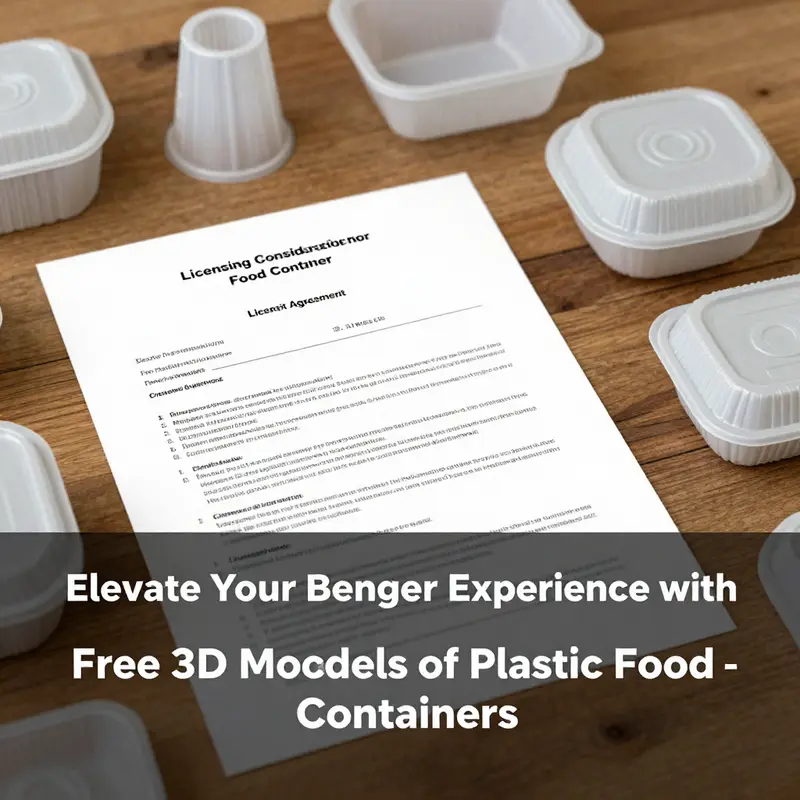
The appeal of free 3D models for plastic food containers lies in speed, cost efficiency, and the ability to visualize ideas early in the design process. Teams tasked with packaging concepts, product visualization, or marketing mockups often begin with freely available digital assets to explore form, proportion, and ergonomics without committing to costly custom work. Yet the very freedom that makes these resources attractive also carries a set of responsibilities. Licensing is not a bureaucratic afterthought; it is the compass that guides how you may use, modify, and share a model as part of real products or public-facing visuals. In practice, licensing terms determine whether a model can travel from a mere rendering to a component in a prototype, a display in a portfolio, or a packaging mockup that ships with a product line. Because plastic container designs can intersect with branding, patentable shapes, and trademarked features, understanding the boundaries of each license is essential to avoid overstepping legal lines and to safeguard the integrity of your project.
Fundamentally, free 3D models are distributed under a spectrum of licenses that shape three core activities: use, modification, and redistribution. The Creative Commons family, which often appears in the context of free digital assets, offers several variants that can dramatically alter what you can legally do with a model. Among these, attribution-only licenses allow you to use and alter the model as long as you credit the original creator. This attribution requirement may be straightforward in a noncommercial portfolio, but it becomes more complex when the same asset appears in a commercial render, a packaging concept presented to a client, or a marketing video. The attribution condition is not merely a courtesy; it is a contractual obligation that, if neglected, can undermine the credibility of your project and invite takedown notices or disputes. The attribution- and share-alike variant adds another layer: any derivative works must be shared under the same license. This cascade can propagate licensing requirements through your entire design ecosystem, especially if multiple assets are combined into a single scene or product concept. To navigate this, teams should document every asset’s license, preserve the original source, and track any modifications or combinations that alter the licensing footprint.
A second common license category is noncommercial use licenses. These explicitly prohibit commercial exploitation, meaning you cannot deploy the model in a product sold for profit or in marketing materials that drive revenue. This distinction is not always obvious in practice. A freemodel used in a client presentation that leads to a paid project could be interpreted as commercial use, even if the model itself is not directly sold. The line between exploratory visualization and commercial application can blur quickly in packaging design, where a shot in a marketplace-ready render may influence purchase decisions and brand perception. When noncommercial terms apply, a project with revenue ambitions demands a prudent approach: either replace the asset with one that permits commercial use, obtain a dedicated license from the rights holder, or commission a custom model that aligns with your brand and usage rights. The risk of misclassification here ranges from simple takedown requests to more costly disputes if a design enters production and revenue streams are established around it.
Beyond the licensing label, there is a broader legal reality that even free models may be protected by intellectual property rights separate from the license itself. A plastic food container design—especially if it includes a distinctive ergonomic grip, a patented lid mechanism, a unique three-compartment layout, or a branded silhouette—could be shielded by design patents or trademarks. Copying a shape that mirrors a protected product could provoke intellectual property claims, even if the digital file itself is offered freely. This means that freedom in downloading a model does not automatically translate into freedom to deploy that exact design in a commercial context without risk. The practical implication is clear: treat every free asset as a potential IP vector. Do not assume that a license alone governs every form of use; understand the intersection of licensing, design protection, and branding rights that may constrain or complicate your project.
The prudent path through this landscape is guided by a disciplined set of best practices. First, always read the license terms that accompany a model. Look for explicit language about use, modification, distribution, attribution, and whether commercial applications are allowed. If terms are ambiguous, reach out to the creator for clarification or seek an asset with clearly stated commercial rights. For teams operating at scale, create a centralized licensing log that records the asset, the license type, the date acquired, whether attribution is required, and any constraints on modifications or redistribution. This record becomes part of your design governance, useful not only for legal compliance but also for internal review when publishing renders or presenting to stakeholders.
Second, exercise caution with modifications. If you alter a model, including adjusting its topology, changing materials, or combining it with other assets, check whether the derivative work inherits the same license or a separate set of terms. In some licensing regimes, derivatives must carry the same license, which can cascade through your entire pipeline. In others, derivatives may be permitted but still require attribution or noncommercial labeling. When combining multiple free assets, each with potentially different licenses, the licensing matrix becomes more complex. In such cases, consider consolidating assets under a single license-friendly workflow, or favor models that are explicitly licensed for commercial use and for derivatives.
Third, be mindful of branding and design intent. Even if a model is free and permissive, applying it to a branded product concept can trigger trademark or design-protection considerations. A container that mirrors a well-known brand’s color palette, logo placement, or distinctive lid style could raise trademark concerns even if the underlying 3D geometry is licensed for use. When in doubt, consult with a legal advisor or pivot to a neutral design that communicates your value proposition without infringing on protected branding. The objective is not to stifle creativity but to manage risk so that design work can progress to production without legal roadblocks.
In practical terms, free models can be a valuable catalyst in the early stages of design. They enable rapid exploration of scale, proportion, and function. A three-compartment layout, for instance, may be represented across a range of shell geometries, lid mechanisms, and snap-fit features in free assets. This variety helps teams compare ergonomics, stackability, and user interaction without committing to a specific manufacturer or production run. Yet as the project progresses toward prototyping and final packaging development, the licensing decision can become a gating factor. A model that once served purely as a visual mockup might need to be replaced with a licensed or custom-designed counterpart to meet commercial obligations or to align with a brand strategy that requires exclusive design rights.
From a workflow perspective, the path often begins with a download of several candidate models that offer different scales, textures, and structural cues. The task then becomes not simply picking the most visually appealing file but evaluating each asset against the licensing criteria and IP considerations described above. It can be tempting to default to the most convenient option, yet a thoughtful review can prevent costly revisions later. For teams that are new to this terrain, making a habit of attaching a short licensing brief to each asset can be an effective practice. This brief might note whether the asset is suitable for commercial use, whether derivatives are allowed, and whether attribution is required in rendered images or documentation. Such a record supports cross-disciplinary collaboration, ensuring that designers, marketers, and legal reviewers share a common understanding of what is permissible.
The practical role of licensing in the design process also extends to how you communicate with clients and stakeholders. When presenting early-stage renders or tabletop prototypes, it is prudent to acknowledge the use of free assets and their license terms without implying an ownership claim over the design. If a client requires exclusivity or a branded look, you can use free models for exploratory visuals but reserve production-ready components for models you own or license outright. This approach preserves the benefits of free resources in the creative exploration phase while safeguarding the integrity and investability of the final product. In many cases, you may find that licensing constraints steer you toward a hybrid strategy: leverage free models for ideation and rapid iteration, then commission custom 3D assets or purchase commercial licenses for the elements that will appear in a final, revenue-generating presentation.
To anchor these considerations in a practical mindset, consider this guiding principle: licensing is not a barrier to creativity but a framework that clarifies what is permissible as you move from concept to production. The simplest step is to treat every downloaded asset as a potential constraint until its license says otherwise. Document, verify, and decide before you integrate the asset into a scene that could enter a customer-facing or revenue-generating workflow. If you can articulate the licensing scenario for each asset upfront, you will save time, reduce risk, and preserve the ability to iterate with confidence. The broader ecosystem of packaging and storage devices a designer navigates frequently intersects with these issues. For readers exploring related resources, the plastic packaging category on the design and packaging site offers a wide spectrum of models and references that can inform both the aesthetic and functional aspects of container design. See the plastic packaging resources for context and templates that help frame licensing decisions within actual packaging workflows.
In short, free plastic container models are a powerful tool when used with care. They enable rapid mockups, cost-effective exploration, and compelling visuals that support early stakeholder buy-in. But the freedom to download does not erase the obligations that come with use, modification, and distribution. By approaching each asset with a clear understanding of its license, by guarding against IP pitfalls, and by adopting a disciplined documentation routine, you can harness the benefits of free models while maintaining professional integrity. This mindset aligns with a mature design practice that values both ingenuity and responsibility, ensuring that the final product—whether a conceptual render or a production-ready container—meets legal requirements, respects the rights of others, and speaks with a consistent, credible design language. For those who want to deepen their understanding of licensing frameworks, official guidance is available from recognized authorities that oversee these licenses and their implications for digital assets. External licensing guidance can be found at Creative Commons, which offers an authoritative overview of license types, permissions, and responsibilities that accompany free models and other shareable content.
External reference: https://creativecommons.org/licenses/
Reinventing Plastic Food Containers: Free 3D Models, AI-Driven Design, and the Path to Sustainable Packaging
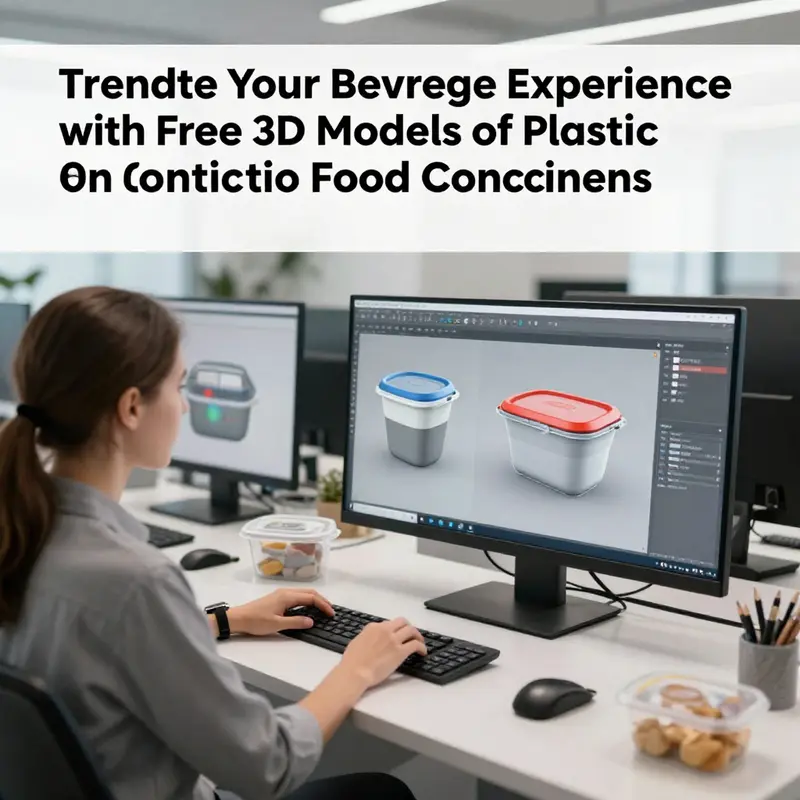
Across modern design studios and manufacturing labs, the availability of free 3D models for plastic food containers has quietly shifted how products are imagined and evaluated. Designers begin with a library of ready-made shapes and adapt them to fit specific foods, shelf conditions, and branding constraints. These resources arrive in common formats such as .obj and .fbx, which streamline import into a range of 3D software used for concept visuals, engineering checks, and marketing simulations. But the value of these models goes beyond geometry. Licensing terms, and the presence of functional variants—such as three-compartment configurations that mirror typical meal patterns—shape how teams reuse assets across projects. This chapter tracks how such free assets feed a broader workflow where digital design blends with additive manufacturing, flexible supply chains, and sustainability objectives. Rather than treating free models as shortcuts, savvy teams treat them as starting points that accelerate iteration while inviting careful scrutiny of material behavior, seal integrity, and printability. The rise of repositories that host compact, reusable digital components aligns with a trend toward modular packaging; a single digital artifact can morph to support multiple products with minimal waste.
AI and machine learning are quietly redefining what can be learned from those starting points. Lightweight yet sturdy container forms emerge through optimization that weighs wall thickness, rib placement, and lid geometry against product properties, stacking efficiency, and transport stresses. The aim is to minimize material use without sacrificing function, a shift that translates into measurable waste reductions across the supply chain. In practice, designers feed data about contents, expected temperature ranges, and transit handling into generative tools that propose many geometry variants. The result is not a single optimal form but a family of efficient candidates ranked by performance metrics and ease of fabrication. Free models can be augmented with AI-driven tweaks, enabling rapid adaptation to new portion sizes, flavors, or dietary trends while preserving sustainability benchmarks. This approach fits within a life-cycle mindset: digital assets can be reused across campaigns, reconfigured for different markets, and produced with tooling flexible enough to avoid lock-in to a single SKU.
Real-time rendering and virtual prototyping have made design reviews more immersive and iterative. Teams visualize how a container looks in store lighting, how labels interact with branding space, and how the product appears when nested with other packaging elements. Some workflows connect digital prototypes directly to additive manufacturing pipelines, turning a concept into a physical sample within days rather than weeks. That loop lowers risk before any mold is created and reduces development costs. When applied to items like chocolates or ready-to-eat meals, dynamic renderings reveal how packaging can contribute to brand experience through color, texture, and perceived freshness. The simulated interior also matters: a three-compartment layout in a free model can serve as a test bed for evaluating how well food segments stay separated during handling and stacking. These visual experiments do more than please designers; they become signals to marketers about how a product might be perceived on crowded shelves and through online thumbnails.
From a sustainability perspective, the digital-to-physical bridge is perhaps the most consequential. 3D printing enables on-demand production of containers with customized geometries that optimize packing density and minimize waste. Digital designs can be tuned for recycled or bio-based plastics, with wall thickness balanced against stiffness and impact resistance. In distributed supply networks, the ability to adjust a base model and print locally helps cut excess inventory and reduce obsolescence. The broader principle is that digital design workflows enable precise control over what is produced, how much, and when, creating opportunities to align packaging decisions with circular economy goals. The accessibility of free models lowers barriers for small brands to prototype eco-friendly concepts before committing to expensive tooling. Taken together, these capabilities nurture packaging ecosystems that emphasize reuse, adaptability, and end-of-life considerations as integral parts of the design brief.
Brand storytelling benefits from the same digital realism that powers engineering. A container configurable in multiple sizes and with optional partitions allows marketers to test different assortments and consumer experiences without producing a mountain of physical samples. A distinctive lid, a clever seal, or a transparent window can be evaluated under various lighting to gauge shelf impact. The ability to swap materials or interior geometries in the digital space enables rapid A/B testing of packaging narratives tied to product benefits. A practical takeaway for teams using free models is to treat the digital asset as a living document—documenting licensing terms, version histories, and recommended print settings so that anyone in the organization can reuse and adapt the base design with confidence. The broader ecosystem of packaging resources in the site’s catalog adds alt resources and templates that encourage designers to explore novel forms while staying grounded in practicality. See more at Plastic Packaging.
As this chapter unfolds, the conversation shifts from what is freely available to what is feasible in production, supply, and consumer environments. The aim is not merely novelty but a design culture that uses digital models as adaptable tools for sustainability, efficiency, and storytelling. Teams must balance openness with responsibility, prioritizing license rights that fit commercial needs and ensuring derived designs meet food-contact safety standards. The discussion links file formats, AI-driven optimization, and the realities of manufacturing and recycling into a coherent workflow. The trend suggests that the next generation of plastic food containers will be less about a single iconic form and more about a family of optimized, adaptable, and traceable digital templates that can be deployed across markets and channels. This perspective fits with a broader shift in product design toward digital twins, modular components, and on-demand production, which invites a more deliberate, design-led approach to packaging.
External reading: For further exploration of the future of 3D modeling in product design and packaging, see 3D Modeling Trends 2025.
Final thoughts
The integration of free 3D models of plastic food containers into your design processes can revolutionize packaging for shops and catering services. By allowing businesses to visualize and test different container options, these models enable enhancements in both aesthetics and functionality. As trends in 3D modeling like eco-friendly designs and customizable options continue to emerge, it’s essential for businesses to stay informed and adaptable. By leveraging these resources, you position your brand at the forefront of the food service industry, ultimately improving your appeal to customers and enhancing their overall experience.