
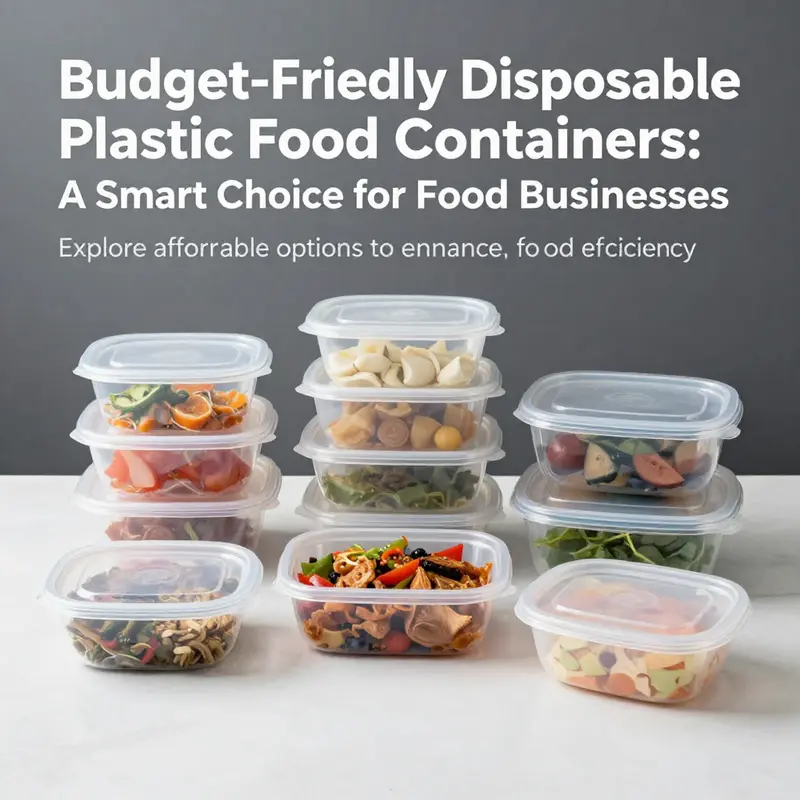
The demand for cost-effective, reliable, and versatile food packaging solutions continues to rise, particularly in the food service industry. From bubble tea shops to large-scale catering services, businesses are seeking disposable food containers that not only meet their budgetary needs but also align with operational efficiencies. This article delves into the essentials of cheap disposable plastic food containers, covering pricing and purchasing scale, material characteristics, application versatility, and key considerations for procurement. By the end of this guide, you will be equipped with the knowledge to make informed decisions that support your business needs.
The Price–Scale Equation: How Cheap Disposable Plastic Food Containers Shape Markets, Meals, and Mindsets
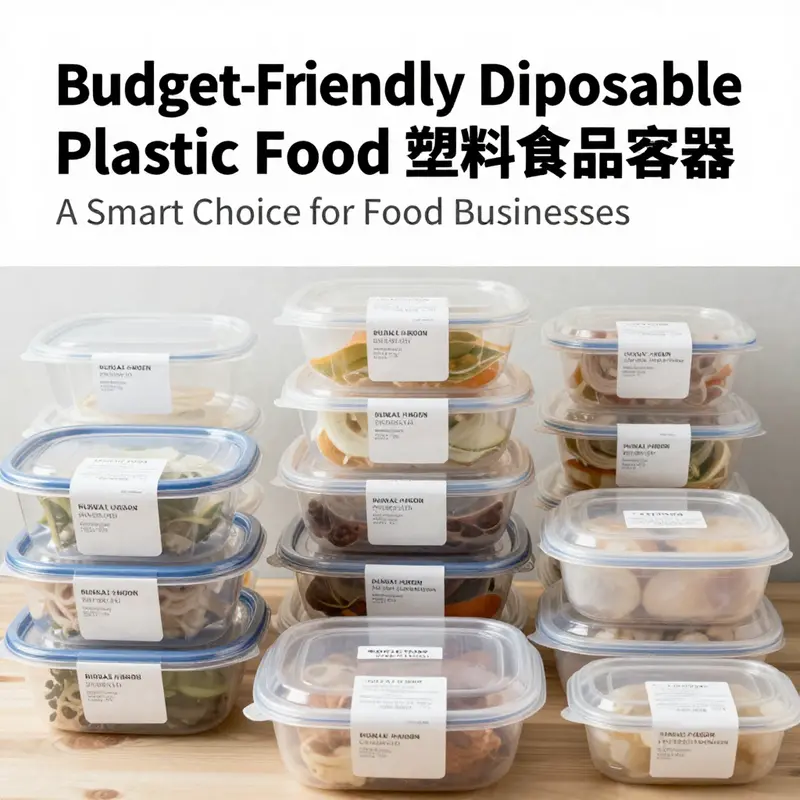
In the modern food ecosystem, cheap disposable plastic food containers operate as an invisible infrastructure—quietly supporting the speed and simplicity that customers expect, while also shaping decisions on sourcing, menu design, and even perceptions of value. They are not merely packaging; they are a critical lever in the economics of food service and home catering. The core dynamic is surprisingly straightforward: the larger the purchase, the lower the unit price, and the more a business can commit to a predictable packaging workflow. Yet beneath the arithmetic lies a web of material choices, regulatory considerations, and practical trade-offs that buyers must balance to sustain both profitability and consumer trust. Understanding this price–scale equation means looking beyond the sticker price and examining how procurement strategies, product specifications, and market pressures converge to determine what “cheap” really means in a packaged-food context.
At the heart of the cheapest end of the market is a familiar material: polypropylene, or PP. This thermoplastic has earned its place as the workhorse of disposable containers because it blends safety with performance at a low cost. A typical large-scale offering is a three-compartment container designed for easy separation of foods, microwave heating, and a secure lid. When a supplier can commit to tens of millions of units, the unit price can drop to remarkably modest levels. Recent data from major bulk channels show prices drifting toward about $0.09 per piece for mills able to produce at scale. The volume behind such figures is not incidental; it reflects a production footprint configured for continuous, high-throughput output, often located in regions with mature plastics manufacturing ecosystems. For buyers, that combination—massive scale plus a compatible material profile—translates into affordable, consistent packaging supplied with a degree of reliability that a growing business can count on for months and seasons ahead.
The pricing ladder, however, is not a single staircase but a catalog of options. For those who want to test a concept or introduce a new line, many suppliers offer samples at a fraction of the bulk price. Some producers advertise sample units at as little as $0.01 each, a tiny commitment that enables a restaurant or small-brand operator to evaluate fit with product temperature tolerance, stackability, and labeling needs without tying up capital in a large inventory. This entry point is crucial: it lowers the risk of introducing a new packaging approach in a market where every cent matters and where the actual consumer experience—how well a container keeps a curry from leaking or how clearly it communicates a brand message—can determine repeat business.
Beyond the bulk–sample dichotomy, the broader cost landscape includes a spectrum of standard container formats. Ordinary disposable containers, especially those without premium features, typically range from about $0.03 to $0.10 per piece when ordered in tens of thousands of units. The lower end reflects the raw material cost and optimizations in mold design, while the upper end captures basic requirements like a fixed lid, acceptable clarity, and reliable sealing. For buyers seeking containers with enhanced features—microwave compatibility, durable sealing, or a built-in lid with reinforced edges—the unit price often sits higher, in the vicinity of $0.192 to $0.39 per piece, when the order volume is substantial (hundreds of thousands or more). In other words, small differences in function or appearance can produce meaningful gaps in cost per unit, and those gaps widen as the order scales up, precisely because the incremental costs of additional production capacity, energy, and packaging customization are amortized over a larger quantity.
Material choice remains a central determinant of both price and performance. PP has earned its reputation for heat resistance, food safety, and general resilience while remaining lightweight and relatively inexpensive. Its ability to tolerate reheating in microwaves, when properly designed, makes it an especially practical option for takeout and delivery contexts, where meals may be heated by customers or staff. An important part of this narrative is the absence of BPA, which is a factor many buyers weigh when aligning with consumer expectations around health and safety. The price signal, in turn, nudges many operators toward PP-based solutions for routine uses while reserving more specialized materials for high-end offerings or for menus that demand longer storage or more delicate presentation.
There is also a growing, though still smaller, segment of the market that experiments with degradable or compostable alternatives. Some of these containers blend renewable-based components, such as corn starch, with small amounts of PP to preserve strength and reduces carbon footprints. These blends aim to balance sustainability with functionality, offering a path for operators who want to signal environmental responsibility without sacrificing the performance customers expect in terms of heat tolerance, leak resistance, and stackability. The trade-off, though, is nuanced. While degradable blends can reduce certain environmental footprints, they may also introduce variability in performance, require different disposal streams, or involve additives that influence surface properties and handling. Buyers contemplating these options should scrutinize not only the material composition but also the expected end-of-life pathway, certification status, and compatibility with local recycling or composting infrastructure.
The applications of cheap disposable containers are broad and well understood, extending from busy restaurant kitchens to catering services, hospitality outlets, and even home use for picnics, barbecues, or large corporate events. In takeout contexts, the container acts as the interface between the cook’s craft and the customer’s dining experience. It must be sturdy enough to carry hot or moist foods without leaking or deforming, yet inexpensive enough to be discarded after a single use. For catering and events, the container’s visual presentation and labeling flexibility become part of the service language—brands often seek to imprint logos, color schemes, or QR codes to streamline order tracking and post-event waste analytics. In home settings, families may value a container that is easy to stack and store, freezer-friendly for pre-prepared meals, and microwave-safe for convenient reheating. The price–scale dynamic underpins all of these use-cases because it enables operators to standardize their packaging across dozens or hundreds of menu items, simplifying procurement, reducing supplier management overhead, and improving predictability in cash flow.
From a procurement perspective, several practical dimensions influence cost and supply reliability. First, the sourcing geography matters. Many buyers turn to factory hubs in large manufacturing regions to capitalize on proximity to supply chains, tooling, and specialized extrusion and molding capacities. The ability to run high-volume production lines with a consistent output rate—such as tens or hundreds of thousands of units per day—greatly influences the unit price. Second, customization is a price lever. Most suppliers offer options to customize size, shape, color, and even on-container printing. While customization commands premium pricing, the scale at which a company purchases can offset those costs through better overall production efficiency, reduced changeovers, and faster fulfillment timelines. Third, safety and compliance drive cost as well. Reputable producers provide quality-management certifications—such as ISO 9001—and, for markets with stricter food-safety expectations, additional compliance attestations like CE/EU certifications. Buyers should treat these certifications as essential components of the total cost of ownership because they mitigate risks that could otherwise lead to recalls, reputational damage, or regulatory penalties.
Testing and validation play a pivotal role in turning a low unit price into reliable performance. Smart buyers request samples to validate fit with their recipes, confirm leakage resistance, and assess the integrity of the lid under reheating conditions. The sample phase is also the moment to evaluate how well the container performs under stacking pressure during delivery or storage—an issue that, if mishandled, can lead to deformation, spillage, or customer dissatisfaction. Lead times matter as well; scale-driven supply chains often require coordinated forecasting and scheduling, with some suppliers able to commit to production slots months in advance, while others operate with more гибкий (flexible) ramp-up that can accommodate shorter-term campaigns. In all cases, aligning forecast accuracy with supplier capacity reduces the risk of stockouts, which in turn stabilizes pricing and ensures consistent service to customers.
A practical takeaway for managers and buyers is to think of packaging not as a standalone expense but as a component of a broader cost-management strategy. When unit prices are driven down by scale, the total cost of ownership should still account for storage, waste handling, and potential disposal costs in different jurisdictions. For instance, a container that is cheap to buy but expensive to ship, or one that generates a disproportionate amount of waste due to over-packaging, can erode the intended savings. Similarly, if a container’s performance in temperature retention or leak resistance is subpar, the organization may incur additional costs from product returns, complaints, or the need to upgrade to more robust options for a given line. The best-performing cost strategies are those that balance upfront price with downstream efficiency, ensuring that the packaging supports a smooth operating rhythm, consistent product quality, and a positive customer experience.
As buyers navigate this terrain, the decision framework often includes a few critical questions. How large should the initial order be to obtain an economical unit price without tying up too much capital in inventory? Which material offers the best combination of heat tolerance, safety assurances, and ease of disposal within the target market’s regulatory context? Is there a credible path to sustainability that does not compromise performance or drive up costs beyond reason? And, perhaps most important, how will the packaging support brand storytelling and operational discipline across multiple channels—takeout, catering, and home-use scenarios—without fragmenting procurement and supplier relationships? Answering these questions demands a disciplined approach to supplier selection, rigorous testing, and a clear mapping of service levels to forecasted demand.
In practice, many buyers gravitate toward a core, scalable solution anchored in a food-grade PP container that is microwave-compatible, leak-resistant, and BPA-free. The appeal is straightforward: predictable performance at a price that makes sense for daily use in takeout and meal-prep contexts. When the order reaches the higher-volume tier—think tens of millions of units—the unit price can fall toward the lower boundary, producing a significant differential from smaller orders. This pricing reality fuels both market competitiveness and strategic planning. Businesses can aim for a steady, diversified packaging portfolio that supports trial campaigns while preserving the reliability needed for ongoing operations. The result is a packaging strategy that harmonizes financial discipline with operational resilience, enabling food service operations to scale with confidence while maintaining a focus on quality and safety for the consumer.
For those who want a closer look at the landscape without wading through dozens of supplier catalogs, there are centralized channels that collate offers, terms, and certifications. These platforms help buyers compare options and gauge whether a particular packaging solution aligns with their temperature requirements, storage constraints, and branding goals. While price remains a primary criterion, the decision guide increasingly includes considerations such as traceability of materials, verification of food-contact safety standards, and alignment with end-of-life disposal or recycling programs in the target market. In the end, the cheapest option may not always be the most economical choice if it introduces complexity or risk into the supply chain. Yet when a business can lock in reliable supply at scale, the resulting savings can be substantial, enabling more aggressive marketing, menu innovation, and service expansion without compromising the customer experience.
For readers who wish to explore a broader category of packaging options, a useful collection can be found in the disposable lunch boxes category of a major packaging-and-duplication resource. This hub consolidates the kinds of containers discussed here—same-basic materials, similar performance characteristics, and parallel cost structures—providing a practical reference point as you compare suppliers, request samples, and structure negotiations. disposable lunch boxes category.
External resource for further emphasis on market dynamics and supplier capabilities can be found through a leading global wholesale marketplace, which features a wide range of food-container products, including those designed for large-volume, cost-conscious applications. This resource highlights the practical realities of sourcing, such as lead times, minimum order quantities, and the trade-offs between price, performance, and certification. While the scene includes many options, buyers should prioritize material safety, consistent manufacturing standards, and transparent documentation to ensure compliance with local regulations and consumer expectations. https://www.alibaba.com/product-detail/Disposable-PP-Plastic-Takeaway-Food-Packaging_1600672485283.html
In sum, the price–scale equation for cheap disposable plastic food containers is not a single constant but a spectrum of choices shaped by volume, material science, and process efficiency. The enormous orders that drive the $0.09 per piece benchmark illustrate what is possible when supply chains are optimized for mass production. The ability to test with a $0.01 sample, or to fall back to more economical mid-range options around $0.08–$0.31 per piece for bulk purchases, demonstrates how flexible procurement can be. This flexibility is what empowers restaurants, caterers, and households to maintain consistent service while managing costs in an increasingly price-competitive environment. It also underscores the importance of thoughtful selection: the cheapest container today can become an anchor for tomorrow’s operations if it supports reliable performance, safe handling, and a smooth end-to-end packaging workflow.
Ultimately, the cost of cheap disposable containers is a function of more than the price per unit. It reflects the scale of the operation, the material choice and its compatibility with the intended use, the degree of customization required, and the ability to couple packaging decisions with broader supply-chain and sustainability goals. As markets evolve and consumer expectations shift toward greater safety and accountability, buyers who can align price with performance—while maintaining credible environmental and regulatory standards—will find themselves well positioned to deliver value, convenience, and trust across every meal they package and deliver.
Materials Under the Price Tag: How PP and PS Shape Cheap Disposable Food Containers, Safety, and Sustainability
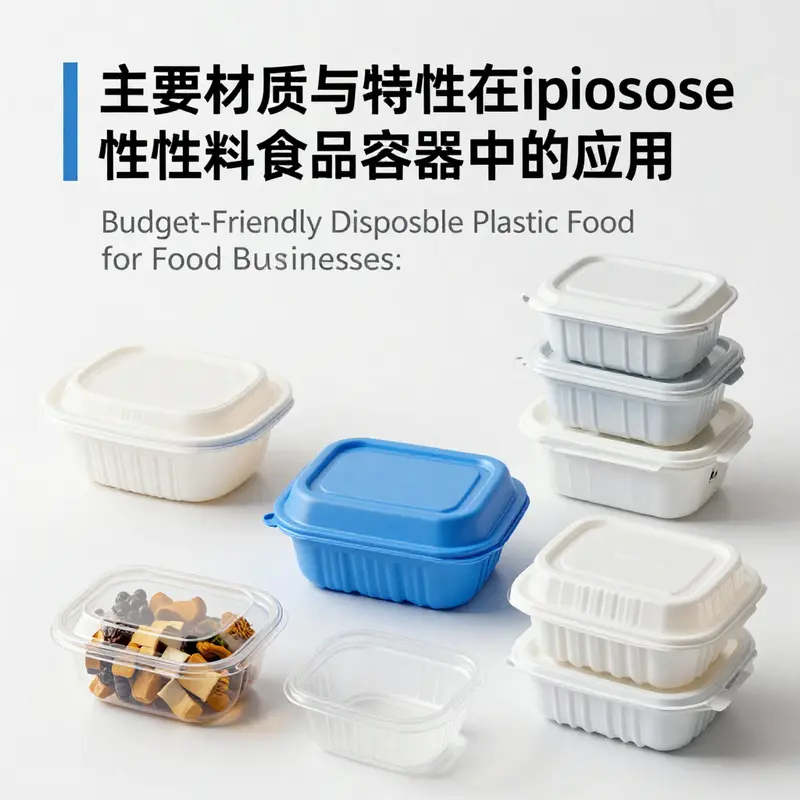
Cheap disposable plastic food containers sit at the intersection of affordability, convenience, and everyday food culture. Their prevalence is not accidental: the materials chosen for these containers determine not only the price per unit but also how well they perform in the hot-and-fast context of takeout, catering, and home meal prep. In the market segment that prizes ultra-low unit costs, two materials dominate the conversation: polypropylene (PP) and polystyrene (PS). Each brings a distinct set of properties, trade-offs, and safety considerations that ripple through procurement decisions, brand messaging, and consumer use. The narrative here follows how these plastics—selected for very different reasons—become the quiet engines of a high-volume, low-margin ecosystem. The discussion moves from material fundamentals to the implications for safety, regulatory guidance, and end-of-life realities, weaving in real-world procurement dynamics and practical notes for anyone responsible for choosing packaging in this price-sensitive segment. In doing so, the goal is not only to describe the materials but also to illuminate the choices that shape how cheap containers perform, how safe they are, and how responsibly they can be managed after use.
The most common starting point in this market is PP, a resin widely recognized for delivering a robust mix of heat resistance, chemical stability, and food-contact safety. Its appeal begins with performance. PP can tolerate high temperatures without degrading, which translates directly into microwavable capability—an essential feature for many takeout meals and ready-to-eat packs. The material’s heat tolerance, often cited up to roughly 167°C in practical applications, means containers can be reheated without softening, warping, or leaching noticeable amounts of additives under typical consumer use. This makes PP a natural fit for three features that repeat across the best-selling disposable boxes: a storage-friendly, microwave-ready design; a relatively inert interaction with common foods and sauces; and a packaging system that doesn’t introduce off-flavors or odors when heated. Beyond heat, PP’s chemical stability minimizes interactions with acidic or salty foods over the container’s brief lifespan, which helps preserve taste and safety in multi-item meals and pre-portioned sides. These characteristics explain why many manufacturers lean toward PP for mainstream, food-grade packaging. The combination of safety, reliability, and adaptability creates a compelling value proposition in a market where every cent counts and performance can’t be compromised. In this sense, PP is not merely a material choice; it is a strategic decision about how a brand communicates reliability and how a producer optimizes a line for consistency across millions of units.
Yet, the market does not revolve exclusively around PP. PS, particularly in its foamed variant, has followed a long-standing path to cost efficiency. The resin’s inherent rigidity and high clarity made PS a staple for the cheapest line items in the past, especially for foam-based meal boxes that showcased a clean, transparent presentation and strong water resistance. The allure of PS lies in its raw cost and universality in short-term packaging needs. For some applications, its rigidity supports compact, stackable designs that minimize shipping space and maximize the number of units per pallet. In bulk terms, PS stands as an affordable baseline in the disposable category, where the lowest purchase price can tip the scale in highly price-sensitive procurement decisions. However, these advantages come with important cautions. PS is non-biodegradable in the sense that breaks down slowly in ordinary environments, and its production and disposal have raised environmental and health concerns. The most frequently discussed risk relates to heating foods in PS containers: when exposed to high temperatures, PS can release styrene monomer and other volatile compounds. While the actual level of risk depends on several factors—including the exact formulation, the presence of any additives, and the duration and temperature of heating—consumers are often advised to avoid microwaving traditional foam PS containers or using them for hot, fatty, or acidic foods that can facilitate leaching. The safety conversation around PS is not merely about a single chemical release but about a broader pattern of exposure that has pushed regulators and health advocates to scrutinize the use of PS in heated or long-contact scenarios.
All of this points to a central tension in the cheap container segment: the trade-off between near-term cost and longer-term safety, with a growing emphasis on how these choices align with evolving expectations for environmental responsibility and consumer health. The resin codes at the bottom of packaging frames a simple, widely recognized guide. The number “5” inside the recycling triangle identifies PP, a material commonly recommended for food packaging and heating contexts, while the number “6” marks PS, a designation that carries cautionary notes about high-heat use and potential health concerns. A key takeaway from consumer guidance released in recent years is to prioritize the PP-coded products for heated meals and longer contact periods, and to be mindful of PS-coded containers, especially where hot foods or reheating is involved. This guidance echoes a broader consensus: the safe handling of cheap, disposable packaging is not just about the price tag; it’s about how the container is used and what it is used for.
From a procurement perspective, the economic calculus behind PP and PS is shaped by scale and operational efficiency. In the market context described by recent wholesale data, a factory capable of handling very large orders can achieve remarkably low unit costs. For instance, bulk orders in the tens of millions of pieces can push unit prices toward two figures below the dollar, with PP three-compartment microwave-ready containers sometimes quoted around $0.09 per piece when purchased in enormous quantities. The same data sets show that small-scale trials are feasible through samples, sometimes offered at nominal charges such as $0.01 per piece, enabling brands to verify fit, seal integrity, and user experience before committing to a full rollout. These economic dynamics—where the marginal cost curves lean strongly in favor of scale—shape how product lines are designed, how branding and customization are implemented, and how supply chains are engineered for predictable delivery timelines. In practice, this means that a brand seeking consistent supply likely ends up negotiating longer-term contracts, with variables such as currency exchange, freight terms, and import taxes adding their own layer of complexity to the final landed cost. It also means that the choice between a low-cost PS solution and a more robust PP alternative is not merely technical; it is a strategic risk assessment about supplier reliability, quality control, and the ability to scale while maintaining safety and compliance.
In choosing between PP and PS, many buyers also weigh the environmental and lifecycle implications. The discussion commonly touches on recyclability: PP is widely recognized as recyclable and is often incorporated into circular economy discussions because it can be processed and reintroduced into the manufacturing stream with appropriate infrastructure. PS, particularly in its foam form, presents far more challenges for recycling; even when collected, the processing and energy demand for recycling PS can be high, and the product’s foam structure complicates recovery. This reality has prompted a number of consumer guidance documents to suggest avoiding high-heat PS use where feasible and to prefer PP for heated or lengthy contact. Alongside recyclability, some producers experiment with blends that incorporate degradable additives or corn-starch-based components to reduce the carbon footprint, though these products usually still rely on PP to deliver mechanical strength. The claim of “biodegradability” in these blends is often nuanced; it refers to enhanced breakdown under certain industrial or composting conditions rather than rapid degradation in ordinary landfills or home compost settings. For brands trying to align with sustainability goals while preserving low unit costs, the challenge is to articulate a credible story about materials that can perform in the short term, while also addressing end-of-life realities. In practice, this translates into careful communication with customers about what the packaging can and cannot do, what the recycling pathways look like in their community, and how to minimize waste through proper use, efficient portioning, and, where possible, alternative packaging strategies.
The safety and regulatory dimension adds another layer of nuance. Procurement teams are encouraged to seek containers that carry recognized safety certifications and meet the expectations of target markets. In the European context, for instance, product safety certifications provide an external guarantee of compliance with food-contact safety standards. In China and other markets, consumer guidance suggests a cautious approach to materials with known health risks in heated contexts. The 2025 update from the China Consumer Association emphasizes the relative safety of PP for heated applications, while flagging concerns about PS in high-heat scenarios. The practical implication for purchasers is clear: insist on the PP-coded containers for hot or reheated meals and avoid relying on PS in those use cases. The guidance also underscores the importance of transparent labeling and clear indications about heating suitability. In addition to material choices, buyers should look for packaging that carries appropriate food-contact certifications and, where relevant, CE/EU-type safety marks to ensure alignment with international expectations for safety. These steps are not mere formalities; they help create a credible safety narrative for customers who may rely on a takeout container for a multi-item meal, a party banquet, or an office lunch where heated foods are commonplace. They also help protect brands from regulatory scrutiny or consumer concerns that can arise when packaging is used outside of its intended conditions.
From a practical standpoint, the decision matrix for cheap disposable containers requires balancing material behavior, safety, customer expectations, and operational realities. The PP option is increasingly dominant for long-run, high-volume distributions where heating compatibility and stable performance are non-negotiable. The PS option persists in segments where the absolute lowest price is the sole priority and where heating or long contact is less central to the use-case. The broader conversation, however, continues to shift toward safer use paradigms and more responsible end-of-life management. In many cases, this means designing packaging with a clear heating guideline on the container itself, minimizing the risk of consumer misuse, and pairing product lines with educational materials that explain which containers are appropriate for microwaving, which are not, and how to dispose of them properly. Even with inexpensive containers, a carefully crafted product presentation and a transparent communication strategy can improve safety outcomes, reduce waste, and sustain consumer trust.
For brands seeking to connect with broader packaging ecosystems, there is value in looking at related packaging categories and how they intersect with disposable plastic containers. A practical step is to explore the wider plastic packaging landscape, where suppliers offer a spectrum of options, from rigid plastic trays to assorted closures and label-ready solutions. A consolidated view of what is available in the marketplace—particularly in the plastic packaging category—can help teams assess compatibility with existing lines, identify potential branding opportunities, and map out manufacturing capabilities that support customization and scale. This broader perspective can also illuminate how the cheapest containers fit into a larger packaging strategy that balances cost, performance, and consumer safety. For readers exploring those broader connections, one useful resource is the Plastic Packaging category, which aggregates various packaging solutions under a unified umbrella and can serve as a jumping-off point for evaluating related options. Plastic Packaging
In closing this thread of material science and market practice, the takeaway is not that one material is categorically superior to the other, but that the choice hinges on context. PP offers a robust balance of heat tolerance, stability, and safety for heated meals, backed by standards and consumer guidance that support its use in food contact scenarios. PS, while cheap and effective for certain applications, carries health and environmental considerations that can complicate its use for hot foods and long-contact meals. The cheapest path in a given procurement cycle often reflects the project’s priorities: the shortest-term cost, the required performance, and the acceptable level of risk in health, safety, and sustainability narratives. The best practice for brands that aim to stay competitive in the cheap disposable container market is to align material choices with intended use, verify safety through credible certifications, communicate heating and disposal guidance clearly to customers, and stay attuned to evolving regulatory landscapes. When possible, leverage scale to achieve predictable supply while maintaining quality control and the flexibility to adapt as standards and consumer expectations shift.
External resource: For additional safety guidance and up-to-date regulatory considerations, see the China Consumer Association’s consumer safety guide on plastic food containers: https://www.cca.org.cn/zhengce/2025-08/12345.html
灵活场景中的经济包装:廉价一次性塑料容器在多领域的广泛应用与考量
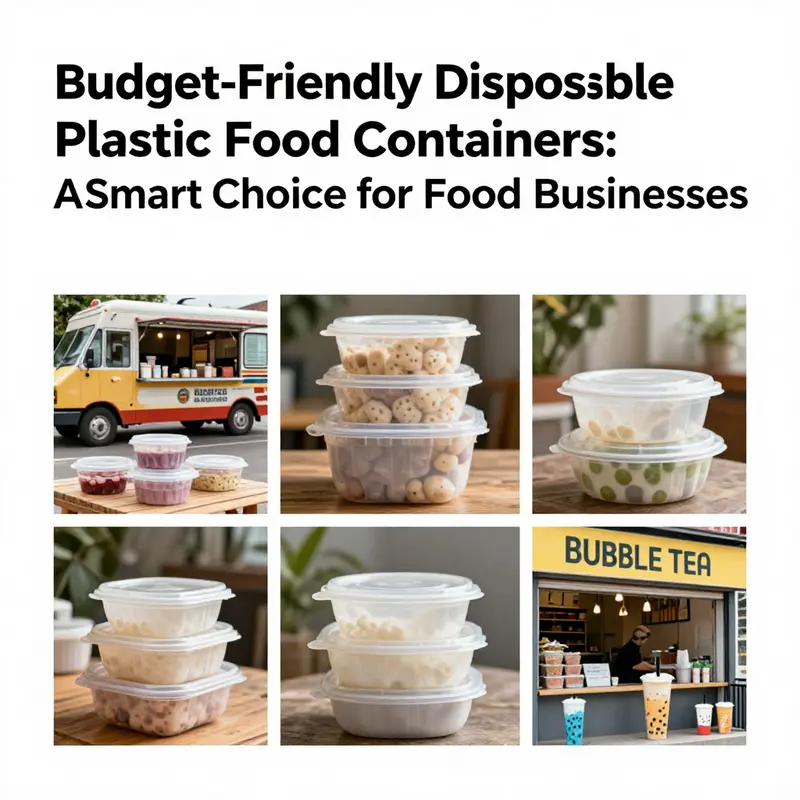
在全球餐饮供应链的快速移动中,廉价一次性塑料食品容器的作用并非仅仅止于经济性。它们的多样性——在材质、形态和封装设计上的微小差异——直接决定了快餐、宴会、校园餐饮乃至家庭日常的包装体验。对于采购者来说,理解这些差异,远比单纯追求最低价更关键。价格驱动的选择并不能完全替代对用途、热处理、运输与品牌形象的综合评估。本文将以材料属性、设计演化与应用场景为线索,缜密地勾勒出廉价容器在现实世界中的多元角色,以及在成本、安全与可持续性之间必须权衡的现实。
与此相呼应的是,消费者与经营者对于稳定供应、交货周期与个性化需求的追求也在推动供应链更高效地响应。当前市场中,聚丙烯(PP)仍然是最具性价比的主力材料。PP的耐热性使其在外卖、餐饮和家庭餐食包装中成为最被广泛采用的选项之一。它的耐热性并非仅限于常温存放,某些PP三格餐盒甚至能够在微波炉中进行再加热,这为餐厅和外卖平台在送餐环节减少了额外的器皿转移成本。然而,任何声称“可无限重用”的说法都需要谨慎对待。尽管PP容器可以重复使用,但考虑到其卫生、外观与结构损耗,长期重复使用往往不是最推荐的策略,尤其在高流量场景中。
在其他材料方面,聚苯乙烯(PS)因其低成本和透明度高的特性被广泛用于冷食、沙拉和冷饮的包装。其优点在于视觉呈现清晰,便于顾客直接查看食品,但耐热性有限,超过75℃易产生变形,因此PS并不是热食或微波场景的首选材料。与之相比,聚对苯二甲酸乙二醇酯(PET)则在耐油性和透明度方面具备一定优势,适用于饮料瓶及某些小型餐盒,然而在高温加热或长期盛放热食方面的适配性相对受限,需要谨慎匹配使用场景。
在设计与结构层面,廉价容器的多样性同样显著。市场上越来越多的容器采用方形、长方形的组合,以最大限度地利用运输和存储空间。方形或方圆混合的盖合设计,辅以加强筋和密封边缘,提升了密封性与抗渗漏能力。这不仅关乎汤汁与酱汁的运输安全,也直接影响到餐后清洁、再加工与分发效率。更细致的分格设计也在逐步成为趋势,尽管大多数仍然以主食、主菜、蔬果分区为核心理念,但在某些场景下,四格或多格组合餐盒能够有效防止串味,并帮助餐饮业实现标准化分餐。
应用场景的广度是这些容器的核心魅力之一。外卖行业毫无疑问是它们最主要的战场。外卖企业追求高效、低成本的包装解决方案,以降低运输过程中的损耗和成本,同时确保食物在到达时仍能保持口感与温度。对中小型餐饮、酒店及航空餐食供应链而言,批量采购的规模经济可以显著压低单价,从而使得大规模的日常配送更加稳定。对于家庭和个人用途,这类容器也提供了便捷的解决方案。临时就餐、野餐、家庭聚会或旅行携带餐食时,轻便、无须清洗的性质成为被广泛采用的理由。
在活动与会议场景中,成本效益与供应灵活性同样重要。宴会、婚礼或公司团建等活动往往需要大批量、快速、卫生的餐饮包装。廉价的一次性容器在这些场景中提供了高效的替代方案,减少了餐具洗涤与返还环节的后勤压力。与此同时,食品储存和预包装的需求也在上升,容器的密封性、耐储存性和耐温性在这些场合尤为关键。
从环保角度看,尽管传统的廉价容器以低成本著称,但市场也在逐步引入环保材料与替代设计。可降解材料,如玉米淀粉混合少量PP的组合,正在市场上出现,借助降解助剂降低碳足迹。此类材料通常力求在保持强度与外观的前提下,减少对环境的长期影响。然而,环保替代品在成本、加工难度和与现有生产线的兼容性方面仍面临挑战,因此在大规模、日常性采购中,廉价PP及其他传统材料仍然占据主导地位。
在采购与合规方面,选择合适的容器不仅仅是看价格。大量的批发采购往往伴随着明确的认证与标准要求。国家层面的食品接触材料标准为不同材料的迁移限量、耐热性和食品安全指标设定了统一框架,确保包装在各类场景下的安全性。因此,采购方在选择时应关注是否具备CE/EU认证等欧洲市场的合规标识,以及是否符合本地及国际的食品安全标准。只有在具备相应认证的前提下,容器的广泛应用才能在跨区域、跨场景的运营中实现可控性与信任度。
在供应链与采购渠道方面,区域分布广泛的制造商网络是实现大规模稳定供给的关键。大多数供应商能够提供定制化服务,如印刷、尺寸与颜色等,以帮助品牌在后续产品包装中实现统一视觉呈现。对于想要快速进入市场的企业来说,先申请免费样品、验证质量与适配性,再以批量采购推进是一个理性路径。对于大量订单,某些场景下甚至出现极低的单价,例如在特定材料与规格组合下,30,000,000件起订的批量价格可降至每件约0.09美元,成为市场上极具竞争力的选择。
在计划长期供应时,品牌与采购团队需要对不同场景的需求进行清晰划分。外卖高峰期的需求节奏、企业团餐与学校膳食的日常用量、以及家庭日常备餐的灵活性,都会影响到采购策略。通过对材料属性、封装设计、以及运输和存储条件的综合评估,企业能够在成本控制与用户体验之间找到最佳平衡点。与此同时,供应商的定制能力与交货周期也将直接影响到运营的灵活性。
在这一切背后,仍有一个不可忽视的现实:成本并非唯一驱动因素。包装的形态、密封性、耐温性、可追溯性以及对品牌形象的影响,都会在采购决策中发挥作用。一个看似微小的选择——例如一个三格微波餐盒的内部结构设计,或是方形盒的叠放效率——都可能在日后的运营中带来显著的成本节省与服务提升。对于希望在竞争激烈的餐饮市场中保持持续性、稳定性与合规性的企业来说,理解并应用这些细节,往往比单纯追求最低价更为重要。
在不同场景下,产品价格也呈现出明显的梯度。普通一次性塑料容器的价格区间通常在每件0.03至0.10美元之间,批量起订通常在20,000件左右。若追求带盖、可微波加热等高端功能,价格可能处于每件0.192至0.39美元的区间,且通常需要更大规模的订单以实现成本有效性。对于需要先行测试或小批量试用的客户,部分供应商提供样品服务,价格可能低至每件0.01美元,便于评估耐用性、密封性与食品兼容性。
从实际选择角度看,供应渠道的地理分布也影响成本与交货时间。以区域性生产基地为主的市场,能够提供更短的供货周期、降低运输成本,并更易实现本地化的定制与服务。这也解释了为何广东、上海等地的制造商成为全球采购者的重要来源。对品牌而言,定制化服务如印刷、颜色和尺寸的个性化,往往能在市场上提升辨识度与用户黏性,但需要在成本与时间窗之间做出权衡。
为加强采购决策的透明度,许多供应方在提供价格信息的同时,也给出相关的安全与合规提示。以市场监管与标准为基底,食品接触材料的迁移量、消耗量等指标被严格监控,确保包装材料在接触食品时不会对健康造成潜在影响。对于跨区域运营的企业,了解并遵守相应地区的标准与认证,能够有效降低合规风险,提升品牌在不同市场的进入门槛与信任度。
在综合评估之下,最佳性价比的组合往往因场景而异。对大规模外卖与日常餐饮供应,PP三格微波餐盒在成本与功能之间提供了优越的平衡;对需要极简展示和温度管理的冷食场景,PS和PET的选择可能更符合需求;而在强调可降解与低碳足迹的品牌策略中,可降解材料的应用则成为长期考虑的重要组成部分。无论选择哪种路径,关键在于将材料属性、封装设计、供应链能力与认证标准整合成一个可执行的采购方案。
若将注意力转回到供应链的细节,一项不容忽视的现实是样品验证的重要性。在正式下单前取得免费样品,测试其耐温、密封性、表面光洁度以及对食品的相容性,可以显著降低后续的退货与换货风险。通过样品阶段的反馈,企业可以更精准地调试包装方案,确保在不同的运输与储存条件下仍保持最佳性能,这对于维持品牌体验与客户满意度至关重要。
在未来,随着材料科学的进步与环保法规的更新,廉价一次性塑料容器的生态足迹与功能边界将继续被扩展。市场将趋向于在成本、性能与可持续性之间形成新的平衡点。尽管当前主流仍以成本优势为核心,行业正在逐步探索更高效的回收体系、可降解材料的改良以及更智能的包装设计,以实现更广泛的应用覆盖与更低的环境影响。对采购者而言,保持对材料与认证的敏感度、对供应链周期与成本的严谨评估,以及对品牌形象的清晰定位,将是实现长期竞争力的关键。
为了方便读者进一步了解市场的实际布局,可以在供应商目录中查看“disposable-dinnerware-tableware”这一品类,里面汇集了多种一次性餐具解决方案,便于在不同场景之间进行对比与选择。你可以访问该栏目并结合自己的需求进行筛选与评估,以实现从试用到规模化采购的平滑过渡。 disposable-dinnerware-tableware
在跨地域、跨场景的运营中,掌握标准与认证的重要性尤为突出。国家层面的标准为产品的安全性提供了基础保障,也为企业在全球市场中的合规性提供了清晰的指南。了解并遵守GB 4806.7-2023等食品接触材料的最新规定,以及GB/T 18006.3-2020等树脂标准,对维持高安全性、降低合规风险具有直接意义。通过与供应商共同建立符合这些标准的质量控制体系,企业能够在日常采购、产品包装与市场推广之间实现更高的一致性与信任度。
在这条不断变化的路径上,价格、材料、设计和合规共同构成了廉价一次性塑料容器的现实图景。它们的多样性不仅体现在不同的材料本身,还体现在对场景需求的响应速度与灵活性上。无论是快速送达的外卖、需要标准化的团餐,还是家庭日常的临时储存,这些包装解决方案都以低成本换来高效、便捷的用户体验。只要对应用场景、材料特性与供应条件有清晰的认识,便能在成本与性能之间找到最合适的平衡点,推动企业在竞争激烈的市场中持续稳健地前进。
外部信息资源方面,关于食品接触材料的标准和规定可以在官方渠道查阅,以获得最新版本的条款与解释。如需进一步了解标准的官方公告,请参阅: https://www.samr.gov.cn/zwgk/fgs/202309/t20230915_364782.html
Cost, Confidence, and Compliance: Navigating the Tradeoffs of Cheap Disposable Plastic Food Containers
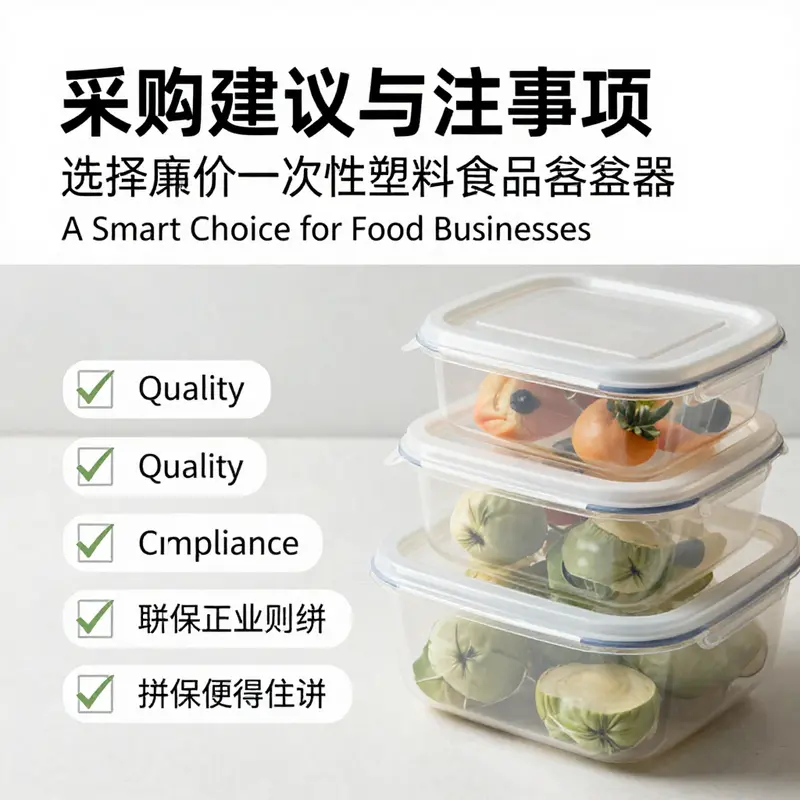
Cost dominates the decision matrix when organizations source disposable plastic food containers in bulk, yet price alone cannot guarantee safety, performance, or long-term value. The chapter that follows binds price signals to material science, regulatory guardrails, and practical procurement tactics. It speaks to buyers who must balance the lure of ultra-low unit costs with the realities of supply reliability, food safety, and brand risk. In a marketplace where the cheapest option may appear irresistible, a disciplined approach that combines data, inspection, and tested supplier capability yields more stable outcomes over time. The core idea is simple: cheap containers sell safety short if they cut corners on materials, labeling, or process controls. A comprehensive procurement stance respects price as a lever, not a proxy for quality, and anchors decisions to verifiable standards and verifiable sources.
The price landscape for disposable plastic food containers shows a spectrum that stretches from modest bulk pricing to the lower reaches of wholesale scale. Data collected as of early 2026 highlights a dominant, cost-effective option: polypropylene (PP) three-compartment microwaveable containers that can be ordered in very large quantities. When the order size climbs into the tens of millions of pieces, the unit price can dip to around nine cents per piece. That is not a marginal saving; it reshapes margins for large-scale operators who depend on predictability and uninterrupted supply. For smaller pilots or trials, suppliers may offer samples priced around a penny per piece, enabling quick feasibility checks without a heavy upfront commitment. The general consumer-grade range sits roughly between three and ten cents per piece for standard, single-use containers when minimum order quantities begin at around twenty thousand units. At the higher end of the spectrum, specialized features—containers designed to be microwave-safe, with lids, or with enhanced rigidity—can push unit costs toward twenty cents to nearly forty cents for very large orders.
Material choice remains the hinge on which cost, performance, and safety rotate. Among the myriad plastics used in disposable food packaging, PP stands out for its blend of affordability, heat tolerance, and safety profile. PP-based containers are commonly rated for microwave use and are widely marketed as BPA-free, which aligns with consumer expectations in many markets. The availability of a three-compartment layout—often with a separate lid and a design that supports stacking and transport—further tightens the value proposition for takeout, catering, and event services. Manufacturers frequently advertise PP as a workhorse material because it tolerates hot foods, resists cracking under ordinary handling, and remains comparatively inexpensive in bulk. In some segments, however, a push toward sustainability has led to hybrid formulations that mix corn starch with small amounts of PP to claim compostable or reduced-carbon footprints. These eco-conscious offerings attempt to reduce the carbon burden, yet they introduce trade-offs in strength, barrier properties, and compatibility with long-range storage or high-temperature applications.
A practical takeaway for buyers is to align material choice with the intended use. For ready-to-eat, hot meals that travel long distances, a robust PP three-compartment option is a reliable baseline. If the product is positioned as environmentally friendly, it is critical to verify claims through third-party certifications and clear labeling. The landscape also includes general-purpose or non-microwave plastics that are cheaper but not suitable for hot foods, and thus carry hidden costs when misapplied. The guiding rule is simple: insist on a material that matches the use case, and verify that it is explicitly labeled for the conditions it will encounter in real-world service. For those who want to emphasize sustainability without sacrificing performance, a transparent plan should be built around validation of compostability claims, the balance of mechanical strength, and the end-of-life options that customers expect from an eco-conscious brand.
The roles of suppliers and purchasing channels deserve careful attention. In many markets, a productive path to scale runs through factories in major manufacturing hubs—regions known for established plastic goods industries. The data points emphasize suppliers concentrated in high-volume production centers. For buyers, such geography translates into steady capacity, predictable lead times, and the possibility of tailoring the product through customization—print, size, color, or packaging format—to support brand differentiation. If customization is a strategic objective, the route typically involves negotiating with manufacturers that offer printing or labeling services alongside base packaging. The presence of a formal certification regime becomes essential in this context; buyers should seek products that carry recognized safety or quality marks and, ideally, traceable production information. It is not sufficient to rely on a price quote alone; the quote must be accompanied by documentation that verifies the item’s compliance with safety and regulatory standards relevant to the target markets.
From a procurement practice standpoint, the chapter draws a practical map. First, secure samples before committing to any large-scale purchase. This is particularly important when evaluating a low-cost supplier: a $0.01 per piece sample can illuminate practical realities such as surface finish, material consistency, and the ease of sealing with lids. Second, evaluate the product’s labeling and documentation. The packaging should clearly indicate the material (for example, PP or PS), the intended use (food contact), and the relevant standards and licensing information. Look for phrases that confirm food-contact compliance, such as references to the material’s suitability for microwaves, or explicit notes on heat resistance and cleanability. Producers who can provide the production lot, manufacturing date, and contact details for the facility are advancing toward a transparent supply chain. Third, consider the certification landscape. In the European context, for instance, CE or EU-related documentation signals alignment with safety expectations in the market. While the specifics vary by region, the presence of verifiable regulatory approvals is a universal confidence booster for buyers.
The most practical recommendation remains anchored in a specific, cost-efficient option that aligns with the price-performance balance many buyers seek. The recommended product category centers on a disposable PP three-compartment microwaveable lunch container, ordered at very large volumes. It embodies the fundamental advantages of this class: low unit cost at scale, compatibility with microwave heating, and a material base that is widely accepted in food service contexts. While the lure of price is strong, the chapter stresses that cost per unit must be interpreted alongside total landed cost—shipping, duties, potential waste if a supplier underdelivers, and the risk of recalls or reputational damage if safety standards are not met. The calculus is not simply the price tag but the reliability of the supply chain and the integrity of the product as it moves from the warehouse to the consumer’s hands.
For buyers who want to explore the breadth of options within a single, coherent product family, the disposable lunch boxes category can be a useful starting point. It presents a spectrum of designs that share the core PP-based thermoplastic matrix while accommodating different configurations, sizes, and lid mechanisms. By navigating this category, buyers can compare formats that fit into existing foodservice workflows, whether for takeout, catering, or in-house meal programs. See the category page for a concise view of what is possible and how different configurations affect packing density, stability during transit, and user experience. This streamlined approach reduces the risk of mismatches between product performance and operational needs, while still retaining the ability to pursue cost efficiencies as volumes scale.
From a sourcing perspective, the strategic takeaway is simple: prioritize supplier reliability, material safety, and clear labeling over discount-driven decisions. A supplier’s ability to deliver documented specifications, respond with timely quotes, and provide test samples builds confidence that the unit price is not at odds with safety and performance. In a market where demand can surge in response to seasonality or promotional campaigns, the stability of supply becomes a critical differentiator. A supplier that can consistently meet lead times and maintain quality under batch testing incurs a premium, but that premium protects downstream costs associated with spoilage, warranty claims, and customer dissatisfaction. The best practice is to demand a holistic quotation package, including material data sheets, test results, and a clear statement of compliance with applicable food-contact standards.
The procurement narrative would be incomplete without acknowledging the regulatory and consumer-facing consequences of cheap, poorly documented containers. History in the sector shows how non-compliance or subpar materials can lead to recalls, negative publicity, and market access challenges. A cautious buyer will not celebrate the lowest price in a vacuum; rather, they will celebrate the lowest price that also guarantees safety, performance, and the ability to honor commitments to customers. This is where the governance dimension matters. A well-chosen supplier will offer transparent documentation, verifiable certifications, and robust after-sales support. They will also be prepared to discuss the end-of-life path for their products, including whether the containers are compatible with common recycling streams or if they are intended for single-use only. The goal is to minimize lifecycle risk—ensuring that cost savings do not translate into hidden costs borne by consumers, partners, or regulators.
In the tapestry of best practices, one practical rule anchors decisions: do not equate low price with low risk. An item priced at a fraction of common market rates might reflect recycled-content content or inferior process controls. A lower price tag can also signal limited quality assurance documentation, limited batch traceability, or less robust supplier capacity. The risk is not merely cosmetic; it spans potential contamination, improper heat tolerance, and the possibility of mechanical failures that compromise seal integrity. The recommended course is to build a procurement dossier that includes a clearly defined specification, a supplier audit plan, a sampling protocol, and a qualification framework tied to the intended application. The dossier should also embed a risk management plan that contemplates recalls, customer complaints, and corrective actions. Along this path, the chapter’s spirit—steady, informed, and transparent—helps buyers safeguard both their brands and their customers.
The narrative would be incomplete without acknowledging the practical and regulatory touchstones that guide responsible purchasing. A credible reference point for buyers seeking authoritative guidance on food-contact packaging is a government-backed consumer safety resource that outlines best practices for selecting and using disposable food containers. This resource emphasizes the importance of complete product labeling, explicit material identification, and documentation that confirms compliance with applicable safety standards. It also cautions against the use of containers that bear dull finishes, rough surfaces, or odor issues, all of which can hint at inferior materials or manufacturing shortcuts. By foregrounding these guardrails, buyers can reduce the risk of disseminating unsafe packaging into the food chain and can preserve consumer trust in their programs.
To connect theory with practical steps, the chapter points to a gateway for further exploration of product categories that align with these objectives. For readers who would like to survey the broader range of disposable ware, the category pages on the sourcing platform offer a consolidated view of options, including disposable lunch boxes and related tableware. These pages offer a practical entry point for comparing formats, evaluating customization, and gauging supplier responsiveness. The emphasis remains on finding a balance between cost and confidence: the cheapest option that reliably meets safety standards and can be delivered on time with consistent quality. In practice, this often means selecting a PP-based, three-compartment microwave-ready container, placing an initial sample order to verify performance, and then scaling up once the supplier demonstrates reliability at the required volumes.
As you navigate this landscape, remember that price, material, certification, and supply chain reliability are mutually reinforcing criteria. A well-planned procurement approach can secure a stable, low-cost supply without compromising safety or reliability. The objective is not merely to minimize spending but to maximize the value of each container—the confidence it affords to foodservice operators, the clarity it provides to regulators and customers, and the operational rhythms it supports for large-scale programs. The synthesis of these elements—price signals, material intelligence, and governance—constitutes the backbone of prudent purchasing in a market where cheap disposable plastic food containers are widely used but never truly free of risk.
Internal resource for further reading: explore the disposable lunch boxes category to assess available formats, customization options, and practical compatibility with existing workflows. See the link below for a consolidated view of related products and configurations: disposable lunch boxes.
External reference for broader context and validation: for an example of supplier-scale listings and price benchmarks in bulk packaging, see the following resource. https://www.alibaba.com/product-detail/Disposable-PP-Plastic-Takeaway-Food-Packaging_1600672485283.html
A note on verification: the cost figures and supplier capabilities mentioned in this chapter reflect data available as of January 2026 and are subject to change with currency shifts, freight costs, and regulatory updates. Buyers should therefore request current quotations, confirm available certifications, and review the most recent safety data before finalizing any large-scale purchase.
Authoritative regional guidance cited in the literature also reinforces careful selection criteria. A local government resource provides practical tips on choosing food-contact packaging, including verifying labeling, ensuring food-contact compliance, and understanding safe usage practices. This guidance underscores the essential practice that containers must be appropriate for the intended use, properly labeled, and supported by traceable supplier information. By integrating these safeguards into the procurement workflow, buyers can strike a resilient balance between cost efficiency and consumer safety, ultimately delivering value that endures beyond a single purchase cycle.
Final thoughts
Understanding the diverse offerings and strategic advantages of cheap disposable plastic food containers empowers food businesses to enhance service delivery while remaining cost-effective. From pricing strategies and material advantages to varied applications and procurement best practices, the insights provided throughout this guide enable businesses to make informed decisions tailored to their unique circumstances. As you consider redefining your packaging approach, remember that combining affordability with quality can elevate your brand perception and operational efficiency.