
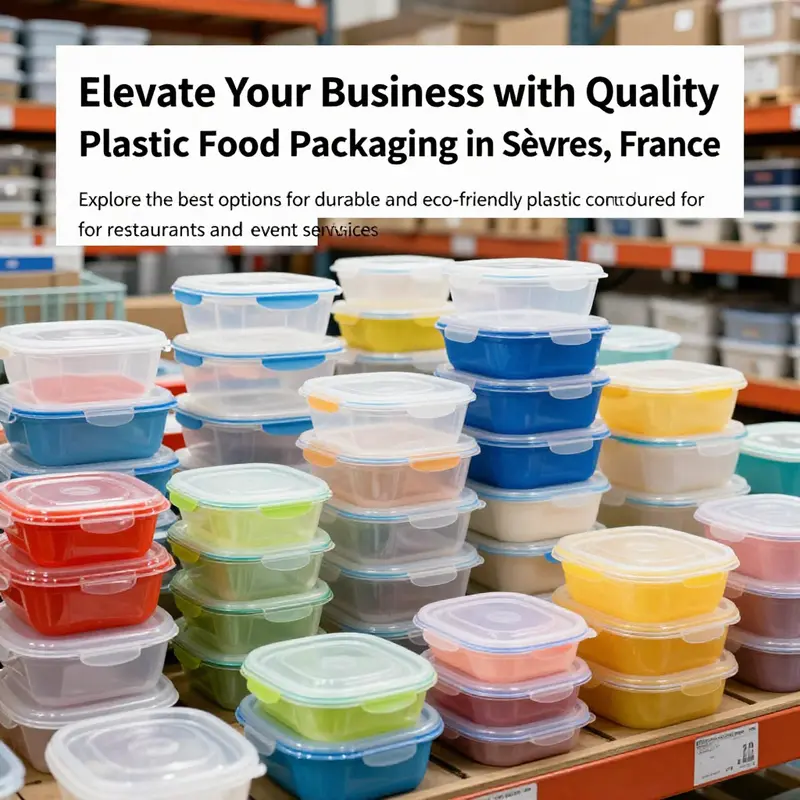
Plastic food packaging containers have become a cornerstone for businesses in Sèvres, France, especially in the vibrant food service industry. Due to the unique needs of Bubble Tea shops, restaurants, food trucks, and catering services, it is crucial to understand the range of containers available, the materials that ensure safety and sustainability, and current market trends that influence product choices. This guide will delve deep into each aspect, focusing on four key areas: common types of containers, material specifications, market trends, and environmental considerations, concluding with insights into local suppliers, ensuring your business has access to the best products available. Let’s embark on this journey to enhance your packaging solutions that align with contemporary needs.
From Takeout to Table: The Subtle Architecture of Plastic Food Containers in Sèvres, France
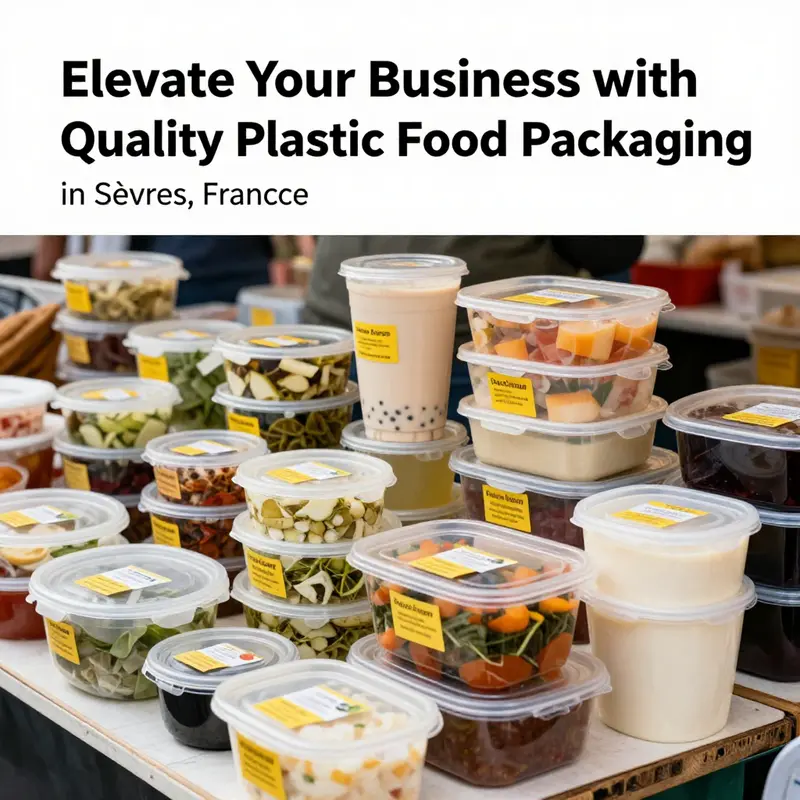
In Sèvres, as in many European towns that sit at the crossroads of tradition and modern logistics, the plastic food container is more than a simple carrier. It is a living interface between a meal and a moment of consumption, a tiny architecture that shapes how food is perceived, stored, heated, and finally disposed of. The containers that circulate in and around Sèvres—from the takeout boxes that arrive at a café counter to the reusable jars tucked into a family kitchen—embody a network of choices about safety, convenience, and responsibility. To understand their role in this specific locale is to glimpse how urban life negotiates the demands of rapid service, domestic practicality, and environmental accountability within the framework of European and French regulations.
From Materials to Meals: Standards for Plastic Food Containers in Sèvres, France
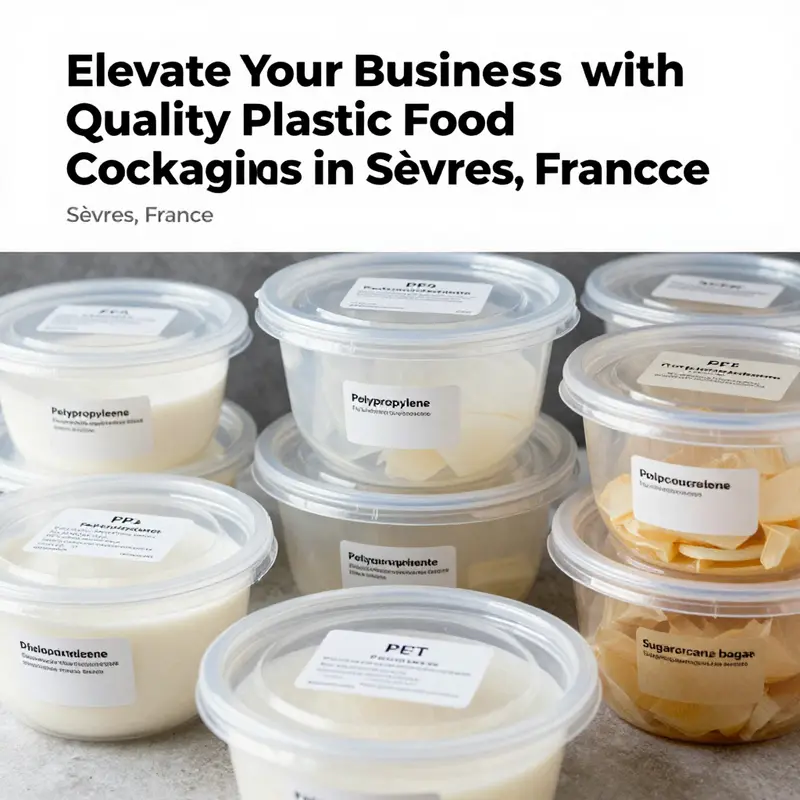
In Sèvres, a town known for careful civic planning and cultural heritage, the choice of plastic food containers is never just about cost or convenience. It sits at the intersection of rigorous European safety rules, evolving environmental expectations, and the daily realities of households, schools, and local eateries. The European framework governs what materials can touch food, how those materials must perform under ordinary and exceptional conditions, and how packaging should be designed for recovery and recycling after use. The most recent regulatory and technical trade measures, including the 2026 edition of the Technical Trade Measures Bulletin, define a framework of tests, limits, and performance criteria that every container must satisfy to enter the market in France and across the bloc. This chapter weaves those material specifications into a coherent narrative, linking the science of polymers to the everyday act of packing a meal to be stored, warmed, or transported in the healthy, urban environment of Sèvres.
At the core are raw materials that are food-grade and virgin, with a strict prohibition on using recycled content or any material containing harmful additives. The substances that cause concern—bisphenol A, lead, and phthalates—are not allowed to be part of the food-contact layer. Materials must pass the REACH evaluation and the safety assessments conducted by EFSA. These provisions reflect a precautionary approach that aims to prevent chemical migration into food and to protect human health across a broad continuum of products, from single-use takeaway boxes to durable, reusable containers. In practice, manufacturers must select polymers that present stable interfaces with food and resist the challenges of real-world use, including repeated cycles of heat, cold, and mechanical stress.
Beyond composition, the containers must prove their mettle through targeted physical and mechanical tests. A drop from 0.8 meters onto a concrete surface should not yield cracks or delamination, ensuring that the container protects its contents during transport and handling. When the design anticipates hot liquid or oil exposure, the material must withstand a temperature of 100 degrees Celsius plus or minus five, without deforming, peeling, or wrinkling. The science behind these demands is codified in the published performance thresholds for common polymers: polypropylene should offer a flexural strength of at least 25 MPa, polystyrene at least 40 MPa, and ABS at least 60 MPa. The fork stiffness criterion—more simply, the force required to bend or pierce testing forks—demands a minimum of 10 newtons to prevent puncture by utensils. These figures may appear abstract, but they translate directly into safer, more reliable packaging that preserves food integrity in kitchens and service lines around Sèvres and beyond.
Sanitary safety also matters. Each container is expected to harbor a microbial load that is effectively negligible—well below 10 colony-forming units per item for total aerobic count. At the same time, the total migration of chemicals from the container into a food simulant must not exceed ten milligrams per square decimeter, a figure that blends caution with realistic exposure scenarios. Even when color fastness appears to pass migration tests, a noticeable color shift after contact with a simulant would render a product unfit for market because consumer perception can override compliant chemistry. Together, these requirements create a difficult but necessary standard for a category of products that people rely on daily for meals, snacks, and school lunches.
For microwave-safe products, additional testing ensures there are no sparks, no odors, and no structural weaknesses when heated. The container should maintain its shape, avoid trapping steam in a way that causes bursting, and resist the migration of any additives that might compromise safety. In a city like Sèvres, where households frequently reheat meals in household microwaves or heat lunches for students and workers, these capabilities are not a luxury but a necessity. The emphasis on both safety and performance reflects a broader European objective: packaging that does its job reliably without compromising the food or the user.
Several polymers stand out for different use cases. CPET, or crystalline polyethylene terephthalate, offers a remarkable temperature window that spans from sub-zero to well above the boiling point of water. It can tolerate microwaving and, in some designs, even oven heating, which makes it a preferred choice for meals stored cold and heated directly before consumption. Polypropylene, a workhorse of the industry, combines heat resistance with durability and light weight, making it ideal for restaurant takeout, leftovers storage, and everyday reuse. Polystyrene, though rigid and clear, must be used with caution where high temperatures are anticipated, because its performance can degrade under hot oil contact. And then there is the biodegradable option derived from polylactic acid, commonly associated with sustainability labeling, which is compatible with EU ecological criteria. One eco-conscious option is PLA-coated takeaway packaging that illustrates how manufacturers balance heat tolerance with end-of-life considerations. Such materials demonstrate how a city like Sèvres can blend comfort with responsibility, offering products that meet the technical requirements while steering toward a circular economy. The choice among these materials is rarely about a single criterion; it is about a package that survives the rigors of transport, storage, reheating, and disposal while remaining compliant with safety standards and environmental goals.
The European Union’s push toward a circular economy has practical implications for packaging design. Containers are increasingly expected to be designed for easy disassembly and sorting, with a preference for single-material configurations when feasible. A PP‑based system, or a CPET‑based solution, often yields higher recycling rates than mixed-material constructs. In Sèvres and similar urban centers, producers and buyers are mindful that a product’s end-of-life impact matters as much as its performance in use. The preference for recyclable, and in some cases compostable, options is shaping procurement choices for schools, hospitals, and municipal facilities, where consistent quality and traceability become as important as price. When designers and producers think about supply chains, they also consider the weight, stackability, and labeling requirements that influence how containers travel from factory floors to kitchens and bins across the metropolitan area.
Ultimately, the material specifications for plastic containers in Sèvres rest on a balance between safety, practicality, and responsibility. The standards translate complex chemistry and testing protocols into everyday objects that keep food safe, preserve flavor, and minimize environmental footprints. The interplay of regulatory demands, performance requirements, and consumer expectations creates a dynamic design space where engineers, manufacturers, and purchasers must collaborate. The next chapter expands the lens to consider the regulatory apparatus and the regional supply network—how suppliers interpret the rules, source virgin polymers or certified recyclables, and verify compliance through testing and documentation. In the meantime, stakeholders in Sèvres can appreciate that material choices—down to the polymer grade and the migration limit—have real consequences for public health, urban cleanliness, and the city’s reputation for thoughtful, high-quality urban living.
External reference: For the regulatory framework, see the EU’s Food Contact Materials Regulation. https://ec.europa.eu/growth/sectors/food-contact-materials_en
Choreography of Choice: Sèvres, France and the Packaging Dialogue
In the quiet edge of the Île-de-France region, near Paris, Sèvres sits at the crossroads of daily life and logistics. Plastic food containers are practical tools for storage, transport, and reuse, while also becoming touchpoints for safety, recyclability, and end-of-life clarity.
Across France, the packaging market is maturing toward designs that balance utility with lower material use and clearer recycling instructions. Polypropylene and PET remain common due to durability and compatibility with recycling streams, even as consumers seek greener formats and safer materials.
Regulation guides local choices. The European Union directives, including single-use restrictions, nudge shops and households toward recyclable, reusable, or compostable options. In Sèvres, retailers and residents respond with products that resist leaks, withstand washing, and feature plain labeling about sorting and disposal.
Innovation centers on circularity: packaging that can re-enter the economy after use, smart labels that aid waste streams, and formats that minimize weight while preserving safety. A town like Sèvres benefits from modular, recyclable shapes that simplify inventory and reduce confusion at the curb.
Sourcing remains pragmatic. Even without a locally produced line, Sèvres can curate an assortment that prioritizes safety, performance, and lifecycle thinking by working with regional distributors and European suppliers who emphasize recyclability and clear end-of-life instructions.
Breathing Space for Sèvres: Environmental Realities and the Move Toward Safer, Reusable Containers in a French Urban Context
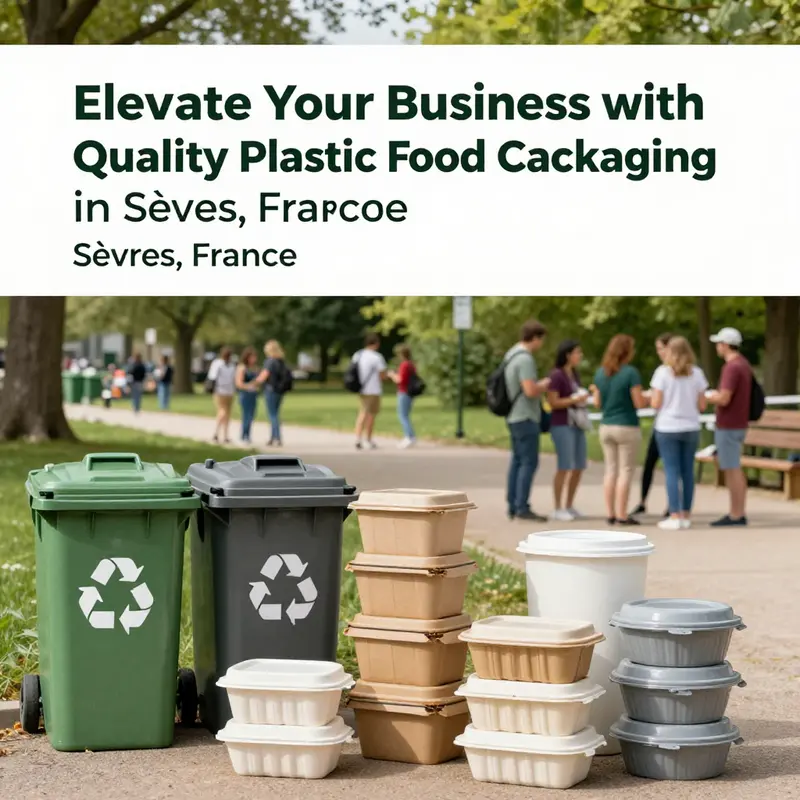
In the tightly woven fabric of Sèvres, a town near Paris, plastic food containers occupy a quiet, persistent role in daily life. They accompany meals at home, hold leftovers in busy kitchens, and travel from shops to street corners as meals move through a city that values both efficiency and care for the environment. Yet beneath everyday utility lies a complex web of material science, public policy, and consumer behavior that shapes what happens to every container after its first use. The European frame that envelopes Sèvres—its standards, its recycling targets, and its evolving approach to materials in contact with food—creates a backdrop in which local choices gain broader significance. In this sense, the question becomes not just what containers look like or how long they last, but how their entire lifecycle aligns with public health, ecosystem safeguards, and urban waste systems that are increasingly pressed to optimize performance and minimize harm.
At the material level, European markets have long favored certain plastics for food contact applications, with materials such as polypropylene and various polyethylenes standing out for their safety, resilience, and practicality. In everyday use, these plastics are chosen for their ability to withstand the temperature ranges of typical household routines, including microwave and dishwasher cycles in many households and cafés that favor fast, reliable service. In Sèvres and the surrounding Île-de-France region, these choices are reinforced by supply chains that reflect European specifications for food safety and packaging performance. But safety does not rest solely on a material’s claimed properties. It is also shaped by what happens to a container after its initial life is over. The European Commission has highlighted a persistent problem: the original composition of post-consumer plastics often carries NIAS—non-intended additives whose identities can be unknown once the material leaves the consumer’s hands. This uncertainty complicates safe recycling, because determining whether a collected item can be confidently repurposed for food contact becomes difficult when hidden substances could migrate into food at later stages. In practical terms, this means the containers we take for granted today may carry a history that is not immediately visible, including prior exposure to detergents, fuels, or pesticides, and the risk that those residues migrate into future uses if the material is recycled.
The recycling narrative, then, is not simply one of turning plastics into new products. It is a story of quality, traceability, and the readiness of recycling streams to manage residues and contaminants. In Sèvres, as in many urban centers across Europe, the challenge is to preserve the functional benefits of plastic containers while addressing the realities of end-of-life management. The quality of recycling is intrinsically tied to the cleanliness and provenance of containers, and to the ability of post-consumer streams to separate compatible materials from those that carry higher risk of chemical migration. This is not a theoretical concern; it translates into concrete policy and practical realities—how households sort waste, how local facilities process mixed plastics, and how businesses design packaging with end-of-life considerations in mind. The result is a continuous tension between convenience and precaution, a tension that pushes designers, manufacturers, and consumers to reimagine what packaging can and should do in a city like Sèvres.
Global trends amplify these local concerns. Data show that plastic production continues to rise rapidly and that a relatively small fraction of all plastic ever produced is recycled, underscoring the urgency of rethinking packaging strategies. More than half of all plastic ever produced has occurred since 2000, and current forecasts suggest that production could double by 2050 if consumption patterns remain unchecked. In parallel, the recycling rate remains a stubborn bottleneck—roughly around one-tenth of plastic ever produced is recycled, with the rest diverting into landfills or leaking into the environment. For a town like Sèvres, this macro-level picture translates into real local implications: each choice about the containers used in homes, stores, and eateries contributes to a larger trajectory of waste management, resource use, and environmental footprint. The micro-scale consequences—litter along the Seine, microplastics infiltrating waterways, and the long-term persistence of plastics in ecosystems—reverberate beyond property lines and remind residents that material decisions have ecological echoes far from the kitchen counter.
Regulatory action has begun to tilt the balance toward safer materials and more responsible use. In recent years, the European Union has moved to curb the use of hazardous substances in food contact materials, including restrictions on certain bisphenols such as BPA. While local policies in Sèvres align with broader French and European aims to reduce reliance on single-use plastics, they also actively promote reusable packaging, enhanced waste sorting, and a transition toward materials that are more readily recyclable or compostable where feasible. The practical upshot is that Sèvres residents and businesses face a landscape that rewards choices rooted in durability, recyclability, and a clear end-of-life pathway. When a café in a nearby urban corridor opts for containers designed for reuse, when a household prioritizes durable PP or PET containers that fit into the city’s recycling stream, or when a school program emphasizes waste-minimizing practices, those decisions reinforce a sustainable trajectory that mirrors policy ambitions without sacrificing everyday convenience. In this sense, the environment in Sèvres becomes a classroom of sort, where students observe how policy, science, and daily behavior converge to shape material flows.
The practical texture of packaging choices in Sèvres is also influenced by the broader availability of non-plastic alternatives. While plastics remain dominant for reasons of cost, weight, and barrier properties, there is a visible shift toward biodegradable and compostable options in certain contexts. Sugarcane bagasse and other plant-based materials are increasingly found in take-away settings, offering a different end-of-life profile and signaling a consumer willingness to consider options beyond conventional plastics. However, these alternatives are not produced locally in Sèvres, and their adoption depends on wider European supply networks and municipal waste infrastructure. The presence of these options in the regional marketplace reflects a significant shift in consumer expectations and business models, suggesting that a future in which reusable or easily recyclable packaging becomes the norm is not merely aspirational but increasingly feasible.
In guiding thinking about Sèvres’ packaging future, one must also consider the connective tissue of the supply chain. Even in a town with no clearly identified local producer of plastic food containers, the flow of materials from regional distribution centers, wholesalers, and international suppliers creates a complex network that ultimately feeds local households and shops. The decision to source containers that are compatible with recycling streams, or to invest in reusable systems, is a function of cost, reliability, and regulatory alignment as much as of environmental values. A practical implication emerges: the local economy can maximize its environmental benefit by aligning procurement with the region’s waste management capabilities and by encouraging producers to design for recyclability, remanufacturing, or reuse. This alignment makes the entire loop of consumption and disposal more coherent and easier to monitor from municipal to household levels, a coherence that Sèvres and similar towns are increasingly seeking as they balance urban life with planetary boundaries.
The social dimension should not be overlooked. Consumer behavior in Sèvres—how households sort plastics, how schools teach about waste, how eateries reuse or recycle—forms a daily chorus that influences litter, contamination, and the efficiency of recycling streams. Public education, clear labeling, and accessible sorting infrastructure are crucial to translating policy into practice. The town’s urban form—its proximity to the Seine, its dense residential zones, and its integration with Parisian life—creates both challenges and opportunities. On one hand, higher population density can drive more waste generation and more pressure on local services. On the other hand, it also affords economies of scale for recycling programs and opportunities for innovative take-back schemes, refill stations, and incentive programs that reward reuse. The narrative of Sèvres thus moves beyond the container itself; it becomes a case study in how a small but environmentally aware community negotiates the realities of modern packaging in an era of climate urgency.
Amid these conversations, practical pathways emerge. Designers and policymakers are increasingly urging packaging that minimizes NIAS exposure risks while maximizing recyclability. From a consumer perspective, choosing containers with a clearly defined end-of-life path, cleaning and sorting properly, and supporting systems that enable reuse can collectively tilt outcomes toward safer, more sustainable practices. In a city like Sèvres, a nuanced approach—balancing convenience with environmental prudence—can be a model for other municipalities facing similar tensions. For instance, when considering the everyday choice between plastic containers and reusable systems for home storage or school cafeterias, the decision weighs durability, safety, and compatibility with local recycling facilities against the convenience of single-use options. The resulting balance is not static; it evolves with advances in material science, shifts in regulatory expectations, and changes in consumer norms. That dynamic is at the heart of Sèvres’ ongoing dialogue about plastic packaging: a conversation that honors the town’s heritage and contemporary commitments while staying attentive to the broader planetary stakes embedded in every container used, reused, or discarded.
In pondering these questions, the chapter invites readers to imagine a future where packaging design serves not merely as a barrier to food spoilage but as a bridge to healthier ecosystems and more resilient urban systems. The emphasis shifts from simply choosing a container to choosing a system—one that acknowledges NIAS, embraces safer materials, and builds robust waste sorting and reuse networks. In Sèvres, this shift is not a distant ideal but a developing reality, threaded through everyday choices, municipal planning, and a European policy environment that continually recalibrates the relationship between food safety, packaging, and the environment. The path forward is collective and iterative, requiring attention to the details of materials, the realities of urban waste management, and the lived experiences of residents who navigate the city’s streets with groceries, lunches, and reminders of the shared responsibility to protect air, water, and soil for future generations.
For readers seeking a concrete illustration of alternatives that align with the spirit of this shift, consider exploring Disposable single-wall paper cup with lid. While this reference points to a paper-based option rather than a plastic container, it echoes a growing interest in materials that fit more readily into circular strategies and reuse schemes in urban settings like Sèvres. The broader takeaway remains clear: the choices made in households, retailers, and schools accumulate into a powerful force that can guide policy and industry toward safer, more sustainable packaging futures. For a deeper understanding of the regulatory framework shaping these choices, consult the European Commission’s guidance on plastic recycling and food safety: https://ec.europa.eu/food/safety/plasticrecyclingen
Paths from Global Supply to Sèvres Kitchens: The Quiet Economy of Plastic Food Containers in a French Commune

In Sèvres, a town steeped in history and located just beyond the bustle of Paris, the story of plastic food containers unfolds not as a tale of a single factory, but as a careful negotiation among local needs, regional distributors, and a larger European and global supply web. The absence of a conspicuously local manufacturer of plastic containers does not mean the town is short of packaging options. Rather, it reveals a compact ecosystem where proximity to urban demand, a cluster of related industries, and the efficiency of cross-border logistics converge to present a practical, reliable menu of choices. A local presence that hints at this ecosystem is Pastacorp, a company catalogued in Sèvres within the bakeware and wheat sector. Its existence signals a surrounding industrial fabric that can support not only baked goods but also the broader packaging supply chain, including plastic containers and related protective or serving ware. Even if the primary focus of Pastacorp is not plastic food containers, its location suggests that a supportive network for packaging exists nearby, capable of sustaining retailers, caterers, and households with timely stock refreshes, standardized sizes, and predictable service cycles.
Across Europe, the materials most commonly used for food contact in consumer containers are polypropylene and PET. These materials balance safety with performance: PP offers resilience, heat tolerance, and a degree of stiffness that suits stacked, space-efficient storage. PET provides clarity, which helps with product visibility in refrigerators and on shelves. In Sèvres and similar urban environments, these attributes translate into everyday realities. Households depend on containers that can endure microwave reheating in some cases, are resistant to leaks, and can withstand the friction of dishwashers without degrading. For cafés and lunch spots, durable, leak-proof options that travel well from counter to kitchen, or from prep area to customer, are essential for smooth daily operation. The European market has long supported these expectations, backed by robust safety and labeling standards that guide manufacturers, distributors, and retailers in selecting formats, lids, and closure systems that meet both consumer needs and regulatory requirements.
Yet even as the local horizon is shaped by European norms, practical procurement in Sèvres hinges on more than material properties. The city’s packaging landscape is sustained by a network of wholesalers who stock consumer-grade boxes and professional catering supplies side by side. The result is a dynamic menu of formats: stackable rectangular boxes for meal prep, clear PET clamshells for quick-service displays, and compact, oven-ready containers that fit into standard kitchen workflows. This mix—where local demand for reliability and ease of use is met by a broad portfolio sourced from regional plants and international factories—creates a resilient supply channel. For a family, it means convenient, reusable containers for leftovers that nest neatly in a cupboard. For a small restaurant, it means the confidence to order in bulk, secure in the knowledge that what lands in the storeroom will perform across a week of service.
The local footprint in packaging is a clue to how Sèvres connects to wider markets. A company like Pastacorp, while not a dedicated producer of plastic food containers, signals a cluster of related capabilities—warehousing, distribution networks, and relationships with suppliers who can provide a range of packaging materials on demand. This proximity matters because it reduces lead times, cuts transport costs, and improves responsiveness to seasonal spikes in demand, promotions, or menu changes. In a city with narrow streets and dense urban life, the punctuality of deliveries and the flexibility to swap sizes or lid configurations mid-season can be a decisive factor in keeping kitchens stocked and back-of-house operations humming. The practical upshot is a packaging system that remains agile without sacrificing consistency or safety. It is this blend of local service capability and access to broader supply that allows Sèvres to stay well supplied in a market where plastic containers are not a luxury but a daily necessity.
Of course, the reality for many buyers in Sèvres is that local production is only one node in a sprawling network. Large-scale manufacturers located elsewhere in Europe or overseas create the economies of scale that keep price points competitive and enable a mix of standard formats and customized options. The global perspective matters because European buyers, including those in Sèvres, routinely engage with suppliers who offer thousands of units in a single order, with variations in lid type, color, size, or branding. For a café with a growing morning-to-evening service or a school catering program that rotates menus, the ability to source a consistent container line from a single supplier, even if the factory is miles away, is invaluable. The trade-off often centers on balancing local service quality with the advantages of bulk procurement from global manufacturers that can deliver uniform performance across multiple sites, while meeting stringent food safety norms and environmental expectations that are increasingly shared across borders.
Sustainability, in particular, has become a shared language in the packaging conversation. In Sèvres, as in many French towns, consumers and businesses alike are asking for packaging that aligns with environmental goals without compromising practicality. This has accelerated interest in alternatives to traditional single-use plastics, including biodegradable materials derived from sugarcane bagasse and other plant-based fibers. These options are especially visible in take-away and catering contexts, where the visual language of eco-friendliness resonates with customers and micro-operators alike. While these compostable or biodegradable formats are not produced locally in Sèvres, their European distribution and growing demand influence what is stocked by local wholesalers. They also prompt conversations about end-of-life management, recycling streams, and how to label containers for consumer clarity. In practical terms, this means a packaging ecosystem where the push for sustainability sits next to the demand for reliability, reusability, and ease of use in both home kitchens and professional settings.
Procurement in Sèvres also reflects the broader realities of global trade. While a local buyer may prefer the reassurance of close-by stock and quick reorders, the scale and customization possibilities offered by overseas suppliers cannot be ignored. Large-volume orders with thousands of sets, as seen on global B2B marketplaces, enable eateries and institutions to tailor packaging to specific needs—whether that means extra-strong lids for hot meals, crystal-clear transparency to showcase a layered dish, or stacking-friendly shapes to maximize freezer or fridge space. The convenience of such arrangements is amplified by distributed European logistics, making cross-border shipments a routine part of operational planning. In practice, a Sèvres-based business can negotiate a mix: a core line of dependable PP or PET containers from a European supplier for daily use, plus a selection of specialized formats sourced from international partners to test new menu concepts or seasonal promotions. This blended approach supports experimentation without sacrificing the predictability that a busy kitchen depends on.
For those who are curious about alternative packaging channels beyond plastic, the packaging ecosystem in and around Sèvres accommodates a spectrum of materials and formats that respond to different use cases. Paper-based and kraft-coated options, often used for takeaway packaging, offer a different balance of cost, branding, and end-of-life considerations. A single internal link to a representative range of take-away packaging formats helps illustrate how plastic and non-plastic options coexist in the same procurement conversation, allowing buyers to compare price, performance, and sustainability attributes side by side. See disposable kraft paper take-away packaging options for a concrete example of how non-plastic formats complement the plastic container lineup in a modern urban setting. This broader view reinforces the point that Sèvres customers are served by a packaging ecosystem capable of aligning with diverse needs, from immediate home use to high-volume catering, with safety and convenience always in focus.
The arc of plastic container availability in Sèvres, then, is not a straight line from a single factory to a few neighborhood shops. It is a layered system that blends local service proxies, regional distribution networks, and the pull of global manufacturing. It is a system that recognizes the essential safety standards that govern food contact in Europe, while also accommodating the demand for practical, everyday solutions. It is a system that, even as it gradually embraces more sustainable materials, keeps a reliable supply chain at its core so that kitchens—whether a family kitchen in a quiet street near the town center or a bustling canteen on a school campus nearby—can plan, prepare, and serve with confidence.
As Sèvres continues to evolve within the wider French and European packaging landscape, the relationship between local presence, regional logistics, and global supplier networks will likely become even more central. The town’s packaging choices will reflect not only price and performance but also shared commitments to safety, convenience, and environmental responsibility. In this context, the plastic food container story is less about a single brick-and-mortar factory and more about the choreography of a supply chain that keeps daily life moving. It is about how a community negotiates between tradition and modernity, how urban households and service providers rely on durable, predictable packaging, and how the broader market, with its mix of local access and international scale, shapes the everyday objects that hold and protect the meals that pass through Sèvres every day.
External reference for further context on supplier landscapes across the region: https://www.importyeti.com/top-companies-in-sevres-france
Final thoughts
Understanding the variety of plastic food packaging containers available in Sèvres, alongside the specifications and trends of the market, not only equips food service providers with essential knowledge but also allows them to make informed decisions that contribute positively to their business and the environment. By prioritizing the selection of high-quality containers, restaurants, catering services, and other establishments can enhance their operation, meet customer expectations, and align with growing environmental responsibilities. Embracing these aspects will ensure long-term success in the competitive food service landscape of Sèvres.