
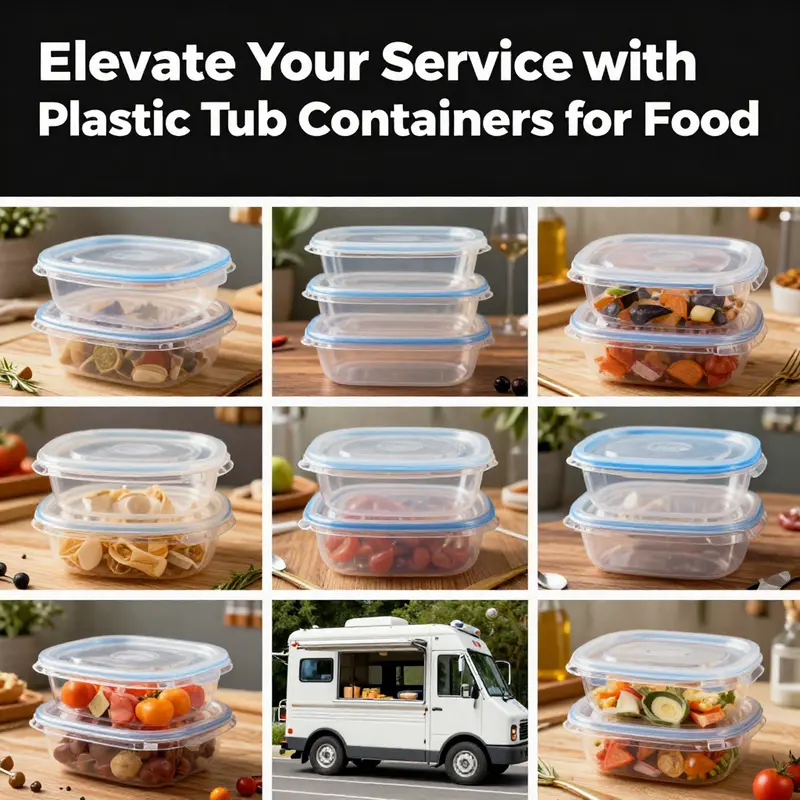
Plastic tub containers have become an essential asset in the food service industry. Their versatility, combined with durability and lightweight properties, makes them ideal for various applications including storage, transportation, and presentation of food. From bubble tea shops to catering services, these containers offer a practical solution for maintaining food quality while ensuring ease of use. Each chapter will delve into the types, materials, innovative designs, commercial applications, and environmental impacts of plastic tub containers, providing a comprehensive understanding of their significance and growing importance in today’s food industry.
Choosing Safe, Space-Saving Plastic Tub Containers for Food: Types, Uses, and Safety
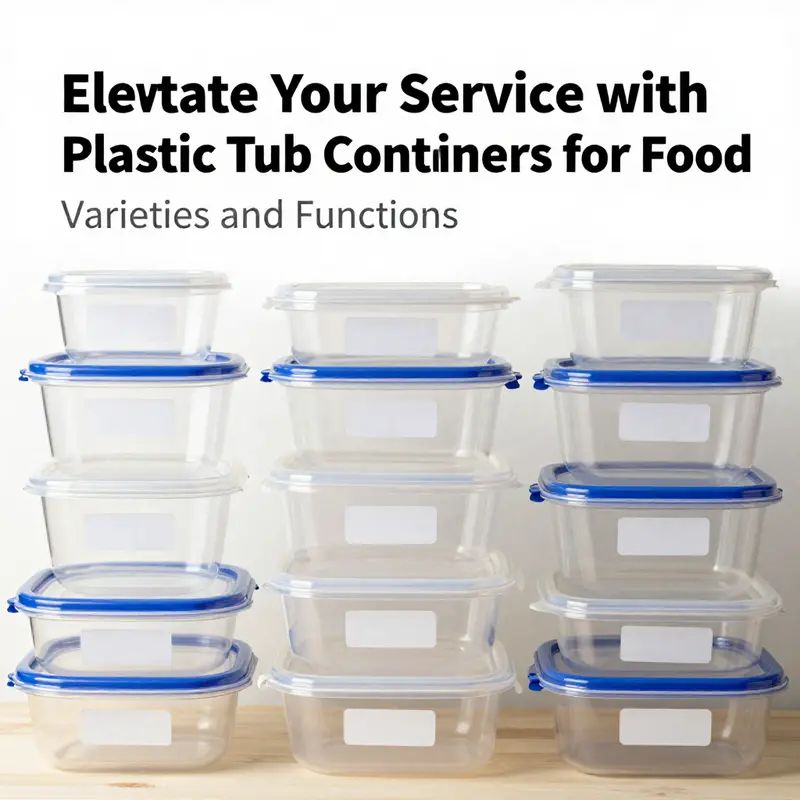
Plastic tub containers have become a quiet backbone of both home kitchens and commercial operations. They are chosen not only for their light weight and low cost but for the practical insistence of safe, long-term storage. When a shopper or a chef reaches for a tub, they are implicitly choosing how food will be stored, transported, and reheated. The choice hinges on the material that makes the container, and that material is not interchangeable. The same tub that keeps a creamy sauce ready for service may, if the wrong plastic is used, release compounds under heat or over time. That is why the resin identification code system—often called the number inside the triangle on the bottom of a container—matters. It is a quick guide to what the plastic is, what temperatures it can withstand, and how safe it is for repeated use. But the codes tell only part of the story. The bigger picture includes the design of the container, the kind of seal it uses, and the lifecycle of the material—from production to disposal or recycling. Taken together, these factors determine whether a plastic tub is a practical workhorse or a potential health and waste challenge. In this chapter we walk through the common plastic families that show up in food tubs, connect their properties to real-world uses, and offer a compass for choosing containers that save space, preserve freshness, and minimize risk.
For households and food-service settings where organization matters, storage efficiency is a practical priority. Square or rectangular tubs pack more efficiently than round ones, a benefit that compounds as shelves fill and temperatures fluctuate. A container that fits neatly in a cooler, a pantry shelf, or a stackable cabinet can cut both clutter and the time spent searching for ingredients. This practical geometry is why many manufacturers emphasize high space utilization alongside durability and safety. When space is at a premium, selecting the right plastic type becomes an equation of safety, temperature tolerance, and washing or reusing capabilities. In practice, the decision is rarely about a single attribute but about how these attributes interact to support daily routines. If you are organizing a kitchen, a restaurant, or a catering operation, you may find that different tasks call for different plastics. A tub for dry goods in a back room might tolerate different conditions than a tub designed to hold hot soups or sauces meant for reheating.
Understanding the types of plastic tubs starts with the resin identification code system. The most common codes indicate seven broad families, each with distinct strengths, limits, and safety profiles. PET, or polyethylene terephthalate, coded as 1, is prized for its clarity and lightness. It works well for cold or room-temperature foods and beverages, but it is not heat-resistant. Repeated use can raise leaching concerns, and it should never be heated in a microwave or used for hot liquids. PET’s strength lies in short-term storage of cold items and in applications where visibility of contents is valuable. In many kitchens, PET is still seen in single-use beverage bottles and some condiments jars, but for tub storage dedicated to longer-term or hot-use, its role is carefully limited by safety considerations.
Next comes HDPE, code 2. This material is inherently opaque, durable, and chemical-resistant. It handles non-heated storage of foods and dry goods with reliability, which makes it a common choice for dairy products, yogurt containers, and certain large tub formats used in food processing environments. The downside is that HDPE is not ideal for high temperatures or repeated heating, and as with all containers that see frequent use, cleanliness matters. If a tub is scratched or not properly sanitized, it can harbor bacteria in crevices or micro-abrasions, undermining safety. HDPE’s resilience supports rugged handling and longer-term storage, but it does not guarantee safety in all reheating or cleaning scenarios.
Low-density polyethylene, LDPE and code 4, broadens the repertoire with flexibility. LDPE tubs are more pliable and moisture-resistant than their HDPE peers, which makes them suitable for direct food contact in many contexts. They are well suited for chilled or room-temperature foods and for applications where a seal is needed but a very rigid shell is not required. A key caveat with LDPE is heat. Its heat tolerance tops out around 110°C, which means microwaving or pouring hot foods into LDPE tubs is not advised. The flexibility of LDPE can be a benefit in packing soft or delicate items, but it also means a higher risk of deformation if exposed to heat or rough handling.
Polypropylene, or PP, is the workhorse of many kitchens and foodservice operations, coded as 5. PP is celebrated for high heat resistance, typically up to about 120–130°C, and for being BPA-free in most cases. This makes it an attractive option for containers that will endure microwaving, dishwashing, and repeated use. The material maintains stiffness under heat, resists oils and acids, and remains relatively inert when in contact with a broad range of foods. For tubs intended to hold hot meals or to undergo reheating, PP is often the preferred choice. It is also highly recyclable, a practical advantage for facilities seeking to minimize waste.
The polycarbonate family, code 7, is more nuanced. PC and related “Other” materials can be highly durable and clear, which is why they have appeared in water bottles and some reusable containers. However, PC has been tied to concerns about BPA leaching, particularly when heated or used for extended periods. Modern alternatives labeled BPA-free are gaining ground, but the core caution remains: avoid high-heat use unless the product is explicitly designed for it and clearly BPA-free. In many kitchens, PC-based tubs are evolving toward safer compositions or being retired in favor of PP or Tritan-like materials that offer similar clarity without BPA risks. The central lesson is to scrutinize labeling and temperature guidance rather than assuming safety based on appearance alone.
PVC, coded 3, presents a more problematic picture for food contact. With potential for toxic additives and phthalates, especially when heated or exposed to grease, PVC is not recommended for any direct food storage or preparation use. The health considerations surrounding PVC have led many manufacturers and regulators to steer consumers away from it in the kitchen, even if it offers certain flexible properties. The upshot is simple but important: avoid PVC in tubs intended for food use, particularly for items that will be heated or stored with fats and oils.
Between these broad families, the practical decision for many kitchens comes down to how a container will be used day-to-day. A tub that will repeatedly hold hot soups and be microwaved should be PP or a BPA-free alternative with high heat tolerance. A tub intended for dry goods, pantry storage, or cold prep may be acceptable in HDPE or LDPE. The ideal choice balances safety, durability, and the realities of space, stacking, and cleaning. In practice, many operations now favor containers that combine a robust resin with a seal that minimizes leaks and preserves freshness, while also relying on sustainable design features such as recyclable materials or the use of regenerated polymers like recycled PET (rPET). These considerations are not merely about compliance; they are about the long-term efficiency of food storage systems and the ease with which a kitchen can maintain hygiene and reduce waste.
As a consumer or a manager, another practical element emerges: the overall design of the container. The shape, lid system, and sealing method influence how much air infiltrates the tub, how easily it is cleaned, and how reliably it can be microwaved if at all. Square or rectangular tubs with tight-sealing lids tend to maximize space in stacked refrigeration racks and on prep tables. A well-sealed lid reduces moisture loss and protects food from cross-contamination, while a straightforward cleaning regime helps keep plastics in good condition. The design also intersects with sustainability. In recent years, many producers have started integrating recycled content, like rPET, without sacrificing strength or flexibility. The shift toward recycled materials aligns with broader environmental goals while maintaining the performance needed for daily food storage and transportation.
For those who manage a larger operation or who are responsible for consumer-facing packaging, the issue of labeling becomes paramount. IMl—In-Mold Labeling—techniques can embed durable, informative marks directly into the container, presenting consumers with clear information such as “natural,” “no salt,” or “high purity.” While the details of labeling fall outside a basic shopping decision, they influence how confidently a buyer can trust what is inside. The combination of a robust resin, a reliable seal, and a clear label collectively strengthens consumer trust and helps ensure that the tub can stand up to the rigors of the kitchen or service environment. Beyond performance, there is the question of safety under heat. The best practice is to consult guidance from authoritative bodies when heat is involved. For instance, the U.S. FDA provides guidance on food contact materials and the conditions under which specific plastics are deemed appropriate for contact with foods. In everyday practice, this means looking for explicit statements about microwave safety, heat tolerance, and suitability for repeated use before placing hot foods in a tub that may not be designed for such use.
In choosing among these options, it is helpful to consider the broader ecosystem of storage and packaging. Many operations integrate a range of tubs for different tasks: square, high-capacity containers for bulk storage; smaller, transparent tubs for ingredient prep; specialized tubs with leak-proof lids for sauces and dressings; and durable, microwave-safe options for ready-to-heat meals. The goal is a cohesive system where each container type complements the others, keeping food safe, fresh, and accessible while supporting efficient workflow and waste reduction. When space is at a premium, the area of design—shape, lid, seal, and labeling—becomes as important as the plastic itself. The choice of resin dictates how far that design can go, how often the container can be reused, and how it behaves in the face of heat, oils, or acids. For a robust, space-conscious approach to food storage, a balanced mix of PET for visibility and short-term use, HDPE and LDPE for flexible or durable storage, PP for hot foods and repeated use, and BPA-free PC alternatives where clarity is needed provides a practical framework. The result is a system that respects safety guidelines while delivering on the demands of modern kitchens and service environments.
If you are curious about how these options translate into real-world storage planning, a quick exploration of readily available storage solutions can be illuminating. For example, you can browse a broader range of containers and accessories that support organized storage through a dedicated category of storage containers, which often includes square and rectangular tubs designed to optimize space and handling on busy prep lines and in home pantries. This approach helps ensure that the containers you choose align with both safety expectations and practical workflow needs, promoting better hygiene, easier cleanup, and a more streamlined operation. As you review options, keep in mind that the most effective containers are those that balance material properties with design features, are clearly labeled for food contact and heat use, and offer sustainable options such as recyclable materials or recycled content where feasible. For more information on storage solutions and related packaging options, you can explore the broader category of storage containers.
External reference: For authoritative guidance on food contact materials and safety, see the U.S. Food and Drug Administration’s guidance on Food Contact Materials at https://www.fda.gov/food/food-contact-materials/food-contact-materials-frequently-asked-questions.
Choosing the Right Polymer: Safety, Performance, and Sustainability of Plastic Food Tub Containers
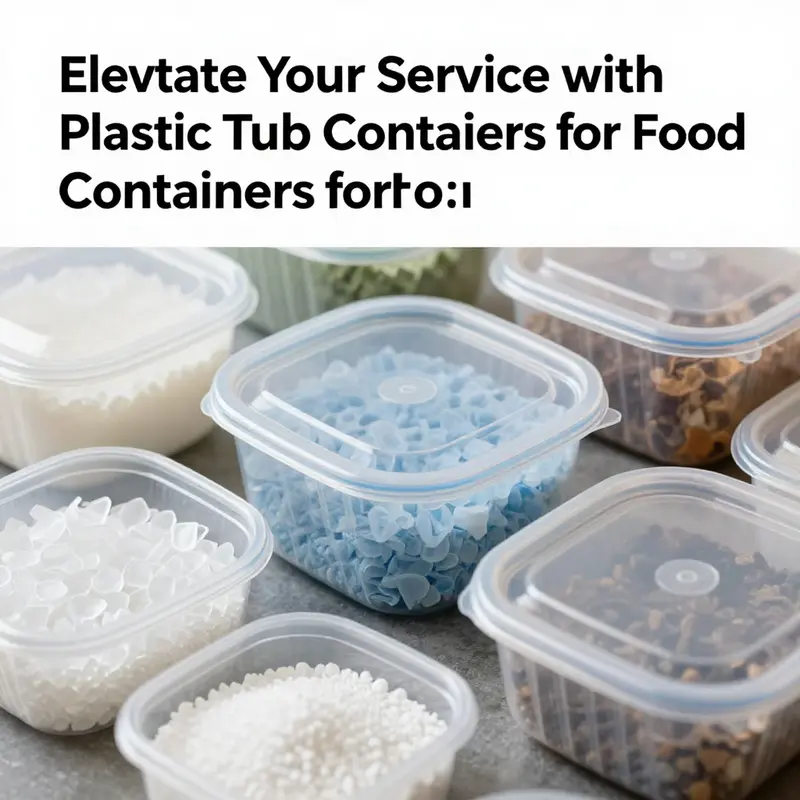
Choosing the material for plastic tub containers used in food storage is a careful negotiation among safety, performance, and sustainability. The polymer at the heart of a tub governs how well it protects flavors and textures, how sturdy it remains during handling, and how it behaves under temperature changes from freezer to microwave. It also sets the door to recycling and end-of-life options. In practice, engineers measure barrier strength against moisture and gases, resistance to impacts and chemicals, and the ability to withstand repeated heat exposure without warping. The result is not a single perfect resin but a toolkit of options, each selected to fit a specific use case. For households seeking reliable daily storage, the choice may favor clarity and lightness; for commercial kitchens, durability and cleanability often drive the ranking; for bulk storage, volume and sealability take center stage. Across these contexts, the most common materials cluster into a few families, each offering a distinct blend of properties that align with the safety standards and practical needs of real food handling.
Polyethylene terephthalate, or PET, is valued for its excellent clarity and combination of strength and barrier performance. Containers made from PET keep moisture and gases at bay while allowing consumers to see the contents clearly. This makes PET especially popular for short-term storage of light beverages, dressings, and certain sauces, where a crisp appearance matters as much as performance. On the sustainability side, PET has a well-established recycling stream, and post-consumer rPET can substantially reduce the footprint of packaging. However, PET has limitations. Its heat resistance is modest, so hot-fill processes and long exposure to high temperatures can degrade its mechanical integrity and create safety concerns. For this reason, PET is typically favored for cold or room-temperature uses and is often complemented by other materials or designs when heat exposure is expected. The choice to use PET in a given tub is thus a balancing act between transparency, barrier needs, and the intended thermal profile of the stored product.
High-density polyethylene, or HDPE, broadens the envelope by delivering toughness, chemical resistance, and a resistance to impact that prevents shattering under rough handling. HDPE storage tubs are common in both households and foodservice settings because they stand up to repeated use, resist moisture, and tolerate a wide range of contents, from dry goods to liquids. Its relatively high rigidity helps maintain form during stacking and transport, a feature that supports space efficiency in busy kitchens and warehouses. Recyclability is another pillar of HDPE’s appeal; recycling codes typically mark it as a robust, widely accepted plastic, with the ability to recover valuable material for new containers. In practice, HDPE is often selected where durability matters more than sheer optical clarity or premium aesthetics. As a result, HDPE-derived tubs frequently become workhorses in bulk storage, cold storage, and long-term containment of liquid products, with performance inherited from a combination of wall thickness, sealing design, and compatible lids.
Polystyrene, particularly in its expanded form EPS, has a long history in disposable food packaging thanks to its low cost and strong thermal insulation. EPS takes the form of takeout boxes and frozen dessert cups where short-term use and temperature management are priorities. The trade-off is environmental concern: while lightweight and cost-effective, PS can be challenging to recycle, and its capacity to leach styrene into hot foods at elevated temperatures raises safety questions when used improperly. For this reason, PS is generally avoided for hot fills or microwaving in consumer contexts, and its role is shifting toward disposable, single-use applications where thermal insulation is critical and the product life cycle is short. The material’s insulating prowess remains a reason to consider it for certain portions of the supply chain, but recyclability and environmental impact require careful management in any plan to use EPS for food containers.
Polypropylene is increasingly the backbone for containers designed for both cold and heated scenarios. Its key strengths are higher heat resistance, rigidity, and the option to employ resealable designs that support meal-prep and portion control. PP shares a favorable safety profile for contact with food, aided by inert chemistry and compatibility with common cleaning regimes. In consumer products, PP is often used for yogurt tubs, microwavable meals, and sealed storage solutions that endure frequent opening and close cycles. The material’s recyclability is well established in many regions, typically under recycling code #5, and its rigidity helps maintain shape across a range of temperatures. The capacity to withstand freezer temperatures without becoming too brittle and to survive brief microwave heating makes PP a versatile choice for modern kitchen routines and pre-portioned service models. The design details—thick walls, smooth surface for easy cleaning, and reliable lid seals—work together with the resin’s inherent properties to deliver a dependable container for diverse foods and contexts.
Beyond raw material properties, sustainability frames every material choice. Recyclability remains a central metric, but producers increasingly consider the source of the polymer, the energy used in manufacturing, and the potential to incorporate recycled content. Recycled PET, HDPE, and PP can lower the environmental burden when capture rates and processing capacities are robust enough to avoid downcycling into non-viable uses. In addition, innovations such as In-Mold Labeling (IML) integrate durable labeling directly into the container wall, reducing post-molding waste and ensuring labels withstand the wear of regular cleaning and freezing. The ability to clearly communicate product attributes—”natural,” “no additives,” or “recyclable”—via durable IML text helps build consumer trust and aligns with broader demands for transparency. Increasingly, manufacturers also examine end-of-life scenarios, routing containers into recycling streams or exploring refill and reuse programs that maximize the life of a tub rather than relegating it to waste after a single use. The market is moving toward designs that optimize space, such as square or rectangular shapes, which can pack more efficiently in both retail displays and storage cabinets, further reducing wasted space and energy in transport.
While traditional polymers continue to dominate, there is growing interest in bio-based and biodegradable options such as polylactic acid (PLA). These materials promise lower net carbon footprints and the option to compost under specialized conditions. Yet adoption remains constrained by higher costs, the need for dedicated processing infrastructure, and questions about performance under real-world storage conditions. In practice, PLA and similar bio-based resins often function best as part of a broader sustainability strategy rather than as a wholesale replacement for conventional plastics in all food tubs. Manufacturers weigh trade-offs between compostability, recyclability, mechanical strength, and barrier performance, recognizing that a one-size-fits-all solution is unlikely to emerge. In some deployments, biobased content is paired with recycled post-consumer materials to reduce fossil-fuel dependence while preserving the mechanical properties required for daily use. The result is a nuanced landscape where material science, waste management policies, and consumer behavior intersect to determine the most responsible choice for each application.
Regulatory compliance anchors every decision about food-contact materials. In many jurisdictions, authorities require that substances that contact food meet safety standards and regulations designed to guard public health. The practical impact is that designers must confirm which polymers are approved for specific uses, whether additives or colorants affect safety, and how heat, acid, or salt in foods interacts with a given resin. Standards bodies and oversight agencies provide guidance and testing protocols that inform everything from allowable migration of substances to labeling and packaging integrity. Within this framework, selecting a material is not only about performance and sustainability but also about traceability, testing regimes, and audit readiness. Firms invest in process controls, quality assurance, and supplier validation to ensure that every tub that leaves the factory meets regulatory expectations and remains safe throughout its lifecycle.
As the initial overview of storage containers suggested, the shape and format of a tub can magnify the advantages of the chosen material. Square and rectangular profiles, for example, can maximize space utilization in both home pantries and professional kitchens, turning a simple tub into a smarter, more efficient component of daily routines. When a product’s packaging is designed with the material’s strengths in mind, it becomes more than a container; it becomes a reliable partner in safe food handling, easier cleaning, and better inventory control. For readers exploring organized storage options, a dedicated category of storage containers offers a spectrum of designs that align with these material considerations. By combining clear visibility, strong seals, and compatible lids with the appropriate polymer, manufacturers deliver solutions that support hygiene and efficiency across the food supply chain. The result is containers that not only hold food but also reflect a commitment to safety, practicality, and sustainability.
For safety standards and regulatory context, refer to external guidelines that detail how agencies evaluate and approve materials used in packaging and containers. External resource: https://www.fda.gov/food/food-contact-materials
null
null
Space, Safety, and Scale: The Integrated Role of Plastic Tub Containers in Commercial Food Operations

Plastic tub containers form a quiet backbone in commercial food operations, where safety, efficiency, and volume converge every day. These containers—durable, easy to clean, and adaptable—make it possible for kitchens, caterers, processors, and retailers to manage vast quantities with precision. Their appeal rests on three pillars: material science that aligns with food safety, design that maximizes space and workflow, and a lifecycle that supports sustainable practice without sacrificing performance. The materials most commonly chosen—food-grade polypropylene (PP) and high-density polyethylene (HDPE)—offer a balanced mix of rigidity and resilience. They stand up to moisture, chemical cleaners, and temperature swings routine in cold rooms, freezers, and hot-holding spaces. Transparent variants enable quick visual checks, while opaque options shield light-sensitive contents. The choice between square or rectangular shapes and round alternatives is not merely aesthetic; it translates into tangible space savings. In crowded storage areas, a well-designed tub can reclaim storage capacity, with a footprint that fits neatly into racks and shelving and a stackability that reduces the floor-to-shelf bulk. In some configurations, space utilization improves by as much as twenty percent, a gain that compounds across a facility when every inch of storage is optimized for workflow. This is not simply about keeping food; it is about enabling a smoother, safer path from receiving to service.\n\nThe way these containers integrate into daily operations reveals their versatility across the spectrum of commercial food activity. In kitchens and service establishments, tubs are routinely used to hold raw ingredients such as vegetables, fruits, meats, and dairy. The visual accessibility provided by clear walls helps staff perform quick inventory checks and monitor freshness without opening every container. Seals and lids protect against contamination and pests during shifts, while gaskets and snap closures maintain integrity through repeated handling. The durability of PP and HDPE is crucial here; they resist the rigors of frequent washing and sanitizing cycles, and they tolerate exposure to common kitchen acids, oils, and marinades without compromising safety. The impact on hygiene is immediate: fewer breakdowns in the cleaning routine, faster turnover between orders, and less cross-contamination risk when staff move swiftly from one task to another. The inherent flexibility of tubs supports varied menu cycles. Smaller, more frequent orders can be stored and rotated with ease, reducing waste and improving traceability of ingredients across the prep line.\n\nWhen operations extend into processing and packaging, tub containers become more than storage—they become part of a streamlined production language. In facilities that pre-cut produce or assemble ready-to-eat meals, tubs cradle items from the point of pre-cleaning through to packaging. The design becomes a language of efficiency: compartments or dividers within a tub, compatible lids, and labeling that remains legible through rough handling or climate-controlled environments. In such settings, the ability to withstand rough handling by forklifts and pallet jacks matters as much as the tub’s resistance to cleaning agents. The containers must not degrade under exposure to sanitizers, nor should they shed fibers or particles into the food stream. This is where in-mold labeling (IML) can offer a lasting solution, providing durable, legible product information that travels with the container itself. Labels that resist abrasion support traceability, lot numbers, and production dates—critical data points in an intricate supply chain where seconds count and accuracy matters.\n\nIn the realm of industrial storage and distribution, large-volume tubs are essential for handling liquids and bulk ingredients. Here, the containers must meet stringent requirements for food-contact materials, with a focus on chemical migration and structural integrity under both chilling and potential heat exposure during transport. Food-safe polyethylene-based tubs are common in these contexts, chosen not only for their sanitary qualities but for their ability to resist deformation under load and to form sealable systems that prevent leaks. The regulatory landscape informs every decision at this scale. Standards for materials intended for contact with food guide the selection of polymers and additives, and ensure that containers do not impart unwanted substances into products. Migration testing, using simulants that mimic real-world contact, becomes part of the validation process before a tub enters long-term storage or distribution. Though the details can appear abstract, the outcome is concrete: safer, more reliable containment across the supply chain, less risk of spoilage or contamination, and a predictable path from the factory floor to the consumer’s table. This integrity matters especially when containers are used in the transportation of liquids such as beverages, oils, or flavorings, where leaks could disrupt production lines and contaminate other products.\n\nRetail and grocery environments leverage plastic tubs as a bridge between display and service. They support not only the storage of fresh produce and deli items but also the safe handling of prepared meals that move quickly from shelf to service area. Reusable tubs reduce waste and extend hygiene standards when paired with robust cleaning routines. The design also contributes to operational efficiency: clear walls help staff monitor inventory at a glance, while stackable configurations enable compact display and easy restocking. In a fast-paced retail setting, the combination of durability, easy-clean surfaces, and reliable closures helps minimize downtime and shrinkage, ensuring that products remain ready for consumer purchase without compromising safety. Sustainability continues to be a key driver as more containers incorporate recycled content, particularly recycled PET (rPET), without sacrificing strength or heat resistance. The ability to recondition and reuse tubs within appropriate cycles supports a circular approach to packaging, aligning with broader goals to reduce overall waste and resource consumption.\n\nAll these practical benefits tie back to a cohesive operational framework. The tubs’ capacity to endure repetitive use, combined with their cleanability and physical resilience, makes them indispensable for stable, scalable food handling. They act as modular building blocks in a system designed for lean operations: faster retrieval, controlled portioning, clearer labeling, and fewer interruptions caused by spillage or mislabeled items. The distinct advantages of square or rectangular forms—space efficiency, easier stacking, and compatibility with standard racks—translate into tangible cost savings over time. The ability to tailor tub selections to specific tasks—from bulk ingredient storage to highly portioned ready meals— supports a customized approach to inventory management, reducing waste and enabling more precise forecasting. In short, plastic tub containers are not passive receptacles; they are active contributors to operational discipline and quality assurance in commercial food settings.\n\nSustainability remains a throughline in how these containers are perceived and used. The industry’s shift toward recycled content, such as rPET, reflects a broader commitment to reducing environmental impact without compromising performance. This trend dovetails with the need for containers designed for longevity, ease of cleaning, and straightforward end-of-life handling. When tubs are built to endure repeated cycles of washing, cooling, freezing, and even light reheating, they provide a reliable platform for a wide range of tasks while minimizing the frequency of replacements. Operators may adopt strategies that optimize reuse: combining new, high-demand lines with refurbishment cycles for older stock, while ensuring compatibility with sanitizing regimes that preserve material integrity. Each decision—material choice, seal design, labeling approach—contributes to a system that supports safety, productivity, and sustainability in equal measure.\n\nThe narrative here is not merely about containers; it is about how the right tub design supports the speed, accuracy, and safety that define modern food operations. It is about enabling teams to work with confidence across receiving, prep, storage, and service, knowing that the vessel holding the food is as trustworthy as the process surrounding it. It is about space as a resource, and about how thoughtful geometries can turn a cramped cold room into a well-organized, efficient environment. It is about the way labeling, clarity, and durable construction reduce error and preserve quality through long supply chains. And it is about a shared commitment to responsible packaging that respects both people and planet. For readers interested in exploring related storage and packaging options, a broader look at the storage containers category provides a useful context: storage containers.\n\nFor regulatory context and to understand the standards governing materials intended for food contact, consult the European Union’s framework on food-contact materials. This context helps explain why the choice of polymer, the presence of additives, and the migration characteristics matter as products move through supply chains and markets. The migration testing referenced in regulatory discussions ensures that the containers do not transfer undesirable substances into food, protecting consumer health while enabling global distribution. External reference: https://eur-lex.europa.eu/legal-content/EN/TXT/?uri=CELEX%3A32011R010
Rethinking Food Storage: The Environmental Footprint and Future of Plastic Tub Containers
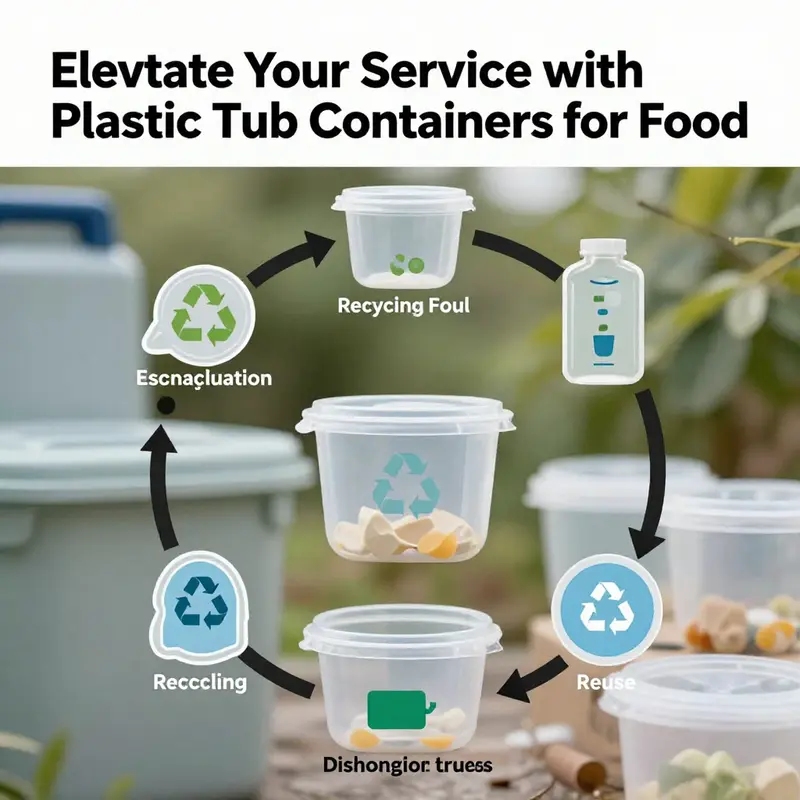
Plastic tub containers for food storage sit at a crossroads of convenience and environmental concern. They keep food safe and organized, yet their lifecycle involves energy use, emissions, and waste management challenges. From petrochemical feedstocks to finished goods, through use and end-of-life, tubs influence resource flows, contamination risks, and recycling streams. The true footprint depends on material choices, production energy, transport, cleaning, and whether the material can be reused or recovered efficiently.
Compared with single-use packaging, multiuse tubs can lower emissions and waste if used and maintained properly. The literature shows that, when reused and recycled within capable systems, tubs can offer lower CO2e than other packaging options. However, the benefits hinge on robust collection, sanitation, and the ability to reintegrate materials into recycling streams at end-of-life.
Recycling infrastructure is the decisive factor. In many regions, tubs still end up in landfills or misrouted for incineration. Systems that improve collection, sorting, processing, and consumer participation are crucial to approaching a circular model. There is growing emphasis on recycled content such as rPET and on ensuring food-grade safety and mechanical performance after multiple cycles.
Innovations include exploring biodegradable or compostable materials, but their environmental gains depend on compatible end-of-life infrastructure. Without industrial composting or effective separation, these materials may complicate recycling streams. The push toward sustainability requires aligning materials with capable waste management ecosystems and considering labeling that supports correct sorting.
Closed-loop recycling, where the same material re-enters the product stream, offers additional options if sanitation and refurbishment are standardized. When conditions are met, tubs can reduce virgin resin demand and emissions, while enabling local reuse and more efficient transport. Consumer information about materials, safety certifications, and end-of-life guidance supports participation in recycling and reuse programs.
Overall, the path forward is not to abandon containers but to design for durability, recyclability, and reuse within a transparent circular system. By coordinating materials science, design-for-recycling, and effective collection, tubs can contribute to safer, more sustainable food storage without sacrificing practicality.
Final thoughts
Plastic tub containers for food are more than just storage solutions; they represent a commitment to safety, sustainability, and innovation in the food services industry. Embracing these containers allows businesses to streamline their operations while responding to consumer demands for eco-friendly practices. As we move toward a more responsible future, investing in high-quality plastic tub containers is not just a trend but a necessity for the evolving food service landscape. By understanding the types, materials, design advances, and applications discussed, stakeholders can make informed decisions that benefit their operations and the environment.