
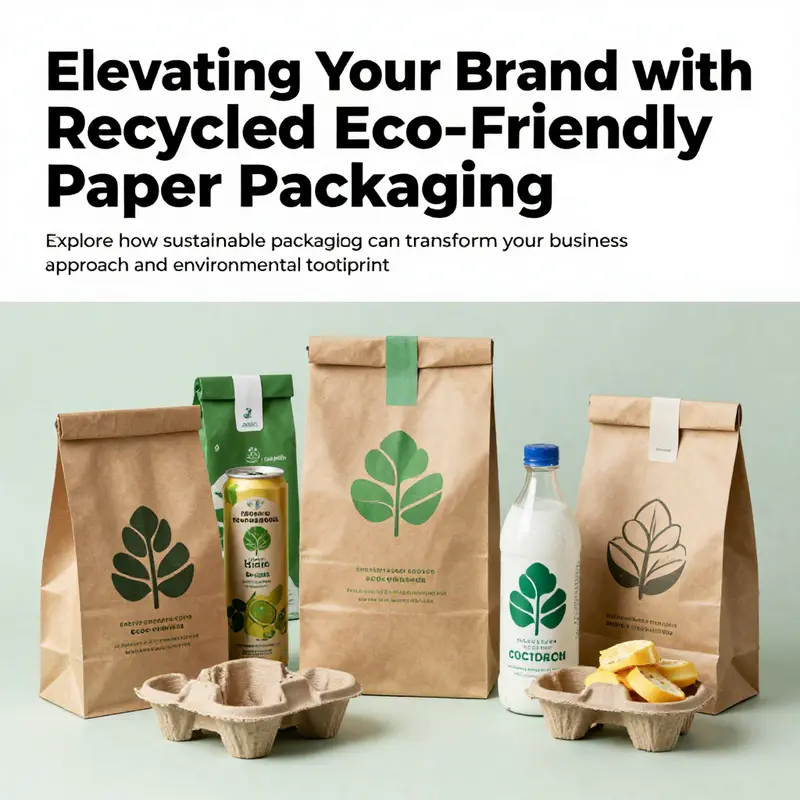
In an era where sustainability is no longer optional but a necessity, businesses across all sectors are pivoting towards eco-conscious choices. For bubble tea shops, restaurants, and catering services, adopting recycled eco-friendly paper packaging not only enhances brand integrity but also resonates with an increasingly eco-aware consumer base. This article delves into the innovative applications of this packaging, its economic advantages, and its vital role in sustainable development, thereby illustrating how environmentally-friendly choices can intertwine with business success and customer satisfaction.
Waste into Worth: Innovative Pathways for Recycled Eco‑Friendly Paper Packaging
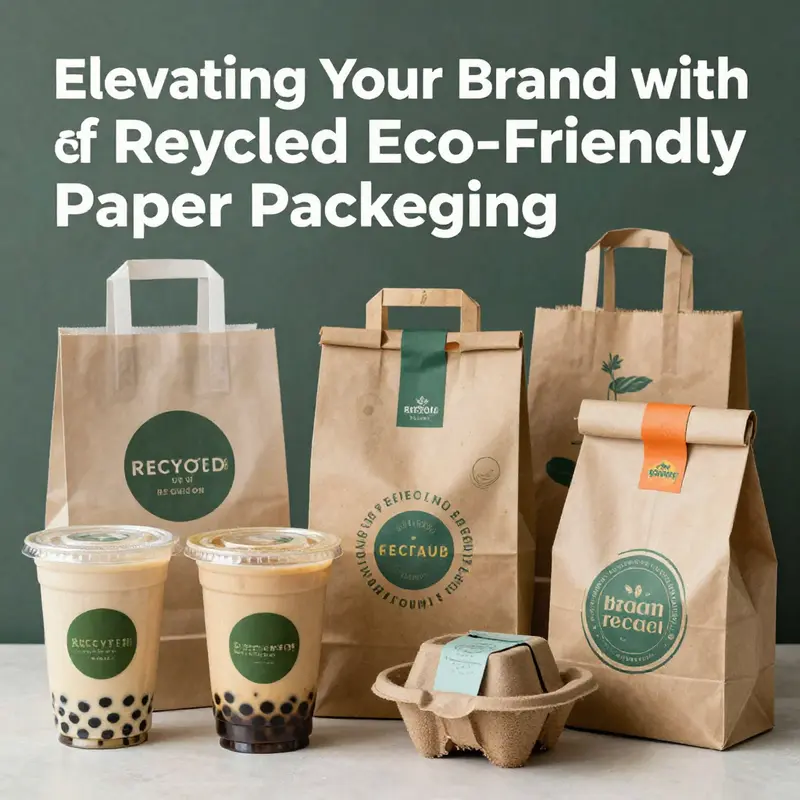
A shift in how we think about packaging is revealing itself not as a narrow constraint but as a broad opportunity. Recycled eco-friendly paper packaging, once seen primarily as a containment layer, is increasingly recognized as a versatile material platform capable of transforming waste streams into value across multiple sectors. The premise is straightforward but transformative: by turning post-consumer and post-industrial fibers into products that are durable in use, gentle on the environment, and compatible with circular systems, businesses can meet escalating consumer expectations for sustainability without sacrificing performance. In practice, this shift unfolds at the intersection of material science, design, and logistics, where shredded fibers and recovered pulp become the raw material for everything from everyday grocery packaging to more imaginative applications that extend far beyond traditional cartons. What emerges is a narrative of waste being reimagined as a resource, a narrative that aligns with how supply chains are increasingly configured to support refill, reuse, and recovery rather than linear disposal.
The core advantages of recycled eco-friendly paper packaging sit at several converging angles. First, the environmental footprint is reduced by lowering the demand for virgin wood pulp. When post-consumer waste fibers are recovered and reformulated into new packaging, the journey from production to disposal becomes shorter and less energy-intensive, with fewer emissions and less water usage compared with virgin fiber processes. This reduction resonates with enterprises seeking to minimize their climate impact, particularly in consumer-facing roles where branding hinges on environmental responsibility. Second, these materials retain a familiar tactile and functional profile. Paper packaging can be engineered for strength, moisture resistance, and barrier protection without resorting to petrochemical coatings, while remaining compatible with existing recycling streams. Third, the biodegradability and recyclability of the end product support a true circular economy. In an era when plastic pollution has reframed consumer expectations and regulatory landscapes, paper-based solutions provide a credible path to lower long-term environmental costs. The certifications that often accompany these materials—such as forest stewardship and environmental management standards—further reassure brands that their packaging choices are aligned with broader sustainability commitments.
Yet the real promise lies in how the material is used, rather than simply what it is. Innovative uses of recycled paper packaging expand the ordinary into the extraordinary by repurposing fibers for applications that reduce or eliminate single-use plastics, introduce compostable alternatives in logistics, and create design opportunities that elevate consumer experience. Consider the case of seedling pots and garden mulch fashioned from shredded recycled paper. In a landscape where plastic pots and conventional synthetic mulches contribute to soil degradation and microplastic pollution, a biodegradable option that nourishes the soil as it breaks down offers a closed-loop benefit. The fiber matrix acts as a carrier for nutrients and organic matter, enriching the ground over time while lessening the need for additional irrigation and chemical inputs. Such applications not only support regenerative agriculture practices but also provide a practical, scalable route for municipalities, community gardens, and even urban farms to rethink waste streams as agricultural inputs. In this sense, recycling is not merely about reclaiming material but about returning it to life in a form that helps nourish ecosystems.
At the same time, durable lightweight packaging materials derived from recycled fibers are reshaping industrial logistics and consumer delivery. Molded fiber trays for food service and protective inserts for electronics demonstrate how a single material class can meet rigorous functional demands while remaining compatible with composting and recycling at end of life. The strength-to-weight ratio of fiber-based packaging enables efficient handling, shipping, and storage, reducing overall transportation energy and minimizing waste from damaged goods. The adoption of water-based adhesives in these constructions further minimizes chemical exposure to workers and reduces environmental footprint during manufacturing. In this regard, the evolution of recycled paper packaging mirrors a broader trend toward safer, cleaner production processes that do not compromise performance. Consistency of supply and predictability of quality have become crucial as more sectors seek to standardize sustainable options across global distribution networks, from regional e-commerce hubs to multinational retail operations.
Design flexibility is another cornerstone of these innovations. Recycled paper packaging can be tailored through custom sizes, shapes, and finishes to fit a wide range of products and presentation needs. Finishes may include embossing, matte or gloss lamination, and selective visibility features that balance aesthetics with recyclability. For brands aiming to communicate a green identity, the ability to print with low-VOC inks and to employ water-based coatings supports a consistent narrative from shelf to recycling bin. The emphasis on design for disassembly ensures that finished packaging remains straightforward to separate in recycling streams, which preserves the integrity of recovered fibers for future reuse. In essence, the packaging becomes a visual and functional extension of the brand’s sustainability message, rather than a neutral barrier that simply encloses a product.
There is also an essential social dimension to these innovations. The shift toward recycled, eco-friendly materials aligns with consumer demand for authenticity and accountability. People increasingly expect products that tell a story of second chances rather than wasteful cycles. A wardrobe or a cosmetics line that embraces recyclable paper packaging communicates a commitment to responsible stewardship. In parallel, the supply chain benefits from lower regulatory risk and greater resilience, as materials drawn from local or regional recycling streams reduce exposure to volatile raw material markets. The combination of environmental and brand value intensifies the appeal of recycled paper packaging for companies seeking to differentiate themselves in crowded markets while maintaining cost efficiency. Although large-scale adoption can pose challenges, such as ensuring consistent fiber quality and managing MOQs with suppliers, the momentum toward scalable, sustainable solutions continues to build.
The practical logic of these innovations is reinforced by examples that demonstrate the breadth of application. In food service and retail packaging, there is a clear trajectory toward products that are not only functional but also expressive of sustainability. A key feature is the capacity to adapt to both domestic use and professional environments, with packaging lines designed for varied volumes and diverse product categories. In food and beverage contexts, for instance, fiber-based trays and cups are increasingly designed to meet safety standards, maintain product integrity, and resist moisture and grease—without sacrificing recyclability. In electronics and consumer devices, protective inserts and packaging components can be molded from recycled fibers to cushion sensitive items during transit while still entering recycling streams afterward. The overarching narrative is one of compatibility: materials that perform under real-world conditions and then participate in recovery cycles, rather than becoming waste at the end of a one-time use.
Alongside these technical developments lies a design ethos that embraces imperfections as part of the material story. Recycled fibers carry the marks of their journey—slight color variations, texture irregularities, and visible fiber strands—that can be celebrated rather than concealed. As a sustainability consultant observes, the beauty of recycled materials resides in their narrative, where every line and crease signals a second life. This perspective resonates with brands aiming to differentiate themselves through authenticity and responsible aesthetics. Rather than erasing the history of a package, designers can harness it to communicate transparency and ethical intent—an approach that adds value beyond the product contained within. Such a mindset encourages consumers to engage more deeply with packaging as a symbol of sustainable practice rather than a disposable afterthought.
The sourcing equation for recycled eco-friendly paper packaging also deserves careful consideration. Recovered paper options span post-consumer waste and post-industrial fibers, and suppliers increasingly offer customizable solutions that align with branding and functional requirements. Certifications from credible bodies help reassure buyers that sourcing aligns with responsible forest management or responsible supply chain practices. The availability of secure procurement channels and sample-request pathways further supports the transition from concept to implementation, enabling teams to evaluate material performance, printability, and end-of-life scenarios before making substantial commitments. When scaled thoughtfully, these materials can deliver meaningful environmental benefits without compromising product quality or brand integrity.
To translate these opportunities into sustainable realities, it is helpful to think about the entire lifecycle of recycled paper packaging. At the design stage, teams consider how a package will be produced, used, and ultimately recovered. This includes choosing fiber grades thoughtful about strength and barrier properties, selecting adhesives and coatings that are compatible with recycling streams, and planning for disassembly where possible. During production, manufacturers optimize energy use and water efficiency, aiming to minimize emissions and effluents. In distribution, the goal is to maximize protective performance with minimal weight, which reduces fuel consumption and emissions in logistics. At end of life, communities and facilities must be equipped to handle the material in an efficient recycling loop, or to compost where appropriate. By foregrounding these lifecycle considerations, companies can create packaging solutions that are not merely green on the shelf but durable and regenerative in practice.
The potential cross-sector impact of these innovations is notable. In food service, recycled paper packaging supports safer, cleaner handling with compostable or recyclable end-of-life paths. In cosmetics and personal care, packaging can reflect a premium sustainability story without sacrificing the sought-after consumer experience. In electronics and home goods, protective inserts can reduce breakage during shipping while staying aligned with circular economy goals. Even in fashion and apparel, the packaging itself can become a statement of values, using design language that communicates stewardship and sustainability. Across these contexts, the common thread is a willingness to experiment with material form and processing, to create packaging that performs under pressure and then re-enters a recycling or composting system rather than contributing to long-lived waste streams.
The narrative of innovation also extends to the economics of adoption. Bulk production, streamlined logistics, and standardized specifications can bring down unit costs and enable widespread deployment. While every material transition involves learning curves, the overall trend is toward greater supplier flexibility, improved quality control, and stronger alignment with green branding goals. Companies that pursue these pathways often find that the initial investment in R&D and supplier collaboration yields long-term dividends in brand equity, regulatory compliance, and customer loyalty. In short, recycled eco-friendly paper packaging is not a peripheral option but a strategic asset that can be leveraged to differentiate products, optimize supply chains, and support a more resilient economy.
In contemplating the future, the role of consumer education becomes increasingly important. When people understand that the green credentials of packaging are not merely a marketing hook but a practical contribution to environmental stewardship, their choices align more closely with the values embedded in the product itself. Clear, honest labeling about fiber sources, end-of-life pathways, and recyclability helps close the loop and reinforces trust. As this field evolves, designers and engineers will continue to refine how recycled papers respond to moisture, abrasion, and impact while remaining fully recoverable. The result is a more durable, more delightful, and more responsible packaging ecosystem that respects both the necessities of modern commerce and the health of the planet.
This chapter, then, is less a catalog of products and more a meditation on possibility. It invites readers to see recycled eco-friendly paper packaging not as a lesser substitute but as a versatile, value-adding material platform. By embracing innovations such as seedling pots that become soil ambassadors, and molded-fiber solutions that protect goods without creating waste, we begin to glimpse a packaging landscape that feeds back into the ecosystems it touches. It is a landscape in which aesthetics and ethics coexist, where a simple piece of packaging can carry a story of recovery, renewal, and responsibility. The path forward requires curiosity, collaboration, and a shared commitment to keeping materials in circulation. When these elements converge, recycled paper packaging becomes a force for good—redefining what packaging can be and what it can do for people, products, and the planet.
For those seeking deeper context on material grades, performance, and industrial uses, a comprehensive study offers valuable insights into the science and application of eco-friendly paper packaging. External reading: Understanding Eco Friendly Paper Food Packaging: Material Grades, Performance, and Industrial Uses. https://www.researchgate.net/publication/398765420UnderstandingEcoFriendlyPaperFoodPackagingMaterialGradesPerformanceandIndustrialUses
Internal link reference: In practice, the versatility of recycled paper packaging is demonstrated by practical, ready-to-use solutions that can cross into everyday operations. For example, many regional suppliers offer take-away and packaging components designed with recyclability and compostability in mind. When brands explore these options, they can embed sustainability into their logistical workflows and customer touchpoints, reinforcing a green value proposition across channels. A tangible example of how packaging can travel from concept to consumer while staying aligned with circular principles is the disposable kraft paper soup cup with paper lid, an option that blends convenience with responsible end-of-life outcomes. disposable kraft paper soup cup with paper lid. This kind of integration demonstrates how design choices at the packaging level influence both user experience and waste streams.
The True Economic Value of Recycled Eco-Friendly Paper Packaging: Costs, Demand, and a Greener Bottom Line
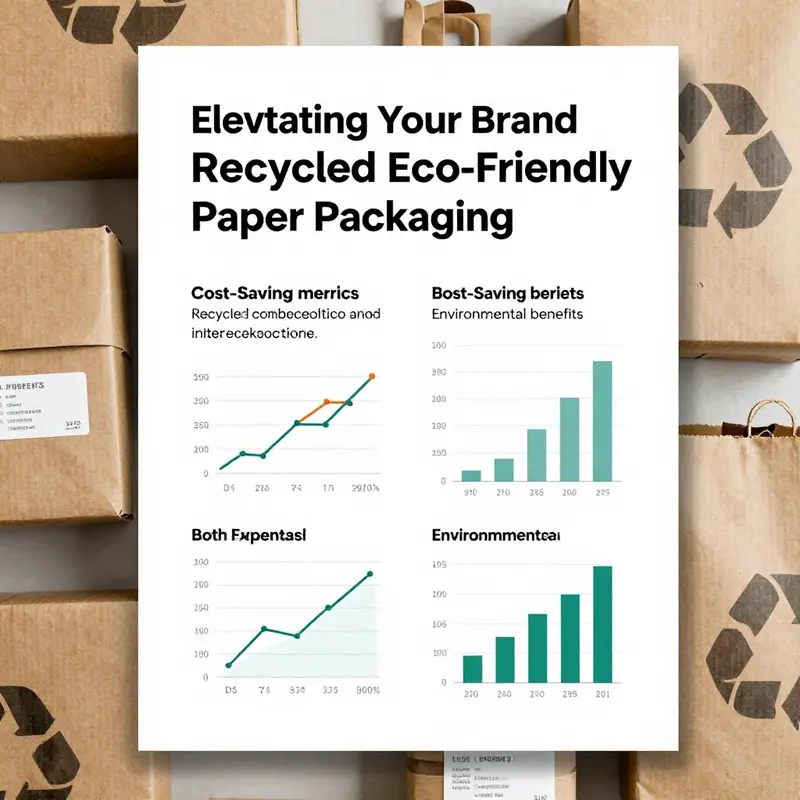
The economic value of recycled eco-friendly paper packaging unfolds in a landscape where cost, consumer expectation, and policy converge to redefine profitability. It is no longer enough to measure packaging by its price tag or its shielding performance alone. Modern businesses weigh the long arc of value created—how materials perform at scale, how markets respond to green branding, and how regulatory currents shift risk and opportunity. In this context, recycled paper packaging emerges as a strategic asset rather than a mere compliance requirement. Its economic footprints extend from production floors to storefronts, from waste streams to corporate sustainability dashboards, and from supplier negotiations to the narratives brands tell their customers. The landscape is complex but coherent: early-stage costs can be higher, yet the long-term financials, reputation, and access to green markets create a compelling value proposition. As production lines adapt to recycled inputs and as consumer awareness grows, the market dynamics tilt toward a durable, scalable model where sustainability and profitability reinforce each other rather than compete for attention.
At the core of the economic analysis lies a simple, often overlooked truth: recycled eco-friendly packaging is a lever for cost control across several dimensions. First, though initial production costs for coated or corrugated recycled paper envelopes may exceed those of uncoated options, the picture changes when one considers lifecycle costs. Upfront material and processing expenses are offset by reductions in waste disposal fees, potential eligibility for regulatory incentives, and avoidance of penalties associated with noncompliant packaging. In markets where plastics taxes or bans tighten margins, the relatively straightforward recycling and composting options for paper packaging become a hedge against future policy risk. The price points that producers encounter scale with volume, with large orders driving unit costs down—an economic truth that becomes especially true in a world where e-commerce logistics demand durable yet recyclable solutions. For example, when production scales to hundreds of thousands of units, unit costs can descend toward lows that make recycled options commercially irresistible. This volumetric economics is not a theoretical curiosity; it is a practical driver shaping supplier strategies and customer expectations across industries that range from food to electronics to cosmetics and apparel.
To understand the long-run profitability of recycled paper packaging, one must map the chain from raw material sourcing to end-of-life recovery. Recycled fibers reduce the demand for virgin wood pulp, a factor that, in itself, buffers against volatile raw-material markets. The stability comes not from whimsy but from the physical realities of supply chains: recycled inputs rely on post-consumer waste streams, which, when appropriately collected and processed, yield fewer price exposures to timber harvest cycles and to global pulp price swings. The cost structure shifts accordingly. While the initial investment in high-quality coatings or barrier layers for moisture protection may be higher, those costs can be amortized over longer lifespans and more reliable performance during transit. Durable coatings that preserve product integrity while maintaining recyclability help contain damage-related returns and waste, which in turn reduces costs borne by retailers and distributors who must absorb spoilage and customer dissatisfaction.
Consumer demand for sustainable products plays a decisive role in shaping the economic calculus. The modern shopper is increasingly willing to pay a premium for packaging that signals environmental stewardship, and brands that embrace recycled paper solutions frequently report improved perception, trust, and loyalty. The premium is not universal, but it exists in segments where brand narrative and product quality intersect. When a company demonstrates commitment to sustainability through packaging, it often experiences enhanced brand equity, which translates into repeat purchases and higher share of wallet. The economics of this premium depend on market structure, competitive dynamics, and the perceived value of the packaging beyond its function. In many cases, the perceived value is tied to the packaging’s fit with the product’s positioning: premium cosmetics, sustainable fashion, and health-conscious foods often benefit from packaging that couples tactile quality with environmental storytelling. The result is a cycle: higher perceived value supports price resilience, which reinforces the ability to invest in better materials and processes while maintaining margins.
This dynamic naturally intersects with regulatory trajectories around packaging and waste. Recycled paper packaging aligns with global trends toward recyclability, compostability, and reduced carbon footprints. Regulators increasingly incentivize or mandate alternatives to single-use plastics, which makes early adoption a strategic move. Companies investing in recycled paper packaging can position themselves to benefit from favorable tendering standards, green procurement programs, and potential subsidies for sustainable manufacturing. Better yet, early alignment with evolving standards reduces future compliance risk and the cost of retrofits. When a product line is already designed with recyclability in mind, it faces fewer compatibility headaches with recycling infrastructure, fewer product-design changes to meet new rules, and reduced risk of stranded assets as policy shifts accelerate. The cost of being early, then, is not merely a monetary line item; it becomes an investment in resilience and long-term competitiveness.
Recyclability, too, is not a monolith. The coatings and barrier layers chosen to protect content, moisture, and aroma significantly affect end-of-life processing. Some coatings may complicate recycling streams, while others maintain high barrier performance without compromising recyclability. These trade-offs matter economically because they influence the total cost of ownership across the packaging’s life cycle. When a packaging solution can deliver robust barrier protection, minimal losses during transit, and straightforward recycling, waste-handling costs shrink. This is not theoretical; it translates into real-world savings for manufacturers who must comply with waste management charges, landfill levies, or extended producer responsibility schemes. The more a packaging system aligns with a circular economy—where materials are kept in use and waste is minimized—the more it reduces financial risk associated with regulatory change and public pressure.
The market advantage for early adopters is multifaceted. Access to green markets can unlock public and private sector opportunities that are not readily available to competitors who rely on conventional, virgin-pulp packaging. Many green procurement programs reward suppliers who can demonstrate credible environmental performance, certification, and measurable impact. Those incentives can take the form of preferential bidding, longer-term contracts, or tax and subsidy benefits aimed at boosting domestic recycling capacity and material efficiency. Beyond policy incentives, the innovation ecosystem around recycled paper packaging spawns new business models and service offerings. Recycling infrastructure expands, and manufacturers invest in process improvements, new pulping technologies, and more energy-efficient production lines. The result is a virtuous circle: as the market rewards sustainable packaging with higher demand and price stability, investment in recycling and processing capacity accelerates. That capacity, in turn, lowers unit costs and improves product performance, reinforcing the business case for recycled options.
Innovation in material science and process design plays a pivotal role in sustaining this economic trajectory. The shift toward sustainable packaging is pushing suppliers to engineer smarter substrates, coatings, and lamination techniques that preserve product integrity while easing recyclability. The development of barrier coatings that are both effective and recyclable reduces waste and extends packaging life without inflating end-of-life costs. Likewise, advances in fiber recovery, pulping efficiency, and energy use in mills contribute to a lower overall cost per unit of packaging produced. This is not a one-off improvement but a sustained program of optimization that ripples through the supply chain. When manufacturers can point to concrete reductions in energy intensity and waste generation, they gain bargaining power in supplier negotiations and stronger standing in ESG reporting—factors that influence funding, investor confidence, and corporate reputation.
The consumer-facing side of the equation is less about price alone and more about the total package of value and assurance. Recycled paper packaging supports a story that resonates with shoppers who connect environmental responsibility with social values. This alignment strengthens customer loyalty, reduces churn, and broadens market reach, particularly among younger demographics who expect brands to stand for more than product functionality. When a company communicates a credible sustainability narrative, its products benefit from enhanced trust, which translates into higher conversion rates, increased basket value, and more stable demand in an often volatile retail environment. The economics of this effect rest on the sum of small advantages: better packaging aesthetics, tactile appeal, and the perception of quality that accompanies well-executed sustainable design. These perceptual gains are real profit drivers when they translate into repeat business, favorable terms with retailers, and enduring demand even as competing packaging options evolve.
The practical implications for cost management are nuanced. For instance, while initial capital outlays for coated or corrugated recycled paper materials may be higher, the long-run capital efficiency improves as suppliers scale production and optimize raw material recovery. The cost curve often shows a characteristic flattening as volumes rise and as recycling streams mature. In addition, the ability to customize packaging—such as proportionate thickness, tailored barrier properties, and branding through lamination—enables firms to optimize function without compromising recyclability. In practice, economic benefits accumulate in several forms: reduced waste-handling fees, lower risk of noncompliance penalties, and a more predictable cost base in a world of fluctuating fossil-fuel and pulp prices. A company that builds this predictability gains a competitive advantage by enabling steadier budgeting, more reliable pricing strategies, and stronger investor communications.
Where a company operates across multiple markets, the economics of recycled paper packaging acquire another layer of complexity—and opportunity. Market-specific preferences for packaging aesthetics, moisture resistance, and shelf-life requirements create a spectrum of acceptable solutions. Some regions prize extremely high barrier performance in moisture-prone contexts; others prioritize lightness and cost efficiency for mass distribution. Yet the unifying thread is the appeal of a material that can be recycled within local waste streams and that carries a recognizable environmental signal. This signal matters in competitive marketplaces where consumers can discern between brands not only by product quality but by the packaging that carries the brand. As brands coordinate logistics, marketing, and product development around recycled paper packaging, they build an integrated value proposition that touches manufacturing costs, consumer perception, and long-term sustainability metrics. The holistic financial impact becomes evident when one reviews cash flows across procurement, production, distribution, retail, and post-consumer recycling. The cumulative effect is a more robust financial profile, one that buffers against sector-specific shocks and supports steady long-term growth.
In the practical realm of production and supply chain, the choice of packaging formats matters. Traditional corrugated boxes, honeycomb paper envelopes, and custom-designed shipping cartons illustrate a spectrum of solutions tailored to different product needs. Each format carries its own cost structure, performance envelope, and end-of-life pathway. For example, custom brown corrugated mailers, when produced from recycled materials, offer durability and versatility across industries such as food, electronics, cosmetics, and apparel. Suppliers analyze trade-offs between thickness, surface finish, and printability to optimize both cost and perceived value. The ability to customize sizes, incorporate branding, and apply protective coatings in ways that preserve recyclability is central to achieving the best economic outcome. The economics of customization—printing in CMYK or Pantone, embossing, lamination, or even transparent windows—must be weighed against the incremental costs and the incremental value delivered by branding and customer experience. In a well-tuned production ecosystem, customization becomes a value-add that pays for itself through improved conversion rates and reduced product damage, while still preserving end-of-life recyclability. This is precisely why many manufacturers emphasize modular packaging systems that can be scaled up or down based on demand without forfeiting sustainability benefits. The intersection of customization, durability, and recyclability is where the economic advantages crystallize, especially in high-volume channels where branding needs align with logistical efficiency.
To weave these threads together, consider the broader market environment. Recycled eco-friendly paper packaging positions a company to participate in green supply chains and to respond to consumer expectations with a credible sustainability narrative. It also creates practical pathways to reduce waste management costs and to exploit policy incentives designed to accelerate the transition away from non-recyclable materials. The economic logic is not merely about saving money on raw materials; it is about building a more resilient, adaptable business model that thrives in a market where environmental stewardship is increasingly a business asset. This paradigm encourages a longer planning horizon, better capital allocation, and a more constructive dialogue with investors and retailers who want to align with sustainable growth trajectories. The net effect is a business that can withstand volatility in traditional packaging markets while expanding into areas driven by consumer demand for responsible practices and transparent supply chains.
For practitioners seeking concrete examples of how these economic dynamics play out in real life, consider the practical pathways from concept to scale. A business might start with a core recycled paper solution that meets performance needs and then expand into additional formats as demand grows. The economics of scale are critical here: once the base solution is established, diversification into related products—delivering similar environmental benefits with incremental cost efficiency—can expand margins and broaden customer appeal. The journey from pilot to full-scale production often hinges on supplier collaboration, process optimization, and the ability to demonstrate measurable environmental impact alongside financial performance. Transparency about incremental costs and the expected payback period helps stakeholders understand when a recycled packaging strategy becomes financially advantageous rather than simply ethically desirable. In this sense, the economic argument for recycled paper packaging hinges on a coherent strategy that links material choices, product design, supply chain logistics, branding, and governance in a way that makes the business case clear to finance teams, executives, and customers alike.
In sum, the economic value of recycled eco-friendly paper packaging emerges from a careful balancing of upfront costs with lifecycle savings, demand-driven pricing power, and regulatory alignment. The pathway is not a straight line, but the trajectory is favorable for organizations that commit to scalable, high-quality recycled solutions. When production costs are managed through volume, when consumer preferences reward sustainability with loyalty and premium positioning, and when policy environments reward recyclability and responsible waste management, the green packaging paradigm becomes a robust driver of profitability. The long-run returns are not only environmental; they are financial, strategic, and operational—an integrated advantage in a marketplace that increasingly expects packaging to do more than protect products. It must also reflect a company’s values, its readiness to innovate, and its commitment to a more sustainable economic future. As the ecosystem matures, early adopters can leverage learning curves, invest in smarter materials and processes, and reap the rewards of a packaging system that sustains both the planet and the bottom line.
For readers seeking a practical gateway to real-world examples of scalable, sustainable packaging solutions, consider exploring one element of the broader ecosystem that demonstrates how a flexible, recycled approach can be implemented at scale. senang-factory-round-disposable-eco-friendly-customizable-kraft-waterproof-takeaway-salad-paper-bowl-with-pppaper-lid
External resource for further context: For a broader external discussion of recycled paper packaging, see https://www.example.com/recycled-paper-envelopes-guide. This resource offers practical guidance on applications, types, and practical uses in engineering contexts that complement the strategic and financial considerations discussed here.
From Post-Consumer Waste to Planetary Health: Recycled Eco-Friendly Paper Packaging as a Pillar of Sustainable Development
A shift is underway in how the world thinks about packaging. No longer a mere container or courier of goods, packaging has become a conduit for sustainable behavior, a signal of responsibility, and a practical mechanism for reducing the environmental footprint of everyday life. Recycled eco-friendly paper packaging sits at the center of this transformation. It is built from post-consumer waste or recycled fibers, designed to be biodegradable and recyclable, and capable of integrating into existing waste streams with a minimal fuss. In a time when plastic pollution and climate concerns surge to the top of global agendas, the rise of paper-based packaging that prioritizes recovery and reuse is not a trend; it is a foundational response to the limits of finite resources. When translated into business practice, this kind of packaging does more than protect a product. It embodies a commitment to lower fossil fuel dependence, reduced greenhouse gas emissions, and a pathway toward a circular economy where materials are kept in use for as long as possible and waste is progressively minimized.
The story begins with materials that originate from waste streams rather than virgin forests. By diverting post-consumer fibers from landfills, manufacturers cut the demand for new wood pulp, conserve water, and lower energy use associated with fundamental pulping and papermaking processes. This is not merely a substitution; it is a reconfiguration of industrial processes around the principle that recovery can outpace extraction when designed for durability, recyclability, and end-of-life management. The intrinsic properties of paper—biodegradability, recyclability, and versatility—enable a wide range of packaging formats, from corrugated shipping cartons to envelopes and wraps, each engineered to meet the functional demands of modern commerce while staying within planetary boundaries. The alignment with responsible sourcing is often verified through recognized certifications such as the Forest Stewardship Council (FSC) and other independent bodies that assess the social, environmental, and economic dimensions of supply chains. This assurance matters because it signals to consumers and partners that the packaging they receive or procure has been produced with accountability across the entire lifecycle.
As the lifecycle logic unfolds, the advantages of recycled paper packaging extend beyond the obvious environmental benefits. At the production stage, modern de-inking and fiber-recovery technologies have advanced to improve fiber quality and purity, enabling recycled fibers to be used for higher-grade applications that once demanded virgin materials. This progression matters not only for the performance of the packaging—its strength, barrier properties, and resilience—but also for its safety, especially when deployed in food-contact and consumer goods contexts. Researchers and industry practitioners are increasingly focused on eliminating or controlling contaminants that can migrate during use or recycling. The result is a packaging system that can combine the reliability consumers expect with the ecological confidence policymakers and brands require. In parallel, innovations in process engineering continue to reduce energy intensity and water use, expanding the potential to produce recycled paper at scale without compromising either safety or quality. These improvements reinforce a broader narrative: sustainability does not come at the cost of performance; it can be married to durability, design flexibility, and cost-effectiveness through thoughtful material science and system design.
What makes recycled paper packaging so compatible with contemporary recycling infrastructure is its inherent compatibility with familiar municipal streams. Cardboard boxes, paper wraps, and other paper-based packaging typically find their way into household and commercial recycling programs without the specialized treatment that plastics demand. This compatibility translates into higher recovery rates and the generation of cleaner feedstock for new products, creating a virtuous circle that depends on clear consumer guidance, reliable collection, and robust sorting technology. In turn, the efficiency of this loop lowers the environmental impact of each packaging cycle. It also encourages more brands to rethink packaging design from the outset: choosing materials and finishes that maximize recyclability, minimize contamination, and simplify end-of-life processing. The result is a system in which the packaging itself becomes a driver of sustainability rather than a passive byproduct of product logistics.
Consumer expectations are a powerful force in this ecosystem. A growing segment of shoppers seeks brands that demonstrate genuine environmental leadership in packaging choices. Sustainability is not simply about being green; it is about measurable impact—reduced waste, lower emissions, and transparent sourcing. In many cases, the packaging experiences a double duty: it protects the product during transit and serves as a visible sign of a brand’s commitment to stewardship. The aesthetic dimension of recycled materials—textures, color variations, and a sense of “second life”—can be leveraged as a design feature rather than a drawback. As one sustainable design consultant notes, sustainability and elegance are not mutually exclusive; their combination can reveal the material’s intrinsic story. That story—of a product that travels a shorter, cleaner path from creation to consumer—can become a powerful differentiator in crowded markets.
From a design perspective, recycled paper packaging offers a broad canvas for customization and branding while preserving environmental integrity. In many industries, the ability to tailor sizes, shapes, and surface treatments—embossing, lamination finishes, or even selective translucence—allows brands to communicate care for the environment without sacrificing market appeal. The possibilities extend from standard corrugated cartons to more creative formats, such as specialty boxes or tailored mailers, all engineered to withstand handling, protect contents, and align with green branding narratives. Even within the constraints of sustainable materials, designers can achieve striking aesthetic effects that resonate with consumers who value authenticity and accountability. The goal is not to imitate plastic but to harness the unique strengths of paper: light weight, recyclability, a natural tactile quality, and a narrative that echoes stewardship. In this sense, packaging design becomes a dialogue between form, function, and ecological responsibility.
A practical dimension of this shift is the potential for scale to alter economics. When orders are placed in large volumes, the cost structure of recycled paper packaging becomes increasingly favorable, driven by efficiency gains in manufacturing at scale, steadier feedstock supply, and reductions in waste and disposal costs. In some cases, bulk production can bring unit costs down to levels that are competitive with traditional materials while delivering superior end-of-life performance. This economic dynamic matters because it maintains the business case for sustainability even as organizations navigate complex supply chains, fluctuating material prices, and evolving regulatory landscapes. For businesses that operate on thin margins or high-volume throughput, the prospect of combining responsible materials with competitive pricing can unlock greater adoption of recycled options across product categories, from food to electronics, cosmetics to apparel. In other words, sustainability begins to align with profitability when the lifecycle is managed with discipline and foresight.
The role of standards and certification in this journey cannot be overstated. Certifications like FSC provide assurance that the wood fibers in recycled packaging originate from responsibly managed forests or rehabilitated sources and have been processed with attention to environmental and social safeguards. Beyond certification, independent testing and third-party verification (for example, SGS-type assessments in related contexts) help verify performance, safety, and environmental claims. These frameworks give brands and consumers confidence that the packaging not only reduces waste but also adheres to rigorous expectations for quality and responsibility. As supply chains become more transparent and traceable, certifications help create accountability and foster trust, turning sustainability into a competitive advantage rather than a marketing promise.
The interplay between material science, supply chain governance, and consumer behavior shapes a path toward broader societal benefits. Recycled paper packaging supports resource conservation by reducing the demand for fresh pulp and water, a significant consideration in many regional ecosystems where freshwater availability and forest health are sensitive indicators of community well-being. By advancing recycling loops, responsible design, and scalable production, packaging can contribute to lower overall energy consumption and lower greenhouse gas emissions across the product lifecycle. When multiplied across billions of units annually, these reductions become meaningful contributions to climate targets, waste reduction goals, and the transition toward more sustainable manufacturing paradigms.
Nevertheless, challenges persist and must be addressed with thoughtful policy alignment, continuous innovation, and careful stakeholder engagement. The recycling stream for paper products is not without impurities or contaminants; maintaining fiber quality requires ongoing research into de-inking, fiber recovery, and process optimization. Ensuring that recycled paper packaging is safe for food contact and compatible with high-grade applications demands rigorous screening of contaminants and a robust framework for material stewardship. Emerging research emphasizes the importance of closed-loop collaboration, bringing together paper mills, brands, recyclers, and waste-management authorities to identify bottlenecks, share best practices, and accelerate improvements across the value chain. Such collaboration is essential when markets expand into new territories or when regulatory expectations evolve to reflect evolving environmental science.
This is not a solitary enterprise. It is a networked, systemic shift that requires alignment among multiple actors, including policymakers who design incentives and rules that encourage sustainable choices, industry researchers who push the boundaries of efficiency and safety, and consumers who demand accountability and communicate preferences through purchasing decisions. In this sense, recycled eco-friendly paper packaging acts as a practical instrument of sustainable development. It is a tangible manifestation of a broader commitment to use resources wisely, minimize waste, and protect ecosystems for future generations. The chapter of this story continues as technologies mature, supply chains adapt, and consumer values mature toward enduring stewardship. For readers seeking a concrete illustration of greener branding in action, a practical gateway to accessible, eco-conscious packaging solutions can be found at the following product page: eco-friendly-printed-logo-buy-paper-cup-take-away-coffee-cup.
In the end, the transformation of packaging is inseparable from the larger arc of sustainable development. It demonstrates that environmentally responsible materials can meet or exceed the performance demands of modern commerce while reducing harm to natural systems. It shows that design, production, and consumption can be orchestrated to preserve resources rather than exhaust them. It reveals that accountability—through certifications, third-party verification, and transparent communication—can strengthen trust between brands, retailers, and consumers. And it invites ongoing curiosity: how can we push fiber recovery further, reduce the energy footprint of pulping and drying, and design packaging that fits more naturally into the circular economy without compromising user experience? These questions guide researchers, engineers, policymakers, and business leaders as they navigate a complex terrain where sustainability is both a destination and a process—a dynamic equilibrium among materials, markets, and meanings. For those who want to deepen their understanding of recycling practices and sustainable packaging guidelines, external guidance from established environmental programs provides a grounded, evidence-based viewpoint. See the EPA’s overview of recycling guidelines and sustainable waste management to contextualize industry developments within national best practices: https://www.epa.gov/sustainable-management-waste/recycling.
Final thoughts
Recycled eco-friendly paper packaging provides a vital intersection of sustainability and business innovation, allowing food and beverage establishments to not only meet environmental standards but also enhance their brand appeal. As consumer preferences shift towards greener options, adopting these packaging solutions represents not just an ethical choice, but a savvy business strategy. By understanding the innovative uses, economic advantages, and their role in supporting sustainable development, businesses can confidently position themselves at the forefront of the green movement.