
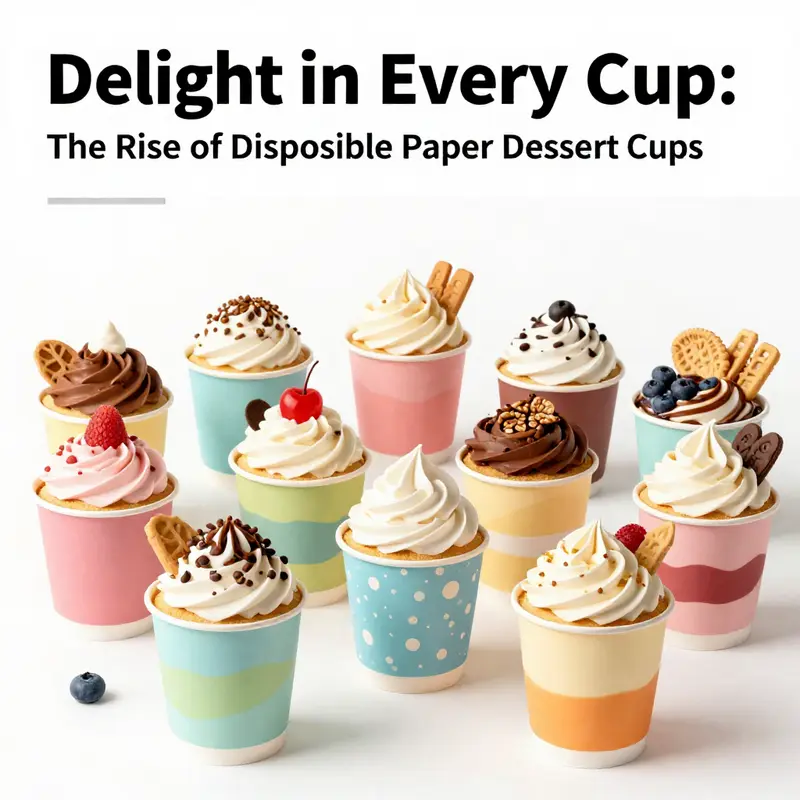
As the trend towards sustainability and convenience continues to grow, disposable paper dessert cups have emerged as a favored choice among Bubble Tea shops, restaurants, and event planners. Their practical design, combined with eco-friendly features, makes them a go-to solution for serving a variety of delectable desserts. This article delves into the materials and manufacturing of these cups, highlights their versatile applications, examines the economic impact on businesses, and discusses the environmental considerations tied to their use. Each chapter offers insights to help stakeholders in the food industry understand how these cups can enhance customer satisfaction while aligning with modern sustainable practices.
From Fiber to Film: The Quiet Science Behind Disposable Paper Dessert Cups
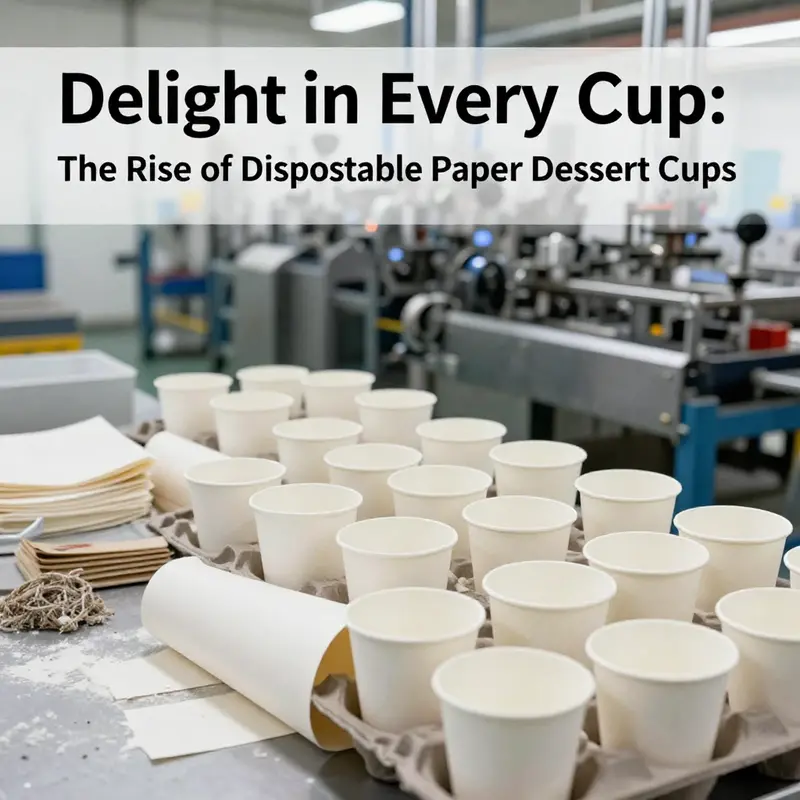
The disposable paper dessert cup is a small, everyday artifact that carries a surprising amount of science. It must be stiff enough to hold a swirl of ice cream or a generous layer of tiramisu, yet light enough to be disposed of after use. It must resist moisture and grease, keep its shape when cold or hot, and do all of this without imparting flavors or odors to the dessert inside. Behind its apparent simplicity lies a careful choreography of material choice, coatings, and manufacturing steps that together determine performance, safety, and sustainability. To understand why these cups behave as they do, it helps to start with the most fundamental material: kraft paperboard. This is the sturdy backbone of the cup, selected not simply for its strength but for its predictable response to forming operations and its compatibility with food contact. Kraft paperboard is produced from wood pulp in a way that emphasizes bulk, stiffness, and a clean surface. Those properties translate directly into a cup that can be sized and shaped with precision, hold its vertical sides under load, and resist lateral collapse when carried by party guests or stacked for storage. The raw material’s texture, weight, and fiber orientation all influence how cleanly the cup can be formed from a flat blank into a curved container. The result is a reliable shell that supports the dessert without bending or blistering under the pressure of moisture and fats that travel with many sweets. Yet paper on its own would not be sufficient. So the industry layers in coatings that create a protective barrier between the dessert and the paper, preserving both taste and texture. The most common interior lining is a food-grade coating—glass-like in its barrier properties but applied in a controlled, thin film. Polyethylene, a familiar plastic coating, is prized for its excellent moisture resistance and its ability to prevent liquid absorption into the paper. This coating is generally safe for food contact and keeps the cup from leaking when it is used for moist or oily desserts. The exterior coating, when present, is often a mirror image of the interior’s barrier function, helping to protect the cup during handling and transport. A newer, increasingly prominent option is plant-based plastics—most notably polylactic acid, or PLA. Derived from renewable sources such as corn starch, PLA offers a route toward compostable cups in systems that support industrial composting. This aligns with growing consumer demand for eco-friendly packaging and with the market’s broader push toward sustainability. The coating choice—PE versus PLA—does more than determine compostability. It also affects the cup’s heat resistance, flexibility, and printability. A PE-coated interior provides robust moisture barrier and familiar performance, which is what many traditional designs rely on. PLA coatings can improve compostability and reduce reliance on fossil-fuel-derived plastics, but they also demand appropriate disposal infrastructure to realize their environmental benefits. In some cup configurations, manufacturers add reinforcement materials to increase insulation or strength. Double-wall construction, a technique borrowed from hot beverage cups, introduces an inner and outer layer separated by a insulating space. While most dessert cups are not intended to keep heat at a fever pitch, these double-wall designs can improve grip and reduce heat transfer, making the cup comfortable to hold when the contents are chillier or warmer than room temperature. In other designs, reinforced cardstock or extra folds provide additional stiffness at the rims or body of the cup. This is particularly valuable for larger volumes, premium presentations, or busy service environments where cups must withstand repeated handling during transport and display. The interplay between these materials—kraft, coating, and any reinforcement—determines several practical outcomes: moisture resistance, oil resistance, and overall integrity under temperature fluctuations. A cup must prevent oil separation, sugar migration, or liquid seepage that would compromise the dessert and the consumer’s experience. This is why coatings are applied with care and quality control checks are routine. The formation of the cup is a carefully choreographed sequence. It begins with the preparation of large rolls of paperboard, which are sliced into blanks that will be shaped into the familiar conical or cylindrical form. The shaping process uses dies or molds to form the blank into a cylinder, then to seam and root the edges into a closed body. After forming, the interior and sometimes exterior receive their barrier coatings. The packaging step follows, where finished cups are counted, counted again for quality, and wrapped for distribution. In modern facilities, these steps are highly automated, producing thousands of cups per hour with consistent wall thickness and barrier performance. Each stage has its own quality-control checkpoint, from the rigidity of the wall to the uniformity of the coating’s thickness. The goal is not only to meet safety standards but to ensure reproducible performance across batches, so that a consumer’s blueberry cheesecake can rest on a cup that remains intact through the last bite and into the trash bin. With performance considerations comes a sustainability conversation that has grown louder in recent years. Composable coatings, such as PLA, are reshaping the lifecycle of disposable cups by offering an option that aligns with composting-oriented disposal streams. However, the reality is nuanced. PLA does not degrade in standard home composting conditions and requires industrial facilities to achieve meaningful decomposition. This nuance invites producers and users to understand disposal options in their local systems. It also pushes the industry toward better labeling so consumers can sort waste effectively. The broader narrative around materials extends beyond compostability. Kraft paperboard, when responsibly sourced, anchors a story of renewability and recyclability. The paper’s origin can be traced to fast-growing forests or other managed sources, and the end-of-life pathway—whether recycling, industrial composting, or landfilling—depends on local infrastructure and consumer behavior. The shift toward sustainable materials is not a surrender of performance. Rather, it is the pursuit of a balance between functional reliability and environmental responsibility. Brands and bakers who want to elevate the presentation of desserts often pair these cups with lids, sleeves, or dome covers that preserve freshness during transport and display. Lids must seal well without making removal a messy exercise, and they should be compatible with the coating or the board’s surface. The design flexibility extends to sizes, patterns, and colorways. A conductor of visual appeal, the outside surface can carry printed art or brand motifs. Some designs leverage bold colors or Bohemian-inspired patterns to mirror the mood of a celebration, while others emphasize natural textures and earthy tones that convey sustainability. The ability to customize prints hinges on the cup’s surface compatibility with inks and finishes. Printing must be compatible with coatings to avoid issues such as smudging or delamination. In some instances, printed designs are paired with a clear exterior layer to protect the artwork while ensuring a clean, food-safe surface. The consumer experience hinges on how well these design choices harmonize with practical considerations. For example, a cup intended for hot desserts must maintain its shape when faced with a brief heat exposure in a serving line, while one intended for frozen desserts must resist cracking or sweating as it sits on a display case. Temperature resilience and moisture management are inseparable from material choices. A thoughtful selection of kraft paperboard weight, coating thickness, and barrier properties ensures that the cup can perform under real-world conditions—from a crowded cafe to a home pantry after a bake sale. The road from raw material to dessert vessel also passes through an assessment of safety standards. Even as coatings improve moisture and grease resistance, they must remain free from harmful substances and comply with regulatory requirements for food packaging. This is where the role of testing becomes central. Cups undergo inspections to confirm that coatings adhere properly, that seams stay intact, and that there are no defects that could compromise food safety or consumer confidence. The consumer’s trust in disposable cups rests on this foundation of rigorous manufacturing discipline. It is easy to take the everyday cup for granted, but the truth is that its reliability rests on an integrated system of materials science, process engineering, and quality assurance. The choices a manufacturer makes—whether to use PE or PLA coatings, whether to implement double-wall insulation, or how to print patterns without sacrificing barrier performance—shape not only the cup’s function but its environmental footprint. For designers and operators seeking to communicate a sustainability story, the connection between material selection and end-of-life options matters. A cup that can be easily recycled in a local stream, or that can be accepted by an industrial composting facility, contributes to a circular economy. A cup that fails to perform, or requires disposal through complex waste streams, may undermine both convenience and ecological goals. In this sense, the “content” of these cups is not only the dessert it holds but the traceability of its journey from forest to fiber to film. The chapter’s material choices matter as much for flavor as for footprint. The careful balance of strength, barrier properties, and environmental impact is what allows a simple cup to support a diverse menu—from custards and fruit compotes to high-fat pastries and dense chocolate layers—without compromising the edible experience. For readers seeking further insight into sustainable packaging practices and the broader environmental implications of disposable goods, the U.S. Department of Agriculture’s Sustainable Packaging Resources offers a comprehensive view of how packaging choices intersect with waste streams, recycling capabilities, and composting infrastructure. This broader framework helps explain why certain coatings and materials are favored in different markets and how policy and infrastructure shape the real-world outcomes of seemingly small product decisions. Sustainable packaging resources. To connect theory with practice further, a recent overview of eco-friendly printing and design considerations demonstrates how coatings and surface treatments interact with branding and consumer perception in the arena of disposable cups. For practitioners seeking concrete examples of how to convey a sustainability narrative without compromising usability, the discussion highlights patterns, color choices, and lid configurations that balance aesthetics with performance. As these cups travel from a baking table to a fundraising booth, their journey embodies a careful synthesis of science, craft, and responsibility. One can imagine a kitchen where a baker assesses a batch of new cups for a regional fair: weighing the kraft stock for rigidity, confirming the interior coating’s adhesion, checking the outer finish for print clarity, and perhaps choosing a PLA-coated variant to align with a composting program that participants can access. The decision is rarely about choosing one material over another in absolute terms, but about selecting the combination that best serves the dessert, the service context, and the disposal ecosystem available to the event’s attendees. In the end, the cup is more than a container. It is a medium that carries heat or cold, carries flavor, and carries a message about how we treat waste. Its life—brief as it may be—reflects a set of practical compromises and thoughtful innovations that aim to keep desserts delicious, safe, and responsibly packaged. The science behind disposable paper dessert cups is not hidden in a lab; it resides in the factory floor, in the careful calibration of a coating thickness, in the strength of a paperboard, and in the decisions about end-of-life management that communities adopt. Cumulatively, these factors shape a product whose everyday utility hides a deeper conversation about materials, process, and purpose. The next chapter will explore how these cups perform in real-world settings, how brands adapt them to different events, and how the evolving packaging landscape continues to influence design and sourcing decisions for dessert service. Meanwhile, the materials and manufacturing choices outlined here illuminate the trade-offs that bring a simple, elegant dessert experience to life, one cup at a time.
From Party Trays to Pantry Staples: The Ubiquitous Versatility of Disposable Paper Dessert Cups
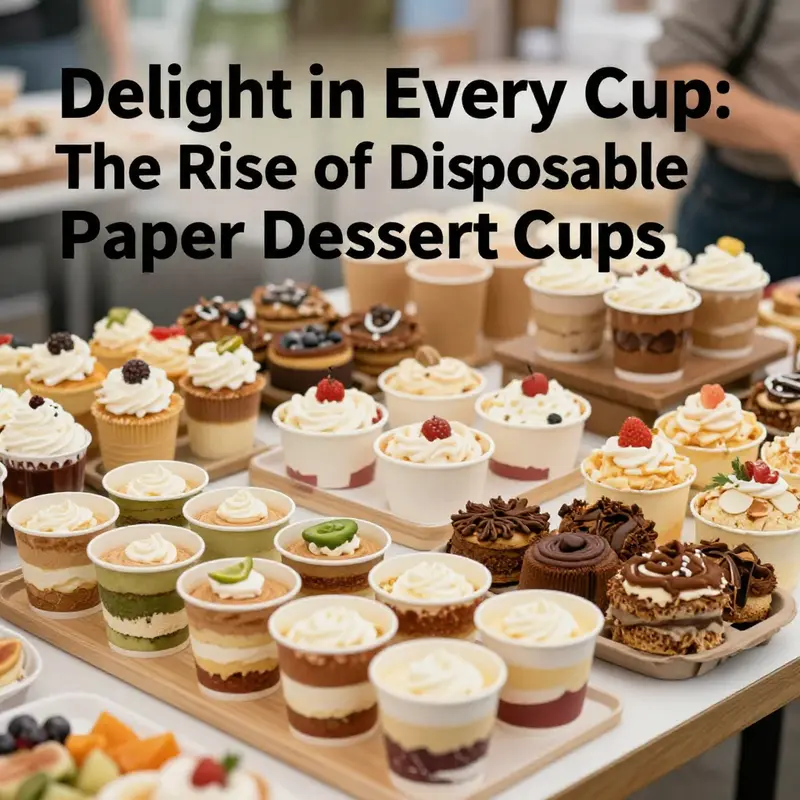
Disposable paper dessert cups occupy a quiet ubiquity in kitchens, event halls, and pop-up stalls. They are not flashy, but they are essential, a simple fusion of form and function that makes the act of serving sweets cleaner, faster, and more enjoyable for both host and guest. Their appeal rests not only in convenience but in the way they align with modern concerns about hygiene and sustainability. Made from food-grade paper and outfitted with grease-resistant coatings, these cups keep puddings, mousses, yogurts, and delicate tiramisus from seeping or slipping while preserving the desserts’ appearance and texture. The cups come in a rainbow of sizes, from petite mini servings to larger standard portions, and even jumbo variants for showpiece displays. The colors and printed patterns extend the possibilities, turning ordinary serving into a moment of visual delight that can complement a theme, a brand, or a seasonal menu. In this sense, their versatility extends far beyond a single use; they are an adaptable canvas for presentation as much as for portion control.
In catering settings, the cups streamline service without sacrificing cleanliness. They eliminate the need for shared utensils and heavy dishware, reducing the risk of cross-contamination and simplifying cleanup. A roomful of guests can personalize their portions in seconds, selecting a flavor, topping, or garnish, and then sealing the moment with a lid when transport is required. For buffet arrangements, their light weight and stackable design save space and shipping costs, enabling large-scale service without the logistical headache of bulky equipment. The same logic translates to takeout and delivery, where customers appreciate the ability to enjoy a dessert on the go, knowing the cup’s structure will resist leaks as they navigate from counter to car or from kitchen to doorstep. This is where the coating matters most: a grease-resistant layer helps maintain the cup’s integrity when the dessert is moist or oily, safeguarding both appearance and texture.
The question of temperature tolerance also frames the versatility of disposable paper dessert cups. Some models are designed to withstand cooler temperatures for chilled desserts such as fruit salads, yogurt cups, and layered desserts. Others are prepared for warmth, with coatings and constructions that resist moisture and leakage when a custard or warm pudding is placed inside. In many products, a combination of materials—PLA or PE coatings, wax barriers, and occasionally insulated walls—contributes to thermal stability. The result is a cup that can host a hot or cold treat without compromising the dessert or the container. It is this adaptability that makes these cups useful across diverse events, from school fundraisers and community festivals to corporate receptions and intimate celebrations.
The visual language of dessert cups is another facet of their versatility. The palette can be matched to a theme, a brand, or a seasonal mood, and the possibility of customized prints has become a major driver of retail and hospitality strategy. Bold patterns or elegant logos can turn a simple serving into branded stationery, reinforcing identity while delivering a practical takeaway option. For many operators, injection of personality through color and print enhances the guest experience, making the dessert moment memorable beyond taste. Customization is not only about aesthetics; it also supports operational goals such as consistency across multiple service points and clear communication in busy environments. In fact, a coordinated set of cups and lids can become a signature element in a storefront’s display, in a festival’s booth, or in a deli’s glass case. The effect is both practical and aspirational, signaling care for detail and a commitment to quality in even the smallest touchpoint.
The topic of lids and portability further expands what these cups can do. Some models are paired with dome lids, designed to preserve the dessert’s structure and aroma while enabling easy transport. Lids prevent spills during movement and add a layer of protection against dust or other contaminants at crowded events. They also enable a more premium shelf presentation, inviting customers to pick up a neatly packaged dessert without sacrificing freshness. When paired with attractive exterior prints, lids help maintain the pristine look of the dessert from display to table. This is particularly valuable at outdoor fairs or market settings where weather, crowds, and rapid turnover can otherwise compromise presentation. The integration of lids also contributes to waste management considerations, as resealable options can encourage customers to finish servings later, reducing waste compared with loose servings that invite early consumption or wasteful disposal.
Beyond the immediate act of serving, the sustainability narrative of disposable paper dessert cups remains central to their appeal. The industry’s trajectory toward biodegradable and compostable packaging resonates with a growing segment of environmentally conscious consumers. Coatings such as PLA offer an alternative to traditional plastic barriers, while some products rely on wax or other barrier technologies designed to minimize moisture absorption and grease leakage. These materials can enable compostability in appropriate facilities, aligning with broader shifts toward closed-loop food packaging. Even when a cup is not composted, its paper base often represents a lower environmental footprint relative to standalone plastic vessels, especially when deployed in bulk for single-use scenarios. The balance between performance, cost, and environmental impact continues to shape product development, with manufacturers experimenting with more sustainable fiber blends, coatings, and end-of-life pathways.
The chain of supply and access also features prominently in the chapter of versatility. Disposable paper dessert cups are widely available through bulk channels, with packs that typically range from dozens to thousands of units. For organizers and operators, the ability to source in bulk supports consistent service across multiple days, events, or locations. Price points, of course, depend on size, coating quality, and whether customization is involved. It is essential to assess heat resistance, coating safety, and compliance with food safety standards before purchase. A careful review of packaging labels helps ensure there are no harmful coatings and that the cups suit their intended purpose—hot or cold, one-time use, or multi-service reuse in a controlled setting. For hosts, this means leaning into reliable suppliers who can provide consistent quality and predictable performance, whether the aim is a single themed event or a year-round dessert program.
The practical implications of versatility extend into narrative and storytelling as well. A dessert program can become more than the sum of its flavors when the serving vessels themselves contribute to the experience. A party with a tropical theme might pair bright, speckled cups with fruit salads and coconut puddings, while a refined tasting event could opt for minimalist, unprinted cups that highlight the dessert’s color and texture. In some venues, the cups function as a visual brochure, one that communicates dietary options, portion sizes, and convenient grab-and-go options to guests who value speed and clarity in service. The design language communicates care, cleanliness, and efficiency without overt verbal cues, allowing the dessert moment to unfold with an unforced sense of hospitality.
From a brand-management perspective, there is real value in choosing cups that support branding without creating logistical friction. Custom printed paper cups with credible, consistent branding can be rolled out across counter displays, self-serve stations, and takeout packaging, helping to build recognition and loyalty even at the dessert stage. The aesthetic harmonization between cup, lid, and the dessert itself can elevate the overall sensory experience. For businesses seeking a balanced approach, a single well-executed set of printed cups with matching lids can anchor a display, reinforce color schemes, and reinforce messaging on menus or signage. A practical takeaway for operators is to view the cup as an extension of the dessert’s storytelling, not merely as a disposable wrapper. In this sense, the most successful uses of disposable paper dessert cups are those that blend practicality with narrative coherence, turning a simple serving into a moment of brand-appropriate theatre.
When considering the broader ecosystem of packaging and service, it is useful to think of these cups as adaptable containers rather than fixed approximations of a disposable tradition. They can be employed for a wide range of cold or warm desserts, in indoor dining rooms or outdoor festivals, in baking classrooms or corporate cafeterias. They pair well with other elements of a dessert program, such as spoonfuls of whipped cream, fresh fruit garnishes, or crumbled cookies that can be offered as toppings. The cups’ versatility lies in their capacity to house bite-sized portions that guests can select, savor, and take with them. And as consumer expectations evolve toward more sustainable and visually engaging packaging, the role of disposable paper dessert cups in the kitchen and at the event site will continue to grow, broadening the spectrum of what a simple serving vessel can achieve.
For readers who want to explore these possibilities further, one example of a practical option is the eco-friendly printed-logo ice-cream cups with lids, which illustrate how customization and sustainability can converge to enhance both presentation and portability. eco-friendly printed-logo ice-cream cups with lids
As with any packaging decision, the key is alignment—between the dessert, the venue, the audience, and the desired environmental footprint. When these align, disposable paper dessert cups become more than just a convenient serving tool. They become an enabler of experience, efficiency, and expression, a quiet backbone that supports the social and culinary moments that make gatherings memorable. They are, in effect, a small yet meaningful bridge between the art of dessert and the pragmatics of service. The story of these cups is not simply about disposal; it is about how a simple, well-designed vessel can elevate both the practicality of hosting and the pleasure of sharing a sweet treat.
External resource: https://www.amazon.com/dp/B0CZQ7XV5P
Greener Tables, Growing Markets: The Economic Pulse of Disposable Paper Dessert Cups
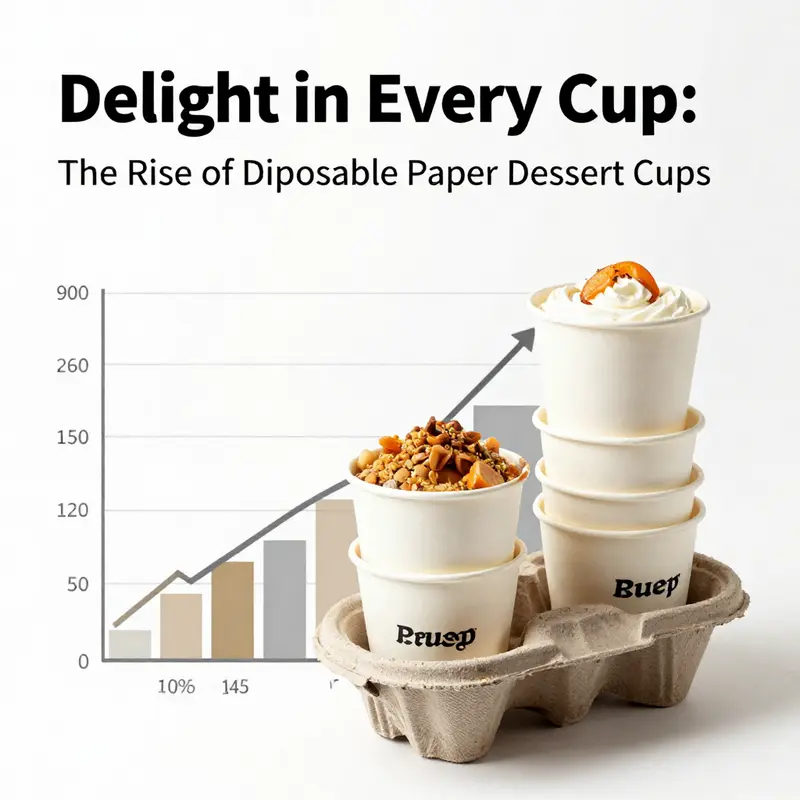
External resource: https://www.marketsandmarkets.com/Market-Reports/disposable-paper-cup-market-181593478.html
Beyond Convenience: Rethinking the Environmental Footprint of Disposable Paper Dessert Cups
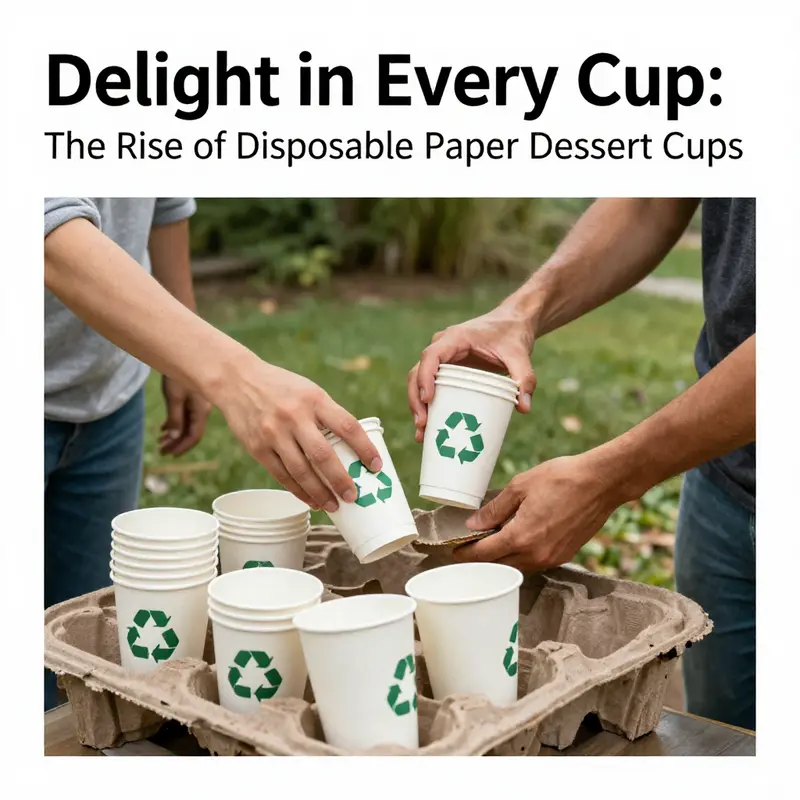
Disposable paper dessert cups are a familiar sight at celebrations, bake sales, and busy kitchens, prized for their convenience, hygiene, and a surface that invites color and whimsy. Yet when we peel back the wrapper of their everyday practicality, a more nuanced story emerges. The same cups that simplify serving and transport can also reveal a web of resource use, waste management challenges, and ecological trade-offs that deserve careful consideration. This chapter follows that thread, tracing how production, use, and end-of-life pathways intersect with broader environmental goals and what this means for a topic deeply tied to food, community, and celebration.
From the outset, it is tempting to label paper cups as inherently greener than plastics. Paper is renewable in principle, and many cups are marketed as biodegradable or compostable. The reality, however, is complex. The pulp stories begin with forests and water, two of the most abundant yet most contested resources in modern manufacturing. Pulp production requires substantial water and energy, and the choice of raw material—whether fast-growing plantation wood or responsibly managed forests—directly influences both ecological health and carbon dynamics. Even when the source forest is certified, the broader supply chain carries environmental costs that accumulate far from the consumer’s gaze. The cups do not appear in a vacuum; they are embedded in a system of sawmills, pulping facilities, converting plants, and distribution networks that together shape their environmental profile.
A central, enduring complication lies in the coatings that keep these cups leak-resistant and structurally sound when holding moist or oily desserts. Many disposable paper cups rely on thin plastic linings or coatings, such as polyethylene, to repel leaks and preserve integrity during storage and handling. While those coatings protect the dessert and the cup’s form, they also complicate recycling. In many places, the presence of plastic liner renders the cup non-recyclable in standard facilities, relegating it to the landfill stream or, at best, to specialized recycling for mixed-material packaging. The result is a paradox: a product designed to improve hygiene and convenience ends up challenging the very systems meant to capture and reprocess waste. Even cups labeled as compostable face real-world hurdles; industrial composting facilities require precise temperatures and microbial activity that municipal programs often do not provide. Home composting—an option some consumers consider—simply cannot reliably break down these materials. The net effect is that labeling alone cannot guarantee end-of-life outcomes, and the actual fate of many cups hinges on the local waste regime and the diligence of disposal practices.
The transportation footprint compounds these concerns. Cups are produced far from the places where they are consumed, sometimes in bulk to reduce per-unit costs, then shipped to retailers, caterers, and households. Each leg of that journey adds emissions, which accumulate across large-scale consumption patterns. In practice, even efficient logistics cannot erase the emissions embedded in the raw materials, the conversion processes, and the ongoing demand for fresh product. For events with high turnover, the combined effect of production, distribution, and end-of-life management becomes a meaningful portion of the product’s overall environmental burden. It is not simply a matter of one good being replaced by another; it is about how that substitution interacts with the gears of a national or global waste system.
Disposal behavior also shapes the cups’ ecological impact. Litter is a persistent problem in urban spaces and natural environments alike, where even well-intentioned use can translate into environmental degradation. Paper cups, though often viewed as more benign than plastics, contribute to litter and, in some cases, to microplastic pollution when coatings degrade and interact with soil and water. The visible nature of cups—bright, colorful, and familiar—can tempt careless discard in crowded venues, compounding the likelihood that not all cups reach proper recycling or composting streams. The broader ecological footprint thus emerges not only from production and packaging choices but from everyday habits and the infrastructure that can respond to them.
Among the most significant takeaways from environmental analyses is the variability of outcomes across geographies and systems. A cup that is feasible to recycle in one municipal facility may become a problem in another that lacks compatible sorting infrastructure. Compostability is not a universal guarantee; it is tethered to the availability of industrial composting networks, which differ widely in capacity and performance. Such variability challenges a one-size-fits-all approach and invites a more nuanced view of what “eco-friendly” really means in practice. If the goal is to reduce environmental harm, it becomes essential to align product design with the actual capabilities of local waste systems, rather than relying solely on labels or marketing claims.
In thinking about improvements, many manufacturers and researchers point to pathways that preserve the positives of disposability—hygiene, portion control, and convenience—while reducing ecological costs. One broad direction involves reimagining coatings and materials so that a cup can be recycled more readily or composted in ordinary facilities. This might include coatings that are easier to separate from the fiber, or alternative barrier technologies that rely on plant-based or biodegradable materials with demonstrated performance under typical kitchen and event conditions. Another promising thread is the shift toward uncoated or minimally coated papers, designed with clear recycling in mind, even if it means accepting a trade-off in some leak resistance that can be mitigated by selecting appropriate cup sizes or by using compatible lids and supports. The balance to strike is clear: retain the practical benefits consumers expect while reducing the material’s end-of-life complexity.
Design for recyclability and compostability also intersects with consumer behavior. Education about proper disposal, programming for municipal facilities, and transparent labeling can empower people to make better choices at the point of use and disposal. When a cup is labeled, consumers deserve a clear map of what to do with it and why. But labels alone are insufficient; they must be part of a broader system that includes accessible recycling and composting options, clear separation of streams, and reliable data on how those streams perform in practice. In this sense, the environmental value of disposable cups becomes a shared responsibility among producers, waste managers, retailers, and customers alike.
The conversation about alternatives often centers on two broad streams. The first is to improve the end-of-life options for existing designs—making coatings more compatible with recycling streams, or developing compostability that works in municipal facilities rather than requiring specialized infrastructure. The second stream explores alternatives that reduce overall resource intensity from cradle to grave, including plant-based bioplastics and entirely uncoated papers. Each path has its own set of challenges, from material performance and cost to scalability and lifecycle emissions. A careful appraisal asks not only what can replace plastic linings or conventional coatings but also whether the infrastructure to manage the new materials is in place or rapidly scalable. In the end, sustainability is not a single feature but a system property—one that depends on materials, manufacturing, logistics, consumer behavior, and the robustness of recycling and composting networks.
To connect this broader frame to everyday practice, consider the possibilities for cup design refined through lifecycle thinking. If a cup can be produced with lower water use and energy, and if the barrier layer can be made thinner or more compatible with recycling technology, its burden could decline meaningfully. If a company can coordinate with municipal programs to ensure cups are sorted correctly and processed efficiently, the environmental upside grows. And if consumers are guided to dispose of cups in the appropriate streams, the gap between potential and actual environmental performance narrows. In other words, the conversation around disposable cups is not simply about choosing between compostable or recyclable; it is about aligning product design, waste management, and consumer habits to realize real ecological benefits.
Among the practical steps forward is the use of packaging and cup designs that support portability and freshness without compromising end-of-life performance. For example, the integration of matching dome lids or the development of streamlined single-stream packaging can reduce loss and waste, while keeping contents secure during transport. Such design choices matter because they shape how likely a consumer is to discard a cup correctly and how well the waste system can recover the materials for reprocessing. The broader implication is clear: sustainability in disposable cups is not only about what happens after the last bite but about how the entire chain—from forest to bin—works together.
For readers looking to explore tangible options that honor both function and responsibility, a look at eco-friendly, practical cup designs with thoughtful lifecycle considerations can be a useful starting point. These designs emphasize performance without sacrificing recyclability or compostability, recognizing that durability, heat resistance, and leak protection must be balanced against end-of-life clarity and system readiness. When choosing such options, it helps to adopt a holistic lens—one that weighs the full lifecycle, considers regional waste realities, and prioritizes materials and processes that minimize environmental impact while maintaining the trusted, hygienic serving experience that cups offer for desserts, snacks, and petite indulgences. To learn more about such approaches and to see real-world examples of eco-conscious cup systems, readers can explore a representative line of offerings described in practical detail, including those that foreground sustainability in both design and messaging: eco-friendly printed-logo paper cups with lid.
eco-friendly printed-logo paper cups with lid
As this chapter ties back to the broader article on disposable paper dessert cups, the core message is not to abandon all of the convenience these products provide. Rather, the objective is to illuminate the environmental realities that accompany their use and to map practical paths toward reducing their footprint. That means embracing materials science innovations, enabling waste-management infrastructure to keep pace with production, and cultivating consumer norms that favor proper disposal and mindful consumption. It also invites ongoing dialogue among technicians, policymakers, retailers, and communities about how to steer disposable dessert cups toward outcomes that are as responsible as they are convenient. The balance is delicate, but it is within reach when stakeholders align incentives, invest in better design, and commit to transparent, action-oriented communication with the public. In this evolving landscape, the future of disposable paper dessert cups will depend on whether the systems around them can transform as quickly as consumer expectations and environmental imperatives demand.
For readers seeking a deeper, peer-reviewed perspective on the lifecycle and environmental considerations discussed here, the broader literature provides substantial analysis. External resource: https://www.sciencedirect.com/science/article/pii/S095965262401753X
Final thoughts
Disposable paper dessert cups represent an invaluable resource for the food industry, balancing convenience and sustainability in a time where consumer preferences are rapidly evolving. As businesses aim to enhance their service offerings while being environmentally conscious, these cups emerge as a practical solution. By understanding their production, versatility, economic impact, and environmental friendliness, stakeholders can better leverage these cups to meet the needs of their clients and ensure a delightful customer experience. As you consider how to elevate your offerings, remember that these cups can make a significant difference in presentation, service, and sustainability.