
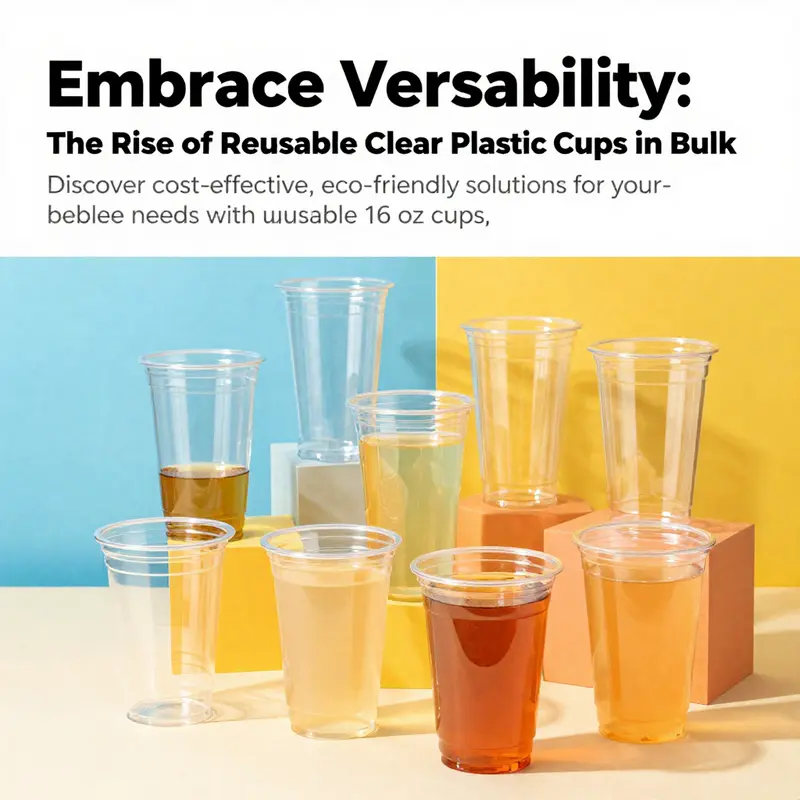
In the dynamic landscape of food and beverage service, the choice of drinkware can significantly impact both operational efficiency and customer satisfaction. Reusable 16 oz clear plastic cups are making waves across various sectors, from bubble tea shops to corporate catering services. Their durability, functionality, and appealing aesthetics cater to the needs of modern consumers while providing businesses with a practical solution to beverage presentation. This article will explore the vital aspects of these cups, focusing on their material properties and durability, the dynamics of bulk purchasing, and the environmental implications of their use, helping you make informed decisions for your business.
Built to Endure: Material Strength, Design, and Bulk Viability of 16 oz Reusable Clear Plastic Cups
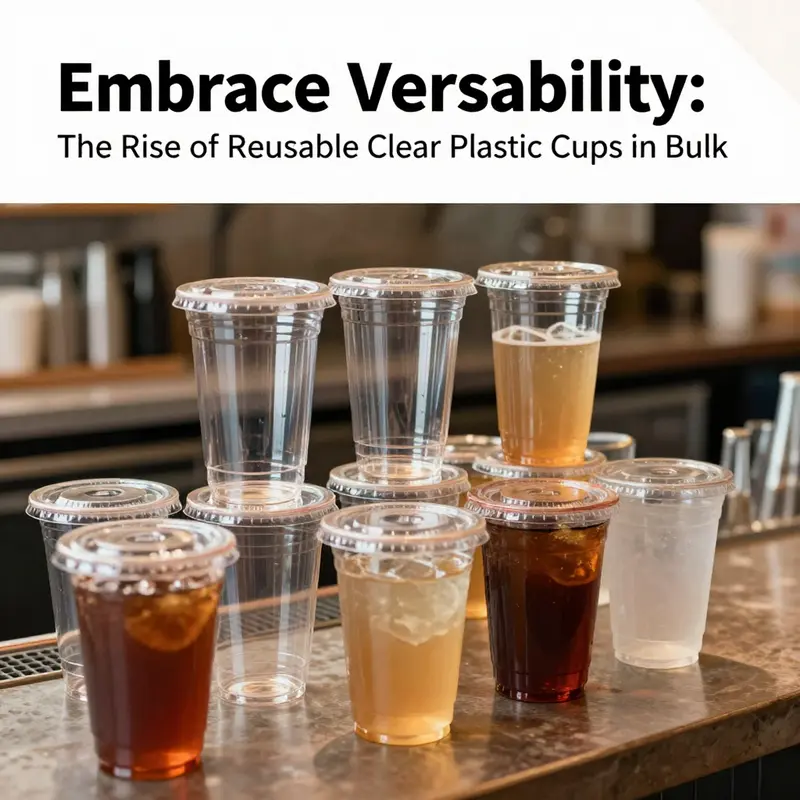
The appeal of 16 oz reusable clear plastic cups in bulk rests on more than their simple transparency. They promise a practical fusion of clarity, strength, and convenience that serves both commercial operations and households alike. When a restaurant shifts from disposable options to a reusable model, the decision hinges on durability that lasts through many cycles, predictable performance under a range of temperatures, and the assurance that the cups will remain appealing to customers after repeated use. The materials chosen for these cups—often BPA-free and food-grade—play a decisive role in delivering that promise. The most common workhorses in this category are polypropylene, polypropylene being used with specific blends to improve toughness, and polystyrene, valued for its clarity and stiffness. A less frequent but growing option is PET, which offers high clarity and a balance of stiffness and toughness that can be optimized for repeated washing. Each material brings its own balance of properties, and the choices are seldom arbitrary. They reflect a careful engineering conversation about impact resistance, temperature tolerance, and how the cup will behave in real-world conditions ranging from a brisk dishwasher cycle to a hot coffee in a ceramic-cooled environment or a cool beverage at a sunny event. In the quiet math of materials science, these cups demonstrate how the right polymer, properly processed, sustains performance under stress while remaining safe for food contact and easy to recycle or dispose of after their life in bulk service ends.
At the core of durability is the intrinsic toughness of the chosen polymer. Polypropylene is renowned for a blend of toughness and thermal resistance. It can shoulder chilly service as confidently as a hot beverage, provided the design and wall thickness are optimized. The resilience of PP translates into resistance to cracking when the cup is dropped or knocked against a counter during a busy service period. Polystyrene, with its excellent clarity, offers a crisp, glass-like appearance that enhances beverage presentation. It is also rigid and rugged under standard service conditions. When used in a double-wall configuration, these materials gain an insulating advantage that helps preserve beverage temperature and reduces condensation that can slip from the cup to a counter or table. The resulting tactile experience—an exterior free from moisture, a comfortable grip, and a transparent window into the drink inside—becomes a subtle but crucial part of the user’s satisfaction.
The idea of a reusable cup that can be washed repeatedly and still appear pristine rests on more than the base polymer. Design choices reinforce, extend, and sometimes even redefine the perceived durability of the cup. A reinforced rim, for instance, is a small but meaningful feature that resists the cracking that can occur at a cup’s edge during handling, stacking, or frequent reaches for a refill. This is particularly important in a bulk context where dozens or hundreds of cups move through a single service window, a back room, or an event site. Robust rims help ensure that even after a dishwasher cycle or a hard bounce onto a hard surface, the cup retains its shape and its fit with lids, if the service includes a spill-proof configuration. Lids themselves contribute to durability in a subtle but essential way. When a lid is designed to be leak-proof and to seal reliably, the internal environment of the cup is better protected from spills that could otherwise cause thermal stress on the rim or introduce contaminants into the beverage. A good lid also guards against oxygen ingress and outside contamination, preserving beverage quality while the cup is in transit or stacked alongside other components for bulk transport.
The geometry of the cup matters just as much as the material. The U-shape handle or grip is a small ergonomic touch that has a meaningful impact on user experience and durability in practice. A well contoured grip reduces the chance of slipping from a hand during transport or while sipping, which in turn reduces the likelihood of accidental drops and the micro-damage that can occur when a cup lands on a hard floor. The stacking capability, often achieved through a tapered base and careful tolerances between adjacent cups, minimizes damage when many cups are nested inside one another for storage and shipment. Stackability also reduces the risk of deformation during transit, ensuring that cups arrive ready for use rather than requiring adjustment or replacement on delivery. These design features—firm rims, reliable lids, ergonomic grips, and efficient stacking—work together with the material properties to create a durable, bulk-ready product that performs well day after day.
In a bulk purchase scenario, durability translates into predictability across thousands of units. The supplier’s process window—temperature control, extrusion or molding consistency, and post-molding finishing—must deliver uniform wall thickness and a uniform surface finish. Inconsistent thickness can introduce weak points where cracks might initiate under repeated washing or impact. Finishing steps, such as smoothing the rim and ensuring a clean seal surface for lids, also contribute to the long-term performance of the cup in a busy service environment. The quality control checks that accompany bulk production—visual inspections, standardized impact tests, and production lot traceability—offer confidence that each run meets a baseline standard for durability. With these checks in place, a bulk buyer can expect a consistent supply that will sustain the rhythm of daily service, seasonal peaks, and the occasional high-traffic event without unexpected breakdowns or replacements becoming a disruptive cost of doing business.
The question of temperature tolerance sits at the intersection of material science and practical use. Reusable clear cups must handle both hot beverages and chilled drinks. PP typically performs well under moderate hot-w beverage conditions, while PS can handle cooler temperatures with a stiffness that preserves the drink’s presentation. For hot beverages, the risk of deformation rises if the cup wall is too thin or if the plastic lacks the appropriate thermal resistance. In a well-engineered cup, wall thickness is a deliberate variable: thick enough to resist distortion when a hot liquid is poured, yet thin enough to keep the cup light and cost-effective for bulk orders. In double-wall constructions, the exterior reaches an insulation level that minimizes heat transfer to the surface, reducing condensation and making the cup more comfortable to hold. The condensed exterior can otherwise become a source of slip or a nuisance in a crowded dining area. These dual objectives—thermal protection for the beverage and a comfortable, secure grip for the user—often determine whether a given cup earns the label reusable and bulk-friendly rather than simply a sturdy throwaway.
Another facet of durability lies in the cup’s environmental profile and safety compliance. Food safety standards require that the materials in contact with beverages are not only non-toxic but also stable under repeated cycles of washing and use. The FDA 21 CFR 177.1630 standard, for example, often governs materials used in contact with food, and cups designed for bulk service are frequently designed to meet such specifications. Certifications and third-party testing provide buyers with assurance that the cup will not leach unwanted substances into drinks over time, even when exposed to repeated heat and cold, or to the detergents used in commercial dishwashers. In addition to safety, sustainability matters for buyers who are acquiring in bulk. Some cups are made from recyclable materials and carry FSC certification or other sustainability marks, signaling responsible sourcing and end-of-life options. This matters not only for compliance-minded businesses but for brands that want to convey a consistent message about responsible consumption and waste reduction to consumers who encounter their products in cafes, event venues, or restaurants.
The environmental conversation around these cups inevitably touches on alternatives such as PLA. PLA, derived from renewable resources, can be compostable under industrial conditions, providing a more sustainable option than conventional plastics in some settings. However, the practical reality is nuanced: industrial composting infrastructure is not universal, and home composting rarely reaches the temperatures required to break down PLA at a meaningful rate. For bulk buyers, the choice to include PLA-based cups often aligns with specific event programs or promotional campaigns that emphasize sustainability or align with a brand’s environmental narrative. It also prompts a broader consideration of disposal pathways. A reusable cup makes sense when it is repeatedly used in a consumer cycle that supports sustainable practice. Yet the chain does not end with the final sip; it extends into washing, drying, stacking, and ultimately recycling at the end of the cup’s life. The economic calculus of bulk purchases generally favors durability and reuse, while the environmental calculus questions disposal options and recycling compatibility. When a cup remains in circulation for many cycles, the per-use environmental impact declines; still, the responsible end-of-life handling remains essential to maximizing the environmental benefits of reusables.
The bulk market for these cups is supported by capacity and scale. Large manufacturers, particularly those with production bases in regions known for plastics processing, can offer monthly outputs that reach into the tens or hundreds of thousands of units. The ability to scale production to bulk orders is a core advantage of sourcing in this category. For buyers, that translates into more reliable pricing, shorter lead times, and the possibility of customizing the cups with logos, branding, or event-specific designs that turn a simple accessory into a promotional tool. Custom printing can be applied directly to the cup or to a lid, depending on the design and the production process. This level of customization is particularly valuable for foodservice venues, corporate events, or promotional campaigns where the cup itself becomes a canvas for messaging and brand identity. The design freedom paired with material durability offers a compelling value proposition for buyers seeking not just a practical cup but a durable, repeat-use vessel that can reinforce a brand narrative batch after batch.
As buyers examine options in bulk, they also weigh the practicalities of care and maintenance. Reusable cups are designed to withstand frequent washing, and dishwasher compatibility is common, though the exact temperature and cycle recommendations may vary by material and by manufacturing details. Consumers and operators alike value products that resist staining and clouding after repeated exposure to detergents and heat. A well-managed supply chain for bulk orders often includes tips for care that preserve clarity and strength: avoid harsh abrasives, maintain consistent dishwasher temperatures within recommended ranges, and store cups in a way that minimizes pressure on rims and walls during stacking. While the cups are built to endure, the care routine helps ensure that they retain their aesthetic and functional integrity over many cycles.
Sustainability, durability, and design converge most clearly when buyers consider the full lifecycle of the cup. The life of a 16 oz reusable clear cup begins with selecting the polymer and its additives, followed by molding or extrusion processes that shape the cup with precision. After production, the cups are packaged for bulk distribution and shipped to service sites, warehouses, or event venues. In daily use, they must withstand the handling of staff and guests, resist impact in crowded spaces, and maintain clarity so that beverage quality remains visually evident. After repeated use, the cups are cleaned and reused, or disposed of in a recycling stream appropriate to the material. Each step in this lifecycle matters. The better the materials and design, the more likely the cup will perform reliably, reduce waste, and support a business model built around reusable hospitality solutions rather than single-use disposable culture.
For readers who want to explore the broader landscape of related products and categories, there is value in viewing the range of offers that accompany these cups. A well-curated assortment often includes compatible lids, straw options, and even accessory items that enhance the user experience. The ability to pair cups with lids designed for leak resistance or to complement branding voices is part of the bulk value proposition. A user-friendly path through the catalog can illuminate how different combinations perform in real settings, from dine-in service to event catering. If you are looking to explore related items in the same family, a direct route to the Plastic Cups category can provide a concise map of compatible components and variants in clear plastic drinkware. See the Plastic Cups category for a broader view of the options available and how they interrelate with lids, straws, and other drinkware accessories. Plastic Cups category.
In sum, the durability of 16 oz reusable clear plastic cups offered in bulk hinges on a deliberate pairing of material science and thoughtful design. The practical outcomes—resilience to impact, tolerance of temperature variations, clear presentation of beverages, and reliable fit with lids and stacks—define their value in high-volume environments. Suppliers that couple PP or PS with well-considered wall thickness, reinforced rims, and cornucopias of finishing steps can deliver a product that looks and performs like a premium reusable option, while still achieving the economics demanded by bulk purchasing. Add in the possibility of customization and compliance marks that reassure buyers about safety and sustainability, and the case for bulk reusable cups becomes even stronger. The result is a beverage vessel that meets the needs of modern service—durable, hygienic, versatile, and aligned with a broader initiative to reduce single-use waste—while preserving the clarity and charisma that makes a drink look as good as it tastes.
External resource: For a technical overview of performance, materials, and types in this category, see the guide on 16 Oz Clear Pet Plastic Cups. https://www.alibaba.com/product-detail/16-Oz-Clear-Pet-Plastic-Cups-Guide1600485971172.html?spm=a2700.galleryofferlist.normalofferlist.1.3a1f3d4cKpDwWb&urlShowTitle=true
Clarity at Scale: Strategic Bulk Sourcing of 16 oz Reusable Clear Plastic Cups
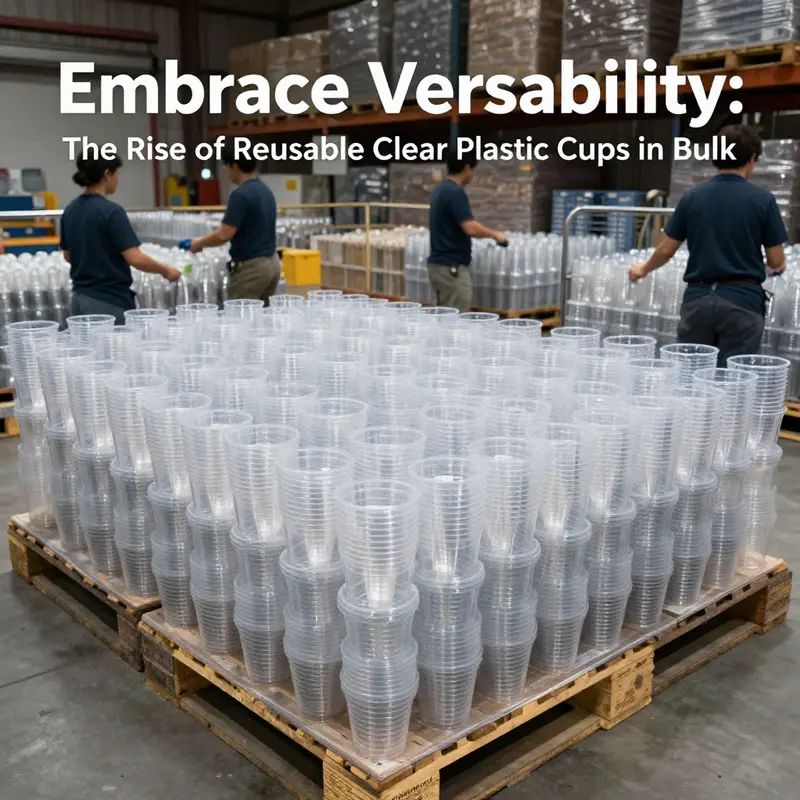
Bulk sourcing reusable clear plastic cups at 16 oz blends practicality with precision, turning a simple drinkware choice into a strategic procurement decision. When a business moves from trial orders to bulk purchases, the focus shifts from color and clarity to material behavior, manufacturing consistency, and long term value. The core elements of this shift revolve around material selection, design features, certification, and the reliability of the supply chain. In markets where bulk orders are common, suppliers emphasize materials that balance strength, transparency, and recyclability. Polypropylene and polycarbonate like PET polymers appear in most catalog descriptions as winners for durability and clarity, with some models employing a double wall to improve insulation and grip. A double wall connected by a seamless inner and outer layer creates a barrier that slows heat transfer and resists condensation, making the cups more comfortable for both hot coffee and chilled beverages. The double wall also contributes to the perceived quality of the cup, which matters in bulk branding scenarios where every detail matters for consumer perception. The cups are typically marketed as BPA free, a requirement that resonates with safety oriented buyers. In addition to BPA free, many manufacturers have aligned with key international standards such as FDA 21 CFR 177.1630 and LFGB to demonstrate food contact safety. These standards provide a framework that assures buyers that the cups will not leach harmful substances into drinks and that the materials have been tested under typical usage conditions. Some producers have taken those assurances further by highlighting certifications or tests that confirm the cups meet stringent standards for stacking, dishwasher resilience and optical clarity over repeated cycles. In practice, this means that a buyer can commit to a bulk run with confidence that the cups will perform in busy service settings where throughput is high and handling is repetitive. From a design perspective, the U shape that is often noted in product listings is not just a stylistic feature but a functional detail that influences grip and comfort during extended service. A well contoured lip and a slightly rounded body can reduce finger fatigue and help servers pour and refill with speed. This small ergonomic touch interacts with the larger system of bulk service, where warewashing capacity, rack space, and the speed of loading and unloading all contribute to total cost of ownership. In spaces such as cafes, concession stands and event venues, the ability to stack cups efficiently and to seal them with compatible lids adds another layer of utility. Lids, when offered, transform a reusable cup into a portable beverage vessel, reducing the risk of spills and allowing customers to move between service points or to an outdoor setting. The resulting packaging can be both a marketing surface and a practical feature that supports error free service. On the supply side, the bulk cup market has a robust footprint in China, with manufacturing clusters in provinces that host advanced injection molding and automated sealing capabilities. Guangdong and Zhejiang are particularly prominent, with facilities that leverage high speed presses and automation to handle large orders while maintaining tight tolerances on wall thickness, clear glass like transparency and the fit of lids. Other significant hubs include Sichuan and Jiangsu, where factories have invested in process control and quality assurance programs that support repeated production runs at scale. The global supply chain for reusable cups benefits from this concentration because it enables predictable lead times, scalable capacity, and the ability to respond quickly to seasonal demand spikes that accompany spring and summer promotions or outdoor events. For bulk buyers, this translates into confidence that a replenishment plan can be executed with minimal disruption should a key supplier encounter supply chain hiccups. In practice, buyers evaluate suppliers using a small set of practical criteria that aim to strike a balance between quality, cost and service. A supplier who can offer customization adds real value for brands that want to print logos, color accents or event messaging directly onto the cup surface or lid. Customization serves as a strategic differentiator in a crowded market and can elevate a standard commodity into a branded asset that sits at the center of a promotional campaign. The minimum order quantity often becomes the first friction point in negotiations. Some vendors will accommodate very small runs, while others set a higher bar to justify the investment in molds and color matching. An observed pattern is that flexible MOQs exist, sometimes starting at as few as ten units for proof of concept or at the opposite end of the spectrum with bulk thresholds in the thousands or tens of thousands. The price curve typically follows the familiar volume discount model: unit price falls as the quantity rises, with packaging and customization fees added where applicable. A rough market signal is that bulk orders can reduce unit costs to a fraction of a dollar, often hovering in the mid to upper tens of cents per piece depending on material, thickness, and whether a lid is part of the package. To manage the economics, buyers frequently negotiate terms that look beyond the sticker price. Lead times, shipping methods, and the inclusion of sample tests weigh heavily in the overall calculation. In many cases, the best next step after confirming product specifications is to request samples to validate fit, finish and print quality before committing to a large run. A rigorous sampling process helps prevent surprises once the commercial production begins. It also provides a tangible basis for comparing options across multiple suppliers who may offer similar specs but differ in process control and finish. When evaluating samples, buyers often look for consistent wall thickness, absence of flash, smooth inner surfaces that facilitate dishwasher cleaning, and a truly crystal clear appearance that remains stable after multiple thermal cycles. The cost calculus for bulk runs also includes logistics, warehousing and potential returns or replacements that may occur as part of a long term program. The ability to source directly from factories reduces intermediary costs but requires robust QA and clear communication about capacity, inventory levels, and quality expectations. For many buyers, a successful bulk engagement is as much about process discipline as it is about raw material performance, with a culture of continuous improvement that spans design tweaks, packaging configurations and service response times. The sustainability dimension remains central, with PLA based cups offering an option that is biodegradable in industrial composting environments, while PET and PP based cups emphasize recycling and reuse within established waste streams. Buyers must map local disposal infrastructure to their environmental goals, recognizing that PLA is not universally beneficial in every market. If the local infrastructure lacks industrial composting facilities, PLA cups may not achieve the intended end of life benefits and could still contribute to waste streams that require energy intensive processing. In practice, buyers who plan for sustainable impact often implement a portfolio approach, mixing PLA with PET or PP where appropriate, and pairing cups with established recycling programs to maximize recovery rates. Such decisions are guided by governance standards and corporate sustainability targets, as well as the practicalities of waste handling at the points of sale or consumption. In the procurement process, the emphasis on reliability extends to supplier certification and documentation. Buyers who prioritize long term partnerships typically insist on third party certifications and environmental or sustainable forestry certifications where applicable. Verifying the presence of such documents helps reduce risk associated with supply chain disruption and ensures that suppliers adhere to responsible practices in raw material sourcing and manufacturing. A supplier who can provide clear documentation of compliance with safety standards, waste management, and traceability gives confidence that the relationship can scale over time. Beyond formal certifications, contract terms that define acceptance criteria, warranty periods and process controls provide practical guardrails that protect both sides in a bulk engagement. Transparent communication about capacity constraints, expected lead times, and contingency plans for production delays helps establish a resilient supply network that can handle seasonal peaks or sudden changes in demand. The decision to purchase bulk cups is also a decision about branding and customer experience. In a world where a coffee cup can become a moving billboard for a business at a busy event or in a bustling cafe, the ability to customize the cups with brand logos, color schemes or promotional messages becomes a meaningful asset. The value proposition for bulk buyers is greater than the sum of the individual cup units. When a customer sees a consistent appearance across service points, the impression of professional execution is reinforced. The capacity for bulk suppliers to deliver consistent print quality across thousands of pieces requires careful process control and an investment in color management, mold maintenance and quality assurance. For event organizers, the ability to place bulk orders with tight color matching and reliable on time delivery becomes essential to the success of a program that relies on uniform presentation and smooth service. The customer journey from initial inquiry to final delivery is shaped by a series of touchpoints that the supplier must manage efficiently, including order confirmation, art proof approval, print production, warehousing and last mile shipping. For buyers seeking to optimize the procurement, the interplay of cost, quality and service becomes a continuous feedback loop. In a typical cycle, a buyer will shortlist suppliers on the basis of material quality, confirm the availability of customization options, and align ordering cadences with business demand. The volume of an order not only affects per unit price but also determines the logistic configuration. Large orders may be routed directly from factory to distribution center to reduce handling time, while smaller, more frequent shipments may require additional packaging and sorting. The decision framework also includes risk mitigation considerations such as supplier diversification, alternative packaging configurations and proactive communication so that a single failure does not jeopardize the entire program. As markets evolve, new entrants with aggressive pricing and flexible MOQs may appear, and the buyer must balance the potential savings with the need for stable supply, consistent quality and a solid service record. The best buyers treat the bulk purchase not as a one off transaction but as an ongoing relationship where every order contributes to a track record of reliability and a repository of learning about what design choices work best for their customers. In short, bulk purchasing dynamics for reusable 16 oz clear cups rests on a triad of material performance, design pragmatics and supply chain reliability. The interplay of these factors creates a decision space where the lowest unit price rarely tells the full story. A truly successful bulk engagement aligns product attributes with operational realities, enabling continuous service excellence across coffee shops, campuses and events. The path to reliable supply is paved by a thoughtful combination of supplier screening, clear specifications, robust testing, and transparent collaboration. The chapter invites readers to see each bulk order as an extension of brand experience rather than a mere stock item, recognizing that the right cup can elevate the customer journey from a simple beverage to a memorable moment. For readers seeking a practical pathway to explore options in depth, a convenient starting point is the bulk cups category that aggregates material choices, configurations and customization opportunities under a single umbrella at the same time that it directs attention to practical considerations in procurement and branding. If you tap into this resource, you can begin to map what matters most to your business and how you can translate a simple cup into a durable asset that travels with your brand across many touchpoints. External reference: https://www.alibaba.com
Clear Responsibility: Assessing the Environmental Footprint of 16 oz Bulk Reusable Cups and the Path to Sustainable Serveware
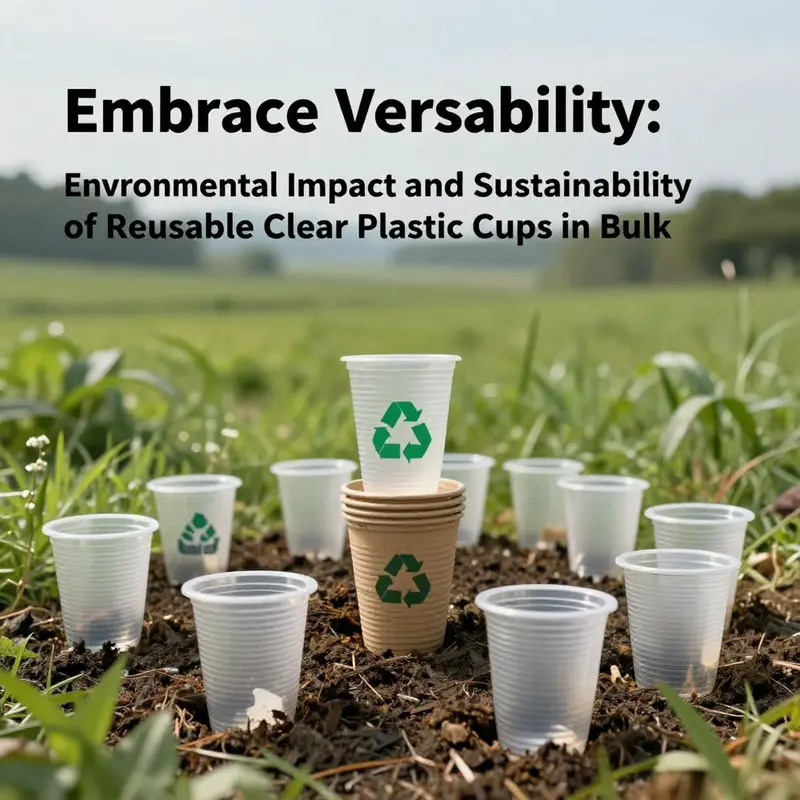
Reusable clear plastic cups sized at 16 ounces occupy a unique middle ground in the demand for convenient, durable serveware. They promise the practicality of a reusable option with the clarity and form that caterers, event planners, and households expect. Yet the term “reusable” invites a deeper question: what is the true environmental impact when these cups are chosen, used repeatedly, and eventually disposed of? The chapter that follows treats this question with care, weaving together the chemistry of materials, the realities of durability, the economics of bulk purchasing, and the evolving landscape of sustainability. It is a narrative about how a single, clear cup can carry a complex lifecycle—from raw material extraction to washing, stacking, transport, and finally end-of-life fate—and how each stage influences the overall footprint of a bulk purchase. The aim is not simply to compare disposables to reusables but to illuminate the choices businesses and households make that determine long-term outcomes for resources, waste streams, and the atmosphere itself. In this sense, the 16 oz bulk cup becomes more than a utensil; it is a decision point in a broader system of consumption, production, and responsibility.
Material choice anchors this conversation. Reusable cups are commonly fashioned from durable, food-grade polymers such as PET (polyethylene terephthalate) or recycled PET (rPET). These materials bring a compelling combination of clarity, strength, and the possibility of recycling at end-of-life. PET is well known for its rigidity and optical properties, which preserve the pristine look that consumers expect from a clear cup even after repeated uses. When PET is recycled into rPET, the cycle extends from a single-use narrative to one that re-enters the production stream, reducing the need for virgin resin. Importantly, these materials are BPA-free, a characteristic that appeals to health-conscious buyers and aligns with regulatory trends that favor safer, food-contact polymers.
Another family of materials that can appear in this space is PLA, or polylactic acid, a plant-based alternative. PLA-based cups promise a lower carbon footprint in certain contexts because their feedstock is renewable. However, PLA’s end-of-life story is nuanced. Industrial composting facilities can break down PLA under controlled conditions, but home composting typically does not achieve the required temperatures or microbial activity. The practical takeaway is that PLA may offer advantages in regions with robust industrial composting infrastructure, yet it requires careful disposal routing to realize its potential. This contrasts with PET and rPET, which circle back to the recycling system and its mature, though imperfect, infrastructure. The selection among PET, rPET, and PLA is not a simple one-shot choice; it is a strategic decision about how a cup will be used, washed, and ultimately processed after its usable life. The broader message is that material composition sets the stage for the entire lifecycle.
Durability matters in a way that mere aesthetics cannot. The typical design goal for a 16 oz reusable cup is to withstand repeated wash cycles, often in dishwashers, without losing clarity or structural integrity. A robust cup resists scratching, cracking, or clouding, maintaining its appearance even after dozens of cycles. In bulk contexts—such as events, cafeterias, or offices—these performance characteristics translate into fewer replacements, lower material throughput, and less waste associated with frequent disposables. Durability also intersects with design features like a comfortable grip, sometimes described in catalogs as a U-shape that accommodates a secure hold and reduces the likelihood of dropping the cup. Stacking efficiency further enhances sustainability by reducing transport and storage footprint; a more compact stack means fewer trips, lower fuel consumption, and smaller warehousing requirements.
The lifecycle analysis behind reusable cups reveals a balancing act. A higher initial carbon footprint during production is a common characteristic when compared to single-use alternatives. Yet reusables compensate for this through reuse. The break-even point—the moment when the cumulative impact of multiple uses outweighs the advantage of choosing disposables—depends on several variables: the material, the number of usable cycles, the efficiency of washing processes, and the frequency of replacements. In practice, a well-maintained 16 oz cup can achieve sustainability gains after only a relatively modest number of uses, particularly when it travels through modern dishwashing workflows and is collected for recycling at the end of life. For businesses, this translates into a straightforward truth: the more a bulk cup is used, washed, and kept out of landfills, the more pronounced the environmental dividend. The emphasis, therefore, shifts from a one-off evaluation to a system-wide view that accounts for purchase planning, inventory rotation, and staff training on proper care.
Operational efficiency in bulk purchases compounds these environmental gains. Bulk ordering enables not only cost effectiveness but also design and branding opportunities that extend a company’s sustainability message. The ability to acquire 16 oz cups in large quantities reduces per-unit handling energy across the supply chain and limits the logistical footprint associated with frequent reorders. Suppliers often offer customization options—logos, branding, or distinct visual cues—directly on cups or lids. Such customization can transform a simple accessory into a brand ambassador, encouraging reuse through visibility and familiarity. Yet customization must be weighed against end-of-life considerations; the added inks or coatings used for branding should be compatible with recycling streams and not hinder material recovery. The practical takeaway for buyers is to work with manufacturers who provide end-of-life guidance, avoid coatings that contaminate recycling, and align branding decisions with the chosen material system. In this way, bulk purchases become not only a purchase deal but a stewardship choice that reinforces a company’s sustainability commitments.
From the business perspective, there is more to sustainability than raw materials and reuse. Efficiency across the supply chain matters. Efficient design that reduces weight without compromising strength lowers transportation energy and fuel consumption. The stacking capability reduces volume per shipment, easing warehouse storage and enabling more compact distribution. When a business considers the full lifecycle, it must also consider the downstream behavior of consumers or event attendees. Clear cups are easier to inspect for cleanliness and integrity, which supports reuse programs and reduces the frequency of premature discard. The human factors—how well users understand washing expectations, how easily cups can be incorporated into existing dishwashing routines, and how reliably containers are returned for reuse—substantially influence the environmental outcomes. The social dimension cannot be overlooked; customers increasingly value transparent information about material choices, manufacturing practices, and recycling options. In this sense, a bulk order of reusable cups becomes a practical instrument for communicating a sustainability story to guests and employees alike, reinforcing a shared ethos around responsible consumption.
Emerging materials and alternatives broaden the sustainability landscape. Plant-based bioplastics, including certain PLA formulations, represent a growing family of options that aim to combine clarity and performance with lower life-cycle impacts. However, the story is not one-note. The environmental advantage of any bioplastic depends on regional waste management capabilities. In places with robust industrial composting, compostability can meaningfully reduce the burden on landfills. In places without such infrastructure, compostable plastics may end up in landfill where they do not degrade as intended, or they may contaminate recycling streams by introducing incompatible polymers. This is a reminder that technology alone cannot guarantee sustainability; it must be paired with effective waste systems and consumer education. In many markets, the most reliable path to meaningful environmental benefits remains the continued use of durable, recyclable materials in a design that prioritizes reuse, repair, and recovery. The broader shift toward truly sustainable packaging is not a single material solution but a coordinated approach that combines material science, product design, logistics optimization, and retail and consumer behavior.
The end-of-life question is central to assessing the long-term effect of 16 oz bulk cups. Even when cups are made from recyclable polymers, the actual recycling rate depends on local infrastructure, collection systems, and consumer participation. A crucial nuance is the potential for contamination in recycling streams. Residue left in cups and the presence of inks or laminates can affect recyclability. Therefore, manufacturers and retailers should provide clear guidance on cleaning before disposal and on compatible recycling pathways. In some regions, the emergence of circular economy programs is changing how materials are recovered, with take-back schemes, depot systems, or centralized recycling streams designed to maximize material recovery. Plastic cups, when properly collected and processed, can re-enter the production cycle, reducing the demand for virgin resin and conserving resources. Nevertheless, the environmental benefits hinge on robust collection, efficient sorting, and high-quality recycling—factors that are often uneven across geographies.
Beyond recycling, the conversation is also about how to minimize waste in the first place. Efficient on-site practices matter. Businesses can implement staff training that emphasizes proper washing temperatures and detergent use to prolong cup life, while avoiding aggressive scrub methods that might scratch or stain the cups and shorten their usable life. Inventory practices that prevent overstocking can reduce the risk of cups sitting idle and becoming obsolete or damaged in storage. When cups do reach the end of their usable life, a well-planned disposal strategy ensures that the materials flow back into the recycling loop whenever possible, or into composting streams when and where appropriate. The environmental footprint of any product is a function of both production and after-use handling; thus, closing the loop through effective disposal is as important as the loop that covers production and reuse.
In the broader policy and research context, the sustainability of reusable cups sits alongside a growing commitment to sustainable management of plastics. The U.S. Environmental Protection Agency’s ongoing work highlights how waste reduction, recycling, and material innovation can converge to reduce greenhouse gas emissions and resource depletion over time. This framework reinforces the practical takeaway for bulk buyers: the most sustainable cup is the one that fits a well-supported reuse program, couples durable design with efficient logistics, and connects with end-of-life infrastructure that can recover the materials for new products. The chapter’s exploration of material choices, lifecycle dynamics, and supply chain considerations is thus a reflection of a larger, systemic effort to reframe packaging from a disposable mindset to a resource-centric model.
From a customer-facing perspective, the environmental narrative around 16 oz bulk reusable cups becomes a story of informed choices rather than a slogan. It invites buyers to ask questions about material composition, wash durability, and the plausibility of end-of-life recovery. It invites venues to examine their own operational thresholds: how many cycles can a cup withstand before replacement becomes more sensible than repair? How does the frequency of returns affect the overall environmental impact, and what role do branding and customization play in reinforcing reuse rather than creating downstream waste? These questions encourage a holistic view in which sustainability is not just about the material in the cup, but about the entire ecosystem that supports reuse—from procurement and warehousing to cleaning, circulation, and disposal.
To connect this narrative to practical navigation, consider the broader catalog of options available in the market. For a glimpse of related product families and how they intersect with reuse programs, explore the drinkware category, which presents a spectrum of shapes, sizes, and materials designed to maximize longevity and recyclability. This category acts as a practical touchpoint for planners who want consistency across a venue’s ware fleet while still prioritizing environmental outcomes. drinkware category. This reference is not merely about appearance; it signals a broader ecosystem in which materials, design, and lifecycle thinking come together to support sustainable servingware.
The path forward for reusable 16 oz cups is not a cookie-cutter formula but a set of context-dependent decisions. In regions with strong recycling and waste-collection infrastructures, PET and rPET cups can offer substantial environmental advantages when used repeatedly and properly recycled at the end of life. In regions where composting is viable for PLA-rich products, there is a complementary opportunity to divert materials from landfills through industrial composting channels. Regardless of the material choice, the most meaningful gains arise when purchasers embed reuse into the core of their operations, align branding with a durable design that endures many cycles, and ensure that disposal practices do not undermine the material’s end-of-life trajectory. The science supports this approach: reuse lowers overall material throughput and emissions relative to disposable alternatives, and thoughtful design reduces energy and resource costs associated with handling, washing, and storage. The social dimension—consumer awareness, staff buy-in, and transparent communication about end-of-life options—completes the circle, turning a product choice into a visible commitment to sustainability.
External resource: for a broader regulatory and systemic perspective on how plastics are managed in pursuit of sustainability goals, see the Environmental Protection Agency’s Sustainable Management of Plastics. https://www.epa.gov/sustainable-management-plastics
Final thoughts
Choosing reusable clear plastic cups in bulk is not merely a practical decision; it’s an investment in quality and sustainability. As beverage chains, event planners, and catering services embrace this versatile product, they foster customer satisfaction and promote environmental responsibility. By understanding the durability, purchasing dynamics, and sustainability of these cups, businesses can enhance their operational efficiency and contribute positively towards sustainable practices. Make the switch today, and elevate your service offerings with reusable clear plastic cups.