
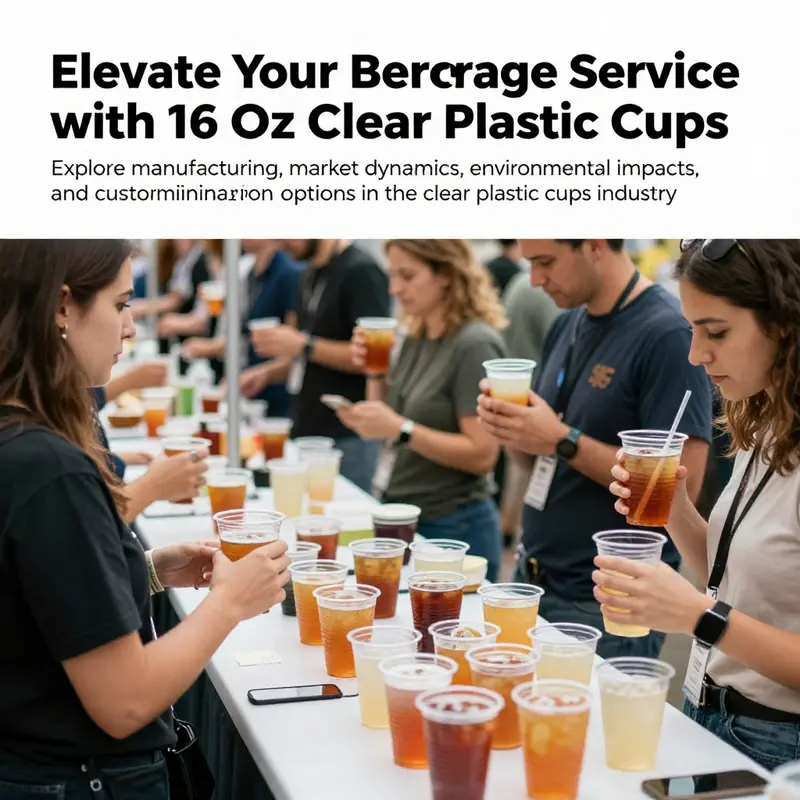
The 16 oz clear plastic cups are not just containers; they are integral to the beverage experience across various platforms—from bubble tea shops to catering services. Understanding their manufacturing processes, market demand, environmental implications, and branding opportunities is essential for businesses looking to make informed choices. This comprehensive exploration reveals how a focused approach to sourcing clear plastic cups can elevate brand identity while addressing sustainability concerns. Dive into the manufacturing nuances, market forces, eco-friendly practices, and customization techniques that define the production of these essential products.
Clarity in Motion: The Precision and Scale of 16 oz Clear Plastic Cup Manufacturing

From the first kilogram of resin to the last lap of packaging, the production of 16 oz clear plastic cups unfolds as a choreography of precision, safety, and relentless efficiency. In modern factories, the journey from resin to ready-to-sell cup is not a simple line but a tightly integrated system designed to deliver volume without compromising clarity or food safety. The emphasis is on consistency at scale, with every cycle tuned to produce cups that are not only visually pristine but also mechanically reliable for cold, hot, or mixed beverage service, depending on the blend of materials and process settings used on the line. At the heart of this operation is a choice of resin that balances clarity, rigidity, and safety. PET, known for its exceptional transparency and stiffness, often serves as the backbone for clear cups that must retain their shape under cold beverages like smoothies, juices, and iced coffee. In some lines, polypropylene (PP) is employed where greater heat resistance is demanded, or where temperature fluctuations near service points require a slightly more forgiving material. This material selection is not merely a technical preference; it defines how the cup behaves in real-world use, how it performs under stacking and transport, and how it interacts with different lid designs, branding, and printing options. The result is a product that can be confidently deployed from fast-paced kiosks to high-volume catering operations, all while maintaining the pristine, crystal-clear appearance that customers expect from disposable beverageware.
The initial stage of production—injection molding—transforms molten resin into a near-final form in the blink of an eye. In practice, food-grade resin is heated to temperatures that push its viscosity into a liquid state and then injected into precision steel molds under high pressure. The mold geometry defines the cup’s contour, thickness distribution, and base stability, ensuring that every cup can withstand handling, stacking, and pouring without buckling. Cooling systems rapidly solidify the resin, after which the cups are ejected from the mold. The efficiency of this cycle governs the factory’s overall output; even a small improvement in cooling rate, mold geometry, or ejection timing can yield meaningful gains in line throughput. The raw molded pieces, sometimes referred to as preforms or cups in their earliest form, are rarely finished at this point. They emerge with a smooth surface and tight tolerances but may carry tiny remnants of flash—the thin edges of excess material that must be trimmed away to achieve a clean, uniform wall thickness. This trimming is handled by automated systems that remove flash with high precision, preserving the intended geometry and avoiding damage to delicate radii or base features.
Quality control begins immediately after trimming. Modern factories rely on machine vision and automated measurement to detect subtle defects that could compromise performance or safety. A typical inspection sequence measures wall thickness distribution, detects warping or distortions from the cooling cycle, and flags any discoloration that could signal resin inconsistency or contamination. The vision system is calibrated against a gold standard of defect-free cups, with real-time feedback guiding minor adjustments in molding pressure, temperature, or cycle time. The result is a feedback loop that keeps a single line aligned with exacting standards, even as demand scales up or product mixes shift toward different lid configurations or branding requirements. When brands require customization on the cup surface, the next phase—printing—takes center stage. In-line printing is commonly performed using flexographic or digital methods, chosen for their ability to deliver sharp graphics, barcodes, and regulatory markings directly onto the cup sidewalls without introducing adhesives or secondary labeling steps. Food-safe inks and curing processes are integral to this stage, ensuring that the print remains legible and non-reactive through the cup’s intended contact with beverages and consumers. The printing operation is carefully integrated with the molding line so that cups can be printed in a single pass, reducing handling, risk of contamination, and the cycle time required to deliver finished goods to the downstream packaging area.
This seamless integration of molding, trimming, inspection, and printing is typical of the most advanced facilities located in China’s major manufacturing hubs. In places like Guangdong, Zhejiang, Sichuan, and Jiangsu, plants operate with fully integrated lines that couple injection molding, sealing or base finishing, printing, and automated packaging into a single, synchronized workflow. These facilities not only push high volumes but also manage stringent compliance requirements that are essential for food-contact products. Regulatory frameworks such as FDA, LFGB, and EU 10/2011 provide the backbone for risk assessment and ongoing verification of materials and processes. The emphasis on BPA-free materials speaks to broader consumer expectations and evolving regulatory landscapes. Suppliers in these ecosystems frequently conduct internal audits and supply certification documentation to verify the materials’ suitability for direct food contact. The combination of rigorous process control and formalized certification creates a robust platform for delivering cups that meet global market needs while minimizing risk for buyers who import at scale.
Beyond the technical choreography, the factory’s daily operations are shaped by requirements that keep product development aligned with customer expectations. The design intent of a 16 oz clear cup is twofold: functionality and brand compatibility. Functionally, the cup must be easy to grip, easy to drink from, and compatible with a range of lids that enable secure sipping and spill resistance. Brand compatibility drives the need for in-line printing and post-molding decoration that preserves legibility under field lighting, in transport, and at point of sale. For buyers who demand rapid prototyping and sample validation, the supplier often offers a fast-track sample development cycle—typically completed within three workdays. This accelerated timeline is not merely about speed; it reflects a tightly controlled process of mold selection, material verification, color matching, and print validation. The aim is to provide a tangible, use-case validated product that can be tested for fit with specific lids, branding colors, and packaging configurations before committing to a larger purchase. Customization support extends to cup design, color options, and lid configurations, enabling brands to achieve continuity across their beverage programs without sacrificing the performance required for high-volume service.
To the seasoned procurement professional, the appeal of these facilities lies not just in the raw output, but in the predictability of the supply chain. Lean manufacturing principles guide the reduction of waste, the stabilization of takt times, and the minimization of changeover losses. In practical terms, this translates to shorter lead times, lower unit costs at scale, and fewer quality excursions that could derail production schedules. It also means a more resilient operation capable of absorbing fluctuations in demand without compromising safety or performance. The process flow emphasizes quality gates at critical junctures: post-molding inspection to detect micro-wrinkles or edge imperfections, pre-print validation to ensure inks align with the cup geometry, and final pack-out checks that confirm the correct count, labeling, and protective packaging. Each gate is designed to prevent defective merchandize from leaving the line and entering downstream distribution channels.
The broader market reality that frames these technical and operational choices is one of sustained demand for clear disposable cups across food service, catering, and personal-use contexts. Clarity and durability remain high-value characteristics, especially when beverages are presented in a way that highlights color, layering, or branding. The knowledge that PET offers superior clarity and rigidity for cold beverages helps justify its predominance in the market, while PP’s heat resistance makes it valuable for transitional uses where hot or warm beverages are part of the service mix. And while the cups are designed for direct contact with edible products, their recyclability and refillability in the hands of responsible waste streams reinforce the positive environmental narrative that many buyers seek to tell their customers. The production ecosystem supports this narrative by ensuring that every cup leaving the plant is manufactured with consistent thinning towards the wall, a surface finish that avoids micro-scratches on the interior, and a glass-like clarity that remains stable under a variety of beverage types and temperatures.
As buyers explore options for scale, they naturally consider a supplier’s geographic reach and logistical capabilities. Factories in these hubs typically maintain robust export readiness, with packaging lines tuned to meet international standards for cartonization, pallet configurations, and shipping documentation. The emphasis on sample development within days is complemented by a willingness to engage in co-development activities—working with buyers to refine cup geometry, optimize lid compatibility, and align printing color spaces with brand guidelines. The end-to-end capability—from resin selection and mold design through to final packaging—creates a reliable, one-stop pathway for organizations seeking to standardize their disposable beverageware across multiple markets while maintaining strict control of quality and safety parameters. For readers who want to see how a real-world supplier presents this spectrum of options, a representative catalog entry demonstrates the breadth of cups available to meet different service scenarios and branding requirements. The cataloging of clear cups within the broader product family of plastic cups underscores the degree to which a single facility can tailor its output to a diverse customer base without sacrificing uniformity on the count, thickness, or clarity metrics that matter most in cold beverage service.
In terms of practical implications for procurement strategies, the factory model described here supports a few core recommendations. First, engage early with material specialists to align resin choice with the intended beverage profile and temperature exposure. Second, leverage the in-line printing capability to minimize handling steps and preserve surface integrity, ensuring brand elements remain legible after packaging and transport. Third, request a defined quality-control dossier that includes process parameters, inspection criteria, and a traceability framework for every batch. This documentation, coupled with internal audit reports and material certifications, provides a clear pathway to risk mitigation across regulatory regimes and ensures consistent performance across international markets. Finally, take advantage of the sample development window to verify fit with lids and packaging that mirror actual service conditions. A well-executed sampling phase not only reduces the risk of post-launch defects but also accelerates time-to-market by validating design decisions before mass production begins.
For readers who want to explore supplier ecosystems more deeply, the broader landscape includes a range of platforms and category pages that showcase related disposable tableware, packaging, and drinkware options. A comprehensive view of the plastic cups category offers insight into how these products relate to lids, packaging, and other consumables that commonly accompany beverage service. Plastic cups serves as a practical entry point for understanding the full range of styles, capacities, and compatibility considerations, while remaining anchored to the clarity and reliability that define the 16 oz format at the center of this discussion.
The chapter’s emphasis on integrated processes, regulatory alignment, and market-ready customization mirrors a broader industry trend: the shift toward smarter, more data-driven manufacturing that can sustain rapid growth without sacrificing safety or performance. When the line runs smoothly—from resin to final packaging—the factory does more than produce cups. It creates a reliable consumer experience, supports brand storytelling through precise printing, and delivers predictable, scalable outcomes for buyers who must balance cost, speed, and quality in an increasingly competitive market. The result is not merely a disposable product but a carefully engineered system designed to meet the complex demands of modern beverage service. External resources and case examples from industry channels underscore this reality, illustrating how manufacturers optimize cycle time, print fidelity, and packaging efficiency in concert. For those who want a broader perspective on the supply side and the varieties of cup configurations available in the market, an external resource provides a snapshot of wholesale scales, lid options, and packaging configurations that accompany the 16 oz clear cup format. External resource: https://www.alibaba.com/product-detail/Wholesale-16-oz-Plastic-Cups-with-Lids1600458894871.html?spm=a2700.details.youmay_like.2.4f4c1a2bUkRnJt.
Clarity as Commodity: Market Dynamics, Production Networks, and the Economic Pulse of 16 oz Clear Plastic Cups

Clear, cup-shaped glass-like visibility has long been a subtle driver of consumer choice in the cold beverage segment, and the 16 oz clear plastic cup has emerged as a practical canvas for both function and branding. In markets where takeout, delivery, and quick-service formats dominate, the ability to visually identify a drink—its color, opacity, and even the presence of layering or inclusions—offers tangible value to operators and patrons alike. This is not merely a matter of aesthetics; it translates into improved efficiency, better inventory management, and a sense of trust for customers who can see the product they are purchasing. When the glassy transparency is paired with a lightweight, disposable form, it becomes a reliable mass-market solution that can withstand the rigors of busy service environments while preserving the visual appeal of cold beverages—from iced coffee to fruit-infused waters and everything in between. In this sense, such a cup functions as a subtle interface between product and consumer, where visibility communicates quality and freshness even before a single sip is taken.
The demand dynamics behind this cup are driven by a confluence of cultural trends and industry infrastructures that together shape the scale, speed, and scope of production. Takeout culture, which has become a defining feature of urban life and multi-channel retail, continually expands the window for disposable beverages. Convenience stores, food courts, catering operations, and event settings all rely on a dependable, stackable, easy-to-handle vessel that can be dispensed quickly, sealed securely, and transported without compromising clean lines of branding. The 16 oz size is particularly versatile: large enough to accommodate generous servings, yet compact enough to minimize waste and manage portion control. This size also aligns well with common beverage formats, where the cup accommodates popular iced drinks, smoothies, ready-to-drink beverages, and infused cold brews that attract a broad cross-section of consumers.
From a product design standpoint, the interplay between clarity, rigidity, and user experience is central. PET—the dominant material in this segment—offers superior clarity, good dimensional stability, and recyclability, which are all attractive from both a functional and sustainability perspective. Yet the market also accommodates alternatives such as PP, PS, and PLA for niche requirements, including higher heat resistance, different branding opportunities, or compostability where regulatory and consumer expectations demand it. Operators increasingly seek options that balance cost with performance. The ability to print branding elements directly on the cups, or to add printed lids and sleeve components, expands the range of customization without sacrificing throughput. In practice, this means manufacturers must invest in flexible tooling, accommodating both high-volume repeat runs and smaller, design-forward orders that emphasize color, messaging, or regulatory disclosures. In this context, the internal ecosystem of suppliers and converters becomes crucial, because it translates consumer demand into production capacity and regulatory compliance.
Economic considerations reveal a manufacturing landscape where geographic specialization amplifies efficiency. China, as a global hub for disposable cup production, exemplifies how scale, logistics, and regional clustering impact price, quality, and lead times. Guangdong, Zhejiang, Sichuan, and Jiangsu provinces host an array of producers who have refined the art of converting raw resins into precision-clear cups with consistent wall thickness, accurate lids, and reliable heat-seal capabilities. The proximity of accessory components, such as lids and printing inks, further streamlines the production line, reducing handling steps and allowing for synchronized scheduling across multiple SKUs. This integrated ecosystem supports large-volume procurement for international markets, while also enabling regional distributors to tailor offerings for local regulatory regimes and consumer preferences. Such capabilities are essential when the goal is to deliver a consistent product at scale, with the flexibility to incorporate branding elements or certifications that reassure buyers about safety and sustainability.
From a materials perspective, the market presents a spectrum of choices that reflect both performance demands and environmental considerations. PET remains the default for cup clarity and strength, delivering an almost crystal-like transparency that enhances visual appeal. However, the conversation around sustainability invites attention to recyclability and lifecycle impacts, driving interest in BPA-free formulations and opportunities to substitute with bio-based or compostable materials where feasible. The availability of alternative resins—PP, PS, and PLA—expands the decision space for manufacturers and buyers who must balance clarity, rigidity, chemical resistance, and end-of-life options. Each material carries its own set of trade-offs: PET provides durability and recyclability, PLA can appeal to compostable programs, and PS often offers lower cost and certain aesthetic advantages, albeit with different recycling considerations. The market response to these trade-offs will shape future design norms, such as wall-thickness optimization for stackability, which in turn can drive shipping efficiency and storage capacity. In fact, innovations like stackable geometries have demonstrated meaningful reductions in both space and weight, contributing to lower logistics costs and a smaller carbon footprint for large-scale operators. A practical takeaway for buyers and planners is that the total cost of ownership extends beyond the unit price to include handling, storage, and end-of-life management.
Branding and consumer perception are increasingly intertwined with the functional performance of the cup. In a crowded market, packaging aesthetics can become a differentiator, but only when aligned with practical constraints like sipping comfort, leak resistance, and lid compatibility. The design space now includes a range of lid styles, resealable options, and printing techniques that enable logos, slogans, or compliance icons to convey trust and provenance without compromising the integrity of the beverage. This alignment between form and function—clarity that reveals the drink and branding that communicates intent—helps justify premium pricing on custom orders while maintaining cost-effectiveness for high-volume runs. It also opens doors to partnerships with venues and events that want a consistent visual language across their distributed beverages, from weddings and corporate meetings to stadium concessions and pop-up shops. In such contexts, a cup becomes more than a disposable vessel; it becomes a miniature billboard that travels from point of sale to table, to hand-off, and finally to recycling streams, each stage reinforcing quality perception and brand equity.
The economic impact of this product category extends beyond the factory floor. On the supply chain level, the scale of production and the velocity of turnover influence packaging logistics, storage solutions, and inventory management for retailers and distributors. Efficient, stackable designs translate into tangible savings in warehousing space and freight costs, easing the path from supplier to consumer. This, in turn, feeds into pricing dynamics, where bulk buyers prize predictable lead times and consistent quality over a long horizon, enabling more stable demand forecasting and procurement planning. The sustainability dimension—manifested in recyclable status and BPA-free certifications—aligns with evolving regulatory expectations and consumer attitudes toward single-use plastics. As marketplaces increasingly reward responsible stewardship, suppliers who can blend compliance with customization and cost advantages are well positioned to grow market share and foster long-term partnerships with food service operators, event organizers, and retail chains alike.
Looking ahead, the broader narrative of 16 oz clear cups is shaped not only by what the cup can do today but also by how well the supply chain adapts to changing consumer rituals. The rise of printed branding on disposable tableware, the ongoing refinement of lid interfaces for spill resistance, and the push toward more sustainable materials will collectively influence product mix, pricing, and availability. The opportunity for operators is to harness these developments in a way that preserves the fundamental value proposition: a reliable, visually appealing, and easy-to-use cup that supports a wide range of beverages and service models. For designers and buyers seeking to broaden their sourcing options, a practical starting point is to explore the Plastic Cups category of offerings, which often hosts a spectrum of vessels designed for different beverage profiles, branding opportunities, and environmental considerations. This broader context can help align product selection with operational realities, whether the goal is simple daily use, occasion-based branding, or multi-site rollout across a chain or event network. To maintain a balanced perspective, it is essential to couple such selection with a careful assessment of lifecycle costs, including the implications of stackability, invoicing terms, and end-of-life management across jurisdictions.
For stakeholders seeking concrete data points, supplier listings on major platforms typically provide a snapshot of material specifications, certifications (food-grade, BPA-free, recyclable), performance metrics, and application scenarios that reflect current market demand and economic drivers. A representative reference in the public supplier landscape offers real-time visibility into resin types, wall thickness tolerances, and packaging configurations aligned with standard 16 oz capacities. While the specific supplier you might engage can vary by region and volume, the underlying themes remain consistent: clarity, reliability, and compatibility with branding and regulatory expectations. As these dynamics evolve, the interconnected roles of manufacturers, logistics partners, retailers, and end users will continue to shape the contours of supply, price, and sustainability for the 16 oz clear cup category.
Further reading and a practical snapshot of current material specs and certifications can be found in supplier listings such as those detailing PET clear disposable cup options. For broader context on the range of plastic cup offerings and related packaging choices, more information is accessible through the Plastic Cups category. This interconnected ecosystem, driven by demand for clarity and efficiency, ensures that the 16 oz clear plastic cup remains a central element in the global disposable packaging economy. https://www.alibaba.com/product-detail/500ml-PET-Plastic-Cups-16oz-Clear_1600497281465.html
From Clarity to Footprint: Navigating the Environmental Footprint of 16 oz Clear Plastic Cup Production
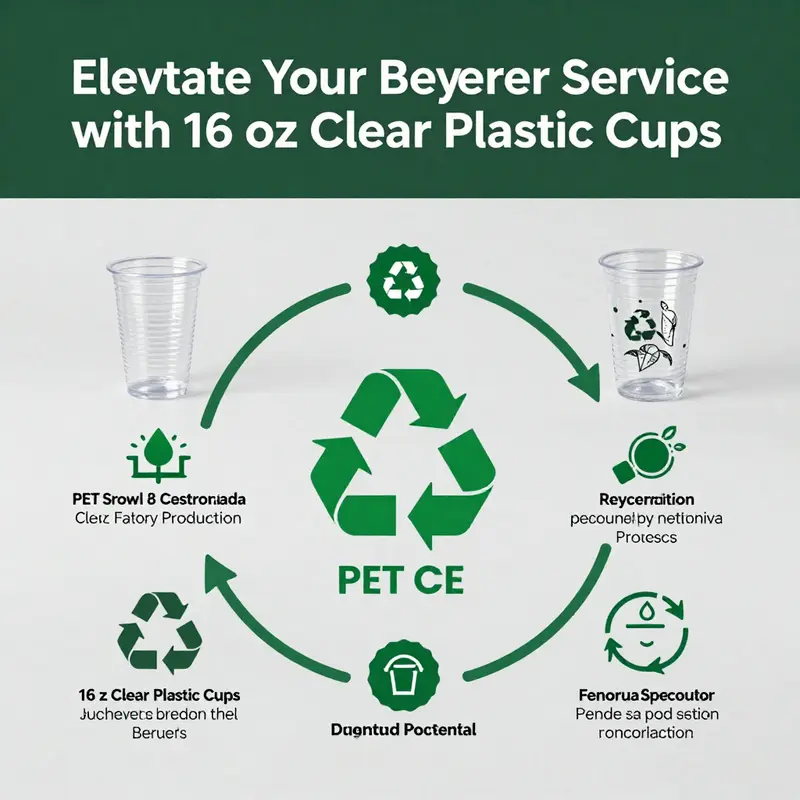
The 16 oz clear plastic cup occupies a paradoxical space in modern packaging. Its appeal rests on clarity and utility: a container that reveals the color of a beverage, keeps a cold drink visually appealing, and serves as a disposable, low-cost medium for hospitality, catering, and take-away service. Yet beneath that simplicity lies a complex set of environmental considerations that shape every stage of its life. Production streams, material choices, end-of-life pathways, and consumer behavior all interact to determine the true footprint of a cup whose very purpose is often fulfilled in a single use. Visual transparency is matched by a demand for transparency about sustainability, a demand that increasingly guides what gets produced, how it is manufactured, and how waste is managed after the last sip is taken. The conversation surrounding these cups therefore cannot stop at the moment of fill; it must extend through the supply chain, into factory floors, and onward to recycling facilities, composting streams, and municipal waste systems. In this chapter, the narrative threads together the material science of PET and PP with the realities of global production networks, sharing a view of environmental performance that is as much about system design as it is about material selection.
At the material core, PET and PP offer distinct advantages for clear, rigid cups. PET’s high clarity, stiffness, and comparative barrier properties make it a favored base film and forming material for disposable cups that need to resist moisture infiltration and maintain product appearance. PP adds resilience and heat tolerance, expanding the range of beverages and service contexts in which clear cups can be used. From a lifecycle perspective, however, both materials present environmental trade-offs that hinge on what happens after disposal. When properly collected, PET and PP can be diverted from landfills and reintroduced into the economy through recycling loops. Yet actual performance depends on the efficiency of local systems, consumer participation, and the integrity of the material streams. Contamination by food residue, or mixing with other plastics, can degrade recyclability and raise processing costs. Industry data often cites recycling rates for PET bottles hovering around thirty percent on a global scale, a figure that underscores a persistent gap between theoretical recyclability and real-world outcomes. The same challenge frequently translates to rigid plastic cups, where the geometry of cups and their associated packaging complicates sorting and reclaiming efforts. In consequence, reclamation success and the ultimate environmental burden depend not only on the cup’s chemistry but on the reliability of collection infrastructures and the behavior of end users.
The lifecycle implications extend beyond the cradle and into the end of life. In discussions of sustainable packaging, there is growing interest in alternatives that can reduce the pace of environmental accumulation. Biodegradable or compostable options, such as PLA-based cups derived from renewable resources, have entered the market as potential steps toward lower-impact end-of-life scenarios. PLA cups may break down in industrial composting facilities within tens of days under controlled conditions, offering a faster route to degradation than conventional plastics. Yet this apparent advantage is conditional: if PLA is disposed of with conventional plastics or ends up in regular landfills, its benefits fail to manifest. The practical reality is that compostable materials require matching disposal streams; without these, the intended environmental gains can be negated. The choice between PET/PP and PLA, therefore, becomes a question not only of material properties but of waste management infrastructure, facility availability, and consumer adherence to appropriate sorting guidelines.
Alongside material choices, the environmental narrative of the 16 oz clear cup must reckon with production-scale realities. Large manufacturing hubs in regions such as the eastern coastal belt of Asia—where automation, precision tooling, and high-volume extrusion and forming lines enable rapid output—illustrate the energy-intensive side of the equation. In these settings, achieving throughput while maintaining product safety and consistency requires steady electricity, climate-controlled environments, and sophisticated downstream processes for trimming, quality control, and packaging. These operations are not neutral; they contribute to greenhouse gas emissions and energy demand. The push toward cleaner energy sources and more efficient process flows is now a central feature of responsible cup production. Some suppliers are looking to integrate renewable energy, optimize machine utilization, and redesign plant layouts to reduce idle times and waste heat. Even modest improvements in energy intensity—measured as energy use per unit of finished product—can accumulate into meaningful reductions when scaled across thousands of tons of cups annually.
Waste generation within the factory is another focal point. From upstream resin production to downstream extrusion and molding, each step can produce off-spec material, dust, or scrap. Modern facilities often reclaim some of this waste internally or regrind it for reuse, but losses inevitably occur. Efficient reclaim can shrink raw material demand and lower overall lifecycle emissions, yet this benefit hinges on controlling contaminants during collection and processing. Water use and wastewater treatment also merit attention, as cleaning steps and cooling loops require significant quantities of water, and the effluents must be treated to meet stringent environmental standards before discharge. Regulatory compliance anchors many of these practices; food-contact materials must adhere to safety frameworks that govern not only the resin itself but any additives or colorants used in the cup. In many markets, this translates into prohibition of certain chemicals and the requirement of BPA-free formulations, a standard that guides chemical choices and influences the design of resin systems.
The regulatory dimension intertwines with consumer expectations and corporate responsibility. Standards from the U.S. FDA and corresponding EU regulations shape the material palette and the tests that cups must undergo to demonstrate suitability for contact with foods and beverages. Beyond safety, there is increasing emphasis on sustainability metrics, supply chain traceability, and end-of-life integrity. Consumers, retailers, and regulators are increasingly attentive to whether packaging is designed for recyclability, whether recycled content is included, and whether labeling clearly communicates disposal instructions. In response, manufacturers are not simply selecting materials for performance; they are considering how those materials will be recovered or repurposed after use. A cycle of design-for-recycling or design-for-disassembly can reduce contamination and improve the efficiency of downstream recycling streams, even if it requires additional forethought during the initial product development phase.
Supply chain dynamics also influence environmental outcomes. A 16 oz clear cup may travel from resin suppliers to conversion facilities and then to distributors, foodservice chains, and retailers before ending up in a consumer’s hands. Each leg of this journey adds embodied energy and potential risk of loss or waste. Efficient logistics can reduce fuel use and emissions, while packaging systems that minimize secondary packaging or optimize transport density can improve overall sustainability. In this context, the role of the packaging ecosystem—lids, sleeves, and compatible dispensing systems—becomes important beyond aesthetics. When lids and cups are designed to pair securely and minimize leakage, the result is not only a better user experience but also fewer spills and product losses, which translates to less waste and lower material demand over time. The interplay between cup design and ancillary components is a reminder that sustainability is a systems problem, not a single-material decision.
From a technical standpoint, the environmental strategy for 16 oz clear cups is evolving toward a portfolio approach. Some producers pursue higher recycled content in PET or PP resins, which can reduce the need for virgin resin and lower cradle-to-gate emissions. However, recycled content must align with performance requirements like clarity, rigidity, and surface finish; impurities or degraded optical properties can limit its applicability or require more energy-intensive processing to achieve acceptable quality. Others experiment with bio-based or recycled-content blends that balance performance with environmental goals. The objective is not to champion one material outright but to identify the best combination of material science, manufacturing efficiency, and end-of-life management to minimize the overall environmental footprint. This adaptive approach is essential in a market where consumer preferences shift toward sustainability and policymakers increasingly favor packaging that can be recycled, composted, or reused. In practice, this means ongoing assessment of supply options, recycling stream viability, and the alignment of plant operations with evolving standards.
To connect these considerations with a practical lens, it is instructive to recognize how factory-level decisions cascade into environmental outcomes. A factory’s energy mix, its adoption of energy recovery systems, and its process automation level all influence emissions. Decisions about scrap rate targets, rework policies, and waste segregation affect the amount of material that actually leaves the plant as scrap versus becoming feedstock for recycling streams. Choice of equipment design—such as extrusion lines, mold geometries, and temperature profiles—can affect energy consumption and material integrity, which in turn influences recyclability and end-of-life ease. When suppliers embed sustainability into procurement criteria, they signal a preference for transparent material provenance, robust quality controls, and a willingness to invest in cleaner technologies. In turn, buyers and distributors are better positioned to communicate credible, measurable environmental performance to their customers. This chain of influence—material science informing process design, which then informs product stewardship—illustrates how environmental considerations permeate every tier of the supply chain.
An internally integrated perspective also highlights opportunities for collaboration across the packaging ecosystem. Manufacturers can partner with recyclers to understand sorting realities and to design cups that minimize contamination risk. They can engage with waste-management programs to ensure that if a PLA option is selected, it is directed to appropriate composting streams rather than ending up in a landfill. Such collaboration depends on data: reliable material composition information, accurate product labeling, and performance metrics that quantify improvements in recyclability, energy intensity, or waste diversion. When these metrics are shared transparently, stakeholders gain trust and can benchmark progress against industry standards. The result is a packaging future in which a clear cup remains a practical, cost-effective container for beverages while contributing to a circular economy where materials are kept in motion and out of waste streams for as long as possible.
Within this broader landscape, the consumer-facing narrative matters as well. Education about disposal options and the value of proper sorting can shift behavior and improve recycling rates. Clear communication about fuel-efficiency gains, reductions in virgin material use, and the availability of recycled-content cups can influence market preference and drive demand for more sustainable solutions. This is not merely a campaign for greener cups but a broader invitation to reframe what “disposable” means in the context of a system designed for reuse, recycling, and responsible end-of-life management. The goal is a model where clarity in the cup’s appearance is matched by clarity in its environmental story—where the cup’s beauty and convenience do not come at an excessive ecological cost, but instead reflect a careful balancing of materials, energy, regulation, and consumer action.
For readers seeking a practical entry point into sourcing environmentally responsible cups, engaging with suppliers who can demonstrate traceable compliance and robust performance metrics is critical. The conversation should move beyond price and appearance toward life-cycle data, end-of-life pathways, and the degree of recycled content that can be realistically integrated without compromising quality. A comprehensive supplier guide that evaluates quality, compliance, and performance metrics can help buyers navigate this landscape with greater confidence. Such resources, when used alongside transparent reporting from manufacturers, can enable more informed decision-making that aligns with environmental objectives while preserving the functional benefits that 16 oz clear cups provide in everyday service. For further reading on supplier evaluation frameworks and performance criteria, you can consult industry guidance and practical checklists that emphasize traceability, material safety, and recyclability outcomes.
The environmental considerations of 16 oz clear plastic cup production therefore present a multifaceted challenge and a compelling opportunity. The cups’ optical clarity and low unit cost sit beside a set of pressures to reduce energy use, minimize waste, and improve end-of-life recoverability. The path forward is not a single silver bullet but a series of coordinated steps: careful material choice informed by lifecycle thinking, production optimization that lowers energy intensity and waste, investment in recycling-compatible design, and collaborative engagement with waste-management systems to ensure proper disposal. In a world where packaging choices are increasingly scrutinized, the clear cup can still fulfill its practical role while contributing to a more sustainable packaging ecosystem. By weaving together material science, factory innovation, regulatory alignment, and consumer education, the industry can move toward a future in which the clarity of the cup is matched by the clarity of its environmental impact. For readers who want to explore the practical dimensions of this transition, the following external resource provides a detailed look at supplier evaluation criteria and performance metrics that help anchor sustainability claims in verifiable data: https://www.supplychaininsights.com/2026/01/18/clear-cups-supplier-guide-evaluate-quality-compliance-performance-metrics/. In addition, downstream references and related product categories that intersect with disposable drinkware can be explored through the packaging ecosystem’s online catalog and category pages, such as the Plastic Cups collection referenced in industry catalogs and supplier websites for materials and components that accompany cups in service. One example of an accessible, product-specific category that aligns with the discussion of recyclable and compatible cup solutions can be found at the internal resource Plastic Cups. This page offers a lens into how suppliers segment and present clear-cup offerings, including options that emphasize compatibility with lids and branding elements while signaling environmental considerations embedded in product design and packaging strategy.
Clear Branding in Motion: Customization and Branding in the 16 oz PET Cups Factory Industry
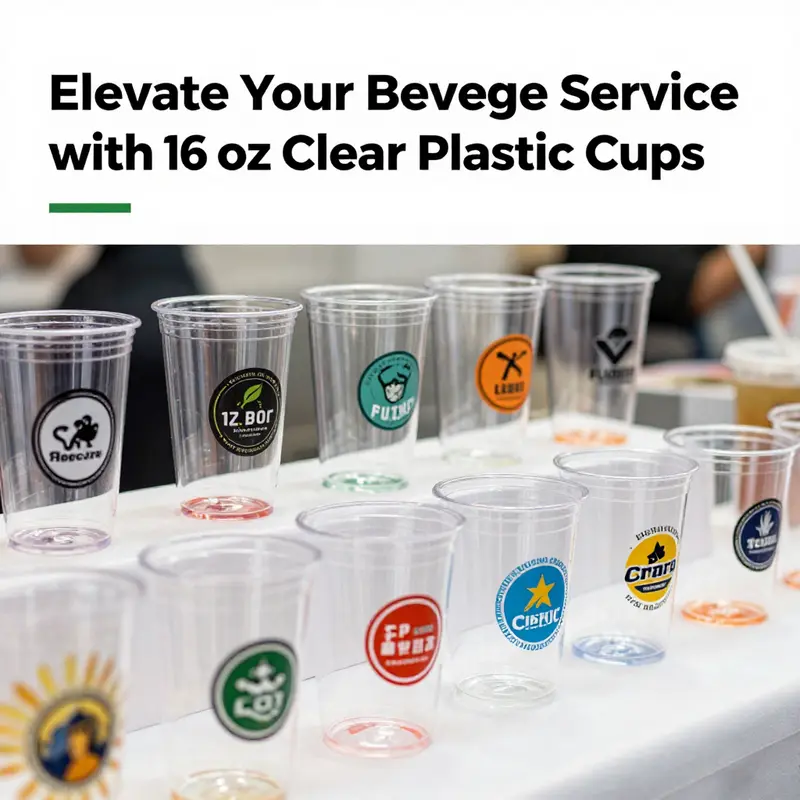
In markets where first impressions are formed in moments, the 16 oz clear plastic cup becomes more than a vessel for a beverage. It is a canvas for brand storytelling, a compact surface that communicates quality, care, and consistency. The industry surrounding these cups hinges on the seamless interplay between function and appearance. Clarity is not merely a visual attribute; it is a strategic asset. PET, chosen for its exceptional clarity, durability, and recyclability, transforms ordinary drinks into branded experiences. When a cup is held aloft, the beverage inside speaks as loudly as any logo. That amplification is amplified when manufacturers offer customization options that align the cup with a brand’s identity. The journey from raw material to finished cup is not a straight line of production but a dialogue between design, practicality, and perception. In this dialogue, customization serves as the central dialect, allowing businesses to imprint logos, color schemes, and messaging directly onto the cup and its lid, turning disposable ware into a portable billboard that travels from kitchen to café to event space and back again with the same brand cadence.
The foundation of customization in this sector rests on material integrity and visual fidelity. PET provides the high transparency that brands rely on to showcase the color and texture of their beverages. A clear cup allows a red, amber, or emerald liquid to glow with intensity, while a well-chosen cup wall thickness preserves temperature and hand feel. Recyclability adds another layer of value, appealing to consumers and businesses seeking responsible packaging choices. The material choice influences what kinds of printing technologies can be employed, how many colors can be rendered, and how durable the imprint will be during handling, transport, and consumer use. In practical terms, this means that the factory floor must harmonize extrusion, molding, and decoration processes so that a single SKU can support diverse branding campaigns without compromising efficiency. The care that goes into selecting the right blend of clarity, strength, and compatibility with printing inks defines the ceiling for what customization can achieve. When brands demand seasonal themes or limited-edition collaborations, the factory’s ability to adapt quickly without sacrificing quality becomes a competitive edge. This is not just about making cups; it is about creating a reliable platform for visual storytelling that endures from production line to consumer hand.
Customization features in this space extend well beyond a single print on a cup. Direct printing on both cups and lids has become a standard offering, enabling brands to extend their identity across all touchpoints of the consumer experience. The effect is more cohesive packaging, where the cup, lid, and labeling align in a shared color palette, typography, and motif. The printing processes are designed to meet tight tolerances so that logos stay crisp even when scaled to the diameter of a 16 oz cup. Material compatibility, ink adhesion, and edge clarity are tested under various conditions to ensure that the branding remains legible from purchase through reuse or disposal. In addition to static logos, the design language can incorporate dynamic elements such as seasonal colorways and event-related messaging, made possible by flexible printing capabilities that tolerate short print runs and rapid iterations. This flexibility is particularly valuable for promotions, charities, and sponsor-backed events where branding must be tailored to a specific moment without delaying market delivery.
A notable advancement in the customization landscape is the development of innovative lid designs that complement the cup’s branding while elevating user experience. Spill-proof lid concepts are increasingly popular, as they address real-world use cases—from on-the-go commuters to busy event venues. These lids are engineered to minimize leaks, reduce spill risk, and maintain beverage integrity. In a measured performance comparison—an industry observation rather than a single, branded claim—spill-proof lids have been reported to offer about 20% greater effectiveness than traditional dome lids in typical handling scenarios. This improvement translates into tangible branding benefits: fewer messy incidents, more confident service at high-traffic events, and a stronger association between a brand and reliable quality. A well-designed lid also becomes part of the branding fabric, showcasing a seamless surface for additional branding motifs, micro-graphics, or QR codes that direct customers to campaigns or loyalty programs. The lid thus becomes an extension of the cup’s branding narrative, ensuring consistency across the packaging ecosystem and reinforcing a brand’s attention to detail.
The market’s demand for personalization is matched by a capacity for flexible design options. Brands can request intricate graphics, multi-color schemes, and messaging tailored to campaigns or seasonal themes. The design language can be adapted to different markets while maintaining a consistent brand core, which is essential for global campaigns seeking recognizable consumer touchpoints. Adjustable printing options enable brands to iterate rapidly, test new visuals, and respond to trends with minimal risk. This adaptability is crucial in a landscape where consumer preferences shift quickly and where the same core product must support multiple branding strategies, from premium events to everyday takeout. The result is a portfolio of cups that not only carry a beverage but carry a narrative—one that strengthens recall and fosters emotional connections with customers as the cup travels through retail spaces, food service channels, and home environments.
From a service perspective, the industry accommodates both OEM and ODM models. This duality offers brands a spectrum of collaboration options. An OEM relationship can keep branding under a brand’s own label, letting the company control every branding detail while leveraging the factory’s production strengths. An ODM collaboration, on the other hand, invites the factory to contribute design concepts, translating brand ambitions into practical cup geometries, lid configurations, and print-ready artwork. The choice between these models reflects a brand’s in-house capabilities, its time-to-market considerations, and the level of design control it desires. In either case, the path from concept to finished product is guided by a shared emphasis on quality, consistency, and brand integrity. The ability to specify multiple design parameters makes this sector particularly responsive to customer needs, whether those needs center on cup dimensions, volume, material choice, or packaging configuration. The typical parameters include cup height and capacity, with standard examples around 90 millimeters in height for the 16 oz format, and a practical volume near 540 milliliters. Material options commonly include PET for clarity or PP as a fallback for scenarios demanding different thermal or mechanical properties. Packaging configurations can be customized to optimize shipping efficiency and shelf presence, further aligning the product with brand logic and distribution realities.
To translate concept into production, samples play a crucial role. Many manufacturers offer mirror-image samples to help brands validate fit, feel, and print fidelity before committing to bulk orders. This step reduces risk and accelerates decision-making in scenarios where branding budgets are tightly planned but the need for striking packaging remains urgent. The sampling process is typically complemented by transparent pricing structures and clear shipping terms, making the journey from idea to sale smoother and more predictable. International service is a core facet of the offering, with responsive quotation systems that accommodate global clients and payments in widely used currencies such as USD. This international capability ensures that brands from different regions can engage with the same level of customization and service quality, creating scalable, branded disposable cup solutions that support worldwide campaigns.
Amid this technical and logistical landscape, brands often turn to their supplier ecosystems for inspiration and capability benchmarking. A practical touchpoint is the plastic cups category within a supplier’s broader product portfolio. For readers seeking a concise reference to related product families and to explore how these cups sit within a broader range of disposable drinkware, the category page provides a useful overview. See the plastic cups category here: COFE-Cup plastic cups. This resource showcases how manufacturers position a simple, clear vessel within a larger ecosystem of drinkware, packaging, and branding components. It also illustrates how branding considerations extend across the product family—an important reminder that success in the 16 oz clear cup space often hinges on coherence across multiple SKUs and touchpoints.
From a supply-chain perspective, customization does not stand apart from production efficiency. The industry’s best practices weave branding into process design, reducing the need to reconfigure lines for every new design or campaign. Standardized die geometries, printer calibrations, and lid molding strategies enable faster turnarounds without sacrificing fidelity. In practice, this means a brand can cycle through different artwork, colorways, and messages while retaining a stable, reliable production rhythm. The broader goal is to maintain consistent quality across runs and to deliver a product that looks as premium on retail shelves as it does in photos and marketing materials. When brands are ready to scale, the supplier network should offer clear pricing for bulk orders, predictable lead times, and robust after-sales support, including guidance on packaging and distribution. This alignment between customization and manufacturing discipline is what makes the 16 oz clear cup a versatile platform for both identity and experience.
As the industry continues to evolve, the emphasis on customization and branding remains central. The cups themselves become portable brand ambassadors, enforcing a sense of consistency that resonates with consumers across channels. The most successful programs will be those that treat the cup as a cohesive element of the brand’s visual system—an element that can be deployed quickly, printed with precision, and configured for a seamless handoff from producer to consumer. In this light, the 16 oz clear PET cup is not simply a container; it is a strategic asset that translates brand story into tangible, tactile form. The narrative printed on the cup—whether bold logo, vibrant color scheme, or seasonal motif—contributes to a consumer’s overall perception of quality and reliability. That perception, in turn, informs loyalty, word-of-mouth, and repeat purchases, which are the ultimate tests of branding effectiveness in the competitive landscape of disposable tableware.
External resource for broader supplier context: https://www.alibaba.com/product-detail/Fuling-PET-CUP-16-oz-Clear-Plastic_1600357585511.html?spm=a2700.details.click&scm=1007.17827.120473.1600357585511&search=true
Final thoughts
Navigating the landscape of 16 oz clear plastic cups offers significant advantages for various sectors including beverage chains, catering services, and event planning. With an understanding of manufacturing processes, market dynamics, environmental impacts, and customization options, businesses can make strategic choices that not only enhance their service offerings but also align with consumer values on sustainability and branding. Emphasizing both functionality and eco-friendliness, these cups are crucial for maintaining quality service while elevating brand identity in a competitive marketplace.