
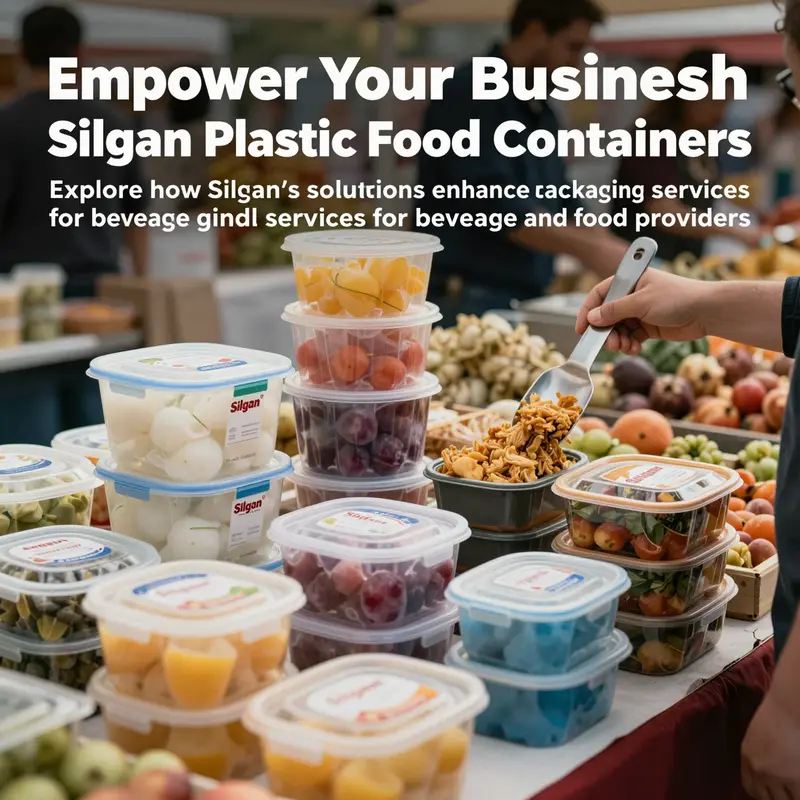
Silgan Plastic Food Containers Corp, a crucial division of Silgan Holdings Inc., stands at the forefront of innovative packaging solutions for the food and beverage industry. As a trusted partner for bubble tea shops, restaurants, food trucks, catering services, and event planners, Silgan offers a comprehensive product line designed to meet diverse client needs while adhering to safety standards. This article examines the company’s market position, core product offerings, workforce structure, and the competitive landscape, ensuring a well-rounded overview for professionals looking to enhance their packaging solutions.
Silgan Plastic Food Containers Corp: Global Packaging Leadership and Sustainable Innovation
Silgan Plastic Food Containers Corp is a core part of Silgan Holdings Inc., focused on the design, production, and distribution of plastic food and beverage containers worldwide. Headquartered in Stamford, Connecticut, the division benefits from Silgan’s global manufacturing network and long-established supply chains. Since its inception, Silgan has grown into a diversified packaging leader with operations across multiple regions and a portfolio of high-barrier, household-name brands. The plastic containers division emphasizes shelf-stable formats that protect product quality while balancing durability and weight, aligning with regulatory expectations around recyclability and lifecycle efficiency. In this narrative, Silgan Plastic Food Containers is portrayed not merely as a supplier of containers but as a strategic partner helping consumer brands differentiate their offerings through packaging that preserves freshness and supports sustainability goals.\n\nThe scale of Silgan’s operations is substantial, with Silgan Holdings employing thousands across an extensive network of facilities globally. The geographic footprint—anchored in North America with meaningful presences in Europe and the Asia-Pacific region—enables close alignment with regional regulatory regimes and customer needs, delivering reliability and local support.\n\nIn the marketplace, Silgan Plastic Food Containers competes among global leaders in plastic packaging, leveraging advanced materials, manufacturing capabilities, and process discipline to deliver high-quality, scalable solutions. The division’s emphasis on high-barrier plastics and lightweight designs supports product safety, shelf life, and consumer convenience while facilitating efficient logistics and cost control. Competitive success is built on a combination of engineering expertise, supply chain resilience, and collaborative relationships with major food and beverage brands.\n\nSustainability is a central thread in Silgan’s strategy. The division pursues lightweighting, recyclability compatibility, and designs that fit into recycling streams, aiming to reduce material usage without compromising performance. Research and development focus on performance optimization, compatibility with recycling infrastructure, and lifecycle emissions reductions, reflecting broader industry shifts toward responsible packaging. This balanced approach seeks to maintain reliability and cost competitiveness while advancing environmental stewardship across jurisdictions.\n\nLooking ahead, Silgan Plastic Food Containers aims to sustain leadership through continued investment in automation, process analytics, and innovative packaging concepts that meet evolving consumer expectations, regulatory standards, and environmental targets. The result is a customer-centric model in which packaging—at scale—helps brands tell their stories, protect products, and support sustainable consumer experiences.
null
null
Inside the Global Fabric of Silgan Plastic Food Containers: Workforce, Structure, and the Machinery of a Packaging Powerhouse

Silgan Plastic Food Containers is not a standalone legal entity that exists in isolation; it is the core manufacturing heartbeat of Silgan Holdings Inc., a global packaging powerhouse that has built its reputation by shaping the containers that hold the most common foods and beverages on millions of shelves. To understand the scope and rhythm of this division, one must start with the larger organism: a publicly traded company founded in the late 1980s, headquartered in Stamford, Connecticut, and operating across continents with a breadth of manufacturing facilities that allows it to serve major markets with speed, scale, and a steady cadence of innovation. While precise public disclosures rarely break out the exact headcount for Silgan Plastic Food Containers alone, the available figures create a portrait of scale. The parent company has historically employed thousands of people across its network of factories, and the 2017 snapshot places the broader Silgan workforce in the vicinity of fourteen thousand five hundred employees. More recent figures place the group’s global footprint in the neighborhood of around nine thousand employees across dozens of production sites. The discrepancy is not unusual in a diversified packaging group whose segments can wax and wane with acquisitions, divestitures, and facility realignments. What remains consistently clear is that Silgan operates at a scale where a single factory can serve multiple product lines and customer categories, while hundreds of colleagues shepherd the flow of resin, tooling, and finished containers through each stage of the value chain. It is this scale that underpins Silgan’s ability to address demand for shelf-stable foods across North America, Europe, and the Asia-Pacific region, and to do so with the operational discipline that has defined the company for decades.
The corporate structure that supports Silgan Plastic Food Containers is both simple in its logic and intricate in its execution. At the apex sits Silgan Holdings Inc., a Stamford-based parent that has built a diversified portfolio around three main segments: metal, plastic, and composite packaging solutions. The plastic food containers division sits at the center of the company’s consumer-facing packaging activities, translating raw materials into a broad spectrum of rigid containers designed to protect, preserve, and present food products—from snacks and dairy to ready-to-eat meals. The organizational design emphasizes assets and capabilities rather than a single brand. In practice, this means the division relies on a network of manufacturing facilities distributed across regions, each operating with a mix of extrusion, molding, decoration, and assembly capabilities tailored to the needs of local customers, while pooling learnings and standards across the global enterprise.
Headquartered in the United States, the parent company anchors a global operation that spans North America, Europe, and parts of Asia. The geographic reach is not merely a marker of sales; it is a strategic asset that enables Silgan to hedge against local supply chain shocks, align production with regional demand cycles, and integrate with customers that require reliable, consistent packaging across markets. Regional footprints, such as the European and Asian operations associated with related Silgan entities based in Hanover, Germany, reflect how Silgan distributes leadership and responsibility to ensure that regulatory, logistical, and market nuances are addressed in a localized but cohesive manner. The Plastic Food Containers segment, while not always broken out in granular detail in public disclosures, benefits from this structure by leveraging regional manufacturing clusters, standardized processes, and shared procurement networks that reduce costs and improve throughput.
In practice, the organization of Silgan’s plastic containers is a conversation between capacity and demand. Each plant is designed not merely to produce but to absorb variability in product mix, run lengths, and packaging formats. The result is a mosaic of facilities that can quickly shift from high-volume mainstream packaging to more specialized runs as consumer preferences evolve and as retailers seek packaging that differentiates on shelf appeal while maintaining food safety, quality, and regulatory compliance. The governance of such a network is built on a foundation of global standards—quality management, safety protocols, environmental controls, and continuous improvement programs—that operate as a single language across plants. Managers and engineers share best practices through a continuous-improvement mindset, whether it is in the form of lean manufacturing, automated inspection, or data-driven production scheduling. The goal is not only efficiency but resilience: the ability to maintain throughput when demand patterns swing, to adapt to raw material variability, and to respond quickly to changes in regulatory requirements across markets.
The workforce that sustains this operation is more than a headcount. It is a mosaic of roles that connect the shop floor to the boardroom. Operators, maintenance technicians, quality inspectors, process engineers, and shift supervisors coordinate with procurement specialists, logistics planners, and health, safety, and environmental teams to keep the entire engine running. In a global manufacturing network, people bring both specialized expertise and local knowledge. A plant in one region may emphasize different plastic formulations, tooling technologies, or packaging configurations than a plant in another region, all while adhering to the same overarching standards that protect product safety and ensure consistent performance. This alignment across diverse teams is what allows Silgan to deliver reliable, shelf-ready solutions across varied consumer environments—from compact, on-the-go formats to larger, family-sized containers—without sacrificing consistency or quality.
Corporate governance at Silgan also hinges on the interplay between centralized strategy and decentralized execution. While the parent company sets the strategic priorities, regional and plant-level leadership translate those priorities into operational realities. This approach empowers local teams to respond to market dynamics—such as shifts in consumer demand for convenience packaging, evolving sustainability targets, or the tightening of regional regulatory frameworks—without losing sight of the company’s overall trajectory. The plastics division, in particular, benefits from a governance framework that emphasizes cross-functional collaboration. Product development teams, process engineering groups, and manufacturing operations work in concert to translate new ideas into scalable production, all while maintaining a vigilant stance on safety, waste reduction, and energy use. In this environment, the value of a shared data backbone becomes clear: real-time production metrics, quality readings, and supply chain status updates flow across the organization, enabling faster decision-making and a tighter feedback loop with customers.
From a competitive perspective, Silgan sits among a cadre of large, global players that dominate the packaging industry. The landscape includes peers known for their broad material portfolios and global reach, who compete on factors such as manufacturing scale, customer service, and the ability to deliver integrated packaging solutions. In this context, the Plastic Food Containers division leverages its manufacturing footprint, its ability to operate across different materials and formats, and its capacity to innovate in areas like light-weighting, recyclability, and compatibility with food-safety standards. The market demands a combination of reliability and adaptability: plants that can ramp up for peak seasons, facilities that can switch between products with minimal setup time, and a product development engine that can translate customer requirements into feasible, compliant packaging solutions. The result is a business that can weather fluctuations in commodity costs, capitalize on volume opportunities, and invest in technologies that reduce environmental impact while maintaining performance.
The structural efficiency of Silgan’s organization becomes evident when considering its global manufacturing footprint. The company operates a broad network of facilities that number in the dozens rather than a single regional hub. This distribution supports regional service levels while enabling the group to optimize logistics and reduce time-to-market for customers. The multi-facility arrangement also enables Silgan to diversify risk associated with supply chain disruptions, a lesson reinforced by recent global events that highlighted the fragility of tightly concentrated manufacturing. In addition to production capacity, the network supports a robust supply chain for raw materials, packaging components, and value-added processes such as labeling, decorating, and post-mold finishing—which are essential to delivering a finished product that meets retailer specifications and consumer expectations. The outcome is a manufacturing ecosystem that can absorb strain, preserve quality, and maintain a steady cadence of new offerings aligned with changing dietary trends and consumer preferences.
As the chapter draws a closer connection to the lived experience of the workforce, it becomes apparent that the story of Silgan Plastic Food Containers is a story of people who turn raw materials into secure, attractive, and compliant packages. It is a story of engineers who optimize molding cycles, operators who monitor process stability, quality teams who detect the smallest deviation, and logisticians who ensure that finished goods reach customers on time. It is a narrative of collaboration across geographies, where the same standards and customer expectations bind teams together despite differences in language, culture, and market demand. And it is a narrative of leadership that understands scale without compromising on safety, sustainability, and product integrity. The workforce, in this sense, is not merely a measure of employment; it is the living embodiment of Silgan’s ability to deliver packaging that protects and preserves food as it travels from producer to plate.
For readers who want a glimpse into the broader ecosystem of packaging materials and related innovations, consider how the packaging landscape continues to evolve toward recyclability and sustainable design. A relevant example within the broader sector can be seen in the development of durable, recyclable container formats that balance performance with environmental considerations. These trends shape how large producers think about material selection, process efficiency, and end-of-life outcomes. Industrial conversations about circularity, resin management, and end-use recycling infrastructure increasingly influence strategic decisions at scale. In this light, Silgan’s global footprint and its integrated approach to manufacturing position it to adapt to evolving material science and consumer expectations while continuing to supply the highly reliable packaging that underpins the food industry’s daily operations. Industry observers recognize that the path forward will depend on what the company learns from its global operations, how it harmonizes standards across plants, and how it innovates within the constraints of safety and regulatory compliance.
One practical reminder of the broader ecosystem of packaging is that even as Silgan advances its own capabilities, it remains in dialogue with a continuum of packaging formats and material choices. For example, in the realm of consumer-ready containers and portable food solutions, there is ongoing experimentation with sustainable materials and designs that can reduce weight, improve recyclability, and maintain barrier properties essential for food safety. The industry’s trajectory toward more sustainable packaging aligns with Silgan’s existing emphasis on efficiency and process excellence, and it invites continued investment in plants, equipment, and talent across the global network. This alignment between workforce capability, corporate structure, and strategic ambition explains why Silgan remains a central player in a sector that touches everyday life at countless points along the supply chain, from the moment a product is manufactured to the moment it reaches a consumer’s kitchen.
To connect this chapter to the broader content that accompanies it, consider the way packaging decisions ripple through a company’s operations and strategy. The structural choices that enable a global manufacturing footprint—location of plants, distribution networks, and the governance mechanisms that align regional teams with corporate goals—have real consequences for efficiency, resilience, and profitability. The workforce’s capacity to implement design changes, adapt to regulatory demands, and respond to customers with reliable timelines is a direct reflection of how the organization is wired. The Plastic Food Containers division, as part of Silgan Holdings, demonstrates how a business can sustain a large-scale manufacturing operation while staying adaptive enough to address market shifts and consumer preferences.
For readers curious about the practical evolution of packaging formats in real-world settings, a related thread in the broader packaging discourse highlights how suppliers balance performance, cost, and sustainability. In the era of rising environmental awareness and heightened regulatory scrutiny, companies are increasingly compelled to optimize materials, streamline production, and implement closed-loop considerations where feasible. This context enriches the understanding of Silgan’s strategic posture: a disciplined, geographically dispersed manufacturing network that relies on shared standards, a skilled workforce, and a steady pipeline of product development aligned with customer needs and regulatory realities. In short, Silgan’s Plastic Food Containers division embodies the integration of people, process, and scale that defines modern packaging leadership.
External resource for broader industry context: https://www.plasticsnews.com
Internal linking note: for readers seeking a tangible example of packaging formats that coexist with Silgan’s approach to sustainability and efficiency, see this related topic on recyclable packaging formats: kraft paper octagonal bowls with PET lids.
Rivals at the Shelf: Silgan’s Edge in a Tight Global Packaging Arena
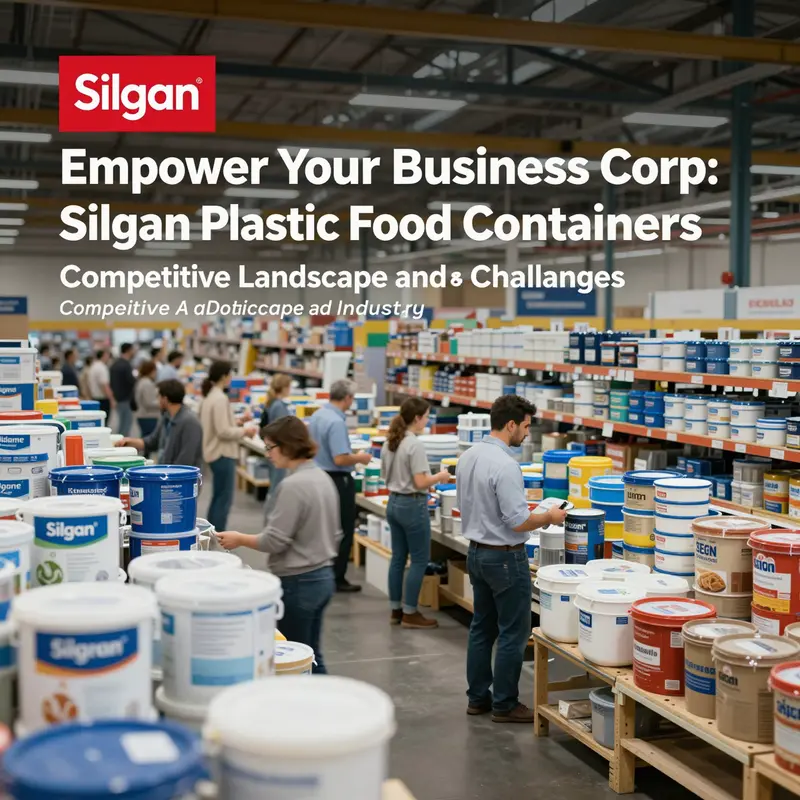
Silgan Plastic Food Containers Corp, as the focused plastics division within Silgan Holdings Inc., operates in a market where packaging is both a product and a promises-made-on-the-shelf. The chapter that follows unpacks how a leading supplier of rigid plastic food containers maneuvers through a landscape shaped by scale, specialization, and shifting expectations from consumers, regulators, and trade customers. It is a narrative not of a single corporation, but of a business model positioned at the intersection of material science, food safety, and supply-chain resilience. Silgan’s core offering—durable, shelf-stable packaging for snacks, meats, dairy, and ready-to-eat meals—rests on a global network designed to deliver consistency, speed, and compliance. The broader corporate architecture matters here: Silgan Holdings Inc., headquartered in Stamford, Connecticut, operates as a multinational platform with multiple manufacturing and distribution nodes around the world. Within this framework, the plastics segment has long been recognized for its capacity to convert resin into a spectrum of containers, lids, trays, and related packaging components that meet stringent food-contact regulations and consumer-facing expectations for safety, convenience, and performance. The market context is not merely about producing containers; it is about producing the reliable platform that allows food producers to maintain product integrity, shelf life, and brand continuity across diverse markets. In this light, Silgan’s position—often cited alongside peers in the rigid packaging arena—reflects both the advantages of scale and the necessity of continuous investment in process, material science, and design optimization. The company’s footprint across North America, Europe, and Asia-Pacific underscores a deliberate strategy to be where food manufacturers and retailers need packaging most: near the source of demand, with the capacity to respond to local regulatory regimes and regional consumer preferences. The historical data on staffing and operations, while dated in some respects, still reads as a proxy for the magnitude of Silgan’s manufacturing network. The roughly fourteen thousand employees reported a few years back highlight the labor-intensive nature of high-volume plastics manufacturing, where automation, skill, and quality systems converge to protect both brand reputation and food safety. In practice, this means Silgan’s teams are tasked with balancing tight tolerances on wall thickness, closures, sealing properties, and barrier performance, while also facilitating customization demands from customers who seek differentiation through packaging shape, printability, and ease of use. The challenge is not only to scale production but to maintain performance across a range of formats—from simple clamshells and trays to more complex multi-layered systems that optimize barrier properties and recyclability. The strategic emphasis on durability and reliability has proven essential, particularly in a market where product damage, recall risk, and supply interruptions can ripple across an entire supply chain. The significance of Silgan’s position becomes clearer when considering the competitive landscape, where Berry Global, Mondi Group, and Georgia-Pacific are frequently cited as benchmark operators in the same broader space. These peers collectively define the upper echelon of rigid packaging through a combination of manufacturing scale, materials portfolio, and international reach. Yet Silgan’s distinct advantage often lies in its specialized focus on plastic containers for shelf-stable foods. This niche allows for deep technical competencies in plastics formulations, molding technologies, and blow-molding or thermoforming operations that optimize clarity, rigidity, and seal integrity. It also enables Silgan to partner closely with food manufacturers seeking predictable performance across distribution channels, from manufacturing lines to cold-chain logistics. In industry analyses, Silgan is frequently positioned among the upper tier of players in North America and Europe, reflecting a consistent track record of delivering on both form and function. The recognition extends into market-rating and benchmarking circles, where indices like America’s Top Companies—compiled by Market Analysis & Planning (MAP)—signal visibility and influence within the packaging ecosystem. The implications of such recognition are twofold: it signals credibility to customers who rely on stability and long-term supply assurances, and it underscores the importance of continuing investment in innovation, not only to preserve market share but to defend against commoditization in a sector often driven by cost pressure. The competitive dynamics of this space, however, are not static. The industry faces a trio of headwinds that shape strategic choices today and into the near term. First, regulatory scrutiny of single-use plastics has intensified across many jurisdictions, driving a need to rethink packaging design and end-of-life pathways. Second, consumer demand has shifted toward recyclable, reusable, and biodegradable options, pressing manufacturers to validate recycled-content streams and to demonstrate circularity in practical terms. Third, the carbon footprint of the packaging supply chain—encompassing resin sourcing, production energy use, and logistics—has become a central criterion for customers, investors, and regulators alike. The confluence of policy, consumer sentiment, and sustainability metrics has elevated the role of research and development from a functional department into a core strategic driver. In response, Silgan has advanced a portfolio of initiatives aimed at reducing environmental impact while preserving the performance characteristics essential to food packaging. Notable among these efforts is a push toward sustainable packaging solutions and the expansion of capabilities in closed-loop recycling systems. Although plastics can be rationalized as a highly efficient material for food containers, the industry’s long-term value proposition increasingly hinges on the ability to reclaim and reintegrate used packaging into new products. Silgan’s investments in recycling and material recovery reflect an acknowledgment that profitability and responsibility must move in tandem. These efforts are complemented by broader efforts to optimize resin usage, minimize waste, and explore alternatives that align with evolving standards for recyclability and compostability. The strategic emphasis on closed-loop cycles is particularly relevant given the high-volume, continuous-demand nature of shelf-stable foods, where the logistics and scale of packaging waste require robust, scalable recycling channels. While the road to fully closed-loop systems remains complex—requiring partnerships with recyclers, waste-management infrastructure, and consumer participation—the trajectory is evident: packaging developers and manufacturers who can demonstrate verifiably sustainable solutions will likely maintain a competitive edge even in markets saturated with supply. At the operational level, Silgan’s response to these macro trends has included advancing process efficiencies and product design that accommodate recycled content without sacrificing barrier properties or food safety. The tradeoffs between rigidity, clarity, and structural integrity must be meticulously managed, particularly for containers destined for high-fat or high-salt products that demand resilient packaging. In addition, the company’s geographic diversification helps mitigate risk in volatile resin markets and currency fluctuations, ensuring more stable cost bases and delivery performance across regions with divergent regulatory environments. The competitive landscape remains intense, with Berry Global and Mondi Group offering comparable scale and technical capabilities, while Georgia-Pacific’s broader corporate footprint adds a dimension of diversification and cross-category capabilities that can influence customer choice through bundled solutions. Yet Silgan’s specialization in plastic food containers provides differentiation anchored in sector-specific knowledge, process depth, and a history of consistent performance in food-contact packaging. This specialization translates into relationships with food and beverage brands seeking predictable packaging behavior—from fill lines to shelf presentation and post-consumer disposal considerations. As customers demand more from their packaging partners, Silgan’s ability to combine dependable manufacturing with targeted innovation becomes a clear differentiator. Innovation, in this sense, is not only about new resin blends or novel shapes; it also encompasses the integration of design for recyclability, compatibility with regional recycling standards, and end-of-life strategies that align with customers’ sustainability commitments. The industry’s broader benchmarking literature highlights the ongoing need to balance cost efficiency with environmental responsibility. In practice, this means embracing a portfolio approach that includes conventional plastic containers alongside more sustainable or recycled-content options, while maintaining the reliability that brands rely on to avoid product spoilage, leakage, or damage during transit. The market’s demand signals also underscore the importance of agility—being able to shift production priorities, adapt to resin price cycles, and respond to regulatory changes with minimal disruption. Silgan’s scale and manufacturing sophistication equip it with the capability to adjust volumes, reconfigure lines, and introduce process improvements with relative speed. This agility is essential in a market where resin price spikes, supply disruptions, and tariff-driven cost pressures can quickly alter the economics of packaging programs. The competitive narrative is not solely about who can produce the most durable container; it is about who can deliver the most trusted packaging solution while navigating the costs and constraints of a modern, circular economy. In this sense, Silgan’s leadership rests on a combination of technical competence, customer collaboration, and strategic investments in sustainability. The company’s public-facing messages emphasize a commitment to responsible packaging—an emphasis that resonates with customers facing growing scrutiny from regulators and investors alike. For readers who want to place Silgan within the wider industry context, benchmarking resources from industry peers provide useful reference points. While each company maintains its own unique mix of materials, processes, and end-markets, the overarching trend is consistent: the packaging ecosystem is increasingly defined by design for recyclability, responsiveness to policy shifts, and a relentless drive to reduce total landed cost without compromising performance. To ground this discussion in tangible comparisons, industry observers often turn to group-level analyses and portfolio benchmarks that span material science, process technology, and geographic reach. These sources point to a dynamic where Silgan’s plastic-focused expertise remains a core strength, even as the competitive field expands to include more diversified players with broader product lines. The narrative ahead will continue to examine how Silgan translates competitive insight into strategic advantage: by intensifying collaboration with customers on packaging design, by embracing recycled-content options where feasible, and by maintaining the operational excellence that has sustained its market leadership. For readers who wish to explore related packaging approaches beyond traditional plastic containers, the following reference offers a useful lens into eco-friendly packaging options and the broader packaging ecosystem: eco-friendly kraft box packaging. This link provides a practical illustration of how alternative packaging formats fit into the conversation about sustainability and system-level packaging strategy. Finally, for a broader benchmarking perspective on the plastics packaging landscape, external resources from industry leaders underscore the importance of scalable innovation and circular design in sustaining market position over time. See Mondi Group’s portfolio of plastic packaging capabilities as a reference point for how a major competitor positions itself in a mature but rapidly evolving market: https://www.mondigroup.com/our-businesses/plastic-packaging/.
Final thoughts
Silgan Plastic Food Containers Corp has established itself as a leader in the packaging industry, providing innovative solutions that cater to the diverse needs of food and beverage sectors. Their commitment to quality, efficiency, and sustainability sets them apart from competitors. As you consider options for your business, partnering with Silgan can enhance your product presentation and compliance with safety standards. By staying informed about the evolving market landscape and leveraging reliable solutions, businesses like yours can thrive and adapt to changing consumer demands.