
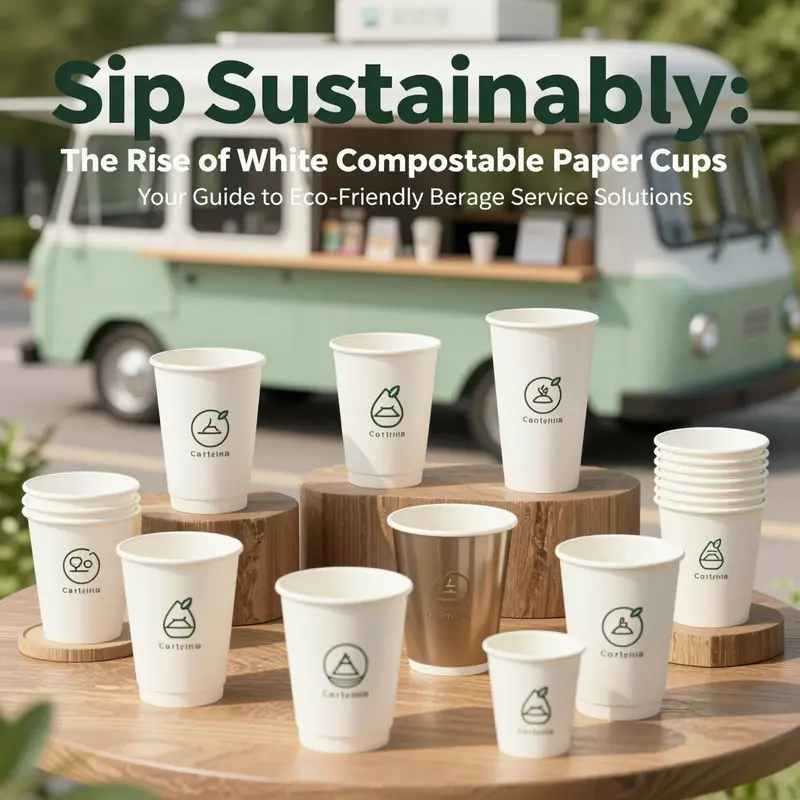
As the world becomes increasingly aware of environmental sustainability, businesses in the beverage and food service industry are seeking innovative solutions to reduce their carbon footprint. White compostable paper cups have emerged as an essential component in this shift, providing a practical and environmentally friendly alternative to traditional plastic-lined disposable cups. This article delves into the composition and environmental impact of these cups, explores current market trends and consumer preferences, examines certification standards, and discusses the future of sustainable practices in the industry. Each chapter serves to equip beverage shops, restaurants, food trucks, and event planners with the knowledge necessary to transition to eco-friendly packaging effectively.
From Fiber to Footprint: Unraveling the Composition and Environmental Promise of White Compostable Paper Cups
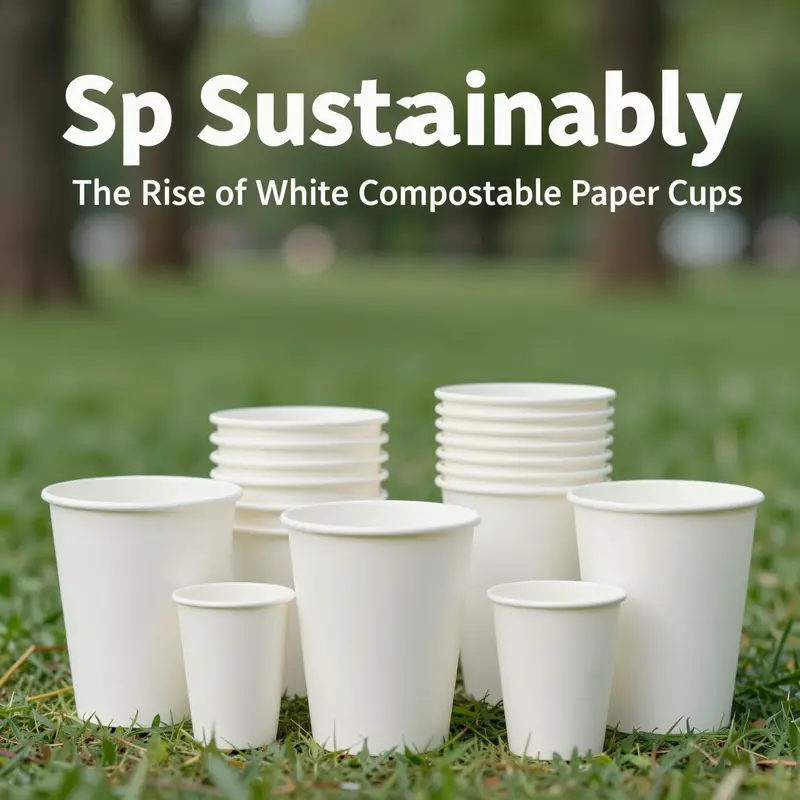
White compostable paper cups sit at a quiet juncture where everyday convenience meets a growing demand for responsible packaging. They are not just disposable vessels; they are a carefully engineered response to the limits of traditional, plastic-lined cups. At their core, these cups begin with a base of paper—either recycled fibers or virgin stock—chosen for strength, printability, and compatibility with downstream processing. The magic happens in the coating. A plant-based polymer, most commonly polylactic acid (PLA), is applied to the interior and often to the exterior as well. PLA is derived from renewable resources such as corn starch or sugarcane, which means the cup’s lining is designed to be compostable rather than petroleum-based. The intent is straightforward: create a barrier that resists liquid while ensuring the entire structure, including the lining, can break down in the right conditions. The result is a cup that can decompose into water, carbon dioxide, and organic matter within an industrial composting facility, typically within a window of three to six months. This is the practical threshold that differentiates compostable cups from conventional, plastic-laden alternatives that can endure for centuries in the environment. Yet the clarity of that window depends on the realities of disposal and the availability of appropriate facilities, a point this chapter treats with the same care as the chemistry of the cup itself.
In theory, the transition from a polyethylene (PE) barrier to a plant-based coating may seem straightforward, but it is a design philosophy grounded in lifecycle thinking. The choice of materials is not merely about liquid resistance; it is about how the cup will behave from production to post-consumer processing. The paper base, if it uses recycled fibers, contributes to a circular narrative by reintroducing previously used materials into new products. If virgin fibers are chosen, the decision aims to balance strength, whiteness, and printability with the broader goal of reducing environmental harm. The PLA coating serves as a functional layer that preserves the cup’s usability for hot beverages, cold drinks, and even some foods without sacrificing compostability. It is precisely this balance—between durability in use and predictability in end-of-life—that defines the modern white compostable cup and sets it apart from traditional single-use packaging that relies on non-renewable plastics for long-term stability.
An important facet of the composition is the range of supplementary options that align with different service needs. Some cups are paired with lids made from bagasse, a sugarcane waste product, forming a fully compostable take-away system that minimizes fossil-fuel inputs from the top to the bottom. Others rely on alternative plant-based structures, such as cups produced from 100% corn starch, which demonstrate heat resistance and are compatible with microwaves and refrigeration in some use cases. These material choices are not merely about performance; they shape consumer perception, brand alignment, and the practical realities of waste streams. The natural white color of these cups enhances their visual appeal, signaling cleanliness and simplicity while serving as a neutral canvas for branding. When a business prints logos or branding, it’s not just about aesthetics; it communicates a commitment to sustainability to customers who increasingly evaluate packaging through the lens of environmental responsibility.
To build trust, many suppliers emphasize certifications that attest to compostability and safety. Standards such as ASTM D6400 and EN 13432 function as shared benchmarks for materials to be considered truly compostable under industrial conditions. They specify criteria for disintegration, biodegradation, lack of toxic residues, and compatibility with composting infrastructure. A rigorous certification process helps distinguish genuinely sustainable products from greenwashing claims, giving buyers confidence in their procurement decisions. In practice, these certifications are not merely ceremonial; they influence how facilities screen input streams, how waste haulers sort residuals, and how local communities design collection programs. For consumers, the assurance that a cup has passed recognized testing criteria translates into a more reliable end-of-life experience and a more trustworthy narrative about what happens after use.
Beyond these standards, another meaningful linkage exists between policy, procurement, and the broader circular economy. The U.S. Department of Agriculture (USDA) BioPreferred Program provides a certification pathway for products made from renewable biological ingredients, including compostable packaging. The program’s emphasis on real-world performance in composting environments aligns well with the lifecycle story of white compostable cups. It helps ensure that compostability is not merely theoretical but demonstrably achievable in facilities designed to handle such materials. This regulatory and certification framework helps businesses differentiate what truly supports circular supply chains from products that merely market the concept of compostability. The result is a market that rewards clarity, traceability, and verifiable environmental performance, which in turn encourages more manufacturers to invest in research, testing, and continuous improvement.
Yet the narrative of compostability also depends on the real-world habits of users and the availability of appropriate waste-management infrastructure. While these cups are engineered to break down in industrial composting facilities, their effectiveness hinges on proper disposal. If contaminated or diverted into landfills where oxygen is limited and microbial activity is stunted, the decomposition process slows dramatically, and methane—a potent greenhouse gas—becomes a concern, similar to other organic materials. This is not a critique of the cups themselves but a reminder of the system around them. The promise of compostable cups is strongest when disposal pathways are aligned with composting facilities, and when municipalities or private operations support convenient, reliable collection of compostable packaging. Conversely, where such infrastructure is sparse or inconsistent, the environmental advantages diminish, underscoring the importance of local waste ecosystems in determining the actual impact.
From a life-cycle perspective, the production of PLA requires agricultural inputs and energy, which introduces its own carbon footprint. However, the footprint is generally lower than that of fossil-fuel-based plastics, and the feedstocks are renewable. The larger picture involves trade-offs that packaging designers weigh carefully: the speed and reliability of composting versus the inputs required to grow, harvest, and process plant-based resources; the potential for soil-enriching outcomes in compost versus the energy intensity of manufacturing; and the social and economic dimensions of sourcing agricultural feedstocks in diverse regions. In this sense, white compostable cups are not a perfect, universal solution; they are a practical instrument in a broader strategy toward sustainability, one that emphasizes renewable resources, reduced reliance on non-renewable polymers, and a closer alignment between product stewardship and consumer behavior.
The market presents a spectrum of options that can be optimized for different contexts. Some facilities can accommodate higher-heat applications, enabling hot beverages like coffee and tea to be served without compromising structural integrity. Others emphasize the versatility of the cup for cold beverages, juices, or smoothies, where the liquid barrier and whiteness carry a distinct aesthetic and functional advantage. The practical takeaway for businesses is straightforward: select materials and designs that match both the prevalent waste-stream infrastructure and the target consumer usage patterns. This means considering not just the cup in isolation but its entire ecosystem—from raw material extraction and manufacturing to end-of-life processing and local disposal habits. It also means recognizing the value of customization as a driver of brand identity while ensuring that the customization remains compatible with compostability and certifications. When a business adopts a cup that can carry branding and still meet established compostability criteria, it signals a holistic commitment to sustainability that can resonate with customers who value accountability and transparency. To explore practical examples of how such principles translate into everyday practice, consider the concept of eco-friendly, printed-logo paper cups for take-away scenarios, which illustrates how branding can align with environmental stewardship without compromising the composting pathway. eco-friendly printed-logo paper cup take-away coffee cup.
The design philosophy behind white compostable cups also invites considerations about labeling, consumer education, and the retail environment. Clear packaging statements about compostability must be complemented by easily accessible information on disposal methods. For instance, a simple reminder on whether the cup should be placed in industrial composting bins or checked against local guidelines can prevent confusion and improve outcomes. This approach aligns with broader shifts in consumer culture, where buyers increasingly expect products to carry a life-cycle narrative that is honest about limitations as well as capabilities. The aesthetic appeal of white cups—clean, bright, and versatile for branding—should not eclipse the practical realities of their end-of-life journey. Instead, it should reinforce a message that sustainability is a shared responsibility among manufacturers, retailers, waste managers, and consumers. The cup becomes a tangible artifact through which this shared responsibility is enacted in everyday routines, from a café counter to a food truck or a catered event.
In practical terms, businesses seeking to transition to white compostable cups should weigh several factors beyond the material chemistry. Compatibility with existing cup-sleeve designs, branding opportunities, and the potential for end-user education all matter. Suppliers can offer customization options that preserve compostability while enabling logos, colors, or messages that reinforce a brand’s green commitments. The opportunity to align product design with consumer expectations—without compromising performance or certification status—can strengthen a company’s positioning in a crowded marketplace and help build lasting trust with audiences that increasingly reward sustainable choices. This alignment is not about a single purchase; it is about integrating packaging decisions into a broader sustainability strategy that includes sourcing, logistics, and resident waste-management partnerships. The chapter’s core message remains consistent: material choice, end-of-life pathways, and consumer engagement must move in concert if white compostable cups are to realize their ecological promise.
For readers who want to delve deeper into the standards and certifications that underpin these products, a reliable overview of formal criteria and verification processes is available through the USDA BioPreferred Program, which sets forth credible benchmarks for renewable-content packaging and compostability. This external reference provides a framework for understanding how materials are assessed, tested, and validated in real-world composting contexts, reinforcing the notion that environmental responsibility is built on evidence and accountability rather than marketing alone.
In sum, white compostable paper cups embody a thoughtful synthesis of material science, environmental stewardship, and practical usability. They are not a panacea, but they represent a meaningful step toward packaging that respects both people and the planet when disposal systems are aligned with the technology. The cups’ composition—a base of paper combined with plant-based coatings and, in some cases, adjuncts like bagasse lids or corn-starch variants—supports a narrative of renewability and responsibility. Their environmental impact, while dependent on proper waste processing, can be more favorable than traditional plastics, particularly when end-of-life infrastructure is in place and accurately utilized. Industry standards and certifications—from ASTM D6400 and EN 13432 to USDA BioPreferred—provide the guardrails that help ensure that promise becomes reality. As consumer awareness grows and regulatory landscapes evolve, the adoption of compostable paper cups is likely to expand, contributing to a more circular economy where inputs become outputs and waste streams are reintegrated into productive cycles. In the broader arc of sustainable packaging, these cups illustrate how design choices—carefully balancing functionality, aesthetics, and end-of-life fate—can translate everyday events into a more responsible footprint for society as a whole.
External reference for further context on certification and real-world performance: https://www.usda.gov/biopreferred
null
null
null
null
White Cups, Green Footprints: How Compostable Paper Cups Are Reshaping Sustainable Business Practice
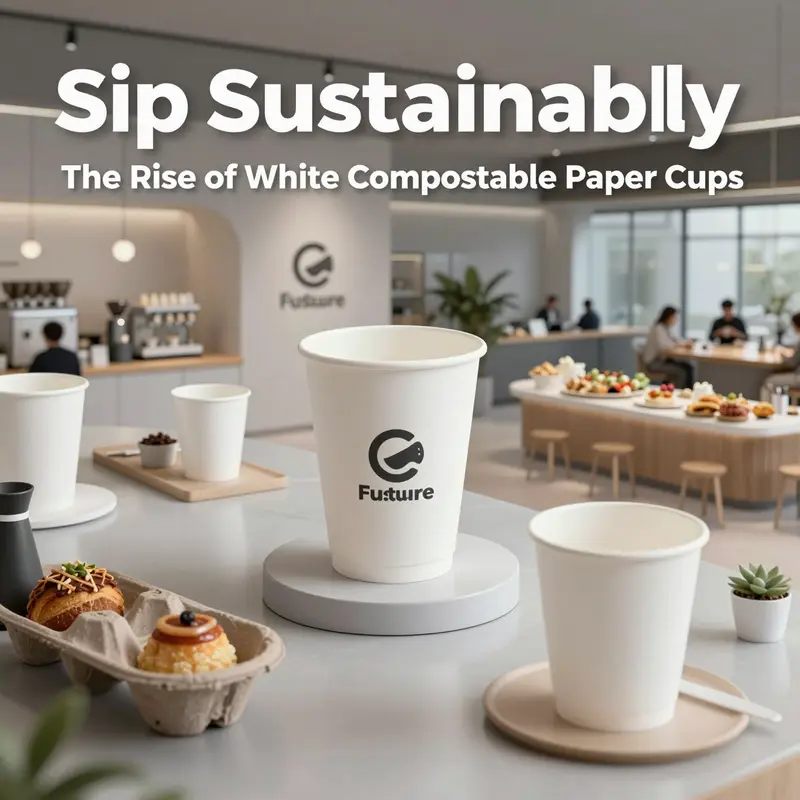
Across industries, awareness of plastic waste has shifted from a distant problem to a direct business concern. White compostable paper cups sit at a crossroads where design, material science, and waste infrastructure meet the daily rhythms of cafes, event spaces, and corporate cafeterias. They are not a perfect solution in isolation, but they represent a practical upgrade path that aligns operational needs with environmental responsibility. The promise is simple and powerful: a cup that can perform like traditional disposable ware while dissolving into a compost stream under industrial conditions, leaving behind no toxic residues and paving the way for a cleaner circular economy. As businesses grapple with evolving expectations from regulators, investors, and customers, these cups become a tangible instrument for turning sustainability from a box-ticking exercise into a visible, everyday practice.
At the heart of this shift is material construction. Most white compostable cups begin with recycled or responsibly sourced paper, reinforced by a plant-based coating that substitutes for the conventional polyethylene lining. This coating, often polylactic acid (PLA) derived from renewable resources such as corn or sugarcane, is designed to be compostable in facilities equipped to handle such polymers. The result is a cup whose inner surface and external shell share a single end-of-life trajectory: industrial composting, where heat, moisture, and microbial action break down the organic matter and the biopolymers into compost and water rather than into lingering microplastics. The variation in base materials—bagasse, a pulp from sugarcane leftovers, or other renewables—adds to the robustness of the category, offering a balance between rigidity, heat tolerance, and compostability. Some configurations even harness 100% corn-starch formulations that deliver heat resistance and broad usability, including compatibility with microwaves and refrigeration. In practice, many of these cups are designed to withstand hot beverages up to specific temperatures, with 120°C appearing as a commonly cited ceiling for hot-drink performance, while still maintaining structural integrity through the service flow of a busy café.
Certification plays a critical role here. Industry standards such as ASTM D6400 and EN 13432 provide benchmarks for compostability, ensuring materials break down within defined industrial composting timelines and do not leave behind toxic residues. Suppliers commonly obtain credentials from recognized environmental agencies, which helps buyers verify that the cups meet food-grade safety and performance requirements. It is important to note, however, that home composting facilities, and many landfills, do not replicate industrial composting conditions. The lifecycle thus depends on access to suitable industrial streams where cups can be collected, sorted, and processed. This reality has driven a parallel emphasis on traceability and clear consumer messaging so that end users understand where and how to dispose of the cups correctly, reinforcing the link between product choice and waste system design.
As the market embraces these cups, the supply ecosystem has grown more sophisticated. Manufacturers emphasize safety and performance just as much as sustainability. The cups must be leak-proof, heat-stable, and able to resist microwaves and cold storage, enabling convenient use across hot and cold beverage programs. In many regions, the regulatory climate nudges operators away from single-use plastics toward compostable or reusable alternatives, and brands respond by offering products that carry clear compliance markings and traceable supply chains. Beyond the material itself, there is a push toward scalable production and reliable delivery to meet the high-volume demands of coffee chains, airports, corporate cafeterias, and large event operators. In practice, this means facilities capable of producing millions of pieces per month and equipped to handle customization at scale. The capacity to scale is not a luxury; it is a precondition for meaningful market penetration where a transition away from conventional plastic-lined cups must be both rapid and dependable to avoid service disruption. Buyers increasingly expect consistency in performance, temperature tolerance, and a predictable end-of-life story, which in turn incentivizes manufacturers to invest in process controls, quality assurance, and robust supplier partnerships.
For buyers who want to consolidate branding with environmental responsibility, customization options have become a central differentiator. Printing logos, color schemes, and messaging on the outer shell enables organizations to maintain a strong brand presence while signaling sustainability to customers. This is not merely decorative; it creates a tangible, communicative loop with guests who may otherwise overlook the disposal step in a busy environment. The market supports a spectrum of customization capabilities—from simple logo replication to full-color artwork that aligns with events, campaigns, or seasonal promotions. An accessible pathway to such offerings can be seen in features that describe eco-friendly, printed-logo cup configurations available in different sizes to suit hot or cold beverages. If you want to explore the practical pathways to a branded, sustainable cup, you can discover one such option that emphasizes both environmental responsibility and brand communication through a dedicated format. eco-friendly printed-logo paper cup
The future also points toward deeper integration with circular economy models. Cups are part of a broader system that includes lids, sleeves, and labeling that all share a compostable life cycle. When designed with end-of-life in mind, packaging can reduce contamination and improve composting efficiency. The industry’s move toward standardized certifications and transparent labeling helps buyers align procurement with environmental commitments, transforming a disposable item into a deliberate investment in waste reduction. Volume capacity remains a decisive factor for many buyers. Suppliers that can deliver at scale—millions of cups monthly—make it possible for large programs to transition quickly from plastic-lined options to compostable alternatives without sacrificing service levels. The implication for operations is straightforward: switching to compostable white cups becomes a feasible risk management decision rather than a costly experiment. Moreover, the ability to pair cups with compostable lids and sleeves strengthens the entire proposition, creating a cohesive product family that supports a consistent end-of-life story and reduces the chance of cross-contamination with non-compostable components.
Beyond the technicalities, the design philosophy matters. A cup that is easy to recycle or compost, with a straightforward coating and a stable lid compatibility, reduces confusion at the disposal stage. The aim is to create a seamless experience for staff and customers alike, where the disposal pathway is obvious and the rate of contamination is minimized. The packaging that accompanies these cups—the lids, sleeves, and wrappers—also becomes a canvas for brand storytelling, amplifying the sustainability message while maintaining operational efficiency. When a business can print a logo or message on the cup itself, the environmental narrative becomes a live element of the customer experience, not an add-on. This synergy between form, function, and communication helps convert a simple takeaway moment into a lasting impression of responsibility and care for the environment.
Regulatory momentum is a powerful driver of change. Regions that previously tolerated single-use plastics are implementing phased restrictions, bans, or pricing mechanisms that tilt the market toward compostable and reusable alternatives. This regulatory environment, combined with consumer demand for authentic corporate stewardship, creates a powerful incentive for businesses to adopt compostable cups as part of a broader packaging strategy. Customers increasingly expect brands to disclose environmental metrics, including materials, sourcing, and end-of-life performance. Clear, verifiable claims help avoid greenwashing and build credibility with stakeholders who vote with their wallets. In this context, white compostable cups are not merely a product; they are a signal of commitment to responsible supply chains and responsible consumer choices. Disposal realities also shape adoption. While industrial composting facilities are essential, access to such infrastructure varies by region and city. Companies must assess whether the local waste stream includes a compatible facility or whether alternative end-of-life solutions exist. Mislabeling, improper sorting, and contamination can undermine the benefits of compostability. Educational outreach—for staff, customers, and partners—becomes a critical component of implementation. Signage that explains composting steps, paired with clear labeling on packaging, reduces mistakes and ensures that the cups contribute effectively to soil amendment rather than ending up in landfills.
Adopting white compostable cups requires coordination across procurement, operations, and facilities management. Cafes and catering teams can begin with pilots in certain locations, then scale up as waste streams and disposal partners are confirmed. The vendor ecosystem supports this transition by offering consistent supply lines, reliable lead times, and flexible customization. In a mature program, cups become part of a broader set of sustainable choices—reusable serviceware for high-traffic events, compostable packaging for take-away, and even compostable accessories such as bagasse lids that reinforce a cohesive composting narrative. This integrated approach helps businesses speak with one voice about sustainability, while enabling them to meet practical demands for durability, temperature tolerance, and customer convenience. At the organizational level, transparency matters. Purchasing teams can align with sustainability offices to track metrics like waste diversion rates and compostability certifications. Communicating progress to customers and employees reinforces trust and positions a brand as a leader in responsible hospitality. In parallel, research and industry consensus continue to refine standards, expand the range of compatible facilities, and improve the overall efficiency of composting streams. The result is a forward-looking trajectory where white compostable cups become a routine component of modern, responsible service operations.
As regulations intensify and consumer expectations evolve, the adoption of white compostable cups will move from an optional improvement to a strategic imperative for many organizations. The cups embody a practical bridge between everyday practice and the ideals of a circular economy: high-performance disposables that can re-enter the soil as compost, closing the loop on waste. The next phase will likely involve more robust performance data, enhanced supply chain resilience, and a broader range of material options that preserve strength under heat, while maintaining the light, clean aesthetics that customers associate with a quality coffee experience. In this sense, the future of white compostable cups is less about a single product and more about a system of choices—materials, certifications, logistics, and education—that together redefine sustainability in the daily operations of hospitality and beyond. For broader industry context, see Green America’s report on sustainable packaging trends: https://www.greenamerica.org/research/sustainable-packaging-trends-2026
Final thoughts
In a world that increasingly prioritizes sustainability, white compostable paper cups stand out as a practical solution for businesses. By transitioning to these eco-friendly options, beverage shops, restaurants, and event planners can not only meet rising consumer demands for greener products but also enhance their brand image as responsible corporate citizens. As the industry moves towards a circular economy, embracing compostable paper cups is a powerful step forward in promoting environmental stewardship. Engaging with suppliers that offer these sustainable solutions ensures that your business stays ahead of the curve and contributes positively to the planet.