

In the dynamic environment of food and beverage services, small clear plastic cups have emerged as indispensable tools. Their versatility and practicality cater to a wide range of establishments, from bubble tea shops to catering services. This article delves into the UK market for small clear plastic cups, focusing on their popularity, environmental impacts, pricing dynamics, distribution channels, and the varieties of user preferences. Each chapter will enhance your understanding of how these cups can elevate your service offerings and resonate with your customers’ needs.
Clear and Consequential: Navigating the UK Market for Small, Transparent Cups

The prevalence of small clear plastic cups in the United Kingdom speaks to a broader truth about modern food and beverage culture: convenience and presentation often travel together. From a quiet office break room to a bustling festival, these transparent vessels serve as a temporary stage for hydration, sampling, and small-is-beautiful portions that keep events moving and people comfortable. Their clarity is more than a cosmetic feature; it is an invitation for trust. When a drink pours into a cup you can see, the consumer experiences a sense of honesty about what they are consuming, and that transparency becomes part of the service narrative. The cups thus become a quiet backbone of many service settings, enabling quick turnover, easy disposal, and minimal fuss as crowds ebb and flow. In the UK, where catering often blends practicality with a demand for style, the small clear cup functions as both utilitarian workhorse and subtle branding surface, often in bulk quantities that underline the efficiency of modern operations.
Material choice remains central to both performance and perception. The disposable cups most commonly rely on polypropylene (PP) or other food-grade plastics, selected for their balance of rigidity, clarity, and safety when holding beverages. The popular 180 ml (about 7 ounces) size sits at a sweet spot for many settings: long enough to hold a meaningful drink, compact enough to avoid clutter on a busy table, and economical when bought in bulk. In many office environments and at community events, packs of 100 cups are the standard, delivering a straightforward, predictable inventory that simplifies purchasing decisions and reduces the risk of shortages during peak periods. This straightforward packaging aligns with the practical ethos that governs much of the UK’s disposable cup market: reliable performance at predictable cost, with an eye toward waste reduction where feasible.
Beyond the basics of material and size, the distribution channels that shape how these cups reach users are telling of the UK market’s maturity. Online marketplaces and dedicated e-commerce platforms offer a broad spectrum of options, from value-packed bundles for large gatherings to more premium designs tailored for brand visibility and customer engagement. In physical retail settings, warehouse-like suppliers and regional distributors help ensure that even smaller venues can access a steady supply without prohibitive lead times. As the demand for portable, disposable solutions grows, the flexibility of online ordering—often with fast delivery and predictable stock levels—has redefined how and when organizers decide to include clear plastic cups in their event kits. The ease of procurement supports not only events but also everyday needs, from school cafeterias to community centers that require dependable, low-cost drinkware.
Regulatory considerations have also sharpened the market’s focus on sustainability and responsible consumption. In the UK, policy changes and bans on certain single-use plastics have nudged buyers away from purely convenience-driven choices toward materials and formats that align with environmental objectives. This shift has catalyzed interest in eco-friendly alternatives, including recyclable and biodegradable options, as well as clearer labeling about end-of-life disposal. The growing emphasis on waste reduction has not eliminated demand for clear cups, but it has reframed how buyers evaluate value. A transparent cup that is widely recyclable or compostable, or at least clearly labeled in terms of recycling streams, becomes more attractive to organizations seeking to balance guest experience with environmental accountability. In many settings, the choice of cup now carries a dual charge: to deliver reliable service while also signaling a commitment to responsible stewardship of resources.
Branding and visibility play a surprising yet important role in the use of these cups. For businesses and organizations that want to extend their message beyond a menu board or banner, custom-printed clear cups offer a practical canvas. Branded cups can amplify a campaign, accompany a trade show outreach, or serve as tokens of appreciation to loyal customers. The effect is subtle but real: a well-placed logo on a drink cup can spark recall long after the beverage is enjoyed. In the UK’s competitive service landscape, where memorable experiences are currency, even disposable items become part of the customer journey. The opportunity to imprint logos, colors, or messages on clear cups aligns with broader marketing strategies that seek to maximize every touchpoint with potential and existing customers.
Educational applications further illustrate the versatility of these cups beyond everyday consumption. In classrooms and science demonstrations, the transparency of a clear cup lets observers watch physical processes unfold in real time. Ice melting, gas formation, and the behavior of liquids with different densities can be shown clearly through the same vessel used for beverages. This dual use—practical hydration and educational utility—adds a quiet pedagogical value to a product that might otherwise be seen purely as a disposable item. The clear cup thereby earns a place in the learning toolkit, especially in settings where simple, reusable demonstrations must be paired with the practicalities of everyday life.
Despite their usefulness, the market’s forward motion is governed by sustainability considerations as much as by convenience. The UK is increasingly attentive to the environmental footprint of disposable products, driving demand for materials that are recyclable or compostable, as well as for production methods that minimize waste. Recyclability remains a central criterion; PP cups, for example, are widely accepted in many recycling streams, though the specifics can vary by locale and waste infrastructure. Where recycling is less accessible, businesses may look to compostable options or to cups that are explicitly marketed as curbside-friendly or industrially compostable. The ongoing conversation around single-use plastics has also spurred innovation in the design of cups themselves—ranging from lighter yet sturdy constructions to packaging that reduces material usage without compromising performance. In this context, the UK market’s adaptability is evident: suppliers and buyers continuously reassess whether a given cup’s attributes—clarity, strength, cost, and end-of-life options—align with evolving expectations and regulations.
Pricing dynamics reflect the interplay of quality, brand, and scale. The price of small clear cups varies with material quality, the level of clarity, the presence of any branding, and the quantity purchased. Bulk purchases often unlock favorable unit costs, which is particularly important for high-traffic environments such as catering operations or large gatherings. For organizers and institutions that run consistent programs, the economics of purchasing in bulk can translate into meaningful savings over time. The gap between budget friendly options and premium offerings generally centers on enhancements in print capability, durability, and the ease with which cups can be integrated into branded experiences. In the UK, the choice often rests on balancing the desire for crisp presentation with the practicalities of waste management and supplier reliability.
Cascading through this landscape are considerations of consumer perception and behavior. The visibility of a cup’s contents, the perception of quality conveyed by the cup’s clarity, and the perceived responsibility of the supplier all contribute to a decision matrix that guides buyers. When a business targets a professional image or seeks to reinforce a message through its events, the choice of a clear cup becomes more than a container; it becomes a piece of a carefully curated experience. Conversely, in informal settings or casual gatherings, the emphasis may shift toward cost efficiency and convenience, with less attention paid to brand presence. The tension between these modes—brand amplification and pragmatic consumption—mirrors a broader trend in consumer culture, where even everyday items are selected to align with a broader narrative about the organization or the event.
The availability of a wide size range—often spanning from 2 to 9 ounces in broadly marketed options—adds to the flexibility of planning. For many use cases, the 180 ml size remains a mainstay, but the capacity to choose smaller or larger cups allows organizers to tailor servings to the context, whether a tasting session, a reception, or a time-constrained event. The adaptability of these cups to different beverage types and contexts enhances their appeal. It also underscores why a simple, clear vessel can remain relevant in a market saturated with disposable choices: its utility is amplified by its compatibility with a spectrum of formats and needs.
As the sector continues to evolve, it is the careful combination of material science, regulatory alignment, and market responsiveness that will determine which cups endure beyond the next season. The UK’s small clear cup market offers a blueprint for how a basic product can support sophisticated service delivery while remaining accessible to a wide range of buyers. It is about more than container physics; it is about how a simple, transparent vessel can act as a reliable interface between a guest and a moment, enabling hospitality experts to focus on the experience rather than the logistics. In this sense, the cup is not merely a disposable tool; it is a small, clear stage on which everyday interactions unfold, and it is performed well when it respects both the guest’s needs and the planet’s constraints.
For readers who seek a concrete strand to follow in this landscape, one practical pathway is to explore branded or printed cup options that align with corporate or event branding while considering the end-of-life scenario. Branded cups can serve as portable marketing assets during campaigns and trade shows, and a well-planned supply chain for these items can help ensure consistent guest experiences across multiple venues. The capacity to marry visual identity with functional utility makes this category particularly compelling for organizations that want to maximize impact without sacrificing efficiency. As a final note, the UK market’s readiness to blend practicality with sustainability suggests that the small clear cup will continue to adapt, offering a reliable, adaptable solution that keeps pace with changing consumer expectations and regulatory frameworks.
External reference for further reading: https://www.amazon.co.uk/Plastic-Clear-Cups-Disposable-Drink-Cups/dp/B0XXXXXXX
For further internal exploration on related take-away and cup customization options, you can visit the internal resource linked here: senang01-hot-sale-customized-disposable-single-wall-paper-ice-cream-cups-with-lid-eco-friendly-food-grade
Between Convenience and Cleanliness: The Environmental Reality of Small Clear Plastic Cups in the UK

Small clear plastic cups sit at a quiet intersection of everyday practicality and broader environmental stakes for the UK. In hospitality, events, and many households, they enable quick service, portability, and minimal cleanup time. Yet every cup used today sits within a larger system of production, waste management, and policy that is actively shifting.
In the lifecycle core, polypropylene drives much of the cup design. From cradle to gate, polypropylene cups can have a modest production footprint when produced at scale and with efficient processes. However, downstream realities—especially end-of-life management—shape real-world performance: recycling streams are uneven, and many local schemes struggle to process PP cups once the contents are disposed of. The practical upshot is that a favorable production story can be eroded by what happens after disposal, with a substantial share of cups ending up in mixed waste or routed to energy recovery rather than closed-loop recycling.
Littering and microplastics form another critical facet. Discarded cups contribute to urban and countryside litter, and small fragments can enter soils and waterways, potentially breaking down into microplastics that affect ecosystems. Public concern and consumer expectations have grown, which exerts pressure on brands and venues to improve disposal guidance, waste separation, and product design for recyclability.
Regulatory developments in the UK add a notable dimension. The Environment Act 2021 provides a framework to reduce plastic pollution and to steer business practices toward lower-impact packaging. Local authorities increasingly ban or restrict certain single-use items, including some disposable cups. This climate nudges practitioners toward reusable systems, compostable options where appropriate, and better waste management partnerships to deliver lower footprints in practice. The viability of compostables, in particular, hinges on access to industrial composting and proper separation in waste streams.
Procurement and consumer behavior complete the picture. Buyers face reliability, waste reduction goals, and demands for responsible sourcing. The sustainability signal from consumers, investors, and regulators is shifting decision-making toward lifecycle costs, not just unit price. In high-traffic settings, operators experiment with reusable cup programmes or robust take-back schemes alongside select single-use options paired with clear end-of-life pathways. Transparency about materials, disposal instructions, and supplier commitments helps customers trust how cups are managed across the value chain.
Looking ahead, the UK packaging landscape is moving toward systems that align convenience with environmental responsibility. Reusable models, clearer labeling, and investments in recycling or composting infrastructure will shape cup choices in practice. Innovations in design—such as easier-to-recycle lids and better compatibility with sorting streams—can also improve outcomes. The goal is to preserve the functional benefits of disposables while reducing environmental costs, a balance that requires collaboration among manufacturers, venues, waste managers, policymakers, and consumers.
For those seeking deeper insights into the environmental and littering dynamics of disposable cups, external research such as comprehensive reviews and lifecycle assessments can provide rigorous context for evaluating trade-offs over time.
Transparency in Transition: Navigating UK Market Dynamics, Pricing, and Sustainability for Small Clear Plastic Cups

Small clear plastic cups occupy a quiet but crucial niche in the UK’s food and drink economy. They are the everyday workhorses of events, festivals, caterers, and even household gatherings where a quick sip or a sample is needed without ceremony. Their appeal rests on a simple equation: clarity, convenience, and cost. The market that serves this equation has grown as consumer routines shifted toward portable, disposable solutions that keep beverages cleanly portioned and easily discarded. In the UK, this demand has expanded the available sizes, typically ranging from a couple of ounces up to around nine ounces, with standard offerings that suit everything from tasting flights to iced beverages. The result is a broad, accessible array that supports quick service and low overheads for venues with fluctuating footfall. Yet behind the practical appeal lies a more complex web of pressures—consumer values, policy signals, and evolving logistics—that together shape how these cups are priced and purchased over time.\n\nWhat makes these cups especially visible in the present moment is how they sit at the intersection of convenience and responsibility. On one hand, the preference for disposable serving ware persists because it lowers labor costs, reduces cleanup time, and sidesteps the need for washing up in busy settings. On the other hand, a rising wave of environmental consciousness in the UK pushes producers and buyers to weigh the full lifecycle costs of disposable containers. This tension has accelerated trials with materials that sit beyond the traditional clear plastic—biodegradable composites, recyclable resins, or bio-based alternatives—without sacrificing the lightweight practicality that customers expect. While the headline convenience remains intact, the message to suppliers is increasingly clear: provide options that can be responsibly managed after use, and price them in a way that reflects both production realities and evolving consumer expectations.\n\nPrice is the most conspicuous signal of these shifting dynamics. In the day-to-day market, the price of a standard clear cup tends to follow a predictable arc: a basic, widely used size traded in bulk can be affordable enough for high-volume settings, and buyers are often rewarded with lower unit costs when they purchase in larger quantities. Market observations indicate that a typical 7-ounce clear plastic cup—one of the most frequently requested formats for events—can be found in packs of 100 at a price point around a few pounds. This level of pricing keeps the cups accessible for smaller venues while still offering the margin needed by suppliers to cover materials, handling, and distribution costs. Yet the price surface is not flat. As consumers become more discerning about sustainability, the same size cup available in a conventional polymer may carry a modest premium when sourced in eco-friendly or recycled-content variants. The premium reflects not only material costs but also the added processing and certification steps that accompany greener formulations.\n\nBulk purchasing continues to be a defining lever in the UK market. In both the catering sector and consumer retail, buying in larger quantities typically trims the per-unit cost and improves stock reliability, which is essential for busy periods. Online marketplaces and direct-to-business channels have amplified the ability to source these cups with minimal friction. The convenience of online procurement, with the ability to compare options, read short-term supplier terms, and arrange delivery windows, reinforces the appeal of bulk buys for events, festivals, and long-running venues. The ongoing impact of supply chain variability—whether driven by raw material costs, transport, or seasonal demand—still trickles into price fluctuations. Buyers who monitor market signals know that a relatively stable price today can shift if input costs rise or if wood fibers, resins, or recyclability processes experience supply constraints. Still, the overall trend remains one of incremental diversification rather than abrupt leaps, as suppliers aim to keep a wide base of customers with versatile product lines.\n\nThe sustainability narrative has moved from a peripheral concern to a central criterion in purchasing decisions. For many businesses, carbon footprint, recyclability, and end-of-life infrastructure are now as important as the cup’s visual clarity or the ease of disposal. This shift alters pricing strategies in two important ways. First, greener variants tend to command higher unit prices, reflecting the costs of more expensive materials or specialized manufacturing steps. Second, there is growing appetite among buyers to invest in products that lend themselves to recycling streams or composting where local infrastructure exists. As a result, brands are increasingly explicit about the environmental profile of their cup offerings, and buyers are more likely to factor these profiles into supplier selection, even when short-term costs are higher. The broader implication is that the market is moving toward a tiered landscape, where conventional, low-cost cups coexist with greener, more expensive alternatives that appeal to sustainability-minded clients.\n\nPolicy and regulation in the UK further shape this landscape by signaling expectations that extend beyond price into responsibility. Governments and regulators have pressed for reductions in single-use plastics, better recyclability, and higher recycled-content in packaging. The consequence for the cup market is a stronger pull toward designs that can be more easily recycled or composted, longer-term investments in recyclable supply chains, and a willingness among buyers to pay a little more for products that align with a broader environmental strategy. This regulatory backdrop does not eliminate the demand for the simplest, most economical disposables; instead, it redefines the decision matrix. It becomes common to pair a basic clear cup with a disposal pathway that aligns with local recycling or composting facilities, while also presenting greener options as a longer-term strategic move for businesses that want to build brand integrity around sustainability. In short, policy acts as a market signal that nudges product development and purchasing choices toward greater environmental coherence, even as everyday practicality keeps the existing cup formats in circulation.\n\nFrom a distribution perspective, the UK’s market for small clear plastic cups benefits from multiple channels. Traditional wholesale and cash-and-carry operations continue to serve venues that want immediate access to stock, while modern e-commerce platforms offer broader catalogues, faster restocking, and the option to order smaller batches for pop-up events or seasonal peaks. Local suppliers are increasingly responsive to demand, often offering flexible terms, custom packaging, and quick delivery schedules that help businesses keep events running smoothly without overstocking. This combination of channels ensures that whether a client operates in a high-traffic venue district or a rotating pop-up space, the cups can be procured with relative ease. The ease of procurement, in turn, sustains the market’s momentum by reducing the friction that once deterred smaller buyers from experimenting with different sizes, materials, or environmentally friendly variants. It also means that the choice between conventional and greener cups can be tested in real-world settings without significant risk to margin or operations.\n\nFor readers seeking a concrete example of how suppliers are presenting greener alternatives, one notable pathway is to explore how eco-conscious printing and branding options are integrated into cup families. A dedicated line of eco-friendly, logo-ready paper cup products demonstrates how sustainability and customization can coexist, even within a disposable context. This approach helps businesses maintain a sense of identity in their serveware while signaling an environmental commitment to customers. See the example at senang07-eco-friendly-printed-logo-buy-paper-cup-take-away-coffee-cup for more details on how branding and sustainability can be aligned in complementary packaging solutions. senang07-eco-friendly-printed-logo-buy-paper-cup-take-away-coffee-cup\n\nLooking ahead, the UK market for small clear plastic cups is unlikely to disappear, but it will continue to evolve. As recycling infrastructure improves and manufacturers optimize their supply chains for greener materials, prices for conventional cups may stabilize or even soften, provided feedstock costs stay favorable and competition remains intense. At the same time, the premium tier of eco-friendly cups will likely become more accessible as demand grows and economies of scale take hold. In practice, this means a bifurcated market where basic disposables remain essential for quick, low-cost distribution, while a broader set of greener options becomes a standard consideration for event planners, venues, and brands seeking alignment with sustainability goals. The ultimate effect should be a more resilient market—one that preserves the practical benefits of clear, disposable serveware while steadily expanding the range of environmentally considerate options available to UK buyers.\n\nAs the sector continues to balance convenience with responsibility, businesses should frame their purchasing decisions around a few core questions: Which end-of-life pathway is most viable in our locality? How can we minimize waste through bulk ordering and precise forecasting? What level of environmental performance is needed to meet our brand commitments and customer expectations? These questions help buyers navigate the price spectrum without compromising on service quality. They also encourage suppliers to innovate in ways that lower life-cycle costs, improve recyclability, and broaden the appeal of greener options. The trajectory suggests that prices may neither plunge nor rise uniformly but will reflect the ongoing push-pull between cost efficiency, regulatory clarity, and consumer demand for responsible stewardship of disposable packaging.\n\nFor readers who want to connect these trends to practical procurement, the broader market context is essential. A quick glance at available reference points shows how price bands and product mixes adjust in response to demand signals, logistics, and policy priorities. While the numbers can fluctuate, the underlying logic remains stable: provide consumers with choices that satisfy function, affordability, and responsibility. The result is a market that supports a vibrant events economy while gradually aligning with long-term environmental objectives. In the chapters that follow, we will delve into the practical implications for venues and caterers, including how to optimize stock, select appropriate sustainability profiles, and communicate value to customers who increasingly care about more than just price. External references can offer additional data points on consumer expectations and industry responses, such as price scaffolds and availability in UK online channels. External reference: https://www.amazon.co.uk/100X-Clear-Plastic-Disposable-Drink/dp/B0B4W5VJZD
From Aisles to Online Carts: Mapping the UK Distribution of Small Clear Plastic Cups
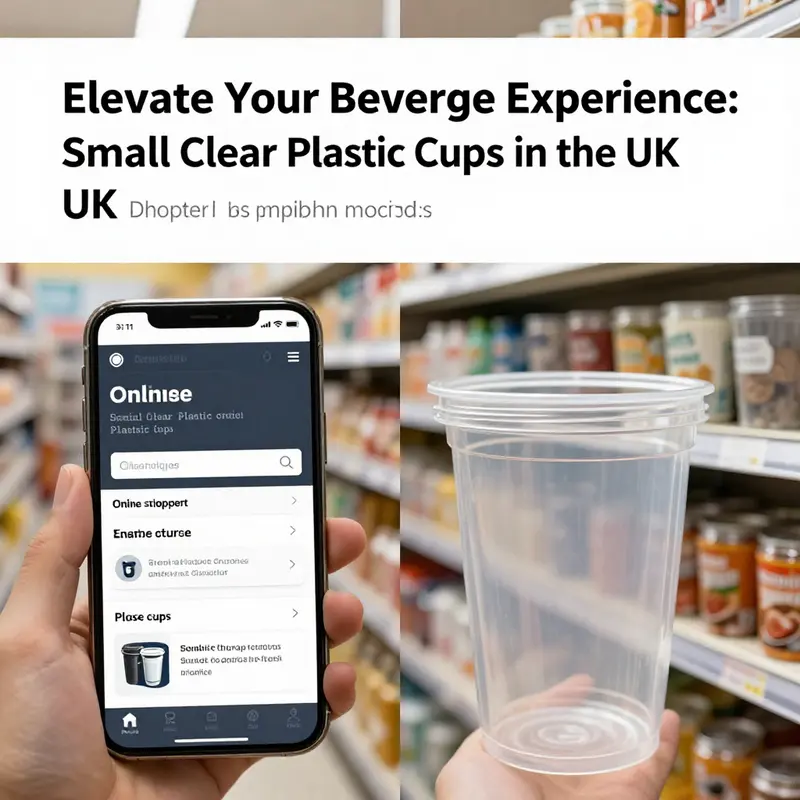
In the ongoing story of small clear plastic cups in the UK, distribution is not just a logistical footnote; it is the thread that ties demand to availability, convenience to practice, and curiosity to consumption. These cups, lightweight and versatile, have carved a niche in both everyday occasions and professional settings where quick, disposable serving solutions are valued. The journey from a factory line to a table at a party or a bustling event relies on a network that blends traditional retail, dedicated specialty shops, and the sprawling reach of online platforms. What shapes this network, and how does it respond to shifting consumer expectations and regulatory realities? The answer lies in how goods travel through multiple channels, each with its own rhythms, margins, and moments of pressure and opportunity.
Retail distribution sits at the heart of the consumer-facing side of the story. In the bricks-and-mortar space, these cups find their place in the kitchenware aisles and party-supply sections of major supermarkets and discount retailers. The appeal is straightforward: a compact, transparent vessel that showcases contents while remaining inexpensive enough for everyday use. In practice, shelf placement matters as much as price. When shoppers browse for something simple to hold a beverage, a dessert, or a sampling portion, the small clear cup becomes a reliable option. This is amplified by the way retailers group such items—often alongside other disposable serving ware, cutlery, and napkins—so that a single shopping trip can stock a complete, low-effort solution for home entertaining or small-scale catering.
Beyond the grocery giants, specialty retailers play a crucial role. Stores focused on kitchenware and party supplies curate bulk options and more varied size ranges, serving event planners, community groups, and small businesses that need quantity without sacrificing consistency. The value here is not only in the product but in the advice, bundling, and often the availability of bulk discounts that align with seasonal peaks such as wedding season, fairs, and local markets. In this channel, the distribution logic shifts toward stockholding for rapid replenishment, predictable lead times, and the ability to offer private-label or branded lines that give buyers a sense of reliability and continuity in their supplies.
Online channels, however, have become the dominant conduit for direct-to-consumer purchase and for smaller operations that require flexibility. E-commerce platforms aggregate a spectrum of suppliers, sizes, and price points, making it possible for a single buyer to compare options across dozens of listings in minutes. The advantages are clear: convenience, transparent pricing, real-time stock visibility, and user reviews that help buyers gauge quality and reliability. The online model also lowers the entry barrier for new ventures—cottage industries, pop-up eateries, or local clubs—that may lack the reach or footprint to secure physical shelf space yet need dependable access to disposables. The cumulative effect is a market dynamics shift: customers expect speed, choice, and clear information, and suppliers respond with versatile catalogues, straightforward bulk options, and flexible shipping arrangements.
A wholesale layer underpins the machinery of distribution by serving sectors that operate at scale. Industrial suppliers and distributors move large quantities to hospitality venues, catering outfits, and office facilities. For these buyers, the equation emphasizes efficiency, consistency, and cost-per-unit economics. Bulk packaging, standardized SKUs, and predictable delivery windows become central to procurement planning. The wholesale channel also often acts as a bridge to multi-channel strategies, enabling buyers who traditionally relied on physical stock to extend their reach into online marketplaces or direct-to-client fulfillment without disrupting existing workflows. In practice, this means that a single order could cascade through a distributor’s ecosystem—affecting warehousing, packaging, and last-mile logistics in ways that reverberate across the entire supply chain.
The interplay among these channels is constant and evolving. Channel strategy is influenced by regulatory shifts and changing consumer expectations around sustainability. In the UK, conversations about single-use plastics have accelerated interest in alternatives and more eco-conscious practices. This has a tangible effect on how retailers curate available assortments and how wholesalers segment products for different end uses. For end users, the choice set now often includes not only clear plastic cups in traditional PET or polystyrene variants but also biodegradable and compostable options that align with environmental goals. Retailers and distributors alike note that such options are increasingly requested, especially by venues that prioritise sustainability or that serve markets with strict waste-management requirements.
Pricing and procurement dynamics further illuminate the distribution landscape. Small clear plastic cups typically vary in price depending on material quality, the presence of any additives or coatings, the size or volume purchased, and the brand or supplier reputation. For buyers weighing costs against performance, bulk purchases offer better unit economics, particularly for high-traffic environments like festivals, large gatherings, or catering operations. The structure of the market means buyers often benefit from multi-channel access: a retailer can source the same item from a wholesaler for events and from an online marketplace for consumer-facing sales, consolidating orders to minimize logistics complexity. Yet price transparency across channels also raises expectations about consistency. A cup that performs reliably in a vending scenario should deliver consistent thickness, clarity, and leak resistance whether bought in a single box or in a pallet for a long-running event series.
From an operational perspective, the distribution system for small clear plastic cups in the UK demands resilience and speed. Inventory turnover is brisk in some segments, with seasonal demand surges requiring flexible stock planning and scalable logistics. Retailers depend on stable supply lines and predictable lead times to avoid stockouts that frustrate customers or disrupt event planning. Online retailers, in turn, rely on reliable fulfillment networks that can navigate peak buying periods without compromising delivery times. For distributors, the challenge is to maintain a balance between holding costs and the risk of outdated or superseded designs, particularly as consumer preferences tilt toward more sustainable options. The net effect is a distribution ecosystem that prizes agility, accuracy, and clear communication about product attributes, availability, and post-purchase support.
Within this broader narrative, a practical glimpse of the product ecosystem can help anchor the discussion. A representative, practical entry point for buyers exploring disposable cup options in the region is a catalog item that illustrates the kinds of solutions available—disposables designed for fast service, simple disposal, and compatibility with a range of serving needs. Such items emphasize the core attributes buyers evaluate: clarity of the cup, leak resistance, size range, and the presence or absence of lids or coatings that might affect recyclability or compostability. They are the kind of products that populate shelves, appear in bulk orders, and populate online listings, giving buyers a tangible sense of what a channel can deliver and how it aligns with their operational realities.
To highlight how a buyer might navigate these options across channels, consider how a supplier’s multi-channel offering can support a small business or event planner. The same discrete item might be available in a standard retail pack for consumer purchases, a bulk-format SKU for venues, and a private-label version for branded experiences. The ability to source from a single supplier across channels simplifies procurement, reduces administrative overhead, and fosters a cohesive customer experience from first glance to fulfillment. In a mature market like the UK, where many buyers are managing complex schedules and diverse events, this integration across channels can be a decisive advantage. It allows for synchronized stock management, consistent product performance, and a unified returns or warranty experience that reduces friction during high-pressure periods.
For readers seeking a concrete example of how a provider in this space positions itself across channels, one can explore a practical reference to a disposable cup solution catalog that demonstrates a typical multi-channel approach. The page offers a window into how product lines are described, how packaging options vary by channel, and how environmental attributes are presented to address consumer demand for greener choices. This kind of resource helps buyers translate the abstract idea of distribution channels into actionable steps—whether planning a festival, equipping a café for takeaway service, or preparing a corporate event where reliability and cost control are paramount. senang01-hot-sale-customized-disposable-single-wall-paper-ice-cream-cups-with-lid-eco-friendly-food-grade
As buyers move through the decision-making process, they consider not only current needs but also the trajectory of the market. Regulatory expectations push procurement toward options that balance practicality with environmental responsibility. Retailers and wholesalers who anticipate this shift by featuring a spectrum of products—from traditional clear plastic cups to biodegradable alternatives—position themselves to capture both immediate demand and future growth. In practice, this means catalog entries that clearly state material composition, recyclability, and any composting compatibility, along with transparent information about disposal pathways. It also means distributors maintaining close collaboration with suppliers to ensure that stock levels reflect anticipated demand, whether for a weekday lunch service, a weekend festival, or a month-long promotional campaign.
The distribution narrative for small clear plastic cups in the UK is thus a story of alignment. Alignment of product attributes with buyer expectations, alignment of stock across channels to ensure availability, and alignment of procurement practices with evolving environmental standards. It is a story that rewards clarity in communication, consistency in product performance, and reliability in delivery. In a marketplace where choices are plentiful and the pace of demand can accelerate quickly, buyers rely on a well-orchestrated distribution system to translate potential into practical, accessible serving ware. As channels converge and technology further smooths the path from supplier to end user, the decisive factors remain straightforward: can the cup offer reliable containment, can it be obtained when needed, and can it be sourced in a way that respects both cost and conscience?
External reference for broader context on consumer-facing listings and availability across online marketplaces: https://www.amazon.co.uk/s?k=soup+cups
Crystal Clarity in a Busy Kitchen: How Small Clear Plastic Cups Shape UK Serving Practices

Small, clear plastic cups occupy a surprisingly central role in everyday life across the United Kingdom. They are not a flashy trend so much as a quiet backbone of routine service, quick errands, and informal gatherings. Their appeal lies in a simple equation: lightweight, inexpensive, and portable. In a market that prizes speed and efficiency, the 2 to 9 ounce range offers flexible options for drinks, samples, or portions, allowing hosts, caterers, and individuals to manage servings with minimal waste and measurable control. The appeal is practical rather than glamorous. Still, the choices people make about these cups reflect broader currents in UK consumer culture—especially how convenience is balanced with sustainability, safety, and price.
At home and in the workplace, small clear cups are most often the convenient default for beverages that are cold, room temperature, or only lightly chilled. A busy household with kids and social activities may rely on these cups for juice during a busy morning, or to make quick, grab-and-go portions for a family picnic. In offices and schools, the same logic applies: cups enable quick hydration without the ritual of washing up, a feature that becomes especially valuable when time is tight or there are many people to serve. The transparency of the cups matters too. Seeing the liquid inside helps users gauge portions and water levels, which, for many, translates into a sense of control and predictability. In this way, the cups function not just as vessels but as practical tools that support everyday routines in a culture that prizes efficiency.
Events of various sizes reveal the full versatility of these cups. For small gatherings at home, they simplify cleanup and reduce the need for glassware, a practical relief for renters or households without a full set of reusable dishes. The disposable nature, while appealing, also invites reflection on waste. Yet even in informal settings, people often weigh the benefits of quick disposal against the environmental footprint of single-use plastics. This tension has become a defining feature of consumer choice in the UK, where awareness about resource use is increasingly integrated into everyday decisions. The common size range—roughly 3 to 9 ounces—appears to align with a preference for individual portions, especially for children, or for sampling beverages at events where small tastes help attendees compare options without committing to a full serving. In this sense, the cups serve as a practical gatekeeper to portion control and responsible consumption, even in social scenarios where indulgence might tempt over-serving.
A key thread in consumer behavior lies in safety and trust. UK consumers frequently seek assurance that plastic products meet food-safety standards and regulatory requirements. The perception of safety extends beyond the immediate use; it becomes an underlying confidence in the material itself. This is where certifications and clear labeling—indicating food-grade status and compliance with relevant standards—play a critical role. As awareness around chemical ingredients and potential health impacts grows, more buyers are drawn to cups that clearly communicate safety credentials, even if they come at a marginal price premium. The safety dimension often intersects with design features that ease use for families. Ergonomic rims, smooth surfaces, and compatibility with lids or sleeves can shape preferences, especially for parents seeking practical, child-friendly options. When a cup feels comfortable to hold and easy to drink from, it reduces the likelihood of spills and waste, reinforcing the value proposition of these small vessels in daily life.
Sustainability, however, is no longer a niche concern. It has become a central lens through which many UK buyers evaluate all disposable products, including small clear plastic cups. The market now presents a spectrum of choices: from traditional plastics, valued for cost and convenience, to more eco-conscious options that emphasize recyclability, reuse, or compostability. Consumers increasingly weigh the trade-off between the immediacy of disposability and the longer-term implications for the environment. The result is a gradual shift toward products that can claim a clearer lifecycle story—whether through responsible sourcing, robust recycling streams, or materials designed to minimize ecological impact. In many households and venues, this shift translates into a preference for cups that can be disposed of in a way that aligns with local recycling or composting programs, or that are made from materials with clearer end-of-life pathways.
Market evolution also follows regulatory currents. The UK’s approach to single-use plastics, including cups, has prompted suppliers and buyers to rethink procurement strategies. Bans on certain items and evolving packaging guidelines push consumers toward alternatives that balance the benefits of disposability with environmental responsibility. In practical terms, this often means selecting cups from suppliers who can demonstrate a transparent material story, a clear recyclability profile, or a path to compostability. The regulatory backdrop is not a straight-line constraint but a signal that nudges the market toward more sustainable, more accountable choices. Even when budgets are tight, shoppers increasingly expect options that align with broader goals of responsible consumption and waste reduction. As a result, many buyers consider life-cycle implications alongside cost per unit when evaluating different packaging options.
Distribution channels reflect the broader logistics of modern shopping. Online platforms and local suppliers are enabling easier access to a broad spectrum of small clear plastic cups. The convenience of ordering in bulk—especially for venues hosting frequent events or for offices that service many employees—transforms these cups from a minor purchase into a recurring operational necessity. In a market where speed and reliability matter, online marketplaces offer a practical route to consistency in supply. They enable buyers to compare sizes, materials, and price points quickly, while also providing a level of transparency about product specifications and safety certifications. Yet physical retailers still hold value, particularly for smaller orders, immediate needs, or the opportunity to inspect packaging and quality before purchasing. Local suppliers often offer flexible terms, closer service, and the ability to tailor orders to specific event calendars or educational programs, which can be crucial for schools and community groups planning regular activities.
Within this landscape of choices, consumer preferences are quietly honed by design. Parents and caregivers often gravitate toward cups that combine ergonomic form with appealing aesthetics. Brightly colored prints, patterns that are child-friendly, or designs that are easy to grip can make a practical tool feel more welcoming for family use. At the same time, the emphasis on safety remains pivotal. Consumers favor cups that clearly declare food-safe status and are manufactured in ways that minimize risk in handling, pouring, and serving. The balance between functionality and comfort—between sturdy grip, stable base, and a smooth drinking edge—often informs the daily experiences of households and service staff alike. The overarching narrative is not a single choice but a spectrum of small decisions that align with a user’s values: convenience, safety, price, and environmental mindfulness.
In exploring these choices, it is helpful to acknowledge the broader ecosystem of alternatives that live beside small clear plastic cups. For instance, paper-based or bagasse-derived cups may offer appealing eco-credentials, especially when paired with lids that secure contents during transport. For readers curious about such alternatives, consider a resource that showcases customized, disposable paper ice-cream cups with lids, illustrating how designers are responding to the demand for practical, visually engaging, and eco-conscious options. This example underscores a larger point: the debate is not merely about whether to use plastic or paper, but about selecting the best material for a given context, one that honors safety, cost, user experience, and end-of-life realities.
Within the current chapter of this article, a more focused look at consumer behavior reveals how expectations shape purchase decisions. For many buyers, the decision is guided by a combination of practical needs and ethical reflections. In a domestic setting, the priority often centers on ease of use and clear communication about serving sizes. In workplaces and schools, operational efficiency and predictable costs drive ordering patterns. In events and gatherings, the emphasis shifts toward convenience and the ability to scale quickly without sacrificing spill control or portion accuracy. Across these contexts, the key drivers remain consistent: a preference for cups that are easy to handle, reliably safe, and reasonably priced, while an increasing willingness to consider products that support sustainability goals. The tension between cost and conscience continues to push manufacturers and retailers toward better materials, better labeling, and better end-of-life solutions. This dynamic, in turn, informs how buyers perceive the value of a simple plastic cup and why it continues to hold a steady place in the UK’s diverse service landscape.
For those considering a purchase today, the decision often comes down to weighing the real-world trade-offs. A supermarket aisle may present a straightforward choice: a low-cost option that fulfills immediate needs, perhaps with a basic recyclability claim. A caterer planning multiple events may prefer a bulk purchase with clear pricing tiers and reliable supply, alongside assurances about safety and compatibility with lids. A school or community center might prioritize ergonomic design and kid-friendly patterns, balancing aesthetics with practicality. Across these scenarios, the core narrative is consistent: small clear plastic cups are not merely containers; they are enablers of quick service, simple logistics, and accessible hospitality. The future of this segment will likely hinge on how well materials science, regulatory signals, and consumer values converge to deliver products that are as transparent in their performance as they are in their appearance.
External resource for further exploration of related packaging options can be found here: https://www.amazon.co.uk/dp/B0B5ZQ4XH6. For readers seeking an integrated, category-specific perspective on paper-based and eco-friendly options that can complement or replace clear plastic cups in certain contexts, a related example is provided in a dedicated product page detailing customized disposable single-wall paper ice-cream cups with lid. You can explore that option here: customized disposable single-wall paper ice-cream cups with lid.
In sum, the daily use of small clear plastic cups in the UK illuminates a broader pattern of balancing convenience with responsibility. They illustrate how ordinary choices—how many ounces to serve, which texture or rim design feels comfortable, which labeling communicates safety—accumulate into a public practice that values efficiency without losing sight of the world these decisions affect. The cups are simple, but their impact, across homes, schools, offices, and events, is anything but. They reflect a consumer base that is increasingly sophisticated about value, increasingly attentive to safety, and steadily oriented toward sustainable options where feasible. As the market continues to respond to regulatory signals and evolving consumer expectations, the small clear plastic cup will remain a telling barometer of how everyday objects can embody the tension and collaboration between ease of use and environmental accountability.
Final thoughts
Understanding the landscape of small clear plastic cups in the UK is crucial for beverage professionals and event planners alike. These cups combine practicality, aesthetic appeal, and adaptability to set a seamless, enjoyable experience for consumers. As businesses turn their focus towards sustainability, being informed about the available eco-friendly options can greatly influence purchasing decisions. With strategic insight into the demands of customers and market trends, elevating your service and catering solutions is within reach.