
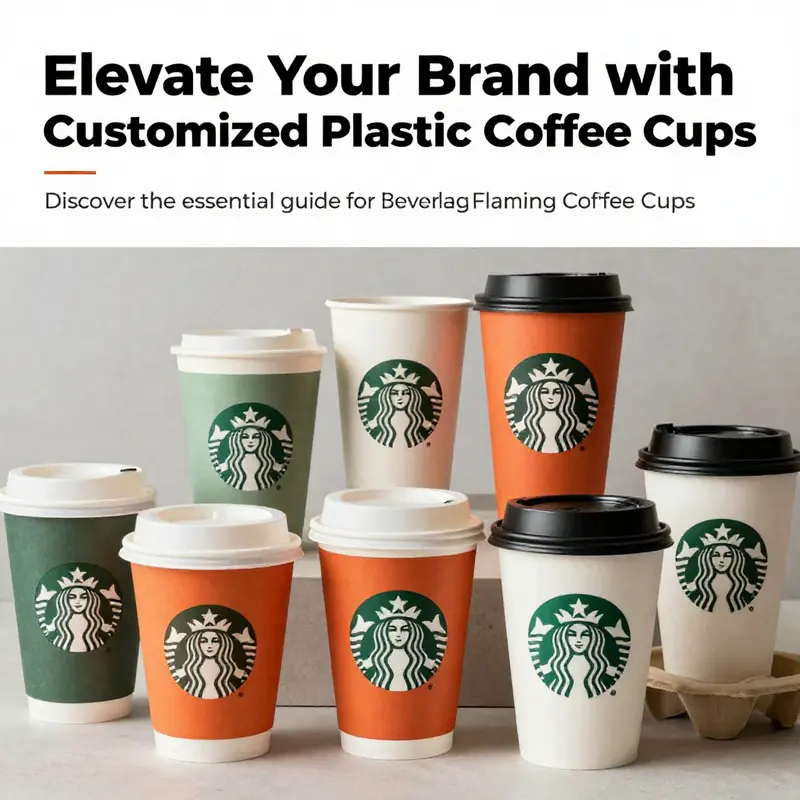
In today’s competitive market, branding and convenience go hand in hand, especially for beverage businesses such as bubble tea shops, restaurants, and corporate catering services. Customized disposable plastic coffee cups have emerged as a vital tool for boosting brand visibility while offering functional and cost-effective solutions for serving hot beverages. This article delves into every facet of customized disposable plastic coffee cups, offering insights into their manufacturing processes, market trends, sustainability challenges, consumer preferences, and the regulatory landscape. Each section will provide you with a comprehensive understanding of how customized cups can serve not only as a packaging solution but also as a means of brand promotion and customer engagement.
From Melt to Mark: The Invisible Precision Behind Custom Disposable Plastic Coffee Cups
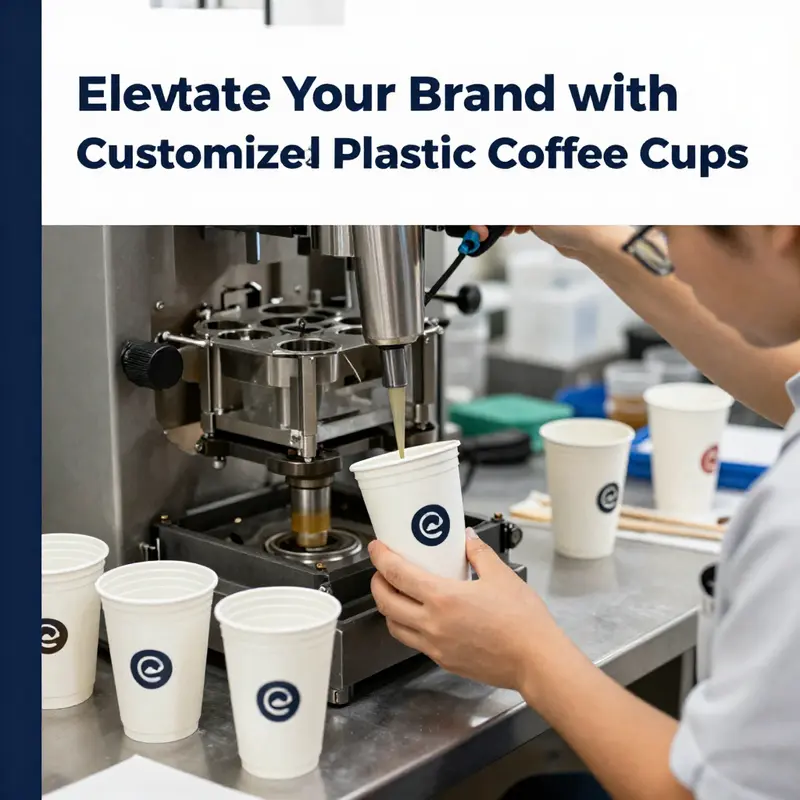
Every custom disposable plastic coffee cup tells a story that begins long before it reaches a barista’s hand. It starts with material science, scales through high-speed automation, and ends as a branded touchpoint that travelers, students, and professionals carry with them. The manufacturing journey is not just about making a sturdy cup; it is about shaping a product that maintains its integrity under heat, communicates a brand’s identity through color and graphics, and remains consistent across hundreds of thousands of units. When a cup emerges from the line, it bears the imprint of careful choices—from the resin to the lid, from the printing plate to the final QA check. The choreography of these choices defines the consumer experience as surely as the flavor of the beverage inside it. In this chapter, we follow the arc from the first scoop of resin to the final inspection, tracing how each linked decision supports branding, performance, and scalability in a market hungry for convenience without compromise.
Material selection anchors the entire production. The most common workhorse for hot-beverage cups is food-grade polypropylene, prized for its balance of durability, heat resistance, and safety in single-use applications. PP resists deformation when hot liquid enters the cup and can be drawn into thin walls or shaped into double-wall and ripple-wall configurations that improve insulation. The choice of material then narrows to a family of options that includes clear PP, PET, and even biodegradable PLA in some lines. The trade-offs are real: while PP delivers reliability and cost-effectiveness, PET and PLA open doors to transparency or compostable pathways, respectively. Brands often weigh these factors not only against performance but also against consumer expectations around sustainability, cost, and the convenience of recycling streams. The decision sets the stage for how the cup will interact with inks, adhesives, and lids, and it reverberates through the printing and sealing methods that follow.
Once the resin arrives in the mold, the cup-making phase begins. Modern lines use specialized cup-forming machinery that deploys ultrasonic sealing to join walls and bottoms without relying on adhesives. Ultrasonic welding or sealing creates a leak-proof seam that remains robust under the abrupt temperature shift when hot coffee is poured. This technology is essential for hot beverages, where a compromised seal means leaks and messy customer experiences. The cups themselves take on varying wall structures—single-wall for lighter usage, double-wall for added insulation, or ripple-wall for enhanced grip and thermal performance. The equipment is engineered for rapid cycling, and its precision is striking: a single line can spin out tens of thousands of cups in a day, while maintaining tight tolerances on wall thickness and diameter. The result is a reliable vessel that feels sturdy in the hand and resilient in the cup holder, a foundational requirement for any branded beverage program.
But a cup is only half a story without its graphics. The customization phase is where branding magic happens. Flexographic printing dominates when large volumes are required because of its speed and cost-effectiveness. In this process, flexible relief plates transfer ink onto the cup surface as it travels along the production line. The inks chosen must bond well with the plastic substrate, resist smudging under steam, and maintain color consistency across thousands of cycles. While flexographic printing might not capture the photoreal quality of digital methods, it excels at bold logos, simple gradients, and repetitive patterns—precisely what many coffee brands rely on for instant recognition in a crowded shop or street kiosk. The result is a surface that can carry a brand’s identity in a way that is both durable and legible, even after repeated handling and stacking.
The printing stage is tightly integrated with engineering control systems. Modern lines feature PLC-controlled touchscreens and multi-program presets that enable quick size changes—typically across common cup capacities such as 8–16 ounces—without laborious retooling. This automation reduces setup time and minimizes human error, ensuring that a 12-ounce cup coming off the line in the morning looks and prints the same as the one produced at the close of business. The pace is brisk: many lines are capable of delivering hundreds of cups per minute when running at full tilt, a throughput that supports large-scale campaigns, city-wide promotions, and ongoing café networks without sacrificing consistency. Safety and compliance then enter the picture: CE certification and rigorous QA/QC protocols are standard, ensuring that every unit adheres to global safety and quality standards for international markets. In a world where a cup travels through multiple hands—from supplier to distributor to retailer—the assurance that it meets stringent requirements is as vital as the branding ink that decorates its surface.
Customization does not end with color and logo. The industry recognizes the importance of choosing wall structures, lid compatibility, and even the transparency or opacity of the cup. Some businesses prize entirely clear options to showcase layered drinks or vibrant fillings, while others prefer opaque cups that emphasize brand color and typography. Lids, often designed to fit specific openings, complete the package by delivering a secure seal and heat containment. For hot beverages, the fit between cup and lid is a subtle but critical reliability feature; a misaligned seal can test a consumer’s patience and undermine the perceived quality of the brand. The compatibility conversation also touches on the broader packaging ecosystem—how cups are bundled, shipped, and stacked for quick loading at point-of-sale locations. These practical details feed directly into the consumer experience, turning a simple vessel into a reliable extension of a brand’s hospitality promise.
Cost and scale shape how brands approach customization as well. The market typically presents a minimum order quantity in the tens of thousands, reflecting the realities of molding cycles, color runs, and printer plate wear. Prices often span a broad range, reflecting the chosen material, wall structure, size, and any additional finishes or coatings. For many operators, the math is straightforward: branding at scale with a stable price per unit, balanced against the lifetime value of the cup’s branding impression and the economics of promotions or loyalty campaigns. The practical upshot is that customized disposable cups provide a highly scalable way to reinforce brand visibility while delivering a predictable cost profile for large campaigns. The promise of cost efficiency, however, does not come at the expense of quality; the best producers invest in tightQA processes from resin input through finished product, recognizing that one defect can eclipse days of careful branding work.
Sustainability considerations increasingly shadow the decision matrix. While traditional plastics underpin performance and affordability, there is growing interest in bioplastics and transparent alternatives. PLA, derived from plant-based materials, offers an option that aligns with eco-conscious consumer expectations, though its heat resistance profile and composting conditions differ from conventional PP. Some lines offer clear PP or PET cups for customers who want visibility into their beverage while still maintaining the benefits of a plastic vessel. The industry’s evolving landscape means brands can balance branding, cost, and environmental aims by selecting from a spectrum of materials and finishes. Transparency around recyclability and end-of-life pathways is now part of the branding narrative itself, and savvy operators weave these considerations into their customer-facing stories so the cup becomes a recognizable symbol of responsibility as well as convenience.
The manufacturing ecosystem supporting customized cups also values the broader packaging context. The ability to supply not only the cup but also compatible lids and even printed branding on related packaging, such as sleeve wraps or ancillary containers, amplifies brand impact. When a cup includes a lid that seals securely and a liner that helps manage heat, the drinker experiences fewer interruptions and more consistent service, whether in a busy café or a pop-up event. The supply chain emphasizes reliability: a producer who can guarantee consistent color across batches, rapid changeovers for different campaign sizes, and seamless integration with lid suppliers earns trust from brands that deploy cups across multiple outlets or regions. In practice, this means that the most successful programs view the cup not as a standalone item but as a cohesive part of a brand’s beverage experience, a small yet potent canvas for storytelling and customer engagement.
For brands and organizers seeking inspiration or practical options, there is value in exploring established examples of eco-friendly, printed, and take-away solutions. A representative case in the broader landscape demonstrates how branding on disposable cups translates into mindshare during a customer’s journey from curb to cup. It shows how the combination of material choice, wall design, print method, and lid compatibility can elevate a routine coffee break into a moment of brand reinforcement. The interplay of speed, accuracy, and finish matters; the right production line captures the energy of a busy morning and channels it into a consistent in-cup experience. The result is a dependable product that supports a brand’s narrative, keeps costs in check, and offers scalability for growth while still honoring the practical realities of everyday operations.
As a final note, the path from molten resin to branded cup is as technical as it is creative. It requires engineers who understand resins and seals, print specialists who master ink-on-plastic interaction, and operations managers who can orchestrate quick changeovers without sacrificing quality. It is a collaborative process that transcends a single machine or a single department. The success of customized disposable plastic coffee cups rests on this integration—one that makes the cup a reliable carrier of your brand, a trusted vessel for hot beverages, and a scalable solution for campaigns of any size. To glimpse how branding and sustainability intersect in practice, consider exploring internal resources that showcase practical examples of eco-conscious, logo-driven cup designs. eco-friendly printed-logo take-away coffee cups. For broader industry context, further reading on global sourcing and material options can be found in external supplier discussions that illuminate the economics behind the cups we rely on every day: https://www.alibaba.com/product-detail/Custom-Clear-PP-PET-PLA-Transparent-Disposable_1600544887558.html?
Branding at the Counter: Market Trends and Pricing Dynamics in Customized Disposable Plastic Coffee Cups

The act of branding a cup has become as strategic as branding a storefront. In many coffee-forward markets, the cup is the first physical touchpoint a customer experiences with a brand after the call of aroma and the first sip of warmth. Customized disposable plastic coffee cups sit at that nexus of practicality and perception, delivering heat resistance and leak-free performance while carrying logos, color schemes, and design motifs that transform an everyday vessel into a mobile advertisement and a fleeting ambassador for the brand. The chapter that follows threads together how market trends are reshaping what brands demand from these cups and why price remains a central, sometimes stubborn, variable in decision making. It is a narrative about tradeoffs between branding impact, material choice, and sustainability, and how the economics of customization are evolving in a world that increasingly prizes both efficiency and ethics.
The typical materials used for these cups—PP, PS, and PET—each bring distinct strengths to hot beverages. Polypropylene offers a favorable balance of rigidity, heat resistance, and lightness, while Polystyrene provides strong barrier properties and a smooth surface ideal for high-fidelity printing, though it carries environmental considerations that are prompting shifts in some markets. PET, with its clarity and recyclability profile, can be leveraged for transparent designs or integrated with lids that seal securely. In practice, most operators will choose among these materials depending on the product line, the expected cup life cycle, and the required insulation. For hot drinks, double-wall or ripple-wall designs are increasingly common, delivering improved insulation without excessive bulk. The lid ecosystem—commonly sized for openings around 79/80 mm or 80/89 mm—plays a crucial role in sustaining spill resistance and customer experience, especially in high-traffic venues or during mobile deliveries. The compatibility between cup body and lid is not a trivial detail; it is a core part of the value proposition because a leak-proof seal translates into reliability, a cornerstone of brand trust.
Customization options extend far beyond simply slapping a logo onto a cup surface. Brands can imprint logos, brand colors, and supporting graphics directly onto the cup, often coordinating with matching lids and sometimes even integrated sleeve designs to create a cohesive package at retail or on the go. This expansion of customization capabilities has pushed the category from a cost center into a core competitive advantage. Where once a cup served mainly as a container, it now functions as a portable canvas for storytelling and customer engagement. In markets saturated with choices, the ability to deliver a distinctive, on-brand moment with every cup becomes a differentiator that compounds across touchpoints—before the drink is tasted, after the vendor is forgotten, and in social posts that celebrate a visit to a favorite shop. One practical implication of this shift is that suppliers increasingly bundle customization services with base products, sometimes offering free samples to demonstrate imprint quality and legibility at scale. For buyers, that means evaluating not just unit price but the total value of the customization package, including color fidelity, print durability under heat, ink safety for food contact, and the consistency of the finish across large orders.
The market itself reveals a compelling tension between affordability and sustainability. On the one side, the low production cost and high scalability of traditional plastic cups make them attractive for large events, chain operations, or expansive promotional campaigns. On the other side, the industry is navigating a green transition that reframes purchasing criteria. Biodegradable and compostable options—such as PLA-based coatings or alternative sustainable substrates—are increasingly presented as viable complements or replacements to conventional plastics, driven by policy signals and growing consumer expectations for responsible packaging. This tension is not a mere trend but a structural shift that reframes how total cost of ownership is calculated. While a basic plastic cup may carry a lower sticker price per unit, associated costs tied to waste handling, brand perception, and regulatory compliance can tilt the economics in favor of more sustainable choices over time. The research landscape in 2026–2030 consistently points to green manufacturing incentives and the rising visibility of circular economy practices as enablers of sustainable packaging adoption, even in high-volume contexts. For brands, this means that a decision anchored solely on the lowest upfront cost may be shortsighted; a broader view that includes brand equity and regulatory resilience often proves more protective of long-term profitability.
From a pricing perspective, a spectrum of factors shapes the ticket price for customized disposable cups. Material choice matters materially. In real-time market snapshots, basic plastic cups typically price within a range of about $0.029 to $0.038 per piece for orders around 10,000 units, a tier that suits casual dining establishments or small chains testing a rebrand. By contrast, eco-friendly paper cups with coatings such as PLA or PE are priced more aggressively at the higher end of affordability, with ranges approximately $0.008 to $0.013 per piece for orders in the 50,000-unit bracket; bold incentives can push prices downward toward $0.0075 per piece for substantial volumes. The logic is straightforward: while the materials shift toward sustainability, the economies of scale and the protective features they offer—such as better barrier properties or enhanced insulation—help justify the premium for many buyers who perceive value in eco-conscious messaging. Double-wall or insulated alternatives often fall into a mid-to-upper tier, roughly $0.02 to $0.038 per unit, reflecting both the added performance and the printing surfaces that must withstand thermal stress.
The customization layer itself plays a significant role in cost structure. Printing logos, brand typography, or unique lattice designs is frequently absorbed into the base price or provided as an integrated service, with many suppliers including mockups and sample runs as part of the package. The availability of free samples—sometimes priced as low as a nominal $0.01 per unit in the early evaluation phase—reduces the risk of scale disruption and enables brands to test embossing, color fidelity, and surface smoothness before committing to a large run. Importantly, minimum order quantities (MOQs) are not merely bureaucratic hurdles; they reflect the practical realities of production lines, die-cutting, and color-matching processes. In some cases MOQs can range from 50,000 to 100,000 units, a scale that aligns well with fast-casual chains, festival organizers, or coffee roasters running nationwide campaigns. This reality prompts a strategic consideration: brands must design campaigns, prints, and color stories that maximize impact across large distributions, ensuring that the incremental cost of customization translates into a measurable lift in brand engagement and purchase intent.
The broader market context adds another layer of complexity. The trend toward high-endization and personalization means customers increasingly associate a cup with a moment, a reminder of quality and consistency. In a world where a single cup can be photographed and shared across social feeds, brands are incentivized to invest in design accuracy and material storytelling. This is not merely about color and logo; it is about delivering a tactile experience—the feel of a surface that prints crisply, the way a heat-insulated cup keeps a beverage at the right temperature, and the assurance that a leak will not disrupt a busy line. The IoT-inspired ideas—such as QR codes that link to product provenance or loyalty campaigns—signal a future where packaging becomes an interactive touchpoint rather than a passive container. While such technologies are more common in premium equipment, the underlying philosophy has already permeated packaging: a simple cup can link to a brand story, a customer loyalty program, or an after-sales experience that transcends the moment of purchase.
For brands weighing options, the decision hinges on balancing branding impact, cost discipline, and sustainability commitments. The data in the market shows that the cheapest path is often not the best long-term choice if it constrains a brand’s ability to communicate values or to comply with evolving regulations. The smart path blends more sustainable materials with compelling customization and scalable production capabilities. It may involve selecting paper-based cups with PLA coatings for campaigns that emphasize environmental responsibility, while maintaining plastic options for high-volume periods where cost constraints are tight and the brand’s visual identity must remain bold on every cup. The ecosystem view—where hardware, consumables, and services are aligned to deliver not just a cup but a branded packaging experience—offers a practical route to sustainable growth in a crowded market. In this framework, the choice of cup becomes a deliberate strategic act, part of a larger narrative about how a brand shows up in the minds of customers with every purchase.
To readers seeking concrete illustrations of how customization and eco considerations intersect in practice, one can explore product pages that emphasize eco-friendly printed logo options for takeaway cups. For example, the eco-friendly-printed-logo-buy-paper-cup-take-away-coffee-cup-8-oz-12-oz-paper-cup listing demonstrates how a simple cup can carry a brand’s message while aligning with green promises. This example highlights how the combination of design flexibility and sustainable materials can deliver a strong value proposition even at scale. More broadly, market data from industry aggregators corroborates the pricing dynamics outlined here, underscoring that material choice, order size, and customization depth collectively drive total cost of ownership and brand impact in equal measure. External market intelligence confirms that the landscape continues to reward packaging programs that harmonize aesthetics, performance, and sustainability, even when unit prices are under pressure from competition and supply chain variability. For readers who wish to verify these trends with real-time data and supplier listings, a comprehensive market resource provides benchmark pricing and option matrices across material families and customization levels. External data point: https://www.made-in-china.com/products-search/hot_search/Disposable-Coffee-Cups.html.
In sum, the journey through trends and pricing for customized disposable cups reveals a market that values the cup as a strategic asset as much as a practical container. The interplay of material science, design capability, scale economics, and sustainability policy charts a path where brands can achieve both impact and efficiency. The most successful programs will likely be those that treat the cup as part of an integrated packaging ecosystem—where durable branding, responsible material choices, and flexible service models converge to deliver consistent customer experiences across channels. As the sector continues to evolve, the larger lesson is clear: every cup is a chance to reinforce a brand story, reinforce trust, and capture a consumer moment that can be carried far beyond the coffee bar. The price tag attached to that moment may shift, but the strategic value of a well-crafted, customized cup remains substantial for brands that invest in quality, clarity, and a sustainable narrative at scale.
null
null
Branding in a Single Sip: How Customized Disposable Plastic Coffee Cups Shape Preference, Perception, and Loyalty

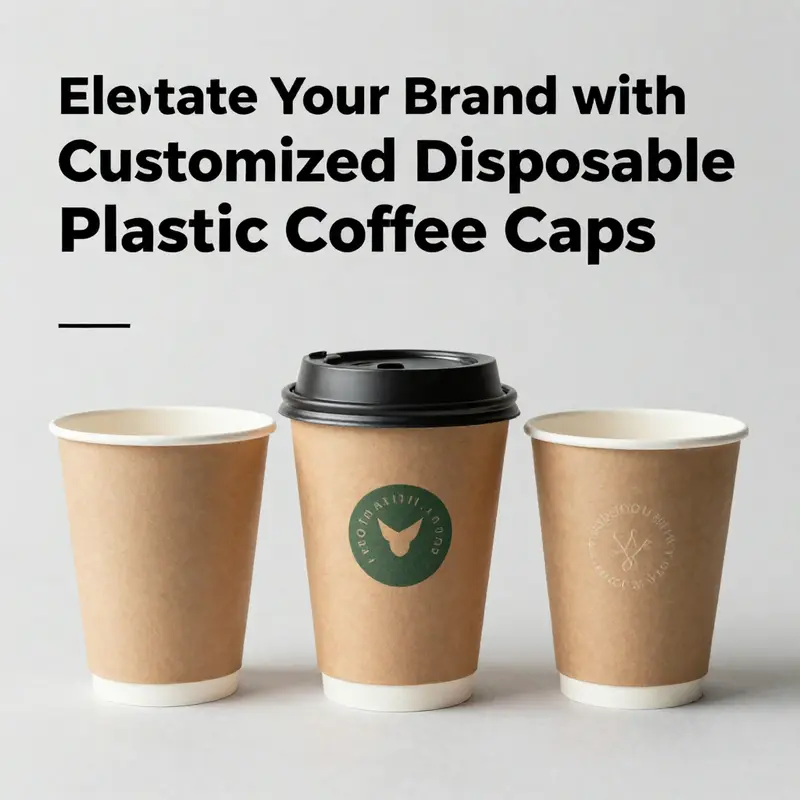
A cup is more than a vessel; it is a portable billboard that travels from barista to commuter, carrying color, texture, and a brand story in a single hand gesture. Consumers don’t just sip; they absorb cues about quality, sustainability, and personality from the cup itself. The surface becomes a canvas for color psychology, typography, and storytelling that travels with the drink into every moment of the customer journey.
Researchers have shown that these cues matter. A 2026 study in Environmental Psychology found that branded disposable cups with personalized designs raised customer loyalty by as much as 35 percent compared with generic cups, especially when the branding included a narrative about the brand’s values or environmental commitments. This aligns with a conditional logit model that highlights how sustainability information and brand identity significantly shape purchase choices. In practice, this means that a cup can shift a consumer from “just coffee” to a small, portable embodiment of the brand.
The design choices go beyond color. The materials matter. Most cups are built from PP, PS, or PET, chosen for heat resistance and structural integrity. Some manufacturers also offer clear PP or PET or biodegradable PLA to appeal to eco-conscious buyers. Lids that fit snugly, with standard openings around 79/80 mm or 80/89 mm, prevent leaks and reassure customers. Double-wall designs and ripples improve insulation, enhancing the user experience in cold or hot weather while maintaining a slim profile for layers of branding. Embossing and color-blocking can lend tactile and visual differentiation, making a cup feel more premium or playful at a distance.
For brands racing to scale, these features must be coordinated with supply realities. Customization is often priced with a low per-unit cost at high MOQs; suppliers offer minimum orders in the tens or hundreds of thousands. Yet the payoff is consistency across dozens or hundreds of locations, a unified color language that makes the beverage feel familiar wherever a customer encounters it. A simple palette choice, an intentional logo placement, and a consistent typeface can transform a routine hot drink into a branded moment that reinforces recall long after the last sip. The best programs balance branding with practical constraints: stackability for back-of-house efficiency, leak-proof lids, and recyclability of the materials to address rising consumer expectations around sustainability.
Sustainability messaging is a double-edged sword. When brands communicate environmental commitments honestly—through credible claims about recyclable PET content or responsibly sourced materials—customers respond with greater trust. But greenwashing can backfire, eroding credibility and satisfaction. To avoid that, many cups now use BPA-free, food-grade plastics and promote recycling or composting pathways clearly on the cup surface. PLA-based options, while marketed as biodegradable, often require industrial composting conditions; when such facilities are not available, the environmental benefit may be limited. In practice, the most effective cups pair performance with transparency, letting the consumer see both the design and the value proposition on one surface.
Brand experiences hinge on more than looks. The cup is a handhold, a temperature barrier, and a brief story about the brand’s ethos. The interaction between the cup’s color, the placement of a logo, and a short message about sustainability can trigger a feeling of belonging or pride in supporting a preferred brand. The research also points to the importance of event contexts—festivals, conferences, or retail pop-ups—where the cup acts as a live advertisement and an accelerant for social sharing. When brands align color symbolism with their category or tone—warm tones for cozy cafes, bright hues for energetic events—the cup becomes a cue that speeds recognition and recall, stitching the moment of purchase into a longer memory trail.
For readers eager to see concrete examples, one pragmatic path is to explore customizable cups that accept branding treatments without compromising performance. A practical option is a disposable cup that supports custom-logo applications and eco-friendly finishes, showing how a heat-safe surface can carry a brand’s identity while maintaining food-safety standards. The example of a logo-forward approach—where the logo is placed prominently but not overpowering the drink’s natural color—illustrates how a subtle fixed point on the cup can anchor a consumer’s memory across visits. custom-logo eco-friendly disposable cup. This approach preserves legibility, reduces clutter on the cup surface, and keeps the brand legible from a distance as the drink makes its way into the consumer’s daily routine.
From a logistics perspective, the cup family can be designed to travel easily through a cafe’s service chain. Stackable shapes, uniform lid sizes, and compatible sleeves or lids reduce back-of-house friction and speed service during peak times. Color-coded lids and cup bodies can further streamline operations while strengthening memory cues for staff and customers alike. The net effect is a packaging experience that feels seamless and efficient, turning a simple beverage into a reliable touchpoint for brand interaction.
As the market continues to evolve, brands must balance branding ambitions with environmental and economic realities. The most successful campaigns treat the cup as a conversation starter rather than a one-off visual; they invite customers to engage with sustainability stories, share their experiences, and contribute to a larger narrative of responsible consumption. The cup thus becomes a micro-platform for branding, a space where color theory, typography, and material science meet human behavior in a setting as ordinary as a morning ritual. In this sense, the customized disposable plastic coffee cup is not just packaging; it is a portable brand instrument that travels with every sip and speaks in a language people can feel and remember.
For those seeking a broader context, the ongoing dialogue about branding on everyday packaging intersects with what consumers want from a sustainable economy. The evidence is clear that well-crafted branding on cups can lift loyalty and perception when it is anchored in credible environmental messaging and a clear story about the brand’s values. In that sense, beverage branding through customizable cups is less about gimmick and more about aligning visual identity with experiential quality, making the act of choosing one cup over another a decision rooted in memory, emotion, and trust. The cup thus acts not merely as a container but as a small, consistent theater of brand values, inviting customers to participate in a shared narrative with every purchase.
External resource: https://www.flaske.com/blog/branded-coffee-cups-sustainable-marketing
Branded by Compliance: Navigating Safety, Bans, and Transparency for Customized Disposable Coffee Cups
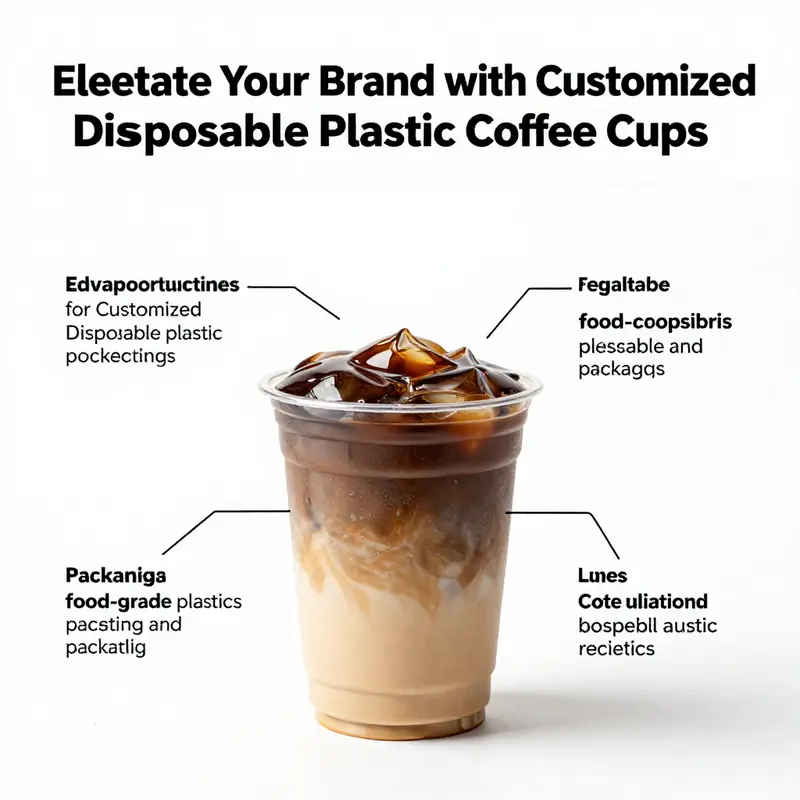
Customized disposable plastic coffee cups sit at the intersection of brand storytelling and regulatory reality. They are not just vessels for hot beverages; they are also statements of responsibility about what they are made from, how they interact with customers, and how their life ends after use. The regulatory landscape surrounding these cups is broad and multi-layered, reflecting the dual aims of protecting public health and reducing environmental impact. For brands that lean on customization to boost recognition, understanding this landscape is not a chore to check off, but a strategic differentiator: it helps prevent compliance gaps, build trust with consumers, and align with evolving market expectations. In practice, the journey from design to distribution requires a careful choreography of material choice, labeling, and certification, all guided by the rules that govern food-contact materials, plastic waste management, and consumer information. The result is not a rigid line of compliance, but a dynamic framework that supports branding while safeguarding safety and sustainability.
Food safety standards form the core of regulatory attention. Cups intended for food and beverages must meet established national or regional requirements that govern materials, additives, and the potential for substances to migrate into hot drinks. In some jurisdictions, this means proving that the chosen resin, colorants, and printing inks do not release harmful substances when in contact with hot beverages. For instance, in one major market, products intended for food contact must comply with a specific GB standard that stipulates safety requirements for materials and products in contact with food. The emphasis is on preventing any migration of contaminants that could endanger public health, even under the high temperatures associated with coffee or tea. In parallel, the European Union relies on assessment frameworks overseen by food-safety authorities and substance restrictions codified under REACH. This means that if brands plan to distribute customized cups across EU markets, they must demonstrate that the materials used, including any recycled content or coatings, conform to strict substance restrictions and performance criteria. The undercurrent of these requirements is consistency: the cup must not only be safe in theory but demonstrably safe in practice, supported by testing that covers contact with hot liquids, repeated use (where applicable), and environmental exposure during typical handling.
Beyond individual safety, the regulatory environment is increasingly focused on the broader behavior of plastic products in the economy. Policymakers around the world are advancing measures that curb unnecessary plastic use, promote recyclability, and encourage more sustainable packaging options. In several regions, authorities have introduced or planned restrictions on single-use plastics, including items like cups and lids, as part of a broader strategy to reduce litter and resource depletion. This momentum is not simply about banning wasteful items; it is about steering product design toward recyclability and safer end-of-life paths. For example, in some jurisdictions, provinces or cities have enacted bans or restrictions on non-biodegradable plastic containers and cups. In the European Union, the single-use plastics directive has extended its reach to certain categories of disposable tableware, and the packaging and labeling expectations are evolving to demand higher standards of durability, recyclability, and traceability. Brands preparing campaigns or rollouts must therefore verify not only whether their cups are compliant today but whether their materials and production processes are compatible with upcoming regulatory shifts. The practical implication is that material selection—PP, PS, or PET—should be evaluated not solely on cost and performance, but also on end-of-life options and regional policy trajectories. A cup that is technically feasible today might face new restrictions tomorrow if its lifecycle characteristics are misaligned with future policy goals.
Labeling and information transparency constitute another critical frontier. In today’s compliance-focused climate, the surface of a customized cup carries more than branding. It must communicate essential facts that help consumers act responsibly and make informed choices. Regulations increasingly require that the printed surface clearly identifies core attributes such as the material type and recyclability, and may even specify microwave suitability or heat resistance warnings where applicable. For brands that pursue bold, colorful prints, there is a delicate balance to strike: vivid designs should not obscure legally required disclosures or mislead customers about the product’s recyclability or compostability. The rules often extend to the content of promotional claims on the cup or its packaging. Any assertion about environmental benefits, recyclability claims, or composting capabilities must be supported by credible certifications. The upshot is a design discipline that integrates branding with compliance, ensuring the cup remains an accurate, trustworthy touchpoint for customers rather than a source of regulatory exposure.
In tandem with safety and labeling, environmental certification and life-cycle management are rising to mainstream prominence. Stakeholders increasingly expect suppliers to provide third-party assurances that a cup’s environmental footprint has been measured and responsibly managed. Certifications such as industrial composting or biobased content attest to a product’s performance in real-world waste streams or its alignment with more sustainable material choices. While the cosmetic appeal of a glossy finish or a bright color is appealing, the market more often rewards demonstrable sustainability, supported by lifecycle assessments that quantify energy use, emissions, and end-of-life outcomes. For brands, this means that partnerships with material suppliers and certification bodies are not add-ons but essential components of procurement and product development. The result is a product that can be presented not only as cost-effective and branded but also as accountable and forward-looking. The emphasis here is on providing data through transparent documentation: conformity declarations, test reports, and third-party certificates that buyers can review before placing an order.
The practical pathway to compliance is not purely about ticking boxes. It is about designing cups that fulfill branding goals while staying within the letter and spirit of the law. A comprehensive strategy begins with a market map that identifies the regulatory boundaries for each intended region. Brands should ask questions about the material’s recyclability in the target waste streams, whether there are local bans on certain additives, and how the cup will be disposed of after its useful life. This means engaging early with suppliers to obtain materials data sheets, migration test results, and packaging declarations. It also means planning for labeling content that aligns with consumer protection laws, so that any printed messaging—whether on the cup itself or on accompanying packaging—accurately reflects material properties and disposal recommendations. The chain from design to distribution becomes a series of checkable milestones rather than an afterthought, turning regulatory compliance into a competitive capability rather than a risk driver.
For brands that want a tangible reference point within the supplier ecosystem, there is value in examining supplier catalogues and listings that reflect current compliance orientation. These resources can provide practical context for how products are tested and certified, and how claims are supported by third-party verification. A representative entry in supplier listings often includes the material class, print capabilities, available certifications, and end-of-life options. When evaluating such listings, the emphasis should be on consistency across regions, the availability of test data, and the presence of clear warnings or disposal guidance. The aim is to reduce the gap between marketing promises and regulatory realities, so that a customized cup helps a brand build trust rather than inviting regulatory scrutiny.
From a brand-management perspective, alignment with regulatory expectations also translates into stronger consumer relationships. Customers increasingly appreciate transparency around where materials come from, how products are manufactured, and how waste is treated. A cup that carries verifiable labels and credible environmental certifications can become a symbol of stewardship, not merely a convenient packaging choice. In markets with rising awareness of plastic pollution, the ability to demonstrate an intentional approach to lifecycle management—pollution prevention, responsible sourcing, and end-of-life stewardship—can be a differentiator that strengthens the brand’s credibility with customers, retailers, and regulators alike. The regulatory journey, then, is not a constraint; it is a framework that helps brands articulate their values through their packaging.
As a practical takeaway, brands should treat regulatory due diligence as an ongoing cadence rather than a one-off exercise. Standards evolve, new restrictions emerge, and consumer expectations shift toward greater transparency. To stay ahead, companies can adopt a forward-looking compliance playbook: routinely review regional policy changes, maintain a current library of material safety data sheets and test reports, and keep labeling content aligned with the latest guidelines. Collaboration with suppliers should be formalized through agreements that specify the provision of up-to-date compliance documentation and the availability of lifecycle data. By fostering a culture of regulatory mindfulness, a brand can keep its customized cups not only visually distinctive but also legally sound and responsibly managed throughout their lifecycle.
In connecting regulation to everyday practice, it helps to anchor the discussion in a concrete example of how a brand might implement these principles without sacrificing design freedom. Consider a coffee concept that uses a polypropylene cup with a bold, branded exterior and a clear, simple callout about recyclability. The design can be tailored to different markets by adjusting printed content to reflect the local labeling requirements and disposal expectations. In regions where municipal recycling streams accept PP containers, the cup can carry a standardized recycling symbol and a concise material designation. In markets moving toward compostable or biobased options, the labeling strategy might incorporate information about industrial compostability or biobased content where applicable, accompanied by credible certifications. The goal is not to overburden the cup with technical jargon but to provide clear, verifiable signals that help consumers dispose of the cup correctly and confidently. A well-executed approach yields a product that respects safety, satisfies regulatory demands, and enhances the consumer experience through responsible branding.
For readers seeking a concrete anchor within the wider ecosystem, a practical reference to supplier information may be helpful. The following internal resource provides a gateway to supplier offerings and details on customization, compatibility, and certifications: senang01 product listing. This link serves as a case in point for understanding how suppliers present compliance data alongside product capability. It illustrates how a seemingly simple plastic cup carries with it a bundle of regulatory expectations, performance characteristics, and sustainability considerations that must be managed coherently by brand owners. While the exact product name in the listing may reflect a particular supplier’s lineup, the underlying message is universal: regulatory diligence touches every facet of the packaging design and procurement process, from material choice to final disposal.
The regulatory frame that shapes customized disposable coffee cups is not static. It is a living system that requires ongoing attention from designers, procurement teams, and marketing professionals alike. By integrating safety testing, clear labeling, and robust environmental certifications into the development cycle, brands can deliver cups that are not only visually compelling but also trustworthy and compliant across the markets in which they operate. In a world where sustainability credentials increasingly accompany consumer choice, a well-regulated cup has the potential to become a durable cornerstone of a brand’s reputation. It is not merely about meeting the minimum requirements; it is about building a credible narrative of care that resonates with customers, retailers, and regulators over time.
External reference for deeper regulatory context: European Commission – Single-use plastics. This official resource provides detailed guidance on restrictions, material requirements, and compliance pathways for plastic products used in single-use contexts, including cups and related packaging. https://ec.europa.eu/environment/chemicals/superseded/superseded.htm
Final thoughts
Customized disposable plastic coffee cups offer an excellent opportunity for beverage businesses to enhance their brand image while providing convenience to customers. Understanding the manufacturing process, market dynamics, sustainability issues, and consumer preferences can empower your business to make informed decisions. By effectively navigating regulatory considerations, you can ensure compliance while maximizing your branding efforts. Embrace the versatility of customized cups and elevate your brand’s visibility in the competitive beverage landscape.