
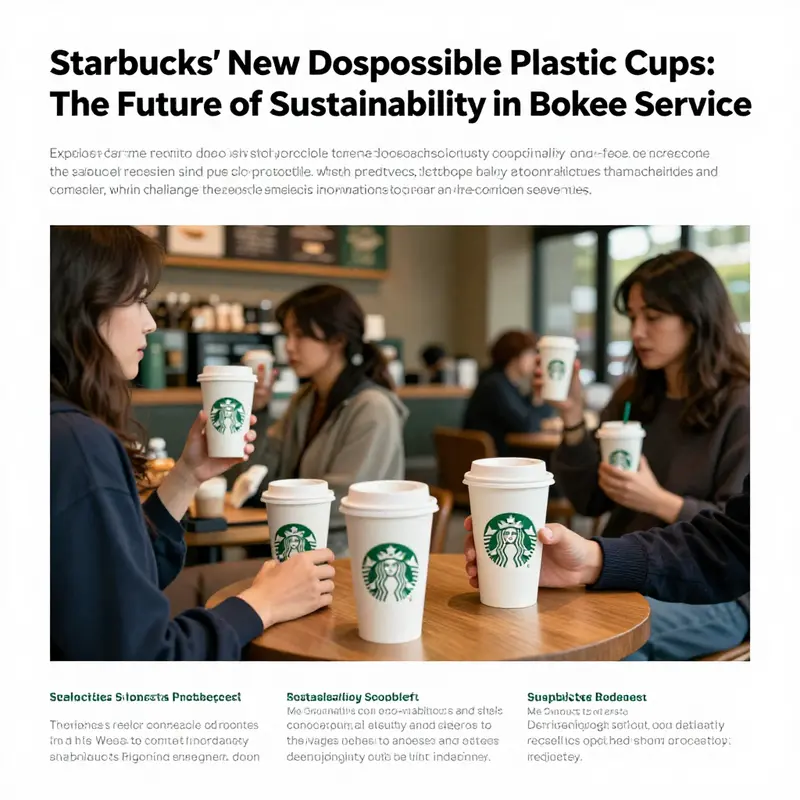
Starbucks is leading the charge in redefining sustainability within the beverage sector by planning to eliminate disposable plastic cups in South Korea by 2025. This strategic decision responds to an increasing demand for environmentally responsible practices across restaurants, food trucks, and beverage chains while simultaneously reflecting the growing concerns around single-use plastics amid public health challenges. As we navigate through this article, each chapter will delve into the challenges of recycling systems, consumer options, innovations in alternatives, the lingering effects of COVID-19 on sustainability efforts, and how these developments impact businesses in the food and beverage industry.
From Single-Use to Sustainable: Reimagining Cups in a Global Coffee Chain
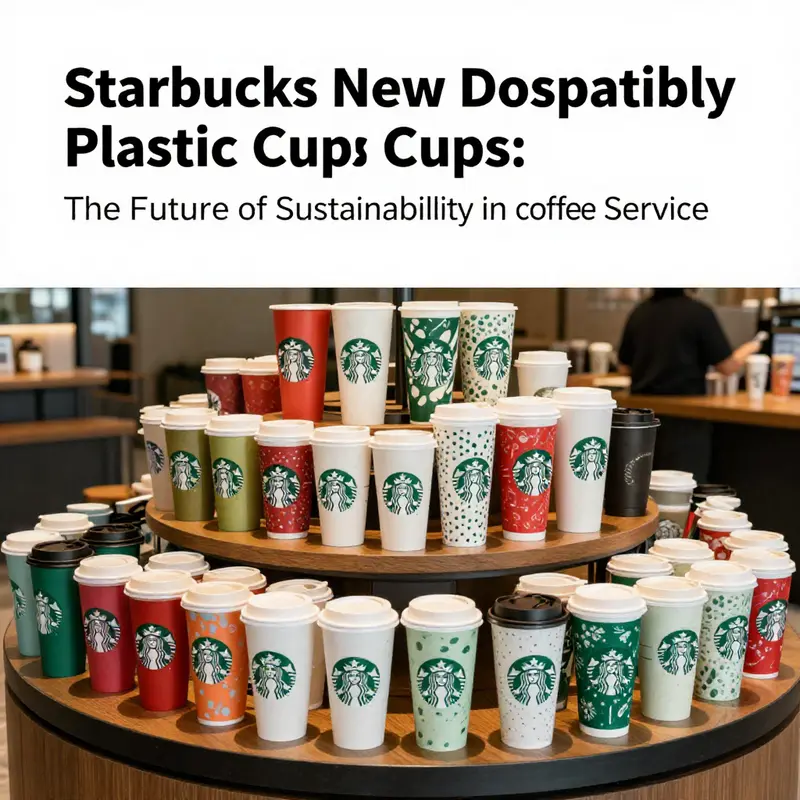
A growing chorus of voices has challenged the long-standing habit of everyday single-use cups, especially in the realm of global coffee culture where convenience often outruns consideration. In this chapter, we follow a particular chain’s bold pivot toward sustainability, a move that signals more than a regional policy shift. It reflects a larger, principled bet: that a brand can redefine customer experience and economic outcomes by investing in durable materials, smarter design, and a reimagined lifecycle for its most ubiquitous item. The plan to end disposable cups in South Korea by 2025 sits at the heart of this bet. It is a test of whether a major retailer can weather short-term friction, consumer habits, and the complexities of recycling infrastructure while steering toward a long-term environmental equilibrium. The decision arrives in a moment when the broader retail sector has faced headwinds—health concerns linked to a global health crisis, shifts in consumer risk perception, and a pause in some sustainability initiatives. Yet the chain’s leadership frames the Korea initiative as a strategic commitment rooted in environmental stewardship, not a temporary adjustment born of external pressure or market volatility. The narrative here is not just about a policy deadline; it is about how a renowned brand conceives its responsibility to customers, communities, and the ecosystems that cradle its product design and waste streams. The emphasis rests on a vision of continuity: a company that remains present in the daily rituals of millions of customers while progressively reducing its environmental footprint. In practical terms, the plan combines policy with product and experience. The corporate mind-set is that phasing out disposable cups should be coupled with investments in more durable, recyclable, or compostable alternatives, alongside innovations in cup design and in the logistics of adoption and redemption. This alignment—policy, product, and people—aims to create a sustainable loop rather than a linear take-make-dispose model. The ambition is to normalize reusable or regeneratively sourced solutions in a way that feels natural to customers, not disruptive to the pleasures of a familiar morning routine. The implications reach beyond a single market or a single brand. If successful, the Korea initiative could illuminate pathways for other regions to experiment with similar models, tailored to local recycling infrastructure, consumer behavior, and regulatory environments. It is a case study in balancing aspirational environmental goals with operational realities. The decision also invites scrutiny of how a global chain can preserve the sensory and social rituals of its in-store experience while transitioning away from one of the most visible symbols of modern consumer life: the disposable cup. The 2025 target acts as a scaffold for a broader conversation about material science, supply chain reconfiguration, and the redefinition of what counts as acceptable waste in one of the world’s most dynamic coffee cultures. The underlying logic is both pragmatic and aspirational: by removing a staple of waste from its footprint, the brand signals a long-term commitment to a more circular economy, while also inviting customers to participate in the evolution through reusable options and a new range of collectable drinkware that foregrounds sustainability without compromising on design or delight. In this sense, the chapter’s core tension is not simply about ending a product category; it is about reframing value. If the brand can demonstrate that sustainability and customer satisfaction can grow in tandem, it creates a durable template for how global retailers think about packaging, product design, and consumer engagement in an era of heightened environmental expectations. The initiative also invites attention to the broader strategy underpinning this shift. Collectible drinkware for 2025 is framed as a complement to the transition away from single-use cups. These items are designed to be fully recyclable or composed of at least 70 percent post-consumer recycled materials. This dual approach—recycling-ready products alongside less reliance on virgin materials—signals a movement toward more responsible, resource-efficient branding. Even the hot beverage mugs themselves carry a notable innovation: a plant-based resin coating replaces the traditional plastic lining, rendering these mugs compostable under industrial conditions. This is not merely about cutting waste; it is about reconfiguring the material story of take-away while ensuring performance and safety for hot beverages. The coating choice has practical resonance. Industrial compostability, unlike home compostability, depends on certified facilities with controlled temperatures and microbial activity that break down the resin into benign byproducts. While this is not a panacea for all waste challenges, it marks a significant leap in how the company approaches end-of-life scenarios for its most common vessel. The emphasis on recyclability and post-consumer content also aligns with growing consumer demand for transparency and accountability. Customers are increasingly curious about where waste goes and what it becomes. They want to see a credible path from cup to re-entry into the product stream, whether through recycling infrastructure or through material regeneration. The strategic ambition is to minimize environmental fallout while preserving the in-store ambiance and the ritualistic elements that customers have come to associate with their daily coffee moment. In practice, this means empowering baristas to guide customers toward reusable options, while providing clear messaging about the availability and benefits of collectable drinkware, and making it easier for customers to participate in the circular economy. Yet, the transition remains intricate. A 2025 report from LAist highlights a stubborn constraint: the recycling ecosystem for polypropylene cups—the material often used for disposable variants—remains fragmented and difficult to close-loop. The finding that only one facility, KW Plastics in Alabama, has demonstrated the capacity to recycle polypropylene cups into new products underscores a stubborn gap in infrastructure. This reality injects realism into the sustainability narrative. It suggests that policy timelines and product innovations must travel in tandem with investments in recycling capabilities, standardization of materials, and scalable consumer participation programs. The challenge is not merely to design a better cup, but to foster a system in which cups can be reused, repurposed, or recycled efficiently near the point of consumption. The chapter thus situates itself at the intersection of design imagination and systems thinking. On the design front, the brand’s 2025 collectible line embodies sustainability through tangible aesthetics. The collection emphasizes materials that are either fully recyclable or contain high percentages of post-consumer content. The visual language—consider bold, minimalist silhouettes in matte finishes, with seasonal color accents—translates environmental intent into an emotionally resonant consumer experience. Such an approach acknowledges that sustainability is not only about the end-of-life story but also about how people feel when they engage with the product. The collectible aspect serves a dual function: it heightens perceived value while encouraging reuse, and it creates a touchpoint for continued dialogue about waste, materials, and responsibility. It is a design strategy that recognizes the social dimension of consumption, inviting conversations about personal identity and the role of brands in shaping cultural norms around waste. In parallel, the packaging narrative remains closely tied to the chain’s core in-store experience. Reusable tumblers and other durable cup formats are positioned as central to the customer journey, not as exceptions to the rule. The aim is not coercive change but an invitation to participate in a broader lifestyle shift. The aesthetics of the new line—softly tinted hues, contemporary silhouettes, and a refined tactile feel—are as much about emotional resonance as about functionality. The hope is that customers see value in keeping a cup, carrying it into future visits, and choosing a system that increasingly rewards loyalty with sustainability credentials rather than added waste. At the same time, the market remains pluralistic. Third-party suppliers continue to offer disposable cup options, catering to businesses and private label needs. This reality foreshadows a transitional period in which consumers may still encounter single-use variants, particularly in settings with high traffic or where waste management infrastructure lags behind ambitions. The internal link to a related resource that examines eco-friendly cup options for take-away settings provides readers with broader context on how brands are presenting alternatives beyond the major enterprise’s own line. On a practical level, the chain’s approach also hinges on partnerships with recyclers, manufacturers, and facility operators who can translate ambitious material specs into real-world throughput. The collaboration with suppliers of recyclable or post-consumer content packaging can help accelerate the adoption of closed-loop concepts, even as regional disparities in recycling capacity persist. The question of scale remains paramount. Will the company’s Korea-specific deadline translate into global acceleration? How will regional differences in consumer behavior, municipal waste streams, and regulatory regimes shape the pace and shape of this transition? The answers will likely unfold over the next few years, as the brand tests incentive structures, piloting programs that reward customers for returning cups, and refining the durability and aesthetics of its new drinkware. The overarching narrative suggests a company choosing long-term resilience over short-term convenience. It is a narrative that blends design ingenuity with operational realism, signaling a shift toward more intentional consumer interactions and more responsible resource management. It asks customers to see a cup not as a disposable afterthought but as a component of a larger system—one that recognizes the embedded costs of waste and the potential rewards of reuse and recycling. The internal link embedded here anchors the reader to a related exploration of eco-friendly cup options, offering a tangible example of how brands in adjacent spaces are thinking about material choices, branding, and the practicalities of mass adoption: senang07-eco-friendly-printed-logo-buy-paper-cup-take-away-coffee-cup-8-oz-12-oz-paper-cup. As readers consider the broader implications, the external resource at the chapter’s end provides a complementary view of the official sustainability narrative beyond the pages of this article. It points to a formal articulation of how a global coffee brand intends to balance design, material science, and system-level change in pursuit of a more circular future: official sustainability announcement.
Between Convenience and Cleanup: Starbucks’ New Disposable Cups and the Frictions of Recycling Systems
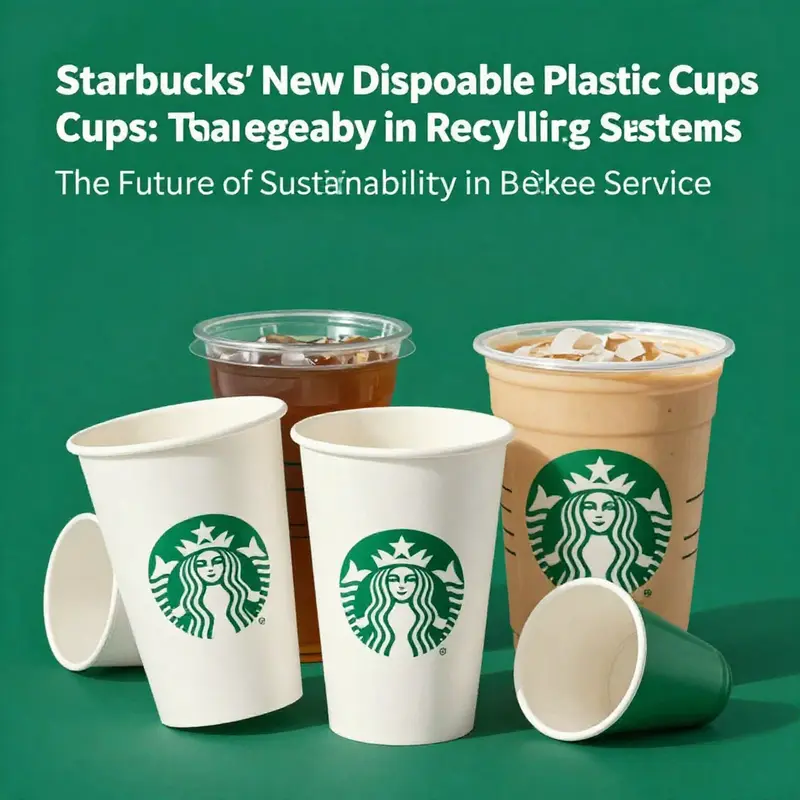
Starbucks’ push to reshape its cup landscape sits at a crossroads where convenience meets containment. The company has signaled a renewed commitment to environmental stewardship by aiming to eliminate disposable plastic cups in key markets like South Korea by 2025. The move arrives in a broader industry moment when some large retailers paused or rolled back certain sustainability initiatives the pandemic had cast under a harsh light. Yet the Starbucks decision also reveals how ambition and real-world recycling logistics often pull in different directions. The company talks about a transition to more sustainable solutions, including reusable cup programs and partnerships that promise to close loops, while at the same time navigating the practical realities of what can be recycled, how it is collected, and who pays for the infrastructure that makes recovery possible. In this moment, the sustainability narrative is not simply about banning a material; it is about building a system capable of supporting both customer experience and planetary health without sacrificing reliability or introducing new forms of waste in the process.
At the center of the current debate is a material puzzle. The disposable cups in question are designed for quick service, travel-friendly handling, and sturdy performance in a high-volume environment. But the way they are built often requires a stack of materials that do not separate easily in the recycling stream. A typical cup may include a core polymer like polypropylene for structural strength, plus a thin polyethylene lining that guards against leaks and maintains food safety. The combination sounds practical, but these layers are not easy to unwind in standard municipal facilities. When the sorting line encounters a multi-material structure, the risk of contamination grows. What looks recyclable on the surface can fail at the point of processing if the facility cannot separate plastics from paper, or if the adhesive layers trap residues that contaminate nearby streams. The upshot is a paradox: a product labeled recyclable by design instructions can end up in a landfill because the system lacks the capability to reclaim all its components.
The material composition challenge is not a mere technical footnote. It reshapes how a company measures the true impact of its packaging choices. If a significant fraction of cups cannot be recovered and reprocessed, the environmental benefit of moving away from a single component—such as a conventional plastic cup—depends on a more nuanced metric: system-wide circularity. In practice, this often means that even consumers who make a genuine effort to recycle are confronted with rejected loads at the sorting facility. The result is not only wasted material but a growing mistrust in recycling messages themselves. When a consumer sees that a product is labeled recyclable and then learns that local programs cannot accept it, the confidence gap widens. The gap also underscores a deeper truth about sustainability in practice: consumer intent is only as powerful as the infrastructure that supports it.
Infrastructure limitations extend beyond the cup’s own composition. In many municipalities, recycling facilities were designed around traditional streams of paper, glass, metals, and certain single-plastic items. They were not built to handle the complexities of multi-layer plastics or the kinds of polypropylene-containing cups that can be difficult to process when separated from their liners. Even labels that declare recyclability can mislead if the local programs lack the necessary equipment, trained personnel, or consistent collection practices to keep streams clean. The disconnect between what consumers want to do and what the system can accommodate creates a cycle of confusion and inefficiency. It is not just a problem of technology; it is a governance and investment issue that requires coordinated action from cities, manufacturers, waste processors, and policymakers to align labeling, collection, and processing capabilities. Without that alignment, the most aggressive packaging redesigns risk becoming symbolic rather than transformative.
Still, there are glimmers of progress that keep a path forward visible. One piece of the puzzle is the emergence of targeted partnerships aimed at unlockable recycling opportunities. For instance, there are facilities that specialize in separating certain advanced plastics and recovering feedstocks that standard municipal programs cannot handle. These facilities demonstrate that there can be a viable path to recovery when the supply chain is designed to support it. The catch is scale and geography. The handful of capable facilities are often spread unevenly across regions, leaving large areas without the needed infrastructure. In some cases, the challenge is that recovery requires more than a partner plant; it requires a closed-loop relationship in which collected cups are remanufactured into new consumables or other value-added products. The reality is that closed-loop loops are not yet the norm for multi-layer plastics in everyday packaging; they exist in pockets of regional experimentation rather than as a seamless nationwide solution.
However, the effort to build better systems is ongoing. Starbucks has emphasized exploratory work around reusable cup programs, along with collaborations that aim to design packaging that is more genuinely recyclable or compostable. The company frames these efforts as part of a longer journey toward a circular economy, underscoring that a successful transition will require cooperation that extends beyond its own walls. That cooperation spans suppliers, retailers, governments, and the public. It also demands new business models—ranging from deposit-based return systems to on-site refilling stations—that can sustain the economics of reuse at scale while preserving the customer’s experience of speed and convenience. The challenge lies not merely in replacing one material with another, but in rethinking the entire lifecycle of the packaging—from raw material choices and manufacturing to end-of-life post-consumer pathways and the ultimate fate of discarded cups. In other words, results hinge on more than clever cup design; they hinge on a coordinated ecosystem that rewards reuse and enables recycling with real, measurable outcomes.
To that end, the marketplace continues to reflect both the pull of sustainability and the push of practical limitations. Consumers seeking disposable options that are allegedly more sustainable can still find paper cup options in various marketplaces. While these offerings do not belong to a single brand or product family, they illustrate a broader reality: single-use formats persist but are increasingly framed within a sustainable narrative that promises recyclability or compostability. It is important to recognize that the availability of these alternatives does not automatically translate into a functioning circular system. A reader scanning a catalog may see a product described as recyclable or compostable, but the broader question remains: can the local waste system actually capture and regenerate that material into something useful again? The paradox invites scrutiny of claims versus capabilities and invites a more honest conversation about the boundaries of current technology and infrastructure.
In the midst of these dynamics, the role of design becomes critical, not just in the aesthetics of a cup but in the practicality of its end-of-life. Starbucks has hinted at consumer-friendly innovations, including minimalist matte black looks and seasonal hues meant to keep the brand experience lively without compromising sustainability ambitions. The design challenge is to deliver cups that are not only attractive and functional but also aligned with what the recycling system can realistically handle. This alignment often means rethinking coatings, adhesives, and barrier layers to reduce separation complexity. It means exploring alternatives to multi-layer structures that can be easily disassembled at end-of-life or replaced with materials that can be more readily integrated back into the recycling stream. It also means considering the entire supply chain—from procurement to processing—so that each decision reduces waste and adds clarity for consumers about what happens after disposal.
If the goal is a credible circular economy, then public communication must reflect the real constraints and progress. The public, policymakers, and industry players benefit from transparency about where systems work and where they do not. Consumers who want to participate cannot do so effectively if the information they receive is incomplete or ambiguous about recyclability in their municipality. The best-case scenario involves clearer labeling, standardized recycling protocols, and investment in facilities that can handle a wider array of materials. The worst-case scenario—what many fear—would be a proliferation of well-meaning campaigns that promise circularity but do not deliver practical outcomes, thereby eroding trust in sustainability messaging and dampening future participation.
This is not an easy problem to solve, and it will not be solved by a single corporate policy alone. It requires a shared commitment that transcends brands and borders. Starbucks’ approach—experiment with alternatives, advocate for policy improvements, partner with specialized recyclers, and pilot reuse programs—illustrates a broader industry strategy: move toward demonstrable, scalable improvements while acknowledging existing gaps. The path forward hinges on three complementary actions. First, a rigorous focus on material science that reduces or eliminates multi-layer complexity without compromising performance. Second, a robust investment in municipal and private recycling infrastructure that can process the specific plastics used in contemporary cups. Third, a consumer-facing narrative that is honest about what is recyclable, what is compostable, and what remains a challenge, paired with practical guidance on how to participate effectively.
The South Korea initiative serves as a live case study for these ideas. If a large-scale transition away from disposable plastic cups is to succeed there, it will require not just a brand’s commitment but a national-level alignment of collection, sorting, and processing capabilities. Local partnerships will matter, along with a transparent assessment of the carbon and waste implications of any substitution strategy. In this sense, the cups are less about single-use convenience and more about a larger system reconfiguration. The first step is to recognize the limits of current recycling streams and to design packaging that either fits within those streams or expands them in a responsible way. The second step is to cultivate a consumer culture that values reuse without compromising the speed and reliability customers expect in their daily routines. The third step is to measure progress with clear, public metrics that reveal not just how many cups are sold, but how many are recovered, remanufactured, or re-entered as useful inputs for new products.
As this narrative unfolds, it remains essential to ground discussion in accessible, on-the-ground realities while imagining ambitious but plausible futures. The tension between immediate convenience and long-term stewardship will continue to shape how brands design, market, and manage packaging. It is a tension that requires patience, because meaningful change rarely happens in a single season. Yet it also rewards persistence: when an industry coalition works to armonize labeling, improve recycling capacity, and redesign packaging for end-of-life recoverability, the speed of progress does not have to lag behind public expectations. In this light, Starbucks’ ongoing exploration of reusable cup programs and partnerships can be seen as more than a marketing pivot. It is a recognition that lasting impact is built on a foundation of credible systems, tested capabilities, and a shared sense of responsibility between producers, retailers, and communities.
For readers who want to explore related packaging options and contexts beyond the Starbucks case, one example of the broader market is the range of disposable paper cup solutions offered by specialized suppliers. These products illustrate how paper-based formats can be designed with end-of-life considerations in mind, even when their primary advantage is convenience. The broader takeaway is that the move toward sustainability requires a careful balance of performance, cost, and the real capacity of waste streams to recover and reuse materials. When all pieces cooperate, the transition from single-use to reusables does not require a choice between customer experience and environmental outcomes; it becomes a pathway in which both can thrive together.
Internal resource note: for those curious about the practicalities of paper-cup design and how different configurations influence recyclability, a related example from a supplier catalog highlights single-wall paper cups with lids that aim to simplify aging and disposal concerns. Disposable single-wall paper cups for wine and soup.
External resource: for a broader, official framing of Starbucks’ sustainability ambitions and ongoing packaging work, see the company’s Global Sustainability Report and related materials. https://www.starbucks.com/responsibility/sustainability
From Single-Use to Reusable: Starbucks’s Path Through a Market Reassessing Disposable Cups
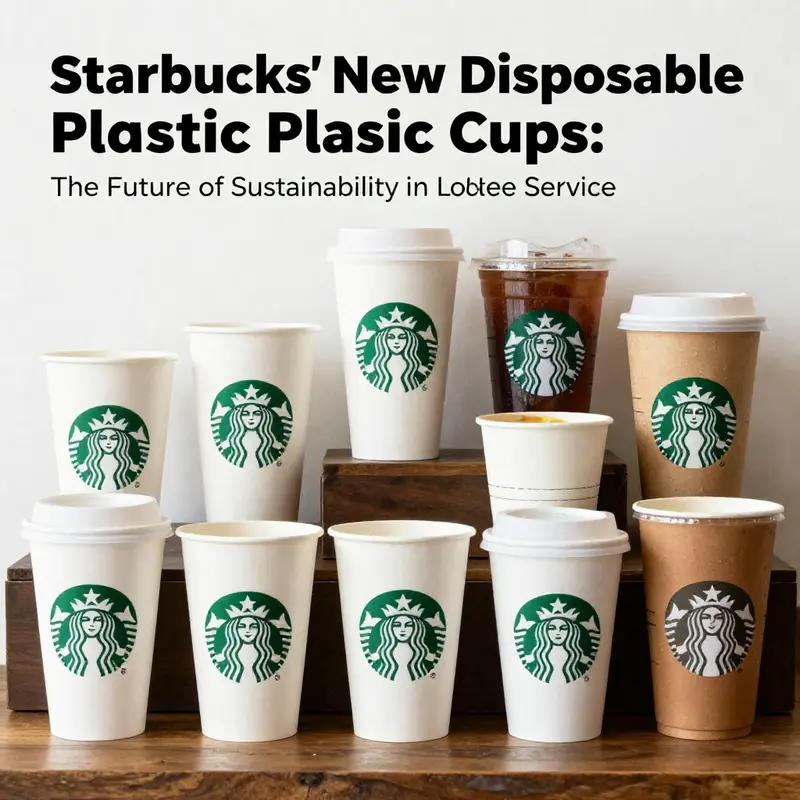
Starbucks’s approach to cups sits at a crossroads where policy signals, consumer expectations, and market realities intersect. The routine act of grabbing a cold drink in a familiar cup has become a flashpoint for debates about waste, materials, and how a global chain translates sustainability from a banner into everyday practice. In several markets, the company has moved to curb single-use plastics and to reimagine what the cup represents in a world where waste, recycling infrastructure, and consumer perception are in flux. This tension is most visible in South Korea, where Starbucks has announced a plan to phase out disposable paper cups by 2025 as part of a broader sustainability strategy. The decision stands in contrast to the more cautious, or in some cases retreating, posture adopted by many global retailers during the height of the pandemic, when concerns about public health redirected attention away from long-term environmental commitments. What marks Starbucks’s stance is not simply a pledge to reduce waste, but a broader redirection toward reuse and smarter packaging. The shift signals a longer-term bet on a packaging ecosystem in which single-use items give way to durable, recyclable, or compostable solutions that can be folded into a circular economy rather than a linear accumulation of trash.
Yet the terrain is not a binary choice between disposables and reusables. It is a landscape of experimentation, where the company tests materials, designs, and distribution strategies while trying to keep the customer experience seamless. Even as Starbucks reduces its reliance on disposable plastic and paper cups, it recognizes the need to meet market demand and to provide tangible alternatives during the transition. The consumer-facing narrative emphasizes both environmental accountability and personal expression. The 2025 product updates—documented in the company’s own communications—showcase a concerted effort to blend sustainability with aesthetic appeal. In North America, the arrival of the Urban Bloom series for cold beverages introduces a translucent material that reveals hidden floral patterns when light passes through. In Europe, the Heritage Line travel mugs draw on vintage logos from the 1980s and 1990s and are crafted from recycled stainless steel. These designs are not merely decorative; they embody a broader strategy to elevate reusable cups as desirable collectibles, encouraging customers to opt for reusables over throwaway alternatives.
The standout environmental claim accompanying these designs is that all new cup lines in 2025 will contain at least 70 percent recycled materials. The coating of hot-drink cups with plant-based resin is positioned as a step toward industrial compostability, a condition that, while not universal, suggests a potential pathway for end-of-life processing that transcends traditional recycling alone. This combination—high recycled content, appealing aesthetics, and a compostable coating for certain applications—represents a meaningful pivot in how Starbucks envisions the lifecycle of its cups. It is a response to the reality that single-use plastics and papers often bypass ideal recovery streams, and it acknowledges that consumers increasingly weigh not only the function of a cup but the story it tells about their values and the brands they choose. The shift also aligns with regulatory trends and municipal recycling ambitions in various regions, which favor materials that can be redirected from landfills and channeled back into productive use.
What makes this transformation particularly distinctive is the way Starbucks frames the conversation around consumer choice. The company is not simply removing disposables; it is substituting them with a spectrum of reusable options that are designed to be collectible, personalized, and seasonally refreshed. The Urban Bloom lineup in North America emphasizes translucence and hidden patterns that emerge when light passes through the cup, inviting collectors to curate a small library of mug-like vessels designed for continued use rather than disposal. In Europe, the Heritage Line taps into nostalgia and the enduring appeal of vintage branding, while leveraging recycled stainless steel to highlight durability and longevity. These movements underscore a broader philosophy: sustainability can be a driver of design, not a constraint on style. By foregrounding aesthetics, the company seeks to normalize reusables as the default choice, thereby reducing the environmental footprint associated with daily coffee rituals without asking customers to sacrifice personality or convenience.
This evolving strategy does not erase the market realities that accompany the transition. The most conspicuous challenge lies in the market’s dependence on disposable options supplied by third parties. Across global e-commerce platforms, one can still locate a range of disposable cups that mimic Starbucks’ style and function—often pitched as sturdy, food-safe, and suitable for cold drinks. The existence of these products illustrates a market still grappling with the friction points of a closed-loop recycling system. A 2025 LAist report highlighted how difficult it remains to establish robust recycling streams for polypropylene- or plastic-based cups, with only a handful of facilities confidently reclaiming these materials into new products. This gap between aspiration and infrastructure matters because it shapes how and when the transition to reuse becomes economically viable for both the retailer and the consumer.
In the meantime, consumer options outside Starbucks proper continue to proliferate. Amazon and Alibaba host a variety of disposable cup options that claim compatibility with cold beverages and deliver in bulk for households, offices, or small businesses exploring private-label or branding opportunities. These market options illuminate a practical reality: even as corporate pledges move toward reuse and recycled content, the everyday consumer still encounters a crowded marketplace of single-use choices. The tension between corporate policy and consumer supply is not merely a matter of preference; it is an interplay of convenience, price, perceived safety, and the evolving public conversation about responsibility and impact. For shoppers, the question becomes not only what cup they prefer, but what system they trust to handle end-of-life responsibly. In this context, the design of reusable cups—while appealing as a product category—also depends on enabling infrastructure: convenient return mechanisms, reliable cleaning pathways, and clear signals about compostability or recyclability that align with local facilities.
Against this backdrop, the internal market offers a practical illustration of how sustainability initiatives can coexist with ongoing consumer demand for disposables. A notable example is the availability of plastic-free, single-wall craft-paper cups marketed for wine or mineral water, a product category that embodies a middle path—reducing plastic usage while offering a disposable option for occasions where reusables are impractical. This type of offering demonstrates that the market is responding to a spectrum of needs: some customers want the lowest-friction option for on-the-go consumption, others seek durable, reusable vessels that reflect personal style and environmental values, and still others look for a hybrid model that minimizes plastic while preserving institutional convenience. The challenge for Starbucks, and for similar brands, is to navigate this spectrum without diluting the clarity of their environmental commitments. The 2025 cup collection releases—both the Urban Bloom and Heritage Line—signal a bold bet that reusables can be not only functional but desirable and collectible, reinforcing that sustainable choice can be a form of self-expression.
As the chapter of disposable cups closes in certain markets, it opens another with new possibilities. Starbucks’s public posture—a determined move toward reuse, higher recycled content, and compostable coatings for select cups—are not mere marketing adjustments. They reflect a reconfiguration of supply chains, packaging design, and customer engagement around the core question of what a cup represents in a world of finite resources. The consumer, too, is evolving. Today’s shopper is more likely to value a brand that articulates a coherent story about materials, lifecycle, and post-consumer outcomes while still delivering the convenience, flavor, and social experience that define the coffeehouse ritual. In that sense, the market is not shrinking but transforming. The availability of third-party, plastic-free options ensures that the transition remains tangible for households and small businesses who want to align their beverage rituals with environmental values even as major chains retool their own programs.
To connect these developments with tangible consumer choices, consider a real-world example from the marketplace that illustrates how design, usability, and sustainability can intersect in productive ways. Even as the coffee giant charts a course toward reusables, a disposable cup that touts plastic-free construction demonstrates how the market is attempting to reduce reliance on plastics without sacrificing convenience or safety. This kind of product speaks to a broader trend: consumers want a spectrum of options that honor both environmental commitments and everyday practicality. The decision to move toward reusable vessels is, at heart, a decision to invest in long-term behavior change. Such a shift may entail a learning curve—recalling to bring a cup, or to use a designated return system—but the payoff is a more resilient packaging ecosystem that places reuse at its core rather than treating it as an optional add-on.
In summary, Starbucks’s 2025 cup strategy presents a coherent narrative: phase out disposable cups in key markets, elevate reusable cup lines with designs that evoke collectability, and maintain a path toward end-of-life solutions that include high recycled-content materials and plant-based coatings where feasible. The market continues to offer disposable options from third-party suppliers, reflecting ongoing consumer demand and the practical realities of infrastructure. Yet the company’s public communications emphasize a future where sustainability is embedded in product design, not appended as an afterthought. The consumer experience, therefore, becomes a lens through which the broader shift is understood. A cup is no longer merely a vessel for coffee; it is a signal of values, a touchpoint for community, and a measure of a brand’s willingness to adapt to a world where resources matter more than convenience alone.
Internal link for further reading (example of plastic-free options on the broader market): senang01-best-price-8oz-double-packaging-plastic-free-single-wall-craft-paper-food-grade-disposable-cup-for-wine-mineral-water.
External resource for broader context on Starbucks’ 2025 cup collection: https://www.starbucks.com/news/2025-cup-collection
“Beyond the Cup”: Innovations and the Move Toward Sustainable Drinkware in a Global Coffeehouse Chain
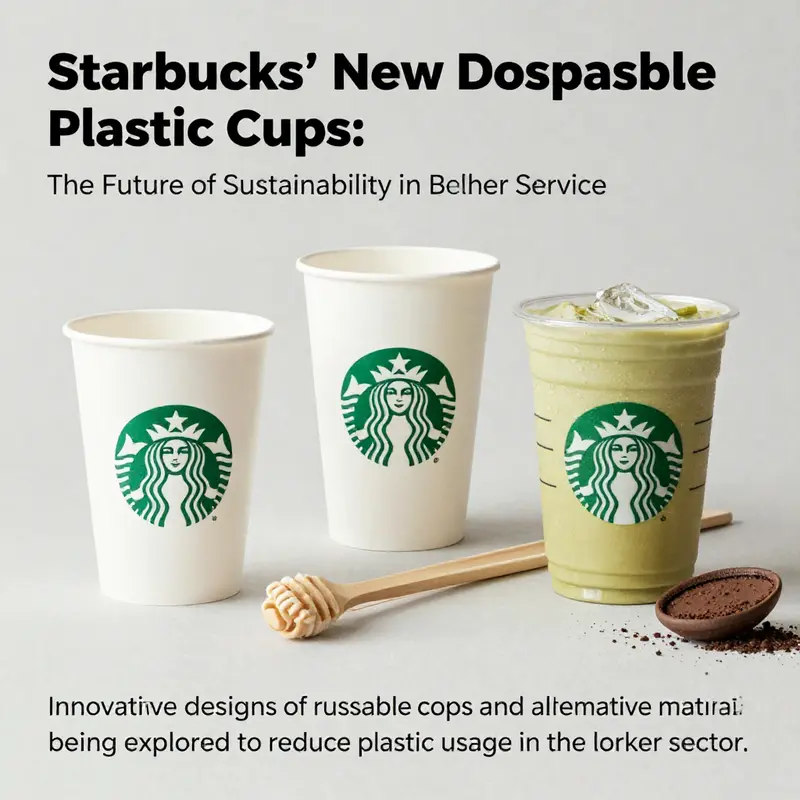
A major shift in how a leading global coffeehouse chain handles its cups unfolds like a quiet voltage surge through a crowded room. The goal is simple in theory but complex in practice: remove the disposable plastic cup from daily service and replace it with solutions that protect the environment while keeping the ritual intact for customers who want a quick, reliable, and stylish way to enjoy a drink on the go. The plan to phase out disposable plastic cups in a key market by 2025 signals more than a local policy. It signals a broader rethinking of how beverage service can harmonize design, convenience, and responsibility. In a time when health concerns shaped by a global pandemic still reverberate, and when other retailers have wavered in sustainability commitments, the brand’s course is telling. It suggests that environmental stewardship can be compatible with a thriving, customer-centered business model, even as the world contends with the temptations of cheaper, easier, throwaway solutions.
Central to this narrative is not a single change but a constellation of innovations that together reshape what a cup can be. The first and most consequential shift is visible in the hot beverage experience. Traditional cups relied on a plastic lining that, while protective for the drink and convenient for manufacturing, created a water-shed of waste streams to manage after use. The new hot beverage mugs abandon that familiar plastic lining for a plant-based resin coating. It is not merely a cosmetic upgrade; it is a functional reengineering. The plant-based resin is designed to be compatible with industrial composting conditions. In practical terms, this means the cup can break down more completely in the right facilities, reducing what ends up in landfills. This change marks the first time the hot cup line has achieved industrial compostability, a milestone that speaks to a broader ambition: to blend form and function with a lower environmental footprint without sacrificing the warmth and reliability customers expect when they lift a hot drink.
The technical nuance matters. A coating that behaves responsibly in composting streams must retain its integrity when in contact with hot liquids, hold up during transport, and still perform as a barrier against leaks and heat transfer. The success of such a coating signals a deeper commitment to reimagining the life cycle of a cup—from the moment it is filled to its final resting place in a recycling or composting system. It also reflects a shift in how designers think about packaging: not just as a skin on a container but as a cradle-to-cradle choice that informs how a product can be deconstructed and reconstituted later. In other words, this is not merely a new look or a new liner; it is a redefinition of what a disposable cup can be and what it can do for a planet-wide supply chain that feeds millions every day.
Alongside this material turn, the brand has unveiled a forward-looking collection for 2025 that reframes the entire supply chain around recyclability and post-consumer recycled content. The new collectible drinkware line specifies that materials used in these pieces should be either fully recyclable or composed of at least 70 percent post-consumer recycled content. The emphasis on post-consumer content is more than a statistic; it is a strategic signal about the loop that customers, recyclers, and manufacturers must navigate together. The appeal is twofold. For customers, it offers a tangible option to participate in a circular economy, with products that feel contemporary and durable enough to justify a long-term use habit. For the supply chain, it creates a clear demand signal for recycled materials and the infrastructure required to process and reintroduce those materials into new products.
If the path forward is about rethinking the materials themselves, it is equally about rethinking the drinkware experience that accompanies them. Reusable options sit at the heart of the strategy. The brand continues to push the idea that single-use should not be the default option, even as it recognizes that many customers still rely on disposable cups in crowded urban environments. Reusable tumblers remain a core part of the program, offered in seasonal colors and limited-edition collaborations as well as minimalist silhouettes. These tumblers are crafted from robust materials such as premium stainless steel and durable polycarbonate, designed for long-term use and easy cleaning. The appeal is not only environmental; it is aesthetic and experiential. A well-crafted tumbler becomes not just a vessel for a drink but a personal statement—a portable accessory that makes the act of carrying a beverage a little more intentional and a little more stylish. The seasonal hues, the matte finishes, and the carefully calibrated weight all contribute to a sense of everyday luxury that customers want to incorporate into their routines. Yet even as the focus tightens on durability and style, the underlying math remains essential: fewer disposables mean less waste, and reusable drinkware, when used consistently, reduces the resources required to support a city-wide or region-wide service model.
The South Korean market provides a concrete example of how the strategy translates into policy and practice. The plan to phase out disposable cups there by 2025 is not a singular anomaly but part of a broader movement toward sustainable retail practices. It emerges in a landscape where the global trend among large retailers shows a cautious, sometimes retreating stance on sustainability in the wake of health concerns that arose during the pandemic. Yet the decision in this market demonstrates a deliberate alignment between environmental goals and the everyday rhythm of the business. The shift invites customers to experiment with alternatives—from reusable tumblers to the broader array of compostable and recyclable options—while acknowledging that implementing such a transition at scale involves careful coordination across supply chains, manufacturing partners, logistics networks, and recycling infrastructure.
The recycling challenge, however, remains one of the most stubborn obstacles. A robust closed-loop system for polypropylene cups, a common class of single-use cup material, has proven difficult to establish. A 2025 report highlighted the scarcity of facilities capable of turning polypropylene cups back into new products. The reality is stark: even when designs optimize for recyclability, the practical path to closing the loop requires a network of specialized recyclers, efficient sorting streams, and consumer participation that delivers correctly segregated waste at scale. The reality on the ground is sobering. In the United States and elsewhere, the supply chain for polypropylene recycling remains fragmented, making true circularity a long-term project rather than a quick fix. This is not a critique of ambition but a testament to the complexity of turning a commonly used plastic into a resource again and again. The message is clear: innovation must travel hand in hand with infrastructure if sustainability is to mature from a designed intent into a daily habit.
While the effort to reimagine disposables continues, the market for stand-alone, disposable options persists, driven by consumer demand and the realities of fast-paced urban life. Third-party suppliers continue to offer a spectrum of disposable cups, lids, and straws that mimic familiar forms and functions. These products, widely available on consumer and wholesale platforms, reflect a paradox: they satisfy the desire for convenience while simultaneously underscoring the need for better systems to manage waste. The existence of such products does not negate the push toward sustainability; rather, it illuminates the gap between intention and execution. It also highlights how brands can balance responsibility with market realities, offering alternatives that may be more compatible with current waste management practices while the broader transition unfolds.
The broader conversation around this transition encompasses more than the materials and the policies. It touches design, culture, and the everyday rituals that shape how people drink coffee. A cup is not only a container; it is a stage for human behavior—the way hands wrap around a warm vessel, the way a lid clicks shut, the way a sleeve protects fingers from heat. Changing the cup thus changes more than waste streams. It can influence where and how customers choose to enjoy a drink, how they transport it, and how they perceive the act of consumption. The new hot cup’s plant-based coating, the collectible drinkware’s recyclable composition, and the enduring appeal of reusable tumblers all contribute to a broader cultural shift toward mindful consumption. The brand’s ongoing investments in materials science, product design, and consumer education are not isolated experiments; they are part of a long-term strategy to align taste, style, and responsibility in a market that increasingly expects both delight and accountability from the brands it cherishes.
The practical pathway forward will involve continued collaboration among designers, manufacturers, recyclers, and policymakers. It will require transparent reporting on progress and setbacks, and it will demand ongoing experimentation with new materials and processes. The narrative is not a straight line from innovation to implementation; it is a continuous loop of testing, learning, and adapting. In that sense, the brand’s approach mirrors a larger movement within the consumer goods sector: a willingness to replace established norms with better ones, even when the path is not without friction. The chapter of this story that unfolds in the coming years will likely emphasize not just what the cup is made of, but how it is used, recycled, and reimagined in a world that seeks to decouple convenience from waste.
For readers who want to explore more detailed descriptions of these innovations, the official company newsroom offers a closely observed account of the changes in materials, design, and strategic direction. And for those who want to glimpse concrete material options in a supplier context, a representative example of eco-friendly, disposable, single-wall paper cups with lids illustrates how markets are responding to demand for responsible take-away solutions. The evolving narrative is not about abandoning the ritual of coffee on the go; it is about reconstituting that ritual in a way that respects the real costs of disposal and the real possibilities of recovery. The story is still unfolding, and its outcome will depend on how well every element—from coating chemistry to consumer behavior, from recycling facilities to regulatory incentives—aligns to reduce waste without sacrificing the everyday pleasure that a good cup of coffee brings.
To learn more about specific implementation details, readers can examine a selection of related resources that profile materials and design choices in contemporary drinkware, such as eco-friendly disposable single-wall paper cups with lid. This kind of resource demonstrates how suppliers are articulating sustainability features in practical terms, from the cleanliness and safety standards to the end-of-life stories of the products. While these pages do not capture the entire governance of a multinational program, they offer a tangible glimpse into the ecosystem that supports sustainable cup design and distribution. The broader journey remains anchored in the brand’s ambition to redesign its cup portfolio in a way that folds environmental stewardship into the cadence of everyday life.
External resources provide another layer of context for the ongoing conversation about cup sustainability and corporate responsibility. For a broader view of corporate sustainability commitments and developments in the industry, see the official newsroom and its updates on environmental initiatives and product reforms: https://news.starbucks.com
Reclaiming the Cup: A Global Coffeehouse’s Post-Pandemic Push to Rethink Disposable Plastics
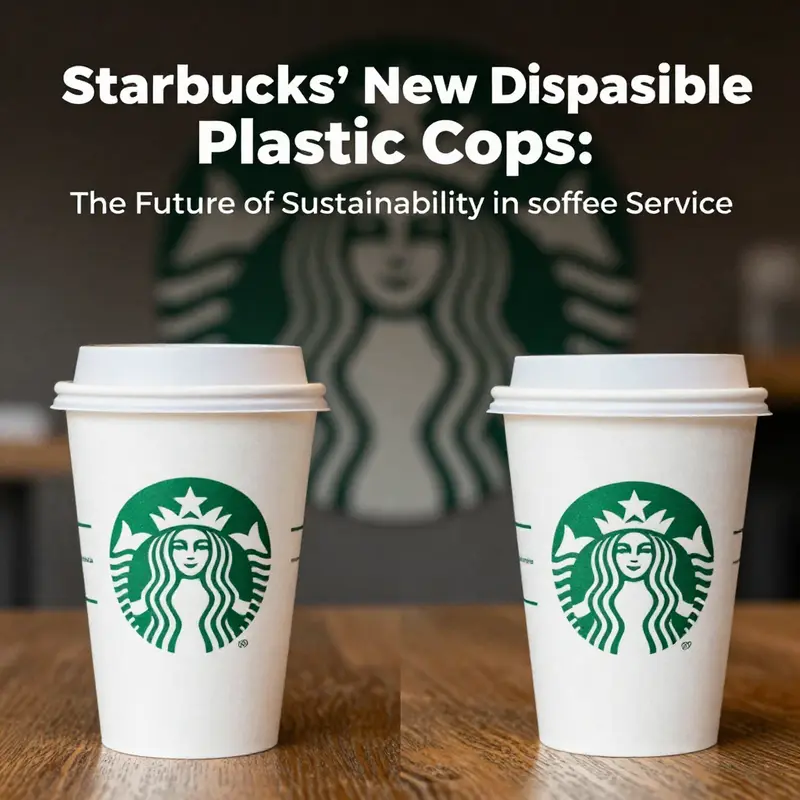
The story of disposable cups in a world still reeling from a health crisis is not simply a tale of policy deadlines and press releases. It is a narrative about how a global coffeehouse brand has chosen to reframe everyday rituals in a way that acknowledges the lessons of disruption while embracing a long-term commitment to waste reduction. After a period when health concerns briefly throttled sustainability initiatives, the momentum has returned. In a move that signals more than a regional adjustment, the company announced an ambitious plan to end the use of disposable cups in South Korea by 2025. The decision is presented as a strategic pivot—a recognition that the path to meaningful environmental impact requires not only ambition but also the alignment of design, supply chain, and consumer behavior. It marks a return to a broader agenda that many retailers once embraced but paused as risk perceptions spiked. The result is a chapter in which the practicalities of life on the ground—the way cups are used, recycled, or discarded—are treated as integral to a larger mission rather than as a peripheral concern.
This renewed commitment sits alongside a carefully curated line of 2025 drinkware that is described as collectible and mission-driven. The collection is positioned not merely as an aesthetic upgrade but as a statement about material choices and end-of-life processing. Each item is either fully recyclable or contains at least 70% post-consumer recycled content. In parallel, the hot beverage mugs have received a plant-based resin coating to replace the traditional plastic lining. That coating is designed to be compostable under industrial conditions, a technical pivot aimed at reducing plastic leakage in the lifecycle of a cup—from production to disposal. The promise is consequential: it reframes a familiar vessel as a product with a defined, accountable lifecycle and a route to circularity that goes beyond single-use convenience. The broader implication is a shift in how companies think about packaging, not as a single transaction at the point of sale but as a system-wide commitment to materials science, waste management, and consumer education.
Yet the path forward is not straightforward. While the shift toward plant-based coatings and recycled-content drinkware is aspirational, the real-world logistics of waste management remain a central constraint. Polypropylene, a common material for disposable cups, is technically recyclable in many contexts, but the infrastructure to support closed-loop systems remains uneven. A 2025 regional assessment cited at least one facility—KW Plastics in Alabama—as capable of turning polypropylene cups into new products. That finding highlights a fundamental bottleneck: even with redesigned cups and ambitious recycling targets, the end-of-life outcome depends on a dispersed network of processors, curbside programs, and industrial partners. Without a robust and scalable recycling stream, the envisioned circularity risks becoming a best-case scenario rather than a universal standard. The consequence is a sobering reminder that policy goals must be matched with investment in collection, sorting, and processing if progress is to translate into measurable environmental gains.
From a consumer perspective, the equation involves more than the brand’s commitments. It requires alignment between what people are willing to use, how easily they can access alternatives, and what happens to materials after the last sip. The public narrative around sustainability often emphasizes reduction and recycling in a vacuum, but the effectiveness of those messages depends on the functioning of waste systems and the incentives that steer choices. The company has acknowledged that its 2025 ambitions are ambitious in scale, yet they are not framed as a solitary fix. Instead, they form part of a broader strategy that includes partnerships with recyclers, consumer education about end-of-life options, and investments in reusable-takeaway programs. The principle remains clear: progress is incremental when isolated from the broader ecosystem in which waste is managed, and that ecosystem is maturing only as stakeholders share data, establish standards, and coordinate efforts across geographies.
The consumer landscape around disposable cups also reveals a tension between aspiration and practice. While the brand pushes toward reducing disposables, a sizable segment of the market continues to rely on single-use options offered by third-party suppliers. The availability of disposable cups, lids, and straws through various channels demonstrates that convenience and price still drive behavior in many contexts. These dynamics do not undermine the company’s long-term goals; they illuminate the complexity of translating policy into everyday actions. The gap between intent and adoption becomes a focal point for retailers, local governments, and consumer advocates who seek to normalize reuse, encourage return schemes, and create incentives for customers to bring their own containers or participate in take-back programs. In short, sustainability is not solely a product attribute; it is a system attribute that requires alignment across design, distribution, and consumer culture.
Design plays a more influential role than is sometimes acknowledged. The 2025 drinkware line is positioned as stylish, collectible, and functional—an effort to decouple ecological value from the perception of austerity. Matte finishes in black provide a modern, minimalist vibe, while seasonal hues offer a sense of exclusivity that invites steady use rather than quick disposal. The idea is to turn sustainability into a daily ritual rather than a rare virtue. When customers encounter a cup that looks intentional, the hope is that they will perceive the materials and the process behind it as worthy of care. The intention is to create an emotional link to responsible consumption, so the decision to reuse or recycle becomes part of the identity of the drinker, not a compromise of taste or style. This design language is more than decoration; it is a behavioral nudge toward a culture that treats packaging as an asset rather than as waste.
The practicalities of implementing this vision extend into the supply chain and manufacturing. The plant-based resin coating on hot beverage mugs represents a deliberate attempt to address one of the most persistent sources of plastic waste in cafes: the liner that often accompanies a hot cup. The coating’s industrial compostability signals a potential path to reducing the long tail of plastic leftovers, but the success of such an approach depends on the breadth of access to industrial composting facilities and the clarity of end-of-life instructions for consumers. The broader test is whether compostable coatings can withstand real-world wear and tear, maintain hygiene standards, and deliver predictable outcomes at scale. If successful, this could alter the expectations carried by future product families, encouraging more brands to pursue material innovations that preserve performance while enabling responsible disposal.
In parallel with material innovations, there is a wider conversation about what the ecosystem needs in order to support a real shift away from disposables. The broader debate touches on policy alignment, investment in recycling infrastructure, and the cultivation of consumer habits that favor reuse over single-use options. The company’s approach suggests a multi-pronged strategy: reduce the most problematic components, replace plastics with materials that are easier to recycle or compost, and build partnerships that improve the viability of end-of-life processing. It is a reminder that even the most advanced packaging concepts require a hospitable external environment to reach true circularity. This is why the discourse around sustainability increasingly centers on collaboration among brands, municipalities, recyclers, and researchers who can translate ambitious designs into practical, scalable outcomes.
For readers who want to glimpse how these shifts take shape in practice, the conversation is not limited to internal product lines. A wider ecosystem of disposables remains in the marketplace, often marketed as durable, food-safe, and suitable for cold drinks. The existence of such products does not invalidate the company’s trajectory; it instead highlights the need for a coordinated transition that expands the set of available, truly sustainable options while reducing the overall volume of disposables in circulation. The challenge lies in creating demand signals that favor reuse and in building the recycling channels that can handle the post-consumer streams produced by high-traffic venues. It is a long arc, but one that increasingly captures the attention of regulators, investors, and communities who are seeking credible progress rather than occasional wins.
In sum, the turning point is clear: a leading global coffeehouse brand is testing how far consumer appetite for sustainability can bend the packaging industry toward a circular model. The regional deadline to end disposables by 2025 is not merely a policy lever; it is a statement about ambition, risk, and the pace of industrial transformation. It invites a broader inquiry into material science, waste management, and consumer culture, while signaling to markets around the world that packaging decisions are inherently strategic, not incidental. If the momentum persists, the coming years may reveal a portfolio of practices—ranging from reusable programs to redesigned cup formats and smarter end-of-life processing—that collectively redefine what it means to enjoy a daily cup of coffee without compromising the planet. The next chapter will explore how city initiatives, retailers, and manufacturers can translate these ambitions into scalable, cross-border practices that normalize recycling and reuse as the default, rather than an exception.
For readers who want to explore more about how these shifts translate into practice, consider the practical pathways now emerging. A distinct family of options centers on reusable drinkware and take-away systems that encourage customers to bring their own containers or borrow a cup that can travel between store locations. This approach does not erase the appeal of convenient, one-and-done packaging, but it reframes the value proposition by emphasizing durability, branding, and communal responsibility. At the same time, collaborations with recyclers and packaging manufacturers help to layer in new capabilities: better separation, cleaner streams, and designs that optimize end-of-life processing. The path forward requires ongoing investment, experimentation, and clear communication with customers about what is feasible and what remains a work in progress. The narrative is not a simple substitution but a re-engineering of the entire lifecycle of a single-use vessel. As the industry tests and learns, the evidence will accumulate about which choices deliver real environmental benefits and which designs merely shift the problem elsewhere.
To delve deeper into how a major color story and material shift can shape consumer behavior and supply-chain decisions, consider exploring this example from the broader ecosystem: eco-friendly printed-logo paper cup. This resource illustrates how suppliers are positioning sustainable cups for uptake in busy retail settings, reinforcing the idea that material choice and branding can work together to promote responsible use. External perspective on the industry-wide movement is also essential. External reference: https://www.starbucks.com/news/2025-cups-collectibles
Final thoughts
In conclusion, Starbucks’ bold move to phase out disposable plastic cups highlights a pivotal shift towards sustainability within the beverage industry. While there are significant challenges in recycling and the market still offers single-use options, the exploration of alternative solutions demonstrates innovation in addressing waste. Furthermore, the impact of COVID-19 brings added complexities, but it also reinforces the need for eco-friendly practices. As the industry adapts, businesses must stay informed and engaged in the shift towards responsible service.