
In today’s vibrant food service landscape, takeout food bags have become a fundamental aspect of how restaurants, cafes, food trucks, and beverage chains engage with customers. Designed for functional convenience, these bags also reflect a commitment to sustainability—a crucial value for modern consumers. As more businesses adapt to the growing demand for eco-conscious solutions, understanding the environmental impact of takeout bags is essential. This article explores the sustainability trends shaping consumer preferences, the diverse materials and design considerations ensuring quality and safety, and the global market dynamics that provide customization opportunities for a variety of food establishments. Together, these insights will empower businesses to make informed decisions in packaging, enhancing customer loyalty and promoting environmental responsibility.
Footprints in Paper and Plastic: Rethinking Takeout Bags Through Sustainability and Consumer Change
Takeout bags sit at a quiet crossroads of convenience, cleanliness, and the environment. They are the everyday vessels that carry meals from kitchens to doorsteps, yet they also represent a point where human systems intersect with natural systems. In many markets, takeaway bags have become ubiquitous because they offer a simple, practical solution to the challenge of transporting hot, messy, or greasy foods while protecting the contents and keeping hands clean. But the same bags contributing to ease also contribute to a growing environmental accounting that touches land, water, and air. This chapter follows that accounting through a lens focused less on just what bags are made from and more on what their life cycle signals about consumption, infrastructure, and collective responsibility. It is not a single verdict but a conversation about how small packaging choices ripple outward—shaping waste streams, signaling values to consumers, and testing the resilience of systems designed to manage materials after their use ends.
The most visible issue in the environmental footprint of takeout bags is their sheer volume and the persistence of what they contain. Single‑use packaging has long been criticized for its short life span and long afterlife. Even when a bag is disposed of properly, its journey may not end with a simple trip to a recycling bin. In practice, many bags end up in landfills or as litter, where they endure for years or decades and can fragment into microfibers and microplastics that migrate into soil and waterways. A 2019 study led by A Gallego-Schmid underscored the broad environmental degradation associated with single‑use takeaway containers. The takeaway here is not a blanket indictment of all packaging but a call to understand how the default choice for convenience translates into cumulative environmental costs.
The environmental math of bags hinges on more than the material identity. It includes how a bag is used, how it is disposed of, and what infrastructure exists to manage that disposal. Paper and kraft‑based options have gained attention precisely because they are perceived as more recyclable or compostable than conventional plastics. Yet the sustainability of these alternatives is not automatic. Compostable bags can reduce waste volume and enable composting, but their effectiveness depends on the availability and accessibility of industrial composting facilities that can maintain the high temperatures and specific conditions required for breakdown. When such facilities are scarce or unevenly distributed, compostable bags may not realize their intended environmental benefits. In the same breath, reusable bags tidy up the image of sustainability, yet their advantage depends on repeated use. Lifecycle assessments remind us that if a reusable bag is used only a handful of times, its cumulative carbon footprint can exceed that of a single‑use alternative due to the energy, water, and materials invested in producing and cleaning it. The Danish Environmental Protection Agency’s 2021 study reflects this nuance: to outperform single‑use plastic bags in terms of carbon emissions, reusable bags must be used many dozens or even hundreds of times. This is not a trivial threshold but a practical one that frames consumer habits and logistics programs.
As consumer demand for responsible packaging grows, the industry is shifting toward a blend of options: compostable bioplastics, recycled paper, and reusable bags each have a role to play depending on the context. The conversation extends beyond materials to the systems that manage them. The COVID‑19 pandemic accelerated the adoption of contactless and efficient packaging, while also heightening awareness of the vulnerabilities in supply chains and in the municipal infrastructure that handles waste. A 2026 report on new circular challenges in takeaway packaging notes that innovations are increasingly moving toward circular economy models. Reusable container systems and returnable packaging schemes are gaining traction, especially in dense urban areas where policy momentum and consumer expectations align. These shifts reflect a broader realization: sustainability is a collective practice that requires alignment across product design, consumer behavior, and the institutions that process end‑of‑life packaging.
What this means for brands and food-service operators is not a single material prescription but a framework for decision making that accounts for context, performance, and impact. The practical choice of bag must marry several aims: it must reliably contain a hot and potentially oily meal, preserve freshness and order during transit, resist leaks or moisture where necessary, and also reflect a commitment to longer‑term environmental goals. Material choices influence these performance attributes. Wax coatings or specific laminations may improve grease resistance or moisture barriers, but they can complicate recycling streams or compostability. Conversely, lightweight papers and biodegradable blends may offer compostability, but only if the local waste system supports industrial composting or specialized facilities. In short, the best option is often the option that fits the local waste landscape as well as the practical realities of a restaurant’s operation and its customers’ expectations.
Consumer behavior is a central piece of this puzzle. People want packaging that is convenient, easy to understand, and aligned with their values. Transparency about what a bag is made of, how it should be disposed of, and what happens after use helps build trust. Brands that communicate clearly about recycling instructions or compostability claims can influence disposal choices and, by extension, the effectiveness of the waste system. Yet transparency alone is not enough. The post‑purchase phase—how customers actually dispose of bags, how well markets separate recyclables, how municipal programs collect and process materials—shapes the environmental outcomes just as much as the before‑purchase design decisions. This is the core of the consumer trend: a rising demand for packaging that is not only functional but legible about its end‑of‑life path and its implications for the broader ecosystem.
The shift toward circularity is not a matter of swapping one material for another in isolation. It requires systems thinking that connects retailers, packaging manufacturers, waste processors, and consumers. It also invites a reimagining of how we define value in packaging. If a bag serves as a marketing touchpoint as well as a transport container, it carries a twofold potential: reducing environmental harm and signaling social responsibility. The opportunity for brands, then, lies less in chasing the latest material fad and more in designing packaging that fits the local waste realities while meeting the needs of customers who demand accountability, clarity, and minimal waste without sacrificing convenience.
Within this landscape, a key consideration is the balance between performance, cost, and environmental benefit. For hot meals or greasy snacks, a bag must provide reliable grease resistance without compromising the integrity of the packaging. For cold beverages or moist foods, moisture protection matters just as much. The material selection thus becomes a negotiation among several performance criteria and lifecycle outcomes. This is precisely where innovation tends to emerge: when designers, food service teams, and waste managers collaborate to tailor packaging to the specifics of a place, a cuisine, and a customer base. In urban cores with robust recycling infrastructure and active litter control, a lightweight recycled paper bag might deliver meaningful benefits with manageable costs. In places where composting is prevalent and industrial facilities are accessible, compostable bags may offer a path to reducing landfill burden. The reality is that there is no universal best choice; there are best choices for specific ecosystems and for the daily rhythms of hospitality operations.
From the standpoint of policy and industry collaboration, the path forward is paved with the recognition that material is not the full story. A strong signal comes from packaging that is designed with end‑of‑life logistics in mind. Labels and certifications can help avoid greenwashing and enable consumers to act with confidence. Industry ecosystems are increasingly coordinating on standardized labeling, on returnable and reusable packaging programs, and on data sharing to track performance across the lifecycle. In practice, this means investment in better sorting technologies, clearer disposal guidance for customers, and partnerships that enable takeback programs for containers that can be returned, cleaned, and reused. When retailers and manufacturers engage in these collaborations, the packaging choices become part of a larger system that gradually shifts away from linear take‑make‑dispose models toward more circular arrangements. The 2026 discourse on circular challenges highlights innovations like reusable container systems and returnable schemes, which are especially viable in cities where policy frameworks and consumer habits converge to support such models.
In this sense, the environmental impact of takeout bags is not only about what ends up in the waste stream, but also about how the stream itself is organized. It calls for an honest appraisal of local waste infrastructure, a candid assessment of customer behavior, and a willingness to experiment with models that reward reuse, proper separation, and responsible disposal. For instance, a restaurant district or campus environment might pilot a program that combines durable, reusable bags for in‑house dining and a takeback system for post‑meal returns, paired with clear signage about how to care for and reuse the bags. For general consumer retail contexts, a mixed approach can be appropriate: using recycled or kraft paper options for general takeaway, while offering clearly labeled compostable or biodegradable alternatives where industrial facilities exist to process them. The key is to align packaging design with the practicalities of the waste management landscape and with consumer expectations about sustainability.
The broader takeaway is that environmental responsibility in takeout packaging is a discipline of context rather than a single universal prescription. It requires acknowledging trade‑offs, clarifying end‑of‑life pathways, and building a culture of reuse and responsible disposal among customers. It also means recognizing that sustainability is not solely the domain of packaging engineers. It is a shared practice that involves kitchen staff who select the right bag type for a given menu item, procurement teams who source materials with known lifecycle impacts, and frontline teams who guide customers in how to dispose of packaging properly. When all these elements converge, packaging becomes a lever not just for protecting food, but for reinforcing a value system that respects waste as a resource and recognizes the role of everyday choices in shaping environmental outcomes.
To illustrate the practical possibilities without losing sight of larger systemic questions, consider the option of packaging that is designed to be reused or returned. In dense urban settings, businesses and municipalities can collaborate to establish convenient return points, cleaning procedures, and logistics that minimize the energy and water costs of reprocessing. Such schemes demonstrate that sustainability can coexist with convenience, provided there is a reliable framework for use, collection, and processing. In markets where infrastructure lags behind ambition, the emphasis shifts toward more robust recycling streams and clearly defined composting pathways, coupled with consumer education about disposal practices. The overarching aim is not to universalize a single solution but to cultivate resilient, adaptive packaging ecosystems that respond to local realities while aligning with shared environmental aspirations.
For organizations seeking practical pathways to communicate sustainability without overpromising, consider packaging that carries a transparent, credible end‑of‑life story. Consumers value clarity about what a material is, what it does, and what happens after use. When brands offer straightforward disposal guidance and support a credible waste infrastructure, the packaging becomes a conduit for trust rather than a potential source of confusion or frustration. The art of balancing performance and responsibility lies in a careful design process that includes waste‑stream realities, customer behavior insights, and pragmatic assessments of lifecycle trade‑offs. In this way, bags can contribute to a story of progress rather than a ledger of costs, turning a mundane object into a tangible example of how everyday choices connect to broader environmental goals.
Within this narrative, the role of technology and data should not be understated. Accurate data on material composition, recycling rates, compostability success, and reuse frequencies can illuminate the real environmental benefits or drawbacks of different packaging options. When such data are shared openly among producers, retailers, municipalities, and researchers, it becomes possible to identify best practices, anticipate unintended consequences, and adjust strategies in a timely manner. This kind of knowledge exchange supports a more dynamic packaging system—one that learns from every pilot program, every disposal miscue, and every instance of successful reuse. The takeaway is a more nuanced, evidence‑based approach to takeout packaging that respects both the practicalities of feeding people and the planet’s ecological limits.
Among the tangible steps operators can take today is adopting a tiered packaging strategy that aligns with the local waste infrastructure and the expected use case. For hot meals, a grease‑resistant paper option may minimize leaks and maintain food integrity, while a separate, clearly labeled compostable line can be offered where industrial facilities are available. For beverages and cold items, moisture‑barrier options that do not complicate recycling streams are essential. The conversations with customers about disposal should be constructive and informative, helping them understand not just what to do with the bag, but why those choices matter. In a world where customers increasingly view packaging as a reflection of a brand’s values, the capacity to educate and engage becomes a meaningful part of the customer experience.
Embedded in these considerations is an implicit invitation to rethink packaging as part of a broader circular economy strategy. Rather than treating bags as disposable afterthoughts, retailers can position them as entry points for dialogue about sustainability, logistics, and shared responsibility. The value proposition shifts from simply delivering food to delivering a signal about environmental stewardship. When executed with care, this signal can reinforce loyalty, differentiate a brand in a crowded marketplace, and contribute to the gradual transformation of waste streams from linear to circular. The literature and industry discourse increasingly recognize this potential, pointing to the need for systemic changes that extend beyond product design to include disposal infrastructure, consumer behavior, and cross‑sector collaboration.
As this chapter comes full circle, it becomes clear that the environmental footprint of takeout bags cannot be fully understood in isolation. It is the sum of material choices, disposal realities, consumer practices, and governance structures that determine whether a bag merely carries a meal or also carries forward a shared commitment to a healthier, less wasteful world. The journey from single‑use convenience toward responsible packaging is not a single leap but a sequence of informed decisions, incremental improvements, and collective action. In this sense, the future of takeout bags lies not in a single innovation but in a constellation of adaptations—materials that balance performance with end‑of‑life practicality, services and infrastructure that support proper disposal, and a consumer culture that values transparency and stewardship as much as speed and cost. Only by embracing that complexity can the industry realize tangible environmental gains while maintaining the essential function that bags provide: safe, hygienic, and reliable transport of meals from kitchens to tables.
Internal link reference for practitioners seeking an example of a packaging option aligned with eco‑friendly goals and customizable branding can be found here: eco-friendly recyclable craft paper shopping bags.
For researchers, policymakers, and practitioners who want to delve deeper into the environmental science behind takeaway packaging, a comprehensive external resource offers an in‑depth lifecycle and policy perspective. The ScienceDirect article on the environmental impacts of takeaway containers provides detailed analyses of material flows, emissions, and potential policy interventions that can inform practical decisions at scale: https://www.sciencedirect.com/science/article/abs/pii/S095605351830417X
Guardians of Freshness: Material Science and Design Ethics in Takeout Bag Packaging
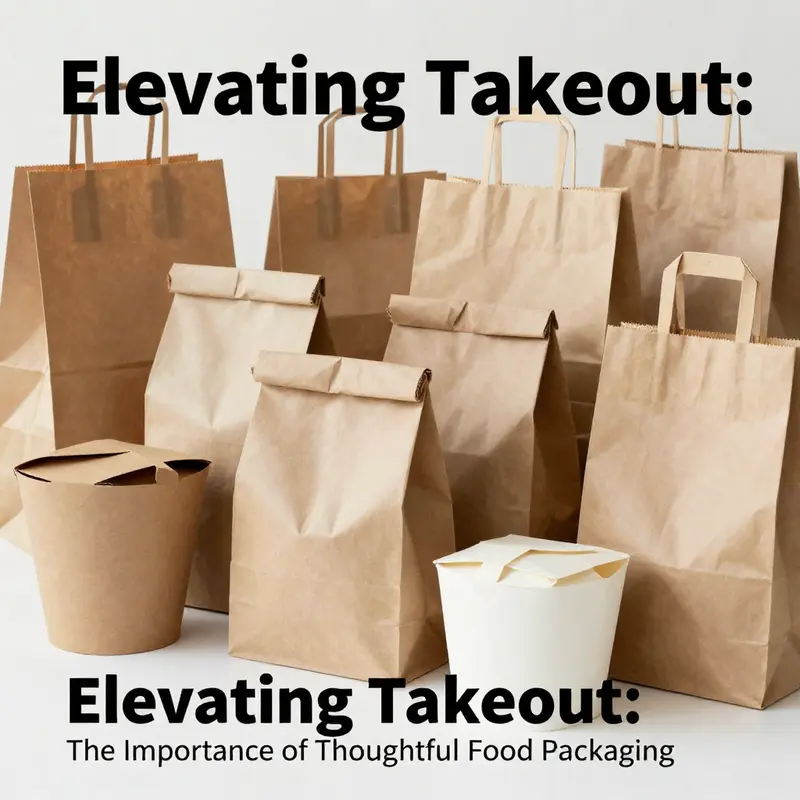
Takeout food bags occupy a critical yet overlooked niche in modern hospitality and food service. They are the visible interface between a kitchen and a customer on the move, the final touch in a chain intended to preserve safety, flavor, and texture. The best bags are not inert shells; they are engineered environments that protect hot, cold, greasy, or delicate foods from the moment they leave the kitchen to the moment they are opened at the table or doorstep. To understand why some bags perform better than others, the throughline is simple: material safety sets the baseline, design decisions extend that safety to practical use, and environmental considerations shape both choices and perception. When material safety and thoughtful design converge, bags help sustain food quality, safeguard consumer health, and reinforce brand trust in a crowded market.
At the material level, safety standards and ingredient limits play a foundational role. Food-grade materials are non negotiable for any packaging that touches meals. In many regions, national safety frameworks specify what substances may migrate from packaging into food, and how those substances are tested under real or simulated contact conditions. A common framework in regulated markets is the insistence on materials that do not release harmful migrants such as heavy metals or residual monomers under typical handling and storage temperatures. For takeout bags, this means selecting polymers and coatings that are well characterized for food safety, with clear specifications about migration limits and odor neutrality. A prime example across industries is the preference for new, virgin resins rather than recycled streams in certain packaging applications. The rationale is straightforward: recycled materials can carry residual contaminants or off-odors from prior use, which may compromise not only taste and aroma but also perceived safety. The emphasis on virgin materials is a precaution rooted in decades of stewardship and regulatory alignment, especially for bags destined to encounter hot foods, fatty sauces, or long transit times. The upshot is that material selection is not merely a matter of cost or performance but a commitment to consumer well-being and brand integrity.
Material safety ripples into every subsequent design decision. Takeout bags are frequently made from paper-based substrates or molded films that combine multiple layers to balance grease resistance, moisture control, and strength. Paper alone offers sturdiness and a pleasant tactile experience, but it can be challenged by oils and moisture unless protected by chosen coatings or laminations. Wax coatings were once common for grease resistance, but modern practice favors barrier films that are food-safe and compatible with compostable or recyclable pathways where possible. In some configurations, a laminated structure or a coated interior is employed to resist moisture migration and preserve the bag’s structural integrity during handling and transport. The choice between a wax-coated paper, a poly-coated sheet, or a fully laminated option hinges on the target food type, the expected temperature range, and the desired end-of-life path. Each option carries trade-offs: wax coatings may limit recyclability, while certain laminates can raise questions about compostability or closed-loop feasibility. The key is to align the material stack with declared safety standards, clear performance expectations, and a realistic life cycle, from kitchen to customer.
Beyond the material itself, the bag’s design must translate safety into everyday usability. A well-designed bag starts with seal integrity, a feature that protects against contamination and extends the shelf life of perishable items. In practical terms, a high-quality takeout bag benefits from a robust, multilayer seal that resists opening under normal handling yet remains user friendly for the consumer. A double-layer sealing approach can provide a reliable barrier to air and moisture, reducing the risk of premature spoilage and dampened flavors during transit. The seal also serves as a deterrent to tampering, offering peace of mind to customers who trust that their meals arrive unspoiled and unmarred. Design considerations should also address visibility. A transparent or translucent element helps customers identify the contents at a glance, reducing handling time and the potential for accidental contamination when bags are opened or passed between hands. Visibility supports trust, enabling customers to verify that the correct order is in hand without exposing the bag’s interior to temperature changes prematurely.
Durability remains central to quality. A bag that tears, punctures, or fails at the hinge of a bag or along the seal can transform a simple delivery into a cascade of problems: leakage, compromised hygiene, and a damaged customer experience. Bags must tolerate a broad temperature spectrum, from freezing cold in a delivery vehicle to heat near a front door or under a hot lamp at a pickup counter. The material thickness, fiber composition, and any protective coatings all contribute to resilience against tearing and deformation. Yet durability is not only about bulk strength. It also involves edge design, handle construction, and even reinforcement in critical areas where weight concentrates. When a bag is loaded with multiple items and sauces, the risk of leaks increases, and the packaging must respond with appropriate grease resistance and internal barriers to contain liquids without compromising exterior integrity. In short, durability translates into fewer disruptions for kitchens and couriers and a more consistent, high-quality delivery experience for customers.
Operational practicality is another essential axis. Packaging must integrate smoothly with a business’s packing workflow. Brands value options that optimize speed and ergonomics in busy hours, without sacrificing safety or waste reduction. For example, small roll formats for film or inner liners can speed up manual packing and reduce fatigue for staff during peak periods. Equally important is the ability to tailor dimensions and thickness to the specific foods being packaged. Narrow films may be optimal for sauce sachets and condiments, while larger, thicker bags may be necessary for family meals or multi-item orders. This level of customization minimizes material waste and ensures that the bag fits the food rather than forcing the food to adapt to an ill-suited packaging form. In practice, a well-engineered system balances the need for speed, accuracy, and waste reduction, while maintaining a protective envelope around the food.
The environmental narrative surrounding takeout bags has become inseparable from material and design choices. In an era of heightened sustainability expectations, bags are increasingly seen through the lens of life-cycle impact. Biodegradable and recyclable options align with a market that demands responsible stewardship, and many manufacturers now offer compostable or recyclable pathways that fit with consumer and business needs. The environmental benefits of switching from conventional single-use plastics to paper-based and plant-based alternatives are nuanced, depending on processing, end-of-life infrastructure, and consumer behavior. For some applications, biodegradable plant-based resins or coatings may offer an attractive end-of-life story, especially when supported by robust certification and clear disposal guidance for customers. Yet the sustainability equation is not just about material choice; it encompasses manufacturing processes, energy use, and post-consumer waste systems. Effective sustainability also means clear labeling that educates customers on how to dispose of the packaging properly, reducing confusion and improving recycling or composting outcomes. In this sense, the best takeout bags harmonize safety, performance, and environmental responsibility, reinforcing a brand’s commitment to the community and to long-term operational resilience.
Brand and consumer perception are inseparable from safety and design. Packaging serves as a quiet ambassador for a business, communicating reliability, cleanliness, and attention to detail. When consumers see a bag that feels sturdy, presents clear labeling, and carries a credible impression of quality, confidence in the entire dining experience grows. Conversely, a bag that looks flimsy, leaks easily, or smells unusual can cast doubt on the food’s safety and on the brand that delivered it. Consequently, design is not a cosmetic afterthought but an opportunity to communicate values. Customization offerings—colors, logos, messages, and even subtle tactile cues—allow a business to turn a bag into a mobile billboard and a sign of consistency. This promotional potential need not undermine safety; when branding is integrated with appropriate materials and barrier properties, it can enhance recognition while maintaining the integrity of the food. The interconnection between form, function, and brand narrative is why procurement teams often favor suppliers who can provide material certifications, process controls, and traceability along with aesthetic customization.
From a supply-chain perspective, quality control and consistency are the invisible gears that keep this system working. Reputable manufacturers emphasize safety compliance, rigorous testing, and traceability across the supply chain. They implement certifications and inspections to verify that every batch meets established performance criteria, including barrier properties, heat resistance, and compatibility with the intended end-of-life pathway. In a market that often commands rapid turnaround times and price competition, the assurance of consistent quality is invaluable. It reduces the risk of recalls, customer complaints, and reputational damage that can accompany packaging failures. In addition, robust after-sales support, including guidance on disposal, defect handling, and customer service responsiveness, helps businesses maintain trust with their customers. When a bag line is designed with reliability at its core, it becomes a durable asset rather than a risk vector, enabling a smoother path from kitchen operation to consumer satisfaction.
The end-of-life dimension deserves particular attention because it closes the loop between production and consumption. The most responsible options emphasize recyclability or compostability in alignment with existing municipal waste streams. Biodegradable solutions anchored in plant-based resins or other renewable feedstocks promise end-of-life options that are compatible with composting programs or industrial recycling where available. However, the viability of these pathways depends on local infrastructure and consumer behavior. Clear labeling about disposal methods and realistic expectations about the bag’s performance in a given program are essential. The objective is not merely to reduce waste in theory but to support practical, convenient disposal for customers while ensuring that the packaging returns to the circular economy rather than contaminating other streams. This holistic view reinforces that material choice, design, and end-of-life planning are not isolated decisions but a coordinated strategy that preserves safety, supports operational efficiency, and upholds social and environmental responsibilities.
In closing, the most effective takeout bags emerge from a careful alignment of material safety, design integrity, and environmental mindfulness. They begin with safe, well-characterized materials that minimize the risk of harmful migration and off-odors, then translate that safety into robust, user-friendly design features that protect food during transport. They balance barrier properties with practicality and consider the realities of high-volume operations, including packing speed and waste minimization. They acknowledge the growing demand for sustainable solutions while recognizing that end-of-life realities vary by geography and infrastructure. And they recognize that packaging is more than a container; it is a communication of standards, a promise of quality, and a tangible expression of a brand’s commitment to customers and the environment. As industry practices continue to evolve, the bags that endure will be those crafted with a clear balance of safety, performance, and responsibility, enabling every takeout experience to be a reliable, enjoyable part of the meal journey.
For teams exploring durable, eco-conscious bag options and seeking to connect packaging choices with broader sustainability goals, a real-world pathway lies in selecting suppliers who can offer transparent materials data, compliant certifications, and scalable customization. This is not merely a procurement decision but a strategic choice about how a business presents itself to customers who increasingly expect safety and stewardship in every facet of the dining experience. The selection process should emphasize material safety first, then weigh barrier performance, temperature resilience, and the feasibility of end-of-life options within the local waste system. In practice, this means requesting detailed material specifications, migration test results, and third-party certifications, as well as engaging with suppliers who can document traceability and provide reliable after-sales support. It is through this disciplined approach that takeout bags can consistently fulfill their roles as protectors of freshness, enablers of efficient operations, and ambassadors of responsible business practice.
As the landscape of takeout packaging continues to mature, brands that invest in thoughtful material choices and design features will be better positioned to meet evolving consumer expectations and regulatory demands. The story of a bag is, in many ways, the story of the meal it carries—one that travels across kitchens, streets, and homes, carrying not just food but trust. The better the bag, the higher the likelihood that the food arrives as intended, that safety remains uncompromised, and that the brand earns lasting loyalty. In that sense, the science of materials and the ethics of design converge to create packaging that does more than hold a meal; it elevates the entire takeout experience.
For readers exploring practical options in this space, consider the broader ecosystem of packaging that supports takeout operations. One practical entry point is the availability of eco-friendly recyclable craft paper shopping bags that blend sustainability with promotional utility. These options illustrate how material choices can align with brand identity while maintaining safety and usability. eco-friendly recyclable craft paper shopping bags.
External resource: https://www.foodpackaginginstitute.org/insights/exploring-drink-takeout-container-food-packaging-composition-grades-and-industrial-uses
Packaging as a Strategic Edge: Market Shifts and Customization in the Global Takeout Bag Ecosystem
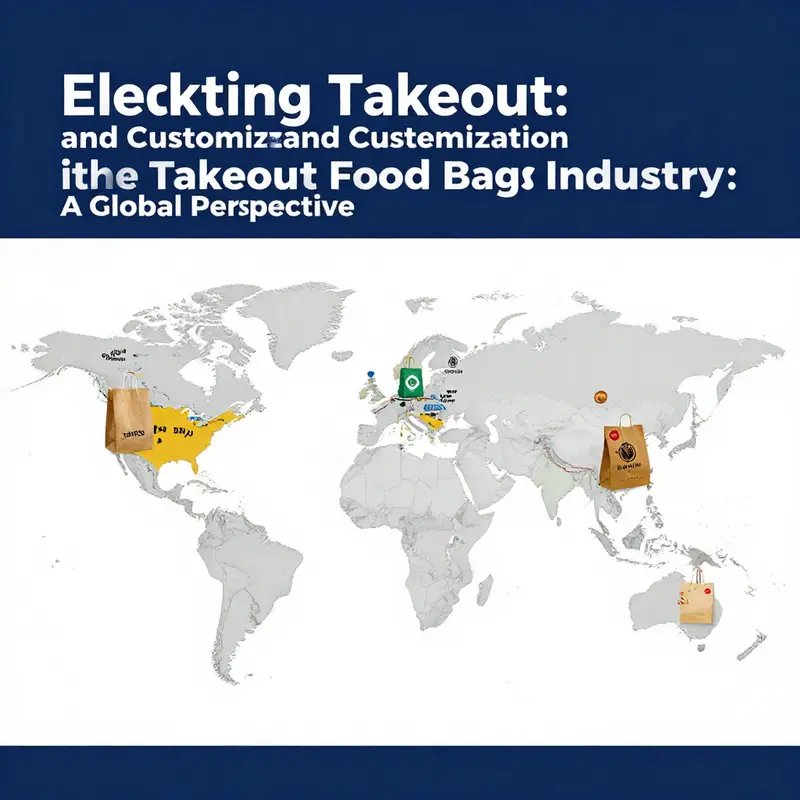
The takeout bag is more than a carrier; it is a conduit for safety, sustainability, and brand narrative at the very moment a meal leaves a kitchen and begins its journey to a customer. In a service economy where convenience and hygiene are non-negotiable, bags have evolved from simple wrappers into strategic packaging assets. They must withstand heat, resist grease, guard freshness, and support a brand story that travels from restaurant table to home or office. This evolution sits at the heart of a broader transformation in the food service packaging industry. The global food service packaging market, valued at roughly 139.75 billion USD in 2026, is projected to grow at a steady pace, with a CAGR of about 4.13% through 2031, a trajectory that underscores the central role of takeout containers and their stabilization needs in a fast-changing landscape. The momentum in takeout containers, in particular, reflects not only expanded online food delivery and altered dining habits but also the increasing sophistication of packaging as a value proposition. If the meals arriving at doors are to satisfy customers who expect consistency, safety, and a reduced environmental footprint, then the packaging that accompanies them must deliver on each front, too. The story of these bags now intertwines material science, supply chain resilience, and the art of packaging design in ways that would have surprised a generation of operators who once treated bags as a mere afterthought. Today the focus is on a robust triad: sustainability, customization, and supply-chain transparency, all of which shape cost, performance, and perception in equal measure. This synthesis is visible across regions and markets, but it is especially salient in the Asia-Pacific corridor, where production capacity and rapid innovation are redefining what is possible from the first mile to the last kilometer of delivery. As consumer expectations converge with regulatory ambitions, suppliers are compelled to demonstrate not only price competitiveness but also provenance, safety, and a clear commitment to circular economy principles.
Sustainability sits at the core of these developments. The industry has learned that a bag’s end-of-life story matters almost as much as its functional performance during transit. Consumers, and increasingly regulators, demand packaging that reduces waste, uses renewable resources, and is compatible with waste-management infrastructure. The push toward compostable and recyclable options has accelerated the adoption of materials like certified compostable kraft paper and other renewable inputs. Businesses now seek verifiable certifications and in-house capabilities that cover printing, material sourcing, and quality control to meet stringent health and environmental standards. The emphasis on certified inputs is not merely a compliance checkbox; it is a signal to the market that sustainability can be integrated into scale. The practical implications are tangible. When a bag carries certified compostable kraft or an approved compostable laminate, it aligns with brand promises and helps retailers avoid creeping reputational risk as public appetite for greener practices grows sharper. Yet the sustainability narrative cannot eclipse performance. The material choice must balance grease resistance, moisture protection, and heat retention with the environmental profile. Wax-coated papers offer grease resistance, while laminated papers can provide moisture protection; both options must be weighed against their life-cycle impacts and end-of-life viability. In other words, sustainability becomes a design parameter that influences material science decisions, not merely a marketing slogan.
At the same time, customization has evolved from a nice-to-have into a critical competitive differentiator. In a crowded market, the packaging experience can reinforce brand identity, spark loyalty, and even influence purchase decisions at the moment of choice. Suppliers now increasingly offer tailored solutions that go beyond a logo print. They provide varied bag shapes, enhanced durability, and specialized functionalities such as improved heat retention or leak resistance, tailored to the specific menu and service model of a given operation. For a brand deploying a high-volume delivery pipeline, the ability to shift from small-batch prototypes to full-scale production with predictable lead times becomes a core capability. In markets characterized by both brisk demand and intense price competition, rapid customization translates into faster time-to-market and better alignment with changing consumer preferences. This is especially true in North America and China, where consumer behavior and logistics ecosystems drive rapid iteration of packaging formats, internal coatings, and sealing technologies. The challenge for suppliers is to offer flexible manufacturing footprints that can adapt to different orders while maintaining consistent quality and safety standards. The capacity to control and verify quality in-house—spanning printing, material sourcing, and final pouch or bag testing—has proven essential for brands seeking to protect their food safety credentials and ensure uniform performance across geographies.
The supplier landscape is shifting under these demands toward strategic sourcing rather than a pure-price competition. A new model has emerged in which the focus expands from merely supplying bags to delivering a full packaging solution ecosystem. Transparent supply chains, certified materials, and demonstrable commitments to innovation and environmental responsibility become non-negotiable criteria for partnership. The value proposition now includes not only the bag’s mechanical performance but also the supplier’s ability to support regulatory compliance, traceability, and scalable customization. In practice, buyers look for partners who can provide a portfolio of compliant inputs—such as films that meet FDA or equivalent regulatory standards, or inner linings that are microwave-safe—alongside the capacity to source sustainable fibers, run precise color matching for brand fidelity, and deliver on large or small orders with equal reliability. The emphasis on in-house capabilities means that a supplier’s internal operations must be robust across multiple fronts: printing technologies that accommodate sensitive brand colors, color-fast inks that resist wear from sauces and steam, and rigorous quality-control regimes that identify defects before they reach a kitchen or a door. The outcome is a more resilient supply chain in which risk is managed not merely by stockpiling but by deliberate design choices that anticipate variability in demand, regulatory updates, and evolving consumer expectations.
Regional dynamics further color this landscape. In the Asia-Pacific region, and in particular within China, the market benefits from high domestic production capacity and a pace of innovation that frequently outstrips others. Local suppliers are increasingly able to deliver cost-effective, high-quality packaging solutions with shorter turnaround times, intensifying competition with international players. This localization trend is bolstered by government policies that promote circular economy principles and actively discourage plastic waste. The consequences are profound: more brands can pursue sustainable bag options without incurring prohibitive logistics costs or long wait times, enabling more frequent product iterations and more aggressive sustainability roadmaps. The upshot is a packaging ecosystem where proximity, regulatory alignment, and local technical expertise converge to accelerate the adoption of compostable and renewable materials. In such a climate, the path to success often hinges on a supplier’s ability to harmonize cost, compliance, and customization at scale, while maintaining a transparent and auditable supply chain that guarantees safety and sustainability across the entire lifecycle of the bag.
These shifts have practical implications for brands and operators alike. Packaging is no longer a passive container but a dynamic interface that shapes consumer impressions, operational efficiency, and environmental impact. For retailers and foodservice operators seeking to strengthen loyalty, the ability to offer customized takeout bags that reflect a brand’s values—woven into colors, messaging, and even bag shapes—becomes a tangible competitive advantage. Customization extends beyond aesthetics; it encompasses functional enhancements such as improved leak resistance, resealability, or heat-retention features that reduce the need for secondary packaging. The result is a more integrated value proposition in which the bag supports the quality and integrity of the meal, reinforces the brand, and contributes to sustainability goals. The ethical and regulatory expectations surrounding packaging reinforce this trend. Operators must align with broader public commitments to reduce single-use plastics and embrace recyclable or compostable options. They must also ensure that packaging materials used in hot or greasy contexts do not compromise food safety or consumer health. The convergence of health regulations, environmental standards, and consumer expectations creates a demanding but ultimately rewarding environment for those who invest in thoughtful design, rigorous testing, and dependable supply chains.
As a consequence, the market is moving away from a commoditized view of bags toward partnerships anchored in strategic sourcing and shared value. Buyers increasingly demand suppliers who can demonstrate end-to-end competence: the ability to source certified inputs, to implement in-house printing and quality-control processes, and to support iterative customization on tight timelines. This holistic approach reduces the friction that often accompanies transitions between suppliers or packaging formats and improves predictability for operators managing multiple outlets or franchises. The strategic sourcing paradigm emphasizes not only price but also the quality, safety, and sustainability of inputs, as well as the supplier’s capacity to provide scalable, reliable service levels. In practice, this means evaluating a supplier’s certifications, traceability, and capacity to respond to both small, experimental orders and large, multi-site deployments with the same degree of rigor and sense of partnership.
To imagine the future of takeout bags, one can envision a packaging ecosystem that integrates digital design and on-demand manufacturing with closed-loop waste management. The next wave could involve more responsive materials that adapt to temperature and moisture changes, enhanced barrier coatings that extend freshness, and smarter printing techniques that enable dynamic branding while preserving recyclability. The core challenge remains balancing performance, cost, and environmental responsibility in a context of dynamic demand and evolving regulations. In short, success will hinge on suppliers who can prove transparent supply chains, maintain robust certifications, and demonstrate genuine commitment to innovation and environmental stewardship, while brands continue to leverage customization as a strategic differentiator rather than a decorative flourish.
In navigating this complex terrain, businesses are advised to anchor decisions in a clear sourcing philosophy. The philosophy should prioritize long-term relationships with suppliers who can demonstrate stability, traceability, and shared values about sustainability. It should also emphasize technological capability—especially in printing and material science—to ensure that the packaging can evolve with changing consumer needs and regulatory expectations. And it should recognize that the power of branding in takeout packaging is not an add-on but an integral component of the customer experience. A well-designed bag communicates care, quality, and responsibility, and these messages travel as reliably as the meals themselves from the kitchen to the consumer’s doorstep. For brands eager to explore the branding dimension of packaging, the concept of durable, customizable bags can become a practical reality. One illustration of such packaging options—where brands can imprint their identity on a functional, high-performance bag—can be seen in custom printed kraft paper bags that combine branding with sustainability. These bags exemplify how a well-considered packaging choice can reinforce a brand’s commitment to design, quality, and environmental responsibility. custom printed kraft paper bags.
Ultimately, the market dynamics described here are not merely about keeping food intact on its way to a customer. They reflect a broader shift toward value-driven packaging that supports operational efficiency, brand fidelity, and environmental accountability. The convergence of sustainability with customization, and of regional manufacturing strength with global demand, suggests a packaging future in which bags are conceived as strategic tools—part of a company’s customer value proposition rather than an afterthought tucked into the receipt. The emphasis on supplier capabilities—compliant materials, in-house design and quality control, and scalable production—ensures that market growth is sustainable rather than disruptive. As policymakers, retailers, and consumers continue to demand more responsible packaging, the industry’s ability to respond with certified inputs, innovative materials, and flexible production will determine which brands set the standard for takeout packaging in the years ahead.
External resource for broader context: https://www.supplychaininsights.com/strategic-sourcing-takeaway-bags-2026
Final thoughts
As the food service industry navigates a rapidly changing landscape, the significance of takeout food bags becomes increasingly clear. By investing in eco-friendly materials and understanding consumer trends, businesses can enhance their market presence and customer loyalty. Moreover, leveraging customization options allows establishments to stand out while promoting sustainability. The choice of takeout bags impacts both brand perception and environmental responsibility, making it a pivotal element for future success in the food service sector. Embracing these insights not only fosters a thriving business model but also contributes to a healthier planet.