

In today’s food service industry, maintaining optimal food temperatures is crucial for quality and safety, especially for businesses like bubble tea shops, restaurants, food trucks, and catering services. Understanding the mechanics behind plastic containers is essential for keeping food and drinks cold during transport and service. This article explores advanced insulation technologies, material choices, design innovations, eco-friendly options, and best practices to ensure that your food remains fresh and cool. Each chapter will delve into specific aspects of plastic food containers, offering insights to elevate your operations and customer satisfaction.
Inside the Cold Seal: How Advanced Insulation Transforms Plastic Food Containers into Reliable Cold Keepers
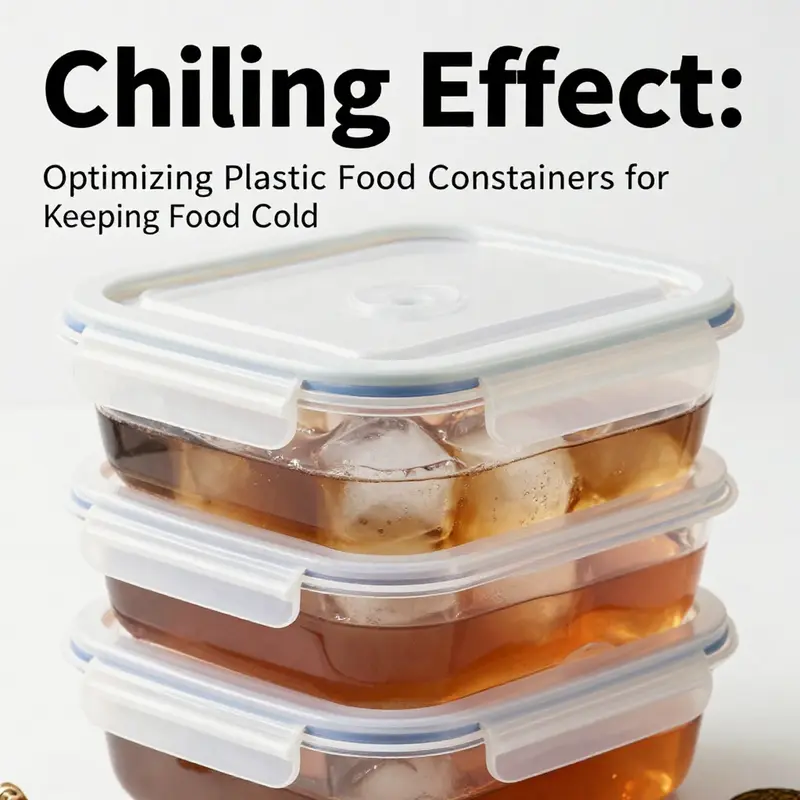
Plastic containers are a familiar sight for school lunches and commuters. When designed with advanced insulation, they can slow heat gain as effectively as many metal options. The modern approach uses a layered defense against warmth rather than simply a thick shell. The core idea is to turn a simple plastic case into a controlled microclimate. Designers combine materials and geometry to create a thermal barrier that lasts through a workday. Passive cooling relies on slowing heat transfer rather than fighting it head-on. In this chapter, we explore how VIPs, foams, and seals work together in plastic containers. Dr. Lena Torres, a materials scientist, says, ‘Plastic wins in passive insulation—it resists ambient heat better.’
Vacuum Insulation Panels, or VIPs, stand at the frontier of plastic insulation. They consist of a gas-tight core, evacuated to near vacuum. This arrangement cuts heat transfer by convection and conduction to a fraction of typical panels. VIPs shift the balance from thick foam to a high-performance barrier. They were once the preserve of high-end thermoses, yet now find homes in premium insulated plastic containers. The result is a body that keeps cold foods colder, longer, with minimal energy input. The marketing term is passive cooling—the system maintains its climate without active cooling. But VIPs come with trade-offs: cost, weight, and careful handling. Even with VIPs, outer shells and seal design matter for overall performance.
Another robust approach uses multi-layered foam cores. Rigid foam insulation, often closed-cell polyurethane or polystyrene, sits between inner and outer plastic or metal shells. The closed-cell structure resists moisture and keeps air trapped. The result is a steady barrier that slows heat flow over hours. Foam works well with double-wall construction, complementing any VIP or plain shell. The air pockets act as tiny barriers to conduction and convection. Over time, foam can degrade if exposed to solvents, so high-quality plastics are essential. Together with tight lids, foam cores help maintain a cool interior for long commutes.
Double-wall designs introduce a still-air gap between walls. Air is a poor conductor, so the trapped layer slows heat transfer dramatically. The space reduces both convection and conduction, a simple physics fact wearing a practical clothes. This configuration also reduces exterior heat transfer when the container is exposed to sun or warm bus air. The outer shell protects the interior from impacts while the inner wall forms the primary barrier. The combination of air gap and rigid shell often defines the baseline performance of many insulated plastic containers.
Airtight seals and gaskets finish the job. Silicone or rubber gaskets around the lid limit air exchange. A tight seal prevents warm room air from sneaking in and warm steam from escaping. Real-world use shows that even the best insulation loses value if the lid leaks. Designers select materials that resist compression and maintain elasticity across temperature swings. A well-sealed lid works in concert with a double wall and foam to sustain a cool microclimate inside.
Some containers also include reflective layers inside the wall. Aluminum or similar films reflect radiant heat away from the contents. This radiant barrier works with the insulating layers to reduce the energy absorbed from sunlight or warm room temperatures. The effect is modest on a calm, shaded kitchen counter but noticeable on a sunny commute. Reflective surfaces complement the other features rather than replacing them.
With these features in play, certain plastic-insulated containers can keep contents below 4°C for eight to twelve hours, even when ambient temperatures soar. The science supports this claim, especially when the interior starts cold and the seals hold. As Dr. Lena Torres explains, ‘The real advantage of passive cooling systems is consistency. If you start with cold food in a well-sealed, highly insulated container, you can delay temperature rise by several hours, which is often enough for daily commutes or school days.’ For longer trips, phase-change coolant packs or block ice are recommended to maximize performance. In practice, users report predictable performance when the system is built around a robust internal climate and a disciplined lid design.
For longer trips or very warm environments, one might pair insulation with a phase-change coolant pack. These packs absorb heat as they change phase, providing a steady thermal reservoir. Block ice can perform similarly but requires space and careful containment to prevent leaks. The key is to maintain a cooler interior long enough to keep perishable items out of the danger zone. This combination—passive insulation plus a supplemental cold source—gives flexible options for school days, commutes, or day trips that extend beyond eight hours.
When selecting containers, material choices matter as much as structure. BPA-free and phthalate-free plastics reduce the risk of chemical leaching, especially with acidic or hot foods. Food-grade plastics, such as high-density polyethylene or polypropylene, are common baselines for safe cold storage. A tight seal plus double-wall insulation helps protect against both contamination and warming. Eco-conscious practices matter too: some brands emphasize recycled materials or recyclable designs. These features show that cooling performance can coexist with sustainability in everyday lunch gear.
For practical inspiration, consider designs that emphasize durable, safe, food-grade containers with lids that preserve the cold microclimate. For example, see this collection of food-grade take-away bowls with lids that illustrate how a simple cup shape can evolve into a reliable cold keeper when joined with proper sealing and insulation. food-grade take-away bowls with lids
Ultimately, the best plastic container for cold retention is a carefully engineered balance of materials, geometry, and seals. It is not merely a vessel but a tiny climate system you carry with you. For readers seeking broader perspectives on passive cooling options in lunch gear, this external resource offers further context: https://www.alibaba.com/showroom/best-lunch-boxes-for-keeping-food-cold.html
Cold by Design: BPA-Free Plastics as the Safe Core of Modern Cold-Storage Containers
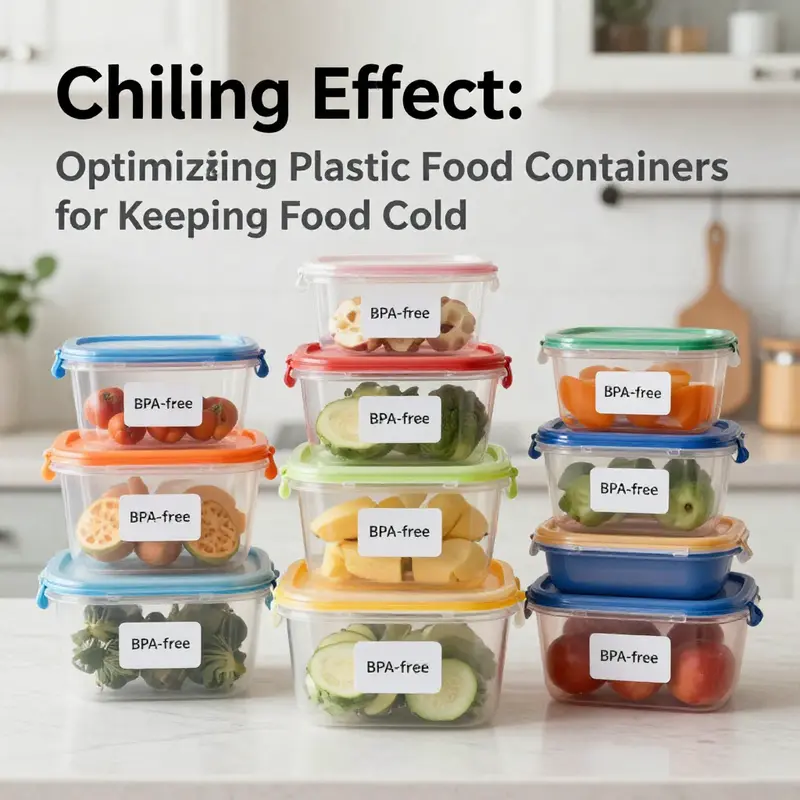
Choosing a food container for keeping meals cool hinges on more than just the surface features like shape or lid type. At the material level, BPA-free and food-grade plastics form the safety-forward foundation that makes modern cold storage both practical and trustworthy. When you push a container into a refrigerator, freezer, or a commuting bag, the choice of polymer determines not only whether the food remains fresh but whether harmful substances risk leaching under everyday use. In practice, polypropylene (PP) and high-density polyethylene (HDPE) stand out as the workhorses of cold storage. They deliver a favorable balance of rigidity, chemical resistance, and low-temperature performance. They resist cracking in the freezer, resist absorbing flavors or odors, and, crucially, are compatible with the stringent safety standards that govern food contact materials. These plastics can be molded into durable, easy-to-clean containers that hold up under daily wear, while still staying within the safety envelope required for food contact. For many households, this means a plastic container can be both safe and reliable for storing everything from dairy to ready-to-eat meals, provided the material is clearly labeled as BPA-free and food-grade. An important practical point is that these plastics often meet or exceed regulatory benchmarks for safety when used as intended, giving users confidence that storage conditions won’t introduce unwanted chemicals into their meals. The emphasis on food-grade status also reflects a broader commitment to purity and hygiene, which is essential when containers are used repeatedly in the kitchen, chilled cupboards, and lunch bags. In this context, a well-designed container made from PP or HDPE does more than keep food cold; it preserves the character of what’s inside and reduces the risk of contamination, a consideration that grows in importance as families rely more on prepared and portioned meals during busy weeks. A key advantage of these materials is their resilience to cold temperatures. PP, in particular, stands up well to freezing while maintaining structural integrity. It does not become brittle at low temperatures the way some other plastics might, and its chemical inertness helps prevent interactions with stored foods. HDPE carries similar benefits, offering excellent resistance to cracking and a robust barrier against moisture transfer. Both plastics also lend themselves to recycling streams, which is an important favor to the environment and to consumer preference for sustainable cold storage solutions. In practice, this translates to containers that can be safely rinsed and reused, opened frequently, and stored in varied temperatures without compromising safety or performance. When selecting a container, the label should explicitly state “BPA-free” and “food-grade.” These declarations are not merely marketing; they reflect regulatory expectations and consumer protection standards. BPA, a chemical historically used in some polycarbonate formulations and epoxy resins, has drawn concern because of potential leaching under heat or over time. By opting for BPA-free formulations, manufacturers minimize this risk and reinforce trust with users who routinely place containers into warm cars or heated dishwashers. Beyond the avoidance of BPA, the broader category of food-grade plastics is characterized by compliance with health and safety regulations that govern materials that contact edible goods. This does not mean safety is automatic; it requires ongoing quality control, traceability, and adherence to standards such as FDA or EU guidelines. In real-world kitchens, the combination of material choice with design features matters just as much as the polymer itself. A container made from BPA-free PP or HDPE may perform excellently only if its lid seals tightly and the walls are designed to minimize air exchange. Dual-wall constructions or proper insulation layers can further reduce heat infiltration, allowing cold meals to stay cooler longer, even without ice packs. Indeed, the interplay between material chemistry and engineering design is where modern plastic containers shine. This is where the narrative shifts from “material safety” to “daily practicality.” A container that is easy to clean, resistant to staining, and compatible with a refrigerator’s temperatures—and even with a freezer—supports a safer, more convenient food routine. Because many everyday cold-storage needs occur during commutes or at school, the absence of flavor carryover and odors becomes a practical benefit. When a container reliably resists leaching and preserves taste, it also reduces the risk of cumulative exposure across a week’s worth of meals. For those who value eco-conscious options, the recyclability of PP and HDPE adds another layer of appeal. Recycled-content plastics can lessen the environmental footprint of cold storage while maintaining performance. Some manufacturers emphasize circular design, selecting materials that are readily recycled into new food-grade products, which aligns with broader sustainability goals without sacrificing cooling efficiency. A practical takeaway for shoppers is to look beyond the exterior aesthetics and consider the material fundamentals. For an option illustrating how a BPA-free, food-grade container can work in a real-world setting, explore food-grade 500-750-1000ml take-away bowls with lids, which demonstrate how a single, well-made vessel can support a range of food storage needs while maintaining safety and performance. food-grade 500-750-1000ml take-away bowls with lids. This kind of design, when paired with a reliable seal and, if needed, an appropriate insulation profile, can keep contents cooler for longer and reduce the daily reliance on ice packs in moderate climates. Another dimension to consider is the evolving material landscape. Polypropylene’s popularity stems from its stable performance across a broad temperature range and its relative inertness toward common kitchen substances. HDPE offers similar advantages, while often providing enhanced chemical resistance. For those attracted to more eco-friendly paths, polylactic acid (PLA) presents an intriguing option. PLA is derived from renewable resources like corn starch and can be partially compostable under industrial conditions. However, its performance under extreme cold or prolonged storage may be less predictable, and its durability under repeated freezing and thawing can be a limiting factor. PLA’s advantages lie in its lower environmental impact in specific applications, but users should weigh this against potential degradation during long storage or exposure to very low temperatures. In contrast, polyethylene terephthalate (PET) commonly appears in single-use containers but is also used in some food-contact applications when explicitly labeled as food-grade and BPA-free. PET’s clarity and barrier properties can be advantageous for certain cold storage needs, particularly where visibility of contents is desirable. Nevertheless, consumers should verify labeling and consider the full lifecycle implications of PET in their buying decisions. Ultimately, the material conversation returns to safety, performance, and lifecycle. The best practice when selecting a container for cold storage is to confirm BPA-free and food-grade labeling, verify the material’s compatibility with intended temperatures, and assess how the design handles moisture and air exposure. Silencing worries about leaching becomes easier when a product clearly communicates its certifications and adheres to recognized standards. In tandem with material choices, the container’s construction—such as tight-sealing lids and double-walled insulation—enhances cold retention. Multifunctional designs that marry plastic’s safety with advanced insulation offer a practical path for everyday use, particularly when trips involve warmer environments or longer durations away from refrigeration. And for those who want to push cold retention further without sacrificing safety, pairing an insulated plastic container with a reusable ice pack or phase-change gel pack remains a time-tested approach. Bottom line: choosing BPA-free, food-grade plastics like PP and HDPE—while paying attention to certification and lid design—will deliver a reliable, safe, and environmentally mindful option for keeping foods cold. The material story matters because it shapes daily habits, kitchen safety, and the overall experience of meals eaten away from home. External resources expand this understanding; for a concise overview of safety standards and BPA-free guidance, explore resources from the plastics industry community: https://www.plasticsindustry.org/plastics-101-food-grade-bpa-free-recycling-guide/
Sealed for Cold: How Lid Design and Sealing Mechanisms Shape the Performance of Plastic Food Containers

Choosing a plastic food container that can keep contents cold is rarely about a single feature. It is the interplay between sealing mechanisms, lid technology, and thoughtful insulation that determines how long a cold meal stays safe and fresh in transit. The research highlights that plastic can offer surprisingly effective passive insulation when crafted with precision—especially when the walls and lids work as a cohesive system. Dr. Lena Torres, a materials scientist, notes that plastic excels at resisting ambient heat in such configurations, a point that becomes concrete when we consider how a lid and gasket interact with a double-walled body to slow heat ingress. This approach matters most for daily routines like commuting, school, or a quick workday lunch, where the container must maintain cool temperatures without constant ice packs. Yet, not all plastics are equal in this regard. The selection of materials—BPA-free, phthalate-free, and food-grade varieties like high-density polyethylene or polypropylene—becomes a practical safeguard against chemical migration, particularly when acidic or hot foods are involved. A well-chosen container with airtight, leak-proof properties helps ensure that cooling is not compromised by the very components that hold the food together. The strategy is to combine sturdy sealing with robust insulation so the container forms a nearly self-contained microclimate, sleeking heat transfer into a manageable curve, even on warmer days. In this sense, the sealing system is not merely a gatekeeper of odors and contamination; it is an active partner in keeping cold in, moisture out, and quality preserved.
The sealing system hinges on two interlocking areas: the seal itself and the connection between lid and body. A reliable seal usually relies on silicone gaskets that sit within a recessed groove or a tight-fitting lid that pressurizes against the container wall when closed. Both approaches are designed to create a barrier against air and humidity. When the gasket and lid work in harmony, they minimize the small but persistent pathways through which warm air can slip in while also preventing internal moisture from escaping. A well-engineered seal reduces the risk of condensation on the outer surface while keeping the inner environment stable enough to slow microbial growth and preserve texture, color, and aroma. The seal’s effectiveness is also a function of how uniformly the lid seats against the body; a small misalignment can create micro-gaps that undermine cooling even if insulation is otherwise excellent.
Lid design is not just about achieving a snug fit. It must maintain structural integrity across a range of temperatures and handling conditions. The material of the lid and its interface with the container body must be thermally stable, resisting deformation at low temperatures and returning to shape after being opened and closed repeatedly. Ease of use matters too: a lid that is hard to snap shut or requires excessive force to reclose risks poor sealing, which in turn permits heat to creep in. The practical takeaway is that lid geometry, inclusion of locking features, and careful tolerances in the snap-fit interface all contribute to long-term performance. In this light, the lid becomes an essential component of the cooling system, not merely a cover. A lid with an integrated locking mechanism or a simple pressure-release valve can improve safety during transport by preventing accidental opening without relying solely on user discipline. When labeling notes emphasize “leak-proof” or “airtight,” consumers should understand these claims as indicators of a design that prioritizes seal integrity as a primary performance criterion.
Even more advanced arrangements begin to push the envelope of what plastic can do. While vacuum-insulated designs are more commonly seen in metal containers, modern plastic concepts increasingly employ double-wall configurations and reflective barriers to slow heat transfer. Some innovations use vacuum-sealed constructions in a plastic shell or incorporate highly efficient insulation between walls to minimize conduction, convection, and radiation from the surrounding environment. These strategies acknowledge that thermal performance hinges on multiple pathways for heat entry, and that a multi-layer approach can substantially extend how long contents stay cold. The net effect is a container that feels lighter and more convenient to carry while delivering a performance that rivals traditional metal options in everyday settings. Yet the effectiveness of such systems is only as good as their seals. If the lid or gasket fails, the advantages of double-wall insulation are quickly eroded by warm air slipping inside or by moisture migrating outward, leading to oxidation, dehydration, or off-flavors.
From a user’s perspective, the practical guidance is clear: invest in high-quality sealing technology and seek products that are clearly labeled as leak-proof and airtight, ideally with a locking mechanism or pressure-release feature for safe transport. This aligns with expert opinions that emphasize proper food coverage as part of cold storage. A trusted industry voice notes that sealing isn’t just about keeping odors contained; it’s about stopping oxidation and moisture loss at the source. In other words, a true seal is a first line of defense against spoilage and quality degradation. When a lid forms a genuine seal, it minimizes warm air exchange and moisture migration, thereby preserving the cold chain without constant intervention.
In practical terms, this means paying attention to how a container is designed and how it feels when you close it. A snug lid that seats evenly around the rim, a gasket that sits flush in its groove, and a container body engineered to maintain its shape under cold stress—these are the signs of a well-constructed cooling vessel. For those who want a tangible reference to best practices in food preservation, a reputable guide on proper food coverage reinforces the point that coverage quality matters far beyond aesthetics. It is not merely about neatness; it is about actively preventing oxidation, dehydration, and cross-contamination from starting in the first place. This perspective shifts the emphasis from simply storing cold food to actively managing the conditions that preserve it.
In this light, a consumer can approach selection with a clearer goal: choose a container whose lid geometry, sealing system, and wall construction work as an integrated thermal shield. If possible, prioritize models that advertise silicone gaskets, tight-fitting snap-on lids, and double-wall or vacuum-assisted insulation. These features collectively extend cold retention while mitigating the risk of leaks and spoilage. The practical upshot is straightforward: a well-sealed, well-insulated plastic container can keep cold foods fresh for longer periods, especially when combined with a reusable ice pack or phase-change gel pack during warmer weather. For readers exploring how to apply these principles in everyday routines, a close look at accessible examples of well-designed lids and seals—such as those offered in robust, food-grade take-away bowls with lids—can provide concrete guidance and inspiration. See this example for an applied instance of sealing and lid technology in practice: senang05-food-grade-500-750-1000ml-take-away-bowl-with-lids-packing-food-single-wall-fast-food-salad-bowls.
For readers who want to dive deeper into the broader principles of coverage and temperature management, the discourse surrounding proper food coverage in refrigeration contexts offers applicable insights beyond the kitchen. External resources discuss how thoughtful covering practices can prevent oxidation and moisture loss, reinforcing that lid design and seal integrity play a decisive role in cold storage success. As you consider your next purchase or your own product design, keep in mind that a truly cold-stable container is built from the inside out: the materials chosen, the seal engineered, and the lid’s alignment all working in concert to slow heat transfer and preserve quality. This integrated perspective helps bridge the gap between laboratory principles and real-world performance, turning a simple container into a reliable partner for keeping food cold.
External reading: https://www.foodrepublic.com/2026/01/17/why-you-should-always-cover-your-food-in-the-fridge/
Cool by Design: Eco-Friendly Plastic Containers for Cold Food Storage
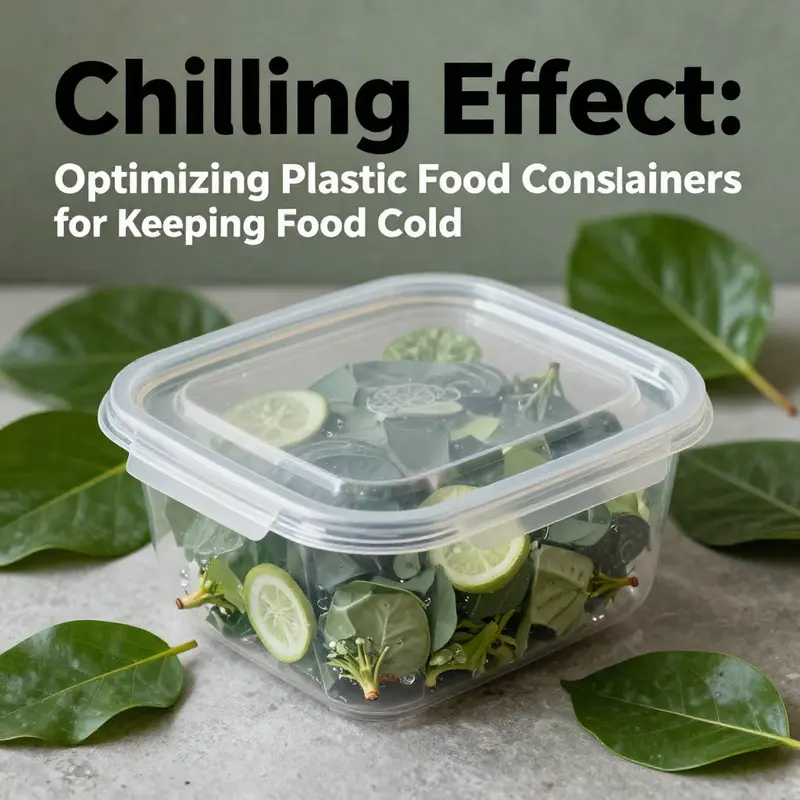
Choosing a container to keep lunch cold is not just about hardware; it is a decision that blends materials science with daily practicality. Plastic is often seen as the lightweight, inexpensive choice, yet metal and glass still carry perceptions of durability. The truth lies in the container’s design: insulation is king when ambient temperatures rise and the clock ticks toward noon. In the realm of passive insulation, plastic has an edge. Dr. Lena Torres, a materials scientist, notes that “Plastic wins in passive insulation—it resists ambient heat better.” This insight reframes the question from “is plastic cold enough?” to “how well is the plastic engineered to slow heat in real-world conditions?” The emphasis shifts from raw materials to the finesse of construction, seals, and the surrounding environment. A well-made insulated plastic container can keep foods cool for hours without ice packs, which makes it a practical companion for commutes, school days, and office hours where convenience matters as much as temperature control.
Advances in insulation have reshaped how plastic containers keep their cool. Traditional plastics lack the high thermal conductivity that metals offer, but modern insulated designs compensate with multi-layer construction. Think vacuum-insulated walls that minimize heat exchange, or reflective barriers that redirect radiant energy away from the contents. Double-walled vessels and ultra-tight lids further curb heat influx, turning everyday plastic into a capable cold-chain carrier for everyday foods. When the goal is to remain below room temperature for eight hours or more, these features matter as much as cap color or exterior style. And while the science of heat transfer remains unchanged, the design language has shifted toward packaging that favors durability, reuse, and responsible end-of-life outcomes. The synergy of solid hardware and smart geometry allows plastic to act as a passive barrier, reducing the need for constant energy draws from cooling packs.
Yet these benefits sit alongside important safety and sustainability considerations. Consumers increasingly seek plastics that are BPA-free, phthalate-free, and food-grade, especially when storing acidic or hot foods. Materials like high-density polyethylene (HDPE) and polypropylene (PP) are commonly preferred for their calmer leaching profiles and broad compatibility with cold storage. The market’s momentum toward safety is not only about avoiding toxins; it is about ensuring the container’s long life in the kitchen and the broader life cycle beyond morning lunches. A seal that holds tight and a body that resists cracking under cold stress contribute to reliability; occasional drops or temperature cycling should not render the container unsafe or unusable. In parallel, brands emphasizing eco-friendly practices—whether through recycled content, recycled designs, or minimized waste—offer a sustainable path without compromising cooling performance. The story of plastic in cold storage is thus a story of responsible engineering as much as material choice.
From a design perspective, the materials agenda matters as much as the hardware. Biobased polymers have moved from novelty to credible options. Biobased polylactic acid (PLA), sourced from renewable crops such as corn starch, has emerged as a leading contender in the eco-friendly sector. PLA’s physical performance—robustness, stiffness, and insulating capacity—maps well onto existing plastic-food packaging needs. Crucially, PLA can be completely degraded under industrial composting conditions at elevated temperatures, typically around 60–70°C, into water and carbon dioxide. This behavior matters because it points to a possible cradle-to-cradle lifecycle, where packaging designed for cold storage could be reined back into productive cycles rather than languishing in landfills. The environmental case for PLA and similar bio-based polymers grows stronger as researchers emphasize closed-loop management that minimizes the carbon footprint across the packaging’s life. A 2025 study by Praveen Nagella highlighted these opportunities, underscoring how such innovations advance a cradle-to-cradle approach and reduce overall environmental impact. For readers, this means more than a green sticker; it signals a fundamental shift toward sustainability embedded in the heat-management solution itself.
Beyond PLA, the emergence of high-performance recycled composites offers a parallel track of progress. These materials combine recycled resins with natural fibers—such as bamboo or wood pulp—to bolster structural strength and thermal stability. The result is a container that can withstand the rigors of a household fridge or a backpack trip while keeping its contents cool. The use of natural fibers also helps moderate thermal conductivity and can improve the product’s resilience to temperature swings. While these composites still rely on specialized recycling streams, their increased reuse potential reduces the demand for virgin plastics and lowers resource consumption over time. The broader implication is a shift away from single-use plastics toward durable, reusable designs that invite repeated use and straightforward end-of-life routing.
Transforming these technical advances into real-world choices requires looking at the full lifecycle of the container. The shift from a purely disposable mindset toward a reusable, recyclable framework is not merely a trend but a necessity in many regions. Some brands have started pairing durable, seal-tight plastic boxes with smart design features that encourage longer lifespans and easier repair. Even within a single family of products, subtle choices—like a more secure lid latch, a thicker wall, or a resealable vent—can dramatically extend the period over which a container remains a reliable cold-storage option. In this context, design attention becomes a practical guide for consumers who want both performance and responsibility. A broader interpretive shift is apparent when we consider packaging ecosystems that include smart tagging to track usage and wear. Such features aim to extend product life by encouraging people to reuse, repair, or repurpose rather than discard.
The consumer choices around safety, performance, and sustainability interlock with everyday usage. For hot or acidic foods, the confidence to store and transport without compromising taste or safety hinges on careful material selection. The most effective insulated plastic containers for cold storage embrace three pillars: a rigid, food-grade body; a tight, sealing lid; and insulation that minimizes heat transfer without adding excessive weight or cost. In warmer weather, doubling down on cold retention often means pairing the container with a reusable ice pack or a phase-change gel pack. These packs have the advantage of staying cold longer than water-based ice, improving reliability during long commutes or outdoor activities. Still, the best outcomes arise when insulation is thoughtfully engineered to do most of the heavy lifting, so that packs can be smaller, lighter, and reusable across many days.
As with any evolving field, there is an ongoing conversation about how best to balance performance with environmental responsibility. The environmental discourse has extended beyond material selection to include end-of-life options, urban composting capabilities, and recycling infrastructure. A practical takeaway for readers is to look for containers designed with recycling in mind and to favor those that use recycled content or offer return-to-recycle programs. The conversation is not about choosing plastic over other materials in a vacuum; it is about selecting a design that keeps food cold reliably while supporting a circular economy. And while the design challenge remains, the path forward is clear: insulation technology must work hand in hand with chemistry and lifecycle thinking to deliver a product that performs well today and respects resources tomorrow. For readers exploring options, a glimpse into eco-friendly packaging choices beyond plastics—such as PLA-coated kraft boxes—can illuminate broader sustainability strategies while reminding us that innovation often travels across material boundaries. disposable eco-friendly kraft box with PLA coating
The scholarly and industry perspectives converge on a common horizon: cooling performance will become inseparable from environmental stewardship. A robust body of work—spanning active and passive insulation, bio-based polymers, and recycled composites—points to a future in which cold food storage containers are quieter in their environmental footprint, longer-lasting in the kitchen, and kinder to the planet. As new materials and processes mature, the practical implications for everyday life are substantial. People can carry on with their routines knowing that their lunch stays cool, their exposure to potentially harmful additives declines, and the packaging can return to the material loop rather than the waste stream. The dialogue between engineers, designers, and consumers will continue to refine what constitutes a responsible choice, and that conversation will be driven by real-world performance as much as by environmental promises.
External reference: https://www.sciencedirect.com/science/article/pii/S246829782500037X
Preserving Chill: A Practical, Science‑Driven Guide to Keeping Food Cold in Plastic Containers
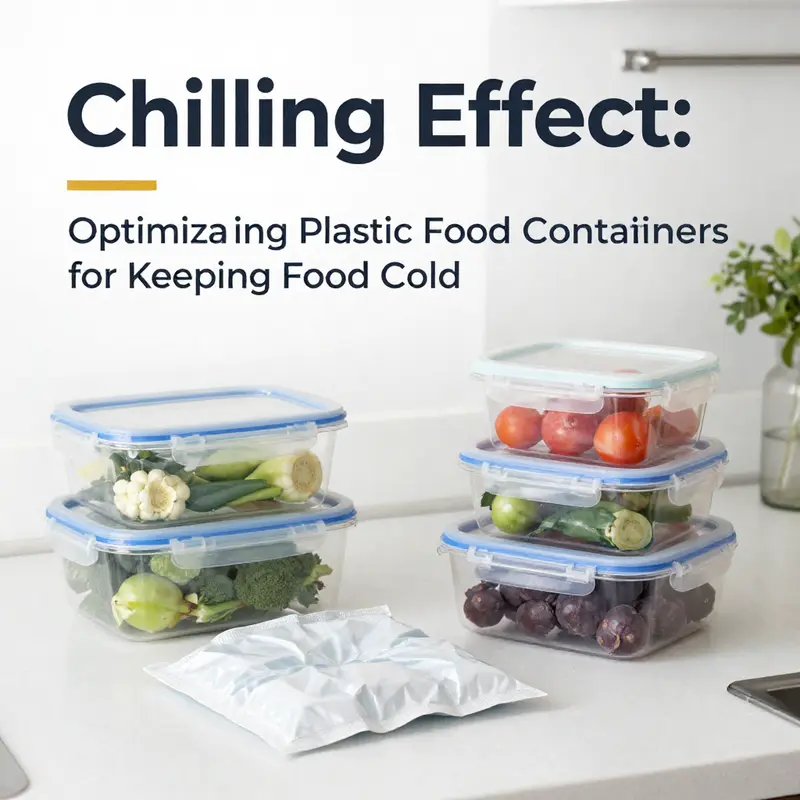
Plastic containers designed to keep food cold operate at the intersection of convenience and thermodynamics. Modern insulated plastic designs rely on multi‑layer walls and thoughtful geometry to slow heat transfer in real-world conditions. While plastic, by its nature, does not rival metal for heat conduction, the latest insulated architectures—sometimes featuring vacuum-like barriers or reflective layers—offer tangible improvements. As one materials scientist notes, “Plastic wins in passive insulation—it resists ambient heat better.” With that insight, the everyday lunch box becomes less a barrier to cooling and more a carefully engineered shield that, when used with a few practical habits, can preserve a cool core for hours. This is especially true for commutes, school days, and short trips when the ambient temperature climbs and the clock seems to move faster than the ice pack does. The point is not to chase an idealized, laboratory‑only performance but to translate science into reliable, ordinary use where it matters most: the box in your bag, the car seat in morning traffic, the cafeteria line when the thermostat feels louder than your appetite.
To maximize cold retention, a sequence of simple steps matters as much as the container’s material. Begin with pre‑chilling, a small but powerful move. Place the plastic container in the refrigerator, or give it a brief 10–15 minute stint in the freezer before you load it with cold food. This lowers the container’s internal starting temperature, reducing the initial heat flux when cool contents meet the container’s inner walls. The science is straightforward: the colder the container starts, the longer the cold core holds steady before warming from the outside world becomes noticeable. Pre‑chilling is a habit that pays off in quiet, consistent performance rather than dramatic, momentary gains.
Material choice also matters. Opt for high‑quality, thick‑walled containers made from HDPE or PP, as these polymers resist heat transfer more effectively than thinner plastics. Thick walls slow conduction and help preserve cold temperatures longer, especially when the lid is properly closed and the container remains sealed for most of the journey. The container’s insulation design—whether a double‑wall construction, a vacuum‑like seal, or a reflective barrier on the inner surface—complements the wall thickness. In practice, the combination of sturdy walls and intelligent internal geometry translates into a cooler interior when the outside world is warmer.
A secure seal is essential. The lid should fit tightly and feature a silicone gasket or a robust locking mechanism. Air exchange is a primary driver of heat gain, so minimizing warm air entering the container is critical. A loose lid can let ambient heat creep in, erasing the gains from pre‑chilling and the wall’s insulation. When choosing a container, test the seal by gently pressing around the lid and listening for any hiss of air leakage. The goal is a consistent, near‑immobile interior temperature during transport, not a perfect seal in a laboratory test. The practical takeaway is clear: a well‑sealed lid is as important as the wall material itself.
Avoid overfilling, too. Leave about 1–2 inches of headspace at the top. This room allows for minor expansion if the contents freeze slightly and reduces direct contact between the cold food and the inner walls. Less contact means less opportunity for heat transfer from the outer shell to the food. A little breathing room also lessens the risk of spills during movement, which is worth more than it might seem in a busy morning routine. And when space permits, keep the container’s interior surfaces clean and dry; moisture can alter contact patterns and, in turn, the thermal exchange with the surrounding air.
For longer trips or more challenging conditions, an extra layer of insulation can extend cold retention beyond what the container alone achieves. Wrapping the sealed plastic container in an insulating sleeve, a towel, or even aluminum foil creates an additional thermal barrier. In practical terms, a simple wrap can extend cooling performance by up to about 30 percent, depending on how well the wrap is applied and how long the container remains in a warm environment. This isn’t a substitute for a proper cooler or ice pack, but it’s a cost‑effective, low‑friction enhancement when you’re on the move, at a park, or in a sunlit classroom hallway.
Handling and exposure to warm environments are recurring enemies. Every time you open the container, warm air infiltrates and raises the interior temperature more quickly than you might expect. Planning your access, consolidating meals, and minimizing openings are practical habits that compound the container’s contained cooling effect. When possible, store the sealed container in a cooler or refrigerator until you need it. If you’re not immediately consuming the contents, the safest path is a cool, stable environment that limits the rate of warming.
The broader picture recognizes that plastic’s intrinsic thermal conductivity—while not as forgiving as glass or some insulated fabrics—can be managed through a thoughtful combination of pre‑chill, material quality, sealing, and containment strategy. Studies consistently show that insulated bags and multi‑layer pouches outperform standard plastic in sustained cold retention, particularly in long or hot exposures. Yet the best practices outlined here demonstrate that plastic containers can perform closely to insulated alternatives for short‑ to mid‑term use when they are designed with care and when users apply disciplined habits. The practical implication for everyday life is empowering: you can obtain reliable cold retention with a well‑constructed plastic container and a few common sense steps.
A word about safety and materials helps round out the picture. Choose plastics that are BPA‑free and phthalate‑free, and verify that the plastic is food‑grade. HDPE and PP are commonly recommended for their stability and lower risk of leaching when used with cool or mildly acidic foods. If you ever plan to store hot foods, or to reheat in the container later, cooling the contents before packing becomes especially important. This approach reduces the thermal shock to the container and minimizes the potential for leaching while preserving the container’s structural integrity. In short, the aim is to keep cold food cold without compromising safety or long‑term durability.
Beyond the kitchen, sustainability considerations deserve a place in your decision process. Some containers are designed with recyclable components or with recycled materials in their construction, offering a greener option without sacrificing performance. The best practice is to balance cooling efficacy with safety, durability, and an eco‑mriendlier footprint. The takeaway is not to chase peak performance in a vacuum but to weave together material choices, design features, and everyday routines into a cohesive system that reliably protects cold food through travel and routine use.
For readers who want a concrete example that spans practical design and everyday practicality, consider this family of packaging options that emphasizes durability and disposability in a sustainable framework. eco-friendly kraft-paper takeaway containers illustrate how packaging choices extend beyond plastic, offering a useful comparison point for how different materials manage thermal exchange and transport challenges. You can explore more about such eco‑conscious options here: eco-friendly kraft-paper containers.
In sum, maximizing cold retention in plastic containers is less about chasing a single feature and more about orchestrating several interlocking practices. Pre‑chilling, thick walls in HDPE or PP, a tight silicone seal, careful headspace management, optional insulating wraps, and mindful handling all contribute to a reliable cold core. When combined with smart storage—coolers, ice packs, or phase‑change packs as the situation warrants—the result is a practical, everyday solution that helps you keep foods fresh, safe, and enjoyable. This integrated approach aligns with what researchers and practitioners have long observed: with the right design and the right habits, plastic containers can meet the demands of real life while remaining convenient, affordable, and safe.
External resource: For further reading on keeping food cold and the role of plastic containers, see the FDA’s guidance on best practices for cold retention: https://www.foodsafety.gov/blog/keep-food-cold-plastic-containers/.
Final thoughts
In summary, plastic food containers designed for keeping food cold are pivotal in the food service industry. By considering advanced insulation features, selecting the right materials, innovating design for effective sealing, embracing eco-friendly practices, and following best storage methods, businesses can enhance the quality and safety of their food offerings. Investing in quality plastic containers not only meets customer expectations but also contributes to a more sustainable future for the food service industry. Choose reliable food storage solutions that keep your products fresh while aligning with eco-conscious practices.