

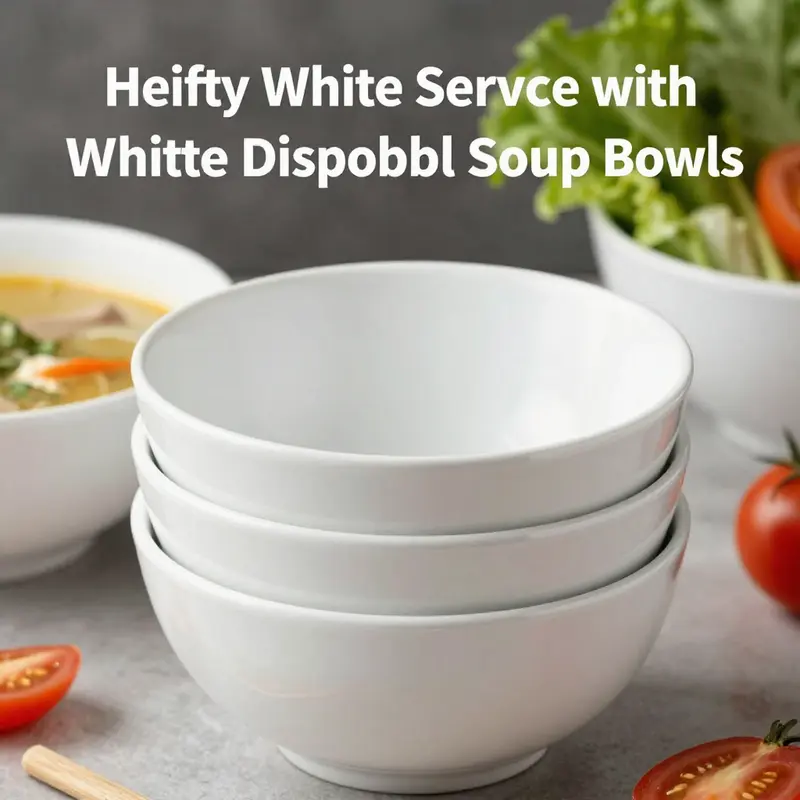
In the ever-evolving landscape of food service, the choice of disposable tableware can significantly impact both customer experience and operational efficiency. Hefty Everyday Soak-Proof Foam Bowls offer a winning combination of convenience, practicality, and aesthetic appeal, making them an excellent choice for bubble tea shops, restaurants, food trucks, catering services, and event planners. This article will delve into the features and specifications of these disposable soup bowls, explore their economic aspects, discuss their societal impact, and compare them with other disposable options available in the market. By the end, you’ll understand why Hefty white soup bowls should be part of your business strategy for success.
null
null
White Foam Bowls: The Economic Life Cycle of a Common Disposable Staple
White foam bowls, subtle in color and unassuming in form, sit at the intersection of everyday practicality and larger economic forces. They are the quiet facilitators of meals that arrive quickly, comfort in moments of family gathering, and the convenient answer to events where washing dishes is less feasible than preserving warmth, texture, and taste. When we look beyond their simple appearance, these bowls reveal a chain of decisions that ripple from factory floors to household budgets, and from municipal waste streams to regulatory horizons. The story of a white, disposable soup bowl thus becomes a study in how a single, small piece of tableware can illuminate the economics of mass production, market dynamics, consumer behavior, and environmental policy. The capacity of these bowls—commonly around twelve ounces—has become a standard that balances the needs of hot soups, cold desserts, and light salads, all while staying compatible with bulk packaging and broad distribution networks. The all-white surface is not merely an aesthetic choice; it signals a clean, uniform canvas that reduces color variation in production lines and simplifies recycling or disposal considerations in some contexts. In retail terms, the convenience of bulk packaging—often sold in sets of fifty or more—helps households and small businesses optimize cost per unit, align with event planning needs, and simplify inventory management. This simple geometry, this neutral tone, this predictable size, all participate in a larger economic logic: affordability achieved through scale and streamlined design.
From a production perspective, the efficiency of foam bowls is rooted in material science and process engineering that prioritize resource use. The phrase often heard in industry discussions is that less energy and material by weight are used in the manufacturing of these items. That efficiency translates into lower marginal costs per unit, a critical factor when price-sensitive consumers evaluate disposable options alongside reusable alternatives. When a factory can produce a thousand bowls with a light touch on energy and with tight control of material waste, the resulting unit cost shrinks, and the price elasticity for buyers—whether a family stocking up for a party or a cafe preparing for a busy lunch rush—favors higher volume purchases. The lightweight nature of foam means shipping weights are lower, enabling more bowls to ride a pallet without consuming disproportionate space. The logistics tail—how many bowls fit on a truck, how easily they stack, how stable they are during transit—becomes a decisive part of the total cost of ownership. In short, the production bedrock for these bowls rests on the combination of material economy and energy efficiency that supports competitive pricing without sacrificing functional integrity. The soak-proof barrier on many versions further ensures that even when the bowl contains liquid-rich foods, leakage or seepage does not compromise its structural integrity. This is not merely a comfort feature for the consumer; it is a logistical advantage for kitchens and caterers who must minimize mess, waste, and downtime, especially during peak service or when the bowls must travel from takeout window to customer table.
The market positioning of white foam bowls rests on a blend of reliability, affordability, and versatility. They are marketed as practical, everyday solutions that can withstand the ordinary chaos of both home cooking and commercial service. Their simple material composition and broad compatibility with standard disposables ecosystems—whether in supermarkets, wholesale clubs, or online platforms—facilitate wide distribution. The ability to offer these bowls in bulk, such as fifty-count packages, creates real economies of scale that lower per-unit costs for buyers who need reliable serveware for large gatherings, school lunches, or casual catering. This broad reach is reinforced by the perceived value proposition: durable enough to hold a high-soup volume, resilient enough to withstand ice cream or dessert toppings, and economical enough to be discarded without guilt when the occasion ends. The absence of ornate design or fragile finishes means fewer quality concerns for buyers who require predictable performance under varied conditions. In practice, this combination of durability, low cost, and supply chain reach makes white foam bowls a staple in the budgeting of many households and small businesses alike. They occupy a niche that is not glamorous but is essential: a predictable, cost-effective solution that helps manage food-related costs across a spectrum of uses. Within this landscape, the interplay between supply chain efficiency and consumer demand becomes visible in the way retailers stock these bowls, the way wholesalers bundle them, and the way foodservice operators calibrate portion sizes, service pacing, and customer experience.
To understand the consumer side of the equation, consider how households decide between disposables and reusables. For many, the decision is influenced by convenience, the reality of busy schedules, and the practical need to minimize dishwashing energy and time. The bulk packaging aligns with meal planning, party hosting, and casual gatherings where quantity matters as much as quality. Yet this choice also intersects with broader concerns about waste and environmental impact. While the initial purchase price of disposable options is attractive, long-term costs may accumulate in the form of waste management fees, landfill space, and potential regulatory changes that target single-use plastics or foam materials. Businesses, too, weigh these considerations. A café or event organizer may choose disposables for efficiency and consistency, but they also monitor waste streams and participate in corporate sustainability reporting that increasingly factors in end-of-life implications. The economics here are not static; they shift as consumer preferences evolve and as communities adopt more stringent waste management practices. The adoption of such products, therefore, is both a reflection of price sensitivity and a test of how well a company can align its supply chain with evolving expectations about sustainability.
One of the most compelling dimensions of this economic narrative is the trade-off between low unit price and long-term external costs. The short-term appeal is clear: a low-cost, reliable product that can be purchased in bulk and readily used in a wide range of settings. The long-term view, however, must account for waste diversion challenges, the energy and resources required to process or dispose of foam materials, and the possibility of future regulations that could levy fees or restrictions on single-use, non-biodegradable packaging. These two horizons—immediate affordability and future sustainability costs—shape how buyers evaluate value. For many organizations, the decision is not simply about the price of a single box of bowls, but about the total cost of ownership across a project, event, or seasonal peak. The math involves more than sticker price; it includes handling, storage, transportation, and the administrative costs of waste management. In this sense, the economic life cycle of a white foam bowl is a continuous negotiation between efficiency and responsibility. The more efficient the production and distribution network, the more space there is to invest in other attributes—such as improved segregation of waste, partnerships with recycling or composting facilities, or better labeling to improve end-of-life outcomes. The discussion also implicitly invites consideration of alternative materials that promise lower environmental footprints, challenging producers and buyers to rethink the economics of switching from foam to compostable or recyclable options.
Within the broader disposable tableware ecosystem, the position of white foam bowls is tied to a network of product families—categories of disposable cups, lids, and plates that together form a complete service set. For those exploring the full spectrum of options, the disposable bowls category on supplier platforms offers a clear view of how distributors segment choices, price points, and packaging configurations. This category becomes a useful map for buyers seeking to understand where foam bowls fit in the broader strategy of serviceware. It also mirrors how retailers curate assortments to balance diversity of use with the practicalities of stockkeeping and shelf space. The presence of a broad category for disposable bowls signals not only market demand but also a commitment to supply chain resilience, since distributors rely on a consistent range of sizes and materials to meet varied customer needs without excessive SKU proliferation. In this sense, the economic story of the white foam bowl is not merely about a single item; it is about how a simple, dependable tool integrates into a larger system designed to deliver predictable service, manage costs, and respond to evolving expectations about sustainability. For readers who want to delve deeper into the ecosystem of disposableware, the category page provides a structured lens through which to compare alternatives and assess how each option may affect total cost of ownership across different use cases.
From an environmental perspective, the long-term costs of disposable foam bowls are increasingly understood not only in economic terms but also within social and regulatory contexts. Waste management, litter reduction, and resource stewardship are central to policy discussions around single-use packaging. Life-cycle analyses and cradle-to-grave assessments reveal that costs are not confined to the purchase price; they extend to end-of-life processing, potential contamination with other waste streams, and the energy required to manufacture and transport the materials involved. As communities adopt more ambitious waste diversion targets, producers and buyers alike may face higher per-unit costs if they continue to rely heavily on foam-based solutions. The economic calculus, therefore, must consider policy risk alongside direct operating costs. In some cases, businesses might respond by exploring compostable or recycled-content alternatives, which can alter the economics by changing raw material costs, processing requirements, and consumer acceptance. The balance between maintaining service level and pushing for sustainability remains delicate, requiring ongoing evaluation of supplier relationships, recycling infrastructure, and consumer preferences. The result is an evolving landscape in which the low initial price of a white foam bowl can be complemented—and sometimes challenged—by the broader economic and environmental context in which it exists.
As this narrative unfolds, a key theme emerges: the economics of white foam bowls are not isolated to a single purchase decision. They are embedded in a web of production choices, distribution strategies, consumer behavior, and environmental responsibilities. Acknowledging this interconnectedness helps explain why these bowls remain a common fixture in many economies, even as the debate about their future persists. The efficiency of their manufacture and the efficiency of their distribution create space for competitive pricing, which in turn reinforces demand and sustains a broad market presence. Yet at the same time, the environmental stakes grow louder, urging both producers and buyers to weigh the cost of convenience against the costs of waste and pollution. The outcome of this tension may shape the trajectory of serviceware design, encouraging innovations that preserve the convenience and reliability that customers expect while reducing the environmental footprint. In this sense, the white foam bowl becomes more than a utensil; it becomes a test case for how economies of scale, consumer preferences, and environmental principles can co-evolve in a market that prizes speed, simplicity, and affordability. For readers who want to explore the broader material and packaging landscape, the disposable bowls category is a practical, tangible entry point that anchors the conversation in real-world choices and trade-offs. It invites ongoing curiosity about how small, even invisible, components of daily life carry within them the potential to shift markets, policies, and habits toward a more sustainable equilibrium. And while the industry continues to refine its approach to materials and end-of-life management, the everyday bowl remains a useful lens through which to view the delicate balance between cost efficiency and environmental stewardship. To learn more about the broader spectrum of disposal-friendly options, see the Disposable Bowls category for a practical compare-and-contrast view.
For a broader understanding of sustainability in disposable packaging and its economic implications, see the U.S. Environmental Protection Agency’s guidance on sustainable management of food waste: https://www.epa.gov/sustainable-management-food-waste.
White, Disposable, Hefty: The Social Lifecycle of a Simple Soup Bowl
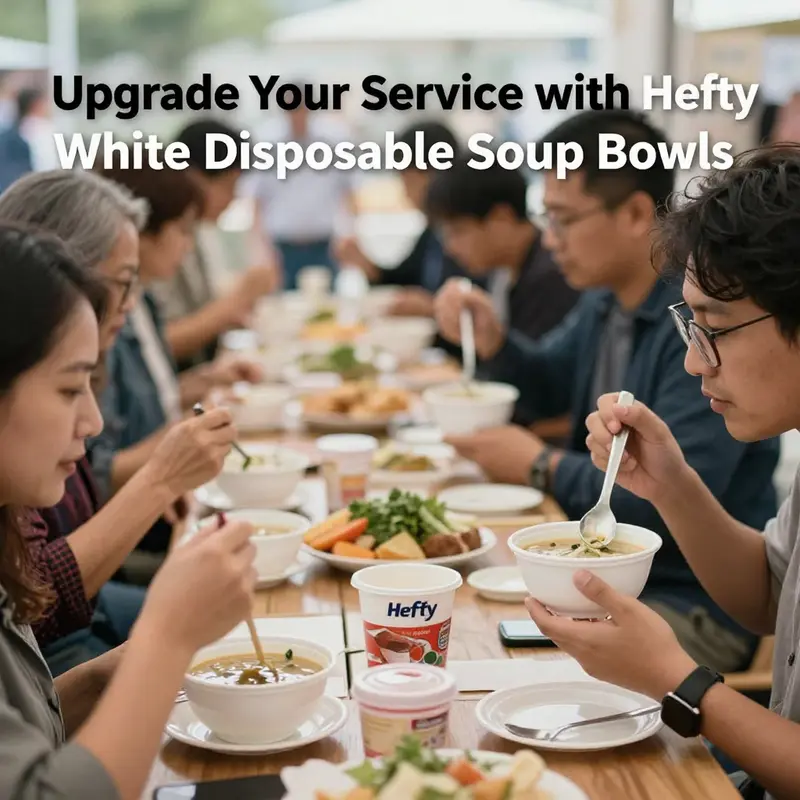
A small, white bowl sits at the center of countless meals, a quiet ambassador of convenience in homes, schools, and bustling event spaces. It is a disposable vessel that arrives in bulk, light enough to carry, sturdy enough to hold soup, ice cream, or salad, and designed to keep its contents separate from the hands that cradle it. Yet its presence is more than utilitarian. It is a mirror of modern society’s rhythms: efficiency, hygiene, scale, and the growing tension between comfort and responsibility. When we consider the everyday act of dishing out a serving into a white, disposable bowl, we glimpse a broader social choreography at work. The object embodies a culture that prizes speed and cleanliness, but it also presses upon communities the long tails of waste, environmental cost, and social negotiation about what we owe to the spaces we inhabit and cherish.
In environments where speed governs pace—urban campuses, hospital cafeterias, festival grounds, and corporate gatherings—the appeal of a simple bowl is clear. The ability to serve quickly without a heavy burden of cleanup translates into tangible labor savings. Kitchens become more agile; counters rotate with fewer interruptions; staff can pivot to other tasks with less downtime spent washing, sanitizing, and drying. These efficiencies ripple outward, shaping wage structures, scheduling, and even facility design. When the rhythm of a service line relies on disposable tableware, what society gains in throughput comes with an implicit cost: the pressure to supply ever-larger quantities of one-use items, often produced and transported with energy-intensive processes. The convenience becomes a kind of social technology, a material layer that undergirds the tempo of public life while quietly reshaping resource flows.
Hygiene, too, is a central virtue attributed to disposable tableware. In crowded gatherings, the fear of cross-contamination can be high, and the bowl serves as a barrier that reduces handling by multiple people. The perception of a clean slate is appealing; it reassures hosts and attendees that meals are sanitary. This trust in hygiene is not merely about cleanliness. It is about social ease—the ability to share food in settings where washing facilities are imperfect or scarce, or where time pressures would otherwise compromise safety. The disposable bowl, in this sense, becomes a buffer between human beings and the messy, sometimes unpredictable realities of communal eating. Yet that buffer has a cost, one that grows more complex as we consider a life beyond the last bite. If the choice to avoid washing fosters a sense of safety in the moment, it also contributes to a longer-term tally of environmental impact that the same society must confront.
From a design perspective, the bowl’s sturdy, soak-proof construction matters. It must resist leakage as liquids shift and temperatures change, a feature essential for soups, broths, desserts, and cold treats alike. The more reliable the barrier between contents and the outside world, the more confidence people have in using these vessels for diverse foods, from hot soups to frosty confections. Industry designers seek a balance between rigidity and disposability, trying to ensure that a single-use item can stand up to travel, stacking, and occasional rough handling without collapsing into a soggy or deformed mess. The result is a paradox: an object meant to vanish after a single use still carries a degree of heft in its capability to perform under stress. In this way, the bowl becomes more than a container; it is an artifact that reveals how material choices enable or constrain social practices around eating, hospitality, and sharing.
But the benefits are not unambiguous. The environmental ledger for disposable bowls is long and complicated. In many places, these items are part of a larger system of plastics that originate from fossil fuels, travel through manufacturing supply chains, and end their days in landfills or landscapes where they may persist for decades or longer. Even when communities advocate for recycling, the reality on the ground is uneven. Contamination, sorting inefficiencies, and gaps in collection infrastructure often impede effective recycling. The resulting narrative is not simply about plastic versus paper or foam; it is about systems—how materials are produced, how they enter households and institutions, and how they exit the system at scale. Each stage of the lifecycle carries an environmental imprint, from greenhouse gas emissions during production to the energy required for transport and, finally, the management of waste. In this sense, the bustling activity of a festival or cafeteria becomes a stage on which environmental stewardship and economic choice play out in real time.
A critical component of this story is the social expectation around cleanliness and convenience in public life. As communities grow more diverse and information about environmental footprints becomes more accessible, there is increasing scrutiny of convenience goods. People are learning to weigh the immediacy of a spill-free experience against longer-term implications for soil, water, and air. The social pressure to adopt more sustainable options has grown louder, shaping everything from municipal policies to corporate innovations. This pressure does not come from a single source; it is the product of a broad cultural conversation about what kind of world we want to live in, and which practices should endure or change. Consequently, more sustainable alternatives—compostable materials, plant-based fibers, and resuable systems—are entering the consciousness of both providers and consumers. Yet adoption requires more than good intentions. It requires infrastructure, stable supply chains, clear labeling, and economic incentives that align with environmental goals. Without these, even the best ideas for reducing waste may falter at the point of purchase or service.
For households and event organizers, the economics of disposable bowls are intertwined with labor costs, space constraints, and the unpredictability of demand. In a restaurant kitchen, the decision to use disposable ware is often framed as a cost-saver, a way to keep water use low and to maintain speed during peak hours. But the same decision can mask hidden costs: the need for more frequent restocking, more waste handling, and, eventually, more landfill space to accommodate the refuse. For public institutions and charitable organizations that rely on donated or subsidized food programs, disposables can simplify logistics, especially in outreach events held in tents, schools, or shelters where facilities are limited. Yet those same institutions operate within budgets that are increasingly affected by waste management fees, recycling tax incentives, and the costs of diverting materials from landfills. Here we see the social calculus at work: the bowl’s appeal in the short term versus the broader, longer-term accounting of environmental and community expenses.
Culturally, disposable white bowls have become a familiar symbol within many social rituals. They appear in school lunch lines, at summer camps, in emergency response scenarios, and at celebrations that require quick, dignified service without a heavy washing burden. The whiteness of the bowl carries a certain neutrality; it can act as a blank canvas for whatever is placed inside, a small stage that supports the food’s color and presentation rather than competing with it. This visual simplicity can democratize dining in larger groups, ensuring that the focus remains on nourishment and shared experience rather than on tableware itself. Still, the rituals we build around these objects reveal a tension: a social preference for convenience coexisting with a growing demand for accountability about where waste goes and how it is managed. The bowl becomes, in a subtle but meaningful way, a test case for broader questions about consumption, responsibility, and the kind of communities we choose to sustain.
In considering the future of such tableware, the conversation often turns to alternatives that preserve convenience while reducing harm. Biodegradable and compostable options, for example, show promise when coupled with appropriate industrial composting infrastructure and consumer participation. The challenge lies in aligning technology, policy, and behavior so that the end-of-life journey for these items mirrors the intention behind their use: to minimize environmental footprints while preserving the social benefits of cleanliness and efficiency. The path forward may involve redesigning the entire supply chain, from the pulp or resin source to the composting facility, from labeling and education to incentives that steer purchases toward more sustainable choices. Yet progress in one locale may not easily transfer to another, as recycling capabilities, waste collection timetables, and consumer attitudes vary widely. This variability underscores a fundamental truth: the social impact of disposable white bowls is not a fixed metric but a living process—one that evolves as communities learn, invest, and experiment with new models of consumption.
For those who want to explore this topic in more detail, the practical realities of choosing and using disposable bowls deserve attention. The decision often hinges not only on cost but on how and where the items are used, how they are disposed of, and whether the surrounding systems support responsible outcomes. A small switch—from foam to a plant-based, compostable option, for instance—might require changes in kitchen routines, storage, and partner vendors. It can also unlock opportunities for public education about waste reduction and recycling practices within organizations and communities. In short, the choice of a simple white bowl echoes larger questions about sustainability, equity, and the social imagination that governs everyday life. It asks us to consider not just what we gain in the moment, but what we leave behind for future generations and for the ecosystems upon which all of us depend.
To anchor this reflection in tangible resources, consider the practical ecosystem surrounding disposable bowls. The availability of bulk-ready, soak-proof options makes them accessible to a wide range of users, from households to institutions. This accessibility is a double-edged sword: it lowers barriers to convenient meal service while normalizing a pattern of waste that can accumulate quickly if not managed thoughtfully. The presence of a reliable, sturdy vessel reinforces habits of rapid service, clean presentation, and predictable dining experiences. If society wishes to recalibrate toward lower waste without sacrificing the benefits these bowls provide, it will need to couple material innovation with behavioral incentives and robust waste infrastructure. That is where policy design, community education, and industry collaboration converge to shape outcomes that balance convenience with stewardship.
For readers seeking practical and concrete avenues to engage with this issue, one accessible entry point is the range of disposable ware options that specialize in bowls designed for versatility and reliability. These choices, while seemingly modest, are the hinge between consumer behavior and environmental outcomes. They reveal how everyday objects can carry both the weight of tradition and the burden of responsibility, and they invite ongoing dialogue about how we feed people, how we care for our shared spaces, and how we measure the true cost of convenience. As we continue to reflect on the social meanings embedded in a white, disposable bowl, we can begin to see the broader arc: from the rituals of serving to the systems that collect and process what remains, and from the local table to the global cycle of resources. This is a story of ordinary items with extraordinary implications, a reminder that every bite taken from a disposable vessel is part of a larger conversation about the kind of world we want to build together.
disposable bowls — a glimpse into the concrete reality of how such vessels are produced, offered, and used across different settings. This link points to a catalog that reflects the variety and accessibility that make these items a staple in many service contexts, while also highlighting the ongoing conversations about sustainability, waste streams, and consumer choice that shape tomorrow’s practices. In embracing this broader perspective, readers can begin to connect the micro-level experience of grabbing a quick bowl with the macro-level questions about environmental responsibility, economic efficiency, and cultural adaptability that animate the ongoing debate about disposable tableware.
Ultimately, the question is not whether disposable bowls exist or whether they bring undeniable benefits in certain contexts. The question is how society negotiates the tension between convenience and consequence, and what kind of stewardship we commit to in the spaces where meals are shared. By recognizing the social life of a simple white bowl—the way it travels from production lines to cafeterias, events, and homes—we acknowledge that everyday objects carry a footprint and a responsibility. The path forward lies in aligning design, behavior, and policy so that the benefits of quick service can be enjoyed without compounding harm to communities, ecosystems, and the world we all share. In this sense, the seemingly modest act of serving food in a disposable bowl becomes a window into a larger project: reimagining consumption in a way that honors both human needs and planetary limits.
For a broader discussion on how waste management and plastic pollution intersect with daily choices, external resources offer deeper context and guidance. See EPA.gov for comprehensive information on waste management and environmental stewardship.
White, Hefty, and Soak-Proof: The Everyday Foam Bowl and the Subtle Logic of Disposable Dining
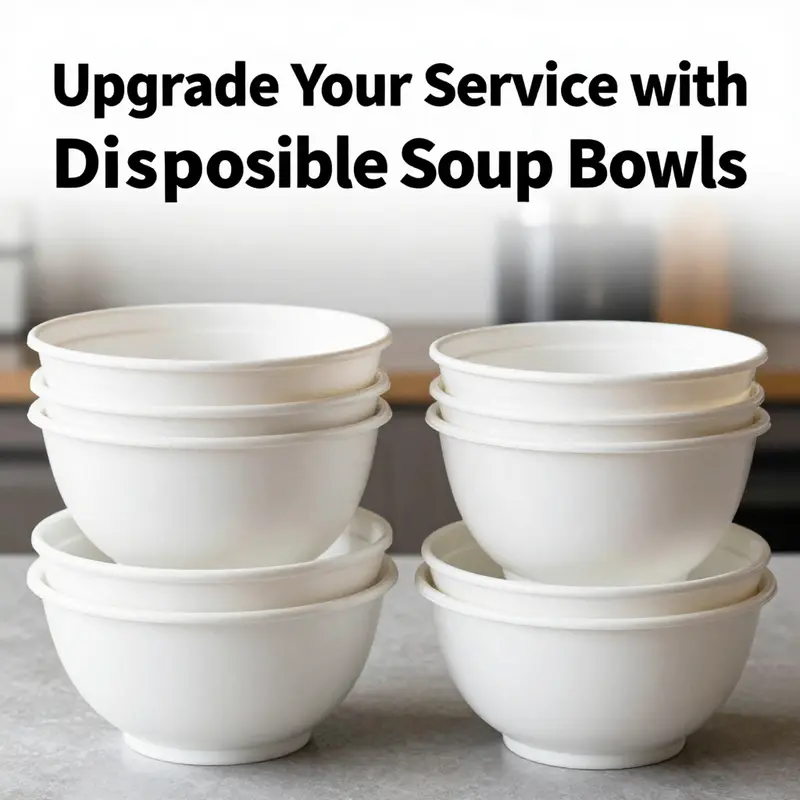
A white foam bowl—unassuming in color, sturdy in feel, and quietly reliable in use—has become a fixture in many kitchens, event spaces, and casual gatherings. Its whiteness reads as a neutral backdrop for whatever fills it, from a steaming bowl of soup to a cooling scoop of ice cream, from a simple salad to a late-night dessert. Yet behind that clean surface lies a practical logic that shapes how we eat when we’re not concerned with washing dishes but with getting nourishment from point A to point B. The chapter that follows traces that logic, not by extolling a single brand, but by examining how a disposable, soak-proofs foam vessel functions within the broader ecosystem of food service, home dining, and shared meals. In doing so, it becomes clear why this particular form of serving ware persists and where it sits in relation to other options that crowd the same tabletop, especially when liquid content is involved and the moment demands both containment and convenience.
At its core, the white disposable foam bowl is a utilitarian object engineered to balance three intertwined demands: containment, durability, and convenience. The containment requirement is the most obvious. A liquid or semi-liquid item—soup, stews, gravies, yogurt with fruit, or even a generous helping of ice cream—poses a challenge for many vessels. The ordinary bowl might hold contents, but if the liquid is too wet or the food too cold, an unfortunate seep or seep-and-softening effect can occur. The foam bowl in question is designed with a specialized inner layer that resists moisture penetration. In practice, this means that the vessel can cradle moist items without the contents wicking into the surrounding material or soaking through the walls. The result is a vessel that holds its shape, minimizes leaks, and reduces the risk that the exterior becomes damp, stained, or softened. This is not merely a matter of comfort; it is a practical feature that preserves the integrity of the serving experience, whether you’re serving ice cream on a hot day or a bowl of hot soup at a casual gathering.
Durability follows containment and is closely tied to the material choice. Foam—when crafted for single-use applications—has a reputation for being light, but the specific grade used for soak-proof designs elevates that lightness into a telling strength. It resists deformation under the weight of contents and remains stable as the bowl cools or warms. It is not a replacement for a heavy-duty, reusable dish, but for a disposable option intended for everyday use, it offers a credible balance: it can be carried from the kitchen to the dining area or the picnic table without bending or buckling under typical, informal loads. The result is a vessel that feels dependable enough for routine events, parties, or potlucks where guests expect to help themselves and the host wants to minimize cleanup without compromising the eating experience.
The third axis—convenience—often determines purchasing decisions more than any other factor. A 12-ounce capacity, a straightforward, neutral appearance, and a readily available bulk pack—often in counts like fifty per package—speak directly to the rhythms of modern life. The volume is large enough to accommodate a standard serving without feeling crowded, yet small enough to keep portions reasonable for a mixed crowd at a casual event. The packaging itself matters: fifty bowls per pack makes planning simple for family meals, school events, outdoor gatherings, or workplace meetings. The white color is unobtrusive, a blank canvas that not only says “eat” but also allows whatever you put in the bowl to stand out—whether it is the emerald of a vegetable medley, the ruby of a berry topping, or the pale cream of a simple yogurt parfait.
This trifecta of containment, durability, and convenience is where comparisons with other disposable options becomes most instructive. Look at a more robust heavyweight plastic option, for example. The plastic bowl can offer exceptional structural strength and resistance to deformation under hot or heavy contents. It may hold up better when the dish is hot or when a heavier serving is required, and it can present a more polished look for certain events. But it often lacks the inner moisture barrier that helps prevent seepage when foods are wet or when temperatures shift. The result can be leaks, softening, or a need to handle with extra care—especially when the food is cold, watery, or highly layered. In contexts where the goal is to keep liquids contained without sacrificing ease of use, the soak-proof foam bowl demonstrates a compelling edge. It handles wet or icy items with a level of reliability that can be hard to match when the priority is smooth liquid containment rather than maximum rigidity.
To appreciate the everyday relevance of such a vessel, consider the settings where it emerges as the most natural choice. Household meals, casual parties, potlucks, school events, and informal gatherings often demand a simple, no-fuss solution. People want to offer soup, chili, or dessert without creating a scavenger hunt for dishes or a pile of dirty utensils. A disposable foam bowl can slide into that routine with minimal planning: a bulk purchase, a quick grab, and a tidy end-of-occasion cleanup. And because many of these vessels are BPA-free, the consumer can approach the item with a peace of mind regarding food safety standards, even as the bowl itself is destined for the recycling stream where permissible. The decision, then, is not just about macro considerations like price or brand loyalty; it’s about finding a balance between performance in moisture-rich contexts and the practicalities of everyday life.
The broader narrative of disposable serving ware often returns to questions of what is being served and where. A 12-ounce size is particularly versatile because it can accommodate a scoop of ice cream with toppings, a small bowl of soup, or a portion of pasta with sauce. It can be used for cold treats at a backyard gathering or for warm meals on the go, whenever the goal is quick service and quick cleanup. The white finish is more than a design choice; it is a neutral stage that makes the food look uniform and appetizing, avoiding color clashes with fruit, soup, or sauce, and lending a tidy, restaurant-like feel to casual occasions. The absence of clutter—no pattern, no decoration—translates into versatility. It means the same vessel can be used for hearty chili or delicate yogurt with fruit without signaling a mismatch to guests or diners.
In the choices that households and event organizers make, the distinction between soak-proof foam bowls and other disposable options often hinges on the specific characteristics of the event. If the menu leans toward wet or cold items, the inner moisture barrier of the foam vessel can be decisive. If the goal is to serve hot, heavy, or particularly dense dishes, a heavily reinforced plastic option may provide better structural rigidity, albeit with a potential trade-off in moisture resistance. The decision framework thus becomes a matter of context rather than a universal superiority, a reminder that no single vessel is optimal for every situation. Within this framework, the white soak-proof foam bowl tends to offer a balanced, reliable, and cost-efficient solution for a broad range of casual dining moments, especially those that require quick turnover and minimal cleanup.
Detailing the purchasing and usage realities adds nuance to this narrative. The practicality of bulk packaging cannot be understated. When fifty bowls come in a single pack, the procurement process becomes predictable, aligning with event budgets and stock planning. The bowls sit in a pantry or storage cabinet until needed, they are easy to transport, and they reduce the friction of meal prep. In use, the design supports straightforward service—no complicated assembly, no special lids, no elaborate heat-retaining equipment. This simplicity is part of the recipe for success in everyday settings, where time is precious and the objective is to feed people with dignity and ease. The neutral color and uncomplicated form also help minimize visual distractions at the table, allowing the food to stay in focus rather than competing with the dishware’s appearance.
For those who want to explore more options within the same broad family of products, a convenient starting point is the general category of disposable bowls. It offers a spectrum of materials, sizes, and finishes, and it frames the foam option not as an isolated choice but as part of a larger toolkit for practical dining. To see how this category frames itself in the marketplace, you can browse the Disposable Bowls section, which centralizes the various shapes, sizes, and materials available to meet diverse needs. This exploration reinforces the idea that the foam bowl is one tool among many, chosen for its particular blend of leak resistance and everyday practicality.
In considering the relationship between these disposable solutions and the trajectory of consumer expectations, it is worth noting how the small, everyday decisions accumulate into broader patterns. The white soak-proof foam bowl embodies a philosophy of frugal efficiency without compromising the meal’s integrity. It is a compact answer to questions of containment, disposal, and convenience that arise at pop-up gatherings, school cafeterias, or family game nights. Its success rests not on novelty but on delivering dependable service in moments when the simplest solution often performs best. As such, it serves as a reminder that the most effective serving ware is not always the most elaborate; sometimes it is the one that collapses the distance between the moment you decide to serve and the moment you clear the table again.
Ultimately, the choice between this foam option and other disposables is a matter of context, priorities, and the nature of the food experience you intend to support. If your aim is to minimize leakage while keeping handling light and costs predictable, the soak-proof foam bowl stands out as a practical, unpretentious solution. If you value maximum structural heft for hot and dense dishes and are less concerned about moisture leakage, a heavyweight plastic alternative may suit your event better. This is not a binary decision but a continuum of possibilities designed to match the realities of different settings. And for everyday readers who want a reliable, low-friction tool that can travel easily from pantry to table with little fuss, the white, disposable foam bowl remains a quietly indispensable workhorse of casual dining.
For readers seeking to broaden their options beyond the immediate family of foam bowls, a quick venture into the broader category can yield perspectives on how design choices translate into performance across various use cases. The linked category page provides a landscape of solutions, encouraging a thoughtful approach to selecting serving ware that aligns with specific food types, service contexts, and cleanup goals. By engaging with these choices, you can gain a more nuanced understanding of how even the most unglamorous items—those simple, white, disposable vessels—play a significant role in shaping the everyday act of eating and sharing food. And in that sense, the foam bowl is not merely a convenience; it is a deliberate, well-considered instrument in the choreography of casual dining.
Internal link for broader options: Disposable Bowls
External resource for direct purchasing context: https://www.walmart.com/ip/Hefty-Everyday-Soak-Proof-Foam-Bowls-White-12-Ounce-50-Count/1493845137
Final thoughts
Choosing the right disposable tableware is a strategic move that can enhance your food service operation. Hefty white soup bowls not only meet practical needs with their soak-proof design and generous capacity but also support your economic and sustainable goals. As dining trends evolve towards convenience coupled with quality, these disposable bowls provide the perfect solution for bubble tea shops, restaurants, food trucks, catering services, and event planners. Incorporating Hefty white soup bowls into your offerings can streamline service, improve customer satisfaction, and reduce your environmental footprint. Embrace this quality disposable solution and watch your business thrive.