
In an era where sustainability is paramount, the choice of packaging materials significantly impacts both the food industry and the environment. Whole Foods Market has carved a niche by prioritizing eco-friendly practices, especially in their selection of butcher paper. Understanding whether Whole Foods butcher paper contains any plastic is crucial for restaurants, food trucks, and beverage chains who aim to safeguard food quality and enhance their sustainability profile. This article elaborates on the assessment of plastic content in Whole Foods butcher paper, unveils their sustainable practices, and clarifies the various types of butcher paper they offer—each contributing to a cleaner environment and a better food experience.
Pure Paper, Safe Meat: Unpacking the Plastic-Free Promise of Whole Foods’ Butcher Paper
Across the counter where meat meets market, the wrapping that folds around each cut or slab is more than a layer of protection. It is a signal, a claim, and sometimes a restatement of a store’s broader values about health, safety, and the environment. In the context of the grocery landscape, where packaging technology evolves at a rapid pace and shoppers increasingly demand transparency, the question of whether the butcher paper used by a sustainability-focused retailer contains plastic touches at once everyday practicality and larger debates about plastic use, waste streams, and consumer empowerment. This chapter follows the threads that connect the paper on the counter to the policies that govern it, the materials science behind it, and the lived experience of shoppers who want their meat wrapped in a way that is both safe and kind to the earth. The core finding is straightforward in its practical implication: the standard butcher paper offered by the retailer is plastic-free, a deliberate choice that aligns with a broader commitment to paper-based packaging. Yet the reality of packaging is rarely a single material story; it is a mosaic of products, coatings, and occasional compromises that serve a purpose while inviting ongoing scrutiny and dialogue about best practices.
To begin with, understanding what is meant by butcher paper helps anchor the discussion. Traditionally, butcher paper refers to a range of papers used for wrapping, handling, and transporting meat, cheeses, and other perishables. There are uncoated papers, often crafted from bleached or unbleached pulp, and there are waxed or oiled variants designed to repel moisture and fat. The coatings used can be natural, such as wax derived from bees or carnauba, or synthetic, designed to create a barrier to moisture or air. The crucial distinction in the current retail environment is not merely whether a sheet is paper or plastic, but whether any polymer layer is present that would clas sify the product as plastic-containing. On that front, the retailer under discussion maintains a plastic-free line for its everyday butcher paper. In practical terms, this means a paper product that is either uncoated or coated with natural waxes rather than polymer-based films. The difference matters: wax coatings, while they alter performance—helping with moisture management and some slickness—do not equate to a plastic film. They are still inherently a paper product, even if they carry a gloss or a barrier that might evoke a plastic barrier in appearance or handling.
The policy in motion at the store is not simply about the absence of plastic, but about the materials’ origins, their safety for direct contact with food, and their end-of-life pathways. The butcher paper used for fresh meat and produce is typically selected for being food-safe and FDA-compliant for direct contact. The emphasis is on purity of material: 100 percent paper with no embedded synthetic layers that could shed into the meat or migrate in a way that would complicate disposal or composting. From a consumer standpoint, the absence of plastic in the standard wrap is a clear statement about reducing single-use plastics at the counter and encouraging a paper-based approach that aligns with broader sustainability goals.
Yet a reader or shopper might push back with a practical counter-question: does the absence of plastic on the core wrapping mean the entire packaging system is plastic-free? The answer hinges on the nuance of packaging ecosystems. While the everyday butcher paper is plastic-free, certain specialized packaging used in other contexts—such as moisture-resistant wraps for frozen products, or bags and trays used to seal or protect items during transport—may incorporate a thin plastic film or laminated barrier. This nuance matters because it highlights the difference between a general-purpose, food-contact paper product and a package designed to withstand particular environmental conditions, such as low temperatures or high humidity, where moisture ingress could compromise product quality or safety. The key takeaway is that the plastic content, when present, is not part of the standard butcher paper used for fresh meat or cheeses, but a separate packaging stream that serves a different need.
A central virtue of the retailer’s approach is transparency. Consumers increasingly want to know what their packaging is made of, why certain materials are chosen, and how these choices affect waste streams and recycling or composting options. The retailer, whose sustainability communications emphasize reducing single-use plastics and favoring materials that can be recovered or returned to a safe end-of-life loop, tends to label packaging materials clearly. This clarity serves not only compliance purposes but also trust-building with customers who navigate a complex landscape of plastics, adhesives, coatings, and barrier technologies. The emphasis on clarity is important because it allows shoppers to make informed decisions, especially if they are attempting to minimize plastic use in their own households or are participating in local composting or home recycling programs. In effect, the packaging story at this retailer is less about a single material decision and more about how that decision fits into a broader, ongoing practice of sustainable packaging stewardship.
From a materials science perspective, the plastic-free butcher paper rests on a set of tradeoffs that are familiar in pulp-and-paper engineering. Paper is inherently porous and variable in its barrier properties. When moisture and fat-bearing foods are involved, a moisture barrier or fat barrier is desirable to prevent the paper from becoming soggy, losing structural integrity, or allowing the contents to seep through. A natural wax coating can provide a degree of moisture resistance without introducing a polymer layer that would be classified as plastic. Beeswax, carnauba wax, or paraffin wax can impart a surface that repels liquids and reduces leakage, while maintaining the paper’s compostability and fibrous composition. The nuanced point is that a wax coating does not constitute a plastic film in the conventional sense. It is still a non-polymeric barrier that degrades with the paper in time, typically in industrial composting settings or under certain disposal conditions that prefer higher-temperature processes. In other words, the result is a packaging option that upholds food safety and integrity while staying true to a paper-centric end-of-life scenario.
This distinction matters when considering consumer perceptions. A shopper might encounter a wrap that looks glossy or feels slick and assume it contains plastic. The careful design of the product and the labeling approach aims to avoid such misinterpretations by using coatings that are natural or at least not polymer-based. The conversation around coatings, nonetheless, remains important because coatings influence how the paper behaves at different temperatures, in moisture-rich environments, and during handling in a busy retail setting. Even if a coating is natural, it can complicate recycling streams if not recognized by local programs. For this reason, the packaging strategy typically accompanies guidance about disposal: whether the paper can be composted at home or must be treated as yard waste, or whether it needs to be disposed of with municipal composting or recycling streams. In many jurisdictions, paper without poly coatings is accepted by standard recycling programs, while waxed papers may be treated differently depending on local facilities. The practical implication for consumers is that plastic-free butcher paper supports a more straightforward, paper-forward end-of-life flow, albeit with caveats that local programs determine.
The retailer’s public-facing sustainability communications often underline a broader philosophy: packaging should be functional, safe, and as low-impact as possible without compromising product quality. This philosophy guides not only what is chosen for the counter but how staff are trained to explain packaging options to customers. When a shopper asks about the wrap, staff can describe why the paper is chosen, how it performs in terms of moisture management, and what disposal options exist in their community. The mission is to empower shoppers to participate in waste reduction and to reduce confusion around what constitutes recyclable or compostable packaging. In practical terms, this means a consistent standard for the core butcher paper and thoughtful differentiation for other packaging streams that serve different ends, such as moisture barriers for frozen items or security wraps for grab-and-go products.
From the standpoint of supply chains, the paper in question is frequently drawn from recycled fibers or responsibly sourced virgin fibers, with a bias toward materials that minimize environmental impact. The preference for recycled content, when feasible, aligns with broader goals of reducing virgin fiber demand and diverting waste from landfills. The supplier network that provides this butcher paper tends to prioritize certifications and traceability that reassure retailers and customers about responsible sourcing. The challenge, of course, is to balance cost, performance, and environmental credentials. Recycled-content paper may carry a slightly different texture or whiteness, and manufacturers often offer a blend that achieves both desirable aesthetics and predictable performance in wrapping meat and other perishables. Bleaching, when used, tends to aim for a clean, sanitary appearance that signals food safety and professionalism, while still preserving the paper’s recyclability and compostability where available. The result is a product that not only protects the product but also communicates a management story about how materials are chosen, how they are produced, and how they will be disposed of at the end of their life.
The consumer experience is inseparable from this story. When a shopper purchases meat with paper wrap, the interaction includes not just the meat but the physical experience of handling that wrap. A paper that remains dry and intact at the counter, capable of absorbing some surface moisture without falling apart, is a sign of careful material selection. When a wrap performs well, it reduces the need for secondary packaging waste, such as additional bags or plastics, and it helps maintain a clean aesthetic around the display and the checkout area. This can translate into a more streamlined experience for the consumer, who may prefer not to be encumbered by extra layers of plastic or waxed films that complicate disposal. At the same time, buyers who are concerned about environmental impact often appreciate a packaging approach that communicates a clear preference for paper-based solutions. It is not only about the material’s intrinsic properties but also about the system into which it is integrated—how it interacts with staff practices, how it is presented to customers, and how it aligns with municipal waste and recycling realities.
To illustrate how these ideas translate into practice, consider how a shopper might navigate a typical trip to the counter. The butcher paper sits in a stack, ready for use, its whiteness a signal of cleanliness and order. A staff member selects a sheet, tests its barrier performance against the fatty surface of a freshly cut roast, and gently folds the paper to form a snug wrap that minimizes excess space and waste. The wrap is then handed to the customer with the same care given to the product itself. No plastic film is involved in the core wrap, so there is no immediate question of migrating plastics onto the meat. If the item requires extra moisture control—such as a particularly juicy cut—the staff might apply a wax coating that is known to be natural or food-grade but non-polymeric. The visible implication for the shopper is a wrap that looks and feels familiar, with a sense that materials were chosen to respect both the product and the environment. The absence of plastic in the primary wrapping also aligns with a broader messaging strategy that many shoppers are already aware of: that sustainable packaging is not a single-layer decision but a web of choices across materials, processes, and end-of-life paths.
From a communications perspective, it is important to avoid over-simplification. The clean, plastic-free core wrap does not imply that every packaging element is plastic-free. Some products that require durable moisture barriers may employ thin plastic layers or laminated structures in different formats, particularly for long-term storage or shipping. The retailer’s packaging guidelines typically distinguish between the essential, food-contact paper used for fresh items and the peripheral packaging used for storage, transport, or frozen goods. In consumer-facing terms, the distinction translates into usable guidance for shoppers who wish to reduce plastic use in their own homes while still receiving fresh, high-quality products. The practical upshot is that shoppers can often rely on the standard butcher paper for immediate wrapping needs without encountering embedded plastics, while remaining mindful of other packaging options that serve different purposes but may introduce plastics in separate contexts.
A final dimension concerns the life cycle and end-of-life options. Paper-based packaging tends to offer more favorable degradation pathways than plastic-based equivalents, particularly in communities with composting programs or paper recycling streams. The math of sustainability here is not purely about the material but about the network in which the paper is produced, used, and disposed of. For those who participate in home composting or community composting schemes, the wax coatings used must be compatible with composting guidelines, typically allowing biodegradation without leaving persistent residues. For those relying on standard recycling streams, the absence of plastic in the core wrap ensures that the wrap is accepted in a broader range of programs that handle paper products. The optimal scenario for shoppers and retailers alike is a packaging ecosystem that maintains product safety while minimizing environmental footprint and maximizing recycling or composting compatibility.
In closing, the narrative around plastic content in butcher paper, as experienced with this retailer’s offerings, is less a binary yes-or-no question and more a nuanced conversation about materials, performance, and sustainability philosophy. The plastic-free core butcher paper embodies a deliberate stance: a commitment to maintaining food safety, providing a reliable moisture management solution, and aligning with a broader mission to reduce single-use plastics. The surrounding packaging ecosystem—frozen goods wraps, labels, bags, and lids—may introduce polymeric barriers where functional needs demand them, but the everyday counter-wrapping solution for fresh meat and perishables remains rooted in paper. This distinction matters because it empowers consumers to make informed choices about which packaging types to prefer in different contexts and how to dispose of them in ways that are most consistent with local waste-management practices.
For readers who want a concrete takeaway, the central message is that plastic content in the core butcher paper is not a characteristic of the standard wrap used for fresh items at this particular retailer. The choice to rely on paper aligns with a broader sustainability agenda that prioritizes renewable-fiber materials and aims to minimize synthetic additives in everyday packaging. At the same time, shoppers should remain attentive to the broader packaging landscape within the same retailer, recognizing that some packaging formats serve different purposes and may incorporate plastic films or laminates when they encounter moisture, cold storage, or extended shelf life. This awareness helps shoppers hold the packaging system to account, encouraging ongoing improvements that reconcile safety, convenience, and environmental stewardship. If readers wish to delve deeper into the retailer’s stated packaging principles and ongoing sustainability commitments, they can review the official resources that outline packaging and sustainability practices across the organization, including the explicit focus on reducing plastics where feasible.
Internal resource for further reading: explore one example of sustainable, paper-based packaging solutions in the broader ecosystem by visiting this product listing that highlights eco-friendly, printed-logo paper cups with lids. The anchor text mirrors the nature of the product, emphasizing the paper-based and environmentally mindful design: eco-friendly printed-logo paper ice-cream cups with lid.
External resource for broader context: For a comprehensive overview of packaging commitments and practices at a major retailer, see the company’s Sustainability Packaging page. This resource provides context on how packaging decisions are made at scale, including considerations around plastics, recycling, and compostability: https://www.wholefoodsmarket.com/sustainability/packaging
Plastic-Free Promise: How a Major Grocery Chain Handles Butcher Paper in the Pursuit of Sustainable Packaging
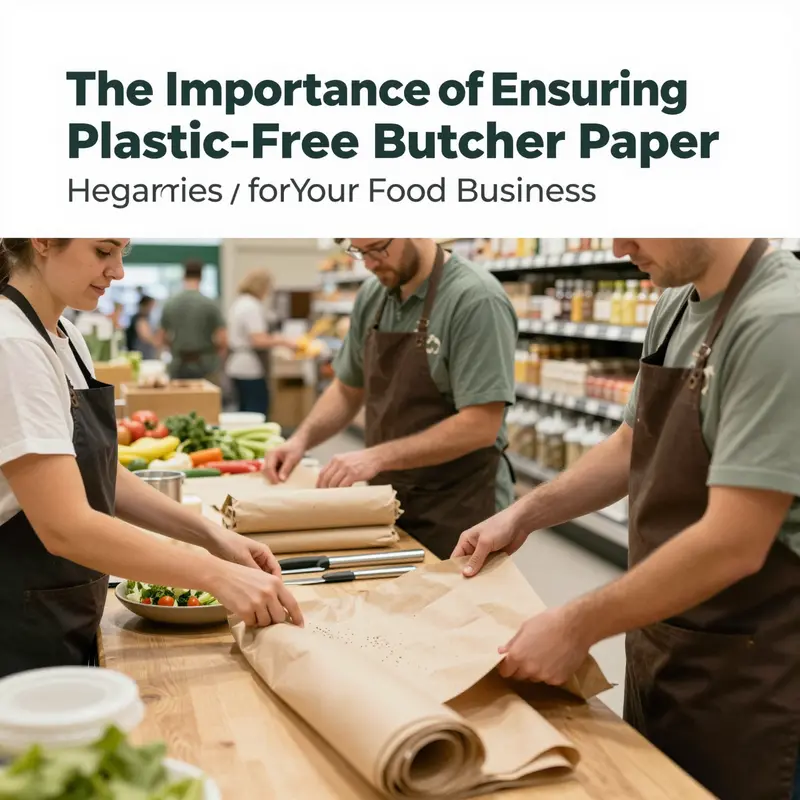
The question of whether butcher paper in a large, sustainability-focused grocery retailer contains plastic sits at the intersection of material science, supply chain ethics, and consumer health. It invites readers to look beyond a single layer of wrap and toward the broader systems that decide what reaches the shelf, how it interacts with food, and what happens to it after use. At the heart of the inquiry is a simple but consequential distinction: not all paper coatings are plastics, and not all plastics are obvious at first glance. Understanding that distinction requires traversing the nuanced world of paper types, coatings, and the evolving standards that guide packaging toward safer food contact, less waste, and fewer fossil-fuel derivatives. It also requires acknowledging that a major grocery retailer’s commitment to sustainability is not a single policy, but a constellation of choices made across sourcing, processing, labeling, and end-of-life options.
To appreciate what is in play, one must first understand the spectrum of butcher paper itself. In common retail use, butcher paper refers to a family of papers designed to wrap, contain, or carry meat and related products during handling, cooking, and service. The term encompasses a range of materials, from plain uncoated kraft papers to papers that receive coatings for grease resistance or water repellence. Importantly, those coatings may come from natural sources, such as wax, or from synthetic inputs that function similarly in a kitchen setting. Wax coatings—beeswax, paraffin, or plant-based waxes—are designed to repel fat and moisture without necessarily introducing plastics into the wrap. This is not the same as a plastic film or a polymer-coated sheet; rather, a wax layer can impart the needed barrier properties while preserving the paper’s fiber-based character. In contrast, certain “greaseproof” or “oilproof” papers may rely on polyolefin or similar polymer coatings, which are more likely to be categorized as plastic inputs when assessed in life-cycle terms. The distinction matters for a consumer choosing between a paper-based wrap and a wrap that relies on a polymer layer.
In practice, the packaging choices of a major grocery retailer reflect an overarching aim: minimize environmental impact while safeguarding food safety. The retailer’s public-facing sustainability narratives emphasize the minimization of plastic, the expansion of recyclable or compostable materials, and the use of renewable resources where feasible. This orientation aligns well with the broader industry push toward packaging that can be recycled locally, composted in industrial facilities, or sourced from responsibly managed forests. When it comes to butcher paper, these values suggest a preference for papers that are food-grade, safe for direct contact with raw and cooked meats, and free of chemical additives that could compromise food safety or complicate recycling streams.
The 2024 Impact Report from the retailer’s sustainability program underscores a systemic approach to packaging: reduce waste, source materials that support sustainable farming, and improve livelihoods across the supply chain. While the report does not itemize every carton or every sheet, the emphasis on recyclable, compostable, or renewable materials provides a framework for evaluating butcher paper as used in meat departments, deli counters, and take-away windows. Within this framework, several guiding assumptions emerge. First, the paper is food-grade and FDA-compliant, designed to meet direct-contact standards without introducing contaminants that would limit consumer safety or complicate disposal. Second, the fiber content is likely to originate from recycled sources or from fibers certified as responsibly sourced, with attention paid to forestry stewardship and forest certification schemes. Third, where the paper is coated for barrier performance, the coatings are chosen to minimize environmental trade-offs, favoring coatings that either are recoverable in existing recycling streams or that are degraded by composting infrastructure where applicable. These assumptions are not mere conjecture. They are built on the retailer’s stated goals and on industry-wide shifts toward packaging that is both safer for food and gentler on the planet.
The practical reality, however, remains nuanced. A single sheet of butcher paper is rarely tested in isolation; it is part of a broader packaging system that includes printing inks, adhesives, food-contact dyes, and liners inside meat cases or takeaway wraps. In some cases, papers are described as waxed or treated to resist moisture and grease; in others, the description highlights wax-like or wax-based coatings that do not necessarily constitute plastics. Consumers often encounter the term “waxed” and interpret it as a plastic barrier, but natural wax coatings, when properly composed, can be photostable, odorless, and safe for food contact without the same end-of-life challenges posed by synthetic polymers. The distinction is important because it informs both consumer choice and municipal waste flows. If a retailer can leverage a natural wax coating that remains paper-based, the wrap can be disposed of with paper recycling or industrial composting, depending on local infrastructure. If the coating is plastic-based, the disposal pathway may shift, potentially complicating recycling streams or increasing contamination risk in compost systems.
From an operations perspective, the retailer’s procurement choices for butcher paper are guided by more than a single shopping list item. They require ongoing supplier collaboration, fiber certification checks, and audits that aim to verify that materials meet food-safety standards and environmental criteria. The supply chain atlas for paper products often includes multiple tiers: the sheet or roll itself, the barrier coatings, inks used for labeling, and any adhesives used in packaging or labeling. Each of these components must be evaluated for safety, recyclability, compostability, and overall environmental impact. In a sustainability-driven system, the decision to favor one coating over another is not purely about barrier performance; it is also about the downstream handling of that paper after its useful life. For example, if a wax-coated paper yields a clear advantage in keeping meat products fresh without introducing petroleum-based plastics, that choice might be encouraged where composting or specialized recycling exists. Conversely, if a coating complicates paper recycling or contaminates compost streams, it could be deprioritized, even if it offers superior short-term performance in the case or deli counter.
The consumer-facing implication is that shoppers should not assume all butcher paper is created equal, even when it operates within the same retailer. The practical takeaway is to check local waste streams and to look for clear labeling about recycling or compostability. In markets with robust municipal or industrial composting programs, a compostable or biodegradable certification can be a meaningful signal. In markets where only curbside recycling exists, a recyclable label may be the more relevant guide. The retailer’s packaging strategy, therefore, becomes a balancing act: provide a reliable barrier and safe food contact while ensuring that the end-of-life path aligns with local capabilities. This is precisely why the sustainability program emphasizes both material selection and the supporting infrastructure needed to realize the environmental benefits at scale.
What, then, does this mean for the butcher paper encountered in meat departments, deli counters, and take-away windows? It means that the paper used is likely a food-grade, FDA-compliant option that honors the retailer’s broader commitment to reducing plastic and relying on renewable or recyclable materials whenever feasible. The exact specification—whether the coating is natural wax, a water-based barrier, or a polymer-based layer—may vary by supplier, region, and the availability of composting or recycling facilities in the area. The retailer’s public materials do not enumerate every coating choice for butcher paper; instead, they articulate a policy trajectory: favor materials that minimize plastic, maximize recyclability or compostability, and align with safe food-contact standards. This trajectory gains further legitimacy when viewed through the lens of the retailer’s broader packaging strategy, which includes supplier engagement, life-cycle thinking, and investment in consumer education about disposal options.
A distinctive feature of this narrative is how it challenges common assumptions about “paper vs plastic.” For some readers, the presence of a coating or treatment—whatever its source—evokes the possibility that plastics have infiltrated a paper wrap. Yet the reality is more nuanced. Wax coatings, for instance, are not plastics, even though they can provide similar grease resistance. When a wax coating is used, the paper remains largely fiber-based and can be processed in many recycling streams that accept uncoated papers. In contrast, polymer coatings may narrow recycling options or demand specialized facilities. The retailer’s commitment to avoiding plastics helps steer suppliers toward natural or renewable barrier technologies and reinforces a broader consumer expectation that meat packaging be as compatible as possible with existing waste-management infrastructures.
To illustrate how these principles translate into real-world packaging decisions, consider the design logic for take-away and prepared-meal presentations. The packaging must withstand handling, maintain product quality, and minimize the risk of cross-contamination. Yet it must also be recoverable or compostable through the local waste system. When possible, the packaging is chosen to be explicitly labeled as recyclable or compostable, with clear guidance for the consumer. The result is a packaging ecosystem that invites accountability from all participants: the retailer, the supplier, and the consumer. This collaborative model is a cornerstone of modern sustainability programs and explains why butcher paper is evaluated not in isolation but as part of a larger network of packaging choices that collectively shape environmental outcomes.
Consumer education plays a crucial role in translating policy into practice. The retailer’s sustainability webpages and impact reports serve as a beacon for shoppers who want to do right by the environment without sacrificing safety or convenience. When shoppers ask, “Does this butcher paper contain plastic?” they are often seeking reassurance about end-of-life options. The retailer’s response—rooted in policy and supported by supplier choices—often emphasizes safety, recyclability, and compostability as core criteria. The result is a shopping experience that reflects a growing customer demand for transparent materials and responsible packaging frameworks. The absence of explicit, granular product-level disclosures in public reports should not be mistaken for nonexistence of a plastics-conscious approach. Instead, it signals a strategic emphasis on systemic packaging improvements, with butcher paper as a key but not singular element of the overall packaging portfolio.
In this light, one can observe how material science, policy, and consumer preference converge in everyday choices at the store level. The materials science informs what is feasible; policy guides the criteria by which suppliers are selected; consumer preference pushes for clarity and accountability. The retailer’s approach to butcher paper embodies this convergence. The emphasis is on maintaining food safety, reducing reliance on plastics, and promoting end-of-life options that align with local waste-management realities. In markets where composting is accessible, a paper-based, compostable option may flourish. In others where recycling streams dominate, paper-based, recyclable options may prevail. Where neither pathway is fully realized yet, the policy emphasizes continuous improvement, supplier collaboration, and consumer education as essential mechanisms for progress. This is not a sterile theoretical exercise; it is a living practice that informs daily operations and shapes long-term outcomes for households and communities alike.
For readers who want a concrete example of how paper-based packaging can be chosen with these aims in mind, a related packaging design reference illustrates how contemporary paper-based products are conceived for kitchen environments while preserving the paper’s fiber identity. In-stock, new-design kraft paper take-away options with carefully considered barrier properties demonstrate that it is possible to achieve practical performance without defaulting to plastics. See this specific design example here: in-stock-new-design-salad-rectangle-takeaway-kraft-paper-octagonal-box-with-lid. The link is provided to highlight how a paper-based structure can meet contemporary needs for durability, grease resistance, and food safety without compromising the fiber-based nature of the material. While the example is not a direct substitute for butcher paper in all contexts, it serves to illustrate the broader point: innovative paper-based solutions exist and can be scaled within a sustainability framework that prioritizes plastic-reduction alongside safety and convenience.
Ultimately, the question of whether butcher paper used by a sustainability-forward retailer contains plastic hinges on the same set of considerations that drive any responsible packaging program. It is a question about the alignment of material properties with environmental goals, about the life cycle of the product from creation to disposal, and about the transparency and accountability that consumers expect. It is also a reminder that the fight against unnecessary plastics in food-related packaging is not a single policy battle but a continuous, evolving practice. The retailer’s approach—emphasizing food-grade safety, renewable or recyclable materials, and a robust dialogue with suppliers and customers—offers a blueprint for other players in the sector who seek to reconcile efficiency with stewardship. In this sense, butcher paper becomes less a simple wrap and more a case study in how modern grocery retail negotiates competing demands: hygiene, convenience, affordability, and the planet’s well-being.
For readers seeking a broader conceptual frame, the literature on sustainable packaging emphasizes a systems perspective: materials, processes, disposal infrastructure, and consumer behavior all interact to determine environmental outcomes. The retailer’s experience with butcher paper is a microcosm of that system. It demonstrates how a company can maintain high food-safety standards while working to reduce plastic and to support packaging that is compatible with recycling and composting where such options exist. It also shows the importance of clear labeling and consumer education in enabling responsible disposal choices. The result is not merely a policy on a shelf tag but a living practice that informs supplier contracts, procurement guidelines, and the daily routines of store staff who handle meat and prepared foods.
To close the loop, it is useful to acknowledge the limitations of public data. Public impact reports rarely disclose every material specification or every coating used in every market. This is by design, given the complexity of supply chains and the need to protect proprietary information. Yet the consensus across available materials and industry analyses remains consistent: a strong sustainability posture for packaging in a meat department hinges on avoiding unnecessary plastics, opting for paper-based or renewable alternatives when feasible, and building redundant pathways for responsible disposal. The retailer’s strategy, then, rests on the principle that packaging decisions are not isolated acts but parts of a systemic commitment to safer food contact and a healthier planet. For the curious reader, the broader conversation about packaging materials and their environmental footprint is enriched by a growing ecosystem of resources and collaborations that bridge retailers, suppliers, waste-management entities, and researchers in a shared pursuit of better outcomes. A practical takeaway is to stay informed about local waste infrastructure and to support packaging designs that maximize recyclability and compostability in real-world settings.
External resource: For a broader view of packaging sustainability in practice, see the Sustainable Packaging Coalition’s overview of industry approaches to packaging and waste reduction: https://www.packagingcoalition.org/whole-foods-market-sustainability-packaging
Grease, Kraft, and Plastic-Free Promises: A Look at Whole Foods Butcher Paper
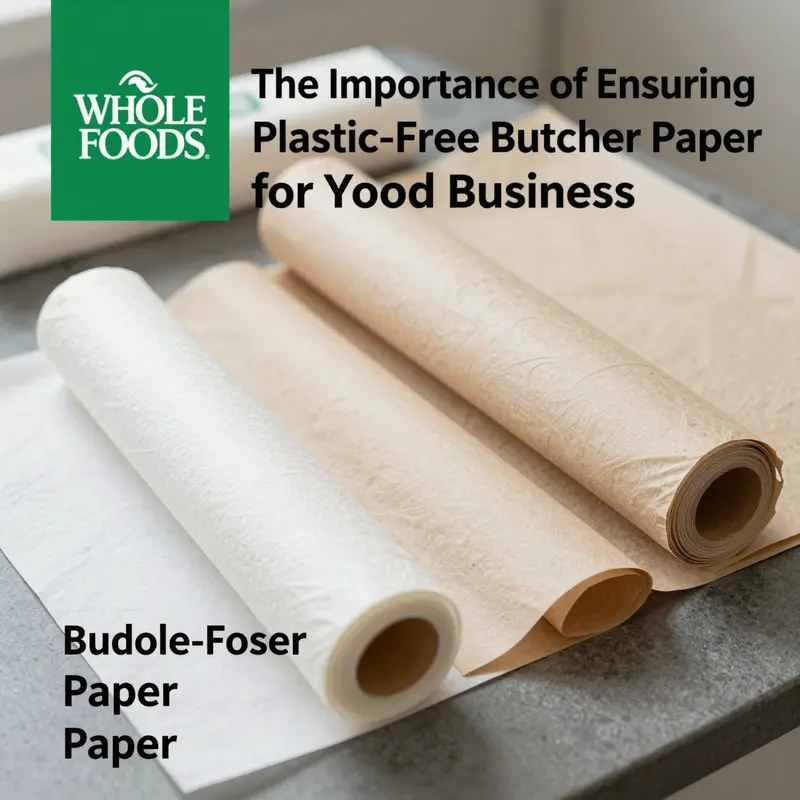
Butcher paper in Whole Foods stores is typically kraft paper designed to wrap and display meat with integrity. The base material is kraft fiber, often unbleached, providing strength and a natural appearance. Bleached kraft offers a brighter look, while unbleached kraft emphasizes a natural aesthetic; both can meet food-contact standards when properly processed. In the store context, the choice between these variants can reflect environmental priorities and consumer expectations.
Coatings are the next piece of the puzzle. Wax coatings, often plant-based, are used to improve water resistance and grease barriers without introducing plastic laminates. These wax-based barriers are not plastics and can be compatible with composting or certain recycling schemes, depending on regional infrastructure. When a product is described as wax-coated, the emphasis is on natural barrier technologies rather than polymer films.
In contrast, plastic-coated or laminated papers introduce polymer layers that can complicate disposal. Such options may offer stronger moisture resistance but can hinder composting and increase recycling complexity. Whole Foods has tended to favor materials that minimize plastic content or enable end-of-life options like composting where feasible, aligning with environmental commitments.
The regulatory angle centers on food safety: papers intended for direct contact should meet food-contact safety standards, and any surface treatment should be approved for such use. This often means grease resistance is achieved through non-plastic means or via food-grade coatings that do not migrate harmful substances.
From a sustainability perspective, customers are increasingly asking where fiber comes from and how end-of-life is managed. Certifications such as FSC or SFI can indicate responsible forestry practices, while compostability or recyclability in local streams informs disposal choices. The packaging approach in Whole Foods seeks to reduce plastic exposure while preserving product quality, display practicality, and safety.
For shoppers seeking clarity, asking staff about the coating type and end-of-life guidance can yield informed decisions. If the wrap is wax-coated, request details about the wax source and whether the barrier is compatible with composting in your locale. If the wrap is uncoated, it may be closer to a straightforward kraft wrap with fewer disposal complications. In short, Whole Foods’ butcher paper generally aims to be plastic-minimal and fiber-forward, with coatings that support safe use and responsible disposal.
Final thoughts
Choosing the right packaging is not just a regulatory need, but a commitment to sustainability. Whole Foods Market’s butcher paper is a prime example of how food businesses can opt for plastic-free solutions that don’t compromise on quality or environmental safety. By understanding the types available and Whole Foods’ sustainable practices, food service operators—from cafes to catering services—can align with eco-conscious consumers and make a significant difference in their ecological footprint. Make informed, responsible choices in your packaging to enhance your brand’s sustainability narrative.