
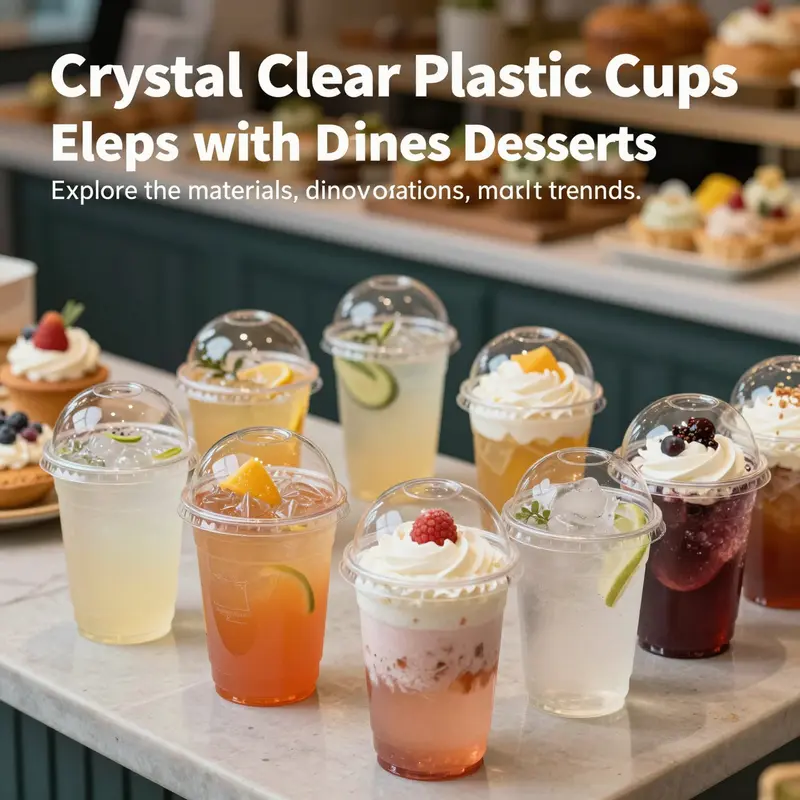
Crystal clear plastic cups with dome lids have become an essential choice for a variety of businesses, from bubble tea shops to catering services. Their exceptional clarity and functional design not only enhance the visual appeal of beverages and desserts but also provide practical benefits in terms of usability and durability. This article delves into the intricacies of these cups, exploring the diverse material options available, innovative design features that set them apart, emerging market trends driving their popularity, and the sustainability considerations that are increasingly important in today’s eco-conscious environment. By the end, you will have a well-rounded understanding of how these cups can elevate your service offerings while meeting customer expectations.
Choosing Clarity: Material Science Behind Crystal Clear Cups with Dome Lids — PET, PS, PP, and PLA
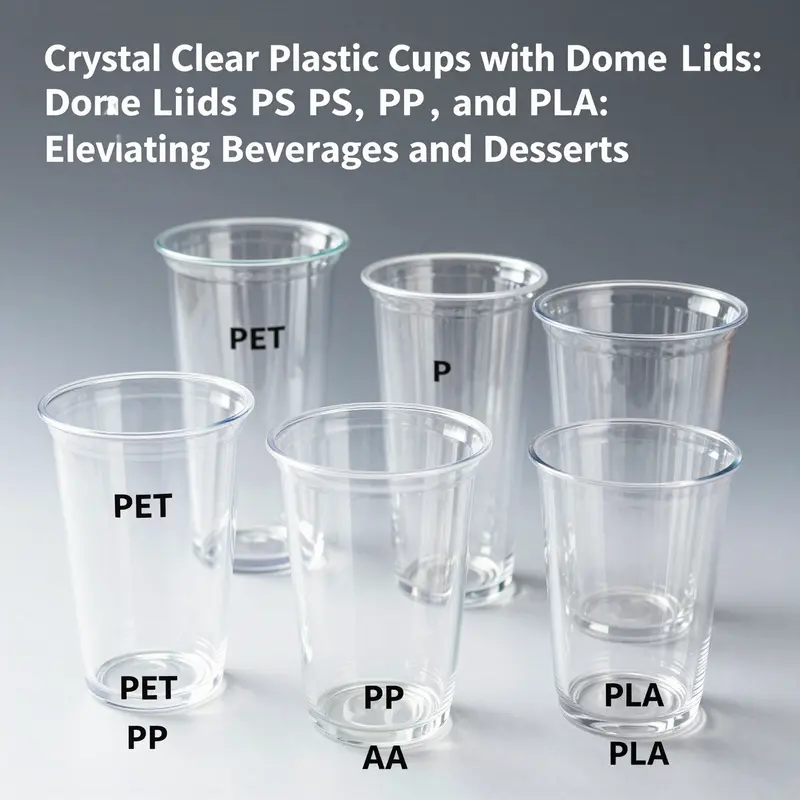
The visual appeal of crystal clear cups with dome lids rests on more than just a pretty face. In the realm of cold beverages, layered desserts, and grab-and-go snacks, the material behind the glassy exterior determines how long that clarity lasts, how well freshness is preserved, and how reliably the cup stands up to use, transport, and the occasional accident. When a beverage glides into a clear dome, the eyes are drawn to the color gradient, the layers within a smoothie, the swirls of a jelly dessert, or the delicate sparkle of a fruit punch. Yet that moment of visual drama is the result of a material story written in polymers: PET, PS, PP, and PLA. Understanding these materials means appreciating not just what you see, but what you cannot see—the way each plastic interacts with temperature, light, air, moisture, and the people who handle it from kitchen to curbside. The choice of polymer is the hinge between presentation and practicality, between an indulgent showcase and a responsible, everyday workhorse that keeps drinks fresh, safe, and convenient for customers. As you weigh the options, the dome lid design itself becomes more than a cap on a cup; it becomes a partner in the performance of the material, shaping how the cup behaves under stress, how it communicates with the consumer, and how it fits into a broader system of waste, recycling, and sustainability. In this chapter, the focus is not on brand names or marketing slogans but on the material behaviors that define the most common crystal clear options for cold drinks and chilled desserts. PET, PS, PP, and PLA each bring a distinct balance of clarity, strength, temperature tolerance, and end-of-life fate. The choice depends on the setting—outdoor events, busy cafes, food trucks, or sit-down dessert shops—and on the expectations of the public for presentation and responsibility. To begin, consider what the cup must do beyond merely hold liquid. It must be crystal clear enough for the eye to read a gradient of color and a layer’s separation; it must resist cracking or warping when a straw is inserted and a lid is pressed down; it must tolerate a range of temperatures from cool to room temperature, and sometimes a splash of heat from hot-dish or steam, without deforming. It must also align with a consumer’s sense of sustainability, which increasingly shapes brand perception and purchase choices. Each polymer answers these demands in a different key, and together they form a spectrum rather than a single, universal solution. PET, the most common choice for clear disposable cups, offers exceptional clarity and a favorable strength-to-weight ratio. Its transparency is renowned, making drinks look vibrant and desserts visually enticing. The strength-to-weight ratio means a lighter cup can do the job of a heavier one, which translates into savings in shipping weight and easier handling for staff. PET’s barrier properties—its ability to limit the ingress of water vapor and gases—help preserve fizz in sodas and the freshness of juice blends as they travel from kitchen to event or table. Importantly, PET is widely recyclable in many municipal programs, which makes it a practical option for businesses seeking to balance presentation with environmental considerations. Yet PET has a明确 and notable limit: heat. When exposed to higher temperatures, PET can soften or warp, which means it’s not the best choice for hot beverages or for environments where cups may sit in heating sunlight for extended periods. That temperature constraint helps explain why many dome lid configurations are designed with heat tolerance in mind, often pairing PET cups with lids made from sturdy materials that resist deformation. The interplay between cup material and lid material is subtle but critical. A dome lid needs to retain its shape under pressure from the straw and the volume of the drink, while also sealing effectively to prevent leaks during transport. A lid that warps in the sun or under a hot beverage undermines the very clarity you invested in when you chose a PET cup. PS, the rigid and crystal-clear cousin, offers another set of advantages and constraints. Polystyrene is renowned for its exceptional clarity and rigidity, which makes it a favorite when the goal is a glass-like appearance with a crisp, clean edge. The downside, however, lies in its brittleness. PS can crack or shatter under impact, or when dropped on a hard surface, which raises concerns in fast-paced service environments where cups are handed across a counter or stacked for transport. The recyclability story for PS is more complex than PET’s. In many regions PS recycling rates lag behind PET’s, and the material is less accepted by some municipal programs. This has practical consequences: even if a PS cup looks pristine, its end-of-life path may be less straightforward, which can influence a business’s sustainability narrative. The colorless, transparent look of PS is compelling, but the economics and waste considerations often steer some operators toward other materials when the goal is long-lasting impact with a lower risk of breakage. Polypropylene, or PP, introduces a different balance of properties that aligns closely with the functional demands of dome lids and cold beverages. PP is notably heat resistant relative to PET, a feature that makes it well-suited for certain dome lid assemblies where the lid must clasp around a rim and maintain its form during temperature fluctuations. Its moisture and chemical resistance are strong, which helps protect contents from flavor migration or contamination during handling and transport. PP’s transparency is not as absolute as PET’s or PS’s, but it can still achieve a high degree of clarity with modern manufacturing. The real strength of PP in this context is its versatility: it tolerates ambient temperature changes, resists deformation, and supports designs that aim for a snug fit between cup and lid. In practical terms, PP is often favored for lids and for cups that are intended to see room-temperature to cool beverages or slightly warmer beverages, where the risk of warping would otherwise undermine performance. The final material in our quartet, PLA, represents a different philosophical and technical approach: sustainability through bio-based origins and compostability. PLA is derived from renewable resources such as corn starch or sugarcane, and its glossy, clear appearance can rival traditional plastics in the short term. For cold and room-temperature beverages, PLA can perform well, maintaining clarity and a light touch that aligns with eco-conscious branding. The caveat with PLA is temperature sensitivity. When exposed to heat, PLA can soften or warp, which means it typically doesn’t perform as well as PET in warmer scenarios. Industrial composting facilities are often required to break PLA down efficiently, which creates regional variability in how widely PLA can practically be used. This infrastructure consideration means that even when a PLA cup carries a compostable label, the local waste system must be capable of processing it in an industrial setting to realize the intended environmental benefit. Taken together, the four polymers form a spectrum rather than a single best option. PET remains the workhorse for most crystal clear cups with dome lids because of its combination of clarity, barrier properties, and recyclability. PP is favored when temperature resilience is critical, particularly for lid designs that demand stability as beverages travel or are held by warm hands. PS offers unparalleled visual clarity but taps out in the durability and end-of-life aspects, especially for high-volume or outdoor scenarios where impact resistance becomes a factor. PLA speaks to a future-oriented, sustainability-minded approach, inviting brands to align their packaging choices with broader environmental goals while acknowledging current limitations in heat resistance and composting infrastructure. When a buyer asks which material to choose, the question should not be answered with a single name but with a practical profile: what is the beverage, where will the product be consumed, and what happens to the cup after use? For a cold drink at a sunny outdoor event, PET might be the best all-around choice, delivering crisp clarity, reliable barrier properties, and a widely supported recycling stream. If the scenario involves occasional contact with heat or longer periods in transit where the cup could warm, a PP lid and potentially a PP cup might provide the extra stability that keeps the dome from warping and the seal from failing. If the operation prioritizes an ultra-crisp glass-like appearance at a lower cost and where breakage risk is manageable, PS could be the right pick, while acknowledging the environmental trade-offs that come with its disposal. For brands aiming to emphasize sustainability and invite customers into a composting narrative, PLA can be compelling, provided the supply chain and consumer facilities can support industrial composting. The decision, in other words, is a balancing act among clarity, mechanical integrity, temperature tolerance, barrier performance, recyclability, and the practical realities of waste processing. Beyond the material itself, the geometry of the dome lid and the design of the cup neck are not cosmetic details but functional cues that determine how well the two components work together under real-world conditions. The lid’s taper, the straw hole’s fit, and the presence of vents to manage airflow during pouring all interact with the cup’s material properties. A lid made of PP can harness heat resistance to maintain its shape, while the combined system can protect beverage integrity during a taxi ride or a crowded curbside pickup. But a mismatch—PET with an ill-fitting lid, or PS with a design that fails under impact—can undermine the entire sensory experience the display promises. Design communication, then, becomes a form of material science in practice. When a café or retail concept emphasizes the drink’s visual appeal, the choice of a crystal clear cup and its associated dome lid becomes part of the storytelling. The transparency must be unblemished, with no fogging, color shift, or yellowing after repeated exposure to light and air. The material’s response to cold should be predictable, and its interaction with the straw and lid should be seamless to avoid drips and leaks during transport. In such contexts, the environmental message carries weight. Consumers increasingly connect the dots between product presentation and the broader narrative of waste, recycling, and resource use. PET’s recyclability is an advantage in markets with robust curbside programs; PLA’s compostability is appealing where industrial facilities exist; PS’s reputation for rigidity can be a selling point in situations where the user handles the cup with precision and care; PP’s versatility makes it a sensible choice for operators who want a durable, reusable-feel option in a single-use format. The reality, however, is that no one material nails every requirement perfectly. Instead, operators build the best possible practice by aligning the material choice with the product concept, the operational workflow, and the regional waste infrastructure. The conversation about materials also invites a broader reflection on design for resilience. Clarity remains a critical asset, but if a cup shatters on the counter or warps under sunlit heat, the customer’s perception of quality is immediately compromised. Materials that maximize resistance to impact and deformation while preserving clarity under stress are the goal. In addition, the interplay with lid design must be treated as a continuum of performance. The dome lid is not an afterthought but a partner in protection and usability. It requires a compatible cup material that can withstand the combined forces of pressure, heat, and moisture during shipment and consumption. This synergy is what makes dome-lidded cups in the crystal clear family a sophisticated packaging choice rather than a simple container. A practical approach for operators is to adopt a decision framework that weighs four core axes: clarity, temperature tolerance, barrier performance, and end-of-life pathways. For each axis, different materials offer distinct strengths and weaknesses. Clarity is most pronounced in PET and PS, with PS offering a more glass-like appearance but at the risk of brittleness. Temperature tolerance is strongest in PP, followed closely by PET, with PLA lagging behind because of heat sensitivity. Barrier performance—mainly moisture and gas permeability—tends to favor PET for beverages with carbonation or oxidation concerns, while PP provides solid resistance in many liquid-contact scenarios. End-of-life considerations push PET toward wide recycling streams, while PLA prompts contemplation of industrial composting infrastructure. The practical takeaway is that the best material is the one that aligns with the product’s life cycle, the brand’s environmental values, and the consumer’s expectations. The future of crystal clear cups with dome lids may lie in smarter blends, improved coating technologies, or innovative bio-based polymers that extend heat resistance without sacrificing compostability. Researchers and manufacturers are exploring material systems that retain transparency while delivering higher heat tolerance, tougher impact resistance, and more efficient recycling pathways. These advances promise to extend the applicability of clear cups beyond cold beverages to mixed-use scenarios where temperature variability and sustainability concerns are more pronounced. Yet the core lesson remains consistent: clarity is not a standalone feature but a product of material choice, design compatibility, and thoughtful packaging strategy. When a business selects a cup and lid pair for a given application, it is choosing not only a container but a promise about experience, performance, and responsibility. The story of PET, PS, PP, and PLA in crystal clear cups with dome lids is a story of balance. Clarity draws the eye; mechanical resilience earns trust; temperature tolerance safeguards function; and end-of-life considerations shape a company’s narrative about care for the world beyond the purchase. As this balance evolves, so too will the expectations of customers who value presentation as part of quality and sustainability. The best practice is to stay curious about how small choices—like the material behind a clear cup’s surface and the lid that seals its destiny—collectively determine the optimization of both experience and outcome. External resource: https://www.alibaba.com/product-detail/Materials-for-Cystal-Clear-PET-Plastic_1600428579537.html
Seeing Through Innovation: How Crystal Clear Cups with Dome Lids Elevate Presentation, Portability, and Perception
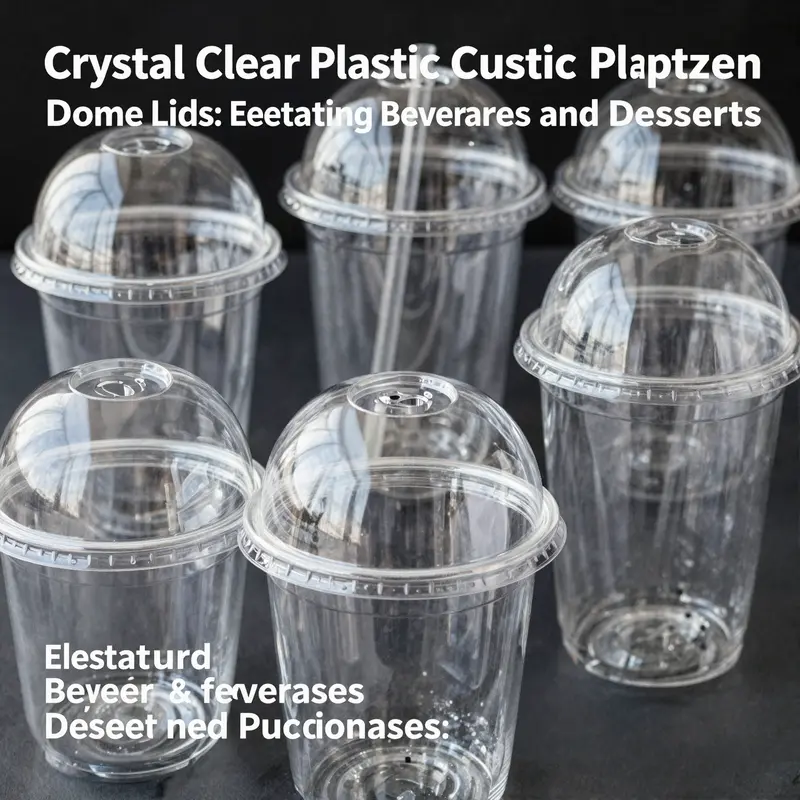
In a crowded display and on a busy catering line, the most persuasive cup is often the one you can see through before your eyes register the flavor. Crystal clear plastic cups with dome lids do more than hold a drink or dessert; they frame the experience, turning colors, textures, and layers into a visual story that travels from the display case to the customer’s lips. The dome lid, with its gentle arc and elevation above the rim, creates a small theater where the beverage or dessert becomes a shareable moment. This is where design and practicality converge. Clarity is not simply a matter of aesthetics; it is a functional signal that communicates freshness, quality, and an invitation to taste. The transparency invites the consumer to judge what lies inside before the first sip, and in a market crowded with choices, that visual cue can determine which option earns a customer’s trust and, ultimately, repeat business.
Behind this visual appeal lies a thoughtful layering of engineering choices designed to balance presentation with portability. The dome lid’s primary role is spill prevention during transport, yet it silently supports a series of secondary benefits. When the lid is properly seated, the curved profile creates a more secure seal that resists accidental leaks as a cup jockeys through a busy to-go lane or a bustling event. A rolled rim on the cup, a design detail often paired with the dome, strengthens this connection by providing a stable, leak-resistant interface with the lid itself. The cohesion between cup and lid is not an afterthought; it is a core performance feature that enables customers to enjoy on-the-go consumption without sacrificing the integrity of their beverage or dessert.
Materials science sits at the heart of these cups, guiding a balance between clarity, strength, and cost. The most common plastics—PET, PS, PP, and PLA—each offer a distinct blend of transparency, rigidity, and environmental footprint. PET shines in optical clarity and toughness, making it a frequent choice for beverages that rely on color and texture to entice the eye. PS brings stiffness and a crisp profile, often favored in single-serve dessert applications where a clean silhouette helps highlight swirls of color and topping. PP, with its versatility and heat resistance, supports a broader range of applications, including slightly warmer beverages or thicker mixtures, while PLA introduces a compostable option for businesses seeking to align with sustainability goals. The trade-offs are not merely about transparency; they involve lifecycle considerations, recyclability in local streams, and how each material handles stacking, foaming during filling, and heat transfer from a cold drink to a consumer’s hand.
Sustainability emerges as a recurring theme in conversations about dome-lidded crystal-clear cups. The modern consumer increasingly expects packaging to respect the environment, and suppliers respond with BPA-free formulations and recyclability statements that reflect regional infrastructure. Yet recyclability is not universal; what is recyclable in one municipality may be diverted to landfill in another, making education and clear labeling essential parts of the packaging equation. Biodegradable and compostable variants of PLA-based cups have gained traction in markets prioritizing green certification and farmers markets, but they, too, require appropriate facilities to realize their environmental promise. In the end, the material choice becomes a strategic decision for operators: it must balance the sensory benefits of crystal clarity with the practical realities of waste streams, shelf life, and the preferred end-of-life path in a given community.
Beyond the base cup material, the lid itself has evolved through a set of innovations aimed at strengthening the brand experience and the user’s confidence in the product. A dome lid’s aesthetic appeal is not just about beauty; it signals a premium presentation that can elevate the perceived value of a beverage or dessert. The curved silhouette of the lid adds a contemporary, almost boutique feel to a takeout offering, while its practical virtues—space for whipped toppings, visible fruit layers, or layered milkshakes—enable operators to craft visually striking products without sacrificing portability. The lid is also a canvas for branding. The flat surface of many dome lids provides a reliable area for logos, colors, or promotional artwork, transforming an everyday cup into a miniature stage for brand storytelling. In shops where visual differentiation matters, the lid becomes a surface that communicates quality and attention to detail just as much as the cup’s content does.
A crucial design choice within dome-lidded systems is straw compatibility. Market demand for convenient sipping collides with the necessity of a secure seal. Some variants offer a no-hole lid, prioritizing spill resistance for customers who want to avoid leaks during transit. Others include a dedicated straw slot or a dual-purpose solution that accommodates flexible straw use without compromising the seal. This adaptability matters in a multi-channel operating environment where customers range from quick-service diners to dessert-focused kiosks. It also reflects a broader design philosophy: packaging must accommodate a spectrum of consumption preferences while maintaining a consistent performance profile across product lines. The straw design, while seemingly a minor detail, can influence everything from cleaning protocols to the ease of packing and the final user experience.
The interplay between aesthetics and mechanics extends to the way these cups manage liquid flow during pouring, mixing, or shaking. For items like layered smoothies or yogurt-based desserts, the ability to control pouring without splashing or agitating delicate components is essential. Some dome-lidded systems incorporate venting or small pour spouts to ease the transfer of thick liquids from cup to cup or to a spooned serving. Venting designs help manage internal pressure as a beverage warms slightly in transit or as a consumer inhales slightly during a tasting moment, reducing the risk of unforeseen squirts and ensuring the experience remains pleasant rather than disruptive. For operators, such features translate into fewer service errors, less product waste, and more consistent portion control.
Portability is a functional virtue that permeates every decision in this packaging family. The dome lid, coupled with a robust temple of geometry around the cup’s circumference, enables stacking and nesting that save space in storage and during transport. When cups are stacked correctly, they minimize the risk of chafing or cracking during busy shifts. The rolled rim contributes to a calm practical rhythm, providing tactile feedback to staff that the lid is correctly seated, which translates into a more predictable user experience on the customer end. In high-volume environments—think milkshake bars, yogurt shops, and dessert kiosks—these small, tactile cues matter. They reduce service friction, shorten line times, and contribute to a smoother operation where beverages and desserts travel from counter to table or curbside pickup with confidence.
The presentation advantages of crystal clear cups extend into the realm of sensory psychology. The ability to see color, gradient, and texture fosters appetite appeal and curiosity. A layered parfait reveals a spectrum of hues that hint at the ingredients within. A smoothie showcases the swirl of fruit puree and cream, inviting the customer to imagine flavor combinations before the first sip. This is not mere spectacle; it is a marketing accelerant. The product’s color and depth communicate freshness and quality at a glance, enabling operators to differentiate offerings in a crowded lineup. When customers can assess the product visually, their confidence in the choice often grows, and this can translate into higher perceived value, willingness to pay, and a stronger memory of the brand experience.
The subject of branding surfaces with a quiet but powerful regularity: the lid’s flat surface becomes a space for logo rehabilitation or promotional messaging. In a business environment where the cup may be left on a table or shared in a social moment, the branding surface acts as a micro-moutpiece of the brand’s narrative. It is a subtle but important recognition that packaging is not simply containment; it is a vehicle for continuity of brand experience from the moment the product is picked up to the moment of consumption and beyond. When a customer snaps a photo of a vivid smoothie captured in a crystal-clear cup, the lid’s surface quality and the cup’s transparency work together to preserve the integrity of the image, reinforcing the marketing message that the brand stands for quality and clarity.
For operators seeking to extend this value proposition into long-term strategy, sustainability cannot be treated as an add-on. The possibility of offering BPA-free formulations, recyclable materials, and compostable alternatives has become part of a larger conversation about responsible packaging. It is essential to consider the lifecycle of the packaging in the context of local recycling capabilities, waste streams, and consumer expectations. Some customers actively seek out vendors and venues that align with ecological values, and the packaging choice—down to the material family and lid design—becomes a component of that alignment. In this sense, the crystal-clear cup with a dome lid is not merely a functional tool; it is an instrument with environmental implications that must be understood, communicated, and managed through careful material selection, labeling, and consumer education.
Within this evolving landscape, suppliers and retailers increasingly explore how these cups can be integrated with broader operating systems. The flat branding surface on the lid, the compatibility with various straw designs, and the potential for vented pouring controls all point toward a packaging ecosystem that can be customized to fit different venues and service models. In environments where speed is essential and customer satisfaction hinges on predictability, such as fast casuals or dessert kiosks, the integration of dome-lidded crystal-clear cups into standard operating procedures can streamline workflows. Clear labeling on the cups and lids—illustrating what ingredients might be inside, how to recycle, and whether the product is suitable for certain storage conditions—helps staff maintain consistency across shifts and locations. The end result is a packaging solution that supports not just the product but the business model around it, aligning presentation, performance, and sustainability with the brand’s broader strategy.
In pursuit of this alignment, there is value in exploring concrete examples of how these design choices translate into real-world outcomes. The core benefits—crystal clarity, leak resistance, branding potential, straw compatibility, and material performance—cohere into a narrative about how packaging can amplify taste, reduce waste, and reinforce a brand’s voice. The decision to adopt crystal-clear cups with dome lids often rests on a blended calculus: the desire to showcase product beauty, the need to protect contents during transport, and the imperative to respond to consumer demand for responsible packaging. When these elements are balanced effectively, the packaging becomes more than a container; it becomes a catalyst for a positive, repeatable customer experience that travels effortlessly from kitchen to cart to celebration. For readers who wish to delve deeper into the technical and commercial dimensions of these designs, a detailed overview of clear plastic cup with dome lid designs provides useful context and practical considerations that echo across industries and markets. This broader resource helps connect the dots between material choices, lid geometry, and the consumer perceptions that shape purchasing decisions.
External resources can illuminate how supply chains and market trends influence these packaging solutions. For example, a comprehensive reference on the design and applications of clear plastic cups with dome lids offers a wider lens on the features and functions described here, revealing how manufacturers optimize clarity, seal integrity, and user experience at scale. Such insights reinforce the idea that crystal-clear cups with dome lids are not a niche curiosity but a mature packaging category that continues to innovate in response to evolving consumer expectations and environmental considerations. By examining the interplay of aesthetics, engineering, and sustainability, businesses can make informed choices that align packaging capabilities with brand promises and operational realities.
For readers who want to explore a practical catalog-style overview and see how these cups appear across different contexts, an authoritative compilation of design variants and application notes is available in industry listings. This repository illustrates how dome-lidded cups adapt to diverse beverage profiles, including cold drinks, layered desserts, and toppings-rich creations, while maintaining a clean, professional presentation that supports branding and customer delight. The narrative that unfolds from these resources underscores a simple truth: when packaging presents itself with clarity and care, it invites confidence, stimulates appetite, and becomes a meaningful extension of the product inside.
In sum, crystal clear plastic cups with dome lids are a study in responsible indulgence. They deliver visibility and confidence, protect contents during transit, and offer a receptive surface for branding that can travel with the product from storefront to feast. The dome lid’s architectural elegance—a quiet arch that fits snugly over a rolled rim—serves as a practical ally in the pursuit of spill-proof, on-the-go enjoyment. The materials chosen for these cups balance transparency, strength, and environmental considerations, recognizing that the consumer’s trust is earned as much by what is seen as by what is delivered. As eateries, cafes, and event organizers seek packaging solutions that are efficient, economical, and aligned with sustainability goals, the crystal-clear cup with a dome lid stands out as a versatile platform for creativity, reliability, and brand storytelling. For those who want to verify and expand their understanding of the broader design landscape, a widely cited resource on clear plastic cup with dome lids offers a structured overview of features, materials, and market relevance, reinforcing the idea that these seemingly simple vessels are, in fact, a sophisticated junction of form and function. eco-friendly printed logo cups with lid. This integration of content, commerce, and consumer perception is, at its core, what makes crystal-clear dome-lidded cups a lasting fixture in the packaging landscape.
External resource: https://www.alibaba.com/product-detail/An-Overview-of-Clear-Plastic-Cup-With-DomeLid1600583724890.html
Crystal Clarity in Motion: Market Dynamics of Dome-Lid Cups in Food Service and Catering

Crystal clear plastic cups with dome lids have evolved from simple containment vessels to strategic tools in the competitive landscape of food service and catering. They sit at the intersection of visual appeal, practical performance, and evolving consumer expectations. In markets where presentation can tilt a customer toward choice, these cups offer more than a container; they become a stage for the drink, the dessert, the layered parfait, or the delicate topping that completes a sensory impression. This is not merely about transparency; it is about translating beauty into demand and reliability into repeat business. As operators seek to balance freshness, portability, and sustainability, the dome lid plays a crucial role in shaping what customers perceive as value in a takeout experience. The market is responding to this perception with a blend of material science, design refinement, and strategic category expansion that makes the category of crystal clear cups with dome lids a focal point for both short-term promotions and long-term packaging choices.
The core appeal rests on visibility. In a world saturated with options, the ability to see a beverage’s color, a smoothie’s gradient, or the separate layers of a fruit parfait is more than aesthetics; it is a guarantee of quality and a promise of sensory delight. The transparent material showcases the exact product inside, allowing the customer to witness the craft involved—whether it is a carefully poured latte whose crema forms a soft crown or a yogurt-based dessert whose swirls reveal the mix of fruit and sweetness. This visual access is a powerful marketing asset. It invites social media sharing, as customers naturally photograph and post clear, colorful cups that highlight the product’s appeal. In premium coffee concepts, juice bars, dessert cafes, and bakeries, the ability to capture the moment of purchase and the moment of consumption in one shot elevates the perceived value of the offering. The cup becomes a billboard in the customer’s feed, a tiny but influential element in the shopping decision that extends beyond the actual taste.
The dome lid itself contributes a distinct layer of value. It provides a secure seal that mitigates leaks during transit, a feature that resonates strongly in takeout and on-the-go contexts. When a drink with toppings—be it foam, pearls, fruit chunks, or a thick smoothie—needs to travel, the lid’s secure enclosure becomes part of the customer experience. The design often includes a tapered straw hole to accommodate standard straws while maintaining a tight fit that minimizes dripping. Some models even incorporate spouts or vented configurations to manage pouring dynamics, which is especially useful for mixed drinks, yogurt cups, and dessert beverages where controlled flow reduces spill risk while maintaining product integrity. In a busy catering scenario, the ability to protect the contents from sudden movements or jostling during delivery translates directly into fewer complaints and more confident orders, a practical advantage that can translate into higher repeat business and better overall ratings.
The market’s forward momentum is propelled by material innovation that balances clarity, strength, and environmental considerations. Traditional designs may rely on clear polystyrene or PET for their crisp visibility and stiffness, but a growing segment of buyers is gravitating toward more sustainable options. Recycled PET (RPET) offers a way to maintain the transparency customers expect while aligning with circular economy principles. Polylactic acid (PLA) introduces the possibility of compostable or biodegradable pathways in certain regulatory environments, though it remains essential to weigh performance under typical cold-chain conditions and disposal realities. The choice of material matters, not only for the product’s appearance but for its environmental footprint and end-of-life management. The shift toward RPET and PLA reflects a broader industry trend: buyers want packaging that supports sustainability without compromising on clarity or function. In practice, suppliers are responding with bulk RPET options that deliver reliable optical clarity and robust performance, ensuring that restaurants and caterers can maintain the premium look while advancing sustainability goals. Such shifts are often driven by regulatory signals and consumer demand, which increasingly reward brands that publish transparent sustainability statements and provide clear information about recyclability and compostability.
Versatility remains a key driver of growth. The crystal clear cup with a dome lid is not limited to beverages. Its sturdy form and neutral aesthetics allow it to house cold salads, yogurt, and other semi-solid foods within catering menus and meal-prep services. This versatility broadens the market beyond traditional beverage channels, enabling cross-category usage that simplifies procurement for operators who seek a unified packaging lineup. Catering events, retail takeout, and meal-prep services benefit from a single, reliable container that can support a variety of cold offerings. The uniformity in size and shape helps streamline inventory management, reduce waste, and simplify handling across kitchen, front-of-house, and delivery workflows. The result is a more predictable supply chain with the potential for bulk purchasing discounts, which in turn supports pricing strategies that keep takeout and delivery accessible while preserving margins.
Market dynamics also reflect a shift in how managers and operators view packaging as a strategic element rather than a disposable afterthought. In many food service segments, packaging is part of the service proposition itself. It signals care for the customer, attention to detail, and a commitment to quality. As a result, the dome lid and its sealing performance become a live performance metric; operators measure the container’s ability to prevent leaks during delivery, the ease with which staff can assemble orders, and the experience a customer has when removing the lid and encountering a clear, uncluttered view of the contents. In this context, the delivery ecosystem—courier speeds, last-mile reliability, and customer expectations around on-time arrival—amplifies the importance of packaging that can survive transit with minimal risk of spillage. The overall impression of the brand can hinge on that small but mighty moment when the lid is opened and the contents are revealed to the customer.
From a supply-chain perspective, the growth trajectory is punctuated by expanding size ranges, enhanced sealing mechanisms, and the ongoing evolution of eco-conscious materials. The market expects more options, not fewer, and manufacturers respond with a broader portfolio that includes larger capacities for family-sized orders and smaller formats for single servings. Improved sealing systems, often featuring better gasket compatibility and improved lip design, reduce leakage across the delivery journey, even for drinks with toppings and dense mixtures. This focus on reliability is crucial in an era of rising expectations for curbside pickup, drive-thru, and mobile ordering. Providing a container that can deliver a consistent experience—from the first moment the lid is closed to the moment the customer takes the first sip—becomes a differentiator that can favor one supplier over another in a crowded marketplace.
The sustainability narrative continues to shape how operators view the long-term viability of these cups. There is a broader conversation about recyclability and compostability that intersects with consumer perception. While RPET offers a stronger alignment with recyclability, PLA introduces opportunities for compostable designs, depending on local waste infrastructure and consumer behavior. Buyers increasingly ask for documentation about recyclability streams, certified compostability where applicable, and clear guidance on disposal. This transparency helps restaurants and event organizers communicate responsible choices to their customers, an element that resonates in markets where green certifications and environmental stewardship are part of the brand identity. The market’s direction—toward materials that minimize ecological impact without sacrificing clarity or performance—reflects a maturation in packaging decisions driven by data, consumer sentiment, and policy developments.
The chapter of growth is also a narrative about how design decisions affect consumer perception and the practicality of daily operations. Dome lids with integrated features such as straw containment, spill protection, and venting combine with the cup’s clear profile to deliver a packaging solution that looks tidy on display and travels well in real-world conditions. Operators who optimize for a neat, leak-resistant experience tend to see fewer customer complaints and higher order accuracy in busy service environments. By focusing on both form and function, providers can create a packaging experience that feels premium without increasing complexity or cost. Such balance is essential in a market that rewards efficiency, reliability, and the ability to maintain product integrity from the moment an order is placed to the moment it is enjoyed.
To illustrate broader consumer and business implications, consider the way such cups are adopted across different service formats. In fast-casual settings, a dependable, visually appealing container supports quick service and upholds the restaurant’s aesthetic. In bakeries and dessert shops, the transparency of the contents enhances the appeal of layered desserts and color-rich drinks, inviting customers to choose the most visually engaging option. In catering and events, the combination of durability, portability, and a secure seal translates into a more confident procurement decision, enabling planners to deliver consistent guest experiences. Across these contexts, the common thread remains clear: the container is not an afterthought but a strategic element that communicates quality, supports the product’s storytelling, and reduces the friction of service. The alignment among presentation, protection, and sustainability is what makes crystal clear cups with dome lids a durable asset in both established and emerging segments of the food service and catering markets.
For operators seeking practical guidance on sourcing and evaluating options, the market is shaping a decision framework that weighs clarity and strength against cost and environmental performance. Visual clarity remains non-negotiable, but its meaning is increasingly tied to lifecycle considerations and the container’s ability to participate in a circular economy. Suppliers respond by offering clear, bright optics with consistent thickness and uniform wall geometry, along with recyclable or compostable material options designed to fit into existing waste streams and local regulations. The result is a more sophisticated procurement process where the packaging choice is aligned with brand values, operational realities, and consumer expectations. In this environment, a well-chosen dome-lid, crystal-clear cup becomes an instrument of experience—one that can elevate simple takeout into a memorable moment and turn a routine purchase into a reason for return.
From a storytelling perspective, the market’s trajectory encourages operators to consider the cup as a canvas for brand differentiation. The neutrality of crystal clear plastic provides a versatile backdrop for branding strategies that emphasize color, texture, and the product’s own narrative. The ability to pair a clean container with vibrant liquid or layered dessert creates an instantly recognizable impression that can be reinforced through in-store displays, social media, and drive-through signage. While the lid design and the material choice influence cost, the net effect on consumer perception can be substantial. The trend toward more sustainable and transparent packaging aligns with broader consumer shifts toward responsible consumption, where customers are increasingly selective about packaging choices and the signals they send about a brand’s commitments.
In closing, the market for crystal clear plastic cups with dome lids is characterized by a thoughtful integration of aesthetics, practicality, and sustainability. The demand is driven by the desire for products that look as good as they perform, that protect and preserve freshness during transport, and that align with evolving environmental standards. Operators who recognize these dynamics can optimize their packaging to maximize visual appeal, minimize risk, and deliver a seamless customer experience from the first impression to the last sip. The future of this packaging category lies in a careful balance of clarity, resilience, and responsible design, a balance that supports not just today’s needs but tomorrow’s expectations as well. And as the ecosystem continues to evolve—driven by consumer preferences, regulatory developments, and advances in material science—the crystal clear cup with a dome lid will remain a central instrument in the food service and catering playbook, enabling more compelling presentations, safer transport, and a heightened sense of value for customers who seek both beauty and reliability in their everyday indulgences. For those exploring packaging options that echo this balance, a closer look at lid-compatible formats across related categories can offer practical insights into how to translate the same principles into other contexts, such as paper-based formats that emphasize eco-friendly credentials while preserving the visual drama that drives choice. See the paper ice cream cups with lid for a related approach that shares the same core logic of combining visibility with protection, and consider how such formats can complement or inform decisions in a mixed portfolio of dine-in, takeout, and event packaging. paper ice cream cups with lid.
External reference for further industry context and supplier information can be found here: https://www.alibaba.com/product-detail/Clear-Plastic-Cups-With-Dome-Lids_1600548973525.html?src=hp&spm=a2700.galleryofferlist.0.0.6a6d7b35rjYqZf
Sustainability Considerations for Crystal Clear Plastic Cups with Dome Lids: Biodegradability and Eco-Friendly Options

Crystal clear plastic cups with dome lids sit at a crossroads of visual appeal and environmental responsibility. They invite customers to see the colors, textures, and layers of beverages and desserts, while quietly pressing businesses to confront questions about what happens after the last sip. The sustainability conversation around these cups is not a single, simple verdict but a nuanced dialogue that hinges on material choice, end-of-life infrastructure, and the real-world behavior of consumers and facilities. In this chapter, we explore how today’s eco-friendly options are reshaping the way these clear vessels are designed, produced, and disposed of, without sacrificing the clarity and reliability that operators rely on to present their offerings with confidence.
At the core of most sustainable developments in this space is the move toward biobased, biodegradable, or compostable materials. Polylactic acid, or PLA, stands out as a bioplastic derived from renewable plant-based sources. It has emerged as a viable option for crystal clear cups because it maintains a level of transparency comparable to conventional plastics while offering a reduced reliance on fossil fuels during production. PLA’s environmental appeal rests on two pillars: end-of-life behavior and the life-cycle implications of the feedstock. When PLA is collected in the right stream, it can be recycled and, in some contexts, industrially composted. In those facilities, PLA breaks down into carbon dioxide and water, leaving no harmful residues. The visual allure of PLA is that it can mimic the gloss and rigidity that customers expect from a premium cup, which helps preserve the presentation quality of layered drinks, fruit smoothies, and dessert servings that rely on precise visual appeal to drive sales.
Yet the path from bottle to cup to recycling or composting is not simple or universal. PLA’s biodegradability is not a throwaway property that applies in ordinary home compost piles or typical landfills. The conditions required for efficient breakdown—specific temperatures, humidity, and residence times—are often found only in industrial composting facilities. In places without access to such facilities, PLA may persist much longer than intended, or it may end up in a conventional recycling stream where it can contaminate other plastics. For this reason, the environmental advantages of PLA are tightly linked to the surrounding waste management infrastructure and public participation in proper disposal. This is not a minor detail; it is a system-level consideration that shapes how proudly a brand can claim sustainability for its clear cups.
More nuanced still is the fact that the performance characteristics of PLA are sometimes augmented by blending with other biodegradable polymers, like PBAT (polybutylene adipate terephthalate). These blends can enhance flexibility, impact resistance, and moisture barrier properties, which helps the cups withstand the rigors of cold beverages and transport while preserving the user experience. The tradeoff, however, is that blends can complicate end-of-life outcomes. Not all facilities are equipped to separate blends from standard polylactic streams, and some composting standards require confirmation that the material will break down within a defined timeframe. As a result, manufacturers and retailers must communicate clearly about the specific composting or recycling pathways that apply to their products, rather than relying on a blanket “biodegradable” label. In practical terms, this means sharing availability of certified disposal options and, where applicable, the existence of dedicated industrial composting streams in the communities they serve.
Certification plays a pivotal role in the credibility of sustainability claims. Recognized standards from organizations such as the Biodegradable Products Institute (BPI) or OK Compost provide a framework for assessing whether a product truly behaves as claimed under industrial composting conditions. A cup may be labeled as biodegradable or compostable only after meeting a defined set of performance metrics, including time to disintegration and the absence of certain residues. Certification gives buyers and end users a shared reference point, reducing the risk of greenwashing and helping operators align their sourcing with their sustainability goals and consumer expectations. For businesses that want to shop with assurance, certifications serve as a screening tool that helps balance aesthetics, functionality, and environmental impact. They also support transparency with customers who increasingly seek to understand the full life cycle of the products they purchase.
A central facet of sustainability—especially for foodservice environments—is end-of-life behavior. In practice, this means understanding how a cup moves from the table or the takeout window to a recovery stream, whether that stream is recycling, composting, or another permitted processing pathway. The ideal scenario would see a high percentage of cups collected and diverted from landfills through a system compatible with the material in use. But the reality is often more complex. Even with PLA cups that are certified for industrial composting, the success of the program depends on whether the facility exists in the store’s catchment area, whether the local municipality supports industrial composting, and whether consumers are motivated to separate their waste correctly. In the absence of robust disposal infrastructure, even the most well-designed cup can fail to realize its intended environmental benefits. This is why education and label clarity are essential components of sustainability strategies. Clarity around what can be recycled or composted, how to prepare products for disposal (for example, whether lids and straws should be separated), and where to drop off materials can dramatically improve outcomes.
Another important consideration is the broader design philosophy that guides these cups. A sustainability-minded approach looks beyond a single material to the entire packaging system. Weight reduction, for instance, lowers material use and energy consumption during production and transport. The dome lid’s design—often with a secure straw hole that minimizes leakage and a venting option to reduce spills during transit—must be balanced with the environmental profile of the entire assembly. In some cases, designers incorporate vented or spouted lid variants to improve user experience and reduce beverage loss, but such features should not compromise recyclability or compostability. Every design choice—from the thickness of the cup wall to the finish on the surface, to the compatibility of printing inks—affects end-of-life pathways and the feasibility of recovery or degradation. Transparent communication about these choices helps operators avoid greenwashing and ensures that customers understand what makes a product genuinely better for the planet.
The intersection of aesthetics and sustainability is also visible in how these cups are marketed and used in practice. The crystal clear finish remains one of the strongest selling points because it enables customers to appreciate the beverage’s color and layers, which is particularly compelling for marketing layered smoothies, desserts, and cocktails. When sustainability measures are added, the result can be a product that performs at a high standard on two fronts: it delivers a superior presentation while supporting responsible consumption. This dual value is not simply about substituting one material for another; it is about aligning the entire lifecycle with evolving consumer expectations. For many brands, that means selecting PLA or PBAT-based cups that carry reputable certifications, and pairing them with clear disposal guidance and convenient infrastructure. It also means recognizing that some sustainable options may require appropriate disposal facilities that are not universally available, and communicating that reality to customers in a transparent way.
The journey toward truly sustainable crystal clear cups with dome lids is ongoing, not static. It involves continuous improvements in resin formulations, barrier properties, and processing technology to keep the cups strong and clear while reducing environmental impact. It also involves collaborations across the supply chain—material suppliers, cup manufacturers, waste management services, and retailers—so that the entire ecosystem supports responsible use, recovery, and disposal. In such a system, the goal is not merely to claim eco-friendliness but to demonstrate real performance in terms of recyclability, compostability, and lifecycle efficiency. For businesses, this means a careful, evidence-based approach to supplier selection, verification of certifications, and an honest appraisal of local waste infrastructure. It also means equipping staff and customers with practical guidance so that the environmental benefits of sustainable options can be realized in daily operations and consumer habits alike.
As part of a broader shift toward responsible packaging, many venues and brands are exploring not only biodegradability but also alternative pathways for maintaining product quality and reducing waste. The idea is to design for the end of life from the outset, selecting materials that can be recovered or degraded without introducing contaminants that complicate recycling streams. In practice, this means considering the compatibility of dome lids and prints with composting or recycling—whether inks and coatings used on the cups are compostable, whether the lid materials align with recommended processing streams, and whether the combined packaging can be handled efficiently by recovery operations. When these considerations are integrated early in the design and procurement process, sustainability becomes a seamless dimension of product performance rather than an afterthought. The result is a more responsible offering that honors the expectations of eco-conscious consumers without compromising the integrity and presentation that drive sales.
For readers exploring practical steps, the decision to choose certified biodegradable PLA or PBAT-based cups should be accompanied by an honest assessment of local disposal options. If industrial composting facilities are not readily accessible, brands may lean toward recycling-compatible bioplastics or even conventional high-quality plastics that offer longer service life with robust separation guidance. The key is to communicate clearly with customers about how to dispose of cups and lids properly, which streams are available in their community, and what the consumer can do to maximize the environmental benefits of their purchase. This approach fosters trust and reinforces the brand’s commitment to sustainability as an ongoing, verifiable practice rather than a marketing claim. It also encourages a more informed consumer culture, where the act of choosing a cup is paired with responsibility at the point of disposal, creating a broader impact beyond the immediate transaction.
In sum, sustainability considerations for crystal clear plastic cups with dome lids revolve around three core pillars: material choice and performance, end-of-life infrastructure and consumer behavior, and transparent certification and communication. PLA and PBAT-based solutions offer meaningful environmental advantages when supported by robust industrial composting capabilities and credible certifications. Yet these benefits depend on the presence of suitable disposal pathways and clear guidance for users. The most successful implementations harmonize aesthetics with ecological responsibility, producing cups that are not only visually appealing and durable but also part of a responsible packaging system. When brands invest in certified materials, share accessible disposal information, and align with waste management capabilities in their markets, they move beyond a single product to a sustainable packaging approach that can scale across applications—from coffee shops and dessert kiosks to catering events and farmers markets. In this light, the crystal clear cup becomes more than a vessel for a drink; it becomes a touchpoint in a broader commitment to circularity, transparency, and stewardship of resources.
For readers seeking a tangible entry point into eco-friendly cup options, many manufacturers now offer customizable options that maintain the same crisp clarity and dome lid compatibility across a range of sizes, from smaller servings to larger take-out formats. Printing and branding can be integrated in ways that preserve recyclability and compostability, with inks and coatings selected to minimize environmental impact. To explore related, sustainability-focused approaches in serving ware, you can consider delving into resources and case studies that discuss how eco-friendly paper cup options can complement a beverage program that prioritizes responsible packaging. This broader perspective helps facilities balance different materials and disposal streams while keeping the customer experience central to the overall brand story. For a concrete reference to broader eco-friendly packaging options, see the following external resource: https://www.alibaba.com/product-detail/16oz-20oz-32oz-biodegradable-PLA-plastic1600498778517.html?src=srch&pvid=12c8b1d5-1a4f-481d-a332-931e75c0c882&spm=a2700.product_list.0.0&scm=20140718183337921872211-1600498778517.1
As a practical final note, operators who want to align with sustainability goals should consider incorporating the internal reference to eco-conscious serving options into their training and customer communication. For those who want to explore related packaging formats that echo the same environmental ethos, the following internal link offers a gateway to a broader conversation about eco-friendly cup and lid systems in use at take-away and food-service settings: eco-friendly paper cup options. This link, while focused on paper options, underscores a shared objective: to pair high-quality presentation with responsible disposal in ways that respect the realities of recycling and composting infrastructure. The overarching aim is not to push a single pathway but to empower businesses with the information they need to make informed, verifiable choices that advance sustainability without compromising performance or guest experience.
Final thoughts
Crystal clear plastic cups with dome lids not only meet the practical needs of the food service and beverage industry but also enhance visual appeal and customer experience. Understanding the material choices—be it PET, PS, PP, or PLA—enables businesses to make informed decisions based on their specific needs, while innovative designs maximize functionality. Market trends indicate a growing demand driven by visual presentation and convenience, and sustainability considerations have brought biodegradable options into the spotlight. By integrating these elements, businesses can elevate their offerings, align with customer expectations, and contribute positively to their market environment.