
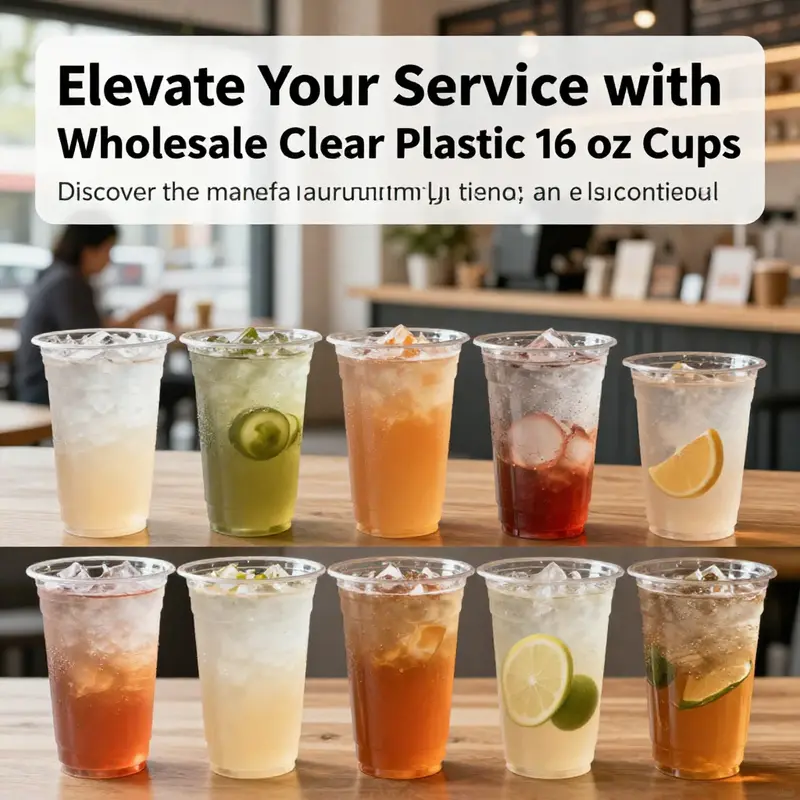
Clear plastic 16 oz cups are more than just containers; they represent convenience, versatility, and branding potential for businesses in various sectors, including bubble tea shops, restaurants, and event planning. Understanding their manufacturing processes, market trends, and sustainability innovations is critical for making informed purchasing decisions. In this exploration, we delve into the creation of these cups, highlight shifting consumer preferences, and address growing sustainability concerns, all while showcasing how these insights can enhance your business offerings.
From Pellets to Promos: The Precision Path of Wholesale Clear 16 oz Cups

The journey from raw resin to a stack of crystal-clear, bulk-ready 16 oz cups is a study in precision, pace, and product stewardship. For brands and distributors that rely on wholesale supply, the guarantee of clarity, strength, and consistent size is not a luxury but a baseline. The chapter that follows tracks the manufacturing path in a way that connects the chemistry of materials to the economics of mass production, and then threads those threads into the practical realities of wholesale buyers who demand reliability, customization options, and timely delivery. In the modern market for clear plastic 16 oz cups, a container’s appearance and performance are inseparable from the process that creates it. Every step—from resin choice to final packaging—has a direct bearing on how a cup serves a beverage, represents a brand, and integrates into large-scale operations such as catering, vending, and hospitality wholesale channels.
At the core of this manufacturing narrative are two families of polymers that largely determine both the look and the life of a cup: PET, Polyethylene Terephthalate, and PS, Polystyrene. PET remains the more popular option for clear, disposable beverage cups, prized for its exceptional transparency, high impact resistance, and recyclability. The clarity is not merely aesthetic; it influences consumer perception and perception can translate to trust at the point of sale. PET’s recyclability also aligns with growing sustainability expectations in wholesale procurement, where buyers often balance performance with an eco-conscious narrative. For cold beverages—water, juice, soft drinks, iced coffee—PET’s ability to maintain rigidity and form under chilling temperatures translates into a more secure, spill-resistant experience than many alternatives. In contrast, PS cups are lighter and typically cheaper to produce, making them attractive for short-term use or cost-sensitive applications. They can serve both hot and cold beverages, but their environmental profile tends to be less favorable in regions tightening restrictions on single-use plastics or aiming for higher recycling rates. The choice between PET and PS in a wholesale context is never purely about upfront price; it encompasses lifecycle considerations, customer expectations, and the long-tail costs associated with end-of-life disposal and brand positioning.
The raw material preparation stage sets the tone for what follows. In a high-volume manufacturing environment, food-grade PET, PP, or PS pellets are carefully sourced and stored in hoppers that feed automation systems with a reliable, steady flow. The pellets are selected not only for their clarity and translucence but for safety characteristics that speak to beverage contact. The concept of safety here is multidimensional: the resin must comply with food-contact regulations, be BPA-free, and be processed in a way that preserves its integrity under typical wholesale-use conditions. The pellets’ quality—particle size distribution, moisture content, and color—affects downstream process stability. Impurities can lead to defects as the polymer is melted and formed, creating cups with waviness, haziness, or weak points that might fail under normal handling or stacking in bulk cartons. Therefore, the initial material stage is not just about price per kilogram; it is about establishing a trustworthy baseline that reduces waste, improves yield, and supports consistent dosing of material into high-speed manufacturing lines.
The two primary production pathways—injection molding and thermoforming—define the economics and performance profile of wholesale clear cups, often depending on the material and the cup’s design specifics. Injection molding is the workhorse for rigid, durable cups made from PET or PP. In this method, molten resin is injected under high pressure into precision molds that shape the cup’s geometry. The design must tolerate fast cycle times, robust ejection, and consistent wall thickness. Precision is not merely about outer dimensions; it also concerns the cup’s closed-end geometry, rim formation, and base footprint. In a wholesale setting, tight tolerances are critical because cups must stack uniformly, fit standard lids, and maintain consistent capacity across thousands of units. Injection molding lines are typically integrated with automated tooling and robotic handling, enabling rapid throughput that supports bulk orders with tight lead times. The downside can be higher upfront tooling costs and longer lead times to set up new shapes, but once a family of molds is in production, the payoff is predictable reliability and repeatability for large orders.
Thermoforming, on the other hand, is a natural fit for PS cups and for PET/PP cups designed with lighter walls or more cost-sensitive configurations. A sheet of plastic is heated until pliable and then vacuum-formed over a mold. The process is highly efficient for producing large volumes of cups with uniform wall thickness and smooth exterior surfaces, which helps maintain the requested level of clarity on clear polyolefin or polystyrene formulations. Thermoforming can accommodate larger runs quickly and with relatively lower tooling costs compared to complex injection molds. In wholesale contexts, this translates into competitive per-unit pricing at the scale a distributor demands, while still delivering cups that meet consumer expectations for sturdiness and presentation. The trade-off between the two methods—injecting for heavier, more rigid designs versus vacuum-forming for lighter, cost-efficient formats—becomes a strategic decision made in collaboration with contract manufacturers who balance demand forecasts, throughput targets, and the ability to customize.
Quality control is the engine that keeps the process honest, especially when tens or hundreds of thousands of units roll off the line in a single day. Modern facilities integrate automated inspection systems along the production line to detect defects in real time. Vision systems assess not only dimensional accuracy and wall thickness but also surface clarity and uniformity of the cup’s exterior. Subtle deviations—very slight waviness, micro-scratches, or minor optical distortions—can degrade the perceived clarity of a PET cup and impact consumer satisfaction at the point of service. In a wholesale setting, where cups may be printed with logos or branded labels, any misalignment between the cup and the lid or misregistration with downstream labeling can become a bottleneck in packaging and distribution. Operators monitor for delamination, improper ejection, or flash—excess plastic left at seams—through a combination of automated sensors and manual checks. The goal is a reliable yield: every run must deliver cups that meet exacting dimensional tolerances so that bulk packs—often 50 cups per bag, 20 bags per carton—arrive in shipment-ready condition. The quality system extends beyond the line; it covers the post-mold stage, where cups are cooled, stabilized, and checked for labeling adhesion, surface finish, and compatibility with food-contact regulations.
Post-processing steps, while often understated, contribute to the final consumer experience. After ejection, cups may undergo trimming to remove any flash or burrs—small plastic remnants that can affect stacking or cause minor snags when lids are applied. A controlled cooling regime ensures that the cup retains its shape and dimensional integrity through downstream handling, stacking, and palletization. Some suppliers apply surface treatments to address handling challenges or to improve anti-static properties, which can be particularly valuable in high-speed packaging environments where static cling can complicate automated movement and product separation. The finishing touches, though subtle, affect the end-user impression. A truly transparent cup should reveal the beverage clearly, without fogging or optical haziness, and must remain robust under typical beverage temperatures that wholesalers routinely encounter, from air-conditioned venues to outdoor events.
Packaging and bulk handling are the practical bridges between manufacturing and wholesale distribution. Once inspected and approved, cups are automatically sorted for packing into bulk cartons designed for efficient shipping and storage. A common wholesale configuration includes 50 cups per bag and 20 bags per carton, designed to optimize space in warehouses while protecting cups from abrasion and scuffing during transit. Yet bulk buyers often demand customization options, and manufacturers readily accommodate them through tailored packaging and branding. Printed logos on cups, laser-etched or labeled designs, and lid configurations that align with the cup’s diameter are all part of the value proposition that makes wholesale orders compelling for event planners, caterers, and foodservice networks. The packaging dialogue is a two-way conversation: suppliers propose standardized, scalable packaging to optimize logistics, while buyers request branded packaging for marketing and brand-consistency across venues, ships, or promotions. The result is a hybrid approach that preserves efficiency while enabling a brand’s identity to travel with the product.
Compliance and safety standards govern the entire lifecycle of the cup, from resin selection through finished goods. Reputable manufacturers align with international food-safety standards, including FDA regulations for food contact materials and EU directives where applicable. In practice, this means the resins must be both BPA-free and suitable for cold or room-temperature beverages. It also means manufacturers avoid high-temperature exposure that could compromise structural integrity or promote chemical leaching. It is important to note that even food-grade PET and PS must not be heated to boiling temperatures or microwaved, as such exposure can damage the cup or alter its chemical profile. In wholesale terms, these safety assurances translate into documentation that purchasers can rely on when supplying large-scale operations, ensuring consistent compliance across multiple shipments and jurisdictions.
The wholesale market itself is structured to support scale with flexibility. Suppliers typically publish minimum order quantities (MOQs) that reflect the realities of high-volume production. PET-based cups might have MOQs starting around 50,000 units for clear versions and 100,000 for printed variants, with payment terms that require a deposit—commonly around 30%—and the balance due before shipment. Such terms are not incidental; they reflect the economics of tooling, resin procurement, and capacity allocation in factories designed to operate with lean inventories and predictable demand. For buyers, these terms necessitate careful forecasting and planning, as well as an evaluation of total cost of ownership, including potential savings from bulk pricing, reduced shipping frequency, and the flexibility to renegotiate once a stable project cadence is established.
Customization is a recurring theme in wholesale procurement. While the core performance of the cup—clarity, rigidity, and safety—rests on material and process choices, the business side thrives on the ability to tailor cups to a brand narrative or event identity. Common customization options include logo printing, labeling, and even coordinated lid designs. The interplay between cup design and customization creates a compelling value proposition for wholesale buyers who seek not only a functional container but a promotional vehicle that reinforces brand visibility during large-scale gatherings, catering events, or retail promotions. The production line must be adaptable enough to accommodate these features without sacrificing throughput. Smart manufacturers design molds, printing setups, and labeling stations to integrate smoothly with the main forming process, reducing downtime when switching between standard and customized runs. For buyers, this means shorter lead times and more predictable fulfillment when multiple locations or events require uniform presentation across wide geographic footprints.
The broader context in which these cups are manufactured—industrial manufacturing for the wholesale sector—also informs the conversation about sustainability and regulatory compliance. PET’s reputation as a recyclable material is increasingly a differentiator in procurement decisions. Many wholesale buyers weigh the end-of-life scenario of their cups, considering whether their suppliers participate in or facilitate recycling channels, and whether the printed designs or labels complicate recycling. In regions where single-use plastics face restrictions, PET often remains an appealing option due to its established recycling streams, high clarity, and durability, which reduce waste through sturdier performance compared to some alternatives. PS, while less favorable in this environmental calculus, finds its place in cost-conscious segments or in scenarios where the cups’ end-use is ephemeral and the environmental footprint is managed by other means. The ongoing evolution of policies and consumer expectations means that manufacturers, distributors, and buyers must anticipate shifts in MOQs, formulations, and packaging practices as markets adjust to new sustainability benchmarks.
In sum, the manufacturing pathway for wholesale clear plastic 16 oz cups is a carefully choreographed sequence that begins with the choice of raw resin and ends with cartons ready for shipment. It is a process that blends chemistry, engineering, and logistics into a reliable supply chain capable of supporting large-scale service networks. The decisions at each stage—material selection (PET, PP, or PS), forming method (injection or thermoforming), quality controls, post-processing, packaging, and compliance—collectively determine not only the cup’s physical performance but also its market appeal and lifecycle stewardship. The result is a product that can be deployed across foodservice outlets, events, and wholesale beverage networks with the confidence that it will behave consistently under real-world conditions, align with branding efforts, and meet the pragmatic demands of bulk procurement. For buyers, understanding this manufacturing journey illuminates why certain options carry premium pricing or longer lead times, while others offer rapid availability and broader customization. It also clarifies how suppliers balance capacity with demand, how tooling investments shape MOQs, and how the ongoing conversation around sustainability can influence both product design and logistics in meaningful, tangible ways.
To illustrate how these manufacturing realities translate into tangible purchasing considerations, consider how a typical wholesale channel integrates these cups into a broader packaging and service ecosystem. The choice between PET and PS becomes a strategic decision tied to event duration, storage conditions, and regional regulatory climates. The degree of customization—logo printing, labeling, or lid design—often operates in tandem with the packaging that travels with the cups. Where bulk orders require consistency across dozens of venues, suppliers who can deliver on scale with minimal variance in cup dimensions, clarity, and lid compatibility emerge as preferred partners. In such a landscape, a buyer’s due diligence will often involve validating supplier capabilities in three dimensions: material quality and regulatory compliance, production process reliability and throughput, and the capacity to deliver on branding and packaging specifications on a predictable cadence. The end result for the wholesale buyer is a balance of price, performance, and promise—an equilibrium that enables cost-effective procurement while supporting brand integrity and operational efficiency across large networks.
For readers seeking a concrete reference on what a current market listing may look like and how a supplier frames the scale and customization options, an example from the wholesale market offers a snapshot of the competitive landscape. This example illustrates how bulk 16 oz clear PET cups with lids are positioned for corporate promotions and event-based distribution, emphasizing bulk availability, customization through print or labeling, and the eco-friendly credentials that many buyers now require. It is a reminder that beneath the glossy finish of a clear cup lies a suite of decisions about resin, molds, tooling, inspection, and packaging that together determine whether a cup will perform as expected in the hands of customers and partners across a broad wholesale ecosystem. For readers who want to explore related packaging options and design ideas, a related case that highlights eco-friendly printing and logo integration can provide inspiration and practical guidance on how to align manufacturing capabilities with brand storytelling in bulk contexts. You can explore a relevant example here: eco-friendly-printed-logo-buy-paper-cup-take-away-coffee-cup.
As part of the broader web of information that supports wholesale decision-making, the chapter also points to external industry resources that illuminate manufacturing practices, regulatory compliance, and supply chain dynamics. For readers who wish to widen their perspective beyond the immediate scope of plastic cups, an external resource offers a comprehensive look at market practices and purchasing considerations for bulk beverage containers in a global context: Alibaba’s wholesale clear plastic 16oz cups catalog. This resource helps buyers compare specifications, MOQs, and customization options across a wide range of suppliers, anchoring the chapter’s emphasis on scale, standards, and cost efficiency in the realities of a global wholesale marketplace.
Internal linking to related content can deepen reader understanding of how manufacturing considerations intersect with branding and packaging design. For instance, a linked entry discussing eco-friendly printing and branded cup options can illustrate how a customized cup performs as a marketing tool at events, in restaurants, and in retail settings. Such a link offers a tangible bridge from the manufacturing floor to the consumer-facing experience, underscoring how production choices become visible in end-user experiences and brand impressions. If you’d like to see a concrete example of eco-conscious branding in cup design, you can consult this internal resource: eco-friendly-printed-logo-buy-paper-cup-take-away-coffee-cup.
In closing, the path from resin pellet to pallet-ready cups for wholesale is a story of disciplined engineering, strategic material choice, and responsive logistics. It is about delivering not just a single-use item but a reliable, scalable solution for customers who need consistency, customization, and confidence in every shipment. The manufacturing choices—PET’s clarity and recyclability, PS’s cost advantages, the balancing act between injection molding and thermoforming, and the relentless pursuit of quality—are all pieces of a larger puzzle that wholesale buyers assemble every day. The result is a product that can be counted on to perform, to present, and to promote in a marketplace where bulk demands, branding ambitions, and sustainability considerations converge. As markets evolve and regulatory landscapes shift, the underlying manufacturing framework remains the backbone that supports growth, resilience, and clear, compelling beverage presentation across the wholesale channel.
External resource for further context: https://www.alibaba.com/product-detail/Wholesale-Clear-Plastic-16oz-Cups-Promotional_1600491486589.html?src=entity&productId=1600491486589&spm=a2700.gallery-merchant.0.0&scm=1007.13378.1600491486589.0
Clarity with Intent: How Eco-Consciousness and Branding Are Redefining the Wholesale Market for 16 oz Clear Cups
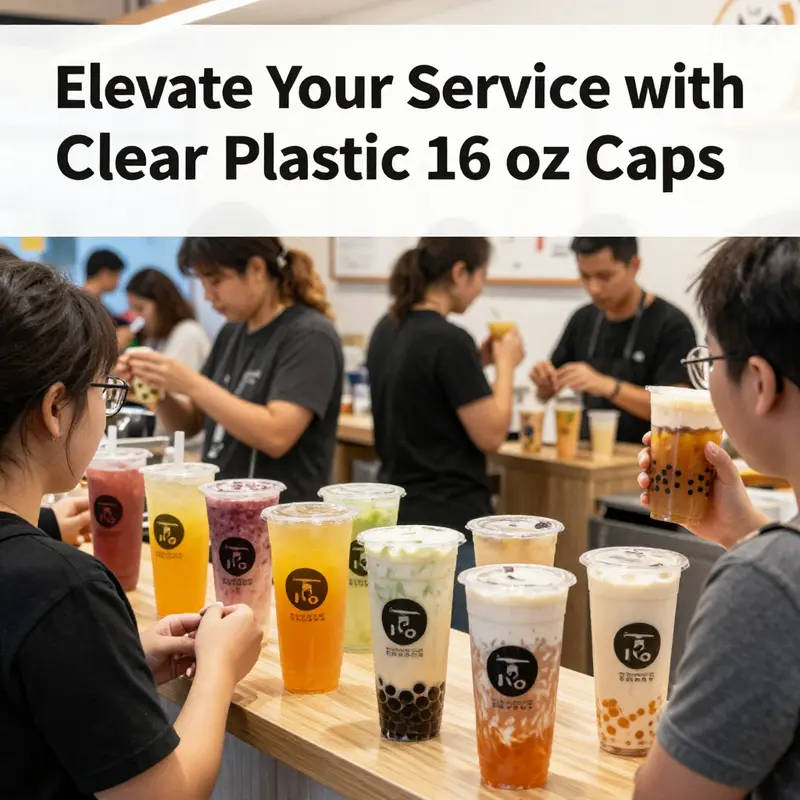
The wholesale market for clear plastic 16 oz cups sits at a crossroads where clarity is not just about transparency but about purpose. The next wave of demand is shaped not only by what the cup can hold or how cheap it can be produced, but by how well it aligns with evolving consumer values, stricter environmental standards, and the rising importance of brand presence in a crowded marketplace. In this chapter, we follow that shift as it unfolds across three intertwined strands: sustainability and material choices, customization and brand storytelling, and design innovations that improve everyday utility. Taken together, these threads reveal a market that rewards cups that are not only clear and sturdy but also responsible, versatile, and visibly aligned with a company’s broader commitments. The conversation is grounded in practical realities—from the chemistry of PET and PS to the logistical considerations of bulk sourcing, customization options, and the pressure to balance performance with environmental stewardship. It is a story of how a simple disposable vessel can carry both beverages and brand narratives, all while navigating the realities of waste management, consumer sentiment, and regulatory expectations that continue to evolve at a rapid pace.
First, the sustainability conversation has firmly moved from “is this recyclable?” to “how responsibly is this cup produced, and how easy is it to recycle or reuse end-to-end?” Consumers increasingly expect clear plastic cups to be free from BPA and other harmful additives, and they want assurance that the materials come from responsibly sourced streams. PET emerges as the centerpiece of this trend in many markets due to its combination of high clarity, toughness, and broad recyclability. The emphasis on recyclability has real commercial consequences. When buyers know that a cup can be recycled in standard programs, it reduces the perceived environmental impact of serving cold drinks—from water and juice to iced coffee and smoothies—in busy venues like cafes, food courts, and event spaces. Moreover, the supply chain is responding to the eco-conscious impulse by highlighting certifications, traceability, and the geographic flexibility that allows production to align with global environmental standards. Facilities in different regions—such as those in North America, Mexico, and parts of Southeast Asia—are oriented to achieve the certifications and process controls that buyers increasingly demand. In practice, this means more explicit labeling on cups and lids about recyclability, as well as evidence of compliance with food-grade standards and safety certifications that reassure buyers across diverse markets.
As buyers weigh options, material choice becomes a conversation about long-term cost and consequences. PET’s clarity is paired with durability that supports a reliable cold-drink experience—ice and condensation are less likely to mar the presentation, and the cup stands up to the rigors of transport and handling in busy service environments. The tradeoff with PS, a lighter and typically lower-cost option, remains real: while PS can serve for short durations and versatile temperature ranges, it often faces mounting regulatory pressure in regions tightening restrictions on single-use plastics. In markets where policy leans toward reducing single-use waste, buyers increasingly prioritize PET not only for its recyclability but for its compatibility with widely accepted recycling streams. This alignment between material properties and public policy helps explain a growing share of purchases toward PET cups, especially when the cups are marketed with clear evidence of their environmental credentials. Packaging suppliers are increasingly audibly marketing the eco-friendly dimensions of their PET offerings—emphasizing BPA-free attributes, food-grade certification, responsibly sourced resin, and manufacturing footprints that minimize environmental impact. The messaging is not merely compliance-driven; it is aspirational. Brands want to signal to customers that they are part of a broader movement toward responsible consumption, and the cup becomes a visible touchpoint of that commitment.
The branding dimension has grown in parallel with sustainability. Customization is no longer a niche capability; it is a standard expectation for many buyers in hospitality, events, and retail. Cups are now a canvas for logos, brand colors, and even lid designs that reinforce the company’s visual language at the moment of beverage service. The ability to print logos or branding on the cup or lid—paired with reliable print fidelity and color control—turns a disposable item into a portable billboard. This is not a superficial perk. For event organizers, sponsorship visibility, and brand-centric promotions, the value of a consistent, high-quality brand presentation can drive measurable outcomes—from elevated guest experience to increased social media sharing and on-site engagement. Suppliers are increasingly prepared to support this demand with scalable customization options: color-matched branding, digital or screen printing, and labeling that can adapt to short lead times while maintaining print integrity through washdowns and condensation exposure. The result is a pull toward a more nuanced and layered product offering, where a 16 oz clear cup is not just a vessel but a branding medium that travels from the bar to the table to the customer’s hands.
Importantly, the branding conversation is bound to the functional design of the cup and its lid. Brand managers now seek cohesive, leak-proof configurations that support branding across both components. A lid that accommodates branding on its surface or through color-coded accents on the rim can enhance brand recognition in contexts as varied as stadium concessions, coffee shops, and pop-up markets. The design language matters. Consumers remember the cup that feels premium in hand, shows a sharp, vibrant logo, and prevents leaks during busy service. The marketing payoff for suppliers is a stronger value proposition: increased order sizes, repeat purchasing, and loyalty from venues that want a consistently reliable, brand-forward packaging ecosystem.
The third thread—functional design innovations—addresses practical pressures that shape day-to-day operations in places that rely on 16 oz cups. The consumer’s expectation for a seamless beverage experience translates into discrete but consequential design features. Leak-proof lids, secure fit, easy stacking, and space-efficient storage are not cosmetic; they directly impact a business’s efficiency and bottom line. Stackability, in particular, offers a tangible logistics advantage. When cups nest neatly, warehouses and distributors can reduce storage space by a meaningful margin, with estimates around 20 to 30 percent in some cases. That reduction translates into lower warehousing costs, faster picking, and more efficient packaging during shipping. In a competitive wholesale environment, such savings help justify a higher-quality PET option, even if upfront unit costs are marginally higher than PS equivalents. The cold-resilience of PET adds another layer of value, as beverages like iced coffee, smoothies, and milkshakes often require consistent temperature maintenance. A cup that stays rigid and clear under chill conditions reinforces a premium perception and reduces the risk of condensation obscuring branding. The cooling dynamic also impacts how venues present their beverage offerings—clear cups let the color and viscosity of the beverage shine, an effect amplified when paired with a color-coordinated lid or a branded label that reinforces identity at the point of purchase.
As these functional and aesthetic dimensions come together, the market’s equilibrium reveals itself as a carefully calibrated balance of price, performance, and perception. The supplier community responds to this balance with a dual-market strategy: a robust portfolio of premium, eco-conscious disposable options and a growing lineage of durable options designed for reuse or repeated service cycles. While disposable cups remain essential for hygiene, convenience, and high-volume contexts, the conversation around reusables is intensifying. Suppliers are actively exploring modular, reusable cup systems that pair with lids and cleaning protocols designed for fast-paced service environments. For buyers, this means evaluating total cost of ownership across both categories, considering not just the price per cup but the life-cycle costs of waste handling, cleaning, and potential reuse opportunities. The trend toward reuse does not diminish demand for high-quality disposable cups; instead, it introduces a layered approach where the market accommodates both a premium disposable segment and a durable, reusable segment that aligns with long-term sustainability goals.
The sourcing landscape itself is evolving in response to these shifts. Buyers must navigate minimum order quantities, payment terms, and shipping logistics with increasing nuance. In many cases, suppliers offer flexible MOQs for customized runs, recognizing that brand-centric campaigns—seasonal promotions, event activations, and co-branding ventures—do not always align with standard bulk orders. Payment terms often include deposits or staged payments, reflecting the capital-intensive nature of customization and color-matching production runs. Shipping considerations loom large as well. The burden of freight costs, lead times, and the feasibility of sample shipments can influence a buyer’s ability to test a new supplier or a new material option. The market’s response is a nuanced blend of service reliability and transparent communication. Suppliers now commonly provide sample programs on request, with shipping costs either covered by the buyer or bundled within a promotional framework. These practical touches help buyers evaluate clarity, print fidelity, and the overall fit with their brand standards before committing to a full run.
In this context, the role of external information and industry networks matters. Buyers often consult a broad ecosystem that includes trade platforms, packaging forums, and supplier catalogs to compare options side by side. A well-designed stay-alive test—where a few thousand units are evaluated in real-world service—can reveal the interplay between material choice, lid fit, brand print quality, and end-user experience. It is not just about whether a cup can hold a beverage; it is about whether the entire packaging experience—cup, lid, branding, and delivery—comports with the expectations that modern consumers bring to beverage service. The best wholesale partners acknowledge this complexity and respond with a holistic approach: they present a clear statement of sustainability credentials, a transparent outline of customization options, and a robust proof of performance that includes real-world testing, not merely lab data.
From a buyer’s perspective, the most useful approach is to evaluate suppliers on three pillars: environmental responsibility, branding and customization capability, and practical design that translates to lower handling costs and better shelf presence. On the environmental front, look for explicit certifications, clear documentation of resin sources, and disclosures about manufacturing footprints. For branding, inquire about print methods, color fidelity, durability under temperature changes, and the flexibility to support lid branding in tandem with cup graphics. On practical design, examine the efficiency gains in stacking, the reliability of leak-proof lids, and the cold-storage performance. A cup that resists cracking during transport, maintains clarity after repeated cold exposure, and maintains a consistent display of the brand logo represents a strong value proposition. It is in this integrated assessment, rather than in any single attribute, that the wholesale market’s evolving priorities become clear.
As we look toward the future, several implications emerge for brands and distributors alike. The continued emphasis on sustainability will keep PET at the forefront, but the story will increasingly be about the integrity of the supply chain—how resin is sourced, how facilities meet international standards, and how end-of-life options are communicated and facilitated. The branding trend will push suppliers to invest in smarter, more versatile printing and labeling capabilities, enabling brands to tell richer stories through color, texture, and placement on both cup and lid. The design innovations will continue to favor not only aesthetics but operational efficiency: more reliable seals, more compact stackability, and materials that maintain performance under a wider range of temperatures. Finally, the market will likely maintain a dual-path strategy that accommodates both premium disposable options and durable reusable solutions. This dual path reflects a pragmatic recognition that consumer behavior remains complex—many venues will continue to rely on single-use cups for hygiene and convenience, while others will adopt reusable systems that align with broader sustainability commitments.
For readers exploring ongoing supplier capabilities and product performance beyond this narrative, you may find further context and examples in related product catalogs and trade resources. Internal conversations about branding considerations can be supported by examples of eco-conscious options that emphasize customization and branding on both cups and lids. For instance, brands considering color-matched lids and logo printing on cups can explore options that create a cohesive brand story from the first touch to the last sip. A representative example of this approach can be seen in resources that discuss eco-friendly printed logo capabilities for beverage cups, which illustrate how branding and sustainability can be harmonized in a single packaging solution. See for instance this resource: eco-friendly printed logo paper cup.
This chapter has woven together market dynamics, consumer preferences, and practical sourcing considerations to illuminate how the wholesale market for 16 oz clear cups is evolving. The underlying message is that buyers who pursue clarity in packaging—clarity of material, clarity of environmental impact, and clarity of brand communication—will be best positioned to navigate a market that values both performance and purpose. In the years ahead, the cup will remain a simple object in the hands of millions, but its role as a carrier of sustainability and brand stories will grow more substantial. The alignment of material choices, branding capabilities, and design efficiencies will determine which suppliers rise to the top of the market in a way that resonates with conscientious consumers and efficient operators alike. As the packaging landscape continues to shift, the 16 oz clear cup is likely to become a more deliberate instrument of branding, a more transparent participant in sustainability narratives, and a more reliable workhorse in fast-paced service environments. The work of buyers, sellers, and industry observers will be to keep pace with these shifts, to validate claims with data and testing, and to translate complex packaging decisions into straightforward value propositions that support growth and responsible consumption.
External resource: https://www.alibaba.com/product-detail/500ml-PET-Plastic-Cups-16oz-Clear1600472898411.html?spm=a2700.galleryofferlist.pcommon.search_result.1.5f1c7d9bIyLZaH&albcd=3847724516362895535
From Clarity to Commitment: Sustainability Challenges and Innovations in Wholesale Clear 16 oz Cups

Clear, transparent cups have long been a staple in wholesale packaging. In 16 oz formats, PET remains dominant for clarity and recyclability, while PP offers cost and heat-tolerance advantages. But rising waste concerns and stricter policy are pushing suppliers and buyers to rethink design, material selection, and end-of-life pathways. The industry is moving toward materials and designs that keep performance while simplifying recycling and enabling closed-loop reuse.
The market is anchored in PET for disposable beverage containers because of its clarity, impact resistance, and recyclability, while PP has gained traction as a lower-cost, lightweight alternative with strong heat tolerance. The newer sustainability agenda does not rewrite chemistry overnight; it elevates how suppliers approach feedstocks, energy intensity, and post-consumer recovery. Meaningful innovations tend to cluster in streams: materials that are easier to recycle or reuse, designs that minimize multiple streams in recycling facilities, and end-of-life pathways that retain resource value instead of sending it to landfills.
One practical response is the shift toward recyclable materials that reduce virgin resin demand. PCR PET has emerged as a core strategy, recovering plastic from bottles and other consumer streams and reprocessing it into new cups with a smaller carbon footprint than virgin PET. In many calculations, carbon footprints can be reduced by up to half when PCR materials replace virgin resin, assuming effective collection, cleaning, and processing. In wholesale channels, PCR PET can deliver long-term savings while signaling environmental responsibility to customers and regulators. The practical upshot is a cup that maintains optical clarity and cold-beverage performance while reducing environmental impact.
Alongside PCR PET, mono-material construction has gained traction as a design principle intended to streamline recycling. Mono-material cups reduce the number of polymers in the cup and closures, lowering contamination risk and sorting complexity at facilities. The goal is to preserve front-end performance—clarity, rigidity, and form stability—while simplifying back-end recovery. When mono-material designs succeed, they reduce the need for layer-by-layer separation that can degrade resin quality or limit recovery rates, yielding a more recoverable cup that can feed back into new cups.
A parallel line focuses on alternatives to fossil-based plastics. Bioplastics, including PLA derived from renewable resources like corn starch or sugarcane, promise lower life-cycle emissions when industrial composting infrastructure is available. PLA cups can perform under typical serving conditions and offer advantages for brands seeking compostable options. However, adoption hurdles remain: cost is often higher than PET or PP, and PLA performance can shift with temperature, which matters for hot beverages or long sell cycles. Industrial composting infrastructure is uneven across regions, creating a patchwork where PLA is more feasible in some contexts than others, and where benefits hinge on robust composting networks rather than consumer behavior alone.
Beyond materials, the industry is testing lifecycle storytelling to build trust with customers and regulators. Lifecycle tracking technologies, from embedded codes to blockchain-enabled stamps, are being piloted to record material sources, energy intensity, and end-of-life outcomes. The aim is to enable brands and buyers to verify claims about recycled content, recyclability, and proper disposal, especially in markets where recycling and composting infrastructure advance alongside policy changes. Lifecycle transparency can shorten the path to responsible consumption while reducing risk for wholesalers.
There is also growing interest in closed-loop recycling and chemical recycling pilots. In key manufacturing hubs, pilots aim to reclaim discarded cups and transform them back into feedstock for new cups. Chemical recycling holds the promise of recovering feedstock from mixed or difficult-to-recycle plastics, potentially expanding the share of cups diverted from landfills. Though still in development, such pilots illustrate a circular economy ideal where waste has a second life rather than a one-way path to disposal. These efforts vary by supplier but show how regional policy nudges and investment cycles can improve recoverability over time.
Sourcing sustainable options requires a disciplined approach. Buyers should weigh environmental claims against verifiable standards. Third-party certifications offer a framework for evaluating sustainability credentials. OK Compost establishes industrial compostability benchmarks, FSC certification helps when packaging includes paper or fiber elements, and Cradle to Cradle provides a broader view of material health and reuse. The Global Packaging Sustainability Index notes that more than 40% of leading suppliers now offer at least one certified sustainable cup option. For buyers, sustainability is no longer a fringe attribute but a differentiator integrated into sourcing alongside safety, performance, and supply reliability.
The pursuit of greener cups unfolds within a regulatory and consumer context that rewards responsible packaging. Regulators tighten controls on single-use plastics and require recyclability disclosures or traceability. Consumer sentiment favors brands with environmental stewardship, translating into preferred suppliers in wholesale networks. The challenge is to align procurement with a credible, scalable sustainability strategy that can withstand audits and cross-border safety standards while remaining affordable as new materials and processing technologies mature.
In practice, this means a balancing act. PET and PP cups must deliver trusted performance—clarity, stability under cold and room temperatures, compatibility with lids and branding, and transit durability for events and bulk distributions—while buyers increasingly demand evidence of sustainability performance such as recycled content, energy and water use, and end-of-life outcomes. The strongest suppliers embed these factors into their core value proposition, offering transparent lifecycle data and certifiable pathways to recyclability through mono-material designs and repairable packaging ecosystems. Certification, rather than conviction alone, earns deeper acceptance from procurement teams and regulators alike.
The trade-offs in a sustainability-driven view include higher upfront costs or longer lead times for certification. Yet total cost of ownership can tilt in favor of sustainable options when considering reduced waste penalties, stronger brand equity, and potential efficiency gains in recycling streams. In mature markets, mono-material PET or PP cups with high recycled content and simple end-of-life paths can outperform virgin-material options over a typical lifecycle. In evolving markets, partnerships that co-create recovery channels and invest in local infrastructure may be essential to unlock environmental and economic benefits.
For buyers, the path forward is a portfolio approach. Some orders will prioritize crystal-clear PET with PCR to maximize recyclability; others may favor PLA for events where composting infrastructure is available; some will lean toward mono-material designs to reduce contamination; and pilots in chemical recycling offer a glimpse of a future where even mixed streams can be reprocessed into high-quality resin. The key is framing each purchase as part of a larger strategy aligned with regulatory expectations, brand promises, and supplier capabilities. In a flexible wholesale market, those who pair performance with credible environmental claims and transparent lifecycles will win long-term preference from distributors, retailers, and end customers.
To illustrate ecosystem evolution, consider the broader supply chain implications of adopting recyclable PET or mono-material cups. PCR PET can shift demand in post-consumer streams, prompting investment in collection, cleaning, and regional recycling capacity. Monomaterial designs can reduce downstream separation complexity, lowering bottlenecks at recycling facilities and increasing recoverability. Compostable cups require a robust composting network and clear labeling to prevent contamination of recycling streams. The most successful programs combine several strategies tailored to markets, beverage categories, and event profiles. In other words, sustainability is a system-level capability that must be nurtured across sourcing, manufacturing, logistics, and end-of-life channels.
The guiding insight is that sustainable options for wholesale clear plastic 16 oz cups are real, scalable, and increasingly affordable—so long as buyers demand verification, invest in durable supplier relationships, and view packaging as part of a broader environmental investment rather than a one-off procurement choice. The industry is learning to quantify trade-offs with standardized certifications, lifecycle assessments, and collaborative pilots that connect the factory floor to the recycling stream. For manufacturers, this is both a technical challenge and a cultural shift; for buyers, a reason to rethink performance expectations and supplier partnerships in light of shared environmental goals.
For readers seeking practical context, there are eco-friendly packaging options beyond traditional plastics. Paper-based cups and lids designed for take-away applications illustrate how brands can diversify while maintaining brand impact and consumer convenience. Lifecycle transparency and third-party certifications further strengthen credibility, while policy and market dynamics continue to drive the transition toward recyclable and compact packaging ecosystems. For deeper insights on the sustainability transition in the plastic cup industry, industry analyses and regional reports offer perspectives on how national and regional dynamics shape the plastics-to-packaging value chain. https://www.greenbiz.com/article/china-plastic-cup-industry-sustainability-transition-2026
Final thoughts
Wholesale clear plastic 16 oz cups play a pivotal role in various industries, from foodservice to events. By understanding the manufacturing processes, recognizing market trends and consumer preferences, and addressing sustainability concerns through innovative practices, businesses can make informed choices that not only meet their operational needs but also align with environmental responsibilities. As the demand for high-quality, eco-friendly products continues to rise, staying ahead in this competitive market means selecting the right cups that enhance your service while supporting sustainability goals.