
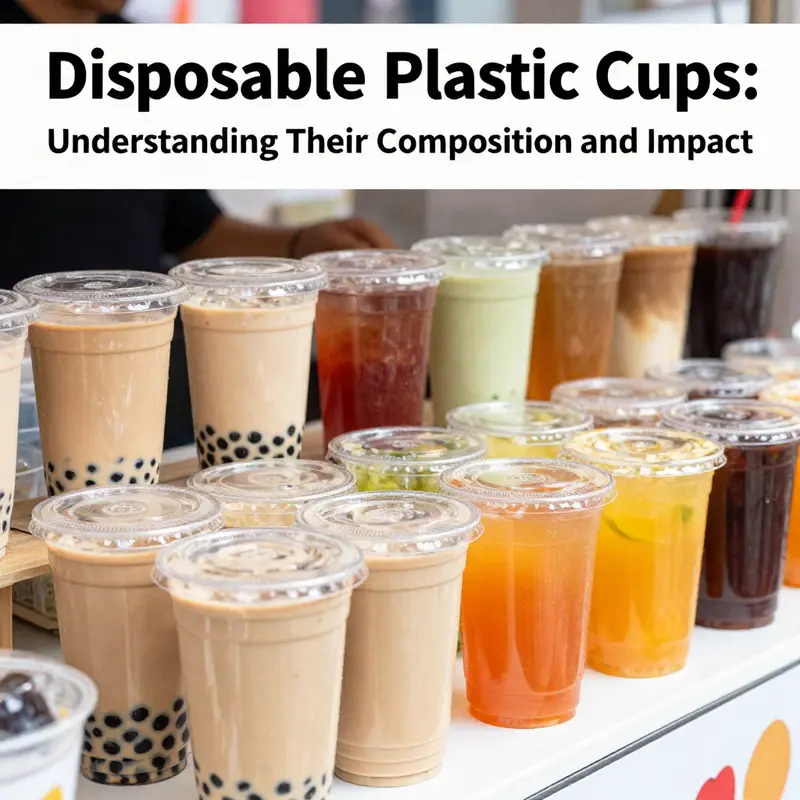
Disposable plastic cups are essential for a variety of businesses, from bustling bubble tea shops to catering providers. Understanding what these cups are made of can help guide better decision-making regarding product selection and sustainability efforts. This article delves into the materials commonly used in disposable plastic cups, examining the pros and cons of each. Furthermore, it highlights the environmental considerations surrounding these products, while emphasizing the growing demand for sustainable options. Lastly, we will explore market trends and innovations that cater to the evolving needs of beverage businesses and event planners alike. Through this exploration, you’ll gain valuable insights to enhance your service and align with best practices in sustainability.
From Burden to Barrier and Beyond: Tracing the Materials Behind Disposable Plastic Cups and the Path Toward Safer, Smarter Choices

Disposable plastic cups are more than a quick convenience; they are a ledger of materials science, consumer habits, and waste realities. When you pick up a cold drink at a festival, a food truck, or a street fair, the cup in your hand embodies centuries of polymer chemistry that has made single use both practical and problematic. The most common cups are built from a handful of plastics chosen for specific strengths: clarity, rigidity, weight, heat resistance, and the ability to be manufactured at scale. The two workhorses in many cup lines are polypropylene, known for its durability and dimensional stability, and polystyrene, prized for its lightness and insulating properties. Together, they reveal a broader story about what disposable cups are made of, why those materials were chosen, and how their inherent properties shape both user experience and environmental footprint. Understanding these materials requires looking at what each polymer brings to a cup, how it behaves with hot or cold liquids, and what happens to it after it leaves a hand-me-down or a curbside bin.
Polystyrene often stands out as the most widely used material for single use cups, especially when cold beverages are the focus. The appeal of polystyrene lies in its light weight and its ability to insulate. A cup made from this plastic can feel almost effortless to hold, and its insulating properties help keep drinks cool without the need for thick walls or heavy materials. This is particularly valued at events, in busy service contexts, and for disposable cups intended to be used for quick, cold sips. Yet this same material’s strengths carry a downside. Polystyrene is relatively poor at high heat resistance compared with other plastics. When a drink is hot or when a cup is exposed to heat during storage or in a warm environment, polystyrene can deform or degrade more readily. It is not designed to go into a microwave, and it is not engineered for dishwasher reuse. These limitations are not just technical details; they translate into consumer safety considerations and practical use guidelines. For many hot beverages, manufacturers turn to other polymers that can better handle the intensity of heat without buckling or leaching.
Another major player in disposable cup manufacturing is polypropylene. Polypropylene provides a different set of advantages. It is robust, resistant to shattering, and retains shape well under cold conditions. It also offers good clarity in some formulations, which can help brands present beverages in a visually appealing way. For cold drinks, polypropylene can deliver durable, rigid cups that stand up to the rigors of transport and handling. However, when hot liquids are involved, polypropylene may not perform as reliably as high heat resistant plastics designed for that task. Warping, softening, or leakage can become concerns if the material is pushed beyond its comfort zone. In contexts where hot beverages are common, cup designers may choose PET or HDPE variants that better stand up to heat, or they may adopt multilayer constructions that balance barrier properties with user comfort.
A third material that has long shaped the disposable cup landscape is polyethylene terephthalate, or PETE. PETE is valued for its clarity and rigidity, qualities that make cold beverage cups highly appealing from a consumer perspective. A PETE cup can showcase color and branding, maintain a crisp look, and resist shattering if dropped. Yet PETE is not a one size fits all solution. In some regions and applications, PETE cups may be promoted for cold drinks only and are not suitable for heated liquids. The decisions about using PETE involve tradeoffs related to heat exposure, liner coatings, and the recycling stream available in a given area. The same family of concerns applies to high density polyethylene, HDPE, which is sometimes used in hot beverage contexts because of its higher heat resistance. HDPE can help prevent deformation and leakage when hot liquids are involved, but it also tends to be less clear than PETE, which can affect branding and perceived quality.
The selection of these materials is shaped not only by immediate performance but by the broader lifecycle story of plastic production and waste. Each polymer requires energy to produce, processes to shape into cups, and systems to collect and recycle or dispose of. The environmental footprint emerges not only in the act of manufacturing but in end of life, where the ability to recover the material for reuse or recycling varies widely by locality. The prevalence of single use cups contributes to plastic pollution and persistent materials in ecosystems. This reality has spurred a search for more sustainable options that can retain the convenience of disposables while reducing ecological harm. The conversation around sustainable alternatives has intensified as communities evaluate how much of the current cup supply ends up in landfills or the natural environment and how long such materials persist in nature.
Yet even as we acknowledge the convenience of these traditional plastics, it is important to consider the practical reasons some brands and users still rely on them. For many settings, the speed and efficiency of disposable cups cannot be ignored. In busy venues, cups need to be produced at scale, with consistent performance across millions of units. They must resist moisture, be comfortable to hold, present branding well, and fit standard cup carriers and lids. The manufacturing processes that produce PP, PS, PETE, and HDPE instruments are deeply integrated with the logistics of food service. The result is a system that can deliver affordable, mass-produced cups with predictable performance. However, this very scale magnifies the environmental costs when reuse is not feasible and when recycling rates are uneven across regions.
A shift in thinking toward more sustainable choices often points to plant-derived materials as viable alternatives that blend performance with a reduced environmental footprint. One of the most prominent among these is polylactic acid, or PLA, a biopolymer derived from renewable resources such as corn starch. PLA offers the appeal of being biodegradable or compostable under certain industrial conditions. In practice, this means PLA cups can break down in facilities designed to handle industrial composting, potentially returning organic material to the soil rather than persisting as waste in a landfill. The concept is attractive because it aligns with a broader move toward circular material systems in which waste becomes input for new products. Yet PLA is not a silver bullet. Its compostability depends heavily on the availability of appropriate composting infrastructure, which is not universal. In many places, PLA cups may not be picked up by standard recycling streams, and some facilities may not process industrial composting in a timely manner. In the absence of such facilities, PLA cups can act similarly to conventional plastics in terms of landfill persistence or contamination of recycling streams. The practical implication is that the environmental benefit of PLA hinges on local waste management capabilities, consumer behavior, and the logistics of collection.
Beyond PLA, there are other plant-based and alternative packaging approaches being explored, including bagasse and other pulp-based materials, starch blends, and compostable coatings that can enable single-use cups to align more closely with composting or recycling streams. Each option brings its own set of properties and limitations. For example, some plant-based cups may offer similar barrier properties to conventional plastics but require specialized composting facilities to achieve meaningful degradation. Others may struggle with heat resistance or mechanical durability when exposed to regular use. The tradeoffs navigate a spectrum from performance to end-of-life outcomes, and they underscore a central theme: the right material choice depends on the intended use, the local waste infrastructure, and the broader goals of a brand or institution.
From the consumer perspective, the choice of cup material is often invisible in the moment of purchase but becomes evident in the moments after disposal. If a cup is made from a material that degrades slowly or persists in the environment, it leaves a different kind of footprint than a cup that is designed for quick recycling or industrial composting. The challenge lies in coordinating the supply chain, consumer education, and municipal systems to ensure that disposal does not simply transfer the problem elsewhere. The result is a growing emphasis on life cycle thinking, where manufacturers, retailers, and policymakers evaluate the entire arc of a cup from creation to end of life and look for levers to reduce harm while preserving the benefits of single-use convenience when necessary.
For those seeking to compare options, the landscape of cup materials becomes a guide to expectations. If you see a cup advertised as a primary cold beverage container, the material is likely PS or PETE, chosen for lightness and clarity. If the cup is intended for hot drinks, you may encounter HDPE or PET variants engineered for higher heat resistance. In all cases, the assumed reality is that the cups have to endure handling, stacking, and transport, sometimes across long distances, before coming into contact with the consumer. The engineering logic is clear: a cup must be light enough to carry, strong enough to resist minor impacts, and stable enough to prevent leaks under typical conditions. But the same engineering that creates durable cups also generates waste streams that our communities are trying to manage better.
The environmental concerns around disposable plastic cups are not merely about the materials in isolation. They reflect a wider story about plastic pollution, microplastics, and the challenges of sorting and processing single-use items in diverse municipal systems. PS, PETE, and PP each contribute to the aggregate challenge when disposal is not followed by proper recycling or composting. Recycling infrastructure varies widely; some regions offer robust take-back and recycling programs, while others lack the facilities to efficiently process certain polymers. In many places, PETE and HDPE are more readily recycled than PS, but even then, the process often requires careful separation of materials, coatings, and additives that could hinder recycling streams. The bottom line is that even though the materials chosen for disposable cups were optimized for performance and cost, their end-of-life fate is inextricably linked to local waste management realities, consumer behavior, and policy frameworks that determine what can be collected and how.
Amid these realities, the push for sustainable alternatives grows louder. Some institutions are adopting PLA or other compostable options for specific programs, especially where industrial composting is accessible. Others pursue reusable systems, such as deposit schemes and refillable cup programs, to reduce the need for single-use cups altogether. There is also a practical middle path that involves upgrading recycling infrastructure and improving labeling to help consumers sort materials accurately. The core message to consumers and practitioners alike is that the choice of cup material matters, but it matters most when it is supported by a waste management system that can realize the intended end-of-life outcome.
To deepen understanding beyond the surface of material choices, readers are invited to consider the broader context of sustainable materials management. It is not enough to pick a material that performs well on a lab bench or in a product catalog. The environmental cost or benefit must be weighed across production, distribution, use, and disposal. This means paying attention to energy use in producing different plastics, the environmental burden of raw material extraction, the efficiency of the supply chain, and the fidelity of recycling or composting streams after disposal. The notion of responsibility extends beyond the cup itself to the entire cycle in which it participates, including how waste is collected, processed, and reintegrated into new products. In some cases, switching from a conventional plastic cup to a plant-based alternative may offer environmental advantages, but those advantages are maximized only when the local infrastructure supports appropriate disposal pathways.
For readers who want to explore these themes further, a detailed, authoritative resource provides a structured overview of the materials most commonly used in disposable cups and the environmental considerations attached to each. It is a cornerstone for understanding not only what disposable plastic cups are made of, but also why those choices matter for sustainability goals and everyday decision making. The discussion connects to the broader question of how best to balance convenience with responsibility, acknowledging that material science alone cannot solve waste issues without systemic changes in waste management, consumer behavior, and policy.
In the end, the story of disposable plastic cups is not simply a catalog of polymers. It is a narrative about how a product that is designed to be discarded after a brief moment of use interacts with a world that increasingly seeks to reuse, recycle, or repurpose resources. The materials that give cups their familiar attributes—clarity, resistance to breakage, heat tolerance, or insulation—also define the doors through which waste can escape or be transformed. By understanding what cups are made of, we equip ourselves to ask better questions about where those materials come from, how they behave after use, and what kinds of systems we can build to close the loop. The path forward is not a single switch from one polymer to another; it is a mosaic of material choices, waste-management improvements, and consumer behavior shifts that together determine whether a disposable cup becomes a symbol of convenience or a catalyst for more sustainable practices.
External resource for a deeper dive into materials and environmental implications:
For a deeper dive into the environmental implications and material performance, see the EPA resource on Understanding What Plastic Cups Are Made Of at https://www.epa.gov/sustainable-management-plastics/understanding-what-are-plastic-cups-made.
Internal link for further reading on sustainable packaging options:
To learn about eco friendly paper cup options with lids and how they fit into sustainable beverage service, see this example page on eco friendly paper cups with lids eco-friendly paper cups with lids.
Materials in the Moment: Unpacking What Disposable Plastic Cups Are Made Of and Why It Matters
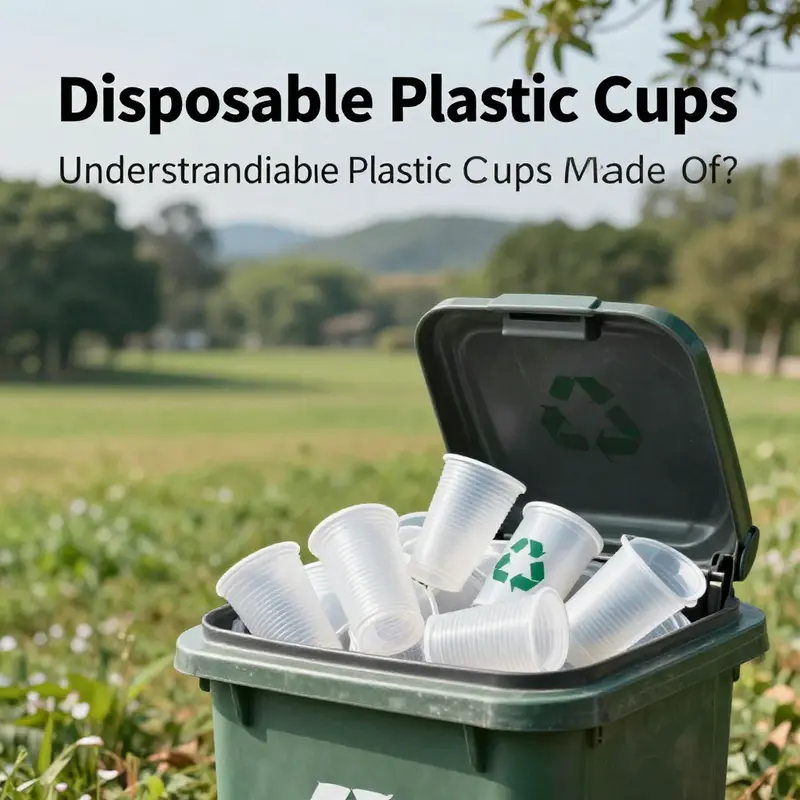
A disposable cup is a small, ordinary object that quietly demonstrates a complex web of material choices, industrial processes, and environmental trade-offs. When you lift a cold drink at a busy event or snag a hot coffee on a crowded street, the cup seems almost invisible—serving its purpose without demanding attention. Yet the substance of that cup reveals itself only through the lens of chemistry, manufacturing, and waste management. The question—what are disposable plastic cups made of?—opens a doorway to a longer story about performance, safety, and sustainability. The most common materials used to make these cups are polymers that bring different strengths to the table. Polystyrene, polyethyleneterephthalate, and polypropylene each occupy a niche in the spectrum of temperature tolerance, clarity, rigidity, and cost. In recent years, a growing interest in plant-derived and biodegradable alternatives has added another layer to the narrative, driven by concerns about pollution, fossil-fuel dependence, and the end-of-life fate of single-use products. To understand why a cup behaves the way it does under heat or cold, and why it ends up where it does in landfills or recycling streams, it helps to follow the life path of the plastic from cradle to grave, and to consider the trade-offs baked into each material choice.
Polystyrene (PS) has long been associated with the familiar “foam cup,” a light, insulating option that feels cheap to manufacture and easy to ship. In many parts of the world, PS cups are used for hot beverages because their insulating properties help keep a drink warm while limiting the surface heat that would burn a consumer’s hand. The rigidity of PS also helps prevent spills, which is a practical advantage at large-scale gatherings. Yet PS carries material and environmental concerns that persist in public conversations. It is not easily recyclable through conventional municipal streams, and its disposal can become an environmental liability when mismanaged. When exposed to heat or acidic conditions, PS can interact with its contents in ways that raise health-safety questions for some users, though the scientific landscape on this is nuanced and often region-specific. The bottom line is that PS’ low cost and insulating performance come with a set of drawbacks related to waste and end-of-life management that many communities are seeking to address.
Polyethylene terephthalate (PETE or PET) presents a different profile. PET cups are typically clear, rigid, and highly shatter-resistant, qualities that make them a popular choice for cold beverages like water, juice, and iced tea. The transparency of PET is a practical asset for product presentation and consumer appeal, and its strength supports stacking and transport in bulk. Recycling programs in many municipalities have embraced PET because it is widely recyclable when properly collected and processed, and because the material can be recovered with relative efficiency compared to other plastics. However, not all regions have robust PET recycling infrastructure, and there are concerns about contamination, food-contact safety, and the fact that PET products should not be heated or heated in a way that could compromise integrity or safety. In practice, PET cups are typically designed for cold use, and the guidance around heating or reusing them remains cautious. This nuance is important because it highlights a common misunderstanding: recyclability in theory does not always translate into practical, reliable recovery in every community, and misused PET cups end up contributing to litter and environmental load.
Polypropylene (PP) fills another niche in the cup family. PP is known for its versatility and heat resistance, enabling the manufacture of cups that can hold hot beverages without significant deformation. The material’s chemical stability under a range of temperatures also supports some applications where steam and hot liquids are involved. PP cups are increasingly common in disposable cup manufacturing, especially in settings that require reliability from breakfast service to take-away markets. The plastic’s resilience makes it a practical option for hot coffee, soups, or other hot liquids, but even PP faces challenges: contamination in recycling streams can reduce the quality of the recovered material, and not all recycling systems accept PP uniformly across jurisdictions. The result is a functional, durable cup that—like its PS and PET counterparts—depends on the surrounding waste-management landscape to determine its fate after the drink is finished.
As these traditional petroleum-based plastics have become standard in many parts of the world, a parallel thread has emerged that seeks to minimize environmental impact through alternatives. Plant-derived bioplastics, such as polylactic acid (PLA), are marketed as more sustainable options because they stem from renewable feedstocks like corn starch and can be designed to be compostable under controlled conditions. PLA represents a different paradigm: a carbon footprint narrative tied not just to the plastic in your hand, but to the environmental story of how it is produced, used, and disposed of. In principle, PLA and similar materials promise lower fossil-fuel dependence and, in some contexts, improved end-of-life outcomes. In reality, however, the story is not that simple. PLA’s effectiveness hinges on industrial composting infrastructure that can maintain specific temperature and moisture conditions for days or weeks. If PLA products end up in ordinary landfills or in backyard compost heaps, they may persist much longer than intended, or fail to break down in meaningful timeframes. This reality underscores a broader theme: the sustainability of disposable cups is as much about the systems that handle waste as it is about the chemistry of the cups themselves.
The environmental calculus for disposable cups extends beyond the chemistry of their polymers. Each material’s production involves energy, water, and raw materials, and each has a different emissions profile. The extraction and processing of fossil fuels, the energy intensity of polymer synthesis, and the manufacture of additives and colorants all contribute to a life-cycle footprint that becomes amplified when millions of cups are used and discarded. PET and PP can be recycled, but the efficacy of that recycling is a function of contamination control, consumer sorting, and the density of curbside programs—factors that vary widely from city to city. When recycling streams are imperfect or overwhelmed, plastic cups become part of a broader pollution issue, contributing to litter, microplastics, and long-term environmental persistence. PS, with its difficulties in recycling, often compounds these challenges, especially in jurisdictions where infrastructure and consumer practices fail to support effective material recovery.
This is where the conversation about sustainability meets the practicalities of consumer behavior and policy. A growing portion of the market has begun to scrutinize not just the cup materials in isolation, but the entire system that surrounds them. Some communities are experimenting with cycles of reduction and substitution: encouraging reusable cups, redesigning packaging, and improving collection and processing facilities. Others are pushing for improved labeling and standardized disposal guidance, so that consumers know precisely how to separate cups from other waste streams, and how to dispose of different materials in ways that maximize recovery. The push toward plant-based options does not automatically ensure environmental gains. The life-cycle picture matters: agricultural inputs for PLA, the energy required to convert starch into PLA resin, the efficiency of composting facilities, and the end-of-life behavior of any biodegradable or compostable cup in real-world conditions all influence the net outcome. In other words, the question of what disposable plastic cups are made of is inseparable from questions about how society manages materials, what the market values in terms of performance and price, and how regulations shape the availability and reliability of recycling and composting streams.
One useful way to think about these materials is to compare the typical use-case scenarios that drive cup design. For hot beverages, the cup must withstand temperature without deforming, delivering a secure grip, a reasonable barrier to heat transfer, and adequate stiffness to resist bending under the weight of liquid. PS has historically filled that role with low cost, but its environmental baggage has led many venues to seek alternatives. For cold beverages, transparency and rigidity help showcase the drink and protect it during handling. PET shines here, offering a clear window for the contents and good mechanical performance, with the caveat that not all regions can recycle PET equally well. For versatile, all-purpose use that spans hot and cold, PP has gained traction because it can perform across a broader temperature range, albeit sometimes at a higher price and with recycling complexities. The trade-offs among these materials become more pronounced when you factor in consumer expectations about convenience, safety, and price, as well as corporate commitments to reduce plastic waste.
As observers and participants in this space, many readers have encountered words like “biodegradable,” “compostable,” and “recyclable” attached to disposable cups. The meanings of these terms, and the conditions required for their effectiveness, are not interchangeable. A cup labeled biodegradable may break down in some environments but persist in others. A compostable cup might require industrial facilities with specific heat and moisture, and will not necessarily degrade in a home compost pile. A cup marked as recyclable tells you that the material can be recovered in aggregate, but it does not guarantee that recycling will actually occur in your locale due to contamination, infrastructure gaps, and market demand for recycled resin. The practical implication for consumers and businesses is clear: design choices must be matched with verified end-of-life options, and facilities must be in place to realize the intended environmental benefits. Without that alignment, even well-intentioned material substitutions risk producing a net impact that falls short of goals.
In the evolving landscape of disposable cups, the conversation often circles back to the idea of reducing overall waste and moving toward systems that prioritize reuse or more sustainable disposal. Some organizations are moving toward reusable cups in settings where washing infrastructure is available, while others experiment with compostable or biodegradable options designed to fit within dedicated facilities. These strategies reflect a broader trend: that material science alone cannot achieve sustainability unless paired with robust waste management, clear consumer guidance, and supportive policy frameworks. The story of disposable cups thus becomes a case study in the interplay between material properties, manufacturing realities, and societal structures that govern consumption and disposal. For researchers and practitioners, the challenge is to keep refining the materials themselves—reducing energy intensity, identifying safer additives, and improving recyclability—while simultaneously strengthening the systems that collect, sort, and process the waste streams they create.
To place material science in a practical frame, consider the everyday choices that influence what happens after use. If a cup made of PS is thrown away in a place with limited recycling options, it may contribute to landfill mass and environmental persistence for a long time. If a PET cup ends up in an efficient, well-managed curbside program, it can be transformed into new bottles or other products, closing a loop that reduces demand for virgin resin. If a PP cup is disposed of improperly, it risks contamination of recycling streams or ending up as litter. If a PLA cup finds itself in a specialized composting facility, it can become compost that enriches soil, but only if the facility exists and operates at required scales. These outcomes illustrate that the practical sustainability of disposable cups depends on a choreography of product design, consumer behavior, and waste infrastructure that is often distributed across municipalities, regions, and countries.
For readers who are curious about what lies beyond the plastic cup, it’s instructive to acknowledge the existence of comparable disposable options that aim to address some of the same concerns. Paper-based cups, for example, have grown in popularity as an alternative in many venues seeking to reduce fossil-fuel dependence or to appeal to sustainability-minded consumers. While not without their own environmental footprints—for instance, the need for coatings to resist moisture and the energy used to produce paper—their presence in the marketplace highlights a broader design conversation: is it possible to deliver the same level of convenience, safety, and performance with fewer environmental trade-offs? Evaluating such questions requires comparing life-cycle data across materials, considering regional recycling or composting capabilities, and recognizing that the best choice for one setting may not be the best choice for another. If you want to explore the alternatives beyond plastic cups, you can sample a representative glimpse through one example of paper-based cups, which you can learn about here: single-wall paper ice cream cups with lid.
In closing, the materials inside disposable cups are not mere curiosities; they are levers that shape the product’s performance, cost, safety, and environmental footprint. Polystyrene, PET, and polypropylene each offer advantages that have driven their widespread use, while their shortcomings push researchers, policymakers, and industry to test alternatives and to rethink end-of-life pathways. PLA and other plant-derived options promise a pathway to decarbonize the cup economy, but they require careful integration with composting and waste-management systems to deliver genuine benefit. The chapter that begins with a simple question—what are disposable plastic cups made of?—unfolds into a broader inquiry about how societies choose materials, how industries manufacture at scale, and how communities manage the consequences of everyday convenience. The answer is not a single material, but a chain of decisions about design, use, disposal, and reuse, all of which determine whether a cup contributes to a cleaner, more sustainable future or remains a symbol of waste in the landscapes around us. For anyone seeking a deeper, data-informed lens on these questions, a detailed external reference provides a thorough material composition and performance overview that complements this discussion and offers a foundation for broader analysis. External resource: https://www.plasticcups.vn/vn/2026/02/28/disposable-plastic-cup-explained-material-composition-performance-best-practices/.
Tracing the Material Grammar of Disposable Cups: From PP and PS to PLA Innovations
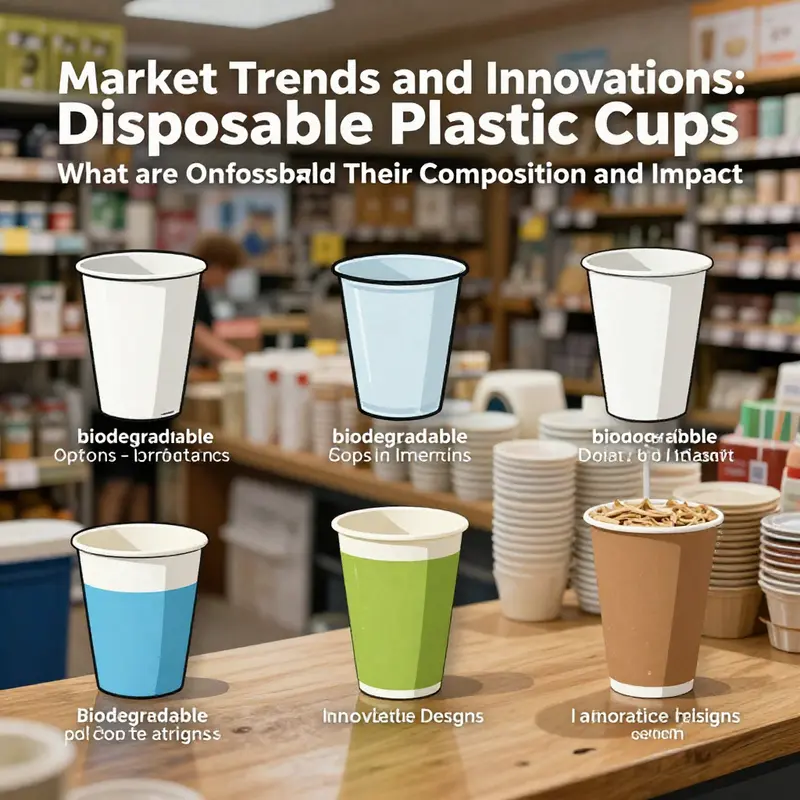
Disposable cups are more than containers; they reveal material science, manufacturing realities, and evolving waste systems. The two workhorses of modern service are polypropylene and polystyrene, chosen for strength, rigidity, and insulation where appropriate. PP cups are common for cold beverages and busy service, but can soften at high temperatures, which pushes some operators toward alternatives for hot drinks or double-walled designs. Polystyrene, including the foam variant, offers insulation that helps keep drinks warm while remaining inexpensive, yet its disposal and heat tolerance present challenges. PETE cups provide clarity and stiffness for cold servings, but local recycling streams and heat-approval rules can limit reuse or heat exposure. A growing third family, polylactic acid or PLA, represents biobased and compostable options that typically require industrial composting to realize end-of-life benefits. In practice, many service programs blend materials to balance performance with waste infrastructure. The end-of-life story matters as much as the drink itself, so labeling, local recycling or composting capabilities, and consumer guidance become essential. The chapter below outlines the material families, typical service contexts, and end-of-life narratives that shape cup choices in the real world.
Final thoughts
Understanding what disposable plastic cups are made of helps businesses across the beverage and event planning industries make informed choices about their products and practices. By recognizing the different materials available and their respective environmental impacts, companies can better align with sustainability goals and consumer expectations. Innovations in this space are growing rapidly, offering exciting options for businesses looking to enhance their brand image while prioritizing eco-friendliness. Ultimately, staying informed about these materials and trends ensures that your operations remain competitive, responsible, and aligned with the increasing demand for sustainability.