

The wholesale disposable plastic cup thermoforming machine stands as a backbone in the production of disposable tableware across various industries, particularly for bubble tea shops, restaurants, and catering services. With the growing demand for single-use plastic products, understanding the technological advancements, economic impact, and market trends surrounding these machines is vital. In the chapters that follow, we will explore how modern technology enhances the efficiency of thermoforming machines, the economic implications of their production, and the current market dynamics shaping the supply chain for these essential tools in beverage and food service.
Innovations and Integration: Transforming Wholesale Disposable Plastic Cup Thermoforming Machines for Global Efficiency
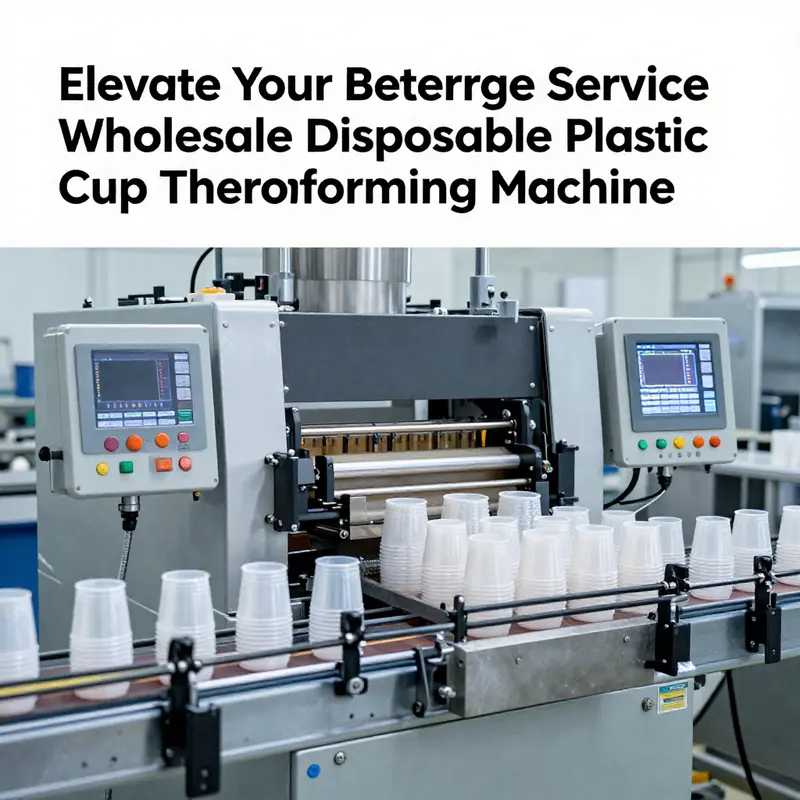
The evolution of disposable plastic cup thermoforming machines has been a saga of technical ingenuity and refined engineering that redefines modern production methods. In the early days of thermoforming, manufacturers relied on basic automated mechanisms and manual oversight to produce single-use tableware. Over time, this niche process grew into a sophisticated blend of cutting-edge automation, mechanical precision, and complex control systems that work seamlessly together. Today’s machines are vivid examples of how technology can boost throughput and meet stringent international standards while remaining reliable and easy to operate. Central to this progress is the ever-improving integration of electronic control units, advanced sensors, and digital interfaces that empower operators with real-time data and control. This continuous leap in design has been driven by demands for higher production volumes, improved product consistency, and better overall machine performance – turning disposable product manufacturing into a high-precision industrial art.
A key milestone in the transformation of wholesale disposable plastic cup thermoforming technology is the integration of fully automated, touchscreen-controlled interfaces. These modern systems enable operators to manage every aspect of the process from material feeding to final product stacking with a few taps on a digital panel. The intuitive design reduces the room for human error and significantly minimizes downtime due to operational inefficiencies. The introduction of intelligent control systems has not only sped up production cycles but has also made it possible to maintain exceptionally consistent product quality. Leveraging precise hydraulic and pneumatic systems in conjunction with software-driven adjustments, the machines constantly monitor parameters such as temperature, pressure, and cycle timing. This dynamic regulation is pivotal in ensuring that each plastic cup, bowl, or lid produced meets rigorous industry requirements. The technological sophistication in these machines reflects the broader industrial trend towards greater digitalization and automation in manufacturing.
Parallel to the advancements in control systems have been breakthroughs in material compatibility and processing flexibility. Modern thermoforming machines now accommodate a variety of thermoplastic materials ranging from polypropylene (PP) and polyethylene terephthalate (PET) to polystyrene (PS) and high-impact polystyrene (HIPS), among others. This versatility is crucial for manufacturers who need to respond quickly to shifting market demands, producing everything from hot beverage cups to cold storage containers with minimal changes in machine configurations. The ability to handle different sheet thicknesses, typically falling between 0.3 mm and 2.0 mm, has empowered manufacturers to fine-tune the physical properties of the finished products. This level of flexibility is especially vital in markets where customizability and rapid adaptation are prized, allowing production lines to pivot quickly in response to instructive insights from market trends, safety standards, and environmental considerations. Advanced servo motor-driven material feeding systems paired with next-generation ceramic heating elements are a testament to the rapid pace of innovation within this field.
The surge in production speed and capacity has redefined what manufacturers expect from thermoforming machines. High-end models now boast output rates that once seemed unattainable, with some systems achieving up to 40 cycles per minute, which can equate to the production of nearly 2,400 cups per hour. This leap in performance is not merely an improvement in speed; it represents the culmination of numerous technological refinements – from enhanced mold clamping forces capable of delivering 500 kN of pressure to more sophisticated material handling mechanisms that ensure rapid and precise transitions between production runs. The robust construction of these machines, featuring reinforced components and ergonomic safety designs, enables sustained, high-volume production without compromising the integrity of the products. By integrating advanced automation with rigid structural design, these machines meet the dual objectives of efficiency and durability, opening new avenues for high-scale commercial manufacturing while keeping operational risks at a minimum.
Beyond sheer production speed, modern thermoforming machines excel in operational efficiency through uniform heat distribution and advanced energy management systems. The adoption of ceramic heaters, available in models with power ratings as high as 70/80 kW, ensures that heating across the material is consistent and precisely regulated. Uniform heat distribution is critical in thermoforming processes as variations in temperature can lead to inconsistent product dimensions or reduced material strength. Complementary to this is the use of servo motor-driven feeding systems that guarantee a regular and calibrated flow of material, which in turn minimizes waste and optimizes cycle times. The integration of these energy-efficient components means that manufacturers not only appreciate the enhanced quality of the cups being produced but also benefit from lower energy costs and reduced environmental impact. These features collectively represent a significant step forward in marrying performance with sustainable engineering practices.
Safety and system stability have long been paramount in the design of disposable plastic cup thermoforming machines. Recent models incorporate failsafe mechanisms and robust hydraulic controls that offer exceptional mold locking capabilities, which are essential for maintaining operational stability during high-speed production cycles. The design focuses on reducing operational noise and preventing unexpected malfunctions, thereby enhancing the overall safety of the production environment. This emphasis on resilience and reliability has resulted in machines that stand up to the stresses of continuous operation, even while producing thousands of units per hour. In addition, effective material receiving systems and automated stacking mechanisms contribute to an overall streamlined production process, markedly reducing the need for manual intervention and thereby decreasing the risk of workplace accidents. Enhanced system integrity and built-in safety checks ensure that every production run adheres to high standards of quality control, creating a virtuous cycle of performance, safety, and product quality.
Conformance with international standards and certifications is another cornerstone of contemporary thermoforming machine design. Whether it is CE certification or similar regulatory approvals, compliance with these standards ensures that the machines meet stringent health, safety, and environmental protection requirements. This validation is crucial as it confirms that the machines are built not just for speed and efficiency but also for the protection of both workers and end consumers. In global markets where production reliability and regulatory adherence are paramount, manufacturers rely on these certifications to gain the necessary trust from their clients. By incorporating advanced safety features along with energy-efficient design elements, these machines stand as exemplars of modern industrial engineering, blending innovation with verified standards. This rigor in design and certification is what allows companies to venture confidently into new markets, knowing that every aspect of their production line reflects a commitment to high-quality and responsible manufacturing practices.
The integration of workflow automation with intelligent feedback loops has reconfigured the landscape of disposable plastic cup production. Even as the requirements of high output and precision become more demanding, manufacturers are empowered by systems that can automatically adjust operation parameters based on real-time feedback. Operators can monitor production metrics through digital dashboards, and the system itself can self-optimize certain parameters without human interference. Such innovations significantly lower the probability of errors and ensure a high degree of product uniformity. The use of adaptive production settings also allows machines to swiftly shift between different cup sizes and designs, streamlining operations in environments where product variations are common. This level of integration underscores the importance of digital transformation in industrial contexts and demonstrates how traditional manufacturing processes are being revolutionized through sophisticated automation and control strategies.
Environmental sustainability and energy efficiency are emerging as critical factors in the design and operation of thermoforming machines. With growing regulatory pressures and a global push towards greener manufacturing practices, recent innovations have focused on reducing energy consumption and material waste. Modern machines incorporate energy-saving modes and recyclable material processing capabilities that not only reduce the ecological footprint of the production process but also lower overall operational costs. Innovations in recyclable material integration mean that manufacturers can now use eco-friendly plastics without sacrificing performance or piece quality. The simultaneous focus on sustainability and performance reflects the industry’s commitment to responsible manufacturing. As these systems continue to evolve, manufacturers increasingly find that the adoption of eco-conscious practices does not hinder production efficiency but rather enhances the long-term viability of their operations.
Economic benefits also play a significant role in the continuous refinement of thermoforming technology. The cost-effectiveness of production systems that incorporate high-speed automated processes directly translates into greater profit margins for manufacturers. Lower energy consumption and reduced material waste mean that operational costs are kept at a minimum. In addition, streamlined processes allow for rapid production scale-up to meet surging market demands, which is particularly critical in dynamic industries such as food packaging and beverage service. As manufacturers invest in these advanced systems, they are also investing in long-term sustainability, as the increased efficiency can lead to substantial savings in both time and resources. For example, manufacturers seeking to source innovative production lines have explored options like an innovative food-grade packaging solution, which reveals a commitment not just to performance but also to environmental stewardship and market competitiveness.
The convergence of digitalization and mechanical innovation has also revolutionized the way production quality is ensured. Advanced sensors, combined with machine vision systems, are now capable of detecting even the slightest deviations in the forming process, allowing for immediate corrective actions. This digital oversight ensures that each produced item is of consistent high quality and that anomalies can be corrected in real time. By incorporating such smart features into the control system, manufacturers can dramatically reduce the frequency of downtime and increase overall machine uptime. The system’s ability to automatically log and analyze production data also provides critical insights into the manufacturing process, enabling predictive maintenance and continuous improvement. This digital transformation reaffirms the role of automation as not just a means of increasing volume, but as a comprehensive strategy to maintain impeccable quality standards throughout the production cycle.
Economic fluctuations and the need for adaptive production in a global market have further spurred advancements in thermoforming machine technology. Manufacturers are no longer confined to rigid production cycles but are now able to adjust to diverse market requirements with remarkable agility. This flexibility is achieved in part through customizable production settings, which enable rapid reconfiguration of machine settings to handle different product lines or respond to varying order sizes. The robust design of these machines allows for swift transitions without compromising quality. In times of surging demand, such systems provide the capability to quickly scale up production and meet international market needs while ensuring that individual units consistently adhere to budgetary and performance expectations. The integration of adaptive control systems into thermoforming machinery is indicative of an industry that demands both speed and precision, responding adeptly to the dynamic nature of global commerce.
As advanced thermoforming machines continue to evolve, the future looks set for even greater integration of sustainable practices with state-of-the-art technology. Research and development pioneers are now exploring energy recovery systems, renewable power sources, and further reductions in material waste through better process control. By incorporating next-generation sensors and machine learning algorithms, manufacturers can now predict and optimize every facet of machine performance. The continuous feedback loop provided by these smart systems not only bolsters quality control but also anticipates maintenance issues before they occur, ensuring consistent operation even under heavy loads. This proactive approach to machine management represents the convergence of data analytics and mechanical engineering, creating production environments that are both intelligent and resilient. With these incremental yet impactful innovations, manufacturers are poised to redefine the production landscape with even greater precision and responsibility.
In examining the broader impact of these transformative technologies, it becomes clear that the role of advanced thermoforming machines extends far beyond the confines of any single production line. The interplay between automation, material science, and digital control mechanisms is revolutionizing how manufacturers approach production challenges. The advantages are tangible: increased throughput, better quality assurance, and an overall reduction in operational costs. This integrated approach is not simply a trend but a fundamental re-imagination of process engineering, making it possible for manufacturers to reliably produce disposable plastic products that are safe, consistent, and environmentally responsible. The economic and technical benefits engender a competitive advantage that is increasingly vital in a market where precision and reliability are paramount. With each successive innovation, the scope of what is possible expands, opening new horizons in production efficiency and global market integration.
Through these continual innovations, the design of wholesale plastic cup thermoforming machinery is proving itself to be a cornerstone of modern industrial production. The sophistication of systems, from highly integrated control panels to robust automated material handling features, ensures that every component works harmoniously towards creating high-quality, single-use tableware on an industrial scale. For manufacturers interested in bridging the gap between traditional production methods and modern demands, these machines often represent the optimal technological investment. Future developments are likely to include even more in-depth applications of artificial intelligence and predictive analytics, driving the entire process toward a new standard of ultra-high-speed manufacturing. The relentless pursuit for better energy efficiency and lower waste underscores a broader commitment to environmentally conscious production, paving the way for innovations that are just as sustainable and ethical as they are efficient.
In summary, the wholesale disposable plastic cup thermoforming machine has undergone a remarkable transformation over the past few decades. What was once a relatively basic manufacturing process has evolved into a highly automated, energy-efficient, and quality-centric system wherein every aspect of production is meticulously controlled via digital interfaces and sophisticated mechanical components. With advancements in material compatibility, energy management, safety features, and environmental sustainability, these machines are at the forefront of production technology, ready to meet the challenges of modern industry. They not only ensure rapid and reliable output but also adhere to international standards and facilitate easier production transitions, thereby reinforcing the notion that innovation and integration remain the keys to global efficiency in manufacturing. For further exploration of the latest breakthroughs in thermoforming technology, interested parties can review the detailed features of the High-Speed Disposable Coffee Cup Making Machine through this external resource: High-Speed Disposable Coffee Cup Making Machine.
Transforming Industry Economics: The Far-Reaching Impact of Wholesale Disposable Plastic Cup Thermoforming Machines
The economic transformation driven by wholesale disposable plastic cup thermoforming machine production has been profound, affecting global supply chains, labor markets, material costs, and manufacturing innovations. The evolution of these machines over the past decades has been remarkable. Advances in automation, precision engineering, and energy efficiency have created an environment where large-scale production can be achieved with minimal resource wastage. These innovations have empowered manufacturers, not only in developed markets, but also in emerging economies, to deliver products efficiently at a fraction of the previous costs. This has fundamentally altered competitive dynamics, as cost-conscious producers can now serve an increasingly global clientele while investing in new technologies that further streamline operations.
At the heart of this industrial revolution lie machines that marry hydraulic and pneumatic controls, computer-driven PLC systems, and energy-efficient modules that optimize the entire thermoforming process. Traditionally, the production of disposable plastic tableware required significant manual intervention, with each stage of production subject to variability and inefficiency. Today’s automated machines seamlessly integrate material handling, preheating, forming, and cutting operations into a unified production line, resulting in unparalleled output consistency. Manufacturers have come to appreciate how reduced labor intensity and energy consumption lead to dramatic cost savings, not only in terms of raw expenditure but also in reducing the potential for human error. Consequently, the quality and consistency of disposable cups, bowls, lids, and related items have increased, thereby ensuring that end consumers receive dependable products, whether used in the food service industry or for other everyday applications.
A significant driver for the economic impact is the considerable boost in production efficiency. With machines engineered to produce up to 500 units per hour, companies can scale their production rapidly to meet rising global demand. In high-volume settings like fast-food chains, convenience stores, and delivery-centric businesses, rapid and efficient production methods ensure that demand is met without compromising quality. The integration of multiple forming stations and automated stacking systems further contributes to efficiency by cutting down on production time and minimizing downtime. In an era where customer expectations favor rapid, on-demand supply, the efficiency gains offered by these machines translate directly into competitive advantage. Businesses can achieve higher throughput with fewer operators, optimizing labor allocation and significantly reducing inadvertent errors that could lead to production halts.
This leap in manufacturing productivity does not occur in isolation but reverberates throughout the entire supply chain. Economies benefit from an injection of manufacturing resilience as suppliers on platforms like Alibaba provide equipment that adheres to internationally recognized standards such as CE, ISO, and BV certifications. This democratization of technology means that small- and medium-sized enterprises (SMEs) in regions with emerging markets can now consider entry into sectors previously reserved for larger manufacturers. In these markets, gaining access to reliable, high-performance manufacturing equipment empowers local businesses, fostering regional economic development and generating employment opportunities that can help alleviate longstanding inequality. With access to affordable thermoforming machinery, regional producers can capture more of the value chain that was once concentrated in traditional manufacturing hubs, thereby promoting local industrial growth and fostering a more balanced global economic environment.
Another aspect that underscores the economic significance is the reduction in per-unit production costs. By introducing PLC-controlled systems and optimized thermal mechanisms, modern thermoforming machines reduce material waste and unnecessary energy consumption. These improvements can lead to cost reductions of as much as 20–30% compared to older models. Manufacturers now have the flexibility to choose from a diverse range of materials – including polypropylene (PP), polystyrene (PS), polyethylene terephthalate (PET), and even innovative alternatives like high-impact polystyrene (HIPS) and polyvinyl chloride (PVC) – based on current market trends and cost considerations. Such versatility ensures that businesses remain agile, adapting production mixes to fluctuating raw material prices and consumer preferences. The optimization of resource use not only improves profitability but also plays a critical role in reducing the environmental footprint of production, a factor that increasingly influences regulatory frameworks and consumer buying behavior.
Central to these developments is the evolution of factory designs and material handling operations. The layout of modern production facilities, designed around the needs of automated thermoforming lines, has redefined operational logistics. Expansive material racks, integrated receiving systems, and seamless material flow reduce bottlenecks and improve overall efficiency. These designs, refined through years of industry feedback and technological advances, ensure that every step of the production process occurs in a controlled, predictable manner. The synergy between hardware and software in these systems allows operators to focus on strategic decision-making rather than routine operational tasks. Moreover, the creation of such highly automated environments has led to improved workplace safety, reducing the physical strain on employees and decreasing the risk of accidents. These improvements in worker safety and job satisfaction indirectly contribute to the economic advantages by lowering costs associated with workplace injuries and disruptions.
The ripple effects of these manufacturing innovations extend far beyond individual factories. A well-integrated production network can bolster entire regions, as efficient manufacturing leads to lower product prices in the market. This contributes to consumer price stability in fields as diverse as food service, retail, and even pharmaceutical packaging. When disposable packaging becomes affordable and reliable, it allows businesses across sectors to offer competitive pricing, which, in turn, fuels consumer demand. This cascading effect underscores a principle in economics wherein improvements at the production level ultimately lead to enhanced market stability and a more robust national economy. For instance, the cost-effective production of disposable cups and containers means that small vendors and large franchises alike can invest in economies of scale, making quality disposable tableware widely accessible. In effect, such economic shifts can stimulate broader retail and service sectors, propelling overall market growth and encouraging further industrial investments.
Furthermore, the adoption of advanced thermoforming technology is not solely confined to the production of disposable tableware. The technology and operational strategies honed through these manufacturing processes have cross-industry applications. For example, the precision and automation principles in these machines can be applied to pharmaceutical packaging, reducing contamination risks and ensuring uniform dosage forms. Similarly, in the textile and tourism industries, where packaging efficiency and reliability are paramount, these systems set a benchmark for operational performance and product consistency. As businesses in diverse sectors experience the benefits of improved cost control and enhanced product quality, a spillover effect occurs, driving investments in related industries and reinforcing the economic foundations of the manufacturing sector as a whole.
In light of these advancements, the economic narrative is shifting from a focus on raw production figures to a broader appreciation of value creation. Manufacturers investing in state-of-the-art thermoforming machines are not just purchasing equipment; they are embracing a philosophy of continuous improvement and operational excellence. This commitment has fostered an environment of research and development in automation, encouraging further innovation in energy management and material sciences. In doing so, companies are not only reducing their operational costs but also contributing to technological breakthroughs that redefine production standards. This innovation ecosystem — where continuous improvement drives both efficiency and profitability — reflects a deep understanding that sustainable growth depends on the ability to adapt to changing market conditions and embrace technological advancements.
A notable example of technological adaptation is seen in the incorporation of smart sensors and automated diagnostics within modern thermoforming machines. These improvements allow operators to monitor production parameters in real time, preempting potential issues before they escalate into costly downtime. The predictive maintenance capabilities offered by integrated sensor networks reduce unexpected machine failures and enhance the overall reliability of production systems. In effect, these smart systems create a virtuous circle of continuous feedback and optimization, ensuring that the machines remain in peak condition and production levels stay at their optimum. Such technological integration, while initially requiring capital investment, ultimately results in long-term cost savings and production longevity, reinforcing the overall economic efficiency of the entire manufacturing operation.
Moreover, the global market expansion facilitated by these machines has introduced an element of decentralization in manufacturing. Previously, high capital requirements and the need for technical expertise meant that only a select group of companies in established industrial regions could produce disposable plastic tableware. However, the advent of user-friendly, highly automated machines means that even small and medium enterprises in developing nations can now enter this competitive arena. This shift has led to a proliferation of regional production hubs, each benefiting from localized supply chains, reduced transportation costs, and an enhanced ability to cater to the specific needs of regional markets. In many cases, these developments have accelerated economic growth in areas that historically did not see substantial industrial activity. As production becomes more localized, the economic benefits extend beyond mere cost savings; they foster community development, generate local employment, and contribute to a more balanced distribution of industrial prosperity across countries and regions.
In considering these advancements, it is important to acknowledge the potential environmental and regulatory challenges. While disposable plastic products have gained popularity due to their economic benefits, increasing environmental scrutiny has prompted a rethinking of material choices and production practices. Manufacturers are now compelled to not only meet stringent regulatory standards but also to invest in research aimed at finding sustainable production solutions. In response, innovative companies are developing thermoforming machines capable of processing biodegradable and recycled materials without sacrificing efficiency. This proactive adaptation to environmental concerns not only mitigates regulatory risks but also opens new market opportunities as eco-conscious consumers demand greener alternatives. The economic implications of these environmental pressures are significant; while initial investments in green technologies may be high, the long-term benefits include reduced waste management costs and enhanced brand reputation. In many respects, the pressure to become more sustainable is driving a positive cycle of innovation, where cost-effective production and environmental stewardship work in tandem to create a more resilient manufacturing ecosystem.
The economic impact is further magnified when considering the role of digital transformation and data analytics in modernization strategies. Data captured by smart thermoforming machines is increasingly being used to fine-tune operational parameters. This real-time intelligence, coupled with historical performance data, provides manufacturers with insights into long-term trends, enabling them to forecast demand more accurately, plan maintenance schedules, and manage inventory effectively. The result is an agile production environment that can quickly adjust to fluctuating market conditions. Companies are also exploring cloud-based solutions to centralize data from multiple production facilities, driving operational efficiencies across different geographic regions. This convergence of automation, data analytics, and global connectivity lays the groundwork for a future where production processes are not only efficient but also predictive and adaptive, ready to meet the demands of an ever-changing global economy.
As the economic implications of these advances continue to unfold, several concrete examples illustrate the benefits. Consider a mid-sized manufacturer that previously grappled with inconsistent quality and high operation costs. With the adoption of modern thermoforming technology, the company was able to reduce production errors by over 30%, leading to a substantial decrease in waste and rework costs. Additionally, energy consumption dropped significantly as new machines optimized thermal management processes. These improvements allowed the manufacturer to lower the price point of its disposable cup products, thus gaining a competitive edge in a market where cost is a critical factor. Over time, these operational adjustments not only boosted the manufacturer’s bottom line but also enhanced its reputation as a reliable supplier, driving increased demand from both domestic and international clients.
Another compelling aspect of this economic narrative is the interplay between technological investment and labor market dynamics. While some may fear that automation leads to job losses, the reality in the thermoforming sector paints a more nuanced picture. By reducing reliance on manual labor for routine tasks, companies are able to reallocate human resources to more strategic and creative roles. For instance, operators trained in managing advanced production systems can focus on quality control, process optimization, and innovation management. This shift results in a more skilled workforce that is better prepared to operate in a high-tech environment, thereby increasing overall productivity. Moreover, as the manufacturing sector expands into new regions, the demand for technical training and support services rises, generating ancillary employment opportunities and contributing to a more dynamic labor market. In this way, technological progress drives not only operational efficiency but also human capital development, which, in turn, reinforces the economic foundation of the sector.
The broad economic influence of wholesale disposable plastic cup thermoforming machine production is equally evident at the consumer end. Lower production costs and efficient manufacturing processes lead to more affordable final products, thereby democratizing access to disposable tableware in diverse settings. Whether used for serving ice cream in a bustling urban center or for packaging snacks at large sporting events, the economic benefits are tangible. Affordability, driven by economies of scale and improved production methods, means that small businesses can invest in quality disposable packaging without incurring prohibitive costs. This affordability, coupled with consistent product quality, has transformed the market landscape. It has also spurred a competitive environment where manufacturers continually strive for further improvements in efficiency, innovation, and sustainability.
The convergence of advanced thermoforming technology and economic innovation is a testament to how industrial investments can fuel broader societal progress. The emphasis on quality, efficiency, and sustainability has catalyzed a transformation across multiple sectors. For manufacturers, it means staying ahead of the curve by embracing cutting-edge technology and leveraging data-driven insights to fine-tune production systems. For consumers, the benefits are seen in the increased reliability and affordability of everyday products. And for economies, the ripple effects extend to job creation, regional development, and strengthened supply chains that can adapt to global market challenges.
In a broader context, the integration of these sophisticated machines into manufacturing ecosystems offers a glimpse into the future of production. As industries worldwide continue to invest in automation and industrial digitization, the lessons learned from thermoforming machine production serve as a roadmap for innovation. This roadmap is not limited to any one sector but offers a universal template for achieving operational excellence and economic stability. The synergy between technology and traditional manufacturing practices is paving the way for a new era where efficiency, sustainability, and profitability are no longer mutually exclusive but are interdependent hallmarks of modern industry.
For those interested in understanding the practical applications of these principles in related fields, exploring topics such as eco-friendly disposable packaging can provide additional insights. One can refer to examples such as the innovative development of eco-friendly printed logo paper ice cream cups, which demonstrate how sustainable practices are being integrated into other segments of disposable packaging. Interested readers can learn more about such advancements by checking out the detailed discussion available in the article on this topic, which offers a complementary perspective on modern manufacturing techniques eco-friendly printed logo paper ice cream cups.
In summary, the economic landscape of wholesale disposable plastic cup thermoforming machine production is marked by continual innovation and transformation. Every advance in production efficiency, every leap in automation technology, and every strategic decision to decentralize manufacturing capacity contributes to a larger narrative of industrial evolution. These machines not only lower costs and improve product consistency but also drive global market expansion, encourage regional development, and foster a dynamic, skilled workforce. They represent more than mere pieces of equipment; they embody a commitment to quality, sustainability, and innovation that reverberates across every link in the supply chain.
As the industry adapts to new challenges and opportunities, the economic benefits of these advances will only become more pronounced. From lowering production costs through optimized resource management to empowering local markets with accessible technology and spurring innovations in both hardware and software realms, the impact is multifaceted and enduring. The holistic advantages stemming from these improvements underscore the importance of continued investments in modern manufacturing technologies. They ultimately lead to a robust industrial framework where economic efficiency and sustainable practices are integrated to create lasting value. For further insight into detailed machine specifications and how these advancements are implemented in global supply chains, readers may consult external resources such as the comprehensive product listing available on Alibaba here. As the manufacturing paradigm continues to evolve, the impact of these developments will play an ever more critical role in shaping the global economic landscape, ensuring that industries worldwide are better equipped to meet future challenges with resilience and innovation.
Navigating Sustainability, Automation, and Global Supply Chains in Plastic Cup Thermoforming
In the rapidly evolving landscape of disposable plastic cup manufacturing, wholesale thermoforming machines have emerged as more than mere equipment; they represent the core of a global shift toward sustainable production methods, increased automation, and integrated supply chain solutions. The industry is undergoing profound transformation driven by environmental demands, technological innovations, and the dynamics of international trade. As manufacturers and suppliers strive to stay ahead of market needs, their success hinges on embracing eco-friendly materials, investing in smart automation platforms, and building robust supply chain partnerships that can keep pace with ever-changing global demands.
One of the most notable trends in the industry is the move toward sustainable development. Stakeholders ranging from manufacturers to end consumers are increasingly concerned with reducing the environmental footprint associated with plastic tableware production. Regulatory pressures in major markets such as the European Union and North America, combined with rising consumer awareness about environmental issues, have prompted companies to reconsider traditional materials like non-degradable polystyrene in favor of more sustainable options. Materials such as polypropylene (PP), polylactic acid (PLA), and other bioplastics are quickly gaining traction, providing manufacturers the versatility to produce disposable cups, bowls, and lids that meet stricter environmental standards. This shift has influenced the evolution of thermoforming machines, which now are being engineered to handle multiple types of eco-friendly materials. The machines not only accommodate new plastic formulations but also incorporate features that enhance materials’ processing efficiency, fostering a greener production cycle.
The transformation toward sustainability is paralleled by a robust drive toward automation and intelligent operation. Modern thermoforming systems are no longer mere mechanical devices; they have morphed into intelligent production hubs capable of meeting the high-demand mixed order requirements that are now prevalent across the food packaging and pharmaceutical industries. With platforms that incorporate fully automated changeover mechanisms, advanced pre-set parameter libraries, and remote troubleshooting functionalities, these machines optimize production by reducing downtime and minimizing human intervention. For instance, certain state-of-the-art machines boast the capability to adjust configurations with just a single command, allowing manufacturers to switch effortlessly between different cup designs and sizes. This flexibility not only enhances throughput but also enables production lines to pivot quickly in response to market fluctuations and specialized order requests.
Automation in thermoforming has also opened the door to more refined quality controls. Integrated systems now continually monitor variables such as temperature, pressure, and cycle time, ensuring that each product conforms to high-quality standards. The efficiency brought by automation minimizes energy loss and reduces the margin for error during manufacturing, contributing to overall product consistency. Furthermore, with the integration of digital control panels and remote diagnostics, maintenance is now more predictive rather than reactive. This transition supports not only higher production capacities but also longer machine lifespans, a critical factor for large-scale operations aiming to manage both capital and operational expenses effectively.
A significant facet of these technological strides is the globalization of supply chains, particularly the critical role played by Chinese manufacturers. China’s dominance in the field of disposable plastic cup thermoforming machinery is well-established, largely due to its competitive pricing structures, scalable production capabilities, and efficient logistical networks. While suppliers in other regions might offer higher-specification products, the Chinese market remains compelling due to its ability to provide low minimum order quantities and adaptable service offerings catering to small and medium enterprises. However, this competitive pricing does not come without its challenges. Buyers are urged to exercise due diligence when selecting suppliers since issues such as delayed aftersales service, sporadic parts availability, and inadequate technical support can undermine long-term efficiency.
The reliance on Chinese manufacturing has established a dual-edged sword where price competitiveness meets the need for reliable long-term partnerships. In response to market demands and the increasing diversification of orders—from small batch custom production to massive high-volume runs—suppliers are enhancing their service capabilities. In many cases, they are evolving from being purely equipment vendors to full-fledged solution providers. This transformation involves offering comprehensive packages that include on-site installation, molding design customization, material handling recommendations, production line optimization, and rigorous training programs. The bundled approach not only addresses immediate production needs but also stabilizes ongoing operations, aiming to build trust and facilitate smoother cross-border transactions. As buyers consider their next orders, the emphasis is shifting from a simple purchase transaction toward forging long-term strategic alliances that ensure operational continuity and technical support.
In practical terms, many manufacturers now find value in working with suppliers that maintain transparent, well-communicated service channels. For example, sourcing platforms have begun integrating features such as “Request Quote + Chat Now” functionalities, providing real-time access to professional advice and bespoke machine configurations. This advanced level of customer service is essential in an era where the margin for error is slim and the speed of production is paramount. Buyers can now receive immediate technical consultations, reducing the risks associated with customization issues and helping them fine-tune their production lines with minimal disruption.
Additionally, the influx of digital technologies in production management has led to the emergence of software-driven quality control systems that are capable of real-time monitoring and adaptive response. These systems are often integrated into centralized dashboards that offer detailed insights into production metrics. The availability of such analytics allows managers to make informed decisions, harness production trends, and detect anomalies before they result in defects. In turn, this high level of operational intelligence aids in achieving stringent quality certifications, such as CE, which is of particular importance in markets like Europe where product safety and reliability are non-negotiable. Underpinning this trend is the broader industrial move toward what many are calling Industry 4.0 – the synthesis of physical production with digital automation and data-driven decision-making.
The market for thermoforming machinery, particularly those dedicated to disposable plastic cups, is undergoing changes that extend beyond mere operational efficiencies. The industry is actively responding to shifting consumer expectations and governmental regulations that demand both environmental stewardship and operational efficiency. The rapid rise in global demand for eco-friendly packaging is influencing everything from material sourcing decisions to the design of production lines themselves. Manufacturers must now integrate sustainability into their core business models, ensuring that every step in the production process adheres to environmental best practices. The advent of machines that can seamlessly process recycled and biodegradable formulations is a clear manifestation of this trend. Manufacturers who fail to adapt may soon find themselves at a competitive disadvantage in a market where consumers increasingly prefer products that have a lower environmental impact.
Advancements in research and development continue to push the envelope in terms of automation and materials technology. Engineers are experimenting with new configurations that reduce energy consumption while maximizing throughput. These innovations include precision control systems that harness artificial intelligence to predict and adjust parameters automatically. Integrating such systems enhances reliability, minimizes waste, and enables the handling of a diverse array of plastic types without the need for extensive reconfiguration. As a result, the operational costs drop significantly in the long run while maintaining high production speeds and quality levels. This intersection of automation technology with new material science is setting the stage for a revolution in how disposable cups and related tableware are produced on a mass scale.
The critical role played by supply chain logistics in this technologically advanced landscape cannot be overlooked. Robust supply chains that integrate international sourcing, real-time inventory management, and global distribution networks are vital to the economy of scale in disposable cup manufacturing. Chinese suppliers, in particular, offer a window into how a well-integrated supply chain can provide not only cost-effective solutions but also timely delivery and technical support across geographical borders. In recent years, many manufacturers have streamlined their ordering processes by relying on digital trade platforms, where buyers can browse numerous options, request customizations, and even witness virtual production demos before placing an order. This transparency is a welcome change in an industry where traditional sales channels often provided limited information and delayed responses.
As the boundaries between production, logistics, and customer service blur, manufacturers are finding that the most competitive advantage lies in delivering not just products, but complete, end-to-end solutions. This holistic approach is redefining business models within the toy, fashion, and food packaging sectors, among others. Manufacturers are now expected to offer consultative services that encompass mold design, energy efficiency optimization, and even post-installation training. Furthermore, new service models include maintenance plans, on-demand parts replacement, and long-term performance monitoring. The evolution of the supply chain from a singular product focus to a complete service-oriented framework signifies a maturing market that is ready to embrace the challenges of the 21st century.
In addition to operational and supply chain enhancements, the global nature of the disposable cup market has catalyzed new business strategies that blur traditional industry boundaries. Suppliers are finding that cross-industry knowledge, such as innovations in packaging design from the food sector and quality control standards from the pharmaceutical industry, can be adapted to improve thermoforming machine performance. With the intensity of global competition mounting, companies are increasingly investing in multi-disciplinary research teams that can develop cutting-edge solutions applicable across various fields. This integrated approach is not only driving innovation but also ensuring that products remain compliant with diverse regulatory standards, particularly in regions with stringent quality requirements.
As the industry advances, it is essential to note that the future trajectory involves a delicate balance between cost, efficiency, and sustainability. Manufacturers that position themselves as holistic solution providers by bridging the gap between high-performance equipment and sustainable practices will likely lead the market into the forthcoming decades. The high demand for disposable packaging solutions does not imply a compromise on quality or environmental responsibility. In fact, the direction of travel is toward machines that are smart, adaptive, and capable of handling a broad spectrum of material types, including those that align with strict environmental guidelines. Such machinery is capable of producing items that not only meet but often exceed the expectations of both regulatory authorities and environmentally-conscious consumers.
The convergence of sustainability and innovation is perhaps most vividly captured in the technological enhancements aimed at energy conservation and waste reduction. State-of-the-art thermoforming systems feature energy-efficient components such as variable frequency drives and smart sensors that calibrate operations in real time. These improvements lead to significant energy savings, lower operational costs, and a smaller carbon footprint. Moreover, by cutting down on waste, manufacturers contribute to broader environmental objectives while also bolstering the bottom line. With many production lines now equipped with digital twin models and predictive maintenance tools, the entire lifecycle of the machinery is becoming optimized for performance and durability.
It is also important to recognize that innovation in the disposable plastic cup market is having a wider influence on adjacent industries. As manufacturers push the boundaries of what is possible with thermoforming technology, their advances often trickle out to sectors that rely on similar processes, such as packaging for retail and industrial applications. This ripple effect encourages a continuous flow of innovation and resource sharing among seemingly disparate industries. At its core, the thermoforming machine market has become a crucible of modern manufacturing practices, blending automation, sustainability, and digitalization in a manner that sets new benchmarks for global production standards.
For those interested in exploring the convergence of eco-conscious manufacturing and high-performance machinery, additional perspectives on sustainable practices can be found in resources covering topics like eco-friendly disposable cups. These insights not only highlight the importance of environmentally sustainable production techniques but also underscore the operational benefits that come from investing in advanced thermoforming machinery. Manufacturers who delve into these topics often discover that rethinking production processes and supply chain strategies can lead to unexpected efficiencies and long-term competitive advantages. For further reading on sustainable disposable cup solutions, you may consider checking out eco-friendly disposable cups, which provides a detailed look at sustainable design practices and production technologies.
In conclusion, the evolution of wholesale disposable plastic cup thermoforming machines is characterized by a series of dynamic and interrelated trends that emphasize environmental sustainability, automation, and a sophisticated global supply chain. Manufacturers who successfully integrate eco-friendly materials with smart, automated production systems are not only better positioned to meet the demands of today’s market but are also paving the way for innovative business models that rely on comprehensive, value-added services. As this industry continues to evolve, stakeholders will need to remain agile, embracing both technological advancements and market-driven sustainability initiatives. The merger of these domains is what drives the industry forward, creating a future where the efficiency of high-speed production, the precision of automated processes, and the imperative of sustainable practices all coalesce to redefine the production of disposable plastic cup tableware on a global scale.
For those looking to gain deeper insights into the technological aspects and market strategies at play, further details about innovative machine features and market positioning can be found through reliable external sources such as the comprehensive information available at Alibaba’s disposable plastic glasses making machine showcase. This source provides a clear picture of how the interplay of design, automation, and environmental responsiveness is shaping the future of disposable plastic cup thermoforming on a global scale.
Ultimately, the convergence of sustainability, technological innovation, and sophisticated supply chain management is setting the stage for a new era in the production of disposable plastic tableware. In a market that is increasingly defined by rapid response to consumer needs and regulatory demands alike, the companies that invest in these areas will define the next generation of efficiency and quality. The evolution of the sector is not merely a response to competitive pressures but is a proactive step toward a cleaner, more efficient, and more resilient manufacturing future.
Final thoughts
In an era where efficiency and sustainability are paramount, the wholesale disposable plastic cup thermoforming machine presents a compelling solution for businesses in the beverage and food industries. The chapters have highlighted significant technological advancements, emphasized the economic advantages of these machines, and explored the market trends shaping their availability. By investing in such machines, bubble tea shops, restaurants, and catering services can meet consumer demand while optimizing their production processes, ultimately leading to enhanced service delivery and customer satisfaction.