

As eco-conscious consumption grows, restaurants, cafes, and ice cream parlors are increasingly turning to wholesale paper ice cream cups. These products not only enhance brand visibility but also align businesses with sustainability goals. Understanding the various aspects of wholesale paper ice cream cups—from specifications and customization options to pricing strategies and environmental certifications—empowers business owners to make informed purchasing decisions. Additionally, packaging and logistics play crucial roles in ensuring product availability. This article breaks down the essential components to help you navigate the wholesale market effectively.
From Material to Brand Identity: Navigating Specifications and Customization in Wholesale Paper Ice Cream Cups
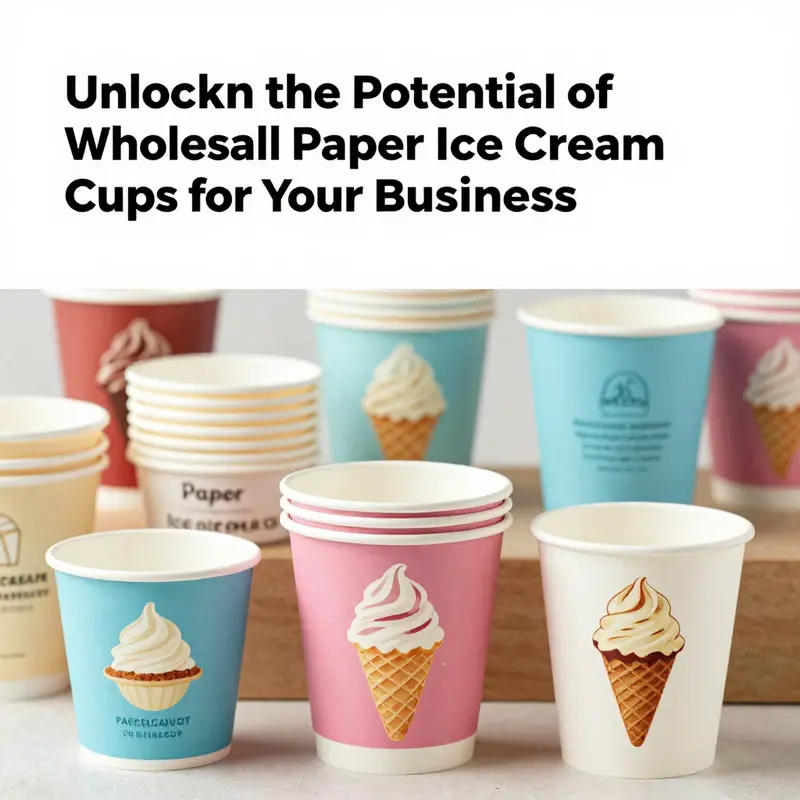
Sourcing wholesale paper ice cream cups goes beyond choosing a container. It is about aligning material performance, brand experience, and sustainability with supply realities and cost structures. The spectrum of product specifications defines how a cup handles cold, how it feels in a hand, and how it communicates a brand’s values. At the same time, customization turns a simple vessel into a marketing asset that can reinforce identity from the first glance to the last lick. This chapter threads those strands together in a practical narrative that speaks to producers, retailers, and contract manufacturers alike.
Material specifications form the foundation. Most wholesale options rely on food-grade paper pulp, frequently virgin pulp for strength and printability. A growing subset incorporates bio-based or compostable coatings—water-based formulations that resist wicking and grease. These coatings are not mere add-ons; they determine performance under repeated freezing, condensation, and handling. In some cases, double-wall or reinforced substrates pair with thicker stock to reduce heat transfer and minimize condensation on the outside of the cup, a feature valued by premium ice cream shops that want a tactilely comfortable experience. Yet no material story is one-size-fits-all. Some suppliers highlight laminated constructions that offer robust barrier properties but add complexity to recycling if layers must be separated. For brands aiming to communicate sustainability, the choice between biodegradable or compostable variants, like those based on PLA or other plant-derived resins, becomes a central part of the packaging narrative.
Capacity and geometry matter as much as material. Common wholesale capacities span small to generous servings, with 4oz, 8oz, 12oz, 16oz, and 20oz variants frequently available, and some suppliers extending to around 440ml to 15oz for larger indulgences. The decision is not just about portion size; it also influences the cup’s wall thickness, insulation characteristics, and the feasibility of securing lids and spoons in a coordinated set. The dimensions—top diameter, bottom diameter, and height—are often customizable to fit product lines and equipment. In practice, many operators design a family of cups that share a consistent look while offering slightly different proportions to accommodate toppings, sauces, or specialty desserts. A well-chosen geometry can reduce spillage during transport and improve stacking in display cases or catering setups, reinforcing a brand’s commitment to reliability.
Customization offers a bridge between efficiency and differentiation. Flexo printing can accommodate up to six colors, enabling bold logos, color gradients, and thematic artwork that travel well against high-contrast menus. Custom logos and designs become part of the on-shelf identity, helping a retail chain or a local shop embed its story into every serving. Some suppliers go further by offering integrated features such as secure lids and accompanying spoons, which can streamline operations in cafes, mobile units, or event catering. While these add-ons improve convenience and reduce overall packaging waste when bundled with the cup, they can lift unit costs and occasionally introduce minor leakage risks if pouring or toppings are generous. Brands must therefore balance aesthetics with practicality, ensuring that printed surfaces remain legible under cold conditions and that the ink systems meet food-contact safety standards.
Ingress and disposal considerations also shape the selection. Given the growing emphasis on circularity, it is vital to understand how a laminated or coated cup behaves in recycling or composting streams. Some markets favor compostable options that align with municipal green programs, while others rely on standard recycling streams that may require consumer education about material separation. Certifications help navigate these conversations. FDA and CE markings provide assurance that the product has met certain safety standards for foods contact, a critical consideration for multi-country distribution. For brands seeking green storytelling, biodegradable and compostable labeling can be a decisive differentiator that resonates with eco-conscious consumers.
From a commercial lens, understanding pricing and minimums clarifies the economics behind customization. Price tiers vary with quantity and complexity. For bulk orders exceeding 50,000 units, unit prices can drop to approximately $0.013 each, a stark contrast to small-volume runs that may range from $0.03 to $0.05 per piece when printing or special finishes are involved. Small or mid-size orders without heavy customization may be available at lower minimums, sometimes around 10,000 units, balancing speed with personalization. Sample access is a practical consideration; some suppliers offer free samples, while others charge a modest fee (for example, around $50 per box) to cover testing and logistics.
MOQs and lead times reflect the scale and reliability customers expect. Standard customized orders often require a minimum of 50,000 units, while non-printed or simple customizations might accept smaller quantities. First orders typically entail longer lead times, commonly 30 to 45 days, reflecting setup, proofing, and production ramp-up. Subsequent orders usually enjoy shorter cycles of 7 to 15 days, assuming stable production runs and stable logistics. Packaging and shipping terms also warrant careful scrutiny. Standard export packaging usually involves cartons configured for safe transit—often 25 packages per inner carton, with multiple cups per package and a total case count that fits typical freight dimensions. Port options frequently include major hubs such as Shanghai or other coastal gateways, with freight costs contingent on destination, volume, and service level.
Payment terms are structured to provide mutual protection while supporting competitive pricing. A common approach is a 30% T/T upfront and the remaining 70% due before shipment. Platforms that host wholesale transactions, such as B2B marketplaces, frequently offer buyer protection features that guard against late shipments, loss, or quality issues, providing a degree of financial security for buyers navigating international procurement. These protections, combined with clear invoicing and documentation, help soften the risks associated with large-scale packaging projects.
Sustainability and certification narratives increasingly color procurement decisions. The majority of cups in today’s wholesale market are marketed as biodegradable or compostable, positioning brands to align packaging with consumer values and municipal waste programs. Yet the path from material choice to end-of-life outcomes is not automatic. Clear labeling, consumer education, and an honest assessment of recycling streams are essential to ensure eco-friendly claims translate into real environmental benefits. In addition to environmental considerations, food safety certifications such as FDA or CE, where applicable, underpin brand trust when cups travel across borders and foodservice operators must comply with varied regional regulations. The convergence of durability, safety, aesthetics, and sustainability is what ultimately distinguishes a well-specified wholesale program from a routine packaging order.
For brands committed to a cohesive packaging ecosystem, a practical step is to explore a catalog that aggregates these options into coherent families. A well-curated catalog often presents material choices, thicknesses, and printing capabilities in parallel with a common design language, enabling teams to assess trade-offs quickly. To visualize practical options for immediate prototyping or pilot testing, brands can turn to the broader paper-cups category that gathers diverse shapes and sizes, featuring a range of eco-friendly materials and finishes. See our paper-cups collection for an overview of current formats and capabilities.
In the context of the broader wholesale landscape, these specifications and customization levers work together to deliver more than a container. They create a dependable platform for branding, a predictable experience for customers, and a tangible commitment to sustainability that can be communicated across channels. The right combination—material integrity, temperature performance, branding fidelity, and lifecycle considerations—translates into stronger market presence, a smoother supply chain, and a clearer story for consumers who judge products by more than flavor alone.
External references and industry resources continually evolve, but one practical conclusion remains constant: the most effective wholesale packaging decisions are grounded in a clear understanding of material behavior, scalable customization, and responsible end-of-life thinking. For those seeking a consolidated starting point, the paper cups category offers a succinct entry into available formats, capabilities, and paired accessories that support a complete cup-and-lid-and-spoon solution. A deeper look into wholesale options and pricing structures can be illuminated by engaging with established suppliers and buyer protections on trusted platforms. External reference: https://www.alibaba.com/product-detail/Wholesale-Customized-Disposable-Ice-Cream_1600733358798.html
Pricing Tiers and MOQs: Navigating the Cost Landscape of Wholesale Paper Ice Cream Cups
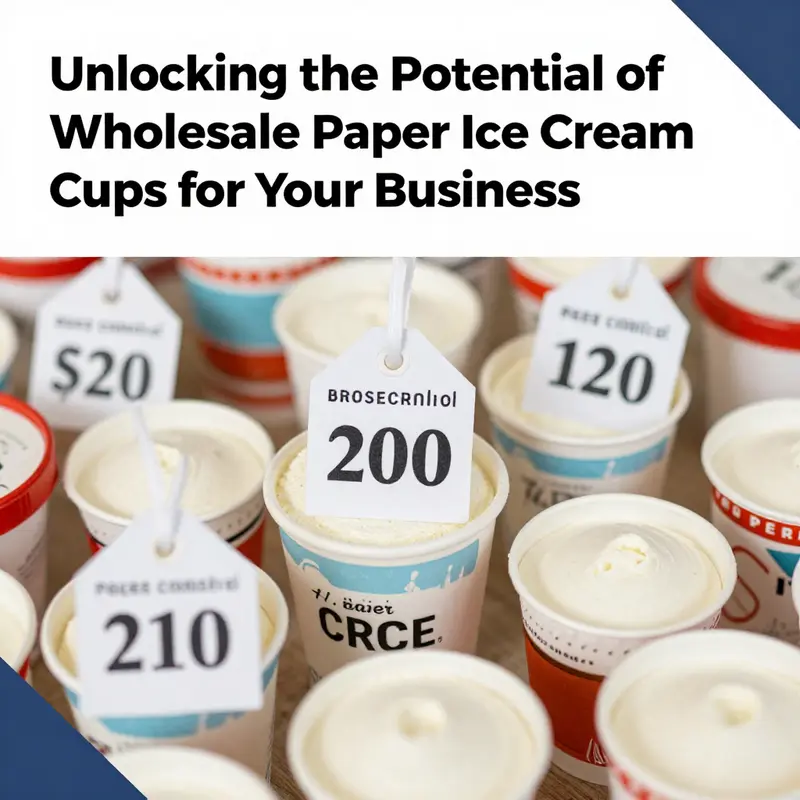
The wholesale market for paper ice cream cups is shaped by production physics as much as by the arithmetic of purchase. Price per unit does not stand alone; it grows more complex with volume, customization, and the clock in the factory. For a buyer, the path to cost efficiency begins with understanding how economies of scale interact with printing, materials, and logistics. In practical terms, the lowest prices arise when orders ride automated production lines and long, steady runs. When a supplier can fill the line at high speed and in large batches, the incremental cost of each cup falls, often substantially. This is the essence of tiered pricing, where the unit price compresses as the quantity climbs. In the wholesale context, buyers encounter a spectrum of price points that mirrors the volume bands they are prepared to commit to. At the extreme end, bulk purchases can translate into strikingly low unit costs, with figures in the vicinity of a cent per cup when orders push into the multi-hundred-thousand range. As orders step down toward more typical wholesale levels, price per unit rises accordingly, yet remains competitive when balanced against predictable supply, branding opportunities, and streamlined packaging chains. Conversely, small or mid-size buyers often face a different calculus: the savings from higher volumes must justify the initial cash outlay, storage needs, and the risk of overstock if demand shifts suddenly. The marketplace thus rewards buyers who align procurement plans with anticipated demand, seasonal peaks, and campaign-driven sales.
A critical variable in pricing is customization. Flexographic printing introduces a distinct pricing trajectory. Simple, unprinted or lightly customized cups can command lower MOQs and faster turnarounds, while more elaborate designs—such as six-color printing with custom logos or designs—require longer setup, higher tooling costs, and larger run sizes to amortize the investment. The result is a stepped MOQ, where the minimum quantity jumps as the print complexity increases. This is not merely a matter of ink on paper; it is an optimization problem that blends plate preparation, color management, and the efficiency of rotary equipment used in production lines. In some cases, a single supplier may specify an extremely high MOQ for advanced customization—an acknowledgment of fixed costs embedded in production offsets, palette calibration, and the coordination of upstream materials with downstream fulfillment. For buyers, recognizing how customization affects MOQs helps prevent misaligned expectations and creates a foundation for negotiating value beyond the price tag, including shorter lead times and better consistency in color and print fidelity.
The minimum order quantity a supplier sets is not uniform. Standardized products often allow for relatively modest MOQs, sometimes in the low hundreds, which can be advantageous for seasonal promotions, pilot programs, or regional rollouts where demand is uncertain. Where customization and branding are essential, the MOQs tend to rise. Industry patterns show that MOQs commonly range from around 100 units for basic items to between 5,000 and 20,000 units for customized designs using more sophisticated printing methods. A notable market directive suggests that 50,000 units may be the minimum for flexo printing when efficiency and setup costs must be distributed over a very large batch. This delineation highlights a broader truth: manufacturing efficiency scales with volume, while the cost of change rises with design complexity. For a business evaluating its own needs, the takeaway is to distinguish between a legitimate branding requirement and an optional embellishment. The former can justify higher MOQs if it unlocks stronger market presence; the latter may be rationalized with a simpler, lower-volume solution that preserves cash flow for other channels.
Lead times further compound pricing and MOQ calculations. A first order at scale often requires a longer production horizon, typically in the range of 30 to 45 days, as factories set up material intake, dyeing and coating processes, printing calibration, and quality checks before the line runs at full speed. After the initial ramp, subsequent repeats can compress to 7–15 days before shipment, provided demand forecasts remain stable and there is an established relationship with the supplier. For orders involving custom printing, the initial phase may include sampling costs or design approvals, which add to the timeline and upfront expenditure. Some suppliers offer streamlined pathways for repeat orders, leveraging existing plate inventories, color libraries, and logistical contracts to maintain tighter schedules. In fast-moving sectors—seasonal desserts, trend launches, or promotional events—this ability to switch from a long first run to rapid restocks is a decisive factor in supplier selection and overall cost.
Logistics are inseparable from price and MOQs. The packaging ecosystem surrounding cups—lids, utensils, and protection during transit—must be considered in total landed cost. Standard export packaging commonly appears as multi-pack units packed into cartons designed for stackability and safe handling via freight. The shipping gateway also matters. Export hubs in coastal regions tend to offer shorter lead times due to proximity to raw materials such as pulp and starch-based coatings, which can shave days off a schedule compared to more distant producers. For buyers, a nuanced assessment of supplier reliability and production capacity is essential. A supplier with high capacity and robust on-time delivery can offset higher per-unit costs through improved inventory turnover, reduced stockouts, and less expedited freight. These logistics dynamics intersect with environmental and regulatory considerations, too. Many cups advertise biodegradability or compostability, which may entail specific end-use requirements or certifications that influence supplier selection, MOQs, and pricing logistics.
Within this framework, buyers should craft a procurement strategy that balances price, MOQ, and timing. A practical approach begins with clear demand planning for the brand, seasonality, and promotional windows. Then, map potential suppliers not only by price but by their capacity to accommodate flexible MOQs, quick turnarounds, and consistent print quality. Vendors that can offer both standard options at lower MOQs and custom runs at higher volumes may present the most resilient options for a business that experiences irregular order cycles. It is also prudent to consider the broader packaging ecosystem, including the availability of compatible lids and spoons, as well as the potential to consolidate purchases with a single supplier to simplify logistics and ensure consistent packaging aesthetics across product lines. When evaluating a supplier, examine their lead times, minimums, and responsiveness to design changes, as well as their track record for on-time delivery and quality control. In the end, the most effective pricing strategy is not a single number but a dynamic equation that reflects demand certainty, production efficiency, and the strategic value of branding in each dollar spent.
For readers seeking a practical reference point on the packaging and printing capabilities that shape these decisions, a deeper dive into packaging printing options is available here: Packaging Printing. This resource provides broader context on how printing methods and color capabilities translate into MOQs and unit costs, helping teams align design ambitions with economic realities. External market data also informs bids and negotiations. To explore current price benchmarks in wholesale paper ice cream cups, consider the following industry listing as a benchmark reference: https://www.alibaba.com/product-detail/Wholesale-Paper-Ice-Cream-Cups-for-Ice_1600586296424.html?spm=a2700.190356.0.0.4a5e7c7dXZjB1Y.
From Factory Floor to Brand Shelf: Navigating Logistics and Packaging for Wholesale Paper Ice Cream Cups
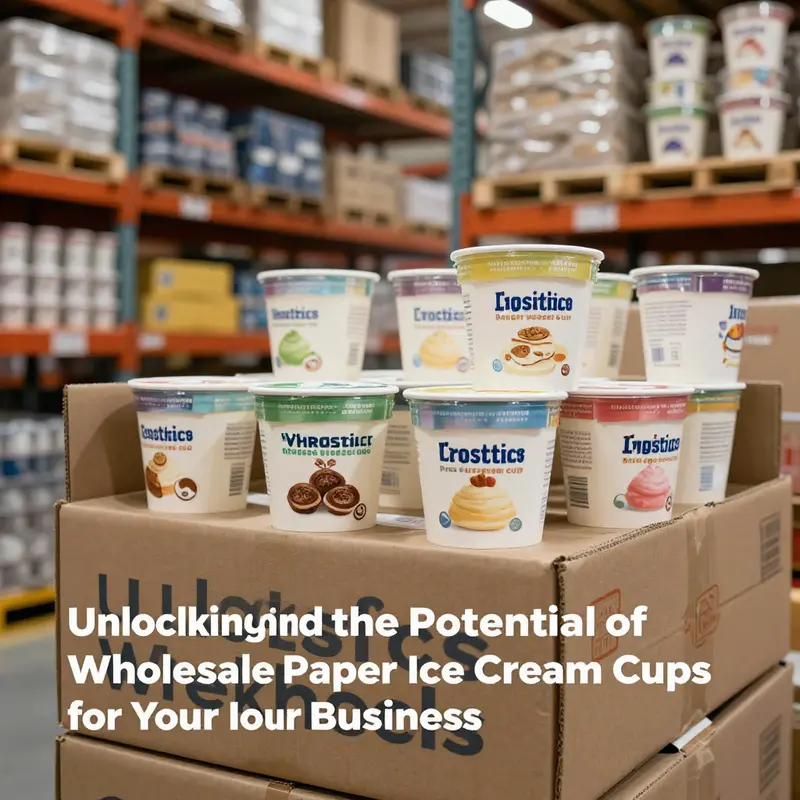
Wholesaling paper ice cream cups requires aligning procurement, packaging, and transport into a reliable, scalable chain. Logistics and packaging decisions influence reliability, cost, and speed from factory to retailer. The best wholesale plans synchronize production calendars with packaging configurations, transport routes, and quality assurances. The path begins with lead times that distinguish a first order from steady replenishment, followed by packaging that protects cups and supports the brand experience, and ends with predictable costs at the dock and documented compliance.\n\nFor starters, the production timeline sets the tempo for wholesale planning. A typical first order often requires roughly thirty to forty-five days from sample approval to shipment. This window covers final material sourcing, print and color verification, and the molding, coating, and drying steps that ensure performance in freezing conditions. Once a customer confirms designs, subsequent orders can accelerate; with unchanged size and design, many suppliers can schedule production and shipment within seven to fifteen days, enabling rapid restocking or promotional campaigns tied to holidays or new product lines. Transport hubs also matter: while Shanghai or Shenzhen can complement or substitute for domestic ports, the choice depends on destination, incoterms, and preferred freight networks.\n\nPackaging choices are equally consequential. The standard export approach uses sturdy corrugated cartons designed for long sea voyages and rough handling. Inside, cups are separated by dividers or cushioned to prevent contact and protect print. A typical configuration might be a large carton holding five hundred cups, arranged in layers with gentle compression to preserve shape and print clarity. Carton dimensions and weight matter for shipping cost calculations and ergonomic handling in warehouses. For example, a common footprint could be around 57 cm × 42 cm × 51 cm with a gross weight near 13 kg per carton, a metric that helps freight forwarders estimate palletization, stacking stability, and container utilization.\n\nBeyond cartons, the packaging ecosystem for wholesale cups often includes lids and spoons as optional add-ons, enabling a complete cups-and-accessories bundle. Materials typically center on food-grade paper pulp, with coatings that balance moisture resistance and grease protection. Some lines use biodegradable or compostable coatings to support environmental targets without sacrificing performance in freezing conditions. For brands with broader sustainability goals, certifications for food-contact safety, along with environmental credentials, provide meaningful signals to buyers operating in multiple regions.\n\nCommercial terms balance risk and predictable economics at scale. Payment is typically arranged through T/T, with a common split around 30% as a deposit and the remaining 70% due before shipment. Platforms that facilitate wholesale trade often provide payment security and dispute resolution. For first-time buyers, access to refund protections in cases of late shipment, missing goods, or significant quality issues can be a decisive factor when choosing a supplier.\n\nMinimums and pricing reflect customization and demand. For standard printing, many suppliers set a MOq around fifty thousand cups, with prices that scale down with volume. For smaller pilots, ten thousand units or fewer may be possible, though unit costs are higher. The most compelling economics typically emerge when orders exceed twenty thousand pieces, where bulk production and logistics yield lower per-unit costs. Samples are often available to test fit and print quality; some suppliers offer free samples, others charge a nominal testing fee to validate color accuracy, adhesion, and overall appearance before committing to a larger run.\n\nFrom a risk-management perspective, certification and traceability underpin confidence in wholesale deals. Robust packaging supply chains require adherence to safety and quality frameworks. Common certifications include ISO 9001 for quality management and food-contact recognitions such as FDA or equivalent, with LFGB in some cases. Compliance with European packaging directives and environmental declarations can influence supplier selection and audits. Certifications translate into assurances for retailers and consumers who expect safety, reliability, and responsible packaging.\n\nCustomization remains a central lever for wholesale clients. Printing technology typically ranges from flexographic to offset, with a practical color limit to maintain brand fidelity on the cup surface. The capacity to print logos or seasonal designs enables brands to maintain shelf presence without separate branding assets at the point of sale. The same supply chain can support a range of cup sizes and accessory options, including lids, spoons, or outer sleeves, to keep branding cohesive across formats.\n\nAs teams map these decisions, the end-to-end flow can be viewed as a chain of contingencies. Lead times must align with marketing calendars and event-based demand. MOQ and unit economics should fit forecasts, with plans for peak periods that consider production capacity and port congestion. Packaging design and integrity must withstand international shipping while preserving branding clarity from factory floor to consumer hand. Transparent payment terms, platform protections, and clear certifications turn a wholesale agreement into a durable partnership rather than a one-off transaction.\n\nFor teams seeking concrete options around packaging and printing while balancing cost and speed, a dedicated resource outlines how packaging and printing choices affect perception and performance of disposable paper products. It covers material selection, coating technologies, print processes, and regulatory considerations that influence wholesale outcomes, helping teams translate design ambitions into manufacturable specifications. See the packaging and printing options resource for more detail.\n\nExternal resource: https://www.alibaba.com/product-detail/10oz-Logo-Printed-Disposable-Paper-Ice1600611237997.html?spm=a2700.galleryofferlist.pclick&ns=1&origin=n
Safeguarding the Deal: Payment Terms and Security in Wholesale Paper Ice Cream Cup Supply
Negotiating wholesale terms for paper ice cream cups is a negotiation of trust as much as a negotiation of price. The scale of bulk orders stretches beyond a single production run and into cash flow, scheduling, and risk management. The way payment is staged and protected shapes not only the viability of a transaction but the reliability of the entire supply chain. In this chapter we examine how payment terms work in practice for bulk purchases of paper ice cream cups, and how robust security measures, layered with clear contractual discipline, create a stable platform for brands seeking consistent quality at scale. The lens here is pragmatic: how terms are structured, what protections they create, and how buyers and suppliers can align on a path that minimizes surprises while preserving speed from order to delivery. The interplay between cost, timing, and risk becomes most evident when orders move from dozens to hundreds of thousands of units, and the instruments that govern payment must be equally sophisticated to avoid bottlenecks or disputes.
Two widely used structures anchor wholesale deals. The first is a traditional T/T arrangement, in which a buyer places a deposit—commonly around 30 percent—before production begins and the remaining balance is due just before shipment. This split incentivizes the supplier to initiate tooling, pulp sourcing, and coating or lamination, while obligating the buyer to stand ready with funds when the finished goods are ready for dispatch. The second option is a documentary credit at sight, where payment is made through a bank against presentation of clearly defined shipping documents. In practice, this means a buyer’s bank guarantees payment as the goods move toward destination, while the supplier gains confidence that the shipment corresponds to the contract and expectations. Each structure has its own cost profile, currency implications, and administrative steps, but both are designed to spread risk and maintain momentum through extended production cycles. For buyers new to these instruments, the choice often comes down to trust, the credibility of the supplier, and the predictability of delivery timelines.
Flexibility becomes the critical complement to these core structures, especially when the order involves customization such as branding, logo reproduction, or specific coating requirements for cold storage. A common approach is a hybrid or milestone-based payment schedule, where a smaller initial deposit is followed by staged payments aligned with concrete production milestones or pre-shipment checks. Such arrangements recognize the realities of large-scale manufacturing where raw pulp must be pulped, sheets printed, and seals tested before a single pallet moves toward port. The exact terms depend on the order size, the supplier’s credibility, and the buyer’s comfort with the supply chain’s volatility. The production window for a first order tends to stretch from 30 to 45 days, allowing time for graphic design, color matching, and any water- or oil-resistant coating applied to the cup walls. Once a proven cadence is established, subsequent batches often flow more quickly—7 to 15 days from start to ship, provided capacity keeps pace with demand. Those timelines feed into inventory planning, warehousing, and the downstream costs of storage and potential spoilage risk in any return to stock margins.
Security is inseparable from payment. To reduce the risk of non-delivery and to guard against quality deviations, modern wholesale transactions rely on platforms that provide built-in protections. These protections go beyond a simple payment guarantee; they verify supplier credibility, monitor on-time shipping, and offer recourse if goods are missing, damaged, or do not meet specification. For buyers, secure payment channels add a layer of encryption and protection for financial data, while for suppliers, clear contracts and defined acceptance criteria reduce the likelihood of disputes after a shipment has been loaded and documented. An additional security layer comes from third-party quality checks prior to dispatch, which verify that the cups meet exact dimensions, coatings, and printing integrity under cold storage conditions. Certifications for food-contact safety, such as recognized regulatory standards, further bolster confidence that the cups will perform safely in freezing environments while maintaining integrity of branding and design.
Operational diligence extends payment security into documentation, verification, and traceability. A well-structured purchase contract should detail product specifications—capacity, wall thickness, coatings, and print tolerances—as well as packaging, labeling, and delivery terms. When customization or branding is involved, the contract should specify color fidelity, print durability, and how changes will be managed, including the process for approving artwork before production begins. Before shipment, a sample-driven confirmation—whether through digital proofs or physical swatches—helps ensure consistency across lots and avoids costly rework after mass production has commenced. A robust documentation trail, including communications, change orders, and invoice records, supports rapid resolution if a discrepancy arises. In the event of a dispute, a clear, agreed-upon escalation path shortens resolution time and preserves the relationship, which is especially valuable as these components move from a one-off deal to ongoing supply arrangements.
From the buyer’s and supplier’s perspectives, practical terms matter as much as the numbers themselves. For buyers, the lowest unit cost is appealing, but terms that lock in price stability and predictable delivery are often more valuable in a multi-month program. Negotiating room tends to exist where order volumes are large enough to justify more favorable terms or where a supplier can propose extended lead times in exchange for a more secure payment profile. For sellers, offering favorable terms can win substantial, repeat business but requires disciplined cash management and forecasting to prevent liquidity gaps. The most successful arrangements emerge when both parties invest in transparent timelines, standardized inspection protocols, and a fallback plan for delays. A culture of openness about potential disruptions—whether due to logistics, raw material availability, or regulatory changes—makes it far easier to adjust terms without compromising trust.
These safeguards do not exist in isolation; they are part of a holistic approach to responsible sourcing and packaging decisions. When a buyer considers branding or packaging constraints, it is helpful to consult packaging and printing resources to understand feasible options, lead times, and tolerance bands for color and coating. See packaging and printing resources here: packaging and printing resources. This link anchors the chapter in a broader ecosystem where the physical characteristics of the cup—its stiffness, moisture resistance, and print durability under freezing conditions—shape the financial terms that make sense for both sides. The interplay between payment guarantees and production realities becomes a model for how wholesale relationships can scale with confidence, reducing friction and enabling steady growth across seasons and markets. At the same time, buyers should remain attentive to the safety and regulatory frameworks that accompany food-contact packaging. Certification and compliance, alongside transparent supplier audits, help ensure that rapid fulfillment does not come at the expense of consumer safety.
The broader landscape of marketplace protections also informs how terms are designed. Transaction safeguards offered by major B2B platforms can provide on-time shipping guarantees, refunds for undelivered or defective goods, and escrow-style payment flows that separate funds from the supplier’s access until the buyer acknowledges receipt and satisfaction. For buyers importing into new markets or navigating unfamiliar regulatory terrain, these protections reduce the perceived risk of cross-border sourcing while allowing more aggressive negotiation on price and lead times. In this way, payment terms become a strategic tool rather than a procedural hurdle, enabling brands to align supplier performance with store-level promotions, seasonal demand, and new product launches without compromising cash flow or quality. External resources outlining marketplace protections and dispute mechanisms can offer practical benchmarks when drafting contracts and evaluating supplier capabilities. External resource: https://www.alibaba.com/wholesale/paper-cup-cover-ice-cream.html
Certifications in Focus: Navigating Sustainability and Verification in Wholesale Paper Ice Cream Cups
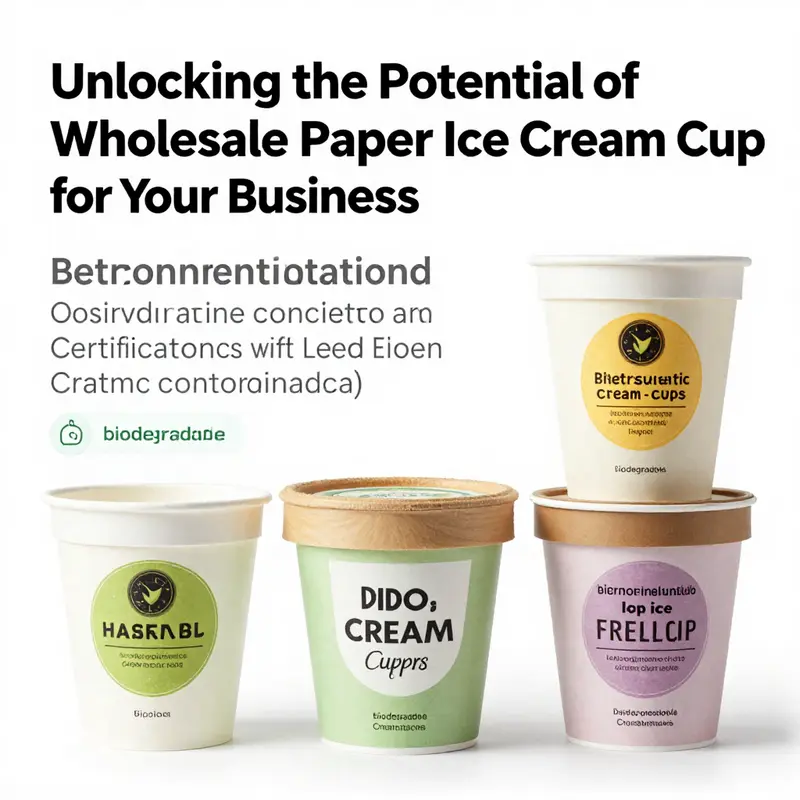
Sourcing paper ice cream cups in bulk requires more than evaluating price, lead times, or design flexibility. Environmental considerations and certifications have become central to how wholesale buyers select qualified suppliers, align packaging with brand values, and meet increasingly stringent consumer expectations. The conversation about sustainability begins long before the cups arrive in a warehouse. It starts with the choice of raw materials, the way those materials are transformed into a finished product, and how the cup behaves at the end of its life. In practice, decisions hinge on three intertwined factors: the materials and barriers used in the cup, the end-of-life options that the product supports, and the independent validations that confirm those claims to buyers, retailers, and regulators. The result is a narrative of stewardship that links forest management, production efficiency, and waste management to a credible packaging solution that protects both the product and the planet.
Material choices sit at the heart of environmental performance. The majority of wholesale cups rely on food-grade paper pulp, often sourced from a mix of virgin and recovered fibers, with a barrier layer to resist leakage when filled with cold or frozen treats. The traditional barrier—polyethylene—has served as a reliable shield against moisture and grease. Yet its presence complicates recycling in many municipal programs, and it raises questions about actual recyclability in everyday waste streams. A growing cohort of suppliers is responding with coatings that can be compostable under certain conditions or with papers that are designed to be compatible with industrial composting facilities. The distinction matters, because a cup that streams into a home recycling bin but cannot be effectively recycled through local infrastructure may not deliver the environmental benefits that buyers expect. For wholesale buyers, this means evaluating not only the coating or barrier material but the entire disposal pathway that the cup enables or disables.
The end-of-life story is often influenced by certifications and third-party verification. Forest stewardship, for instance, remains a foundational concern for buyers seeking responsible sourcing. The Forest Stewardship Council certification provides a signal that the pulp originates from forests managed with ecological balance, social responsibility, and economic viability in mind. That signal becomes more meaningful when paired with independent assessments of compostability or biodegradability. Industrial composting certifications, such as those conferred by recognized test laboratories or certification bodies, confirm that a cup can break down under controlled composting conditions after use. These certifications do not guarantee home compostability, which is a vastly different pathway that depends on municipal or household capabilities. Therefore, buyers must interpret certifications in the context of local waste systems and customer behavior. In addition to compostability credentials, there are certifications that address the broader environmental profile of the product, such as those recognizing renewable content or overall recyclability. A credible program may combine multiple verifications, creating a transparent map from raw material to end of life.
In practice, wholesale purchases benefit from explicit, verifiable documentation. Buyers should ask for tests and certificates that describe the coating composition, the packaging’s compatibility with food contact regulations, and the expected performance during freezing, storage, and handling. Documentation that links the cup to a specific waste management pathway—industrial composting or municipal recycling—helps buyers communicate accurate disposal instructions to end users and retailers. The presence of documented certifications also supports brand storytelling. Consumers increasingly expect suppliers to demonstrate responsibility, and a packaging solution that carries reputable validations can become a differentiator for a business seeking to build trust in crowded marketplaces.
A well-constructed supplier evaluation goes beyond a single certificate. It includes traceability for the pulp, a clear statement about any additives or coatings, and evidence of ongoing quality assurance across batches. In addition, wholesale buyers should consider the balance between environmental impact and cost. The lifecycle implications of the chosen cup may shift depending on production efficiency, freight distance, and the packaging’s weight. A life cycle perspective helps avoid unintended trade-offs, such as opting for a lighter coating that reduces material use but complicates end-of-life processing in certain regions. Strategic sourcing in this area benefits from a holistic approach, one that considers forest management, manufacturing footprints, and the capacity of local waste streams to handle the product after its useful life is over.
For those evaluating the environmental claims, a useful heuristic is to look for third-party validations that cover the major phases of the cup’s life. FSC certification confirms responsible forest management in the pulp supply. Industrial compostability certifications, often issued by independent laboratories, indicate that the product will break down in composting facilities designed to process packaging materials. Renewable content certifications, such as programs recognizing bio-based inputs, help quantify the share of renewable material in the cup. Recyclable certifications, such as How2Recycle or similar programs, provide guidance on whether the cup can be effectively collected and processed in typical municipal streams. When these certifications are present, they should be accompanied by clear, user-friendly disposal guidance on the packaging itself and in supporting marketing materials. That clarity strengthens consumer confidence and reduces the risk of missteps that can undermine a sustainability program.
The broader literature on packaging sustainability offers additional context. A life cycle assessment conducted on polyethylene-coated paper cups highlights the trade-offs that arise when selecting barrier materials, from raw material extraction to manufacturing energy use, product performance, and disposal outcomes. While such studies demonstrate the complexity of truly green packaging, they also reinforce the importance of verified, transparent claims rather than marketing rhetoric. For wholesale buyers, the practical takeaway is straightforward: prioritize cups that are supported by credible assessments and auditable documentation, and ensure those assessments align with the waste realities of the markets you serve. When a supplier can point to a robust certificate portfolio and a documented supply chain, the decision becomes not just about meeting a standard, but about aligning with a longer-term strategy that reduces risk, enhances brand integrity, and supports a more circular economy.
Inline decisions also matter. The choice of supplier and the configuration of the cup can influence the downstream waste landscape. If a cup pairs with lids and spoons that are separately certified or designed for a particular end-of-life pathway, the combined impact can be more favorable than a disjointed packaging system. In wholesale terms, that means evaluating not only the cup in isolation but the kit or set as a whole, ensuring a coherent message about disposal and recycling is delivered to end users. If a buyer is curious about practical packaging combinations and how to optimize the printed design for recyclability or compostability, a simple path is to explore the broader packaging category that houses alongside the cup itself. For more on the available printing and packaging options, see the Packaging Printing category. Packaging Printing category.
The documentation trail also intersects with commercial realities. Manufacturers and distributors often maintain print-ready labels, test reports, and certificate copies that can be shared with retailers or certification bodies. Because wholesale timelines can be sensitive, buyers should request these documents early in the negotiation process and verify that they reflect the specific product and batch. The smallest details—such as the exact coating formulation or the precise forest certification number—matter when compliance audits occur or when sustainability claims are scrutinized by retailers. And when a supplier can demonstrate that a given cup is produced with a verifiable share of renewable content, or that the pulp comes from certified forests, that evidence strengthens the business case for choosing that supplier over competitors whose claims are less substantiated.
In the end, wholesale sourcing decisions about paper ice cream cups are about more than material makeup or price tags. They are about shaping outcomes for the environment, the supply chain, and the consumer who wants the product to be both delicious and responsible. The credibility of these decisions rests on a careful blend of material science, waste management realities, and transparent validation. By demanding robust certifications, clear lifecycle information, and accessible disposal guidance, buyers can secure cups that not only perform under cold storage and regular handling but also support a broader commitment to sustainability across the entire packaging ecosystem. External voices, such as independent lifecycle analyses and certification bodies, provide the guardrails that ensure the pursuit of greener packaging remains grounded in verifiable science rather than marketing rhetoric. For those who wish to explore the empirical foundations further, a detailed life cycle assessment of barrier-coated paper cups offers nuanced insights into how production choices ripple through use and disposal phases. External reference: https://www.sciencedirect.com/science/article/pii/S095605351830472X
Final thoughts
Wholesale paper ice cream cups are not just a practical solution for serving frozen treats; they represent a strategic product choice for businesses aiming to meet customer demands for sustainability and customization. By understanding product specifications, pricing strategies, packaging logistics, payment terms, and environmental certifications, business owners can improve their operations and enhance their brand’s market appeal. Prioritizing these factors not only fulfills customer expectations but also positions your business at the forefront of responsible practices in the food service industry.