

As the world moves toward sustainable practices, sugarcane plate factories emerge as a promising solution to plastic pollution. These innovative facilities utilize advanced technology to convert sugarcane pulp into biodegradable tableware, offering an eco-friendly alternative to traditional materials. In this exploration, we delve into the technological insights that power these factories, the economic implications of their production, the geopolitical factors influencing their establishment, and the societal impact of their products on environmental sustainability. Each chapter will uncover how sugarcane plate factories not only meet rising global demand for eco-friendly products but also pave the way for a greener future in food service and beyond.
From Bagasse to Biodegradable Plates: Technological Currents in Sugarcane Plate Manufacturing
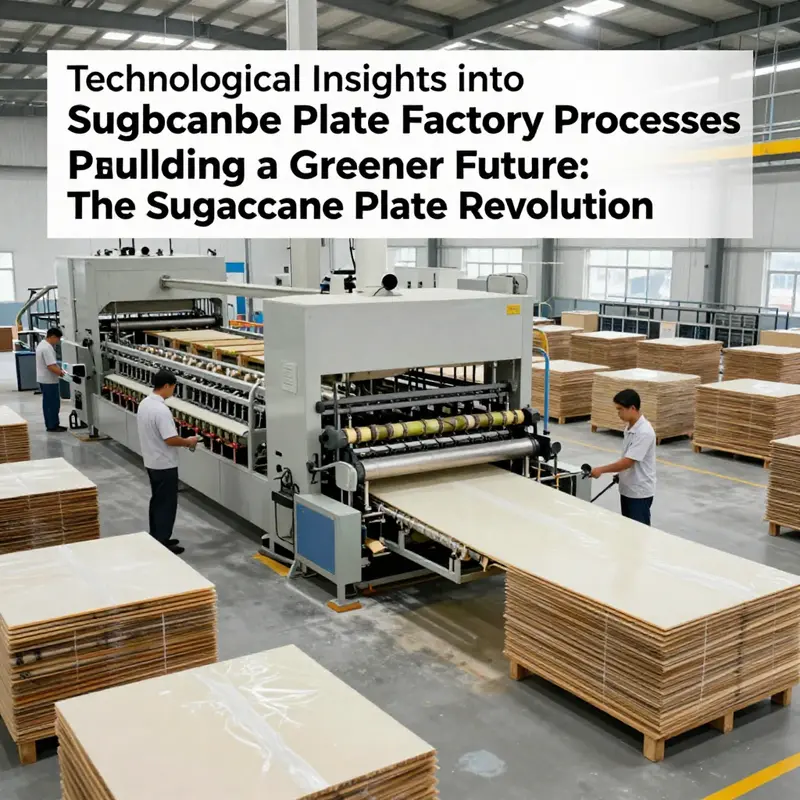
The sugarcane plate manufacture sits at a crossroad of waste valorization and high throughput production. In regions with abundant bagasse, turning this residue into durable compostable plates is a practical example of circular manufacturing. The chapter outlines the key steps from raw bagasse to finished plates and explains how material science and process engineering align to deliver products that perform well and minimize environmental impact. The journey starts with careful collection and conditioning of bagasse to preserve fiber length and moisture balance, since these factors influence strength and processability. Proper storage with aeration helps maintain uniform moisture, reduce clumping, and prevent premature microbial activity that could degrade quality. This upfront handling sets the stage for consistent downstream processing. The pulping step converts the fibrous material into a slurry where water content, solids fraction, and fiber distribution govern rheology and mix stability. Filtration and dewatering then provide a workable feed for forming, in which high pressure and precise mold geometries shape the slurry into plates. Automated drying follows, with modern lines employing energy efficient strategies such as controlled airflow, staged heating, and, in some cases, microwave or infrared zones to reduce residence time while avoiding surface defects. Real time sensing of moisture and temperature supports tighter control over end of line quality, helping to minimize warping and cracking. Additives and plant based binders may be incorporated to boost rigidity, moisture resistance, and surface smoothness, provided they remain compatible with recycling or composting at end of life. Quality assurance spans incoming material checks, in process controls for thickness and edge integrity, and end of line tests for dimensional stability and mechanical strength. A robust QA loop drives adjustments to pulp consistency, forming pressure, and drying profiles, creating a feedback mechanism that steadily improves yield and performance. On the market side, the value proposition rests on renewability, compostability, and reliable performance in food service. Manufacturers balance cost with ecological benefits, align bagasse supply with pulp and drying capacity, and coordinate packaging and logistics to meet seasonal demand. The result is a scalable, adaptable production system that can serve a range of products from disposable plates to bowls, while maintaining a clear end of life pathway. The broader industry context emphasizes continuous improvement in fiber processing, binder chemistry, and drying efficiency, along with the strategic integration of modular equipment and automated quality loops. Together these elements support a sustainable packaging ecosystem where bagasse derived plates compete with plastics based options on environmental metrics and performance. For researchers and practitioners seeking deeper context, attention to energy use, binder compatibility, and lifecycle assessment remains central to progress.
From Bagasse to Biodegradable Plates: The Economic Pulse of a Sugarcane Plate Factory

The economics of a sugarcane plate factory begins with the feedstock. Bagasse, the fibrous residue from sugarcane, often arrives at low marginal cost and provides a natural input for compostable plates. When mills supply material reliably, a plant can anchor a cost base that plastics and most polymers struggle to match.
Capital intensity and efficiency: The processing line that pulps, refines, forms, and dries plates requires substantial upfront investment. The long-run profitability depends on capacity utilization, high yields, minimal downtime, and energy efficiency. On-site power generation or waste heat recovery can materially lower unit costs.
Market dynamics: Growing demand for eco-friendly packaging allows premium pricing, but the niche is competitive. Credible certifications for compostability, food-contact safety, and performance matter. Quality control turns premium claims into real margins.
Strategic location and regional development: Rural and peri-urban siting can create jobs, stabilize bagasse supply, and unlock government incentives. Logistics and scale understanding matter; distribution networks shorten lead times and enable long-term contracts.
Risk and resilience: Variation in bagasse supply, energy prices, and regulatory changes must be planned for with diversification, hedging, and robust procurement.
Conclusion: The integrated model linking feedstock, processing efficiency, and market access creates a resilient business case that aligns economic viability with environmental goals.
Policy Winds and Global Currents: How Geopolitics Shape Sugarcane Plate Factory Production
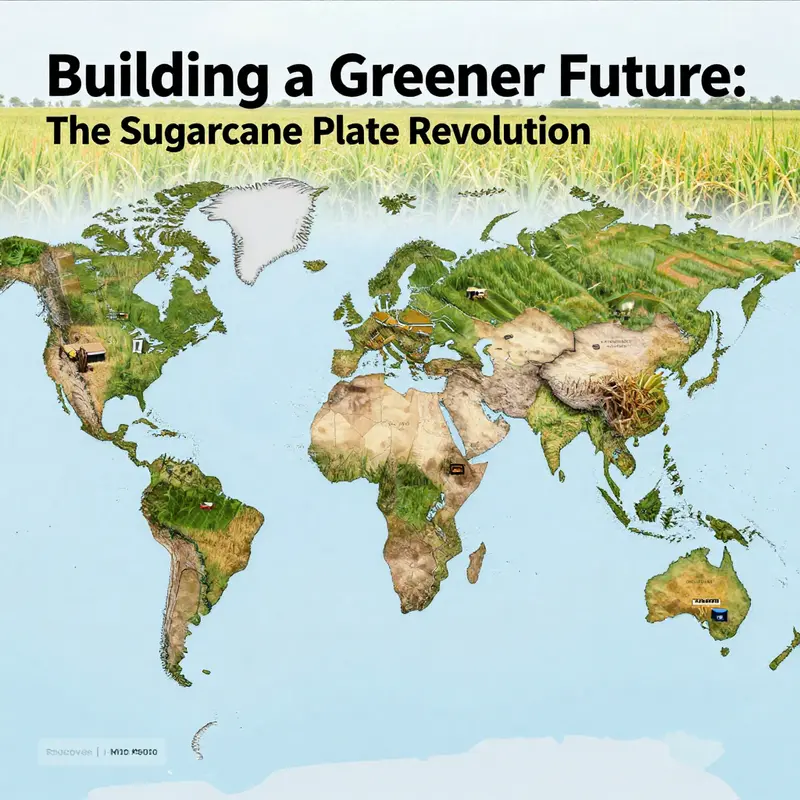
The path from a field of cane to a stack of biodegradable plates is rarely a straight line. In practice, it is a path braided with policy choices, trade agreements, currency risks, and shifting energy strategies that ripple through every link of the supply chain. To understand how a sugarcane plate factory operates within this web, one must look beyond the machinery on the factory floor and toward the geopolitical forces that determine what cane is grown, where it travels, and how its byproducts are valued in a crowded, rapidly evolving market. The research on sugarcane pulp plates frames a production system that is both technically sophisticated and deeply contingent on external policy and market dynamics. The implications of this frame are clear: geopolitical factors do not simply influence profitability; they set the rhythms of capacity, quality, and reach for an industry that hinges on sustainable credentials as much as on competitive costs.
The modern energy transition is a broad backdrop against which sugarcane plate production plays out. As nations intensify efforts to decarbonize energy portfolios, biofuels derived from sugarcane have moved from curiosity to policy instrument. Ethanol, produced from cane, is central to many governments’ strategies to reduce fossil fuel dependence and to meet climate targets. The push toward renewable energy reconfigures incentives for cane cultivation. When policy incentives tilt toward ethanol, growers and processors reallocate resources, and the very composition of the cane supply shifts. This has cascading effects on the availability of bagasse—the fibrous byproduct of juice extraction that forms the backbone of sugarcane pulp production. Bagasse is not merely waste; it is a feedstock for plates and bowls made from recycled fibers. If cane is drawn into ethanol pipelines more aggressively, bagasse becomes a scarcer resource, or its price signals may rise, nudging factory economics in new directions. In this environment, the technology that converts raw cane into pulp plates must be adaptable, not only efficient but also resilient to fluctuations in feedstock mix and price.
Among the nations, Brazil stands out as a diagnostic case study for how policy can catalyze or constrain the expansion of a cane-based industry. Brazil’s governance has long supported the biofuel sector through subsidies, investment in rural infrastructure, and private–public collaboration that accelerates plantation development and refinery capacity. This policy scaffolding lowers risk for capital-intensive plant projects and for the networks that move cane from field to factory and eventually to customers abroad. The corollary is that factory output is not purely a product of engineering prowess or process optimization; it is a function of institutional backing that can speed up planning approvals, secure credit, and stabilize supply chains over a multi-year horizon. When policymakers align incentives to sustain both the sugar and ethanol streams, the same green growth logic that expands ethanol plants can also expand bagasse-based pulp facilities. The result is a higher ceiling for output, provided that growers, processors, and packaging manufacturers can coordinate schedules and price signals across seasons that are inherently variable.
Yet policy choices do not occur in a vacuum. The same state that promotes biofuels may also impose environmental standards or trade measures that shape competitiveness in international markets. Trade policies—tariffs, anti-dumping duties, environmental compliance mandates, and even non-tariff barriers—become instruments through which countries attempt to balance domestic employment, sustainable sourcing, and global market share. A sugarcane plate factory that aspires to serve overseas markets must navigate a mosaic of regulatory regimes that influence packaging material acceptance, carbon accounting, and end-of-life disposal. In this sense, the factory’s expansion strategy must be built with an eye toward regulatory alignment, not just product innovation. The literature on geopolitical dynamics emphasizes how environmental regulations, sanctions, and political tensions can redraw demand curves in real time. A sudden shift in trade policy or a tightening of environmental rules can mute demand in one region even as it opens doors in another, forcing manufacturers to adjust sourcing, logistics, and product design with remarkable speed.
The international trade dimension interacts with plant location, scale, and automation strategy. The research highlights how the interconnectedness of geopolitical factors shapes where sugarcane plate factories choose to locate, how they sequence capital investments, and how they optimize their distribution networks. A key facet is the cost of transporting finished goods versus the cost of moving raw cane and bagasse to processing hubs. Geography matters: proximity to high-cane-producing regions reduces feedstock risk, while proximity to major ports or regional distribution centers reduces logistics risk for international sales. Currency volatility adds another layer of complexity. When a currency strengthens against major trading partners, the cost of imported machinery or spare parts may rise, while export revenues in local currency could gain—an irony that often drives hedging strategies and inventory planning at the factory level. The integrated nature of these decisions means that a plant’s viability often depends as much on the credibility and predictability of policy environments as on the efficiency of its pulp lines or the quality of its finished plates.
In this geopolitically informed view, the factory floor becomes a site where policy, technology, and market sentiment converge. The sugarcane processing line that converts raw cane into paper-like pulp for plates is not a static system but one that must accommodate variability in feedstock and demand. The research notes that the integration of machinery—sieving, refining, and forming units—must be designed with resilience in mind. If cane allocation shifts, or if bagasse supply tightens due to higher ethanol production, the plant must be able to reconfigure fiber blends, adjust bonding agents, or alter drying profiles without sacrificing plate fidelity or compostability credentials. This demand for flexibility extends to quality assurance, which in the context of international markets is a critical differentiator. Buyers increasingly require proof of sustainable sourcing, consistent material performance, and transparent end-of-life disposal characteristics. A factory that can demonstrate robust traceability, minimal carbon footprint, and reliable packaging quality earns a competitive edge in a world where green promises are tested by enforcement and consumer scrutiny alike.
The interplay of policies and market forces also reshapes the pace and geography of investment. In buoyant markets, investors seek scale and vertical integration: a single site that handles cane procurement, pulp production, and packaging manufacture can reduce risk and improve control over timelines. Conversely, when policy signals bubble with uncertainty, the incentive to build regional hubs that minimize exposure to any one regulatory regime increases. Distribution networks, too, shift with geopolitics. A factory that uses a combination of regional plants and a unified logistics backbone can preserve service levels even when transportation corridors face instability. The research highlights how the global demand for eco-friendly products—driven by consumer preference, corporate sustainability mandates, and public policy—offers compelling growth prospects. But it also cautions that the same forces that expand markets can intensify competition and commoditize some fiber supply. In practice, this means staying attuned to policy shifts that alter cane price, fiber quality standards, and environmental accounting methods.
From the production line to the customer, the chain of value relies on a robust distribution network that can bridge regional preferences and international standards. The factory’s success depends on more than efficient pulp formation and plate pressing; it requires a logistics ecosystem capable of delivering consistent quality across continents and climates. The research notes that the distribution system must grapple with freight costs, packaging regulations, and the evolving expectations of buyers who demand not only functional plates but also verified sustainability footprints. The same geopolitically informed framework that governs cane cultivation and feedstock allocation thus governs the rhythm of shipments, the cadence of plant maintenance, and the timing of capital investment. As markets expand, the factory must anticipate shifts in demand patterns, not simply react to them. This forward-looking posture requires careful scenario planning: what if a major cane-growing country experiences drought or policy reform? What if a tariff regime changes the relative attractiveness of certain routes or modes of transport? What if a leading foreign market tightens its compostability standards? The answers lie in integrated planning that treats policy, market signals, and operational capability as a single system rather than a set of discrete functions.
Throughout this narrative, one thread remains constant: the environmental imperative that animates the sugarcane plate sector. The journey from field to plate is a response to both climate concerns and consumer expectations. The geopolitical landscape amplifies the urgency of service reliability, cost discipline, and sustainable sourcing. The sugarcane plate factory sits at the nexus of agricultural policy, energy strategy, and international trade. Its trajectory depends on a delicate balance of cultivating cane efficiently, diverting enough fiber to pulp production, and ensuring that finished products meet the stringent criteria demanded by global buyers. In a world where policy can suddenly reweight the calculus of profitability, factories that build in flexibility, transparency, and resilience into their design will likely outpace peers that rely on rigid, single-path models. The chapter’s results suggest that the path forward belongs to operators who interpret policy signals not as external shocks but as strategic inputs—signals that can guide investment, shape product development, and tighten the feedback loop between growers, mills, and packaging manufacturers.
As markets evolve, the connection between geopolitics and production becomes more nuanced rather than more tenuous. The sugarcane plate factory is part of a broader ecosystem that includes disposable tableware, packaging solutions, and sustainable consumer goods. The sector’s growth is inseparable from the policy and trade architectures that define how cane is grown, how fiber is processed, and how plates are distributed to customers around the world. In this sense, the factory is less a singular plant and more a node in a dynamic, policy-driven supply network shaped by the physics of global energy transitions, the arithmetic of cane yields, and the calculus of international commerce. The challenge for industry leaders is to anticipate policy shifts and build operational models that can absorb shocks while preserving quality and environmental integrity. The opportunity lies in embracing a production philosophy that treats sustainability not as an aspirational attribute but as a core driver of strategy, one that harmonizes engineering excellence with the realities of geopolitics. For readers seeking a concrete view of how packaging ecosystems are evolving in tandem with these trends, exploring the broader packaging landscape—such as the paper plates and bowls category—offers useful context and practical connections to the sugarcane pulp story. See the packaging category focused on paper plates and bowls for related material streams and potential cross-learning opportunities: paper-plates-bowls.
In sum, the geostrategic environment of the sugarcane plate factory is neither peripheral nor incidental. It is foundational. The interplay of renewable energy policy, strategic cane cultivation, feedstock allocation, trade constraints, and market demand constructs a landscape in which production decisions are made. The most successful operators will be those who translate these macro forces into agile processes, robust quality assurance, and smart, regionally attuned distribution strategies. They will also recognize that the story of sugarcane plates is a story of renewables, of rural economies, and of global commerce braided together by policy. The chapter on geopolitics has illuminated how distant policy choices and market currents shape the daily realities of a factory floor—where fiber becomes plate, and plate becomes part of a broader commitment to a more sustainable economy. In this way, geopolitical insight is not an abstract overlay but a practical tool for advancing a manufacturing system that aims to balance profitability with planet-friendly responsibility.
External context: For broader discussion on policy shifts and regional dynamics that influence biofuels and sustainable manufacturing, see BBC News coverage on related developments in Latin America and global energy policy: https://www.bbc.com/news/world-latin-america-67582901.
Turning Bagasse into Benefit: The Societal Ripple of Sugarcane Plate Factories on Sustainability

The sugarcane plate factory sits at a quiet intersection where agriculture, waste management, and everyday dining converge. Its narrative is not merely one of machinery and output, but of a broader shift in how communities view resources, value, and responsibility. In this chapter, we follow the journey of bagasse—the fibrous by-product left after extracting juice from sugarcane—and trace how transforming this residue into pulp plates ripples through environmental practices, regional economies, and social ecosystems. The story is not confined to a single factory floor or a single market; it unfolds across landscapes where farming, manufacturing, and consumption meet, guided by the imperative to decouple everyday convenience from ecological harm while keeping livelihoods resilient and inclusive. The analysis does not pretend to be a blueprint applicable everywhere, but it surveys the core dynamics that make the sugarcane plate industry a meaningful site for sustainable development.
From the outset, the environmental logic is compelling. Bagasse has long been treated as waste, either discarded or burned, practices that add to air pollution and waste management burdens. When a factory repurposes this material into plates, bowls, or similar consumer-ready forms, it embeds the waste-to-resource principle into a visible, tangible product. This valorization reduces the volume of agricultural residues that would otherwise accumulate in fields or be incinerated in open fires, thereby lowering emissions of greenhouse gases and fine particulates that affect nearby communities. The transformation also displaces plastics and other petroleum-based inputs that have dominated disposable tableware for decades. In a lifecycle sense, the sugarcane plate presents a different energy and material profile: a crop-derived feedstock, processing tuned to minimize chemical additives, and a product designed for compostability in regulated channels. While it is impossible to generalize across every region, the pattern is clear—when by-products are redirected into value-adding manufacture, a circle closes tighter around the waste stream, and the broader ecological footprint of dining upscales toward a more sustainable standard.
The environmental benefits extend beyond emissions and material substitution. The very act of shifting feedstock away from landfills or burn piles reshapes soil and air quality in the places where sugarcane is grown. Fewer burning events translate into cleaner air for nearby households and workers, and the reduction in open waste contributes to healthier urban and peri-urban environments. This is not merely a local gain; as production scales and distribution networks mature, the cumulative effects of multiple factories in a region can nudge national environmental performance in meaningful ways. Importantly, this environmental logic dovetails with a broader economic strategy: diversification of revenue streams for farmers and processors that reduces reliance on a single commodity price for sugar. When farmers participate in supply chains that feed into biodegradable tableware, their income becomes more resilient to price swings in sugar markets, contributing to economic stability at the community level. The resilience has a social texture as well, supporting schools, health clinics, and local services through steadier household incomes and renewed local purchasing power.
Yet the environmental and economic advantages do not arise automatically. They require careful attention to processing efficiency, product quality, and end-of-life pathways. The production of sugarcane plates must balance rapid throughput with controlled chemical usage to ensure the final product remains compostable under appropriate conditions. The adhesives, coatings, and binders used to hold pulp together are not innocuous; they must be selected with environmental and health considerations in mind. At scale, even modest life-cycle gains depend on energy efficiency in the mill, water stewardship during washing and pulping, and the minimization of waste within the processing line. The industrial ecology of these operations becomes visible when one looks at energy sources, waste streams, and the potential for recovering heat or leveraging renewable inputs. In short, the environmental dividend is real, but it rests on disciplined engineering, transparent testing, and continual process improvement.
The social and economic dimensions of sugarcane plate factories emerge most vividly when viewed through the lens of regional development and labor markets. In regions that host agricultural belts and manufacturing hubs, these facilities can become anchors for sustainable rural development. They create demand for agricultural by-products while offering trained employment opportunities in manufacturing, quality assurance, logistics, and packaging design. In practice, this often translates into a network of small and medium producers who connect farms, mills, and distribution channels. Such networks can strengthen local supplier bases, encourage apprenticeships and technical training, and broaden access to markets—both domestic and export-oriented. The Pearl River Delta, cited in research as a global export hub for disposable tableware, illustrates how an integrated industrial ecosystem supports scale. Here, efficient production infrastructure and well-developed logistics networks reduce the distance between field and consumer, enabling the rapid movement of compostable products to food service venues and households across borders while meeting rising demand for eco-friendly alternatives to plastics.
Economic development in this context also has a learning curve. While large facilities may achieve economies of scale, smaller operations tend to drive innovation, customize products for specific markets, and experiment with regional by-products or regional clays and fibers in coating formulations. This diversity can lead to more resilient value chains, as a portfolio of production models—ranging from centralized plants to semi-decentralized mills—reduces exposure to single-point disruptions. The social benefits of such diversification accrue in communities that gain from jobs, training, and increased economic confidence. When workers see stable employment linked to sustainable practices, it becomes easier to sustain investment in local infrastructure, housing, schools, and healthcare. It is not merely about jobs, but about a catalytic effect where environmental prudence becomes a social ambition, aligning business success with community well-being.
Of course, the path to such outcomes is not without obstacles. The literature highlights several barriers that can limit equitable growth. Data validation for ground conditions can be inconsistent, making it harder to tailor factory models to local ecosystems. Access to financing for smallholder farmers or co-op members remains uneven, constraining their ability to participate in supply contracts or adopt improved agricultural practices. Infrastructure gaps—ranging from reliable electricity to dependable cold chains for certain by-products—can hinder scale-up and raise costs. In regions where regulatory regimes lag behind innovation, unclear standards around compostability, packaging waste handling, and end-of-life stewardship can dampen investor confidence. These challenges are not insurmountable, but they require policy and governance that are attuned to the realities of rural economies and industrial transition.
To navigate these hurdles, policy makers and industry players must pursue context-specific approaches. Decentralized production models may offer advantages in places where logistics costs are high or where smallholders are more accessible through local cooperatives. Supportive policies can encourage the formation of producer groups, provide shared facilities for pulping and testing, and subsidize cleaner energy options or water-saving technologies. Integration with indigenous knowledge systems and traditional farming practices can also yield valuable insights on soil health, crop residues, and community governance. When communities co-design value chains with producers, researchers, and investors, the probability of sustainable, inclusive outcomes rises substantially. This collaborative stance aligns well with the circular economy ethos—keeping materials in productive use, regenerating natural capital, and distributing benefits more broadly across society.
The broader market context cannot be ignored. Global demand for biodegradable and compostable tableware has grown as more countries implement policies to curb plastic waste and to promote sustainable consumer choices. Consumers are increasingly aware that the environmental footprint of everyday goods extends beyond manufacturing to packaging, distribution, and end-of-life disposal. Sugarcane plates, by offering a renewable, compostable option, speak directly to this shift. They are not a panacea, but they participate in a larger transition toward materials that harmonize with ecological limits while supporting robust, job-creating economies. The strategic value of sugarcane plate factories, then, lies not only in product sales, but in their capacity to catalyze systemic changes: cleaner production, more diversified rural incomes, and stronger ties between agricultural ecosystems and urban consumption patterns.
Navigating the business environment also involves cultures of quality assurance and supply chain transparency. For manufacturers, building trust with buyers means rigorous testing of mechanical strength, heat resistance, and shelf life, as well as clear information about compostability and end-of-life conditions. For communities, it means ensuring that the jobs created are fair, safer, and accessible to a broad spectrum of workers, including youth and women who may face barriers in other sectors. The human dimension is essential: when people see that sustainability translates into concrete, dignified work, community buy-in strengthens and consumer adoption becomes more durable. The social license to operate grows when factories demonstrate environmental stewardship, financial accountability, and meaningful participation from local residents in decision-making processes related to operations, expansion plans, and waste management commitments.
Reflecting on these dynamics, it becomes evident that the societal impact of a sugarcane plate factory cannot be reduced to a single metric. It is an ecosystem outcome: a collective improvement in environmental conditions, a diversification of livelihoods, and a reimagining of how rural landscapes contribute to urban lifestyles through sustainable industrial activity. The renewal of agricultural residues into consumer-ready products embodies a philosophy of care—care for air quality, soil health, and water resources; care for workers and communities who depend on steady incomes; and care for future generations who will inherit the landscapes shaped by today’s production choices. This layered impact resonates in policy debates, in investment strategies, and in the daily choices of diners who prefer products aligned with broader goals of stewardship and resilience.
For readers seeking a practical sense of how these products fit into broader packaging ecosystems, a closer look at the disposable tableware category can be informative. This category reflects a constellation of materials and designs inspired by sustainability objectives, and it is one of the primary channels through which bagasse-derived plates reach restaurants, schools, and households. See the disposable tableware category for examples of how these products are positioned within packaging and catering ecosystems and how they interact with consumer expectations around convenience, cleanliness, and end-of-life options. disposable tableware category
In sum, the societal impact of sugarcane plate factories extends beyond market figures and environmental indicators. It touches the rhythms of rural life, the health of urban air and water, and the everyday experiences of people who choose to dine with materials that reflect a conscious balance between consumption and conservation. The pathway is not automatic, and it demands thoughtful governance, inclusive business models, and ongoing innovation in processing, design, and distribution. Yet the potential is tangible: to turn agricultural by-products into durable social gains, to anchor sustainable growth in local communities, and to model a replicable template for other ecosystems seeking to translate waste into value without compromising the well-being of people or the planet. External resources and ongoing research will continue to refine best practices, test assumptions, and illuminate the kinds of partnerships that make this model scalable and genuinely transformative. External resource: Alibaba’s overview of sugarcane pulp plate OEM suppliers provides a snapshot of global manufacturing dynamics and supplier comparisons that shape how production scales and where new factories might be feasible in the coming years. Alibaba — Sugarcane Pulp Plate OEM Suppliers: Global Manufacturing & Supplier Comparison
Final thoughts
The movement toward sustainable dining solutions is more than a trend; it’s a critical shift toward protecting our planet. Through the lens of sugarcane plate factories, we see how technology and innovation align with economic opportunity to meet consumer demands. The geopolitical landscape and societal commitment to eco-friendly practices further enhance this promising sector, making it an ideal choice for businesses looking to enhance their brand while contributing positively to the environment. As we continue to embrace sustainability, sugarcane plate factories stand at the forefront of this change, welcoming all to partake in a greener future.