
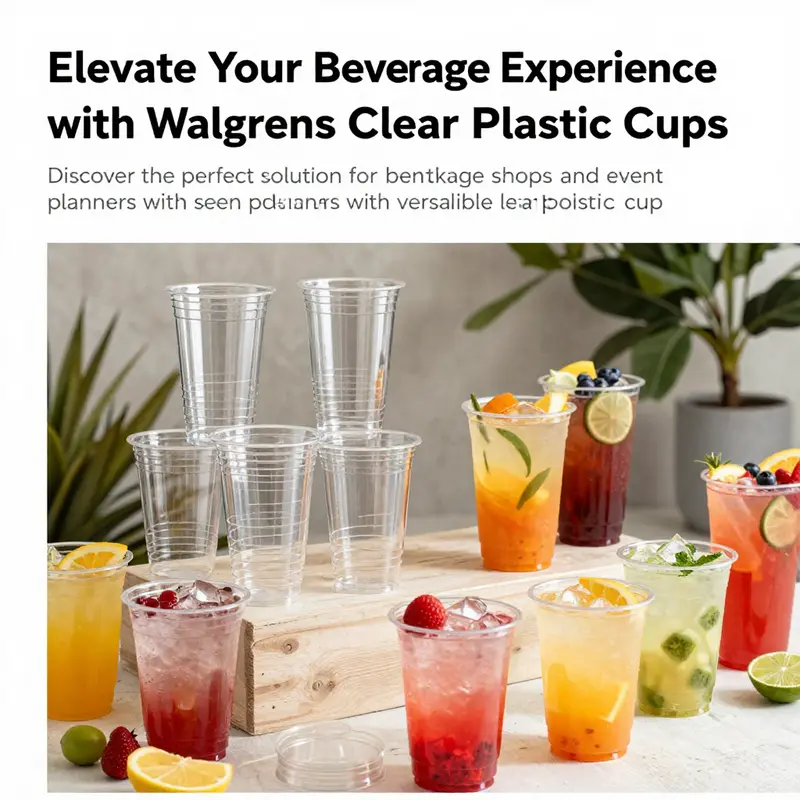
In the dynamic beverage industry, presentation matters as much as the drink itself. Walgreens clear plastic cups seamlessly blend functionality with aesthetic appeal, making them ideal for bubble tea shops, restaurants, food trucks, and catering services. These cups are crafted from durable, food-grade materials that ensure safety while enhancing the visual experience of your beverages. This article will guide you through the product specifications and materials of Walgreens clear plastic cups, explore their sizes and usage guidelines, and provide insights on where and how to secure these essential tools for your business.
null
null
Clear Cups at Arm’s Reach: Sizing, Safety, and Practical Uses Across National Retail Aisles
Clear plastic cups sit at the quiet intersections of daily life—in kitchens, clinics, classrooms, and travel kits—where simplicity becomes a reliable companion. They are the unassuming workhorses that quietly enable hydration, dosing, sampling, and quick packaging on the move. In a national retail landscape that prioritizes convenience, these cups show up in a spectrum of sizes, with a spectrum of designs that range from plain and stackable to lids that guard against spills. The focus here is not on a single model but on the role these cups play across everyday contexts. The material choice, typically a form of food-grade polypropylene, brings a set of properties that make these cups suitable for a broad array of uses. They are light, inexpensive, and generally compatible with the kinds of beverages and simple applications people encounter in homes, workplaces, and public spaces. Yet the practical reality of choosing and using these cups goes beyond a quick glance at size charts or packaging counts. It requires a closer look at what the cups are built to do, how they handle heat and liquid, and how they fit into routines that rely on predictable, safe, and portable containers.
polypropylene—often cited as PP in product labeling—has a reputation for stability and resilience. It resists many chemicals that can leach from common beverages, stands up to the minor heat that comes with room-temperature drinks, and maintains clarity when the film of condensation forms on a cold drink. The clarity matters; it lets you see what’s inside without opening the cup, a feature that is particularly useful in busy environments where quick visual checks are necessary. At the same time, PP is not a miracle material. It has limits—temp thresholds that should not be crossed if one wants to avoid warping, cracking, or the gradual transfer of heat to the contents that could alter the experience of what’s inside. That is why many cups marketed for cold beverages emphasize their suitability for water, juice, or soda, rather than hot coffee or soup. Even so, everyday use often involves items that hover around modest temperatures, and the cups occasionally meet those tolerances without issue. The bottom line is pragmatic: if the contents stay within ordinary beverage ranges, a clear PP cup can perform reliably, stay visually appealing, and hold up under normal handling.
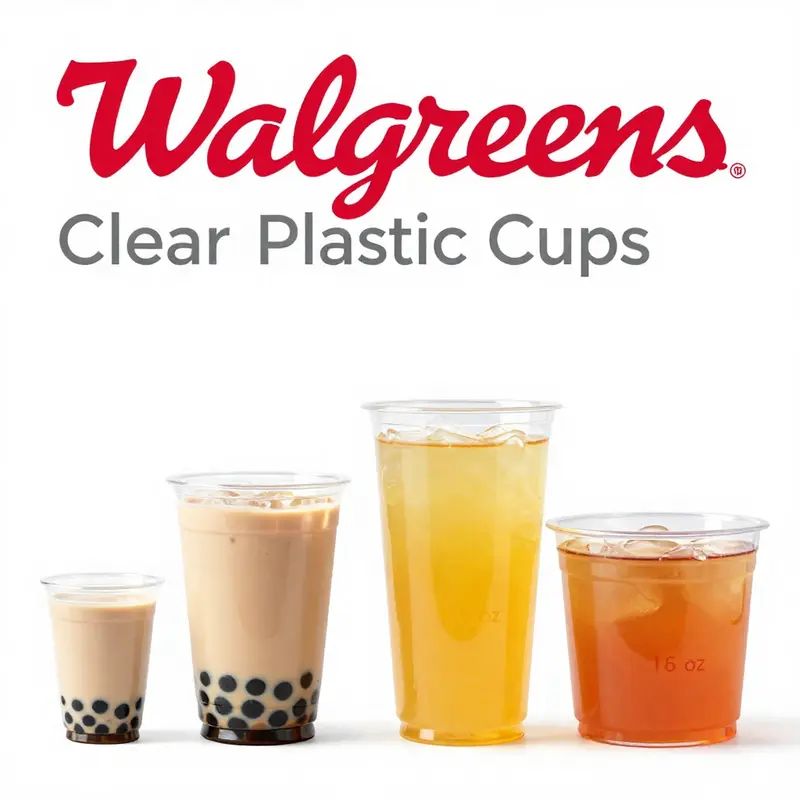
The size spectrum is a practical guide to the daily tasks these cups are asked to perform. Commonly available options include 8-ounce, 12-ounce, and 16-ounce configurations, with some lines offering smaller or larger variants depending on the retailer and the intended audience. The 8-ounce option is a staple for water or juice portions, especially in places like clinics, classrooms, or small gatherings where individual servings are preferred. The 12-ounce size hits a versatile middle ground, enough for a full drink without feeling bulky, and often found in home kitchens and casual events. The 16-ounce version leans toward the larger end, suitable for larger beverages or for on-the-go refills, where a bit more capacity translates into fewer trips to refill. Packaging counts—packs of 50 or 100 cups, sometimes supplemented with lids or separate lids sold in bundles—reflect the practical needs of both households and small businesses. The numbers tell a story about usage: smaller cups for quick sips in busy environments, larger cups for sustained refreshment during travel or extended activities. But the store shelf is not only about capacity; it is also about how the cup fits into the broader ecosystem of disposable tableware, where lids, straws, and occasional sleeve or tray options create a modular system that supports efficient service, whether in a home kitchen or a public setting.
A practical approach to uses reveals why these cups appear in so many contexts. In everyday life, they are perfect for hydrating at the desk, serving a quick juice at a family gathering, or providing a disposable option for events where guests mingle and beverages circulate. In care settings, they can facilitate medicine distribution or sampling, provided that safety guidelines are followed. In travel and on-the-go scenarios, the cups pair with leak-resistant lids to create simple, portable servings that reduce spillage in transit. For educators and activity organizers, the clear design supports demonstrations and hands-on tasks while maintaining a sanitary, one-time-use approach. The versatility also extends to crafts and DIY projects, where the clean, transparent surface becomes a canvas for labeling, color-coding, or even small-scale experiments. The key lies in selecting a size and design that aligns with the intended use, rather than relying on a one-size-fits-all mindset. When you anticipate the flow of beverages, doses, or samples, the cup you choose becomes less about novelty and more about reliability and predictability.
With safety and handling in mind, one should consider labeling and reuse considerations. Clear cups marketed for disposable use are generally intended for single-use contexts. Reuse—especially for medicine dosing or cross-contamination-prone tasks—carries risks that can be mitigated by strict labeling and dedicated usage. For example, when a cup is repurposed for medication, clear labeling that indicates the exact contents and the date and time can help prevent dosing errors. If a cup is used for food or beverage on occasion, even if it entered the home from a retail aisle, it is wise to wash and inspect before reuse. The material itself offers chemical stability that minimizes interactions with moderate beverage ingredients, but it does not guarantee tolerance to repeated washing cycles or high-heat exposure associated with dishwashing or microwaving. In this context, the absence of universal, explicit usage guidelines on every packaging leaves room for a carefully considered, conservative approach: treat these cups as primarily single-use items, and reserve reuse for non-sensitive tasks with appropriate cleaning and labeling.
Temperature tolerance is a practical constraint worth acknowledging. Most clear PP cups perform well with cold to moderately warm liquids, but extreme heat or direct microwaving is generally not recommended. The scene at many stores—where a quick cup is filled with ice water, lemonade, or a cool tea—works within the safe envelope. When the contents approach hot temperatures, the risk of warping or structural compromise increases. The design of the cup, including its wall thickness and rim rigidity, also plays a role in how it feels when held and how durable it remains when gripped or jostled during transport. The result is a straightforward guideline: if you plan to heat or keep something near boiling, check the product labeling for temperature guidelines before pouring. If the product page or packaging is silent about heat or microwave safety, err on the side of caution and choose a cup that is explicitly rated for the intended use. In settings where accuracy matters—such as medication dosing or precise beverage measurements—the risk calculus becomes even more important, and the simplest path is to use the cup for its core, intended purpose.
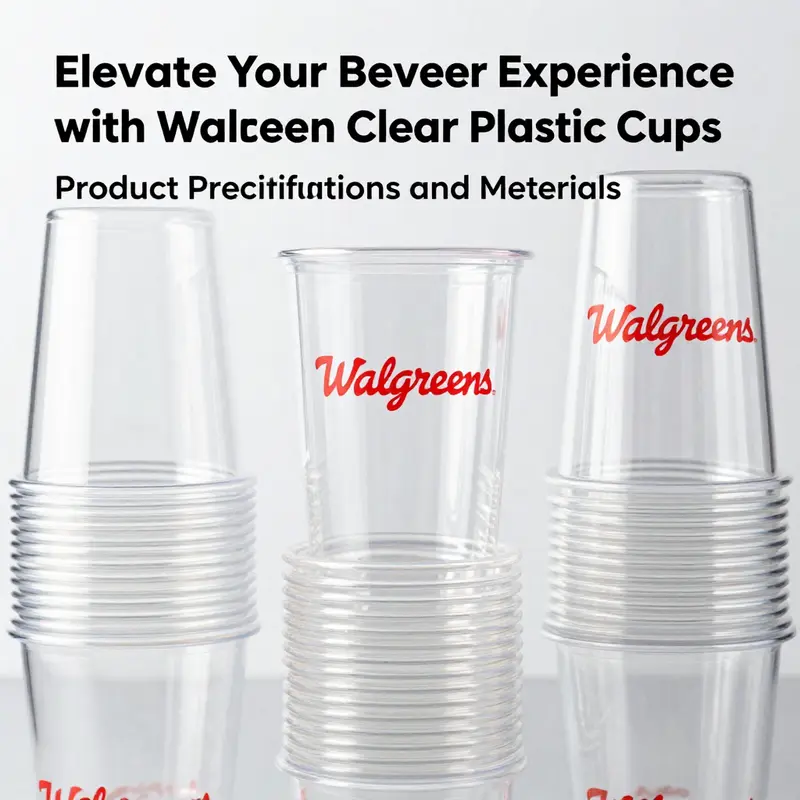
A consideration of storage and transport reveals the practical design choices that retailers emphasize. The cups are typically designed to be stackable, a feature that saves shelf space and simplifies inventory management for store staff and home organizers alike. Stackability also translates to efficiency when handling large quantities for events or when stocking a pantry, a pantry that must accommodate quick grabs during busy mornings. In many cases, the cups are offered in bundles that include lids or compartments for pairing the cup with a leak-resistant top. The combination of a clear cup with a matching lid becomes a compact, portable kit that can travel through households, offices, and community spaces without a spill. For any user who moves between locations—home, clinic, classroom, or office—the ability to stack, store, and retrieve a ready-to-use cup becomes as important as the material itself. The simplicity of the design supports a broad array of routines, since the cups can be used immediately or paired with lids for transport.
From a sustainability standpoint, polypropylene cups occupy a middle ground in the broader conversation about disposable tableware. They are recyclable in many municipal streams, though exact recycling rules depend on local facilities. Some facilities require that the cups be clean and dry before recycling, and others may have restrictions on how lids are treated or whether the cup-lid combination affects acceptance. Consumers who want to minimize waste often balance convenience with environmental considerations by choosing a designated, reusable option for repeated use and reserving disposable cups for situations where single-use is most appropriate. The clarity of many PP cups also enhances the consumer experience, because it makes contents visible at a glance, reducing the need to handle the cup multiple times to identify what is inside. Yet visibility does not substitute for responsible disposal or for choosing the right tool for a given task. In the end, the decision to use disposable cups rests on practical needs—how many servings are expected, how long the cups will be in circulation, and what packaging constraints exist for events and locations.
Availability across retailers varies, and this is where the practical experience of shopping matters. Clear cups appear in sizes and configurations that align with the expectations of consumers who want straightforward, no-fruss solution. In many store layouts, the cups are presented in bulk—side by side with other disposable drinkware, often near sections dedicated to party supplies, lunch products, or healthcare items. The presence of lids, straws, and other accessories creates a modular system that extends beyond the cup itself. This modularity supports a range of scenarios—from a quick refill during a workday to a coordinated distribution at a community event. The absence of a single, universal standard means shoppers benefit from reading packaging details, comparing counts per package, and considering whether the cups they select come with compatible lids. When a consumer has a clear sense of the intended use, the choice becomes less about chasing novelty and more about aligning capacity, stackability, and cost with the actual needs of the moment.
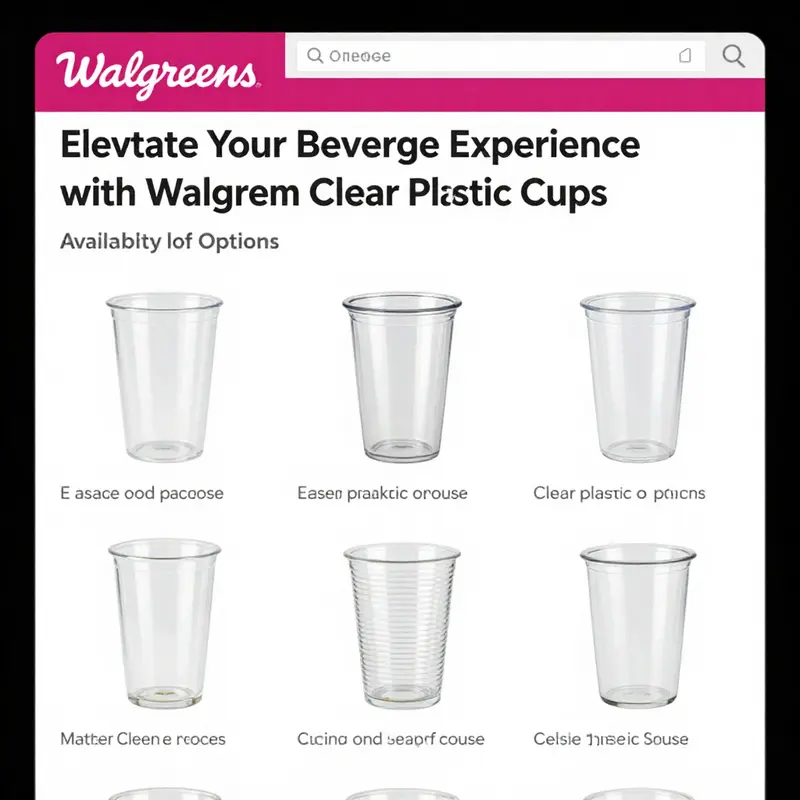
For readers who want a quick point of reference while navigating a store or online catalog, a simple, focused browse can be surprisingly efficient. The category page for plastic cups provides a straightforward overview of the available sizes and configurations, letting shoppers compare capacities at a glance and consider how many cups a given purchase will supply over a defined period. This quick reference is especially helpful for households that want to maintain consistent supplies without overstocking or understocking. Moreover, the clear design of such cups makes it easy to incorporate labeling practices and color-coding schemes for different uses—water for daily hydration, a separate color-coded option for vitamins or medications, and a third for party beverages during events. The visual clarity of disposable cups, combined with the practical realities of everyday use, reinforces why they remain a staple in many shopping baskets and supply closets. The result is a reliable, adaptable tool that supports healthful routines, organized events, and efficient daily tasks with minimal fuss.
In the broader narrative of consumer choices, clear plastic cups exemplify how everyday objects become meaningful through context. The right size, the right lid, the right labeling, and even the right storage position can transform a simple cup into a dependable component of daily rituals. The cups’ straightforward design reduces cognitive load during busy mornings and hectic events. They invite quick decisions, enabling people to allocate time and attention to more complex tasks rather than wrestling with imperfect containers. At the same time, they remind us that utility and care are not mutually exclusive. A well-chosen disposable cup supports hygiene, helps prevent spills, and makes it easier to share beverages or medications without adding risk. In this way, the cups embody a quiet philosophy: choose the tool that fits the task, respect the limits of the material, and observe simple safety practices to keep the flow moving smoothly.
For those who want to explore similar options beyond a single retailer, a practical path is to browse the broader category of Plastic Cups. This landing page aggregates the various shapes, sizes, and accessory options available, making it simpler to compare features and decide what best suits your needs without committing to a particular brand or shopping channel. It’s a small but meaningful step toward a more deliberate approach to everyday containers—one that recognizes that the everyday act of pouring a drink or distributing a dose can be improved when the right cup is in hand. If you want to see a concise catalog of these options, you can visit the Plastic Cups category and consider how the defaults of everyday life influence the choices you make in the aisles. Plastic Cups.
External resource: For current availability and specific product details from a national retailer, consult the official retailer page for disposable plastic cups: https://www.walgreens.com/store/c/disposable-plastic-cups/100004373
Clear Plastic Cups in Retail: Availability, Options, and How to Buy with Confidence
Transparent plastic cups are common, affordable, and versatile for home, clinical, and educational uses. Most clear cups are made from food-grade polypropylene, which offers light weight, good rigidity, and reasonable heat tolerance. When selecting cups, consider capacity (4, 8, or 16 ounces), lid compatibility, and whether stacking is important for storage. For hot beverages, check heat tolerance and lid seal; for travel, a leak-resistant lid is helpful. Availability is typically strong across major retailers, with in-store sections for disposables and online product pages that show size, material, and care notes. Price per unit often decreases with larger quantities; bundles and multipacks can improve value. Reuse is possible with careful cleaning, though these cups are designed primarily for single use. For sustainability, look for products labeled as recyclable in your region and check packaging for recyclability details. Before purchasing, identify your function: travel needs, classroom or clinic use, or simple home tasting, and then choose size, lid type, and stacking design accordingly. Online listings can help confirm dimensions, lid compatibility, and stock status for pickup or delivery.
Final thoughts
In summary, Walgreens clear plastic cups offer an ideal blend of quality, variety, and accessibility, making them an essential choice for beverage shops, restaurants, and event planners alike. Their specifications ensure durability, while the various sizes cater to different beverage needs, enhancing customer satisfaction. With easy availability through Walgreens, securing these cups for your business has never been simpler. Incorporating these cups into your service can significantly elevate the overall beverage experience offered to your patrons.