
Eco-friendly paper cups are increasingly becoming a staple in beverage-centric businesses, from bubble tea shops to corporate catering services. As sustainability takes center stage in consumer preferences, these biodegradable alternatives to plastic and Styrofoam are paving the way for a greener future. In this article, we explore the environmental impacts and benefits of eco-friendly paper cups, delve into the innovative materials that make them sustainable, examine market trends shaping their demand, and discuss the growing consumer awareness driving their adoption. By the end, beverage businesses will understand how embracing these cups not only supports the planet but also enhances their brand image.
Rethinking the Cup: Environmental Impact, Benefits, and the Emergence of Eco-Friendly Paper Cups
Every daily ritual has a footprint, even the small, seemingly innocent act of reaching for a cup to sip a hot or cold drink. In a world where conversations about sustainability often revolve around big systems, the humble disposable cup offers a revealing lens into how daily choices can align with or challenge environmental goals. Eco-friendly paper cups, especially the plastic-free variants, present a way to preserve convenience while reducing harm to air, water, and soil. They are designed from the start with a different set of priorities: renewability, responsible sourcing, and end-of-life stewardship. Rather than relying on petroleum-derived plastics for barrier and insulation, these cups lean on plant-based coatings and carefully managed fibers. The result is a product that, when disposed of correctly, can reenter the materials system rather than become a stubborn, long-lived pollutant. The shift is not merely about swapping materials; it is about reimagining the life cycle of a disposable item from cradle to compost, a move that carries implications for producers, retailers, and consumers alike, and it invites a broader conversation about how small, habitual choices fit inside a more resilient economic model.
At the core of eco-friendly paper cups is a simple, purposeful rethinking of materials. Many cups in this category are built from recycled paper or from sustainably sourced wood pulp. The lining, which provides grease and leak resistance, is commonly plant-based and compostable rather than petroleum-based. Polylactic acid, or PLA, is the most often cited example of a coating derived from renewable feedstocks such as corn starch. While PLA is not a magic solution, it represents a deliberate compromise: it maintains the barrier properties needed for hot beverages and the structural integrity required for everyday use, yet it can break down in conditions found in industrial composting facilities. The emphasis is not just on decomposition, but on the absence of persistent plastics in the waste stream. When such cups are disposed of in properly equipped facilities, they contribute to a process that returns organic matter to the soil rather than leaving behind microplastics that linger for centuries.
The environmental narrative around these cups gains clarity when we compare their end-of-life trajectories with traditional plastic-lined options. Conventional disposable cups made with plastic films or fluorinated coatings can be technically inert in a landfill, but their materials resist natural degradation for hundreds of years and risk breaking into microplastics that contaminate ecosystems. In contrast, a properly processed compostable cup can transition into compostable organic matter, fueling soil formation rather than adding chronic waste. This difference is not only ecological; it shapes policy discussions, retail practices, and consumer expectations. Certifications from recognized bodies indicate that a cup meets defined criteria for compostability, setting a standard that helps buyers distinguish responsibly produced products from those that merely appear green. Such certifications, while not the sole guarantee of sustainability, offer a framework that reduces guesswork for businesses seeking to align procurement with environmental commitments.
From a lifecycle perspective, eco-friendly cups can contribute to meaningful reductions in fossil fuel consumption and greenhouse gas emissions when compared with their plastic-laminated counterparts. The production pathway typically uses recycled paper or responsibly harvested pulp, which tends to require less energy and fewer virgin materials than processes that rely on plastics from fossil fuels. Water usage and chemical inputs in pulping and coating steps are important and must be managed carefully, but advances in pulping technology and barrier chemistry have shown that a compostable liner can meet performance requirements without sacrificing environmental integrity. In this sense, the choice to use a plastic-free or PLA-based lining is part of a broader commitment to resource stewardship. The reduction in greenhouse gases is not a single figure but a reflection of how materials are sourced, how energy is used in manufacturing, and how the product travels from factory floor to consumer hand and, eventually, to end-of-life facilities.
Defining the benefits in terms of resource conservation helps translate environmental advantages into tangible outcomes. Recycled paper reduces the pressure on forests, alleviating deforestation concerns while closing loops that would otherwise extract more raw fiber from natural systems. When suppliers emphasize sustainably sourced pulp, the social and ecological costs of harvesting are mitigated through responsible forest management practices and third-party verification. The circular economy logic becomes visible in every decision: reuse, recycle, and reuse again. In this framework, even the choice of a lid or an outer sleeve can matter if it enables a more efficient, clean separation of materials at the end of life, making the entire product system more amenable to recycling or composting. The aspirational idea is to keep value within the ecosystem rather than letting it escape into landfills or the oceans.
Market adoption of eco-friendly cups reflects not only environmental considerations but also evolving consumer expectations and business strategies. Cafes, restaurants, events, and office environments increasingly seek solutions that offer credible sustainability without compromising the sensory experience or operational efficiency. The plastic-free and compostable options are particularly attractive in contexts that host large volumes of beverages and rely on simple, reliable service models. In practice, this often means standardized sizes like 8 oz and 12 oz, with designs that balance insulation, leak resistance, and ease of use. The scale of these products matters as well; suppliers commonly offer bulk options with minimum order quantities that reflect the realities of foodservice procurement. For example, double-wall cups in common sizes are available in bulk with MOQs that begin around two hundred thousand pieces, with per-unit prices in a competitive range that can be influenced by size, order quantity, and the level of customization requested. Such figures illuminate the tension between environmental aspirations and the practicalities of supply and price, a tension that manufacturers and buyers continually negotiate through design, process optimization, and collaboration across the value chain.
The production design of eco-friendly paper cups also speaks to performance in real-world settings. The insulation provided by double-wall constructions, for instance, is appreciated in hot beverage service because it reduces heat transfer without relying on synthetic plastics that persist in the environment. Grease resistance is another critical criterion; a successful coating must prevent seepage while preserving the ability to compost. Plant-based coatings achieve this balance through careful formulation, blending barrier properties with an emphasis onend-of-life compatibility. Yet these coatings are not infallible. High-fat or oily liquids, for example, can challenge the integrity of the lining and complicate disposal, particularly if residues accumulate and contaminate the composting stream. The guidance is clear: these cups perform best with standard beverages, and proper disposal is essential to realize their environmental benefits. In kitchens and cafés, this translates into thoughtful handling—pre-emptive education for staff on waste streams, clear labeling of cups, and readily accessible information about what facilities are needed for composting. The result is a smoother integration of sustainability into daily operations rather than a theoretical promise that rests on ideal conditions.
Logistics and global supply dynamics also shape how widely eco-friendly cups can be adopted. The manufacturing and distribution networks that supply foodservice packaging are highly globalized, with production hubs that optimize for materials, labor, and regulatory environments. It is not unusual for shipments to move from major industrial centers to markets around the world within a matter of weeks, depending on the order size and the shipping route. Lead times for first orders may extend into several weeks or even a couple of months when scaling to larger quantities or when customization is involved. The realities of supply chains—potential bottlenecks, currency fluctuations, and the availability of certified materials—underscore the importance of strategic sourcing and supplier collaboration. In many cases, businesses work with suppliers to batch orders in ways that minimize waste, align with seasonal demand, and reduce the risk of stockouts. The outcome is a more resilient provisioning model that supports long-term sustainability goals while maintaining the service levels customers expect from modern beverage channels. In the context of a broad packaging ecosystem, these cups sit alongside other compostable and paper-based offerings, reinforcing the idea that sustainable choices are a continuum rather than a single product switch. An accessible path for many buyers is to learn from existing category ecosystems that group products by material family and end-of-life profile, such as the paper cups segment, which also includes variations in wall construction, coatings, and customization options. See the paper-cups category for current listings and options that align with ecological criteria and brand identity.
There is also a branding and experiential layer to adopting eco-friendly cups. In a marketplace where consumers increasingly expect companies to demonstrate environmental responsibility, the ability to customize cups without compromising compostability is a strategic asset. Flexographic printing and color customization can be applied to many of these cups, enabling brands to tell a sustainability story at the point of consumption. This storytelling is not merely cosmetic; it reinforces the practical, everyday behavior that accompanies green products. When customers see consistent messaging across packaging and waste streams, the action of choosing a cup that can be composted in an industrial facility feels less like a sacrifice and more like a natural extension of their values. The business case becomes stronger when these cups are integrated into broader sustainability initiatives—menus and packaging that emphasize compostability, clear signage about local disposal options, and customer education programs that explain how composting works and why it matters. The cumulative effect is a consumer experience that aligns taste, convenience, and ethics in a coherent narrative.
The end-of-life story remains a pivotal element of the environmental impact equation. While industrial composting facilities can process many of these cups, access to such facilities varies by region, city, and rural area. In places with robust composting infrastructure, a cup transformed into soil-like organic matter represents a persuasive outcome that complements compostable food waste streams. In other areas, where composting options are limited, there is still value in recycling streams configured to handle fiber-based products or in municipal programs that encourage appropriate waste stream segregation. The critical takeaway is that the environmental benefits of eco-friendly cups are maximized when disposal aligns with the intended end-of-life pathway. Education and clarity about local capabilities, combined with strong labeling on the cups themselves, help ensure that consumers and businesses do not inadvertently undermine the product’s environmental potential. Guidance from established organizations that codify standards and best practices for compostable products can further support responsible disposal, turning a promising concept into a reliable, scalable practice. For more precise standards and disposal guidance, see the Compostable Products Institute and their framework for truly compostable products, as well as practical materials handling recommendations linked in their resources.
In practice, the eco-friendly cup is not a silver bullet but a carefully designed element of a broader sustainability strategy. Its success depends on a chain of decisions: from fiber sourcing and coating chemistry to production methods, distribution logistics, and consumer behavior at the point of use. It depends on clear labeling, robust certifications, and accessible disposal options that empower customers to act as stewards of the materials they use. It also hinges on a collaborative approach among manufacturers, retailers, waste-management providers, and local governments to build an ecosystem where the compostable pathway is practical and reliable. When these pieces align, the cup becomes more than a disposable item; it becomes a measurable component of a circular economy, where resources cycle back into useful forms rather than accumulating as waste. In this sense, the rise of eco-friendly paper cups is part of a wider shift toward packaging that honors both human needs and planetary boundaries, a shift that invites ongoing innovation, policy alignment, and consumer education as essential companions to product choice. For readers seeking a direct glimpse into current offerings and category options, the paper-cups category provides a window into how brands are translating sustainability commitments into concrete designs and practical packaging solutions. External standards and best practices continue to evolve, and staying informed through trusted sources remains a crucial part of responsible procurement. Additional standards and practical disposal guidance can be found at https://www.compostable.org/.
Coatings, Cores, and Compostability: Material Innovations in Eco-Friendly Paper Cups
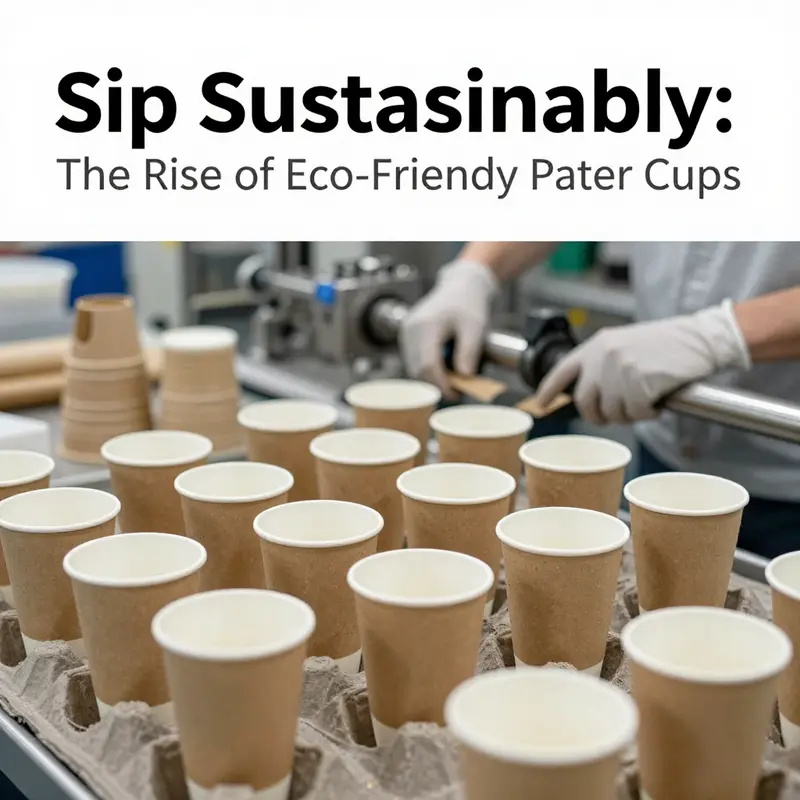
Coatings, Cores, and Compostability are reshaping how we drink on the go. The move from traditional disposable cups toward materials that can return to the earth without leaving toxins is a cascade of improvements that begins with the layers that touch our beverages. The core board is now mainly 100% food-grade and sourced from responsibly managed forests or from recycled content, reducing the environmental footprint before the cup even enters service. Plant-based coatings derived from renewable feedstocks such as cornstarch or sugarcane replace fossil-based linings, enabling a liquid barrier that performs in use and breaks down in industrial composting facilities rather than lingering in landfills. This combination supports a more circular lifecycle for a common daily fixture.
The broader ecosystem around these materials emphasizes process compatibility and scalable manufacturing. The coatings must adhere reliably to the board at speed, while remaining compostable under the right disposal conditions. As adoption grows, certification programs and clear waste guidance help brands communicate end-of-life expectations to consumers. Looking ahead, researchers are exploring greener polymers and water-based adhesives that sustain strength without compromising compostability, with the aim of a tightly integrated, infrastructure-ready system. The cup then moves from a one-time object to a node in a circular economy, ending not as waste but as feedstock for new materials.
Rising Demand, Real Costs: The Market Pulse and Economic Realities of Eco-Friendly Paper Cups
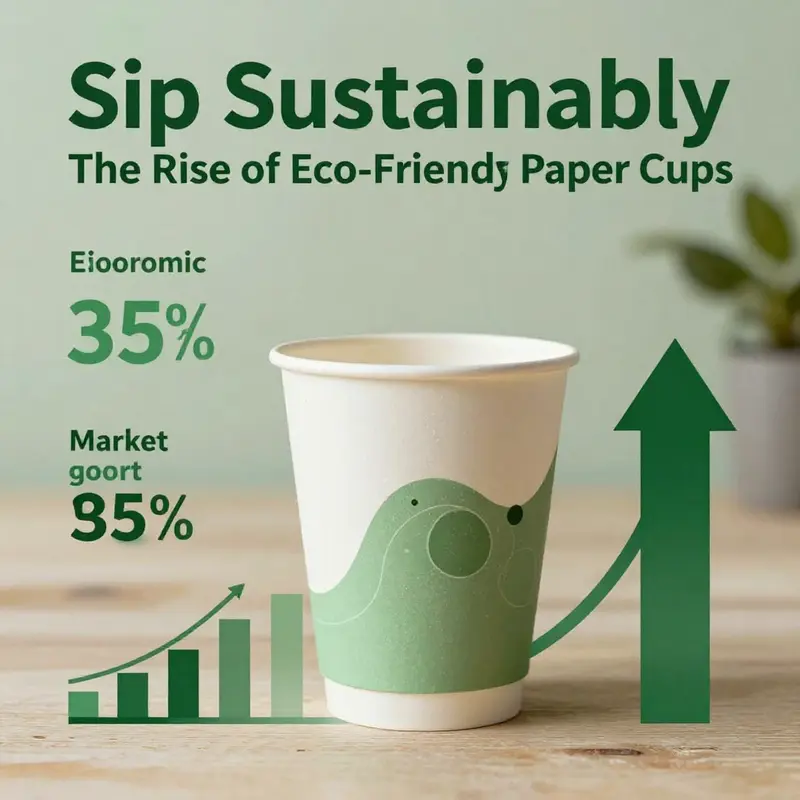
Across the foodservice landscape, the march toward sustainable packaging has moved from niche to baseline. Businesses increasingly view packaging not only as a container but as a statement about values and operations. Market analyses released for 2025 show that consumers reward brands that align with environmental stewardship, and this reward system shows up in willingness to pay, in partnerships with suppliers who share green goals, and in the way menus are framed around waste reduction. In the beverage segment, eco-friendly paper cups have captured a growing share of both hot and cold beverages, driven by cafes, restaurants, catering, and events seeking to reduce single use plastic waste. The Asia Pacific region has been particularly influential, with Korea reporting robust growth in paper cup demand as retailers and cafe chains respond to consumer appetite for green solutions. This momentum is supported by investments in local composting facilities and by policy shifts that encourage recycling and composting over landfilling. Taken together, these factors push eco-friendly cups from a novelty into a standard option for daily business operations. Retailers and foodservice operators now see more than a cost issue; they see a risk-managed pathway to meet customer expectations, comply with evolving regulations, and strengthen their brands through responsible packaging choices.
Materials and performance form a central part of this shift. Eco-friendly paper cups are typically made from recycled paper or sustainably sourced wood pulp, and they are lined with plant-based coatings that can be industrially composted. The most widely discussed option uses a polylactic acid based coating derived from corn starch, which provides solid water resistance while preserving the ability to break down under composting conditions. The technology behind these liners has matured enough that cups can still perform reliably during a hot cup of coffee or a chilled smoothie, without softening or leaking under normal use. Certifications from recognized bodies such as TÜV OK Compost and BPI verify compostability standards and help buyers understand the real environmental benefits beyond marketing claims. When a cup is properly disposed of in an industrial composting stream, it tends to break down within months rather than years, contributing to a circular economy rather than a linear waste model. Brands that pursue such certifications often gain credibility with regulators, customers, and corporate buyers who track sustainability metrics across supply chains. To readers exploring practical options, there is a growing catalog of designs that are plastic-free and fully compostable, while still meeting the durability expectations of busy cafes and large events. For those curious about product options, see the catalog of eco-friendly paper cup options here: eco-friendly paper cup options.
From the economics angle, the picture is nuanced but increasingly favorable. The upfront cost of eco-friendly cups typically exceeds that of traditional plastic or even ordinary paper cups. The premium is driven by the raw materials, coatings, and specialized coatings that enable compostability, as well as by the need for certified supply chains and quality testing. However, the cost gap has been narrowing as production scales up and as suppliers optimize processes to use less energy and reduce waste. A 2025 assessment points to several channels through which businesses can realize tangible value beyond the mere price per unit. First, customers notice and reward brands that make sustainable choices; this can translate into higher sales, greater basket sizes, and improved customer loyalty, especially among younger consumers who demand accountability from brands. Second, firms may access subsidies, tax incentives, or other government programs designed to encourage the adoption of green packaging, depending on the jurisdiction. Third, compostable cups can reduce waste handling costs when facilities are available to process them, though this depends on local infrastructure and collection practices. Finally, the story of long-term reliability matters. If a cup performs consistently in a busy shop or at a large outdoor event, it reinforces supplier relationships and reduces the risk of failures that undermine brand perception.
The supply chain dimension is a key determinant of the economic outcome. The raw materials for eco-friendly cups—food-grade paperboard, responsibly sourced pulp, and plant-based liners—are typically sourced through global networks. Buyers increasingly follow a strategic procurement framework that weighs cost against quality stability, scalability, and regulatory compliance. For example, food-contact safety standards and environmental certifications become part of a supplier scorecard, not mere checkboxes. The procurement strategy thus shifts from chasing the lowest price to securing a dependable supply that aligns with company sustainability goals. Even when unit costs are higher, the cost of noncompliance or a reputational hit from a poorly sourced cup can exceed the incremental price. In business-to-business purchasing, this translates into decisions that favor suppliers who can demonstrate traceability, consistent quality, and capacity to fulfill large orders without interruptions. The economics of scale also matter. MOQs for bulk orders often reach six figures, reflecting the need to amortize equipment, coatings, and logistics across large production runs. In markets observed for 2025, typical price ranges hovered around a few tenths of a dollar per unit, depending on size, customization, and order quantity. For large franchises or event organizers, the economics can tilt toward a per-event calculation where packaging is one line item in a broader sustainability budget rather than a standalone expense.
Regionally, the consumer base for eco-friendly cups is expanding. While Europe and North America have long been early adopters, the Asia Pacific markets have demonstrated rapid uptake as cafe culture intensifies and consumers demand green credentials from brands they support. Korea, in particular, has shown strong growth in 2025, propelled by a combination of consumer awareness and a dense network of coffee shops and beverage outlets. The willingness of operators to invest in compostable packaging is often tied to consumer expectations for clean labeling, clear disposal guidance, and visible sustainability storytelling on menus and in storefronts. In this environment, cup suppliers must deliver not only reliable product performance but also clear messaging about end-of-life options. The idea of zero waste now extends beyond the cup itself; it includes how cups are collected, how coatings behave in composting streams, and how brands communicate with customers about proper disposal. In markets with incomplete composting infrastructure, producers and retailers pursue alternative strategies, such as reusable cup programs or dual-purpose packaging that can be recycled in existing waste streams. The challenge then is to align product design with local capabilities while preserving the core advantages that eco-friendly cups offer in terms of resource use and waste reduction.
Material innovation continues to push the envelope. Beyond PLA, researchers and manufacturers are exploring wood pulp based composites that balance moisture resistance, heat tolerance, and environmental footprint. Some cups rely on purely plant-based coatings that can degrade in municipal composting facilities, reducing reliance on conventional plastics. These advances are not just technical; they shape pricing, supply security, and the speed with which brands can switch away from less sustainable options. In practice, the choice of coating interacts with the chosen fiber base to determine performance in hot and cold beverages, as well as the cup’s shelf life and storage requirements. For buyers, the practical implications include a clearer assessment of what constitutes an acceptable compromise between durability and end-of-life outcomes. Another dimension of the market is the growing emphasis on branding and customization. Eco-friendly cups offer opportunities for logos, colors, and branding messages through flexible printing processes. This is not merely cosmetic; it is part of a larger marketing strategy that ties packaging choices to consumer perceptions of accountability and quality. Businesses often combine sustainability with design as a way to stand out in a crowded market, returning measurable benefits in brand affinity and customer sharing on social platforms. The cup thus becomes part of a broader sustainability narrative rather than a standalone product.
From a risk management perspective, environmental considerations are increasingly part of corporate governance. Companies with diversified supplier portfolios can mitigate price volatility and supply shocks that might arise if a single region supplies all the raw materials. Compliance with environmental and food safety standards reduces the likelihood of recalls or regulatory fines, protecting both the brand and bottom line. Yet the economics do not rest on compliance alone. Successful adoption of eco-friendly cups depends on aligning packaging decisions with consumer behavior and waste infrastructure. For instance, in areas where industrial composting facilities are common and easy to access, compostable cups yield the greatest environmental benefit. In places where composting is limited, brands may pursue a transition plan that includes both compostable cups and robust recycling streams or the use of reusable cup programs to minimize waste. The conversation between sustainability and economics thus becomes a negotiation between ideal outcomes and practical realities on the ground. As the market continues to evolve, one constant remains: consumers want to see tangible evidence that green choices translate into real environmental benefits, and businesses that provide credible data, transparent sourcing, and visible disposal guidance will be best positioned to grow.
For readers who want to explore options first-hand, the product ecosystem now offers a range of paper cup designs, sizes, and coatings that can be tailored to specific beverage categories, service models, and event scales. The availability of bulk packaging, color customization, and logo printing makes it possible for a single cup to carry a brand story beyond the drink inside. It is this alignment of product performance, environmental impact, and brand strength that makes eco-friendly cups a durable choice in the long run. While the initial price premium may be a hurdle for some buyers, the downstream benefits in brand differentiation, waste reduction, and regulatory alignment create a compelling business case when evaluated over the product life cycle. In sum, the market for eco-friendly paper cups is maturing in ways that merge sustainability with economic practicality, and the next phase will hinge on whether production, disposal infrastructure, and consumer expectations keep pace with each other, ensuring that the green solution remains both feasible for businesses and beneficial for the environment.
External resource for further market data and forecasts: Global Paper Cup Market Trends and Forecast 2025–2030: https://www.grandviewresearch.com/industry-analysis/paper-cup-market
Between Perception and Practice: How Consumer Awareness Shapes the Adoption of Eco-Friendly Paper Cups
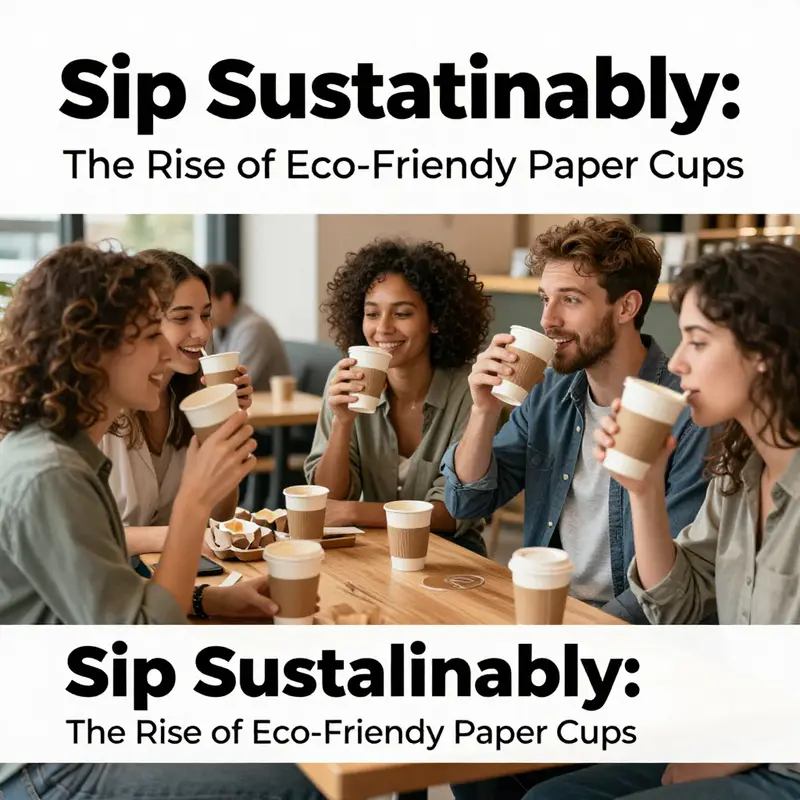
Consumer awareness of eco-friendly paper cups has grown from a niche concern among sustainability advocates to a visible factor in everyday decisions within cafes, offices, and events. When a customer pockets a cup labeled as biodegradable or compostable, that moment carries meanings far beyond the beverage inside. It signals a choice, a value, and a hope that small daily acts can contribute to a larger shift in how society uses and reuses resources. Yet this chapter’s thread runs deeper than desire. It traverses the gap between what people know they should do and what actually happens when cups move from the counter to the waste stream. The result is a complex, sometimes paradoxical dynamic where enthusiasm meets practical constraints, branding meets waste management, and everything from product design to municipal policy influences whether a greener option truly reduces environmental impact. In exploring this dynamic, we encounter a story that is not simply about materials or labels, but about the everyday choreography required to translate sustainability into lived practice.
One of the most persistent themes in this narrative is what experts sometimes call the paper cup paradox. Paper cups can be made from renewable fibers such as wood pulp or bamboo, and many are marketed as compostable or recyclable. However, the same cups are often lined with a thin layer that functions as a plastic barrier to prevent leakage. That lining complicates end-of-life processing. In standard recycling streams, the separation of the paper fiber from the plastic lining is not straightforward, and the economics of separation can render the cup non-recyclable in practice. The paradox is not born of misrepresentations alone. It reflects a misalignment between marketing narratives and the realities of waste infrastructure, which varies widely by region. For a consumer, this means the noble intention of choosing an eco-friendly option can collide with a waste system that cannot honor that choice. The result can be confusion, skepticism, and, at times, disengagement when the path to proper disposal seems opaque or inconsistent across locales.
The tension invites a more nuanced understanding of what “green” means in the context of single-use packaging. Some alternatives to traditional paper cups have emerged to address this misalignment. Biobased coatings, such as polylactic acid (PLA) derived from plant starch, offer a compostable lining that, in theory, aligns better with circular economy principles. In industrial composting facilities, these cups can break down more efficiently than those with conventional plastics. Yet this pathway depends on an infrastructure that can accept compostable packaging and on clear disposal instructions that guide consumers to the appropriate stream. Consumers may be willing to pay a premium for what they perceive as a greener option, but the payoffs are real only when the entire system—manufacturing, distribution, waste handling, and consumer participation—works in concert. The broader adoption thus balances cost, performance, and end-of-life outcomes, with each factor intensifying or dampening the appeal of eco-friendly cups.
Businesses operating in hospitality, catering, and event spaces occupy a pivotal position in this ecosystem. They are not merely purchasers of cups; they are custodians of the sustainability narrative that accompanies every customer interaction. When a venue adopts PLA-lined or fully compostable cups, it signals a commitment beyond the moment of service. Customers notice such commitments, and perceptions of authenticity can influence loyalty and brand equity. Yet to translate commitment into lasting practice, operators must ensure that the cups perform as expected: reliable leak resistance, compatibility with sleeves or accessories, and a supply chain that can sustain the right sizes and coatings through peak demand. In this sense, the challenge is not just to procure a greener product but to integrate it into operational routines that preserve efficiency and guest experience.
The practicalities of handling, storing, and distributing eco-friendly cups reveal how often the best intentions hinge on day-to-day logistics. Cups stored in a cool, dry place resist degradation, but improper storage can compromise coatings that protect against leaks. Likewise, hot beverages test the integrity of the lining, and the temptation to rehearse quick swaps during busy hours can lead to inconsistent disposal messaging. In environments with high throughput and variable staff experience, consistent training becomes a silent driver of environmental impact. A well-informed crew can reinforce proper disposal practices at the point of use, clarify questions about whether a cup should go to compost or recycling, and reduce the friction that might otherwise frustrate customers who want to act responsibly.
A rise in consumer education accompanies the expansion of composting infrastructure in many markets. When waste streams are clearly delineated and facilities are accessible, the path from awareness to action becomes clearer. The education effort is most effective when it is reinforced by visible cues on cups and in-store communications that explain, in plain terms, where to dispose of the cup and what to expect at the end of the life cycle. Labels that tie directly to local facilities and certifications help consumers distinguish genuinely compostable options from those that merely mimic sustainability claims. In this light, the market benefits from credible, third-party verification and from simple, consistent disposal instructions printed on the packaging. Without such transparency, the sustainability story risks becoming a marketing veneer rather than a trustworthy account of environmental performance.
For those navigating the landscape of options, it helps to view eco-friendly cups not as one monolithic category but as a spectrum that includes different materials, coatings, and end-of-life pathways. At one end are traditional paper cups with standard linings that offer low cost and familiarity but limited recyclability. At the other end lie cups engineered for compostability under industrial conditions or designed to be more amenable to fiber recovery in recycling streams. Between these extremes lies a range of choices that reflect trade-offs among cost, performance, and environmental outcomes. The consumer, the café manager, and the waste facility all inherit a piece of this decision network, and each can influence the overall impact by how they interpret labels, manage inventory, or design disposal messaging.
In practical terms, awareness translates into a consumer look for signs of credibility: credible certifications, clear disposal guidance, and transparency about the product’s life cycle. Certifications from recognized bodies that attest to compostability or recyclability give shoppers a basis for comparison, even if the local waste system cannot perfectly align with every standard. When such assurances are paired with accessible disposal options and visible in-store signage, they tend to empower shoppers to make choices that align with their values. Conversely, vague terms without verification can erode trust and dampen enthusiasm for sustainable options. The most resilient consumer behavior tends to arise where labeling is trustworthy, where the disposal pathways are evident, and where the business ecosystem consistently reinforces correct action.
From a practical perspective, if a consumer seeks a tangible example of options that align with these principles, the available assortment in the paper cups category offers a window into the market’s complexity and promise. The collection spans sizes, materials, and certifiable end-of-life pathways, enabling operators to tailor choices to their service style and waste infrastructure. For shoppers and staff alike, understanding the nuances of what each cup promises at the point of purchase and at disposal helps convert intention into impact. A straightforward way to explore these options is to browse the paper cups category, which provides a curated view of similarly purposed products, sizes, and coatings. See the collection here: paper cups category.
As this exploration across awareness, behavior, and infrastructure unfolds, it is important to acknowledge a broader influence: policy and system design. The future of adoption rests not only on consumer will but also on the alignment of standards, labeling requirements, and municipal waste practices. When cities invest in clearer sorting protocols and more robust composting networks, the probability that eco-friendly cups deliver real environmental gains increases. In turn, shoppers gain confidence that their choices will be honored by the waste system, and operators gain a clearer, more predictable path to implement sustainable packaging without compromising service quality. This triad—consumer literacy, product design, and waste infrastructure—forms the backbone of a more circular approach to single-use packaging. It is a living, evolving system that benefits from ongoing collaboration among producers, retailers, municipalities, and researchers who track performance, test new materials, and refine disposal guidelines.
Looking ahead, the road toward deeper adoption is likely to be shaped by three interwoven developments. First, material science will continue to push coatings and fibers toward formats that maintain performance while simplifying end-of-life processing. The promise of coatings that can be separated easily or dissolved without residue could unlock higher recycling rates and reduce contamination. Second, waste management will become more sophisticated and differentiated. More facilities will be able to accept compostable streams, and better sorting technologies will improve the purity of recyclables. Third, consumer education will become more targeted and actionable, translating concern into routine actions that survive the pressures of busy days. When customers see cups that clearly indicate end-of-life options compatible with local facilities, and when staff can reinforce those options consistently, a durable shift in behavior can take root. The synergy of these trends may reduce the gap between what people want and what systems can deliver.
In this broader imagining, eco-friendly paper cups serve as a hinge point for how a society treats disposable packaging. They connect choices made at the counter with the energy, water, and land impacts that unfold much later in the waste stream. They also invite companies to rethink product design, not as a marketing word but as a practical engineering problem: how to balance leak resistance, temperature tolerance, branding, and end-of-life performance in a way that respects both customers and the planet. This is not a simple optimization of one variable; it is a systems problem that requires coordination across supply chains, waste streams, and consumer cultures. When such coordination occurs, the cups that people choose to hold their drinks can become symbols of a more deliberate and resilient approach to consumption—one that accepts trade-offs and seeks better paths rather than easy platitudes.
Ultimately, consumer awareness is a necessary but not sufficient condition for meaningful adoption. The deeper value lies in the alignment of product design, waste infrastructure, and social practice. The more transparent and credible the labeling, the more confident consumers can be that their choices matter. The more robust the composting or recycling pathways, the more likely those choices will reduce environmental harm rather than merely signaling virtue. And when operators integrate sustainable packaging into their service models without sacrificing efficiency or customer experience, the awareness that sparked the shift begins to translate into sustained habit. In such a scenario, eco-friendly paper cups do more than replace a plastic barrier; they become a catalyst for a broader conversation about how communities design and participate in cycles of use, reuse, and responsible disposal. The outcome is a more coherent story of sustainability, one that rewards curiosity, transparency, and practical action on the ground.
External resource: For a critical perspective on the gap between green branding and actual performance, see the recent analysis highlighted by major media outlets, which emphasizes that eco-friendly cups are not always green in practice: Reuters report.
Final thoughts
The surge in eco-friendly paper cups epitomizes a larger movement towards sustainability in the beverage industry. By understanding their environmental benefits, the innovative materials behind their production, emerging market trends, and increasing consumer awareness, beverage businesses can align with green practices while enhancing their brand reputation. The transition to eco-friendly solutions not only reduces waste but also fosters customer loyalty in a world increasingly focused on sustainability. Choosing eco-friendly paper cups is not just a business decision; it is an investment in a cleaner future for our planet.