
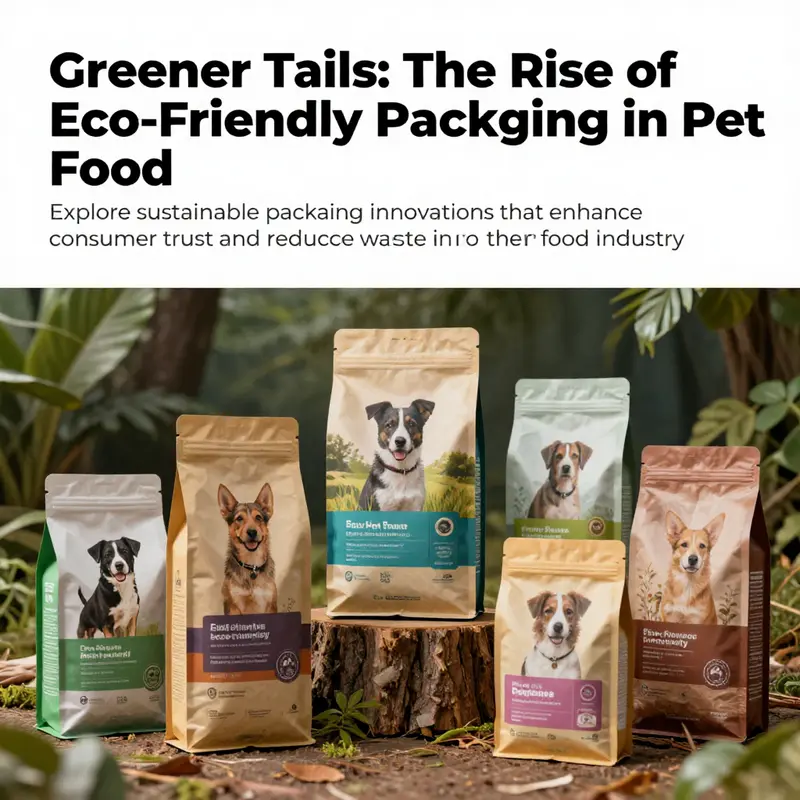
The journey towards sustainability has noticeably permeated various industries, and pet food packaging is no exception. With an increasing global consumer emphasis on environmental responsibility, pet food brands are pivoting to eco-friendly packaging solutions. This article discusses how innovations like biodegradable materials, effective recycling practices, and enhanced consumer trust are shaping this initiative. Each chapter explores the strides made in the industry, the relevance of consumer perceptions, and practical measures that can be adopted to promote sustainability while maintaining product quality. We invite beverage shops, catering services, event planners, and procurement teams to recognize the essential role of eco-friendly packaging solutions for pet food amid growing demand.
Clear Visions, Circular Futures: Biodegradable and Recycled Materials in Pet Foods Packaging
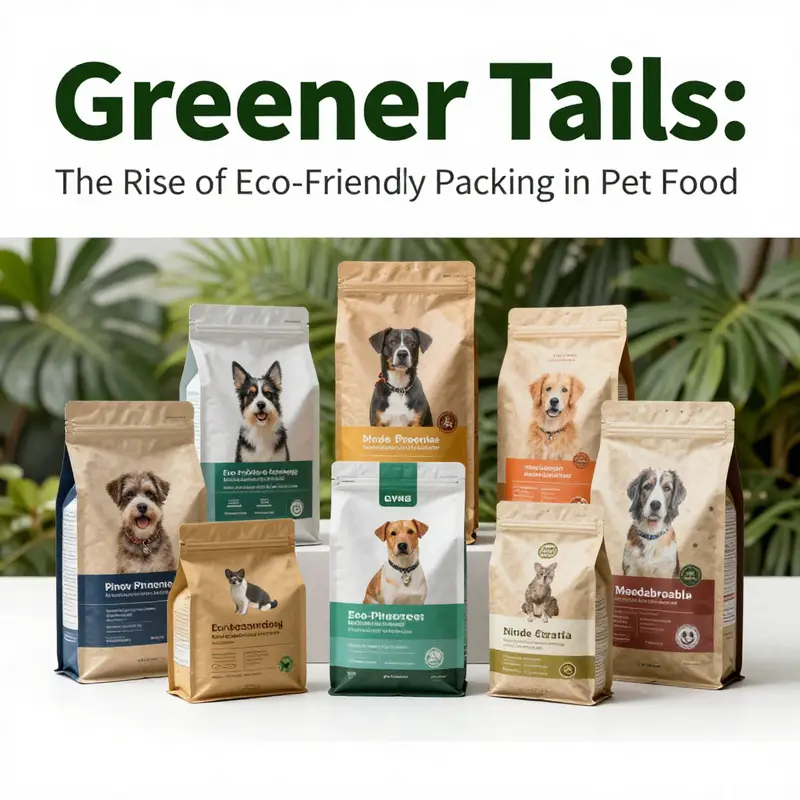
Visibility can be a virtue, and in pet foods packaging it often translates into trust. Today’s design conversations revolve around preserving product freshness and shelf appeal while steering materials away from conventional waste streams. Two interconnected strands guide this shift: biodegradable materials that can replace some fossil-based plastics, and recycled materials that close the loop by reinserting used content into new packaging. The most compelling solutions emerge when these strands harmonize with end-of-life realities, product protection needs, and consumer expectations. The result is not a single breakthrough but a systemwide evolution in which material choice, process engineering, and disposal behavior co-create value for pets, people, and the planet.
Biodegradable materials have progressed from novelty to credible options for many pet-food formats, especially for treats and line-delivery pouches. Polylactic acid, or PLA, stands at the center of this movement. Derived from renewable feedstocks such as cornstarch or sugarcane, PLA can be fashioned into clear films or even rigid containers with barrier properties that rival traditional plastics. When discarded into facilities equipped for industrial composting, PLA breaks down into water, carbon dioxide, and organic matter, leaving no toxic residues. This aligns with consumer desires for visibility and protection while reducing persistent plastic waste. Yet the story is nuanced. Not all communities have access to industrial composting, and home composting is rarely appropriate for these materials. Mislabeling or missorting can contaminate recycling streams, underscoring the need for clear disposal guidance and a coherent waste-management infrastructure. The practical upshot is that material choices must be attuned not only to performance but to the realities of local disposal networks.
Recycled materials broaden the toolkit further and are gaining traction as brands seek to reduce virgin resource use. Post-consumer recycled plastics and paper-based composites provide a pathway to lower greenhouse gas emissions and to close the loop in material usage. PCR content helps diminish virgin resin demand, while recycled fiber content in cartons and sleeves supports a more circular fiber economy when paired with compatible inks and adhesives. The packaging system benefits from careful material matching: cartons made from recycled cardboard that use water-based inks and adhesives designed for recycling can be redirected back into the recycling stream, preserving material integrity and value. The guiding principle is not merely to reuse but to reuse cleanly, minimizing contamination and enabling efficient sorting and processing in municipal facilities. The challenge remains how to balance barrier performance with recyclability, and how to ensure that the visual and tactile cues that drive consumer choice are maintained without compromising recycling streams.
A design-minded approach is essential here. Mono-material architectures—where a single polymer family dominates a package or where layers are fully compatible for recycling—are increasingly favored. Laminates that rely on dissimilar polymers often complicate end-of-life processing and can undermine the environmental benefits of recycling programs. The design pursuit, then, is to sustain barrier and product-protection requirements for dry foods while ensuring the material stream remains tractable for recycling. Coatings and surface treatments become critical tools in this balancing act. A thin protective layer can deliver the necessary moisture or aroma barrier without preventing recyclability. The interplay among barrier performance, processability, and end-of-life outcomes becomes a central metric for success, guiding material selection from the inside out.
Certifications also play a crucial role in guiding consumer choice and industry practice. Programs such as OK Compost and BPI Certified offer independent verification that a packaging solution meets defined standards for industrial composting. These labels can reduce uncertainty for households and waste managers alike, signaling that the packaging is designed with a recognized end-of-life path in mind. In practice, certification drives rigorous testing of disintegration timelines, leaching of additives, and compatibility with target waste streams. When packaging teams align with these standards, they not only meet regulatory expectations but also reinforce consumer confidence that the product’s environmental story is credible and verifiable. In many cases, this alignment accompanies a broader push toward compostable pouches and molded pulp trays, which aim to substitute single-use plastics altogether and to reframe packaging as a material that returns to soil or soil-adjacent streams.
The frontier beyond PLA and PCR is widening, driven by both curiosity and necessity. Algae-based films and mushroom mycelium packaging are among the most intriguing explorations. Algae-based films promise robust barrier properties with a lower environmental footprint than some conventional polymers, while mycelium packaging uses agricultural waste to cultivate soft, compostable forms that can replace foam or laminate-based inserts. These materials, still at varying stages of scalability, demand careful validation for safety, odor control, and food compatibility. They also require robust supply chains and manufacturing ecosystems to reach price parity with established materials. The roadmap toward broader adoption will depend on continued performance validation, cost reductions through scale economies, and the alignment of waste-management infrastructure with new end-of-life options. Yet the early demonstrations suggest packaging futures that harmonize performance with responsibility, reducing environmental burden without compromising pet health or product integrity.
Anchoring these developments in standards and practical best practices helps translate promise into dependable practice. The Sustainable Packaging Coalition’s Pet Food Packaging Guide, updated in January 2026, provides a consolidated reference for designers, engineers, and sustainability professionals. The guide emphasizes the need to preserve product integrity while enabling recycling and composting where feasible, and it highlights the importance of coherent disposal messaging for consumers. A key takeaway is that windows and visibility features must be harmonized with the package’s overall end-of-life path. Plant-based windows can enhance shelf appeal and enable consumer trust, but they must integrate with the other materials in the package so that recycling or composting streams remain viable. This framing elevates packaging from a cosmetic feature to an element of the product’s environmental footprint, requiring cross-functional collaboration among packaging suppliers, brand teams, and waste-management partners.
From a consumer perspective, visibility remains a pivotal asset. A front window that shows the kibble’s color, texture, or hue can bolster confidence in product quality, particularly for dry foods with distinct appearance cues. When the window material is derived from renewable feedstocks, it can reduce plastic pollution while preserving the brand’s storytelling instrument. The critical condition is that the window should be compatible with the rest of the package’s end-of-life strategy. If it is not, the window may undermine the very sustainability gains the design intends to achieve. Achieving this balance often requires careful selection of sealants, inks, and adhesives that are compatible with the chosen substrates and compatible with the preferred waste stream, whether recycling or composting. In this sense, the packaging becomes an integrated system rather than a collection of isolated materials and features.
Practical implementation demands a willingness to rethink packaging architecture. Brands are experimenting with paper packaging options that cut plastic reliance while maintaining protection and shelf appeal. This path often involves selecting coatings and inks that preserve barrier properties without compromising recyclability. Even small changes—such as pairing a fiber-based exterior with a mono-material interior—can yield meaningful environmental benefits by reducing laminate complexity and improving recyclability. The conversation extends to the broader recycling ecosystem, including deposit-return or take-back schemes in appropriate markets, which reinforce the circular narrative and encourage consumer participation. For readers seeking practical ideas to explore, consider the following portal into these developments: paper packaging options.
Education and labeling also emerge as critical enablers of sustainable packaging adoption. Consumers who understand end-of-life options are more likely to participate correctly in recycling or composting streams. Brands can support this through clear disposal icons, concise stewardship statements, and QR codes that reveal the packaging’s lifecycle narrative. In markets with robust municipal programs, explicit guidance about compostability or recyclability can steer choices toward the most favorable environmental outcome. This educational layer connects product design with everyday action, ensuring that the sustainability language on the label translates into practical behavior after purchase.
The broader research ecosystem continues to illuminate lifecycle implications. It is insufficient to claim a material is sustainable; practitioners must demonstrate reductions in energy use, emissions, and waste across the product’s life, accounting for local waste-management realities. Case studies and lifecycle assessments show that even modest shifts—switching from blended laminates to mono-material films or incorporating PCR content for cartons—can yield meaningful benefits at scale. As waste streams evolve and regulatory frameworks tighten, the packaging community is building an adaptive, cross-disciplinary practice. The pace of innovation remains brisk, driven by consumer expectations and the push toward verifiable sustainability. In this environment, packaging design becomes a collaborative discipline that interlaces material science, logistics, consumer behavior, and environmental policy.
For readers seeking a window into real-world practice, the Plastics News feature on eco-friendly pet food packaging innovations offers a timely snapshot of how these ideas translate into markets, materials, and process improvements: https://www.plasticsnews.com/sustainability/eco-friendly-pet-food-packaging-innovations
Trust on the Shelf: How Eco-Friendly Pet Food Packaging Builds Loyalty and Elevates Shelf Appeal
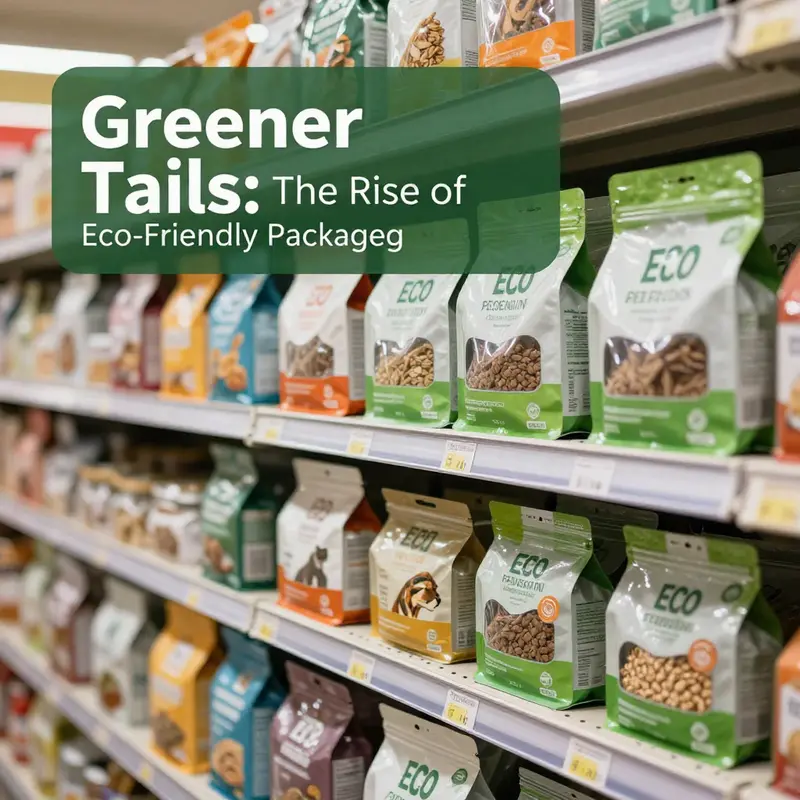
When shoppers choose pet food, they are not just selecting nutrition; they are selecting a relationship. Eco-friendly packaging has emerged as a decisive element in that relationship, shaping trust from the moment a consumer spots a carton on the shelf. In a category crowded with options, sustainability signals credibility—and credibility in packaging translates into preference, loyalty, and even advocacy. The modern pet owner wants to know that a brand cares about the animal, yes, but also about the broader world that the animal shares with its human companions. Packaging becomes a compact manifesto: responsible sourcing, thoughtful design, and a promise that what protects the product also protects the planet. This is not merely about reducing waste; it is about delivering a tangible demonstration of a brand’s values at the exact moment of purchase, where perception often becomes behavior. In this context, eco-friendly packaging functions as both a warranty and a conversation starter, inviting customers to see quality, safety, and environmental stewardship as a single, credible proposition.
Material choices are the most visible expression of this proposition. Packaging that is recyclable, biodegradable, or compostable signals a clean, accountable lifecycle. Plant-based films and recycled paper form a visible backbone of the eco-friendly repertoire, providing the dual benefit of durability and lower environmental impact. The shift toward mono-materials where practical helps keep recycling streams intact, avoiding the confusion that mixed materials can create at curbside collection. When brands select materials, they are making a cultural statement as well as a technical one. The message is simple: the packaging aligns with the values the shopper already holds about stewardship. This alignment is what underpins authenticity. A package that claims responsibility but relies on opaque processes risks eroding trust; one that offers a transparent materials story—where what is inside can be recycled and how the end-of-life steps work is clear—fortifies brand integrity.
Design and aesthetics play a central role in translating those values into on-shelf behavior. Eco-friendly packaging often leans toward clean, minimalist design, with earthy tones that evoke nature and sustainability. Clear labeling—such as “100% recyclable” or “carbon neutral”—acts as a visual shorthand for responsible choices. The inclusion of transparent windows has become a powerful cue, letting customers see the product while still telling a sustainability story. When these windows are crafted from plant-based or compostable films, the visible portion reinforces trust rather than signaling compromise. This balance between visibility and virtue is delicate: shoppers want a look that communicates freshness and quality, but they want the behind-the-scenes story of how that freshness is achieved with the least ecological cost. The packaging achieves this by striking a calm, confident aesthetic that communicates care and competence at a glance. To illustrate how material choices interface with sustainability signaling, many brands now pair traditional visuals with concise sustainability copy, simple icons, and explicit messaging that the package is recyclable or compostable—without sacrificing legibility or appeal.
The functional benefits of eco-friendly packaging are often overlooked in discussions that focus on ethics and aesthetics. Yet, modern materials deliver real protection: moisture barriers that keep kibble crisp, UV shields that slow nutrient degradation, and resealable features that preserve freshness after opening. High-performance, flexible formats can deliver these protections while minimizing waste. The latest designs take advantage of advanced barrier technologies in mono-material constructions, which simplify end-of-life processing while preserving product integrity. This synergy between performance and responsibility matters at the point of decision. A shopper confronting a bag that looks sturdy, preserves aroma, and clearly communicates recyclability is more likely to associate reliability with the brand, reinforcing trust and encouraging repeat purchases. The packaging becomes a functional ally to the product, reducing spoilage and waste while supporting responsible consumption.
Innovation in packaging solutions continues to expand the toolkit brands use to differentiate themselves. Flat, flexible formats with eco-friendly coatings offer robust barrier properties against moisture and light, extending shelf life without resorting to heavy laminates that complicate recycling. Bio-based laminates and other renewably sourced coatings provide a compromise between performance and sustainability, enabling dry pet foods, treats, and supplements to stay fresh while keeping the end-of-life path straightforward. The compact, lightweight nature of these formats also translates into more efficient logistics, reducing transport emissions and energy use without sacrificing sturdiness. In practice, this means a consumer sees a package that feels modern and responsible, one that travels efficiently from shelf to home while minimizing its environmental footprint. Such packaging also supports retailers by lowering handling complexity and waste, aligning store operations with sustainability goals.
Trust and shelf appeal are not purely visual or material traits; they are reinforced through how a brand communicates with its customers. Transparency becomes a strategic asset. Clear labeling, straightforward licensing information, and visible commitments create a narrative that customers can follow beyond the store. When owners perceive that a brand has crafted packaging with integrity—materials chosen for recyclability, finishes designed for low impact, and messaging that accurately reflects capabilities—they are more inclined to connect emotionally with the product. This emotional connection translates into loyalty, as customers feel confident in choosing the same brand for future purchases, knowing that the packaging reflects their personal values. Moreover, packaging clarity about end-of-life options reduces confusion for consumers who want to recycle or compost, removing friction that often leads to discarding packaging improperly and undermining environmental gains.
From a lifecycle perspective, industry-wide progress hinges on material choices that are concerted across the supply chain. The move toward mono-materials and simplified laminates helps ensure that end-of-life scenarios remain practical for households and municipal recycling systems. It is a team effort, requiring alignment among material suppliers, printers, and retailers to guarantee that inks, adhesives, and labels do not derail recyclability. When a package makes recyclability a central design criterion—right from the concept stage—the result is a product that supports a circular economy rather than contributing to it as an afterthought. This approach resonates with consumers who increasingly expect tangible evidence of responsibility. Rather than a vague commitment, they see a concrete packaging solution that performs as promised and respects the environment they care about.
Industry standards and best practices illuminate this path forward. A leading sector reference summarizes how to balance safety, freshness, and environmental responsibility across materials, print processes, and end-of-life considerations. The guidance emphasizes that the most credible packaging choices emerge when recyclability is built into the design in the earliest stages, rather than appended later. It also highlights the importance of communicating clearly with consumers about what can be recycled and how to participate in the recycling stream. This clarity strengthens trust and ensures that sustainability claims align with real-world results, reinforcing the consumer-brand relationship at every purchase.
All of these threads—materials, design, performance, transparency, and standards—converge on a single outcome: packaging that signals care, delivers quality, and aligns with a responsible lifestyle for pet owners. The packaging establishes a frame in which the product’s benefits—nutrition, safety, and convenience—are inseparable from environmental stewardship. When a shopper encounters a packaging solution that blends robust protection with credible, visible sustainability attributes, the likelihood of a positive purchase decision increases, followed by repeat buys and word-of-mouth referrals. In this sense, eco-friendly packaging acts as a catalyst for loyalty, turning shelf presence into lasting brand equity. It is not enough to claim responsibility; the packaging must demonstrate it in a way that is easy to see, easy to understand, and easy to act upon. The result is a marketplace where eco-conscious choices become routine and where trust compounds through consistent performance on the shelf and beyond.
For readers seeking a concrete resource that maps current standards and practical applications, industry literature and guides provide a comprehensive overview of best practices. Such references emphasize material selection aligned with recycling streams, design for recyclability, and transparent consumer communication. As eco-friendly packaging becomes more prevalent, these frameworks help ensure that advances in sustainability translate into real-world benefits for pets, owners, and the planet. The ongoing conversation between materials science, design aesthetics, and consumer behavior continues to shape a packaging landscape where trust on the shelf is both a signal and a promise fulfilled in every bag opened. In this evolving environment, the packaging itself becomes part of the product’s story, reinforcing quality and care with every interaction.
External resource: For a broader overview of trends and industry perspectives, see Packaging Digest’s eco-friendly pet food packaging trends article: https://www.packagingdigest.com/sustainability/eco-friendly-pet-food-packaging-trends
Closing the Loop: Circular Strategies for Recycling, Reuse, and Waste Reduction in Pet Food Packaging
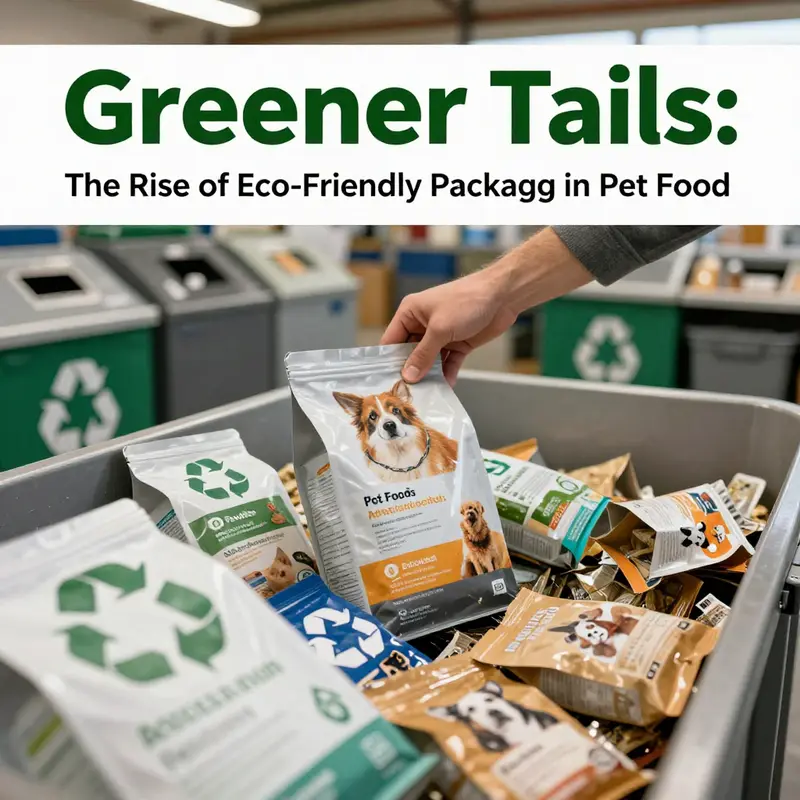
Chasing a circular future for pet food packaging requires design choices that favor recoverability and reuse over disposal. This chapter outlines how brands can shift from a linear mindset to a system where materials circulate back into production with minimal loss of performance. Key levers include mono material designs that simplify sorting, barrier films compatible with local recycling streams, and labeling that clarifies end of life for consumers. Plant based alternatives such as bio based films can contribute to improved end of life outcomes when supported by clear consumer guidance and robust municipal programs. The promise of biodegradables rests on infrastructure, proper collection, and consumer participation, not on product alone.
Reusable and refillable packaging concepts offer further waste reduction. Returns, cleaning, and reuse demand logistics, incentives, and consumer habits that brands must cultivate through value propositions or subscription models. Some packages use recyclable paper based pouches or aluminum lined bags that are easier to recycle than multi material laminates, aided by inks that are selected for easy removal in recycling streams.
Lifecycle transparency is essential. When brands disclose material origin, performance, and disposal guidance, customers can participate meaningfully in the circular economy. Consumer education and simple end of life instructions reduce confusion and contamination. Partnerships with recyclers and third party verifiers help validate claims and build trust.
Industry frameworks such as the Sustainable Packaging Coalition related guides provide practical roadmaps for implementing these principles at scale. Piloting closed loop systems, tracking recovery rates, and sharing results across product families can accelerate broader adoption. The overarching goal is to deliver packaging that protects pet products while enabling recovery, reuse, and responsible disposal across diverse markets.
Standards-Driven Sustainability: PET, PCR, and Transparent Windows in Pet Foods Packaging
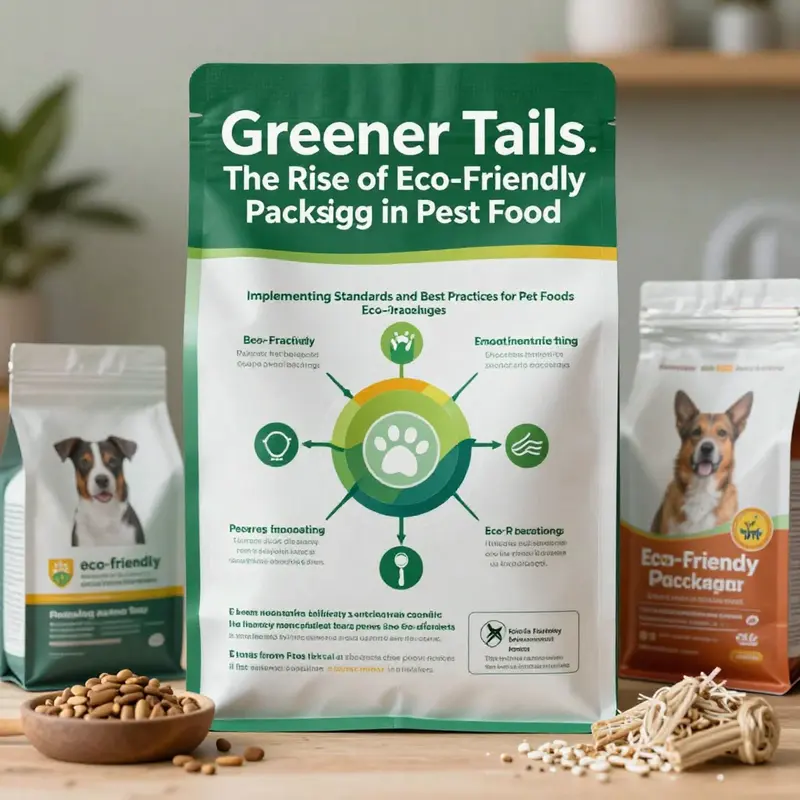
Every era of pet foods packaging is measured by the clarity of its standards as much as by the strength of its materials. The shift toward eco-friendly packaging is not just a design choice; it is a governance challenge. It requires consistent material sourcing, rigorous processing controls, and transparent communication with consumers who increasingly demand proof of environmental responsibility without compromising safety or freshness. At the heart of this challenge is PET, a polymer whose recyclability and widespread acceptance in recycling streams offer a promising path toward circularity. When PET is properly collected and processed, it can be reintroduced into the packaging stream many times without a drop in performance. This resilience makes PET a natural ally for pet food brands seeking to balance shelf life with environmental impact. It is also a reminder that the true value of materials lies not only in their performance in the store but in their performance through the recycling loop, where purity and consistency become the benchmarks of quality.
The role of standards in this space cannot be overstated. Standards set boundaries that protect consumer safety while enabling innovation. In the realm of recycled PET (rPET) and food contact applications, two kinds of guardrails are especially critical. First, material composition must meet defined limits so that contaminants do not migrate into pet foods. Second, labeling and recycling processes must be standardized to ensure a consistent, trustworthy experience at the consumer level. Organizations such as the Association of Plastic Recyclers (APR) and the International Organization for Standardization (ISO) offer guidelines that help manufacturers maintain purity and safety in recycled materials. The APR, for example, provides criteria for the acceptability of rPET in food-contact applications, while ISO standards address method validation, quality management, and traceability. By aligning with these guidelines, pet food brands can reduce risk, increase consumer confidence, and demonstrate a credible commitment to sustainability that does not sacrifice safety or quality.
Best practices for eco-friendly packaging flow from a few core principles. First, there is a clear priority on increasing post-consumer recycled (PCR) PET content. This shift reduces reliance on virgin plastics and closes the loop by reintroducing used PET into new packaging. Second, communication with consumers becomes an active sustainability practice. Transparent labeling about recyclability and the presence of recycled content helps customers dispose of packaging correctly and understand the environmental benefits. A consistent recycling code—such as PET’s widely recognized code #1—empowers households to participate meaningfully in the recycling system. Third, brands should build partnerships with certified recyclers and invest in closed-loop recycling systems. Such collaborations ensure a reliable supply chain for rPET and reduce leakage of materials into lower-value streams. These practices align with broader industry movements toward design-for-recycling and cradle-to-cradle thinking.
Design choices also matter as much as governance. The packaging ecosystem is gradually moving away from mixed-material laminates that hinder recycling toward mono-material solutions that sustain performance while simplifying end-of-life processing. This is where the concept of a transparent window enters the narrative in a particularly meaningful way. Transparent windows allow customers to view kibble or treats, boosting trust and shelf appeal. Yet windows can complicate the recycling story if they introduce non-recyclable layers. A pragmatic approach is to deploy windows made from plant-based films or compostable materials that can be separated or easily handled in the recycling stream. In practice, this means a shift to film technologies that maintain barrier properties and clarity while meeting compostability or recyclability targets. The result is packaging that preserves freshness and appearance without compromising recyclability—a win for both the consumer and the planet.
The sustainability equation extends to supply chain design, where the emphasis lies on material purity, traceability, and transformation efficiency. Brands are urged to source PCR content from trusted streams and to validate supplier claims with third-party certifications. The goal is not merely to demonstrate recycled content but to demonstrate responsible sourcing, contaminant control, and consistent material performance in food-contact applications. Laboratories and third-party laboratories play a crucial role in testing migration, mechanical integrity, and compatibility with pet foods. Such rigorous verification helps prevent safety concerns and reduces the risk of recalls, which would undermine consumer trust and negate environmental gains. In this way, standards are not an abstraction; they are a practical, measurable framework that supports responsible business decisions.
Within this framework, the pet food packaging ecosystem benefits from the entire spectrum of recycled and recyclable materials. Recycled cardboard and paper components reduce virgin resource use and complement PET-based packaging where appropriate, especially for outer boxes or secondary packaging. Water-based inks and adhesives further enhance the environmental profile by enabling easier separation of materials in recycling facilities. The overarching aim is design for recyclability: to minimize material complexity, enable efficient sorting, and maximize the recoverability of high-quality input streams. When brands pursue mono-material packaging where feasible and avoid laminates that span multiple polymers, the end-of-life story becomes clearer and more actionable for consumers who want to participate in circularity rather than feel overwhelmed by ambiguous disposal instructions.
An authoritative reference for this ongoing evolution is the Sustainable Packaging Coalition’s Pet Food Packaging Guide, which offers a comprehensive overview of standards, best practices, and real-world applications updated in January 2026. While the guide is expansive, a few takeaways resonate across brands and product categories. First, it emphasizes material composition controls and clear labeling as foundations for safety and sustainability. Second, it highlights the need for partnerships with certified recyclers and the value of investing in closed-loop systems that keep material streams intact. Third, it recognizes the power of consumer education and consistent communication in driving responsible disposal and higher recycling rates. Taken together, these principles form a practical blueprint for brands seeking to reduce environmental footprints without compromising the consumer experience.
From a consumer-facing perspective, transparency is the currency of trust. Labels that clearly disclose recycled content and recyclability, paired with simple disposal guidance, help customers make informed choices. The presence of a recognizable recycling code is not merely a marker of recyclability; it is a bridge that connects product design to community recycling behavior. In some markets, consumers are more confident when packaging communicates its recyclability through standardized symbols and plain-language explanations of what can be recycled and how to prepare packaging for the process. For pet foods, where product freshness and palatability are paramount, the packaging must perform its protective role while remaining compatible with recycling infrastructure. That often means balancing barrier properties with recyclability considerations, a challenge that can be met through careful material selection, barrier layer optimization, and a willingness to rethink traditional laminates.
Practical steps for brand teams begin with internal alignment across functions. Sourcing, product development, packaging engineering, and sustainability teams must co-create a path to higher PCR content and simpler end-of-life streams. This requires setting realistic targets for PCR content that evolve over time, backed by supplier audits and performance testing. It also means investing in consumer research to understand receptivity to recycled-content packaging and to uncover potential concerns about safety, freshness, and appearance. When brands share progress—through annual sustainability reports or product labeling that highlights recyclability—consumers respond with greater loyalty and willingness to choose eco-conscious options in the future. In tandem with those efforts, brands should continually monitor policy developments, as regulatory expectations around recycled content, labeling, and end-of-life responsibilities can accelerate or alter the adoption curve for certain packaging approaches.
For professionals seeking practical material options and illustrations of how packaging can be both protective and recyclable, it helps to look beyond the pet aisle and into the broader packaging landscape. A useful touchstone is the broader category of plastic packaging, which offers a spectrum of materials, processes, and end-of-life options. Exploring the plastic packaging category can illuminate how other industries handle similar trade-offs—especially in areas like barrier performance, heat resistance, and consumer acceptance—while still keeping pet foods at the center of a responsible, value-driven strategy. This broader lens can inform decisions about window films, coatings, and the integration of compostable components with PET-based structures, guiding brands toward coherent, system-wide choices rather than isolated optimizations.
The journey toward standards-aligned, best-practice packaging is iterative. It requires ongoing supplier evaluation, lifecycle thinking, and a willingness to adjust packaging architectures as recycling infrastructure evolves. The best practice is to pursue continuous improvement rather than a single, perfect solution. As recycling streams mature and consumer expectations evolve, brands that maintain rigorous testing, transparent communication, and steady investment in closed-loop systems will be best positioned to reduce environmental footprints while preserving the trust and satisfaction of pet owners who care deeply about their animal companions and the world those companions inherit. The conversation about eco-friendly pet food packaging is not a sprint but a steady relay, with standards and best practices guiding every handover from design to disposal.
For those who want to dive deeper into trends and implementation strategies, a practical starting point is to explore materials and packaging options within the broader plastic packaging landscape, while keeping PET and PCR at the core of the discussion. This approach aligns with industry guidance and keeps the focus on measurable outcomes—recycled content, recyclability, and consumer clarity—so that the packaging not only protects pet foods but also protects the planet. If you’re curious about how other packaging sectors manage these challenges, consider examining related packaging categories and their approach to end-of-life management, which often informs more resilient pet food packaging strategies. And for ongoing learning, the Shopify guide on eco-friendly packaging for 2026 offers a broad view of current standards, best practices, and real-world applications that can complement the specifics discussed here.
Internal resource for further reading: plastic packaging.
External resource: Shopify Sustainable Packaging Ideas for 2026 — https://www.shopify.com/blog/sustainable-packaging-ideas-for-2026
Greener Packaging, Stronger Profits: The Economic Case for Eco-Friendly Pet-Food Packaging
An eco-friendly package is no longer a niche detail; it is a strategic signal sent to retailers, consumers, and investors. When a pet food brand chooses materials that are renewable, recyclable, or compostable, it communicates a commitment to responsible practice that can translate into premium shelf presence and steadier demand. The economic implications are not merely about avoiding waste; they influence cost structures across the supply chain, from raw materials to logistics, and even tax and incentive landscapes. This chapter explores those financial dynamics, showing how the upfront price of sustainable packaging can give way to a robust, long-term return through improved product protection, brand trust, and operational efficiencies.
By examining cost considerations, consumer demand, and regulatory pressures, and by looking at long-term benefits that accrue from a more resilient packaging strategy, we can see why sustainability and profitability are not opposing forces. The initial transition often demands careful budgeting and staged implementation rather than a single, sweeping overhaul. Brands that plan for scale, engage suppliers early, and align packaging decisions with broader sustainability goals tend to reduce volatility in both price and performance. In practice, the shift features a mix of compostable films, post-consumer recycled content, and simplified laminates that favor mono-material designs whenever possible. These choices can improve recyclability or compostability without sacrificing barrier performance, which keeps pet foods fresh and appealing on the shelf, especially when a clear window presents the kibble or treats inside. The consumer benefits are tangible; visibility into the product fosters trust, while the ability to reuse or recycle packaging reduces waste streams. To echo this, the design focus increasingly centers on one material family at a time, avoiding mixed laminates that complicate end-of-life processing.
The initial investment story, however, is rarely one-dimensional. Costs for materials such as compostable films or engineered bioplastics are typically higher than for conventional plastics. This premium varies with geography, supplier scale, and material performance targets. Beyond the raw material price, there is also the need to retool machinery and update labeling or sealing processes to accommodate new films. In many regions, the economics hinge on the availability of industrial composting facilities or dedicated municipal programs that can properly process these materials. If such infrastructure is lacking, the environmental gains may be real but the end-of-life benefits muted, which complicates the financial calculus for markets with uncertain waste-management ecosystems. For brands, the strategic answer is often a staged approach that prioritizes packaging components with the strongest performance gains and easiest end-of-life outcomes. As this work proceeds, a careful supplier evaluation becomes essential, not only for price but also for consistency in supply, moisture and oxygen barrier performance, and suitability for automated filling lines.
Consumer demand increasingly shapes the economics of packaging. A growing share of shoppers seeks products with clear environmental credentials, and regulators around the world are tightening requirements for packaging materials, adhesives, and inks. The trend toward sustainability is no longer a marketing ploy; it is a policy signal that can affect product approvals, retailer listings, and access to certain markets. Brands that align with evolving standards by choosing water-based inks and adhesives, and by reducing or replacing laminates that hinder recycling, often find smoother paths through regulatory reviews. The ability to demonstrate life-cycle thinking—claims that a package reduces waste, uses renewable content, or improves recyclability—can translate into favorable relationships with retailers who want to meet sustainability targets and to consumers who are willing to pay a modest premium for responsible packaging. This demand-side pressure helps justify the initial higher costs through potential price elasticity in premium segments and reduced exposure to waste-management fees over time. In addition, a steady increase in materials recycling infrastructure means that more regions can address packaging end-of-life in a circular way. For company leadership weighing options, the political economy of packaging must be part of the business case, not an afterthought.
Beyond consumer messaging and regulatory alignment, the long-term financial gains hinge on several tangible efficiency drivers. Brand reputation is among the most valuable assets a pet-food maker can cultivate. Eco-friendly packaging signals reliability and stewardship, drawing in environmentally conscious households and retailers seeking sustainable assortments. A stronger brand position can translate into steadier volume, easier product launches, and even the potential to command premium pricing in certain channels. In markets where waste-disposal costs are borne by the producer, sustainable packaging directly reduces those fees by yielding lighter, more recyclable or compostable designs and by lowering spoilage through better barrier protection. Modest improvements in shelf life and reduced spoilage can add up to meaningful cost savings over time, especially for products with high unit costs or long distribution corridors. Moreover, the use of lighter materials and streamlined packaging configurations can cut logistics expenses substantially. Every gram saved in packaging weight reduces freight costs and emissions, and the consolidation of packaging formats lowers handling complexity across the supply chain. This operational efficiency complements the broader sustainability story, reinforcing that environmental responsibility and economic prudence can advance together rather than compete.
Design innovations influence both performance and cost profiles in ways that compound over multiple years. Many brands are embracing advanced barrier materials that resist moisture, oxygen, and light, which helps maintain product freshness and reduces spoilage. The same materials can enable thinner layers or fewer laminate steps without compromising protective function, meaning less packaging mass and lower raw-material consumption. Product visibility remains a strong consumer driver; windows crafted from plant-based, compostable films offer transparency to the consumer while avoiding persistent plastics. The window concept is not just about aesthetics; it supports trust and reduces the need for secondary labeling or over-packaging to convey freshness. Packaging for recyclability is also trending toward mono-materials and simplified layups that avoid mixed-material laminates. In parallel, brands are exploring post-consumer recycled content in cores of packaging or within cardboard sleeves, where feasible, and are steering toward water-based inks and adhesives that ease the recycling process and improve worker safety during manufacturing.
From an operations perspective, lighter, simpler packaging often yields lower distribution costs and a more robust supply chain profile. Fewer material layers can mean fewer sealing steps, faster line speeds, and lower conditioning costs, while improved damage resistance reduces returns and waste during transit. Anti-scratch and anti-tear properties, when built into the packaging design, mitigate losses from handling and reduce the rate of product withdrawal due to damaged packages. The cumulative effect of these micro-optimizations can materialize as a lower cost of goods sold over multiple fiscal periods, especially when combined with the tax incentives and potential grants that some regions offer to encourage sustainable manufacturing. While not every market will offer the same level of incentive, the policy environment is gradually tilting toward recognizing and rewarding long-term investments in sustainability, and that tilt increases as packaging standards harmonize and recycling rates improve.
Implementation strategies exist to translate these ideas into action without overwhelming the business case. A phased rollout starts with pilot programs that test end-of-life outcomes in key markets and across core SKUs. Governance should bring packaging, procurement, sustainability, and operations into a joint roadmap with clear milestones and ROI targets. Early pilots help quantify reductions in waste disposal fees and gains in handling efficiency, while giving product teams a chance to refine formulized claims about shelf life. The plan should map the entire lifecycle, from material sourcing to recycling streams, and identify potential bottlenecks in waste-management infrastructure. Supplier partnerships are essential for ensuring consistent barrier performance during scale-up, and cross-functional teams are needed to monitor and adjust the balance between performance and end-of-life simplicity. The result is a scalable platform rather than a one-off substitution, a platform that can evolve as recycling facilities expand and as consumer expectations mature. A well-executed transition generates positive feedback loops: as packaging costs decline through economies of scale and material innovation, brand loyalty strengthens, retailers deepen commitments, and waste-management fees fall. These dynamics reinforce the business case for continued investment, even in markets where the initial premium seems steep.
The journey toward eco-friendly packaging thus becomes a story of disciplined capital allocation aligned with a broader environmental and commercial strategy. When the total cost of ownership is evaluated across the product life cycle—from procurement to end-of-life management—the economic logic becomes clear: sustainable packaging can reduce waste, lower logistics costs, and uplift brand equity in ways that compound over time. The trend toward recyclability and compostability is not merely about compliance; it is a forward-looking efficiency program with real financial returns. For a closer look at paper packaging in particular and how it fits into broader sustainability goals, explore the paper packaging category on the site here: paper packaging.
External resource for deeper context: https://www.dow.com/en-us/industries/food-and-beverage/pet-food-packaging
Final thoughts
The shift towards eco-friendly packaging in the pet food industry is an essential stride not only for the environment but for brand integrity and consumer trust. By leveraging innovative materials, enhancing their recycling strategies, and adhering to best practices, businesses can emerge as leaders in sustainability while appealing to a growing demographic that values responsible consumption. The pet food sector now stands at the crossroads of ecological responsibility and economic viability, urging all players involved—from manufacturers to retailers—to embrace and champion eco-friendly packaging as the way forward.