
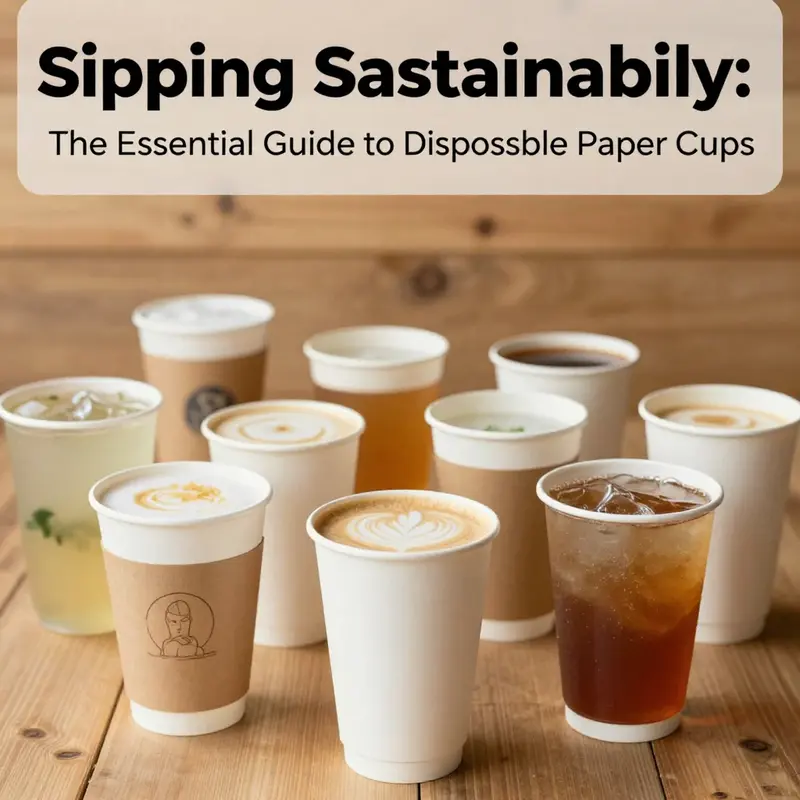
Disposable paper cups have become a staple in the beverage industry, especially for bubble tea shops, beverage chains, restaurants, food trucks, catering services, event planners, and corporate procurement teams. Their convenience and perceived environmental benefits make them popular choices for on-the-go refreshment. As businesses navigate sustainability and innovation, understanding the lifecycle, market trends, and cultural significance of these cups is crucial. This guide will examine the sustainability and environmental impact of disposable paper cups, delve into the manufacturing processes that shape their quality, explore market trends and innovations, and discuss their cultural and societal uses, providing a holistic view of this essential product.
Between Convenience and Footprint: Rethinking the Sustainability of Disposable Paper Cups

Disposable paper cups occupy a paradoxical position in modern consumption. They are engineered for convenience, hygiene, and speed, yet their everyday use surfaces a web of environmental trade-offs that demand careful scrutiny. The familiar image of a clean white cup belies a material reality where two separate worlds—paper and plastic—are bound together to perform a simple task: hold a beverage without leakage while keeping a hand from burning or sweating through a hot drink. The most common construction integrates a paper exterior with a thin plastic lining, typically polyethylene (PE). This combination serves an essential function: it prevents liquid seepage and provides thermal insulation, allowing people to carry hot coffee or tea comfortably from counter to curbside. But that same layering complicates what should be a straightforward end-of-life story. Recycling streams designed for paper can struggle to separate the plastic from the paper, and in many municipal systems the result is that a large share of disposable cups ends up in landfills rather than being recycled. In practice, the recycling hurdle imposed by the PE barrier means that, for all their paper-based veneer, these cups behave more like low-grade plastics than like pure cardboard or newsprint in the eyes of recycling facilities. The environmental narrative, therefore, becomes less about the purity of the material and more about the entire lifecycle—from raw material extraction to production, distribution, consumer use, and eventual fate. It is a lifecycle that invites broader questions: Are we opting for the most responsible choice in each context, and who bears the responsibility for ensuring that a cup’s end-of-life aligns with its initial promise of cleanliness and safety? In many parts of the world, the answer hinges on infrastructure: whether urban centers possess reliable collection, sorting, and composting capabilities that can meaningfully divert disposable cups from landfills and, crucially, whether consumers understand how to dispose of them correctly. The complexity of this system becomes more evident when we compare disposables with alternatives that claim to be more sustainable at their end of life. A shift toward biodegradable options has gained momentum, with plant-based liners—often polylactic acid (PLA)—used to replace PE in some products. PLA is derived from renewable resources such as cornstarch or sugarcane and is designed to break down in industrial composting facilities under conditions of elevated temperature and humidity. The intention behind this design is straightforward: to shorten the environmental footprint of the cup’s end-of-life phase by enabling faster, cleaner degradation. Yet, the reality is conditional. Without access to industrial composting, the breakdown of PLA-coated cups is severely hampered, and the cups may behave similarly to conventional disposables in terms of persistence in the environment. In other words, the durability of a cup at the moment of use does not automatically translate into a commensurate reduction of environmental harm if the waste management system cannot support the necessary composting processes. This conditionality underscores a broader truth about sustainable packaging: the impact of a product is inseparable from the system that manages its waste, and the value of a technically greener material hinges on the existence of a network that can capitalize on that material’s advantages. The discussion thus moves beyond the material itself and into the realm of civic infrastructure, consumer behavior, and policy design. A more holistic perspective asks not only what a cup is made of, but how it is disposed of, where it goes, and what happens to it once it arrives there. From this vantage point, the environmental storytelling of disposable cups shifts from a binary debate—recyclable vs non-recyclable—to a nuanced examination of how a packaging choice is integrated into a circular economy framework. In this framework, the environmental benefit of a given option emerges only when the disposal pathway is aligned with the product’s material composition and the local facilities exist to support that alignment. The broader context reveals a spectrum of outcomes. Take a comparative look at reusable alternatives, which often dominate discussions of sustainability in foodservice. While reusables—such as metal, glass, or BPA-free plastic cups—have a smaller footprint per use when evaluated over many cycles, their advantage depends on a high rate of reuse. Real-world analyses show that the initial environmental cost of producing a reusable cup is substantially higher than that of a disposable cup. For instance, a single stainless steel cup can generate several kilograms of CO2 during production and requires markedly more energy input than a disposable paper cup. The break-even point—after how many uses the reusable cup becomes greener than its disposable counterpart—depends on many variables, including the type of material, the number of uses, washing requirements, and the energy mix of the local grid. A synthesis of lifecycle assessments—compiled by experts and echoed in major environmental reporting—illustrates that the environmental benefits of reusables only accrue after dozens of uses, and often far more if cleaning regimes are resource-intensive. In other words, the seductive simplicity of “use once, recycle later” for disposables can sometimes be outweighed by the cumulative burdens of producing and disposing of multiple reusable cups unless reuse rates are sustained at scale. The headline takeaway is not a simple verdict on one material over another, but a call for lifecycle thinking that embraces the full cascade of environmental impacts. In the case of disposable paper cups, the potential for harm is real when waste is not properly managed, and the promise of improvement hinges on an integrated approach that blends better materials with robust waste infrastructure and careful consumer guidance. The practical implications for businesses, institutions, and event organizers are profound. If a venue serves beverages in disposable cups, it becomes part of a broader system that must deliver reliable waste collection and sorting, as well as clear labeling that differentiates between cups destined for composting versus recycling. The design of the cups themselves can contribute to this system: for example, a shift toward fully biodegradable or compostable liners reduces the reliance on plastic-based barriers, while still requiring a separate, well-functioning composting stream to realize the environmental benefits. Yet, even with greener inner coatings, a parasitic reality remains: contamination. If compostable cups enter a recycling stream by mistake, or if their compostability features are misunderstood by staff and customers, the effectiveness of the entire system can be compromised. This is why education and labeling are not mere add-ons but essential components of sustainable packaging. The conversation around disposables thus becomes a conversation about systems thinking—how products are designed, how waste is collected and treated, and how cultural norms shape disposal habits. In that sense, the sustainability of disposable paper cups is not an isolated attribute of the cup itself, but a reflection of a community’s willingness to invest in waste management services, to educate users, and to rethink routine consumption patterns. From the business perspective, the opportunity lies in aligning product design with local end-of-life capabilities. This may involve selecting materials that are compatible with existing municipal systems, or investing in partnerships that expand composting capacity and improve the purity of recyclables. It may also involve offering a range of packaging options so that customers can choose based on context—single-use cups for quick service in venues lacking composting infrastructure, and reusable solutions where reuse and proper cleaning can be sustained at scale. The social dimension should not be overlooked. Consumers often associate disposable cups with convenience and cleanliness, but a growing segment of customers increasingly values corporate responsibility and transparent reporting on environmental performance. Brands can respond by communicating lifecycle data, waste diversion rates, and the practical realities of end-of-life pathways. They can also encourage responsible disposal through signage, staff training, and incentives that promote recycling or composting at point of use. The systems-relevant nature of this issue has practical implications for policy makers as well. Regulatory frameworks that incentivize composting infrastructure, improve recycling separation, or standardize labeling for compostable materials can shift the economics of disposal and reduce the environmental burden of disposables. In this way, policy, industry practice, and consumer behavior converge to determine the real-world sustainability of disposable cups. It is worth noting a foundational point that often recurs in sustainability debates: the raw material choice is important, but the ultimate environmental performance depends on how the product is used and disposed of in the real world. A growing body of research emphasizes that simple substitutions—such as swapping PE for PLA without upgrading the waste infrastructure—do not guarantee meaningful reductions in pollution or resource use. This nuance helps explain why some institutions prefer to invest in reusable systems for cafeterias, events, and workplaces, while others pursue layered approaches that combine improved disposables with enhanced waste separation and composting where feasible. For organizations considering changes, the decision is rarely purely technical. It involves logistics, cost, consumer experience, and the capacity to create and maintain an end-to-end waste solution. In that sense, the sustainability quandary of disposable cups is not merely a materials problem; it is a narrative about how societies organize consumption, waste, and value over time. Businesses can contribute by embracing a broad, pragmatic view: choose materials with proven compatibility with local waste streams, partner with operators that maximize diversion from landfills, and publicly report progress toward clear, measurable environmental goals. To explore the practical landscape for organizations seeking alternatives or enhancements, consider the broader category of packaging offerings that sit alongside disposable cups. The disposable drinkware spectrum includes products designed to minimize plastic content, maximize recyclability, or support composting where infrastructure exists. For example, venues with robust composting facilities might opt for cups with plant-based liners, while those in municipalities with strong paper recycling programs might prioritize simple, recyclable paper cups with minimal coatings. For readers seeking more detail on product categories and design considerations, the Disposable drinkware category can serve as a starting point to understand the range of options and how they align with different end-of-life pathways. Ultimately, the journey toward more sustainable disposable cups is a journey toward more responsible systems: better materials, smarter disposal, stronger consumer education, and a culture that values reuse as a practical, scalable option whenever feasible. This is not a call to abolish disposables overnight; it is a call to weave environmental considerations into every step of the lifecycle. It invites designers, manufacturers, retailers, and consumers to think beyond convenience toward a balance that respects resource limits and the needs of a shared climate. In that spirit, the discussion of disposables becomes a catalyst for broader conversations about how to reframe packaging choices within a resilient, forward-looking economy. And that reframing, when executed with honesty about trade-offs and a clear eye toward end-of-life realities, can transform a simple coffee cup into a symbol of mindful consumption rather than a reminder of wasted opportunity. For researchers and practitioners alike, the discipline remains the same: measure what matters, design for what works in the real world, and communicate clearly how disposal decisions translate into environmental outcomes. External resources continuously refine this understanding, including life-cycle analyses that synthesize consumer habits, material science, and waste management realities. A comprehensive look at the literature highlights that reusables can outcompete disposables only after sustained adoption and careful consideration of washing, energy use, and material choice. In the end, the most impactful pathways often emerge not from a single silver bullet, but from coordinated actions across design, policy, and behavior—actions that advance a circular system in which cups are no longer disposable in the most harmful sense, but are a transitional step toward more durable, reusable, and thoughtfully managed packaging. External resource: https://www.theguardian.com/environment/2021/jul/08/reusable-coffee-cups-how-many-uses-before-they-become-greener
From Paperboard to Handheld: The Manufacturing Journey Behind Disposable Paper Cups
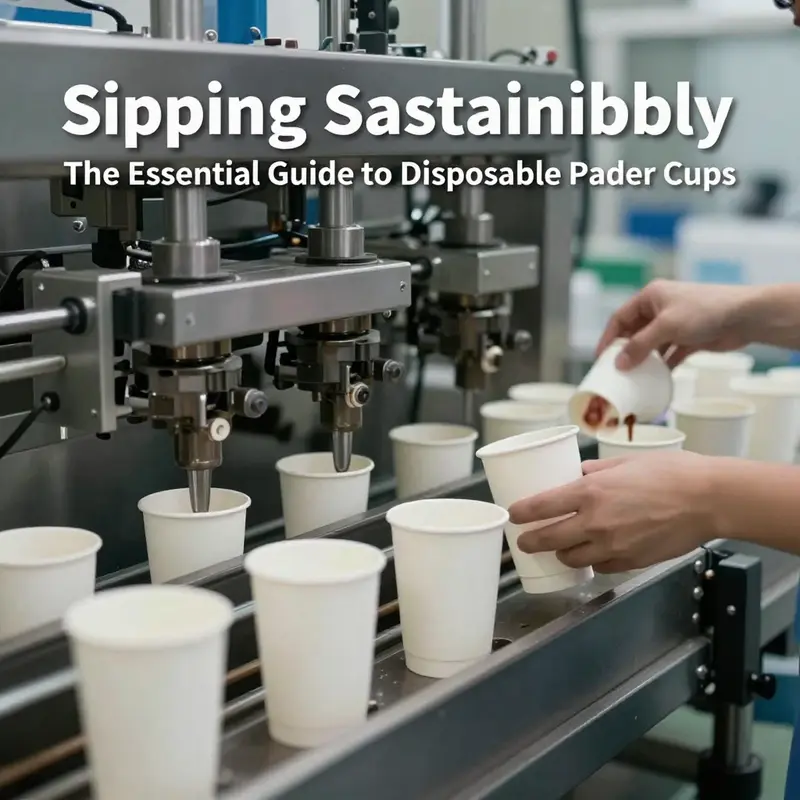
Every time a hot drink is cradled in a thin disposable cup, a tightly choreographed process lies behind it. The cup is the product of decisions about materials, coatings, forming, sealing, and quality control, designed for heat, leakage resistance, and speed. It starts with the core material, paperboard, chosen for strength and cost. The board is typically coated to resist liquid permeation and to preserve heat. Common coatings include polyethylene (PE) for moisture barriers, with growing interest in biodegradable options such as polylactic acid (PLA) to improve compostability where industrial facilities exist. The choice between PE and PLA reflects end-of-life considerations, barrier performance, and consumer expectations. PLA coatings can help with compostability, but their effectiveness depends on the availability of appropriate facilities. The coating must preserve integrity during hot beverage service while not hindering heat dissipation, requiring careful formulation.
Next, the coated sheet moves to the forming stage. A blank forms into a cylinder, seams are joined by heat and pressure, and a stable cup body is created. Handles may be integrated or added later, requiring robust adhesion. Modern lines are designed for flexibility to switch among sizes and allow on-line printing for branding and customization. This enables short runs for promotions without separate tooling. Quality checks monitor thickness, seam integrity, and surface finish, preventing defects that could compromise safety or user experience. Finished cups are packed for shipment with tamper-evident features and protective layers to reduce transit damage.
Automation and process control keep throughput high while preserving safety and sanitation. Real-time monitoring and inline printing capabilities support rapid product updates and consistent quality. The broader sustainability narrative now emphasizes reductions in waste and shifts toward compostable or plant-based materials where feasible. Coatings like PLA carry environmental promises when matched with proper waste infrastructure, while PE remains valued for barrier performance and recyclability in some contexts. The industry continues to explore new coatings that balance performance, cost, and end-of-life outcomes.
In practice, the cup’s journey from raw material to consumer is a storyboard of supply chains, machinery, and human oversight, delivering a reliable, safe, and convenient product for everyday use. For further reading on equipment and industry practices, buyers and researchers often consult supplier catalogs and case studies.
The Pulse of Convenience: Market Trends, Sustainability, and Innovation in Disposable Paper Cups
The disposable paper cup has emerged as much more than a simple vessel for beverages. It is a compact barometer of how modern economies negotiate convenience, cleanliness, cost, and environmental responsibility in a single, portable package. In recent years, the market for these cups has shown a steady, even rapid, evolution, driven by shifting consumer preferences, ever tighter regulatory frameworks, and a wave of manufacturing and materials innovation. The chapter that follows traces this evolution as a living narrative: how regions with dense, vertically integrated production ecosystems sharpen competitiveness; how new materials and coatings reshape performance without compromising recyclability; and how the procurement decisions of vast networks of businesses now hinge on a broader, more holistic set of criteria than price alone. In this unfolding story, the disposable paper cup is not merely a disposable good; it is a focal point where sustainability goals, consumer experience, and industrial scale converge to redefine what is possible in single-use packaging.
Sustainability has moved from a niche concern to a defining criterion in almost every purchase decision that touches packaging. The most visible trend is the rapid shift toward materials and coatings that either compost or recycle with real-world efficiency. In this space, Chinese manufacturers have established prominent advantages. The Guangdong, Hunan, Hubei, and Anhui regions host tightly knit, vertically integrated clusters that coordinate every step from raw material sourcing to coating, printing, forming, and final packaging. This level of coordination reduces lead times and input costs in ways that are hard to replicate in more fragmented production environments. The efficiency gains are not merely about speed; they translate into more predictable supply for buyers who must plan across the tight schedules of coffee shops, corporate events, and large-scale venues. And while sustainability remains a central selling point, verification is vital. A growing share of cups now uses PLA coatings or uncoated fiber-based materials that align with international standards such as OK Compost, GB/T 18006.1-2009, or similar benchmarks. Yet the real test is not the label on the box but the documentation and third-party audits that confirm genuine compliance in practice, across the supply chain and through end-of-life streams.
The drive for sustainability dovetails with a broader market push toward performance and user experience. Consumers are not just seeking products that feel responsible on a balance sheet; they want cups that perform reliably in real-world conditions. This has spurred the growth of high-performance, function-specific cups. Double- and triple-wall constructions, once the preserve of premium segments, are moving into mainstream venues such as specialty coffee houses and quick-service formats where heat retention, structural rigidity, and leak resistance directly influence service quality. The same design logic extends to other applications—snack bars, vending machines, and retail sampling events—where durability and lightness are crucial on crowded floors and in high-traffic environments. In such contexts, the cost per unit cannot be divorced from performance; users experience value when a cup remains sturdy during transport, resists collapsing under grip, and protects the beverage’s temperature without creating a hand-heat burden. This performance emphasis often prompts packaging professionals to explore not only wall thickness and geometry but also the choice of internal coatings and barrier layers that maintain strength while enabling recyclability or compostability.
Market projections reinforce the momentum behind these developments. Analysts anticipate the global disposable paper cup market surpassing eleven billion dollars in value by the end of the decade, a signal that urbanization, the expansion of food service, and the growth of convenience-driven consumption are fuelling demand across regions and market segments. This growth is not a simple function of rising beverage temperatures or increasing on-the-go lifestyles; it reflects a deeper willingness among operators to invest in packaging that supports consistent quality, reduces waste, and strengthens brand fidelity as customers repeatedly choose one venue over another for a reliable experience. The scale of this opportunity invites manufacturers to optimize every link in the chain—from raw-material sourcing and coating formulations to forming, decoration, and on-site fulfillment. As a result, the industry is increasingly attentive not only to the economy of each cup but also to the total lifecycle of materials and their compatibility with emerging waste-management infrastructures.
A parallel and highly consequential trend is the integration of automation and digital systems into manufacturing floors. In major logistics hubs and manufacturing corridors, from tight, high-speed lines in coastal clusters to expansive facilities inland, factories are pushing throughput while embracing precision quality control. Capacities that range from tens of thousands to hundreds of thousands of units per day per line are now common, reflecting the demand to supply large fast-food chains, airports, universities, and event organizers across Europe, North America, and Southeast Asia. Real-time monitoring, predictive maintenance, and data-driven process optimization reduce waste and improve consistency, which in turn lowers the total cost of ownership for buyers who depend on dependable supply. The shift to automation does more than raise output; it makes it easier to maintain strict standards for safety, labeling accuracy, and regulatory compliance inside ever more complex supply chains. The result is a more resilient market where capacity can be scaled in response to seasonal peaks and regional surges without sacrificing environmental stewardship or product integrity.
As procurement practices mature, buyers increasingly adopt a B2B framework that weighs reliability, scalability, regulatory compliance, and environmental impact alongside price. This shift reflects a broader corporate imperative to reduce risk and ensure continuity in the face of geopolitical tensions, transportation disruptions, and fluctuating input costs. The due diligence now commonly extends beyond a single shipment or a certificate. It encompasses supplier audits, traceability of materials, and demonstrated performance across multiple metrics—heat resistance, leakage resistance, stackability, and even end-of-life handling. In this context, the value of partnerships with material suppliers and manufacturers becomes a strategic asset. The weaving together of sustainability, performance, and supply-chain resilience is shaping a new standard for decision-making that aligns with corporate sustainability goals and shopper expectations alike.
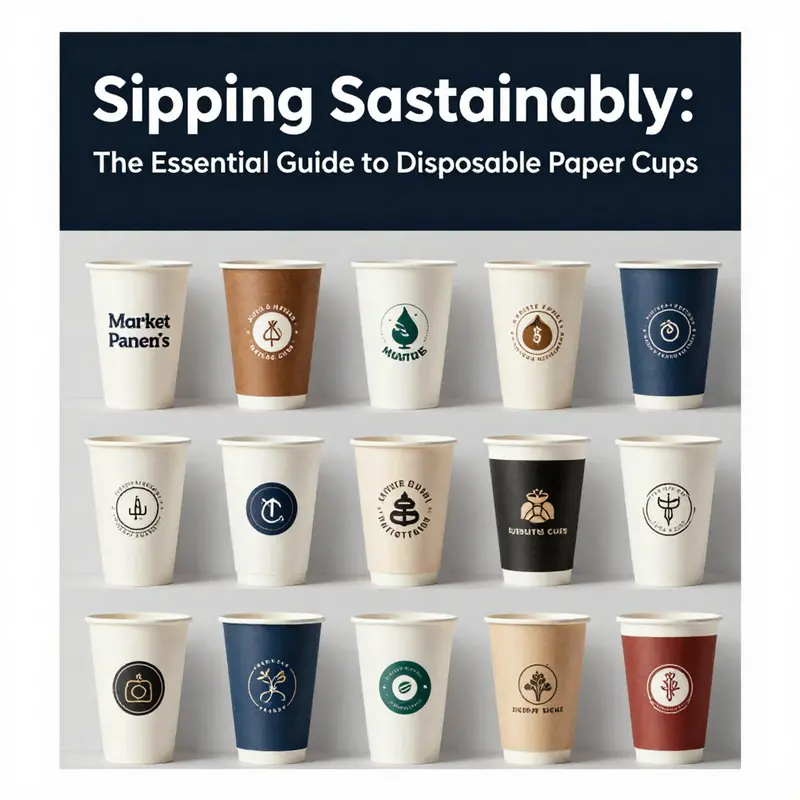
Customization and branding play a central role in this evolving landscape, and the means to achieve it are increasingly sophisticated. As operators seek to differentiate themselves in crowded markets, they look for packaging options that can carry brand identity without compromising recyclability or compostability. Brands are exploring a blend of printing techniques, coatings, and inner-liner alternatives to achieve vibrant visuals while keeping the environmental footprint in check. The design decisions extend beyond aesthetics to functional considerations, such as readability of labeling in dim lighting, compatibility with recycling streams, and resistance to smudging or color bleed during brief contact with hot beverages. In practice, this has led to a growing emphasis on coordinated packaging, printing, and cup design—an area where careful alignment between the cup’s material choice and the outer printed packaging can reinforce authenticity and trust. For teams exploring these options, a practical starting point is to examine the available packaging and printing options and how they interact with the cup’s barrier properties and end-of-life outcomes. Packaging printing options provide a useful reference for brands seeking to balance vivid branding with lifecycle responsibility in a single, cohesive package.
Alongside these trends, the industry remains vigilant about certification and verification. The market’s growth and the ongoing adoption of sustainability claims invite heightened scrutiny from regulators, retailers, and consumers. Buyers increasingly request detailed documentation of certification processes and third-party audits that validate the environmental credentials of coatings, liners, and fiber bases. The risk of greenwashing—where marketing campaigns imply greater environmental benefit than the underlying practices deliver—remains a constant concern. In response, manufacturers are investing in transparent reporting, robust internal controls, and standardized testing regimes that track performance across multiple conditions, including humidity, major temperature fluctuations, and prolonged exposure to beverages. The objective is clear: demonstrate that a cup can deliver both reliable performance for the user and credible environmental stewardship in the eyes of regulators and customers alike. The consequence for suppliers is a heightened emphasis on traceability, batch-level documentation, and independent verification, even as the cost structure of sustainable materials continues to evolve with supply and demand.
The material choices themselves are evolving. PLA-coated cups and uncoated fiber-based options have gained a foothold, yet the landscape is not static. Industry participants continually assess new bio-based coatings, barrier layers, and recyclable laminates that maintain barrier performance while enabling easier separation in recycling streams. The ultimate aim is a mix of materials that can offer dimensionally stable performance at varying temperatures, minimize liquid permeation, and support end-of-life infrastructure in different regions. As these materials are tested in real-world contexts, the knowledge base expands about how coatings interact with the cup wall during hot beverage exposure, how micro-perforations or barrier layers influence leakage, and how cleaning and processing steps in recycling facilities affect the integrity of paper-based streams. With each incremental improvement, the industry moves closer to a point where truly zero-pollution outcomes become achievable in diverse environmental settings, without forcing concessions on user experience.
In this evolving ecosystem, the ability to forecast demand and align production with regulatory trajectories remains a strategic skill. Public policy in many jurisdictions is driving reductions in the use of single-use plastics and encouraging certified compostability both at a consumer level and at industrial composting facilities. The implications for disposable paper cups are nuanced. On one hand, stricter rules accelerate the adoption of compostable alternatives and better end-of-life management. On the other hand, the success of these materials depends on the availability of appropriate composting infrastructure and the ability of municipalities to integrate materials into their waste streams. For manufacturers and buyers, the practical takeaway is the importance of aligning product development with the realities of regional waste management networks. It is not enough to meet the letter of a standard; one must also ensure that the product is compatible with the intended disposal pathway in the target market. This alignment often requires ongoing dialogue with regulators, waste-management operators, and community programs to ensure that certifications translate into real, on-the-ground outcomes.
Looking forward, the horizon for disposable paper cups is defined by a continuous loop of innovation and practical adaptation. Advances in plant-based coatings, industrial and home-composting standards, and the development of barrier layers that optimize both performance and recyclability will shape future options. The ambition remains clear: to deliver cups that perform as expected while reducing environmental impact across their complete lifecycle. At the same time, manufacturers recognize the value of maintaining robust supply chains that can absorb shocks and sustain quality under pressure. The interplay between sustainability goals, manufacturing efficiency, and consumer expectations will continue to drive the market toward smarter materials, more precise manufacturing, and smarter packaging strategies. In this evolving narrative, the disposable paper cup remains a pivotal artifact—a vehicle for beverage service that reflects broader societal commitments to convenience, cleanliness, and stewardship of the planet. External resource: https://www.marketresearchfuture.com/reports/disposable-paper-cups-market-3718
Between Convenience and Ceremony: The Cultural Life of Disposable Paper Cups

Disposable paper cups have quietly threaded themselves into the fabric of daily life, turning the simple act of drinking into a sociocultural moment as much as a practical one. They are not merely containers; they are portable rituals that carry signals about status, efficiency, hospitality, and even environmental stance. In city streets and office corridors, at pop-up markets and formal receptions, these cups map routes through social space, showing how convenience and care can coexist within a single everyday object. Their ubiquity is not accidental. It stems from a complex mix of design choices, consumer expectations, and organizational habits that shape our interactions with beverages from the moment we decide to lift the cup to our lips. The result is a cultural artifact that mirrors contemporary values—speed and cleanliness on one hand, branding and aesthetics on the other—while also hinting at the tensions that accompany mass consumption, waste management, and the moral economy of modern living. Through this lens, disposable paper cups become more than a convenience item; they become a shorthand for how societies negotiate efficiency, identity, and responsibility in shared spaces.
On the move, the cup becomes a companion that travels with us through the urban maze. In the rush of commutes, meetings, and errands, these cups promise a hot, familiar drink without demanding a seat or a table. They fit the tempo of a mobile lifestyle, where a quick coffee on the way to work feels like a small triumph of autonomy. Drive-thru windows, commuter cafes, and office break rooms are testaments to a culture that values immediacy, where a single cup can symbolize both personal reliability and a momentary pause in a busy day. The design variants reflect this emphasis on practicality: a light, single-wall version for casual use, and insulated, double-wall models that extend comfort for those who want warmth without burn risk at a chilly bus stop or a windy sidewalk. The social psychology of these cups is telling. A branded cup in hand often serves as a passive billboard, broadcasting a moment of routine allegiance or personal preference even before the beverage is tasted. In many urban scenes, the cup is as much a marker of identity as a jacket or a phone case, signaling affiliations with a café, a workplace, or a city ritual. The rise of specialty coffee shops has amplified this dynamic. Branded disposable cups become part of the consumer’s daily visual language, carrying the shop’s ethos in ink and color as they pass from hand to hand. The cups thus participate in branding more as a continuous, pervasively visible signature rather than a one-off advertisement. When a cup carries a company logo or a decorative motif, it translates a private habit into a public statement, blending ritual with marketing in a gentler, more intimate way than a storefront sign might allow.
Events—whether intimate gatherings, festivals, or corporate occasions—represent a different layer of cultural meaning. In these contexts, disposable paper cups are transformed into event artifacts. They may bear decorative prints, seasonal patterns, or logos that echo the guest list and the theme of the occasion. This decorative potential goes beyond mere aesthetics. It contributes to the atmosphere, reinforcing a sense of belonging, formality, or playfulness. The practice of customizing cups for events reflects a broader cultural tendency to script experiences through audience-facing objects. In this sense, cups become portable canvases that carry the tone of the moment—from celebratory to solemn—and help set expectations for how attendees should feel and behave. The strategy of using print and branding on disposables aligns with modern sensibilities about hospitality: make people feel seen, create a cohesive visual moment, and, in doing so, extend the reach of the event’s story beyond the time spent within a venue. While the cups may be discarded after use, their appearance lingers in photographs, memories, and social feeds, thereby extending the event’s cultural footprint in a way that a conventional plate or napkin could not.
Beyond the on-the-go and event contexts, the public conversation around disposable cups is inseparable from concerns about sustainability. The cultural debate often centers on how an item designed for convenience can reconcile with environmental responsibilities. In many communities, the discourse has shifted from whether disposable paper cups are inherently good or bad to how they are designed, manufactured, and disposed of in practice. The industry’s navigation of this terrain includes exploring fully compostable materials and plant-based coatings, reducing or removing plastic linings, and experimenting with alternative fiber blends. Yet even when cups are marketed as biodegradable or compostable, the real-world outcomes depend heavily on local infrastructure—availability of industrial composting facilities, consumer behavior, and how waste streams are organized and educated. The nuance here matters: a cup might be labeled as compostable in a lab, but if it ends up in a landfill or mixed with recycling streams that do not process it correctly, the environmental advantage can be diminished or even nullified. This conditional reality has sharpened consumer awareness and shifted some brand narratives toward transparency about end-of-life scenarios, lifecycle assessments, and clear guidance on disposal. The social expectation has evolved as well. People increasingly value not only what they drink but how the container of that drink aligns with their broader values. In some circles, choosing cups with recycled content, or those designed to work with local composting programs, becomes part of a personal or corporate sustainability ethos. In others, the critique of single-use items persists, fueling conversations about policies, incentives, and the redesign of service models to favor reusable alternatives where feasible. The cultural story thus moves from a binary judgment of disposable versus non-disposable to a more nuanced appreciation of material choice, lifecycle thinking, and the social signaling embedded in everyday packaging.
Within the ecosystem of disposable drinkware, there is also a practical strand that reveals how societal needs shape product design. The choice between single-wall and double-wall cups is not merely about insulation; it reflects values around weight, cost, and user experience across different climates and contexts. Single-wall cups are lightweight and cheaper, suiting casual, brief exchanges in temperate environments. Double-wall variants, by contrast, offer enhanced insulation and a reduced risk of burns, which becomes a meaningful feature for hot beverages in colder settings or for longer sessions of socializing outdoors. This design tension illustrates how consumer expectations are anchored in lived experiences: adults who linger over a coffee in a park during autumn may prioritize comfort and safety, while on a quick morning run to catch a train, speed and economy take precedence. The material science underpinning these decisions—paper fibers, barrier coatings, and the delicate balance between permeability and moisture resistance—becomes less a technical curiosity and more a cultural determinant of how we interact with beverages in public spaces. In many markets, this is paired with a broader push toward sustainable materials. Some manufacturers are experimenting with fully plant-based coatings or biodegradable liners that reduce reliance on traditional plastics, an evolution that resonates with a cultural longing for harmony between everyday rituals and ecological limits. The conversation, therefore, is twofold: it chronicles how societies value efficient consumption while also imagining how everyday objects can align with a future where environmental accountability is integrated into routine choices.
The social life of disposable cups also intersects with issues of accessibility and inclusion. Public spaces that offer hot drinks, whether a campus café or a hospital lounge, employ disposables as a practical solution to serving many people quickly while maintaining hygiene standards. In environments with diverse populations and varying needs, the portability of a cup supports a more inclusive beverage culture, where people can carry warmth with them through a shared social rhythm. Yet this utility is not without asymmetries. Access to recycling or composting infrastructure, cultural norms around waste disposal, and differences in how communities understand labeling and disposal guidance can all influence the fairness and effectiveness of single-use solutions. Thus, the cup embodies a paradox: it democratizes access to beverages in the moment while highlighting disparities in waste management systems that determine long-term outcomes. In this sense, the cup becomes a material touchstone for conversations about civic infrastructure, collective responsibility, and the ethics of convenience in public life.
As we look to the horizon, the future of disposable cups invites reflection on how culture, policy, and technology might converge to redefine what we mean by responsible consumption. The ongoing exploration of materials that degrade in natural conditions, the refinement of coatings that avoid microplastic leakage, and the push toward supply chain transparency all point to a more deliberate relationship between daily rituals and planetary health. The cups of tomorrow could be lighter, more intuitive to dispose of correctly, and more informative about their environmental journey. Yet even as innovations promise improvements, the social meaning of the cup will continue to evolve. If cups act as portable canvases for brands, memories, and moments, they will also become a focal point for collective storytelling about sustainability, community, and the shared spaces we inhabit. In the end, the cultural life of disposable paper cups reveals a lot about contemporary society: a constant negotiation between speed and sensibility, between visibility and responsibility, and between the fleeting pleasure of a hot drink and the longer arc of ecological stewardship.
For readers who want to explore the practical side of how these cups sit within the broader world of packaging and disposable tableware, the paper-cups category offers a glimpse into the range of styles designed for different settings and needs. This catalog puts into context how a single item can adapt to casual use, formal events, and everything in between, reflecting a continuum rather than a contradiction in consumer desire. It is in this continuity that the cultural life of disposable cups finds its most meaningful expression: not as a simple tool, but as a living part of social life that mirrors shifts in consumption, aesthetics, and responsibility. As conversations about waste, plastic alternatives, and lifecycle thinking become more nuanced, these cups will likely continue to evolve in ways that balance practicality with narrative coherence—how they look, how they feel, and what they say about the communities that use them. The cups we hand to friends, colleagues, and strangers carry not only hot drinks but also the evolving values of a society that values efficiency, storytelling, and stewardship in equal measure.
External perspective and further reading can be found through broader discussions on the eco-friendliness of disposable cups. For a more critical view of how biodegradability and disposal realities intersect with environmental outcomes, see the following external resource: The Spruce article on Disposable Paper Cups: Eco-Friendly or Not.
Internal resource for further exploration within this site can be found in the paper-cups catalog, which showcases a spectrum of cup designs suitable for different contexts and aesthetics. For readers seeking a direct cataloged reference, consult the paper-cups category to see how form and function converge in everyday beverage service.
Final thoughts
Disposable paper cups play a critical role in the beverage service industry, striking a balance between convenience and sustainability. As businesses increasingly prioritize eco-friendly practices, the shift towards biodegradable options and innovative designs is evident. Understanding the manufacturing process and market trends allows beverage providers, event planners, and corporate procurement teams to make informed choices that align with consumer expectations and environmental responsibilities. Embracing these insights can enhance business offerings and consumer satisfaction, helping to create a more sustainable future.