
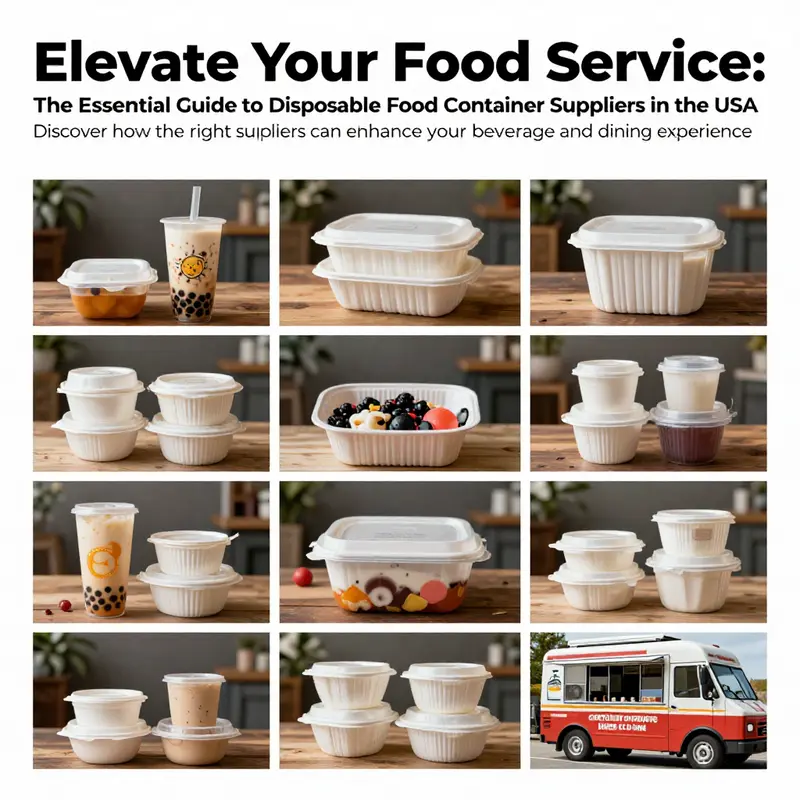
As the demand for convenient dining and packaging solutions continues to soar, businesses in the food industry are increasingly turning to disposable food container suppliers in the USA. Bubble tea shops, beverage chains, restaurants, food trucks, catering services, event planners, and corporate procurement teams require reliable sources that offer a wide range of high-quality products to meet their unique needs. This article explores essential aspects of disposable food container suppliers, detailing their product offerings, market positioning, and the custom solutions available to enhance your business’s operational flexibility and sustainability. Chapter one provides an overview of leading suppliers like Globalink International Limited, while chapter two highlights the diverse range of products perfect for food service. Finally, chapter three examines how these suppliers position themselves in the market, ensuring they cater efficiently to the dynamic food service landscape.
From Regional Hubs to Global Sourcing: Charting the USA’s Disposable Food Container Landscape
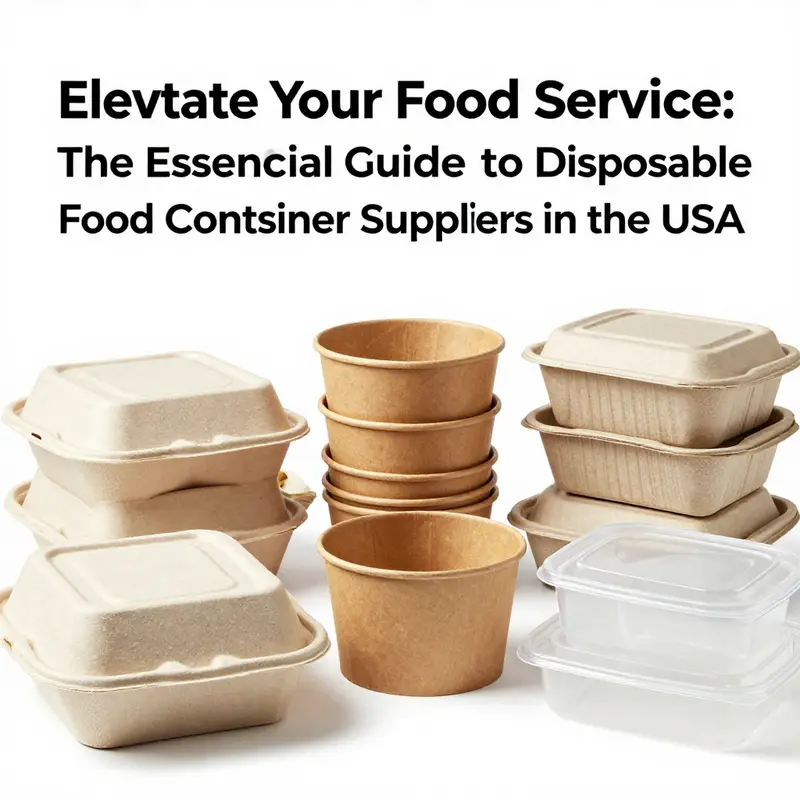
The United States presents a distinctive landscape for disposable food containers. It does not rely on a single, centralized manufacturing base in the way some other markets do. Instead, the country is stitched together by a mosaic of regional suppliers, distributors, and value-added service providers who collectively meet the needs of foodservice operators, retailers, and the growing e‑commerce platforms that demand reliable, consistent packaging. This mosaic has formed not only a supply chain but a market culture—one that rewards speed, customization, and the ability to align packaging with evolving consumer expectations around convenience, safety, and sustainability. The result is a system that can adapt quickly to local foodservice realities, such as differing regulatory environments across states, a diversity of menu formats, and the seasonal shifts in consumer demand that accompany holidays, events, and even weather patterns. Yet beneath this dynamic surface lies a balancing act: domestic production versus imported goods, traditional packaging methods versus new, eco-forward materials, and the ongoing tension between price, performance, and environmental responsibility. For many buyers, the path to securing reliable containers begins with understanding this balance and recognizing where regional strengths sit alongside global capabilities.
Market characteristics in the United States reflect both opportunity and constraint. Domestic production remains robust in areas where material efficiency and end-of-life outcomes are prioritized. Paper-based, compostable, and certain plastic packaging options are manufactured within U.S. borders, often leveraging strong local supply chains to shorten lead times and support local recycling and composting infrastructure. At the same time, the market relies heavily on imports from Asia, particularly for high-volume, standardized formats, because large-scale manufacturers in those regions achieve cost efficiencies that are difficult to replicate domestically. This import reliance serves not only price considerations but also the breadth of product availability. For operators who require a broad set of takeout and dine-out containers, the ability to source a wide range of shapes, sizes, and materials from a single supplier—whether domestic or international—becomes a competitive advantage. Yet the import dynamic also drives attention to total cost of ownership: transit times, supply chain resilience, and the environmental footprint of longer freight routes.
Another defining feature of the U.S. market is the accelerating push toward sustainability. Consumers increasingly favor packaging that is recyclable, compostable, or derived from renewable or recycled content. In practice, this tilt has spurred a growing number of producers to invest in materials and processes that minimize environmental impact, even as they work to maintain performance standards such as heat resistance, leak resistance, and stackability. Regions with stricter environmental regulations, notably in portions of the West, have become proving grounds for innovations in molded fiber and recycled paperboard, as these materials are often easier to collect, sort, and divert from landfills. This regulatory and consumer pressure is reshaping product portfolios, encouraging suppliers to offer more sustainable alternatives and to communicate the end-of-life story of their packaging in ways that help operators meet waste diversion goals and customer expectations alike. The result is a market where sustainability is no longer an accessory feature; it is a core criterion for procurement decisions and a driver of supplier differentiation.
Within this evolving landscape a handful of large, traditional players anchor the market. Names like Cascades, Georgia-Pacific, and International Paper operate extensive manufacturing networks that deliver hot and cold food containers, meal-prep boxes, and takeout packaging at scale. These companies bring not only a broad product line but also considerable logistical support, from standardized catalogues to branding and customization capabilities, to help national chains and smaller operators alike. Their scale enables predictable supply for high-volume customers, while their distribution reach reduces the complexity of multi-site procurement. For buyers seeking consistency across disparate locations, this is a meaningful advantage. Yet scale does not always translate to speed in every geography. That is where regional distributors and specialty suppliers play a crucial role, offering regional warehousing, localized service teams, and tailored solutions that address local menu formats and waste-management realities.
Even with a rich domestic base, many U.S. buyers still turn to international suppliers to satisfy certain needs. The economics of manufacturing, combined with access to advanced process technologies, mean foreign producers can often deliver a breadth of formats at competitive prices. The presence of such suppliers in the American market has helped create a dynamic where multiple sourcing strategies are common. Buyers increasingly use a blended approach: domestic partners for strategic, high-frequency items and offsetting gaps with international vendors for flexibility and volume. This approach is paired with a growing emphasis on nearshoring trends. Nearshoring promises shorter lead times, more predictable logistics, and a smaller carbon footprint, aligning with corporate sustainability goals and improving responsiveness to seasonal or promotional demand. As transportation networks evolve and regional hubs mature, more operators explore a balanced portfolio that reduces exposure to single-source risk while preserving the advantages of global scale.
Against this backdrop, the role of customization emerges as a central theme. Foodservice operators, whether they run chain restaurants, quick-service brands, or independent cafes, increasingly view packaging as an extension of their brand experience. Custom solutions—whether in branding, size customization, stacking efficiency, or the integration of labeling and merchandising elements—help operators differentiate themselves in crowded markets. The capacity to tailor packaging to specific service models, such as dine-in, takeout, and delivery, adds a layer of value beyond the container’s functional performance. Suppliers that can translate a brand’s identity into packaging through color, finish, or structure become partners in growth, not merely vendors of a commodity. In practice, this means a packaging ecosystem that favors adaptable manufacturing lines, flexible logistics, and collaborative product development. The result is a supplier landscape that rewards those who listen closely to customer needs and invest in capabilities that accommodate evolving service formats, waste streams, and consumer expectations.
In this context, the narrative of a global supplier with a significant footprint in the American market becomes relevant. An international player that exports a broad spectrum of disposable packaging can offer advantages in product range, supply consistency, and design versatility. Such a partner can bring advanced materials, diverse configurations, and refined process know-how to U.S. buyers who require reliable containment solutions across multiple foodservice channels. This dynamic underscores a broader industry truth: even as the United States cultivates domestic capabilities, the most resilient packaging strategies often rest on a well-structured blend of domestic production, regional specialization, and international collaboration. The objective is not to replace local strengths but to harmonize them into a resilient supply network that can adapt to shifting demand, evolving waste-management frameworks, and new consumer expectations about packaging provenance and end-of-life outcomes.
To connect these trends with practical sourcing decisions, consider how buyers approach the marketplace. A successful strategy today requires clarity about which materials align with the operator’s service model and sustainability goals. Paper-based and compostable options frequently sit at the forefront of environmental strategies, given their compatibility with curbside recycling and composting programs in many communities. Yet durability, heat resistance, and leak control remain non-negotiable performance criteria. In some situations, the most cost-effective choice may involve plastic options that are well-engineered for recycling streams or that incorporate recycled content. The optimal choice is rarely a single material; it is a well-considered mix that balances lifecycle impacts, user experience, and end-of-life infrastructure. Operators must also weigh the broader supply chain implications. Longer lead times from distant suppliers, the risk of disruption, and the carbon footprint of freight all shape decision-making, particularly for chains operating across hundreds of locations and across diverse regulatory jurisdictions.
A notable implication of this intricate market is the increasing value placed on supply-chain transparency. Buyers are more likely to request material disclosures, end-of-life pathways, and third-party certifications that attest to compostability or recyclability. The regulatory and consumer environment has grown more discerning, and suppliers that can provide credible, verifiable information about how their packaging behaves after use are favored. In this sense, the packaging conversation mirrors larger corporate goals around sustainability reporting and responsible sourcing. It is not merely about the material’s performance in a kitchen but about the container’s journey after it leaves the restaurant door. This shift in perspective nudges suppliers toward investments in traceability, supply-chain partnerships, and collaborative programs with recyclers and composters. It also reinforces the appeal of regional and North American supply arrangements that can shorten cycles, improve waste diversion outcomes, and reduce overall environmental impact.
Within this evolving framework, the United States continues to host and attract a spectrum of solutions that can meet the needs of diverse operators. Domestic manufacturers bring familiarity with local waste streams, regulatory compliance, and the logistical nuances of national distribution. Regional distributors enable fast response times and tailored service to local markets. International suppliers contribute breadth, access to advanced manufacturing capabilities, and the capacity to scale quickly for large or complex programs. The combined effect is a marketplace that values breadth, depth, and agility. The most successful buyers will be those who define a clear sourcing philosophy—one that recognizes where domestic strengths exist, where established international capabilities offer compelling value, and where nearshore opportunities can offer a bridge between the two. In this sense, the chapter of the U.S. disposable container market is a story of optimization: optimizing material choice for service model and waste systems, optimizing supplier networks for resilience, and optimizing collaboration between brands and packaging partners to deliver not just containers, but experiences that resonate with customers while supporting responsible waste management.
To illustrate how this ecosystem translates into real-world sourcing, it is helpful to acknowledge a composite picture of the landscape. An international supplier with a meaningful U.S. footprint can provide a broad portfolio of takeout and dine-out packaging, with options that span hot and cold usage, stackability, and branding flexibility. Such a partner can be especially valuable for operators pursuing rapid scaling or those seeking a consistent regional offering across multiple states. Yet domestic leaders bring a depth of experience in local compliance, waste infrastructure, and customer service that is equally important for achieving reliable delivery and predictable performance. In balancing these strengths, buyers often arrive at a blended strategy: relying on domestic partners for core, high-volume items and complementing them with select international suppliers to broaden the portfolio, obtain access to specialized formats, or secure favorable pricing on larger orders. The interplay of these choices reflects not just costs, but the broader choices about how a business designs its packaging program to align with its sustainability commitments, customer expectations, and logistical realities.
For readers seeking a concrete sense of the packaging categories that permeate the U.S. market, a broad sense of the disposable tableware ecosystem can be gathered by exploring the category pages maintained by packaging platforms that host a wide range of products. Such resources show how operators navigate options across materials, sizes, and usage contexts. At the same time, operators use these references as a springboard to conversations with suppliers about customization, branding, and waste-management outcomes. In this way, the packaging conversation becomes a collaboration—less about chasing the lowest price and more about designing a coherent, efficient, and sustainable program that can deliver consistent performance in kitchens and on sidewalks alike. The journey from regional networks to global sourcing is, in essence, a journey toward more deliberate, more transparent, and more adaptable packaging strategies.
As the market continues to evolve, the interplay between domestic capabilities and international supply will remain central. Companies with a broad footprint, robust customization capabilities, and strong alignment with environmental standards are well positioned to help operators navigate this complex terrain. Yet the underlying imperative remains the same: deliver packaging that protects food, supports brand experience, and integrates with waste-diversion goals. The United States market answers this call through a dynamic ecosystem that blends regional strengths, global partnerships, and a shared commitment to evolving packaging solutions. This is the landscape that operators must understand as they plan procurement, manage supply risk, and design packaging programs that can endure changing consumer preferences, regulatory environments, and the ever-present pressure to be more sustainable.
For readers who want to explore the topic with a concrete sense of product ranges and supplier capabilities, the disposable tableware category serves as a practical reference point. It represents a broad spectrum of formats and materials that are commonly negotiated in U.S. sourcing conversations. To learn more about this category in a practical context, you can explore the related collection at the linked category page, which offers a sense of how suppliers organize and present options for different service models. This resource makes visible the diversity of shapes, sizes, and containment configurations that operators consider as they build out their packaging programs.
In closing, the United States’ disposable food container supply chain is not a single, static entity but a dynamic, integrated network. It blends domestic manufacturing strengths with international capabilities, all while being shaped by sustainability goals and regulatory expectations. The most successful buyers will continue to curate a balanced, resilient portfolio that leverages the best of regional and global capabilities. They will demand transparency, support collaboration on end-of-life pathways, and ensure that packaging choices align with broader commitments to environmental stewardship and social responsibility. This is the ongoing work of building packaging programs that are not just functional but meaningful, reinforcing brand integrity while advancing a more sustainable industry standard. For those who seek to anchor strategy in practical resources, the next steps involve reviewing the available category options and considering how a carefully chosen mix of suppliers can meet diverse needs across markets, menus, and waste streams—and how a capable international partner can complement domestic strengths to deliver value at scale.
External resource for broader context: https://www.cascades.com/us/en/sustainable-packaging/food-service-packaging
null
null
Shaping the Takeout Era: Market Positioning, Sustainability, and Custom Solutions in the U.S. Disposable Food Container Market
The U.S. market for disposable food containers sits at a pivotal juncture where convenience, sustainability, and rapid delivery converge to redefine what customers expect and what suppliers must deliver. In 2023 the market was valued at roughly USD 8.5 billion, a figure that signals both scale and a highly competitive landscape. It also reveals a sector defined not only by materials and mechanics but by the subtle art of market positioning. Companies that want a foothold in the United States now must blend reliability with a forward-looking posture—one that treats packaging not as a simple vessel but as a strategic element of a brand’s promise and a variable in the customer experience. In this environment, the most successful players are those who can narrate a compelling value proposition that resonates with restaurateurs, caterers, meal-kit services, and retailers while meeting evolving regulatory and environmental expectations. This is the frame within which suppliers seek to be more than suppliers; they aim to be partners who help operators differentiate themselves and streamline operations at every touchpoint, from procurement to post-consumer outcomes.
Within this frame, the role of international suppliers becomes especially meaningful. Globalink International Limited, highlighted in the research overview, stands as a case in point: an exporter with a diversified product range designed to enter and adapt to the U.S. market. The dynamics at play here are instructive. An international supplier may bring scale, cost efficiencies, and a broad materials palate, including molded-fiber options, paperboard formats, and biodegradable plastics. Yet the real leverage comes when such a supplier pairs capability with a willingness to localize, customize, and align with U.S. standards and consumer expectations. In many instances, the most impactful players maintain production or assembly capabilities closer to the market—or at least maintain agile logistics that enable shorter lead times, robust inventory management, and rapid response to promotional windows, weathering the ebbs and flows of demand that accompany holidays, events, or shifts in consumer behavior. Globalink’s footprint in the American market thus illustrates a broader pattern: international suppliers are increasingly viewed not merely as distant manufacturers but as strategic partners who can contribute to a more resilient supply chain through customization, verification, and a shared sense of compliance.
A core driver of market positioning in the United States is sustainability. The industry has shifted from a purely functional emphasis to a more holistic view that ties packaging choices to corporate responsibility, consumer perception, and regulatory compliance. Materials such as molded-fiber and paperboard have become prominent because they offer viable pathways toward compostability and recyclability. This is not merely about adopting new materials; it is about aligning packaging strategies with regional waste management realities and regulatory frameworks. California’s SB 1383, for example, has intensified the focus on organics recycling and the reduction of landfill waste, encouraging a lifecycle approach to packaging that favors containers designed for compostability or easy recycling where facilities exist. In practice, suppliers are responding by offering compostable or recyclable options that meet or exceed regulatory requirements while preserving the integrity of food containment, heat resistance, and shelf life during transport. The net effect is a market where sustainability is not a niche feature but a baseline expectation that elevates a supplier from function to partnership. Brands are increasingly aware that the packaging choices they endorse reflect on their own corporate identities; a supplier’s ability to deliver sustainable, compliant solutions can translate into stronger tier-one relationships with food-service operators who themselves are signaling environmental stewardship to customers and investors alike.
But sustainability is not the sole axis of differentiation. Functionality remains a decisive factor in how the market positions itself in the eyes of operators who must manage high-volume throughput and complex logistics. The customization agenda now extends far beyond mere branding. It encompasses solutions tailored to what operators actually need in day-to-day operations: heat resistance for hot dishes, leak-proof designs to prevent sauce slippage during transit, and stackable geometries that optimize space in trucks and in front-of-house storage. The emphasis on functional design is complemented by an expanding repertoire of personalization options. Custom printing on containers has emerged as a powerful tool for brand reinforcement, menu merchandising, and customer recall. For meal-kit services, fast-casual restaurants, and corporate catering, branded packaging communicates quality and consistency before a single bite is taken. The ability to print logos, color schemes, and messaging directly onto containers helps operators create a seamless brand experience from online order to plate, supporting loyalty in a segment known for high churn and intense competition. In this sense, customization is not merely aesthetic; it is a strategic mechanism to elevate perceived value and to synchronize packaging with the broader business narrative.
The breadth of customization extends into product architecture as well. Suppliers are increasingly investing in formats that marry form and function with spatial efficiency. For delivery and takeout, containers that are sturdy, leak-resistant, and easy to nest or stack can dramatically reduce damage rates and return-to-kickback scenarios in kitchens and delivery hubs. For hot foods, heat retention has become a design criterion, balancing the need to keep contents warm with the practical constraints of handling and transit. And for sauces or liquids that could escape during transport, leak-proof designs have moved from nice-to-have features to essential requirements in supplier catalogs. Beyond physical performance, purchasers are looking for smart packaging capabilities that connect packaging to the digital ecosystem of a brand. QR codes printed on containers can link to digital menus, step-by-step instructions, or traceability data that shows a product’s journey from origin to plate. This blend of tangible and digital attributes enriches the value proposition of suppliers who can deliver not only containers but a package of services that helps operators manage risk, build loyalty, and optimize the customer experience.
The question of where these innovations come from also touches on the geography of supply chains. The rise of e-commerce and the proliferation of meal-prep services have underscored the importance of scalable, reliable supply chains with the capacity for rapid replenishment and flexible manufacturing. U.S.-based suppliers are responding with a mix of strategies, including localized manufacturing where feasible, lean inventory practices, and shorter lead times that reduce the vulnerability associated with long overseas lead times. Localized or near-shore production can significantly cut carbon footprints and improve responsiveness to sudden shifts in demand, whether due to a regional restaurant promotion, a weather-related disruption, or a surge in home delivery usage. The overarching narrative is that a robust U.S. market depends not solely on materials innovation or branding but on a blend of sustainability, customization, and supply-chain resilience that enables operators to meet growing expectations for reliability and ethical practice.
An additional layer shaping supplier positioning is the broader ecosystem of buyers and the resources they leverage to identify partners and verify capability. The U.S. market benefits from platforms that curate verified suppliers and provide product listings aligned with local needs. In the detailed research context, the HKTDC Sourcing platform is highlighted as a valuable resource for buyers seeking compliant, high-quality options in the domestic market. Buyers can use such platforms to assess supplier capabilities, certifications, and production footprints, building a short list of partners who can deliver both the performance and the assurances demanded by U.S. operators. This verification dynamic—coupled with a supplier’s demonstrated track record in customization, sustainability, and lean logistics—becomes a critical component of market positioning. It signals to buyers that a supplier is not merely capable of producing containers but is prepared to collaborate closely to address evolving food-service requirements.
The market’s emphasis on customization also intersects with a broader cataloging of packaging solutions available to buyers. For readers exploring the spectrum of disposable tableware and related items, a practical entry point is found in catalogs that categorize products by use case, material, and aesthetic. A concrete way to orient procurement decisions is to imagine the full lifecycle of a container, from the moment it is selected by a brand to the moment it is disposed of by the consumer. Operators want containers that reflect their values, suit their menus, and align with their logistical realities. Suppliers who can deliver a coherent package—combining sustainability, performance, and brand-aligned customization—position themselves as integral partners in a brand’s growth trajectory. In this sense, market positioning becomes less about competing on price alone and more about delivering a holistic, reliable, and scalable packaging solution that travels with a business through its stages of growth and its evolving customer expectations.
To illustrate the practical application of these dynamics, consider how an operator’s procurement team might evaluate options. They would weigh the environmental profile of materials, including how easily a container can be recycled or composted in their region, and how the packaging aligns with waste-management infrastructure. They would assess performance metrics: heat retention, leak resistance, and stackability—especially critical for delivery logistics where per-item protection and space optimization influence costs and customer satisfaction. They would also weigh branding potential, seeking partners that can offer custom printing at a scale and cost structure that fits marketing budgets. Finally, they would consider supply-chain reliability, looking for partners who can provide predictable lead times, robust inventory, and a responsive customer-service experience that reduces the administrative burden on busy kitchens and operators. In a market this large and diverse, buyers often gravitate toward suppliers who can bundle these capabilities into a single, coherent service. The most successful suppliers are those who can help operators lower total cost of ownership by reducing breakage, simplifying procurement, and enabling faster time-to-market for new menus or seasonal campaigns.
Against this backdrop, the landscape looks simultaneously crowded and opportunistic. A crowded field invites differentiation through narrative as much as through product design. A supplier that can articulate a clear sustainability roadmap, demonstrate a track record of regulatory compliance, and deliver a credible customization program is more likely to earn the trust of restaurant groups and corporate caterers that must meet rigorous brand standards and sustainability commitments. Yet opportunity remains for international players who can translate global best practices into local value. The key is not merely to export containers but to co-create solutions with American operators—solutions that respect regional waste streams, align with corporate social responsibility goals, and deliver measurable improvements in deliverability and customer perception. When these conditions align, a supplier becomes a strategic partner rather than a one-and-done vendor.
For buyers who are navigating this space, it helps to view packaging as part of a broader ecosystem—a signal, in a way, of a brand’s maturity and its operational sophistication. The packaging decisions reflect choices about sourcing, manufacturing, and end-of-life responsibility. They are intertwined with an operator’s marketing calendar, supply-chain planning, and customer engagement strategies. The real value lies in the chemistry between material science, design thinking, and logistical execution. A supplier that can merge these elements—offering eco-friendly materials, custom branding, smart packaging features, and localized fulfillment—provides a compelling reason for brands to anchor more of their packaging spend with that partner. The net effect is a more stable market where operators can scale with confidence, and suppliers can build enduring relationships grounded in shared objectives and measurable outcomes.
Within this narrative, the concept of a positive buyer-supplier relationship becomes central. It is not enough to provide a sturdy container; it is about delivering a collaborative experience where the supplier anticipates needs, mitigates risk, and supports brand-building ambitions. Packaging becomes a strategic lever for growth rather than a routine cost item. A successful supplier understands the pressures driving food-service decision-makers: margins, speed-to-market, environmental accountability, and the ability to maintain consistent quality across multiple channels. By aligning capabilities with these priorities, a supplier can help a diverse set of operators—from quick-service chains to premium takeout concepts and large-scale corporate catering—achieve their goals while enabling a smoother, more sustainable path to the future of food service.
As buyers and suppliers continue to navigate this evolving landscape, the practice of sourcing becomes as much about collaboration as about catalog performance. The sourcing ecosystem, including platforms that verify suppliers and provide transparent listings, plays a crucial role in accelerating informed decisions. For buyers, the objective is to identify partners who can deliver on three pillars: sustainability aligned with regulatory expectations, customization capable of reinforcing brand and improving customer experience, and supply-chain resilience that underpins reliable service across peak seasons and expanding delivery formats. The chapter’s exploration of market positioning and customization in the U.S. disposable food container market thus reveals not only what makes a container viable, but what makes a packaging partner essential in a modern food-service operation. When these elements converge, the packaging supply chain contributes to a stronger, more sustainable, and more engaging takeout economy that serves consumers, restaurants, and brands with equal rigor and care.
If you are exploring supplier options and want to see a broad catalog of category opportunities, consider exploring the disposable dinnerware and tableware collection that highlights the breadth of packaging choices available to U.S. buyers. This kind of resource helps procurement teams map needs to capabilities and connect with suppliers who can deliver on both form and function, as well as on brand storytelling through packaging that speaks to customers before they even take a bite. In the larger arc of the market, the convergence of sustainability, customization, and supply-chain agility is not a trend but a structural shift that will continue to redefine how disposable food containers are valued, sourced, and integrated into a brand’s operational playbook. In this evolving context, the most resilient suppliers are those that can translate environmental stewardship into tangible operational benefits, while providing the flexibility to adapt to the diverse and dynamic needs of U.S. food service. The result is a market where packaging becomes a platform for growth, a signal of responsibility, and a collaborator in the shared mission to delight customers with convenience and care.
For further reading and verified supplier information tailored to the U.S. market, the following platform can be a helpful starting point: a reputable Sourcing platform that curates qualified manufacturers and distributors for disposable packaging and related categories. Additionally, for readers seeking deeper material insights and regulatory considerations, the broader ecosystem of packaging literature and standards offers valuable guidance on sustainability metrics, end-of-life pathways, and design-in-for-disassembly considerations that can inform both supplier development and buyer decision-making. The conversation around market positioning and customization in the U.S. disposable food container sector is ongoing, and it is anchored in a shared objective: to enable safe, sustainable, and satisfying dining experiences in a world that increasingly expects packaging to perform with purpose.
External resource: https://www.hktdc.com/sourcing/food-packaging/disposable-food-containers.htm
Internal reference: For a sense of the tools and catalogs buyers use in practice, explore the disposable dinnerware and tableware category here: disposable dinnerware and tableware.
Final thoughts
Understanding the landscape of disposable food container suppliers in the USA reveals a wealth of opportunities for businesses in the food service sector. From bubble tea shops to event planners, having a reliable partner can enhance operational efficiency and customer satisfaction. By exploring options like Globalink International, you can leverage innovative products tailored to your unique needs while contributing to sustainability. Ultimately, aligning your food service requirements with the right disposable packaging solutions can lead to significant benefits for both your business and your customers.