
As a beverage chain or food service provider, ensuring the safety and quality of your packaging materials is paramount. One prevailing concern in the industry pertains to the presence of dioxins in plastic food containers. This article clarifies the misconceptions surrounding dioxins, explores their environmental and health implications, and emphasizes the importance of proper container use. Each chapter will address specific aspects of dioxins, from their analysis and environmental impact to safety regulations and health concerns, equipping professionals to make informed decisions.
Myth, Method, and the Food Chain: Dioxins, Plastic Containers, and the Safeguards We Trust
Routinely handling a meal stored in a plastic container invites a quiet question: could dioxins ride along and contaminate the food we eat? The simplest, most confident answer supported by current science is surprisingly straightforward: plastic food containers do not contain dioxins, and under normal use they do not release dioxins. This clarity rests on two pillars: understanding what dioxins are and recognizing what plastics are designed to do. Dioxins are a broad class of environmental pollutants formed mainly through waste incineration and certain industrial processes that involve combustion with chlorine-containing materials. They are not chemical substances intentionally used in the manufacture of plastics. That basic distinction matters because it separates the source of the pollutant from the material that holds our meals. When we consider the safety of containers, the relevant question is not whether the plastic contains dioxins by design, but whether the material can introduce dioxins into food during everyday use. In this light, authoritative statements, including those from regulatory bodies, have been clear: under normal handling and storage conditions, plastic food containers do not release dioxins, and they do not contain dioxins themselves. The practical implication is reassuring: the everyday act of storing or transporting food in commercially produced plastic containers does not introduce dioxin risks through the packaging material itself.
Yet safety science also distinguishes between what happens inside the home and what happens in the broader environment. Dioxins can enter the food chain through environmental contamination that concentrates in animal fat tissue. Meats, dairy products, and seafood are typically cited as primary dietary sources of dioxins and related compounds, including dioxin-like PCBs. These pathways are environmental and biological, not culinary in the sense of cooking glare or container interactions. Put simply: the primary route by which dioxins reach our plates is not the container in our kitchen but the soils, waters, and ecological webs that shape the foods we consume. This distinction matters because it reframes risk communication from a packaging-centric concern to a systems perspective that recognizes both consumer behavior and environmental stewardship.
Nevertheless, the story does not stop at what happens inside a kitchen. The life cycle of plastic waste, particularly disposal and end-of-life handling, introduces a different dimension of risk that is easy to overlook in day-to-day consumer guidance. A significant source of dioxin emissions stems from the incineration of plastic waste, especially polymers that contain chlorine. A contemporary bibliometric analysis highlights that burning chlorine-containing plastics, such as polyvinyl chloride, can lead to measurable dioxin emissions into air, soil, and water. The environmental fate of these pollutants means they can eventually re-enter the food chain via environmental media and bioaccumulate in wildlife, potentially affecting dietary exposure indirectly. In this sense, the concern shifts from the container itself to how society manages its plastic waste. Proper waste management, rather than changes in consumer use of food containers, becomes a key safeguard against environmental dioxin contamination.
To understand the confidence around the container itself, it helps to explore how scientists detect dioxins and certify that packaging materials remain free from these compounds. The analytical workhorse for dioxin monitoring is Gas Chromatography coupled with High-Resolution Mass Spectrometry (GC-HRMS). This technique offers the sensitivity and specificity needed to quantify trace levels of dioxins, including the dioxin-like compounds that are often measured in environmental and food samples. For routine analyses, GC-MS remains a workhorse as well, frequently applied in conjunction with solvent-based extraction and cleanup procedures to concentrate dioxins before measurement. The precision of these methods underpins regulatory assessments and supports ongoing assurance that food-contact materials meet stringent safety benchmarks. In the lab, the same methods that monitor environmental samples are used to verify that packaging materials do not contribute to the dioxin burden in our foods. This coherence between laboratory capability and regulatory expectation reinforces confidence in the safety of modern food packaging when used as intended.
Specific investigations into container materials have also reinforced the absence of dioxin concerns in typical consumer applications. A Hong Kong Food Safety Centre study from 2009 evaluated materials used in ready-to-eat cup noodle containers, including polyethylene-coated paper, expanded polystyrene, and polypropylene. The study’s primary focus was migration—the degree to which substances could migrate from packaging into food—rather than the presence of dioxins per se. The researchers emphasized monitoring total migration as a measure of material safety and did not identify issues related to dioxins in these materials. While this study did not catalog every possible chemical, its emphasis on migration as a safety indicator aligns with broader consumer protection logic: as long as migration remains controlled within established limits, the packaging is considered safe for its intended use. The broader takeaway is consistent with the core message about dioxins: when packaging materials are used as designed, and when disposal practices reduce environmental releases, the direct risk from dioxins in containers remains negligible.
From a practical standpoint, the safety conversation around plastic containers also intersects with the realities of heat and time. The initial research overview notes that, even in the absence of dioxins, certain plastics can leach other chemicals under high-temperature conditions. Substances such as Bisphenol A (BPA) and various phthalates have raised concerns in consumer debates about microwave heating or prolonged contact with hot foods. The takeaway is not to shrink plastic’s usefulness but to recognize the layered safety considerations: follow manufacturer guidance, avoid microwaving containers that are not labeled for such use, and avoid long, extreme temperature exposures that could promote the transfer of non-dioxin contaminants. This precautionary posture mirrors a broader public health ethic: use the right tool for the right job, keep within recommended temperature ranges, and remain mindful of the cumulative effects of repeated exposure to various compounds across a lifetime.
What does this mean for how we think about plastic packaging in a broader ecosystem of food safety and environmental health? First, it reinforces a simple but important message: plastics do not inherently carry dioxins and do not release them under everyday household use. Second, it foregrounds the environmental responsibility of how we dispose of plastics. If incineration is part of waste management, the dioxin burden may rise in the environment, despite the absence of this hazard in the packaging itself. Third, it aligns with the regulatory posture that food-contact materials are rigorously evaluated, with sophisticated analytical tools ensuring safety for consumers. The U.S. Food and Drug Administration’s guidance on plastics and food contact materials underlines these principles, emphasizing that safety assessments consider both the material’s composition and its behavior under expected usage conditions. For readers who want to explore the broader landscape of packaging materials, the plastic-packaging category offers a wide range of forms and uses, illustrating how material choices—from paper-coated films to molded plastics—are designed to balance function, safety, and environmental considerations. plastic-packaging
In the end, the clarity about dioxins and plastic containers helps redirect attention to what matters most for daily life and policy: use packaging as intended, minimize exposure to non-dioxin contaminants during heating, and advocate for responsible waste management that prevents environmental dioxin emissions. This integrated view respects the science that underpins safety claims while acknowledging the environmental complexities that influence long-term exposure. It also preserves the practical trust that most households place in their containers, a trust earned through a combination of robust testing, clear labeling, and ongoing surveillance of both food-contact materials and waste streams. As the next chapters will explore, the challenge is not to demonize packaging but to optimize the systems surrounding it—manufacturing, labeling, and disposal—in ways that protect both human health and ecological integrity.
External resource: https://www.fda.gov/food/food-contact-materials-industries/plastics-and-food-contact-materials
From Emissions to Everyday Use: Dioxins, Plastic Waste, and the Safe Reality of Food Containers
Dioxins occupy a troubling place in public discourse because they embody both stealth and severity. They are not a single chemical but a family of highly toxic compounds that can persist in the environment for decades. When people think of plastic food containers, the immediate concern should not be a mythical reservoir of dioxins inside the plastics themselves but the broader chains that connect production, disposal, and environmental contamination. In this chapter, we trace that path with care, clarifying what is known about dioxins, how they reach our food, and what this means for the everyday use of plastic containers. The aim is not to induce fear but to empower informed choices grounded in science and guided by responsible waste management. We begin by disentangling the container from the contamination context and then move outward to the ecosystems and food webs that shape human exposure in the real world. Along the way, we consider how packaging and waste practices intersect with environmental health, and we connect this to practical guidance for consumers who want to minimize risk without compromising convenience.
First, it is essential to state a foundational fact with clarity. Plastic food containers do not inherently contain dioxins, nor do they continuously release them under normal use. Dioxins are a class of environmental pollutants that arise mainly as unintentional byproducts of industrial processes, including waste incineration and certain chemical reactions. They are not components deliberately added to plastics during standard manufacturing. This distinction matters because it redirects attention from a supposed intrinsic property of containers to the actual pathways by which dioxins enter the human food chain. When professionals assess risk, they separate product composition from external contamination sources, recognizing that a container’s safety profile rests on how it is used, cleaned, heated, and discarded rather than on the presence of dioxins in the plastic itself. The authoritative stance, supported by regulatory agencies, emphasizes safe use practices rather than alarming assumptions about inherent dioxin content. This clarity helps consumers distinguish between a product’s safe usage envelope and the environmental realities that influence dioxin presence in the broader landscape.
To understand why this distinction matters, we must look at how dioxins move through ecosystems and eventually into human diets. Dioxins are persistent; they resist breakdown and can accumulate as they travel up the food chain. Their most consequential route into people does not run through the packaging but through environmental contamination that settles on soil, water, and vegetation, and then into animal tissues. In practical terms, the biggest dietary sources of dioxins are animal fats found in meats, dairy products, and certain seafood. Once these compounds are present in the environment, animals can accumulate them and concentrate them in fat tissue, which we then consume. The story is not about a direct transfer from a plastic container into a meal; it is about a complex, long-range contamination pathway that begins with industrial emissions, not with consumer packaging. The distinction clarifies that while dioxins can enter the diet, the plastic containers in ordinary use are not the source of this particular risk. This understanding aligns with assessments from health and food-safety authorities that emphasize environmental exposure pathways and dietary choices as the principal routes of dioxin intake.
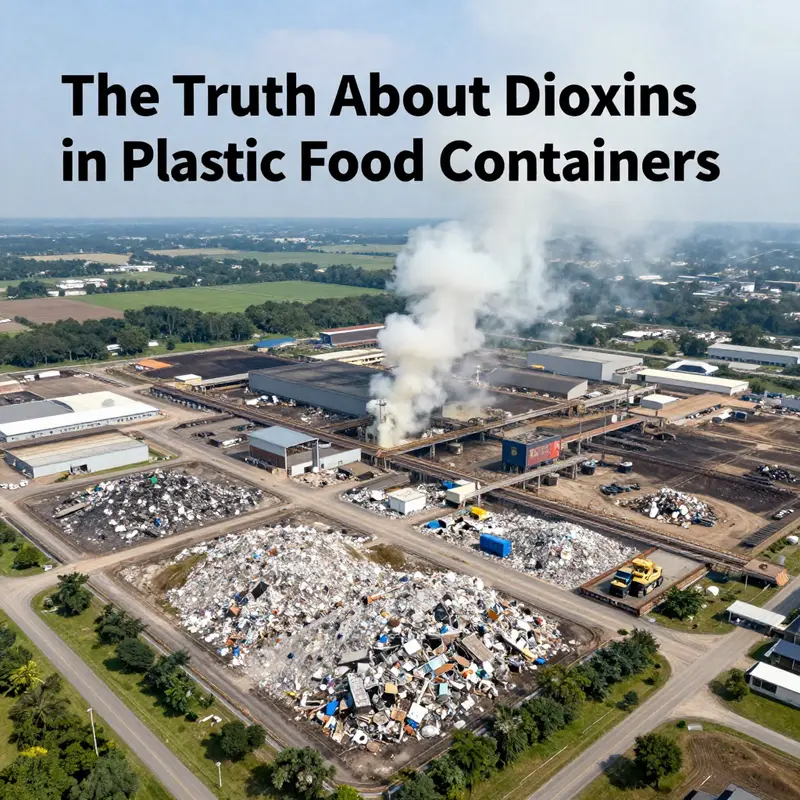
That environmental emphasis brings us to the separate yet related concern of how plastics contribute to dioxin emissions in the waste stream. It is true that the burning of plastic waste, especially chlorinated plastics such as PVC, can generate dioxins if combustion is uncontrolled or conducted at low temperatures. In communities with inadequate waste-management infrastructure, open burning of plastics can release significant quantities of dioxins into air, soil, and water, where they may deposit on farmland and enter the food chain through crops and grazing animals. This is the critical link between plastic waste management and environmental dioxin pollution. It does not imply that the plastic containers themselves are a source of dioxins when used as intended, but it highlights the responsibility we bear in how we dispose of plastics and manage waste streams. Proper disposal practices, high-temperature, well-controlled incineration, and advanced recycling methods all reduce the potential for dioxin formation during waste processing. In short, the dioxin concern tied to plastics lies primarily in how plastics are burned and managed after disposal, not in the composition of the containers that arrive at kitchens for everyday use.
From a consumer safety perspective, the practical takeaway centers on how we use plastic containers in daily life. While the dioxin narrative focuses on environmental emissions, another family of chemical concerns—bisphenol A and phthalates—has surfaced with different risk profiles linked to heating and prolonged storage. It remains prudent to avoid heating plastics in microwaves and to avoid prolonged freezing when container materials are not designed for those conditions. The core guidance places emphasis on using containers within their intended temperature ranges, avoiding repeated heating cycles that can promote leaching of certain additives, and selecting products that are labeled as suitable for the intended use. In this context, the safety message is twofold: stay within product-specified use conditions to minimize leaching of non-dioxin contaminants, and participate in responsible waste-management practices to minimize environmental emissions that can contribute to dioxin formation in the broader environment. The consumer’s role, thus, integrates everyday use with a larger stewardship framework that protects ecosystems and reduces exposure opportunities in the long term.
One practical thread that connects production, use, and disposal is the emphasis on reducing the environmental footprint of plastics, particularly the chlorinated varieties that pose higher risks during waste burning. Reducing the reliance on chlorinated plastics lowers the potential for dioxin formation if disposal becomes problematic. It also invites innovations in packaging design, recycling technologies, and municipal waste strategies. Packaging systems can be optimized to minimize environmental impact without sacrificing functionality. For instance, shifting toward nonchlorinated alternatives, improving separation and collection schemes, and supporting high-temperature, controlled combustion processes can collectively curtail the generation and spread of dioxins in the environment. This is where the broader conversation about packaging intersects with waste policy: design choices, end-of-life handling, and community-scale infrastructure all shape the risk landscape. The practical implication for individuals is straightforward—support systems and products that prioritize responsible materials and end-of-life management while continuing to use containers as intended for safe, everyday meals. The packaging sector, viewed through this lens, becomes part of a larger, systemic effort to reduce environmental contamination rather than a single culprit in a supposed dioxin threat.
In considering the long arc of dioxin pollution, it helps to recognize the resilience and reach of these compounds. Dioxins can travel long distances through air and water, crossing continental boundaries and depositing in remote regions. This reality underscores why improvements in waste management are not merely local concerns but global ones. It also explains why the Arctic and other far-flung ecosystems are not immune to the effects of industrial emissions from distant sources. Effective mitigation, therefore, requires coordinated action across sectors: reducing the production and burning of chlorine-rich plastics, investing in advanced incineration technologies, expanding safe and sustainable recycling, and strengthening environmental monitoring. Each of these elements contributes to lowering ambient dioxin levels, which in turn reduces the indirect pathway into the food chain that originates with environmental contamination rather than with consumer packaging. The takeaway remains clear: the presence of dioxins in the environment is a consequence of industrial processes and waste management practices, not a characteristic of the plastics used to store food.
As we reflect on the practical implications for daily life, the broader lesson becomes a call for informed action. Consumers should recognize that plastic containers, when used as intended, are not reservoirs of dioxins. The safety emphasis should instead be on avoiding improper disposal that could contribute to dioxin formation during burning of waste, supporting robust waste-management systems, and choosing packaging that aligns with environmentally responsible practices. In the dialogue between science and daily living, this translates into a dual responsibility: care in how we heat and store food in plastic containers and accountability for how we handle plastic waste after use. The discussion is not about demonizing plastics but about strengthening the systems that prevent dioxin formation in the first place and ensuring that environmental pathways are minimized. To connect these ideas to broader packaging contexts, consider how packaging design and disposal practices influence environmental outcomes; for instance, public-facing packaging categories and sustainable waste streams are part of a wider ecosystem of plastics that extends beyond the kitchen. For readers seeking to explore packaging options more deeply within this broader framework, a related resource on plastic packaging platforms can provide additional context and practical examples: plastic packaging.
Finally, for readers who want to dig into the scientific literature that underpins the relationship between plastic waste and dioxin emissions, a thorough scientometric analysis offers a comprehensive synthesis of recent findings. This body of work highlights how the combustion of plastic waste, particularly chlorinated varieties, contributes to dioxin emissions under certain conditions and how policy and technology can mitigate these effects. While this research does not implicate standard plastic food containers in releasing dioxins during ordinary use, it reinforces the importance of sound waste-management practices and informed policy decisions. For a deeper, peer-reviewed examination, see the external resource that consolidates current understanding of dioxins and plastic waste: https://www.mdpi.com/2071-1052/15/24/10692
Dioxins, Packaging, and Safety: How EU Rules Shape the Use of Plastic Food Containers
When people think about plastic food containers, a worry often surfaces about dioxins. The narrative that dioxins might migrate from packaging into food has been reinforced in public discourse by various sources, but the scientific and regulatory picture is more precise. Dioxins are not substances intentionally added to plastics. They are a class of highly toxic environmental pollutants that originate mainly from waste incineration and incomplete combustion in industry. Plastics themselves do not inherently contain dioxins. Consequently, under normal use, plastic containers do not release dioxins into food. The focus of safety assessments, therefore, centers on the possibility of trace contaminants, migration pathways, and the broader environmental context in which dioxins occur in the food chain. This distinction matters because it redirects attention from a hypothetical packaging risk to the real, well-documented routes of exposure that influence public health decisions and regulatory approaches. In that sense, the safety conversation around plastic food containers is less about a direct dioxin hazard from the container and more about ensuring that what touches food is manufactured and managed with rigorous standards that keep any risk at or below regulated limits.
The regulatory framework in the European Union reflects this understanding with a layered, science-based approach. The EFSA has long described dioxins as substances of concern precisely because they accumulate in animal fats and pass up the food chain. They are not added to plastic resins or packaging formulations, yet trace amounts can appear in raw materials or form under unusual processing conditions. The crucial implication for consumers is not a fear of dioxins leaching from a container during everyday use, but rather confidence that the entire system—the materials, the manufacturing processes, and the packaging’s interactions with food—undergoes stringent evaluation for safety. The EU translates this confidence into concrete limits, monitoring, and enforcement that align with the precautionary principle while maintaining practical use in households and food service. A centerpiece of this regulatory stance is the Tolerable Weekly Intake, or TWI, for dioxins and dioxin-like compounds. The most recent EFSA opinion, issued in 2023, sets the TWI at 1.0 picograms per kilogram of body weight per week. This figure encapsulates a risk assessment approach that considers long-term exposure through diet and the cumulative impact of small, ongoing intakes from diverse food sources. It does not single out packaging as the primary exposure route; rather it recognizes that meats, dairy products, and seafood can contribute to dioxin levels in the diet through fat. The implication for plastic packaging is indirect: packaging must not add to the total burden and must comply with migration limits that protect food quality and safety.
The legal backbone that governs plastic food containers in the EU rests on Regulation EC No 1935/2004, which establishes general safety requirements for all materials and articles intended to come into contact with food. This framework demands that packaging must not transfer constituents to food in quantities that could endanger health, alter the composition of the food, cause sensory changes, or diminish food quality. Specific Migration Limits, defined in Regulation No 10/2011 and subsequent updates, set expectations for a range of substances that could migrate from packaging into food. These rules are complemented by Good Manufacturing Practices and the principle of food-grade certification for materials intended for contact with consumables. In practice, this means a multi-tiered approach to safety that covers raw material selection, processing controls, and post-production testing, including migration testing that simulates real-world use. The aim is to ensure that what touches food remains within established safety margins and does not accumulate in the consumer’s diet through packaging leakage.
To translate regulatory intent into everyday certainty, manufacturers bear clear responsibilities. They must select approved raw materials and adhere to GMP, ensuring that all plastics used for food contact meet food-grade standards. They should implement rigorous testing protocols to demonstrate that their products do not release harmful substances or alter food characteristics. The migration testing regime evaluates how much, if any, a substance can transfer from the container into a model food simulant under defined conditions, such as various temperatures and durations. This testing is not about a single hazard but about a composite profile of potential migrants, including any dioxin-related precursors that could exist in trace amounts in raw inputs. The overall objective is to minimize any risk while supporting practical use in homes and kitchens. It is important to reiterate that dioxins are not part of the intentional formulation of plastic packaging; they are environmental contaminants whose presence is mitigated by strict control of materials, processing conditions, and end-use safety checks.
With that regulatory scaffolding, consumers can navigate the topic with greater clarity. The main takeaway is not that dioxins are a direct outcome of using plastic containers, but that following proper usage guidelines helps prevent other risks associated with plastics. For example, heating plastics at high temperatures can cause migration of certain additives, such as Bisphenol A or phthalates, depending on the polymer and the product’s design. These substances may pose different health concerns than dioxins, and the safe use guidance often emphasizes avoiding microwave heating of non-microwave-safe containers and refraining from prolonged freezing of foods in containers not designed for long-term cold storage. This nuance is critical: it shifts attention from a presumed, direct dioxin problem to practical, verifiable use conditions that minimize any overall chemical exposure from packaging. In this sense, consumer protection hinges on correct use, rigorous testing, and transparent labeling that helps people choose appropriate containers for different culinary tasks.
The regulatory conversation about plastic packaging also intersects with how individuals access information about safety. The EU’s approach to dioxins and related contaminants is part of a broader system of risk communication that aims to provide clear, evidence-based guidance. The emphasis is on long-term safety over sensational claims, paired with robust oversight of materials, processes, and the migration potential of various substances. For readers who want to explore the regulatory landscape with a concrete lens on packaging options, it can be illuminating to consult the broader packaging category where materials science meets consumer use. This resource offers insights into how packaging choices are developed and evaluated for compatibility with food. In context, the concept of package safety extends beyond a single chemical of concern to a holistic assessment of how packaging interacts with food during normal use, how it influences sensory properties, and how it stands up to the testing standards that regulators require. This is where the idea of a safe boundary becomes practical: a system that seeks to prevent any significant migration while enabling the everyday convenience of plastic containers in homes and professional kitchens alike. The result is a regulatory environment that is rigorous yet navigable, protecting public health without stifling the benefits that well-designed packaging provides.
For readers who wish to connect these regulatory insights to the real world of packaging choices, consider exploring the broader packaging landscape to understand how materials are selected and tested. The plastic packaging category on a packaging-focused site offers a window into the materials science and regulatory considerations that shape what is permitted for food contact. The page provides context for how factors such as polymer type, additives, and manufacturing practices influence safety outcomes, and it helps demystify the process by which a container earns its status as a food contact material. This helps bridge the gap between policy and practice, showing how EU rules translate into tangible products that people rely on daily. As part of this bridging, it is helpful to remember that dioxins themselves are not intentionally present in plastics, and the regulatory system is designed to minimize any possible contribution from packaging to the overall dietary burden. The consumer benefit emerges when people use containers correctly and rely on products that have undergone migration testing and certification.
From a policy perspective, the migratory framework has an important, ongoing role. It ensures that ongoing industry innovations continue to meet safety expectations without compromising food quality or taste. Although dioxins are not core components of plastic resins, the focus on trace contaminants ensures vigilance across inputs and processes. This vigilance is essential because dioxins can enter the food chain through environmental pathways that are outside the packaging domain altogether. Thus, the regulation serves as a reminder that protecting food safety requires attention to both the packaging system and the broader ecological context. Consumers benefit from this dual focus, receiving protections anchored in science while maintaining access to convenient, safe packaging that supports modern eating habits.
For readers seeking the deepest official assurance, the EU’s legal texts and EFSA’s assessments provide a comprehensive reference. The regulatory framework and scientific evaluations reinforce a shared objective: to keep dioxin exposure within safe limits while ensuring that packaging for food remains practical, non-reactive, and compliant. This balanced approach minimizes unnecessary alarm and directs attention to responsible use and robust industry standards. In the end, the core message is straightforward. Plastic containers do not inherently contain dioxins, and they do not release dioxins under normal use. The safety of plastic food contact materials rests on thorough material selection, rigorous testing, and adherence to migration limits that are codified in EU law. By focusing on these principles, consumers can confidently use plastic containers for everyday meals, knowing that the regulatory system is designed to prevent harmful substances from entering food via packaging. For those who want to dive deeper into the regulatory and scientific details, EFSA’s Dioxins information provides authoritative guidance that contextualizes the broader risk landscape.
External resource: For authoritative details on the scientific assessment and regulatory context, see EFSA Dioxins Information at https://www.efsa.europa.eu/en/chemicals/dioxins. For additional context on packaging safety and materials, you can explore related categories in the packaging domain, including the plastic packaging section that focuses on materials intended for food contact.
Internal link reference: plastic packaging
External resource end note: EFSA Dioxins Information
Dioxin Origins and Plastic Packaging: Unraveling Misconceptions and the Pathways of Contamination
Dioxin is a term that often triggers alarms in kitchens and classrooms alike, not because it sits clearly on the surface of a plastic container, but because it inhabits a broader environmental narrative. The question of whether dioxins lurk in plastic food containers invites a careful examination of where these substances come from, how they move through ecosystems, and how everyday use of packaging intersects with health risk. In the public imagination, plastics and dioxins seem tangled in a single toxic web; in reality, the scientific picture is more nuanced. Dioxins are not a component of standard plastics used to manufacture food contact containers. They are a class of highly persistent, toxic environmental pollutants that arise as byproducts of certain industrial processes, most notably waste incineration and high-temperature combustion. This distinction matters because it shifts the focus from consumer use to the handling of waste and the integrity of industrial emissions. When people see a plastic container, they are not looking at a dioxin source; they are looking at a material designed to be a barrier, a vehicle for safe transport of foods and beverages, and, ideally, a conduit for staying fresh and uncontaminated through everyday life. Yet the story does not end with a simple denial; it requires unpacking the scientific context that explains how dioxins move through the environment and how food systems become reservoirs for other pollutants that share the stage with dioxins in public discourse.
To begin with, it is essential to understand the origin and behavior of dioxins in the environment. Dioxins are produced in small amounts whenever chlorine-containing materials burn in uncontrolled or inefficient ways. They are not intentionally manufactured as a product ingredient but appear as unintended byproducts of processes that involve high heat and chlorine chemistry. This makes the pathways of dioxin exposure largely environmental and industrial rather than culinary. The typical routes through which dioxins enter human bodies are through the diet and through environmental contamination that accumulates in animal fat. Meats, dairy products, and some seafood products have been identified as primary dietary sources, particularly because lipophilic dioxins accumulate in fat tissue. In these contexts, dioxins and similar persistent organic pollutants (POPs) can be present in traces that accumulate over time in the food chain. It is this ecological and metabolic context that often fuels concerns about what we eat and how packaging might influence what ends up on our plates.
If one keeps the focus on consumer safety, the most direct and robust line of evidence shows that the plastic containers themselves, when used under standard conditions, do not release dioxins. This point emerges from regulatory and scientific review of plastics used for food contact. Manufacturing practices for food-contact plastics are designed to minimize the migration of chemicals into foods, and dioxins are not a typical or intended constituent of these materials. The regulatory framework around plastics in contact with food emphasizes migration limits that target solvents, plasticizers, and additives more directly associated with health concerns in the kitchen, such as bisphenol A and various phthalates. The complexity of dioxin chemistry and the specific formation conditions required for dioxins make it unlikely for ordinary consumer-use plastics to generate dioxins without extraordinary and inappropriate circumstances, such as improper disposal or open burning of waste containing chlorine-containing plastics. In short, the dispassionate technical assessment underpins a clear conclusion: normal use of modern plastic food containers does not create a dioxin exposure scenario for the consumer.
This understanding does not absolve all caution around plastics. It does, however, reframe the risk landscape. For example, if plastic materials are exposed to high heat in ways not intended for them, other chemical migrations can occur. Substances such as bisphenol A or certain phthalates can migrate, particularly at elevated temperatures or in poorly controlled conditions. These substances represent a different spectrum of risk, tied to chemical migration from the resin matrix or additives. The precautionary guidance that follows is consistent with existing health and safety standards: avoid heating plastics not designed for high-temperature use in microwaves, and avoid prolonged freezing or heating cycles that can alter the plastic matrix. The practical advice is not a fear-driven suspension of plastic use but a calibrated approach to usage that minimizes any potential migration of substances that are a concern in themselves, independent of dioxins. This distinction is essential for clear public communication and for informed decision-making in households and institutions alike.
Another layer of the conversation concerns disposal and waste management. The risk that dioxins pose through plastics arises not from the everyday consumer use of sealed containers but rather from the improper handling of waste streams containing chlorine-rich plastics. When such materials are burned in uncontrolled settings or inefficient facilities, high-temperature combustion can generate dioxins as byproducts. This reality places responsibility on waste management systems and emissions controls rather than on the containers at the moment of use. It also highlights a broader environmental governance point: reducing dioxin formation is most effectively achieved by tightening emissions controls, improving incineration technologies, and ensuring that waste streams are segregated and treated appropriately. In daily life, the takeaway is straightforward—dispose of plastics according to local guidelines, avoid open burning, and engage with recycling streams designed to handle plastics safely. The consumer’s role, then, is to support systems that minimize environmental emissions, rather than to scrutinize the containers themselves for dioxins.
With these scientific threads in view, the everyday consumer guidance becomes practical and accessible. For everyday use, the core message is to select plastics that meet recognized safety standards for food contact and to avoid high-temperature exposure unless the product is explicitly labeled as microwave-safe or heat-tolerant. In practical terms, this means choosing containers that carry reliable labeling and using alternative materials, such as glass or ceramic, for heating in microwaves or for hot storage. It also means inspecting containers for wear and tear; once a container is scratched, warped, or damaged, migration of additives becomes more plausible. While dioxins are not the target of these concerns, migration of other chemicals can affect flavor, odor, or perceived safety. The emphasis, then, shifts from fear of a single substance to a balanced approach that honors safety, fit for purpose, and responsible disposal.
The discourse around dioxins and plastics also benefits from a clear delineation of sources and misperceptions. Public health communications across international health authorities consistently emphasize that dioxins are primarily generated by industrial activities and residual environmental contamination, not by the material composition of standard food-contact plastics. This distinction can help reduce unnecessary alarm about everyday packaging while sharpening focus on the industrial emissions and waste practices that truly drive dioxin exposure in human populations. In this sense, the conversation aligns with a broader framework that frames food safety around controlled migration of chemical substances, rigorous manufacturing standards, and responsible end-of-life management. The consumer becomes a partner in a chain of responsibility that extends beyond the kitchen, linking household choices to manufacturing practices and waste stewardship.
In weaving together science and daily practice, one can see how the truth about dioxins in plastic containers fits within a larger narrative about environmental health. The picture is not an indictment of plastics or a blanket warning against every plastic product. It is a nuanced account that respects the facts: dioxins are not inherent to plastics used for food, they arise mainly from certain industrial combustion processes, and any risk to food safety from plastics in normal home use is more plausibly connected to other chemicals that can migrate under heat. For readers who want to explore the broader landscape of packaging materials and their role in food safety, a representative category of packaging products provides a window into how materials are selected, tested, and qualified for contact with food. In particular, a closer look at the plastic packaging category reveals the emphasis on barrier properties, chemical stability, and migration controls that shape how these containers perform in real-world use. This is not a marketing flourish but a regulatory and scientific baseline that supports safe food storage and handling practices. Plastic packaging serves as a concrete example of how the field integrates material science with public health principles, guiding choices that balance convenience, safety, and environmental considerations.
Ultimately, the conversation about dioxin sources and plastic food containers circles back to the evidence that underpins policy and practice. The dialogue between environmental science and consumer safety asks not only what is inside a container but how the broader cycle of production, use, and disposal shapes exposure risk. It reminds us that the most effective safeguards lie in clean industrial emissions, sound waste management, and prudent use of plastics in accordance with labeling and safety standards. The public message remains consistent and reassuring: for ordinary use, plastic food containers do not release dioxins, and they do not contain dioxins. The practical focus should be on sticking to recommended uses, avoiding unnecessary high-heat exposure, and supporting systems that minimize environmental emissions. When those elements align, the health risk linked to dioxins in the context of plastic packaging becomes a question of environmental stewardship rather than consumer anxiety.
External resource: For a comprehensive overview of dioxins in the environment and to understand how authorities interpret exposure pathways and health risks, see the World Health Organization’s fact sheet on dioxins in the environment: https://www.who.int/news-room/fact-sheets/detail/dioxins-in-the-environment
Debunking Dioxins in Plastic Containers: Where Real Risks Lie in Everyday Packaging
Questions about dioxins and plastic food containers surface frequently in discussions about safe eating, labels, and what we should trust when we stock our kitchens. The quick, reassuring answer that often comes from health authorities is simple and important: plastic food containers do not inherently contain dioxins, and they do not release dioxins under normal use. This clarity rests on a broad scientific understanding. Dioxins are not added to plastics as a material component. They are environmental pollutants that emerge mainly as unintentional byproducts of certain waste disposal practices and high-temperature industrial processes. When plastics are burned or burned waste is mishandled, traces of dioxins can form, but these are not part of the plastic itself. Thus, the risk from dioxins in the context of everyday packaging is not about whether a container is made of plastic; it is about how the container is used and how the broader environment may introduce unexpected contaminants. The core takeaway for the consumer is that the container’s dioxin content is not a meaningful hazard under ordinary conditions of storage and handling. The primary sources of concern regarding dioxins in the diet come from environmental contamination that accumulates in animal fat. Dioxins and related dioxin-like compounds travel through the food chain and are found in higher concentrations in meats, dairy foods, and certain seafood. These pathways are environmental in origin and dietary in exposure, not a consequence of the packaging that holds the food. The material in a typical household container does not contribute dioxins to food in measurable quantities at typical temperatures and times. This distinction is crucial, because it helps shift the focus of consumer safety from an unfounded fear about packaging to a more accurate attention to how the food might become contaminated in the broader environment or how temperature and storage conditions can alter what migrates from packaging into food. It is worth noting that major health authorities emphasize that plastics used in contact with food are subject to ongoing safety assessments and regulatory oversight. They also remind us that other chemical interactions can occur with heated or aged plastics, even if dioxins themselves are not the hazard. For example, certain plastics can release other chemicals when heated, so prudent use guidelines still apply. Bisphenol A (BPA) and its substitutes, such as BPS and BPF, along with phthalates and trace metals like antimony, are the kinds of substances that researchers monitor for potential health effects. These substances are not dioxins, but they are relevant to daily exposure and risk assessment, especially when containers are subjected to high temperatures or long storage. The body of evidence around BPA and phthalates has grown since earlier decades, and contemporary studies have shown that even containers marketed as “microwave-safe” do not guarantee zero chemical migration. A 2020 study in the Journal of Exposure Science & Environmental Epidemiology demonstrated that microwaving food in plastic containers can lead to detectable migration of BPA and phthalates into the food, even when the containers are labeled as microwave-safe. The risk in that context is different from dioxins, but it underscores a broader truth: the safety of plastic packaging hinges on understanding which substances may migrate under specific conditions, how temperature and time influence migration, and what alternatives are available for high-heat or long-term use. To situate these points in a broader regulatory and scientific framework, it helps to connect with authoritative sources that discuss both the nature of dioxins and the behavior of packaging-related chemicals. The U.S. FDA provides a comprehensive overview of plastics and food contact materials, clarifying that dioxins are not intentionally used or present as a material component of typical food-contact plastics. The FDA’s guidance emphasizes that safety evaluation focuses on feasible migration of substances from packaging into food under real-use scenarios, including heating, cooling, and storage. This emphasis aligns with a practical consumer take: follow labeling instructions, avoid heating in containers not designed for it, and be mindful of the potential for non-dioxin chemicals to migrate when conditions are right. In this sense, dioxins become a useful baseline to reassure consumers that the hazard is not about the packaging material itself; the real, actionable concerns lie in temperature-related leaching of other compounds and in environmental contamination that can enter our food supply through animal fats. The environmental dimension of dioxins remains significant because their persistence and fat-soluble nature mean that dietary exposure often reflects a long-standing, cumulative background in the food system rather than a direct, container-specific risk. The first Hong Kong Total Diet Study highlighted that dioxins and dioxin-like PCB compounds appear in foods on a population level, illustrating that exposure is a dietary reality, albeit largely separate from packaging choices. This point does not indict packaging, but it does reinforce the need for stringent environmental controls and safe food handling across the supply chain. Bringing these threads together suggests a practical stance for consumers and stakeholders: adopt informed usage practices for plastic containers, be aware of the broader environmental sources of dioxins, and recognize that the most immediate chemical concerns in everyday packaging regard substances like BPA, BPS, BPF, phthalates, and related migrants, particularly under heat or long-term storage. If you are weighing safer packaging options, a straightforward way to widen your perspective is to explore the broader landscape of packaging materials, including safer, non-plastic alternatives for heating or long-term storage. For readers who want to explore the packaging landscape in a way that keeps the focus on safer choices, the plastic packaging category offers a range of options and ideas to consider in a practical, unfashionable sense of caution. This exploration can be framed as a step toward reducing exposure to a broader family of chemicals that may migrate into food under certain conditions. To illustrate the range of considerations, think about how packaging materials interact with food types, temperatures, and storage durations, and how the design and selection of containers influence convenience, safety, and waste. When evaluating packaging options, it is helpful to keep in mind the broader choices that exist beyond plastics, such as glass or metal alternatives for heating or long-term storage, as well as the importance of selecting plastics that are explicitly designed for the intended use and labeled accordingly. For readers seeking more on safer packaging categories, a quick route is to explore the broader array of packaging materials, including the options highlighted in the plastic packaging category. This reference point can provide practical guidance on choosing products that align with safety goals while reducing unnecessary chemical exposure. In addition to these considerations, ongoing regulatory oversight and scientific investigation continue to refine our understanding of how various chemicals migrate from packaging to food, especially when meals are prepared at home, heated, or stored for extended periods. The dialogue between toxicology, environmental health, and consumer protection is essential to maintaining trust in the food system. It is also important to recognize that “microwave-safe” labeling does not guarantee a completely inert system. The migration of certain substances may occur at low levels, and the cumulative effect of long-term, low-dose exposure remains a subject of scientific inquiry. Therefore, the prudent approach is to combine safe-use practices with awareness of the latest research, avoiding high-temperature or prolonged heating of containers not designed for such use, and prioritizing containers with materials and coatings proven to minimize migration for the intended purpose. In parallel, consumers benefit from clear labeling, robust testing standards, and transparent communication about what substances may migrate under specific conditions. The framing of dioxins in this discussion serves to remind us why environmental controls matter. Even if plastics themselves do not contribute dioxins at the point of use, the broader system of production, disposal, and waste management remains a critical lever for reducing long-term dietary exposure. The first Hong Kong Total Diet Study’s emphasis on environmental pathways reinforces a holistic view: keep moving toward safer packaging choices, support policies that minimize dioxin formation in the environment, and maintain vigilance about the non-dioxin chemicals that do migrate into foods under certain conditions. For readers who want to dig deeper into the environmental and dietary context of dioxins, the Hong Kong Department of Health provides a rigorous, data-driven report that situates these concerns in real-world dietary exposure. This resource is a vital external anchor for understanding how dioxins fit into the broader narrative of food safety and environmental health. External resource: The First Hong Kong Total Diet Study on Dioxins and Dioxin-like PCBs provides a scientifically grounded overview that complements the practical guidance discussed here. For those who want a more general understanding of plastics and food contact materials, the FDA’s official materials on plastics and food contact materials offers foundational context and regulatory perspectives that support safe use, while clearly distinguishing their stance on dioxins from concerns about other migrants and contaminants that arise in specific use scenarios. If you are curious about the practical implications for everyday shopping and meal prep, consider exploring safer packaging options with an eye toward materials that minimize chemical migration in your typical cooking routines. For those who want to connect with safer packaging ideas in a straightforward way, the plastic packaging category can serve as a gateway to a curated set of products and practices that align with your safety goals while remaining mindful of environmental considerations. This is not merely a consumer impulse; it is a disciplined approach to reducing exposure to a spectrum of substances associated with packaging and cooking, each with its own regulatory and health implications. In sum, the label you read about dioxins in plastic containers should be interpreted with clarity: dioxins are not a property of the plastic itself, and they are not released by normal use of most consumer packaging. The real, actionable concerns involve other chemicals that can migrate under heat or with prolonged storage, and the broader environmental pathways that shape dietary exposure. A grounded understanding of these distinctions helps readers navigate the maze of claims, labels, and recommendations with confidence and vigilance. It also reinforces the value of looking beyond a single material to the full system of production, use, disposal, and environmental health that ultimately determines the safety of the foods on our tables.
Final thoughts
With the evidence presented, it is clear that plastic food containers do not contain or release dioxins. Misunderstandings often lead to unnecessary concerns within the food service industry. However, awareness and proper handling of plastic containers remain essential to ensuring safety and compliance with health regulations. By familiarizing yourself with the facts, you can reassure your customers and focus on delivering quality food experiences without the worry of dioxins.