
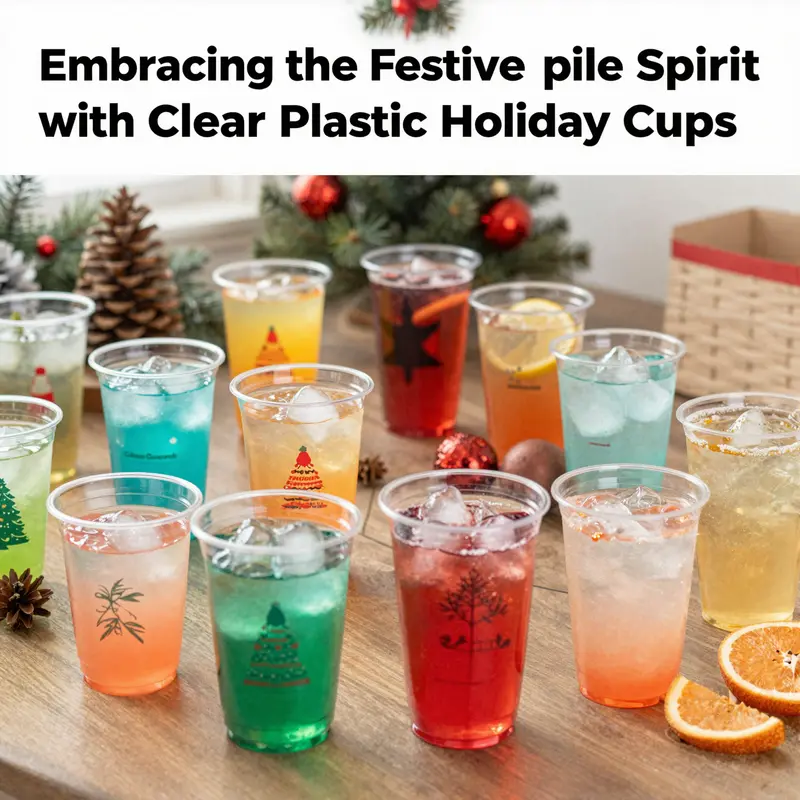
As the holiday season approaches, businesses in the beverage sector—from bubble tea shops and restaurants to food trucks and catering services—seek ways to enhance festive gatherings. Clear plastic holiday cups have emerged as a go-to solution, combining practicality with stylish appeal. With rising sustainability concerns, creative design options, shifting market trends, and stringent health regulations, understanding the many facets of these cups is critical. Each chapter will delve into these elements, providing insights into consumer preferences and offering a comprehensive view for event planners and corporate procurement teams.
Beyond Convenience: Reimagining Holiday Cups for Sustainability

Clear plastic holiday cups offer convenience at gatherings, but their lifecycle reveals environmental trade-offs. Most cups are made from PET, PS, or PP, each with different recycling realities. Labels that say recyclable do not guarantee processing in every facility, especially when cups are contaminated with beverages or bits of food. During the holiday season, production and waste surge, drawing on fossil fuels and energy-intensive processes. In many places these cups end up in landfills or as litter, where they persist and can break down into microplastics.
Although recycling remains a system rather than a label, consumer actions that reduce contamination and direct cups to the proper streams improve outcomes. Reusable options such as glass or stainless steel provide durable alternatives that can be used across many occasions, reducing waste dramatically when cared for. For those seeking a middle ground, PLA cups offer compostable potential in the right context, but only where industrial composting facilities exist and disposal streams are robust. In practice, the promise of compostability hinges on local infrastructure and on following disposal guidelines rather than assuming universal availability.
Beyond substitutes, brands and venues can adopt cup systems that emphasize reuse and clear waste separation, turning the cup into part of the event design. The goal is to preserve the festive spirit while aligning with resource stewardship. For readers exploring options, the disposable drinkware category offers choices focused on durability, reusability, and where appropriate, compostability, with attention to local waste capabilities. The timeline for responsible action begins long before guests arrive, with careful planning around capacity, cleaning, and bin labeling to minimize contamination.
For a deeper frame, consider how the season could become a moment to rethink single-use plastics and to connect celebration with a lighter footprint, without dulling the joy of gathering.
Crystal Clarity, Festive Flair: Designing and Personalizing Clear Plastic Holiday Cups
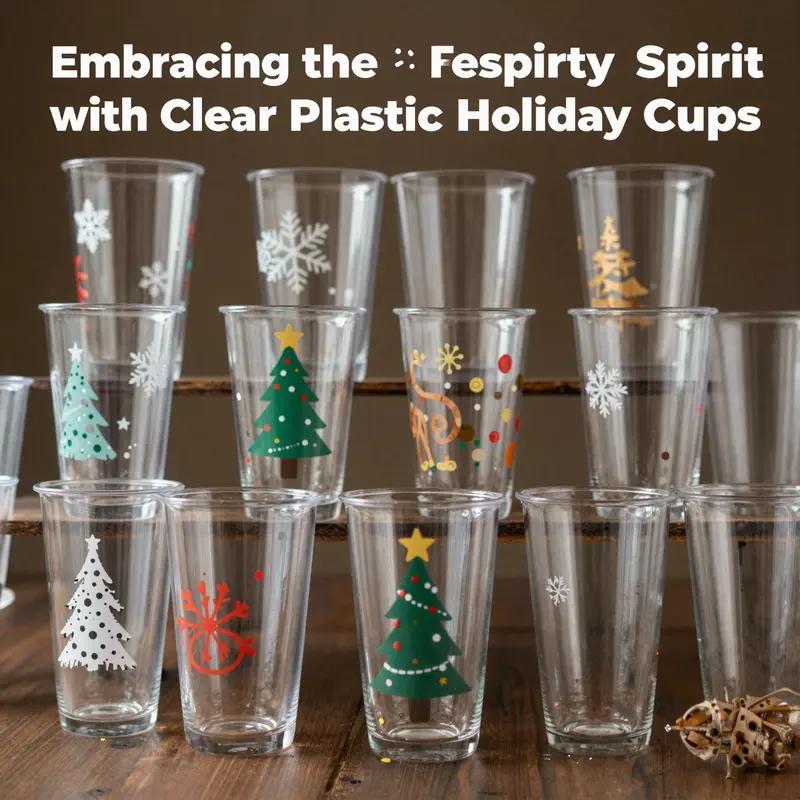
Clear plastic holiday cups turn simple beverages into a small stage for celebration. Their transparent shells invite light, color, and texture to play across the surface, transforming everyday drinks into a visually engaging moment that guests can see and recall. In a season where presentation matters as much as flavor, these cups become more than mere containers; they become a portfolio of seasonal storytelling. The decision to use clear plastic for holiday events is rarely about function alone. It is about combining practicality with an opportunity to seize mood and memory. When a host chooses a cup that is nearly invisible to the eye yet capable of carrying bright, festively themed contents, the experience of the drink extends beyond taste. A ruby punch, a peppermint milk, a cinnamon-spiced cider—each is amplified by the way the cup catches the light and reveals the beverage’s hue through its crystal-clear walls. This is not incidental. Clarity is the canvas that makes color, garnish, and even aroma more perceptible, and it is a factor that underpins every design decision in this category.
The foundational choices begin with material and form. Most clear holiday cups are crafted from polystyrene (PS) or polyethylene terephthalate (PET), selected for their high clarity, rigidity, and compatibility with fast-paced service environments. PET, with its improved impact resistance and recyclability profile, often appeals to venues seeking a balanced mix of durability and sustainability. PS, while offering pristine transparency, has its own advantages in terms of cost and stiffness, making it suitable for short-term events where weight and breakage risk are considerations. In some premium lines, manufacturers substitute or layer materials with transparent acrylic to achieve a premium, reusable aesthetic. The choice between these materials is not merely technical; it shapes the cup’s environmental footprint, the ease with which logos and artwork adhere, and the user’s tactile experience when handling a cold versus a hot beverage.
Shape and structure expand the design vocabulary beyond the traditional cylindrical profile. Standard round cups remain a practical baseline, but the market is expanding into more expressive silhouettes. Dumbbell or double-walled configurations, where a secondary layer traps air for insulation, offer the dual benefit of a visually striking look and improved beverage temperature management. Ergonomic tumbler styles with contoured grips provide a more secure hold, particularly for festive gatherings where drinks are in motion, refills are frequent, and guests want to minimize spills. Some designers experiment with square forms or faceted surfaces that catch reflections in novel ways, giving the same liquid a subtly different personality depending on the angle of light. Each variant influences not just aesthetics but also stacking efficiency for bulk purchases and the ease with which lids, straws, or seals can be integrated.
Functional features further extend the cups’ versatility. Many clear holiday cups arrive with a built-in lid or a compatible lid option, enabling advance preparation and improved transport. Straws—whether detachable or integrated—offer a helpful ease of use for kids’ parties and casual receptions alike. Anti-leak seals, though not universal, provide peace of mind when guests are passing cups around or when there is a need to serve carbonated or punch-based beverages. Some models are designed to accommodate hot beverages up to a limited temperature range, often with heat-resistant rims and vented lids, while others remain optimized for cold drinks and iced desserts. The practical benefits are easy to imagine: fewer broken glasses, quicker service, and a cleaner environment, which is especially valuable in high-traffic holiday events. The visual impact, however, depends on the cup’s transparency and the way the printed or embedded decorations interact with the liquid inside.
Design and customization options move the cups from functional gear into a vehicle for brand storytelling and seasonal ambiance. Seasonal and thematic designs form a spectrum that ranges from overt holiday iconography to subtle winter motif accents. Classic Christmas scenes—snowflakes, sleigh bells, reindeer silhouettes, evergreen motifs—can be applied through printing, embossing, or in-mold decoration. Printing methods vary from screen and pad printing to heat transfer, each offering a different balance of color vibrancy, durability, and cost. For organizations prioritizing bold, full-color branding, in-mold decoration can embed logos and artwork directly into the plastic during the extrusion-molding process, yielding long-lasting designs that resist wear through repeated handling and washing in reusable configurations. In many cases, customers will combine a transparent cup with a matching sleeve or wrap that carries the festive motif, allowing for large-scale branding while preserving the pristine visibility of the cup’s interior content.
Color integration sits at the intersection of aesthetics and interaction. While the natural appeal of clear cups lies in their unimpeded visibility, some lines introduce color-changing (thermochromic) properties. These cups reveal hidden festive patterns when filled with hot liquids or exposed to changing temperatures, offering a playful reveal that aligns with the wonder of the season. Others incorporate colored inserts, rims, or sleeves that shift the perceived color balance of the drink without obscuring the liquid’s core hue. The inclusion of metallic inks or foils in the interior surface can create a sparkling effect as light travels through the cup, heightening the sense of celebration. Illustrative elements—gingerbread figures, snowflakes, holly, or minimalist geometric motifs—continue to be popular, but the way they are applied matters. Subtle embossing can give tactility to a cup that looks deceptively simple, inviting guests to feel the design as well as see it.
Customization capabilities cover the full span from branding to packaging. For many organizations, the first option is logo printing, which can be achieved through screen printing for bold, durable lines or pad printing for detailed artwork on curved surfaces. Heat transfer is another route that can deliver rich color and gradient effects, particularly on slightly flexible PET. Full-color branding is achievable, enabling multitone designs that echo corporate colors or seasonal palettes. Beyond logos, personalized text adds a layer of sentiment or messaging to gift sets or event-specific cups. This can range from company names and slogans to event dates or seasonal greetings, turning cups into portable keepsakes that recipients can reuse or treasure as mementos.
Packaging and presentation play a critical supporting role. Cups may be sold individually, in two-piece sets with lids, or in multi-pack configurations designed for easy distribution at holiday gatherings. Packaging can also reinforce sustainability goals, with options for recyclable outer wraps, compostable sleeves, or minimalistic unbleached cardboard packaging. This emphasis on packaging speaks to a broader shift in consumer expectations, where the entire product experience—from the unboxing to the disposal—carries meaning. The most successful designs balance the elegance of a clear cup with the warmth of seasonal imagery, a combination that makes a simple beverage feel premium and celebratory.
But customization is not limited to aesthetics alone. Operational considerations are also part of the equation. In some cases, the ability to pre-stem, pre-fill, or pre-assemble gift sets with lids and accessories streamlines event preparation. The choice of lid style can influence spill resistance and user confidence, especially in environments where people are standing, mingling, and navigating crowded spaces. For corporate or promotional settings, the option to incorporate specialty customization, such as personalized labels or stickers, allows organizers to tailor the experience to individual recipients or event themes without altering the core cup form. These stickers can be added to transparent surfaces to convey names or messages that amplify the sense of occasion when the cup is held up for toasts or photographs.
From a sustainability perspective, the conversation around clear holiday cups is increasingly nuanced. While these cups are designed for single-use convenience, many producers emphasize recyclable materials and responsible disposal. Recyclability varies by material—PET generally enjoys broad recycling pathways, while PS may be more restricted in some jurisdictions. Some suppliers are responding with double-wall designs or reusable variants that align with broader sustainability goals, offering a longer lifespan for the same festive look. For event planners and brands looking to minimize waste, the trend toward reusable or recycle-ready configurations is a compelling option that does not compromise festive impact. In practice, this often means pairing a high-clarity cup with a durable lid and a sturdy sleeve that can be reused at multiple events, while ensuring that the combined package is easy to recycle where facilities exist.
The sourcing and availability landscape for clear plastic holiday cups in 2026 reflects a global supply ecosystem that prioritizes customization, speed, and scale. Market platforms feature a wide array of suppliers, with many focusing on cross-border export-ready offerings. The convenience of bulk orders—such as thousands of units in a single shipment—appeals to large-scale events, hospitality chains, and promotional campaigns that must deliver consistent branding across many locations. Domestic and international channels both play a role, with suppliers able to accommodate diverse lead times, minimum order quantities, and packaging configurations. The ability to tailor the cup with logos, color accents, or seasonal artwork is no longer a niche capability but a standard expectation for brands seeking to create cohesive, on-theme experiences across venues, menus, and hype materials during the holiday season.
For readers exploring how these nuanced design choices fit within wider industry trends, the cups sit alongside a broader family of disposable drinkware and packaging options. They form a bridge between practical, fast-service needs and the elevated visual language that brands use to connect with customers in crowded seasonal moments. If you’re considering how to integrate clear holiday cups into a broader campaign or event concept, you can explore related categories of packaging and printing services that frequently collaborate with drinkware suppliers. The drinkware category, in particular, often houses complementary items such as lids, straws, and accessories that align with the aesthetic and functional goals of the cups themselves. Drinkware category on COFE-CUP provides a glimpse into how these pieces fit together within a complete system of festive drink presentation.
Beyond the design and customization specifics, the social and experiential value of clear holiday cups becomes apparent when they are deployed in real-world settings. In retail displays, a row of crystal-clear cups filled with shimmering beverages can draw attention to seasonal flavors and promotions without overpowering the visual narrative of the surroundings. In hospitality venues, the cups support a fast, friendly service model while still delivering a curated aesthetic that echoes the restaurant’s or café’s branding and seasonal mood. For corporate events, branded clear cups act as portable touchpoints, turning a simple drink service into a distributed piece of brand storytelling that attendees can keep as a reminder of a milestone, achievement, or celebration. The combination of design adaptability, customization options, and practical benefits makes these cups a versatile tool for marketers, event planners, and hospitality professionals alike. The challenge lies in balancing clarity with branding, ensuring that the beverage remains the star while the cup quietly reinforces the intended message through thoughtful art, material choice, and ergonomic design.
In sum, the chapter on design and customization options reveals a design language that respects the drink’s integrity while inviting the eye to linger on the holiday moment. The cups serve as adaptable canvases where clarity is not a passive attribute but an active design lever. They enable a seamless conversation between liquid color, lighting, and brand storytelling. The possibilities are expansive but purposeful: select the right material, choose a silhouette that complements the event setting, apply artwork with durability in mind, and pair the cup with accessible packaging and accessories that enhance the user experience. In this way, a simple clear cup transcends its functional role and becomes a conduit for festive memory—the moment when a beverage becomes part of the season’s shared narrative.
External reference for further reading: https://www.alibaba.com/product-detail/Christmas-Plastic-Cup-Set-with-Suction_1600591985809.html
Crystal Clarity, Complex Economics: Navigating the Market for Clear Plastic Holiday Cups
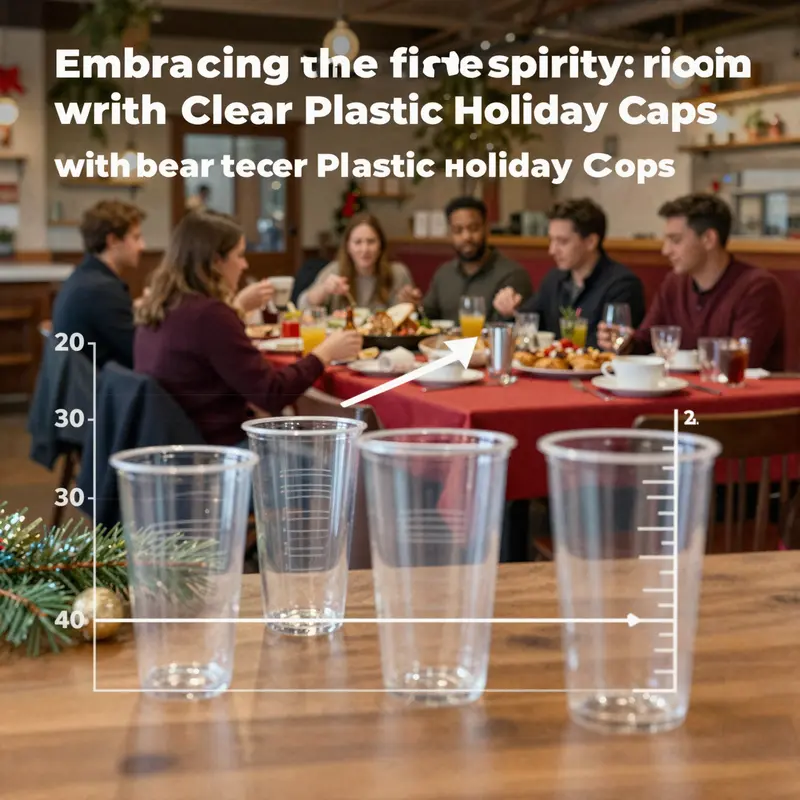
During the winter holidays, clear plastic cups quietly anchor a broad spectrum of gatherings, from intimate family dinners to bustling community events. Their appeal rests not only in practicality—lightweight, shatterproof, easy to stack—but in the way their crystal-clear surface becomes a stage for festive beverages. A drink’s color, garnish, and sparkle all ride on the clarity of the cup, turning simple refreshments into photo-worthy moments that guests post and share. This visual dimension matters more during the holidays when mood and memory intertwine. People want beverages that look as inviting as they sound, and the transparent cup helps achieve that without demanding heavy glassware that can complicate cleanup or transportation. In many homes and venues, a standard, widely available capacity—near 14 ounces—serves as a practical baseline for a range of drinks, from cocoa and cider to punch and sparkling sips. The capacity is not an accident; it aligns with typical serving sizes for festive beverages and with the logistics of serving, refilling, and quick turnover during parties. In this context, the market for clear plastic holiday cups becomes less about a single product and more about a versatile, seasonal utility that blends form and function with the rhythms of holiday hosting.
What makes the market dynamics of these cups particularly interesting is how seasonal demand spikes intersect with broader trends in disposable tableware. The holidays amplify what would otherwise be a steady, year-round market: a robust demand for visually appealing, easy-to-use, and often customizable options. Clear cups, especially those made from PET or PP, offer a template where aesthetics can be upgraded without sacrificing the core advantages of disposables. The emphasis on transparency is not merely cosmetic; it is a practical decision that aligns with branding, presentation, and even safety. When a host or retailer wants to showcase a layered beverage, a vibrant garnish, or a color-coordinated party theme, the cup’s clarity makes those elements pop. This alignment between presentation and practicality helps explain why these cups maintain consistent demand across corporate events, retail promotions, and private celebrations alike.
From an economic perspective, the market for clear plastic holiday cups has grown alongside the broader disposable cup ecosystem, with a projected global expansion that exceeds typical holiday-only cycles. Industry analyst voices point to a compound annual growth rate of just over five percent through the end of the decade, aided in part by holiday and event-driven demand. Although holiday-specific data can be scarce, the trend lines in clear, PET- and PP-based cup designs indicate a durable, long-run trajectory. The practical benefits—lightweight handling, reduced breakage risk, easier recycling streams relative to glassware, and compatibility with a wide range of printing and branding techniques—help maintain relevance even as consumer attitudes toward sustainability evolve. The economics of this niche thus rest on several threads: the scale of production, the speed of replenishment, the capacity to customize, and the ability to manage quality while keeping costs in check.
A central economic driver is the supply chain that underpins production. Much of the manufacturing backbone for clear plastic cups resides in hubs that offer scalable output and relatively predictable lead times. In practice, buyers often encounter lead times measured in weeks rather than days, with typical windows ranging from two to six weeks depending on order size, materials, and current demand pressure. This cadence matters acutely for holiday planning. Event organizers, retailers, and hospitality businesses rely on a reliable rhythm of stock replenishment that coincides with promotional calendars and seasonal campaigns. When demand spikes around late autumn and early winter, suppliers with robust capacity can capitalize on the opportunity to bundle cups with branded printing or custom finishes. Conversely, markets that face capacity constraints or shipping bottlenecks may see price volatility or delays that ripple across the supply chain, affecting not only the cups themselves but also the downstream materials such as lids, straws, and coordinated tableware.
Yet the most consequential economic dimension lies in the intersection of compliance, safety, and branding. Clear cups used for food and drink must adhere to food-contact standards that protect consumers and preserve product integrity. In many markets, FDA regulation, REACH compliance, and RoHS considerations guide the design and production of PET and PP cups, especially for items intended for cold beverages or long-term display. For buyers, this means careful supplier vetting, beyond price comparisons. A supplier with a transparent quality system, clear documentation on materials, and traceability through the supply chain can reduce the risk of recalls or regulatory penalties, which would otherwise undermine the perceived value of a festive cup in a holiday promotion. The emphasis on safety also dovetails with branding strategies. In a landscape where many hosts want to feature logos, seasonal motifs, or color accents, the ability to print or embellish cups without compromising performance becomes a critical differentiator. The added value of customization—logos for corporate gifts, seasonal graphics for product launches, or themed artwork for a charitable event—can shift a straightforward budget item into a strategic marketing asset.
Customization, in particular, is a growth vector that aligns neatly with contemporary consumer preferences. Holiday events now frequently hinge on moments that are photograph-worthy and shareable, generating a ripple effect in demand for branded or themed presentation. Cups offer a cost-effective canvas for such customization, enabling many organizations to extend their branding into drinkware without the expense of heavier or less portable alternatives. The operational flexibility of printing methods—whether it is surface decoration, wrap-around designs, or selective color accents—allows hosts to tailor the visual impact to the event. The result is a product that does not merely hold a drink; it communicates a message, reinforces an identity, and contributes to a cohesive event experience. This confluence of design potential and functional reliability explains why the category remains compelling to both corporate buyers and end consumers.
There is also an environmental dimension to the procurement and use of clear plastic holiday cups that cannot be ignored. While many brands promote eco-friendly or recyclable options, the industry overall continues to face critique over plastic waste and the challenge of ensuring responsible disposal. In response, some manufacturers are exploring recyclable or biodegradable alternatives and seeking to align their offerings with broader circular economy objectives. This evolution creates a dynamic tension: the cups must remain affordable and convenient for seasonal use, yet the market increasingly rewards approaches that minimize environmental impact. In practice, this means that buyers are weighing not only costs and aesthetics but also supplier commitments to sustainable sourcing, responsible manufacturing practices, and clear end-of-life pathways. The result is a market that is moving toward greater transparency and accountability, even as the core appeal of crystal-clear presentation and practical convenience drives steady demand.
For readers who want to situate clear plastic holiday cups within the broader packaging and disposable ware ecosystem, it helps to consider the cup as one element in a larger visual and logistical tapestry. The broader category of disposable drinkware encompasses a spectrum of shapes, finishes, and capacities, each chosen to meet specific event types and consumer expectations. In this context, the clear cup occupies a strategic position: it is versatile enough for a wide range of beverages yet refined enough to support premium presentation when paired with branding and careful event styling. Hosts looking to expand beyond the familiar 14-ounce baseline can explore other sizes for different service contexts, all the while preserving the perceived quality that comes with a glass-clear surface and a consistent, reliable performance profile. To explore related packaging categories and understand how the disposable drinkware family interlocks with these cups, consider examining the broader category at the following link: the disposable drinkware category.
Looking ahead, the trajectory of clear plastic holiday cups will continue to hinge on how efficiently producers can scale, how effectively they can assure safety and compliance, and how convincingly they can translate aesthetics into tangible value for organizers and retailers. The holiday season remains a powerful accelerant, but long-term growth will be sustained only if innovations in materials, printing technologies, and end-of-life solutions keep pace with evolving consumer expectations and regulatory standards. In practical terms, this means a continuing push toward higher clarity, better heat resistance where possible, and more robust color fidelity in branding applications. It also means a growing emphasis on clear communication about recyclability and waste management so that the perceived benefits of disposability do not come at an unsustainable environmental cost. The market’s resilience, then, rests not on a single trend but on a synthesis of appearance, performance, safety, and responsibility, all threaded through the seasonal demand that gives these cups their distinctive holiday relevance.
For authoritative insights into current market dynamics and supplier capabilities to inform procurement decisions, readers may consult broader industry resources such as global trade platforms. As with any large-scale supply chain decision, the path forward benefits from diverse perspectives, transparent data, and careful risk assessment that accounts for seasonality, capacity, and compliance. External resources offer a broader lens on the competitive landscape, price baselines, and supplier capabilities that shape the price and availability of clear plastic holiday cups in different regions and markets. See the external resource for additional context: https://www.alibaba.com
Securing Safe Festivity: Navigating Health Regulations for Clear Plastic Holiday Cups
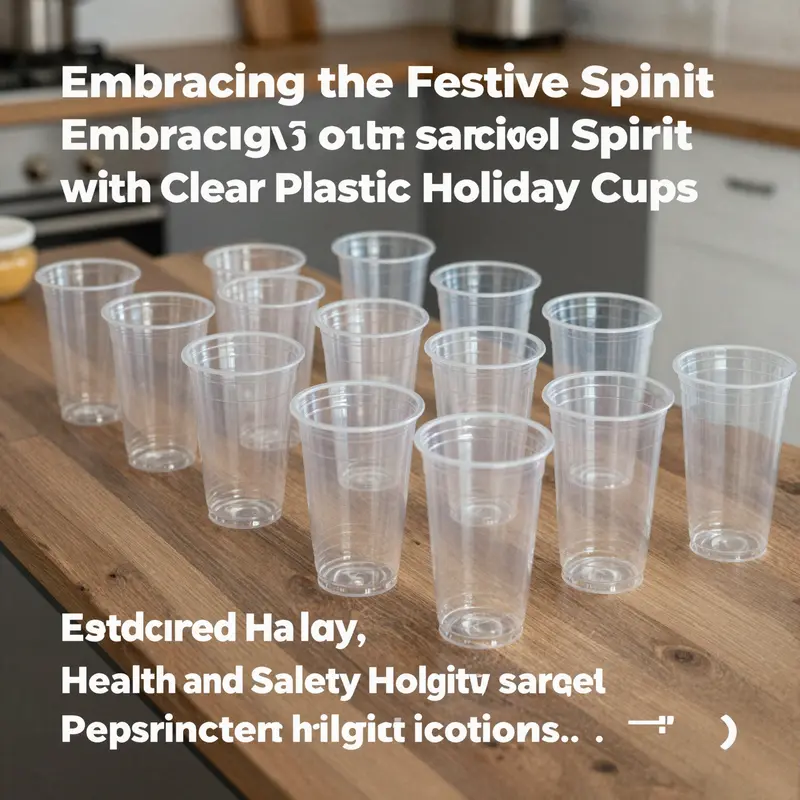
Clear plastic holiday cups have become a familiar sight at seasonal gatherings, offering a convenient, shatter-proof option that keeps festive drinks flowing from toast to toast. Yet beneath their translucent surface lies a layer of regulatory considerations that touch on health, safety, and the broader responsibility of keeping celebrations both joyful and safe. For hosts and producers alike, understanding how health and safety regulations intersect with environmental policy—especially in a context where design meets daily use in a high-traffic holiday setting—helps ensure that the aesthetic appeal of clear cups does not outpace the standards that protect consumers. This chapter threads together the essential health and safety elements that matter most for clear plastic holiday cups in the North American context, with a careful eye on Canada’s evolving regulatory landscape and the practical implications for importers, exporters, and event planners who rely on compliant, food-contact materials during peak season.
In Canada, the regulatory emphasis around disposable plastics has historically leaned toward environmental impact and plastic pollution mitigation rather than item-specific health protections for seasonal tableware. That emphasis does not mean safety is ignored, however. Food safety regulations remain the backbone for anything that comes into contact with beverages or food, and clear plastic cups are squarely within that domain when used for drinks at home, in hospitality venues, or at organized events. The foundational framework is the Food and Drugs Act and its related regulations, notably the Food Contact Materials Regulations. Together, they establish a baseline that governs how plastics intended for contact with food and beverages must behave in the real world. The goal is straightforward: prevent the migration of potentially harmful substances from the cup into the drink, and ensure that what touches the liquid remains safe for consumer use.
At a practical level, material compliance is the first line of defense. Clear plastic cups marketed for food contact must be made from materials that are food-grade and free of substances that are known to pose health risks. In Canadian regulations, this means avoiding certain additives, including phthalates and bisphenol A (BPA), and ensuring that any other listed harmful substances are absent from use or securely limited. The regulation also requires that any components which could migrate into the beverage—such as plasticizers, dyes, or printing inks used on cups—do not release chemicals above legislated maximum allowable limits. The emphasis on migration limits is not merely a theory; it translates into testing requirements, supplier certifications, and documented evidence that cups used for beverages meet the defined safety thresholds before they appear on shelves or at events.
Labeling plays a subtle but important role in communicating safety to consumers and hosts. When cups are intended for food contact, they should carry labeling that signals suitability for food use. This labeling helps event organizers quickly verify that the cups they select conform to food-contact standards, reducing the risk that a party staple ends up with a non-compliant vessel. For hosts managing multiple events—some with children present, some with adults, and some with special dietary considerations—clear labeling can be a practical check against inadvertent use of non-food-grade materials. The interplay between labeling and material compliance is part of a broader culture of traceability that underpins consumer confidence during festive seasons.
Beyond the domestic consumption context, Canada has also introduced export controls that affect the lifecycle of disposable food service items. As of December 20, 2025, an amendment to the country’s prohibition on certain single-use plastics (G/TBT/N/CAN/764) will ban the manufacture, import, and sale of six types of single-use plastic products intended for export. The category includes food service items made from problematic plastics and other items such as straws and stirrers. The practical implication for clear plastic holiday cups is nuanced. If a cup is classified as a “single-use food service item” and its material is categorized as a regulated “problematic plastic,” export of that cup could be prohibited after the deadline. It is a reminder that even items primarily used domestically may be subject to cross-border considerations if the supply chain involves export markets. Importers and exporters must retain relevant records demonstrating that products are for export, with a retention period of five years, to satisfy verification requests from authorities. This export-focused oversight does not apply to domestic distribution, but it does mean that manufacturers and distributors should maintain rigorous documentation to support compliance in multiple jurisdictions and to ensure the integrity of their supply chains during peak holiday seasons when demand inflates.
For those who plan to bring clarity to holiday gatherings through clear cups, the regulatory landscape also calls for careful supplier selection and documentation. The health and safety framework requires more than a one-off certification; it requires ongoing assurance that materials used in cups meet evolving standards for food contact and remain free from prohibited substances. Buyers should seek suppliers who can provide robust evidence of compliance, such as food-contact certificates and certifications for migration testing, along with declarations that the materials do not contain restricted substances in the jurisdiction where the cups will be used or imported. This kind of due diligence is especially relevant in a busy holiday supply chain, where last-minute purchases and bulk orders are common. It also dovetails with the broader consumer expectation that festive beverages will be served in vessels that are not only attractive but safe.
In practice, this means that when selecting clear cups for holiday events, planners should pay attention to the material type and any coatings or colorants used on the cup exterior. Even if a cup looks pristine and tastes harmless, the invisible reality of chemical migration can influence the safety profile of a beverage, especially when heat or acidic ingredients are involved. Suppliers who provide documentation about the base resin (for example, whether it is a standard PET or another food-contact material suitable for beverages), about any coatings or inks used, and about migration testing results, give organizers a concrete basis for confidence. The overall goal is to create a cohesive holiday experience where safety is assumed, not questioned, by guests who simply want to drink, mingle, and celebrate.
From a host’s viewpoint, a balanced approach to health and safety means combining a few practical habits with regulatory awareness. First, verify that the cups being used are clearly intended for food contact and carry appropriate labeling. Second, confirm that the cups’ materials and any decorative elements meet current safety standards for food contact. Third, consider the end-to-end lifecycle of the cups, including how they will be disposed of after events and whether any recycling or recovery programs are in place that align with environmental commitments. The aim is not to complicate the moment but to ensure that the moment remains safe, lawful, and free of unintended consequences that could arise from unvetted plastics.
There is also value in learning from broader industry practices without becoming overwhelmed by technical minutiae. One helpful way to frame this is to think in terms of a continuum that starts with food safety and ends with responsible stewardship. At the safety end, the focus is on ensuring that any material that contacts beverages is food-grade and free from migratory risk within regulated limits. At the stewardship end, the focus expands to environmental considerations and, crucially, to documentation that supports cross-border movement if and when export is involved. The connective tissue between these concerns is transparency: transparent materials, transparent testing, transparent labeling, and transparent supply chains. This transparency not only satisfies regulatory demands but also builds trust with guests who, during the holiday season, are already seeking assurances that every aspect of the celebration is sound, from the menu to the vessel that holds the drink.
For readers who want to explore related product categories while keeping this regulatory lens in focus, the broader family of disposable drinkware deserves a careful look. The category page that consolidates various options for disposable drinkware provides context about how cups fit within a larger ecosystem of holiday tableware and how compliance considerations translate across different formats. You can visit the disposable-drinkware category for a consolidated view of options and documentation that often accompanies compliant products. disposable-drinkware
Finally, while the content above centers on health and safety, it sits within a larger policy conversation about the sustainability of single-use plastics. The Canadian government’s official materials on the single-use plastics ban offer authoritative guidance on the scope, timeline, and compliance expectations for products intended for export. Hosts, suppliers, and organizers who keep a close watch on regulatory updates will be better positioned to anticipate shifts in availability, pricing, and eligibility of certain cup materials as the holiday season approaches year after year. For those seeking the most current policy details and implementation timelines, the official government page provides the most reliable reference point and is a prudent companion to the practical considerations described here. For the official policy timeline and details on the single-use plastics ban, see the government resource: https://www.canada.ca/en/environment-climate-change/services/sustainable-development/single-use-plastics-ban.html
Clear Plastic Holiday Cups as a Seasonal Stage: Weighing Aesthetics, Function, and Sustainability in Holiday Gatherings

In the quiet moment before a festive toast, the clear plastic holiday cup has already claimed a kind of stage role. It is the vehicle that carries color, scent, and laughter from the punch bowl to the hands of guests, all while remaining nearly invisible in the midst of bright lights, twinkling decorations, and carefully arranged tables. The appeal of these cups lies not in novelty alone but in how they balance practicality with presentation. They are simple vessels, but their clarity is what makes them powerful. The transparency is more than a cosmetic feature; it is a design principle that allows the hues of holiday beverages to become part of the spectacle. A ruby punch, a pale sparkling cider, or a misty hot chocolate topped with marshmallows—each color plays off the other, and the cup provides a clean, unobtrusive frame for that color to unfold. When hosts choose clear plastic cups for seasonal gatherings, they are making a choice about how drinks appear, how guests perceive safety, and how easily the event can move from one moment to the next without interruption or mess.
Beyond their glass-like clarity, these cups are defined by a practical compactness that suits the rhythm of holiday events. A common capacity—around 14 ounces—strikes a balance between generous sipping and convenient, repeatable service. This size supports both cocktails and kid-friendly beverages, and it pairs well with lids and straws that minimize spill risk as guests mingle and socialize. The 14-ounce format is frequently bundled in multi-pack offerings, acknowledging that large gatherings demand efficiency as much as style. The economics of event planning often point hosts toward bulk options that reduce breakage risk and simplify cleanup, enabling more time for celebration and connection rather than logistics. In this sense, the cup becomes a facilitator of social warmth rather than a barrier to it.
Materials matter in how these cups perform and how they align with broader values around sustainability and safety. The most common families of materials for clear disposable cups are polypropylene (PP) and polyethylene terephthalate (PET). Both are food-grade and non-toxic when used as intended, which reassures hosts who want to avoid any risk of chemical interaction with beverages or with warming or chilling beverages. PP is noted for its resilience and heat resistance to a degree, which makes it a sensible choice for hot drinks like cocoa or spiced cider in the chilly weeks surrounding Christmas and New Year. PET, meanwhile, is prized for its exceptional clarity and stiffness, attributes that help a liquid look exceptionally crisp and clean inside the vessel. The choice between PP and PET often comes down to a mix of performance needs and environmental considerations, since each material carries a different profile in terms of recyclability and end-of-life options. In practice, many consumers appreciate cups that can maintain shape and clarity as temperatures fluctuate, resisting condensation that can blur the beverage and diminish the visual impact the moment demands.
As the season’s gatherings grow more visually rich, the cups themselves become canvases for design. The most effective aesthetic strategy embraces both the natural transparency of the cup and the opportunity to weave in festive motifs through printing, color fills, or sublimation techniques. Bold red and green accents can echo holiday décor, while delicate snowflake patterns or stylized evergreen branches can float within the liquid’s glow, giving the drink a sense of narrative without overpowering it. When cups feature seasonal motifs, they don’t merely hold a beverage; they contribute to the ambiance by signaling celebration and warmth. The goal is to catch the eye without shouting over the music or overpowering the drink’s natural appeal. In practice, small touches—such as frosted rims, subtle copper hues, or light-reflective finishes—can elevate the perceived value of a casual gathering and reinforce a thoughtful, cohesive event theme.
Functionality remains central to the appeal of clear plastic cups in holiday settings. In addition to pleasing aesthetics, consumers look for performance that supports smooth service and safe consumption. Temperature resistance is a practical imperative. Hosts may serve both hot and cold beverages at seasonal events, from steaming cocoa and cider to sparkling punches and chilled juice blends. Cups that can hold heat without warping or transmitting heat to the wearer’s fingers reduce the need for sleeves or napkins and help maintain a comfortable experience for guests. At the same time, the cups must withstand the cold without becoming brittle or developing cloudiness when a refreshing drink is poured over ice. This dual requirement underscores the importance of selecting materials and manufacturing methods that deliver reliable performance across temperature ranges.
Compatibility with lids and straws is another practical cornerstone. Lids minimize spills during toasts and conversations, while straws support easy sipping, especially for children and guests with mobility considerations. The ability to pair cups with compatible lids and straw options matters as much as the cup’s design. A well-integrated set of drinkware—cups, lids, and straws—lets hosts move from seating to standing, from buffet to bar, with confidence, reducing the likelihood of accidental spills that can disrupt a moment of cheer. The result is a smoother flow of hospitality, where guests feel comfortable indulging in festive choices while hosts enjoy easier cleanup and less post-event stress.
The environmental dimension continues to shape consumer expectations in meaningful ways. There is a growing preference for recyclable materials and sustainable options in holiday drinkware. Consumers are increasingly asking not just about the immediate performance of a cup, but about its lifecycle and impact. In practice, this means a willingness to pay a modest premium for materials that can be recycled or that come from recycled content, along with clear guidance on proper disposal. For event planners and households alike, this translates into a preference for products that align with circular economy principles, rather than contributing to the waste stream simply because they were convenient. The shift toward sustainability is not a trend that fades with the last toast of the season; it represents a longer-term recalibration of how we think about everyday objects, even something as seemingly ordinary as a plastic cup.
In the context of use cases, clear plastic holiday cups show up across a broad spectrum of events. They are a staple at weddings that fuse formal decor with accessible service, at New Year’s gatherings where champagne-like beverages sparkle under lights, and at Christmas parties where family and friends mingle for longer periods. In each setting, the cups’ clarity contributes to a sense of freshness and cleanliness, allowing drinks to read as pure and bright against the season’s palette. The ease of disposal and straightforward hygiene protocols further reinforce their practicality for multi-day holiday events, where repeated use of the same serving ware may be minimized in favor of quick turnover and efficient cleanup. The value proposition, then, is not merely the cup’s function but the integrated experience: a visually pleasing vessel that supports reliable service, aligns with sustainability preferences, and elevates the event’s overall mood without demanding complicated logistics.
Customization adds another layer to the cup’s role in seasonal celebrations. For businesses, event planners, and even communities that host large-scale happenings, the ability to imprint a logo, a seasonal message, or a themed graphic can transform a cup from a generic container into a meaningful touchpoint. Customization enables emotional resonance and brand expression at moments when memories are formed and shared. It also allows hosts to reinforce a party’s narrative—whether through a unified color scheme, a crest that echoes a charitable cause, or a playful motif that invites photos and social sharing. The incremental value of customization lies in its potential to extend a cup’s life beyond a single event: a souvenir-like element that reminds guests of a moment of connection, long after the party lights have dimmed.
The broader context of consumer preferences in clear plastic holiday cups points to a convergence of design, practicality, and responsibility. Aesthetics drive desire when cups showcase transparency that makes beverages glow with their own color, while functionality ensures that the experience remains effortless for guests and hosts alike. Environmental concerns add a forward-looking lens, nudging choices toward materials and processes that respect the planet, even in the bustle of seasonal deadlines. Material composition matters to safety and sensory perception, and the potential for advanced features—such as insulation or heat resistance in select models—offers ways to enrich user experience during chilly evenings and long celebrations. Finally, the ability to customize provides a bridge between personal occasion and brand storytelling, turning disposables into meaningful artifacts of the moment. In this light, the clear plastic holiday cup is not a disposable afterthought but a designed instrument of sociability, aesthetic pleasure, and responsible consumption.
For readers who want a deeper dive into how transparency and design intersect in holiday drinkware, the broader literature in this space highlights a consistent pattern: consumers respond positively when a cup allows the drink to speak for itself, while still offering practical safeguards against spills and heat exposure. The preference for recyclable materials reflects a growing environmental consciousness that intersects with personal experience—people want to enjoy their holidays with beauty and ease, but with a clear sense that their choices do not undermine future celebrations. The story of clear plastic holiday cups, then, is not simply about a product category; it is about how everyday objects become allies in social rituals, enabling people to gather, celebrate, and remember with clarity and care.
As this chapter threads together consumption psychology, material science, and event design, it remains essential to consider how brands and retailers communicate these values. Clear cups with high transparency, festive patterns, and reliable performance send a message that simplicity can be elegant, even in a crowded aisle of disposable tableware. When the design aligns with sustainability goals and consumer desires for customization, the cup transcends its utilitarian function and becomes a small, accessible instrument of celebration. The season’s gatherings, whether intimate or expansive, rely on this balance: cups that invite appreciation of color and flavor while delivering dependable service and responsible disposal. In this sense, the clear plastic holiday cup embodies a modern compromise between indulgence and practicality, a microcosm of how contemporary celebrations blend aesthetics, efficiency, and ethics into a single, unassuming vessel.
External note for further reading: for deeper context on consumer attitudes toward translucent cups at holiday events, see a recent post from FoamEx that surveys design trends, material choices, and practical considerations in festive settings. https://www.foamex.com/blog/2025/12/18/transparent-plastic-cups-for-holiday-events. In addition, for those seeking a broader package of related drinkware options, the Disposable Drinkware category is a comprehensive resource that covers compatible lids, straws, and accessory options that support a cohesive, spill-resistant service model during seasonal gatherings. Disposable Drinkware.
Final thoughts
Clear plastic holiday cups are essential for creating memorable festive experiences. By addressing sustainability concerns, offering customizable designs, understanding market trends, adhering to health regulations, and recognizing consumer preferences, businesses can maximize their impact during the holiday season. Embracing these insights not only enhances customer satisfaction but also aligns with modern environmental expectations and market demands.