
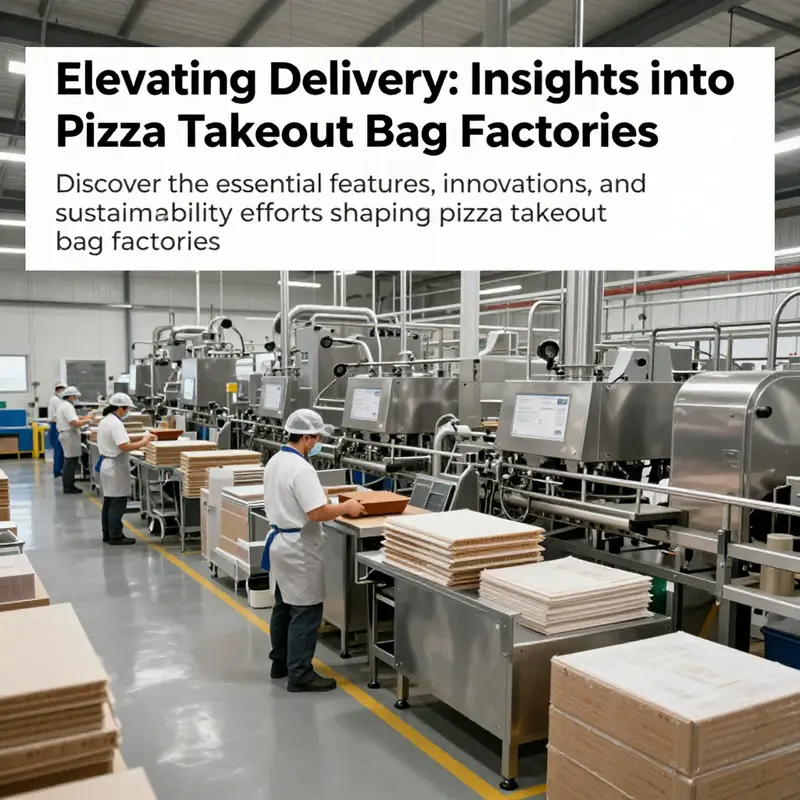
Pizza takeout bags are more than just packaging; they’re crucial for ensuring that delicious food arrives at its destination in perfect condition. As the demand for delivery services continues to rise, especially among beverage chains, restaurants, food trucks, and catering services, understanding the factors that contribute to quality pizza takeout bag production has never been more relevant. This article explores the key features of pizza takeout bag factories and their innovative products, the manufacturing processes that ensure durability and performance, the sustainability practices being adopted, market trends shaping the industry, and the creative designs now being developed. By diving into these chapters, readers will gain a comprehensive view of how pizza takeout bag factories not only support the food industry but also adapt to evolving expectations and environmental considerations.
Heat, Holding, and How Bags Carry a Delivery Promise: The Hidden World of Pizza Takeout Bag Factories

In the quiet mechanical rhythm of a bustling city kitchen, a pizza travels not just in heat but in trust. The bag that carries it out the door is more than a container; it is a carefully engineered barrier between a chef’s craft and the street, a small fortress that guards texture, aroma, and timing. The chapter you’re reading follows the journey of these bags from raw material to the hands of delivery crews, revealing how factories translate temperature control, durability, branding, and sustainability into a single, practical object that quietly magnifies a restaurant’s reputation with every order. It is a story of material science meeting need, of economies of scale meeting the daily reality of tens of thousands of meals, and of design choices that shape the customer’s first impression long before the pizza is opened at the doorstep.
A core feature that dominates almost every factory’s product line is insulated construction. Insulated delivery bags are not mere padding; they are thermal guardians. The thermal lining is engineered to retain heat during transit, countering the chill of winter, the damp of rain, or the simple fatigue of a long ride through a dense urban maze. Temperature retention has two practical consequences. First, it preserves the pizza’s crust and cheese melt, reducing slicks of condensation that can sog instead of crisp. Second, it contributes to food safety by slowing the rate at which food cools to a level where bacteria could proliferate during delays. The balance between insulation effectiveness and bulk is a delicate one. Bags must be light enough to carry, while robust enough to resist abrasion, impact, and repeated use. In cold weather or when deliveries span longer windows, the performance of the lining becomes visible in the mouthfeel of the final product and in the customer’s overall satisfaction with the service.
But insulation is only one side of the coin. Durable, reusable materials underpin the bag’s lifecycle and the restaurant’s long-term costs. Factories favor heavy-duty fabrics such as reinforced polyesters or layered composites designed to resist tearing, abrasion, and moisture intrusion. The seams, handles, and closures are engineered for repeated use; after all, a delivery fleet may cycle through tens of thousands of bags each year. Reinforced handles make carrying through stairways and bustling sidewalks feel effortless, while secure closures prevent heat from seeping away and contents from shifting during transit. This durability isn’t just about avoiding leaks or burns; it’s about maximizing the bag’s return on investment for the restaurant, reducing waste, and achieving a lower long-run cost of ownership. The ability to reuse a bag several times translates into meaningful savings, especially for chains and large independent fleets that run high volumes.
From a branding perspective, these bags are no longer passive carriers. Factories recognize that the bag acts as a moving billboard, a small but powerful touchpoint that reinforces a restaurant’s identity with every order. Custom branding and design options are now commonplace. Owners can select logos, brand colors, and distinctive typography printed directly onto the bag. This is more than aesthetics; it’s recognition and recall in a crowded marketplace. A memorable bag creates a subtle but effective advertising channel, encouraging word-of-mouth referrals and reinforcing a chain’s visual language across neighborhoods. The ability to print high-contrast logos and vibrant colors must be balanced with the need to preserve the bag’s functional performance. Ink and coatings must withstand heat, oils, and repeated washing in the sense of reuse, even if the bag is ultimately a single-use item for many customers.
Environmental considerations have moved from peripheral concerns to central buying criteria. Modern factories increasingly offer eco-friendly options that align with corporate social responsibility goals. Recyclable paper-based alternatives, biodegradable or compostable films, and bio-based laminates are now part of many manufacturers’ portfolios. These materials must still perform, queuing the challenge of maintaining heat, resisting grease, and surviving the rigors of daily delivery schedules. The evolving material landscape allows restaurants to align their packaging with consumer values without compromising the pizza’s quality. Buyers now weigh the trade-offs between recyclability and barrier performance, seeking solutions that minimize waste while preserving a warm, intact product upon arrival. In many cases, this drives decisions about whether to pursue a one-time-use bag with greener materials or to invest in a more robust, reusable system that accompanies a brand’s fleet over years.
The functional design of a pizza takeout bag extends well beyond insulation and branding. Practical features such as reinforced, ergonomically shaped handles reduce fatigue for staff carrying multiple orders in one trip. Secure zippers or high-quality closures prevent heat loss and deter accidental openings from jostling in the car or on a bike rack. Some bags incorporate compartments or layout-informed sections to separate sides, drinks, or garlic knots, preventing items from crushing each other. The goal is straightforward: keep the pizza intact and hot, while simplifying the delivery process for staff. Even small design choices—how the bag folds, where the seams are placed, how easy it is to wipe down—have ripple effects on speed, hygiene, and customer satisfaction.
Alongside feature development, factories must navigate the regulatory terrain that governs food-contact packaging. Reputable manufacturers ensure their products meet relevant health and safety standards, a requirement that is essential for commercial use. The importance of compliance cannot be overstated. When a bag fails a rigorous standard, the consequences ripple through the supply chain—from line workers who must replace compromised bags to restaurants whose customer experience is immediately impacted. The most trusted providers align their processes with established guidelines and regularly update materials and coatings to reflect evolving safety science. In parallel, they pursue certifications that reassure buyers that the bags are designed, manufactured, and tested for food-contact use. A convergence of rigorous testing, traceable materials, and transparent supplier practices underpins the legitimacy and reliability customers rely on in high-volume operations.
The global nature of pizza delivery means the manufacturing and supply chain for takeout bags is a sprawling, geographically dispersed ecosystem. Factories operate at scale, often producing thousands of units per day for diverse clients—from small pizzerias to nationwide chains. The economics of this scale are notable. Bulk orders commonly set minimums around three hundred pieces, with insulated bags priced in a range roughly between ten and twenty-five dollars per unit, depending on materials, construction complexity, and branding requirements. The exact cost is a function of insulation efficiency, fabric thickness, zipper quality, and the sophistication of the printing or embroidery involved. Automation in cutting, sewing, lamination, and quality control helps factories achieve consistent performance while maintaining reasonable lead times. Yet even with automation, the human element remains critical: skilled operators ensure the integrity of each seam, the uniformity of insulation layers, and the accuracy of branding across large production runs. This combination of machine precision and human craftsmanship explains why lead times can vary—from rapid turnovers for urgent city-wide promotions to longer cycles for customized campaigns that require color matching and gel-coated finishes.
As the market for high-performance packaging expands, factories are balancing durability, reusability, and eco-friendliness without compromising function. The demand for bags that hold their heat over longer distances has spurred innovations in laminate structures and multilayer films. In response to sustainability pressures, some facilities are experimenting with compostable barrier films and recycled fabric blends that still meet the heat retention and abrasion resistance required for daily use. In some cases, brands push for more modular designs, enabling a sleeve or insert to be swapped out for branding changes without discarding the entire bag. Such modular thinking reduces waste, lowers replacement costs, and keeps fleets looking fresh without sacrificing performance. The industry’s forward momentum is also visible in design innovations that borrow from broader packaging trends—such as darker, more premium-looking bags that convey durability and quality, or black boxes with die-cut windows that enhance product visibility and create a premium unboxing moment, especially in takeout experiences where the bag is the first touchpoint with the customer.
From a materials perspective, a critical dichotomy guides decision-makers: choose options that maximize performance and minimize cost, or choose sustainable options that may demonstrate social responsibility but require higher upfront investments. The right choice depends on brand positioning, customer expectations, and the delivery radius. For many operators, a pragmatic path includes embracing the paper packaging category for general packaging needs, which can offer recyclable and compostable options while still protecting the pizza during transit. The relevance of this category is underscored by the increasing availability of compliant, cost-effective, and visually adaptable solutions that can be integrated into existing fleets without a complete redesign. For a closer look at options in the paper packaging spectrum, see the paper packaging category, which presents a range of materials suitable for various delivery scenarios.
The broader packaging ecosystem surrounding pizza takeout bags also informs factory decisions. Printing capabilities, for instance, must endure heat and oil exposure. Adhesives and coatings are chosen to survive repeated use and cleaning without degrading aesthetics or performance. In addition, suppliers coordinate with restaurants on order quantities, lead times, and color-matching, ensuring that a bag’s branding remains consistent across multiple shipments and geographic regions. The interplay between operational efficiency and brand consistency is subtle but powerful; it ensures that every bag reflects a restaurant’s standards, from the first mile of the journey to the moment the box is opened at the customer’s door. The customer’s experience begins with the bag, and the bag’s performance helps shape perceptions about the food inside.
In conversations with producers, it becomes clear that the bag category is not a static one. It evolves with how food is delivered and how brands tell their stories through packaging choices. A rising thread is the integration of smart features—temperature indicators that provide a visible cue when heat is maintained within a safe window, or designs that accommodate reusable liners with easily replaceable inserts. Such innovations continue to push the envelope of what a takeout bag can do, turning a simple carry device into a reliable partner for the kitchen and a responsive touchpoint for the customer. This ongoing development is not simply about keeping pizza warm; it is about maintaining a consistent, high-quality delivery experience across a market that is increasingly value-driven and image-conscious.
External resources and standards play a guiding role in shaping these decisions. For operators seeking formal guidance on food safety standards and operations related to packaging, industry bodies provide accessible references to the safe handling and storage of hot foods during transport. As the sector continues to grow, the alignment of material science, logistics, and brand storytelling through takeout bags remains central to delivering a consistently satisfying pizza experience. For further standards and guidelines, practitioners may consult the National Restaurant Association guide: https://www.restaurant.org/food-safety-and-operations/food-safety-standards.
Behind the Bag: The End-to-End Craft of Pizza Takeout Bag Manufacturing
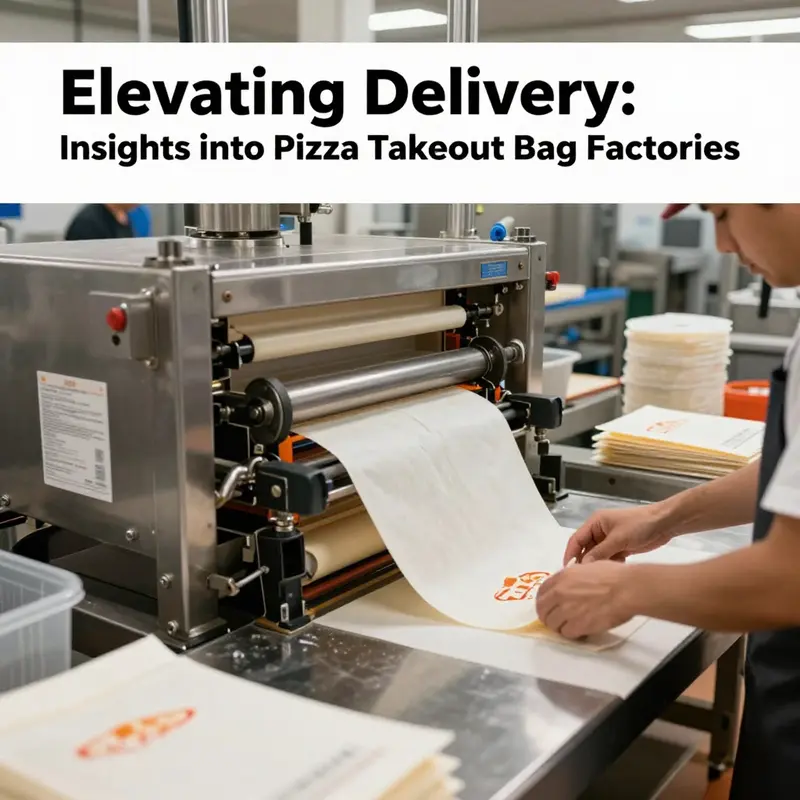
Every slice served to a customer through a takeout window begins its journey not on a kitchen line but in a factory that quietly blends science with packaging artistry. The pizza takeout bag, though simple in appearance, is the product of a tightly choreographed sequence that moves from material selection to finished, branded packaging that can travel hundreds of miles while keeping a hot, fragrant pie intact. This chapter follows that journey, tracing how raw inputs become a reliable, heat-retaining vessel that protects culinary quality and, increasingly, the planet as well. In doing so, it reveals a working philosophy common to modern manufacturing: design for performance, then refine for efficiency, sustainability, and brand resonance. The result is a bag that does more than hold a pie; it acts as the first mile in the delivery experience, shaping heat retention, structural integrity, and consumer perception at once.
At the core of every bag are materials chosen for safety, strength, and sustainability. Corrugated cardboard remains a workhorse because its fluted core offers resilience without excessive weight. It provides a surprising level of insulation when paired with appropriate liners and seals, helping to slow heat transfer and preserve pizza texture during short-to-medium length deliveries. In regions where sourcing is tightly integrated, the base stock often comes from major manufacturing hubs that specialize in paper and cardboard, with supply chains that emphasize traceability and compliance with food contact standards. Kraft paper rounds out the material palette for more environmentally conscious lines, delivering durability and a natural aesthetic that aligns with growing consumer expectations around sustainability. The conversation about materials is never abstract; it governs a bag’s performance in real-world conditions, from controlling moisture to preventing grease seepage that can compromise both taste and structural integrity.
The production line itself unfolds like a carefully choreographed set of movements. It begins with automated corrugator machines that form the fluted component of the cardboard. The so-called E-flute, widely favored for its lightness and strength, becomes the backbone of the bag’s rigidity. This choice is not arbitrary: a bag must withstand the rigors of transit—gripping hands, bag stands, and occasional stacking—without collapsing. Once the sheet stock is formed, precision die-cutting machines translate the designer’s templates into tangible shapes. The die paths are calibrated for both function and branding, balancing the need for a snug, heat-retentive fit with the flexibility to accommodate different sizes of pizzas and bags for various restaurant formats. The die-cut pieces then move to high-speed gluing and folding stations. Precision adhesive application secures seams and bottoms while automated folding ensures consistent geometry. This is where a lot of the bag’s practical resilience is forged: a well-controlled glue profile and folding sequence prevent delamination and leakage at the bottom, even when the bag is carried by a doughy cargo beyond the door of a kitchen.
Branding and presentation follow, because the bag is as much a signaling device as a utility item. Digital and offset printing presses apply logos, color schemes, and branding elements directly onto the bag’s surface. The aim is not merely to decorate but to create visual trust that travels along with the delivery driver. A crisp logo, a readable color palette, and a clear mark of food safety credentials all contribute to a customer’s willingness to accept the bag as a trustworthy vessel. The printing stage must contend with the realities of moisture and heat exposure. Ink formulations are selected for adhesion on coated or uncoated surfaces and for resistance to smudging as grease or steam accumulates. In practice, this means a print run that looks vibrant on day one and maintains legibility after hours in a warm car. The integration of branding with material properties underscores a broader principle in modern manufacturing: packaging must be tuned to the end-use environment, not simply manufactured as a stand-alone aesthetic.
A defining capability in contemporary factories is rapid prototyping and customization. Many facilities operate with modular design frameworks and in-house engineering teams that can translate a client’s unique requirements into a workable bag geometry within weeks rather than months. This capacity is crucial for fast-food chains expanding into new markets or cloud kitchens seeking standardized, scalable packaging that travels across regions without compromising performance. The ability to test different configurations—shape, size, liner thickness, adhesive chemistry, and print layout—allows suppliers to offer bespoke options with lead times as short as twenty days in some cases. Such agility is not merely about speed; it reflects a deeper shift in the industry toward client-centric design that keeps performance, cost, and branding in careful balance. A bag may be designed to accommodate slightly larger pies with reinforced gussets for durability, or it may incorporate a heat-reflective lining that complements the outer material, all while preserving an affordable price point for bulk orders. The practical upshot is that manufacturers can deliver both standard lines and customized solutions with a minimum disruption to supply chains that depend on reliable, predictable production schedules.
Quality control sits at the heart of the process, operating as a multilayered gatekeeper that protects safety, durability, and brand reputation. From the moment a roll of corrugated stock enters the line to the moment a finished bag exits the warehouse, several checkpoints assess critical parameters. Food safety compliance is non-negotiable; materials are tested for their conformity to contact standards, including resistance to grease and moisture transfer that could contaminate contents. Dimensional checks ensure each bag conforms to precise tolerances, so performance remains consistent as orders scale. Mechanical integrity tests simulate typical delivery stresses: a bag under a heavier load, a corner drop, or an abrupt tilt. Every scenario helps verify that the bag retains its shape, keeps the pizza intact, and avoids bag failure that would undermine the entire brand experience. In addition to this, there is a growing emphasis on recycled content and end-of-life performance. Sustainable initiatives increasingly require traceable sources, recyclability assessments, and, where feasible, the adoption of compostable or recyclable films that line the interior without compromising barrier properties. Balancing these demands with cost pressures requires disciplined process control and a culture of continuous improvement, where even incremental gains in material efficiency or adhesive performance can translate into measurable reductions in waste and energy use.
The conversation about pizza takeout bags cannot ignore the broader market dynamics that shape factory decisions. The rise of delivery platforms and the expansion of meal delivery services have expanded demand for high-performance packaging that can endure longer transit times while maintaining food quality. This has pushed factories to optimize insulation strategies, not only through thicker liners but also through smarter composite structures that minimize heat loss without adding unnecessary bulk. Some factories experiment with liners that reduce condensation, a subtle but impactful factor in preserving crust texture and the crisp edge of a delivered slice. There is also an ongoing exploration of reusability. While most bags are designed for a single use, the industry is evaluating durability improvements that could enable light reuse in certain delivery ecosystems, provided safety and hygiene concerns can be addressed. Such innovations highlight a tension between disposability, environmental stewardship, and practical performance. The aim remains to deliver a product that protects quality across the supply chain while aligning with brand values and regulatory expectations.
One practical consequence of these manufacturing dynamics is the growing importance of supplier ecosystems and packaging intelligences that connect material science with logistics planning. The choice of a given bag type—whether a fully insulated option or a straightforward, disposable design—will often reflect a restaurant’s delivery footprint, average delivery time, and the density of customers in a given zone. A highly insulated bag might be favored by operations that routinely deliver across suburban routes where dwell times are longer, while a simpler bag may suffice for quick, high-volume urban deliveries. The design decisions ripple through the supply chain, influencing how retailers and delivery platforms forecast demand, manage inventory, and plan production capacity. In this sense, the bag becomes a small but meaningful node in the larger system of food delivery, a node whose reliability can affect customer satisfaction, brand loyalty, and even the economics of last-mile logistics.
For readers who want a sense of the broader machinery behind these choices, the continuous thread runs through the same core elements: material quality, precise shaping, reliable joining techniques, and robust branding. The supply chain environment—where raw inputs are sourced, how quickly a client’s order can be delivered, and how environmental considerations are weighed—feeds back into every decision on the line. The result is a product that is more than the sum of its parts: a carefully engineered tool that preserves heat, maintains structural integrity, and communicates care for both the product and the planet. In this sense, the manufacturing floor is not merely a place where cardboard is transformed; it is where the consumer’s first impression of a delivery arrives in physical form, combining safety, performance, and identity into a single, sturdy package. To explore the related materials, one can look into the broader world of packaging and related products that share many of the same performance requirements. For additional context on packaging categories and related materials, see the paper packaging section.
For readers seeking a deeper dive into the machinery and processes that keep these plants running, a detailed guide on the machinery behind such production lines offers further insight into the kinds of equipment that turn raw stock into finished bags. This external resource sheds light on the operational specifics that underlie the overarching narrative here, including the roles of corrugators, die-cutters, and laminators in modern packaging facilities. Pizza Box Making Machine Guide: What It Is, How It Works.
Internal reference for further reading on packaging categories can be found in the broader packaging section that covers a range of related formats and applications. For a closer look at the materials and processes that inform these takeout solutions, you might explore the internal category focused on paper packaging, which provides context on how material choices influence performance and sustainability. See the linked category: paper packaging.
Taken together, these elements—material selection, production line choreography, branding integration, rapid customization, and stringent quality control—frame a factory as a design studio for everyday practicality. The pizza takeout bag is not merely a wrapper; it is a calibrated instrument designed to protect a culinary moment, to project a brand’s values, and to align with evolving environmental expectations. The next time a customer peels back a glossy lid and lifts a steaming slice, the bag’s quiet engineering has already performed a critical job: it has welcomed the food into a predictable, safe, and appealing delivery experience. The chapter thus closes not with a finish line but with a continuous feedback loop—the factory learning from each batch, the brand refining its message, and the supply chain adapting to new materials and consumer demands in an industry that, at first glance, seems unremarkable but, in practice, is anything but.
Beyond the Box: Building a Greener Future in Pizza Takeout Bag Factories
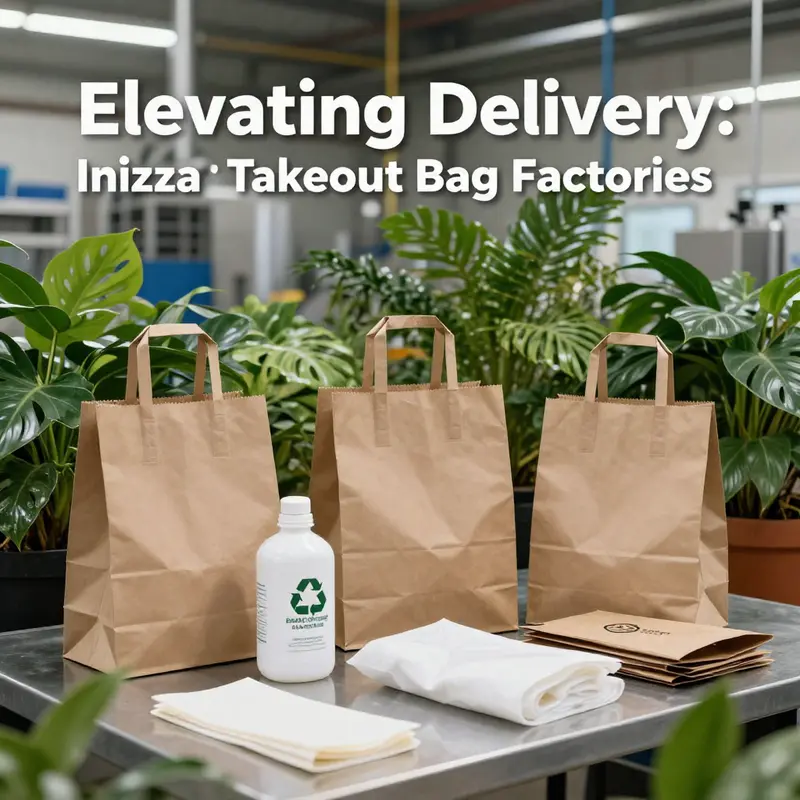
The modern pizza takeout bag sits at the intersection of convenience, reliability, and responsibility. As delivery has become a defining channel for meals, operators and consumers alike increasingly judge packaging not only by how well it preserves heat and protects the pizza, but by its footprint on the climate and on waste streams. In this landscape, sustainability is not a side project but a core performance criterion. Factories that make pizza takeout bags are learning to align design, materials, and energy use with a longer view of resource stewardship. The result is a quiet, steady transformation that reshapes what it means to deliver hot meals while keeping the planet cooler. Behind every bag lies decisions about materials, energy, waste, and end-of-life that ripple through the supply chain, influence customer perception, and ripple back into the factory floor in new ways. This is not a single leap but a series of interlocking shifts, each reinforcing the others and together nudging the entire industry toward more sustainable practice without sacrificing the bag’s essential function: to keep a pizza hot, intact, and appealing from the moment it leaves the kitchen to the moment it is opened by a hungry recipient.
One of the most visible shifts inside these factories is the move away from traditional petroleum-based plastics toward biodegradable and compostable alternatives. Biodegradable and compostable options—such as polylactic acid derived from plant sources—are increasingly integrated into production lines. The appeal is clear: a lower carbon footprint across materials and a pathway for end-of-life disposal that reduces long-term plastic waste. Yet the reality is nuanced. Many compostable materials require industrial facilities to achieve proper degradation, and home composting often falls short. Consequently, factories are not simply switching materials; they are designing for the entire lifecycle. They evaluate how the chosen material behaves under heat, how it interacts with the packaging’s barrier properties, and how it performs during transit and stacking. When done well, this material shift reduces environmental impact without sacrificing the bag’s strength, water resistance, or heat retention. Certifications such as OK Compost and TÜV Austria’s compostability standards play a pivotal role here, offering independent validation of claims and helping buyers differentiate truly sustainable options from greenwashing. These certifications become a kind of shared language across a fragmented supply chain, enabling restaurants and delivery platforms to hold suppliers accountable and to communicate value to customers who increasingly read packaging as part of a brand’s credibility.
Alongside material choices, factories are pursuing energy efficiency with the same intensity as material performance. The production of pizza takeout bags can demand significant heat, lighting, and energy for cutting, folding, and adhesive processes. In response, manufacturers are adopting energy-efficient machinery, optimizing process flows, and auditing energy use to identify waste. Where feasible, facilities are incorporating renewable energy sources or purchasing renewable credits to reduce reliance on fossil fuels. Even modest improvements in energy intensity—such as better insulation of ovens, more efficient dryers, or smarter controls on motors—compounded across thousands of bags per day, can yield meaningful reductions in emissions and operating costs. Implementing heat recovery systems and upgrading to more efficient propulsion for automated lines are practical steps that do not compromise the pace of production. In an industry driven by tight delivery windows, these gains are especially valuable because they can be realized without changing the fundamental reliability of the bags.
Waste minimization has emerged as a practical, measurable objective. Closed-loop recycling systems, where scrap material is captured, refined, and reincorporated into production, are increasingly standard. Even tiny improvements—reclaiming adhesive scraps, reusing trim, or recapturing solvent vapors—add up when scaled across a global network of factories. Waste reduction is not only about the end-of-life story for a bag; it is about reducing waste at every stage of manufacturing. This mindset informs design choices, too. Bag designs are being optimized to use less material without compromising strength and functionality. Die-cut patterns, material thinning, and smarter layups can lower the total resource extraction and transport emissions associated with each order. In parallel, the push to recycle or recover inks and coatings has grown. Cleaner manufacturing technologies—such as digital printing with water-based inks and reduced solvent usage—contribute to a lower environmental impact while maintaining crisp branding and legibility. The goal is to minimize the toxic and volatile elements that can appear in traditional print processes, which in turn supports a safer workplace and a cleaner surrounding environment.
Sourcing practices and third-party certifications form another crucial layer of sustainability. Many factories emphasize sourcing materials from certified sustainable suppliers, and they pursue third-party verification to build trust with customers who demand accountability. Certifications like OK Compost and TÜV Austria’s compostability standards validate claims about biodegradability and compostability, ensuring that marketing language is backed by objective testing. This level of scrutiny matters because the practical realities of composting vary by region and facility. By aligning procurement with certified materials and clear end-of-life pathways, factories help ensure that a bag marketed as compostable actually contributes to a circular system rather than becoming a miscategorized waste stream. Beyond certification, transparent sourcing helps illuminate the supply chain for customers and partners who want to understand how a bag is made, what it contains, and where the raw materials originate. A growing portion of factories also explores life-cycle assessment (LCA) data, using it to weigh trade-offs between material choices, energy use, and transportation impacts. Such assessments inform strategic decisions, revealing the most effective levers to reduce environmental burden over the bag’s entire life span. In practice, this means choosing a composite approach: a material that minimizes fossil fuel inputs, a production line that uses less energy, and a distribution plan that reduces miles traveled.
The digitalization of manufacturing processes is a quiet but powerful enabler of sustainability. Digital printing technologies, in particular, offer cleaner options for branding and messaging on bags. They cut ink waste and reduce solvent emissions compared to traditional printing methods. Moreover, digital workflows enable more precise use of resources, with less overrun and tighter quality control. When a factory can tailor designs without retooling physical molds, it also reduces equipment downtime and material waste. Digital tools also support end-of-life communications, guiding customers toward proper disposal and encouraging recycling or composting where available. These technologies thus serve both environmental and operational goals, aligning everyday production with broader sustainability narratives.
The design of the bags themselves is now a canvas for sustainability. Designers optimize not only for heat retention and puncture resistance but also for recyclability and material efficiency. Reducing the number of layers, selecting barrier materials with better recyclability profiles, and simplifying laminates are practical steps. Packaging engineers are increasingly mindful of how bags travel through the supply chain: more compact packaging reduces transportation emissions, while improved stackability lowers warehouse footprint and handling energy. Even branding plays a part. Clear, honest labeling about end-of-life options, when paired with recyclable or compostable designs, strengthens consumer trust and reduces confusion at the point of disposal. In this context, the collaboration between designers, materials scientists, and supply chain planners becomes essential. The end product emerges not as a separate widget but as the result of a tightly integrated development cycle that considers sustainability at every decision point.
An underappreciated but growing practice is the use of targeted sustainable sourcing within the broader packaging ecosystem. Factories increasingly curate their raw material inputs with sustainability in mind, favoring suppliers that demonstrate responsible forestry practices, low-impact extraction, or recycled content. They pursue traceability so customers can trace a bag from raw material to finished product. This traceability fosters a sense of accountability and enables continuous improvement. To support this, some factories maintain a digital ledger for key materials, outlining supplier certifications, test results, and batch-level data. The outcome is a more robust, transparent supply chain where environmental performance is not a vague aspiration but a measurable metric.
In the conversations surrounding sustainability, it is important to recognize the balance factories strive to achieve. Heat retention, bag strength, cost per unit, and ease of disposal all compete for attention. A bag that keeps pizza hot but becomes a disposal challenge does not serve the broader goals of responsible packaging. The most successful factories navigate these tensions by embracing a holistic view of product stewardship. They invest in research and development, partner with universities or industry groups, and recruit talent focused on materials science, process engineering, and environmental management. The result is a more resilient operation that can adapt to evolving standards, customer expectations, and regional disposal infrastructures. It is a practical, iterative journey rather than a single breakthrough.
For readers seeking a tangible sense of what this looks like beyond general principles, consider examining related material categories and packaging strategies in the broader packaging ecosystem. A useful touchpoint is the paper packaging segment, which often intersects with bag production in terms of sourcing and end-of-life considerations. You can explore that category here: paper packaging.
As the industry continues to advance, the trajectory is clear. Sustainability practices in pizza takeout bag factories will increasingly rely on smarter materials, cleaner production, smarter design, and transparent partnerships. These elements reinforce one another: better materials reduce energy and waste; cleaner processes lessen emissions and solvent exposure; smarter design improves recyclability and overall lifecycle performance; and transparent sourcing builds trust with restaurants, delivery platforms, and consumers. The net effect is a packaging system that not only preserves the temperature and integrity of a hot pie but also models responsible manufacturing for the next generation of food-service packaging. The conversation extends beyond today’s bag to the standards, certifications, and innovations that will shape tomorrow’s choices, shaping how brands tell their sustainability stories to a growing audience that expects accountability as a baseline condition rather than a premium feature. For those who want to dive deeper into the broader landscape of sustainable packaging in food service, a detailed external resource provides broader context and the latest trends. External reference: https://www.packagingdigest.com/sustainability/sustainable-packaging-trends-food-service
From Heat to Halo: The Hidden Supply Chain of Pizza Takeout Bags
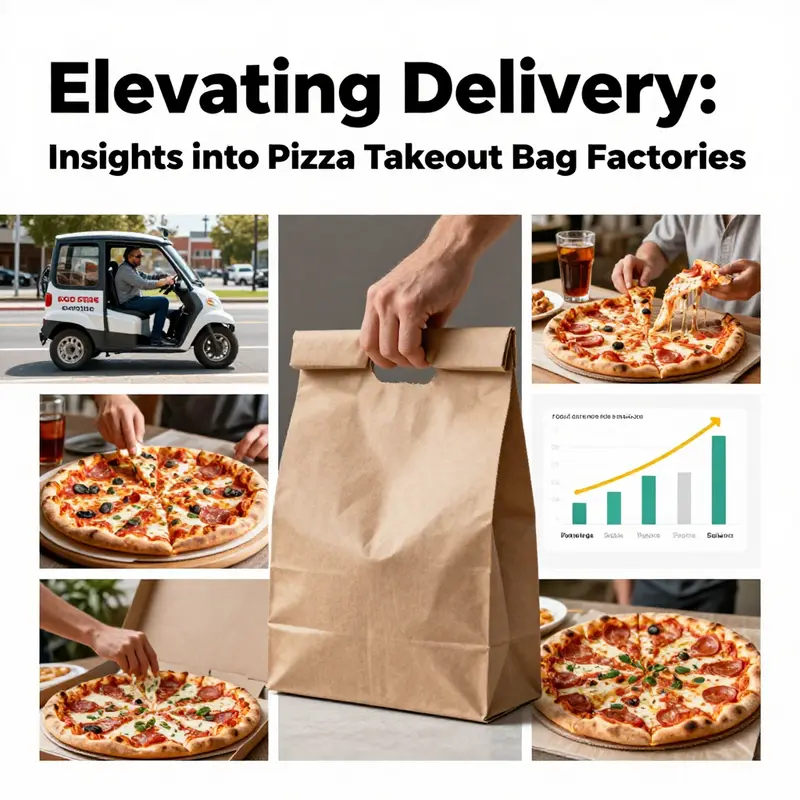
On the shop floor where cardboard and heat exchange live, the pizza takeout bag sits at the end of a long supply chain. It is more than a wrapper; it is a calibrated tool designed to protect a hot, fragrant pizza from oven to doorstep. In modern manufacturing, factories that produce these bags balance safety, cost, and performance in a market that is global in reach and intimate in expectation. The bag’s journey ripples outward, shaping how restaurants present themselves, how customers experience delivery, and how cities manage waste and resources. The evolution of pizza takeout bags mirrors broader shifts in packaging, from the materials that cradle a slice to the branding that travels with it into feeds and kitchens alike. When we think about the bag, we glimpse a larger story about modern foodservice where every design choice matters beyond the kitchen door.
Sustainability is a baseline expectation. Consumers want packaging that minimizes footprint, and regulators push for transparency and recyclability. Bag producers have moved beyond paper and plastic toward recycled fibers, compostable bioplastics, and films compatible with home and industrial composting. Plant-based inks reduce odor and toxicity, helping maintain visual appeal without contaminating recycling streams. The move toward sustainable materials is both ecological and strategic, contributing to a pizzeria’s reputation. A bag that signals responsibility can translate into loyalty and differentiation in a crowded delivery landscape. For a broader view of the packaging ecosystem, see external references and industry reports on packaging trends.
Functionality remains central. Pizzas must arrive hot, with crusts crisp and cheese melted just so, without sogginess or leakage. Insulated bags balance heat retention with a slim profile for efficient stacking. Designs may include reflective barriers, moisture control layers, and reinforced seams to withstand hours of urban delivery. In practice, this means more pizzas arriving in a state that reflects the kitchen’s standards, reducing re-heating needs and boosting customer satisfaction.
Custom branding has grown with online ordering. Restaurants treat packaging as mobile advertising, a small but persistent touchpoint that reinforces identity. Factories offer logos, color schemes, and even shapes or window cutouts to preview the product inside. Such features help a restaurant stand out and support loyalty campaigns, turning a bag into a branded ambassador as it travels through neighborhoods and feeds social networks. The challenge is to maintain print quality and color accuracy without sacrificing heat retention or barrier performance.
The global expansion of pizza service elevates the importance of scalable production. Markets grow beyond mature economies into regions where delivery culture is taking hold, and where urban populations expect reliable meals on the go. Factories must manage large-scale runs, optimize cross-border logistics, and adapt designs to local preferences and regulations. A factory that delivers consistent quality at scale gains a durable advantage in a dynamic marketplace.
The design and manufacture of pizza takeout bags thus live at a crossroads of practicality and aspiration. They satisfy safety and durability needs while expressing sustainability, brand storytelling, and customer experience goals. The result is a packaging ecosystem that evolves, shaping how a simple slice travels from oven to home and how people think about takeaway itself.
How Pizza Takeout Bag Factories Invent Heat, Space, and Brand — Design That Delivers
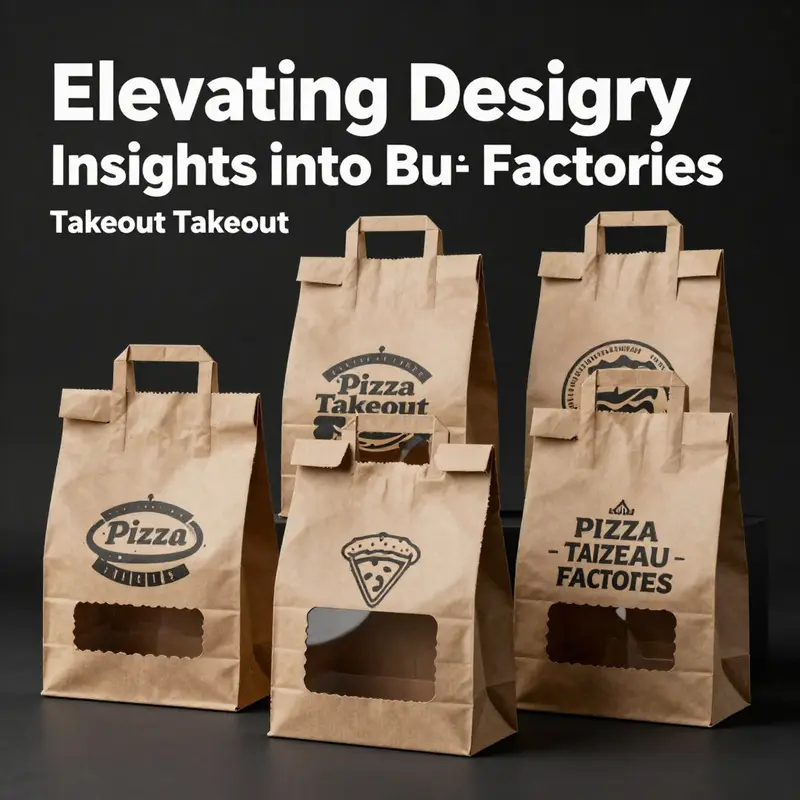
Innovation in pizza takeout bag production fuses thermal science, practical geometry, and brand thinking into a single tool that carriers and restaurants rely on every day. Factories that make these bags are no longer simply sewing insulated shells; they are engineering systems that extend the restaurant’s kitchen to the customer’s doorstep. The best designs manage three primary demands at once: preserve temperature and texture, accommodate diverse orders efficiently, and amplify the brand in transit. Achieving that balance requires material innovation, clever construction, and manufacturing workflows tuned to real-world delivery conditions.
Thermal performance sits at the heart of the brief. Traditional insulation layers slow heat loss, but newer factories incorporate advanced vacuum insulated panel (VIP) technology to raise the baseline. VIP layers interrupt conductive and convective heat transfer more effectively than foam alone, so a well-built bag can keep pizza cores above serving temperature for extended periods. Practical tests show that combining VIP with reflective linings and airtight seams yields the longest hold times. That combination preserves not only temperature but also the crust’s crispness and the cheese’s melt, which are essential to perceived quality.
Designers marry thermal layers with waterproof and foldable outer shells. Waterproof fabrics protect against rain and spills during long urban patrols. Foldability is equally important: drivers and kitchens need to store multiple bags in limited space. Factories engineer gusseted constructions that fold flat without damaging the VIP elements. Reinforced edges and seam taping protect thermal integrity while allowing repeated collapse and deployment. These small structural decisions reduce downtime and extend a bag’s usable life—translating into lower total cost for operators who rely on fleets of bags daily.
Space efficiency is another critical lever. Modern bags often include expandable side gussets that increase usable volume by up to 30 percent over flat designs. This lets couriers carry pizzas alongside salads, desserts, and condiments without compromising thermal performance. Expandable compartments use zippered or fold-out panels that lock into position during transit. Factories prototype these features with rapid iterations, testing how different loading patterns affect internal airflow and heat retention. The result is a bag that behaves predictably whether it contains a single large pie or several mixed items.
Carrying comfort and portability are not afterthoughts. Secure patch handles, padded shoulder straps, and balanced weight distribution reduce strain on couriers during long routes. Factories design handle placements to align with the bag’s center of gravity, preventing pizzas from sliding or boxes tilting. Reinforced bases and internal stabilizers keep stacks level. Ergonomic improvements matter: they decrease delivery times, reduce product displacement, and lower injury risk for drivers. This is particularly valuable in markets where couriers make dozens of stops per shift.
Branding is woven into the product, not simply printed on the surface. Takeout bags operate as mobile advertisements, moving at street level through neighborhoods, apartment buildings, and office parks. Factories support full-surface printing, reflective logo patches for night visibility, and easy-change exterior panels so brands can update seasonal campaigns without buying entirely new bags. Custom color matching and high-resolution printing techniques maintain visual fidelity across large production runs. For businesses that want packaging that reinforces identity, factories offer co-design services that integrate logo placement with functional features like venting and access points.
Sustainability is reshaping material choices and production methods. Many factories shift toward recyclable or compostable options for non-critical components, such as exterior shells and packaging accessories. Where VIP and high-performance linings are necessary, manufacturers pursue modular designs that allow replacement of worn elements instead of discarding the entire bag. Food-grade certifications and compliance with regional safety standards guide material selection. These practices reduce waste and lower the long-term environmental footprint of delivery operations while maintaining hygiene and durability.
Manufacturing workflows reflect the complexity of these multi-component products. Factories adopt modular assembly lines to combine textile sewing, thermal lamination, and printing. Automated cutting for fabric panels improves consistency and minimizes material waste. Quality control includes thermal hold testing and seam pressure evaluations to ensure every bag meets performance targets. For clients requiring brand exclusivity, OEM services scale from small artisan batches to large fleet runs, with minimum order quantities adjusted to balance tooling and setup costs against unit price.
Distribution and procurement are also evolving. The rise of online sourcing platforms connects buyers directly to suppliers capable of OEM customization. This opens access to factories that can deliver small pilot runs for testing market fit, then scale to thousands of units once the design proves effective. Factories increasingly offer bundled solutions—bags paired with inserts, dividers, or reusable liners—so businesses can buy a complete system rather than piecemeal parts. That systems approach reduces integration friction for restaurants and delivery services that want predictable, repeatable outcomes.
Safety and regulatory compliance remain central to design decisions. Factories prioritize food-grade materials and manufacturing practices that meet regional standards. Linings are chosen for low odor and non-reactivity with food, while adhesives and tapes are selected for durability and safe contact. Regular independent testing and certification provide buyers with assurance that bags will not impart unwanted flavors or compromise food safety during transit.
Practical innovation often comes from observing delivery realities. Factories gather feedback from drivers and restaurant staff to refine details: where seams fail first, how handles wear under load, and how condensation forms inside during rainy nights. This feedback loop accelerates improvements. For example, adding moisture-wicking lining where pizzas sit reduces sogginess and preserves crust texture. Removable inner mats allow quick cleaning and maintain hygiene standards between shifts. Small, iterative improvements like these compound into markedly better performance over time.
Economic considerations drive many design trade-offs. High-performance materials increase upfront costs but extend service life and reduce waste. Expandable and modular designs can cost more to produce but deliver operational savings by consolidating orders and reducing trip frequency. Factories help buyers model total cost of ownership, showing how a slightly higher unit price can lead to lower per-delivery cost over the bag’s lifetime. This commercial perspective is why many operators choose reusable, premium bags for their main fleet while keeping simpler disposables for overflow or single-use needs.
As the delivery landscape becomes more competitive, takeout bags are a tactical asset. They protect the product, ease operations, and promote the brand all at once. Factories that succeed do so by combining material science, human-centered design, and scalable production. They do not treat bags as commodities but as engineered systems with measurable impacts on customer satisfaction and operational efficiency. The result is packaging that performs reliably under pressure, keeps pizzas at the right temperature, and turns every delivery into a moment of brand contact.
For businesses exploring options, manufacturers that also provide packaging and printing services can simplify the path from prototype to fleet deployment; see packaging & printing products for complementary solutions that enhance branding and functionality. External sourcing platforms offer direct access to high-performance bag suppliers and OEM services for bulk customization: https://www.alibaba.com/product-detail/Insulated-Pizza-Delivery-Bag-Factory-Supplier_1600492782922.html
Final thoughts
Pizza takeout bag factories play an essential role in facilitating the growing trend of food delivery and takeout services. By leveraging advanced manufacturing processes, embracing sustainability, acknowledging market trends, and focusing on innovative designs, these factories are not only enhancing the way pizza is served but also catering to a broader audience in the food industry. Understanding the intricate dynamics at play within these factories can empower beverage chains, restaurants, food trucks, catering services, and procurement teams to make informed decisions that enhance their operational efficiency and customer satisfaction. As the industry evolves, staying informed about these factors will be crucial for success.