
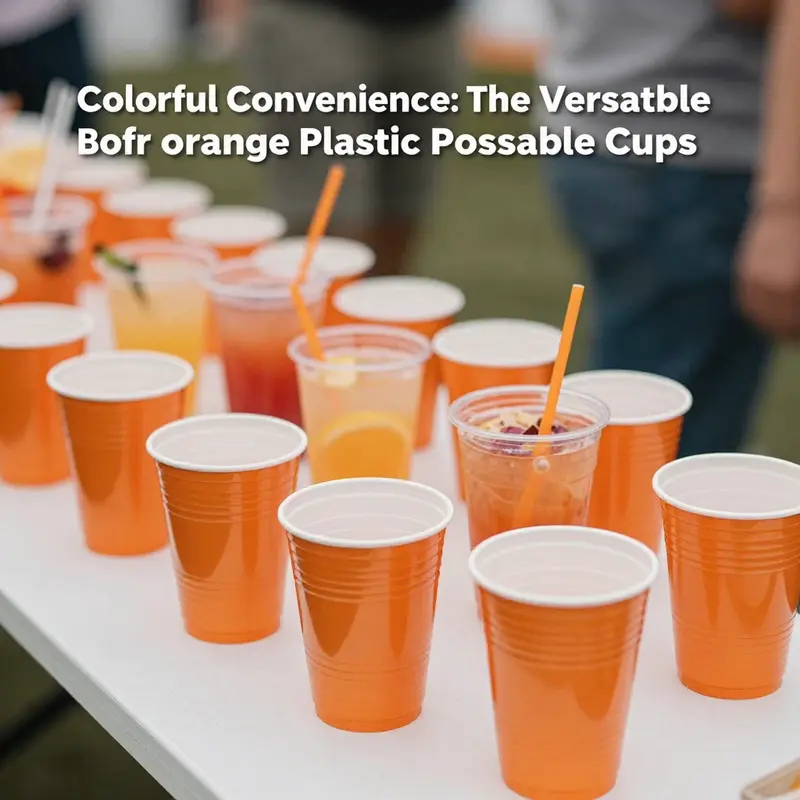
In the bustling world of event planning and food service, the selection of beverage containers plays a pivotal role in both aesthetics and functionality. Orange plastic disposable cups, known for their vibrant hue and practicality, have carved out a niche in venues ranging from bubble tea shops to large corporate events. Through an exploration of their material composition, market trends, customization capabilities, environmental considerations, and economic advantages, this article aims to provide a comprehensive understanding of why these cups are an essential choice for catering, food trucks, and corporate procurement teams. By delving into each aspect, readers will gain insights that aid in making informed procurement decisions.
Color, Chemistry, and Choice: The Material Core of Orange Plastic Disposable Cups
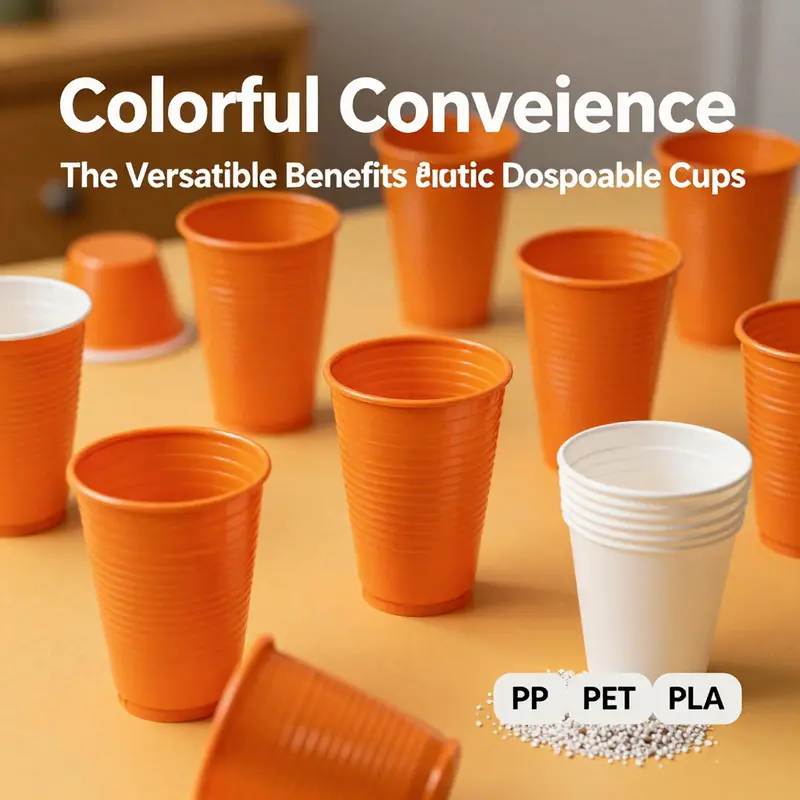
The bright orange hue of disposable cups is more than a visual cue for a party or seasonal celebration; it is a practical signal of the material choices that shape performance, safety, and end-of-life outcomes. In a world where convenience combines with the desire for a certain mood, understanding what lies inside an orange plastic disposable cup helps hosts, vendors, and sustainability-minded consumers make informed decisions. This chapter follows the thread of material composition from the showroom color to the factory floor, through the kitchen, and into the waste stream. It is not a catalog of colors or shapes, but a cohesive look at how two main thermoplastic families—polypropylene (PP) and polystyrene (PS)—have become the workhorses of single-use drinkware, why orange coloration tends to appear in these particular polymers, and what those choices mean for temperature tolerance, safety, recyclability, and overall environmental impact. To connect theory with practice, consider how a simple color choice can influence packaging design, printing options, and the logistics of serving large crowds, indoors or outdoors, hot or cold, with or without branding. A quick tour through the Plastic Cups category on the supplier site, Plastic Cups, reveals how color and form are leveraged across single-use ware and hints at the practical constraints behind the vivid orange shade.
Polypropylene emerges as the dominant plastic in many orange disposable cups, and for good reasons. Its thermal resilience covers a wide range of beverage temperatures, making it suitable for both steaming coffee and cold fruit drinks. The polymer’s chemical inertness means it is generally safe for food contact, with additives and colorants designed to withstand repeated contact with liquids without leaching in any meaningful way under normal use. When orange is added during the molding process, the dye or pigment is incorporated into the polymer matrix, not merely painted on the surface. This integration helps prevent flaking, fading, or chipping that would otherwise compromise the appearance and the function. PP’s rigidity and impact resistance contribute to a reliable drinking experience, even when cups are handled repeatedly at a banquet, a festival booth, or a bustling bar line. In practice, this means an orange PP cup can endure the bumps and drops of a lively event without cracking or losing its shape, a quality hosts often equate with value.
From a sustainability perspective, polypropylene has a clearer pathway than many plastics used in disposable ware. It is widely recyclable in many municipal programs, though the availability and efficacy of recycling streams depend on local infrastructure. The color concentration in orange PP cups matters too: pigments used to achieve a saturated orange must be compatible with the resin and with standard recycling streams. When a colorant is well-chosen, the cup remains polymer-compatible across the lifecycle—from molding to sorting to potential reuse in some contexts, and ultimately to mechanical recycling. The fact that PP can be molded into precise shapes helps manufacturers optimize material thickness, wall height, and rim design, which in turn influences usability for guests who carry a drink across a crowded room or out to an outdoor event. These design efficiencies can translate into both practical performance and cost savings, a consideration for planners who must balance budget with guest experience.
Polystyrene, particularly in its rigid form, represents a different set of trade-offs. PS is often chosen when low production cost and rapid manufacturing are priorities. In its orange incarnation, PS can deliver a bright, opaque color with a clean surface that suits many casual event settings. However, PS is typically less durable than PP and more brittle, especially under impact or UV exposure. When faced with hot liquids, PS can deform or become less stable, raising concerns about safety and user experience. This limitation helps explain why PS remains common for short-term, cold-beverage applications and for environments where the cups won’t endure heavy handling or heat exposure. From an environmental lens, PS poses more complex recycling challenges in many regions. While some PS streams are accepted in curbside programs, the process can be less straightforward than PP recycling, and there is ongoing debate about the true end-of-life impact of rigid PS products. The confluence of cost, practicality, and disposal considerations makes PS a familiar but nuanced choice for orange disposable cups.
The temperature envelope of these materials is a decisive factor for event planners and caterers. Hot liquids demand a material with stability and low risk of deformation and chemical interaction. Polypropylene fits this requirement more robustly than polystyrene, which explains the prevalence of PP-based orange cups for coffee service, hot chocolate stations, and other warm beverage setups. For cold beverages—sodas, juices, iced coffees—the gap narrows, but the performance still favors PP in many contexts due to its stronger resistance to cracking, chipping, and warping under practical use. Color retention under cold and warm conditions matters as well. Orange pigments must be selected not only for vibrancy but also for consistency across temperature fluctuations to avoid uneven fading or streaking that could distract guests or undermine branding. In this sense, the material science of orange cups is inseparable from the color science of the dyeing and pigment processes used during production.
A more forward-looking note concerns eco-friendly alternatives and the evolving landscape of compostable and biodegradable options. PLA, a polylactic acid-based material derived from plant sources, offers a plant-based pathway that aligns with sustainability goals in certain markets. PLA cups can be designed for composting in industrial facilities, and some producers experiment with orange pigments compatible with PLA. Yet PLA has its own caveats. It often requires specific composting conditions to achieve degradation within a practical timeframe, and it may not be compatible with all existing recycling streams. For events seeking the strongest alignment with circular economies, the choice becomes not simply “which color is best” but “which lifecycle system is feasible in my locale.” In other words, even when orange is appealing visually, the ultimate decision must weigh the local reality of waste management, processing capacity, and consumer participation.
This material decision is also about how the cups are manufactured and whether customization is part of the plan. Modern plastics manufacturing frequently employs injection molding for single-use drinkware, a process that benefits from the color stability and flow characteristics of PP and PS. When customization is desired, some producers offer printing options through flexo or related technologies. Colorfastness under printing and subsequent handling becomes a practical concern: the orange pigment must not bleed or wear away during the life of the cup, nor should the print interfere with the cup’s integrity under heat and moisture exposure. The capacity to add branding or themed graphics without compromising the material’s performance offers substantial value for event planners and venues that want a cohesive aesthetic. The result is a product that not only serves a drink but also communicates a mood or message with clarity and consistency. If branding is a priority, it makes sense to explore the printing capabilities and the compatibility of color and material, keeping in mind that some methods are better suited to PP than to PS, and vice versa, depending on the color palette and the complexity of the design.
From a consumer standpoint, the choice between PP and PS orange cups often aligns with the expected guest experience and the logistical realities of the event. For hot beverages, the sensation of warmth must be delivered without the risk of heat transfer to the hand. PP’s higher glass-transition temperature and robust thermal stability make it a safer and more versatile option in many such cases. For cold beverages, both plastics perform well, but the lifetime of the cup’s physical integrity—its resistance to cold-induced cracking and its ability to maintain shape in a crowded service line—still leans toward PP in many settings. The weight and rigidity of the cup influence perception as well. A sturdy orange cup can convey a sense of value and reliability, which matters in high-volume scenarios where guest confidence in the serving is part of the overall experience. Color, in this context, becomes a cue that complements texture, thickness, and ergonomic design, all of which contribute to the user experience from the moment a guest picks up the cup to the moment they discard it.
The end-of-life considerations for orange disposable cups cannot be ignored in a complete material portrait. The recycling pathway for PP cups is clearer in many regions but still depends on local program structures. Waste sorting, contamination, and collection practices all affect how much of the material can re-enter the circular economy. PS, particularly when used in rigid form, presents a patchier recycling narrative, with some programs accepting it and others not, and with the added nuance that foamed PS (not typically used for these cups) has different handling requirements. PLA-based orange cups, while promising for composting, also require a compatible waste management ecosystem to realize their environmental benefits. The broader takeaway is that color and material choice are not isolated factors; they are part of an integrated system that includes manufacturing, distribution, consumer behavior, and municipal processing. For planners who want to minimize environmental impact while preserving a vivid event aesthetic, the decision often involves balancing practical performance with the realities of disposal and reuse in their community.
In sum, orange plastic disposable cups are most likely built from polypropylene, with polystyrene serving as a lower-cost alternative in contexts where hot liquids are not expected and durability requirements are lighter. The appeal of orange is not merely cosmetic; it reflects the compatibility of color with polymer chemistry, processing methods, and the practical demands of service environments. Eco-conscious choices may look toward PLA in markets with robust composting infrastructure, while ongoing improvements in recycling and sorting technologies continue to shape the feasibility of reusing or recycling PP- and PS-based cups. The practical implication for event organizers and suppliers is clear: align material choice with beverage temperature, expected handling, branding goals, and local waste-management realities. By doing so, the orange cup becomes more than a color—it’s a thoughtfully selected component of a well-executed event ecosystem.
For readers seeking a deeper technical grounding, see the external resource that examines how polymer composition influences the performance of disposable plastic cups in food-service applications. The Effect of Polymer Composition on the Performance of Disposable Plastic Cups in Food Service Applications.
Orange Cups, Clear Impact: Market Trends in Colorful Disposable Drinkware for Event Planning

Orange plastic disposable cups have moved from background to centerpiece in modern event planning. Their color is a cue for warmth, energy, and hospitality and can anchor a brand story across venues and moments. When used deliberately, orange can guide guest flow, highlight signature drinks, and create memorable photo moments. In a crowded supply landscape, consistent color palettes and reliable availability matter as much as aesthetics. The result is a practical design tool that couples function with branding for events of all sizes.
Understanding the market forces, the global disposable cups segment continues to grow as food service and hospitality expand their footprint. Color-specific offerings are not only about appearance; they are about signaling theme and improving guest recognition. Planners can deploy orange cups as part of a cohesive visual system that extends across invitations, décor, and service ware. The cup becomes a lightweight canvas for logos or seasonal motifs, turning ordinary vessels into strategic branding surfaces. The advantages include visibility, potential cost efficiencies through bulk orders, and the ease of coordinating with other disposable items for a unified table-scape.
From a materials science perspective, orange cups are commonly made from polypropylene (PP), PET, or PLA. PP offers durability for hot and cold beverages, PET provides clarity and a crisper silhouette in photos, and PLA appeals to sustainability goals through composting streams. Sizes around 16-18 ounces are typical, providing versatility while maintaining service efficiency. Printers and decorators can add logos or messages, though minimums and color fidelity must be considered against lead times. For planners focused on sustainability, PLA options and certified composting pathways can align with green event commitments, while recognizing regional waste stream realities.
Branding and customization sit at the heart of the value proposition. Branded orange cups can reinforce a theme, sponsor identity, or event narrative. Flexo printing and other scalable methods enable mid- to high-volume runs, balancing cost with design impact. The practical effect is that guests walk away with a visual reminder of the brand or moment, often captured in photos and social shares. Coordinating color families across invitations, decor, and drinkware strengthens coherence and reduces cognitive load for guests as they navigate the event.
Sustainability considerations remain central. Many clients seek eco-friendly options such as PLA or compostable variants. However, lifecycle realities matter: compostability depends on real-world waste streams, and durability or print quality can be impacted by packaging and handling. Planners should weigh environmental goals against practical constraints and venue capabilities, selecting products that meet safety standards and performance criteria while aligning with broader sustainability statements.
Regulatory context adds a useful layer of confidence. FDA guidelines for food-contact materials underpin safety expectations for beverages in colored cups. Choosing compliant items provides assurance to venues, caterers, and guests that color and branding do not compromise hygiene. Suppliers should supply documentation and labeling that demonstrate conformity to applicable standards.
In practice, orange cups function as part of a broader ecosystem of disposable drinkware. The choice of material, finish (matte, gloss, or translucent), and size interacts with lighting, tableware, and space planning to achieve a cohesive look. Color-driven cues can simplify service flow, guide guests to signature drinks, and contribute to a memorable, brand-aligned experience. As the market evolves, the role of color is likely to grow as a strategic asset in event design.
Branded by Color and Craft: How Customization Transforms Orange Plastic Disposable Cups into Event Tools, Not Just Tableware
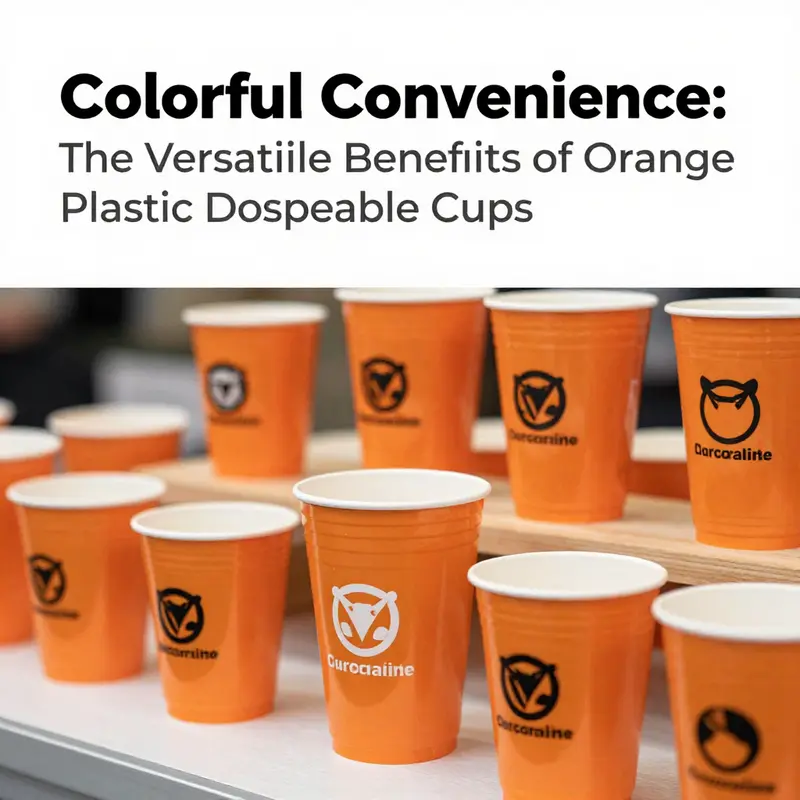
Orange plastic disposable cups carry more than a bright hue; they convey mood, theme, and intention at every gathering. Their presence on a table signals simplicity and convenience, yet the full potential of these cups emerges when they are treated as customizable instruments rather than merely disposable vessels. Behind the everyday practicality of bulk packs and standard sizes lies a spectrum of choices that can align with brand storytelling, event design, and sustainability goals. The vibrant orange, a color that already commands attention in crowded rooms, becomes a canvas for communication when you layer in logos, graphics, and thoughtful sizing. In practice, this means that a party cup can become a portable billboard for a company, a wedding motif, or a seasonal celebration, all while remaining food-safe and easy to use. The evolution from generic drinkware to carefully branded and theme-consistent tableware is driven by the same forces that shape modern packaging and experiential marketing: speed, cost-effectiveness, and a desire to turn ordinary moments into memorable ones. When designed with purpose, orange cups do more than hold beverages; they guide flow, reinforce branding, and contribute to the narrative of an event long after the last sip.
At their core, these cups are built from food-grade materials such as polypropylene (PP), polyethylene terephthalate (PET), and polystyrene (PS). Each material brings its own balance of safety, durability, and suitability for different beverages and settings. PP is often favored for its heat resistance and toughness, making it a reliable choice for warm drinks or outdoor receptions where accidental bumps are common. PET excels in optical clarity, which matters when the cup itself serves as a display for layered colors or imagery beneath the surface. PS is lighter and typically economical, a practical option for large-scale events where cost efficiency is paramount. Across these materials, the common thread remains food-grade quality, BPA-free formulations, and adherence to hygiene standards. For event planners, this is not merely a checkbox; it informs how a cup performs under real-world conditions—from a hot winter punch to a frosty holiday cocktail hour.
Customization expands these possibilities in tangible ways. The ability to imprint a logo, brand name, or event details directly onto a cup transforms it from a disposable item into a mobile canvas. This is especially valuable for corporate giveaways, sponsorships, or weddings where every element contributes to a cohesive story. When a cup bears a logo or graphic, it becomes a subtle touchpoint that participants encounter repeatedly—sometimes even more than once through social sharing or photo opportunities. The method of imprinting matters as well. Modern printing technologies, such as flexo printing, offer durable, scalable, and cost-efficient options that maintain legibility and color fidelity even after many cups have been handled, stacked, and reused in the sense of being repurposed for second drinks. This combination of resilience and visibility makes the cup an understated yet effective advertising vehicle at conferences, festivals, and family celebrations alike.
Beyond logos, color customization opens additional creative avenues. While the base color remains the legible orange of the cup, suppliers increasingly offer the ability to adjust or enhance color through customizable finishes, shades, and even two-tone effects. The concept of customized colors is not merely aesthetic; it enables tight theme alignment with event branding, seasonality, or corporate color palettes. Whether a wedding theme calls for a soft sunset orange that harmonizes with florals, or a festival backdrop requires a neon tint to align with stage lighting, the capacity to tailor the cup color to precise hues elevates the design impact. This emphasis on color matching is especially useful for seasonal events such as Christmas or Halloween, where complementary colors can be layered onto the orange base to create cohesive visuals across decorations, signage, and disposable tableware.
Sizes and capacities further tailor the cups to specific beverages and service formats. The standard 18-ounce option has become a common benchmark for many bulk purchases, but customization ranges from compact 6-ounce portions to generous 20-ounce servings. A 6-ounce cup might be ideal for tastings, kid-friendly portions, or cocktails that require precise measurement of flavorful ingredients, while the 20-ounce variant offers room for voluminous iced drinks or smoothies at outdoor fairs. For operators who design menus or drink stations around a central theme, the choice of capacity is part of the overall customer experience, guiding portion control, pricing, and even the pacing of a line. The capacity spectrum—6 oz, 9 oz, 12 oz, 16 oz, and up to 20 oz in some assortments—allows planners to curate a coherent beverage service that aligns with the event’s format, whether it’s a seated reception or a standing mixer with self-serve drink stations. In practice, this means you can map cup size to drink type, reinforcing comfort and convenience for guests as they navigate long events without the need for constant restocking.
Material selection remains a touchstone of safety, sustainability, and performance. The choice of PP, PET, or PS is not purely a matter of cost; it shapes how a cup handles heat, how it appears under lighting, and how it interacts with the liquids it contains. BPA-free formulations are now the industry baseline, reflecting evolving hygiene standards and consumer expectations. For those seeking more sustainable options, plant-based alternatives such as PLA (polylactic acid) are becoming more widely available. PLA cups can offer compostability under appropriate industrial conditions and appeal to brands aiming to demonstrate environmentally minded practices. However, it is important to consider the practical realities of PLA in everyday settings. PLA’s heat resistance and compatibility with hot beverages are generally more limited than PP, and compostability requires access to suitable facilities. When selecting eco-friendly options, planners must weigh the environmental benefits against performance needs, supply chain reliability, and disposal infrastructure at the event’s location. In many cases, combining a PLA-based option for appropriate contexts—such as cold beverages at outdoor summer gatherings—with a robust PP or PET option for standard service can deliver both sustainability and reliability.
The conversation around customization is not complete without acknowledging the underlying technology that makes personalizing orange cups feasible at scale. Flexo printing, a widely used method for disposable tableware, enables high-volume production with precise graphics and strong adhesion to curved surfaces. The durability of printed designs on plastic cups is critical, especially at high-traffic events where cups are handled, stacked, and shuffled along serving lines. A well-executed print job resists wear and maintains legibility through multiple cycles of use and reuse, whether guests are swapping flavors, passing cups around tables, or taking quick photos for social media. The ability to carry brand storytelling from the moment a guest selects a drink to the moment they later recall the experience is central to experiential marketing. An orange cup, emblazoned with a logo or a playful graphic, often travels far beyond the table, appearing in event photos and shared memories. In this sense, customization tools the event team uses do more than beautify the table; they extend the life of the branding dialogue beyond the event itself.
For those who are exploring customization with sustainability in mind, the options can appear as a spectrum rather than a single choice. PLA-based cups present a credible path for smaller events or campaigns that wish to emphasize compostability, but the broader adoption depends on local waste-stream capabilities. PP and PET cups offer robust performance at a lower risk of disposal complications, especially where municipal recycling programs are in place. In many settings, choosing a single cup family that covers both standard serving and branded variants can simplify logistics. A single order can yield cups with a uniform orange baseline, while allowing different prints or color accents for sub-events within a larger gathering. This approach streamlines inventory management and reduces the confusion that often arises when multiple cup types are required to accommodate various drink categories, guest groups, or thematic zones.
From the perspective of branding and event design, the integration of logo, color, and capacity decisions becomes an exercise in storytelling. A host who wants to convey a cohesive brand identity can leverage a consistent orange cup as a familiar touchpoint across venues, while varying the graphics to reflect different moments within a program—an introductory reception, a mid-event toast, and a closing note. A wedding planner might adopt subtle script typography on the cups for the ceremony, bolder imagery during the reception, and seasonal accents for a holiday gathering. The same cup, carrying different graphics, can serve as a thread that weaves through disparate moments of a multi-day event. The practical advantages of this approach are equally compelling. Bulk purchasing, standardized materials, and scalable printing translate into substantial cost savings for organizers who would otherwise juggle countless SKUs and suppliers. When the design system is centralized around a few core elements—color, logo, and capacity—the execution becomes smoother, and the finished product becomes a more coherent visual language.
To further support organizers who want to explore these options, consider the ways in which packaging and printing services frame their capabilities. A well-curated set of choices becomes not just a catalog of features but a toolkit for achieving consistent aesthetics across venues and moments. The option to customize colors beyond the standard orange invites teams to align with brand palettes or seasonal cues, turning a simple cup into a flexible instrument for immersive design. The choice of materials should be guided by the event’s context—indoor versus outdoor, climate considerations, and the expected duration of the cups in use. Safety remains non-negotiable: all materials used for edible or drink-contact items must be food-grade, BPA-free, and compliant with hygiene standards. The discussion of customization, then, becomes an exploration of how form and function align with brand values and guest experience.
In practical terms, event planners and brand managers should approach customization as a coordinated, end-to-end process. Start with a clear brief that identifies the event theme, the color story, and the roles the cups will play in the experience. Decide on the core orange base and whether you need additional color accents or full-color graphics. Map out the expected beverage types and the fullest range of capacities required to support both standard and premium offerings. Confirm material preferences based on temperature tolerance, compostability considerations, and local disposal capabilities. When you settle on a path that combines safety, practicality, and aesthetic coherence, you invite a level of consistency that strengthens recognition and recall. The cups then become not just utilitarian items but elements of a coordinated visual system—usable, recyclable where possible, and expressive of the event’s narrative.
For readers seeking concrete routes to explore these possibilities, a focused starting point is the broader packaging and printing category on the supplier ecosystem, which houses a range of options for applying logos and graphics to disposable drinkware. This pathway helps translate the theoretical values of customization into actionable products, with practical considerations for print longevity, color accuracy, and logistical compatibility with bulk production cycles. As with any sourcing decision, it is essential to balance cost with quality, ensuring that the final cups withstand handling, glassware-like expectations of presentation, and the realities of event flow. In this light, orange cups become not only reliable vessels but canvases that carry a brand’s personality through the entire guest journey.
Internal link to explore packaging printing options and related customization capabilities: packaging printing options.
External resource for further reading on supplier capabilities and material considerations can be found at a broader marketplace listing, which provides context on how a range of orange-disposable options are configured for logo usage, color customization, and BPA-free safety. External resource: https://www.alibaba.com
Colorful Footprints: The Environmental Journey of Orange Plastic Disposable Cups
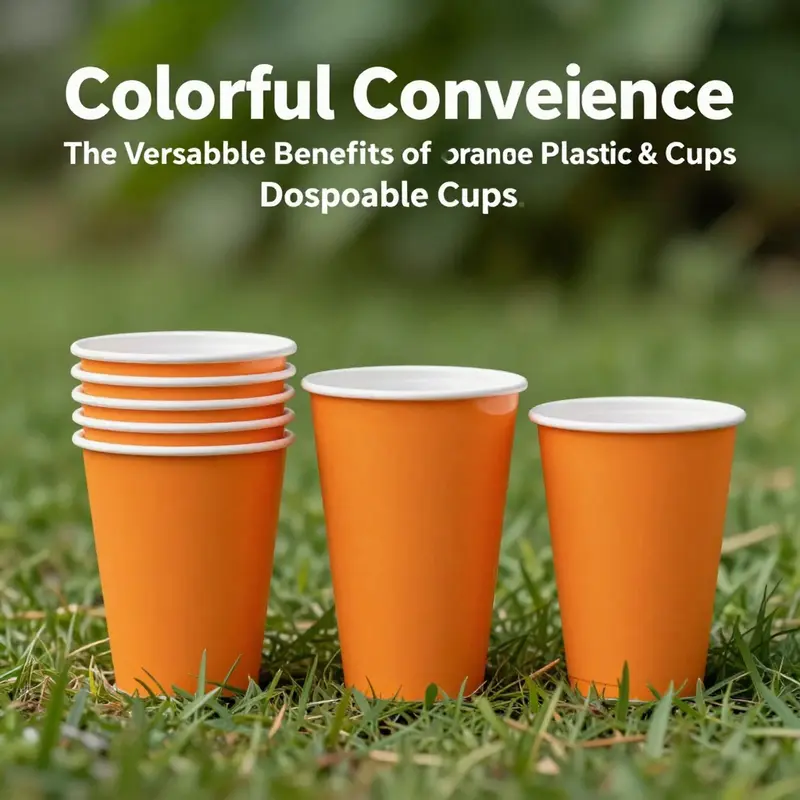
Orange plastic disposable cups are a common sight at celebrations, from casual gatherings to seasonal festivities, where their color signals mood and convenience. Yet behind their cheerful exterior lies a lifecycle that connects factories, supply chains, event hosts, and waste management systems. This chapter traces that journey in a compact narrative, highlighting the choices at each step that help or hinder environmental outcomes and offering practical ideas for hosts, vendors, and policymakers who want to balance function with responsibility.
Understanding the environmental footprint begins with production. Most cups are made from food-contact polymers such as PET or HDPE, derived from fossil fuels and processed with energy-intensive steps. The orange color comes from pigments and colorants added during manufacturing, an extra step that can influence emissions, compatibility with recycling streams, and consumer perception. Even when the base resin is technically recyclable, the real-world fate of colorized cups depends on how the material is handled after use—whether it is clean enough for recycling, whether the streams are sorted correctly, and whether end-markets exist for colored plastics.
The use phase is where the practical appeal of disposable cups shines. They are lightweight, inexpensive, and easy to store at large scale. For event planners, these attributes translate into reliable service and predictable pricing, which is why orange cups remain popular for parties, sports events, and festivals. The downside is that convenience often translates into waste: high volumes, limited reuse, and intensified pressure on local collection systems if disposal streams mix liquids and residues.
End-of-life outcomes for colored plastics are highly variable. Recycling rates depend on contamination from liquids and food, the ability of facilities to separate colors and resins, and the economics of recycling markets. When recycling is not feasible, cups may be downcycled, incinerated, or landfilled, with energy use and emissions accompanying each path. The presence of color can complicate sorting and reduce the quality of recycled outputs, nudging some streams toward disposal rather than reuse.
Microplastics are an emerging concern in this story. Research indicates that plastics used for beverages can shed microplastic particles under certain conditions, such as exposure to heat and agitation. A 2026 study highlighted that disposable cups may release substantial numbers of microplastics when in contact with liquids at elevated temperatures. While results vary by material and testing conditions, the broader implication is clear: everyday cups can contribute microplastic burdens to soils and waterways, especially when mismanaged at scale. This reality adds another layer to the cost of convenience and underscores the value of effective waste separation and treatment.
Beyond the bottle and the cup itself lies a governance question: how do we design systems that keep celebration affordable while reducing harm? Biodegradable or compostable options—often based on polylactic acid (PLA)—offer potential benefits but require industrial composting facilities and careful disposal to realize their advantages. In many places, home or curbside composting does not reach the necessary temperatures or residence times, and improper disposal can redirect these materials into recycling streams or landfills. The practical takeaway is that plant-derived disposables are not a universal remedy; their success hinges on local infrastructure, clear labeling, and user education.
The fact that orange is a vivid, attention-getting color also affects recycling logistics. Some facilities sort by resin type more than color, but colorants can reduce the market value of recycled plastic or necessitate downcycling. Aesthetics matter, but effective recycling depends on keeping streams clean and well labeled, so that the color does not undermine the overall quality of post-consumer plastics.
For event organizers, suppliers, and communities, a practical path forward combines thoughtful procurement with sensible waste management. Consider opting for neutral or uncolored cups when possible to simplify recycling, using reusable service ware for high-usage events, and deploying clearly marked waste stations that separate recyclables, organics, and residuals. When disposables are necessary, seek cups with credible certification for recyclability or compostability, and partner with venues and waste services to confirm what can be accepted in local programs. A transitional strategy may mix reusable systems for frequent events with responsibly sourced disposables for occasions where washing and return logistics are impractical.
Finally, meaningful improvement requires transparency about lifecycles. Producers, distributors, and event organizers can share information on material sourcing, energy intensity, and end-of-life pathways, enabling better decision-making that aligns safety, joy, and environmental goals. The orange cup then becomes not just a symbol of celebration but a catalyst for systems-level thinking about consumption, waste, and recovery.
If you want to explore related categories or practical tools for reducing impact, the broader ecosystem of disposable tableware offers catalogues of packaging, printing, and service options that can accompany beverage service in a more sustainable way. And as science and infrastructure evolve, hosts and cities can adapt with policies and practices that reward reuse, improve separation, and widen access to composting and recycling where feasible.
Harnessing Color and Efficiency: The Economic Logic Behind Orange Plastic Disposable Cups
The bright hue of orange disposable cups has long been associated with cheer, celebration, and vivid branding, but beneath the surface lies a robust economic logic that makes these cups a practical choice for caterers, venues, and event planners. In markets where throughput, cost control, and the speed of service matter as much as appearance, orange plastic cups perform a role that blends visibility with operational efficiency. This chapter follows that thread, tracing how a simple design choice can ripple through labor costs, branding effectiveness, inventory management, and supplier relationships, especially in contexts where large volumes and tight timelines shape decisions. While the core conversation centers on orange cups, the underlying principles apply to color-coded disposables across a range of settings, illustrating how a color cue can become a strategic asset rather than a mere aesthetic flourish.
In the first circle of value, cost-effectiveness rests on the straightforward logic of disposable tableware: reduce the burden of washing, stacking, and routing reusable dishes, and you free labor for higher-value tasks. Event catering, hospitality, and mass gatherings hinge on speed and reliability. When servers do not need to shuttle dirty glassware from tables to sinks, or when entrusted venues avoid the bottlenecks that come with dishwashing schedules, labor hours shrink in predictable ways. Orange cups, like other disposable alternatives, translate that savings into tangible bottom-line benefits. The color is incidental to the core attribute—disposability—but it reinforces a broader workflow that prizes rapid turnover. In practical terms, the cost that matters most to organizers is not just the unit price of the cup, but the cumulative savings in time, labor, and space. When hundreds or thousands of cups are deployed over a single event cycle, even small reductions in cleanup time can accumulate into a meaningful margin.
Beyond labor, inventory management and waste handling contribute to the economic picture. A standardized, disposable cup eliminates the need for substantial washing equipment, dedicated drying racks, or the risk of breakage associated with glassware. This translates into more predictable overhead: a clear budget line for disposables, fewer surprises in utility usage, and reduced capital tied up in washing infrastructure. The color, while visually striking, also supports predictable stock-keeping. When an event uses a large quantity of orange cups, procurement teams can rely on consistent sizing, packaging, and bulk ordering patterns. The predictability lowers the risk of overstock or stockouts—two common causes of waste and last-minute purchasing at premium prices. In markets where bulk packs are standard, such as 50- or 100-unit configurations, the total cost of ownership becomes a function of per-unit price, packaging efficiency, and the ease with which staff can access and replace used units during peak service moments.
Branding and marketing advantages form a second pillar of economic value. The orange color is highly visible, turning simple beverage containers into brief, wearable advertisements for a venue, product line, or seasonal theme. In promotional contexts, a bold color can capture attention, differentiate from competitors, and reinforce a theme without additional signage. When cups can be printed with logos or patterns using cost-efficient methods like flexo printing, the per-unit printing cost may be absorbed into the overall package, creating a turnkey branding tool. In other words, each cup doubles as a micro-branding vehicle, extending the reach of a campaign beyond the confines of a menu board or banner. The result is an amplified marketing footprint without a proportional increase in creative or production costs. This dynamic is particularly compelling in crowded venues or outdoor festivals, where eye-catching color aids recognition and recall long after the drink is consumed.
From a materials perspective, the economic case depends on the balance between durability and disposal. The cups are commonly produced from thermoplastics such as polypropylene (PP) or polystyrene (PS), materials chosen for their rigidity, lightness, and resistance to temperature changes. These properties reduce the risk of spills and leakage during transport from kitchen to service area, a factor that protects the beverage and minimizes waste. Durability does not imply permanence, however; it means predictable performance in the short service window. When a catering plan assumes a certain rate of service and a defined event duration, material choice translates into a forecastable failure rate and a known probability of reorders. The stability of these cups under typical serving temperatures means that the likelihood of warping, cracking, or deformation is minimized, lowering the risk of breakage-induced loss and the associated replacement costs. While recyclability varies by locale and infrastructure, the immediate cost calculus is anchored in the upfront price, handling, and the reduction in post-event labor. In many settings, the economic model views disposables as a response to the unavoidable tension between consumer demand for convenience and operational constraints in busy environments.
A third thread in the economic tapestry concerns scalable operations. Colorful disposable cups fit neatly into supply chains that favor standardized sizes and predictable packaging. Automated dispensing systems, standardized cup holders, and consistent packaging lines can be calibrated to a single product family, simplifying purchasing, storage, and distribution. When planners work with a well-defined product line, they reduce the complexity that often disrupts logistics—multiple SKUs, different diameters, and assorted packaging formats. A standardized orange cup aligns with other disposable tableware in the same category, enabling seamless integration with lids, napkins, and other ancillary items. The result is smoother workflows in kitchens and service areas, less downtime between events, and fewer last-minute substitutions that can erode margins. In high-volume environments, the ability to forecast demand and align it with a uniform product specification pushes the planning process toward operational efficiency, with cost containment as a natural byproduct.
The broader economic picture must also acknowledge the environmental nuance that shadows every disposables decision. Recyclability and waste management costs are not uniform across markets. In some jurisdictions, the infrastructure to recycle certain plastics is limited, meaning disposal costs or landfill impacts may rise. Conversely, where curbside recycling programs are robust, the same cups may contribute to a lower total cost of ownership over a longer horizon. The chapter’s economic framing emphasizes that these environmental factors do not negate the core savings derived from labor, branding, and logistics. Instead, they shape a more nuanced cost-benefit analysis that includes end-of-life considerations, regulatory compliance, and the potential for sustainable alternatives such as plant-based materials where appropriate. It is worth noting that some suppliers offer biodegradable options made from plant-based polymers, aligning with sustainability goals without compromising performance in typical service contexts. These alternatives can be integrated into procurement strategies as part of a diversified portfolio of disposable tableware, providing a ecosystem-wide balance between cost, durability, and environmental responsibility.
Within this framework, color becomes an asset with a measurable impact on throughput and audience perception. A well-chosen color, especially in high-traffic venues or seasonal celebrations, helps guests identify cups quickly, reducing decision time at the point of service. Faster service translates into shorter lines, which improves guest experience and can indirectly lift perceived value and satisfaction—factors that often influence repeat attendance and tipping patterns. When combined with branding opportunities, the economic calculus expands beyond the immediate sale to include enhanced customer experience, brand recognition, and potential loyalty effects that carry forward into future events. In practice, this means that a simple color choice can contribute to a more efficient operation, stronger marketing resonance, and a more coherent guest journey from arrival to departure.
To illustrate how these threads weave together in real-world planning, consider a hypothetical event program built around a standard beverage service. A caterer anticipates a set number of servings over a defined window and plans inventory, staffing, and cleanup accordingly. By selecting a standardized orange cup, the team can model labor savings from reduced washing cycles, estimate the time saved during peak service, and anticipate the capacity to serve more guests within the same timeframe. The branding potential adds a secondary layer of value, allowing the cups to serve as moving signage that reinforces the event’s theme or sponsor presence without additional design costs. The supplier ecosystem, aligned around predictable sizes and materials, supports bulk procurement, simplifying supplier negotiations and inventory control. In such a scenario, the economics of orange plastic disposable cups are not about a single line item but about a coherent, integrated approach to service design where color, material, and process converge to improve efficiency and perceived value.
For readers who wish to explore related product categories or broader packaging considerations, the Plastic Cups category offers additional color options and sizes that can complement or substitute for orange, depending on the event’s branding and logistical requirements. This broader catalog can serve as a strategic resource for planners seeking to balance distinct event identities with streamlined operations. Plastic Cups category emerges as a logical landing point for teams updating their disposables toolkit or evaluating color palettes that align with seasonal themes or corporate identities.
In sum, the economic benefits of orange plastic disposable cups arise from a synergy of labor efficiency, branding leverage, material performance, and scalable logistics. The color is not a mere aesthetic flourish but a signal that reinforces fast service, strong visibility, and a coherent supply chain. While environmental and recyclability considerations vary by locale, the central profitability logic remains intact: disposing of cups reduces the burdens of handling and cleaning, while the vivid orange enhances engagement and brand presence at scale. This combination of immediate operational gains and longer-term marketing value positions orange plastic disposable cups as a pragmatic choice for budget-conscious venues and event teams who prize speed, consistency, and a memorable guest experience. For purchasers navigating this space, the decision often comes down to matching the event profile with a wrapper of cost discipline, service efficiency, and branding clarity—where color plays a central, measurable role in delivering that alignment.
External reference: https://www.ecoquality.com.vn/products/orange-plastic-cup-12oz
Final thoughts
Orange plastic disposable cups provide a balance of functionality and flair that can elevate any beverage service. Their robust material options ensure safety and durability, while the vibrant color makes them ideal for various events. Understanding market trends and customization options allows businesses to align their branding and event themes effectively. Importantly, with eco-conscious alternatives available, the environmental impact is increasingly mitigated. As organizations evaluate their needs, embracing these cups can lead to significant economic benefits, making them a savvy choice for any food service or event planning professional.