

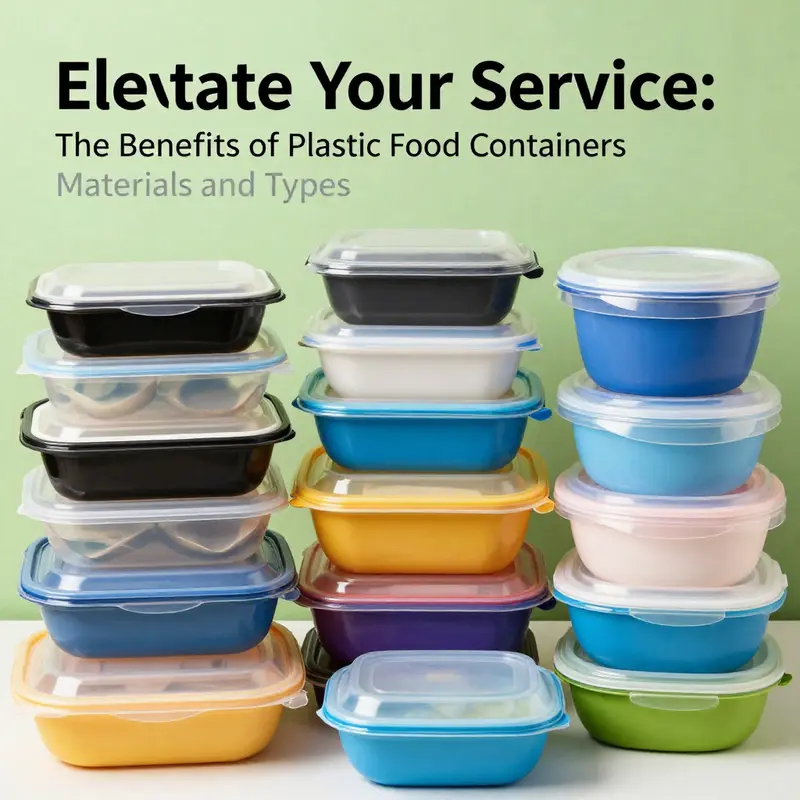
In today’s competitive food industry, packaging plays a crucial role in presentation, functionality, and sustainability. Recyclable plastic food containers have emerged as a favorite choice among bubble tea shops, restaurants, food trucks, and catering services. These containers are not only cost-effective and durable but also contribute to food safety and freshness. In this exploration, we will discuss four essential areas: the materials and types of recyclable plastic food containers, their economic impact on the packaging industry, the environmental challenges they face along with sustainable solutions, and consumer awareness regarding their recyclability. Together, these chapters will create a comprehensive understanding of how these containers can serve your business without compromising on performance or ecological responsibilities.
null
null
Economic Currents and Circular Sparks: Recyclable Plastic Food Containers in a Resilient Packaging Landscape
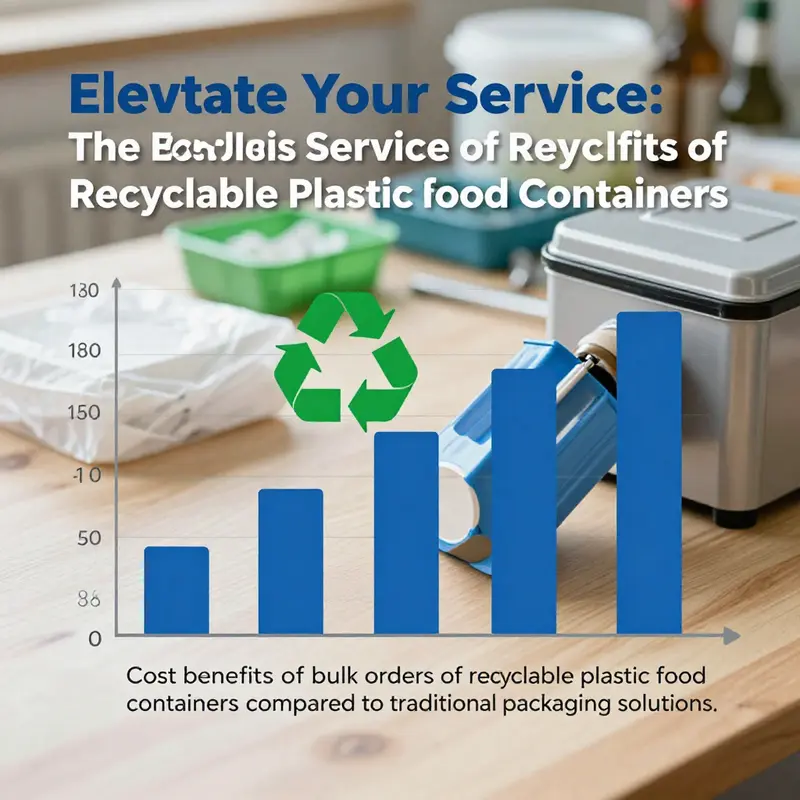
The modern packaging ecosystem is being rewritten by a simple, stubborn fact: food containers made from recyclable plastics are not merely containers, they are nodes in a complex web of supply chains, consumer choices, regulatory pressures, and evolving business models. The economic story attached to recyclable plastic food containers begins with demand that is both broad and nuanced. On the one hand, there is a relentless appetite for lightweight, durable, cost-efficient packaging that protects freshness and reduces spoilage. On the other hand, there is a mounting expectation that packaging be part of a responsible life cycle—usable, recyclable, and aligned with a circular economy. In this tension, the market has expanded in ways that sustainability specialists would find compelling: a global plastic food containers market that, in 2024, stood at roughly 37.01 billion dollars and is projected to surpass 51.6 billion by 2034. The trajectory is not simply about more containers; it is about more value retained, more materials recovered, and more actors participating in a system that seeks to decouple growth from waste.
What underpins this economic shift is the convergence of consumer preferences, regulatory frameworks, and material science breakthroughs. Recyclable containers—often fabricated from common polymers such as PET (commonly labeled #1) and HDPE (often labeled #2)—offer essential attributes: moisture resistance, light weight, and resilience in transit. They come in a spectrum of forms—from clamshells and tubs to sushi trays and multi-compartment takeaway boxes—each optimized for a particular food category, portion size, or usage pattern. The market responds to demand for convenient meal-prep solutions, leftovers stored in the fridge, and on-the-go meals that can ride the wave of delivery-driven consumption. The economic implications extend beyond the shelf or the checkout; they ripple through procurement, manufacturing, logistics, and post-consumer recycling streams. In bulk orders, one can observe the kind of price signals that stimulate adoption in large-scale operations: certain PET sushi trays, for instance, have been quoted at roughly US$0.091 per unit when purchased in tens of thousands, illustrating how scale economics can reduce unit costs and encourage repeat purchases by restaurants, caterers, and institutional buyers. Such pricing dynamics are not merely anecdotes; they reflect the core arithmetic of mass production, supply chain efficiency, and demand aggregation that undergird modern packaging.
Yet the economics of recyclable containers are inseparable from the policy environment. Regulatory influence has become a primary driver of both behavior and cost structure. A prominent example is the German Packaging Act, which mandates that PET beverage bottles contain escalating percentages of recycled content—25% by 2025 and 30% by 2030. The intent is to push upstream investment in recycling infrastructure and to stimulate the creation of a steady demand for recycled resins. This regulation creates a positive loop: higher recycled content in bottles incentivizes more collection, sorting, and processing capacity, which in turn lowers the effective cost of recycled material through economies of scale and technology improvements. For manufacturers, the consequence is a reshaped cost curve. It is no longer sufficient to consider raw material prices alone; the business case must now account for recycled-content requirements, ongoing modernization of equipment, and the reliability of post-consumer streams. The regulatory push also aligns with broader environmental policy goals, encouraging brands to disclose recyclability attributes clearly and to pursue circular design—ensuring that packaging can be effectively recovered and reintroduced into the value chain rather than ending up in landfills.
This regulatory dynamic dovetails with the rise of reusable plastic containers as a strategic segment within the broader category. Although they occupy a more niche position than single-use recyclable containers, reusable formats have begun to prove their economic viability in commercial and institutional contexts. The core advantage lies in lifecycle cost savings: repeated use reduces ongoing disposal fees, guards against raw-material price volatility, and sustains brand visibility among consumers who value environmental stewardship. While the upfront production cost of high-reuse designs can be higher, the payoff manifests over time through lower per-use costs and stronger relationships with customers who perceive sustainability as part of a brand’s core identity. Restaurants, cafeterias, and food delivery services increasingly consider not just the price per unit but the total cost of ownership, including cleaning, durability, and return logistics. In these settings, the ecological story intertwines with the financial narrative, as customers reward practices that minimize waste and support local recycling ecosystems, resulting in a more resilient commercial model overall.
An important dimension of the economic conversation is resource productivity—the idea that well-designed packaging can deliver more value with fewer raw materials and less energy. The Ellen MacArthur Foundation’s New Plastics Economy framework has long advocated for designs that retain material value and enable high-quality recycling. The principle here is not merely to use recycled content but to design for recyclability from the outset. When packaging is easier to disassemble, easier to sort, and easier to rinse clean, the efficiency of the recycling stream improves. This, in turn, lowers the energy and material costs associated with recovery and processing, helping to stabilize long-term pricing in a volatile input market. The practical effect is a more resilient supply chain where capital invested in recycling infrastructure translates into durable economic value—jobs, regional competitiveness, and a market that rewards design for circularity as a business imperative, not just a regulatory obligation. The chain from design to disposal thus becomes a closed loop in which value is captured rather than dissipated.
However, the path toward greater sustainability is not without friction. The economic logic of recyclable plastic containers must contend with real-world challenges. Heating, for instance, must be managed carefully to avoid chemical leaching that could undermine consumer confidence and regulatory compliance. UV exposure can degrade material properties over time, reducing shelf life and consumer trust. Contamination across the recycling stream remains a persistent concern, capable of undermining the quality of recovered material and raising processing costs. These issues test the resilience of supply chains and the willingness of manufacturers to invest in higher-grade resins, barrier technologies, and more robust labeling. Yet they also spur innovation. Suppliers now emphasize clearer labeling to guide end users toward responsible use and to facilitate correct sorting at the municipal level. In some cases, lids and anti-fog features for specific products are engineered to preserve product quality in refrigerated environments, illustrating how product design is increasingly about protecting value throughout the lifecycle rather than simply improving initial containment.
The growth trajectory of the market also reflects broader shifts in consumer behavior. People are more conscious of packaging footprints, yet they still demand convenience and performance. The tension between convenience and sustainability often creates opportunities for new business models: refillable programs, take-back schemes for used containers, and partnerships that integrate packaging design with recycling infrastructure. These models shift some costs away from end-users and toward collaborative networks that share investment risk and reward. When retailers and manufacturers align incentives toward reuse and recycling, a wider ecosystem emerges, capable of delivering not only reduced waste but also stronger traceability, better material recovery rates, and more predictable revenue streams from the recycled materials that re-enter the production cycle. In this sense, recyclable plastic food containers become both a product category and a platform for circularity, enabling businesses to differentiate themselves through stewardship and transparency.
From a procurement perspective, the economics of recyclable containers are increasingly influenced by the availability of high-quality recycled content and the reliability of post-consumer streams. Suppliers and buyers increasingly look for consistent quality, clear labeling, and verifiable environmental claims. The potential for bulk procurement and standardization across institutions can drive efficiency and reduce per-unit costs, while also making compliance with recycled-content mandates more straightforward. The internal market signals—costs, supplier reliability, and regulatory compliance—tend to converge with macro-level incentives to reduce fossil-fuel dependence, lower energy use in manufacturing, and retain material value through recycling. In parallel, the proliferation of secure payment options, refund guarantees, and sample services across procurement platforms demonstrates how digital marketplaces support risk reduction and scale, allowing small players to engage with recycled-content opportunities previously accessible mainly to large buyers. A practical implication for the industry is clear: the most successful players will be those who combine design for recyclability, reliable supply of recycled materials, and adaptive purchasing strategies that reflect both regulatory requirements and evolving consumer expectations.
This integrated economic narrative is also reinforced by the recognition that recyclable plastics are not a one-way solution but a moving part of a broader system. The move toward recyclability and circularity requires transparent labeling, standardized sorting streams, and consistent incentives across public and private sectors. When design decisions prioritize recyclability, the material can endure multiple value cycles, contributing to resource productivity and stabilizing long-term costs. The economic value, therefore, is not solely in the price per unit today but in the ability to capture value over the container’s entire life—from production and distribution to reuse, recycling, and repurposing. This perspective fosters strategic thinking for manufacturers: invest in modeling lifecycle costs, integrate recycling payback into capital planning, and pursue collaborations with municipalities and recyclers to build predictable, resilient flows of post-consumer resin. It is this broader, pathway-oriented approach that will enable the packaging industry to align profitability with environmental stewardship as the new normal rather than the exception.
For readers seeking to connect the economic logic with practical resources, consider a centralized hub that maps the evolving landscape of packaging materials and sustainability options. The link below points toward a comprehensive category that gathers insights on plastic packaging and related materials, offering a starting point for managers and buyers exploring standardized solutions and best practices. Plastic packaging.
External reading for further context on systemic change in plastics: https://www.ellenmacarthurfoundation.org/publications/new-plastics-economy-rethinking-the-future-of-plastics
From Cradle to Cap: Reimagining Recyclable Plastic Food Containers in a Circular Economy
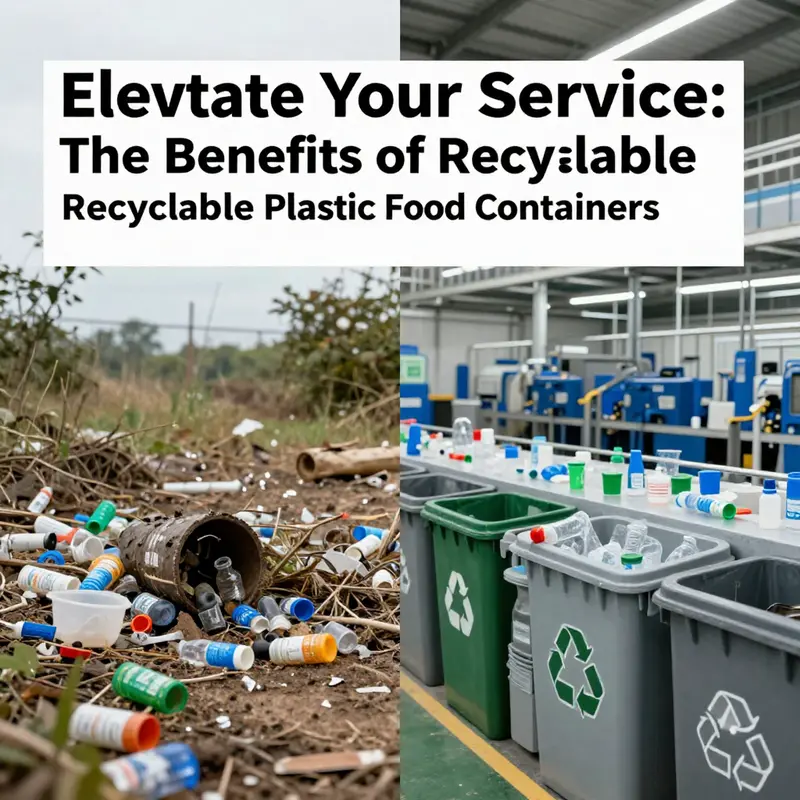
Recyclable plastic food containers sit at a paradoxical crossroads. They enable convenient, lean, and efficient food systems, yet their environmental footprint is inseparable from the fossil-fuel roots that shape modern plastics. This chapter threads together the scientific and pragmatic realities of these containers, tracing a path from resource extraction through production, use, and end-of-life—with a focus on what must change if the packaging that feeds us today is to become a more genuinely sustainable part of tomorrow. The journey begins with the cradle and its consequences. The plastics that show up in kitchens, cafes, and grocery aisles are largely born from crude oil and natural gas. The act of extracting these resources leaves trailings of habitat disruption and water contamination, even before a single polymer chain is formed. Once refined, these fossil streams are transformed by energy-intensive processing into pellets that melt and reform into the shapes we recognize as clamshells, tubs, sushi trays, and multi-compartment takeaway boxes. The energy demands of producing polypropylene (PP) and PET (polyethylene terephthalate)—two of the most common materials in food containers—are notable, though they generally compare favorably to glass in terms of energy per unit produced. The larger systemic issue, however, is not energy per item but the dependence on volatile oil markets and the climate consequences wrapped into every ton of plastic produced. In other words, the climate footprint of these containers is bound not just to the emissions released during use, but to the entire supply chain that starts long before a package ever meets a consumer’s hand. The lifecycle narrative is not merely a tale of energy budgets; it is a story of choices about materials, design, and end-of-life pathways that interact with policy, infrastructure, and consumer behavior in messy, deeply interdependent ways. The materials themselves—PET, PP, HDPE, and others—have advantages that make them attractive for food packaging: moisture resistance, durability, light weight, and relatively good barrier properties compared with some alternatives. PET, in particular, often requires less energy to produce than glass or metal, which helps offset other environmental costs in a well-functioning system. Yet the problem arises when the promise of recyclability is not fulfilled in practice. In an ideal world, the container you recycle today would re-emerge as a new container tomorrow, ready to hold fresh meals with the same performance. In reality, a chorus of barriers—contamination from food residues, multi-material constructions that resist separation, adhesives, pigments, and the sheer complexity of sorting streams—limits recovery. Contamination is a stubborn foe. Food bits, oils, and clingy residues can jam the recycling process, degrade the quality of recovered plastic, and force processors to discard streams that fail purity standards. The more a container relies on adhesives, colorants, or thin layers of incompatible plastics, the harder it becomes to reclaim. When a package is not properly emptied or cleaned, it can contaminate an entire batch, making it difficult or impossible to reuse the material for food-contact levels of safety. In many municipalities, the posted label “recyclable” is not a guarantee of actual recycling. The system’s bottlenecks are not solely technical; they are infrastructural. The recycling infrastructure needed to collect, sort, clean, and process plastic waste is unevenly distributed across regions. Where the sanitation system is robust, and advanced sorting technologies are in place, higher fractions of post-consumer plastics can be recovered and reintroduced into the supply chain. Where it is not, plastics languish in landfills or are incinerated, emitting greenhouse gases and leaving no circular loop to close. The material choices themselves compound the challenge. The same container family can span materials and designs that demand different handling steps in recycling facilities. A single-piece container that combines PET with a thin layer of polymer for barrier properties, or a container with a printed label that is not easily separated, introduces incompatibilities that undermine recyclability. Even when a packaging system is technically recyclable, the economics and policy framework around recycling—collection costs, processing subsidies, and market demand for recycled content—drive whether it actually becomes a loop in the economy. The environmental consequences of this imperfect loop are broad. When recycled content is scarce, virgin resin lanes dominate production, and the climate toll grows with each ton of new polymer produced. When disposal channels fail, a portion of containers ends up in landfills or is incinerated, contributing to soil and air quality concerns. The social dimension cannot be ignored either. The waste stream has implications for communities near processing facilities, and for workers who manage end-of-life materials. Communities with better-developed waste management systems often bear fewer environmental and health burdens than those without such infrastructure. Given this sprawling web of causes and effects, it becomes clear that addressing the environmental impact of recyclable plastic food containers requires more than incremental tweaks. It demands a coherent strategy that links design choices to recycling capabilities, policy signals, and shifts in consumer behavior. The design-for-recyclability principle is a practical starting point. If a container can be disassembled into discrete, single-material components at end-of-life, it becomes substantially easier to reclaim. Clear labeling helps, too; when consumers can quickly identify the material type and whether the item is truly recyclable in their local system, the chance of contamination decreases. Beyond labeling, material selection matters. When feasible, packaging programs can favor mono-material constructions that avoid the joint complexity of multi-layer laminates, tapes, and adhesives that cross incompatible resin families. The goal is not to force a singular material across all packaging but to align material choices with the capabilities of the recycling stream that serves the intended market. In parallel, innovation in the recycling landscape is pushing the boundaries of what is recoverable. Chemical recycling, sometimes described as feedstock recycling, has gained attention as a way to break plastics back to their constituent monomers, enabling the creation of new polymers without relying solely on mechanical sorting. While not a silver bullet, chemical recycling can help plants handle mixed or contaminated streams that mechanical sorters struggle with. Advanced sorting technologies—capabilities like near-infrared spectroscopy, optical sorters, and machine-vision systems—aid in separating different resins and colors, raising the quality and yield of recovered material. These technologies do not eliminate the need for clean streams, but they improve the odds that what is captured in a municipal or regional recycling program actually becomes a recycled product rather than a downcycled material that ends up in a landfill. Policy instruments play a pivotal role in shaping outcomes. Extended Producer Responsibility (EPR) is one such instrument that shifts the end-of-life responsibility from municipalities to manufacturers, requiring those who design, package, and sell products to finance collection, sorting, and processing. The logic behind EPR is straightforward: when producers bear the costs and the accountability for disposal, they are incentivized to design products that are easier to recycle and to invest in take-back programs. EPR can also stimulate investment in local recycling infrastructure and support standards for recycled content in new packaging, reinforcing what the circular economy demands: recovery, reuse, and reintegration into production cycles rather than disposal in landfills. Yet policy alone cannot deliver systemic change. Behavioral shifts among consumers, retailers, and foodservice operators are essential complements. Clear guidance on how to prepare containers for recycling, including rinsing and separation from non-recyclable components, can reduce contamination and protect the value of recovered materials. Stores and institutions can play a critical role by providing accessible recycling options, user-friendly collection streams, and visible messaging about the journey of plastics from consumer to container to new product. This is where the link between design and use becomes tangible. For businesses, adopting a system-wide approach that emphasizes reuse where feasible offers a meaningful complement to recycling. Reusable containers, if properly managed and washed, can significantly reduce overall material throughput and waste. In many contexts, a hybrid strategy works best: high-volume, mostly single-use packaging with clear recyclability plus a robust reuse program for regular customers. This approach requires careful assessment of storage, cleaning, and life-cycle testing to ensure that the environmental gains from reuse are not offset by increased water use, energy, or risk of contamination. In some scenarios, biodegradable alternatives have a role to play; however, their environmental credentials depend on the end-of-life pathway. If compostable plastics end up in a recycling stream that cannot process them, or if industrial composting infrastructure is lacking, these materials can contaminate otherwise recyclable fractions. The overarching message is that there is no one-size-fits-all solution. The right mix depends on the local waste management context, consumer behavior, and the capacity of manufacturers to redesign products for circularity. The chapter’s emphasis, therefore, is on cultivating systems thinking. The lifecycle is only as strong as its weakest link, and that link is frequently the combination of design decisions, collection mechanisms, and consumer practices that fail to align. A robust transition toward recyclable plastic food containers that truly work within a circular economy requires coordinated action across stakeholders. Industry players must embrace design-for-recyclability as a core criterion, with materials science guiding choices toward compatibility with existing and emerging recycling streams. Public policy can provide the scaffolding through instruments like EPR and standardized labeling. Communities and households can contribute by adopting consistent disposal routines and by seeking out options that reduce waste in the first place, whether through careful portioning, mindful consumption, or participation in reuse programs. Institutions that manage cafeterias and food courts can pilot closed-loop systems that minimize single-use waste, experiment with reusable service ware, and invest in on-site washing and storage that keeps cycles efficient. All of these efforts benefit from transparent data: feedstock pricing, recovery rates, and life-cycle assessments that illuminate where the gains come from and where trade-offs persist. The aim is not merely to recycle more but to recycle smarter. This entails recognizing the fault lines created by fossil-fuel origins, the gaps in infrastructure, and the socio-economic dimensions of waste management. It also means acknowledging the potential of innovations—from chemical recycling to intelligent sorting—and pairing them with policies and practices that make recycling a reliable, scalable, and economical part of everyday life. The broader environmental imperative is to shift some of the emphasis away from single-use packaging altogether, where feasible, toward reusable or biodegradable models that harmonize with the realities of recovery systems and consumer behavior. In practice, this requires a careful balancing act: preserving the benefits of plastic containers—their lightness, durability, and barrier properties—while reducing their life-cycle footprint through smarter design, smarter management, and smarter choice-making by all participants in the system. The chapter’s arc circles back to the core idea that recyclable plastic food containers can align with sustainability goals, but only if the entire ecosystem—the cradle, the factory, the consumer, and the curbside or depot—moves in a coordinated, ambitious, and transparent direction. For readers seeking a broader policy and practice context, the environmental literature emphasizes a comprehensive approach that unites technological innovation, regulatory support, and behavioral change as non-negotiable elements of progress. External resource: https://www.epa.gov/sustainable-management-plastics/overview-recycling-plastics. In the meantime, practical steps that organizations can take today include investing in clear labeling and design for recycling, supporting or piloting advanced sorting technologies where feasible, and pursuing reuse programs where they fit operational realities. The paragraph-long path from cradle to cap is not a straight line; it is a network of decisions, each with the potential to bend toward a more circular, less wasteful future. The role of information, standards, and shared accountability cannot be overstated. When manufacturers, retailers, municipalities, and consumers share a common commitment to recyclability, system efficiency improves and the environmental burden tightens its grip on the problem. The result is not merely less waste but a transformation in how we think about packaging as a resource—an essential ingredient in meals, not a disposable afterthought. By embracing this broader, more integrated perspective, the food-container ecosystem can begin to realize the circular promise that its advocates have long promised, turning a planetary challenge into a shared opportunity for smarter materials, smarter systems, and smarter habits.
From Awareness to Affection: Building Consumer Trust in Recyclable Plastic Food Containers
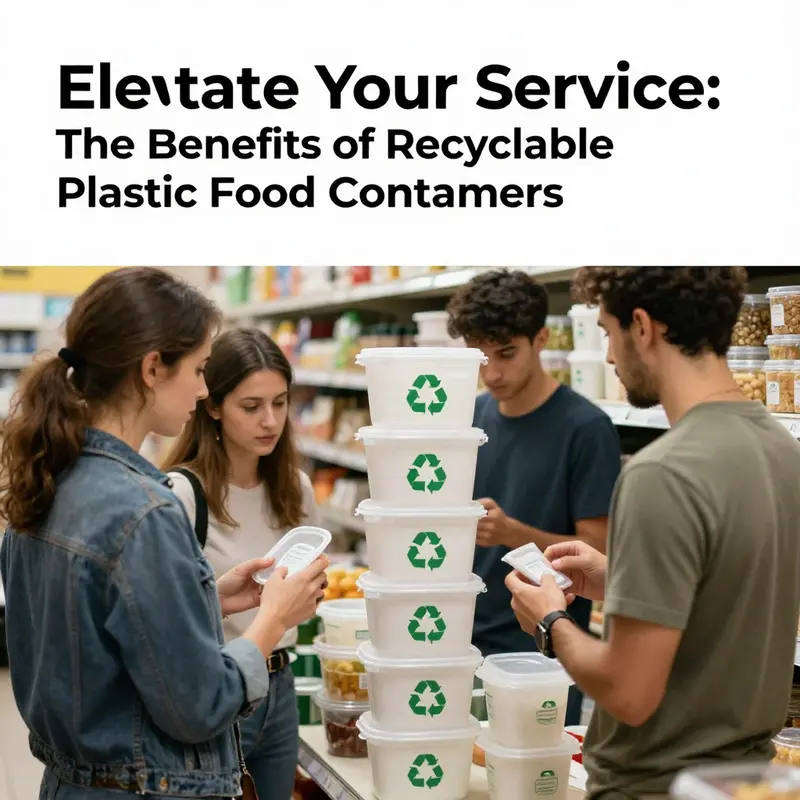
Consumer awareness of recyclable plastic food containers has grown along a path defined by everyday experience and the invisible rules of how materials behave after disposal. People understand that packaging serves a purpose beyond keeping food safe on the shelf; it carries signals about responsibility, trust, and the likelihood that waste will re-enter the economy rather than linger in landfills. Yet awareness alone does not guarantee acceptance. The leap from knowing something can be recycled to wanting to buy something packaged with recyclable or recycled content depends on perceptions of quality, safety, and convenience, all woven together with cultural and regional differences in how recycling systems operate. A critical starting point for understanding acceptance is the distinction between what is recyclable and what is recycled. When consumers see a container marked recyclable, they infer that the material can be processed after use, reducing future waste. But the step from input to output in the circular chain is not always visible. The banner of recyclability is comforting when it aligns with everyday routines—sorting into the right bin, avoiding contamination, and trusting that local facilities will handle the material responsibly. Still, the language can be ambiguous. When a product touts that it contains recycled content, the perception shifts from a promise about the future to a claim about the present, and that difference matters for lay consumers who notice texture, clarity, and odor as much as labels. In the scholarly discourse, this distinction matters because it shapes expectations about safety and quality, and it helps explain why many shoppers welcome the idea of a circular economy yet hesitate when confronted with a container that looks or feels different from familiar non-recycled packaging. A major finding in consumer science is that the packaging itself becomes part of the product experience; the way the container performs in real use—its seal tightness, its ability to resist moisture, its reaction to heating and cooling—affects how much trust a consumer places in the claim that it is recyclable or made from recycled material. The difficulty is not merely technical but perceptual: people taste, smell, and judge packaging before they judge the product inside. From a behavioral perspective, the most consistent driver of acceptance is perceived quality. When the packaging looks clean, intact, and free of residues, when it feels sturdy in the hand, and when it does not demand excessive effort to open or reseal, the consumer is more forgiving of the broader environmental narrative. Conversely, if the package appears compromised by prior use, or if a recycled-content claim is paired with visible haze, cloudiness, or odor leakage, trust erodes rapidly. A study focusing on consumer perception found that food packaged in recycled plastic is often viewed as inferior due to contamination concerns, a finding that underscores how misperceptions can undermine green intentions. This dynamic has real consequences: even audiences that express willingness to support recycling can become cautious shoppers at the point of sale if the packaging appears to threaten taste or safety. Yet there is a bright countercurrent. When the consumer experience is positive—when the container keeps food fresh, is easy to reuse for other purposes, and presents no safety concerns—the acceptance gap narrows quickly. A 2025 survey of consumers who purchased products using recycled plastics reported that 93% were satisfied with their purchases and expressed intent to buy again. This suggests that experiential trust is transferable: once a positive product experience is established, beliefs about materials can shift in a favorable direction. The challenge, then, is to scale that positive experience across diverse product formats and regions. Regions with robust recycling infrastructure and clear guidance tend to show higher participation rates, less confusion about labeling, and greater willingness to pay a premium for packaging that is clearly recyclable or made from recycled content. By contrast, where infrastructure is fragmented, awareness may rise without commensurate participation, leaving consumers with mixed signals about what happens after disposal. This regional disparity underlines the need for education campaigns that go beyond slogans to demonstrate, in practical terms, how the circular system works and how individuals contribute to it through everyday actions. The regional dimension is not simply a matter of geography; it reflects differences in cultural norms around waste and the practical realities of daily life. A focused study on Saudi consumers highlighted that awareness of plastic recycling is expanding, yet attitudes remain shaped by habits, convenience, and access to recycling facilities. The implication for businesses and policymakers is clear: informational campaigns must be paired with accessible infrastructure. It is not enough to tell people to recycle if there is no convenient place to do so or if the bin labeling is inconsistent. Packaging developers, too, must consider regional realities when designing recyclable formats. The goal is not only to create containers that are technically recyclable but to present products in a way that people understand and trust how to dispose of them. This trust is built through multiple channels, including consistent labeling, transparent supply chains, and visible evidence that recycled content has safely re-entered the economy. Material properties do play a role in shaping consumer expectations. In the plastics families commonly used for food packaging, polyethylene (PE) remains popular for its affordability and safety, though heat resistance varies; polypropylene (PP) offers higher heat resistance, making it suitable for microwave and dishwasher use, but it can become brittle in cold temperatures; and polyethylene terephthalate (PET) provides excellent clarity and recyclability, a combination that many shoppers associate with modern convenience. The real nuance, however, lies in how these materials are treated in the circular economy. If a PET container, for instance, is clearly labeled as recyclable and is designed with easy sorting and high-collection rates in mind, consumer confidence rises. If the same container lacks clear guidance on disposal or if the recycled content is difficult to verify, the trust bleeds away. Packaging design, therefore, is as important as material selection in shaping public perception. The design must communicate not only safety and performance but also how the product participates in recycling systems. Clear labeling, easy-to-interpret resin codes, and intuitive disposal cues can reduce contamination and improve recycling outcomes, while also reassuring consumers that the container will contribute to the creation of new products rather than becoming waste. In this sense, packaging design becomes part of the education process; when people can see and understand the lifecycle of their containers, they are more likely to engage with the concept of sustainability rather than merely resisting it. This is where the role of credible certifications and third-party verification becomes crucial. Audited recycling streams, validated life-cycle assessments, and consistent quality control signals help translate abstract environmental benefits into concrete consumer advantages. When a consumer sees a stamp of approval or a certification mark that is widely recognized, confidence rises even in the absence of direct experience with recycled content. The credibility of the claim depends on the transparency of the supply chain and the availability of data about how much recycled material is used, what standards govern its safety for food contact, and how the packaging performs through multiple use cycles. These signals, in combination with user-friendly disposal instructions and the assurance that the technology used to recycle is robust, help close the loop between consumer intention and actual waste management behavior. The literature also emphasizes that packaging design has a direct and measurable impact on recyclability itself; better design reduces the risk of contamination during sorting and makes it easier for households to participate correctly in recycling programs. For readers seeking a practical overview of how packaging choices fit into a circular system, you can explore the Plastic Packaging category for related options and guidance, which provides a sense of how designers and suppliers approach recyclable formats in real products. Plastic Packaging. The behavioral dynamics extend beyond the horizon of the single product. Retailers, manufacturers, and municipal programs all shape consumer perception through cues that go beyond the package itself. In-store displays that emphasize the recyclability of the packaging, cashier-friendly disposal cues, and educational placards about how the material will be processed after use all contribute to a more confident consumer stance. At the same time, the social dimension—how families, communities, and peer groups talk about recycling—can amplify or dampen individual motivation. When a friend or neighbor shares a story about successfully recycling a container or about how a reused container found its second life, this social proof travels quickly and strengthens personal commitment to sustainable choices. In this interconnected ecosystem, the consumer’s journey from awareness to acceptance is not a single leap but a sequence of reinforcing experiences, each of which depends on the reliability of the product, the honesty of labels, and the smoothness of the recycling channel. Of course, the path to greater acceptance is not without friction. Fear of contamination and concern about safety linger in the consumer psyche, particularly when the packaging has been used for highly flavorful foods or when heating is involved. The possibility of chemical leaching with improper heating is a real concern for some shoppers, even if the overall risk is low and regulated by safety standards. This is why education about proper heating, storage, and handling must accompany packaging claims. It is not enough to declare recyclability or recycled content; brands must demonstrate that their containers perform safely through typical use cases, from short-term storage to microwave reheating to dishwasher use. When such demonstrations are credible, the gap between intention and action narrows, and the market expands to include a broader range of products and consumer segments. Looking ahead, the opportunity lies in aligning product design with consumer psychology and the realities of recycling infrastructure. Companies that invest in clear, consistent labeling, transparent sourcing of recycled content, and straightforward disposal instructions will likely see the strongest gains in trust and loyalty. Policymakers, too, have a valuable role in standardizing labeling conventions and ensuring that recycling streams are accessible and efficient. When the public can rely on consistent signals across brands and across neighborhoods, the temptation to tune out environmental messaging diminishes, and the recycling narrative becomes a practical part of daily life rather than a distant aspiration. In that sense, consumer acceptance is less about persuading people to think differently and more about ensuring that everyday packaging supports their values through reliable performance, ease of disposal, and tangible environmental outcomes. For researchers and practitioners, these findings suggest a path forward that merges design, communication, and infrastructure. Designers should treat recyclability as an intrinsic property that is tested under real-world conditions, not as a marketing afterthought. Communicators should distinguish clearly between recycled and recyclable and avoid conflating the two in a way that confuses consumers. And recyclers and retailers must create environments in which households can participate without friction, with visible proof that collected materials re-enter the economy. The most enduring change will emerge when product experiences reinforce environmental narratives, and when the consumer is given a simple, trustworthy way to contribute to a circular economy with every meal, takeaway, or leftover stored in a recyclable or recycled plastic container. This integrated approach turns the challenge of consumer perception into an opportunity to strengthen the broader mission of sustainable packaging, encouraging long-term behavioral change that benefits both individuals and communities. External resource: https://www.sciencedirect.com/science/article/pii/S095605422500178X
Final thoughts
Recyclable plastic food containers are more than just a packaging solution; they represent a step forward in combining economic efficiency with environmental responsibility. By understanding the various materials and types available, recognizing their economic impact, addressing the environmental challenges they pose, and fostering consumer awareness, businesses can make informed decisions that enhance both their operations and their sustainability narratives. As dining and beverage industries continue to evolve, recyclable packaging will play a pivotal role in shaping a greener future.