
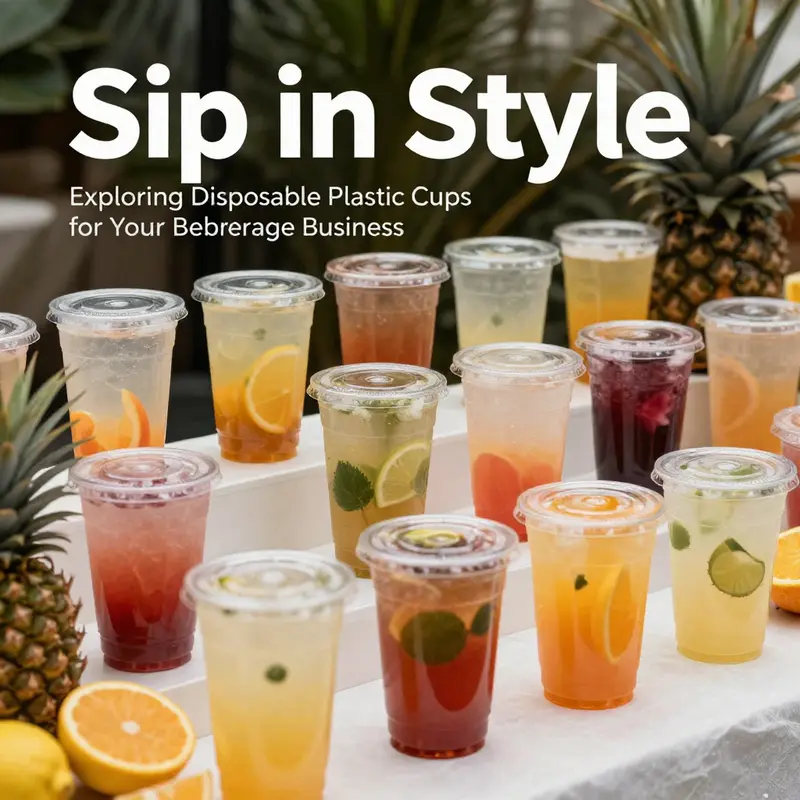
In the bustling world of beverage services, the right disposable plastic cups can make all the difference. From bubble tea shops to catering services, choosing the appropriate cup not only enhances presentation but also ensures functionality and customer satisfaction. This article delves into the diverse range of disposable plastic cups available for sale, offering insights into clear PP and PET options among others. Each chapter will provide a comprehensive overview of different cup types, innovative high-transparency options, retail purchasing avenues, and bulk buying opportunities, all tailored to meet the unique needs of bubble tea shops, beverage chains, restaurants, food trucks, catering services, event planners, and corporate procurement teams.
Crystal Clarity in the Takeaway Era: The Market for Clear PP Disposable Cups
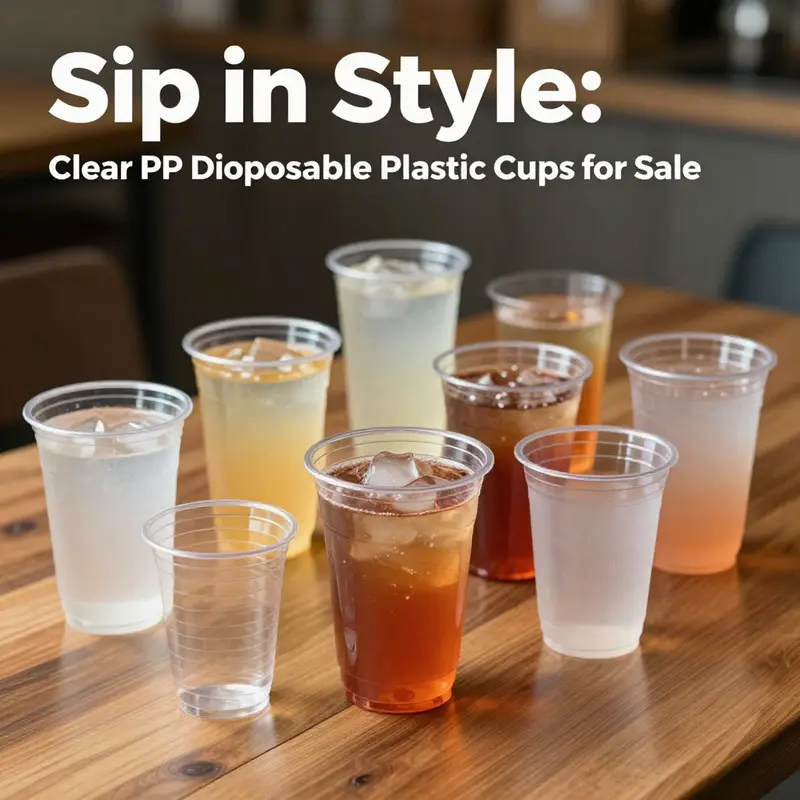
Clear,透明 disposable cups have become more than just vessels for cold drinks; they are a strategic touchpoint in a competitive take-away economy. The market for these cups centers on polypropylene, a resin that balances clarity, strength, and cost. In practice, most buyers gravitate toward 12-ounce and 16-ounce formats because they align with common beverage portions in delivery, dine-out, and retail settings. When customers reach for a drink—whether it is a chilled tea, a fruit smoothie, or a premium iced coffee—the cup in their hand is doing more than hold liquid. It communicates cleanliness, consistency, and brand presence, all through the glassy surface that reveals the beverage’s color, texture, and appeal. In this context, the landscape for clear PP disposable cups is shaped by three interlocking forces: product specifications and pricing, material choices and environmental considerations, and the evolving supply chain that delivers these cups to kitchens and curbside carts around the world.
Product specifications in this segment are purposefully straightforward yet highly consequential. The standard sizes, 12 oz and 16 oz, are the workhorses of the cold-beverage world. They meet the dual demands of portion control for operators and the expectations of customers who want a drink that is visually generous and easy to handle. Pricing in the wholesale sphere often follows a simple volume curve. On large, entry-level orders, the unit price can be as low as a few hundredths of a dollar per cup, with a minimum order quantity that reflects the scale required by food-service players who operate at volume. Customization steps in as a meaningful value-add. Suppliers frequently offer branded printing, unique crown lids or shaped lids, and variations in cup body dimensions to accommodate different branding or functional needs. It is common to see price bands where a customized logo cup runs higher per unit than a standard clear cup, with minimums that reflect the extra setup and tooling involved in printing and finishing. The flexibility here matters because a cup is often the most visible element of a brand in a consumer’s hand. A well-executed logo or design on a clear cup can reinforce identity as effectively as the beverage inside can.
In terms of materials, the core options remain PP, PET, and PLA. Polypropylene is favored for its balance of heat resistance, strength, and low cost. PET offers excellent clarity and a slightly stiffer feel, which can be appealing for premium look-and-feel. PLA introduces an eco-conscious option, aligning with a growing segment of buyers who seek biodegradable or compostable solutions. Each material carries its own trade-offs. PP tends to perform well in a broad range of temperatures, ensuring beverage integrity from cold storage to outdoor delivery. PET’s optical clarity is exceptional, lending a glass-like appeal that highlights color and texture. PLA, while attractive for sustainability narratives, can require different disposal or composting considerations and may come with stricter supplier assurances about compostability standards. The choice among these materials is often driven by specific use cases—whether a shop prioritizes a cold-beverage display, a premium appearance, or an environmental promise to customers.
Environmental considerations have evolved from a compliance footnote to a central purchase criterion. Clear PP cups are frequently packaged and sold with environmental claims that range from traditional recyclability to more ambitious biodegradability options. Buyers are increasingly weighing lifecycle factors: material feedstock, manufacturing energy, recycling capabilities, and consumer waste behavior. In practice, this means that the market now treats clear cups as part of a broader sustainability equation. Biodegradable PLA variants attract attention for brands wanting to signal environmental awareness, but they also introduce questions about end-of-life handling and compatibility with local recycling streams. Operators who rely on third-party certification or audits may demand evidence of compliance with relevant food-safety standards, in addition to clear statements about material provenance and ink or label safety. The trend toward sustainability does not erase the primacy of reliability and cost; rather, it adds a layer of decision-making where operators must balance price, performance, and environmental impact in a way that resonates with their customers.
Supply-chain dynamics complete the picture. The vast majority of clear cup production for the wholesale market occurs in manufacturing hubs in more than one country, with suppliers who can scale to high MOQs while offering options for customization and branding. The logistics of these orders are non-trivial. The standard packaging—cartons, pallets, shrink wrap, and sometimes separators—facilitates safe transport and efficient warehouse handling. Lead times for a first big run are typically in the range of a month to six weeks, reflecting the time needed for production scheduling, quality testing, and customs clearance. Once a relationship is established, repeat orders can accelerate to shorter lead times, but the initial cycle remains a critical hurdle for operators facing tight rollout timelines. Payment terms commonly include a deposit—often around thirty percent—with the balance due on delivery or prior to shipment. Platforms that guarantee transactions provide a safety net for buyers, offering recourse if shipments are delayed, incomplete, or defective. In short, the procurement journey for clear PP cups is a rhythm of specification, certification, production, and delivery, all coordinated to support a business that must keep drinks flowing and customers satisfied.
An important nuance in this market is the way customization and branding interact with operational practicality. Some buyers want printed cups that carry corporate logos, seasonal designs, or promotional artwork. Others seek cups with inventive closures or lids that enhance spill resistance or maintain beverage temperature during transit. Even the geometry of the cup body can be tuned to optimize grip, stacking, or display when the drinks are presented in-store. These options are not merely aesthetic; they influence purchasing decisions and perceived value for both retailers and consumers. The ability to adapt cup design without sacrificing performance or driving up unit costs is a defining advantage in today’s competitive landscape. Buyers weigh whether the incremental cost of customization translates into measurable gains in brand recall, customer satisfaction, or waste reduction through better portion control.
From a procurement perspective, the landscape is also shaped by the availability and reliability of suppliers who can operate at scale while meeting stringent quality and safety standards. A well-established supplier network typically features entities with ISO and food-safety certifications, reinforcing confidence in product safety and consistent performance across batches. Packaging and logistics options, including bulk packaging, divider inserts, and flexible shipping terms, are frequently negotiable to align with a buyer’s storage capacity and delivery cadence. The overarching objective is to secure a reliable supply of cups that perform consistently under a variety of conditions—from a hot car trunk in summer to a refrigerated display in a busy cafe.
As these threads intertwine, the market for clear PP cups not only reflects the needs of today’s fast-paced food-service environment but also signals where buyers may be headed tomorrow. The demand for clear presentation, coupled with reliable performance and scalable customization, points to a sector that values precision and flexibility as much as price. The ability to source cups that arrive ready to use, with the right mix of clarity, strength, and sustainability attributes, can translate into tangible benefits for operators: faster service, more effective branding, and better alignment with consumer expectations for hygiene and transparency.
For readers who want to explore related formats while keeping the focus on clarity and performance, an internal reference to alternative cup formats can be informative. See the hot-sale customized disposable single-wall paper ice-cream cups with lid for a sense of how branding and packaging choices evolve across cup types, even when the base material differs. This broader view helps situate clear PP cups within a larger ecosystem of take-away packaging where presentation and reliability are the currency of trust. senang01-hot-sale-customized-disposable-single-wall-paper-ice-cream-cups-with-lid-eco-friendly-food-grade
The conversation surrounding clear PP cups also intersects with one of the perennial questions in durable goods procurement: how to balance cost with branding, quality, and sustainability. For buyers focused on price per unit, the economics of bulk purchases can be compelling. The logic is straightforward—per-unit costs fall as order volumes rise, and standard formats reduce the complexity of production and quality control. For buyers who pursue customization, the costs rise, but the potential returns can be meaningful if a branded cup strengthens recognition, encourages repeat purchases, or aligns with a sustainability narrative that resonates with customers. The interplay of these factors means that decision-makers should approach each purchase not as a single transaction but as part of a longer-term packaging and brand strategy. In a market where every sip matters, the cup is the moment where design, engineering, and consumer perception meet to deliver an experience that customers associate with cleanliness, consistency, and care.
As the sector continues to evolve, stakeholders should remain vigilant about shifts in consumer expectations and regulatory standards, particularly around food-contact materials and end-of-life options. The emergence of clearer guidelines for recyclability and compostability can influence supplier choices and, by extension, the types of clear cups that gain traction in different regions. While PP remains a dependable baseline for many operators, expanding your supply network to include options with tested environmental credentials can provide strategic resilience. In practice, this might mean evaluating a mix of materials and configurations to ensure there is a viable, scalable option for both short-term promotions and long-term sustainable initiatives. The path to such resilience is paved with clear specifications, rigorous supplier vetting, and a readiness to adapt as the market and consumer expectations change.
External reference: https://www.alibaba.com/product-detail/Wholesale-disposable-clear-lid-cups_1600687157517.html
PET Cups for Sale: Bulk Strategies, Customization, and the Market Dynamics of Disposable Beverageware
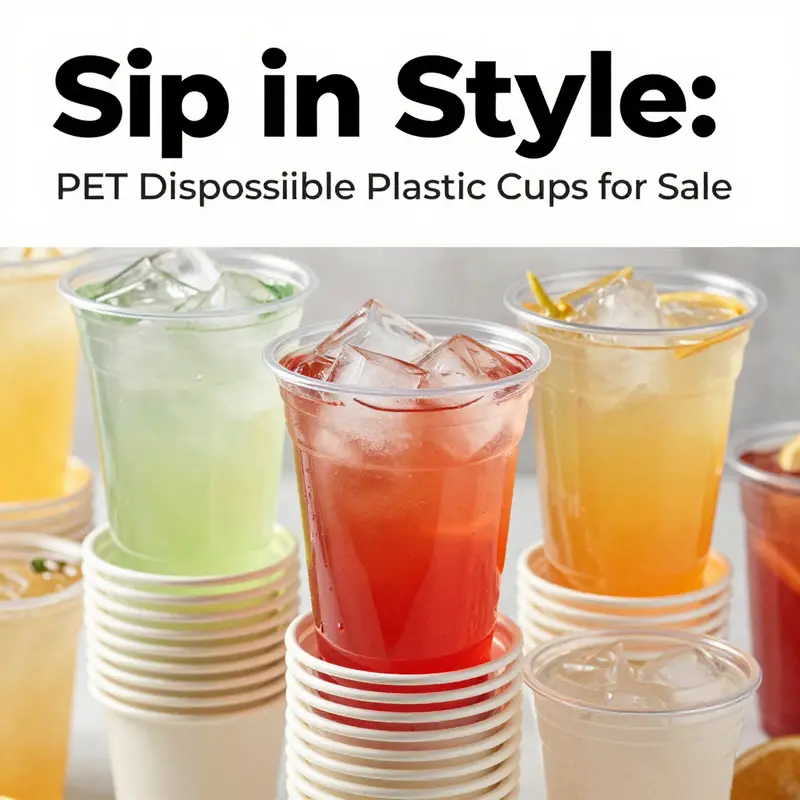
The market for PET cups sold for disposable use sits at an intersection of functional design, supply chain efficiency, and brand intent. Across venues from coffee shops to catering firms and social events, the demand for clear, sturdy containers that can keep beverages cold without compromising taste or safety has kept PET cups in steady rotation. In this landscape, buyers do not simply pick a container; they select a packaging element that can carry a beverage, reflect a brand, and scale with demand. The typical journey starts with an understanding of what sizes work for particular beverages and occasions, then expands into choices about how the cup might be customized, how many units are required, and which procurement path best balances cost with reliability. A closer look at the current offerings shows a twofold reality: a broad assortment of capacities and shapes that accommodate different drinks, and a cohesive emphasis on customization and packaging integrity that makes these cups suitable for bulk orders and special events alike.
From a functional standpoint, PET cups come in a spectrum of capacities designed to cover everyday cold beverages as well as specialty drinks. At the smaller end, semicompact 7 to 9 ounce options are commonly aligned with espresso-based beverages, milk teas, and fruit juices. For larger servings, the 16 ounce category is widely adopted for smoothies, iced coffees, and party beverages where a dome lid is convenient for a smooth drinking experience and occasional toppings. The design intent across these formats centers on maintaining clarity, ensuring the beverage presentation remains visually appealing, and providing a reliable barrier against leaks. This is particularly important for beverages with viscosity, such as bubble tea, where the cup must withstand viscosity without deforming or leaking at scale. The choice between PET and alternative clear materials often hinges on a blend of transparency, rigidity, and temperature tolerance. While PET provides clarity and stiffness suitable for cold drinks, some buyers also explore PP-based options for specific applications; the overall trend, however, shows PET as the preferred crystal-clear option for beverage visibility and consumer appeal.
A notable aspect of the market is how design features extend beyond the cup wall to the lid, and how these combinations affect user experience. A dome-shaped lid, for instance, accommodates whipped toppings and fruit garnishes while maintaining a clean lid-to-cup seal that resists splashes and spills during transport. These lid configurations are not mere add-ons; they are performance elements that influence how the container behaves in busy service environments. In many cases, the most attractive bundles pair a clear cup with a domed lid and a matching seal, delivering a complete package that is both practical for baristas and visually appealing to customers. The market also sees variations such as bubble tea cups and other tall, slender shapes that address specific beverage formats. These designs tend to emphasize stable stacking, efficient freezer and refrigerator storage, and compatibility with standardized cup carriers used by many retailers and events.
The breadth of the market is matched by a parallel emphasis on customization and branding. Suppliers increasingly offer options to imprint logos, apply color accents, or introduce distinctive design motifs that align with a buyer’s corporate identity or event theme. This capability is not limited to the outer appearance; customization often extends to the interior ink and the selection of eco-friendly inks and coatings, reflecting growing consumer expectations around sustainability. For brands seeking to maintain a consistent image across multiple outlets or event experiences, the ability to customize cups at scale becomes a strategic asset. In practice, the customization process can range from straightforward logo imprints to complex full-wrap designs that require digital proofs and color matching. Importantly, many suppliers advertise the flexibility to add lids or choose between a lidless configuration, a feature that is especially relevant for take-away operations and air travel settings where packaging standards and airline policies influence the final design.
Purchase terms reveal another layer of the market’s complexity. The bulk nature of these orders means that the economics of scale play a significant role. The minimum order quantities (MOQs) commonly lie in the low tens of thousands of units, with higher-volume tiers offering progressively lower per-unit costs. For brands that are just beginning to test the market, some suppliers provide lower MOQs or promotional pricing at specific capacities, though the tradeoff often includes longer lead times or higher transportation costs due to the volume involved. In practice, buyers evaluate cost against reliability, anticipating the need for consistent delivery schedules and transparent order-tracking. Payment protection and refund policies offered by reputable marketplaces add a layer of security, giving buyers recourse if shipments are delayed, lost, or do not meet agreed-upon specifications. In a market that runs on precision and timeliness, these protections are not mere formalities; they are essential to risk management in bulk procurement.
For those exploring procurement channels, the landscape is shaped by a mix of traditional wholesale routes and online marketplaces that aggregate multiple suppliers. The transparency of catalog details—materials, capacities, available lids, customization options, and MOQs—helps buyers compare options efficiently across a single interface. The online sourcing environment also makes it easier to vet suppliers through rating systems, delivery performance, and documented samples, which is crucial when different manufacturers apply varying standards for food-contact safety and ink formulations. Buyers often lean toward suppliers who can demonstrate food-grade compliance, consistent plastic formulations, and reliable sourcing for the base PET resin. In addition, forward-looking buyers assess the availability of eco-friendly inks and barrier coatings that minimize migration concerns and support recycling goals. The growing emphasis on sustainability has nudged some buyers toward partners who can guarantee BPA-free materials or offer clear documentation about recyclability and end-of-life handling, without sacrificing the clarity and performance that PET cups are known for.
The customization and scale dynamics intersect with practical considerations about storage, logistics, and demand planning. When orders move into the million-unit range, the ability to forecast consumption, manage warehousing, and plan routing becomes a defining factor in supplier selection. Logistics considerations include the ease of stacking, unit load optimization, and compatibility with standard pallet configurations to maximize transport efficiency. In events and venues with seasonal peaks, the capacity to flex production and expand into multiple production lines can be a critical differentiator. Buyers who partner with established suppliers often gain access to production capabilities that can accommodate fluctuating demand while preserving consistent quality across batches. These capabilities reassure buyers that their packaging will perform uniformly from the first batch to the last, a key confidence factor in brands that rely on consistency for customer experience.
Within this broader market context, it is useful to highlight how the supplier ecosystem communicates value beyond the core product. A typical supplier profile emphasizes not just the raw materials and the finished cup, but also the full customization toolkit, the transparency of the supply chain, and the presence of customer support that can guide buyers through proofs, color matching, and final approvals. In many cases, the supplier network invites buyers to test proofs before committing to large runs, a practice that reduces the risk of misalignment on branding or color undertones. The conversation with a prospective supplier often opens with a description of intended use, the beverage profile, and design goals, then moves into material choices, lid compatibility, and the regulatory assurances that accompany food-contact packaging. This consultative dynamic—where the buyer’s goals are understood in concert with a supplier’s capabilities—often determines which partner emerges as the most reliable long-term source for PET cups.
For readers who want a tangible glimpse into how one supplier frames customization and volume, consider a reference point that illustrates the principle of logo imprinting and design flexibility. A supplier of disposable cups positions itself around the concept of buyers bringing their own logos and artwork to the production table, stressing that eco-friendly inks and compliant printing processes can carry a brand message without compromising safety or performance. This approach underscores a broader trend: packaging becomes a canvas for brand storytelling, not merely a vessel for a beverage. The emphasis on eco-conscious materials and practices reflects a market that increasingly ties consumer confidence to responsible sourcing and clear sustainability credentials.
As this chapter weaves together the threads of capacity options, customization capabilities, procurement dynamics, and sustainability considerations, a single throughline remains clear. PET cups for sale are not just containers; they are strategic components of how a business communicates quality, care, and consistency to customers, while also aligning with supply chain realities and cost structures that govern bulk purchasing. The market rewards buyers who can articulate precise requirements, test designs, and select suppliers who can deliver with predictable timing and transparent terms. In turn, suppliers who provide clear documentation, credible proofs, and robust after-sales support tend to win longer partnerships that span multiple campaigns and seasonal cycles. In this sense, the PET cup market encapsulates a broader truth about modern packaging: success hinges on a mix of design clarity, scalable operations, and a shared commitment to reliable delivery.
For readers who want to explore a practical example of a supplier profile and the options it presents, see the following reference: senang01-hot-sale-customized-disposable-single-wall-paper-ice-cream-cups-with-lid-eco-friendly-food-grade. This link offers a window into how customization, eco-conscious materials, and flexible design concepts intersect in the broader packaging ecosystem. While the focus here is PET cups, the values of customization, reliability, and sustainability carry across materials and formats, reinforcing the idea that the most effective packaging decisions arise when buyers and suppliers communicate clearly and align on both performance and purpose.
External resource for further context on PET cup pricing and market options: https://www.made-in-china.com/products/425589373-144112436/PET-Disposable-Plastic-Cups-for-Drinking-Coffee-Milk-Tea-Juice.html
Crystal Clarity in Bulk: The Rise and Reach of High-Transparency Disposable Cups for Sale
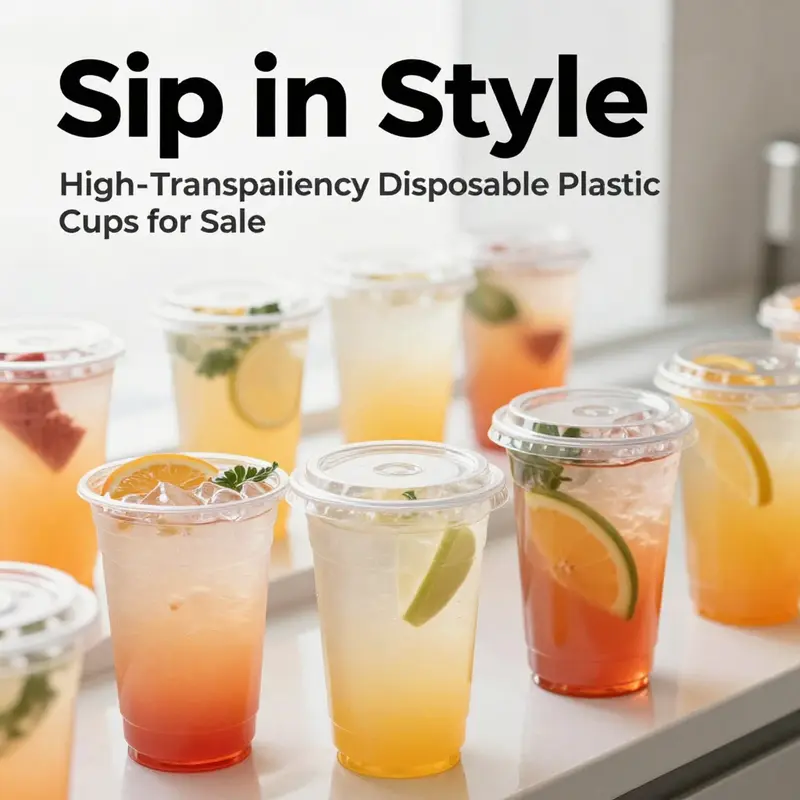
In the crowded marketplace of disposable servingware, the demand for high-transparency cups stands out not merely for aesthetic appeal but for how clarity amplifies trust and dining experience. Clear cups, especially those built from PET or similar food-grade plastics, have moved beyond being simple vessels. They are now essential tools for presentation, portion control, and branding in cafes, take-away windows, catering events, and home entertaining. The appeal rests on one clear fact: a beverage or dessert presented in a glasslike cup communicates freshness, cleanliness, and reliability even before a single sip is taken. When consumers can see the color, texture, and layering of a drink or dessert, perception of quality rises. This makes transparency a strategic advantage for sellers and a practical expectation for buyers choosing plastic cups in bulk for sale.
The material choices behind these cups are more nuanced than mere see-through appeal. PET—polyethylene terephthalate—offers exceptional clarity, stiff walls, and a balance of heat resistance and chemical stability that makes it a staple for cold and warm beverages alike. In practice, PET cups excel in showcasing fruit-forward teas, layered frappes, and iced desserts where the visual impact matters as much as the flavor. For vendors serving hot drinks, the selection often includes variants engineered to withstand higher temperatures without warping or clouding. The result is a versatile lineup of sizes and shapes that can handle a spectrum of applications, from a standard cold drink to a dessert cup that doubles as a ready-made serving dish.
On the other side of the spectrum lies the eco-conscious option that has gained traction in grocery, hospitality, and event settings: plant-based alternatives like PLA-based cups. These transparent cups are designed to be compostable under industrial conditions, appealing to buyers seeking to reduce landfill impact. The trade-off, however, is nuanced. PLA’s performance in hot conditions can be more limited than PET, and its compostability depends on the availability of industrial facilities. Yet for occasions where branding, sustainability messaging, and consumer perception are paramount, the option to offer a compostable cup with a high degree of transparency is increasingly attractive. Customization options—logo printing, bespoke lid designs, and sizes tailored to specific beverages or desserts—enhance the product’s value, turning a simple cup into a promotional asset.
Bulk buyers, from wholesale distributors to large food-service operations, frequently source these cups in substantial quantities, often in 1000-piece packs or larger. The bulk-buy model aligns with the seasonality and planning cycles of cafes and event organizers, ensuring that smooth supply lines are maintained during peak periods. The ability to customize is a strong driver here: logos, color accents, and even lid shapes can be coordinated to reinforce a brand identity across a whole service lineup. In practice, the most common configurations include clear cups designed to pair with a matching lid, a seal of compatibility that minimizes leaks and maintains presentation from counter to consumer. The stacking geometry, wall thickness, and rim finish all contribute to the overall user experience, affecting grip, sip ease, and the perception of sturdiness during transport.
From a purchasing perspective, platforms that connect buyers with suppliers offer a practical route to market for these high-transparency cups. Global wholesale marketplaces curate catalogs that emphasize food-grade safety, consistent clarity, and scalable fulfillment. Buyers weigh factors such as wall thickness, clarity level, temperature tolerance, and the availability of accessories like specialized lids, sleeves, or printed branding inserts. Ordering in bulk often translates to shorter lead times per unit, lower per-unit costs, and the opportunity to contract for ongoing supply rather than sporadic one-off purchases. The consolidation of supplier options on a single platform can also support uniform quality control, ensuring that a batch of cups from one shipment matches the appearance and performance of prior lots.
The conversation around these cups inevitably intersects with sustainability considerations. While PET offers strong clarity and durability, its end-of-life story depends on recycling infrastructure. Recyclability is a major selling point in regions where municipal programs support the return stream for PET containers. The PLA option, while compostable in the right conditions, requires access to compatible industrial facilities to deliver the intended environmental benefit. Buyers must balance the desire for a pristine, see-through presentation with the practical realities of waste management in their locale. In some markets, a hybrid approach—clear PET for everyday cold beverages paired with an optional compostable PLA line for special events—helps retailers meet consumer expectations while navigating local disposal realities.
Beyond the material and environmental considerations, a broad spectrum of sizes and shapes enables these cups to cover a wide range of use cases. Clear PET cups are commonly offered in configurations that accommodate water, tea, coffee, and cold milk-based beverages, as well as dessert servings like sundaes. The design frequently includes features that support practical serving: smooth rims for comfortable sipping, robust base constructions to avoid tipping, and compatibility with a range of lids that seal securely without compromising the clarity of the cup itself. In retail and food-service environments, the ability to print branding directly on the cup or lid adds a layer of value that extends the cup’s function from merely a container to a moving advertisement for the business.
For buyers who are balancing aesthetics with environmental responsibility, a growing cadre of suppliers advertise both high-clarity PET options and biodegradable-leaning alternatives. This dual-offering approach acknowledges diverse consumer preferences and regional regulations while preserving the universal appeal of a clean, transparent cup. The decision often comes down to context: in a café setting where presentation and performance under heat are critical, PET remains a reliable standard. For venues emphasizing sustainability and industrial composting capabilities, PLA cups can deliver the right message with minimal compromise on the visual impact of the product. In either case, clarity remains the throughline. The more transparent the cup, the more the drink or dessert is allowed to tell its story, from the color gradient of a layered beverage to the glossy sheen of a cold dessert.
As buyers navigate the buying journey, sourcing considerations extend beyond material choice and bulk packaging. Lids that fit snugly, sleeves that protect hands, and printed branding options can elevate the perceived value of what is otherwise a simple disposable item. Lids designed to resist leaks during transport and to lock in temperature contribute to a smoother customer experience. For catering and large events, the ability to offer a uniform look across many servings—whether coffee, tea, iced beverages, or dessert cups—can be a differentiator in a competitive landscape.
In the broader arc of the disposable cup market, high-transparency cups occupy a pivotal position where visibility, safety, and convenience converge. They support not only the practical needs of serving beverages and desserts but also the marketing and brand storytelling that accompany them. Their clarity helps to set expectations, confirm product quality at a glance, and reinforce consistency across a retailer’s entire line of disposable serveware. The choice between PET and PLA is, in essence, a reflection of priorities—clarity and performance on one hand, and sustainability storytelling on the other. Buyers can align these cups with their operational realities, whether that means prioritizing recyclability in a city with robust PET recycling infrastructure or emphasizing industrial composting credentials in markets where compostables are widely supported.
For readers who are exploring related formats while remaining inside the same ecosystem of disposable serveware, a related resource highlights the broader family of cup products and branding possibilities in a closely aligned category. double-wall craft paper cups, illustrating how branding and functional design extend beyond plastic into paper formats while keeping the focus on user experience, durability, and visual appeal. This cross-material perspective reinforces a core insight: whether a cup is transparent plastic or branded paper, the value proposition rests on clarity of presentation, reliability during service, and the ability to reinforce a brand narrative through thoughtful design.
Looking ahead, the market for high-transparency disposable cups for sale will continue to balance clarity, safety, and sustainability as buyers become more discerning and supply chains more integrated. The best options will offer scalable customization and predictable performance under a range of temperatures, alongside transparent messaging about recyclability or compostability. As consumer expectations evolve, these cups will remain central to experiences that hinge on first impressions—the moment when a drink is poured into a crystal-clear cup and the eye, as much as the palate, completes the sensory experience. The result is a dynamic, resilient category that serves both everyday needs and special occasions without compromising on presentation or responsibility.
External resources can provide additional technical and market context for buyers seeking a reliable path to bulk supply. For a current, verified supplier offering high-transparency, food-safe disposable and reusable PET cups suitable for commercial kitchens, cafes, events, and retail use, see the referenced product listing on a global wholesale platform. This resource underscores the practical realities of sourcing: bulk pricing, customization, and lead times that align with business calendars.
External resource: https://www.alibaba.com/product-detail/Food-Grade-and-Reusable-Transparent-PET1601342957854.html?spm=a2700.productlist.0.0.3c4e7d9aGtPzKq
Retail Currents and Wholesale Streams: Navigating Disposable Plastic Cups for Sale
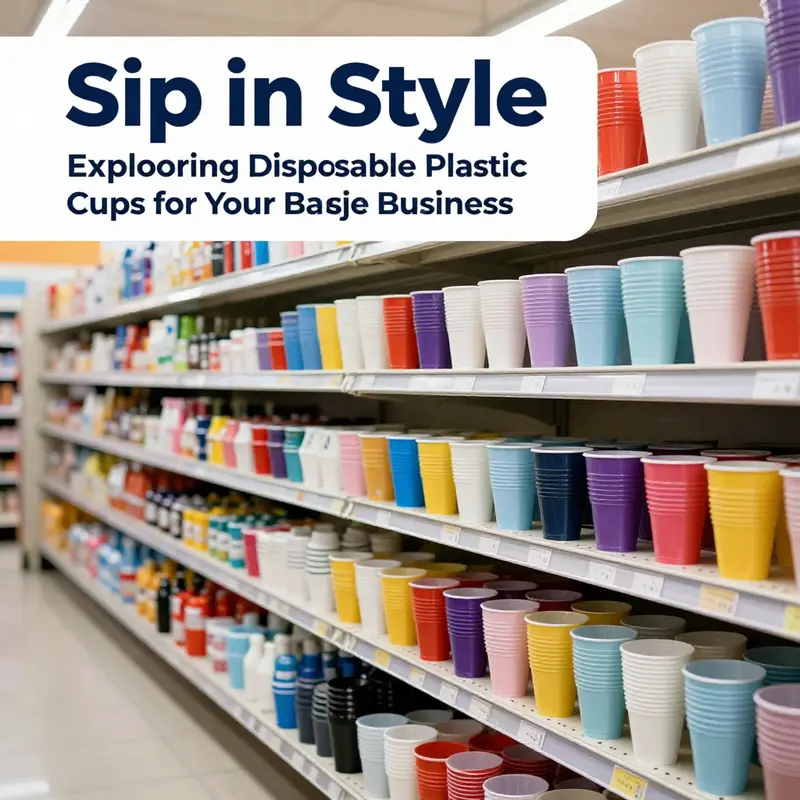
The market for disposable plastic cups sits at a crossroads where personal purchasing habits meet industrial scale. Buyers range from a single host planning a small party to a large venue operator distributing beverages at scale, and the channels connecting them are varied and interlocking. A buyer facing this landscape weighs decisions that hinge on form, function, and whether the cup will travel to a home, an event site, or a storefront. In practice, the retail options unfold along a gradient from consumer-facing outlets to wholesale networks, each presenting its own mix of product variety, service terms, and potential for customization. The result is a continuum of selections that can satisfy a family gathering one afternoon and a catering contract the next, all anchored by a handful of core materials and performance features that make a disposable cup suitable for cold drinks, hot beverages, or specialty applications at events and retail fulfillments alike. What matters in this space is not a single best choice but the right fit for the intended use, volume, and branding needs, all delivered through channels that balance convenience, cost, and reliability.
On the consumer side, brick-and-mortar retailers and online marketplaces fulfill last‑mile needs with compact assortments. These outlets typically stock a range of sizes and materials that suit everyday beverage servings, along with accessories such as lids and straws. For shoppers planning a birthday bash or a neighborhood gathering, the emphasis is on immediate availability, straightforward pricing, and the simplicity of a single-transaction purchase. The appeal of this segment lies in immediacy and habit: grab a box of cups with lids, perhaps in a design that matches a party theme, and complete the order in minutes. It is in these contexts that smaller-scale or low‑minimum orders become attractive, especially for individuals or small teams that want to test a few designs or color matches before committing to larger quantities. In the current retail mix, these smaller lots are often paired with convenient add-ons like straw lids or ready-to-use cup sets that streamline service at pop-up stands, coffee corners, or school events. The design emphasis here tends to favor ease of use and visual appeal, because presentation matters when the cups are part of a guest experience and the consumer’s first impression of the brand or event.
Wholesale channels, by contrast, speak to different priorities. For businesses planning across entire seasons or multiple outlets, the lure is the ability to purchase in bulk at a lower unit cost and with customization options that reinforce branding. Bulk purchases and wholesale options make it possible to secure large numbers of cups in a single order, with the added advantage of imprinting logos, colors, or other branding elements. This is where the distinction between supply strategies becomes most pronounced. In wholesale arrangements, minimum order quantities and price breaks are standard, reflecting the reduced per-unit cost that accompanies larger runs. Vendors in these networks typically present a menu of sizes and materials, from clear, high‑clarity options to more robust materials that tolerate both cold and hot beverages. The tradeoff, of course, is that larger orders require careful planning: storage capacity, lead times, and the capital tied up in inventory all demand attention before a contract is signed. Yet for caterers, event planners, and foodservice operators, wholesale arrangements open up a path to consistent supply and reliable branding across dozens or hundreds of outlets, ensuring uniform presentation and predictable service experiences.
The material choices themselves shape what buyers can expect from either channel. PET cups are celebrated for their clarity and durability, making them ideal for cold beverages where the drink’s appearance matters as part of the consumer’s perception of quality. PP cups, on the other hand, bring a balance of clarity and toughness that supports a wider range of applications, including some hot beverages where thermal resistance is a consideration. In both cases, the ability to seal with leak‑proof lids and to provide a secure, food-safe package is a critical performance criterion. The interplay of material properties and accessory design influences where a cup will most effectively serve. In many cases, event vendors and restaurants value the clean look of a transparent cup, while take‑away operations may lean toward polypropylene for its heat tolerance and robustness. The decision often comes down to the cold beverage presentation versus hot or mixed-service needs, with the added dimension of whether branding must appear as part of the cup or as a separate marketing element on packaging or containers.
Customization, and thus the ability to imprint logos or branding, expands the retail and wholesale continuum in meaningful ways. For operators seeking a branded footprint, the option to imprint a logo, choose a color accent, or select a cup and lid combination that harmonizes with a broader packaging design can transform a routine disposable into a coherent retail or event experience. The engineering behind customization for disposable cups usually involves a minimum order threshold and a defined lead time, but the payoff is a marketing asset that travels with the cup and can reinforce customer recognition long after the moment of service. When a business plans for branding at scale, it also considers the logistic and practical aspects of customization—whether the imprint needs to be a small emblem, a full‑wrap, or a color‑matched accent that coordinates with lids or sleeves. The more complex the customization, the more critical it becomes to align with production timelines and storage constraints. In this sense, the retail and wholesale channels converge around a shared goal: delivering a reliable, visually coherent product that meets performance standards, while offering the flexibility to tailor appearance and branding to distinct use cases.
Real‑time pricing and availability figures into every procurement decision. Buyers who operate at scale often consult multiple listings to compare material options, sizes, and lead times. Listings will typically specify the material type, the available sizes, the minimum order quantity, and the expected shipping window, which commonly ranges from about ten to twenty days depending on the supplier and current demand. This means that planning must account not only for the immediate need but also for future events, seasonal demand, and potential reorders. The advantage of online wholesale marketplaces lies in the ability to evaluate a broad spectrum of options quickly, weighing tradeoffs among price per unit, customization capabilities, and the reliability of the supplier. For example, a large event calendar might drive a decision to partner with a supplier that can deliver uniform cups with branding across multiple locations, while a café with constant turnover might favor a standard line of cups that reliably satisfy both customer expectations and staff efficiency. In either scenario, a careful comparison of terms, including the durability of the product under typical service conditions, is essential to minimize surprises after the order is placed.
A practical illustration of how a vendor presents options helps illuminate the decision process without naming specific products. A representative listing typically shows a few core variables in a single page: material type, size or capacity, the option to customize logos, and the stated minimum order quantity along with per‑unit pricing that scales with volume. The presentation is designed to give buyers a quick sense of fit—whether the cup’s appearance and function align with the intended service setting, and whether branding is feasible within a given budget. For buyers who want a tangible frame of reference without committing to a particular SKU, reviewing a generic example listing can be instructive. To explore a concrete internal example of how such listings are structured, you can visit an internal product listing on a supplier’s site. This page demonstrates how material type, size, minimums, and customization options are brought together in a single view, along with practical notes about lead times and shipping expectations. internal product listing.
The retail and wholesale channels also reflect a broader shift toward sustainability and responsible packaging. While many buyers still prioritize cost and performance, there is growing interest in materials that balance convenience with recyclability or compostability. In response, suppliers have expanded their catalogs to include options that align with circular economy goals, offering recyclable finishes, reduced plastic content, or alternative fiber‑based compositions where feasible. The emphasis remains practical: cups must perform reliably in the hands of service staff, withstand the rigors of transport and handling, and present a clean, appealing look that supports the user’s experience. Yet buyers increasingly factor end‑of‑life considerations into procurement decisions, weighing not only the immediate price per cup but also the broader value proposition that includes regulatory compliance, waste management requirements, and consumer expectations around sustainability.
As buyers navigate these currents, it is useful to keep the larger procurement picture in view. The choice between retail and wholesale pathways is not a binary decision but a spectrum of options that can be combined to meet different needs. A café may maintain a steady stock of standard cups for everyday use while maintaining a backup supplier for branded, high‑volume events. A caterer might source large runs of a uniform cup with a logo for high‑volume service, complemented by a small assortment of design accents for seasonal promotions. A retailer launching a limited‑time offering may use a short‑run customization service to test branding concepts before committing to a longer program. In every case, the underlying considerations remain consistent: ensure compatibility with beverage types, confirm the availability of lids or related accessories, verify the reliability of the supplier’s lead times, and assess total cost of ownership across the items, including shipping, storage, and handling.
The journey through retail and wholesale channels is ongoing. It invites buyers to think holistically about how disposable cups fit within their service workflows, branding strategies, and broader sustainability goals. It also points toward a practical habit: whenever you plan a large procurement, model both the immediate need and the anticipated reorders, then map those needs onto a supplier’s production cadence and shipping capabilities. This kind of foresight helps maintain continuity of service, protects brand integrity, and reduces the risk of stockouts or mismatched branding across multiple locations. In the chapters that follow, the discussion turns to how buyers evaluate suppliers for quality control, regulatory conformity, and long‑term partnerships, so that the act of purchasing cups becomes not merely a transaction but a reliable component of a well‑engineered service operation. External reference for further market context and cross‑checkable pricing details can be found on a major wholesale marketplace, which offers a broad view of current offerings and lead times across suppliers. https://www.alibaba.com/product-detail/Disposable-Plastic-Cups-500ml-16oz-Empty_1600798328465.html
From Bulk to Brand: Sourcing and Customizing Disposable Plastic Cups at Scale
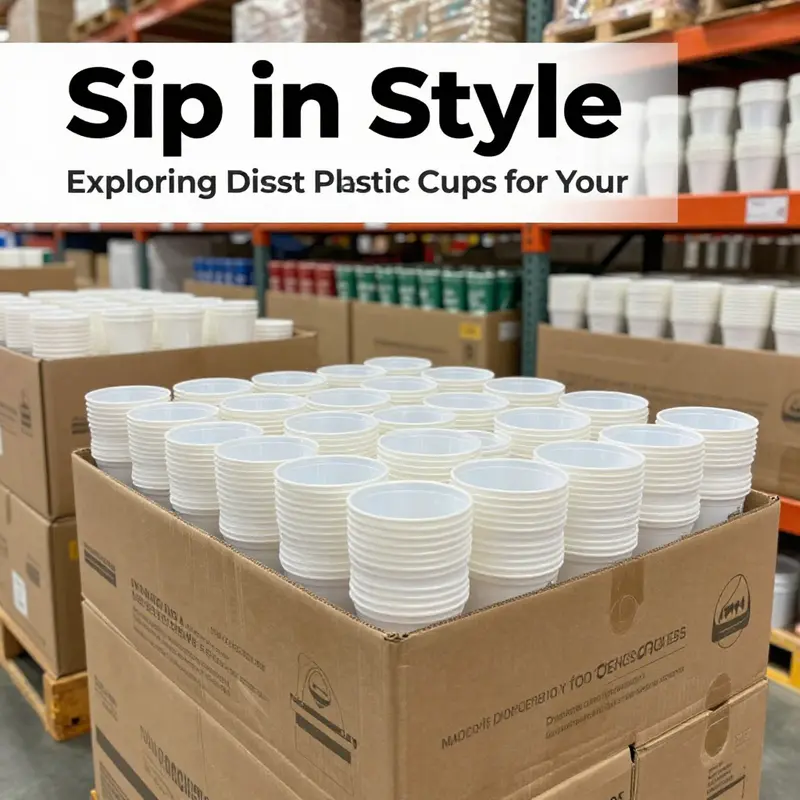
When a business contemplates bulk purchases of disposable plastic cups, the goal is rarely simply to stock a shelf. Instead, it is to build a reliable supply chain that delivers clear, sturdy cups that carry a brand identity and perform under the rigors of high-volume service. The current market acknowledges this dual demand: it offers a broad spectrum of choices, from basic clear cups to stackable designs, from cold beverage formats to specialized options for events and takeout, all while enabling branding through logos, colors, and customized prints. The challenge is to translate those possibilities into a practical specification that controls cost without compromising quality. A cohesive procurement approach begins with an awareness of materials, extends through customization and packaging choices, and culminates in a sourcing strategy that balances supplier reliability with real-world constraints like lead times, minimum order quantities, and regulatory expectations. In this expansive landscape, the most successful buyers treat bulk purchasing as a strategic activity rather than a simple transaction, aligning it with marketing, operations, and sustainability goals in a single, coherent plan.
Material choice forms the backbone of both performance and value. The cups most commonly used in high-volume settings are molded from thermoplastics such as polypropylene and polystyrene. Polypropylene stands out for its clarity, rigidity, and favorable cost profile, making it a natural choice for standard cold beverage applications where a crisp appearance and dependable structure are prized. Polystyrene offers similar manufacturing advantages, including ease of molding for high-volume runs, contributing to predictable pricing and consistent supply for retailers and foodservice operators who must meet peak demand with minimal disruption. These materials, while economical, must be matched to the intended use. Hot beverages, for example, demand plastics that resist higher temperatures and show resilience during repeated handling. Cold beverages can typically rely on standard formulations, but even there, clarity and rigidity matter because the cup must showcase the drink, support a comfortable grip, and withstand stacking without cracking or creasing. Buyers who aim to differentiate their offerings should not overlook the role of beaded rims, seam integrity, and surface finish, all of which influence the user experience and, ultimately, loyalty.
Customization options extend the value proposition beyond price and performance. Brands increasingly seek to imprint logos, color schemes, or distinctive artwork onto disposable cups, turning a simple container into a portable marketing asset. Suppliers offer flexible solutions for various order volumes, with a mix of printing methods, color palettes, and placement options that can accommodate everything from a small event to a nationwide rollout. In bulk scenarios, a common approach is to bundle cups with lids and an assortment of straws, enabling a streamlined packaging and serving experience that reduces handling, speeds service, and enhances the unboxing moment for customers. The branding work can extend to the cup’s surface as well as its lid, with both elements aligned to create a cohesive visual identity. For buyers who want to test ideas before committing to full-scale production, many suppliers provide sample runs, allowing brands to evaluate print fidelity, ink adhesion, and the overall impression under real usage conditions. This testing phase is not a luxury; it is a practical guardrail against costly batch recalls or unsatisfactory orders that can sap margins and erode consumer trust.
The decision to customize must be weighed against performance considerations and cost structures. Different grades and finishes of plastic influence heat resistance, stiffness, and how well print holds during long service periods. For hot beverages, selecting a material with superior heat stability helps prevent deformation and leakage, while for cold beverages, clarity and the strength of the cup edge can determine customer satisfaction. In addition to material grade, the finish and wall construction—single versus double wall, for instance—can affect insulation properties, bite resistance, and the perceived quality of the beverage. The pricing dynamics of customization hinge on several factors: the complexity of the design, the number of colors, the method of printing, the size of the run, and the consistency demands across multiple batches. Branded cups can command a premium, but smart buyers negotiate for bundled pricing and uniform cycle times so that production planning remains predictable. A practical approach is to establish a tiered pricing framework that favors larger orders but preserves budget flexibility through options such as color changes or logo updates that align with seasonal campaigns.
Alongside performance and branding, environmental considerations are increasingly central to the purchasing calculus. Consumers expect sustainability to be a baseline, not an afterthought. Suppliers respond with recyclable offerings, as well as biodegradable or compostable alternatives that align with broader waste-reduction goals. The trade-offs here are nuanced. Biodegradable options can carry higher unit costs, longer lead times, and sometimes nuanced disposal requirements. Recyclable cups, while often more cost-effective, depend on the effectiveness of the local recycling stream and the product’s compatibility with existing processes. For buyers who are expanding into sustainable packaging, the challenge is to quantify the environmental impact alongside the financials, ensuring that the chosen cups meet both regulatory expectations and consumer demand for responsible packaging. In practice, this means requesting clear certifications, testing data, and end-of-life guidance from suppliers, and it often translates into a policy that prioritizes recyclable designs and standardized sizing to simplify recycling workflows for end customers.
Sourcing and supplier evaluation are critical to turning a great concept into a reliable supply. The buyer’s lens should focus on material specifications, production throughput, quality control, and the capacity to scale with demand. Reliability is built through a transparent supply chain, clear communication, and a track record of on-time deliveries within the specified tolerances. Price structures must be understood not just in terms of per-unit cost but also with regard to total landed cost, which includes freight, duties where applicable, packaging, and any incremental costs tied to branding work. Compliance with regulatory standards—whether related to food contact materials, safe handling, or labeling requirements—must be verified up front to prevent future compliance risks. The global nature of today’s supply ecosystem means buyers frequently compare multiple vendors, weighing both the smallest viable minimum order quantities and the vendor’s ability to support long-term marketing strategies tied to seasonal campaigns, pop-up events, or franchise rollouts.
In practice, many teams organize procurement around platforms that aggregate supplier listings, enable price comparisons, and host dealer ratings and performance data. For those exploring bulk purchases and customization options, a practical starting point is to review product listings that emphasize scalable customization and reliable delivery timelines. A representative pathway involves evaluating candidates that advertise clear specifications for cup materials, available capacities, and the branding options that can be accommodated for bulk orders. For teams seeking to pair procurement with branding in a single workflow, a few suppliers provide bundles that combine cups with lids and straw assortments, designed to streamline storage and service while ensuring brand consistency across the entire packaging ecosystem. When navigating these options, it is helpful to reference a practical catalog entry that illustrates the breadth of customizations available for disposable cups and to use this as a baseline for supplier negotiations. For a concrete example of a supplier page that frames these capabilities, you can explore disposables with custom logos and double-wall designs at this resource: senang-disposable-double-wall-craft-paper-cups-multi-size-6-24-oz-custom-logo-for-coffee-tequila.
Bulk buying also invites strategic thinking about packaging and downstream logistics. Operators often favor bundled solutions that reduce the number of separate purchasing events, simplify inventory management, and lower the risk of stockouts. If a brand intends to run a long campaign with consistent cup designs, it makes sense to negotiate for a fixed color palette and a set of logo placements that withstand reordering and design updates. The cadence of reorders becomes a critical planning input because it informs both warehouse capacity and the supplier’s lead-time commitments. For some businesses, the bulk purchase decision also provides leverage to negotiate better terms on smaller incremental orders during promotional periods, while preserving the capacity to ramp up production during peak demand. In this complex interplay of timing, quality, and cost, the right supplier relationship acts as a strategic asset, reducing the friction that typically accompanies large-scale packaging programs and enabling a stronger, more consistent customer experience across channels.
Ultimately, the sourcing journey for disposable cups in bulk is about translating brand strategy into tangible packaging assets that perform reliably in real-world conditions. It is about balancing material science with design intent, and it is about building vendor partnerships that can scale with business growth while maintaining control over quality and environmental impact. In practice, the best programs are those that treat customization and procurement as collaborative processes: a dialogue that starts with clear specifications, continues with rigorous sampling and testing, and culminates in a dependable supply chain that can adapt to changing demands and evolving consumer expectations. As the market for disposable cups continues to diversify, the ability to align a cup’s performance, branding, and sustainability profile with an organization’s broader goals becomes a defining competitive advantage. This alignment ensures that every cup serves not just a beverage, but a brand narrative that travels from the point of sale to the customer’s hand.
External resource for broader sourcing context: For global, real-time bulk-sourcing insights that span regions and suppliers, many teams turn to large marketplaces that aggregate offers, compare terms, and provide secure trading options. See a well-known global platform for bulk customization and procurement discussions to inform your strategy and negotiations: https://www.alibaba.com
Final thoughts
Choosing the right disposable plastic cups is vital for any beverage-centric business. High-quality options such as clear PP and PET cups not only provide durability but also enhance the customer’s visual experience. Whether you’re stocking your beverage chain, catering for a corporate event, or organizing supplies for a food truck, understanding the variety of cups available will help streamline your purchasing decisions. From retail options to bulk customization, these choices ensure you cater effectively to your customers while elevating your service. Explore your options and elevate your beverage offerings today!