
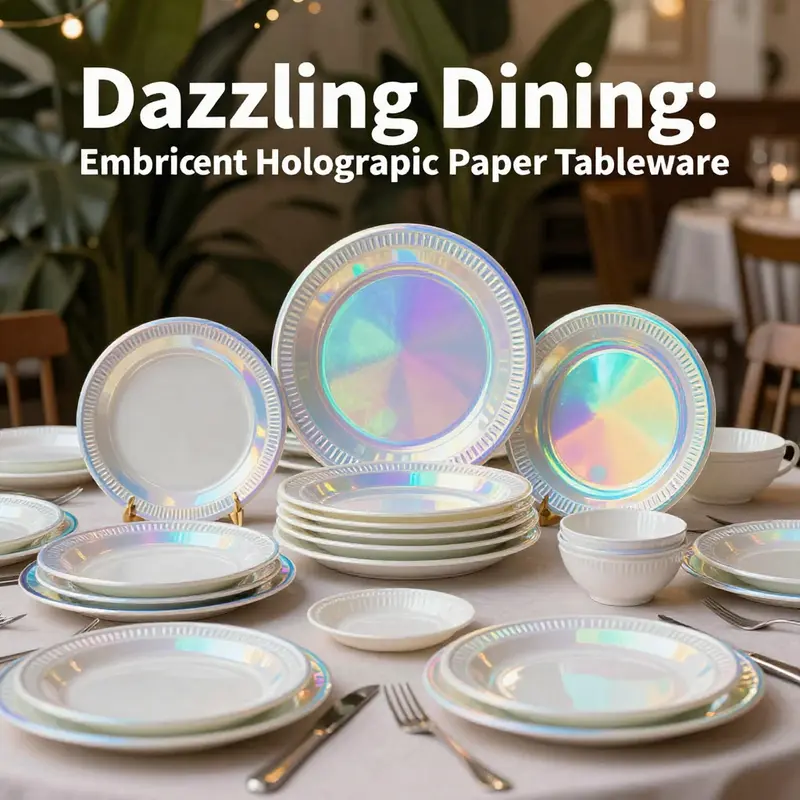
The rise of iridescent holographic paper plate cup rainbow gradient disposable tableware marks a transformation in dining aesthetics and event planning. This eye-catching tableware not only enhances visual appeal, making every occasion memorable, but also caters to diverse industry needs. Bubble tea shops and catering services can leverage these vibrant designs to enchant their customers while maintaining functionality. This article explores the innovative features, environmental impact, and growing applications of this unique tableware, guiding industry professionals in selecting the perfect options for their needs.
Prismatic Tables: The Science, Style, and Sustainability of Iridescent Rainbow Gradient Disposable Tableware

The moment a cluster of iridescent holographic paper plates and cups is laid out on a table, the room seems to tilt toward a different dimension of celebration. Light catches the surface at different angles, and the color shifts ripple across the plates like a tiny aurora. This is not merely decoration; it is a carefully engineered interaction between material science, design language, and the rituals of gathering. The iridescent rainbow gradient finish is more than a visual effect. It is a conductor of mood, a cue that signals playfulness for a birthday, reverence for a wedding, or whimsy for a mermaid-themed party. The surface plays with perception as easily as a prism divides white light into a spectrum, and it does so with a promise that extends beyond aesthetics. The tableware becomes a stage where guests become participants in a shared optical performance, and the performance is durable enough to survive the evening without stealing the spotlight from the conversation, food, or music.
What makes this category remarkable rests on several layers that intersect in unexpected ways. Firstly, the finish itself is a unique silver holographic rainbow gradient, engineered to catch and refract light, to reflect and refract, to shimmer and subtly shift with every tilt of a plate or cup. The effect is consistent across multiple pieces of a set, which matters because a cohesive table reads as intentional design rather than a collage of disparate elements. In practical terms, the holographic coating is applied through a controlled process, often laser-assisted, that creates a uniform reflective layer. The technology behind this is not merely about making something glimmer; it is about layering reflectivity and color in a way that remains stable through typical food contact, handling, and short-term exposure to moisture. When you see a set that claims a rainbow gradient finish, you are witnessing a confluence of material science and visual art. The finish is not just color. It is a directional surface that manipulates how light interacts with the underlying substrate, transforming an ordinary disposable item into a moment of wonder.
The surface finish sits atop a careful choice of base materials. The most common combination emphasizes safety and sustainability. Food-grade paper forms the core, chosen for its compostability and tendency to decompose under appropriate industrial or home composting conditions. In some configurations, there is a move toward biodegradable or bagasse-based substrates, where the fibrous texture and natural whiteness of the base paper contribute to a tactile contrast with the high-gloss holographic layer. A note on safety accompanies this choice: the coatings and inks used to achieve the holographic gradient must be food-contact compliant, BPA-free in the case of any plastic components, and free from harmful chemical leachates. The result, for the event planner or thoughtful host, is a system that can be enjoyed without second thoughts about guest safety, while still delivering the brilliance that makes a statement.
The shapes of the pieces themselves are a quiet revolution in design terms. Modern tablescape storytelling often relies on geometry and form to guide eye movement and social interaction. Hexagonal plates, with their geometric edges and efficient packing, offer a contemporary alternative to round plates. The hexagon amplifies the reflective quality of the holographic finish because each facet catches light along different axes, creating micro-shifts that the eye recognizes as a living gradient rather than a fixed image. The cups follow suit, sometimes with a sleek tumbler silhouette that carries the same gradient logic on a smaller scale. This attention to form matters beyond aesthetics. It influences how guests handle their plates and cups, how easy it is to stack and transport the dishes, and how well the table can be cleared and reset between courses. The visual cohesion helps guests focus on the event narrative rather than the logistics of tableware, a benefit that becomes especially evident in larger gatherings where the set functions as a unifying design thread.
The conversation about these products would be incomplete without acknowledging the broader ecosystem of disposable tableware that supports modern events. The market has evolved to balance style with responsibility, and this balance often unfolds in steps that seem almost paradoxical: the same item that dazzles the eye can also be designed to minimize environmental impact. The tendency toward environmentally friendly materials—such as 100% food-grade biodegradable paper or BPA-free plastics—reflects an industry response to the growing demand for cleaner waste streams and responsible consumption. This does not mean compromising on the scale or the spectacle of the presentation. Rather, it signals a sophisticated approach to lifecycle thinking. The care is evident in the choices of substrate, in the printing or coating methods, and in how suppliers communicate safety and sustainability to consumers who want both drama and peace of mind when they set a table.
A deeper look at the materials and methods reveals a technology-driven approach to achieve the shimmering effect. The rainbow gradient is not simply painted on. It is embedded through a reflective coating that creates a seamless, consistent holographic surface. Laser or high-precision coating processes are often employed to ensure the uniformity of the effect across multiple pieces. When viewed from different angles, the surface reads as a cascade of color shifts—from cool blues and teals to warmer pinks and golds. The phenomenon is reminiscent of a prism: light enters, splits, and emerges as a spectrum that seems to be living, responding to every tilt and gaze. This dynamic interaction becomes part of the party atmosphere. Guests instinctively pause to notice how the tableware responds to their presence, a small but undeniable increase in perceived value that elevates the entire experience.
The materials science behind iridescent holographic tableware is closely tied to the practical realities of disposability. A well-designed set must withstand the rigors of food contact, utensils, beverages, and the occasional spill, all while maintaining the integrity of the finish. That means that the coating must resist smudging and chipping, hold its color gradient under heat exposure for short durations, and avoid imparting any undesirable taste or odor to food or drink. The interplay between durability and aesthetics is where engineering meets artistry. The result is a package that looks luxurious yet remains the pragmatic option for a disposable system. The sets are typically designed with complementary napkins and tablecloths that extend the gradient theme, providing a cohesive backdrop for the standout pieces while also supporting a practical color story for the event. Some configurations push this concept further by integrating lids on cups or by offering cutlery and smaller plates in matching finishes, creating a full-spectrum experience that feels curated rather than coincidental.
Examining real-world exemplars helps illuminate how these features translate into market offerings. A widely cited example is a disposable tableware set marketed for its iridescent rainbow gradient and reflective surface, advertised as featuring 220gsm acid-free cardstock with a mirror-like holographic finish. This combination speaks to two core concerns: first, the weight and rigidity that make plates feel substantial enough for a variety of courses; second, the reflective, iridescent surface that ensures the visual impact endures from the moment guests walk in to the last toast of the night. The hexagonal plate shape pairs with matching cups to reinforce a cohesive geometry that reads as intentional design rather than a random assortment. The emphasis on acid-free cardstock hints at a concern with archival quality for decorative purposes, which, while not always essential in a disposable context, signals a careful attention to material behavior under light exposure, temperature changes, and the potential for surface interactions during service. The same general logic informs other market entries that lean into pastel holographic motifs and allusion to dreamlike coastal or mermaid-inflected themes, where soft gradients and delicate shapes support a whimsical rather than overpowering table narrative. In such contexts, the palette benefits from lighting design that can transform the gradient, encouraging guests to observe subtle color shifts as they move around the room.
The broader conversation about eco-conscious disposable tableware also invites a closer look at alternatives and trade-offs. In the same product family, some sets prioritize compostable or biodegradable fibers that align with stricter sustainability goals. In other cases, the focus shifts toward reusable components, or toward more easily recyclable substrates, with adhesives and finishes selected to facilitate end-of-life processing. Within this spectrum, iridescent holographic finishes add a layer of complexity because the coating’s recyclability or compostability might depend on the specific material stack and on regional waste management capabilities. This is not a critique of the concept but a reminder that the sustainability story for such products is not monolithic. It varies with material choices, processing methods, and the local infrastructure for handling disposable goods. The successful tension between glamor and responsibility emerges when designers and manufacturers articulate the trade-offs clearly and offer alternatives that align with different event budgets and environmental priorities. In practice, this might mean providing a range of finish options—from high-impact holographic surfaces for showpiece moments to more subdued but still effective gradient finishes for everyday celebrations—so that planners can select a package that matches both the aesthetic ambition and the waste-management realities of their locale.
What emerges from this synthesis is a narrative about how iridescent holographic tableware operates on multiple levels. It is a sensory invitation that triggers curiosity and conversation. It is a design language that coordinates with atmosphere, lighting, and color palettes, guiding guest experience without dominating it. It is a material system that seeks to balance the thrill of color-shifting surfaces with the practicalities of disposable service, safety for food contact, and, ideally, responsible end-of-life outcomes. For hosts planning a themed event, the payoff is not only the momentary wow factor but also the way these pieces can anchor a larger visual brand for the celebration—an entire ecosystem of décor and dining that feels cohesive, modern, and mindful.
The integration of an internal link to a practical supplier resource can help readers connect the theoretical and the tangible. For instance, a host seeking eco-friendly, printed logo options on disposable cups can explore a dedicated page that blends sustainability with branding, offering a way to continue the gradient aesthetic while incorporating custom messaging. This kind of synergy between product feature and customization can extend the value of the iridescent tableware beyond the party itself, aligning with long-term planning and brand storytelling for events that recur throughout the year. The ability to add a personalized touch without sacrificing the finish’s brilliance underscores the modern potential of this category. The narrative here is not simply about pretty plates and shimmering cups; it is about how a thoughtful combination of materials, geometry, light, and sustainable practice can shape an experience that feels both magical and responsible.
For readers who want to dive deeper into the practical design decisions and sourcing behind these products, a relevant internal reference can be explored through a supplier-focused page that emphasizes eco-friendly branding on disposable tableware. See more about how such items can be produced with branding in mind at this source: eco-friendly printed logo paper ice-cream cups with lid. This resource offers a concrete look at how suppliers balance aesthetics with function, a balance mirrored in iridescent rainbow gradient sets that aim to be both striking and practical.
The broader universe of iridescent rainbow gradient disposables also includes larger, decor-focused kits that extend the finish to napkins, tablecloths, and even coordinated wall décor. These expanded packages help organizers craft a total look that is immersive yet not overwhelming. The principle at work is harmony through repetition: when the gradient language appears across plates, cups, and textiles, it creates a cohesive rhythm on the table that supports the event’s theme without becoming repetitive or chaotic. The careful selection of lighting—whether warm incandescent, cool LED, or natural daylight—can further modulate the gradient’s perceived temperature, enhancing the sense of magic as guests approach the table and as conversations drift between courses. The science behind it all rests on how light interacts with both the reflective surface and the ambient environment; the color story becomes a living, responsive backdrop to the activities and interactions at the heart of the celebration.
In closing, these iridescent holographic paper plate cup rainbow gradient disposable tableware offerings exemplify a modern approach to disposable elegance. They fuse the glamour of a prismatic surface with pragmatic concerns about safety and sustainability, weaving together form, function, and environmental mindfulness. They invite hosts to choreograph a moment where color, light, and food intersect in a memorable tableau, while acknowledging that responsible consumption matters as much as visual impact. The result is not merely a fleeting sparkle, but a designed experience—one that travels from table to memory, lingering in the stories guests tell about a celebration that felt both magical and thoughtfully curated. The blend of science, craft, and ethical consideration in these products is a reminder that beauty can be engineered without sacrificing responsibility, and that the right tableware can help turn any ordinary gathering into a fleeting, luminous celebration of shared moments.
External reference: https://www.alibaba.com/product-detail/Iridescent-Laser-Rainbow-Holographic-Mirror_1600798431874.html
Shimmer and Footprint: The Environmental Realities Behind Iridescent Rainbow Gradient Disposable Tableware

A party’s sparkle often begins with light and reflection, and nowhere is that more true than with iridescent, holographic tableware that shifts from rose to teal as guests move around the table. The rainbow gradient finish, achieved through a layered, light-bending surface, can transform a simple gathering into something almost magical. Yet behind the gleam lies a material story that practical minds cannot ignore. The very allure that makes iridescent plates and cups so appealing—its ability to catch the eye and capture a moment in shift—comes with a set of environmental challenges that extend far beyond the last plate being cleared. Understanding these challenges requires looking closely at what these items are made of, how they are manufactured, and what happens to them at the end of their brief life in the hands of party-goers. The surface beauty is not just a matter of aesthetics but a reminder of the trade-offs we make when we choose convenience over durability, or when we equate novelty with sustainability. In many households and venues, holographically coated disposables are selected for their visual impact and the perceived ease of clean-up, yet the same choices can complicate waste management long after the party lights fade.
The core of the issue lies in material composition. Iridescent holographic paper plates and cups are typically built on a base of paper or plastic, which is then coated with a thin metallic layer or a multi-layer polymer film to achieve the shimmering effect. The metallic layer is often aluminum, applied in a metallization process that creates a reflective shine when light strikes the surface. In other cases, a complex polymer laminate forms the rainbow palette, a system of thin, stacked layers designed to trap light and reflect a spectrum of colors. This combination of base material and high-gloss outer layer is precisely what creates the hairline shimmer that looks so otherworldly under party lighting. But that same combination also makes the items difficult to recycle in most municipal systems. Recycling streams are designed to process uniform, separable materials, and when a plate or cup carries a metallic or multi-layer coating, the layers are not easily separable from the paper or plastic substrate. The result is contamination. When holographic disposables enter a recycling stream, they can compromise the integrity of the entire batch because facilities cannot reliably separate the laminated or metallized layers from the core material. The waste that remains—after sorting and processing—ends up in landfills or is incinerated, not because the base material is inherently disposable, but because its finish is not compatible with standard recycling processes. The difference between a recyclable base and a non-recyclable composite can hinge on a single surface treatment that is invisible to most consumers at the moment of purchase.
That invisibility is a critical part of the problem. The average consumer has little access to the technical details of surface coatings and lamination, and even when disposal guidance exists on packaging, it often fails to convey the real-life outcome once the item leaves the table. The result is a disconnect between intention and consequence. As a materials scientist from the Sustainable Packaging Institute notes, “Metallized films may look futuristic, but they’re stuck in a linear economy model: produce, use, discard. True innovation lies in creating shine without sacrifice.” That sentence crystallizes the paradox that defines many decorative disposables today. The technology used to achieve the holographic finish is highly advanced, enabling a consistent, eye-catching effect across all pieces. But that very sophistication can lock products into a single-use fate, which contradicts broader goals of circularity and resource conservation. The trade-off is not merely about whether a product can be recycled in theory, but whether it can be recycled in practice across the diverse waste streams that exist in communities large and small. A surface that wows on a party table may be a barrier to efficient waste processing in a real-world recycling facility, and the cumulative effect of many such products can accumulate into a substantial environmental footprint.
The environmental impact becomes even more pronounced when we consider the seasonality of demand. During holiday periods and major celebrations, households and venues purchase large volumes of decorative disposables, often to create a particular mood or theme. The U.S. Environmental Protection Agency tracks how waste patterns shift during holidays, noting that waste increases by more than 25% between Thanksgiving and New Year’s, adding more than a million tons of waste per week. A sizeable share of this surge consists of packaging, wrapping, and decorative tableware—items that are designed to be discarded after a single use. Iridescent, rainbow-gradient tableware, with its dramatic finish, sits squarely within this category. Although retailers may market these items as convenient and stylish, the aggregate effect of their disposal contributes to seasonal peaks in landfilled material and incinerated waste. The scale is not just a run of numbers; it translates into more landfilled plastics, more energy consumption in waste-to-energy facilities, and more emissions in transportation networks moving these products from shelves to households and events. The intricate finish that makes a plate shimmer can thus be linked to a spike in waste that places additional burdens on municipal systems that are already stretched by demand.
In response to these challenges, some manufacturers have begun exploring alternatives that seek to preserve the visual appeal of iridescent finishes while improving end-of-life outcomes. Biodegradable or compostable options, often built from plant-based materials and coatings, promise a different ecological narrative. These choices aim to align the aesthetic of celebration with a more responsible approach to disposal. The idea is to maintain the sensory experience—the glow, the rainbow shimmer—without compromising the ability of waste streams to be properly processed. Yet such innovations are not a panacea. The term “biodegradable” or “compostable” is jurisdiction-dependent; compatibility with industrial composting facilities varies by region, and consumer access to such facilities is uneven. Even when plant-based coatings are used, the energy and resource inputs required to grow, harvest, process, and transport those materials can be substantial. The promise of greener disposables is real, but it is not a universal solution. The lifecycle of a holographic plate or cup depends on many moving parts: the source of the base material, the nature of the finish, the ease of separation in recycling or composting streams, and the availability of appropriate facilities for end-of-life processing.
One practical pathway toward reducing harm without sacrificing celebration lies in better design and smarter labeling. If products can be engineered so that their finishes are either easily separable in recycling facilities or compatible with common composting streams, their end-of-life outcomes improve substantially. This is where industry standards and policy frameworks can push the needle forward. Designers can adopt materials that maintain the visual impact of a holographic finish while using coatings that do not hinder recyclability. For instance, if a multi-layer film is chosen, it could be made thin enough to minimize material use while still delivering the desired shine. Alternatively, researchers are exploring coatings that mimic the reflective properties of metallization but employ naturally separable, renewable layers. The goal is to preserve the sensory experience of color-shifting surfaces while ensuring that a product’s afterlife does not derail recycling streams or ratepayers’ budgets.
For consumers, the question becomes how to balance mood and meaning with responsibility. If a party demands a certain level of spectacle, there are ways to mitigate environmental impact without sacrificing that magic. A straightforward approach is to opt for reusable or multi-use tableware where feasible. While this may require a shift in event planning and cleanup practices, the environmental dividends can be meaningful. When single-use items are necessary, choosing products that advertise clear, verifiable recyclability or compostability and supporting brands that disclose their end-of-life pathways can help guide smarter choices. The best-case scenario for a party planner is to integrate a system that funnels used disposables into a proper recycling or composting stream, paired with education for guests about disposal. Labels that clearly indicate whether an item is recyclable, compostable in an industrial facility, or not accepted by local programs reduce confusion and mis-sorting at the curb.
In the broader conversation about sustainable aesthetics, the industry is now recognizing that shine should not come at the cost of the planet. That recognition has two practical implications. First, it invites a broader assessment of the full lifecycle of decorative disposables—from the extraction of raw materials to manufacturing, transportation, usage, and end-of-life processing. Second, it invites a reimagining of what counts as “special event” tableware. Aesthetics can still be striking, but with materials and finishes that align with circular economy principles. Educational campaigns and better labeling can empower consumers to make decisions that reflect both celebratory intent and environmental stewardship. The goal is not to deny the joy of a shimmering table but to ensure that joy does not become a lingering environmental burden after the last toast.
To readers looking for practical examples of how design choices translate into end-of-life outcomes, a closer look at a few options can be instructive. Designers and manufacturers who want to preserve the experiential quality of iridescent finishes while improving recyclability can consider using coatings that break down more predictably in recycling streams, or coatings that are removable with simple mechanical processing. In some cases, the base materials themselves can be shifted to more recyclable grades, reducing the likelihood of cross-contamination. Consumer education remains essential; even the best materials can fail to deliver their environmental benefits if users assume all disposables are equally manageable within their local systems. Clear disposal guidance, aligned with local capabilities, can transform a glamorous table into a model of responsible celebration. That shift requires a combination of thoughtful material choice, transparent labeling, and accessible disposal options for households and event venues alike.
Amid these considerations, it is worth noting a practical reminder embedded in the broader sustainability discourse: the shine does not justify the waste. The reflective allure of holographic finishes can be captivating, but the real measure of success is whether the product can participate in a circular economy or at least avoid becoming an unnecessary burden on waste streams. For readers who want to explore options that blend aesthetic appeal with environmental responsibility, there is a growing catalog of alternatives that prioritize compostable plant-based materials, responsibly sourced fibers, and coatings designed to minimize separation challenges in recycling. The shift toward such options does not require sacrificing the festive mood; it requires a different set of decisions at the design and purchasing stages and a more deliberate approach to how the items are handled after use.
In the end, the environmental impact of iridescent holographic rainbow gradient disposable tableware is a story of contrasts. It juxtaposes beauty with complexity, and convenience with consequence. It invites designers, manufacturers, retailers, and consumers to rethink what it means to celebrate in a way that respects the limits of our waste systems. It asks for transparency about materials and end-of-life pathways and for a willingness to invest in solutions that may require a bit more planning but offer the promise of dramatically reduced environmental impact. The glitter of the finish is undeniable, but so is the responsibility that comes with it. By embracing smarter materials, clearer labeling, and better disposal practices, we can preserve the magic of celebration while advancing toward a more sustainable pattern of consumption. And as the field continues to evolve, the story of iridescent, rainbow-gradient disposables may well shift from one of glitter-only appeal to a more nuanced narrative that blends allure with accountability.
For readers who want to explore practical options that align more closely with sustainable goals while still delivering the festive visual impact, consider this resource on eco-friendly disposable solutions: disposable eco-friendly biodegradable fork-spoon-knife bamboo utensils dinnerware set napkins. This example highlights how a similar category of products can be designed and marketed to emphasize end-of-life clarity, material provenance, and compatibility with common waste streams. It is a reminder that the choice of tableware, even when it sparkles, can be a meaningful part of a larger shift toward responsible consumption. And while the shimmering surface remains part of the fantasy of celebration, the broader demand for sustainable tableware continues to grow, guiding innovations that close the loop rather than expanding the waste stream.
External resource for readers seeking a policy and practice perspective on holiday waste management and the recycling challenges of mixed-material products: https://www.epa.gov/sustainable-management-waste/holiday-waste
Shimmering Surfaces and Lasting Impressions: Applications and Market Trajectories of Iridescent Rainbow Gradient Disposable Tableware
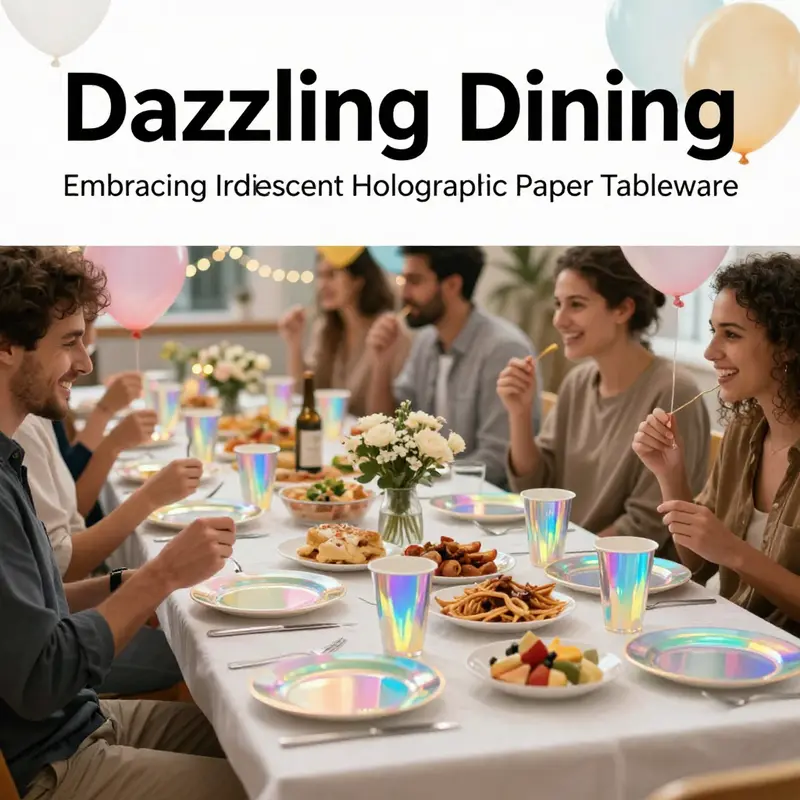
When celebrations hinge on memory as much as on music and invitations, the moment a guest glimpses the tableware can tilt the entire atmosphere. Iridescent holographic surfaces that shift through a rainbow gradient do more than hold food; they refract light into a living backdrop for moments that people will photograph, share, and remember. The appeal of these plates and cups lies not only in their color play but in the way their surface behaves as a light language. Viewers see the glow from across the room, then up close see micro-shimmering details that catch the eye from every angle. It is this dynamic, almost kinetic, aesthetic that has elevated iridescent tableware from a novelty purchase to a staple in the planning toolkit of event designers, caterers, and DIY hosts who want a distinctive, budget-friendly way to transform a space. The applications naturally spread across life’s milestones—weddings, birthdays, baby showers—yet they also find a home in themed parties that aim to tell a story through color and light. A mermaid or ocean theme, for instance, leverages the gradient to echo water and sky, while a modern, minimalist wedding can lean on the reflective surface to create a sense of movement without crowding the sensory field. In other words, the rainbow gradient becomes a flexible design device, a visual cue that signals celebration while remaining adaptable to different sizes, surfaces, and lighting conditions. The practical advantage is clear: these surfaces are disposable, reducing cleanup friction after events that are often heavy with logistical demands. The challenge, of course, is to balance spectacle with responsibility. Here again, the discourse around these products has matured in parallel with consumer expectations, reinforcing the idea that glow and gravitas can coexist with sustainability and safety. This balance shapes not just what is bought but how it is used, how it is disposed of, and how a brand communicates its values to a guest about the care it takes for the environment. The result is an approach to tableware that speaks to modern event culture—one that values memorable visuals, practical convenience, and a growing commitment to responsible materials, all woven into a single, shimmering artifact on the table.
Applications for iridescent holographic tableware extend beyond the obvious celebratory settings. The glassy transfer of light across a gradient aligns with the storytelling arc of many events: the reveal, the toast, the candid moments, and the afterglow captured in photographs. Weddings can gain a soft, magical air as guests gather around a table where plates and cups reflect the room’s floral arrangements, the couple’s chosen palette, and ambient lighting. Birthday parties, especially milestone celebrations, benefit from the sense of occasion that the finish provides—an instant vibe upgrade that photographs beautifully against both pastel and vivid backdrops. Baby showers can borrow an aura of whimsy and wonder, as the iridescent surface echoes the dreamlike anticipation of new life, while the gradient’s spectrum keeps the visuals playful and inclusive of all gender expressions. Themed parties, particularly those built around fantasy motifs or mythic narratives, leverage the color shifts to imply movement and depth, as if the plateware itself were part of the story rather than a passive backdrop. Even in more subdued settings, the subtle brilliance of a holographic surface can elevate the atmosphere without shouting branding or clutter. A thoughtfully chosen gradient can harmonize with metallic accents, glassware, and textiles to create a cohesive mood that remains photogenic in both daylight and evening lighting.
From a practical standpoint, the durability and utility of holographic tableware lie in the manufacturing technique. The embossing process, often paired with a vapor-deposited aluminum or PET film, creates a surface that is light yet surprisingly robust. The coating is designed to resist the inevitable handling during service, from the moment a server places a plate on a plate stand to the quick, casual use at a kids’ party. While no disposable product can be completely tear-free, the holographic layer adds a degree of resilience against minor creases and scuffs that might otherwise mar a plain surface. The result is a product that can perform reliably in both indoor and outdoor environments, where weather, wind, and movement could otherwise degrade the visual impact of more fragile finishes. Importantly, this durability does not come at the expense of food safety or ease of use. The finishes are engineered to be food-contact friendly, a non-negotiable criterion for event planners who must coordinate with caterers, venues, and rental companies. This coupling of aesthetics and practicality explains why the market has embraced iridescent gradient tableware as a versatile option for a range of service styles—from sit-down dinners to buffet setups and casual picnics under festoon lighting.
In parallel with the expansion of use-cases, the influence of social media on buying behavior continues to shape demand patterns. The highly visual nature of holographic finishes makes unboxing videos, flat lays, and event photography especially compelling. When a guest posts a photo of a table styled with glittering gradient plates, the light play jumps out in the image as if the surface itself is another decorative element rather than a mere eating surface. This social amplification drives quick adoption across demographics, especially among younger planners and parents who curate experiences with shareable moments in mind. The perceived value of the surface—its capacity to elevate a party’s visual narrative—becomes a tangible attribute that hosts and coordinators weigh alongside cost and logistical convenience. The result is a shift in purchasing criteria: buyers seek not only price and compatibility with mains dishes but also the capacity of a set to help an event feel special, to translate into striking photographs, and to be discussed in online communities long after the party ends.
Sustainability considerations have risen in importance as consumer values evolve. The discourse surrounding disposable goods has grown more nuanced, with buyers seeking options that balance convenience with environmental responsibility. Many producers respond by highlighting food-grade safety and nefarious toxins, but the conversation now extends to the materials themselves and their end-of-life pathways. Biodegradable, BPA-free, and compostable formulations are increasingly available, often leveraging recycled paper or plant-based composites. The idea is not to sacrifice the shimmering effect but to align the visual drama with ecological accountability. For many buyers, a sustainable gradient tableware set is not a compromise but a projection of values into the event’s aesthetic language. This trend broadens the market’s reach, attracting eco-conscious parents, wedding planners, and school event coordinators who require products that meet stringent safety and sustainability expectations while still delivering a high-impact visual experience.
Customization has emerged as a core driver of growth in this category. The ability to tailor the gradient, embossing density, or holographic intensity enables both businesses and individuals to craft a signature look for a given event. Streamlined platforms that facilitate bulk orders and personalized finishes support a broad spectrum of uses—from gender-reveal celebrations to inclusive, identity-focused events where color palettes are more expressive than traditional gender norms. In our era of experiential branding, a set of plates and cups can become a micro-brand experience, with gradients that echo a party’s motif, logo positioning that’s laser-etched into the surface, or complementary napkins and tablecloths that complete a cohesive design story. The flexibility is not merely decorative; it translates into stronger theme coherence and, ultimately, a more memorable guest experience. This is where wholesale and customization ecosystems matter. Businesses can order sets in pastel rainbows or sharp, saturated gradients, and individuals can mix and match to create a personal vibe. The availability of bulk customization also reduces per-unit costs, enabling more ambitious layouts and more elaborate color narratives at events of all sizes.
The market’s trajectory reflects a broader shift toward experiences that are both high-impact and accessible. As consumers become more selective, they seek products that deliver drama without complicating logistics. The balance between aesthetics and practicality remains central: the tableware must perform during service, resist the weather and handling of outdoor venues, and still be easy to dispose, recycle, or compost according to regional waste streams. This triad—visual spectacle, durable practicality, and responsible end-of-life options—frames the product category’s ongoing evolution. The future outlook suggests continued expansion into related forms of disposable decor and dinnerware, with the gradient finish appearing across new shapes, sizes, and surface textures. We can anticipate deeper integration with party planning ecosystems, where color stories are mapped to lighting cues, DJ or playlist themes, and photo opportunities. The potential for cross-category synergies is significant: gradient surfaces on cups might harmonize with napkins and utensils that reflect a shared palette, creating a cohesive, immersive environment that guests feel and remember.
To anchor the practical and strategic considerations in real-world sourcing and customization realities, a look at how buyers approach suppliers is illuminating. Platforms that enable bulk orders, design flexibility, and fast turnaround times make it feasible for a small event team to produce a coordinated look for a multi-table wedding reception or a charity gala. While the aesthetics are the overt draw, the decision calculus remains anchored in safety, cost, and sustainability. Buyers weigh the ease of handling, whether the coating resists creasing during stacking or transport, and whether the finish remains vibrant after exposure to condensing humidity or warm temperatures at outdoor venues. Aesthetic preferences may shift with seasons or with emerging color science, but the underlying design language of iridescent holographic gradient—shifting color, light, and texture—appears robust across contexts.
In the broader market narrative, the ability to customize packaging and presentation extends beyond the plates and cups themselves. Related items, such as napkins, table runners, and even lids, can echo the same gradient motif, reinforcing brand or event identity without overpowering the dining experience. The market’s flexibility allows planners to craft layered experiences with a consistent visual grammar, where each element reinforces the others. This alignment—between surface quality and event narrative—converts a disposable serviceware choice into a storytelling instrument. It shifts the decision from a simple cost-benefit analysis to a creative collaboration with suppliers who can deliver not just finished goods but a design-forward experience that resonates on social media and in person alike. The effect is a networked demand, where a visually striking plate or cup becomes a touchpoint for sharing, liking, and imagining, turning a single dinner plate into a moment of collective memory.
For readers navigating the practicalities of procurement, it is useful to think about the ongoing convergence of style and stewardship. The industry’s best-performing products operate as the connective tissue between celebration and responsibility. They deliver the drama guests crave, while offering reliable performance and statements of care for the environment. The trend toward biodegradable, food-safe, and recycled materials broadens the potential audience, inviting planners who might have previously restricted themselves to non-disposable options to reconsider disposables as a viable, responsible alternative. In this light, iridescent holographic tableware ceases to be a mere novelty and becomes a practical instrument for elevating events, enabling hosts to orchestrate moments that shine—both visually and ethically.
As the market continues to evolve, the social and cultural implications of gradient surfaces are likely to grow more nuanced. Color symbolism, cultural associations with rainbow palettes, and shifting norms around gender and identity will influence how these products are used and perceived. The gradient offers a flexible canvas for narratives about inclusion, celebration, and self-expression. In niche markets, the same pieces can signal different themes through subtle variations in shade, glow, and finish. The capacity to tailor a look without sacrificing the convenience of disposable serviceware makes iridescent holographic tableware a durable player in a crowded event-supply landscape. The story here is not just about a surface that gleams; it is about a material culture shift toward an emphasis on experiential quality, environmental mindfulness, and the democratization of design that makes memorable moments accessible for events of all scales.
External reference material on the foundational properties and sourcing options for holographic surfaces supports these observations. For readers seeking more technical and supplier-oriented detail, a comprehensive product listing provides context on the materials, coatings, and finish durability that underwrite the visual drama described here. External resource: https://www.alibaba.com/product-detail/Iridescent-Laser-Rainbow-Holographic-Mirror_1600587943524.html
Internal link for further practical context on eco-friendly, logo-driven tableware customization can be found here: eco-friendly printed logo paper ice-cream cups with lid. This resource illustrates how customization and sustainability can co-exist in a single product line, reinforcing the broader themes of this chapter without anchoring to a specific brand or retailer. By integrating design-led finishes with responsible materials, planners can achieve a cohesive, theme-consistent presentation that remains practical for service and disposal alike.
The overarching takeaway is that iridescent holographic paper plate and cup systems, with their rainbow gradient finishes, occupy a distinctive space at the intersection of artful design, event logistics, and sustainable consumption. They offer a versatile aesthetic that can be tuned to suit intimate gatherings and large-scale celebrations without compromising on safety or environmental values. The market continues to respond with innovations that expand color families, surface textures, and customization pathways, while also broadening the spectrum of materials that meet food-contact standards and end-of-life considerations. In practice, this means hosts can craft unforgettable experiences with a relatively modest investment in disposable tableware, while suppliers respond to demand for bulk customization, reliable performance, and responsible packaging. As events become more experiential and photography-driven, the iridescent rainbow gradient plate and cup will likely maintain their position as a centerpiece of modern table styling, a small but powerful instrument for shaping how guests feel, remember, and share their moments.
External resource recap for readers interested in the deeper material science and sourcing landscape enhances understanding of how these surfaces achieve their signature glow. External reference: https://www.alibaba.com/product-detail/Iridescent-Laser-Rainbow-Holographic-Mirror_1600587943524.html
Final thoughts
As the need for stylish yet functional dining solutions grows, iridescent holographic paper plate cup rainbow gradient disposable tableware emerges as a standout choice. Its dazzling aesthetics, environmental benefits, and versatility in applications make it a perfect fit for diverse businesses from bubble tea shops to corporate events. Opting for this type of tableware not only enhances customer experiences but also aligns with modern environmental standards. The future of dining will reflect light, color, and conscious choice, making this iridescent tableware a brilliant investment.