
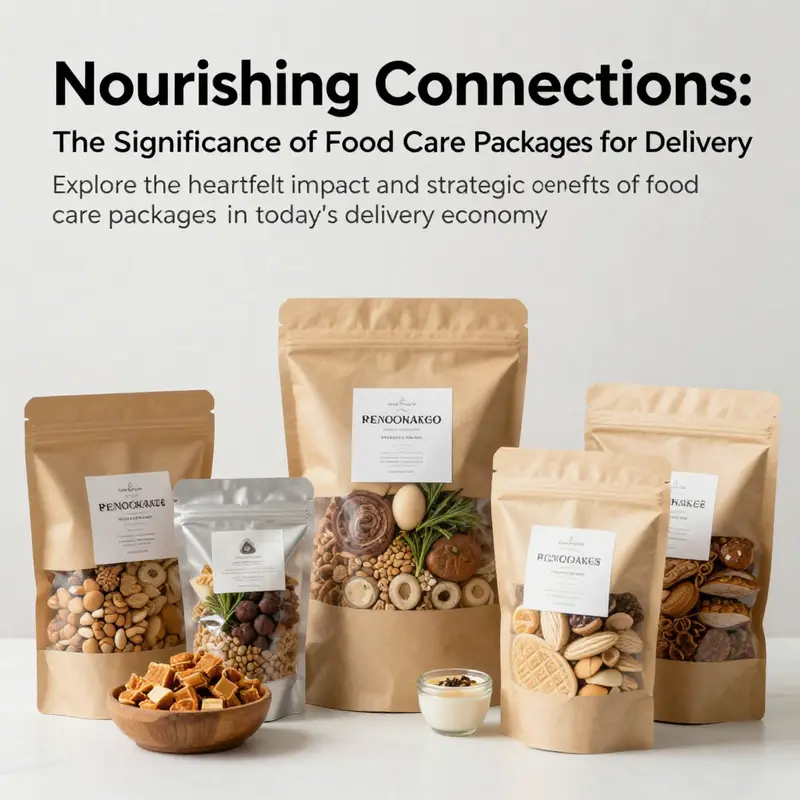
The art of delivering care through food transcends mere sustenance; it offers emotional solace and support during challenging times. Food care packages have gained traction as effective tokens of affection, delivering comfort and nourishment directly to loved ones, even from afar. This unique fusion of culinary craftsmanship and thoughtful presentation can be harnessed by bubble tea shops, restaurants, food trucks, and corporate teams alike. In this piece, we’ll delve into their importance, how to create them with nutritional intent, current trends shaping this market, and the economic considerations that can influence your delivery strategy.
Nourishment as a Message: How Thoughtful Food Care Packages Deliver Comfort, Connection, and Healing
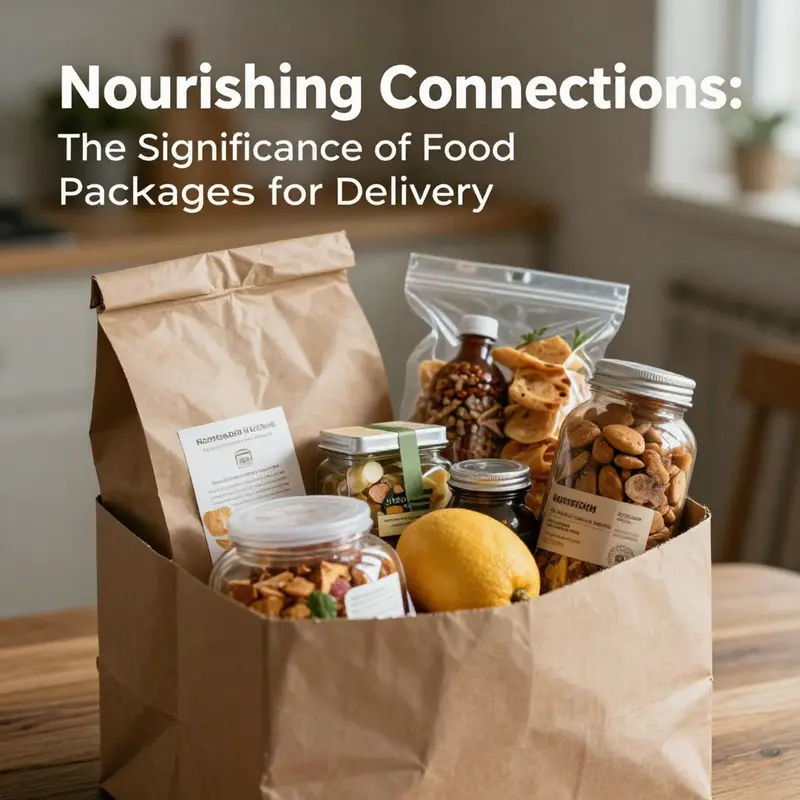
A care package carried to a doorstep is more a message than a delivery. It speaks through textures and aromas, through the quiet ritual of opening a box, and through the balance of warmth that travels from giver to receiver. Food becomes more than sustenance; it becomes a form of empathy you can touch. When a person is ill or fatigued, a thoughtful package anchors the day and says I am thinking of you. In practical terms this is about emotional comfort as much as nutrition, the sense of being seen.
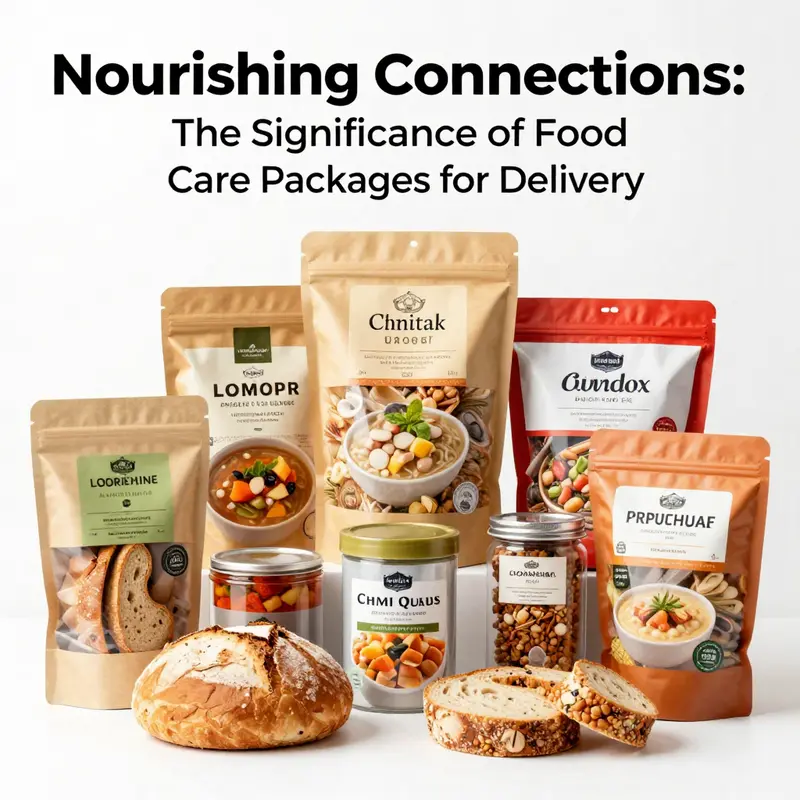
Intentionality matters: these packages are curated experiences designed to soothe, nourish, and reconnect. They consider what is inside and how it arrives, balance quality and thoughtfulness. For example, soups with depth of flavor and texture, plus lighter options and a note of encouragement, create choice before appetite. A single delivery might include a comforting soup, a lighter alternative, a bread roll, tea, and a handwritten message.
Textures matter because appetite changes during recovery. Dietary inclusivity becomes essential: gluten free, dairy free, vegan, low sodium options allow everyone to enjoy the gesture.
Clarity helps: defined portions, clear labeling of reheating instructions and allergens reduces uncertainty and preserves dignity. Packages should feel warm, not impersonal. Packaging design, color palettes, and branding transform a box into a small sanctuary that signals care and tenderness.
Logistics matter too: reliable delivery with clear communication, temperature guidance, and predictable arrival windows preserve trust. When the journey from kitchen to doorstep is smooth, the act of receiving becomes an extension of the care given at the source.
The emotional dimension is where nourishment meets companionship. A bowl of soup can calm the body and settle the mind; a note can transform a gift into a conversation. The sentiment travels with the food, often faster than the parcel itself.
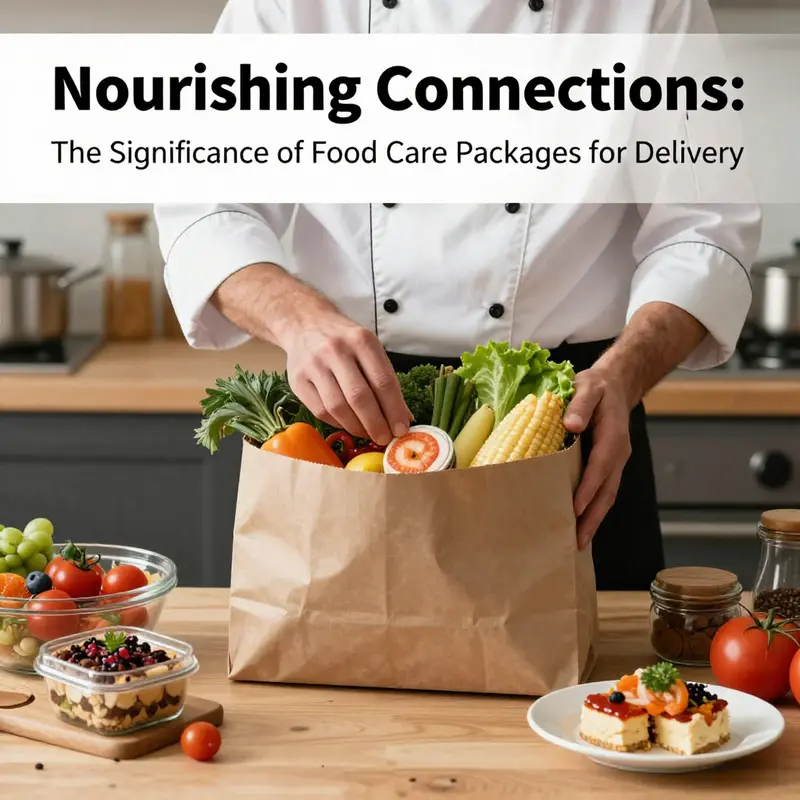
For makers and providers, there is art and science: art in flavor balance and thoughtful pairing; science in recipe testing, packaging to withstand transit, and clear information for quick decisions. The emphasis on dietary flexibility expands the circle of people who can receive comfort without compromise.
Beyond the moment of delivery, these packages model a culture that frames care as a civic act. Experiential baskets become a common language of nourishment and consolation. Care packages are not disposable gestures; they are carefully designed experiences meant to nourish body and spirit, and to remind recipients that healing is supported by community.
Chasing sustainability, thoughtful packaging preserves temperature and reduces waste, while giving the recipient confidence that every detail was considered. The packaging itself becomes part of the care story.
null
null
null
null
The Price of Comfort: Balancing Economics in Food Care Packages for Delivery
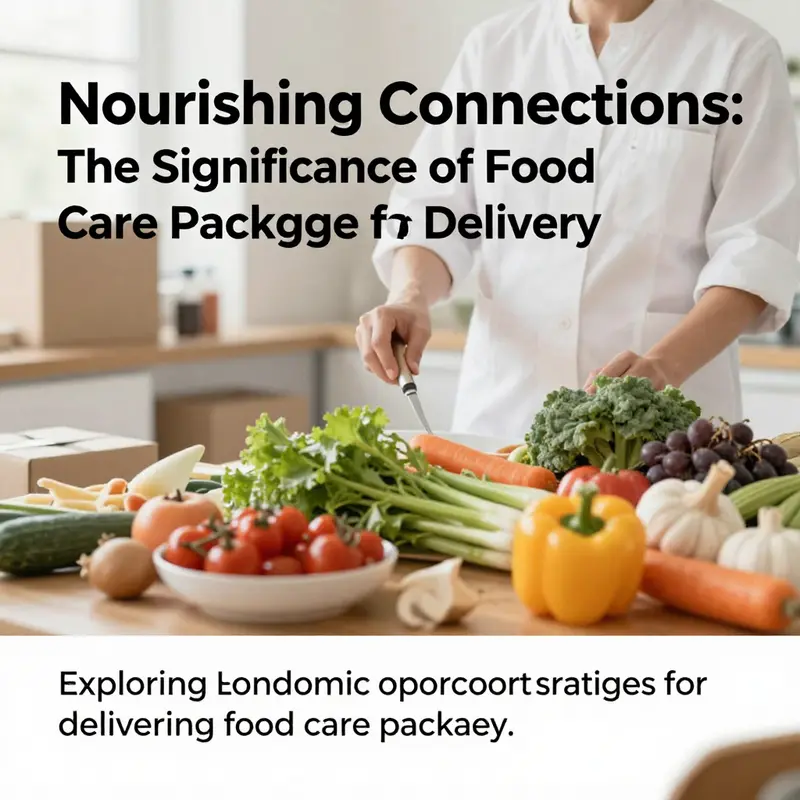
Care packages of nourishing foods carry an emotional weight that goes beyond calories. They signal empathy, presence, and a steadying touch during illness, recovery, or sudden life stress. Yet behind every basket, box, or carefully sealed container lies a web of economic decisions that determines whether the gesture remains sustainable for the sender and viable for the recipient. The economic factors shaping food care packages for delivery are not abstract. They define the quality of ingredients, the integrity of packaging, the reliability of delivery windows, and the very possibility of scalable service as demand changes. When the market for home delivery expands—as it has, with robust growth in the wider food-delivery sector—care packages must compete for attention while bending to the hard rules of cost, safety, and service. The result is a delicate equilibrium: generosity that can be delivered, on time, at a price that makes sense for operators and recipients alike.
Operational costs begin at the point of sourcing and extend through packaging, storage, and transit. A care package often includes nutritious, perishable items that demand careful handling. The price of secure packaging is not merely protective; it is protective enough to prevent spoilage, protect delicate textures, and ensure safe transport. Packaging must withstand jostling and temperature shifts while minimizing waste. Refrigeration capability becomes a central consideration when a package contains dairy, fresh produce, or ready-to-eat meals. Each item requires selective temperature zones and precise temperature maintenance, which adds to energy use and logistics complexity. In practical terms, every lid, insulation layer, or double-walled component is a small line item in the overall cost ledger. The result is a feedback loop: higher packaging quality improves safety and satisfaction but increases upfront costs, which must be recouped through pricing strategies that still feel fair to customers.
Last-mile delivery, the segment most intimately tied to consumer perception, presents its own set of economic tensions. The cost structure of last-mile logistics tends to dominate the economics of dispersed care packages. Labor costs rise with demand volatility, courier reliability, and geographic spread. In many cases, delivering timely, temperature-controlled packages requires specialized fleets or partner networks, each with minimums, service-level agreements, and insurance requirements. A 2022 study analyzing the profitability of last-mile food delivery highlighted how labor scheduling, routing, and capacity constraints drive marginal costs higher. Providers must optimize routes, consolidate orders where possible, and time deliveries to preserve freshness. Yet even with optimization, the economics of last-mile delivery remain one of the stiffest bottlenecks for profitability. The result is a practical constraint: to sustain a care-package program, operators must either absorb these costs, pass them to customers through pricing, or blend both approaches with careful risk management.
Food safety regulations add another layer of cost but are foundational to the entire enterprise. Standards mandate sturdy, clean containers with secure lids, and they often require separate insulated packaging for hot and cold items. Clear guidelines specify temperatures—hot foods kept above 60°C and cold foods at 4°C or below—and emphasize the importance of preventing cross-contamination and maintaining the cold chain during transit. A 2026 publication underscored that timely delivery is essential to preserve quality for high-risk items, including raw or semi-cooked components. These regulatory expectations translate directly into capital expenses: enhanced packaging materials, temperature-controlled transport, validated packing procedures, and staff training. While these necessities add to the cost base, they also reduce spoilage, returns, and liability, which, in the long run, protects profitability and brand trust. For operators aiming to scale, establishing reliable standards—backed by audits, supplier certifications, and consistent packaging configurations—becomes as important as any marketing promise.
Market dynamics in home delivery have evolved since the pandemic, leaving a learned pattern in their wake. A broader shift toward home delivery created a new baseline demand—a persistent opportunity that is nonetheless accompanied by heightened competition, tighter profit margins, and elevated expectations for speed and reliability. Care-package providers must balance affordability for recipients with the hidden costs of labor, technology, and compliance. The economics of this space hinge on a clear value proposition: packages delivered with warmth and nourishment should feel like a thoughtful gift, not a cumbersome expense. The sustained demand implies opportunities for recurring orders, subscription models, or curated bundles, but these must be designed with margin discipline. For the recipient, the price tag must reflect not merely the sum of ingredients but the guarantee of freshness, safety, and punctual delivery. For the operator, the price must cover the real cost of sourcing, packing, transporting, and supervising a cold chain that travels across neighborhoods and sometimes across city limits.
A critical design consideration is the balance between variety and standardization. A well-curated care package typically includes a mix of items that address appetite fluctuations during recovery: creamy textures and broths for comfort, clearer broths or lighter soups for appetite sensitivity, and spiced or mild options to accommodate changing palates. Yet a menu that is too bespoke invites cost creep: diverse ingredients, special handling, and more complex packaging configurations. The most sustainable approach tends to be curated, flexible bundles that preserve dietary inclusivity without fragmenting the workflow. Dietary inclusivity—gluten-free, dairy-free, vegan, low-sodium options—must be woven into procurement and warehouse processes to avoid expensive last-minute substitutions. The financial reward comes when these inclusions are normalized across products and shared across customer segments, lowering per-item handling costs and reducing waste. The strategic implication is subtle but powerful: standardization with a tolerance for personalization can unlock economies of scale while preserving a personal touch.
The emotional economy of care packages also shapes pricing and packaging choices. The appeal lies not just in the nourishment but in the sensory experience—the warmth of a bowl, the aroma of brewed tea, the comfort of freshly baked bread, and a handwritten note that confirms the sender’s intention. The fuller the sensory package, the greater the perceived value, which can justify premium pricing in some markets. This is where design intersects with economics. A well-designed “soup basket” or care package is more than a collection of foods; it is a self-contained moment of calm. A careful layout, thoughtful color schemes, tactile textures, and complementary nonfood items like artisanal bread, infused oil, crackers, and herbal tea can elevate perceived value without a proportional rise in raw ingredient costs. The key economic question is whether the incremental cost of the extra elements yields enough incremental demand or price tolerance to sustain the added expense. When it does, the package becomes a gift that feels larger than its parts, and that perceived value translates into willingness to pay.
To translate these design insights into operational realities, many care-package programs lean into packaging innovations and supplier partnerships. Durable, insulated packaging reduces spoilage risk and supports temperature integrity without excessive energy use in transit. Yet durability cannot be pursued in isolation; it must align with overall logistics efficiency. For example, heavy, rigid packaging can improve protection but may increase shipping costs and reduce the number of packages that fit on a single vehicle. Conversely, lighter, modular packaging can improve efficiency but require higher quality seals and temperature control technologies to maintain safety standards. The balancing act is not a binary choice but a set of trade-offs that requires ongoing testing, data collection, and rapid iteration.
A practical lever in this balancing act is the integration of packaging suppliers who can deliver consistent, standardized components that scale with demand. By negotiating multi-item contracts, operators can achieve better per-unit pricing and reduce variability in packing times. The economy of scale also extends to the selection of materials that align with sustainability goals and consumer preferences. Eco-friendly options, such as recyclable or compostable components, may carry a premium; however, they can also open markets where customers are willing to pay for greener choices and authorities increasingly favor lower-waste supply chains. The financial calculus thus includes the cost of greener materials against potential price premiums, reduced disposal costs, and a stronger brand narrative. When suppliers bundle packaging with insulation and temperature-control solutions, operators gain consistency, which lowers waste and speeds up fulfillment, further contributing to margin stability.
For many operators, the economics of care packages hinge on how they leverage delivery networks. Large-scale delivery systems offer lower per-package costs through route optimization, consolidated scheduling, and technology-enabled tracking. Yet the margins can still be tight, especially when service-level agreements require precise delivery windows, special handling for hot versus cold items, or rapid replenishment of perishable contents. The strategic response is to blend internal capabilities with outsourced logistics where it makes financial sense and to invest in data analytics that forecast demand with greater accuracy. A robust forecasting model reduces overproduction, minimizes waste, and ensures that staffing and packaging materials align with anticipated demand. In turn, this improves the reliability customers expect and the cost structure managers must justify to stakeholders.
In discussing the economics of care packages, one cannot overlook the role of value-based pricing and consumer willingness to pay. The broader market context—the U.S. food-delivery landscape projected to reach nearly half a trillion dollars by mid-decade with healthy growth—sends a signal about opportunity, but it also warns against complacency. Growth in demand can attract competition, which intensifies pricing pressure. A sustainable model, therefore, emphasizes not only affordability but also the quality signals that justify value. These signals include the care and safety guarantees, the reliability of delivery windows, transparent dietary information, and the overall experiential feel of receiving a package that looks as good as it tastes. In this sense, economics and empathy reinforce each other: pricing and packaging choices should reflect not only the costs of goods and services but the demonstrable care embedded in the package.
To illustrate a practical design choice, consider how a single component—packaging materials—can influence both cost and perception. A well-chosen container system can reduce spoilage and extend shelf life, lowering waste. It can also enable a smoother last-mile experience by fitting standard cooling elements and shipping configurations. The broader implication is that thoughtful packaging is not just a cost center but a lever for efficiency, safety, and consumer satisfaction. In turn, a more efficient operation strengthens the ability to offer inclusive options at affordable prices, which in turn expands the potential customer base and supports sustainable growth. This is the economic virtue of integrating care-driven design with logistics discipline.
As with any complex service, the long-term viability of food care packages for delivery depends on disciplined financial management as much as on heartfelt intent. The overarching message is that sustainability comes from aligning operational efficiency with the emotional value of the product. That alignment requires clear pricing structures that reflect real costs, careful management of the cold chain and hot handling where required, standardized yet adaptable packaging, and a logistics strategy that combines the benefits of scale with the flexibility to personalize when needed. When these elements come together, care packages can be both generous and economically prudent, delivering warmth to doors and stability to a business model that serves vulnerable populations and voices who might otherwise be overlooked in a crowded market.
For readers seeking a deeper dive into the profitability and logistical considerations of last-mile food delivery, the broader economic literature offers further grounding. External research shows that the last mile remains a primary driver of cost—and opportunity—in delivery ecosystems, urging operators to pursue efficiency through data-driven routing, temperature-controlled transport, and resilient packaging. These insights equip practitioners to design care-package programs that are as financially sound as they are emotionally resonant. While each market will require tailoring, the principles of balancing cost, safety, scale, and care remain universal across contexts.
External resource: https://www.mdpi.com/2071-1050/14/12/7389
Internal resource: eco-friendly kraft paper soup bowls with lids
Final thoughts
Food care packages stand at the intersection of nourishment and emotional support, offering businesses an innovative way to connect with their customers. From creating thoughtfully curated offerings to tapping into market trends and understanding economic possibilities, the potential they hold can significantly enhance your service and impact. Companies of all types—including bubble tea shops, restaurants, and catering services—have the opportunity to create memorable experiences that reach beyond the plate, fostering a sense of community through the universal language of food.